Introduction
Pork is one of the most commonly consumed food commodities globally. The production of pork ranges from the highly intensive, volume and efficiency driven systems, to ‘backyard’ production with one or a few pigs per family. In both cases, diseases can greatly affect the cost of production. Thus, especially in intensive and large-scale production, the routine use of antimicrobials has become an integrated part of the production system. Antimicrobial agents have not only been used for treatment of clinically ill pigs, but also as part of the routine management for prophylaxis and even growth promotion. Sale of antimicrobials for use in swine production are reported to be worth an estimated 1.7 billion dollars, equal to 34% of the global animal health antimicrobial market followed by poultry (33%) and cattle (26%) (Vivash-Jones, Reference Vivash-Jones2000).
Because of the human (and animal) health aspects associated with the development of antibiotic resistance, as a consequence of this widespread use, medication with antimicrobials has come under increased scrutiny. Emphasis is being placed on the need to target the use of antimicrobials towards the specific pathogen and only when efficacy can be expected.
Antimicrobial resistance has emerged among bacteria causing infections in swine in several countries. In some cases this makes empiric therapy difficult, whereas it is still possible to predict the susceptibility of other pathogens. This review gives an overview of the occurrence of resistance among the most common swine pathogens, the trends we currently observe and a discussion of the trends we can expect for the future.
Most common pathogens causing infection in swine
Precise estimates of the prevalence of porcine infections and the consumption of antimicrobial agents used to treat or control those infections are difficult to obtain, even though most veterinarians have a fairly good idea of the incidence in farms under their care. However, only a very limited number of countries report data on antimicrobial usage and/or prevalence of infections. In Denmark, a monitoring programme for antimicrobial use has been in place since 2000 (Jensen et al., Reference Jensen, Jacobsen and Bager2004), which monitors drug use at the farm and diagnostic level and also calculates the number of animal daily dosages (ADDs) used for different age groups and by diagnosis. The usage of antimicrobial agents for the different age groups and the different antimicrobial agents are calculated into ADDs to get a better comparison because the activity of the various antimicrobial agents differ substantially and the amount necessary to treat e.g. a sow of 150 kg is higher than the amount needed to treat a pig of 30 kg.
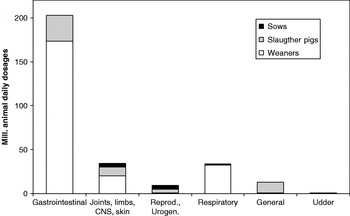
The number of ADDs used for treatment of different infections in sows/piglets, weaners and slaughter pigs in Denmark in 2007 is given in Fig. 1. It is very clear that the majority of treatments are for gastrointestinal infections in weaners (>170 million ADDs in 2007). It is noteworthy that this implies that the approximately 25 million pigs produced in Denmark each year on average are treated for approximately seven days during their weaning period. General infections are almost exclusively in weaners, whereas respiratory infections are more commonly in slaughter pigs and not surprisingly treatment of reproductive and urogenital organs and the udder are in the sow.
ADDs used for treatment of weaners, sows and slaughter pigs in Denmark in 2007.

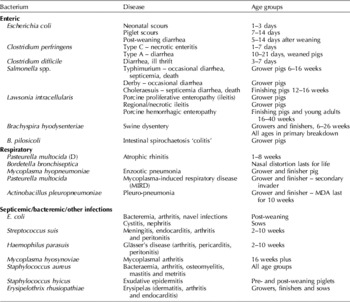
The treatment incidence does, however, not give any information on the causative agent. The common bacterial infections are summarized in Table 1. They are divided into primarily enteric, respiratory and other infections. There is some overlap, since e.g. Escherichia coli can be both septicemic and enteric, especially in neonatal piglets, and Streptococcus suis can be isolated from the respiratory tract as well as the central nervous system.
Common bacterial infections and diseases in the pig

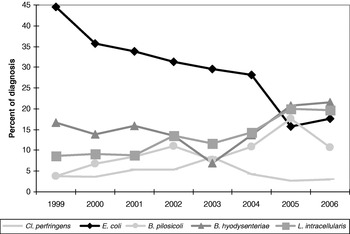
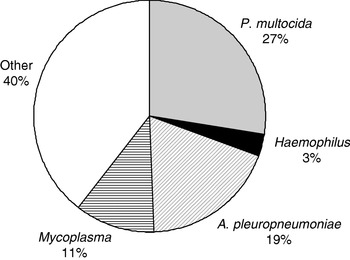
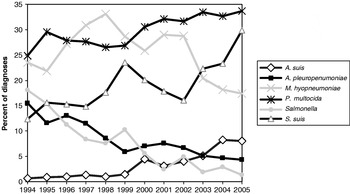
Precise estimates of the prevalence of the various bacterial diseases are difficult to obtain. Practising veterinarians often do not collect disease incidence data in a systematic way and data obtained from diagnostic laboratories may be biased by the fact that veterinarians mainly submit samples from difficult clinical cases. Some data are, however, available from diagnostic laboratories. Figure 2 shows the percentages of diagnosis of diseases of the digestive system at Veterinary Laboratories Agency, UK (http://www.defra.gov.uk/vla/reports/docs/rep_vida_pigs99_06.pdf). The calculation is based on a total of 3188 diagnoses in the period 1999–2006. In 1999, E. coli accounted for almost 50% of all diagnoses of diseases in the digestive system. This has, however, changed considerably and diseases related to Lawsonia and Brachyspira seem now to be more important. Whether this is due to a real change in the importance of the disease or changes in the diagnostic abilities is however, unknown. The distribution of the most important species among respiratory infections is given in Fig. 3. In England, the most common bacterium is seemingly Pasteurella multocida and is followed by Actinobacillus pleuropneumoniae. Conversely, in the USA based on submissions to the Iowa State University Veterinary Diagnostic Laboratory during 2006 (over 28,000 cases) the frequency of A. pleuropneumoniae and Mycoplasma hyopneumoniae diagnosis has declined in the last 5 years (Madson, Reference Madson2008) (Fig. 4). Other respiratory bacterial pathogens, like S. suis, Haemophilus parasuis and Actinobacillus suis have been isolated more frequently by this diagnostic laboratory. These differences probably reflect the different nature of the production systems, eradication programs for major swine diseases and the influence of immunosuppressive viruses.
Trends in percentage of selected bacterial pathogens from digestive diseases in pigs from the Veterinary Laboratories Agency in the period 1999–2006.

Percentages of respiratory diagnoses from the Veterinary Laboratories Agency in the period 1999–2006 attributed to various bacterial species. The total number of diagnoses was 2399.

Percentages of 50,316 positive respiratory disease diagnoses from diagnostic samples from swine during 1994–2005 that were attributed to various pathogens. The data are from the Department of Veterinary Diagnostic and production Animal Medicine at Iowa State University, Ames, Iowa (Madson, Reference Madson2008).

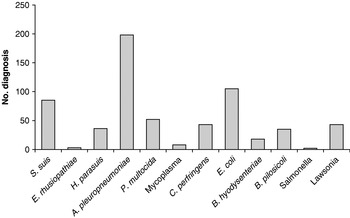
The number of bacterial and viral diagnoses during the first 6 months of 2007 at the National Veterinary Institute in Denmark is shown in Fig. 5 (http://www.dfvf.dk/Default.aspx?ID=21768). The most common swine pathogen diagnosed is A. pleuropneumoniae, followed by E. coli and S. suis. Thus some clear differences do exist between Denmark and England, but the general pattern seems to be that the enteric pathogens Brachyspira, Lawsonia and E. coli, the respiratory pathogens A. pleuropneumoniae and P. multocida, and the more systemic pathogen S. suis are the most common and important swine pathogens.
Number of positive diagnoses from diagnostic samples from swine at the National Veterinary Institute in Denmark during the first 6 months of 2007.

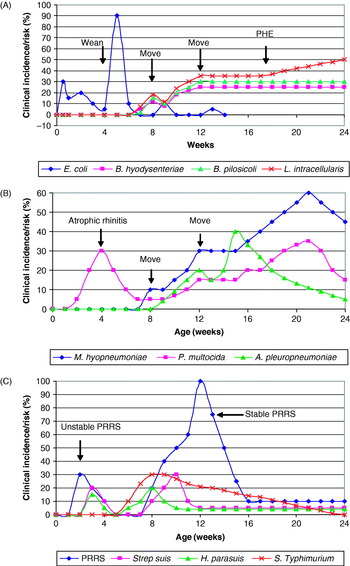
Despite the lack of monitoring data from different countries we have attempted to depict the basic patterns of infections in Fig. 6, divided into enteric infections, respiratory infections and general infections, especially focusing on the first 24 weeks of the pig's life, since this is where most treatments occur.
Disease patterns among pigs. (A) enteric diseases; (B) respiratory diseases and (C) systemic diseases.

Antimicrobial resistance among the major pathogens
Enteric infections
E. coli
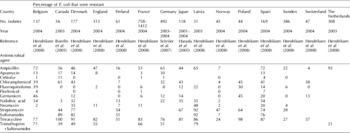
E. coli primarily affect the younger pig. Neonatal scours can be severe and the piglets can die of septicemia. At this time systemic-acting antimicrobials can be used effectively. Piglet scours are usually less severe but almost all pigs suffer some form of post-weaning check. Diarrhea starts 4–5 days after weaning and can lead to dehydration and mortality in severe cases. The severity can be mitigated by a good stable temperature and clean environment, weaning at 4 weeks of age or older, not mixing litters, carefully formulated diets and by the addition of therapeutic levels of zinc oxide in the diet. Once over this period, there are usually few problems with E. coli, except for cases of bowel edema, associated with verocytotoxic strains and sometimes after moving into a new, colder house. The susceptibility pattern of E. coli in different countries is shown in Table 2. A very high frequency of resistance is found in some countries and the antimicrobial susceptibility of E. coli is difficult to predict, which means that the final choice of antibiotic has to be based on knowledge of the local situation and preferably susceptibility testing. E. coli are also considered generally susceptible to polymyxins. These substances are not always included in routine susceptibility testing, but could be a reliable drug for treatment of E. coli infections.
Occurrence of antimicrobial resistance among E. coli isolated from infections in swine in different countries

Salmonella
Many strains of Salmonella have a low pathogenicity in pigs and are more of a concern for zoonotic transmission. However, S. Choleraesuis is highly pathogenic in pigs and is associated with acute outbreaks of diarrhea, septicemia and death especially in finishing pigs. This serovar is rarely isolated in Europe but is commonly reported in the US and Asia. S. Typhimurium can cause diarrhea, wasting, septicaemia and death. The incidence increases with PRRSV and PCV2 infections. The antimicrobial susceptibility among Salmonella spp. is intensively surveyed because of the zoonotic importance of this bacterium. In general antimicrobial treatment is not recommended in animals because this might lead to resistance development and thus, human health problems. Specific data on the occurrence of resistance in S. Choleraesuis are limited. However, a high frequency of resistance has been reported from the US, Taiwan and Japan (Chang et al., Reference Chang, Chang, Chang, Chen and Chiang2002a, Reference Chang, Yeh, Chou, Chang and Chiangb; Esaki et al., Reference Esaki, Morioka, Ishihara, Kojima, Shiroki, Tamura and Takahashi2004; Zhao et al., Reference Zhao, McDermott, White, Qaiyumi, Friedman, Abbott, Glenn, Ayers, Post, Fales, Wilson, Reggiardo and Walker2007) making empiric treatment difficult. Recent data from the US indicate widespread S. Choleraesuis resistance to ampicillin, tetracyclines and sulfonamides, but susceptibility to aminoglycosides, trimethoprim/sulfamethoxazole, fluoroquinolones and cephalosporins (Madson, Reference Madson2008). Thus, as for E. coli treatment has to be based on local experience or prior susceptibility testing.
Clostridium spp
Clostridium perfringens type C is mainly associated with per-acute hemorrhagic and necrotic enteritis in young piglets, which can be fatal. The disease is not very common, and is controlled mainly by sow vaccination. Infections in older piglets and growing pigs is less severe and also in growing pigs and usually associated with type A strains. Clostridium difficile have recently emerged as a cause of infections in pigs (Songer, Reference Songer2004). The infections are associated with mild diarrhea and ill thrift in piglets and like in human medicine appears related to the use of antimicrobial agents, mainly cephalosporins. There are only very few reports on antimicrobial susceptibility from C. perfringens or C. difficile from pigs. In the 1970s in Wisconsin, USA, Rood et al. (Reference Rood, Maher, Somers, Campos and Duncan1978) examined 258 C. perfringens isolates from six pig farms routinely using antibiotics in feed and 240 isolates from five farms that did not. They found 78% tetracycline resistance and 23% macrolide resistance among isolates from the antibiotic using farms in comparison to 25% tetracycline resistance and 0.8% macrolide resistance among the farms not routinely using in feed antibiotics. Post and Songer (Reference Post and Songer2004) examined the susceptibility of 80 C. difficile isolated from piglets with diarrhea. They did not report full range MICs or percent resistance. The data suggest that all C. difficile are resistant to bacitracin and ceftiofur and that some isolates have acquired resistance to macrolides, tetracycline, tiamulin and virginiamycin. Penicillins may be used for treatment of C. perfringens infections, whereas treatment of infections with C. difficile, as in human medicine, might be difficult, without the availability of nitroimidazoles like metronidazole.
Lawsonia intracellularis
L. intracellularis is a relatively ubiquitous organism on pig farms. Various surveys have showed that 80–95% of farms are infected. It is commonly associated with diarrhea in growing pigs and primarily affects the ileum although the organism can be found in caecal and colonic epithelial cells. Susceptibility testing is difficult because the organism can only be grown in cell cultures. Based on clinical experience tetracyclines, tiamulin, valnemulin, tylvalosin and tylosin seem to be effective in controlling the disease. However, there are currently limited data on the development of resistance or the establishment of breakpoints for L. intracellularis but Wattanaphansek et al. (Reference Wattanaphansak, Gebhart, Singer and Dau2007) demonstrated high intracellular MICs to chlortetracycline, lincomycin and tylosin, particularly in some US isolates suggesting that resistance can occur. In comparison, carbadox, tiamulin and valnemulin all had low intracellular MICs.
Brachyspira spp
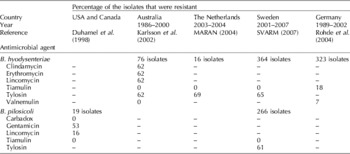
Brachyspira hyodysenteriae, the cause of swine dysentery, is a recurring severe problem in many countries in Europe, but seemingly less important in the US and Canada. Recent reports from the US suggest that B. hyodysenteriae may be a re-emerging pathogen (Duhamel, Reference Duhamel2008). It causes severe diarrhea, commonly with mucus and blood and leads to rapid wasting and also dehydration and death. Brachyspira pilosicoli is widespread as a low-grade cause of mucoid diarrhea, either alone or in mixed infections and can be associated with PCV2 infections. There is only a limited number of antimicrobial agents available for treatment of infectious caused by Brachyspira spp. in pigs. The slow development of immunity in infected pigs, the persistence of B. hyodysenteriae in the environment and the under-dosing of in feed medication in pigs with a reduced appetite have undermined the effectiveness of available antimicrobial agents. Resistance to macrolides (tylosin) and lincosamides seems to be very high in many countries and the most active agent are the pleuromutilins tiamulin and valnemulin, where most isolates seem to be susceptible (Table 3). However, recently isolates with reduced susceptibility to pleuromutilins have emerged, both among B. hyodysenteriae (Lobova et al., Reference Lobová, Smola and Cizek2004; Rohde et al., Reference Rohde, Kessler, Baums and Amtsberg2004) and B. pilosicoli (Pringle et al., Reference Pringle, Landén and Franklin2006). It is essential that detailed susceptibility testing of B. hyodysenteriae be carried out in all Swine Dysentery cases. Short antibiotic courses at effective doses and enhanced pen and farm sanitation must be used at all times. Eradication of B. hyodysenteriae from farms can be readily achieved and would be recommended to reduce the risk of antimicrobial resistance and inability to control clinical outbreaks of swine dysentery.
Antimicrobial resistance among B. hyodysenteriae and B. pilosicoli in various countries

–, Not tested.
Respiratory/systemic infections
Many porcine bacteria can be found in the respiratory tract, but also can be found systemically and cause meningitis, arthritis, pleurisy, pericarditis and peritonitis, e.g. S. suis and H. parasuis.
A. pleuropneumoniae
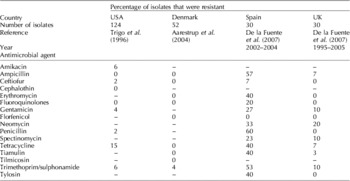
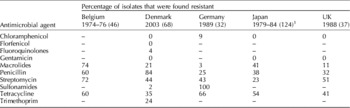
A. pleuropneumoniae can cause primary acute necrotizing pneumonia on its own or in combination with M. hyopneumoniae. Some serotypes given in artificial infection studies can cause death within 24 h, due to the toxic shock produced by its exotoxins. Treatment has traditionally been using penicillins where the isolates have been almost pan-susceptible. However, as can be seen from Table 4, this is no longer the case, since resistance to the beta-lactam antibiotics has emerged. Resistance to tetracycline and other antimicrobials has also emerged, but most isolates seem still susceptible to fluoroquinolones, ceftiofur and florfenicol.
Occurrence of antimicrobial resistance among A. pleuropneumoniae isolated from pigs in various countries

–, Not tested.
Bordetella and Pasteurella
Atrophic rhinitis is caused by a mixed infection of Bordetella bronchiseptica and P. multocida and usually starts in young pigs from 7 to 10 days of age. Clinically there is sneezing and the bacteria colonize the nasal mucosa and the toxins, usually from Type D P. multocida, cause the destruction of the turbinate bones. The main nasal bones may grow unevenly causing twisting and foreshortening as the pig grows. The disease can be effectively controlled by vaccination of the sows and antimicrobial therapy is rarely needed. Until now a low frequency of acquired resistance to ampicillin, chloramphenicol, tetracycline and TMP-sulfonamides has been reported among B. bronchiseptica (Kadlec et al., Reference Kadlec, Kehrenberg, Wallmann and Schwarz2004). P. multocida from pigs is generally susceptible to penicillins, ceftiofur, gentamicin, macrolides, fluoroquinolones, tetracyclines, trimethoprim-sulfonamides and florfenicol, even though some resistance seems to have emerged, whereas more resistance is observed towards streptomycin (Yoshimura et al., Reference Yoshimura, Ishimaru, Endoh and Kojima2001; Lizarazo et al., Reference Lizarazo, Ferri, de la Fuente and Martín2006; Wallmann, Reference Wallmann2006).
Mycoplasma spp
M. hyopneumoniae, the cause of enzootic pneumonia, is endemic throughout the world, with most herds being infected. On its own, it causes a relatively mild disease, the damage it does to the cilia lining the respiratory tract and the immuno-suppressive effect it has in the lung permits a number of bacteria, especially P. multocida, to colonize the lung and cause broncho-pneumonia. Mycoplasma hyosynoviae is the cause of mycoplasmal arthritis. Worldwide there have been very few reports on the antimicrobial susceptibility of Mycoplasma from pigs. Some isolates seems to have acquired resistance to tetracyclines, fluoroquinolones and macrolides, whereas resistance to tiamulin has not been reported (Aarestrup and Kempf, Reference Aarestrup, Kempf and Aarestrup2006). Thus, based on the available susceptibility data, tiamulin seem to be the best choice for empiric treatment. More data on clinical efficacy does however, seem to be needed. However, for M. hyopneumoniae, vaccines have become the main method of control with some countries vaccinating over 50% of the national growing herd.
S. suis
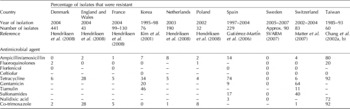
S. suis is widespread in many herds but do not always cause clinical problems. A large number of different serovars can be found, but the most important seem to be serotypes 2 and 7, with S. suis type 2 as the most common associated with meningitis in weaner and grower pigs. Susceptibility data are presented in Table 5. Some variations in the susceptibility pattern can be observed between different surveys. A frequent occurrence of resistance to macrolides and tetracycline is found in most studies. In most reports a low frequency of resistance to penicillins is reported. However, resistance to this group of antibiotics seems to be emerging in some countries, potentially making treatment of S. suis difficult, since penicillins typically have been the drug of choice against streptococcal infections.
Recent data on the occurrence of antimicrobial resistance (%) among S. suis isolated from swine in different countries (from Aarestrup and Schwarz, Reference Aarestrup, Schwarz and Aarestrup2006; Hendriksen et al., Reference Hendriksen, Mevius, Schroeter, Teale, Jouy, Butaye, Franco, Utinane, Amado, Moreno, Greko, Stärk, Berghold, Myllyniemi, Hoszowski, Sunde and Aarestrup2008; Zhang et al., Reference Zhang, Ning, Zhang, Song, Qiu and Gao2008)

* Only serotype 2.
–, Not tested.
H. parasuis
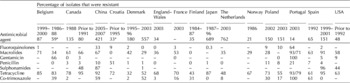
H. parasuis causes infections in weaners and growers, especially polyserositis (Glässer's disease). In some countries H. parasuis is almost pan-susceptible to all tested antimicrobial agents, whereas high frequencies of resistance seemingly have emerged in other countries (Table 6). Thus, compared to just a few years ago, when penicillins could almost always be expected to be effective against H. parasuis, treatment now has to be based on local knowledge and continuous monitoring.
Antimicrobial susceptibility of H. parasuis

–, Not tested.
Erysipelothrix rhusiopathiae
E. rhusiopathiae can cause arthritis and valvular endocarditis following a septicemic episode, but is more commonly associated with the classic diamond-shaped skin lesions. In recent years, following partial depopulations and clean ups in herds to reduce respiratory disease, peracute outbreaks of erysipelas have been more commonly seen. There are a number of effective vaccines available and treatment is rarely needed. E. rhusiopathiae is susceptible to penicillins, which is effective in treatment. There is some development of resistance to tetracycline, streptomycin and macrolides (Yamamoto et al., Reference Yamamoto, Kijima, Yoshimura and Takahashi2001).
Staphylococcus hyicus
Greasy pig disease, caused by S. hyicus, is a sporadic disease affecting young pigs from 7 to 35 days of age. It is thought that the infection gets into the skin following trauma from fighting, rough concrete sharp protrusions, etc., which enables the organism to penetrate. It causes a generalized dermatitis and an excessive secretion of sebum and exudates, which causes a greasy dark covering to the skin. A number of countries have reported data on antimicrobial susceptibility among S. hyicus (Table 7). In general a high frequency of resistance is found to macrolides, tetracycline, sulfonamides and streptomycin, whereas the isolates still seem to be susceptible to florfenicol, fluoroquinolones and gentamicin. It is difficult to predict the susceptibility of S. hyicus and treatment has to be performed according to knowledge of the specific farms and routine testing of the pathogen.
Occurrence of antimicrobial resistance (%) in S. hyicus from different countries (from Aarestrup and Schwarz Reference Aarestrup, Schwarz and Aarestrup2006)

1 Both healthy and diseased animals.
–, Not tested.
Staphylococcus aureus
S. aureus is an important opportunistic pathogen for most animal species and causes a variety of different infections including skin infections, septicemia, osteomyelitis, arthritis and pneumonia. Recently, a special methicillin-resistant S. aureus (MRSA) isolate (CC398) has emerged among production animals, primarily swine in many countries (Wulf and Voss, Reference Wulf and Voss2008). This type has gained intensive attention because it might colonize healthy swine and spread to humans through direct contact, such as farmers and veterinarians. However, S. aureus is potentially an important pathogen for swine and also MRSA of CC398 has been observed as a cause of infections in pigs (van Duijkeren et al., Reference van Duijkeren, Jansen, Flemming, de Neeling, Wagenaar, Schoormans, van Nes and Fluit2007). There is only limited information on the susceptibility of S. aureus from infections in pigs. Unpublished data from Denmark and data from The Netherlands (van der Wolf et al., Reference Van der Wolf, Rothkamp and Broens2008) suggest that resistance to macrolides, streptomycin and tetracycline is frequent, whereas the isolates are in general susceptible to TMP-sulfonamides and fluoroquinolones. It is, however, difficult to predict the susceptibility and the potentially continued emergence of MRSA, which might not only have implications for human health, but might also make it more difficult to treat infections in swine.
General principles for disease control in swine production
Disease control is not only about using medicines. Frequently, what has gone wrong is the production system; hence the challenge is to correct the underlying management problems. Post-weaning diarrhea is the classic example. If the temperature of the weaning accommodation is kept high and constant and drafts are avoided, there is normally little trouble. The ‘correct’ environment is very important to the pig and disease prevention. In general, two approaches can be used, avoid the infectious agents and avoid the clinical disease. More details can be read in Burch et al. (Reference Burch, Oliver, Aarestrup, Guardabassi, Jensen and Kruse2008) . Avoiding the infectious agent can be achieved by starting up a herd free of infectious diseases or by carrying out depopulation and repopulation with clean stock. Once established, it is crucial to avoid buying animals from farms with diseases as well as ensuring strict biosecurity when entering the farm. Avoiding the clinical disease might be more difficult. The production systems in every pig-producing region of the world and almost each farm are different and have their own problems. However, even though this is a complex situation, some basic principles still apply. Thus, there are three key areas for avoiding clinical disease, which need to be addressed: herd management, pig housing and environment, and immunity.
Herd management
Small closed breeding finisher herds, which are family owned, often do better than farms where pigs are looked after by employees. In addition, avoid mixing pigs of different ages and/or immunity status, such as those coming from different farms. Avoid stress by using production systems based on reduced moving and mixing of pigs. The benefit of raising pigs segregated by the parity of the sows is also well established since this reduces the pathogen transmission between groups of pigs with similar immune status. Another important management point is the age at weaning. One of the main problems with enteric diseases in pigs comes from weaning the piglets before their immune system is sufficiently mature.
Pig housing and environment
Particularly for respiratory diseases, a reduction in pigs per airspace has resulted in less severe infections, although some of these benefits can also be reached with correct ventilation and management. Increased pig density in pens or barn has also been linked with increased stress and disease transmission resulting in higher mortality and reduced growth.
Immunity
Understanding the development of immunity in a herd or group of pigs will allow better control of diseases on farm. Excellent colostrum intake in the first 6 h of life will ensure good protection against many piglet infections. Grouping of pigs to ensure a common immune status will reduce the susceptible population and reduce infections. Vaccination can also be successfully used, especially against infections caused by C. perfringens, E. rhusiopathiae, Mycoplasma, Lawsonia and virus infections.
Choice of antimicrobial agents for therapy
The licensing of veterinary medical products was until the last couple of decades to a large extent using limited documentation for clinical efficacy. This has now changed and clinical trials are today required for licensing. However, there are very few independent studies that have compared the different available compounds for the same disease. Furthermore, information of clinical failure due to the development of resistance is almost absent in the international literature.
Antimicrobial susceptibility testing is practically useful in determining whether an antimicrobial should be used to treat a condition, but should not be used as an absolute result, only a guide. Susceptibility testing can be difficult and requires the use of standard methods and use of correct breakpoints for determining whether an isolate should be considered resistant or susceptible. Optimally, antimicrobial agents with predictable susceptibility among the target pathogen and high clinical efficacy should be chosen for empiric treatment. Based on the clinical experience and routine examination of clinical samples and susceptibility testing this treatment might be changed.
However, choosing the right antimicrobial agent for treatment of infections in food animals is not only about the susceptibility of the animal pathogen. Using antimicrobial agents for treatment of infections in food animals might also select for resistance that might be transferred to humans and thereby cause human health problems (Aarestrup et al., Reference Aarestrup, Wegener and Collignon2008). Thus, whenever initiating treatment of food animals the human health consequences should also be taken into account. Recently, the World Health Organization has developed a list of critically important antibiotics for human health (WHO, 2007) and it is recommended that the use of these agents in food animal production be limited as much as possible.
Discussion and conclusion
As can be seen from the examples provided in this review the occurrence of antimicrobial resistance varies greatly between countries and even regions and individual herds. Thus, the final choice of empiric treatment has to be based on the local situation. This requires regular susceptibility testing of the pathogens involved in the diseases to guide the veterinarians. Especially enteric bacteria, such as E. coli, have in some cases developed resistance to all available antimicrobial agents and the susceptibility of the infecting bacterium is therefore totally unpredictable. This is, however, also the case for staphylococci, where multiple resistant isolates are recently more frequently observed. Thus, treatment has to be based on knowledge at the individual farm. For Brachyspira it is especially worrying that resistance is emerging to the currently most active compound tiamulin.
It is for some bacterial species to some extent still possible to predict the susceptibility. Thus, Mycoplasma are still susceptible to tiamulin, and most A. pleuropneumoniae, P. multocida and S. suis isolates are susceptible to penicillins. Resistance to this group of antimicrobial agents has emerged making it important that at least national monitoring is performed to follow the trends in individual countries.
Some of the more recently approved antimicrobial classes such as the cephalosporins and fluoroquinolones are still active against a high frequency of isolates and can therefore easily be preferred in many cases. However, as previously mentioned these antimicrobial classes are also considered critically important for human health and their use in food animal production should be limited or avoided as far as possible. This makes it even more difficult for the practising veterinarian to choose the most optimal treatment taking both the welfare of the animal and the human health considerations into account. The most optimal way forward seems to be to ensure a more optimal production system with less dependence on antimicrobial agents and to implement more continuous monitoring at the national, regional and down to the farm level to assist the veterinarian in choosing the most optimal treatment.
Acknowledgment
This work was supported in part by grant 274-05-0117 from the Danish Research Agency.