Introduction
Substance use and substance abuse are commonly observed phenomena in patients diagnosed with schizophrenia, with prevalence rates estimated at 42.1% and 22.5% respectively (Green et al. Reference Green, Young and Kavanagh2005). This increased prevalence may reflect some shared neurobiological vulnerability for substance use disorders and schizophrenia (Chambers et al. Reference Chambers, Krystal and Self2001), and is supported by evidence that higher rates of substance abuse are found in unaffected relatives of schizophrenia patients compared to healthy controls (Varma & Sharma, Reference Varma and Sharma1993; Smith et al. Reference Smith, Barch, Wolf, Mamah and Csernansky2008). This frequently encountered co-morbidity in schizophrenia is of concern, as it is associated with greater symptom severity, poorer prognosis and more hospital admissions (Linszen et al. Reference Linszen, Dingemans and Lenior1994; Swofford et al. Reference Swofford, Scheller-Gilkey, Miller, Woolwine and Mance2000; Moore et al. Reference Moore, Zammit, Lingford-Hughes, Barnes, Jones, Burke and Lewis2007; van Dijk et al. Reference van Dijk, Koeter, Hijman, Kahn and van den Brink2012).
Over the past two decades, cannabis use has been the main target in studies examining substance use in patients with schizophrenia (Henquet et al. Reference Henquet, van Os, Kuepper, Delespaul, Smits, Campo and Myin-Germeys2010; van Os et al. Reference van Os, Kenis and Rutten2010). Many of these studies have focused on the association between cannabis use and cognitive alterations (e.g. memory, attention, processing speed, learning and cognitive planning), an association that has been suggested to depend on differences in time and frequency of use and the domain of cognitive functioning (D'Souza et al. Reference D'Souza, Abi-Saab, Madonick, Forselius-Bielen, Doersch, Braley, Gueorguieva, Cooper and Krystal2005; Henquet et al. Reference Henquet, Rosa, Krabbendam, Papiol, Fananas, Drukker, Ramaekers and van Os2006; Coulston et al. Reference Coulston, Perdices and Tennant2007; Potvin et al. Reference Potvin, Joyal, Pelletier and Stip2008; Loberg & Hugdahl, Reference Loberg and Hugdahl2009; Yucel et al. Reference Yucel, Bora, Lubman, Solowij, Brewer, Cotton, Conus, Takagi, Fornito, Wood, McGorry and Pantelis2012). In essence, the immediate effect of cannabis use seems to disrupt several cognitive functions in patients with schizophrenia (such as learning memory and attention) in a dose–response relationship (D'Souza et al. Reference D'Souza, Abi-Saab, Madonick, Forselius-Bielen, Doersch, Braley, Gueorguieva, Cooper and Krystal2005; Henquet et al. Reference Henquet, Rosa, Krabbendam, Papiol, Fananas, Drukker, Ramaekers and van Os2006). By contrast, it has been found that schizophrenia patients with a history of (highly) frequent cannabis use function better on several cognitive domains, such as executive functioning, attention, working memory, psychomotor speed and general intellectual ability (Loberg & Hugdahl, Reference Loberg and Hugdahl2009; Rabin et al. Reference Rabin, Zakzanis and George2011, Reference Rabin, Zakzanis, Daskalakis and George2013; Yucel et al. Reference Yucel, Bora, Lubman, Solowij, Brewer, Cotton, Conus, Takagi, Fornito, Wood, McGorry and Pantelis2012).
These seemingly incongruent findings may be (at least in part) accounted for by different subgroups within the schizophrenia population (e.g. Coulston et al. Reference Coulston, Perdices and Tennant2007; Loberg & Hugdahl, Reference Loberg and Hugdahl2009); that is, those with a history of highly frequent cannabis use may reflect a different group of schizophrenia patients, with better pre-morbid functioning and possibly a lower biological vulnerability. In these patients, the use of cannabis may provoke the onset of a psychotic illness that would otherwise not have occurred. Current drug use, on the contrary, may negatively influence cognition by means of acute effects on brain functioning (Loberg & Hugdahl, Reference Loberg and Hugdahl2009; Schnell et al. Reference Schnell, Kleiman, Gouzoulis-Mayfrank, Daumann and Becker2012).
Relatively little is known about the relationship between cognitive functioning and the use of illicit drugs other than cannabis, such as cocaine (Buckley, Reference Buckley1998), 3,4-methylenedioxymethamphetamine (MDMA or ‘ecstasy’; Landry, Reference Landry2002) and amphetamines (Fowler et al. Reference Fowler, Carr, Carter and Lewin1998) in patients with schizophrenia. This group of stimulants comprises the second-most popular illicit substances in patients with schizophrenia (Coyle, Reference Coyle2006), with prevalence rates ranging from 18% to 36% (Shaner et al. Reference Shaner, Khalsa, Roberts, Wilkins, Anglin and Hsieh1993; van Dijk et al. Reference van Dijk, Koeter, Hijman, Kahn and van den Brink2012). Cocaine and amphetamine are both known to influence the dopaminergic system. They increase the levels of free dopamine in the synapse in a dose-dependent manner: higher dosages of stimulants lead to more dopamine available and greater feelings of elation, euphoria and satisfaction (CSAT, 1999). MDMA, however, is known to influence the dopaminergic system in the brain in an indirect manner through interaction with the serotonergic system. As a consequence, stimulant use may be associated with the development of psychosis and with aggravation of psychotic symptoms in this patient group (Janowsky et al. Reference Janowsky, el-Yousel, Davis and Sekerke1973; Janowsky & Davis, Reference Janowsky and Davis1976; Estroff & Gold, Reference Estroff and Gold1985; Richard et al. Reference Richard, Liskow and Perry1985; Landabaso et al. Reference Landabaso, Iraurgi, Jimenez-Lerma, Calle, Sanz and Gutierrez-Fraile2002; Barnett et al. Reference Barnett, Werners, Secher, Hill, Brazil, Masson, Pernet, Kirkbride, Murray, Bullmore and Jones2007). Furthermore, in the general population, stimulant use has been found to produce brief psychotic reactions independent of the individual's mental state prior to the use of stimulants (Curran et al. Reference Curran, Byrappa and McBride2004).
In addition to these psychotomimetic effects, the use of stimulants has been associated with cognitive alterations. In general population samples, most consistent deficits have been reported in working memory, attention, executive functioning, motor speed, verbal learning and information processing (Block et al. Reference Block, Erwin and Ghoneim2002; Toomey et al. Reference Toomey, Lyons, Eisen, Xian, Chantarujikapong, Seidman, Faraone and Tsuang2003; Fernandez-Serrano et al. Reference Fernandez-Serrano, Perez-Garcia and Verdejo-Garcia2011; van Holst & Schilt, Reference van Holst and Schilt2011). At the same time, stimulant use has been found to enhance performance on certain types of psychomotor and concentration tasks (CSAT, 1999). In schizophrenia patients, such contradictory findings have also been reported, with both worse and superior cognitive performance associated with the use of stimulants (Gillen et al. Reference Gillen, Kranzler, Bauer, Burleson, Samarel and Morrison1998; Cooper et al. Reference Cooper, Liberman, Tucker, Nuechterlein, Tsuang and Barnett1999; Coulston et al. Reference Coulston, Perdices and Tennant2007). One way to better understand the association between substance use and cognitive functioning in patients with psychosis is to include unaffected siblings of patients in addition to healthy controls. This enables investigation of the cognitive effects of stimulant use within the psychosis continuum.
The present study aimed to examine the association between recent and lifetime stimulant use and cognitive functioning in patients diagnosed with a non-affective psychotic disorder, their unaffected siblings and healthy controls, while correcting for the possible confounding effects of cannabis, psychedelics, other illicit substance use and heavy alcohol use (Coulston et al. Reference Coulston, Perdices and Tennant2007). In addition, we included smoking as a covariate because nicotine also exerts an effect on the brain and cognition (Coulston et al. Reference Coulston, Perdices and Tennant2007).
In brief, we aimed to examine (1) whether recency and frequency of stimulant use is significantly associated with alterations in cognitive functioning and (2) whether these associations are different for patients, their unaffected siblings and controls. In keeping with studies on cannabis use and cognition, we hypothesized that recent stimulant use would be associated with more impaired cognitive functioning compared with never use. Moreover, we expected lifetime (but not recent) stimulant use to be associated with less impaired or even better cognitive functioning compared with never use. As stimulant use has been linked to better and also to worse cognitive functioning in both schizophrenia patients (Gillen et al. Reference Gillen, Kranzler, Bauer, Burleson, Samarel and Morrison1998; Cooper et al. Reference Cooper, Liberman, Tucker, Nuechterlein, Tsuang and Barnett1999; Coulston et al. Reference Coulston, Perdices and Tennant2007) and controls (CSAT, 1999; Block et al. Reference Block, Erwin and Ghoneim2002; Toomey et al. Reference Toomey, Lyons, Eisen, Xian, Chantarujikapong, Seidman, Faraone and Tsuang2003; Fernandez-Serrano et al. Reference Fernandez-Serrano, Perez-Garcia and Verdejo-Garcia2011; van Holst & Schilt, Reference van Holst and Schilt2011), we did not expect to find a significant interaction effect between stimulant use and diagnostic status.
Method
Participants
This cross-sectional study included 2691 subjects: 1077 patients with non-affective psychosis, 1032 siblings and 582 healthy controls. Data pertain to baseline measures of the Genetic Risk and Outcome of Psychosis (GROUP) study, a longitudinal study in The Netherlands and Belgium (Korver et al. Reference Korver, Quee, Boos, Simons and de Haan2012). In selected representative geographical areas, patients were identified through clinicians working in psychotic disorder services whose caseloads were screened for individuals meeting the inclusion criteria. In addition, a group of patients presenting consecutively at these services as either out-patients or in-patients were recruited for the study. Patients were asked for permission to contact their siblings. Controls were selected through a system of random mailings to addresses in the catchment areas of the cases.
Inclusion criteria for patients, siblings and controls were: (1) age 16–50 years and (2) good command of the Dutch language. Patients had to meet DSM-IV-TR criteria (APA, 2000) for a non-affective psychotic disorder, which was assessed with the Comprehensive Assessment of Symptoms and History (CASH; Andreasen et al. Reference Andreasen, Flaum and Arndt1992) or the Schedules for Clinical Assessment for Neuropsychiatry version 2.1 (SCAN 2.1; Wing et al. Reference Wing, Babor, Brugha, Burke, Cooper, Giel, Jablenski, Regier and Sartorius1990). Exclusion criteria for siblings were a history of psychotic disorder or bipolar disorder. Exclusion criteria for healthy controls were a history of psychotic disorder or a first-degree family member with a history of psychotic disorder.
The study protocol was approved centrally by the Ethical Review Board of the University Medical Center Utrecht and subsequently by local review boards of each participating institute. All of the participants gave written informed consent in accordance with the committee's guidelines.
Cognitive measures
Subjects were administered a neuropsychological test battery, which required 90 to 120 min to complete. Both stimulant use and schizophrenia have been linked to altered cognitive functioning in several domains, including (verbal) learning, working memory, executive functioning, attention, processing speed, recognition and visuospatial constructional abilities (e.g. CSAT, 1999; Block et al. Reference Block, Erwin and Ghoneim2002; Toomey et al. Reference Toomey, Lyons, Eisen, Xian, Chantarujikapong, Seidman, Faraone and Tsuang2003; Coulston et al. Reference Coulston, Perdices and Tennant2007; Fernandez-Serrano et al. Reference Fernandez-Serrano, Perez-Garcia and Verdejo-Garcia2011; van Holst & Schilt, Reference van Holst and Schilt2011). We assessed these 10 cognitive domains (yielding 13 outcome parameters) using the following instruments.
Verbal learning was assessed with the Word Learning Task (WLT; Brand & Jolles, Reference Brand and Jolles1985), with outcome parameters of immediate recall (15-word list, three learning trials) and retention rate after 20 min.
Set-shifting ability (part of executive functioning) was conducted with the Response Shifting Task (RST), a modified version of the Competing Programs Task (Nolan et al. Reference Nolan, Bilder, Lachman and Volavka2004), with outcome parameters of reaction time and accuracy. Sustained visual attention and vigilance was assessed with the AX version of the Continuous Performance Task (CPT-AX; Nuechterlein & Dawson, Reference Nuechterlein and Dawson1984), with outcome parameters of reaction time and accuracy.
The following subtests of the Wechsler Adult Intelligence Scale – Third Edition (WAIS-III; Wechsler, Reference Wechsler1997) were administered: Digit Symbol-Coding as a measure of processing speed, Arithmetic as a measure of working memory, Information as a measure of acquired knowledge and Block Design as a measure of reasoning and problem solving, which is part of executive functioning.
The Degraded Facial Affect Recognition Task (DFAR; van ‘t Wout et al. Reference van 't Wout, Aleman, Kessels, Laroi and Kahn2004) was used to assess recognition of neutral, happy, fearful and angry emotions.
The Benton Face Recognition Task (BFRT; Benton et al. Reference Benton, Sivan, Hamsher, Varney and Spreen1983) was used to assess visuospatial discrimination of unfamiliar faces. The Hinting Task (Versmissen et al. Reference Versmissen, Janssen, Myin-Germeys, Mengelers, Campo, van Os and Krabbendam2008) was used to assess theory of mind.
Assessment of symptoms and substance use
Severity of psychotic symptoms in patients was rated with the Positive and Negative Syndrome Scale (PANSS; Kay et al. Reference Kay, Fiszbein and Opler1987). In relatives and controls, the Community Assessment of Psychic Experiences (CAPE; Stefanis et al. Reference Stefanis, Hanssen, Smirnis, Avramopoulos, Evdokimidis, Stefanis, Verdoux and van Os2002) was used to examine (subclinical) positive, negative and depressive symptoms on both a frequency scale (0 = never to 3 = nearly always) and a distress scale (0 = not distressed to 3 = very distressed).
Substance use was assessed by means of the Comprehensive International Diagnostic Interview (CIDI; WHO, 1990) and with urinalysis. Stimulant use (ecstasy, cocaine, amphetamine) was categorized as either recent use (urinalysis positive) or lifetime but no recent use (negative urinalysis plus positive self-report on the CIDI for amphetamines, cocaine or ecstasy with a frequency of at least five times). To investigate the possibility of a dose–response relationship, lifetime stimulant use was subdivided into lifetime frequent use (daily or weekly use on the CIDI) and lifetime infrequent use (less than weekly use on the CIDI). The detection period for the urinalysis was 2–4 days for cocaine, and 1–2 days for amphetamines and ecstasy.
Statistical analyses
Differences in demographic and substance use characteristics between patients, siblings and controls were tested with one-way ANOVA and χ 2 tests. Moreover, differences in demographic characteristics were tested between recent, lifetime frequent, lifetime infrequent and never stimulant users within the three status groups by means of one-way ANOVA and χ 2 tests. Additionally, in the patient group, differences in clinical parameters (antipsychotic use, illness duration, remission rate) were tested in relation to stimulant use. The significance level was set at 0.05.
The association between stimulant use and cognitive functioning was assessed with mixed-model regression analyses. In a first step we built random effects regression models with each cognitive outcome measure as a dependent variable. Stimulant use (recent, lifetime frequent, lifetime infrequent, never), Diagnostic Status (patient, sibling, control) and the Stimulant Use by Status interaction term were entered as the fixed part of the model. Because of intrafamily dependency between patients and siblings, ‘family number’ was entered into the regression model as a random factor with a random intercept. In the second step, the following covariates were entered into the model: age, gender, highest educational level (ranging from 1 = primary school to 8 = university), use of cannabis, psychedelics or other illicit substances [e.g. sedatives, inhalants, phenylcyclohexylpiperidine (PCP)], smoking, and heavy alcohol use (with a cut-off of 14 and 21 units/week for females and males respectively). In case the interaction term was not statistically significant, the model and analyses were repeated without the interaction term.
Because of the high power caused by the large n, effect sizes (Cohen's d) were calculated to distinguish relevant effects from trivial but statistically significant effects. All analyses were performed with SPSS version 17.0 (SPSS Inc., USA). For the group comparisons the significance level was set at 0.05, and for the random effects analyses a correction for multiple comparisons was applied by setting α at 0.005.
Finally, although not a main objective of this study, we also explored the stratified effects of stimulant use for the three status groups in a post-hoc manner. The reason for this explorative analysis was to examine whether gradual differences in effect sizes might exist, with presumed intermediate effects in siblings compared to patients and controls.
Results
Demographic and clinical variables
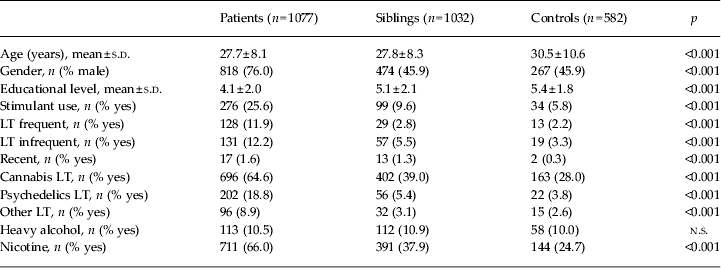
As presented in Table 1, patients and unaffected siblings were significantly younger than controls. Patients were more often male compared to siblings and controls. The highest level of education was significantly lower in patients than in siblings and controls. Patients were more often lifetime users of stimulants compared to siblings and controls (25.6% v. 9.5% v. 5.8%): cannabis (64.6% v. 39.0% v. 28.0%), psychedelics (8.8% v. 5.4% v. 3.8%), other illicit substances (8.9% v. 3.1% v. 2.6%), and nicotine (66.0% v. 37.9% v. 24.7%). Heavy alcohol use was not significantly different between the diagnostic groups.
Demographic and substance use variables in patients, siblings and controls

LT, Lifetime; s.d., standard deviation; n.s., not significant.
Other: use of inhalants, phenylcyclohexylpiperidine (PCP), sedatives and other substances.
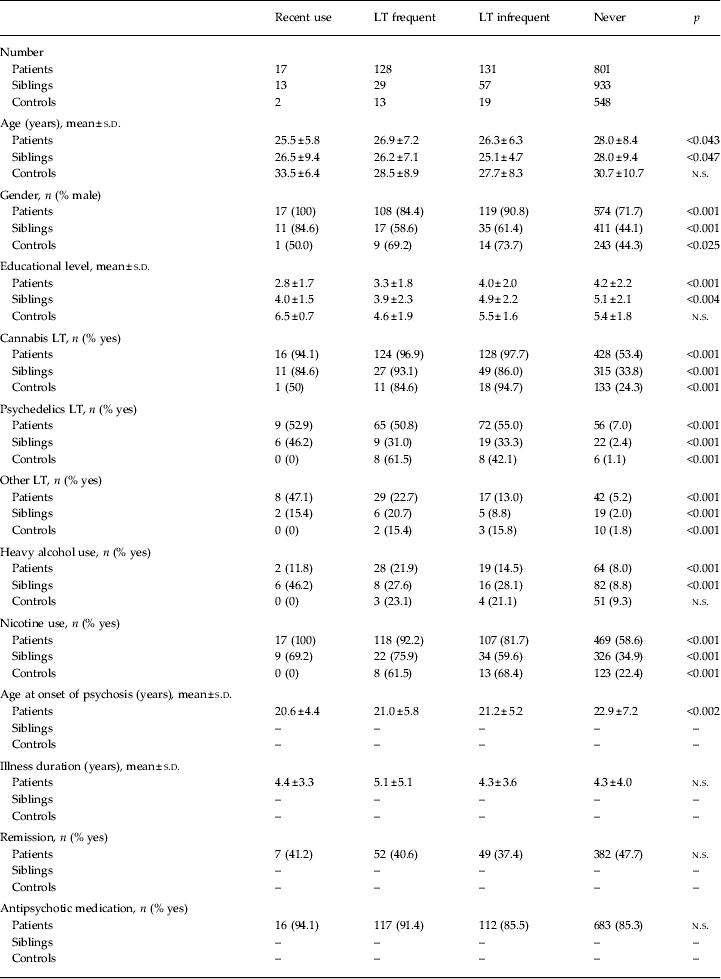
Table 2 shows demographic and clinical characteristics of recent, lifetime frequent, lifetime infrequent and never stimulant using patients, siblings and controls. Stimulant using patients were significantly younger, more often male and lower educated in comparison to never users. Age at onset of psychosis was lower in stimulant users than in never users. Stimulant using patients were more often lifetime users of cannabis, psychedelics, other illicit substances, heavy alcohol and nicotine. Stimulant use was not significantly associated with remission rate, the use of antipsychotics or illness duration.
Demographic and clinical variables in patients, siblings and controls categorized by level of stimulant use

LT, Lifetime; s.d., standard deviation; n.s., not significant.
Other: use of inhalants, phenylcyclohexylpiperidine (PCP), sedatives and other substances.
Stimulant using siblings were younger, more often male and lower educated. They were more often lifetime users of cannabis, psychedelics, other illicit substances, heavy alcohol and nicotine. Stimulant using controls were more often male and more often users of cannabis, psychedelics, other illicit substances and nicotine. Age, educational level and heavy alcohol use were not significantly different between stimulant using and non-using controls.
Associations between stimulant use and cognitive functioning
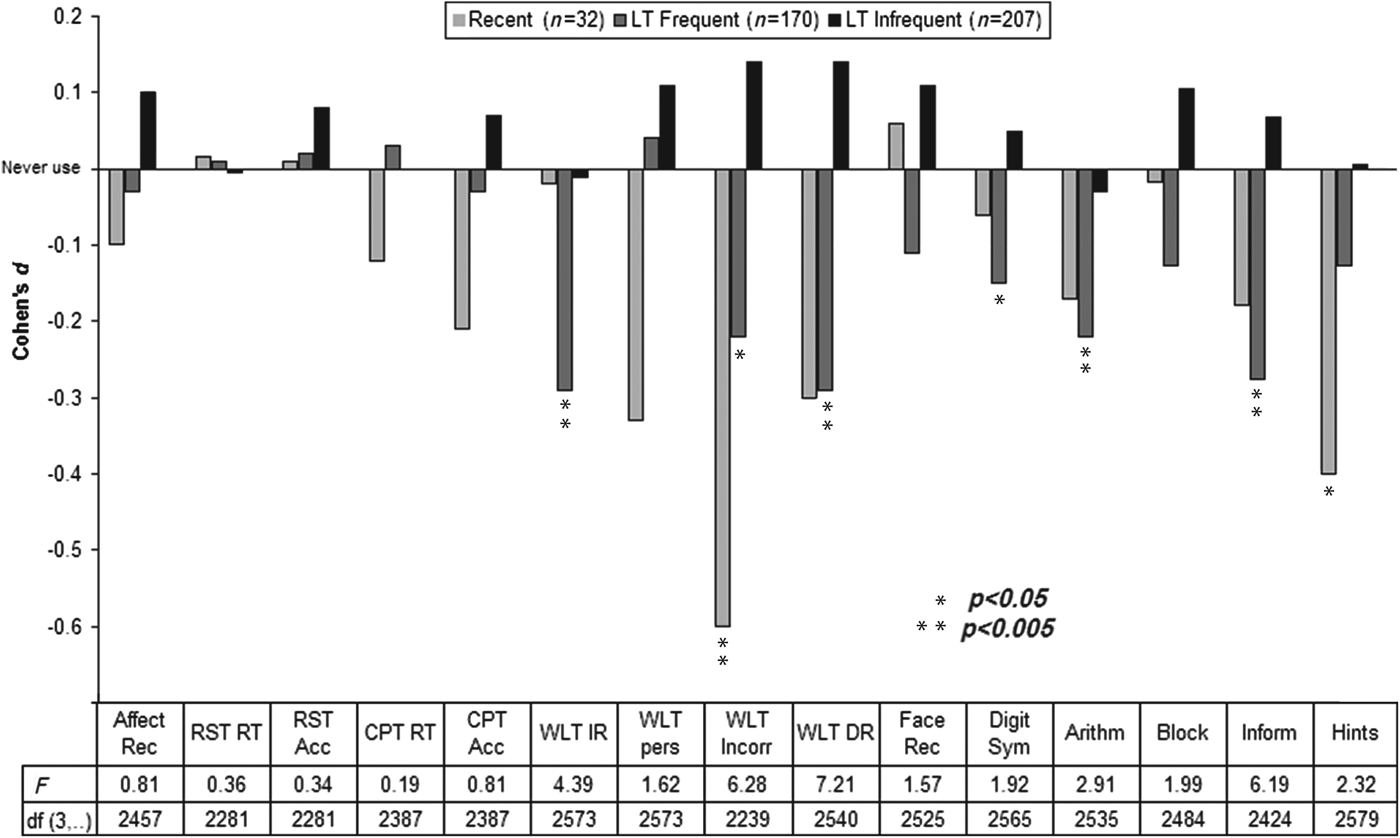
The interaction term between Stimulant Use (recent, lifetime frequent, lifetime infrequent, never) and Diagnostic Status (patient, sibling, control) was not significant for any of the cognitive outcome parameters, indicating similar effects of stimulant use in all three groups. Consequently, the interaction term was removed from the random effects regression models for the final analyses. The effects of stimulant use displayed in Fig. 1 therefore apply to the total group of patients, siblings and controls.
Random effects regression model. Association between cognitive functioning and recent/lifetime stimulant use in comparison to never use in patients, siblings and controls (never users are represented as the reference category). RST, Response Shifting Task; CPT, Continuous Performance Task; WLT, Word Learning Task; RT, reaction time; IR, immediate recall; DR, delayed recall; LT, lifetime; df, degrees of freedom.

Recent stimulant use was associated with a general pattern of non-significantly worse cognitive functioning compared to never use. Recent stimulant users only performed significantly worse than never users on the number of incorrect words in the WLT (Cohen's d = −0.60, F 3,2239 = 6.28, p < 0.005).
Lifetime frequent (i.e. daily to weekly) stimulant use was associated with a significantly worse performance on a range of cognitive tasks compared to never stimulant use, including associations with immediate recall in the WLT (F 3,2573 = 4.39, p < 0.005), delayed recall in the WLT (F 3,2540 = 7.21, p < 0.005), WAIS Arithmetic (F 3,2535 = 2.91, p < 0.005) and WAIS Information (F 3,2424 = 6.19, p < 0.005), although effect sizes were small (Cohen's d = −0.22 to −0.29). Associations with the number of incorrect words in the WLT, and also the association with WAIS Digit Symbol-Coding, did not survive correction for multiple comparisons. Although lifetime infrequent (less than weekly) stimulant use was associated with a general pattern of better cognitive functioning in comparison to never use, these results did not reach statistical significance and effect sizes were small (Cohen's d = +0.10).
Regarding the post-hoc analyses, stratified analyses revealed that the effect of stimulant use in siblings was more similar to the effect in patients than in controls. To illustrate this, stimulant use was associated with better cognitive functioning in 53.3% of controls with a mean Cohen's d of + 0.34 (range +0.1 to +0.75). In siblings and patients, the association between stimulant use and better cognitive functioning was less common and effect sizes were smaller, presenting in only 17.8% of siblings (mean d = +0.17, range +0.1 to +0.38) and 8.9% of patients (mean d = +0.25, range +0.12 to +0.44). As stratification resulted in small sample sizes, especially for the subcategories of recent stimulant use, these results should be interpreted with caution.
Discussion
In the present study, we examined the association between recent and lifetime stimulant use and cognitive functioning in a large sample of patients with a non-affective psychotic disorder, their unaffected siblings and healthy controls, while taking into account important potential confounders such as age, gender, educational level, use of other illicit substances, smoking and heavy alcohol use. Our hypothesis on recent stimulant use was confirmed, holding that recent stimulant use was associated with worse performance on specific cognitive domains, namely immediate and delayed verbal learning. Furthermore, there was a (non-significant) trend for worse cognitive functioning on nearly all cognitive domains. Our hypothesis on lifetime stimulant use and better cognitive functioning was, however, not confirmed. Lifetime frequent stimulant use was associated with worse cognitive functioning in the specific domains of immediate and delayed verbal learning (WLT), working memory (WAIS Arithmetic) and acquired knowledge (WAIS Information). Consistent with our second hypothesis, the association between stimulant use and cognition was not significantly different for patients, siblings and controls.
The results we found in recent stimulant users are in line with a previous study that reported an association between recent stimulant use and impaired verbal memory in schizophrenia patients (Serper et al. Reference Serper, Copersino, Richarme, Vadhan and Cancro2000). Moreover, similar results were found in studies investigating cognitive functioning in recent cannabis using patients (D'Souza et al. Reference D'Souza, Abi-Saab, Madonick, Forselius-Bielen, Doersch, Braley, Gueorguieva, Cooper and Krystal2005; Henquet et al. Reference Henquet, Rosa, Krabbendam, Papiol, Fananas, Drukker, Ramaekers and van Os2006). Although not significant, we found a trend for worse cognitive functioning in recent stimulant users on several other cognitive domains. The lack of significant associations in this group could be the result of insufficient power because only 32 subjects were recent stimulant users. However, other studies neither found (additional) cognitive impairments in recent stimulant using schizophrenia patients (Goldberg et al. Reference Goldberg, Bigelow, Weinberger, Daniel and Kleinman1991; Cooper et al. Reference Cooper, Liberman, Tucker, Nuechterlein, Tsuang and Barnett1999; Serper et al. Reference Serper, Copersino, Richarme, Vadhan and Cancro2000; Pencer & Addington, Reference Pencer and Addington2003; Smelson et al. Reference Smelson, Davis, Eisenstein, Engelhart, Williams, Losonczy and Ziedonis2003; Copersino et al. Reference Copersino, Serper, Vadhan, Goldberg, Richarme, Chou, Stitzer and Cancro2004) or even reported superior cognitive functioning in recent using patients (Smelson et al. Reference Smelson, Davis, Di Pano, Johnson, Losonczy and Ziedonis2002; Pencer & Addington, Reference Pencer and Addington2003). Similarly, the acute administration of stimulants has been associated with positive effects on working memory and processing speed in patients with schizophrenia (Goldberg et al. Reference Goldberg, Bigelow, Weinberger, Daniel and Kleinman1991; Barch & Carter, Reference Barch and Carter2005). This was not replicated in our study, although the results are not directly comparable. We found a pattern of worse cognitive functioning in recent users with a positive urine screen. Subjects included in the studies of Goldberg et al. (Reference Goldberg, Bigelow, Weinberger, Daniel and Kleinman1991) and Barch & Carter (2205) had no history of stimulant use and only took stimulants for the purpose of the study whereas our results were obtained in a naturalistic setting.
Unlike previous studies that reported better cognitive functioning in lifetime, but not recent, cannabis using patients (Joyal et al. Reference Joyal, Halle, Lapierre and Hodgins2003; Potvin et al. Reference Potvin, Briand, Prouteau, Bouchard, Lipp, Lalonde, Nicole, Lesage and Stip2005; Fernandez-Serrano et al. Reference Fernandez-Serrano, Perez-Garcia and Verdejo-Garcia2011; Meijer et al. Reference Meijer, Simons, Quee and Verweij2012), the association between lifetime infrequent stimulant use and better cognition in our study was small and insignificant. It has been suggested that patients who use substances need better cognitive skills to obtain drugs, which may explain the higher levels of pre-morbid adjustment in comparison to never using patients (Murray et al. Reference Murray, O'Callaghan, Castle and Lewis1992). However, in The Netherlands, stimulants are relatively cheap and easy to obtain, which makes such a selection effect less likely.
The finding that lifetime frequent stimulant use was associated with worse cognitive functioning is not in line with some of the literature concerning lifetime cannabis use (Loberg & Hugdahl, Reference Loberg and Hugdahl2009; Rabin et al. Reference Rabin, Zakzanis and George2011, Reference Rabin, Zakzanis, Daskalakis and George2013; Yucel et al. Reference Yucel, Bora, Lubman, Solowij, Brewer, Cotton, Conus, Takagi, Fornito, Wood, McGorry and Pantelis2012). However, lifetime frequent stimulant use has been linked to worse cognitive functioning in specific cognitive domains in schizophrenia patients (Sevy et al. Reference Sevy, Kay, Opler and van Praag1990; Serper et al. Reference Serper, Copersino, Richarme, Vadhan and Cancro2000) and healthy controls (Mittenberg & Motta, Reference Mittenberg and Motta1993; Gillen et al. Reference Gillen, Kranzler, Bauer, Burleson, Samarel and Morrison1998; Bolla et al. Reference Bolla, Rothman and Cadet1999). Moreover, we found that the association between stimulant use and cognition is not different between patients with a psychotic disorder, their unaffected siblings and healthy controls. Taken together, these findings do not support the idea that stimulant using patients represent a subgroup with better pre-morbid functioning and a lower vulnerability to develop psychosis.
Furthermore, our study indicates worse cognitive functioning in unaffected siblings who frequently use stimulants in comparison to never users. To our knowledge, this is the first time that this association has been investigated in unaffected siblings.
In patients, stimulant use was not associated with illness duration, use of antipsychotic medication or remission rates, suggesting that the effect of stimulant use on disease course may be limited. However, it would be premature to draw such a conclusion based on our cross-sectional data. Longitudinal studies are required to assess the effects of initiation, continuation and cessation of stimulant use on disease course in patients with non-affective psychosis.
Although stimulant using and never using patients did not differ in terms of illness duration, use of antipsychotics and number of relapses, they did differ in age at onset of psychosis. This finding may suggest that the use of stimulants could be part of a pathway to psychosis onset that otherwise might not have occurred or might have occurred later in life. This association should be addressed in future prospective studies.
Methodological differences are likely to have contributed to inconsistencies between our results and previously reported findings. First, variation in the type of stimulants may explain some of the different findings. Second, in the above-mentioned studies, different tests were used to determine verbal learning, processing speed and working memory. This heterogeneity in neuropsychological testing is a general problem that limits comparability and requires the use of more standardized cognitive test batteries. Comparability between studies would be further advanced by formulating clearer definitions of recency and frequency of substance use. Finally, the use of urinalysis versus self-report measures may have accounted for differences in study results.
Our findings should be interpreted in light of some limitations. Although we corrected for the use of other illicit substances, alcohol, nicotine, age, gender and education, it is possible that a group of ‘pure’ stimulant users would have shown somewhat different results regarding associations with cognition. Future studies should try to replicate our findings in a well-matched sample. However, this study was designed to take place in a naturalistic context in which single drug use is exceptional. In addition, we used a fairly rough division into ‘daily’, ‘weekly’ and ‘monthly use’ for measuring the frequency of stimulant use conforming to the criteria in the CIDI (WHO, 1990). In future studies, the use of a continuous measure is recommended (e.g. number of times used, total amount used). Additionally, covariates specific to the patient population, such as antipsychotic use and psychosis severity, could not be included in the mixed model analyses because controlling for the potential effects of a covariate is only possible when there is an overlap in the distribution of the covariates between the status groups. Therefore, we cannot fully exclude the possibility that the association between stimulant use and cognitive functioning has been confounded by, for example, differences in medication use or disease severity. However, because stimulant using and non-using patients did not differ significantly in remission rate, the use of antipsychotics and illness duration, the chance that such confounding may have occurred is considered to be low.
Although the choice to combine amphetamine, cocaine and ecstasy into one measure increased power, it may restrict comparability to other studies. However, as results from previous studies indicate that individual stimulant drugs have similar effects, it seems justified to group them together (Kraemer & Maurer, Reference Kraemer and Maurer2002; Staack & Maurer, Reference Staack and Maurer2005). Another limitation is that, because of the cross-sectional design of the study, conclusions about causality between stimulant use and cognitive functioning cannot be drawn. Longitudinal studies and intervention studies are needed to determine whether these associations are caused by stimulant use or represent a pre-selection effect. Within our sample, some subgroups, for example patients with attention-deficit/hyperactivity disorder (ADHD), may be more likely to use stimulants than others. Thus, pre-existing cognitive deficits in these groups may have influenced our results (Charach et al. Reference Charach, Yeung, Climans and Lillie2011). Finally, the group of recent stimulant users was relatively small compared to the lifetime frequent and lifetime infrequent groups. Although we did find large effect sizes in this group, a lack of power could have resulted in the absence of statistically significant associations.
Despite these limitations, this study allowed us to expand the existing literature on the relationship between stimulant use and cognition. We were able to investigate a large sample of patients with non-affective psychotic disorders, their unaffected siblings and non-using healthy controls, making it the first study to assess the relationship between stimulant use and cognition in three subject groups with varying psychosis vulnerability. Furthermore, because of the naturalistic nature of our study, the results may be easily generalized to everyday practice. Lastly, we carried out an extensive clinical assessment and a broad range of cognitive tests that allowed us to assess associations with several cognitive domains while controlling for relevant confounders.
Conclusions
This is the first study to assess the association between stimulant use and cognitive functioning in three groups of individuals with varying levels of psychosis vulnerability. We found that frequent stimulant use equally affects cognition in patients with non-affective psychosis, their unaffected siblings and healthy controls. Subjects with a history of frequent stimulant use were especially impaired in verbal memory whereas recent stimulant users were impaired in verbal memory, acquired knowledge and processing speed. Infrequent stimulant use was not associated with cognitive impairment in patients, their unaffected siblings and healthy controls. On the basis of our findings, frequent stimulant use should be discouraged. More research on stimulant use and cognition needs to be performed to clarify contradictory results on this topic. Longitudinal studies investigating changes in stimulant use over time could provide more insight into causality, clarifying the issue of whether the associations represent a direct effect of stimulant use on cognitive functioning or a pre-selection effect.
Appendix: GROUP Investigators
R. S. Kahn1, D. H. Linszen2, J. van Os3, D. Wiersma4, R. Bruggeman4, W. Cahn1, L. de Haan2, L. Krabbendam3 and I. Myin-Germeys3
1 University Medical Center Utrecht, Department of Psychiatry, Rudolf Magnus Institute of Neuroscience, The Netherlands
2 Academic Medical Center, Department of Psychiatry, University of Amsterdam, The Netherlands
3 Maastricht University Medical Center, South Limburg Mental Health Research and Teaching Network, EURON, Maastricht, The Netherlands
4 University Medical Center Groningen, Department of Psychiatry, University of Groningen, The Netherlands
Acknowledgments
We thank all participants of this study for the generosity of time and effort, and the researchers who made this GROUP project possible.
The infrastructure for the GROUP study is funded by the Geestkracht Program of the Dutch Health Research Council (ZON-MW, grant no. 10-000-1001) and matching funds from participating universities and mental health care organizations in The Netherlands [Amsterdam: Academic Psychiatric Center AMC, Ingeest, Arkin, Dijk en Duin, Rivierduinen, Erasmus MC, Geestelijke Gezondheidszorg (GGZ) Noord Holland Noord; Utrecht: University Medical Center Utrecht, Altrecht, Symfora, Meerkanten, Riagg Amersfoort, Delta; Groningen: University Medical Center Groningen, Lentis, GGZ Friesland, GGZ Drenthe, Dimence, Mediant, GGZ De Grote Rivieren and Parnassia Bavo Groep; Maastricht: Maastricht University Medical Center, GGZ Eindhoven en de Kempen, GGZ Midden-Brabant, GGZ Oost-Brabant, GGZ Noord-Midden Limburg, Mondriaan Zorggroep, Prins Clauscentrum Sittard, RIAGG Roermond, Universitair Centrum Sint-Jozef Kortenberg, CAPRI University of Antwerp, PC Ziekeren Sint-Truiden, PZ Sancta Maria Sint-Truiden, GGZ Overpelt, OPZ Rekem].
The analyses were supported by unrestricted grants from Jansen-Cilag, Eli Lilly and Company, Astra-Zeneca and Lundbeck.
F.J.M. and E.V. are supported by grant no. HEALTH-F2-2010-241909 (Project EU-GEI); and J.M. has received funding from Top Institute Pharma (www.tipharma.nl; includes co-funding from universities, government and industry).
Declaration of Interest
None.