Introduction
Millions of tons of crude oil are accidentally spilled in the world's seas as oil is being transported around the globe as an important energy commodity; making accidental spillage a common phenomenon. Once oil is spilled, marine biota such as phytoplankton, zooplankton, crustaceans, and fish can become the main target of petroleum hydrocarbon (PH) contamination. In addition many other sources contribute to oil input in the sea including offshore oil exploration, oil tankers, urban runoff, tanker operations, and industrial and municipal wastes discharged to the sea. When the oil is mixed with seawater, a toxic mixture is produced that consists of polyaromatic hydrocarbons, paraffin and phenols that are responsible for oil toxicity (Saeed & Al-Mutairi, Reference Saeed and Al-Mutairi1999). Also, oil forms slicks on the seawater surface or settles on the bottom of the sea to form large globules when incorporated into the sand floor (Karam et al., Reference Karam, Beg, Al-Khabbaz, Al-Ballam, Dakour and Al-Abdul Elah2014). The impact of an oil spill on the marine environment varies depending on habitat sensitivity. Samiullah (Reference Samiullah1985) suggested that organisms that inhabit shallow water environments, and intertidal zones, in addition to those that have to cross the air–water interface are most affected. The uptake of PH by marine organisms has been the subject of many field and laboratory studies covering marine mammals (Fair et al., Reference Fair, Adams, Mitchum, Hulsey, Reif, Houde, Muir, Wirth, Wetzel, Zolman, McFee and Bossart2010; Moon et al., Reference Moon, An, Park, Choi, Moon, Choi and Choi2011), seabirds (Lance et al., Reference Lance, Irons, Kendall and McDonald2001; Romero et al., Reference Romero, Oliveira and Abessa2018), reptiles (Ylitalo et al., Reference Ylitalo, Collier, Anulacion, Juaire, Boyer, da Silva, Keene and Stacy2017; Frasier et al., Reference Frasier, Solsona-Berga, Stokes, Hildebrand, Murawski, Ainsworth, Gilbert, Hollander, Paris, Schlüter and DL2020), fishes (Afifi et al., Reference Afifi, Alkaladi, Abu Zinada and Couderchet2017; Beg et al., Reference Beg, Butt, Al-Dufaileej, Karam, Al-Sharrah and Saeed2018) and crustaceans (Knap et al., Reference Knap, Turner, Bera, Renegar, Frank, Sericano and Riegl2017; Gospodarek et al., Reference Gospodarek, Petryszak, Kołoczek and Rusin2019). Exposure to waters mixed with crude oil can result in many adverse effects on marine biota as oil components such as naphthalenes can be taken up into organisms’ tissues (Varanasi & Malin, Reference Varanasi, Malin and Malins1977). Karam et al. (Reference Karam, Ali, Subrahmanyam, Al-Abdul, Bentley, Beg, Pandey Penelope Watt and Al-Abdul Elah2019) have observed that dispersed and undispersed oil can affect different life stages of marine biota that can alter the food chain in the marine environment (Wolfe et al., Reference Wolfe, Schwartz, Singaram, Mielbrecht, Tjeerdema and Sowby1996, Reference Wolfe, Schwartz, Singaram, Mielbrecht, Tjeerdema and Sowby2001). For example, polycyclic aromatic hydrocarbons (PAH) can affect humans through food consumption, leading to malignant diseases such as cancer, infertility and other health-related ailments (Fleming et al., Reference Fleming, Broad, Clement, Dewailly, Elmir, Knap, Pomponi, Smith, Solo Gabriele and Walsh2006). Crustaceans such as marine crabs are considered seafood delicacies in many parts of the world and are commercially valuable to the economy. Furthermore, crabs inhabit various marine habitats and play essential roles in the ecological stability of their environments. In intertidal habitats, fiddler crabs (Oxypodidae) are very common on mud flats (Shih et al., Reference Shih, Ng, Davie, Schubart, Türkay, Naderloo, Jones and Liu2016), whereas species in the family Pilumnidae (Ng et al., Reference Ng, Lin and Ho2018) and xanthid crabs (Al-Wazzan et al., Reference Al-Wazzan, Le Vay, Behbehani and Giménez2020) are reef dwellers in the intertidal region. Sesarmid crabs are common in mangrove swamps with strong tolerance to fluctuating salinities (Theuerkauff et al., Reference Theuerkauff, Rivera-Ingraham, Roques, Azzopardi, Bertini, Lejeune, Farcy, Lignot and Sucré2018). In subtidal habitats Portunid species are common (Lai et al., Reference Lai, Ng and Davie2010). Crabs are a largely benthic species with a complex life cycle characterized by a benthic phase in adults and juveniles and a pelagic phase in which larvae drift in the sea. Larvae are sensitive to environmental variation and that could affect the benthic population (Connolly & Roughgarden, Reference Connolly and Roughgarden1999). In such species, effects at a given life stage can impact the performance of subsequent stages (Pechenik, Reference Pechenik2006; Marshall et al., Reference Marshall, Bonduriansky and Bussière2008). Intertidal and subtidal crabs are thus very vulnerable to oil spills. Therefore, understanding PH behaviour in crabs will shed light on its role in affecting human health and also environmental well-being.
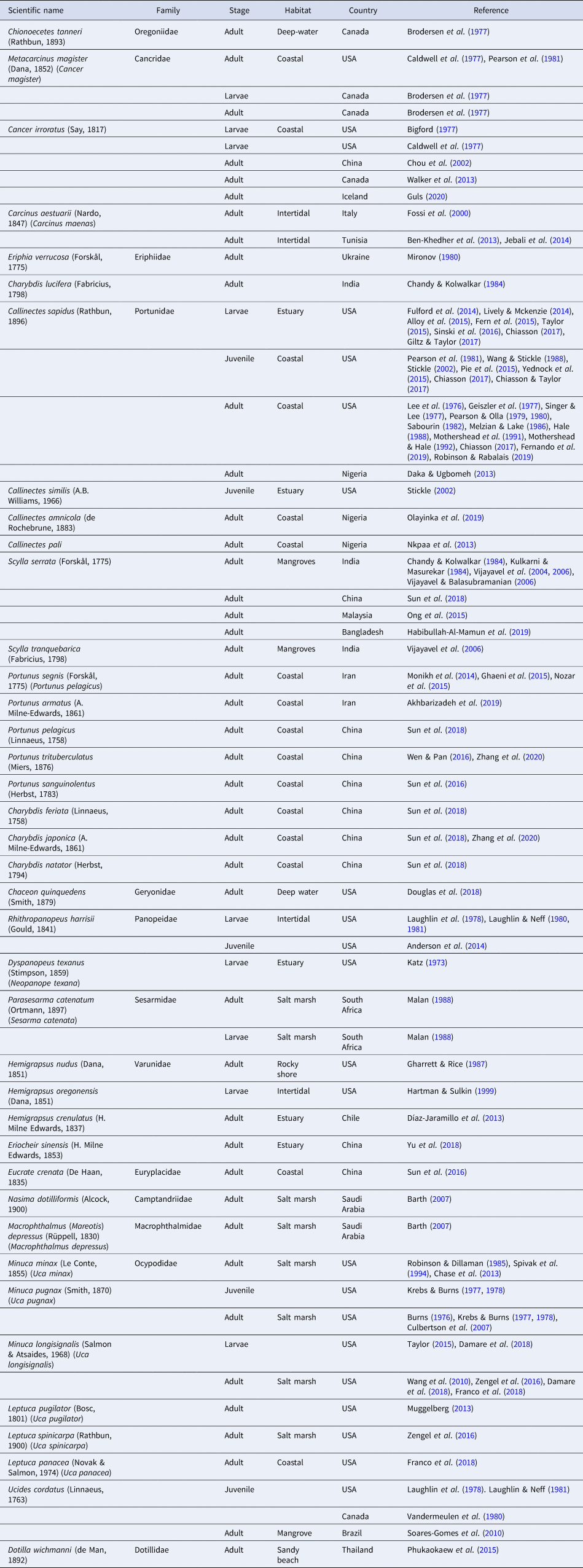
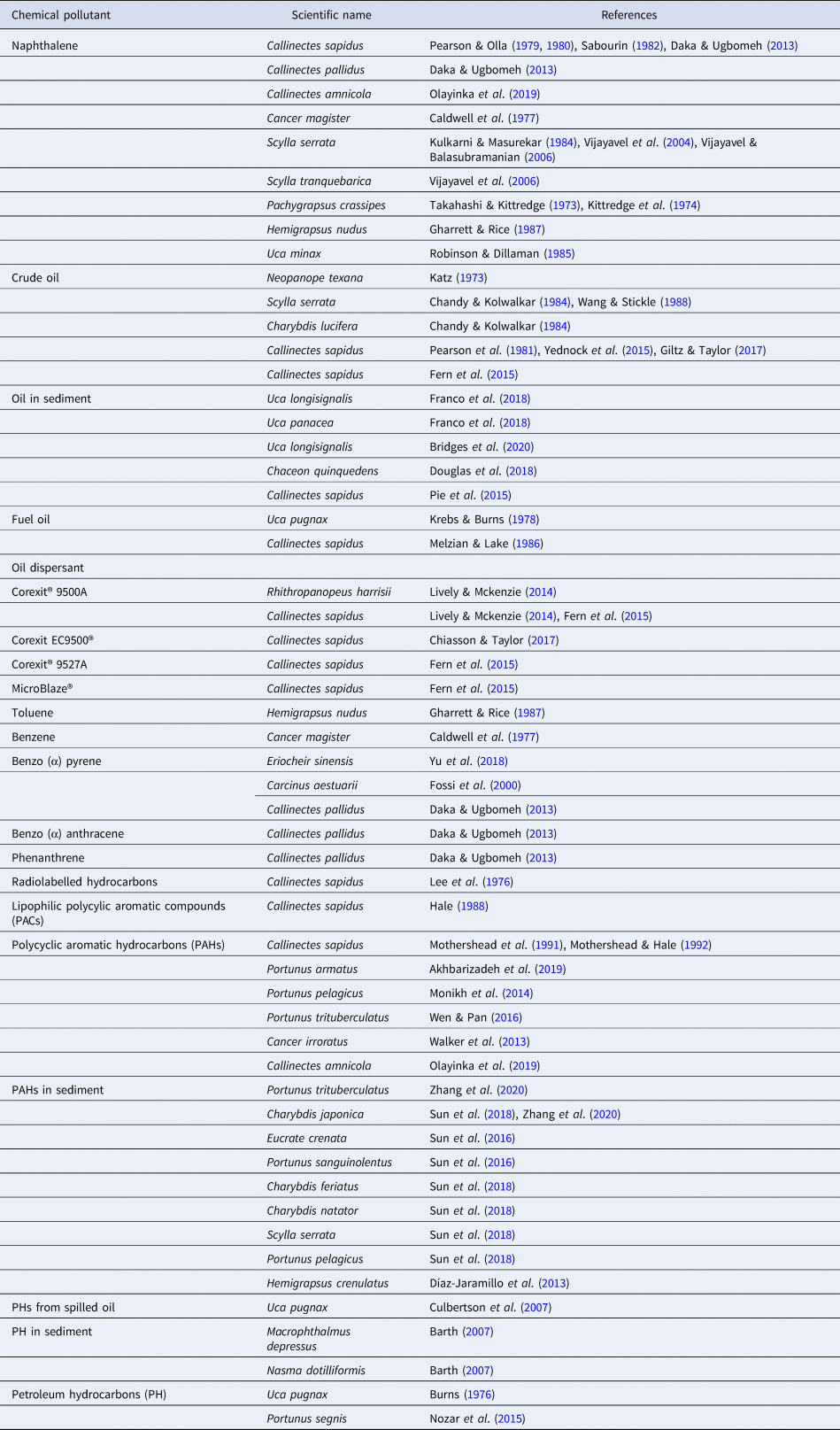
Over the years, ecotoxicological research on crabs has progressed extensively, investigating the adverse effects of PH and petroleum-related products on various life stages of marine crabs. Almost 65% of these studies have focused on commercially important species such as the blue crab Callinectes sapidus, the Dungeness crab Cancer magister and the mud crab Scylla serrata (Table 1). Much research has been dedicated to investigating the sub-lethal effects of PAH or n-alkane hydrocarbons on crab metabolism, behaviour, moulting, osmoregulation and respiration (Pearson & Olla, Reference Pearson and Olla1980; Cantelmo et al., Reference Cantelmo, Lazell and Mantel1981, Reference Cantelmo, Mantel, Lazell, Hospod, Flynn, Goldberg, Katz, Vemberg, Calabrese, Thurberg and Vernberg1982; Sabourin, Reference Sabourin1982; Pearson et al., Reference Pearson, Skalski, Sulkin and Malme1994). Also, radiolabelled n-alkane and aromatic hydrocarbon uptake and retention were studied by Lee et al. (Reference Lee, Ryan and Neuhauser1976) and Geiszler et al. (Reference Geiszler, Grantham and Blomquist1977), specifically in blue crabs. Much research was dedicated to understanding the deleterious effects of crude oil on moulting and growth in various species (Fingerman & Fingerman, Reference Fingerman and Fingerman1979; Schimmel et al., Reference Schimmel, Patrick, Faas, Oglesby and Wilson1979; Wang & Stickle, Reference Wang, Stickle, Vernberg, Winona, Calabrese, Thurberg and Vernberg1987) (Table 2). These studies covered all of the crab's life stages with the largest focus directed to adult crabs (representing 66.3% of the total conducted studies included here). In comparison, the effect of PH on larval stages and juvenile crabs has received much less attention.
List of brachyuran crabs investigated for petroleum hydrocarbons in the literature

List of investigated petroleum hydrocarbons and the relevant crab species

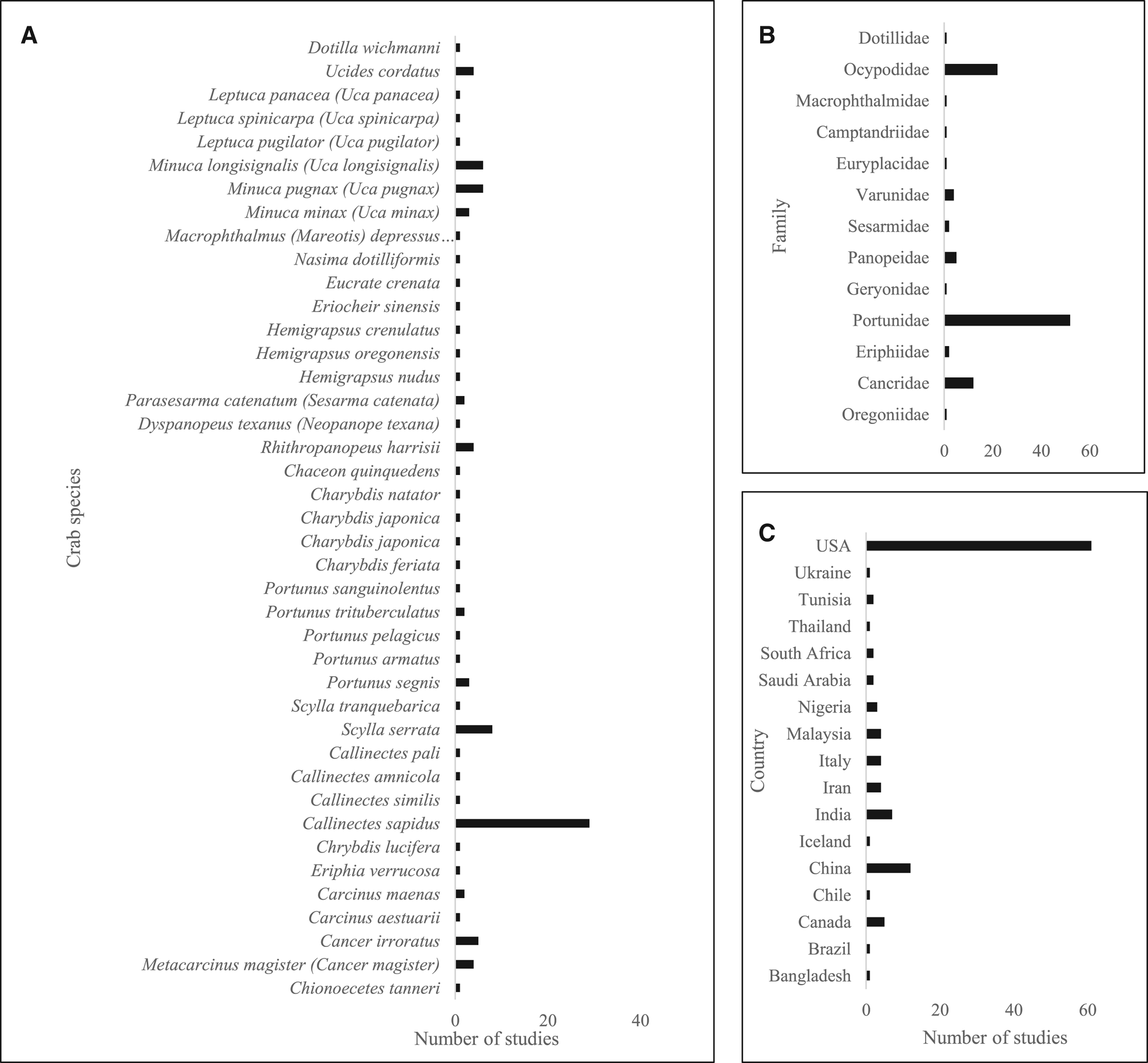
In this paper, studies spanning 50 years have been reviewed to understand the effect of PH on different crab life stages in 41 crab species, representing 13 families from 17 countries (Figure 1). The objective of this manuscript is to provide a comprehensive review of the toxic effects of oil on different life stages of crabs; including larvae, juveniles and adults. This might highlight the most vulnerable stages to give us a better understanding of the effect of PH on crab populations.
Summary of studies related to petroleum hydrocarbons on different life stages of brachyuran crab species (A) representing different families (B) around the world (C).

Effects on larvae
The toxicological effects of oil-related compounds on marine crabs have been the subject of much research over the years. In brachyuran crabs, larvae are released into the planktonic community to complete their developmental stages and disperse through the water column. Giménez (Reference Giménez2002) suggested that larvae with higher biomass generally have a higher survival rate and shorter developmental duration. This is essential to ensure successful development as larvae are very sensitive to environmental conditions (Morgan, Reference Morgan1987; Weiss et al., Reference Weiss, Heilmayer, Brey and Thatje2009). Initial toxicological evaluations determined that early life stages of marine crabs are the most sensitive to xenobiotics such as spilled oil, jet fuel and benzene, among others. For instance, zoea and megalopa of the mud crab Rhithropanopeus harrisii responded differently to environmental stressors, and larvae tend to be more sensitive than intermoult stages (Mecklenburg et al., Reference Mecklenburg, Rice and Karinen1977). Different geographic habitats can also lead to differences in sensitivity levels, for example crabs that inhabit colder environments have larval stages that tend to be more vulnerable than the adult stages as they have longer larval lifespans (Brodersen et al., Reference Brodersen, Rice, Short, Mecklenburg and Karinen1977).
The adverse effects of oil on locomotor behaviour (swimming performance) of crab larvae have also been investigated. Katz (Reference Katz1973) observed high mortality rates in larval swimming stages of Neopanope texana upon exposure to 10 ml l−1 light Venezuelan crude oil water-extract. Furthermore, spilled oil is considered as an environmental stressor to marine organisms and crab larvae have been observed to undergo daily moulting as a response to pollutant stress (Epifanio, Reference Epifanio1971). It has been determined that even low concentrations of water-soluble fractions (WSF) of oil represented by a mixture of naphthalene, benzene or total dissolved aromatics can exert toxicity to marine crab larvae (Caldwell et al., Reference Caldwell, Caldarone and Mallon1977). To determine whether or not WSF of oil exerts an effect on crab zoeal stage duration, Laughlin et al. (Reference Laughlin, Young and Neff1978) found that upon increasing the exposure duration to WSF of No. 2 fuel oil, zoeal crab stage duration was increased. Also, they reported that crab larvae exposed to high PH concentration treatment grew larger during the larval stages than crabs in control or treated with WSF concentrations.
Furthermore, oil exposure increased the respiration rates and decreased growth in the larvae of the mud crab R. harrisii (Laughlin & Neff, Reference Laughlin and Neff1980, Reference Laughlin and Neff1981). However, it has been reported that a low PH concentration from jet fuel exerted no effects on mortality or developmental rate of the larval stages of R. harrisii (Laughlin & Neff, Reference Laughlin and Neff1981). We can deduce that chemical stressors, whether oil or jet fuel, can result in different ecotoxicological defects on R. harrisii larvae. This assumption is supported by Carls & Rice, (Reference Carls and Rice1984) who reported that different crab species display different tolerance levels to PAH with king crab and Tanner crab larvae as the most tolerant species. Hence, different crab species respond differently to the toxicity of xenobiotics.
Over time, more literature provided evidence that larval stages are more sensitive than juveniles and adults (Brodersen et al., Reference Brodersen, Rice, Short, Mecklenburg and Karinen1977; Laughlin et al., Reference Laughlin, Young and Neff1978; Malan, Reference Malan1988) with the early zoeal stages being the most vulnerable (Laughlin et al., Reference Laughlin, Young and Neff1978; Malan, Reference Malan1988). Petroleum hydrocarbon contamination was detected in wild megalopa of the blue crab Callinectes sapidus four years after the Deepwater Horizon (DWH) oil spill (Sinski et al., Reference Sinski, Perry and Exner2016). Moreover, mortality rates in the larvae and juveniles of C. sapidus were higher than in adult crabs after exposure to oil dispersant Corexit 9500 which confirms the vulnerability of crab early-life stages (ELS) to oil-related chemicals (Lively & Mckenzie, Reference Lively and Mckenzie2014). Exposure to jet fuel has also been recorded to affect the larval swimming performance of the rock crab Cancer irroratus, as oil affected their response to gravity and light (Bigford, Reference Bigford1977). It has been reported that the larvae of fiddler crab Uca longisignalis (Damare et al., Reference Damare, Bridges, Alloy, Curran, Soulen, Forth, Lay, Morris, Stoeckel and Roberts2018) and the blue crab C. sapidus (Alloy et al., Reference Alloy, Boube, Griffitt, Oris and Roberts2015) are sensitive to PAH photo-induced toxicity. This sensitivity increased mortality in U. longisignalis larvae (Taylor, Reference Taylor2015). In contrast, when the egg-bearing females of the shore crab Hemigrapsus oregonensis were exposed to PH contamination, no effect on larval development was reported (Hartman & Sulkin, Reference Hartman and Sulkin1999). Experimental evidence demonstrates that other crab larvae have different resistance to pollution cues, for example the chronically oil-exposed mud crab R. harrisii exhibited a recovery from sub-lethal concentrations of PH (Laughlin et al., Reference Laughlin, Young and Neff1978). Furthermore, Giltz & Taylor (Reference Giltz and Taylor2017) found that exposing C. sapidus larvae to crude oil had no significant effect on growth or survival of the larvae.
In addition to the direct impact of PH on crab larval mortality, respiration, growth and swimming behaviour, indirect impacts through changes in food supply and hence production have also been investigated. Naphthalene as a major component of crude oil is considered to be the simplest, yet the most abundant PAH. It is a highly toxic compound exerting adverse effects on phytoplankton Ditylum brightwellii (Ozhan et al., Reference Ozhan, Parsons and Bargu2014). In a study by Kulkarni & Masurekar (Reference Kulkarni and Masurekar1984), larvae of the edible crab Scylla serrata exposed to 1.25, 2.5 and 5 mg l−1 naphthalene resulted in a significant increase in the enzymatic activities of lactate dehydrogenase, aspartate aminotransferase and alanine aminotransferase after a 45 days exposure period. These two studies confirm that there is a possibility of naphthalene bioaccumulation and biomagnification in the different components of aquatic trophic levels like phytoplankton and decapods.
In an attempt to assess the toxicity of dispersed and undispersed oil on megalopa stages of Callinectes sapidus, it was concluded that Bonny light-crude oil dispersed with Corexit 9500 and Corexit 9527 oil dispersants was more toxic than either oil or dispersant alone (Fern et al., Reference Fern, Withers, Zimba, Wood and Schoech2015). Also, megalopa stages of C. sapidus were more vulnerable to xenobiotic toxicity during the process of metamorphosis. In addition, blue crab sensitivity to dispersed oil in different concentrations have provided us with the conclusion that since Corexit 9500 is less toxic than Corexit 9527, it can be used in combating oil spills (Fern et al., Reference Fern, Withers, Zimba, Wood and Schoech2015).
Effects on juveniles
As marine crabs metamorphose from larvae to juveniles and move to their benthic community, different effects of oil contamination can manifest in their biochemical, genetic and developmental parameters. Toxicological studies on the effects of PH on crab juvenile life stages are unfortunately few and sparse. Krebs & Burns (Reference Krebs and Burns1977, Reference Krebs and Burns1978) made one of the first attempts to investigate the effects of PAH in marine sediment on crabs. They observed a reduction in settlement and recruitment of the fiddler crab Uca pugnax. High levels of PH contamination were reported to inhibit settlement for several years after the spill, which led to a lower population density (Krebs & Burns, Reference Krebs and Burns1977).
Oil contamination can also affect crab behaviour, disturbing antennular orientation and flicking ability. Antennular flicking increases the crustacean's ability to determine changes in the chemical environment through the diffusion of chemical substances to the chemoreceptors located on its antenna (Schmitt & Ache, Reference Schmitt and Ache1979). To support that observation, when blue crab C. sapidus juveniles were exposed to Prudhoe Bay WSF, their antennular orientation changed along with an increase in antennular flicking rate (Pearson et al., Reference Pearson, Miller, Blaylock and Olla1981). This finding demonstrated the sensitive behavioural response of juvenile blue crabs to detect any presence of dissolved PH through their antenna in chronically contaminated and uncontaminated situations in the marine environment.
Physiological changes in metabolic rate, growth and moult cycle were documented in crabs as a result of exposure to PH (Weis, Reference Weis2012) affecting biochemical activities at the cellular level. Wang & Stickle (Reference Wang and Stickle1988) observed a 60% decrease in the growth of C. sapidus juveniles after exposure to petroleum hydrocarbons of South Louisiana crude oil. This reduction in growth was a result of decreasing tissue content, in addition to this, decreases in RNA:DNA and protein:DNA ratios were reported (Wang & Stickle, Reference Wang and Stickle1988). In contrast, Stickle (Reference Stickle2002) recorded that the RNA:DNA ratio was not affected by chronic exposure to WSF of South Louisiana crude oil in juvenile C. sapidus and Callinectes similis, and no enhancement in their adaptation was reported. This clearly demonstrates that two different crab species can respond differently to the same type of crude oil. Significant increases in enzymatic activities for lactate dehydrogenase, aspartate aminotransferase and alanine aminotransferase were reported in edible crab S. serrata juveniles exposed to naphthalene (Kulkarni & Masurekar, Reference Kulkarni and Masurekar1984). The increase in lactate dehydrogenase could indicate that crabs have experienced hypoxic conditions because of naphthalene exposure (Walsh & Henry, Reference Walsh and Henry1990). Exposing the Chinese mitten crab Eriocheir sinensis juveniles to benzo (α) pyrene (BaP) led to several negative effects such as reduced growth survival rate, a reduction in glycogen, triglyceride, total amino acids and lactic acid were also reported in the hepatopancreas of juveniles (Yu et al., Reference Yu, Ding, Li, Qin, Chen and Wang2018). Additionally, PAHs were reported to reduce heat shock protein 90 (hsp90) levels in blue crab C. sapidus juveniles; however, no effects were reported on growth or moulting (Chiasson & Taylor, Reference Chiasson and Taylor2017). However, exposing crabs to crude oil has been reported to increase the intermoult duration in blue crab C. sapidus juveniles (Giltz & Taylor, Reference Giltz and Taylor2017). The two aforementioned studies demonstrate that C. sapidus growth or moulting can be either affected or not by exposure to either PAHs or crude oil.
The DWH oil spill incident that occurred in 2010 is considered one of the largest marine oil spills in the world. It led to the release of 4.4 million barrels of light sweet Louisiana crude oil into the Gulf of Mexico, threatening marine organisms such as C. sapidus (Sammarco et al., Reference Sammarco, Kolian, Warby, Bouldin, Subra and Porter2013). C. sapidus is considered an important fishery for Louisiana representing 23% of total world blue crab catch (Gelpi et al., Reference Gelpi, Condrey, Fleeger and Dubois2009). To combat the oil spill, 2.1 million barrels of Corexit® 9527 and Corexit® 9500A dispersants were used (Kujawinski et al., Reference Kujawinski, Soule, Valentine, Boysen, Longnecker and Redmond2011), but the toxic effects of dispersants on blue crabs were limited. In a study conducted by Lively & Mckenzie (Reference Lively and Mckenzie2014) it was observed that mortality of juvenile C. sapidus increased upon exposure to Corexit® 9500A dispersants that were originally used in DWH, and juveniles are more susceptible to the negative effect of the oil dispersant than larger crabs. Similarly, Anderson et al. (Reference Anderson, Kuhl and Anderson2014) reported that chemically dispersed treatments caused mortality in the mud crab R. harrisii juveniles. Furthermore, gene alteration was detected in C. sapidus juveniles exposed to Louisiana crude oil (Yednock et al., Reference Yednock, Sullivan and Neigel2015). In contrast, no significant effects on growth or moulting were detected in C. sapidus juveniles after exposing them to contaminated sediments (Pie et al., Reference Pie, Schott and Mitchelmore2015). These outcomes show that C. sapidus can respond differently to various types of oil, dispersed oil, and so forth.
Effects on adults
The adult stage of marine crabs have been extensively studied through different aspects of their biology, histology, biochemistry, toxicology and physiology. More than 60% of the studies that focused on PH in crabs were on adult crabs (Table 1). PAH contamination in marine environments is considered a serious threat to crabs. It has been reported that food and water are considered the main contamination sources for PH in crabs (Lee et al., Reference Lee, Ryan and Neuhauser1976; Mironov, Reference Mironov1980). Furthermore, hydrocarbon concentrations in biotic tissue were significantly correlated with PAH levels in water and sediments (Benson et al., Reference Benson, Essien, Williams and Ebong2007; Mahugija et al., Reference Mahugija, Ahmed and Makame2017). McElroy et al. (Reference McElroy, Farrington, Teal and Varanasi1989) suggested that the physical and chemical properties of PH, along with environmental and biological factors could affect the uptake and accumulation of PAH in tissues. Also, the PH uptake in crabs from the environment was reported to be through gills, skin and food (Kennish et al., Reference Kennish, Williams and Lee1996). Lee et al. (Reference Lee, Ryan and Neuhauser1976) indicated that crabs can eliminate most of the hydrocarbons by extraction processes. In their study, they estimated the bioaccumulation levels of paraffinic and aromatic hydrocarbons including naphthalene, fluorine, benzopyrene and heptadecane in the tissue of C. sapidus to be 2–10% of the total hydrocarbons assimilated by crabs. In contrast, Uthe & Musial (Reference Uthe and Musial1986) suggested that PAH with higher molecular weight has a slow depuration rate of elimination from crustaceans' bodies. In Nigeria, high molecular weight PAHs were significantly higher (˃2 μg kg−1 wet wt in food) in the blue crab Callinectes pali than the lower molecular weight PAHs (Nkpaa et al., Reference Nkpaa, Essien and Wegwu2013).
It is important to mention that a few studies have focused on using PH as an energy source in marine crabs. The ability of crabs to metabolize PH was examined by Burns (Reference Burns1976) as Alderin peroxidation rates were measured in fiddler crab Uca pugnax tissue from contaminated areas and compared with those from clean areas. The result indicates that U. pugnax has minimal ability to metabolize PH, and these crabs are highly sensitive to the oil-polluted environment. And, since U. pugnax live from 3–4 years, metabolism in aromatic hydrocarbons exposure conditions would not be fast, so crab tissue may eliminate a body burden of hydrocarbon contaminants within the crab life cycle of 3–4 years. Likewise, the purple shore crab Hemigrapsus nudus (Laurén & Rice, Reference Laurén and Rice1985) and C. sapidus (Geiszler et al., Reference Geiszler, Grantham and Blomquist1977) have a limited ability to metabolize PH such as naphthalene.
Effects on physiology
Crabs have different resistance levels to hydrocarbon toxicity tolerance which can be attributed to their habitat differences (Chandy & Kolwalkar, Reference Chandy and Kolwalkar1984), sex (Singer & Lee, Reference Singer and Lee1977) and developmental stage (Laughlin et al., Reference Laughlin, Young and Neff1978; Lively & McKenzie, Reference Lively and Mckenzie2014). The accumulation of hydrocarbon toxins was reported to cause prominent pathological damage in the gills and hepatopancreas tissues of Chrybdis lucifera and S. serrata. This damage includes fusion of lamellae and gill epithelia, heavy accumulation of haemocytes that caused a rupture of lamellae, and altered blood flow. Moreover, hepatopancreatic zonal tubular was damaged affecting PH metabolism and mortality in crabs. Although it was observed that mortality rates for both species did not increase with increasing oil concentrations, it was recorded that oil can adhere to the crab respiratory surface impairing gaseous diffusion (Chandy & Kolwalkar, Reference Chandy and Kolwalkar1984). Moreover, it has been reported that naphthalene disrupts ion exchange in the gill epithelia of the blue crab C. sapidus due imbalances in acid-base and osmotic conditions (Sabourin, Reference Sabourin1982).
A 12.5% reduction in oxygen consumption was observed in C. irroratus exposed to contaminated water, with no effect on the haemocyanin structure (Vandermeulen et al., Reference Vandermeulen, Hanrahan and Hemsworth1980). On the other hand, an increase in oxygen consumption was observed in S. serrata along with a decrease in respiratory enzymes, i.e. lactate dehydrogenase (LDH), isocitrate dehydrogenase (ICDH), succinate dehydrogenase (SDH), malate dehydrogenase (MDH), α-ketoglutarate dehydrogenase (α-KDH) and glutathione (GSH) (Vijayavel & Balasubramanian, Reference Vijayavel and Balasubramanian2006). Pollutants can lead to a depletion of O2 levels, causing stress to marine crabs in the vicinity of the polluted area and leading to a failure of respiratory metabolism (Spicer & Weber, Reference Spicer and Weber1991).
In another study, estuarine crabs Hemigrapsus crenulatus from an oil pollution impacted estuary in Chile were assessed for oxidative stress (OS). OS activity serves as a battery of significant biomarkers for enzymatic activity under pollution stress which can cause reactive oxygen species (ROS), and for instance enzymatic activities such as glutathione-S-transferase (GST), lipid peroxidation levels as reactive elements to thiobarbituric acid (TBARS), and total antioxidant capacity (ACAP) (Díaz-Jaramillo et al., Reference Díaz-Jaramillo, Socowsky, Pardo, Monserrat and Barra2013). The study revealed the sensitivity of the crab hepatopancreas to different levels of pollutants of anthropogenic origin such as oil spills in estuarine sediments, and that male H. crenulatus sampled during warm seasons can be a suitable biomarker. It is well established in the literature that susceptibility to marine pollutants can increase during elevated seawater salinity and temperature because of decreased capacity to isolate ROS in hot seasons (Paital & Chainy, Reference Paital and Chainy2010).
Exposure of S. serrata to naphthalene led to an overall increase in lipid peroxidation activity in hepatopancreas, haemolymph and ovary. In contrast, it led to a decrease in the enzymatic (catalase, wglutathione peroxidase, superoxide dismutase) and non-enzymatic (vitamins C, E, and glutathione) antioxidants for hepatopancreas, haemolymph and ovary (Vijayavel et al., Reference Vijayavel, Gomathi, Durgabhavani and Balasubramanian2004). Naphthalene led to a decrease in antioxidant levels which can ultimately affect crab reproductive functions. Hepatopancreatic cells are important for digestion and absorption of organic and inorganic products in crabs. Robinson & Dillaman (Reference Robinson and Dillaman1985) have examined the effect on the hepatopancreas of exposing the red-jointed fiddler crab Uca minax to naphthalene for 5 days. They reported an alteration of F and R cells which are rich in cisternal membrane and responsible for absorption and storage of digestion products, in comparison to B and E cells which function to secrete digestive enzymes. A probable explanation for the alteration is that protein synthesis is inhibited rather than enzymatic induction by PH. Furthermore, exposure to benzo (α) pyrene caused genetic damage in the hepatopancreas of the Mediterranean shore crab Carcinus aestuarii (Fossi et al., Reference Fossi, Casini, Savelli, Corbelli, Franchi, Mattei, Sanchez-Hernandez, Corsi, Bamber and Depledge2000).
The above-mentioned physiological irregularities in crab metabolic functions can be explained by the tendency of PH such as naphthalene to be lipophilic in nature. Lipophilic compounds can dissolve in crab tissue and lipids binding to hydrophobic sites such as cell macromolecules can be incorporated into its membranes, affecting its function and disrupting its enzymatic activities and resulting in cellular damage (Vijayavel & Balasubramanian, Reference Vijayavel and Balasubramanian2006).
Effects on behaviour
Decapod crabs possess chemosensory abilities to detect PAH xenobiotics in the marine environment. The rate of antennular flickering of the blue crab C. sapidus was increased upon the detection of naphthalene in seawater (Pearson & Olla, Reference Pearson and Olla1979). In contrast, aggressive behaviours were reported in C. sapidus upon exposing crabs to PAH contaminated sediment (Robinson & Rabalais, Reference Robinson and Rabalais2019). Pearson & Olla (Reference Pearson and Olla1980) suggest that blue crabs can detect whole oil mixtures more than individual PH such as naphthalene as behavioural changes (locomotor and defensive) were recorded at 2 mg l−1 of naphthalene. However, below 2 mg l−1, no alterations in crab behaviour were recorded as a result of exposure to naphthalene. Moreover, the exposure of the shore crab Pachygrapsus crassipes to naphthalene caused a blockage of pheromone responses and feeding behaviour (Takahashi and Kittredge Reference Takahashi, Kittredge, Ahearn and Meyers1973; Kittredge et al., Reference Kittredge, Takahashi, Lindsey and Lasker1974).
Spilled oil can induce chronic biological and toxicological effects on resident biota even half a decade after the oil spill incident occurs. Medium and high molecular weight hydrocarbons may persist after deposition in marine sediments and the long-term effects of exposure to PH on decapods crabs are generally unknown (Teal et al., Reference Teal, Farrington, Burns, Stegeman, Tripp, Woodin and Phinney1992). A study by Culbertson et al. (Reference Culbertson, Valiela, Peacock, Reddy, Carter and VanderKruik2007) investigated if spilled oil after four years can have an effect on fiddler crab U. pugnax behaviours such as burrowing, feeding rate, escape response and abundance. The authors observed that U. pugnax avoided burrowing into oiled layers, exhibited a delayed escape response, and had low feed rate and lower density, which might affect, on a large scale, the marine ecosystem they interact with. Similarly, soil contamination was reported to reduce densities of U. longisignalis and Uca spinicarpa by 39%; this reduction in the crab population size could have long-term effects (more than 4 years after DWH) (Culbertson et al., Reference Culbertson, Valiela, Peacock, Reddy, Carter and VanderKruik2007). On the other hand, other effects such as reduction in size of crabs, and the Uca spp. species composition, were reported to have a relatively shorter time to recovery – within 2 and 3 years after DWH, respectively (Zengel et al., Reference Zengel, Pennings, Silliman, Montague, Weaver, Deis, Krasnec, Rutherford and Nixon2016). Furthermore, in Thailand, the density and feeding behaviour of soldier crab (Dotilla wichmani) were investigated after an oil spill; the crab density increased as the PAH concentration decreased in the sediment through time (Phukaokaew et al., Reference Phukaokaew, Sukhsangchan and Meksumpun2015). The 1991 Gulf War resulted in huge environmental effects on fauna and flora of the impacted Kuwaiti and Saudi coastlines by spilled and accumulated oil. Salt marshes that stretch along the Saudi coastline exhibit a very slow recovery rate even a decade after the spill. Barth (Reference Barth2007) investigated the role of decapod crabs in restoring the salt marsh ecosystem and observed that Macrophthalmus depressus avoids contaminated substrates, however, Nasima dotilliformis were found in a substrate with well-degraded hydrocarbons. Furthermore, they reported that the number of burrows increased significantly with the decrease of hydrocarbons in the substrates (Barth, Reference Barth2007). It was concluded that three biological and ecological cues govern salt marsh recovery and regeneration, namely crab population, soil compaction and cyanobacteria presence. As tar-covered substrates limit crab re-settlement, they suggested that a network of artificial channels should be dug in the salt marshes to facilitate crab bioturbation in the contaminated sediment (Teal, Reference Teal1962; Montague, Reference Montague1980; Daiber, Reference Daiber1981; Barth, Reference Barth2007; Culbertson et al., Reference Culbertson, Valiela, Peacock, Reddy, Carter and VanderKruik2007).
All of the following reviewed studies i.e. Culbertson et al. (Reference Culbertson, Valiela, Peacock, Reddy, Carter and VanderKruik2007), Barth (Reference Barth2007), Phukaokaew et al. (Reference Phukaokaew, Sukhsangchan and Meksumpun2015) and Zengel et al. (Reference Zengel, Pennings, Silliman, Montague, Weaver, Deis, Krasnec, Rutherford and Nixon2016) agree that crabs avoided settling and burrowing in oil-contaminated sediment, however resettlement commenced after PH levels degraded with time. Uca pugnax (Culbertson et al., Reference Culbertson, Valiela, Peacock, Reddy, Carter and VanderKruik2007) normally burrow 5–25 cm deep into marine sediments, thus can be chronically exposed to PH oil-contaminated sediments if an oil spill incident occurs in their natural habitat. Long-term exposure to oil can affect crabs primarily due to the presence of oil residues in the sediments. Results demonstrated that buried oil residues can still be biologically active. Although crabs tend to avoid burrowing in contaminated sediments, they can experience certain behavioural defects such as achieving lower densities, lowered feeding rates and suffering from delayed escape responses.
The burrowing ability, tissue and cellular damage of fiddler crabs U. longisignalis and Uca panacea after exposure to oil-contaminated sediments were investigated by Franco et al. (Reference Franco, Felgenhauer and Klerks2018). Exposure to oil pollution resulted in delayed burrowing behaviour, in addition to the formation of smaller burrow holes coupled with reduced sediment quantity being transported. Moreover, increased levels of oxidative stress in the hepatopancreas were observed due to the presence of oil in the sediment. The study concluded that exposure to oil-contaminated sediments can result in species-specific effects as oil exhibited the strongest effect in U. panacea rather than in U. longisignalis. The reduced activity of fiddler crabs as burrowers and bioturbators because of oil pollution will consequently affect mixing of marine sediments and redistribution of sediment particles in coastal environments (Wu et al., Reference Wu, Cheng, Zeng, Wang and Yang2010).
PAHs are known to cause reproductive toxicity to different marine organisms upon bioaccumulation in target sites such as gonads, causing oxidative stress and endocrine disruption (Chung et al., Reference Chung, Kim, Kim, Lee, Park, Kim, Yoon, Yoo, Yoo and Kim2011; Tian et al., Reference Tian, Pan and Zhang2014). Decline in the swimming crab Portunus trituberculatus population caused by destruction of nursery and coastal spawning grounds in eastern China can be attributed to reduction in crab reproductive capacity linked to anthropogenic chemical contamination (Wu et al., Reference Wu, Yao, Yang, Cheng and Wang2007). Wen & Pan (Reference Wen and Pan2016) have demonstrated that exposure of sexually mature female P. trituberculatus to PAHs such as benzo (α) pyrene for 10 days can cause an accumulation of PAHs in ovaries. Also, a reduction of specific reproductive hormones such as haemolymph estradiol (E2) and testosterone (T) was recorded along with disrupted sex steroids, eventually causing histological fluctuation as a result of PAH exposure.
Bioaccumulation of petroleum hydrocarbons
PH bioaccumulation has been the subject of many studies that provided a further understanding of the mechanism by which crabs take up PH in their tissues. PH bioaccumulation was high in the digestive gland and gills of several crab species e.g. C. sapidus (Melzian & Lake, Reference Melzian and Lake1986; Hale, Reference Hale1988; Mothershead et al., Reference Mothershead, Hale and Greaves1991), C. amnicola (Olayinka et al., Reference Olayinka, Adewusi, Olujimi and Aladesida2019), C. pali (Nkpaa et al., Reference Nkpaa, Essien and Wegwu2013), Portunus segnis (Nozar et al., Reference Nozar, Pauzi, Salarpouri, Daghooghi and Salimizadeh2015), Scylla tranquebarica (Vijayavel et al., Reference Vijayavel, Anbuselvam, Balasubramanian, Deepak Samuel and Gopalakrishnan2006), S. serrata (Vijayavel & Balasubramanian, Reference Vijayavel and Balasubramanian2006) and H. nudus (Gharrett & Rice, Reference Gharrett and Rice1987). The high accumulation of PH is in the hepatopancreas as it is the site of hydrocarbon metabolism in crabs (Lee et al., Reference Lee, Ryan and Neuhauser1976). Monikh et al. (Reference Monikh, Hosseini and Rahmanpour2014) reported a positive relationship between the size of the blue crab Portunus pelagicus and the level of PAHs in the hepatopancreas. The least accumulation levels have been reported to be in muscle tissue (Melzian & Lake, Reference Melzian and Lake1986; Gharrett & Rice, Reference Gharrett and Rice1987; Mothershead et al., Reference Mothershead, Hale and Greaves1991). Also, it has been reported that PH were present in the ovary (Hale, Reference Hale1988). Also, the bioaccumulation of methanonaphthenic hydrocarbons was reported in body tissue and gonads of Black Sea crabs Eriphia verrucosa fed with polluted Black Sea mussels Mytilus galloprovincialis (Mironov, Reference Mironov1980). Furthermore, Singer & Lee (Reference Singer and Lee1977) have examined the effect of PH on the enzymatic activity of oxygenases in male and female C. sapidus tissues. The highest activity of aryl hydrocarbon hydroxylase in male crabs was in the pyloric stomach followed by the green gland, hepatopancreas, reproductive tissues, gill, blood, and eyestalk. While in females, the highest enzymatic activity was reported in the green gland followed by the pyloric stomach, then hepatopancreas, reproductive tissues, gill, blood and eyestalk. It has been reported that oil compounds were detected in appreciable amounts in the hepatopancreas and gill tissue of C. sapidus even after 30 days of depuration period in clean and filtered seawater (Melzian & Lake, Reference Melzian and Lake1986).
With the huge amount of scientific evidence gathered, it is been deduced that accumulation of hydrocarbons in the crab body depends on the contamination source (food/water) and the type of contaminants (Mironov, Reference Mironov1980). Laurén & Rice (Reference Laurén and Rice1985) have reported that PH toxicity in H. nudus was chemically dependent. Naphthalene was 10–20 times more toxic, caused more mortality in exposed crabs, and accumulated faster in tissue than toluene did. Furthermore, the authors have investigated the effect of periodic exposure to air on PH toxicity level. They reported high mortality was registered in crabs that were submerged continuously in contaminated water compared with those who were exposed to air 60% of the time. This finding (exposure to air reduces PH toxicity) is essential to the survival of intertidal crabs in contaminated environments. The accumulation of PAHs increases concentrations with the increase in the exposure concentrations. PAHs have increased the level of 7-ethoxyresorufin O-deethylase (EROD) and glutathione (GSH) and a reduction in the protein content in the hepatopancreas of the Atlantic rock crab C. irroratus (Guls, Reference Guls2020).
Variation in accumulation levels was detected between mature males and females of the blue crab C. sapidus. Intermoult female crabs were reported to accumulate and retain more benzo (α) pyrene than intermoult male crabs because they do not undergo a successful moulting after reaching maturity, therefore elimination of the body burden of pollutants was not possible (Hale, Reference Hale1988). Additionally, the newly moulted C. sapidus have a statistically higher concentration of PAH in their tissue than intermoult crabs, which could be related to the increase in water intake and absorptivity of the shell or a decrease in metabolic activities during moulting (Mothershead & Hale, Reference Mothershead and Hale1992). The concentration of PAH in blue crab C. sapidus tissue can vary with seasons (Ololade et al., Reference Ololade, Lajide and Amoo2008). Particular PAH such as phenanthrene and anthracene demonstrated high concentrations and persistence in wet seasons in addition to slow metabolic degradation characteristics. Meanwhile, heavier hydrocarbons tend to dominate the dry season because of exposure of C. sapidus to weathered petroleum mixture. In contrast, variation in the PAH concentration was significantly higher (0.001–1.175 μg g−1 in flesh and 0.280 μg g−1 in carapace) during the rainy season in comparison with the dry season in the edible gladiator crab Callinectes pallidus (Daka & Ugbomeh, Reference Daka and Ugbomeh2013). A long-term study to detect PAHs after the DWH spill found that the level of PAHs detected in C. sapidus are below FDA levels of concern for human consumption, and these concentrations showed a significant decrease with time (Fernando et al., Reference Fernando, Ju, Kakumanu, Bhopale, Croisant, Elferink, Kaphalia and Ansari2019).
Crabs can ingest fine oil-contaminated sediment particles from the sea floor as part of their detritivorous feeding habit or PAHs can find a route to the crab body through their gills (Baumard et al., Reference Baumard, Budzinski, Garrigues, Sorbe, Burgeot and Bellocq1998). Meador et al. (Reference Meador, Stein, Reichert and Varanasi1995) indicated that the efficiency of PAH metabolism of crabs lies between that of fish and bivalves. The deep-sea red crabs Chaceon quinquedens were the focus of environmental studies that investigated the effect of the 2010 DWH of spilled Macondo oil on benthic organisms (Douglas et al., Reference Douglas, Liu, Wong, Litman and Hardenstine2018). Tissue analysis of C. quinquedens revealed that the hepatopancreas was the target organ exhibiting PAH bioaccumulation followed by gonads, gills, then muscles. Test results ascertained the fact that C. quinquedens can be used as a sentinel species for the monitoring of deep-sea oil contamination.
Fiddler crabs are key organisms for marine ecosystem health through burrowing and impacting the biochemical cycle. The benefits of crab burrowing resides in influencing nutrient transport and cycling by adsorption to sediment particles, sediment microbial community, and vegetation growth (Mouton & Felder, Reference Mouton and Felder1995; Brodie et al., Reference Brodie, Styles, Borgianini, Godley and Butler2007). Crab eggs tend to bioaccumulate PAH when gravid females bury them in contaminated marine sediments. In a study conducted by Bridges et al. (Reference Bridges, Alloy, Damare, Palmer, Forth, Morris, Stoeckel and Roberts2020), mature U. longisignalis were bred in sediments contaminated with oil, then gravid females were transferred to clean seawater and larvae were collected after hatching. Test results revealed that larval stages exposed to sunlight were more sensitive than adults bred in oil-contaminated sediment, and mortality was recorded only in larvae. Results showed that when gravid female crab bury their eggs in marine sediments, they become susceptible to PAHs toxicity. Eventually, when larvae hatch and become free swimmers they can also be exposed to UV light which consequently exerts a form of photoinduced toxicity to early life stage.
PAH bioaccumulation in decapod crabs can be influenced by multiple factors such as metabolism, habitat, feeding, and type of pollutant xenobiotics. In a study by Sun et al. (Reference Sun, Lin, Ke, Du, Gu, Cao, Luo and Mai2016), 16 PAHs were determined in Eucrate crenata and Portunus sanguinolentus which are considered as species for the southern China seafood market. Amongst selected marine organisms and surface sediment sampled from China, crabs contained a higher concentration of PAHs than other study areas reported in literature, such as the Mississippi Gulf Coast (Xia et al., Reference Xia, Hagood, Childers, Atkins, Rogers, Ware, Armbrust, Jewell, Diaz, Gatian and Folmer2012) and Ariake Sea (Nakata et al., Reference Nakata, Sakai, Miyawaki and Takemura2003). It was demonstrated in the study that five- and six-ringed PAHs were in high concentrations in crabs Eucrate crenata and Portunus sanguinolentus (160 ng g−1 wet weight) which suggests that sediment is the probable source of contamination to benthic biota rather than pelagic organisms like fish. Therefore, the study indicates that human consumption of seafood from the contaminated study could exert health defects in area residents.
Crabs as bioindicator organisms
The purpose of using crabs as biological indicator macrofaunal species in pollution studies is that they have a limited capacity to metabolize chemical pollutants adsorbed on surface sediment particles (Firat et al., Reference Firat, Gök, Çoǧun, Yüzereroǧlu and Kargin2008). Chemical contaminants can be stored in the hepatopancreas, a digestive gland rich in fat content (Chou et al., Reference Chou, Paon, Moffatt and King2003). Rock crabs C. irroratus from Sydney Harbour, Nova Scotia, Canada were analysed for a spectrum of pollutants such as PAHs, metals and polychlorinated biphenyls (PCBs) (Walker et al., Reference Walker, MacAskill and Weaver2013). The study demonstrated that although C. irroratus can bioaccumulate PAHs and other chemical pollutants, PAH concentration was much lower (undetected except for naphthalene) than reported in other studies on crabs as bioaccumulation rates in a crab's body burden can be species-specific (Chou et al., Reference Chou, Paon and Moffatt2002). Natural sediment recovery in the study area played an integral role in the low chemical pollutants concentrations measured in this study.
Also, Sun et al. (Reference Sun, Sun, Li, Zheng, Luo and Mai2018) determined 16 PAHs in marine sediments and biota and concluded that marine organisms tend to have a lower uptake and high biotransformation of PAHs which can be attributed to reduced gut assimilation. PAHs can originate from multiple anthropogenic sources such as vehicle exhaust, biomass and fossil fuel combustion, and industrial emissions. Natural sources which can contribute to ecosystem load of PAHs are geological digenesis, oil seeps and natural fires (Yunker et al., Reference Yunker, Cretney and Ikonomou2002). More specifically, PAHs can enter the marine environment from riverine inputs and atmospheric deposition (Lin et al., Reference Lin, Hu, Guo, Zhang and Yang2013). The significance of analysing PAHs in marine organisms such as crabs relies on the notion that seafood consumption is considered a pathway to human exposure to PAH and potential associated cancer risk. The risk of seafood consumption thought to be contaminated with PAH is of prominent importance with expanding urbanization and fossil fuel demand such as coal consumption which in its turn can contaminate marine sediment (Sun et al., Reference Sun, Lin, Ke, Du, Gu, Cao, Luo and Mai2016). Analysis of marine sediment from Haizhou Bay and Lusi fishing ground in China demonstrated that marine organisms such as the crabs P. trituberculatus and Charybdis japonica can be moderately polluted with feeding, and habitats can act as modulators for PH bioaccumulation in marine sediment and biota (Zhang et al., Reference Zhang, Li, Wang, Feng, Hao, Yu, Wang and Zou2020). This finding indicates that although cancer risk from seafood is low there is a potential risk of PAH bioaccumulation in marine trophic levels due to consistent anthropogenic pollution.
Vijayavel et al. (Reference Vijayavel, Anbuselvam, Balasubramanian, Deepak Samuel and Gopalakrishnan2006) have also confirmed that S. tranquebarica can be used as an indicator species for PAH toxicity because of its wide distribution and bottom-dwelling nature. Fossi et al. (Reference Fossi, Casini, Savelli, Corbelli, Franchi, Mattei, Sanchez-Hernandez, Corsi, Bamber and Depledge2000) suggested that the hepatopancreas and gill tissues can be used as a biomarker for PAH contamination in seawater. Using crabs as biomarkers for oil exposure was also suggested by Yednock et al. (Reference Yednock, Sullivan and Neigel2015) as they reported that PAHs caused gene alterations in the blue crab C. sapidus. Humans consume hepatopancreas tissues when selecting seafood such as crabs and lobsters as part of their diet. A group of PAH (phenanthrene, benzo (α) pyrene, benzo (α) anthracene and naphthalene) was detected in the edible gladiator crab C. pallidus from Azuabie creek in the Niger Delta and Nigeria (Daka & Ugbomeh, Reference Daka and Ugbomeh2013). That could raise serious health hazards in humans after consumption as seafood due to the presence of PAH in its flesh. It would be highly recommended to avoid eating hepatopancreas (considered as a ‘food delicacy’ in some parts of the world) due to the high accumulation of PH.
Effects on survival
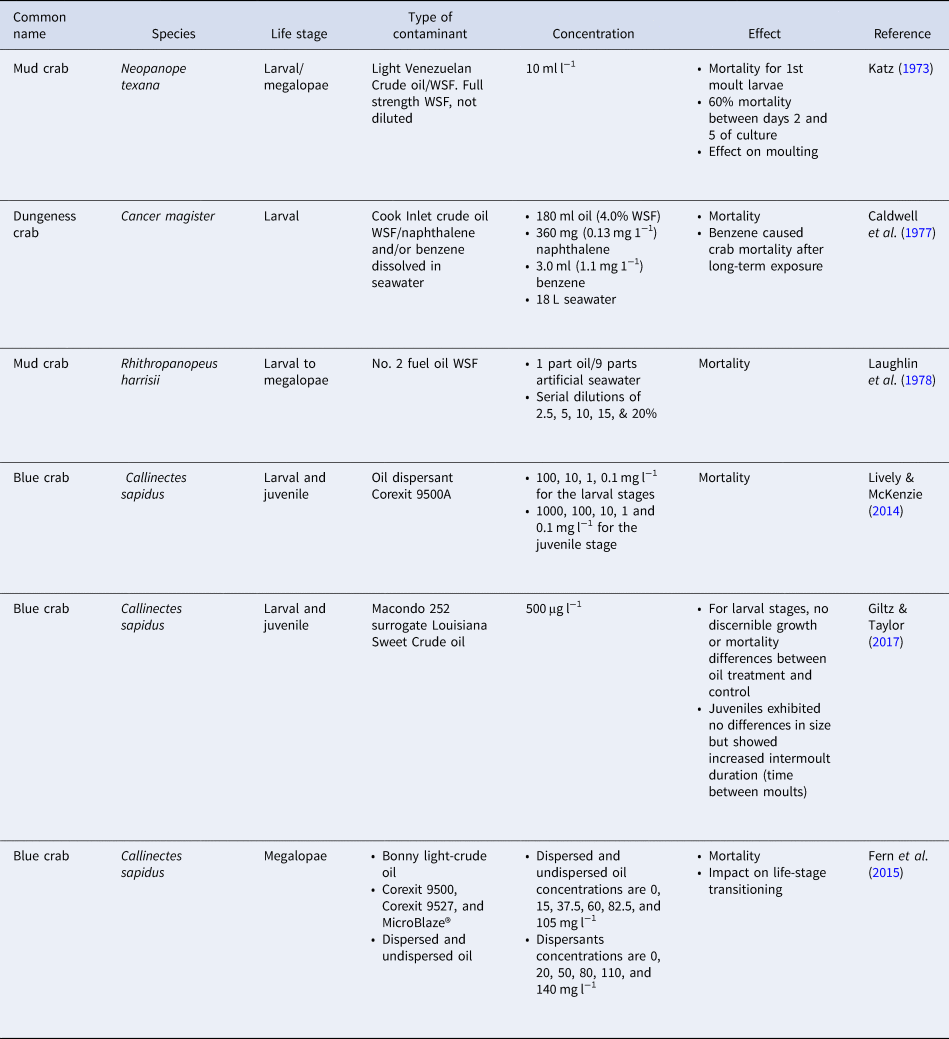
Crab larval stages are the most sensitive life stage to the toxic effects of oil and oil-related chemicals spilled in the sea or deposited in marine sediments (Table 3, Figure S1). As exposure to xenobiotics can result in a delay in the moulting process, this delay can be attributable to crab response to environmental stress exerted by exposure to oil-contaminated seawater (Epifanio, Reference Epifanio1971). Caldwell et al. (Reference Caldwell, Caldarone and Mallon1977) examined the effects of Cook Inlet crude oil WSF on the Dungeness crab C. magister and concluded that the most toxic compounds are the ones available in the lowest fractions with aromatics being the most toxic of all oil fractions. Also, it was recorded that naphthalene was more toxic to crabs in acute exposure test regimes than benzene, although naphthalene concentration in WFS was lower than benzene. However, in chronic exposure regimes; benzene was more toxic indicating the individual aromatics have different toxicity mechanisms when acute and chronic test systems are compared. Amongst all crab life stages, the first zoeal (larval) stage is the most sensitive to No. 2 fuel oil WSF toxicity (Laughlin et al., Reference Laughlin, Young and Neff1978) and most recorded mortality observations were for the first and second zoeal stages.
Summary of crab mortality observations after exposure to oil and oil-related chemicals

WSF, water-soluble fraction.
From this review, we conclude the sensitivity of crab life stages to xenobiotics including PH is species-dependent. Bookhout et al. (Reference Bookhout, Costlow and Monroe1976) assessed the toxicity and methoxychlor organochloride insecticide on R. harrisii and C. sapidus and observed that the insecticide was toxic to the R. harrisii first larval stage, while it was toxic to the second and third larval stage of C. sapidus. It was also confirmed by Katz (Reference Katz1973) that exposure of crab N. texana first larval stage to crude oil WSF resulted in high mortality rates from the day of hatching. Overall, acute toxicity of oil to larval and juvenile stages of marine organisms tends to fall in the range of 0.1 and 1.0 mg l−1, and from 1.0 to 100 mg l−1 for adult stages (Hyland & Schneider, Reference Hyland and Schneider1976) for soluble aromatic hydrocarbon fractions to exert toxicity. It is worth mentioning that life-cycle test regimes provide more representable toxicity results than acute tests (96 h) to observe cumulative or chronic effects (Sprague, Reference Sprague1970; Laughlin et al., Reference Laughlin, Young and Neff1978). Also, crabs chronically and continuously exposed to oil WSF tend to completely recover to grow and experience normal development. Acclimation to hydrocarbon toxicity can be explained by the induction of a microsomal mixed-function oxidase system which triggers PH metabolic detoxification allowing obtaining a steady-state to accumulate hydrocarbons in body tissue (Laughlin et al., Reference Laughlin, Young and Neff1978). Giltz & Taylor (Reference Giltz and Taylor2017) have assessed exposure of C. sapidus to oil and have concluded that different crab life stages may respond differently to oil toxicity as larval stages did not exhibit discernible mortality or growth differences between oil treatment and control. However, juvenile crabs exhibited no differences in size but showed increased intermoult duration (time between moults). Hence, their growth was affected upon exposure to oil.
Conclusion
The toxicological effects of environmental pollutants on specific marine crabs have been thoroughly investigated over the past decades but there remain an appreciable number of physiological, behavioural, genetic and toxicological effects that are not well understood. As this review paper focuses on the toxicological effects of petroleum hydrocarbons on marine crabs, it will assist in providing information to support the use of the numerous decapod species described as a biological indicators of marine ecosystem pollution (Table S1). It is very important to select the correct crab and to understand its susceptibility to petroleum-related compounds. Although this review provides an understanding on which life stages are the most sensitive to PH, future research should dwell on investigating the long-term effects of PH on adult marine crabs and their effects on human health. We believe that the reviewed data in this manuscript will assist in understanding the risk associated with PH toxicity to crabs, specifically the edible species, because of its risk to human health. Also, this literature review demonstrates that selected species of decapod crabs can be used as sentinel organisms for monitoring and assessment of a wide of spectrum of oil-related compounds in marine ecosystems. It was concluded that each crab species responds differently to oil toxicity. Also, larval stages are more susceptible than juveniles and adults. However, this assumption can be reversed upon testing different types of crude oil on life stages, depending on the type of crude oil tested and the conditions of testing. This makes a comparison of mortality results difficult as different spectrums of oil concentrations were tested in the literature. Nevertheless, most studies have confirmed that oil exposure can affect the survival of crab larval stages. Oil contamination affects crab larvae as an integral component of the zooplankton, which may have an adverse impact on other marine organisms. Therefore, it can be used in policy decision making and environmental management of indigenous crab habitats to prevent environmental damage and hazards.
Supplementary material
The supplementary material for this article can be found at https://doi.org/10.1017/S0025315421000370
Acknowledgements
The authors would like to thank Professor Lewis Le Vay, School of Ocean Sciences, Bangor University for reviewing the first draft of this manuscript. Special thanks to the editor and anonymous reviewers for their valuable comments and suggestions to the original manuscript.
Financial support
This research received no specific grant from any funding agency, commercial or not-for-profit sectors.