Introduction
The shells of freshwater mussels of the Unio species used as tools appear in archaeological assemblages north of the Danube for the first time during the Starčevo-Criș culture period (6200‒5300 cal bc) (Beldiman & Sztancs, Reference Beldiman, Sztancs, Comșa, Bonsall and Nikolova2013; Pickard et al., Reference Pickard, Boroneanț, Bonsall and Allen2017; Mărgărit et al., Reference Mărgărit, Mirea and Radu2018). The species begins to be more widely used during the Chalcolithic (5000–3500 cal bc), by communities belonging to the Hamangia, Boian and Gumelnița cultures (e.g. at sites such as Cheia, Bordușani-Popină, Hârșova, or Vitănești; Necrasov, Reference Necrasov1973; Mărgărit & Radu, Reference Mărgărit, Radu, Mărgărit, Dosseur and Averbouh2014), as well as in the Ariuşd-Cucuteni culture area (at Poduri-Dealul Ghindaru; Bălăşescu & Radu, Reference Bălăşescu and Radu2004). Processed Unio sp. valves with a utilitarian purpose are also mentioned at Platia Magoula Zarkou in Greece (5700–5300 bc; Becker, Reference Becker1999) and Çatalhöyük in Anatolia (Bar-Yosef Mayer, Reference Bar-Yosef Mayer and Hodder2013). Similar tools have been reported in the Anatolian Chalcolithic and Early Bronze Age at Körtepe, Tülintepe, Hassek-Höyük, Telul eth Thalathat II (Boessneck & von den Driesch, Reference Boessneck and von den Driesch1976, Reference Boessneck and von den Driesch1981) and in the Late Iron Age at Kilise Tepe (Debruyne, Reference Debruyne2010). Depending on local availability, other bivalve species were used as tools, such as the Glycymeris and Ostrea edulis species in Chalcolithic settlements in Sardinia (at Cucurru S'Arriu and Su Coddu; Manca, Reference Manca, Mărgărit, Dosseur and Averbouh2014, Reference Manca2016), or the Mytilus galloprovincialis species at several Neolithic sites in Spain (at Santimamiñe, La Draga, and Serra del Mas Bonet; Cuenca-Solana et al., Reference Cuenca-Solana, Clemente-Conte and Gutiérrez-Zugasti2010, Reference Cuenca-Solana, Gutiérrez-Zugasti, Clemente, Szabó, Dupont, Dimitrijevic, Gómez-Gastélun and Serrand2014; Clemente-Conte & Cuenca-Solana, Reference Clemente-Conte, Cuenca-Solana, Bosch, Chinchilla and Tarrús2011).
A review of the Romanian archaeological literature highlights a lack of technological, functional, or experimental analysis of various tools in prehistoric assemblages. Moreover, the material presented here does not belong to the repertory of manufactured tools and is, therefore, highly likely to have been overlooked in old excavations. Only recently has the presence of tools from freshwater mussel valves begun to be mentioned. After 2010, under the impulse of a new generation of archaeologists and through close collaboration with archaeozoologists and malacologists, new types of tools have been identified in Chalcolithic settlements. Moreover, experimental archaeology in Romania has now dedicated a series of experiments to the osseous industry (Mihail & Provenzano, Reference Mihail, Provenzano, Mărgărit, Dosseur and Averbouh2014; Mărgărit et al., Reference Mărgărit, Popovici, Radu, Cernea, Alonso, Canales and Baena2017). Valve experiments have been carried out, but only on the manufacture of personal adornments (Mărgărit, Reference Mărgărit2016). Elsewhere, experiments have been conducted on other species of bivalves such as Ostrea edulis (Manca, Reference Manca, Mărgărit, Dosseur and Averbouh2014; Cuenca-Solana et al., Reference Cuenca-Solana, Gutiérrez-Zugasti and & Gonzalez-Morales2017); Glycymeris sp. (Tumung et al., Reference Tumung, Bazgir and Ollé2015; Manca, Reference Manca2016, Reference Manca, Christensen and Goutas2018); Mytilus galloprovincialis (Tumung et al., Reference Tumung, Bazgir, Ahmadi and Shadmehr2012, Reference Tumung, Bazgir and Ollé2015; Cuenca-Solana et al., Reference Cuenca-Solana, Gutiérrez-Zugasti and & Gonzalez-Morales2017); Ruditapes decussatus (Tumung et al., Reference Tumung, Bazgir, Ahmadi and Shadmehr2012, Reference Tumung, Bazgir and Ollé2015); Scutellastra flexuosa (Szabó & Koppel, Reference Szabó and Koppel2015); Pecten maximus (Tumung et al., Reference Tumung, Bazgir and Ollé2015); Patella vulgate (Cuenca-Solana et al., Reference Cuenca-Solana, Gutiérrez-Zugasti and & Gonzalez-Morales2017); and finally Polymesoda (=Geloina) coaxans (Harris et al., Reference Harris, Faulkner and Asmussen2017).
The purpose of this article is to build a database of the ways in which wear traces on Unio valves were produced through their use as tools, based on an assemblage of such valves recovered at the Chalcolithic settlement of Cheia-Vatra Satului in Romania. The processes that generated these wear traces can be identified from a comparison between experimental and archaeological exemplars. By understanding the various factors that influenced the transformation of bivalves, we hope to establish models that will help recognize and interpret the marks present on valves in archaeological contexts.
Archaeological and Cultural Context
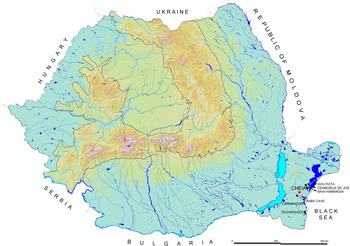
The first settlements of the Hamangia communities between the river Danube and the Black Sea appeared at the beginning of the fifth millennium cal bc, representing the earliest pastoral communities to settle in the region. This culture spread to north-eastern Bulgaria, the most important site being the cemetery of Durankulak (Todorova, Reference Todorova and Todorova2002), together with the settlements of La Izvor, La Baba and Casian caves, Cheia-Vatra Satului, Techirghiol, Cernavoda, Baia-Hamangia, Ceamurlia de Jos, and Golovița (Figure 1). At these sites, the valves of Spondylus or Glycymeris sp. are present as ornaments (Todorova, Reference Todorova and Todorova2002; Voinea et al., Reference Voinea, Neagu and Radu2009), but so far Cheia is the only site where freshwater mussel valves were used as tools.
Map with location of the settlement of Cheia-Vatra Satului and sites mentioned in text.

The Chalcolithic settlement of Cheia is located on a plateau by the river Casimcea, close to the central hills of Dobrudja province in south-eastern Romania. Absolute dates for the Hamangia III phase range between 5214–4961 cal bc and 5047–4855 cal bc (Balasse et al., Reference Balasse, Tornero, Bréhard, Ughetto-Monfrin, Voinea, Bălășescu, Whittle and Bickle2014). Archaeozoological analyses confirm the pastoral character of the economy, with a high percentage of domestic animals, especially bovines and caprines. The meat requirements were complemented with hunted animals, especially equines and cervids. The mobility of the Hamangia communities along the Casimcea valley—a passage between the central Dobrudjean karstic zone and the West-Pontic zone—is shown by the presence at Cheia of marine fish and molluscs as well as grey-black flint from the Varna region.
The complex stratigraphy of the site reflects the dispersed character of the settlement and successive reoccupations following short periods of abandonment. The archaeological investigations undertaken at Cheia-Vatra Satului have revealed new aspects of its economy, domestic life, and the spiritual complexity of the Hamangia communities (Voinea & Neagu, Reference Voinea and Neagu2008). When establishing the settlement, its inhabitants built their dwellings only after carrying out founding rituals: large parts of domestic animals (cattle, sheep/goats, pigs) were laid in the settlement's foundation layer, beneath one of its walls.
Methods and Materials
Raw material
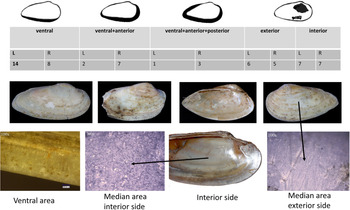
In the settlement at Cheia, the remains of 225 valves have so far been recovered. Of these, 216 come from the Unio species and nine from the Anodonta species. Malacological analyses were undertaken, the macroscopic examination indicating that some of the valves underwent changes in their natural morphology; these changes do not seem to be taphonomic (Figure 2). The first aspect observed was that the ventral edge changed from a convex to a rectilinear shape. Moreover, this edge was no longer sharp, but formed a flat facet, fine to the touch, possibly resulting from friction with another material. A second modification was noted on the internal side and consisted of an alteration of the nacre (mother-of-pearl) surface. A third change on the external side, around the umbo, is represented by the flattening of the surface and modification of the specific external structure. In addition, red pigment spots were identified on the surface of the valves, but there is no correlation between the presence of the pigment and use of the valves as tools since such spots were also noted on unused valves.
Valve distribution (thirty-five complete valves) according to identified use-wear marks (ventral edge: long, regular and deep striations towards the internal side; interior: alternation of polish and opaque areas; exterior: long, deep striations).

We proceeded to sort the valves systematically, in order to identify those that had undergone anthropogenic changes: 101 valves were retained, exhibiting various wear traces (ninety-three items) or residues (eight items). Within this assemblage, one valve belonged to the species Anodonta sp., five to Unio pictorum, forty to Unio tumidus and one to Unio crassus. Owing to their fragmentary nature, fifty-four valves could only be classified to genus (Unio sp.). In terms of the biometric characteristics of the selected valves, the height of the Unio pictorum valves ranges between 24.2 and 35.6 mm (average: 31.7 mm) and those of Unio tumidus between 26.4 and 41 mm (average: 30.6 mm). These values are close to the averages obtained for the entire assemblage of molluscs analysed at the Cheia settlement (30 mm and 30.4 mm, respectively, for NISP = 225) (see Supplementary Material 1). Of this assemblage, thirty-five unfractured valves and those with insignificant edge fractures were examined under a microscope in order to obtain a complete picture of all the use-wear areas on the Unio valves.
Methodology
The methodology used in this study relied on macroscopic and microscopic analysis of the technological and wear traces present on the archaeological items, aided by experimental data. The pattern of use-wear development, with deformation of the original volume and erasing of the external structure of the valves, was analysed with two types of microscope: a Keyence VHX-600 digital microscope with integral camera, operated at magnifications between 30× and 150×, and an Olympus BX53M metallographic microscope (using magnifications from 100× to 500×) to which a Canon EOS 1200D digital SLR camera was attached. The analytical criteria for the functional interpretations were established by reference to recent publications on the use of bivalves from prehistoric contexts (see Introduction).
Fresh Unio sp. valves were collected from the sediments left on the riverbank by the waters of the Danube, along one of its arms, when its level was low (in August/September). The modern samples were collected from the Danube, about thirty kilometres from Cheia, because in the local river Casimcea the species is currently rare, and the valves are fragile. In addition, the average height of the bivalves from this river is much lower than the 30–31 mm observed on the archaeological exemplars. We decided to use specimens from the Danube to ensure that their hardness and dimensions resemble as much as possible the archaeological examples. Unio crassus is specific to the river Casimcea but this species is not dominant in the Cheia assemblage, even though the Casimcea is the nearest river. Instead, the composition of the archaeological assemblage (Table 1) is dominated by Unio tumidus and Unio pictorum, which are specific especially to the Danube. It is thus possible that the archaeological specimens were also collected from the Danube. While collecting modern bivalves, we identified areas of thanatocoenosis (areas of dead forms of the organisms); in only ten minutes around forty bivalves could be gathered. Before our experiments, the modern valves of Unio sp. were analysed to assess patterns of post-mortem alteration or damage to distinguish these from use-wear marks.
List of experiments and principal variables of the programme.

An experimental programme was developed to determine whether alterations to the natural shell morphology were due to the use of the valves or to taphonomic factors. This involved testing various situations that could have made changes to the valves similar to those on the pieces discovered in archaeological contexts. For this, we tried to identify and use materials as similar as possible to those available to the Cheia community. We decided to use cattle bones, given the important role cattle played in this community's subsistence (Tornero et al., Reference Tornero, Bălășescu, Ughetto-Monfrin, Voinea and Balasse2013; Balasse et al., Reference Balasse, Tornero, Bréhard, Ughetto-Monfrin, Voinea, Bălășescu, Whittle and Bickle2014). We also identified Lepus europaeus remains among the hunted species, and fish bones were also significant in terms of weight, with most remains belonging to cyprinids and percids (Bălășescu & Radu, Reference Bălăşescu and Radu2004; Bălășescu, Reference Bălăşescu2008; Radu, Reference Radu2008). The wood species and leaves employed in our experiments grow naturally on the riverbanks, indicating they could have been procured close to the site. The state of the processed materials, the nature of the work, and the duration of the experiments were all recorded in detail (Table 1).
Attention was paid to the description of the use-wear traces. The frequency and distribution of polish, edge rounding, micro-topography, the presence and pattern of functional striations, the presence of microfractures and worn surfaces were rigorously recorded and described. Observations made on the archaeological specimens were compared to the experimental replicas in order to validate hypotheses of the ways the valves were used by the prehistoric communities.
Experimental programme
To conduct our experiments, we gathered a series of animal, vegetal, and mineral materials to observe the effect these materials had on the valves when the latter were used on them. The following section gives a brief overview of these experiments.
Fresh vegetal matter
Among the plant resources, we used leaves of rushes (Juncus acutus), from which fibres can be obtained for making baskets, textiles, etc. (see Supplementary Material 2a–b). The leaves were processed fresh. The valves were used as scrapers in a transverse unidirectional movement combined with slight pressure at an angle of 90°. The action does not involve sustained physical effort because the leaf was pressed fast and only the fibres remained. The first stage in the process was carried out for thirty minutes. After a first microscopic analysis, we continued the experiment for another thirty minutes.
Fresh wood
We chose willow (Salix L.) for fresh wood processing. Scraping the bark was undertaken for twenty minutes (see Supplementary Material 3a), followed by another thirty minutes. The valve was used in a transverse bidirectional movement. An angle of 90° was maintained between the tool and the material, and moderate pressure applied. Even during the first ten minutes, important fractures occurred (when making contact with knots in the wood) in the thinner part of the valve's working edge, making that part unusable. When movement was applied on the thicker part of the valve edge; edge fractures also appeared but were of lesser amplitude (see Supplementary Material 3d).
Dry wood
Willow was also used, but cut a year before the experiment and dried (see Supplementary Material 4a–c). The experiment involved the same scraping process (in two stages of twenty minutes each) in a transverse bidirectional movement that required greater pressure.
Fresh skin
For this experiment, a fresh hare skin was fixed to a wooden support (see Supplementary Material 5a). The valve was used as a scraper for forty minutes in a transverse unidirectional movement to remove the fat layer on the internal side of the skin. The valve was held at an angle of approximately 45° to the skin. Strong pressure was required for the surface cleaning to be effective.
Dry skin
The inner side of a hare skin was covered with salt and stretched over a wooden frame (see Supplementary Material 6a), then left to dry for thirty-six hours. The cleaning of the interior layer was done with the skin fixed to the same support for thirty minutes. The valve was used in a transverse unidirectional movement (see Supplementary Material 6c), held at an angle of approximately 90° to the skin.
Fresh bone
A fresh cattle rib was first cleaned of meat and fat residues (see Supplementary Material 7a). The valve was held at an angle of about 45° in a transverse unidirectional motion. The pressure on the bone had to be intense to prevent the piece slipping because of the fat on the surface. The procedure lasted for fifteen minutes.
Dry bone
A cattle rib was also used for this experiment, but it had been dried over more than a year (see Supplementary Material 8a). The experiment was intended to clean the periosteum of all residues within fifteen minutes. The movement was transverse bidirectional with the shell at an angle of 45°. For the cleaning process to work, strong pressure on the bone was required. We concluded that this type of material is too hard to work with Unio valves.
Fish
We used a valve to clean fish scales for thirty minutes (see Supplementary Material 9a). The process proved to be extremely productive. The transverse unidirectional movements must be short and the pressure quite strong, with the working angle at 90°.
Wet clay
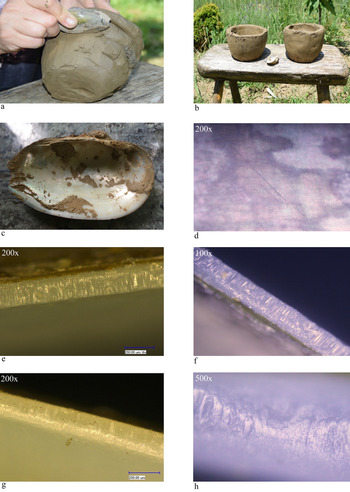
We also set out to establish whether Unio valves could have been used as tools in the making of clay pots (Figure 3b). On the outside of the vessel, the valve can be used in a transverse unidirectional movement (Figure 3a) from the base to the rim. Pressure is light because only small amounts of clay must be removed, and the physical effort is slight.
a: Working with wet clay; b: finished pots; c: Unio valve morphology after use; d: valve structure on the internal side after use; e–f: working edge morphology after thirty minutes of use (flat micro-reliefs separated by depression areas); g–h: working edge morphology after ninety minutes of use (invasive polish with intense brightness and functional striations).

The edge of the valves was used for thirty minutes and then for another ninety minutes. We tried to use the external face of the valve to produce an even vessel surface and to monitor how use-wear developed but the procedure failed because the clay was wet and prevented us from smoothing the surface. On the contrary, material accumulated and blocked the movement of the valve. Consequently, this side of the valve was not used to smooth the wet clay.
Dry clay
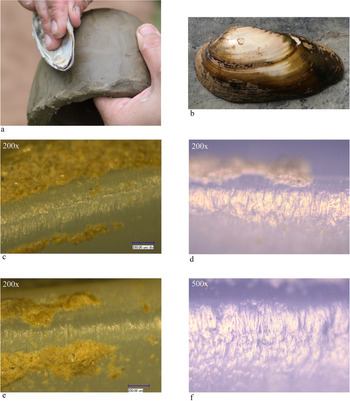
Our formed vessels were left to dry for six hours in an open space. In this experiment (which lasted eighty minutes), two areas of the valve were used: the edge and the external face (Figure 4a). The edge was used as a scraper for evening out the surface and for correction (superficial removal of the material). Scraping movements (transverse unidirectional) were localized, depending on the area to be smoothed. The pressure needed to be greater, as the material began to dehydrate. The external face of the valve was used in a circular motion to even the surface of the pot. All superficial cracks were eliminated in this manner and the surface became even, with a macroscopically visible polish (Figure 4b). Both areas of the valves were used in alternance, a process that proved very productive.
a: Working with dry clay; b: Unio valve morphology after use; c–d: working edge morphology after twenty minutes of use (long, regularly arranged deep striations); e–f: working edge morphology after sixty minutes of use (the uniformity of the contour of the active edge and rounding are accentuated).

Results
Archaeological material
No marks denoting the retouching or shaping of pieces were observed macroscopically on the valves, and microscopic examination confirmed this. Instead, three areas of use-wear were identified on the surface of the archaeological examples. Twenty-two of these specimens had use-wear marks on the ventral edge only; nine had use-wear marks on both the ventral edge and the external face, and four had complex use-wear on both faces and the ventral edge.
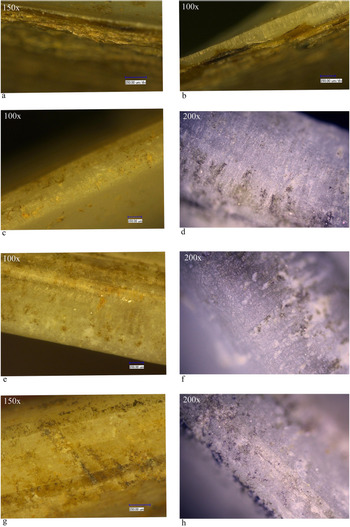
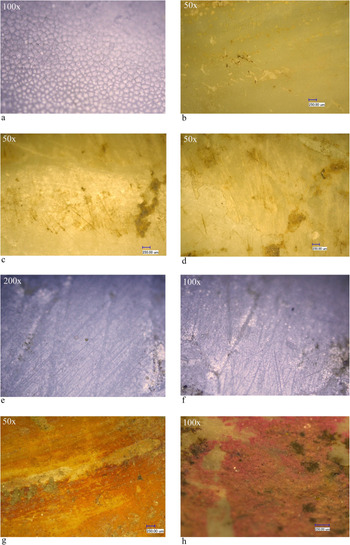
The unused part of the edge is sharp and thin (Figure 5a), with a convex shape. On the fractured areas of the unused valves, the micro-structure of the calcium carbonate encased in organic matter (conchiolin) can be seen (Cuenca-Solana et al., Reference Cuenca-Solana, Gutiérrez-Zugasti and & Gonzalez-Morales2017) in the cross-lamellar arrangement (Figure 5b). For the used valves, first use-wear area was identified macroscopically on the ventral edge. This is rectilinear, compressed, and with a smooth texture. The use-wear is invasive, extending, together with functional striations, toward the internal side.
a: Natural structure of the ventral edge of Unio valves; b: cross-lamellar micro-structure of an unused valve; c-h: ventral edges of archaeological exemplars illustrating the presence of long, regular and deep strations arranged transversally.

Under microscope, the striations (present on all specimens with straight and smoothed working edge) are long, regular, and deep. They are arranged transversally, indicating that the valves were used for scraping and not cutting, which would have generated longitudinal striations (Figure 5c–h). Moreover, there are no macro- or micro-edge fractures, which suggests that hard material was not processed.
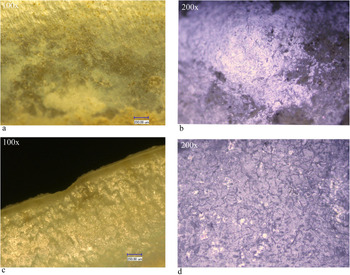
A second use-wear area on the internal side at the median level was identified macroscopically as alternating polished and opaque areas (Figure 6a–b). Initially, we attributed these to a friction process, followed by the removal of the superficial layer of nacre. Under the microscope, these different areas could be better identified. They are not characterized by any striations. Moreover, there are items where the friction process appears to have lasted for some time, creating a worn surface (Figure 6c–d).
Types of use-wear identified on Unio valves. a–b: use-wear in the median area of the internal face; c–d: worn area on the valves’ surface.

The third use-wear area was identified on the external face. Macroscopically, it appears as a flat surface; and, in some specimens that were probably used for a longer time, small areas of the surface were worn away. Under the microscope, a change in the valve's natural structure (Figure 7a) is visible, homogeneous in appearance (Figure 7b). This indicates that the valve was hand-held during use and the wear resulted from fingers rubbing the valve. There are, however, specimens where the external face is more affected by use-wear, the surface being strongly flattened (at the microscopic level) by long, deep striations that were surely caused by rubbing against an abrasive material (Figure 7c–f). The extremely uniform character of the use-wear marks identified on the archaeological specimens caught our attention straight away. We assume that they were used in a similar way, as expedient tools, for processing a single type of material.
Various types of traces identified on Unio valves. a: natural structure of the external face of the valves; b: external face with smoothed aspect (archaeological item); c–f: striations present at the median level on the external face (archaeological items); g–h: red pigment spots on the external face (archaeological items).

Traces of red pigments were identified on eight valves (Figure 7g–h). Macroscopically, the pigment appears in the form of a discontinuous deposit (spots of variable sizes), especially on the external face of the valve. The pigment does not appear in specific areas but randomly on the entire face. The thickness of the deposits also varies. These pigment residues do not appear inside the functional striations on the working edge of any specimen. We have advanced the hypothesis that the external face of the valve was used to break pigment lumps; yet the red spots are not associated with the valve's flattened surface and there are no use-wear striations resulting from rubbing such a type of material. We could also envisage that valves were used as pigment containers but the mixing of ochre with other substances would have led to deeper striations with random orientation on the internal face (Manca, Reference Manca2016). Instead, microscopic analysis revealed other patterns of use-wear on this face, which seem to be related to the rubbing of the layer of nacre with the fingers. Moreover, we also identified specimens with pigment spots but no traces of use. Ultimately, we believe that the residues accrued post-depositionally.
Experimental results
We return to the materials presented in the experiments outlined earlier, to report on the results of the use of valves on them.
Fresh vegetal matter
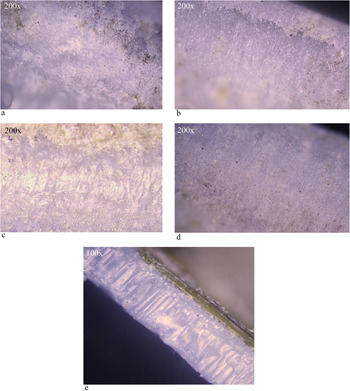
For the first stage of processing (thirty minutes), an edge with a slightly jagged outline developed, characterized by localized use-wear that does not extend to the internal side (see Supplementary Material 2c). The micro-topography of the active edge is not uniform and retains its natural micro-structure. This natural morphology, with lamellar structure, begins to flatten and acquire a visible polish but there are deep depressions between the lamellae, which do not appear on the archaeological exemplars. No functional striations develop (see Supplementary Material 2e–f).
After another thirty minutes, a new microscopic examination showed that polish had developed and the edge had become smooth. The internal lamellae of the valve are strongly rounded with fine, shallow, longitudinal striations, arranged transversely to the active edge. However, the specific structure with depressions between the lamellae is maintained, which is not characteristic of the active edge of archaeological pieces, suggesting that the latter were used to process a different material (see Supplementary Material 2g–h).
Finger friction during the scraping process caused changes in the natural structure on the valve's external side, consisting of deep striations on the surface (see Supplementary Material 2d). The longer the process, the more polished the exterior became. These observations regarding the use-wear traces on the internal and external sides are valid for all experimental pieces because, regardless of the material processed, the finger rubbing process is identical (Figure 3d; see Supplementary Material 4d–e; 5c–d; 6d–e).
Fresh wood
After twenty minutes of use, the working edge showed a very irregular morphology owed to edge fractures (see Supplementary Material 3b–c). The lamellar structure begins to flatten, more so towards the internal side, given the inclination of the valve while working. The active edge acquires a use-wear polish, deeper in the central area and shallower towards the periphery. Functional striations are not yet present (see Supplementary Material 3e–f).
After another thirty minutes, the micro-structure of the active edge changed radically, acquiring a marked polish with the appearance of micro-reliefs, separated by deep depressions. These micro-reliefs are rounded and smoothed, with discontinuous and superficial striations. This configuration does not match the more homogeneous micro-topography with deep striations identified on archaeological pieces (see Supplementary Material 3g–h).
Dry wood
The strong friction needed in this experiment results in loss of material, which leads to edge reduction of the valve. Initially, it is irregular and then becomes concave (see Supplementary Material 4c). After twenty minutes, the lamellar structure is almost entirely eliminated, developing deep, but not dense, parallel striations (see Supplementary Material 4f–g).
After further use, the use-wear continues developing in the same accelerated rhythm. The edge becomes so smooth as to be ineffective. The use-wear polish, which is very pronounced at this stage, is located centrally and does not extend to the periphery of the active edge. Residual material from the processed wood builds up at the periphery of that edge, which intensifies the friction process (see Supplementary Material 4h). The micro-topography of the active edge shows a continuous micro-relief on the median line; it is without depressions, extremely rounded, and with striations that are much more frequent (though shallower) than in the previous stage (see Supplementary Material 4i).
Fresh skin
In this process, the active edge became rectilinear (see Supplementary Material 5b), without fractures or worn surfaces owing to the softness of the material. Under the microscope, the active edge begins to lose its lamellar structure in peripheral areas (see Supplementary Material 5e), the surface becoming smooth, without functional striations. Instead, in the median area of the active edge, the lamellar structure is still evident but strongly flattened, with fine functional striations that do not cover the full width of the active edge (see Supplementary Material 5f). The morphology of this active edge differs radically from that of archaeological pieces.
Dry skin
The valve edge became blunt (see Supplementary Material 6b) and the use-wear on the edge was highly developed. This edge acquired a straight morphology and a polished aspect, becoming rounded and smooth to the touch. As in the experiment on fresh skin, there are no edge fractures or worn surfaces. The internal lamellar structure of the valve was radically modified by the intense use-wear, which was invasive, going beyond the edge and advancing onto the internal face of the valve. Microscopic examination revealed an active edge with a homogeneous micro-topography characterized by the presence of functional striations at the extremity (see Supplementary Material 6f). These moderately deep striations extend over the full width of the active edge (see Supplementary Material 6g).
Being very blunt, the valve edge is no longer useful for scraping skin. The valves are unlikely to have been used in this state. Furthermore, comparison with the micro-topography of the archaeological pieces shows no similarities. We therefore eliminated scraping dry skin from the list of potential uses and no further experiments were undertaken.
Fresh bone
In the first few minutes of this experiment, the thinner area of the working edge fractured (see Supplementary Material 7b), making it necessary to use only the thicker area. The working edge became rectilinear and heavily smoothed. Micro-reliefs were observed on its surface, associated with micro-pits that developed in the central part of the edge. Functional striations developed but were discontinuous, irregularly arranged, and deep (see Supplementary Material 6d–e). The experiment showed that bone cleaning with a shell was inefficient, and much better done with lithic tools. The serrated morphology and the use-wear pattern of the active edge do not resemble those of archaeological pieces.
Dry bone
When working on this material, only the thicker and convex part of the edge was used; it became irregular with small overlapping edge fractures, which were especially well developed towards the periphery of the active edge, on the internal side (see Supplementary Material 8b). The medial part of the active edge showed rounded micro-reliefs with polish and deep and frequent transverse striations (see Supplementary Material 8c–d).
Fish
Here, the active edge became rectilinear, without fractures (see Supplementary Material 9b), but, when examined under the microscope, the edge remained extremely thin compared to archaeological pieces. There were no functional striations, only micro-reliefs in combination with micro-pits (see Supplementary Material 9c–d). The use-wear is unlike that identified on archaeological pieces.
Wet clay
In a first stage, the shape of the active edge evolved from a convex to a straight line (Figure 3c). Fine edge fractures developed, generated by various inclusions in the clay. Use-wear was present, extending onto the internal side. The active edge had flat micro-reliefs still separated by depression areas. The working edge had not yet become compressed and had a smooth texture. The functional striations appeared only on the internal side, parallel to one another and not very deep (Figure 3e–f). After ninety minutes of use, the edge became quite smooth and regular (the alternation between lamellae and depression areas almost disappearing) with an invasive bright polish. Functional striations retained their characteristics (Figure 3g–h). On the internal side, the nacre was no longer evenly distributed (Figure 3d), and on the external side the friction surface began to flatten. On both sides, there were more friction areas where the surface began to peel off. In our experiment, the piece remained workable for many hours.
Dry clay
After twenty minutes of use, the ventral area was characterized by a strongly rectilinear morphology. The active edge was smoothed and became heavily rounded. Its surface was made even and the use-wear extended onto the internal side. The functional striations are long, regularly arranged, and deep (Figure 4c–d). The uniformity of the contour of the active edge and the rounding became more accentuated after another sixty minutes of use, with even more frequent deep striations (Figure 4e–f).
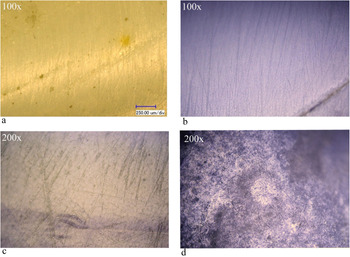
On the internal side, we identified damage to the nacre layer (Figure 8d), while a flattened surface developed on the external face, eliminating the outer layers of the valve. The polish was pronounced and bright. These macroscopic patterns translate microscopically as the development of long and deep striations, disposed obliquely to the valve axis (Figure 8a–c). The morphology of these striations probably also depends on whether the clay is fine or coarse.
a–c: Structure of the exterior side after working on dry clay; d: structure of the interior side after working on dry clay.

The data from the latter experiment suggest that this is a plausible use for the prehistoric valves recovered at Cheia, but we cannot exclude other uses in other archaeological contexts.
Discussion
Acquisition of raw material
The first question to address is whether the archaeological bivalves found at Cheia were collected alive or from areas of thanatocenoses. Potentially, the valves could have been collected in the river Casimcea close to the settlement, but also from the Danube and consumed as food. The species was used in an opportunistic manner: in a first stage as an important source of nourishment, and in a second stage as a source of raw material for making tools, recovered from domestic waste. In their archaeological context, the valve fragments were found scattered in household waste areas or refuse pits, but they were isolated remains and did not form real shell middens. It is thus quite difficult to ascertain that they were a source of food, the idea remaining a working hypothesis.
Whether there was a temporal pattern of craft activity related to gathering Unio bivalves over the course of a year constitutes another question, both from an archaeological and an experimental viewpoint. Although it may seem obvious, freshwater mussels would have been more accessible during periods of low water levels, namely the end of summer, and thus collecting is more likely to have been undertaken at this time of year. At the settlement of Cheia, the remains of valves, some used, are mixed with those of fish and turtles, which suggests consumption in the warm season. It must be emphasized that the raw material from aquatic resources is generally hydrated, an important aspect when working with bivalve shells. The valves of Unio lose more than eleven per cent of their weight after drying (Radu, Reference Radu2011). During our experiments (Mărgărit, Reference Mărgărit2016), we demonstrated that Unio sp. valves could not be kept from one year to another and still be useful. Through this dehydration process, the valves lose their physical and mechanical qualities, becoming extremely brittle especially when processing hard materials. We can, therefore, assume that they were used shortly after gathering.
The use of Unio valves at the Cheia settlement
Ethnographic studies (e.g. Cuenca-Solana et al., Reference Cuenca-Solana, Gutiérrez-Zugasti and Clemente-Conte2011; Attenbrow, Reference Attenbrow2012) show that expedient tools were used all over the world for processing many kinds of materials (fish, skin, bone, plant, or mineral matter). Given the multiple possibilities of using the valves, we conducted a range of experiments with valves of Unio sp. to determine the types of modifications useful for distinguishing taphonomic processes from those caused by use as a tool. Following the experiments described above, the final stage of analysis was to compare macroscopically and especially microscopically the use-wear marks recorded on archaeological and experimental specimens.
First, we considered why the archaeological valves were not deliberately made into tools by modifying them before use. Retouching was not necessary, because edge morphology is optimal for carrying out the most varied activities, as documented by our experimental programme. Plant processing for fibre production results in an active edge with a non-homogeneous micro-topography, which still preserves the valve micro-structure in the cross-lamellar arrangement.
For skin processing, microscopic study reveals an active edge with a homogeneous micro-topography characterized by the presence of functional striations. They are fine and of differing lengths (shorter for fresh skin and longer for dry skin).
For fresh wood, the micro-structure of the active edge has a marked polish, with the appearance of micro-reliefs, separated by deep depressions. These micro-reliefs are rounded, smoothed, with discontinuous and superficial striations. In dry wood processing, the micro-topography of the active edge develops as a continuous micro-relief on the median line; it is without depressions, extremely rounded and with striations that are much more frequent than in fresh wood processing but shallower.
When working on fresh bone, the active edge preserves micro-reliefs associated with micro-pits which develop in the central area of the edge. Functional striations are present but discontinuous, irregularly arranged, and deep. For dry bone, the characteristic pattern is the formation in the medial area of rounded micro-reliefs with polish and transverse striations that are deep and frequent.
Used on wet clay, the edge becomes quite smooth and regular with a bright and invasive polish (Figure 9e). The functional striations are only present at its periphery, on the internal side; they are very dense, parallel to each other, and quite shallow.
a–b: Working edges of archaeological items (long, regular, deep striations covering the entire working edge); c–d: working edges of experimental items, dry clay (long, regular, deep striations covering the entire edge); e: working edge of experimental item, wet clay (dense but quite shallow functional striations are only present at the periphery of the working edge).

The experiment dedicated to the processing of dry clay vessels (Figure 9c–d) resulted in marks that resembled most closely the use-wear marks identified on archaeological pieces (Figure 9a–b). In both situations, the active edge is rectilinear, compressed and with a smooth texture. The use-wear is invasive, expanding in association with functional striations towards the internal side. Morphologically, these striations are long, regularly set, and deep, disposed obliquely to the valve axis. On the external face, the polish is intense and bright with long and deep striations, disposed obliquely to the valve axis.
Several factors can affect the configuration of the surfaces used and their varying degrees of use-wear. Among these are the purpose for which the valves were used as tools, e.g. as scraper, spatula, smoother/polisher, etc.; the intensity of use, from superficial use-wear on one side or edge to complex use-wear; and the dexterity of the person using the valve, discernible from the related concurrent use of the ventral edge and external face.
With respect to the latter factor, the sample is too small to provide statistical data, but we can nevertheless see a preference for right valves, both in the total number of valves (sixty-three left valves and 102 right valves) and the number of valves affected by use-wear (see Supplementary Material 1). The natural shape of the valve creates certain limitations to its use as a tool. If the right valve is used, it is easier to manipulate with the right hand, because the shape of the valve permits placing the finger on the internal face and simultaneously exposing the two areas at angles that allow optimal use. Since right valves are in the majority, we can assume that the valves were used more by right-handed people.
The economic function of Unio valves
Given that a significant number of used valves were recovered from several different archaeological contexts at Cheia, such use was clearly not an exceptional case attributable to a single member of the community who just happened to have used these valves. The blanks were gathered from household waste; they were used as tools for clay working and then discarded because they had lost their properties over a short period. Some are heavily worn (on the three sides), which suggests that the person who used them engaged in sustained activity.
This raises questions concerning the role of these remains in the socio-economic activities of the group. Did technical reasons dictate the choice of valves (e.g. minimum time invested in obtaining the tools, comfort of the implements in the hand, etc.) or was it a choice more closely connected to the cultural traditions of the community? While it is difficult to establish what that role was, it must represent a type of opportunistic economy since this expedient use of valve tools helps reduce the work involved in the production of elaborate toolkits. Our experiments (Mărgărit, Reference Mărgărit2017) have shown that the actions related to processing clay pots can be made with other types of tools, such as spatulas made of cattle ribs and the abraded astragalus of sheep or goat.
Conclusion
The discovery of used freshwater mussel valves at the fifth-millennium bc settlement of Cheia shows that the members of that community were well aware of the mechanical properties of this raw material. They knew what materials could be modified with the help of bivalve shells. The fact that they did not use tools involving complex steps requiring the investment of much time but managed with minimum effort to have equally efficient tools at their disposal attests to their technical ability and know-how.
Our experiments illustrate how much experimental archaeology can contribute, along with use-wear analysis, to the reconstruction and understanding of important aspects of a prehistoric community's economy. They were designed to gain insights into the ways functional use-wear evolves during processing, and thus shed light on the patterns observed on archaeological artefacts. Moreover, a rigorously executed experimental programme, following every stage in the process, can accurately reconstruct the activities in which the archaeological pieces were involved. Our study also enhances knowledge of the exploitation of aquatic resources and raises questions about their procurement and especially their economic and cultural significance within the prehistoric community of Cheia.
Some of the materials selected for our experiments can easily be worked with bivalves (scraping of fresh wood bark, fish scales, processing of clay) and in future we can expect such activities to be identified in other prehistoric settlements. We hope that this article will draw the attention of archaeologists to the potential of bivalves and promote their recovery in a more rigorous manner. Our contribution towards understanding how different types of bivalves were used will, we hope, be followed by more such studies and by the establishment of a coherent methodology for use by as many specialists as possible.
Supplementary Material
To view supplementary material for this article, please visit https://doi.org/10.1017/eaa.2020.51
Acknowledgments
Many thanks are due to Professor Clive Bonsall (University of Edinburgh) for reading this article in draft and for improving our English translation. The work presented here was supported by a grant of the Romanian Ministry of Education and Research, CCCDI - UEFISCDI, project number PN-III-P2-2.1-PED-2019-1279, within PNCDI III and by a grant from the Recurring Donors Fund of the Romanian Academy managed by the Patrimoniu Foundation (project no. GAR-UM-2019-II-2.1-1/15.10.2019).