Introduction
Shrimp fishing on the coast of the state of São Paulo and in adjacent waters is among the most important activities in the fishing economy in the south-eastern coast of Brazil, and mainly is directed at the seabob shrimp, Xiphopenaeus kroyeri (Heller, 1862), white shrimp Litopenaeus schmitti (Burkenroad, 1936) and pink shrimps, Farfantepenaeus brasiliensis (Latreille, 1817) and F. paulensis (Pérez-Farfante, 1967) (Gasalla & Tomás, Reference Gasalla, Tomás, Funk, Quinn, Heifetz, Ianelli, Powers, Schweigert, Sullivan and Zhang1998; Severino-Rodrigues et al., Reference Severino-Rodrigues, Guerra and Graça-Lopes2002; Fransozo et al., Reference Fransozo, Sousa, Rodrigues, Telles, Fransozo and Negreiros-Fransozo2016; Barioto et al., Reference Barioto, Stanski, Grabowski, Costa and Castilho2017). Although this effort targets specific species (or group of species), other species will always be captured (Slavin, Reference Slavin1983). Shrimp fishery is not selective and captures a large number of organisms beyond the target species (Hall et al., Reference Hall, Alverson and Metuzals2000) called by-catch fauna (Saila, Reference Saila1983), i.e. part of the gross catch which was not targeted in the fishing effort. By-catch may be utilized, completely or in part, or rejected (Andrew & Pepperell, Reference Andrew and Pepperell1992).
The crab Hepatus pudibundus (Herbst, 1785), which belongs to the family Aethridae Dana, 1851 (Ng et al., Reference Ng, Guinot and Davie2008), is the third and sometimes second most common Brachyura species caught as by-catch in the seabob shrimp fishery in south-eastern and southern Brazil, along with Callinectes ornatus Ordway, 1863 and Callinectes danae Smith, 1869 (Severino-Rodrigues et al., Reference Severino-Rodrigues, Guerra and Graça-Lopes2002; Branco et al., Reference Branco, Freitas and Christoffersen2015). It has a wide geographic distribution, with records of occurrence in the Western Atlantic, Georgia, Gulf of Mexico, Antilles, Guianas, Brazil (along the entire coast, from Amapá to Rio Grande do Sul), Uruguay, and the Eastern Atlantic from Guinea to South Africa (Melo, Reference Melo1996; Martínez et al., Reference Martínez, Scarabino and Delgado2009). The species is distributed in waters ranging from shallow to 160 metres deep, and may be found in muddy sediments, sand and under shells (Melo et al., Reference Melo, Torres, Campos and Young1998).
Even though it is widely distributed and captured in great abundance, this species is not known to be sold in Brazil (Severino-Rodrigues et al., Reference Severino-Rodrigues, Guerra and Graça-Lopes2002; Fracasso & Branco, Reference Fracasso and Branco2005). Individuals are discarded by both artisanal and industrial fishing operations, often causing mortality (Graça-Lopes et al., Reference Graça-Lopes, Tomás, Tutui, Severino-Rodrigues and Puzzi2002; Severino-Rodrigues et al., Reference Severino-Rodrigues, Guerra and Graça-Lopes2002) and consequently affecting population dynamics and the ecological balance of fishing areas (Alverson et al., Reference Alverson, Freeberg, Pope and Murawski1994; Severino-Rodrigues et al., Reference Severino-Rodrigues, Guerra and Graça-Lopes2002; Branco & Fracasso, Reference Branco and Fracasso2004; Costa & Di Beneditto, Reference Costa and Di Beneditto2009). Benthic communities have received attention in recent years, mainly in relation to the environmental characteristics of coastal areas, since such investigations are fundamental for evaluation of possible environmental impacts (Bertini et al., Reference Bertini, Fransozo and Negreiros-Fransozo2010a). As a result, studies are needed to investigate the population dynamics of organisms within these communities, such as H. pudibundus.
Studies related to this species have focused on aspects of their distribution and population structure (Mantelatto et al., Reference Mantelatto, Fransozo and Negreiros-Fransozo1995a, Reference Mantelatto, Fransozo and Negreiros-Fransozo1995b; Martínez et al., Reference Martínez, Scarabino and Delgado2009; Klôh & Di Beneditto, Reference Klôh and Di Beneditto2010; Sardá et al., Reference Sardá, Machado, Prata and Dumont2013; Lima et al., Reference Lima, Fransozo, Andrade, Almeida, Furlan and Fransozo2014a), the relationship of weight to carapace width, relative growth and sexual dimorphism (Mantelatto & Fransozo, Reference Mantelatto and Fransozo1992, Reference Mantelatto and Fransozo1994; Marochi et al., Reference Marochi, Trevisan, Gomes and Masunari2016), sexual maturity and reproductive cycle (Reigada & Negreiros-Fransozo, Reference Reigada and Negreiros-Fransozo1999, Reference Reigada and Negreiros-Fransozo2000), individual growth and mortality (Keunecke et al., Reference Keunecke, D'Incao and Fonseca2007), reproductive biology (Lima et al., Reference Lima, Bertini, Fransozo, Gregati, Fernandes-Góes and Castilho2014b) and juvenile development (Hebling & Rieger, Reference Hebling and Rieger2003; Negreiros-Fransozo et al., Reference Negreiros-Fransozo, Fransozo and Hirose2008). Considering the ecological importance and the abundance of H. pudibundus in the by-catch of penaeid shrimp, the present study analysed the population dynamics of this species in the region of Cananéia, on the southern coast of São Paulo state in Brazil during two years of samplings. This study provides original information about population structure, sexual ratio, reproduction, juvenile recruitment, growth and longevity of H. pudibundus and its relationship with environmental factors (bottom temperature, bottom salinity, granulometric composition and organic matter content of sediment and pluviosity).
Materials and methods
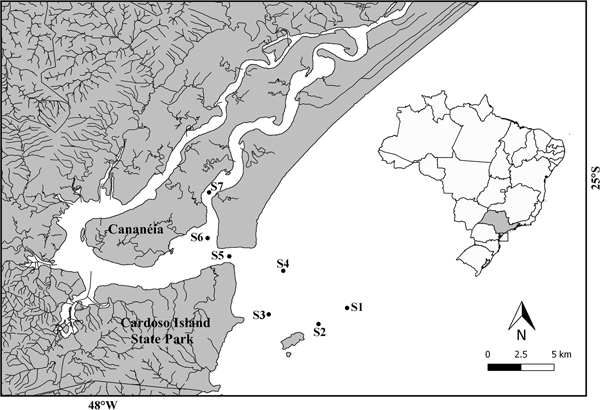
Samples were collected monthly from July 2012 to June 2014 at seven sampling stations along the complex Cananéia-Iguape estuarine-lagoon system and the adjacent coastal marine area (25°S – 48°W) in the southern region of São Paulo state, Brazil. However, because of adverse environmental conditions such as strong winds and high waves in March 2013 and February 2014, no samples were obtained during these months. The sampling was carried out with authorization from the Instituto Chico Mendes de Biodiversidade (ICMBio) and Sistema de Autorização e Informação em Biodiversidade (SISBIO) registration number 23012-1. Samples were taken from four sampling stations in the coastal marine area (S1: 14 m; S2: 9 m; S3: 10 m; S4: 7 m) and three sampling stations in the estuarine system (S5: 4 m; S6: 12 m and S7: 6 m) (Figure 1). The sum of what was collected at all sampling stations in the same month was considered a monthly sample unit.
Collection stations along the complex Cananéia-Iguape estuarine-lagoon system and the adjacent coastal marine area (25°S 48°W) in the southern region of São Paulo state, Brazil. Coastal marine area = S1 (14 m), S2 (9 m), S3 (10 m), S4 (7 m); and estuarine system = S5 (4 m), S6 (12 m) and S7 (6 m).

Individuals were captured using a shrimp boat equipped with double-rig nets (mesh size 20 mm and 18 mm in the cod end). The sampling effort at each station in the coastal marine area was 30 min/trawl, and in the estuarine system region 15 min/trawl was done at a constant speed of 2.0 knots.
All collected crabs were identified according to Melo (Reference Melo1996), quantified, measured for carapace width (CW), in mm using a calliper (accuracy of 0.01 mm), and sexed by counting the pleopods (two pairs for males and four pairs for females) and observing the morphology of the abdomen (triangular in males, semi-oval in females) (Mantelatto & Fransozo, Reference Mantelatto and Fransozo1994).
During each monthly collection, samples of bottom and surface water were collected from each sampling site using a Van Dorn bottle; temperature was measured with a mercury thermometer (accuracy of 0.1°C), and salinity was measured using an optical refractometer (accuracy of 0.1). Monthly pluviosity was obtained from the Brazilian Integrated Agricultural Weather Data Centre (CIIAGRO, http://www.ciiagro.sp.gov.br/). Sediment samples were collected each season to analyse the granulometric fraction (φ) and organic matter (OM), using a Van Veen grab (area: 0.06 m2). The sediment granulometric composition was expressed on the phi scale (=–log2 grain diameter, mm) (Tucker, Reference Tucker1988). For organic matter analysis, sediment subsamples were incinerated at 500°C and then reweighed (Byers et al., Reference Byers, Mills and Stewart1978). Procedures related to granulometry and organic matter content followed Costa et al. (Reference Costa, Fransozo, Freire and Castilho2007) and Bochini et al. (Reference Bochini, Franzoso, Castilho, Hirose and Costa2014).
Population structure
Individuals were considered juvenile or immature when their abdomens were adhered to the thoracic sternite, and females were considered ovigerous when they carried embryos in their pleopods (Mantelatto & Fransozo, Reference Mantelatto and Fransozo1992; Stanski & Castilho, Reference Stanski and Castilho2016). Furthermore, all individuals were dissected to conduct macroscopic analysis of the gonads and were classified into four categories as a function of the shape, colour and volume of the gonads in the cephalothorax cavity: immature (IM), rudimentary (RU), developing (ED) and developed (DE) (for more details see Reigada & Negreiros-Fransozo, Reference Reigada and Negreiros-Fransozo2000).
To verify the difference between the average sizes reached by males and females, the Mann–Whitney test (α = 0.05) (Zar, Reference Zar2010) was used.
All specimens were measured and divided into 5 mm size classes, following Sturges (Reference Sturges1926). The size distributions of males and females were compared using the Kolmogorov–Smirnov two-sample test (Sokal & Rohlf, Reference Sokal and Rohlf1995; Castilho et al., Reference Castilho, Furlan, Costa and Fransozo2008).
Growth and longevity
The growth analysis was performed separately for males and females. For each sampling month, the frequency of CW values was distributed in 5 mm size classes, and modes were calculated using PeakFit software (PeakFit v. 4.06 SPSS Inc. for Windows Copyright 1991–1999, AISN Software Inc., Florence, OR, USA).
To estimate growth parameters, all cohorts chosen were adjusted to the Bertalanffy growth model (von Bertalanffy, Reference von Bertalanffy1938), namely CWt = CW∞[1 − e−k(t−t0)], where CWt is size estimated at age t, CW∞ is asymptotic size, k is the growth coefficient, and t 0 is the theoretical age the organism would have at size zero. The growth parameters CW∞, k and t 0 were estimated using the Solver supplement in Microsoft Excel, which minimizes the sum of residues between the lengths observed in the field and those calculated by the von Bertalanffy model. The criteria used to accept a cohort were based on biological coherence with longevity, growth coefficient and asymptotic size. Growth curves were compared using an F test (P = 0.05) according to Cerrato (Reference Cerrato1990). Longevity was estimated by the inverse von Bertalanffy growth equation, with modifications suggested by D'Incao & Fonseca (Reference D'Incao and Fonseca1999), t 0 = 0 and CW/CW∞ = 0.99, while the longevity equation was t = (t 0 − (1/k) Ln (1 − CWt/CW∞)).
Sex ratio
The sex ratio was estimated as the quotient between the number of males and the total number of individuals sampled each month. Thus, sex ratio values higher or lower than 0.5 indicate population skews toward males or females, respectively. Deviations from a 1:1 sex ratio were tested using a binomial test (α = 0.05) (Wilson and Hardy, Reference Wilson, Hardy and Hardy2002; Baeza et al., Reference Baeza, Furlan, Almeida, Barros-Alves, Alves and Fransozo2013).
Reproduction and recruitment
The reproductive period was expressed based on the percentage of ovigerous females (females with embryos attached to their pleopods) in relation to the total number of adult females sampled (Reigada & Negreiros-Fransozo, Reference Reigada and Negreiros-Fransozo1999; Lima et al., Reference Lima, Bertini, Fransozo, Gregati, Fernandes-Góes and Castilho2014b; Silva et al., Reference Silva, Wolf and Castilho2016).
Juvenile recruitment was verified based on the monthly percentage of juvenile individuals (males and females) in relation to the total sampled individuals.
We conducted a redundancy analysis (RDA), using R software (version 3.4.3), to test the relationship between environmental factors and the absolute abundance of the demographic categories, considering α = 0.05 (Ter Braak, Reference Ter Braak1996). The results of the RDA were demonstrated in a two-dimensional graph to measure the power of relation between two sets of variables (abiotic and biotic) directly.
The analyses of the biotic and abiotic factors were concentrated in the marine region (S1, S2, S3 and S4), since no specimens were obtained from stations S5, S6 and S7. Also, the abundance of demographic categories was compared temporally between years and seasons: winter I (July 2012 to September 2012), spring I (October 2012 to December 2012), summer I (January 2013 and February 2013), autumn I (April 2013 to June 2013), winter II (July 2013 to September 2013), spring II (October 2013 to December 2013), summer II (January 2014 and March 2014) and autumn II (April 2014 to June 2014) using analysis of variance (factorial ANOVA, P < 0.05). After differences among years and between seasons were found, a post hoc Tukey test (α = 0.05) was carried out (Zar, Reference Zar2010).
Results
During the study period, mean values for temperature and salinity in the estuarine system region were 23.74 ± 3.21°C and 27.84 ± 5.28, respectively. With relation to granulometry, ϕ values were lower in winter II (2.71 ± 0.67) and highest in autumn II (3.57 ± 1.82). The organic matter content was lowest and highest in spring I (1.43 ± 0.30%) and autumn II (5.33 ± 4.98%), respectively.
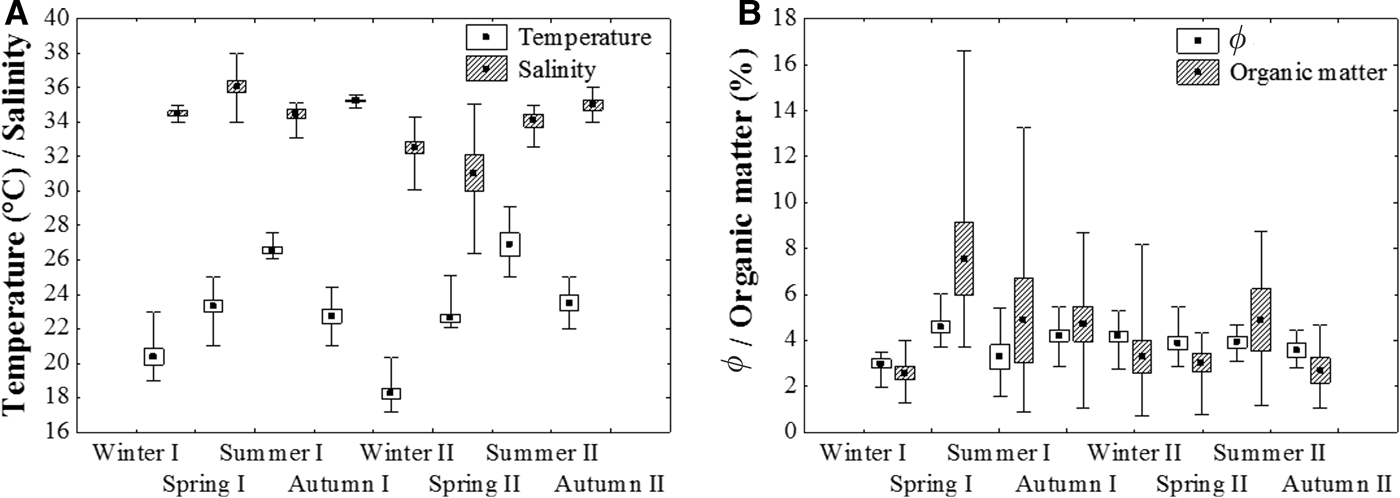
In the marine region, the lowest temperatures were verified during winter II (18.24 ± 1.16°C), and the highest occurred in summer II (26.90 ± 1.92°C) (Figure 2A). The lowest mean salinity was registered in spring II (31.08 ± 3.66) and the highest in spring I (36.04 ± 1.20) (Figure 2A).
Seasonal variation of mean values, standard error, minimum and maximum values for temperature (°C) and salinity of bottom water (A), organic matter and sediment granulometry (ϕ) (B), sampled monthly from July 2012 to June 2014 in the coastal marine area of the Cananéia region, São Paulo state, south-eastern Brazil.

With respect to granulometry, the substrate was seen to consist of a mixture of grains, predominantly fine and very fine sand (ϕ ranging from 3 to 4). The value for ϕ was lowest in winter I (2.99 ± 0.65) and highest in spring I (4.59 ± 0.92) (Figure 2B). Similar to the ϕ variation, the organic matter content was lowest and highest during winter I (2.57 ± 1.02%) and spring I (7.56 ± 5.54%), respectively (Figure 2B). Summer I was the season with the highest rainfall (815.13 mm), and winter II had the least precipitation (257.33 mm).
Population structure
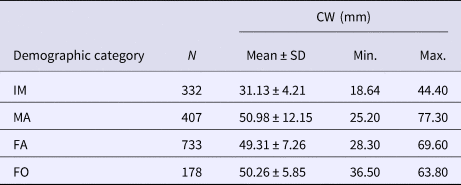
The carapace width (CW) of the males varied from 18.64 to 77.30 mm (45.80 ± 13.82 mm) and in females ranged from 18.72 to 69.60 mm (46.36 ± 9.53 mm) (Table 1). Males and females showed no significant differences in their average sizes (Mann–Whitney, P > 0.05).
Hepatus pudibundus (Herbst, 1785). Abundance (N), mean, standard deviation (SD), and minimum and maximum values for carapace width (CW) by demographic category based on external morphology, for specimens sampled monthly from July 2012 to June 2014 in the Cananéia region, São Paulo state, south-eastern Brazil.

IM: juveniles (males and females); MA: adult males; FA: non-ovigerous adult females; FO: ovigerous females.
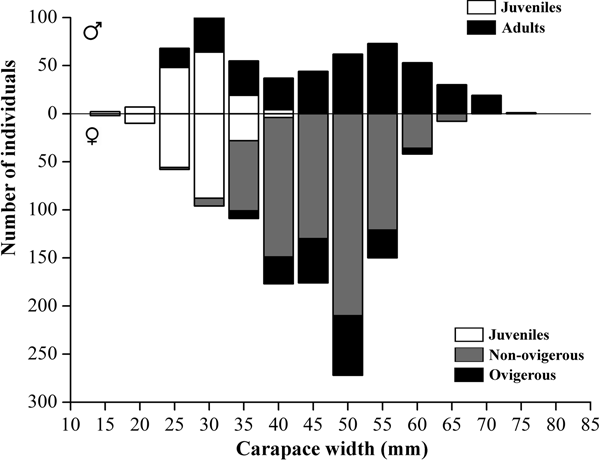
Juveniles were sampled in size classes between 15 and 45 mm, with higher frequencies in the 25–35 mm class. Adult males were distributed in most size classes, except 15–20 and 20–25 mm, while the adult females were distributed between 30–70 mm and the ovigerous females between 35–40 mm (Figure 3). The size frequency distributions were significantly different by sex (Kolmogorov–Smirnov two-sample test, d max = 0.17, P < 0.01).
Hepatus pudibundus (Herbst, 1785). Distribution of size frequency for juveniles, adult males, non-ovigerous adult females, and ovigerous females sampled monthly from July 2012 to June 2014 in the Cananéia region, São Paulo state, south-eastern Brazil.

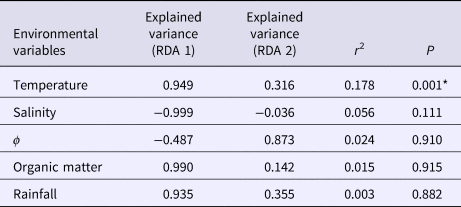
Males and females were captured in all demographic categories (Table 1). The redundancy analysis (RDA) showed that the relationship between the abundance of ovigerous females and juveniles and the environmental factors were represented by the first and second axis. Only the temperature correlated significantly (P < 0.05) (Table 2). The first axis of the biplot graph (RDA 1) explained 88.92% of the total variance of the data, while RDA 2 explained only 11.08%, showing a positive correlation with temperature for both categories.
Hepatus pudibundus (Herbst, 1785). Results of redundancy analysis (RDA) between environmental variables and abundance of ovigerous females and juveniles sampled monthly from July 2012 to June 2014 in the Cananéia region, São Paulo state, south-eastern Brazil.
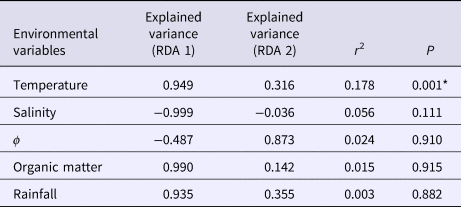
Proportion explained: RDA 1 = 88.92% and RDA 2 = 11.08%.
*Significant values (P < 0.05).
Growth and longevity
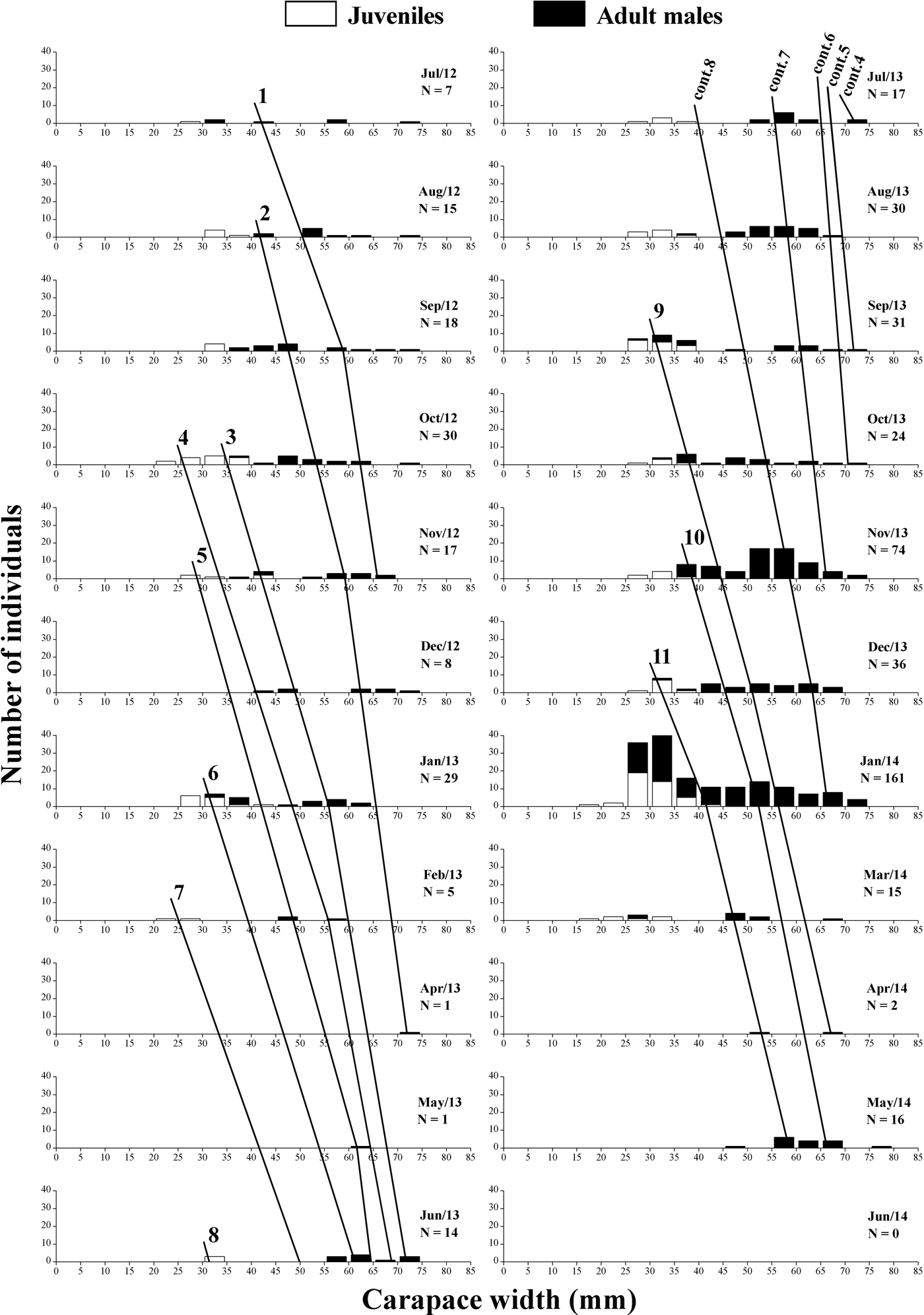
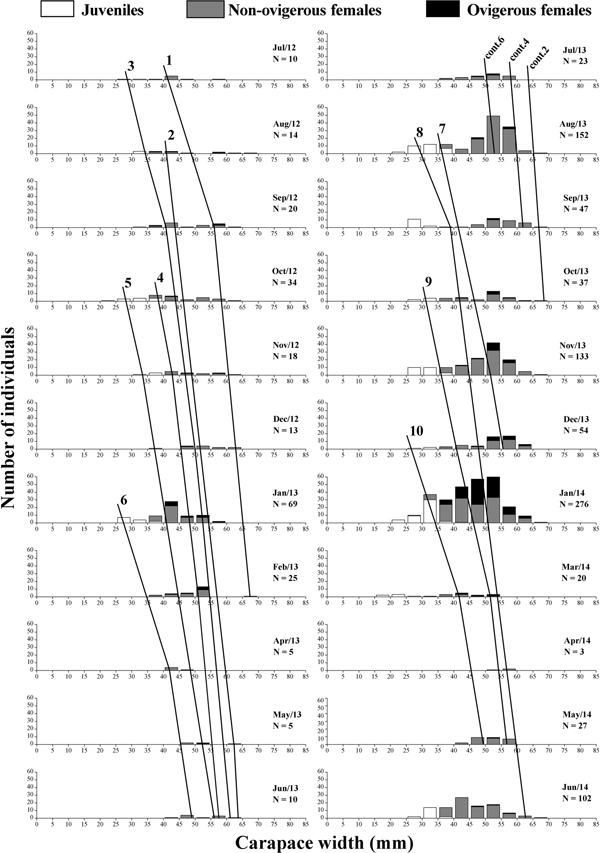
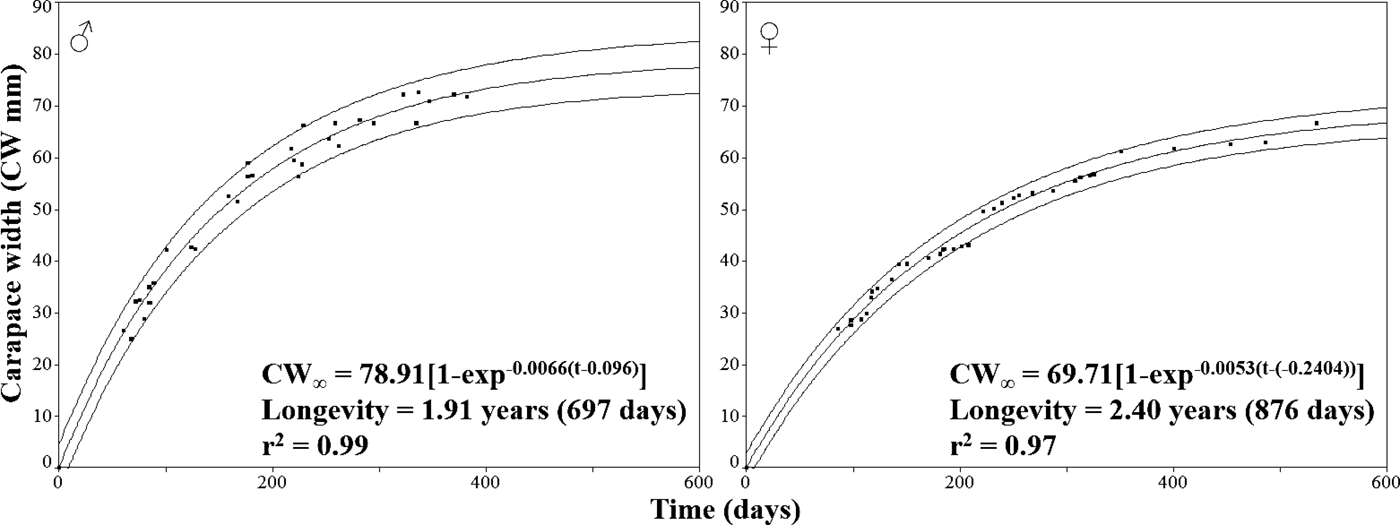
Eleven cohorts were selected for males (Figure 4) and 10 for females (Figure 5) to compose the growth curves. The mean curve, grouping the cohort curves for each sex, resulted in estimates of CW∞ = 78.91 mm, k = 0.0066 day−1 (2.41 year−1), and t 0 = 0.0965 for males; and CW∞ = 69.71 mm, k = 0.0053 day−1 (1.93 year−1), and t 0 = −0.2404 for females (Figure 6).
Hepatus pudibundus (Herbst, 1785). Distribution of males in size classes (5 mm) sampled monthly from July 2012 to June 2014 in the Cananéia region, São Paulo state, south-eastern Brazil. Lines in bold are the groups connected over the study period, used to describe individual growth.

Hepatus pudibundus (Herbst, 1785). Distribution of females in size classes (5 mm) sampled monthly from July 2012 to June 2014 in the Cananéia region, São Paulo state, south-eastern Brazil. Lines in bold are the groups connected over the study period, used to describe individual growth.

Hepatus pudibundus (Herbst, 1785). Growth curve estimated separately for males and females using the von Bertalanffy growth model (internal line), sampled monthly from July 2012 to June 2014 in the Cananéia region, São Paulo state, south-eastern Brazil. The external lines are the prediction intervals (95%).

The maximum longevity was estimated at 697 days (1.91 years) and 876 days (2.40 years) for males and females, respectively. The statistical comparison (F test) between the estimated curves for both sexes showed significant differences (F calc = 238.08 > F tab = 2.71).
Sex ratio
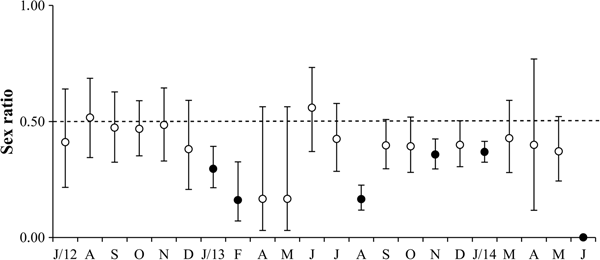
In total, 1650 individuals of H. pudibundus were obtained, of which 551 were males and 1099 were females. Monthly sex ratios varied throughout the study period, with a higher percentage of females compared with males. The sex ratio was skewed towards females, showing a statistical difference in January 2013, February 2013, August 2013, November 2013, January 2014 and June 2014 (Binomial test, P < 0.05). Males predominated only in August 2012 and June 2013, but the difference was not significant (Binomial test, P > 0.05) (Figure 7).
Hepatus pudibundus (Herbst, 1785). Monthly variation of the proportion of males and females (estimate ± standard error) from July 2012 to June 2014 in the Cananéia region, São Paulo state, south-eastern Brazil. Black circles indicate statistical difference of 1:1 (M:F) (Binomial test, P < 0.05).

Reproductive period and juvenile recruitment
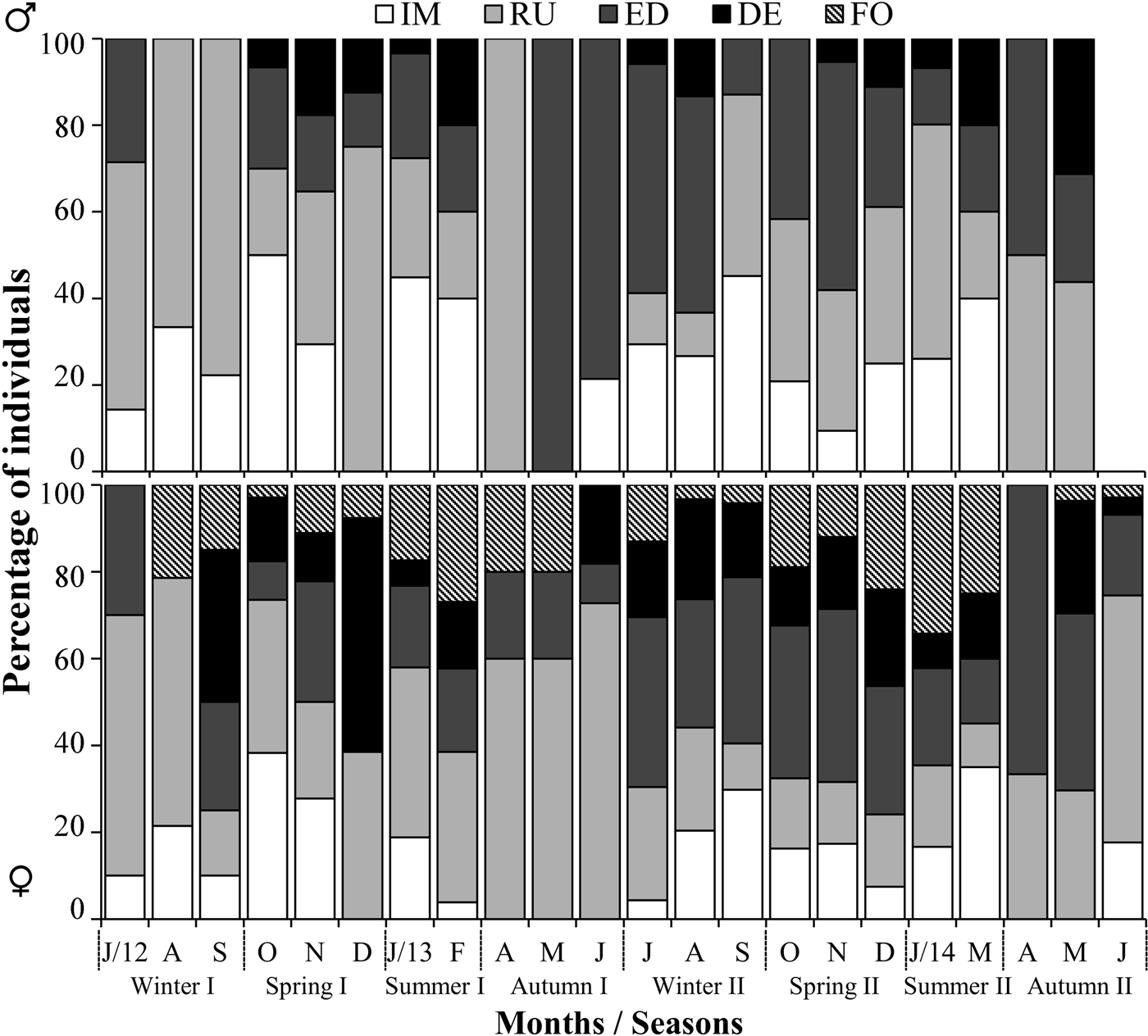
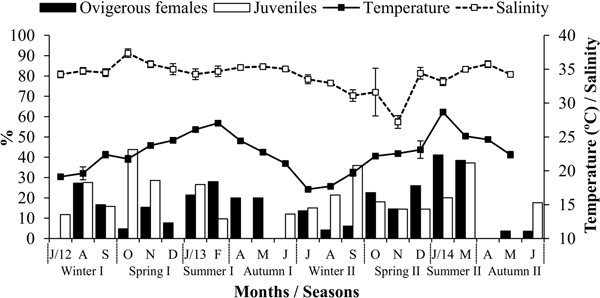
Males with developed gonads (DE) were not sampled in all months but were captured mainly in spring and summer (Figure 8). There was a significant difference between seasons of the year (factorial ANOVA, P < 0.05), with summer II differing from the other seasons except spring II (Tukey's test, P < 0.05). Ovigerous females were sampled throughout the collection period with the exception of July 2012, June 2013 and April 2014, with the highest percentages occurring in the spring and summer months of both years (Figures 8 and 9). There was a significant difference between seasons of the year (factorial ANOVA, P < 0.05), with summer II differing from the other seasons (Tukey's test, P < 0.05).
Hepatus pudibundus (Herbst, 1785). Percentage of males and females according to gonadal development (IM: immature; RU: rudimentary; ED: developing; DE: developed) and ovigerous females (FO), sampled monthly from July 2012 to June 2014 in the Cananéia region, São Paulo state, south-eastern Brazil.

Hepatus pudibundus (Herbst, 1785). Average monthly temperature variation and salinity, and percentages of ovigerous females (in relation to the total number of adult females) and juveniles (males and females) in relation to the total number of individuals sampled monthly from July 2012 to June 2014 in the Cananéia region, São Paulo state, south-eastern Brazil.

Juveniles (IM) were sampled in most months except December 2012, April–May 2013 and April–May 2014. In general, the highest percentages of juveniles occurred in winter and spring (Figure 9). However, there were no significant differences among the seasons (factorial ANOVA, P > 0.05).
Discussion
Despite the great abundance and significant presence of H. pudibundus as by-catch on the Brazilian coast (Fausto-Filho, Reference Fausto-Filho1967; Melo, Reference Melo2008, Reference Melo2010; Branco et al., Reference Branco, Freitas and Christoffersen2015; Severino-Rodrigues et al., Reference Severino-Rodrigues, Graça-Lopes and Furquim2015; Fransozo et al., Reference Fransozo, Sousa, Rodrigues, Telles, Fransozo and Negreiros-Fransozo2016), insufficient information is available on its reproductive biology and life cycle in other regions; for the most part these aspects have only been studied in the Ubatuba region, which hinders further conclusions regarding variations in the population patterns of this species along the Brazilian coast. In addition, the only protective strategy which would indirectly contribute to reducing fishing pressure on this species would be the closed fishery season, which occurs annually from 1 March to 31 May (IBAMA, 2008). However, during the closed fishery season, ovigerous and juvenile females were only sampled in low proportions or were entirely absent. Furthermore, the highest percentages of both categories were sampled in other seasons, suggesting that the species is not favoured by the closed period. The present study therefore shows that although there is no commercial interest in this species, it is subject to the same impacts that affect commercially exploited species.
Hepatus pudibundus was collected only the coastal marine area, i.e. no individual was captured in the estuarine region. Other studies, such as Fracasso & Branco (Reference Fracasso and Branco2005) in the region of Armação do Itapocoroy (SC) and Moreira et al. (Reference Moreira, Paiva-Filho, Okida, Schmiegelow and Giannini1988) in the region of Santos and São Vicente (SP), also did not sample this species in estuaries. Pluviosity did not correlate with any demographic categories but may have contributed to low abundance in the first year of sampling, especially in summer I, which had the highest precipitation levels of the study period. Precipitation increases ‘freshwater’ discharge into the bay and may transport larger sediment particles in adjacent areas (Kjerfve & Magill, Reference Kjerfve and Magill1989; Alber, Reference Alber2002), conditions that are not favourable for the presence of the species in the area. Other additional factors not evaluated in the present study, such as competition, predation, reproductive capacity, larval development, seasonal displacements and nutritional requirements, may also contribute to the abundance and differentiated distribution of the species in different locations (Forneris, Reference Forneris1969; Mantelatto et al., Reference Mantelatto, Fransozo and Negreiros-Fransozo1995a).
Population structure, growth and longevity
The difference in size between the sexes found in most Brachyura (Mantelatto & Fransozo, Reference Mantelatto and Fransozo1996; Taddei & Herrera, Reference Taddei and Herrera2010; Alencar et al., Reference Alencar, Lima-Filho, Molina and Freire2014; Pescinelli et al., Reference Pescinelli, Davanso and Costa2015; Marochi et al., Reference Marochi, Trevisan, Gomes and Masunari2016; Gonçalves et al., Reference Gonçalves, Bolla, Negreiros-Fransozo and Castilho2017) was also observed in the area studied for H. pudibundus. Males grew higher than females, corroborating results for this same species in different regions, such as Ubatuba (Mantelatto et al., Reference Mantelatto, Fransozo and Negreiros-Fransozo1995b), Armação do Itapocoroy (Fracasso & Branco, Reference Fracasso and Branco2005), northern Rio de Janeiro (Klôh & Di Beneditto, Reference Klôh and Di Beneditto2010) and Balneário Camboriú (Sardá et al., Reference Sardá, Machado, Prata and Dumont2013). This difference in size may be related to behavioural differences between the sexes, since after puberty moult the males direct their energy expenditures to somatic growth, copulatory behaviour and protecting females, which in turn invest their energy in egg production and incubation (Hartnoll, Reference Hartnoll and Abele1982, Reference Hartnoll and Wenner1985; Mantelatto et al., Reference Mantelatto, Fransozo and Negreiros-Fransozo1995b; Mantelatto & Fransozo, Reference Mantelatto and Fransozo1996; Costa & Negreiros-Fransozo, Reference Costa and Negreiros-Fransozo1998). Therefore, sexual dimorphism may be a direct consequence of sex-specific hormones, which provide a distinct morphology related to the reproductive success of the species (Marochi et al., Reference Marochi, Trevisan, Gomes and Masunari2016). Furthermore, according to Hartnoll (Reference Hartnoll2006) restricted feeding is common among females during the egg incubation process, which can contribute to smaller sizes among females.
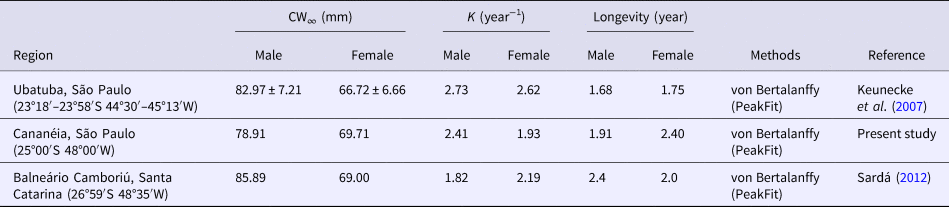
Studies on individual growth and longevity of H. pudibundus are scarce in the literature, with only one addressing the north coast of São Paulo (Keunecke et al., Reference Keunecke, D'Incao and Fonseca2007) and another on the coast of Santa Catarina (Sardá, Reference Sardá2012). The estimated LC∞ for males was lower than the value reported for the Ubatuba region by Keunecke et al. (Reference Keunecke, D'Incao and Fonseca2007), and for the region of Balneário Camboriú by Sardá (Reference Sardá2012) (Table 3). The estimated values for females were similar to those found in these studies, although the females were smaller than the males (Table 3). However, the values estimated by Sardá (Reference Sardá2012) are possibly underestimated, since the largest male had a CW of 96.67 mm and the largest female 76.99 mm.
Growth parameters (CW∞ and K) for Hepatus pudibundus (Herbst, 1785) studied in different regions
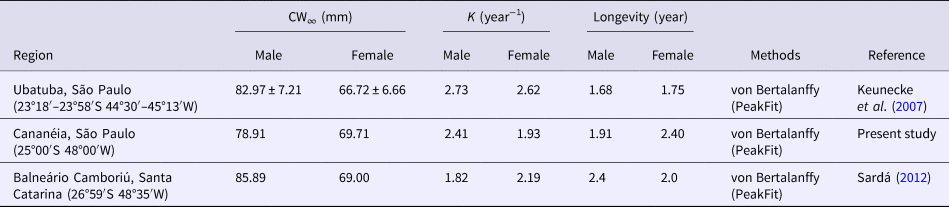
In addition to the factors already discussed here, the fact that males of this species are larger than females may also be related to a differentiated growth constant (k) between the sexes, such that males presented a higher value for k than females, corroborating the findings by Keunecke et al. (Reference Keunecke, D'Incao and Fonseca2007). Furthermore, the k could be directly linked to the physiological aspects of individuals, which in turn may be influenced by abiotic factors, and may even trigger or alter events related to reproduction and growth (Crear et al., Reference Crear, Hart and Thomas2003; Díaz et al., Reference Díaz, Sousa, Cuartas and Petriella2003).
The data in the literature suggest that the latitudinal effect paradigm can be applied in relation to the estimated LC∞ for species, mainly when the sizes found for females were observed, suggesting that individuals tend to grow larger and live longer at higher latitudes (Bauer, Reference Bauer1992; Castilho et al., Reference Castilho, Gavio, Costa, Boschi, Bauer and Fransozo2007). However, Keunecke et al. (Reference Keunecke, D'Incao and Fonseca2007) reported a higher CW∞ for males than we found in this present study, but this result may be an overestimate, since these authors fixed the CW∞ value based on the average size of the five largest specimens found in the literature, together with the largest specimens they sampled in their own study.
The available literature suggests that the longevity of decapods may depend on several factors, including latitudinal variation (Vogt, Reference Vogt2012). Therefore, the latitudinal effect paradigm can also be applied to the longevity of H. pudibundus, since shorter longevities were estimated in the Ubatuba region and longer longevities were found in the Balneário Camboriú region (Table 3) in comparison with our findings in Cananéia. Furthermore, longevity differences between genders may be explained by hormonal differences and by differences in the costs of reproduction and social stress (Vogt, Reference Vogt2012).
Sex ratio, reproduction and recruitment
In general, the data obtained demonstrated that females were predominant in relation to males. Previous studies along the south-eastern coast of Brazil found similar results for this species (Mantelatto et al., Reference Mantelatto, Fransozo and Negreiros-Fransozo1995b; Fracasso & Branco, Reference Fracasso and Branco2005; Keunecke et al., Reference Keunecke, D'Incao and Fonseca2007; Lima et al., Reference Lima, Fransozo, Andrade, Almeida, Furlan and Fransozo2014a). Natural populations are subject to fluctuations that may be associated with different growth and mortality between the sexes, migratory events, habitat segregation, sexual behaviour, food resources or spawning ground (Wenner, Reference Wenner1972; Haley, Reference Haley1979; Pile et al., Reference Pile, Lipcius, Montfrans and Orth1996; Fransozo & Mantelatto, Reference Fransozo and Mantelatto1998; Jesse & Stotz, Reference Jesse and Stotz2002).
During the study period, we sampled juveniles and both sexes in all stages of gonadal development (RU, ED and DE) distributed across several size classes, corroborating the findings by Reigada & Negreiros-Fransozo (Reference Reigada and Negreiros-Fransozo1999) that H. pudibundus presents constant gonadal development during its life cycle. In addition, Reigada & Negreiros-Fransozo (Reference Reigada and Negreiros-Fransozo2000) observed moulting activity in several size classes, indicating that the species does not experience a terminal moult but rather continues to undergo ecdysis after reaching maturity.
Males with developed gonads were not sampled in all months, but were mainly captured during spring and summer, coinciding with the highest peaks of ovigerous females. According to Mantelatto et al. (Reference Mantelatto, Fransozo and Negreiros-Fransozo1995a) a species is hardly homogeneously distributed in its area of occurrence, because there may be displacements according to environmental conditions or even due to different requirements during the various phases of life.
Furthermore, the absence of males and constant presence of ovigerous females may also be associated with the phenomenon of multiple spawning; many Brachyura females possess the ability to store spermatophores in the seminal receptacle, thus allowing more than one egg mass to be exposed after a single copulation (Mantelatto, Reference Mantelatto1995; Santos & Negreiros-Fransozo, Reference Santos and Negreiros-Fransozo1996). Reigada & Negreiros-Fransozo (Reference Reigada and Negreiros-Fransozo1999) also suggested this reproductive strategy for H. pudibundus, since these authors verified a great variation in gonadal development occurring in ovigerous females.
Continuous reproduction is commonly reported for Brachyura in tropical and subtropical regions (Mantelatto & Fransozo, Reference Mantelatto and Fransozo1999; Bertini et al., Reference Bertini, Teixeira, Fransozo and Fransozo2010b; Severino-Rodrigues et al., Reference Severino-Rodrigues, Musiello-Fernandes, Moura, Branco and Canéo2012). The absence or low catch of ovigerous females during certain periods may be related to the fact that females may migrate to more protected locations during the egg incubation period to protect their offspring, which makes it impossible to sample this group (Ripoli et al., Reference Ripoli, Fernandes, Rosa and Araujo2007; Davanso et al., Reference Davanso, Taddei, Simões, Fransozo and Costa2013; Sharma & Gupta, Reference Sharma and Gupta2013).
The results of this study confirm that reproduction in H. pudibundus in the Cananéia region (25°S) is continuous, so it is presumed that recruitment is also continuous. In addition, the fact that no juvenile individuals were captured during some months may be due to the fact that juveniles prefer deeper sites with higher organic matter content, as reported by Mantelatto et al. (Reference Mantelatto, Fransozo and Negreiros-Fransozo1995a), who studied the distribution of this species in the Ubatuba region.
It is expected the constant warm temperatures in tropical regions are the main reason for continuous reproduction in several invertebrate species (Bauer, Reference Bauer1992). According to the correlation between ovigerous females and temperature, it is possible to propose that water temperature is considered an important proximal factor to H. pudibundus, as was proposed by Bauer (Reference Bauer1992) with sicyonidean shrimps, or an environmental stimulus triggering gametogenesis and spawning (Sastry, Reference Sastry, Vernberg and Vernberg1983), since periods of higher temperatures can lead to an increase in plankton production and consequently the availability of food for planktotrophic larvae (final factor).
Continuous reproduction and recruitment for H. pudibundus were also registered in Ubatuba region (23°S), but at a higher intensity than we found in this present study in the Cananéia region (Reigada & Negreiros-Fransozo, Reference Reigada and Negreiros-Fransozo2000; Lima et al., Reference Lima, Bertini, Fransozo, Gregati, Fernandes-Góes and Castilho2014b). However, Fracasso & Branco (Reference Fracasso and Branco2005) studied the population structure of the species on the coast of Santa Catarina state, Brazil (26°S) and registered the seasonal presence of ovigerous females, with the highest percentages occurring mainly in late spring and summer. Juveniles also occurred seasonally, but with the main peak occurring in winter. These results indicate that reproduction and recruitment of this species corroborate with the latitudinal effect paradigm, which indicates that reproduction and recruitment tend to be continuous in tropical (lower latitudes) and subtropical regions with constant and warm temperatures during the year. When the latitude increases towards the cold and temperate regions, with their large yearly thermal variations, these population parameters become seasonal and are concentrated in the warmer months (Bauer, Reference Bauer1992; Bauer & Rivera-Vega, Reference Bauer and Rivera-Vega1992).
The results obtained in the present study provide a better understanding about the life cycle of H. pudibundus, and also provide supporting data for potentially more extensive management of trawling, addressing not only the target shrimp but also the accessory species, since the nets are not selective. An ecologically ideal management plan would include as many species as possible to preserve the entire community which exists in the fishing area.
Acknowledgements
We are thankful to LABCAM and NEBECC for their help during fieldwork. All the sampling in this study was conducted in compliance with current applicable state and federal laws (authorization from the Instituto Chico Mendes de Biodiversidade (ICMBio), SISBIO No. 23012-1).
Financial support
This paper is part of the Thematic BIOTA-FAPESP (São Paulo Research Foundation) multidisciplinary research project, which is intended to produce a fine-scale assessment of the marine decapod biodiversity in the state of São Paulo. Financial support for this project was provided by research grants from FAPESP (Temático Biota 2010/50188-8), CAPES CIMAR II (#23038.004310/2014-85), and scholarship funding (process numbers 2015/20382-0 to LFM and 2014/01632-3 to SMS), and from the Brazilian National Council for Scientific and Technological Development (CNPq) Regular Research 406006/2012-1 and Scholarship PQ-CNPq numbers of 305919/2014-8 and 308653/2014-9 awarded to RCC and ALC, respectively.