Introduction
Seasonality of reproduction, a common feature in sheep of temperate latitudes, has been recognized for a very long time. In general, the annual breeding season in Sarda sheep begins in early summer (May to June) and ends in spring (March to April) of the following year (Manunta, Reference Manunta1971). Seasonality is controlled by photoperiod: long days inhibit and short days stimulate sexual activity.
Research in manipulation of mammalian oocytes has progressed very rapidly over the last decades. Stable and good quality bovine and ovine embryos are now produced in vitro year round in many laboratories worldwide. However, most laboratories experience periodic reductions in embryo yield. Rutledge et al. (Reference Rutledge, Monson, Northey and Leibfried-Rutledge1999) reported that production of cattle blastocysts dropped in mid to late summer and increased from mid to late spring. Khairy et al. (Reference Khairy, Zoheir, Abdon, Mahrous, Amer, Zaher, Li-Guo and El-Nahass2007) reported different blastocyst yields in seasonally polyestrous Egyptian buffalo in the hot season compared to the cooler seasons. Conversely, Rocha et al. (Reference Rocha, Randel, Broussard, Lim, Blair, Roussel, Godlke and Hansel1997) and Rivera et al. (Reference Rivera, Al- Katani, Paula-Lopes and Hansen2000) failed to demonstrate an effect of season on in vitro production of cattle embryos in a subtropical climate.
In a seasonal species like the cat, if the oocytes are recovered during the non-breeding season the nuclear maturation is approximately 20% and no embryos develop to the blastocyst stage (Spindler & Wildt, Reference Spindler and Wildt1999). Zheng et al. (Reference Zheng, Si, Wang, Zou, Bavister and Ji2001) reported that monkey oocytes recovered during the breeding season showed significantly higher developmental competence than oocytes recovered during the non-breeding season.
This study compares the cleavage, blastocyst and lambing rates of in vitro produced ovine embryos during breeding and anoestrus seasons over a period of 3 years.
Materials and methods
Except when otherwise indicated, all chemicals were obtained from Sigma Chemicals Company (St. Louis, MO, USA).
Breeding and anoestrous seasons
Manunta (Reference Manunta1971) reported that less than 10% of adult Sarda sheep in the north of Sardinia (latitude: 40°44′0″N; longitude 8°33′0″E) are in oestrus between March and May (anoestrus season) while the number of animals in oestrus gradually increases from June onwards, and peaked in November (100%). Based on this information, we decided to divide data collection into two main periods: breeding season (B) from June to February and anoestrus season from March to May (A).
Oocyte collection
Sheep ovaries were obtained from a slaughterhouse, during either anoestrus or breeding season, and transported to the laboratory (80 km) within 2–3 h in saline solution at a temperature of approximately 35°C. Oocytes were collected by aspiration of follicles using a 20-gauge needle fitted with a 2.5-ml syringe. Follicular oocytes that contained evenly granulated cytoplasm and were covered by at least two layers of granulosa cells were selected for in vitro maturation (IVM).
In vitro maturation
Oocytes were washed in HEPES-buffered TCM199 (H-TCM199) supplemented with 0.4% bovine serum albumin (BSA, fraction V, A 9418), and 2 mM glutamine. The medium used for maturation was bicarbonate-buffered TCM-199 adjusted to 275 mOsm and contained glutamine at a concentration of 2 mM. The culture medium consisted of TCM-199 supplemented with 4 mg/ml BSA, 100 μM cysteamine, 0.3 mM sodium pyruvate, 1 μg/ml estradiol-17β supplemented with 0.1 UI/ml recombinant follicle-stimulating hormone (r-FSH; Gonal-F® 75, Serono, Italy), and 0.1 UI/ml recombinant luteinising hormone (r-LH). The oocytes were incubated in 400 μl of medium in 4-well dishes (Nunc, Nunclon, Denmark) with each well that contained 20 to 30 oocytes covered with mineral oil. All dishes were incubated at 39°C in air in a humidified atmosphere of 5% CO2for 24 h. Following maturation, oocytes were partially stripped of surrounding cumulus cells using a fine bore pipette and 300 UI/ml of hyaluronidase in H-TCM199.
In vitro fertilization
Following removal of cumulus cells, the denuded oocytes were washed in fertilization medium three times. Fresh semen from a Sarda breed ram of proven fertility was collected and kept at room temperature for up to 2 h, then washed in synthetic oviduct fluid (SOF), centrifuged twice at 200 g for 5 min and added directly to the fertilization medium. The medium used was SOF, as originally described by Tervit et al. (Reference Tervit, Whittingham and Rowson1972), enriched with 20% heat inactivated estrous sheep serum. A maximum of 15 oocytes per drop was fertilized in 50 μl with 1 × 10⁶sperm/ml at 39°C with 5% CO2 in humidified air for 20 h.
In vitro culture
After IVF (in vitro fertilization), presumptive zygotes were washed in SOF to remove spermatozoa and cellular debris. The zygotes were then allocated to 20 μl culture drops (5–6 embryos/drop) that consisted of SOF supplemented with 1% (v/v) Basel Medium Eagle (BME)–essential amino acids, 1% (v/v) Minimum Essential Medium (MEM)–non-essential amino acids, 1 mM glutamine and 8 mg/ml fatty acid-free BSA. Culture took place in a humidified atmosphere of 7% O2, 5% CO2, and 88% N2at 39°C. Culture medium was replenished every 2 days post-fertilization (with day 0 defined as the day of fertilization). The culture was continued until day 6 to 7 post-fertilization.
Vitrification
Dulbecco's phosphate-buffered saline (PBS) supplemented with 0.3 mM Na pyruvate and 20% fetal bovine serum (FBS) was used as the basic vitrification solution. Blastocysts were exposed at room temperature to 10% ethylene glycol (EG) and 10% dimethyl sulphoxide (DMSO) for 5 min, then to 20% EG, 20% DMSO and 0.5 M sucrose for <45 s. Blastocysts were loaded into open pulled straws (OPS) and immediately plunged into liquid nitrogen (LN2), where they were stored until transfer.
Warming and transfer of embryos
At breeding time, the straws were warmed in a water bath at 37°C and the contents expelled into a Petri dish, mixed with 0.5 M sucrose for 3–5 min and moved into a drop of H-TCM199 and 20% FBS for transfer to recipient ewes.
After warming, 85 vitrified embryos produced during the anestrous season and 80 embryos produced during breeding season were transferred surgically into recipient ewes 7 days after natural oestrus detection. Two blastocysts per ewe were placed in the uterine horn ipsilateral to the corpus luteum. Pregnancy was confirmed by ultrasonography at 40 days and pregnancies were allowed to go to term.
Lambing
The births of lambs were synchronized by treating the recipient ewes with 0.10 mg/kg corticosteroids (Dexadreson Forte, Interval) and 2.5 mg estradiol 17β (Estradiol AMSA, IBSA) (i.m.) on day 146 of pregnancy. All ewes lambed after 24–48 h of treatment. After parturition, the number of lambs born to each ewe was recorded.
Statistical analysis
Comparison between groups was performed using the chi-squared test (SAS/STAT User's Guide, 6.03 edition, SAS Institute Inc., Cary, NC, USA). P-values < 0.05 were denoted as statistically significant.
Results
Morphology of sheep ovaries during breeding and anoestrous seasons
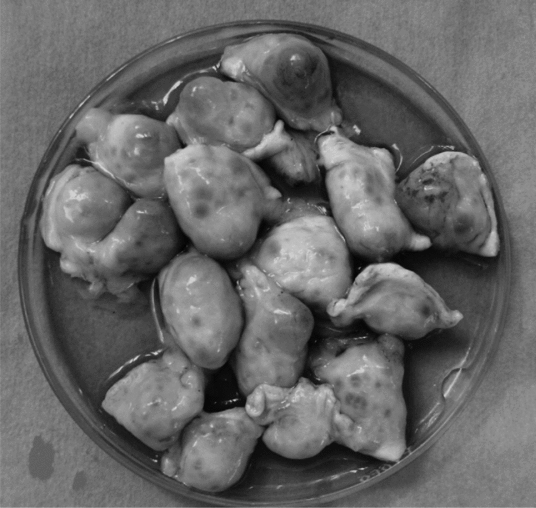
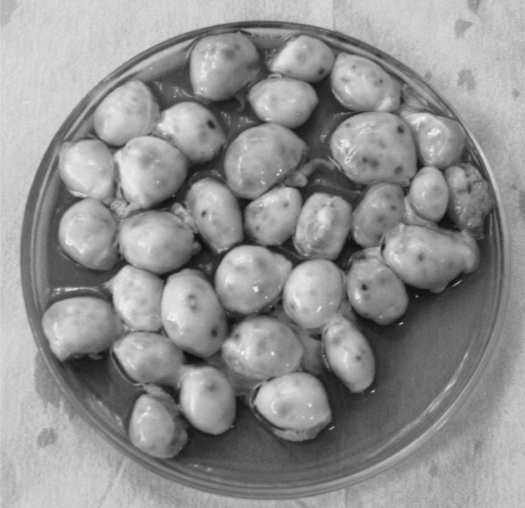
Figure 1 shows Sarda sheep ovaries during the breeding season, and Fig. 2 shows ovaries during the anoestrous season. In Fig. 1 the ovaries have large numbers of corpora lutea (CL) and most of the follicles have a diameter of about 2 or 3 mm. The anoestrous ovaries have no CL and the average diameter of follicles is less than 2 mm (Fig. 2).
Sheep ovaries collected during breeding season displaying corpora lutea (CL) and 2–3 mm follicles.

Sheep ovaries collected during the anestrous season are lacking corpora lutea (CL) and follicles are less than 2–3 mm in diameter.

Cleavage rate
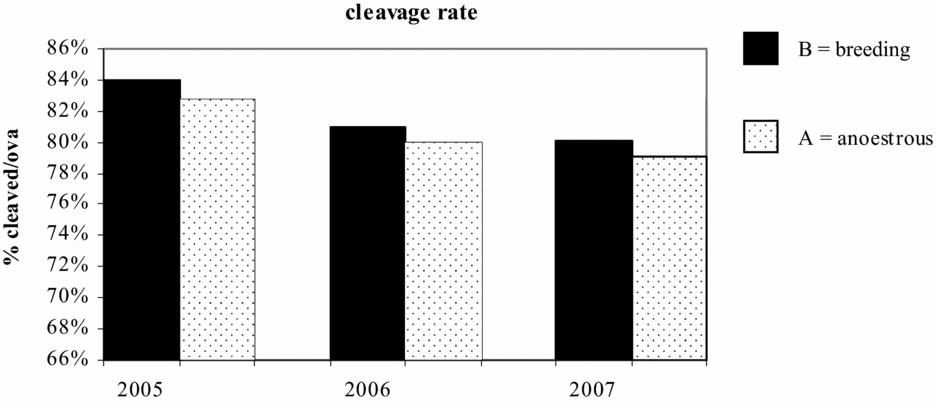
The cleavage rate did not vary significantly between the breeding season and anoestrus within any given year (84% versus 83%; 81% versus 80% and 80% versus 79%, respectively), see Fig. 3.
Cleavage rates (cleaved oocytes/total oocytes) of oocytes collected over 3 years during breeding and anoestrous seasons.

Blastocyst rate
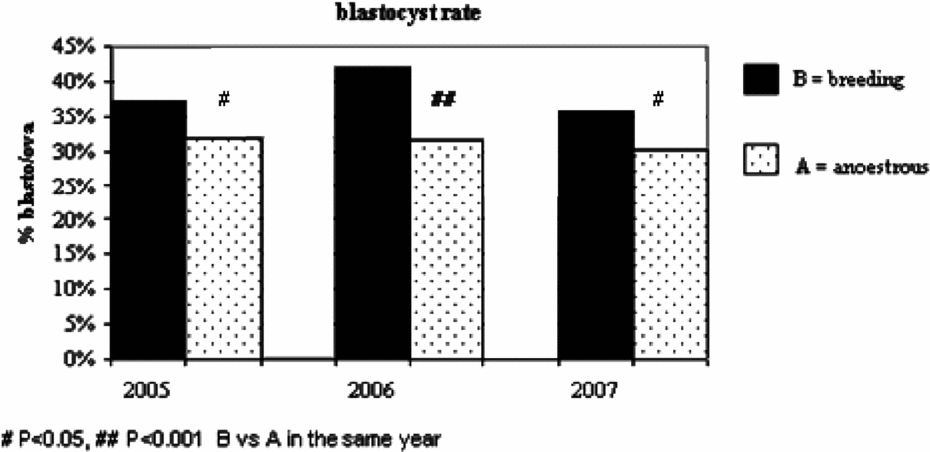
There was a significant difference in blastocyst rates (P < 0.05) between seasons within the years 2005 and 2007 (37% versus 32% and 36% versus 30% respectively). In 2006 the significant difference is P < 0.001 (42% versus 31%) (Fig. 4).
Blastocyst rates (produced blastocysts/total oocytes) of oocytes collected over 3 years during breeding and anoestrous seasons. # P < 0.05. ## P < 0.01. Breeding (black) versus anoestrous (dotted) in the same year.

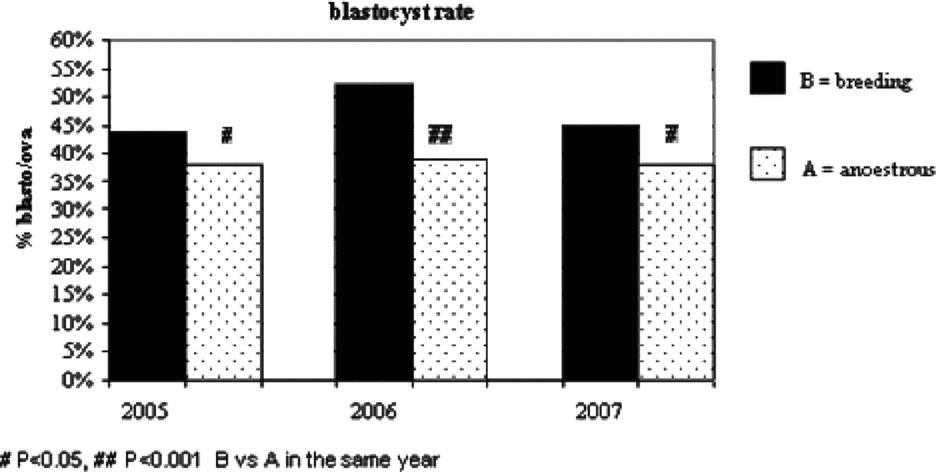
Similar results were obtained in the blastocyst rates calculated as the percentage of blastocysts on the number of divide oocytes between seasons within the years 2005 and 2007 (44% versus 38% and 45% versus 38% respectively). In 2006 the significant difference is P < 0.001 (52% versus 39%) (Fig. 5).
Blastocyst rates (produced blastocysts/cleaved oocytes) of oocytes collected over 3 years during breeding and anoestrous seasons. # P < 0.05. ## P < 0.01. Breeding (black) versus anoestrous (dotted) in the same year.

Pregnancy and lambing rate
There were no significant differences among groups in the pregnancy or lambing rates (Table 1).
Lambing rate of vitrified embryos produced during anoestrous and breeding season

Discussion
Data collected in our laboratory over 3 years of in vitro embryo production showed that in Sarda sheep the blastocyst rate seems to be affected by season.
The ovaries collected during the breeding season generally had well developed CL and most of the follicles were larger than 2–3 mm. In contrast, the ovaries collected during the anoestrus season were smaller, had smaller follicles, and no CL were recorded. These data are similar to those reported for animals that are seasonal breeders (Freistedt et al., Reference Freistedt, Miodrag and Eckhard2001).
The cleavage rates did not show significant seasonal variation. It has often been reported that the cleavage rate is mostly related to meiotic competence, and is dependent on follicular size and use of appropriate media during maturation (Moor & Trounson, Reference Moor and Trounson1977; Trounson et al., Reference Trounson, Anderiesz and Jones2001). In contrast, the blastocyst rate over the 3-year study period was constantly higher during the breeding season. Our data are similar to those reported by Rutledge et al. (Rutledge et al., Reference Rutledge, Monson, Northey and Leibfried-Rutledge1999) in cattle, in which the authors cite several variables that influence seasonal patterns of blastocyst production that include temperature, barometric pressure, feed quality and photoperiod. Thus, these factors might strongly affect the response in seasonal breeders. Indeed, Freistedt et al. (Reference Freistedt, Miodrag and Eckhard2001) and Zheng et al. (Reference Zheng, Si, Wang, Zou, Bavister and Ji2001) have reported that season significantly affected in vitro embryo production in seasonal species such as cats and monkeys.
In addition, Chemineau et al. (Reference Chemineau, Guillame, Migaud, Thiery, Pellicer-Rubio and Maplaux2008) confirmed that the period of the breeding season appears to be very stable from year to year, with stable dates of onset and cessation of ovulatory activity. This precise timing is due to complex mechanisms that allow animals to ‘locate’ their breeding season over the years. These observations would explain the similarity in blastocyst rates over several years in this study, both in anoestrus and breeding seasons. Similarly, it is important to note that the blastocyst rate calculated as the ratio of the blastocysts number divided by the number of oocytes is always higher than the rate calculated as the ratio of blastocysts to the total number of matured oocytes. This consideration means that only those oocytes that have obtained meiotic competence and cytoplasmic maturation are able to reach the blastocyst stage and continue their embryonic development (Watson, Reference Watson2007). These results could lead us to consider that perhaps cytoplasmic competence rather than meiotic competence might be dependent on the season.
Under our experimental conditions, pregnancy and lambing rates were similar between seasons. This result means that in seasonal species the embryos produced during the anoestrous season are capable of developing to term at the same rate as those produced during the breeding season. This information is valuable for use of technologies for the protection of biodiversity, the rescue of endangered species and for Multiple Ovulation & Embryo Transfer (MOET) programmes. In addition, it is important to note that if animals need to be rescued outside of the breeding season, a significant reduction in the number of blastocysts of good viability can be expected.
In conclusion, this report is the first to show that the number, but not the quality, of in vitro produced sheep blastocysts is affected by seasonality. These results would be expected in a seasonal breeder such as the sheep.
Acknowledgements
We thank Dr Debbie Gillette, veterinary anatomo-pathologist and photo editor of veterinary pathology (Philadelphia, Pennsylvania, USA) for critical reading and improving the English of the manuscript. The authors thank Mr Giampero Camoglio and Antonio Pintadu for assistance in the care and handling of animals. This work was supported by the Regione Autonoma della Sardegna Biodiversità APQ5/2007.