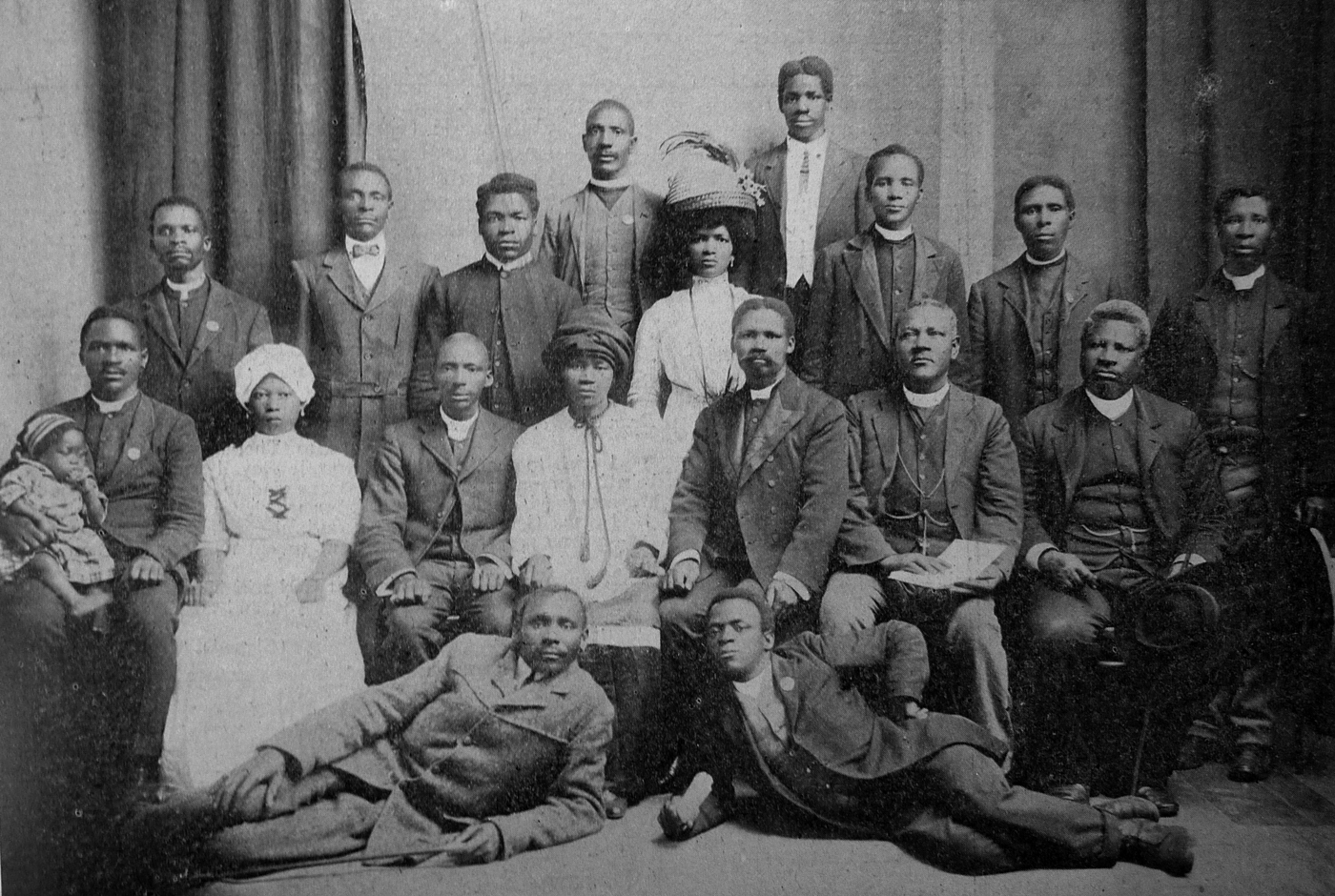
For a brief period, a diverse group of Zulus, Swazis, Sothos, Boers, Britons, and Americans resident in the Transvaal claimed membership in the Christian Catholic Apostolic Church in Zion, an evangelical American organization that practiced divine healing—the invocation of God through prayer to bestow health upon human bodies. Early twentieth-century converts to this healing church, who called themselves Zionists after the church's headquarters in Zion, Illinois, at times eschewed their racial and national identities as Boer, Briton, African, European, white, or black. Instead, they proclaimed that their rehabilitated bodies transformed them into a heavenly people—the Adamic race. While new to the present era, believers claimed this race was the oldest known to humanity: Zionists traced their lineage to Adam and Eve. They believed that originally all humankind had belonged to this single Adamic family, but the Devil had engendered division, leading to the emergence of the present-day racial families. Through their healing practices, however, Zionists felt they were reprising the unity and strength of the originary race. Recasting biological race as spiritual ethnicity, Zionists claimed kinsfolk from an eclectic range of individuals. These Christians invoked race as the common denominator connecting a cosmopolitan humanity as “blood” relatives, albeit through the blood of Christ rather than biological lineage.
Instances of cosmopolitanism in modern South Africa are usually passed over for the study of racial ideologies prescribing the segregation rather than unification of the races. In general, the bulk of scholarship on race has focused on how historical actors used racial rhetoric to differentiate distinct and frequently antagonistic identities. Many have argued that assumed biological categories of race were racial ideologies—social facts to prop up structures of dominance—that were a product of the European Enlightenment's promotion of scientific thought.Footnote 1 Intellectuals' new emphasis upon classificatory thought engendered methodologies of observation, measurement, and classification, and led to racial theories that emphasized innate biological differences, and in this way spliced off certain groups of humans from others.Footnote 2 These classificatory acts have been interpreted as fundamentally agonistic; scholars highlight that racial demarcation legitimized power disparities, including the West's expansion into the Americas, Africa, and Asia in the early modern and modern eras.Footnote 3
A recent philosophical literature has deepened our understanding of these racialized administrations of power by pointing to “biopower,” Michel Foucault's term for medical and other techniques of subjugating both individual bodies and populations.Footnote 4 A prominent historian of race has linked these classificatory and disciplinary elements of racial thought, writing, “Racism has two components: difference and power. It originates from a mindset that regards ‘them’ as different from ‘us’ in ways that are permanent and unbridgeable. This sense of difference provides a motive or rationale for using our power advantage to treat the ethnoracial Other in ways we would regard as cruel and unjust if applied to members of our own group.”Footnote 5
The “difference” and “power” model has been particularly prominent in histories of racial thought in South Africa. Segregation—the efforts of officials to entrench white supremacy via political and administrative strategies—relied upon racial theories that “othered” the Bantu as a primitive, tribal people that possessed a different racial genealogy to Europeans.Footnote 6 Moreover, racial differentiation translated into economic and political power. In the context of South Africa's rapidly industrializing economy, white officialdom and big business used racial categories to reproduce cheap and coercible non-white labor.Footnote 7 Apartheid-era officials similarly drew upon the power of racial classifications to strategically disassociate humans.Footnote 8 Deborah Posel has shown how the apartheid state used race as a marker of essentialized biological identities and socio-legal difference to enact an ambitious scheme for territorially segregating South Africans.Footnote 9 These efforts utilized bureaucracy's enumerating strategies (counting out different races via the pass book) and enumerative practices of physical anthropology and eugenics (measuring skulls to determine racial classification).Footnote 10
But it was not just South African whites that relied upon the differentiating capacities of racial thought. Researchers on popular resistance to apartheid have demonstrated how black consciousness groups of the 1960s re-appropriated “blackness.”Footnote 11 And in an earlier period, while some nationalists aspired for non-racialism, many others, such as Natal's John Dube, first President of the African National Congress, advocated moderate racial segregation and proposed that Africans develop along their own lines rather than seeking full inclusion in a multi-racial state.Footnote 12
In keeping with this focus on how South Africans used race to delineate difference, the large scholarship on Zionist churches has emphasized their articulation of black identity.Footnote 13 From its origins as a racially mixed movement, Zionism grew to become one of the country's largest black Protestant movements, incorporating 21 percent of black South Africans by the 1960s.Footnote 14 Shaped by political independence sweeping the continent in this decade, scholars seized upon Zionists as examples of the resilience of African religiosity against a “foreign” European Christianity.Footnote 15 By the 1970s, scholarship on African religious “independency” (as Zionists and other similar groups were known) bore the imprint of symbolic anthropology. Their healing rituals were remnants of indigenous cosmologies, and evidence of Africans' ability to appropriate Western Christianity and to mediate the alienating effect of colonial capitalism.Footnote 16 Some scholars did note the multiracial composition of early Zionism and the importance of American and Afrikaner evangelists in transmitting Zionist teachings,Footnote 17 butFootnote 18 most have depicted the contribution of whites as part of a transitory phase and of limited influence. The movement is cast as an exercise in “African cultural reconfiguration,” which obscures divine healing's popularity amongst Boers and Britons and underplays the continued contact between black and white Zionists in the United States.Footnote 19 In this way, Zionism is cast as a religious practice that reified racial difference, rather than understood as a healing ideology that sought to transcend so-called natural categories of race through the fashioning of new human bodies.
This article examines the evidence that white and black Zionists in South Africa and the United States embraced divine healing as a technique of universalism, and argues that more attention must be paid to cosmopolitan themes in the history of twentieth-century South Africa. The “cosmopolitan” has been defined as “the person whose allegiance is to the worldwide community of human beings.”Footnote 20 Cosmopolitanism is thus positioned as an impulse running counter to the parochial ambitions of nationalists, patriots, and ethnic entrepreneurs.Footnote 21 In South Africa, a growing number of studies show that transcontinental currents predicated upon shared race had a profound influence. James Campbell's study of the African-American and black South African members of the African Methodist Episcopal Church illustrates the complex connections undergirding Christians' efforts to forge a transatlantic black fraternity. In this context, “The trope of race served not to distinguish, but to render lines of similarity and difference immensely problematic.”Footnote 22 Robert Vinson's study of the Garveyite movement in South Africa argues that race was the fragile glue uniting internally divided worldwide blacks in resistance to imperial rule.Footnote 23
There is a growing literature that explores how “whiteness” has connected South Africa to the global Anglophone world, including through a focus on transnational syndicalism.Footnote 24 However, by naming themselves Adamic people, Zionists imagined race linking individuals across rather than merely within conventional racial demarcations. While Latin American scholars have detailed how historical actors transgressed socially defined racial categories, particularly through interracial relationships,Footnote 25 study of non-racial thought and practice in South Africa has been limited to a small literature about the highbrow politics of political parties such as the African National Congress, and the official documents that mapped out the country's non-racial future such as the Freedom Charter.Footnote 26 The present article seeks rather to understand how working- and lower-middle-class whites and blacks of the Transvaal invoked and redefined race in their everyday lives. In formulating their new racial ideologies, South African Zionists partook of a historic tendency within Christianity to cast ethnicity as a spiritual rather than a natural category. At certain moments, in a variety of periods and places, Christians have identified themselves as a “third race” that supersedes so-called biological identities.Footnote 27
Yet the case of the Zionist church both in South Africa and the United States is not a straightforward juxtaposition of cosmopolitanism against racial ideologies, and instead reveals a complex imbrication of the two impulses. Despite its rhetoric of detachment from older racial, ethnic, and national identities, Zionism was a profoundly situated universalism, rooted in specific historical and geographical contexts within particular hierarchies of power and difference.Footnote 28 In other words, black and white Zionists' inclination for cosmopolitan thinking did not transcend the segregating orders of the Anglo-Saxon empire and Gilded Age America. Instead, African-Americans, Boers, and Africans struggled to assert themselves within the strictures of the still-racialized regimes of the utopian Zion community. This insight chimes with calls from scholars of cosmopolitanism to realize the overlap, rather than the opposition, between cosmopolitan universalisms and more parochial ethnic and national politics.Footnote 29
My examination of the diverse, situated cosmopolitanism of the Zionist church will begin with the nineteenth-century divine healing movement. Protestants in Europe and North America believed in the deity's ability to literally create new human bodies.Footnote 30 Zionists in the Transvaal drew upon this suggestive notion to stretch Christianity's “third race” rhetoric to new limits. However, exemplifying the constraints attendant upon cosmopolitan aspirations, the roots of this divine healing movement were far less cosmopolitan: the late nineteenth-century interest of the West in repairing the ailing Anglo-Saxon race.
ANGLO-SAXONS, ETHIOPIANS, AND THE ADAMIC RACE
John Alexander Dowie was the divine healing movement's most famous figure. He was born in Edinburgh to a tailor father, and in 1860 the Dowies immigrated to South Australia as part of a wave of working-class Scottish emigration.Footnote 31 After a brief return to Edinburgh to study theology, Dowie was ordained pastor of an Australian Congregationalist church. He was influenced by the period's Methodist-derived belief in divine healing—Christ's ability to heal body and soul—and left the Congregationalists in the late 1870s and started a Divine Healing Association in Melbourne. Dowie was loosely affiliated to the British Christian Alliance that espoused divine healing; its periodical of 1888 “noted with pleasure the progress of [Dr. Dowie's] work in Australia and New Zealand.”Footnote 32 In the same year he and his family traveled to California where he found great success in preaching and healing. By 1893 Dowie with thousands of others traveled to Chicago's World Fair, and he held healing meetings in a wooden tabernacle erected on the Fair's perimeters. Dowie rode a wave of resulting publicity and in 1896 founded his own establishment in Chicago, the Christian Catholic Church. He opened several healing homes, which like William Boardman's Bethshan Healing Home in London and A. B. Simpson's Berachah Faith Home in Boston were heavily patronized by women. Dowie started a periodical, Leaves of Healing, which broadcast his healings by imitating techniques of popular broadsheets such as eye-grabbing headlines, compelling testimonies, and dramatic photographs. Branches of Dowie's church sprung up around the Midwest and across the entire country.
In its broadest sense, divine healing as practiced by Dowie responded to a perceived decline in Anglo-Saxon racial health. “Anglo-Saxonism” was a key doctrine of the nineteenth-century English-speaking world that affirmed the innate superiority of Anglo-Saxons, defined as the white people of Britain and the British world, including North America, who traced their ancestry to a mythical Teutonic or Ayran past.Footnote 33 British and American intellectuals lauded Anglos as having unique talents, including an innate disposition toward democratic politics and bodily vigor. They argued that these characteristics qualified Anglo-Saxons to rule the world, powerfully legitimating the expansionist goals of both countries.Footnote 34 But this assertion of superiority was linked to a sense of whites' vulnerability. The ailments of Anglo nations included threats from political rivals like Russia and Germany and domestic unrest precipitated by industrialization. The growth of colonial nationalisms, including the Boer Republics' assertion of autonomy, appeared to threaten imperial hegemony. It became popular to describe these anxieties as poor Anglo-Saxon healthFootnote 35—industrialization undermined the race's health, and clerical work resulted in a decadent manhood that was ill-fitted to world domination.Footnote 36 Neurasthenia was linked to industrialization and considered a principal nervous ailment that drained men of the vigor proper to Anglo-Saxons.Footnote 37 New occupational diseases did in fact abound, including lung diseases from industrial dust and spinal damage from long hours spent over new machinery.Footnote 38
The cultivation of bodily health was perceived as the antidote to such racial woes. Advocates argued that time in the outdoors and fresh air, far from industrialized centers, would revive Anglo-Saxon vitality. While expanding and improving the U.S. National Park System President Theodore Roosevelt spoke of the “burly strength which must be possessed by every great and masterful nation.”Footnote 39 Health reform movements addressed the physical ills of modern living. Grahamism's advocacy of a whole grain diet was pro-rural nostalgia,Footnote 40 while the mind cures of Swedenborgian mesmerist psychology addressed the jarring of the urban psyche.Footnote 41 The new science of eugenics was dedicated to improving racial “stocks” through medical and social reforms.Footnote 42 And for many ideologues, the key to racial reinvigoration was expansion overseas into rugged Australia, New Zealand, and South Africa.Footnote 43 British novelists Thomas Hughes and Charles Kingsley equated healthy bodies with Anglo-Saxon empire.Footnote 44
Protestants such as Dowie responded by asserting God's ability to heal diseased bodies, and racial health more broadly. Many in the divine healing movement espoused “British Israelism,” a spiritual variant of Anglo-Saxonism that argued Anglos were descended from the biblical Israelites. Charles Parham, a leading American proponent, maintained Queen Victoria was descended from the biblical Adam.Footnote 45 Dowie was close friends with Joseph Wild, a Congregationalist pastor who started an Anglo-Israelite group in Brooklyn called “The Lost Israel Identification Society.”Footnote 46 Influenced by Wild, in 1897 Dowie informed his followers, “I belong to Israel. I do not mind telling you that I believe the blood in my veins is directly Israelitish.”Footnote 47 As God's chosen race, Anglo-Saxons enjoyed a divine right to rule the world. In 1901 Dowie stated to his followers via Leaves, “I am a firm believer in the Israelitish origin of the Anglo-Saxon race. Every experience confirms in me the conviction that the Anglo-Saxon race is the descendent of the Ten Tribes of Israel … that in this land it is the dominant race is, of course, without question.”Footnote 48
But Dowie and others diagnosed God's chosen race to be in bad health. The “devil,” he maintained “is always trying to destroy the Israelitish family.”Footnote 49 He preached to his followers that “although the Caucasian family is a strong one, we have nothing to be proud of. We are becoming degenerate and if you do not take care, we will die out.”Footnote 50 Like others, Dowie blamed industrialization: Anglo-Saxon bodies were weakened by cities, especially Chicago's “rum-soaked, tobacco-reeking streets.”Footnote 51 He denounced alcohol, gambling, smoking tobacco, and the “filthy stinkpots” who indulged in them as corrupting the racial stock, producing “nicotinized, demoralized bodies.”Footnote 52 Dowie tapped into widespread skepticism about the medical profession, physicians, and pharmacists by censuring them as quackish frauds who enervated Anglo-Saxons. His sermon “Doctors, Drugs and Devils: Foes of Christ the Healer” packed a Chicago auditorium and incited a near-riot by university medical students.Footnote 53 Dowie identified women's reluctance to have large families as similarly contributing to racial degeneration, and in 1903 announced, “One of the things which will surely dig the grave of the nation is the disinclination of wives to be mothers. The consequence will be absolute destruction of the nation as an Anglo-Saxon people.”Footnote 54
Dowie's healing houses expressed the period's spiritualization of domesticity and childbearing by relocating racial health to the Victorian home, a respite from the demoralizing world.Footnote 55 But he also addressed the conditions thought to be leading to racial decline. In 1900 he used donations to purchase land north of Chicago and there founded Zion, a town designed along biblical lines that at its height in 1904 had six thousand residents.Footnote 56 Most Zionists—the press scathingly called them “Dowietes”—were newly urbanized lower-middle-class or working-class people for whom Dowie's condemnation of unhealthy cities resonated.Footnote 57 Many were from Chicago, while some relocated to Zion from rural states like Colorado, Nebraska, and Minnesota. All were attracted by Zion's utopian vision of a fair working environment prizing godliness and health.Footnote 58 To offer residents sustainable employment, Dowie imported a lace factory piece-by-piece from England and several hundred skilled workers. He also founded the Zion Bakery and the Zion Lumber and Coal Company.Footnote 59 Unions were banned, but eight-hour workdays were mandated and working conditions tightly regulated: Dowie's aim was “a population of godly people who shall work together for something more than dollars.”Footnote 60 He employed a civil engineer who, inspired by Ebenezer Howard's Garden City, located industry at Zion's periphery, ensuring a green, tranquil center with boulevards and leafy avenues.Footnote 61 Alcohol, tobacco, gambling, doctors, and pharmacists were all prohibited.
Zion's enactment of bodily and spiritual health was powerfully displayed by frequent healing services in its Tabernacle. While believers prayed for themselves and others, above all they trusted in Dowie's intercessions. One follower described how he “lays hands on their head … he touches the eyes lightly, ears and back of the neck … he strokes his hands gently down the arm.”Footnote 62 Another told of a sensation in which “an electric flash permeated my whole being.”Footnote 63 To bolster converts' faith and silence the many skeptics, Leaves chronicled Zion's healings of heart disease, bowel haemorrhage, hysteria, and cancer. To the same end, “crutches, casts and other medical appliances” were displayed in the Tabernacle, labeled as “trophies captured from the enemy.” Many healings addressed female reproductive woes and infant health, part of the period's broader concern with Anglo longevity. Cures of “enlarged ovaries” and “female troubles” were triumphs over the Devil, and parents testified in church to their infants' deliverance from death.Footnote 64 Zion was lauded as “a great place for babies.”Footnote 65
In distinction to his divine healing contemporaries, Dowie espoused a more ambitious project for racial rehabilitation than mere Anglo-Saxon rejuvenation. He argued that Zion had a role in reprising the original race, a single people he referred to as the Adamic race. Many in the post-bellum United States argued that God had bestowed racial variation at the moment of creation, and this view was usually extended to support Anglo-Saxons' superiority over other races.Footnote 66 But Dowie was in sympathy with monogenists, who cited Genesis' account of God's creation of a single human race.Footnote 67 For Dowie, a racial family had existed prior to the Israelites, the original human family of Adam and Eve: “There is only one race—the children of Adam and Eve.”Footnote 68 His congregation seems to have supported his cosmopolitan vision. When he declared in 1903, “All so-called races of mankind were but Families of One Great Race,” his Tabernacle “rang with enthusiastic applause.”Footnote 69 And if Anglo-Saxons were latter-day Israelites, Dowie identified Africans with the biblical “race of Ethiopians.” Zion's incorporation of “Ethiopians” was therefore a foretaste of the Adamic race: “There is victory all along the line. Prophecy is being fulfilled. Ethiopia is “hastening to stretch out her hands unto God.”Footnote 70
Dowie pointed to this supposedly ancient people—an amalgamation of Anglo-Saxons and Ethiopians—to argue that racial rejuvenation would arrive once humans recaptured their primordial unity.Footnote 71 The view that there were no races, only one Adamic race, led Dowie to argue for “miscegenation,” a bio-spiritual discipline that, like divine healing, rehabilitated degenerate bodies. “In Zion,” he proclaimed to his followers, “black and white were blended.”Footnote 72 His advocacy of intermarriage was nevertheless grounded in the period's racist stereotypes. Echoing contemporary assumptions about African virility, blacks for Dowie were, in contrast to enfeebled Anglo-Saxons, the “choicest … embodiment of manly, healthy physique.”Footnote 73 Mixed marriages would re-infuse Anglo-Saxons with potent blood. He cited Moses' marriage to a Cushite woman as support for “fusing” the races into a strong “primitive” race: “When you talk about different races, you talk nonsense. There is one Race and that is the Adamic Race. May God grant that the time shall come speedily for the fusion of all the Races and give us back the Primitive Man, the man that was strong, the type of man that trod the soil of Eden.”Footnote 74
It followed that welcoming African-American converts to Zion was key to Dowie's rehabilitative project, and by 1906 there were over two hundred black residents. Footnote 75 Frank and Louise Hartfield, whose grandparents had been slaves in Tennessee, were among the first to arrive in 1900; another was William Elliot, who served in the Union Army during the Civil War.Footnote 76 Many joined Zion because they appreciated Dowie's advocacy. In his writings and speeches he criticized discrimination and violence against blacks, and especially the many lynchings taking place, as violations of the human family's sanctity.Footnote 77 A black deputy of Hennison County, Minnesota who visited Zion called Dowie “the most courageous man on earth today.”Footnote 78 In moving to Zion, African-Americans found no color bar, since Dowie vehemently denounced segregated worship: “The Church of God cannot draw a color line! The Church of the Devil can and does!”Footnote 79 Overall, reported instances of conflict between white and black Zionists were rare, and white Zionists seem to have welcomed African-Americans to Zion.Footnote 80
The majority of Dowie's African-American members converted for similar reasons to other followers: divine healing. Many were Chicago's poor yet respectable citizens struggling to assert themselves amidst hostility from white immigrants.Footnote 81 They believed divine healing strengthened them for industriousness. Miss Carrie Coleman did “hard work every day,” but landed in the Charity Hospital due to “consumption, partial paralysis in my right limb, heart troubles and a roaring in my head.” She read Leaves, and went to the Zion Tabernacle for prayer. Having obtained her healing, she regained her living.Footnote 82 Another early African-American convert was Mrs. Emma Parker, a domestic servant. In 1896 she wrote to Dowie describing her healing after being “sick one year and [having] three doctors.” But then she read Leaves and all changed: “God opened my eye … something touched me on my head and there went through my body a strange new feeling.”Footnote 83 For a few on the margins of respectable African-American society, divine healing represented redemption from societal alienation. A young woman called Hattie H. had “fallen into sin” in Chicago, but Zion's healing home looked after her during her pregnancy, and “returned her to the City, where she is now living a good life, earning her living.”Footnote 84 Finally, Zion's promise of liberation from bodily weakness and spiritual sin reprised the not-so-distant experience of freedom from slavery. One “Dowiete” affirmed that the God who healed him was the same God who “put it in the power of Abraham Lincoln to liberate [me] from slavery.”Footnote 85
Overall, Dowie's cosmopolitan rhetoric did not match reality. It is true that a very small number of black Zionists assumed prominent positions. James Brister was Zion's dentist and the first African-American graduate from the University of Pennsylvania. Brister moved to Zion with his family in 1903 and was appointed deacon and alderman, the town's only African-American official.Footnote 86 But on the whole, blacks occupied the same jobs as they did in Chicago, as janitors and waiters. Richard Williamson, a long-term resident, was employed in the dining rooms of Elijah Hospice, Zion's main healing home.Footnote 87 In keeping with Chicago's exclusion of blacks from skilled industrial work, only five worked in the lace factory, out of 404 workers.Footnote 88 Although blacks and whites were buried together in the town's cemeteries, blacks' residences were clustered on Gideon, Gilead, and Gilbea Avenues.Footnote 89 The 1910 census recorded only two interracial marriages, and a contemporary observer concluded, “Zion had never seemed to take [interracial marriage] seriously, and could hardly be said to believe in this.”Footnote 90 Overall, black Zionists seemed more in sympathy with Dowie's healing talents than with the conservatism of ordinary residents. After his deputy overthrew him in 1906, all African-Americans remained loyal to the largely deserted prophet. A daily newspaper reported, “Dowie's church is now the church of the colored people. Almost to a man the colored people have stuck to the former first apostle.”Footnote 91 Dowie died in 1907, and by 1910 only eighty-six blacks resided in Zion.Footnote 92 His advocacy of racial cosmopolitanism was largely absent from the rhetoric of his successor, Wilbur Glenn Voliva.
African-Americans, however, had constituted only one component of Dowie's racial vision. The divine healing movement had already spread across the imperial world through organizations and meetings like the Christian Alliance, and the International Conference on Divine Healing in 1885.Footnote 93 In like fashion to his divine healing contemporaries, Dowie spoke of “the cry of suffering coming up from all the earth … all the cities and villages and hamlets and solitudes, from ten thousand times ten thousand homes.”Footnote 94 By the late 1890s he had sent evangelists to Canada.Footnote 95 In 1901, a Chicago convert was sent to plant and oversee the Australian church.Footnote 96 Dowie's “Around the World Visitation” of 1904 took him to New Zealand, Australia, France, Switzerland, and Great Britain. He elicited scathing commentary from an imperial press, for this was the year he announced himself the reincarnation of the Hebrew prophet Elijah.Footnote 97 By 1903, seven years after founding the church, Dowie boasted that it had one hundred thousand members across the world.Footnote 98
Dowie's internationalist vision was more ambitious than that of his peers. He sought to position the Christian Catholic Church as nothing less than the home for the unification of the world's races: “[Its] Catholicity or Universality … means it counts among those in affiliation with it people of every land and nation, of all races and tongues.”Footnote 99 By 1904, he was claiming that Zion contained seventy nationalities living in “perfect unity and harmony,”Footnote 100 and boasted that Zion teachings had “reached two thirds of the human race … we find that in Arabic, in Tamil, in Cingalese, statements have been made concerning the Christian Catholic Church in Zion.”Footnote 101 As early as the 1890s, Dowie turned his attention to the Transvaal, an area of relatively recent European settlement that he referred to as “White Man's Africa.” He was keenly interested in the church's capacity to reconcile two estranged “races” of the region by rehabilitating them via divine healing into the overarching Adamic people. The two were the recent Anglo-Saxons arrivals, linked largely to Johannesburg's mining industry, and the Dutch agriculturalist settlers, or Boers, many of who had been dispossessed through the region's rapid industrialization.
A WHITE ZION FAMILY
The evangelical leanings of the Dutch Reformed Church of the late nineteenth century meant its principally Boer constituency was already primed for Zion's message. A prominent Dutch Reformed cleric, Andrew Murray, was well connected to divine healing circles, having visited Boardman's Bethshan Home in London for a throat ailment.Footnote 102 One of Murray's protégés was Pieter Le Roux, sent to the small Transvaal town of Wakkerstroom in the 1880s as missionary to rural Africans. Le Roux regularly corresponded with Murray about divine healing and, prompted by his own reading of Leaves, exchanged letters with Dowie from 1900.Footnote 103 Another early Boer convert was Johannes Buchler, who had arrived in Johannesburg during its gold rush.Footnote 104 In 1897, having read Leaves, Buchler founded a “Divine Healing Home” in the white, working-class suburb of Jeppestown and began selling copies of the magazine, which he reported “go like hotcakes.”Footnote 105 It was through Buchler that Le Roux first came into contact with Dowie and Zion.Footnote 106 By 1899, Dowie was sending Buchler two hundred copies of Leaves per week—its readers were the “almost entirely Boer converts in the ZAR.”Footnote 107 Dutch Zionists of early Johannesburg were, according to Buchler, “mostly very poor people”Footnote 108 drawn from the unskilled farmers who had crowded to the city during the gold rush and since found themselves in dire straits.Footnote 109 He said it was their impoverished status that inclined them towards divine healing: Boers are “poor and scattered and often have no doctor or medicine … [and this] predisposes them to look to the Great Physician.”Footnote 110
Influenced by the period's racial typology, Dowie portrayed Boers as members of a different race to the Anglo-Saxon family.Footnote 111 But he found much to admire in this separate race and cast his Dutch converts as the antithesis of degenerate Anglo-Saxons. To him, the Dutch appeared a hardy white people unspoiled by industrialization. Dowie featured photographs of Buchler and others in Leaves, not in the urban environment of Johannesburg, but rather carrying out baptisms amidst “lovely scenes” of rivers and hillsides. The commentary beneath one such photograph labeled Boer converts the epitome of white racial vigor: “manly men, lovely women … and a band of happy children.”Footnote 112 A supposed propensity for healthy, simple living made Boers receptive to divine healing: “The Zion message appealed to the sturdy pioneers of that country … for it was a message full of vigour, virility and power.”Footnote 113 He praised Buchler as a “simple, modest man of Netherlandish blood who has been a mighty power for God.”Footnote 114 Dowie's warm feelings towards his Boer converts were also evident in his provision of a Dutch Leaves, of which he hoped Boers would buy five hundred to a thousand weekly.Footnote 115
The outbreak of armed conflict in 1899 between the Boer Republics and Britain—partly a struggle for control of the Witwatersrand gold mines—meant that Zion's teachings spread even more rapidly, reaching combatants of both sides. One Johannesburg Zionist, Brother P.N.J. van Rensburg, traveled to an imperial prisoner of war camp in Diyatalawa, Ceylon to minister to Boer POWs.Footnote 116 Alert to the advantages of the unusual mobility of Boer militants during war-time, van Rensburg commented, “Prisoners here reside all over South Africa, consequently Zion's name will thus be more widely circulated and advertised when they return home.”Footnote 117 Zion teachings were also disseminated through networks of newly arrived British soldiers. James Thompson belonged to the Queen's Own Cameron Highlanders, and first read Dowie's Leaves while stationed with his regiment in Cairo. Upon arriving in South Africa, Thompson circulated Leaves amongst his regiment and others.Footnote 118Leaves were also distributed among convalescing soldiers; Ernest Cox, a member of the Volunteer Lancashire Fusiliers, read about divine healing while recovering from a leg injury in a military hospital in Natal.Footnote 119 Soldierly sympathizers left Leaves for the men who were coming in to fill up the beds they were leaving.Footnote 120 By 1900, Dowie was receiving numerous applications for membership from “British soldiers in a Scottish Highlander regiment” in the Orange Free State.Footnote 121 In 1901 Dowie celebrated, “Leaves has been used of God for the salvation and healing of large numbers of the British troops.”Footnote 122 Finally, the wartime displacement of Johannesburg's British population spread Zionism across the country, and Zionist refugees planted new “gatherings” in the coastal towns of Durban and Port Elizabeth.Footnote 123
Dowie used the magazine as a platform to denounce the war as antithetical to Zion's vision of a single race. This was not a unique opinion; a few lone advocates for cosmopolitan “South Africanism” similarly criticized war for rupturing racial unity. These included the author Olive Schreiner, who wrote of the “great blended South African people” comprised of Briton and Dutch, and lamented the impending atrocity of familial violence: “mother and daughter up in one horrible embrace and rend[ing] each other's vitals.”Footnote 124 In like fashion, Dowie described warfare in South Africa as “fratricide” that ruptured a humanity he depicted as a tight-knit family.Footnote 125 He instructed readers to avoid combatant work and to act as medical workers and chaplains, “relieving the sufferings, both physical and spiritual, of those who fall beneath the bayonet, the bullet and the shell.”Footnote 126 True Zionists “will never kill their fellow men … if drafted, they should join hospital or ambulance corps.”Footnote 127 Boer and British authorities objected to Dowie's pacifist views and censored Leaves in regions under their control.Footnote 128 His diagnosis of warfare as the ultimate sin against the “Universal Brotherhood of all Man” must have seemed deeply subversive to authorities: “We feel that all war is wrong. It is sinful for Christian men to fight and destroy life. We read that the command of God is: ‘Thou shalt not take life.’”Footnote 129
Through Zion labeled war as contrary to divine healing and an affront to the transnational human body, Zionists also tapped into a popular spirit of disgruntlement and fatigue. Wartime correspondence suggests that soldiers of both sides took a cynical view of the conflict as their morale was eroded by malnutrition, high mortality rates, the scorched earth policy of the imperial troops, and long inactivity.Footnote 130 Both British and Boer soldiers wholeheartedly agreed with Dowie about war's depravity. Wartime convert William H. Young confessed, “My heart is not in this war.” The reason: “It is the very work of the Devil. I look around and see the suffering, pain and the sorrow caused by this war.”Footnote 131 Zionist John Taylor quoted a wounded sergeant of the Gordon Highlanders who confided how it was “impossible to describe those sad sights as we brought in the poor boys, bleeding and dying. I can only weep as I recall it all.”Footnote 132 In typical Zion fashion, the care of military doctors was described as almost worse than the shellfire and bullets. J. Ord Armstrong's testimony to Leaves described “ignorant and reckless drugging, cutting, probing and unsanitary conditions.”Footnote 133
Dowie advocated that Boer and Briton reconcile as brethren within the new Adamic race inaugurated by Zion. It was Zionists' duty to assert kinship with enemy combatants. John Taylor, a clerk in a Pietermaritzburg law firm, enlisted as a military chaplain.Footnote 134 His motive: “As Gospel messenger, Boer and British were all alike to me.” He described to Leaves readers how he had “tended one of the enemy who was badly wounded—a Hollander.”Footnote 135 Unlike Taylor, most male Zionist sympathizers almost certainly fought, but even these were keen to stress, at least rhetorically, that they avoided killing Boer brethren. One soldier reported to Leaves, “I had my rifle leveled at the head of a Boer, when something said to me, ‘If you pull the trigger, he is a dead man.’ … I at once cocked my rifle in the air.”Footnote 136 Another soldier correspondent attributed his terrible injury to taking up arms against his Dutch kin: “I [saw] that war was the Devil's work, and that God never intended me to take up arms to shoot my brother.”Footnote 137 Dowie was deeply cognizant of the value of these letters, and marshaled them as strategic evidence of Zion's catholicity and to vindicate the church as a cosmopolitan home for all races. It was to this end that he frequently emphasized to readers that letters were continually received “from those who were on the firing line of both the Boer and the British side.”Footnote 138
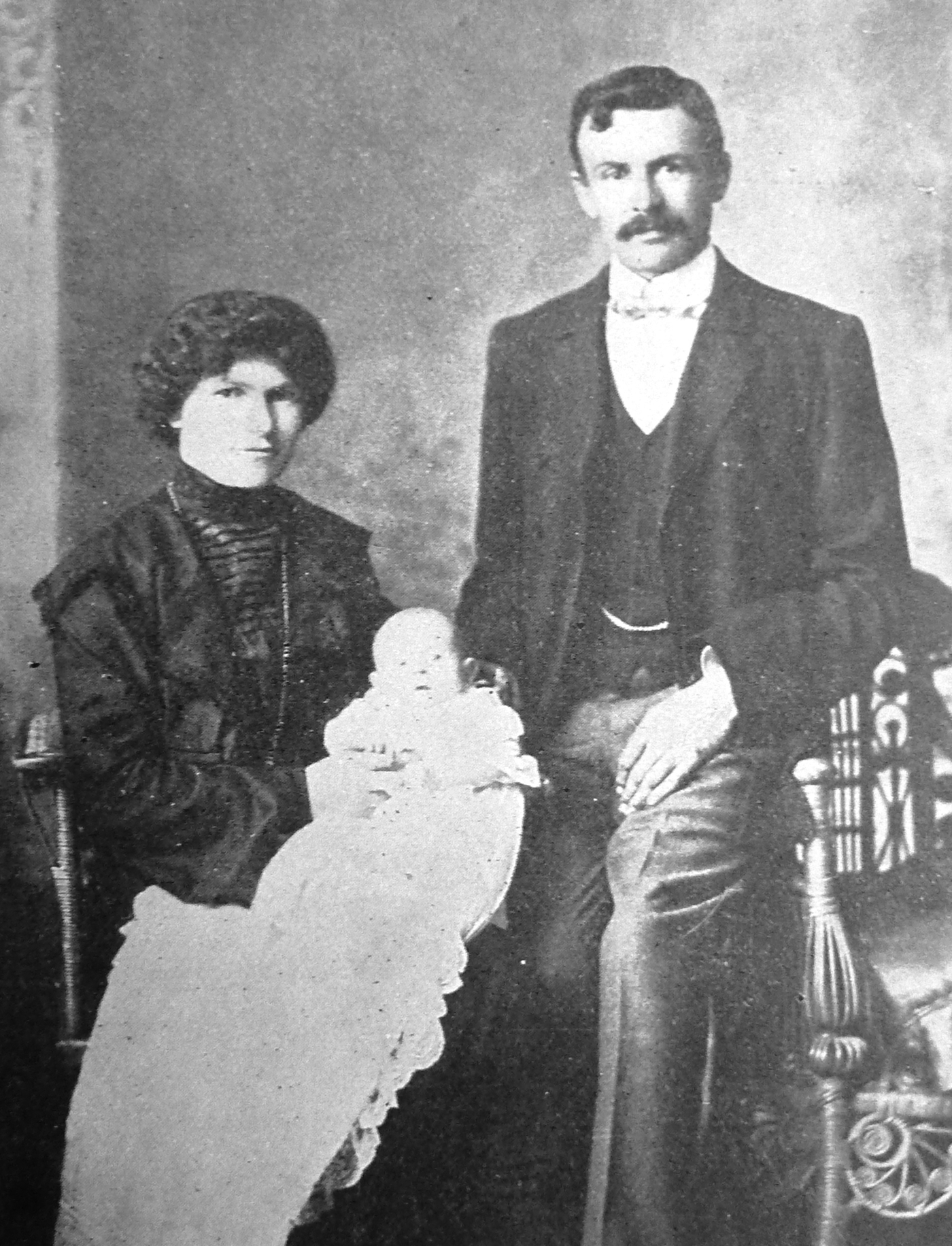
In the immediate aftermath of British victory, Zionism continued to enjoy modest success among white residents of the Transvaal. Divine healing tallied with growing popular and administrative acceptance of a unified settler identity incorporating both Boers and Britons.Footnote 139 Healthy reproductive life lay at the heart of this project. Indeed, many contemporary proponents of South Africanism adopted the quasi-biological rhetoric of racial blending. Schreiner, for example, noted, “There are few families which have not got Dutch or English connections by marriage; in another generation the fusion will be complete.”Footnote 140 In a city still largely made up of single male miners, the imperial government sought to foster the milieu of respectable domesticity necessary for white, long-term settlement and the infusion of British blood. To this end, both female emigration and the provision of working-class family housing were emphasized.Footnote 141 Dowie's focus on reproductive health and the sanctity of the domestic sphere harmonized with these preoccupations. Leaves' pages display Transvaalers' warm reception of Zion's pro-natalism. Mrs. Lemke of Pretoria “gave up doctors, drugs and devils” and found God blessed her with the safe deliverance of a child.Footnote 142 Mrs. George Muloch, also of Pretoria, reported to readers, “God delivered me of a beautiful little daughter, without the aid of doctors or drugs, not having one drop of medicine or doctor in the house.”Footnote 143 Mrs. Jubber of Braamfontein “resolved to give up all medicine, bandages and sitz baths, and wait on the Lord.” The result was that “six months after, I was safely and quickly delivered of a Zion boy … he is an excellent advertisement for Zion.”Footnote 144 Female correspondents supplied photographs showcasing their neat, nuclear families arranged tidily in comfortable parlors, featuring abundant images of fat, healthy babies.Footnote 145
“A. H. Lemke and Family, 26 Van der Valt Street, Pretoria, Transvaal,” Leaves of Healing, 29 July 1905 (source: Christ Community Church Archives).

Yet before long Zion's teachings began to lose appeal for white South Africans. If Dowie taught that Dutch and Briton were brothers in Zion, this family was not as egalitarian as the rhetoric of the Adamic race suggested. Many in the United States had sympathized with Boer aspirations for independence, likening the Republican cause to their own country's independence struggle.Footnote 146 But others, such as Roosevelt, were convinced that it was Britain's manifest destiny to rule lesser races.Footnote 147 Dowie's own views tallied with those of his ideological hero Roosevelt—while he could sympathetically name the Boers a “crushed people who had lost their national independence,”Footnote 148 he also concluded they had committed a sin of great hubris in defying the empire.Footnote 149 After all, Dowie's “Israelism” taught him, “The Hebrew race is the Imperial race of all the world.”Footnote 150 He highlighted the “absurdity” of the Boers who “defied an empire of 500,000,000 people.”Footnote 151 Boer destiny was assimilation within the empire and the Anglo-Saxon race: “God in His Providence has designed that the late Boer Republics shall become part of the British Empire until ‘He Has Come, Whose Right it is to Reign.’”Footnote 152
While previously Dowie had praised the “Netherlandish” stock, in the context of Boer defiance of imperial might, he now classified Boers as lesser racial siblings. Pro-imperial commentators had already cast the war as a race-conflict between industrious, modernizing Anglo-Saxons and backward, pastoralist Boers who, according to the New York Times, represented “the barbarism and despotism … of the dark ages.”Footnote 153 In like fashion, by 1900 Dowie no longer lauded Boer pastoral values, and instead Leaves bemoaned: “They do not know much … their ignorance is appalling. They have very few books and do not care to read.”Footnote 154 Boer women were cast as sexually immoral; during the war they had “most shamefully prostituted themselves,” displaying “absolute lust.”Footnote 155 According to Dowie, Boer men were naturally bloodthirsty, trained to kill from youth for pleasure.Footnote 156
It was hardly surprising, then, that in the postwar years Dowie's racial rhetoric came to alienate his Boer constituency. Edwardians were renouncing an aggressively jingoistic conception of empire and embracing a federation-type model in which national identities coexisted with imperial loyalty.Footnote 157 The coming to power of the anti-empire Liberal Party in Britain in 1906, combined with the victory of Jan Smuts' Het Volk party in the Transvaal in 1907 (although Smuts was also keen to depict himself as a loyal British citizenFootnote 158), compelled imperial politicians in South Africa to lay greater stress upon Boer identity in their white South Africanism.Footnote 159 Dowie was careful to nuance his anti-Boer sentiment with disclaimers about the very “many fine Boer members” of the church,Footnote 160 but in 1900 Buchler resigned from his position as overseer of the Jeppestown church due partly to disagreement with Dowie's political views.Footnote 161 It is suggestive of Dowie's growing discord with his Boer constituency that he expressed his desire for a “strong American elder” to lead the Johannesburg church, and in 1904 sent Zion missionary Daniel Bryant and Bryant's wife Emma.Footnote 162 While many were advocating for Dutch as a language of the new South Africa, Dowie now instructed his new emissary Daniel Bryant, “It is better for the Boers to drop their Dutch and teach their children the English language, which is far more comprehensive.” He hoped that Boers' “hybrid language … will soon pass away.”Footnote 163 Although Dowie portrayed the Adamic family as cosmopolitan, the language it spoke would be English alone: “The English language will become a universal language, and it will be the means, in God's hands, of restoring the unity of thought that was destroyed by the confusion of Babel.”Footnote 164
Furthermore, officials of the new South Africa increasingly showcased scientific progress as the hallmark of an empire built upon cooperation rather than Anglo domination.Footnote 165 But Zionists in South Africa denounced the medical profession. Ernest Cox “prayed that peoples' eyes may be opened to see the farce of doctors, drugs, etc.”Footnote 166 Zionists cast doctors as exploiting suffering patients. Mrs. Lemke of Pretoria described how she “suffered untold misery” as three doctors twice scraped her uterus, and “a specialist for ladies” in Johannesburg informed her that he would need to perform a “very delicate operation, which would cost us seventy guineas.”Footnote 167 Zionists asserted that medicine was the opposite of science. J. Ord Armstrong, injured in the war, lamented, “All the researchers and experiments and scientists have failed to lay a single stone for a foundation upon which to build a science of medicine and surgery.”Footnote 168 Wider society was critical of these views and cast Dowietes as out-of-step with a modernizing, white South Africa. The Transvaal Critic called Zionism “a monument to the colossal gullibility of the world's inhabitants,” and compared testimonies in Leaves to patent medicine announcements that filled Johannesburg's newspapers.Footnote 169 But while divine healing appeared out of step with progressive, postwar white society, during this same period it achieved spectacular popularity amongst black Africans in the Transvaal. As Dowie observed, “British and Boer are getting some blessing, but in Africa Zion is being welcomed mostly by the Ethiopians.”Footnote 170
“ETHIOPIA SHALL STRETCH OUT HER HANDS TO GOD”Footnote 171
As evident from his stance toward Dutch Zionists, Dowie's advocacy of a pan-racial utopia was molded by the period's racist sentiments, and similar ambiguities were discernible in his attitude toward South African blacks. While he said all races started from the same place, Dowie nonetheless argued, “There are [racial] families that are centuries behind others … some families have fallen far behind.”Footnote 172 This was, above all, true of the “Ethiopian family” in Africa. But, according to Dowie's monogenist leanings, this gulf in development could, and should, be repaired. It was Anglo-Saxons' paternalist duty to assist lesser-developed races in joining the Adamic family: “The black man has fallen far behind … we must be gentle, we must be kind, we must help them up, for it is all one race.”Footnote 173 As in Zion in the United States, Dowie envisioned a congregation in which biological race was subordinated to spiritual kinship. He insisted to Byrant there should be “no colour line” in Johannesburg's Zion Tabernacle, and instructed him to remind the church in South Africa, both blacks and whites, that they were part of a single global family: “Let them feel that they are part of the great worldwide organization. Make them to understand that there are no separate churches; that they are all branches of one great, universal church; that there are no foreign fields, no home fields, but that everywhere Zion is one.”Footnote 174
Concurring with Dowie that “Ethiopia” could be “helped up” into the single Zion family, several whites undertook evangelism amongst blacks of the Transvaal farmlands. The key figure was the aforementioned Pieter Le Roux, a Dutch Reformed Church missionary in the eastern Transvaal district of Wakkerstroom, a region dominated by stock farming and maize and tobacco production.Footnote 175 In 1903, after Le Roux's conversion to Zion, virtually all six hundred of his African Dutch Reformed congregation converted.Footnote 176 Soon others joined from Lutheran, Methodist, and other churches. By the end of 1905, he had baptized five thousand in the Wakkerstroom area, assisted by three black preachers—Daniel Nkonyane, Fred Luthuli, and Muneli Ngobese—who oversaw forty-six under-preachers, six church buildings, and thirty-five places of worship.Footnote 177 Almost all those recruited for Zion lived as labor tenants on white-owned farms (in 1905, only one of 246 farms was black-owned), and many spent several months a year working on Johannesburg's mines.Footnote 178 Wakkerstroom was also a district in which traditional chiefly allegiances had largely disappeared. Its unique position bordering Swaziland, Natal, and the Orange River Colony, combined with low rates of African land ownership, meant that Zulu, Swazi, and some Sotho were scattered across farms, while local headmen had followers from different “tribes.”Footnote 179
Dowie's vision of racial fraternity was a very distant ideal in the Transvaal. The fashioning of a white South Africanism reconciling Boer and Briton had been achieved, but it occurred at the expense of non-whites, who were relegated to cheap labor for white industry and agriculture. Denied land of their own, in districts like Wakkerstroom Africans were permitted to squat upon white farmers' land. In return, they worked that land for several months annually and also paid the farmer rent. It was a system designed to squeeze maximum labor out of black tenants for labor-hungry white farmers. The British government collected a £2 annual tax, a device to compel Africans to work further for employers. Tenants considered idle were ejected, as were tenants in excess of five families, in order to achieve what officials considered “a better distribution of labour.”Footnote 180 White farmers used techniques of intimidation, including beatings and sexual violence.Footnote 181 Zion convert and Wakkerstroom resident Muneli Ngobese commented, “Our sorrow is that we live on land rented from the white man. We pay him rent but we have little peace.”Footnote 182 This exploitation was supported by a racial ideology that cast Africans as intrinsically inferior and best suited to manual work. African self-improvement was therefore discouraged, and government officials and white farmers disapproved of “book learning” for Africans. They believed industrial education more useful, although, “It is not intended that [natives] should be made proficient enough to compete with European artisans.”Footnote 183
Christian Africans in Wakkerstroom protested their second-class citizenship by appealing to their equal status as a tiny educated elite advanced beyond “tribalism.” Samuel Zungu, a Methodist preacher, cited his education in petitioning the state to “exempt [him] from carrying passes and suffering under the general disabilities to which men of his colour are subjected.”Footnote 184 When it became clear that neither state nor church would recognize Africans' claims to equality on this basis, many of them formed independent religious organizations, such as Methodist preacher Joel Msimang's inauguration of the Independent Wesleyan Church.Footnote 185 These were broadly known by both members and wary officials as “Ethiopian churches,” invoking that country's political independence and its ancient indigenous church. Although they severed themselves from local white supervision, Ethiopian ministers such as Msimang connected themselves to African-American North American patrons, especially the African Methodist Episcopal Church. Wakkerstroom's farmers complained that church's preachers were “using the Cloak of the Gospel to preach the equality of the races” to their tenants.Footnote 186 Ethiopian adherents argued for this equality by stressing their distance from “heathenism” (as an educated African, Joel Msimang applied for exemption from being subject to “native law” in 1903),Footnote 187 and emphasized their proficiency in the lessons of white civilization. Local Ethiopian preachers were reputed to teach that “having learnt the way of salvation from the white man … [we are] now the equal of the white people, and therefore why should [we] look to them for assistance, as being equals [we] are quite capable of acting independently.”Footnote 188
While Zion similarly emphasized racial equality, it differed from Ethiopian churches in its practice of divine healing. Although Ethiopian Christians sought independence from white missionaries, they were doctrinally identical to their parent denominations. By contrast, Zion preachers tapped into wider African concerns surrounding health. Broadly speaking, popular thought held that while some illnesses stemmed from natural causes, a range of bodily and societal afflictions resulted from spiritual causes. The nefarious interventions of witches could precipitate these misfortunes, and ancestors, too, could visit their displeasure upon the living.Footnote 189 It was the role of ritual specialists like herbalists (izinyanga) and diviners (izangoma) to cure manifestations of evil and ancestral discontent. But the Transvaal's anti-witchcraft legislation of 1904 undercut these individuals by criminalizing “any person who pretends to exercise supernatural powers,” and this led communities to feel that they had been left without spiritual defense.Footnote 190 Indeed, in the years following the war, Africans in Wakkerstroom recognized themselves to be undergoing exceptional suffering; not only were poverty and starvation prevalent due to drought,Footnote 191 but Rinderpest and seizures of African stock during the war had decimated cattle herds, and many Africans were still waiting for imperial compensation for their devastating losses.Footnote 192 Zionist Ngobese's complaint was typical: “The Dutch soldier commandeered my horse. The English burned my house. I put in a claim for horse and home when peace came, but the English told me they had nothing to do with the Boers taking my horse and they were not paying for the houses they had burned.”Footnote 193
While Ethiopian believers neglected spiritual dimensions of misfortune, in Zion Africans found resources that penetrated the underlying causes of affliction. Wakkerstroom Zionists knew the act of healing meant, as one African evangelist put it, “snatching [the people] out of the hands of Satan.”Footnote 194 Divine healing became the most popular aspect of Zion's work in Wakkerstroom. Le Roux reported, “As soon as [Africans] see divine healing taught in the Bible they unquestioningly accept it.”Footnote 195 Like their counterparts in Zion, Wakkerstroom Zionists reported success in freeing people from “the devil in them who does not want God's work to prosper.”Footnote 196 Daniel Nkonyane described how a woman “supposed to be dead for two days raised up on the third day when I prayed for them.” Her body began to decompose, but Nkonyane was undeterred. He reported that “during a prayer meeting, while we were singing a hymn, the woman arose and crawled on her knees … she got up and shook hands with us. She is now well and strong.”Footnote 197 Wakkerstroom Zionists used prayer to counter other misfortunes brought about by the Devil's machinations. One widow “had got behind with her farm rent on account of crop failures.” Her only resource was a stash of maize, but this catastrophically burnt. She expected to be evicted, but, declared the evangelist who prayed for her, the police “left her alone, and she is still living in the same place…. We thank God for deliverance.”Footnote 198
But despite Zion's resonance with indigenous health theories, adherents knew its bodily disciplines were strictly exclusive—all faith had to be placed in the Judeo-Christian God—and therefore detached them from local loyalties. A Zion evangelist in Wakkerstroom “gathered all the people together and explained the truths of Zion.” Immediately they “took down all their medicine charms as a token from that day on they were going to live for God alone.”Footnote 199 Fred Luthuli from Wakkerstroom preached the necessity of renouncing local therapies for divine healing's superior cures: “A woman who had been ill for a long time was treated by the native doctor. When I came to her the woman told me that the doctor could not heal her, and we threw her medicine out.”Footnote 200 Zion prescribed other disciplines that detached converts from older loyalties and rehabilitated them into the Adamic family. Dowie strictly forbade alcohol, but the communal brewing of beer and its consumption lay at the heart of Zulu society. One woman decided to cease brewing for her husband, even though she would “be considered to have lost love for [him].” But the woman “remembered the words of Jesus—‘Who loveth Father and Mother more than me is not worthy of me’—and folded her hands for wrong-doing.”Footnote 201 In a context of patriarchal anxiety about female autonomy,Footnote 202 divine healing's socially divisive consequences, including women's absences at all-night prayer meetings, were said to be eroding conjugal responsibilities. One husband declared himself opposed to Zion “on account of the separation it makes between the people.”Footnote 203 When one woman, against her family's wishes, went for baptism at a Zion meeting, her enraged male relatives arrived “with sticks and shields, their eyes flashing fire and their hearts full of rage.”Footnote 204
Divine healing's bodily disciplines also engendered conflict between Wakkerstroom converts and with their white masters. Formerly, employers had paid African workers in tobacco, but now Zion tenants objected on the grounds of Dowie's ban on smoking: “The master would threaten them, but ‘no’ was the answer … [they] used to be slaves of drink and tobacco. Glory to God.”Footnote 205 Farmers objected to Zion preachers on their farms, and complained that tenants absconded from work to attend church.Footnote 206 Zion convert Johann Gobesa was denied a pass to travel and preach, because he had already “been warned off a good many farms.”Footnote 207 Le Roux reported to Leaves readers that Wakkerstroom farmers “turned [Zionists] out of their livings … and threatened them with imprisonment for refusing to take medicine.”Footnote 208 And while white opinion in the Transvaal was unsympathetic to education for Africans,Footnote 209 Dowie instructed Bryant to “embrace every opportunity of teaching these poor people to read and write.”Footnote 210 By 1905 there were seven Zion schools in the area, with seventy-six pupils.Footnote 211 Black Zionists welcomed the prospect of progress for their youth: “We grew up in the dark … we had no school and no teaching. But we do not want our children to be the same.”Footnote 212 Finally, Zion's multi-racial composition evoked disapproving comment. In 1903, the Transvaal Critic criticized Dowie's care for white and black converts, citing a letter from a “kaffir” featured in Leaves.Footnote 213
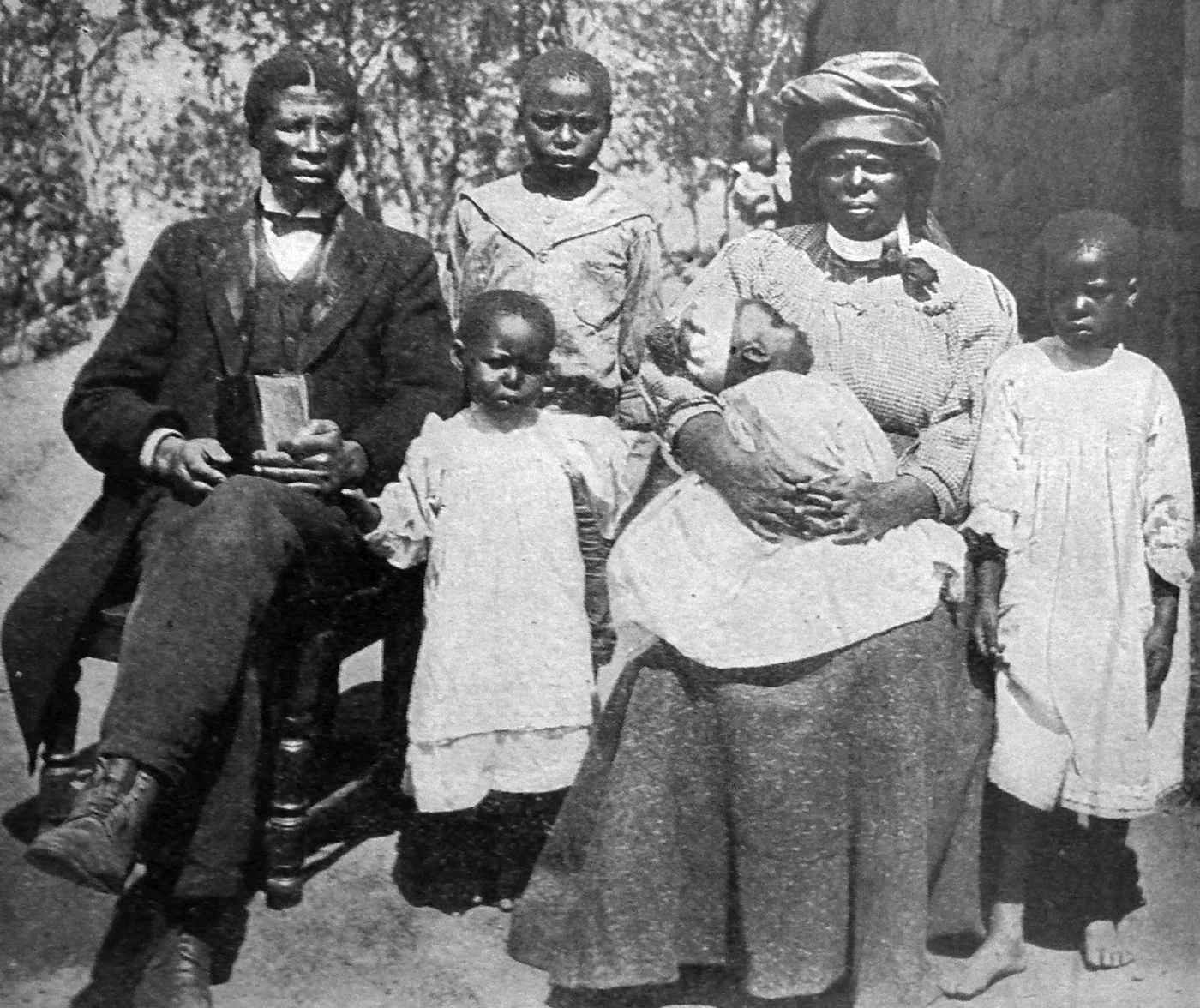
Dowie had founded Zion as a healthy haven from Chicago's corruption and the segregated worship of its churches. Wakkerstroom converts similarly sought land to pursue their new identity as people of Adam and renounced former ethnic and gendered obligations. Le Roux recognized, “The peoples' one desire is to have a Zion City in their own country, where they can live and serve God in peace.”Footnote 214 In 1903, he leased land and applied to officials to build a church and school and settle fifty families there “for the spread of Christianity.”Footnote 215 The officials demurred, stating they “discourage[d] the gathering together of large numbers of natives on particular farms.”Footnote 216 Zion evangelist Daniel Nkonyane was one of a very small number of Africans who owned property, and he aspired to build a Zion church and school upon his 300 acres in the neighboring Utrecht district.Footnote 217 His plans were thwarted by the opposition of the white-run Methodist church and the local magistrate. But a “good few” Zion people lived on Nkonyane's farm anyway, and he boasted that “everybody in the area comes to church upon my land.”Footnote 218
“Evangelist Daniel Nkonyane and Family, Wakkerstroom, Transvaal,” Leaves of Healing, 30 Dec. 1905 (source: Christ Community Church Archives).
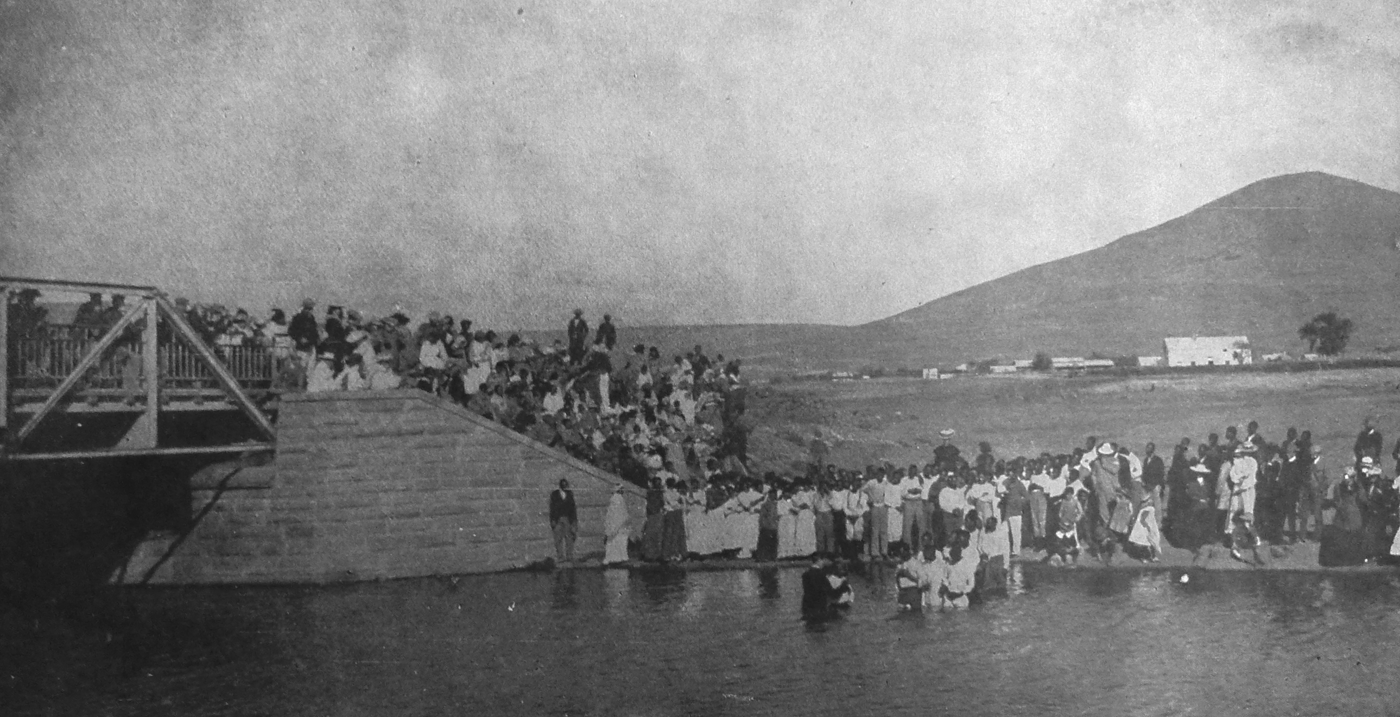
Although Zionists struggled to gain a local foothold, they felt profoundly connected to the worldwide Zion network. Bryant reported that converts' “faces beamed with delight” when “we told them of Zion City … we told them how the General Overseer … had sent his special love to them.”Footnote 219 Bryant gave a public lecture about Dowie, complete with “stereopticon views” of Zion.Footnote 220 African listeners were “delighted and said [they] had now been across the sea to America and had seen with [their] own eyes the things of which [they] had been told.”Footnote 221 Their Ethiopian counterparts in Wakkerstroom renounced fraternity with Europeans, but black Zionists espoused Dowie's rhetoric of racial cosmopolitanism. One early convert, Elijah Luthungo, joined Zion because in his previous denomination “there was no fellowship between the whites and blacks,” but in Zion he “found the True Love which does not separate brethren because of difference in the colour of their skins.”Footnote 222 Zionists, it was true, found political advantage in casting themselves in these cosmopolitan terms. Government officials were suspicious of Ethiopian Christians' antagonistic stance towards whites, and feared they sought to ensure “no white man will be seen in Africa, everyone [will] be killed.”Footnote 223 Although officialdom disapproved of racial fraternity, it took Zion's racially mixed services as evidence of good-will. Bryant held one large baptismal service in Wakkerstroom in which 150, including several whites, were immersed in the town's river. While the Magistrate disapproved of “Yankee notions” of baptizing in frigid water, he was reassured this was not “politics under the guise of religion,” for “white people went through precisely the same discomfort.”Footnote 224
“Overseer Daniel Bryant Baptising 141 Zulu Christians at Wakkerstroom, Transvaal, South Africa, May 1904,” Leaves of Healing, 8 Oct. 1904 (source: Christ Community Church Archives).
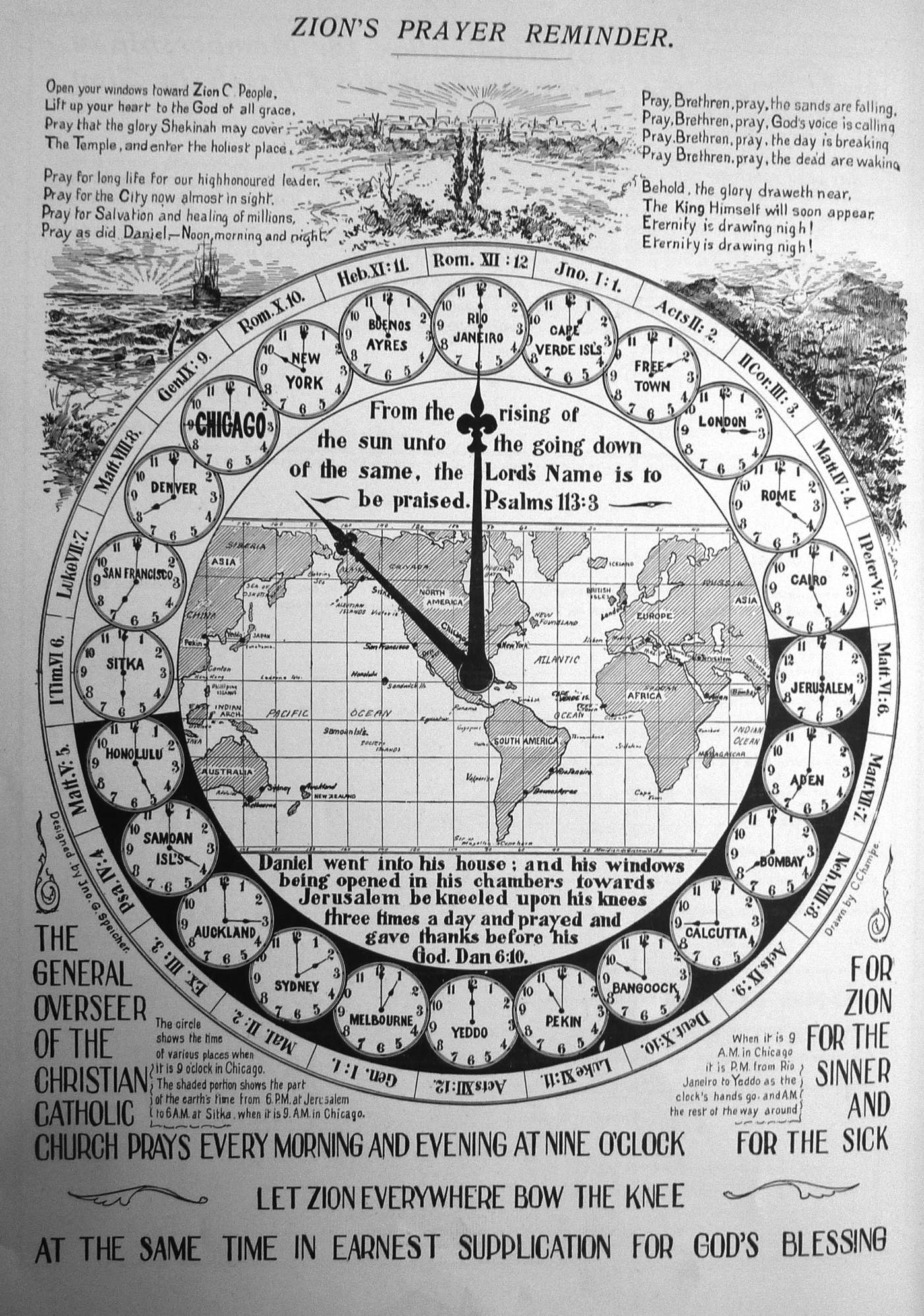
Above all, it was Leaves that encouraged white and black converts in South Africa to imagine themselves members of a global communion. Dowie commanded Bryant to “lay much stress on subscription to Leaves … this brings them into close touch both with myself, and Headquarters, and the wide scope of Zion throughout the world.”Footnote 225 When reading Leaves, converts saw their testimonies and photographs alongside those contributed by believers throughout the world. For example, the April 1900 issue featured news items by and about fellow believers in South Africa, Chicago, Indiana, Egypt, Kansas, and Canada. The “Zion Prayer Clock” in Leaves showed the time in Zion gatherings around the world, emphasizing the church's shared global prayer.Footnote 226 And while God may have been the common father of the Adamic race, on earth, Zionists pledged loyalty to Dowie. By featuring devotional correspondence from across the world, Leaves cultivated a global cult of devotion. A Pretoria correspondent wrote that, unable to see the apostle for himself, he had “cut out [Dowie's] photograph and framed it.”Footnote 227 In another issue of Leaves a “native” correspondent reported he had named his son “Dowie Junior.”Footnote 228
“World Prayer Reminder,” Leaves of Healing, 21 Nov. 1903 (source: Christ Community Church Archives).
For all this, many white Zionists were ambivalent about incorporating blacks into the Adamic family. Some espoused Dowie's cosmopolitan rhetoric, such as Mrs. Ward of Kimberly, who voiced her congregation's views: “We love British and Boer and Kaffir alike, for we have all one Father, one Savior and one Guide.”Footnote 229 Bryant stressed black Zionists' civilized qualities to the Leaves' readers: many were “cultured, well-educated … some possess exceptional intellectual power.”Footnote 230 But many white Zionists argued that Africans' role was to provide labor. Le Roux praised Zion's capacity to “civilize” Africans, but it was the transformation of “unreliable” Africans into trustworthy servants that he emphasized. He boasted, “In Zion the raw native becomes a honest and conscientious laborer who loves to do right … all the white people want Zion natives.”Footnote 231 White Zionists believed missionary work should be carried out at a proper distance, as befitting a superior race. The Bryants praised Le Roux for not “adopting that fatal and foolish practice of ‘being a Zulu with the Zulus’ … [he has] strictly maintained the dignity of [his] own natural refinement.”Footnote 232 In common with missionaries of all denominations, Le Roux scrutinized his black evangelists for signs of independent ministry. When Ngobese renewed his Preacher's Certificate without his knowledge, Le Roux complained to officials that this “was somewhat risky, as a native might get away from his minister, and yet continue to have his permit renewed.”Footnote 233
PATRIOTIC PENTECOSTALS AND COSMOPOLITAN ZIONISTS
By 1907, Zion's modest cosmopolitanism in South Africa had unraveled. Dowie suffered a stroke in 1906, and this combined with financial crisis gave his deputy, Wilbur Glenn Voliva, the opportunity to depose him. After his death the following year, Dowie was widely labeled a madman by a hostile imperial press in South Africa, and also by his former followers, who now criticized his autocratic rule.Footnote 234 South Africans became embarrassed by their connection to Zion in the United States and began to sever ties.Footnote 235 In 1907 Bryant produced a local version of Leaves labeled the “South African Edition, Johannesburg,” which made little mention of Zion or Voliva.Footnote 236 Church membership declined, and government officials reported, “Since the death of Dowie and the scathing exposures of the system [Zionists'] influence and numbers have been diminished.”Footnote 237
Whites who had formerly belonged to Zion now styled themselves as Pentecostals. Between 1904 and 1906 a series of global evangelical revivals—concentrated in Wales, Australia, India, and Los Angeles—sought to recapture glossolalia, or speaking in tongues, as described in the New Testament account of Pentecost. Many Pentecostal leaders had been linked with Dowie, including John Lake, a former elder in Zion.Footnote 238 In 1908, Lake and several associates arrived in Johannesburg as independent Pentecostal missionaries, and Bryant invited them to hold services in the racially mixed Zion Tabernacle on Bree Street.Footnote 239 Amidst uncertainty and declining numbers, many white Zionists migrated to Pentecost. With Le Roux's conversion, most Wakkerstroom Zionists joined the new movement, including the influential Nkonyane and Luthuli. By 1908, the Christian Catholic Apostolic Church in Zion had ceased to be listed as a religious organization in Johannesburg.Footnote 240
In contrast to the multi-racial, transnational character of Zion, the Pentecostal movement cast itself as a local white church. Lake and his associates emphasized their financial and institutional independence, naming the organization The Apostolic Faith Mission (AFM) of South Africa.Footnote 241 Their periodical, God's Latter Rain, proclaimed they were an autonomous outfit only loosely linked to the worldwide movement: “We are the Apostolic Faith Movement of Johannesburg, South Africa, which is included in the great worldwide Holy Ghost Revival which has taken its impetus from the Azusa Street Mission, Los Angeles, California.”Footnote 242 And while Leaves had emphasized Zion's global character by displaying letters from across the world, Lake's Latter Rain featured only South African correspondence and emphasized their local character. Further underscoring Latter Rain's territorial rootedness, its first issue carried a “history of the movement in South Africa” and featured sections in Dutch.Footnote 243 More significantly, the new church eschewed Dowie's rhetoric of a pan-racial Adamic people. Lake publicly supported the government's racial policies and admiringly compared segregation to America's stance towards Native Americans: “The policy [was] in harmony with our American policy of segregation of the Indian tribes.”Footnote 244 As early as 1908, the Apostolic Faith Mission's committee decided, “The baptism of Natives shall in the future take place after the baptism of White people.”Footnote 245 Segregation was complete by 1909: “In future, the baptism of Whites, Coloured and Natives shall be separate.”Footnote 246
Within several years, many Wakkerstroom blacks re-affiliated to Zion, Illinois. Even when Africans officially belonged to the Apostolic Faith Mission, they had still clung to Zion's nomenclature. The mission conceded this in 1910: “The natives deem the name of Zion so essential that this portion of the Mission shall be known as the Zion Branch of the AFM.”Footnote 247 In 1913, Voliva, besieged by clerical rivals at home and eager to burnish his reputation as leader of a worldwide church, revived Zion in South Africa. He appointed a white Johannesburg Zionist from Dowie's era, Modred Powell, as his representative.Footnote 248 Funded by Voliva, Powell re-secured the old Zion building occupied by Lake's Pentecostals.Footnote 249 His associate was Paul Mabiletsa, who headed up the second-largest Zion Tabernacle in Johannesburg, on Small Street in the racially mixed, working-class area of Marshalltown.Footnote 250 By 1914, Daniel Nkonyane and Muneli Ngobese were once again Zion ministers in Wakkerstroom.Footnote 251 Zion in its new guise expanded rapidly among blacks in Johannesburg and surrounding Transvaal farmlands. Powell's assessment was that “Zion is undoubtedly moving. The services are on the upgrade. God is saving and healing in our midst.”Footnote 252
Reasserting loyalty to Zion's global family allowed Africans to claim autonomy from the local, white Pentecostal organization. Well before Zion's revival, Le Roux and other Pentecostals had repressed what they perceived as the religious heterodoxy of African members. Reading the Book of Revelation, for example, black Zionists found that God's faithful wore white robes, and soon many were wearing snowy surplices for their worship. In 1904, a group of Wakkerstroom Zionists withdrew for a three-day fast broken only by their ritual drinking of milk. They did this because it had been prescribed in Paul's letters to the Corinthians and Hebrews.Footnote 253 White Zionists disapproved of these innovations and felt Africans' scrupulousness displayed a legalism akin to Roman Catholicism.Footnote 254 By affiliating to worldwide Zion, Africans gained leverage to claim independence from interference. In 1914 a meeting was arranged at a small town in the Transvaal called Ermelo, between Le Roux and 220 old Zion converts, including Luthuli and Mabiletsa. Powell reported, “Le Roux was to make every possible effort to persuade these people to remain under him.”Footnote 255 But black Zionists asserted their loyalty to their American headquarters rather than to Le Roux, who they saw as a mere local leader, and all but seven choose to remain in Zion.Footnote 256 Lutuli addressed the meeting: “We are Zion people. We were under Dr Dowie; we are still Zion people … there is only ONE Zion and that has its headquarters in Zion City.… We cannot turn away from it for our hearts are full of Zion … we follow no man, we follow Zion.”Footnote 257
If Zion was a platform for African independence from local whites, it also provided, as in the past, an egalitarian forum for cosmopolitan exchange. Black Zionists continued to portray the Kingdom of God as a multi-racial association. The Zion Apostolic Faith Mission of the World was founded in 1912 by Edward T. Lion, a former Apostolic Faith Mission member. Lion's church constitution, published in 1922, bemoaned with “deepest Christian anxiety the deplorable spiritual and mental condition of our people in the colonies of the world.” The Word of God, however, rendered all disenfranchised people equal, and “lighted up with the glorious rays of the Sun of Righteousness, without distinction of race or colour.”Footnote 258 Zionist Daniel Nkonyane, too, affirmed his continued faith in Zion's cosmopolitan creed: “We believe in the Universal Brotherhood of Humanity without distinction of race, creed, caste or colour.”Footnote 259 Lion and Nkonyane were affirming universal fraternity at the moment that citizenship was being defined as a privilege for whites only, for example by the Natives' Land Act of 1913, and this must have made Transvaal Zionists embrace racial cosmopolitanism even more fervently.
“Small Group of Native Preachers in the Christian Catholic Apostolic Church in Zion, South Africa,” Leaves of Healing, 14 Feb. 1914 (source: Christ Community Church Archives).
Moreover, while Africans' appeals to the multiracialism of church and empire were doomed in the South African context, Voliva's Leaves still offered Africans immersion within a cosmopolitan literary sphere. The magazine carried news about global Zion—albeit much diminished from Dowie's era—and invited readers to imagine themselves part of a transnational fellowship.Footnote 260 One 1914 issue included articles about “Zion in South Africa” and “Zion in China,” and instructed “Zion everywhere, all readers of Leaves of Healing” to think of themselves as spiritual brethren to Chinese Zionists: “Remember them daily in earnest prayer.” Zionists in both China and South Africa were told to direct their prayers toward their shared spiritual headquarters: “Let one and all ask God to prosper ZION at headquarters in Zion City.”Footnote 261 As in a previous era, love for the American headquarters was widely voiced. Mr. Saint George J. Mazwi wrote to Voliva in 1913 requesting membership, and including an affectionate benediction: “May God bless Zion and Zion City, Shiloh Tabernacle and the General Overseer, Voliva!”Footnote 262
CONCLUSION
This article points to new ways of understanding competing practices of cosmopolitanism in early twentieth-century South Africa, and argues that these cosmopolitan aspirations assumed multiple and historically-contingent forms in the context of the racialized regimes of the Victorian and Edwardian empires. In the context of the healing practices of the Christian Catholic Apostolic Church in Zion, race was not a category that split certain individuals off from others, but rather a glue that bound divergent people into an imagined Adamic race. Membership in Zion offered Americans and South Africans new, expansive forms of belonging. Through disciplines of health and abstention, Zionism severed its converts from industrialized cities, battlefields, and land-squeezed farms. It prompted them instead to both real and imagined residency in Zion, God's holy place. Through the same embodied techniques these converts came to consider themselves more than merely white, black, Boer, or Briton. They embraced instead their new ethnicity as Adam's people amidst the racialized administrations of state, church, and kinship.
At the same time, I have emphasized that in both South Africa and the United States these cosmopolitan healing practices were continually beset by rival theories of race, above all theories that advocated race's splintering rather than connective powers. For black South Africans of this period, it proved easier to forge connections with white brethren over the ocean than at home, while African-Americans found only an uneasy, temporary coexistence with their white brethren in Zion, Illinois. Boer Zionists, too, came to realize the extent to which the people of Adam were still inscribed in imperial race supremacy. This story has revealed not just the successes but also the constraints encountered by those who drew upon transnational evangelicalism to redefine categories of race in the early twentieth century.