Implications
In low ambient temperatures, neonatal dairy calves must expend increased energy to maintain core body temperature, which may impact on performance and health. Calf jackets have been suggested as a method of reducing heat loss and mitigating the effects of fluctuations in environmental conditions. Under the climatic and management conditions in this study, provision of calf jackets in the first 3 weeks of life provided no major benefits to calf performance. However, calf growth and feed conversion efficiency was reduced in the week following jacket removal, suggesting that producers should leave jackets on beyond the third week of life.
Introduction
Calves are born with functional yet underdeveloped thermoregulatory mechanisms, with rhythmicity of body temperature developing and stabilising during the first two months of life (Piccione et al., Reference Piccione, Caola and Refinetti2003; Roland et al., Reference Roland, Drillich, Klein-Jobstl and Iwersen2016). Due to a relatively high surface/mass-ratio and poor tissue insulation, newborn dairy calves are particularly prone to heat loss and susceptible to the effects of cold ambient temperatures (Olson et al., Reference Olson, Papasian and Ritter1980b). Calves exposed to cold ambient temperatures at birth have shown a reduced absorptive ability of colostral immunoglobulins (Olson et al., Reference Olson, Papasian and Ritter1980a), which can have a direct impact on the development of immunocompetence. The thermo neutral zone (TNZ) is defined as the range of ambient temperatures at which temperature regulation is achieved only by control of sensible heat loss, that is, without regulatory changes in metabolic heat production or evaporative loss (IUPS Thermal Commission, 2001). In ambient temperatures below the lower critical temperature (LCT) of the TNZ, calves must increase metabolic heat production to maintain thermal balance (Carstens, Reference Carstens1994). In calves, the LCT has been reported as ranging from +13°C at birth to +8°C at 20 days of age (Gonzalez-Jimenez and Blaxter, Reference Gonzalez-Jimenez and Blaxter1962); however, this is dependent on calf breed, age, weight, nutrient intake, posture and prevailing environmental conditions. When maintained in ambient temperatures considered to be below the LCT, calves have been shown to increase feed intake (e.g. Nonnecke et al., Reference Nonnecke, Foote, Miller, Fowler, Johnson and Horst2009) and alter lying duration and position (e.g. Hepola et al., Reference Hepola, Hänninen, Pursiainen, Tuure, Syrjälä-Qvist, Pyykkönen and Saloniemi2006). Furthermore, changes in physiological processes such as vasoconstriction and tissue insulation have been reported in perinatal calves bedded on substrates of differing thermal properties (Sutherland et al., Reference Sutherland, Stewart and Schütz2013) and in those maintained in sub-zero temperatures (Rawson et al., Reference Rawson, Dziuk, Good, Anderson, Bates and Ruth1989a). Thermic stress as a result of temperatures above or below that of the TNZ can result in economic losses due to increased morbidity and mortality, and negative impacts on calf performance (Roland et al., Reference Roland, Drillich, Klein-Jobstl and Iwersen2016). Mitigating the effects of environmental factors such as ambient temperatures below the LCT, wind speed and precipitation are therefore of prime concern to producers. To limit the effects of cold ambient temperatures, reducing the potential for external heat loss is extremely important. Early work involving Holstein calves housed in sub-zero temperatures in the first 14 days of life indicated that provision of insulated jackets contributed 52% of the total insulation effect (Rawson et al., Reference Rawson, Dziuk, Good, Anderson, Bates and Ruth1989a). This highlights the potential of calf jackets as a means of providing a physical barrier to the effects of heat loss. Recently, anecdotal evidence has suggested that an increasing number of producers are opting to incorporate the use of calf jackets into their youngstock management system, with expected potential benefits to both calf performance and health. Although Earley et al. (Reference Earley, Murray, Farrell and Nolan2004) examined the effects of using calf jackets on performance and health, they have been the subject of very little controlled research, especially in terms of the potential impact on behavioural and physiological parameters. Additionally, the calves used by Earley et al. (Reference Earley, Murray, Farrell and Nolan2004) were already over two weeks of age when jackets were provided, as such information regarding their effectiveness when used from the first days of life is lacking. Developments in on-farm monitoring technologies are providing increased opportunities to provide robust and reliable behavioural measures of individual animals in a remote, noninvasive manner (Rushen et al., Reference Rushen, Chapinal and de Passille2012). It has also been suggested that measuring multiple behavioural and physiological aspects of individual animals could provide a more reliable indicator of overall animal well-being than just a singular measure (Theurer et al., Reference Theurer, Amrine and White2013). The aims of this study, therefore, were to (a) investigate the impact of providing calves with jackets in the first 3 weeks of life on behavioural and physiological parameters using a range of novel remote-sensing technologies and (b) determine the efficacy of calf jackets in mitigating the impact of low ambient temperatures on growth and health parameters.
Materials and methods
The study was conducted at the Agri-Food and Bioscience Institute (AFBI) research farm in Hillsborough, located in County Down, in Northern Ireland (latitude 52°27’, longitude 6°4’). All procedures and treatments within this study were conducted under the United Kingdom Animals (Scientific Procedures) Act 1986.
Animals
Ninety Holstein Friesian calves (46 females and 44 males) born between 16 September and 21 November 2016 were allocated to the study following weighing at ≤12 h of age, which was used as the birth weight. All calves received 3 l colostrum via oesophageal feeding tube or treated bottle before transfer to the calf-rearing unit.
Treatments and experimental design
On entering the rearing accommodation at ≤12 h of age, calves were individually penned and allocated one of two treatments: (i) Jacketed until 21 days of age and (J; n = 44) and (ii) Nonjacketed (NJ; n = 46). Jackets were breathable and water repellent, with an outer shell constructed with 600 denier Oxford fabric, a 200 g filling and a 210 denier lining (Cosy Calf, Dorset, UK). Calves were balanced across treatments for sex, and average birth weight was 40.4 (SD ± 4.7) and 40.6 kg (SD ± 3.8) for J and NJ calves, respectively. The study was completed when calves reached 63 days of age.
Housing and diet
Calves were fed 2 l colostrum twice daily via a treated bucket on days 1 and 2. At 4 days of age, calves were provided with two feeds, each of 2 l, consisting of a mix of half colostrum/half milk replacer (MR) after which all feeds were of a 26% CP, 17% fat MR (Volac International Ltd, Hertfordshire, UK). At 5 days of age, calves were introduced to one of six replicate straw bedded pens of 15 calves. Each group pen was balanced for calf sex, birth weight and treatment. Calves were fed via automatic milk and concentrate feeders (Forster Technik Vario, Engen, Germany). Each pen had one milk feeding station equipped with one teat and one automatic concentrate feeder equipped with one feeding station. Milk replacer was offered at a rate of 150 g/l using a step-up/step-down program, with MR volume increasing from 4 to 5.1 l/day between days 5 and 9 and reducing from 5.1 to 2 l/day between days 33 and 55 with weaning at 56 days of age. Potential metabolisable energy (ME) intake from MR in calves consuming 5.1 l/day was 14.42 MJ/day. Calves had ad libitum access to concentrate starter feed via automatic concentrate feeders, ad libitum straw from racks and free access to fresh water.
Data collection
Ambient temperature
A calibrated EBI 20-TH data logger (ebro Electronic, Ingolstadt, Germany) was situated within each group pen, suspended at approximately 1.5 m above pen floor height for the duration of the experimental period. Ambient temperature was recorded automatically every 15 min throughout the experimental period. Wind speed was not recorded; however, the rearing accommodation was such that it was mechanically ventilated using a fan and duct system, and the side walls were solid, this minimising the potential for drafts at calf height.
Feed nutrient composition, feed intake and calf performance
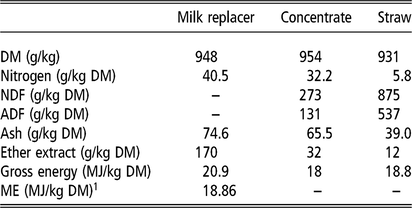
Samples of MR, starter ration and fresh straw bedding were collected on a daily basis and bulked for each 2-week period throughout the experiment, with samples analysed using the methods as described by Cushnahan and Gordon (Reference Cushnahan and Gordon1995). Chemical composition of feedstuffs is presented in Table 1. Individual daily milk and concentrate intake was recorded via automatic feeder between 5 and 62 days of age. Individual drinking speed and number of rewarded (MR received) and unrewarded (no MR received) visits were recorded via automatic milk feeder. In addition to this, individual calf feeding behaviour in terms of duration and timing of visits were recorded by both the automatic milk and concentrate feeders. Calf live weight (LWT) was recorded automatically on a daily basis via the half BW scales linked to the feed station of the automatic milk feeder. Live weight was also recorded using a manually operated calibrated weigh bridge (Tru-Test Eziweigh 5, Auckland, New Zealand) at birth, days 56 and 63.
Chemical composition of MR, concentrate and straw offered to J and NJ calves throughout the experimental period
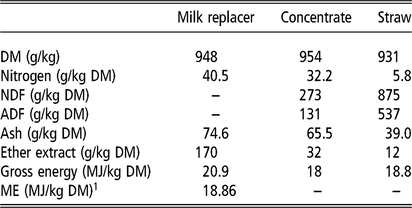
MR = milk replacer; J = jacketed; NJ = nonjacketed; ME = metabolisable energy.
1 ME estimated based on MR containing 26% CP, 17% fat and 7.5% ash. On this basis, calves in the present study consuming maximum allowance of 5.1 l/day at the rate of 150 g/l would receive 14.42 MJ/day from MR alone.
Calf health
Faecal consistency was qualitatively scored throughout the study on a daily basis during morning feeding time using the scale of 1 = normal consistency, 2 = slightly liquid consistency, 3 = moderately liquid and 4 = primarily liquid consistency (Quigley et al., Reference Quigley, Wolfe and Elsasser2006). A calf was recorded as having diarrhoea when the score was greater than 2 (Quigley et al., Reference Quigley, Wolfe and Elsasser2006). Respiratory disease scoring, with the exception of rectal temperature, was carried out on a daily basis using the University of Wisconsin-Madison method (McGuirk and Peek, Reference McGuirk and Peek2014). This involved scoring calves on three visual aspects including eyes, ears and nasal discharge and on the presence or absence of a cough. Each aspect received a score from 0 to 3, with 0 representing normal and 3 the most severely affected. The overall respiratory score was derived from the cumulative score of each aspect. Faecal and respiratory scoring were carried out by the same trained technician. Cases of calf ill health were assessed on an individual basis and treatment was administered and recorded according to predefined protocols provided by a veterinarian.
Calf activity
IceRobotics® IceQube® automatic activity sensors (IceRobotics Ltd., Edinburgh, Scotland, UK) were fitted to the right rear leg of 18 calves per treatment (n = 36) between 5 and 60 days of age using the methodology as described by Finney et al. (Reference Finney, Gordon, Scoley and Morrison2018). A filter that removed sensor recordings lasting ≤8 seconds was applied to data prior to analysis (Finney et al., Reference Finney, Gordon, Scoley and Morrison2018). For the purposes of this study, only data recorded between days 5 and 28 will be reported.
Thermal imaging
Thermal images of the same 36 calves that were fitted with activity meters were taken at approximately 1000 h on 5 days/week between 5 and 60 days of age. Images were taken by a trained operator using a calibrated FLIR E8 camera (FLIR Systems UK, Kent, UK) and were of the right eye (plus a 1-cm area surrounding the eye) and the anus (plus a 1-cm area surrounding the anus). Images were taken at a consistent distance (∼0.5 m) and angle (∼90º) while the calf was standing and prior to introduction of any potential stressors such as weighing. Core body temperature of each of these calves was taken on a daily basis using a rectal thermometer immediately following image capture. Images were processed with FLIR® software (FLIR Systems UK, Kent, UK) using the methodology as described by Scoley et al. (Reference Scoley, Gordon and Morrison2018).
Heart rate monitors
Heart rate (HR) monitors (Polar Equine RS800CX Science, Polar Electro UK Ltd, Heathcote Way, Warwick, UK) were fitted to 16 J and 15 NJ calves on days 15 to 20. Calves were selected from those that had also been fitted with activity sensors to ensure that HR data obtained was from a period in which the calves were at rest. Approximately 1 h after ensuring that all calves had visited the automatic milk feeder, selected calves were thermal imaged and then moved to the corner of their group housing pen and penned in with hurdles. On the first day of measurements, each calf had a 5-cm wide strip shaved to skin level on the left-hand side directly behind the shoulder to help improve contact between the calf and monitor. Electrode gel (Spectra 360 Electrode Gel, Parker Laboratories Inc., New Jersey, USA) was applied to the electrode belt prior to each use, this again to ensure contact between the calf and monitor (Clapp et al., Reference Clapp, Croarkin, Dolphin and Lyons2014). Once fitted, monitors remained on calves for a minimum of 1 h. Recordings of 5-to-10-min duration were processed using both the Artiifact and Polar software (Kaufmann et al., Reference Kaufmann, Sütterlin, Schulz and Vögele2011). Preliminary error correction of the data set was conducted using the Polar software settings as described by Clapp et al. (Reference Clapp, Croarkin, Dolphin and Lyons2014) with any data set requiring over 5% error correction rejected (Stewart et al., Reference Stewart, Stookey, Stafford, Tucker, Rogers, Dowling, Verkerk, Schaefer and Webster2009). Following error correction, the data set was further processed using Artiifact software with resultant HR used in the analysis.
Skin temperature
In a small-scale prospective pilot study, data loggers (Thermochron iButton, model DS1921H-F5#, range 15.0ºC to 46.0ºC, accuracy: ±1ºC, Maxim Integrated, CA, USA) were affixed to nine calves per treatment (n = 18) at an average of 18.9 (SD ± 10.9) days of age to record continuous measurement of the skin surface temperature over a 24-h period. To attach the data logger, a methodology based on that described by Sutherland et al. (Reference Sutherland, Stewart and Schütz2013) was employed. A small area of hair (∼3 cm2) approximately 2 cm to the right-hand side of the spine at the level of the last rib was clipped to the skin level. This anatomical location was chosen as it was deemed to be the area that would be least affected by the lying position and represent the area most exposed to ambient temperature. The data logger was then placed on the area of skin and covered with a 5 cm2 of breathable, elastic adhesive bandage (Elastoplast®, Beiersdorf UK, Birmingham, UK). The outer edges of the bandage were further secured to the unclipped hair using glue (KAMAR®, Kamar Products, Inc., Zionsville, IN, USA). The data loggers were set to record temperatures every 10 min during the 24-h period. A data logger (Thermochron iButton, model DS1921G-F5#, Maxim Integrated, CA, USA) was affixed to the outer wall of the group pen in order and was set to record temperature every 10 min over the same 24-h period in which skin temperature was recorded for each of the 18 calves. In addition to this temperature and relative humidity data loggers (iButton Hygrochron DS1923-F5#, temperature range –10ºC to +65ºC, accuracy ±0.5ºC, relative humidity range 0% to 100%, resolution 0.6%, Maxim Integrated, CA, USA) were fitted to a further four calves from the J treatment in the 3 days preceding and following jacket removal. These data loggers were affixed using the same method and with the same recording parameters as previously described.
Statistical analysis
All data were analysed using GenStat® (version 16.2, VSN International Ltd). All statistical models included birth weight as a covariate and housing block as a random term unless otherwise stated. Adequacy of statistical models was evaluated using visual assessment of residual plots. Means predicted from the mixed effects model are presented. Where presented as days 5 to 20 (Period 1), the time during which jackets were worn, and days 21 to 28 (Period 2), the week following jacket removal, data was analysed as two separate periods with a covariate derived from the average value of the last 5 days of Period 1 included in the analysis of Period 2 data.
Calf LWT, daily intakes, proportion of daily MR allowance consumed, drinking speed, measures of temperature and daily lying time were fitted to a repeated measures residual maximum likelihood estimation (REML) model with effects of sex, age, treatment and the interaction of treatment x age included. To assess lying duration and occupation of the concentrate and milk feeders per hour, data were averaged on an hourly basis for each calf over each period. Data were fitted to a repeated measures REML model with effects of sex, age, treatment and the interaction of treatment x day or hour of day included. Heart rate data was averaged for each calf over days 15 to 20 and fitted to a mixed-effects model with fixed effects of sex and treatment. Live weight gain, total concentrate intake, total MR intake, time spent per day in the feeders, average faecal and respiratory scores were analysed using a mixed-effects model with fixed effects of sex and treatment. Fixed effects were assessed by comparing the F-statistic against an appropriate F distribution.
Visits to the automatic milk feeder with and without reward and number of lying bouts were fitted to a generalised linear mixed model (GLMM) with poisson distribution with effects of sex, age, treatment and the interaction of treatment x age included. Mathematical equations of the repeated measures REML model and the GLMM are reported in the Supplementary Material as Supplementary Equations S1 and S2, respectively.
Results
Ambient temperature
Mean ambient temperature within the calf rearing accommodation throughout October, November, December and January, respectively, was 11.7°C (5.3°C to 17.4°C), 7.5°C (1.2°C to 15.8°C), 8.9°C (2.8°C to 15.2°C) and 7.2°C (1°C to 12.7°C). During the months of October, November, December and January, respectively, 22.6%, 80.8%, 67.7% and 80.4% of ambient temperature measurements recorded were ≤10°C. A total of 61.4% of ambient temperature measurements recorded across the experimental period were ≤10°C.
Feed intake and calf performance
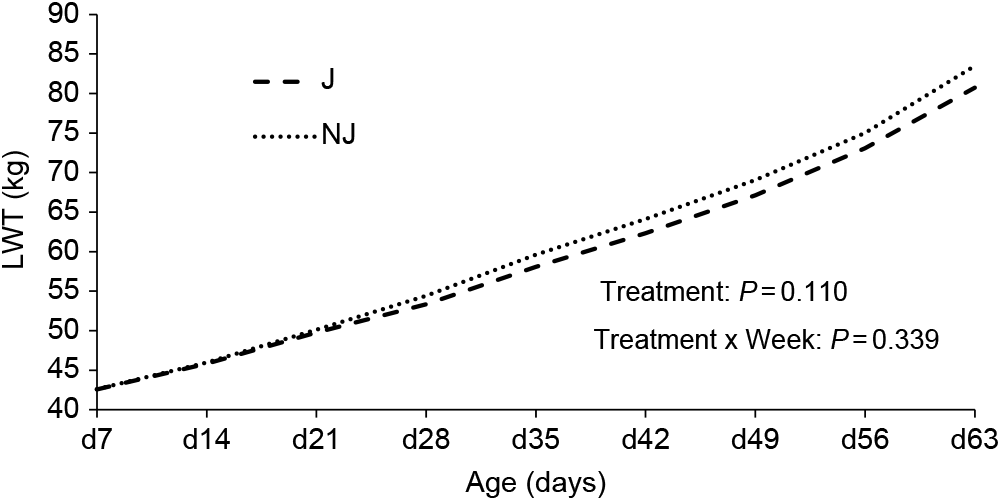
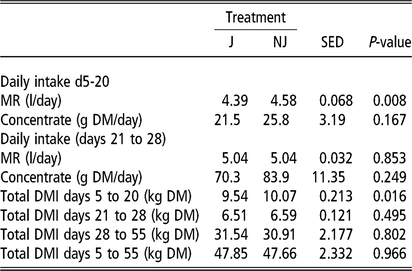
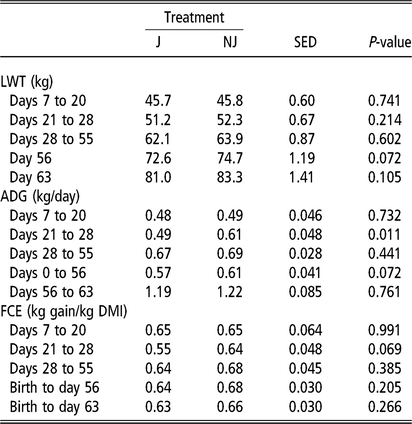
Between 5 and 20 days of age, NJ calves consumed 92.3% of their daily allowance of MR compared with 88.5% in J calves (P = 0.005). Total dry matter intake (DMI) was increased by 0.53 kg DM in NJ calves during days 5 and 20 (Table 2; P = 0.016); however, there was no difference between days 21 and 28. Total DMI between days 5 and 55 was comparable across treatments, with J and NJ calves consuming 47.9 and 47.7 kg DM, respectively (Table 2; P = 0.966). Live weight was comparable across treatments during days 7 to 20 (Table 3; P = 0.741) and days 21 to 28 (Table 3; P = 0.214). Average daily gain (ADG) was 0.48 and 0.49 kg/day, respectively, for J and NJ calves during days 7 to 20 (Table 3; P = 0.732); however, NJ calves displayed a 0.12 kg/day advantage over J calves between days 21 to 28 (Table 3; P = 0.011). Feed conversion efficiency (FCE) in terms of kg gain/kg DMI was also equivalent across treatments between days 7 and 20 (Table 3; P = 0.991); however, as with the ADG, this tended to be increased in NJ calves during days 21 to 28 (Table 3; P = 0.069). Weekly LWT was unaffected by treatment (Figure 1; P = 0.110) throughout the experimental period. Weaning weight and ADG between birth and weaning tended to be increased in NJ calves compared with J calves (Table 3; P = 0.072); however, there were no differences in LWT at the end of the experiment on day 63 (Table 3; P = 0.105) or in ADG between days 56 and 63 (Table 3; P = 0.761). There were no differences between treatments in LWT, ADG or FCE between days 28 and 55 (Table 3; P > 0.1). There was no effect of treatment on FCE between birth to weaning or birth to day 63 (Table 3; P > 0.1).
Weekly LWT of J and NJ calves as measured via automatic half BW scales. LWT = live weight; J = jacketed; NJ = nonjacketed.

Daily and total intakes of J and NJ calves between days 5 and 55
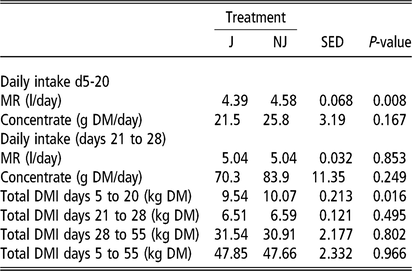
J = jacketed; NJ = nonjacketed; SED = standard error of difference; MR = milk replacer; DMI = dry matter intake.
Live weight, ADG and FCE of J and NJ calves throughout the experimental period
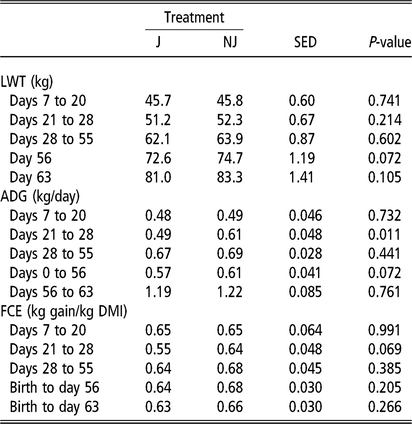
ADG = average daily gain; FCE = food conversion efficiency; J = jacketed; NJ = nonjacketed; SED = standard error of difference; LWT = live weight; DMI = dry matter intake.
Automatic feeder behaviour
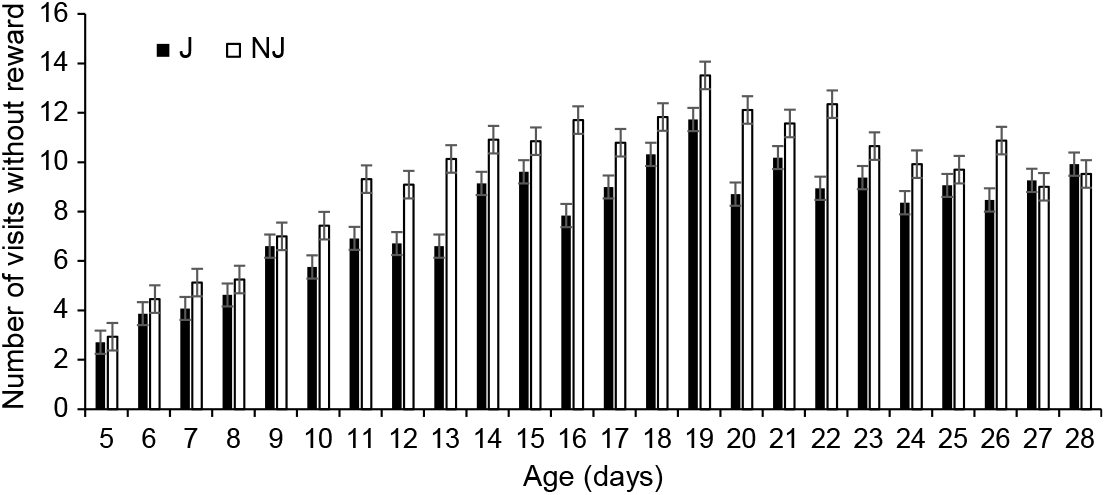
Drinking speed was increased by 57.6 ml/min in NJ calves between days 5 and 20 (P = 0.017); however, there was no difference between treatments during days 21 to 28 (P = 0.270). Visits to the milk feeder without reward were 19.2% and 11.2% higher in NJ calves than J calves between days 5 and 20 (Figure 2; P < 0.001) and days 21 and 28 (Figure 2; P = 0.006), respectively. During days 5 to 20, J and NJ calves spent 7.46 and 6.65 min drinking MR, respectively (P = 0.021); however, there were no differences in drinking time between days 21 and 28 (P = 0.281). During days 21 and 28, J and NJ calves increased time spent per day in the concentrate feeder by 168% and 195%, respectively, when compared with days 5 to 20. There was no difference in total duration of time/day in the concentrate feeder, with values of 16.5 and 17.2 min/day for J and NJ calves (P = 0.710).
Number of visits to the milk feeder without reward of J and NJ calves between days 5 and 28. Error bars represent SEM. J = jacketed; NJ = nonjacketed.

Lying behaviour
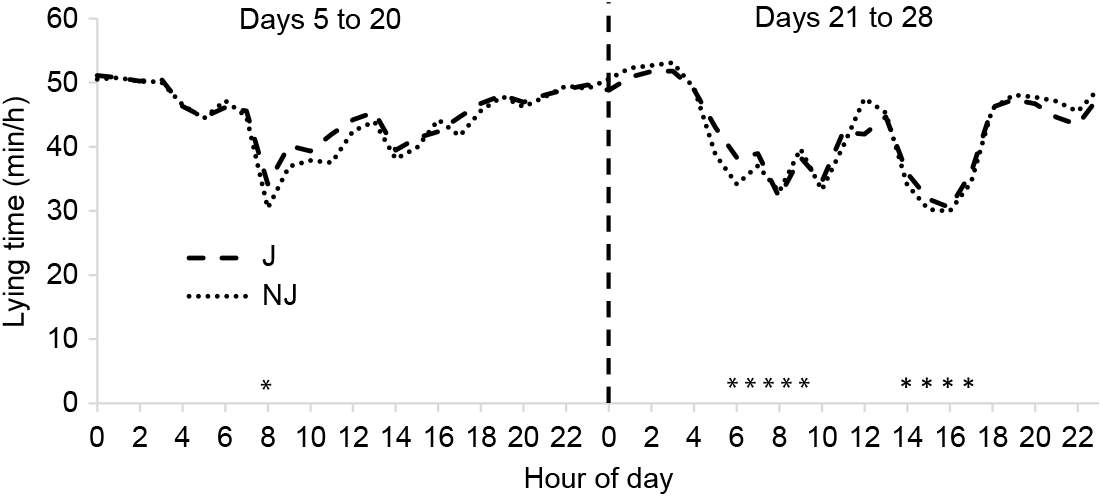
Total daily lying time was unaffected by treatment, with calves spending 18 and 17 h/day lying down during days 5 to 20 and 21 to 28, respectively (P>0.1). There was no effect of treatment x hour on lying time between days 5 and 20; however, there was an effect of hour of day with calves spending less time lying down at 0800 h (Figure 3; P<0.001). Lying time was again affected by hour of the day between days 21 and 28, with decreases in lying time observed between 0600 and 1000 h and 1400 and 1700 h (Figure 3; P<0.001).
Hourly lying behaviour of J and NJ calves during days 5 and 28. * Represents a significant effect of hour of the day on lying time (P<0.001). J = jacketed; NJ = nonjacketed.

Calf health and physiological parameters
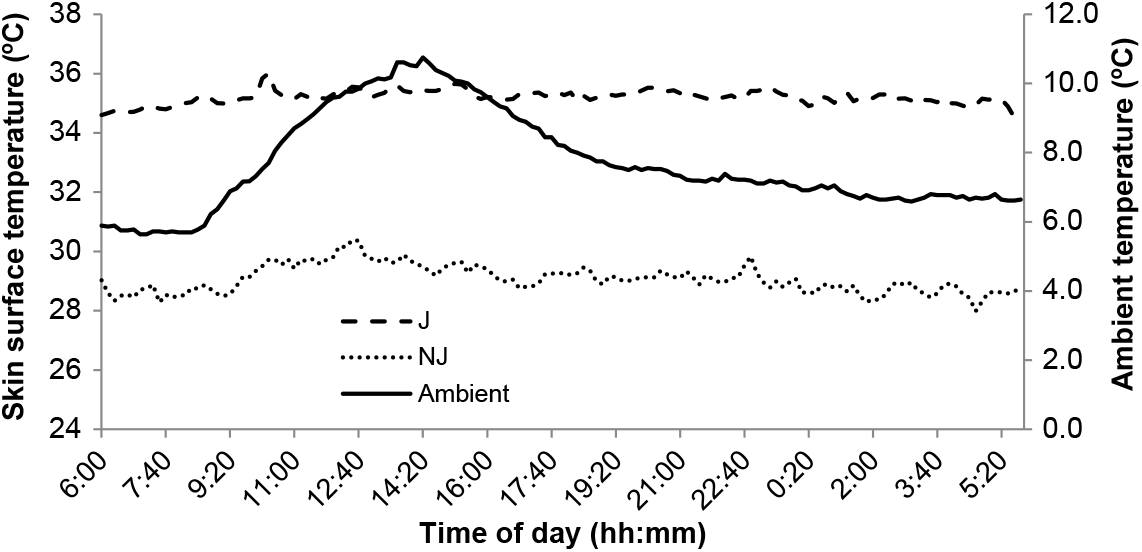
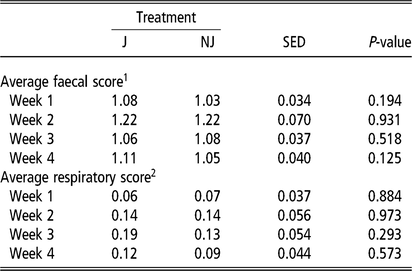
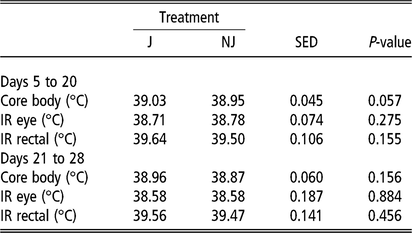
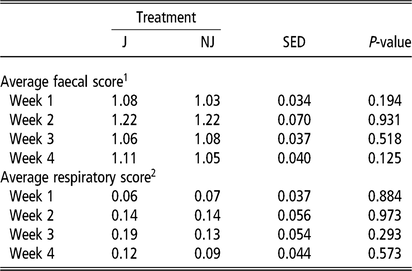
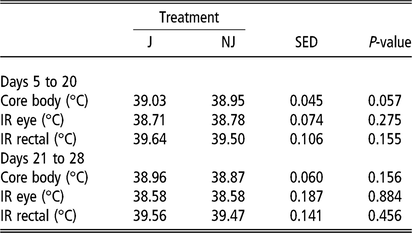
There were no treatment differences in either average faecal or respiratory score during the first 4 weeks of life (Table 4; P > 0.1). Core body temperature tended to be increased in J calves between days 5 and 20; however, this difference was minimal, representing only a 0.2% increase when compared with NJ calves (Table 5; P = 0.057). No treatment differences in either IR eye or rectal temperature were observed during days 5 to 20 or 21 to 28. At an average ambient temperature of 7.7°C (5.6°C to 10.8°C) as measured over a 24-h period from 0600 h to 0550 h, skin temperature of J calves was 6.37°C higher than that of NJ calves, with mean values of 35.32°C and 28.95°C, respectively (Figure 4; P<0.001). There was no effect of hour of day on skin temperature (Figure 4; P = 0.352), which remained fairly constant throughout the day despite a rise in ambient temperature in the late morning/early afternoon. Removal of jackets had no effect on relative humidity (%) at the skin surface (P = 0.488). Mean ambient temperature was consistent in the 3 days prior to and following jacket removal, measuring 8.3°C and 8.5°C, respectively; however, skin surface temperature decreased by 6.14°C the 3 days following jacket removal (P<0.001). Heart rate was 98.5 and 95.9 beats per minute (bpm) for J and NJ calves, respectively (P = 0.540) during the week prior to jacket removal.
Skin surface temperature of J and NJ calves and ambient temperature over a 24-hour period. J = jacketed; NJ = nonjacketed.

Faecal and respiratory scores of J and NJ calves in the first 4 weeks of life
J = jacketed; NJ = nonjacketed; SED = standard error of difference.
1 Faecal scoring system: 1 = normal consistency, 2 = slightly liquid consistency, 3 = moderately liquid and 4 = primarily liquid consistency.
2 Respiratory scoring system excluding rectal temperature, whereby: 0 = normal; 3 = most severely affected.
Core body, IR eye and IR rectal temperature of J and NJ calves between 5 and 28 days of age
J = jacketed; NJ = nonjacketed; SED = standard error of difference.
Discussion
The LCT of dairy calves is between 8°C and 10°C in the first few weeks of life (Webster et al., Reference Webster, Gordon and McGregor1978); however, this can vary in relation to housing, nutrition and breed (Young, Reference Young1981). In the present study, during which 61.4% of ambient temperature measurements were recorded as being ≤10°C, calves of the same breed type, housed in the same environment and offered the same MR level were either provided or not provided with calf jackets for the first 3 weeks of life.
Calf performance and feeding behaviour
Nonnecke et al. (Reference Nonnecke, Foote, Miller, Fowler, Johnson and Horst2009) reported similar ADG between calves housed in warm or cold environments despite increased grain consumption in cold-housed calves. Similarly, NJ calves in the present study displayed an increased DMI with no resultant improvements in either ADG or FCE (kg gain/kg DMI). Additionally, frequency of unrewarded visits to the milk feeder in the first 3 weeks of life was higher in NJ calves, which is considered to signify that calves have not reached satiety (Byrne et al., Reference Byrne, Fair, English, Johnston, Lonergan and Kenny2017). As indicated by the NRC 2001, the maintenance energy requirement for calves ≤3 weeks of age and weighing 40 kg increases from 8.45 to 10.25 MJ/day as the ambient temperature decreases from ambient temperatures of 10°C to 0°C. In the present study, the increase in both feed seeking behaviour and energy intake in NJ calves was likely due to the demands of increased metabolic heat production and maintenance energy requirements as a result of the low ambient temperature.
In the present study, both ADG and FCE were greater in NJ calves between days 21 and 28 when compared with previously J calves. This suggests that on sudden exposure to lower ambient temperatures, energy intake was not sufficient to maintain both adequate heat production and growth in previously J calves (Roland et al., Reference Roland, Drillich, Klein-Jobstl and Iwersen2016). During this time, all calves were being offered the maximum MR allocation, this representing a potential ME intake of 14.42 MJ/day from MR alone. The only option for increasing energy intake was to increase consumption of solid feed; however, solid feed intake was low across both treatments between days 21 and 28. Jacketed calves, therefore, likely did not increase their energy intake sufficiently to compensate for the drop in temperature of their microclimate following jacket removal. Roland et al. (Reference Roland, Drillich, Klein-Jobstl and Iwersen2016) reported that animals continuously maintained under low temperatures show reduced lower and upper critical temperatures. Additionally, Rawson et al. (Reference Rawson, Dziuk, Good, Anderson, Bates and Ruth1989a) reported increased tissue insulation values in cold-housed calves when compared with calves fitted with jackets. The findings of the present study could therefore suggest that compared with the NJ calves, calves provided with jackets in the first 3 weeks of life had a higher LCT and potentially lower tissue insulation values, this leading to a more acute response when presented with a sudden reduction in environmental temperature.
Calf health
Thermic stress can impact negatively on calf morbidity and mortality (Roland et al., Reference Roland, Drillich, Klein-Jobstl and Iwersen2016) with Nonnecke et al. (Reference Nonnecke, Foote, Miller, Fowler, Johnson and Horst2009) reporting increased respiratory scores and antibiotic costs in calves maintained in cold environments. Furthermore, Hänninen (Reference Hänninen2003) reported longer lasting diarrhoea outbreaks in calves dairy calves housed in unheated shelters than those housed indoors, which could indicate damage and poorer recovery of intestinal villi as a result of cold stress (Cockram and Rowan, Reference Cockram and Rowan1989). However, similar to Earley et al. (Reference Earley, Murray, Farrell and Nolan2004), who found no difference in incidence of either respiratory or enteric disease in calves reared outside with or without jackets, there was no difference between treatments in the present study during the first 4 weeks of life. It could be that the ambient temperatures experienced were not low enough to significantly affect health parameters. Further work could examine the effects of calf jacket usage in disease-challenged calves exposed to environmental temperatures below the LCT.
Lying behaviour
Standing increases the metabolic rate of calves (Rawson et al., Reference Rawson, Dziuk, Good, Anderson, Bates, Ruth and Serfass1989b) and also increases the LCT, whereby in 6-day-old calves, the LCT is +13.5°C when lying and +17.5°C when standing (Schrama et al., Reference Schrama, Arieli, Brandsma, Luiting and Verstegen1993). Previous research has reported increased resting time in calves housed outside compared with those housed inside (Hänninen, Reference Hänninen2003). It could have been considered, therefore, that lying duration would have been longer in NJ calves during the first 3 weeks of life when compared with J calves. Following removal of the jackets, it could also have been expected that lying time would increase in the previously J calves. However, similar to Hill et al. (Reference Hill, Bateman, Aldrich, Quigley and Schlotterbeck2013), no differences in lying behaviour parameters were found between days 5 and 28 despite low ambient temperatures. The results of the present study suggest that ambient temperature and prevailing environmental conditions within the rearing accommodation were such that calves did not have to modify their lying behaviour to conserve energy.
Physiological measurements
When temperatures fall below the LCT, in addition to behavioural responses, calves are required to maintain core body temperature through a number of physiological mechanisms such as an increase of metabolic rate, piloerection and vasoconstriction (Rawson et al., Reference Rawson, Dziuk, Good, Anderson, Bates and Ruth1989a). Similar to previous research by Rawson et al. (Reference Rawson, Dziuk, Good, Anderson, Bates, Ruth and Serfass1989b) and Scibilia et al. (Reference Scibilia, Muller, Kensinger, Sweeney and Shellenberger1987) who reported lower rectal temperatures in calves managed in ambient temperatures below the LCT, within the present study NJ calves tended to have a lower rectal temperature during days 5 to 20 when compared with J calves. However, this temperature remained within the upper end of the normal physiological range. Rectal temperature also remained within normal bounds when jackets were removed, with no treatment differences found during days 21 to 28. Additionally, there were no treatment differences in radiated temperature of the eye or rectal area during days 5 to 20 or days 21 to 28. This suggests that NJ calves were able to utilise the additional energy as a result of increased DMI to regulate core body temperature during the first 3 weeks of life.
In environments below the LCT, reduction of heat loss is key. Sutherland et al. (Reference Sutherland, Stewart and Schütz2013) reported lower skin surface temperature in calves reared on river stones compared with those reared on sawdust. As changes in skin surface temperature can reflect changes in skin blood flow in response to alterations in environmental temperature, this response was considered to be associated with greater vasoconstriction due to these animals being colder. In the present study, skin surface temperature of NJ calves was 6.37°C lower than that of J calves during days 5 to 20, and skin temperature of J calves fell by 6.14°C in the 3 days following jacket removal. This provides evidence of a calf’s ability to thermoregulate through vasoconstriction at the skin surface to maintain core body temperature in response to change in environmental temperatures.
Rawson et al. (Reference Rawson, Dziuk, Good, Anderson, Bates, Ruth and Serfass1989b) reported an increase in average HR of up to 36 bpm in calves housed in cold environments compared with those housed in warm environments. However, in the present study, there were no differences in HR between J and NJ calves during days 15 to 20. Calves in the study by Rawson et al. (Reference Rawson, Dziuk, Good, Anderson, Bates, Ruth and Serfass1989b) were housed in ambient temperatures below 0°C, which suggests that ambient temperature in the present study was potentially not extreme enough so as to produce a response in HR.
Conclusion
Under group housing and the climatic and management conditions described in the present study, provision of jackets in the first 3 weeks of life reduced number of unrewarded visits to the milk feeder; however, no significant benefits to calf performance were observed. However, it must be remembered that calves in the present study were closely monitored and housed in a well-managed system; as such, calf jacket usage may be of more benefit in systems, where calves are exposed to the effects of increased wind speed and precipitation. Average daily gain and FCE were reduced in J calves in the week following jacket removal. This suggests that calves go through a phase of acclimatisation following jacket removal and that it may be beneficial to use jackets past 3 weeks of life when calves are consuming increased amounts of solid feed, this resulting in an overall increase in ME intake. The evidence provided by skin temperature measurements highlights the ability of young calves to thermoregulate through processes such as vasoconstriction. Future research could consider the effects of duration of calf jacket usage on both heat production and energy partitioning in calves provided with varying levels of MR and maintained in low ambient temperatures. Additionally, investigating the age and environmental temperature at which physiological thermoregulatory processes such as vasoconstriction and piloerection occur under various rearing regimes could help to determine best practice guides for calf jacket use and housing conditions.
Acknowledgements
The authors gratefully acknowledge the assistance of the Agri Food and Biosciences Institute, Hillsborough Research Technical staff. This study was funded by the Department of Agriculture, Environment and Rural Affairs (DAERA) and formed part of G. Scoley’s PhD project which was co-funded by AgriSearch.
G. Scoley, 0000-0003-1279-7531
Declaration of interest
The authors declare no conflict of interest.
Ethics statement
This project was approved by the Agri-Food and Biosciences Institute Animal Welfare and Ethical Review Body (AWERB).
Software and data repository resources
The data/models regarding the published article are not deposited in any official repository.
Supplementary material
To view supplementary material for this article, please visit https://doi.org/10.1017/S1751731119001071.