Prelude
This essay has its inception in night-long transitory wanderings through Singapore's Changi Airport, as I waited for a morning flight connection. I ambled through the polished walkways, taking in the haute couture shops where the beautifully tailored, finely embroidered kebaya-sarongs are fitted on mannequins that look like young, thin, white, blue-eyed models. These bodies bear little resemblance to those of the many women I see slumped on the waiting room floor catching a bit of sleep—migrant workers all dressed in the distinctive green shirts of their company. I walked through the duty-free cosmetic shops, where the current deal offers yet another free skin-whitening product with the purchase of $300 in other cosmetics. It was also good to browse the bookstore where I glanced at The New Asian Hemisphere (2008), the most recent book by renowned public policy thinker and academic, Kishore Mahbubani.Footnote 1 Asia is the rising power, Mahbubani argues, and by 2050, China, Japan, and India will share the market with the United States as the world's largest economies, despite the latter's petulant response and backlash against Asia's rise.
These experiences dovetail quite neatly into each other, revealing their support of certain deep hierarchical structures. Fashion reminds me of the “white desire” that so dominates our understanding of beauty, and the growing trend among global communities of middle-class women to drastically modify their bodies to fit the stipulations of the beauty industry of the West. Indeed, draconian measures—for example, an increasing range of plastic surgeries—are not inconceivable; they are marketed through the rhetoric of agency and access, where women can now do what they need to determine how they look. As to Mahbubani's idea of rising Asian economic glory that will be achieved through learning and copying the seven principles of Western capitalism's “best practice,” I can only shake my head in dismay. Jockeying for power is all well and good, Mr. Mahbubani, but what about the tremendous damage being done internally in this reiteration of colonial mimicry? What about the erasure of difference? And how do we begin to dismantle the stereotypical associations and the symbolic legacies that have accrued to bodies marked as “different” through modernity's long expansion of capitalism? I am still mulling over these issues as I board my next flight.
Choreographies That Translate
[T]hey create the kind of transformative effect we normally expect from the synchronised poetry of a great corps de ballet, such as the Mariinsky.
(Judith Mackrell, reviewing the Nrityagram Dance Company)Footnote 2In 2011, the Nrityagram Dance Ensemble was touring the United States with a new program, Sriyah/A Decade of Dance Making, comprising selections from works made by artistic director Surupa Sen over the last ten years: a landmark accomplishment indeed. The direct translation of the name Nrityagram is “dance village.” Part dance institute, part professional company, Nrityagram was established by dancer Pratima Gauri Bedi in 1990 on the outskirts of Bangalore, in Karnataka, India. By now, the company has managed to establish for itself a strong reputation as the tour de force Indian dance company of the twenty-first century. The choreography is crafted by Odissi dancer Surupa Sen who, by her own assertion, has also familiarized herself with the conventions of Western modern and postmodern dance-making. Marked by the specificity of the Odissi movement aesthetic and traditionally classical themes, Sen's choreography is yet able to reimagine the form and structural principles of this classical dance in a way that “translates” well for Western audiences: she incorporates jumps and dynamic level changes, and departs from the traditional solo format to include duets and ensemble pieces. The company, which regularly performs to sold-out houses and rave reviews in the United States, from the Joyce Theater in New York City to World on Stage in Stamford, Connecticut, definitely offers something unique. Like so many reviewers who have written powerfully about the company, Jennifer Dunning lauded the spirituality that was the “heart” of the show in her New York Times review of the company's 2008 season. For Dunning, this spiritual core was clear despite the great “abstraction” of the Odissi form, which, she said, “makes it somewhat more adaptable to Western dance.”Footnote 3 Joan Acocella's response in her New Yorker Critic's Notebook was somewhat similar: she remarked that Vibhakta, one of the pieces in their repertoire, is “… like a lot of Indian art … religious and at the same time very sexy.”Footnote 4
In my estimation, the company is perfectly professional: the dancing is excellent, and the choreography is always pleasing. However, I suggest that the dancing bodies have been cleverly organized to fulfill the promise of the New York Times descriptor that is the opening quote on the company's home page: “A Modern Devotion to a Sacred Indian Ritual.”Footnote 5 And the dancers assure us that ritual spirituality is still compatible with a contemporary world. Perhaps they even convince us that as long as such pristine piety is possible, we need not worry that, not so far from Nrityagram, people's lives, livelihoods, cultural practices, and ecosystems are being crushed by global corporations encroaching on their villages and establishing factories in the government-designated Special Economic Zones.Footnote 6 We are all implicated in these silences of globalization, and certainly those of us living in the global North.
Flashback: September 1998: Madonna opened the MTV awards show with a performance of Shanti/Ashtangi, inspired by her then–Indian fascination; the song was part of her new album, Ray of Light. Three Odissi dancers, sisters Laboni, Shibani, and Shalini Patnaik, from San Diego were featured in this and other live performances of Madonna's adaptation of this mispronounced Sanskrit prayer offering salutation to a guru. The song was immaculately danced and produced, but the choreography, which did not seem to have any direct relationship to the lyrics or concepts, was much more in the tradition of nritta or “pure dance,” except for one moment. The dancers run in to line up behind Madonna, so that they remain invisible. Their arms extend out from behind her back on either side, framing her body, moving from mudra to mudra—a typical choreographic convention in Indian concert stage practice for signaling a goddess. The dancers seem to function as conduits for Madonna's spiritual search, lending their bodies to realize her divinity. No doubt she was in fact godly to these dancers, who gained popularity from that gig, and, in turn, spawned greater familiarity for Odissi.
From the Patnaik sisters to the Nrityagram Dance Ensemble: There are a lot of differences between these two performances, which appeared a decade apart from each other, even as they were made possible by, and constitute, a “global” forum. Clearly the Nrityagram administration has been able to assess the cultural market well, figure out the balance of tradition and translation, and extend the form to work with influences from Western compositional principles; it is now managed by Pentacle, the famous artist management company in New York City. The artists of Nrityagram are clearly in charge of their own representation, making informed and smart choices, and are functioning with much more infrastructure (and in different ways) than what was available—or possible—for the Patnaik sisters in 1998.
But still, the opportunity to perform on such global fora and earn a place on the transnational touring circuit continues to be complicated. Such fora are in fact predicated on contradictory impulses. Sociologist Anna Tsing reminds us that “universalism is implicated in both imperial schemes to control the world and liberatory mobilizations for justice and empowerment. Universalism inspires expansion—for both the powerful and the powerless” (Reference Tsing2005, 9). So, even as we celebrate the obvious desegregation of the global stage to include “other” aesthetics and bodies, and begin to operate on the basis of some kind of assurance that dance has universal appeal despite its cultural specificity, we have to remain vigilant to the dangers of unwritten conditions that undergird and asymmetricize the existence of such stages.
My questions around the global stage have, in fact, become more urgent over the past few years. The many years of working with the materiality of dancing bodies—as dancer, choreographer, dance teacher, and, in a different way, as audience member—have made me deeply appreciative of dancing's irreducible plurality in meaning-making, coinciding with its insistence on incredible specificity. I remain fascinated with the intersection of the overwhelming evidence of the locality of bodies with the multiplicity of possible interpretations invited by danced metaphors. And the ability of movement and choreography to produce knowledge, and transform ideas makes me acutely aware of dance's power to signify on many levels. Simultaneously, I am mindful of how the location of dancing at the intersection of particular and broader appeal has meant that dancing bodies are constantly circulating within circuits of meaning-making and cultural power, and are quite often deployed to operate within these circuits to accomplish particular political goals.
Indeed, it is because of my efforts to understand the multiple forces that determine the migration of dancing bodies and forms through the “new” and hybrid cultural fora that I am describing as the “global stage,” that my many questions arise: Do these phenomena rehearse another iteration of older projects of intercultural work? Do they, in fact, repeat the violences of racial, gendered, colonial, and other inequities that disfigured the projects of modernity? Alternatively, do they escalate such violences through their assumption of the kind of “flattening” offered by the circuits of globalization, and through the untheorized celebration of access? Are there in fact any spaces where heterogeneous bodies, genres, and forms can encounter each other and engage in a productive dialogue about “difference” that persists, and is perhaps magnified through the processes of global corporate networks? Specifically, as the phenomenon of “contemporary” choreography unravels and gathers momentum across Asia, is a new kind of cultural imperative taking hold?Footnote 7 What of the other end, when dance artists from Asia are commandeered to stand in for “tradition,” with their bodies poised as carefully arranged simulacra to anchor the inevitable march of modernity? I am anxious that dance, in an unfortunate twist on the old commitment to beauty and the recently revitalized agenda of entertainment, often comes to be used to gloss over the inequities that are rampant in the global march of capital.
On the other end of the subtle translations and necessary conduitries that the dancer of “traditional” forms from Asia must negotiate, are the kind of choices that are available to choreographers who are doing “contemporary choreography.” The two examples with which this essay begins are both from choreography within Odissi, not the performance of traditional repertoire. Only because such work remains with the classical ethos and aesthetic, it falls outside of what has come to be described as “contemporary choreography.” This seems to indicate, at least within the context of the Asias—broadly speaking—the articulation of some sort of personal voice and structure.
Losses in Translation
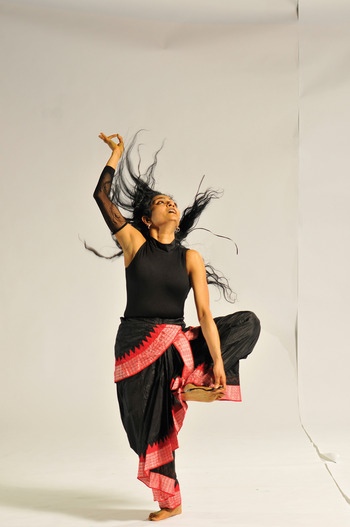
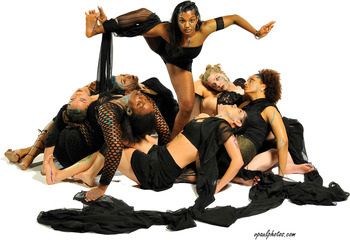
This essay was germinated by midnight meanderings through the Singapore airport in 2008. A couple of years earlier, in 2006, I had passed through the same airport, and encountered similar experiences, on my way to perform in the Indonesian Dance Festival in Jakarta. One particular comment, by a student during a master class I taught at the festival, jumpstarted my sneaking suspicions into a larger investigation. This student, a young woman from Jakarta who had worked hard during the class, remarked with surprise at the end, “Why is this so hard? It's not even ballet!” The specter of ballet, which effortlessly relegated me, and others like me working with different forms, aesthetics, and bodies, to a space of “less than,” morphed into the ghost of Western postmodern dance; it then followed me to Osaka, where I went next to perform in the Dance Box Festival. During panel discussions following performances, I found myself confronted with one question repeatedly: How could I consider my work contemporary if I was still using footwork and hand gestures? (See Photos 1 and 2.) Every time, the suggestion lurking around the corner was that “contemporary” choreography had a particular look, and other imaginings of what might be described as contemporary had to translate into those terms in order to be recognized as such.
Ananya Chatterjea (courtesy of Ananya Dance Theatre).

Ananya Chatterjea's Moreechika (courtesy of Ananya Dance Theatre).

These are not isolated or merely anecdotal experiences, but rather suggest a larger trend at work. Indeed, as I have performed or taught master classes at “international” festivals at different sites in Asia over the last decade, I have experienced a growing sense of isolation and dismay as I have interacted with some of my colleagues, choreographers, and dancers from Asia—talented and amazing artists who are working in the field of “contemporary dance.” Repeatedly I have bemoaned the erasure of difference under the wonderfully unifying and legitimizing aesthetic category of “contemporary dance” (really meaning Euro-American modern/contemporary dance) that seems to dominate much of what is seen of “Asian” choreography in these fora that currently represent the global stage. Repeatedly, I find my choreographic work, created from a deconstruction of the classical dance form Odissi, the martial art form Chhau, yoga, and street theater modes from India, being shoved into the category of “tradition,” which can no longer hold the attention of young, talented dance-makers emerging from sites in Asia. Instead, there is incredibly virtuosic, highly kinetic work created by the emerging dance-makers—with the idiom and structure for most of these works almost inevitably drawn from Western modern/contemporary dance. I am reminded of Appadurai's reflection on the contesting homogeneous/heterogeneous flows that characterize cultural production in the era of globalization: “The central feature of global culture today is the politics of the mutual effort of sameness and difference to cannibalize one another and thus to proclaim their successful hijacking of the twin Enlightenment ideas of the triumphantly universal and the resiliently particular” (Reference Appadurai1996, 27).
These contesting flows and tensions that Appadurai refers to are particularly evident within cultural categories such as “contemporary choreography” and “world dance,” which seem to gesture toward a broad inclusivity, but in fact remain culturally specific in the ways in which they signify through the kind of work that is chosen to exemplify these categories. Asia-Pacific Dance Bridge, the Conference of the World Dance Alliance, was held in June 2007 in Singapore. I was delighted to present my own choreography at the conference, and arrived with great anticipation at this gathering of colleagues from around the world. However, the performance left me, once again, doubting the viability of fora presenting “world dance.” For instance, in the lineup for the Program A, the prestigious program performed for the opening reception of the Conference, and advertised as presenting “new voices in Asian choreography,” my short solo Pallavi, and a trio created by Indonesian choreographer Ni Kadek Yulia Puspasari, Sang hara sang, were the only two pieces that clearly emerged from culturally specific aesthetics. The other pieces, by choreographers from Vietnam, Singapore, and Taiwan, drew on Western modern/contemporary dance both in movement vocabulary and choreographic structure, as well as in terms of music and costuming choices. This pattern was repeated in the two other professional showcases that were featured at this forum, as well as the one showcase featuring local choreographers in the Singapore Arts Festival. Can the occasional citing of a folded hand gesture, and the clearly visible difference of a body marked as Asian, overturn/balance the general vocabulary/choreographic structure that emerges from Western modern/contemporary dance? Perhaps, if that is the intention and the piece is crafted as such. But of this kind of contamination/bad/mis-translation, I have seen little recently. What seems to be increasingly popular in the sphere of Asian “contemporary” dance is a kind of ventriloquism, where contemporary Asia finds its voice through the signifiers of the Euro-American modern/postmodern, the latter passing once again as the neutral universal, which is able to contain all difference.
Thinking through this phenomenon is challenging, both because of how painfully I experience it, and because it is complicated. Clearly, I do not want to end up as some kind of champion of encrusted categories of tradition, nor do I want to suggest that choreographers be denied their “aesthetic choice.” But it is imperative to remember that choices are political, that bodies come with histories and visual contracts, and that, as I often have to argue with my students at the University of Minnesota, there is hardly any way to “be free and just dance.” It is also hard to argue about cultural/aesthetic specificities without postulating a putative purity—without essentializing cultural formations. This difficulty is enhanced with regard to bodily acts that, after the moment of live and direct encounter, leave only trace and resonance to analyze. But perhaps because the live moment is so vivid, particularly in the ways that dancing bodies can give such clear information about the particular way a movement was done, I find it urgent to construct this argument with dancing—an argument against the flattening of specificity, which leads in the end to capitulation to a constructed norm.
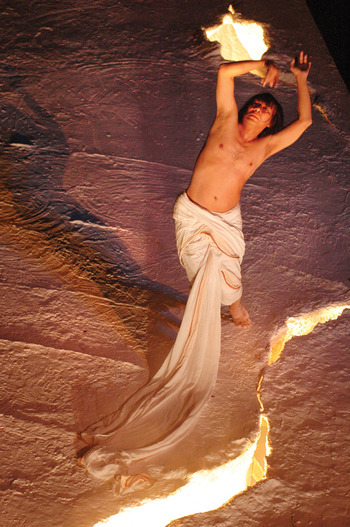
More and more, it seems that the rhetoric and the practice of the global stage are deliberately contradictory to each other. While the idea of the “global” seems to offer the promise of a range of aesthetics and a range of bodies from different contexts marking widely different understandings of beauty and power, the reality of what materializes on stage seems to suggest that there are some unspoken conditions for participation on the global stage that ensure some kinds of conformity. And this slow and steady erasure of difference in the name of globalization and equal access marks a departure from an earlier trend, which was marked in the endeavors of artists such as Chandralekha and Sardono Kusumo (see Photo 3), for instance, whose search for a contemporary voice has always been located in an exploration of specific cultural practices, and in the trajectory of choreographers such as Lin Hwai Min, whose early emphasis on a modern dance vocabulary has increasingly been replaced by an inquiry into practices such as tai chi chuan.Footnote 8
Sardono Kusumo's Sunken Seas, Selasar Sunaryo Art Space at Bandung, Indonesia, 2006 (courtesy of Sardono Kusomo).

Of course, traditionally, across much of Asia there has been little taught by way of “choreography” as a manner of articulating individual voice. So, while the category of the contemporary expressly signals the possibility of individual creativity, the “choreographic” work inside of traditional pieces has often gone unmarked, or marked only as “traditional”—seemingly a category that defies authorship. Such traditional repertoire is often a result of collective voices—an amalgamation of past practices and gathered understandings. At any rate, the absence of a consciously marked and formalized practice named choreography meant that choreographers such as Chandralekha and Sardono Kusumo, who began to think about contemporary articulations of Asian dance forms some decades ago, had to analyze practices and dance forms that were part of their cultural context in order to arrive at understandings of structure and vocabulary.
But there is a distinct difference between that work and what currently populates the world of contemporary choreography within Asian dance. The incidences I am referring to in my anecdotal examples are much more part of a phenomenon that emerged in the late 1990's. They are very much part of the current dance landscape—when globalization has regularized an immense amount of traffic across the world, when dance educators and choreographers from the global North are being invited to teach in countries all over Asia in great numbers, and a process of leveling is under way—through classes in choreography, composition, and technique, through festivals and performances. And the Naipaul fallacy, the idea that we are only good when we are as good as the hierarchical standards, cycles around.Footnote 9
The irony is that the kind of processes that make this possible are apparently very inclusive: all different kinds of bodies can participate on this global stage, though they should speak a familiar language if they want to be marked as “contemporary” work or, in fact, as “choreography” at all. It is urgent to celebrate the presence of so many different bodies on the same stage and the kinds of possibilities that diversity opens up. But there is also a grave need for caution: sharing space requires an interrogation of historic inequities and hostilities, and we need to be vigilant that these old violences are not perpetuated under the guise of the “new” global ventures. For it seems to me that several of the problems that frustrated the failed Western projects of multiculturalism are continued through many of the current global spaces, particularly in how we note/fail to note the tensions and shifting relationships between the diasporic and the transnational, the intracultural, and the intercultural.
In the flattened plane of global circulation and unanchored migrant bodies, movements seem to constitute their own category, referring to nothing beyond themselves—ahistorical and depoliticized. Here, bodies are technical, stuffed with a strangely unreflective kind of difference, only occasionally heightened through technical details of where the hip is held in a battement or a momentary quoting of a hand gesture. And as the modern/contemporary reconstitutes itself as a universal category on the global stage, which is capable of articulating the subjectivites and emotional articulations of artists across continents, I contend that the translations that are able to circulate on the global stage are more often than not flawless, seldom suggesting irony or contamination of the “original.”
Here on the global stage, where we see such diversity of bodies, with some performing traditional pieces and others performing contemporary works, the disjunctive flows that mark Appadurai's vision of global forces, creating crisscrossing lines of power, seem strangely tamed. Bodily and performed differences are choreographed in dances that make them their own end; the resonances of kinetic and aesthetic difference are effectively snuffed out and evacuated of their political dimensions; all that remains is a domesticated diversity. Thus, for instance, we might celebrate the “diverse” and “multicultural” cast of a mainstream modern dance company without ever questioning or dismantling the validating power of some forms over others, or without investigating the shifts that happen when “different” bodies embody certain forms, aesthetically and culturally. I suggest that the severing of movement content from structure and context that plagued past multicultural endeavors continues through the staging of global and intercultural projects where all too often forms and performers from Asia and Africa are mobilized only to ensure the ascendency of Euro-American aesthetics.
Yet, even through this wrenching from context, bodies are deeply territorialized, clearly signaling their citizenship in program notes, but eerily signifying in their aesthetic the universality of categories generated in the cultural production of the global North. And it seems clear that in order for the global stage to work as such, national identities must be strenuously asserted and marked as such through aesthetic and performative choices. There is a strange disjunction here between how, even as the technique, aesthetic, and structure deterritorializes these bodies—marks them as part of a shifting landscape that insists on being made over in approximations of a viable “globality,” program notes and publicity efforts that emphasize where these bodies originate from reterritorialize them. It is this insertion of the national within the global that creates this cross-dynamic of fixity and mobility, causing what Saskia Sassen has described as the “unbundling of the national” (Reference Sassen2000, 227). Sassen suggests that national borders, instead of acting as barriers, in fact facilitate an international division of labor that is organized in terms of transnational power structures and local hierarchies of class and gender. These global networks are managed by two entirely different classes of laborers, both of which have a stake in the success of these systems, however inequitable they are. While Sassen's concept emerges from her study of global cities, her theorization can provoke interesting questions about bodies, cultural forms, practices, and identities. Her work is particularly useful also in thinking through the unraveling of racial and cultural specificities as certain “different” bodies are curated to travel through particular global circuits and as transnational alliances among decision-makers manage the flow of cultural workers. Is this Bhaba's fetishized diversity, not difference? Indeed, Bhaba's distinction between cultural diversity, which is the recognition of pre-identified cultural “contents,” and cultural difference, which destabilizes fixed structures of meaning-making and categorization, resonates strongly with my reading of the global stage (1996, 50). Is this the same failure of the multicultural project to instigate a profound restructuring of the ways in which bodies produce knowledge, against which Ella Shohat and Robert Stam called for a “polycentrist multiculturalism” where “no single community or part of the world, whatever its economic or political power, should be epistemologically privileged” (Reference Shohat and Stam.1994, 46–8)? Some questions that Stuart Hall asked a while ago still seem particularly relevant as we think through the possibilities of global cultural fora:
Is globalization the cleverest story the West has ever told, or is it a more contradictory phenomenon? … Does the notion of “the local” refer merely to exceptions located on the margins, to what used to be called a blip in history? Is the local simply something that does not register anywhere, does not want to do anything, is not very profound? Is it just waiting to be incorporated, eaten up by the all-seeing eye of global capital as it advances across the terrain? Or is it also itself, in an extremely contradictory state? (Reference Hall, McClintock, Mufti and Shohat1997, 186)
Contested Flows
The contemporary dance piece Pichet Klunchun and Myself toured the United States in winter 2007. Created by European contemporary choreographer Jérome Bel and Thai Khon dancer and choreographer Pichet Klunchun, this 105-minute piece is much more a dramatized conversation than dance. Yet it is all about dance, the production of dance, how dancing bodies distill cultural difference, and what Bel describes as “a kind of theatrical and choreographic documentary on our real situation.” The piece was commissioned by well-known Singaporean curator and dance critic Tang Fu Kuen, and it premiered at the Bangkok Fringe Festival in December 2004.
This was an interesting curatorial choice by Fu Kuen, particularly in light of his more recent post on Raft, a moderated blog about contemporary art.Footnote 10 Fu Kuen contends that the production, distribution, and consumption of “Asian” performances are ineluctably bound by two major poles: essentialism, which casts Asian heritage expressions as marked by signs and values that are inherently distinctive and authentic, and are oppositional to Western modernity and ideology; and constructionism, which casts Asian identities as open and fluid, adept in code-switching, perfect global citizens. Ultimately some of Fu Kuen's questions, which were fueled by the frustrating failure in “cross-cultural communication,” are “Can Asians be comfortable in their own skin, gestures, and conscience, and yet be ‘mobile,’ ‘readable,’ and ‘translatable’ in another milieu? … What would it take to enable Western spectatorship to overcome its aporia?”Footnote 11 My question to him, thinking specifically about this curatorial choice, is why do Asians care to be “readable” to the West? By placing this burden of accessibility on Asian bodies, is not the global stage rehearsing yet again the legacy of colonialism? If the global is indeed about the realignment of power, is it not time to undo “the disproportionate influence of the West as cultural forum, in all three senses of that word: as place of public exhibition and discussion, as place of judgement, and as market-place,” which Homi Bhabha lamented over two decades ago (Reference Bhabha1996, 31)?
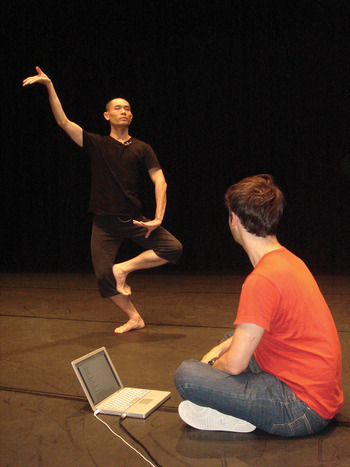
The piece Pichet Klunchun and Myself is intelligent and cleverly constructed. In the program notes, Bel says, “Some very problematic notions such as Euro-centrism, inter-culturalism, or cultural globalization, are issues defined all through the piece. These notions, which are so delicate to discuss can't be left out. The historical moment doesn't allow what is at stake here to be skipped over.”Footnote 11 Indeed, the piece takes on several of these issues. The choreographers sit across from each other and begin talking. The aesthetic is postmodern (in the historical context of modern and postmodern dance of the West) and stripped down: they are in rehearsal clothes, Klunchun's water bottle sits on the floor beside him, Bel has his laptop beside him on the floor; the lighting is understated—just enough to mark the stage space as a performative one. Bel dominates the conversation in the first half, asking Klunchun about Khon, why he is so invested in the dance, how meaning is constructed and conveyed. Klunchun performs patience: he shares, without expressing huge emotion, that while Khon originally belonged to the court and the court performances had a steady audience, it now belongs to the tourists. However, the aesthetic remains the same: the body is a temple and the structure of the temple pagoda is reflected in details of the body, like the fingers that curve upward like the roof (see photo 4).
Pichet Klunchun and Jérôme Bel in Pichet Klunchun and Myself (photo © association R.B.).

Comparing the continuous and circular energy of Khon dance to Western modern dance, Klunchun asks Bel about what he sees as a tendency to “throw away your energy.” The exchange proceeds through numerous misdirections and failures: Bel asks to see demonstrations and Klunchun complies, but when Bel tries to follow, he fails to pick up on the nuances. These funny moments—funny because the audience is invited, through the dialogue, to join Bel in laughing at himself—underscore a subtly made point. Klunchun is the master of a “tradition” with history, but Bel is the dismantler of tradition and expectation in order to radically reimagine the possibilities of performance (see photo 5).
Pichet Klunchun and Jérôme Bel (photo © association R.B.).

Bel and Klunchun discuss representations of death and mourning; they disagree about nakedness on stage, audience expectations, and how they relate to each other's dancing bodies. In a turning point in the second half of the piece, Bel admits he has been a “monster,” constantly asking questions of Kunchun and requests that Klunchun to do the same to him. Indeed, in response to a question about his work, Bel matches the exquisite detail and nuance of Klunchun's demonstrations with an eloquent speech about the ontology of theater—his belief in the intimacy of theater and its specificity, how the “now” of performance is an encounter that he tries not to dominate with the performance of virtuosity.
It would seem that the dialogue, particularly with Klunchun's ending refusal to see Bel naked, dismantled Eurocentric privilege and allowed the two artists to meet on an even plane. But once again, I left disconcerted: Why did it seem that Bel, with his overt performances of irony and self-directed humor, and dancing his own choreography, was performing a “self,” while Klunchun, with his even-keeled demeanor and performances of traditional Khon (not his contemporary choreography based on it), was yet again performing some version of the inscrutable Asian? Bel's questions were often ironic, repeating Klunchun's words as if to point out his incomprehension of them, while Klunchun's questions were primarily factual. For Bel, there seemed to be space to emerge as an individual, a choreographer making choices, while for Klunchun, there seemed to much more pressure to be in character, representing a “culture.” Despite the conceptual brilliance of the piece and the deliberate politics that Bel's statement in the program notes echoed, so much remained to be dismantled.Footnote 12
Audiences blogged furiously after witnessing this performance. While reception of the piece was predictably uneven, most were enchanted by Klunchun and the beauty of his movement, even though there was little display of it. Some of the blog entries made me think of Amitava Ghosh's essay Dancing in Cambodia, especially where he describes Rodin's fascination with the young Cambodian dancers. Ghosh quotes Rodin's words: “The friezes of Angkor were coming to life before my very eyes. I loved these Cambodian girls so much …” (Reference Ghosh1998, 38). The sketches of Rodin, the poetry of Rilke—so much of Western modernity has been figured in relationship to and against the difference of Asian and African aesthetics, and inevitably a hierarchical positioning has come to be implicit in this. Yet Asian modernities, wrestling with the legacies of colonialism, displacement, Western/Northern dominance in several forms, and postcolonial jockeying for power, have often refigured the models of modernity thrust upon them in unique ways. Juxtapositions that were postmodern for the West were a necessary part of this refiguring. But, as we reckon with the implications of the global, can we continue to insist on re-mappings in our own terms? Can we reimagine our encounters in ways that disaggregate the encrustations of power that have continuously dogged our meetings with the global North?
Friction/Seams/Bad Translations
Young dance-makers across Asia are making amazing work—work that provokes thought and reveals the global stage as being constructed over conditions such as forced mobility due to civil war, colonialism, and the importation of labor by capitalist centers; voluntary exchanges through travel and alliances; migrations in search of better life conditions; and intercultural exchanges between First World and Third World countries in the name of “development.” But this is not necessarily what gains the spotlight on large-scale global fora, which these artists need to survive. How can we remind key decision-makers—producers, curators, scholars, and choreographers themselves—about the incredible possibility of dance to create an encounter with difference on multiple levels, and to profoundly move audiences and alter their frames of reference? I recall Alfian Sa'at, Singaporean playwright and poet, who reflected after a workshop on translation in/of/as performance: “Bad and ineffective translation is a strategy with the potential to empower the audience member into examining cultural incompatibilities and political incongruities” (Reference Sa'at and Lindsay2006, 283). Like Bhaba's “difference” and Shohat and Stam's “polycentrist multiculturalism,” Sa'at's “bad translation” urges us to look at the seams that do not come together—those moments when cultural processes and representations emerging from different contexts collide with each other, cleave away, and refuse to fall into a neat and convenient pattern that might be part of the organizing networks that Sassen detects in the global cities.
To end, let me share a moment of effective non-translation. In 1993, Sardono Kusumo toured the United States with his epic piece Passage Through the Gong. When I saw it at the Brooklyn Academy of Music, I understood that audiences around me, as well as dance critics, loved the piece but were confused about the alchemy of tradition and choreographic intervention. Most audience members thought, for instance, that the traditional dance from the Yogyakarta court, the Serimpi Sangupati, danced for Kusumo's piece by women from the Solo royal family, was a contemporary piece: the women gently poured wine into their glasses during the dance, sipped it, and pulled their revolvers out from the folds of their sarongs, and fired shots in the air, all the while dancing with the typical calm and detachment that typifies much of Javanese court performance. Developed in the 1800s during Sultan Paku Buwaono IX's reign, this Serimpi indeed incorporates surprising elements (like the wine glasses and gunshots), revealing the Javanese uneasiness in the political encounter with the Dutch. And this does not quite fit with the popularized image of Javanese court dance as serene and spiritual. Jack Anderson, writing for The New York Times, loved the piece, but admitted that “It was difficult for Western audiences to guess what aspects of ‘Passage Through the Gong’ derived from tradition and what were Mr. Kusumo's inventions.”Footnote 13 But despite his appreciation of the piece, Anderson ultimately expresses his reading of the piece through a moment of translation, through language and categories that Western audiences can understand: “‘Passage Through the Gong’ resembled a contemporary Surrealist fantasy. Mr. Kusumo invested Indonesian steps with a modern-dance sensibility.” Yet Anderson is careful to qualify that, here, modern dance does not indicate a specific technique, but rather “a form that emphasizes individual points of view.”
While “modern dance” often seems to function like the universal signifier that can contain so much difference while inherently retaining its Eurocentric orientation, Anderson's need to negotiate a particular understanding of what constitutes modernity in dance is important to note. His emphasis on individuality as the core of modern dance offers hope that we might be able to invigorate a broader understanding of “contemporary” choreography as well, where genres are understood in relationship to other cultural forms and practices in that context. At any rate, instances, such as the confusion around the Serimpi Sangupati—a “traditional” section within a contemporary piece that does not fit with our expectations of what “traditional” looks like in this context, that defy stereotypical expectations suggest moments of bad/mis-translation which create profound encounters with difference for diverse audiences. They help us to rethink the particular possibilities for complicated restaging of contesting forces on the global stage. Such heterogeneous dance practices that shift our understandings of the relationship between the local and global as they mobilize different contexts and relationships offer so much hope. Anna Tsing's idea of “friction,” as that which creates possibilities for redirecting global flows, is particularly useful here: “Engaged universals travel across difference and are charged and changed by their travels. Through friction, universals become practically effective. Yet they can never fulfill their promises of universality” (Reference Tsing2005, 8). Translations may be inevitable given the economy of the global stage and the kind of currency performing on the global touring network seems to hold. But the kind of non-alignment/mis-translation/contamination that I am yearning for will necessarily create productive frictions and tensions, marking dance as a practice where bodies, moving through space and time, repeatedly redefine spaces and complicate our notions of the global stage without needing to consolidate into any one particular understanding.