Introduction
The purpose of this article is to report on qualitative aspects of a survey to discover satisfaction experienced by those who have undertaken military to civilian transition programmes conducted by the New Zealand Defence Force (NZDF). We wished to ascertain if the experience of the NZDF veterans was similar to those elsewhere. If so, it would point to a universal need to change the way transition from military to civilian was undertaken. This was the first time a large-scale academic investigation into this aspect of military life had been undertaken in New Zealand. The NZDF was established in 1990Footnote 1. At the time, New Zealand was consolidating one of the most radical deconstructions of ‘big government’ in the OECD (Pollitt, Reference Pollitt2000). Since 1984, successive governments of New Zealand have treated, and continue to treat, government departments like ‘corporations’. The Ministry of Defence was no different. The first move was to consolidate the three operational forces and the Ministry into an operations unit and a policy unit. The Ministry of Defence is an advisory and policy unit that sits outside the NZDF. The Chief of Defence Force is ultimately answerable to the New Zealand Minister of Defence.Footnote 2
Like many of its counterparts throughout the world, the NZDF operates transition programmes for military personnel who have resigned from a military career, or reached retiring age for rank, but have yet to leave the military. Anecdotal evidence within New Zealand suggested that such transition programmes were not achieving successful outcomes. This is similar to studies undertaken in other parts of the world – for example, in the USA by Keeling, Kintzle, and Castro (Reference Keeling, Kintzle and Castro2018) and in the UK by Albertson (Reference Albertson2019) and Ashcroft (Reference Ashcroft2014). A New Zealand non-profit organisation named Post Transition Ltd was established in 2019, with the mission to improve the transition of personnel moving from military to civilian life. In April 2019, Post Transition Ltd began a large survey to ascertain the success of military transition programmes in New Zealand. The survey was subsequently completed in late May 2019 and resulted in just over 1400 valid responses (Post Transition, 2019a).
As far as we are able to discern, this is the first academic attempt to understand the consequences, both positive and negative, that have arisen from the transition programmes currently operated by the NZDF and the value of programmes operated by their predecessors. The information was gathered from all ranks and services and included individuals who had left the NZDF within the year to those who had left over 10 years ago, some of whom were commenting on their experience of transition in the closing years of the 20th C.E. (Post Transition, 2019b). As we demonstrate, the respondents saw themselves as veterans first and members of the wider society second. This article adds to the discussion on identity within ‘total institutions’ (Toubina, Reference Toubina2020) and on the concept of ‘lingering identities’ (Wittman, Reference Wittman2019). This theory of ‘lingering identities’ may go some way to explaining our results. Overall, the results painted a bleak picture of existing transition support services and may give the NZDF some cause for concern.
In the following narrative, we outline not only the issues that were uncovered but the potential consequences if the NZDF was to continue with the status quo. In doing so, we draw upon a small but growing pool of international academic literature.
Transitioning
The military environment is one that has been termed a ‘total institution’. By this it is meant that members of the military work, sleep and conduct their (mostly) disciplined daily lives effectively separate from the greater society in which they exist (Toubina, Reference Toubina2020). Whilst there is a great deal of work being done in terms of transition, predominantly in the field of educationFootnote 3, and some recent work on prisons (ibid), there has not been a great deal of work in terms of military transition per se within the New Zealand context. Rather than accepting a general definition from extant examinations of common transition experiences such as that given by Nicholson (Reference Nicholson1984), who wrote that transition is ‘seen as a change in employment status and/or major change in job content including status passage’ (p. 173), we will follow a specific definition given by Cooper, Caddick, Godier, Cooper, and Fossey (Reference Cooper, Caddick, Godier, Cooper and Fossey2018). They define military transition as a period of reintegration into civilian life from the military. The wider transition literature also supports this assumption. Sarastuen (Reference Sarastuen2019) defines transition as the movement from one role in society to another. Such a definition builds upon one offered by Ashforth and Sals (Reference Ashforth and Sals1995), that transition is the disengagement of one role and the adoption of a new role and individual identity. By combining the two, a general and more specific definition gives us a very clear working idea of the concept, with direct relevance to the military situation. We are aware of transition studies dating back to post-World War II that indicate that a form of culture shock, termed ‘reverse culture shock’ (Bergman, Burdett, & Greenberg, Reference Bergman, Burdett and Greenberg2014), can be experienced by those transitioning from the military back to a civilian life. Nicholson (Reference Nicholson1984) similarly recognises that a change in the individual's working role and identity is regarded as an important social and psychological adjustment that may take an advanced period of time to adapt to the new reality. We are also aware of the concept of lingering identities, coined by Wittman (Reference Wittman2019) and expanded later by Toubina (Reference Toubina2020) to describe how individuals exiting strong institutional fields sometimes have difficulty in adjusting to the new environment.
One aspect of military transition that appears to be different to that experienced by civilians (even within strong cultural employment environments) is the very tight, almost family nature of military service. As a result, the sensations of loss and isolation that are experienced by the military person transitioning into civilian life seem to be much greater than the transition from most other occupations. Such feelings of loss when moving from one role to the other is also found in a study of vocational workers conducted by Sarastuen (Reference Sarastuen2019). These sensations are particularly evidenced by higher rates of suicide, unemployment, depression, and alcohol abuse amongst the ex-military than the general population (Derefinko et al., Reference Derefinko, Hallsell, Isaacs, Garcia, Colvin, Bursac and Klesges2018; Kerr, Romaniuk, Mcleay, Khoo, Dent, & Boshen, Reference Kerr, Romaniuk, Mcleay, Khoo, Dent and Boshen2018). Most marked are those that leave the services early, defined by Buckman et al. (Reference Buckman, Forbes, Clayton, Jones, Jones, Greenberg and Fear2012) as being less than three years of service. Those seeking work immediately after leaving the military often find it especially difficult to convince civilian employers their skills and experience would be beneficial. This appears to be a universal frustration amongst military veterans. Dexter (Reference Dexter2021) draws upon prior research in the USA and noted there was a disconnect between the skills and qualifications of the military person and the expectations of the civilian employers. Earlier results of interviews with those undertaking military transition (Agomate, Reference Agomate2017; Alwine, Reference Alwine2017; Zoli, Maury, & Fay, Reference Zoli, Maury and Fay2015) also suggest transition into the workforce could have been more sympathetic in this regard. The above authors identified issues that included a lack of real-world support, disorganised programmes and the need for specific skills and military certification that mesh with those of the civilian world to provide a seamless transition between the two worlds.
Writing in 2018, Keeling et al. also indicated that health issues amongst the military were poorly understood by the civilian hiring population in the USA. Keeling, Kintzle, and Castro (Reference Keeling, Kintzle and Castro2018) note, in a study conducted using ex-military focus groups, a number of the participants expressed the view that the established Transition Assistance Programme (TAP) was a mere ‘box checking exercise’ (p. 66), with little substance or effective follow-through. In addition, it was reported that the military managers essentially ‘cut people off’ once the decision to leave the services was known. The findings of existing literature tend to suggest that military transition programmes certainly do need to be more tailored towards the types of attributes and skills that civilian employers are seeking. Again such responses have recently been noted by Dexter (Reference Dexter2021).
A sense of worth obtained through association is a strong tie within the military. The serviceman or servicewoman has worked diligently to achieve rank and expertise. They have, over time, constructed an identity that has strong ties within an established close-knit society (Sarastuen, Reference Sarastuen2019). However, leaving service without a civilian or trade qualifications understandably impacts upon the ability to find a new or equivalent position in the civilian workforce (Alwine, Reference Alwine2017; Rolston, Reference Rolston2007). Even those who leave with a qualification recognised in the civilian world find themselves ‘starting over’ and their years of service ignored or discounted (Walker, Reference Walker2012). International comparisons indicate that even with civilian qualifications, it takes a long time for many ex-service people to get a job (Binks & Cambridge, Reference Binks and Cambridge2018; Keeling, Kintzle, & Castro, Reference Keeling, Kintzle and Castro2018), which can play into a deep sense of alienation (Australian Government Department of Veteran Affairs, 2018). There is a sense obtained from extant surveys in this field that there is a great frustration that the civilian employers do not understand the worth of what has been learned while in service (Post Transition, 2019a). In order to provide meaningful integration, there is a need to assist the ex-service person to find meaning within a civilian environment.
Sense of place
Building upon the above, and notwithstanding the results to date, transition programmes are seen as important for ex-military personnel as they have undergone a very intensive breaking down and building up experience; a forced separation from civilian life in favour of a strict code of discipline (Cooper et al., Reference Cooper, Caddick, Godier, Cooper and Fossey2018). Through this process, the serviceperson has found a self-identity. This self-identity is established through social reference and is defined by the reflection received from others (Walker, Reference Walker2012). The identity formed is deep and is a consequence of being part of a total institution (Toubina, Reference Toubina2020). It is in effect a recognition of habit, something that Wittman ( Reference Wittman2019) calls a ‘lingering identity’. Individuals within a total institution identify with a strong work role. Consequently, the process of deidentification may cause a feeling of loss.
When joining the forces, a person has been transformed; instilled with new values and re-socialised; then remade into accepting a strong, cohesive and protective military culture. The person has become connected through the somewhat insular and shared exercise of work (Keeling, Wessely, Dandeker, Jones, & Fear, Reference Keeling, Wessely, Dandeker, Jones and Fear2015). Such a working culture has become cemented, again following Cooper et al., (Reference Cooper, Caddick, Godier, Cooper and Fossey2018), through a process of unconscious disposition whereby service personnel have embraced the notions of prestige and the artefacts of status leading to a focused self-identity. These artefacts of status are the badges of rank and the uniform. The oft-times separate world of the military profession in comparison to the civilian world distances the military person from the wider community and can result in setting up an ‘us and them’ perception of the world (Binks & Cambridge, Reference Binks and Cambridge2018). When the time comes to re-enter the civilian world, the military person needs to ‘unlearn’ the military way of life, refocus and reacquire the skills and habits of living in a civilian world. Dexter (Reference Dexter2021) indicates the need for veterans to be aware of the changes that will be required to enter the civilian world. In effect, they need to understand that their identity as a military person needs to sit within a new identity as a civilian. Because of the close and occasionally dangerous military environment, a strong sense of identification and shared experience has been established (Verey & Smith, Reference Verey and Smith2012), of which it is very hard for some to let go. They have become as Toubina (Reference Toubina2020) suggests; stuck, and to deidentify would be to no longer be part of the previous identity. It is this sense of affiliation that makes the transition from the military a large stressor. The ties of affiliation are so strong that upon leaving there is a pronounced sense of physical and psychological loss; a loss of place, and loss of status that which the person once held. This sense of loss has been described by Walker (Reference Walker2012) as giving rise to a grief manifesting in a form of culture shock for those transitioning into civilian life. One is faced with the possible loss of aspiration, respect and self. It is a separation that takes place when the military person re-joins the civilian world. There is also in many cases a real loss of income and a physical loss of connectivity with like-minded individuals (Keeling et al., Reference Keeling, Wessely, Dandeker, Jones and Fear2015).
The New Zealand case is no exception to this sense of place and belonging. This belonging is built into the values of the NZDF: Courage, Commitment and Comradeship and IntegrityFootnote 4. These help to reinforce the intense sense of camaraderie and collectivism found within the armed forces (Lemos, Reference Lemos2005), which are often missing within civilian working environments. When leaving the forces there is a deep-seated loss of belongingness which may contribute to a diminished self-worth and negative social and personal behaviour, leading further into depression (Albertson, Reference Albertson2019).
Methodology
The research question for our study was: what do New Zealand's former servicemen and servicewomen think of their transition experience? Thus, we are reporting upon an exploratory survey that was undertaken to ascertain how successful or unsuccessful transition programmes were considered to have been by exiting members of the NZDF. As an exploratory study, this study was not designed to ‘test’ any particular outcome or hypothesis. One of the research team, a decorated veteran, had himself experienced a ‘less than seamless’ transition from the military. In talking with other former servicemen and women, he had uncovered anecdotal evidence that suggested his experience was not uncommon. In early 2019, a qualitative and quantitative questionnaire was produced to get some definitive answers as to the way in which New Zealand ex-service people experienced transition. The survey was administered electronically, following a snowball sampling technique.
Although snowball sampling has a reputation for including bias (Zikmund, Reference Zikmund1997), in our case this worked in our favour. We were specifically interested in the ‘bias’ – that is, the group of individuals who had left the NZDF as an ex-military employee. The survey was therefore designed to solicit responses from a group who traditionally are ‘hidden’ from society or are difficult to immediately identify; an ideal audience for the snowball technique of ‘recruitment’ (Coleman, Reference Coleman1958). In this regard, the idea that snowball sampling could help access communities that are hard to locate suited our purposes very well. Furthermore, we believed that the cadre of ex-military, at least in New Zealand, were more likely to respond to information requests from ‘one of their own’ than from an unfamiliar researcher. Such an assumption is based on the theory of logics of identity (Toubina, Reference Toubina2020), the close identification with the organising, and social norms of the ‘total institution’. It is this element of trust that made snowball sampling the most appropriate method by which to collect our information (Bailey, Reference Bailey2019). We acknowledge, and actively desired, that the referral was probably known by the referrer. They would have known that they are an ex-member of the forces but not necessarily their attitude towards their transition. This is an element of strength of our sample: we are assured that all respondents are valid respondents. The initial approach to the respondent group was made by members within Post Transition Limited; being ex-military. From there, respondents informed those within their social circles, who had also served, of the existence of the survey. This was done through personal contact and through the wider use of social media. Following Coleman (Reference Coleman1958) and Bailey (Reference Bailey2019) above, the individual responses we received can be considered unique. The issue of thematic bias is overcome by the results themselves. Not all respondents had a ‘disappointing’ transition experience. It was only at the time of analysis that the individual responses formed a series of homogenous themes.
In total, there were seven questions within the survey (qualitative in nature), presented in the format of free form fields. These were:
1. What links do you maintain with the military?
2. Describe the nature of these links?
3. What parties outside the NZDF have you received help from?
4. What help did you receive from VANZ (Veteran Affairs)?
5. What was your reason for leaving the NZDF?
6. What help would you like to have received for your transition?
7. If you could get a message out to the NZDF about your transition, what would it be?
Although the survey included demographic data like age, gender, location, rank or service, we did not consider these as particularly relevant for an exploratory study, given that we were more focused on repeated broad themes than the correlation between these themes and different demographic markers. Our primary interest with the qualitative data was focused on discovering overarching, repeated themes common across our population.
Responses to the above questions were aggregated then subjected to applied thematic analysis. The process was inductive – we read through and familiarised ourselves with the data, identified distinctive ideas present and labelled these with codes. This process was repeated multiple times until a level of saturation was obtained and no new codes emerged (Guest, MacQueen, & Namey, Reference Guest, MacQueen and Namey2014). Codes were then sorted in broader-related themes. The process was administered with the aid of the NVivo programme, which facilitated the management of the codes and themes, although all coding was inputted manually. While most responses covered only a single theme, some covered two or more. Although one of the research team was intimately associated with the military, that individual did not, for reasons of identity bias, contribute to the analysis or coding.
The results tend to highlight previous international experience. However, as previously noted, we believe this is the first time a large-scale, independent (as opposed to military or government) survey has been undertaken within the New Zealand ex-military environment. The numbers involved in the survey are large even on an international scale. Previous academic published work in this field tends to be small-scale, case-based or cohort examples. For example, Williams, Allen-Collinson, Hockey, and Evans (Reference Williams, Allen-Collinson, Hockey and Evans2018) conducted a survey of 20 individuals in a focus group situation. Binks and Cambridge (Reference Binks and Cambridge2018) conducted a small interview-based investigation, Verey and Smith (Reference Verey and Smith2012) conducted a survey of 12 individuals. Walker (Reference Walker2012) conducted a survey of 12 individuals, while Cooper et al. (Reference Cooper, Caddick, Godier, Cooper and Fossey2018) conducted a critical literature review of the field as it stood in 2016. The largest survey we came across was by Buckman et al. (Reference Buckman, Forbes, Clayton, Jones, Jones, Greenberg and Fear2012), a survey of early leavers in the UK which reports findings based on 8686 responses. We are also aware of a transition survey undertaken in Australia by Veterans Affairs that solicited just under 1000 responses. In all surveys above, the overall results were similar: there was a feeling of loss, a great feeling of affinity with the previous occupation and frustration with civilian employers. Our survey provides us with the ability to generalise upon the nature of the transition experience within the New Zealand armed forces with confidence. The raw results were shared and circulated between interested parties within the field in New Zealand to confirm external validity. This included the NZDF and the Minister of Defence. The partial results were also made available in pictorial form on the Post Transition website and in a presentation to one of the largest private employers of ex-military in New Zealand; Air New Zealand. The resulting themes conform to the extant literature in that they are broadly concerned with affiliation, loss (Cooper et al., Reference Cooper, Caddick, Godier, Cooper and Fossey2018; Albertson, Reference Albertson2019) and disappointment or frustration with the transition process (Keeling, Kintzle, & Castro, Reference Keeling, Kintzle and Castro2018; Walker, Reference Walker2012).
Results and discussion
For reasons of both narrative consistency and space, the following discussion concerns only the qualitative results from our survey. Despite a number of positive and successful transition experiences, a majority of respondents reported a less than satisfactory experience. When asked to rate their experience on a scale of 0 (‘I would not want another person to experience what I have’) to 10 (‘I would want everyone to experience what I have’), the most common (mode) response was 0, whereas the (mean) average participant rated their transition 4.05. This indicates a wide range of transition experiences, but with a significantly large number having a very negative experience.
The main themes that were raised in the survey mirror similar studies conducted elsewhere. These themes include identity (Albertson, Reference Albertson2019; Wittman, Reference Wittman2019), loss (Lemos, Reference Lemos2005), isolation and depression (Keeling, Kintzle, & Castro, Reference Keeling, Kintzle and Castro2018). Another dominant theme was the feeling of frustration and alienation amongst ex-service personnel who suddenly find themselves without a meaningful way to contribute in a society that, for some respondents, appeared to be uncaring and unsupportive of their previous occupation. These findings echo work undertaken by Brunger, Serrato, and Ogden (Reference Brunger, Serrato and Ogden2013) and Dexter (Reference Dexter2021) regarding the ‘no man's land’ of transition to civilian life. Overall, the results of previous studies, indicated above, support the underlying concept of lingering identity giving rise to difficulty in re-integration into civilian society.
The qualitative questions can be arranged into two distinct groups. The first group of questions sheds light on connections and networks, specifically relationship (or lack thereof) with support services. The data indicate awareness of, access to and eligibility towards veteran support services in New Zealand is of concern. Although New Zealand has a department of Veteran Affairs (VANZ), benefits are only available to those ‘veterans’ who have been deployed in theatre. The second group of questions focuses on our respondents' perceptions of their transition experience, from their initial decision to leave the armed forces and the issues they faced in carrying out this decision, to the support they received (or felt they should have received). The data here reflected the international literature and revealed themes of belonging, identity, culture shock and the difficulty in adjusting to what was once familiar.
Support networks and services
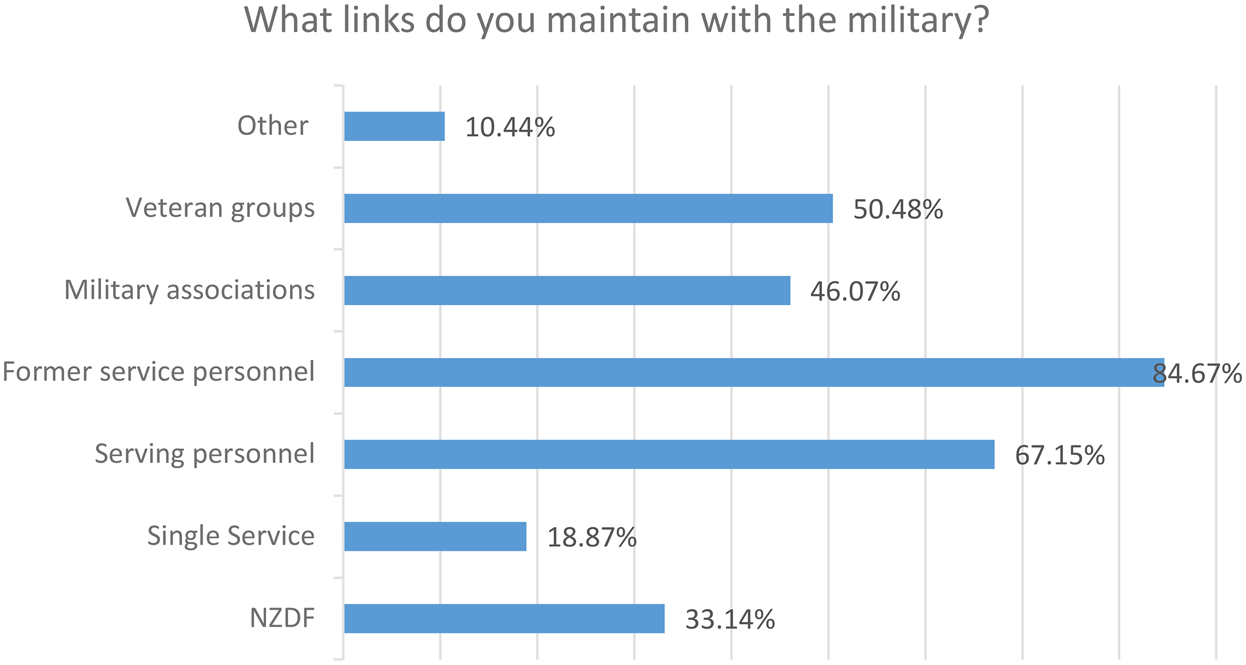
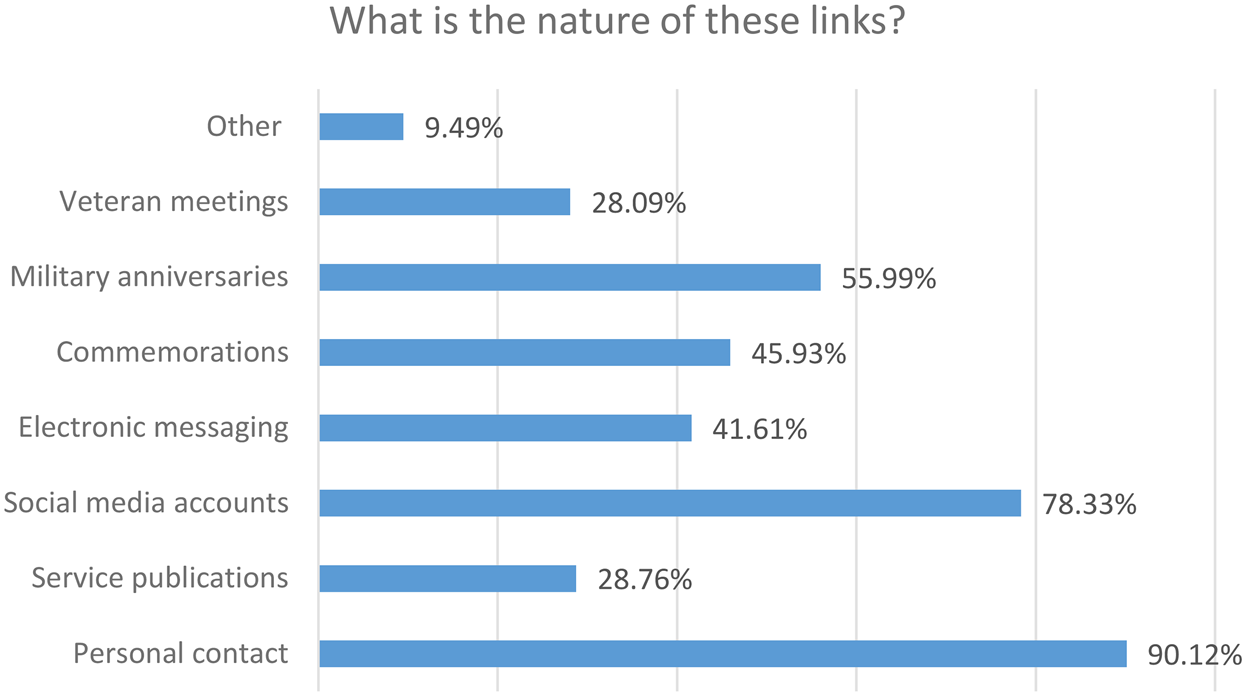
Which links do you maintain with the military and describe the nature of these links with the military (‘Other’)
A major consideration when looking at the transition from the military to the civilian world is one of affiliation. International studies with veterans and total institutions have had similar results (Dexter, Reference Dexter2021; Keeling, Kintzle, & Castro, Reference Keeling, Kintzle and Castro2018; Toubina, Reference Toubina2020; Wittman, Reference Wittman2019). The responses we received to this question, seen below in Figures 1 and 2, reinforced that which we found in the literature. In total, 69.7% of our respondents stated that they maintained links to the military following their transition. In looking at the responses, we found that there was a very strong sense of belonging coupled with an equally strong sense of loss at leaving the military (Lemos, Reference Lemos2005). A refuge from this sense of loss was often found in the civilian world by association with like-minded groups. In other words, respondents actively sought social relationships or workgroups that replicated the same sort of overlapping and multi-layered social groupings they had in the military. This reinforces the importance of shared experience that the respondents considered themselves to have lost (Binks & Cambridge, Reference Binks and Cambridge2018; Brunger, Serrato, & Ogden, Reference Brunger, Serrato and Ogden2013).
Links with the military (1044 responses).

Nature of links with the military (1043 responses).
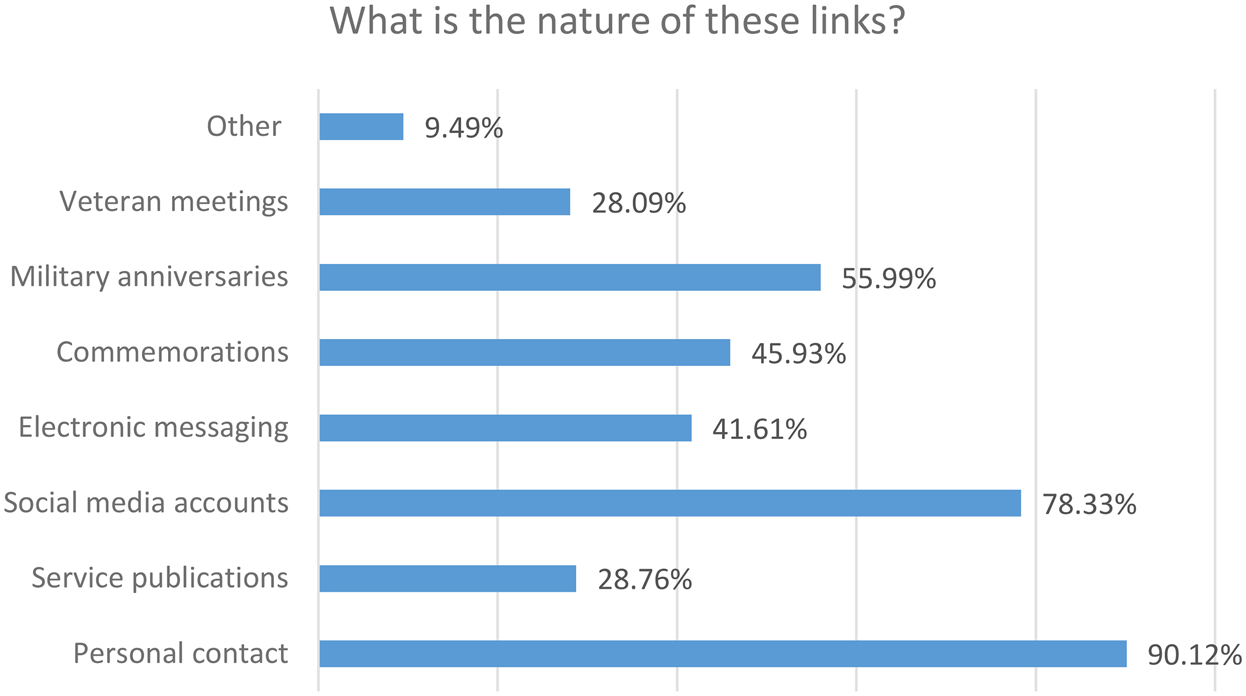
Most of the responses explained that they found such affiliation within association with social groups such as the various ex- or active service personnel, military associations or veteran groups. The enlightening aspect of the responses, at least from the qualitative data gleaned from the ‘Other’ response field, is the additional detail provided behind these broad categories. For example, in our survey Veteran Groups, responses referred primarily to hobby or social clubs. One notable example is the Patriots Motorcycle Club, a registered motorcycle group exclusive to active and ex-military. Other common links identified were local sport clubs and military associations are such as the RSA (Returned Services Association) or volunteering within the NZ Cadets. Drawing from the literature on military transition, results suggest that the NZDF could possibly benefit from seeking stronger ties with these groups in order to aid successful transitions for those leaving the service (Keeling, Kintzle, & Castro, Reference Keeling, Kintzle and Castro2018; Toubina, Reference Toubina2020). Such a move is seen as necessary to mitigate the loss of self-worth and loss of status that accompanies a transition from the military to civilian world (Albertson, Reference Albertson2019). Such a move would also take advantage of the strong institutional bonds the respondents had obviously shown to the NZDF.
Likewise, the strong overlap between the military self-identity and a sense of the civilians as the ‘Other’ was quite common. This conforms to international studies and the ideas of lingering identities (Wittman, Reference Wittman2019), which can inhibit the transition to a more civilian existence. The following quote illustrates this division well:
It took probably 3–4 year to feel like I had a handle on civie life, the relationships they have, or lack of and being able to not get aggravated at the lack of standards, commitment and trust that is considered normal
Writing as we are in the second decade of the 21st-century CE, it was not surprising to see social media was mentioned several times as a way of keeping in touch with those that had served. Social media and its ability to link former servicemen and women who had served together, after they had left the NZDF, filled a gap in contact and communication many felt respondents should have been the NZDF's responsibility:
A post discharge follow-up and/or an offer of counselling should be on offer for all personnel leaving the NZDF, leaving people to their own devices after a decade or more of institutionalised work and life is just not good enough
Such comments are similar to those reported by Dexter (Reference Dexter2021), who reports that ex-military personnel generally would have liked to have a longer and more integrated period of transition.
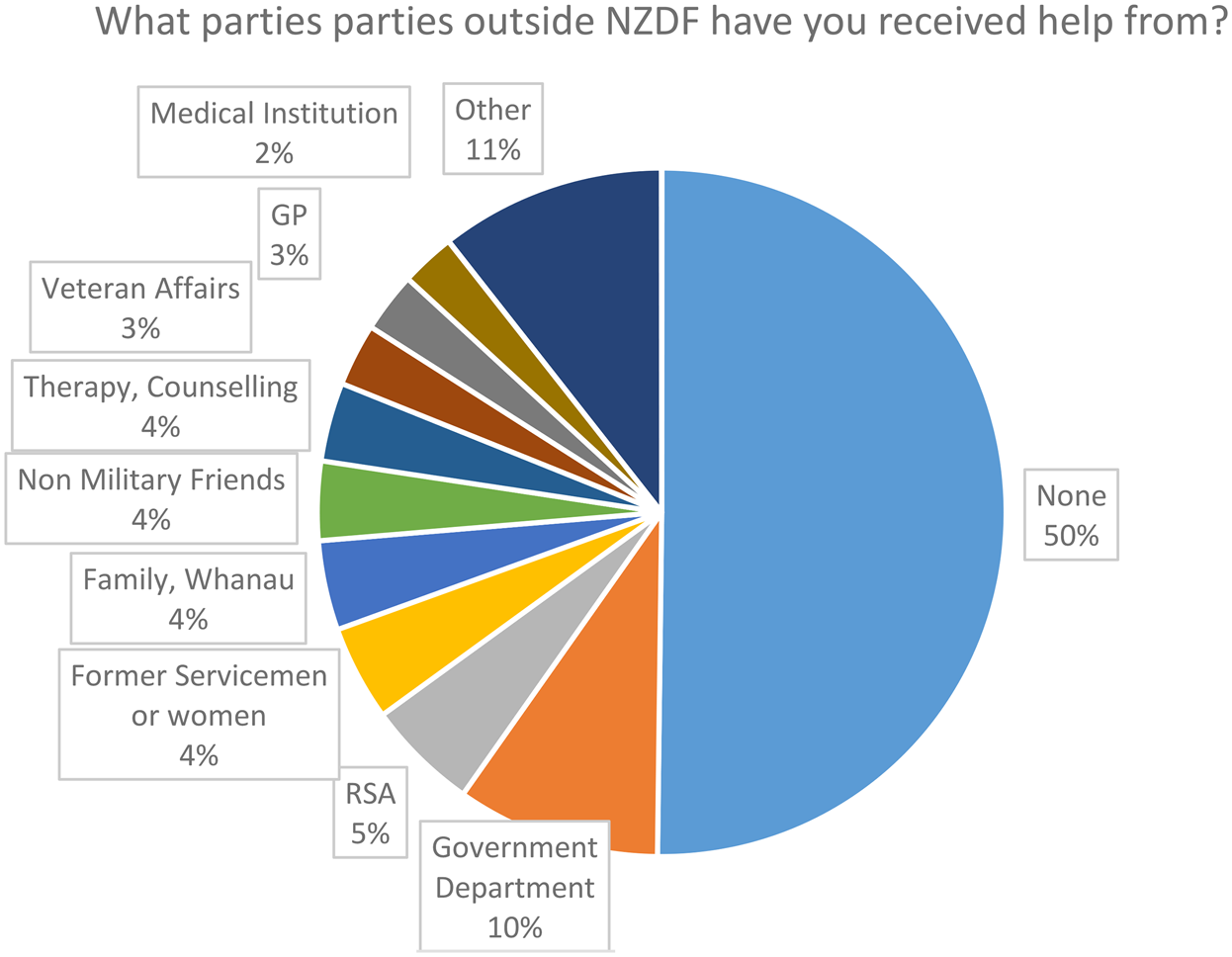
What parties outside the NZDF have you received help from?
Throughout the literature on military transition, a clear pattern emerges. On the whole, those exiting the military feel more could have been done to prepare them to re-join a life in the civilian world. This is also echoed by a study in the UK undertaken by Binks and Cambridge (Reference Binks and Cambridge2018). Looking at our responses, those transitioning from NZDF believed that the forces should have done a better job of preparing for this transition:
Joining the service directly from school, [upon exit] I had no idea how to write a resume, secure work, negotiate salary, housing, etc. Sounds so silly now but I was a totally naive 30 year old
It is therefore not surprising the most common response to this question from our respondents, with approximately 50% of total responses being ‘nil’ or ‘none’; as demonstrated in Figure 3 below. The dominance of this response indicates a gap between the transitioning services the NZDF provides and the services expected by those undergoing the process.
What parties outside the NZDF have you received help from?

The next most common sources of help were (civilian) government services, which made up only 10% of all responses. These included Work and Income New Zealand, which was mentioned in regards to getting help with finding employment, followed by the Accident Compensation Corporation, which was mentioned primarily in regards to medical injuries or ongoing treatment. After these dominant categories, a wide range of sources of help were identified, ranging from the RSA, former servicepersons, family and friends and medical institutions like GPs and counsellors. From these responses, we can infer that there is a broad range of government, communal and private social support services available within New Zealand.
However, there appears to be a ‘gap’ in that those exiting services are left to discover such services on their own. While New Zealand has a branch of government specifically set up to assist the ex-military (Veteran Affairs New Zealand, a civilian run part of NZDF), there exist some issues with pathways, eligibility and/or access to these services for at least a significant minority of those who responded to the survey. This issue is apparent when looking at the responses to the following question.
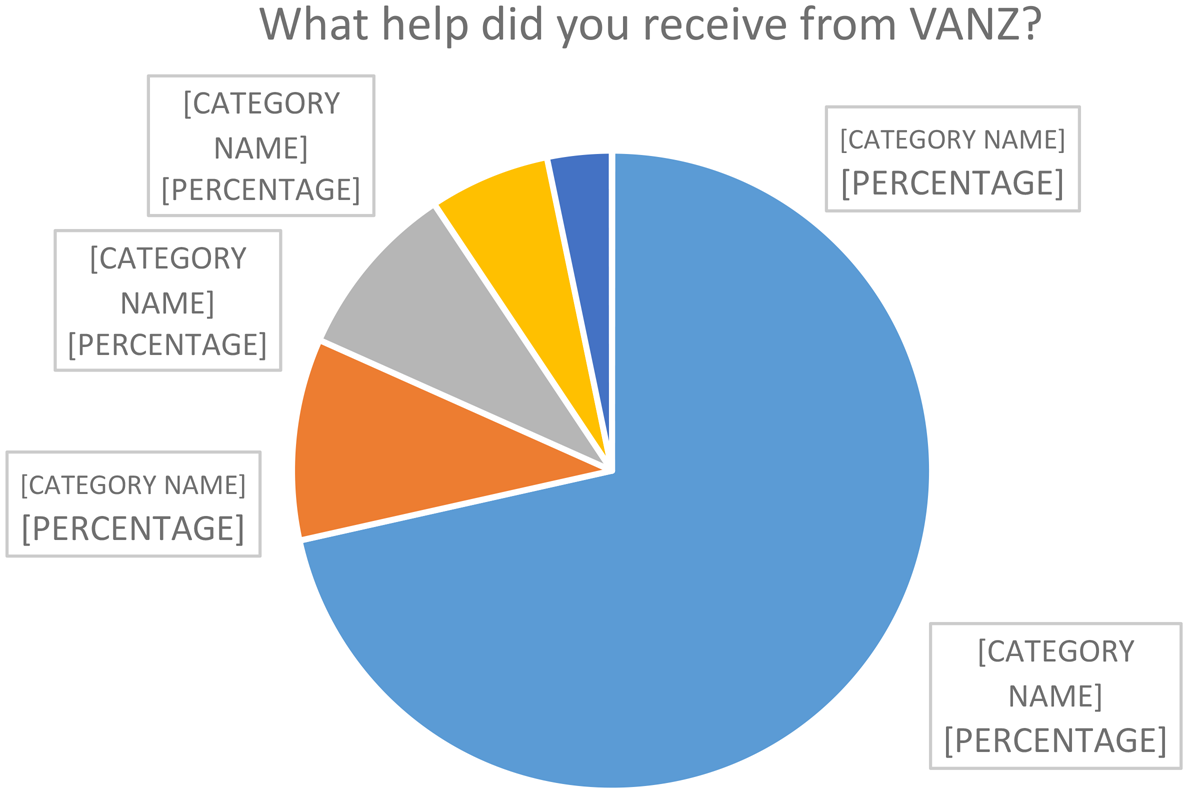
What help did you receive from VANZ (Veteran Affairs NZ)?
There were 805 unique responses to this open-ended question, with many notable similarities to the responses to the preceding question. Echoing the previous questions, see for example Figure 4, on outside assistance, the greatest response was nil or no support from VANZ:
What help did you receive from VANZ?

One reason for this is that many responders noted they were either unaware of VANZ's existence or ineligible for its services:
None. I do not qualify although having over 26 years military service, only 11 of those years were serving with NZDF
I guess, what I would have wanted in this moment - while I was leaving – was to have more access to VANZ. No one even talked to me about it and I served 15 years. One of my mates brought it up and said I should get involved but I didn't even know what could be gained or what I could contribute.
Other responses referred to specific services offered through VANZ. Medical (hearing aids, in particular) and financial support were most common. However, these were tempered by very critical comments directed at the difficulties associated with VANZ administrative processes, the bureaucracy involved with applying for support, or the inability to access VANZ support due to strict criteria associated with veteran status in New Zealand. A typical written response is reported below.
After I got mucked around with my first advisor I was able to get a new one and it was a lot better…first application to recognize my PTSD was great but trying to get applications read and excepted for my injuries has taken 6mths before they contacted and said they have it and I have to wait a further 6mths before it will be processed…and that's only half of what I need to be looked at…
The transition experience
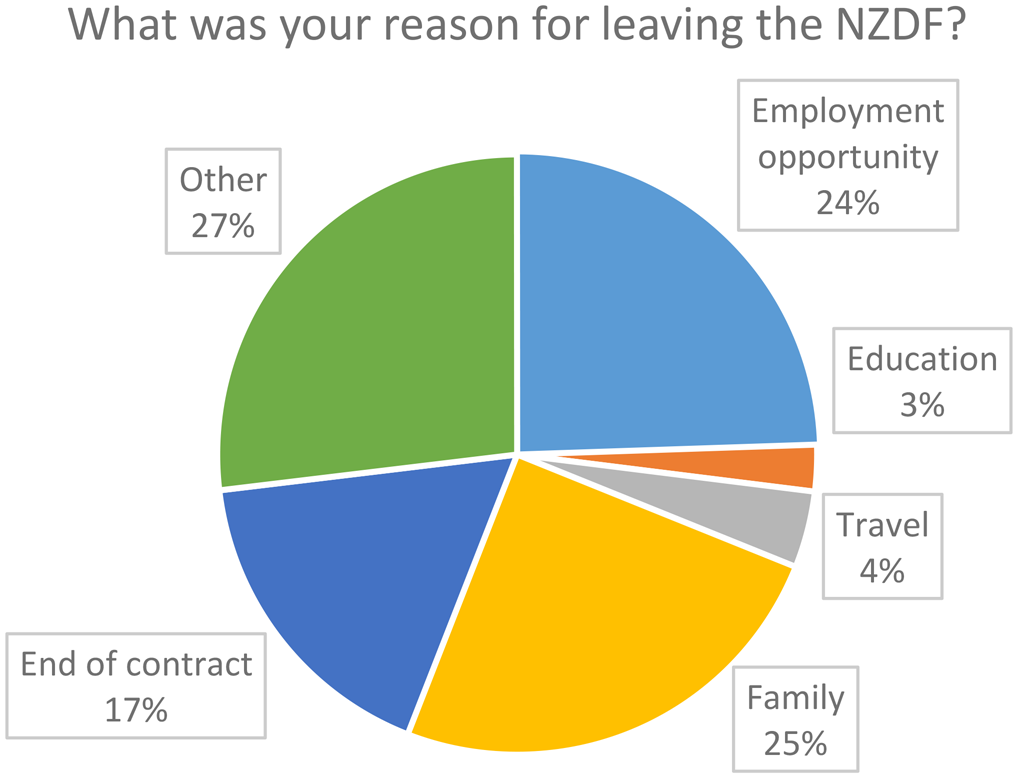
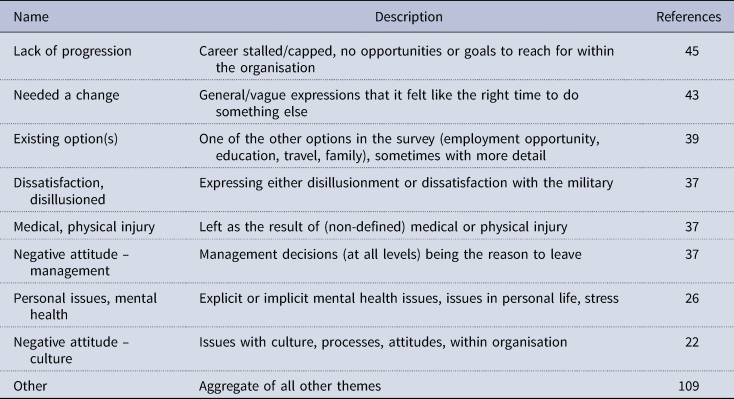
While the first half of our qualitative data set highlighted some issues with awareness of and eligibility towards support services, the second half sheds light on the transition experiences of our respondents. The information in Figure 5 and Table 1 makes these issues explicit. We first look at the reason why the respondents had left military service within the New Zealand armed forces (both before and after the creation of NZDF).
What was your reason for leaving the NZDF?

Themes from ‘Other’ field in response to ‘what was your reason for leaving the NZDF?’

What was your reason for leaving the NZDF? (Other)
In line with other responses we received to this survey, there are similarities with the extant literature. This was one of the more complete sections of the survey received, with 1405 total responses, 378 in the open-ended ‘other’ field, with 395 attached code references:
Whilst the majority of reasons given in this field appeared to us to have a level of dissatisfaction attached, it needs to be pointed out that not all respondents suggested levels of animosity. However, within the context of our study, these were a minority. As an illustration, we did receive positive comments such as:
The support from the HR administration people was fantastic and made the process much more simple than I anticipated it would be. The exit medical doctor went above and beyond to help me with my transition out
However, such commentary is in sharp contrast to many other statements expressing concern. The most significant reason for leaving the NZDF was a perceived lack of opportunities for progression. Others expressed a sense of no longer perceiving a mutual sense of belonging can be seen in comments such as:
I became dis-illusioned with the Corps. I became more of a number than an actual person that had served consistently overseas for the corps yet they weren't there when needed.
This ties in with other similar themes seen elsewhere. See for example Cooper et al. (Reference Cooper, Caddick, Godier, Cooper and Fossey2018) and Williams et al. (Reference Williams, Allen-Collinson, Hockey and Evans2018), who also touch upon such feelings as not being valued, bullying within the organisation or a lack of support within the organisation, or Walker (Reference Walker2012) who categorically discusses attitudes and motivations for departure in his review of leavers in the UK.
Apart from the above examples, another commonly cited reason, not unexpectedly, was from respondents who felt they simply needed a change of lifestyle/career and did not mention any particular external reason for leaving. Other responses were similarly pragmatic in their reasons for leaving. These included conflicts between the military life and family life (particularly with relocation associated with postings), the sense that if they didn't leave now they would be staying in the service for the ‘minimum’ 20 years, or simply taking advantage of available retirement packages.
The responses we received to this question dovetail into our final qualitative questions regarding the transition experience per se. It is in this final section, where we asked respondents what help they would have liked to receive during transition, that we received the most damning responses. However, we also obtained constructive feedback and suggestions as to how the NZDF could make a pragmatic difference to their transition procedures and programmes.
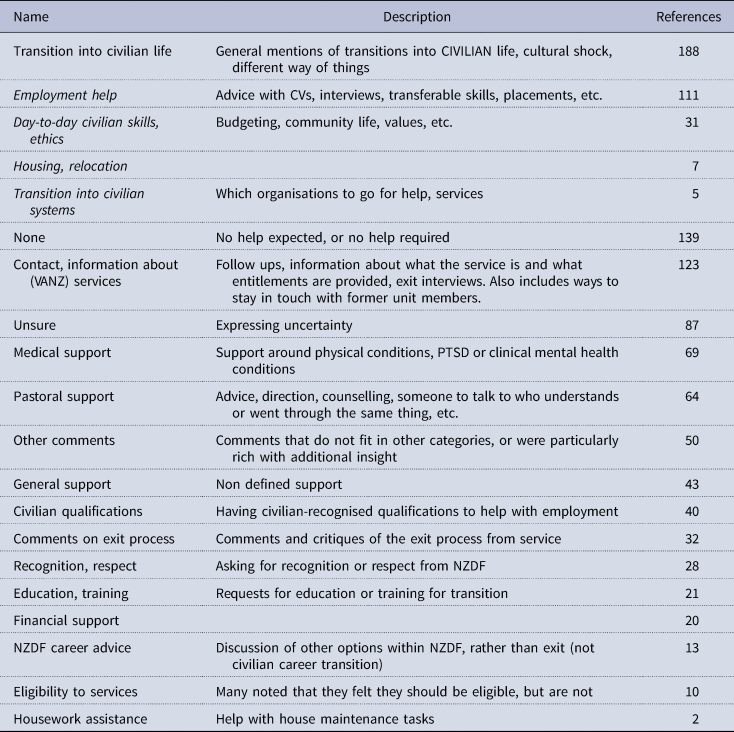
What help would you have liked to receive for your transition?
We received 879 responses to this open-field question, which were mapped to 1083 code references as Table 2 below indicates.
Coding table for responses to ‘What help would you have liked to receive for your transition?’
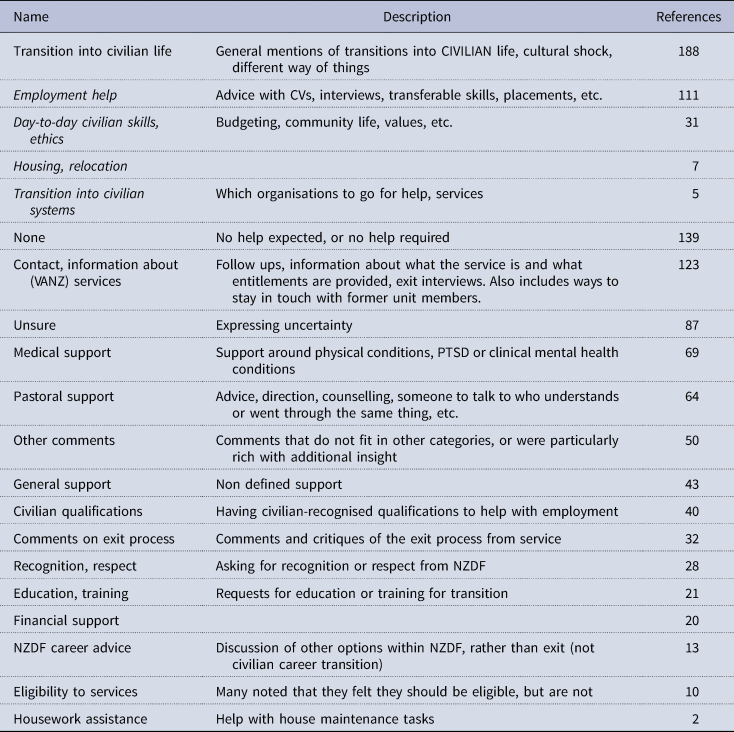
For most individuals transitioning from the military to the civilian world, the most salient point was ‘how to succeed in the civilian world’. This came down to assistance with finding employment and functional assistance in re-joining civilian society:
Financial awareness, group or self-help options that are available to me, the structure and types of welfare services that would be available to a soldier, the type of prerequisites an employer needs for gaining employment, groups or institutions that are available for self enhancement or upskilling after leaving NZDF.
Employability was one aspect in which the respondents indicated that NZDF could have done better. A prominent theme was the difficulty of transitioning from military employment to civilian employment. Many respondents had no idea how to apply for a job, how to organise a CV or how to behave in a job interview situation. Many also remarked on the dynamics and relationships in a civilian work environment being fundamentally different, sometimes to the point of infuriation. There is a stark contrast behind the tightly managed, overtly hierarchical collective that is the NZDF, and the relative chaos, informality and individualism of civilian life in New Zealand. The differences between the two range from social basics (ethics, relationships) to systematic (institutions, support services, qualifications, finances). Having civilian qualifications upon exiting the military, or some other way to clearly translate military experience and qualifications into civilian language and standards, was repeatedly mentioned as an important factor that would have helped transition into the workforce:
Employment opportunities, help identifying transferable skills, help changing the language of NZDF ‘terms’ and ‘jargon’ into civvy terms.
Copy of service records and a proper service certificate etc. something to show a potential employer of what I am capable of.
After employment issues, medical and pastoral support was high on the list of requests. The latter covers a broad range of help, including advice, mentorship, counselling or just being able to discuss the transition with another ex-serviceperson. As will be seen in responses to the next question, a number of responses stated that they felt abandoned and isolated after leaving the military infrastructure (with a painfully swift exit process), and did not know who to turn to for help:
To know what assistance, I can receive for my current disabilities, e.g. Hearing loss, spinal damage, gunshot wound to head, eyesight loss, etc suffered whilst in service for my era.
The above results indicate that there are significant gaps in the way transition has been handled within the NZDF until now. In this regard, the findings from our survey and that of the international studies on military transition were strikingly similar in revealing prominent transition issues around employability, skills transference and work culture shock (Australian Government Department of Veteran Affairs, 2018; Bergman, Burdett, & Greenberg, Reference Bergman, Burdett and Greenberg2014; Brunger, Serrato, & Ogden, Reference Brunger, Serrato and Ogden2013; Edelman, 2018; Keeling, Kintzle, & Castro, Reference Keeling, Kintzle and Castro2018; US Department of Veteran Affairs, 2018; Walker, Reference Walker2012; Zoli, Maury, & Fay, Reference Zoli, Maury and Fay2015).
Our final qualitative question was an opportunity for the respondents to let the NZDF know what they would have liked from the organisation, as opposed to the specific assistance they would have liked during the transition process.
If you could get a message to the Ministry/NZDF about your transition, what would it be?
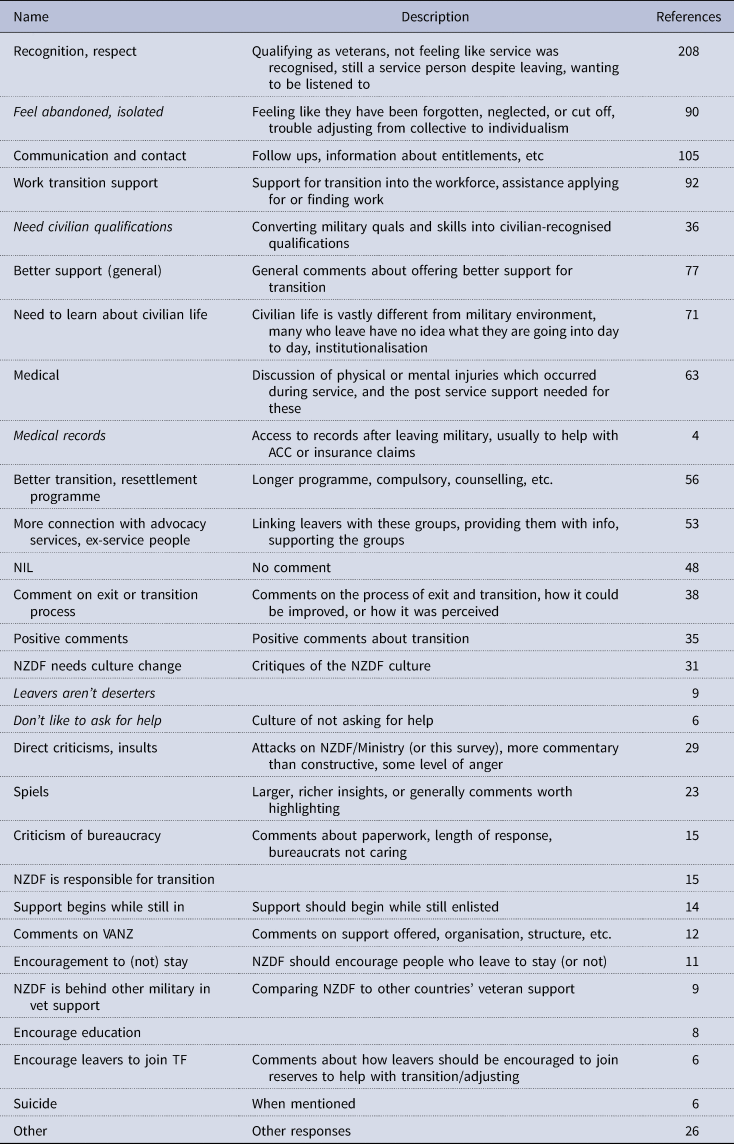
Throughout the literature, there are many instances where respondents to various surveys or research questions have suggested that their transition experience could have been better. Our survey is no different, see able 3 below. We were interested in the overall impressions people had of their transition experience. To that end, we asked participants an open question of what message they would like to pass on regarding their transition experience, not knowing whether this would be negative or positive. As it turns out, a sizable number of our respondents were negatively critical of the way in which transition is being handled within the NZDF. This question received the lengthiest, most in-depth responses in our survey, 943 unique responses and 1196 code references (Table 3):
Coding table for responses to ‘If you could get a message to the Ministry/NZDF about your transition…’
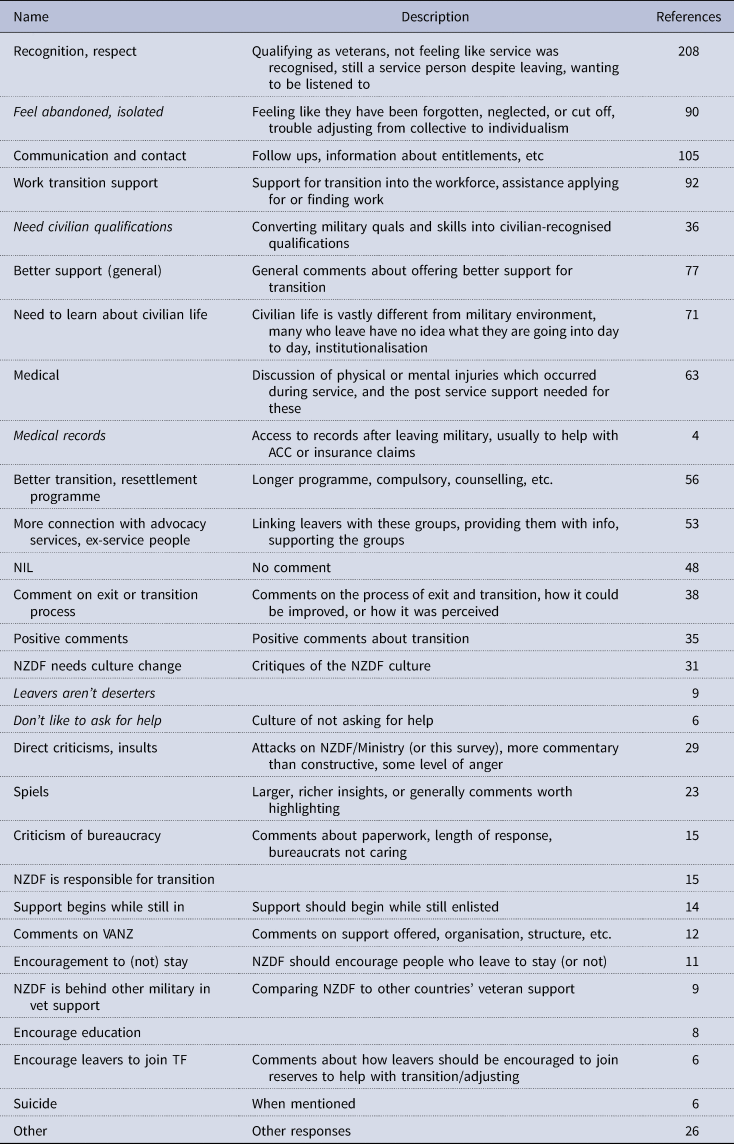
The predominant response to this question reinforced the overall theme of the survey, a request for respect or recognition of service, with a sub-themes of abandonment, betrayal and/or isolation upon release:
It seems as soon as you choose to leave you become nobody and all that you've known or done means nothing even though I felt forced to leave due to how I was being treated.
As Walker (Reference Walker2012) suggests, leaving the military is also leaving behind a very strong identity of self. Becoming a soldier and serving for even a short period of time was seen as being an irreversible, life-long change. Recruits go through training and are reshaped into soldiers, and then live their lives as soldiers. Most respondents expressed service is more than just an employment contract. It is more than even a lifestyle – it is an identity, and a family. Most survey participants felt that they had given a lot more to the NZDF than was given back to them. Once a soldier leaves, their ties to the collectives are cut and they effectively become an outsider to the military family:
We give everything to our service and are then left in the cold. More focus on the personnel through their transition to civi life is required.
Once my papers went in I felt I was expendable. Out with the old in with what ever/anyone else who can do the job.
Responses to this question again highlight the significant cultural gap that is perceived between military life and civilian life. As a result, ex-servicepersons often feel socially isolated and do not know how to find and maintain civilian work, often lacking the recognised qualifications to do so (Walker, Reference Walker2012; Williams et al., Reference Williams, Allen-Collinson, Hockey and Evans2018; Zoli, Maury, & Fay, Reference Zoli, Maury and Fay2015). Employment is one way around which people develop identity, and accordingly once again put a lot of emphasis on needing help to transition into the civilian workforce. The sense of belonging that developed during the military employment was also wanted during the transition. A need to belong to both worlds (civilian and military) is seen as important:
Military service is like being in a very tight family and once you get out there's a high chance they will shun you, there needs to be services in place so we can socialize because being an outsider in both worlds isn't good for mental health.
Respondents also put a strong emphasis on communication from the NZDF and Ministry. Many explicitly suggested follow-up personal contact from the NZDF after departure for a period of up to two years, as symptoms of physical or psychological injuries and illnesses are often not immediately apparent upon leaving the service and begin to manifest months or years after. Many responses requested that the NZDF make an effort to put them in contact with advocacy services and other ex-service people who understood what they were going through and could provide support:
In 2012 I was in Afghanistan […] I left not long after that deployment. Why does the government or NZDF not at least touch base with all members of that trip yearly considering the severity of some of the combat situations we were involved in. I haven't heard anything since the day I left.
Such sentiments were typical of the responses in this section. While some were overtly angry in tone, most were rather ‘pleading’, wanting the NZDF to recognise and to supply ‘a duty of care’ that the participants felt they were owed:
Having been asked by one senior officer ‘where is your loyalty?’. After 25 years of service, deploying everywhere I was asked to at the drop of a hat, I was stunned. Loyalty is a two way street, where is NZDF loyalty to former staff?
In terms of the exit process, many felt that having a longer transition period (at least a few months both before and after the official exit date) would be immensely beneficial. They suggested a pre-departure training that could involve: learning about day-to-day civilian activities and responsibilities; employment training and qualifications transfers; how to stay in touch with advocacy services; what their entitlements are; and where they can go for help if they need it. Some suggested the issue of an ex-services card so ex-service people can prove their status quickly and easily. Not only would these help leavers with transitioning into civilian life, but it helps avoid the ‘soul destroying’ moment where they walk out the door, alone:
The hardest part is leaving a structured organisation, which has many layers of support or advice to totally operating on your own immediately.
Conclusion
This study was the first large-scale survey of the experience of transition from the military to civilian life in New Zealand. As such, the primary contribution the survey makes to the literature is one of location. Whilst this survey was centred upon our location – New Zealand – they echo findings in previous international studies on the transition from military to civilian world. Our results demonstrate strong similarities with international work and reflect the literature mentioned in previous sections of this article. Our contribution serves to illustrate that throughout the western world at least, there is a strong need to revisit how military organisations approach the reintegration of their members into society. There is a need to recognise that the military exist within a strong institutional field and with a well-understood logic of identity. These logics become ingrained so that the identity the ex-military have ‘lingers’ after they have left. Making transition difficult. The highly organised, collective soldier identity and its friction with the chaotic, individualistic civilian way of life results in transition culture shocks and feelings of alienation, abandonment and confusion. This suggests that it is not just New Zealand that has problems with military transition, but these problems exist on a larger scale internationally, and the results from our survey have application for other countries discussed in the international literature – foremost Australia, Canada, the UK and the USA.
With the exception of a few respondents, the results show that transition out of the NZDF is not an altogether happy process. The most scathing comments can be seen in the last question. While the NZDF have recently begun to address some of the concerns raised in this article and are reorganising their transition programmes and procedures (NZDF, 2019), there is clearly a lot of work that needs to be done in order to provide a seamless transition experience. The feedback provided through the survey suggests there are many things that the NZDF and the Ministry need to take into account when assessing the style and nature of future transition programmes. Amongst these is again a reflection on the international literature that places the need for a more civilian approach to be taken. This is marked in the feedback we received regarding the need for the transition programmes to have more emphasis on what is actually required within the civilian environment. This includes such things as preparing for day-to-day tasks such as shopping, budgeting or medical check-ups, as well as being fully prepared for a civilian working life. Existing support resources available to transitioning servicepersons in New Zealand are currently underutilised, in a large part due to a lack of awareness of their existence. It is also clear from the results above that military qualifications also need to be aligned to civilian qualifications in order for a seamless transition to take place, and the differences in culture between the two workspaces be made explicit and discussed ahead of time. We acknowledge that this survey is limited by geography. However, we also acknowledge that despite this, findings from around the world mirror our results. This only highlights the need for reform within military transition programmes within the broader western world.
The respondents in our survey did not provide any novel themes or perspectives in contrast to what is already known through the extant international literature on military-civilian transition. However, being the first large-scale research in the field in New Zealand has highlighted problems with the transition process within New Zealand, the similarities between New Zealand transition and the rest of the world, and the need to amend the way transition is being undertaken in New Zealand. That the results mirror similar experiences elsewhere suggest that many transition programmes worldwide are somehow failing their people in similar ways. In the future, we are hoping to survey New Zealand employers to try and understand what their impressions of ex-military in order to continue to build a more secure and welcoming outlook for those who have served their country.
Acknowledgements
Dr. James Lockhart for advice on the profession. The 1425 men and women of the NZDF that spend time responding to our online survey. It is the heartfelt qualitative statements that have spurred an increased interest in a desire to influence policy.