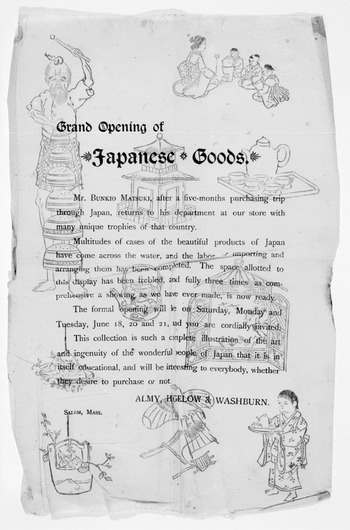
An 1891 advertisement for the Almy, Bigelow, and Washburn Department Store in Salem, Massachusetts proudly announced the arrival of Asian goods and credited local denizen Bunkio Matsuki (1867–1940) with having procured the finest objects available from his homeland, “after a five-months [sic] purchasing trip through Japan.” The collection was such that it was “a complete illustration of the art and ingenuity of the wonderful people of Japan that it is in itself education, and will be interesting to everybody, whether they desire to purchase or not.”Footnote 1 The “unique trophies of that country” were trumpeted as being not only aesthetically pleasing but also imbued with the power to elucidate the arts and cultures of Japan for the viewer (Figure 1). The advertisement, consequently, served to draw the unsuspecting individual into an interactive and didactic environment. The text was accompanied by eye-catching illustrations of tea sets, a Japanese woman and children in traditional kimonos, and other items that seemingly reinforced the authenticity of the merchandise. In the years to come, Matsuki would continue to use various advertising strategies in order to position himself as a renowned purveyor of high-quality Asian artworks, cementing his role as a trusted cultural mediator for clients like Boston elites Isabella Stewart Gardner (1840–1924) and William Sturgis Bigelow (1850–1926).Footnote 2
An 1891 advertisement for the Japanese Division of the Almy Department Store. (From the Almy, Bigelow & Washburn Collection, James Duncan Phillips Library, Peabody Essex Museum.)

Throughout the nineteenth and twentieth centuries, socioeconomic and political transformations on both sides of the Pacific would galvanize the American fascination for Asian relics. Efforts to collect Asian materials for either personal edification or public display reached new heights with many admirers looking toward the East to satisfy different social and cultural needs: some, like the Gardners, simply wanted to purchase bric-a-bracs to enhance the beauty of their homes, while Bigelow and others hoped to surround themselves with the physical embodiments of the ancient ideals that they sought to understand. During this early era of connoisseurship, the paucity of knowledge about the Far East gave merchants of Japanese descent an opportunity to serve as influential figures in making artifacts available and in the classification of what was then known as “Oriental art.” Their presence could be felt in multiple, interconnected geopolitical sites, including the art market and institutions of higher learning. In 1889, for instance, Matsuki was hired by Salem department store owner James Almy (1833–99) and famed marine zoologist Edward Sylvester Morse (1838–1925) to obtain and identify objects from Japan: Almy would sell the items in his store while Morse would augment his extensive collection of Japanese pottery for research purposes.
At the beginning of the 1900s, less than a handful of Japanese curio dealers had stores in the Northeast. This article focusses on two of the most influential and successful, the aforementioned Matsuki and Sadajiro Yamanaka (1866–1936). More specifically, it explores how both men used the auction catalogues that they distributed to potential buyers to define themselves as arbiters of taste and to dictate meanings for the Orient and its aesthetics.Footnote 3 These publications are invaluable and unique historical documents that scholars have not examined heretofore. While a number of monographs have been devoted to the role of European and white American art dealers in the creation of various individual and institutional collections specializing in Western art, the impact of Asians within American art circles has been neglected.Footnote 4 Matsuki and Yamanaka's stories, as told through their sales catalogues, illuminate the ways in which certain notions of Asianness and the reconceptualization of aesthetic categories were linked in complex ways. As such, these merchants fabricated and sold definitions of race and art to peddle Oriental goods; their Japaneseness became cultural capital and a marketing strategy. Ultimately, the Asian art dealers used their racial and social ties to Japan to establish Oriental art as a legitimate arena of connoisseurship for American collectors and to invent their own identities as unbiased cultural insiders.
INSTITUTING ASIAN ART
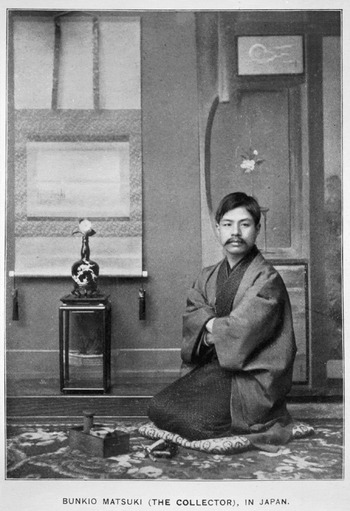
Both Matsuki and Yamanaka arrived in the United States at the end of the nineteenth century, Matsuki in 1888 and Yamanaka in 1894. Given that the Asian art circle was a small one, the two men undoubtedly were aware of each other's activities, especially since they were potential competitors, who frequently worked with the same clients. A former Buddhist monk, Matsuki was hired by Almy, a Salem businessman, to acquire Oriental merchandise for the newly created Japanese Division of his department store (Figure 2). From 1889 on, Matsuki made numerous trips to Japan, importing a wide assortment of relics such as “porcelain and lacquer work, cups and saucers and tea pots of ware and metal, silver ware of curious workmanship and inlaying, tea trays and cabinets, chop sticks and rice bowls.”Footnote 5 This eclectic and all-encompassing offering reflected his shrewd business instincts: he was attempting to appeal to a broad segment of customers from different walks of life. In 1893 Matsuki was able to open his own store in the bustling city of Boston, continuing to provide a variety of items, including paintings, artist's supplies, screens, and religious icons.Footnote 6 A few years later, in 1897, he established a Japanese Bazaar in his newly adopted hometown of Salem. Unfortunately, the Salem branch store would go bankrupt within the year and be shut down. In spite of this financial debacle, however, Matsuki remained a trusted adviser to interested collectors and continued to sell Japanese products through various auction houses in New York City and Philadelphia.
A famous and often-reproduced portrait of Bunkio Matsuki. (Photo: James Duncan Phillips Library, Peabody Essex Museum.)

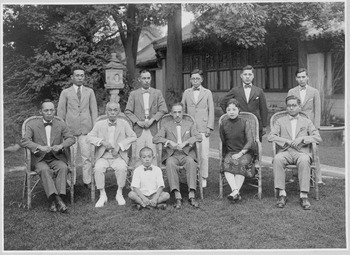
About the same time that Matsuki was setting up shop in the 1890s, Yamanaka also was launching his stores in the United States. Yamanaka and Company was headquartered in Japan but established branch offices in New York City and Boston in 1895 and 1899 respectively, in addition to having representatives and agents throughout East Asia (Figure 3). Besides Bostonians Gardner and Bigelow, its patrons included wealthy businessmen such as Charles Lang Freer (1853–1908) of Detroit and Henry O. Havemeyer (1847–1907) of New York City.Footnote 7 Like his countryman, Matsuki, Yamanaka aimed to satisfy the different needs of his clientele by making available an encyclopedic array of objects, including pewter bowls, bronze statues, ceramics, silk scrolls, embroideries, and religious paintings. In 1903 he even tried his hand at importing Pekingese dogs.Footnote 8 In the end, Yamanaka's international firm would endure beyond and reap greater financial success than Matsuki's Massachusetts-based galleries.
Yamanaka & Company staff in Beijing, China at the former palace of Prince Su in 1926. Sadajiro Yamanaka is seated second from left. (Yatsuhashi Harumichi Family Papers, Freer Gallery of Art and Arthur M. Sackler Gallery Archives, Smithsonian Institution, Washington, DC, Gift of James Arthur Marinaccio, 1994.)

Matsuki and Yamanaka's arrival in the United States occurred at a time when Americans and Asians were being brought into closer contact by changing political and social milieus. Prior to the nineteenth century, Asia had not been an altogether unfamiliar place to Americans. Fueled by British importation of luxury items that catered to the wealthy colonists, interest in the region was palpable well before the establishment of direct trade relations with China. In the 1780s, the Empress of China began to shuttle back and forth between New York and Canton. Curiosity prompted many middle- and upper-middle-class white Americans to turn increasingly toward the seemingly wondrous and mysterious Orient in search of adventure and artifacts. They eagerly sought out and purchased porcelain tableware, tea, spices, and other merchandise which were embraced for everyday use. It was the fashion of the day for the affluent, especially those who were involved in the China trade, to display their connections with Asia prominently. Many of the well-to-do used silks, wallpapers, potteries, and other products imported from China to decorate their homes. Objects from exotic locales became status symbols, enabling the possessors to flaunt their prosperity, influence, and worldliness.Footnote 9
The “opening” of Japan by Commodore Matthew C. Perry (1794–1858) in the mid-1850s would further help to stimulate the growing interchanges with East Asia and, in turn, complicate the processes of cultural articulation.Footnote 10 In 1860, less than a year after foreign embassies were set up in Edo, the capital of the Tokugawa regime, government officials would dispatch the first Japanese diplomatic mission to the United States.Footnote 11 On this “epic-making venture,” the Japanese delegates met with President James Buchanan (1791–1868) and visited Congress.Footnote 12 From the West to the East Coast, they drew a great deal of interest wherever they went: after witnessing the Japanese emissaries march down Broadway in New York City, Walt Whitman would pen the poem “A Broadway Pageant” (1860) to commemorate their arrival. During this historical juncture, the Japanese and the Americans beheld each other with confusion, anxiety, and amusement. The visitors, for instance, were perplexed by the presence of women at official functions, something that would have been forbidden in Japan. And the Americans were equally mystified by the constant bowing of their kimono-wearing guests. Since “neither [could] speak nor understand a syllable of each other's language,” both groups had to resort to often-incomprehensible “pantomim[ing].”Footnote 13 Regardless of the cultural disorientation, the 1860 Japanese mission would help to intensify the fascination for the “newly opened” nation and its neighbors.
As the bourgeoisie collected more and more Asian pieces, debates concerning classification and definition arose. More specifically, scholars and connoisseurs wondered where these objects belonged within the Western cultural matrix. Nineteenth-century American museums frequently displayed the Asian relics in anthropological sections, using them to showcase foreign and outlandish ways of life. These discussions regarding the placement and meaning of artifacts took on political and ideological dimensions, shaping perceptions of progress and notions of racial enlightenment. When an Asian country's material culture was defined solely in ethnographic terms, the implication was that its creators lacked the comparable level of aesthetic imagination and ingenuity that their Western counterparts possessed, thereby reifying the chasm between the supposedly primitive East and the civilized West. Consequently, the evaluation of cultural productions went hand in hand with the assessment of peoples and societies.Footnote 14 Contemporary scholars and collectors tended to see the two categories, ethnographic and artistic, as being mutually exclusive. Asian art forms, which consisted of lacquerware, calligraphy, and ceramics, did not fit neatly into the existing rubrics of art as delineated by Westerners. Even Chinese and Japanese paintings and sculptures often were deemed to be too alien and disagreeable since “owing to the long-taught [Western] theory of art, there remain peculiarities in Japanese colour-prints not always acceptable to the occidental [sic], and not easily grasped.”Footnote 15 For many, then, Oriental artistry was in complete dissonance with Western taste.
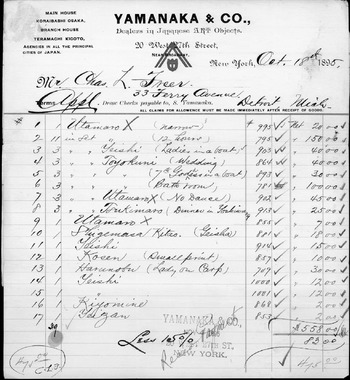
However, in the later decades of the nineteenth century, an intellectual shift would take place as Asian collectibles were reconstituted as “art” and were exhibited in some of the most prominent fine arts museums in the United States. In 1890, the venerable Boston Museum of Fine Arts established a Japanese Department of Art, the first of its kind in the nation. And by 1923, the Freer Gallery of Art, one of the earliest museums to be devoted to the collecting and displaying of Asian relics, would open its doors to the public in Washington, DC (Figure 4). At the same time, artists like John La Farge and James McNeill Whistler incorporated Asian styles and themes in their works, revitalizing the modern art scene within the United States and redefining modernism by infusing it with elements of exoticism.Footnote 16 In the process, their fascination for the Orient validated the aesthetic contributions of the Chinese and the Japanese. Increasingly, Asian objects were perceived as having artistic merit even though they existed outside of accepted Western conventions of art; they were no longer of mere anthropological interest. In particular, the ennoblement of Japanese material culture occurred simultaneously with the elevation of Japan as an enlightened realm that was able to integrate ancient traditions in the course of modernization. To many collectors, therefore, the pieces they acquired were not only rare and beautiful but, moreover, were imbued with the mores of a romantic and idealized Golden Age without the rule of machines. Indeed, japonisme and chinoiserie became all the rage amongst many middle- and upper-middle-class white American connoisseurs, who were keen on using Oriental ideals and customs to make sense of their modern existence.
An 18 October 1895 receipt for Charles Lang Freer's purchase of Japanese prints from Yamanaka & Company. (Charles Lang Freer Papers, Freer Gallery of Art and Arthur M. Sackler Gallery Archives, Smithsonian Institution, Washington, DC.) This particular transaction would mark the beginning of Freer's long-standing relationship with the renowned firm

As the curiosity for the exotic continued to grow, Matsuki and his colleague, Yamanaka, would come to play a central role in helping to mediate the demand for Asian goods. Motivated by their desire for financial gain, these Japanese entrepreneurs endeavored to establish Oriental cultural creations as a bona fide branch of high art in the late nineteenth century since the prices of the artifacts that they proffered depended on the aesthetic and cultural meanings that they were able to assign to them. Although they sold a wide variety of items that included pots and lanterns, by the early twentieth century both Matsuki and Yamanaka portrayed themselves as purveyors of fine art. A survey of their catalogues shows that they focussed on marketing the merchandise that could be defined as having aesthetic importance. With the transition from affordable, everyday paraphernalia to works of art, they began to cater increasingly to the more affluent buyers. Because Asian art was a relatively new concept, Matsuki and Yamanaka knew that they had to convince potential connoisseurs of the value of such art forms. To generate a niche for Asian objects within the American market, one of the strategies Asian curio dealers utilized was to emphasize the cultural and spiritual significance of the goods they were promoting.
Seeking to conform to Western expectations of an Orient that never was, the Asian merchants used their catalogues to construct idealized Japanese and Chinese pasts filled with brave warriors and beautiful maidens. In so doing, they labored to cement ideas of where Asian materials belonged within broader cultural frameworks in the United States. For instance, in his attempt to sell a “remarkable collection” of “magnificent Ming brocade temple hanging from the Jêho winter palace near Peking,” Yamanaka highlighted “the romantic story of [the palace's] capture by Chang tso-lin, its loss and subsequent recovery.”Footnote 17 Ancient artifacts associated with epic battles and the defeat of empires were especially tantalizing to potential buyers in Europe and the United States. For that very reason, Japanese swords became highly prized collectibles because they were the “privilege and distinctive mark” of the ousted Samurai caste.Footnote 18 In one catalogue, Matsuki explained the appeal of such items:
Blades had been treasured for centuries, handed from father to son, looked upon as the soul of the owner for the sake of which he would refrain from any deed unbecoming a gentleman; some possessed histories going far back into the eleventh and twelfth centuries, when the country was at war within itself, around others were entwined romances, and above all, the sword was the faithful friend with which the Samurai might honourably end his life, either in the field or on the mats.Footnote 19
The relics thus had importance that went beyond the aesthetic arena. They also were cherished for the historical allusions and purported legends attached to them, enabling collectors to romanticize the demise of an earlier era. Certain that middle-class consumers would find idyllic hinterlands appealing in the midst of rapid industrialization, the merchants likewise promulgated the idea that the enjoyment of Japanese landscapes could be used as a way to escape modern decadence.Footnote 20 Indeed, woodblock prints depicting the rural Asian countryside were some of the most sought-after items.Footnote 21 At a time when many Americans were growing increasingly disenchanted with modernization, Matsuki and Yamanaka seized the opportunity to build a market for goods from Old Japan, an era devoid of the modern contaminants that their customers detested. Recognizing their clients' disdain for the mechanized world enveloping them, these entrepreneurs promoted the accumulation of ancient artifacts as a way to find cultural and spiritual reprieve. For American connoisseurs, then, they were not simply buying artworks but, more importantly, they were also imbibing the histories and cultures whence these collectibles came.
In order to explain a new aesthetic order to potential buyers in the United States, Matsuki and Yamanaka juxtaposed Asian art with European art, a tradition with which most Americans had at least some familiarity. Matsuki, therefore, equated the commodities he was promoting with well-known and established names in Western art, asking his patrons to consider “that these works of [Asian] art are as superb among productions of the Far East as so many Titians or Rembrandts” in the West.Footnote 22 According to the dealer, the merchandise he was peddling were not mere curios but preeminent pieces of art. Yamanaka followed suit, comparing the beauty of woodblock prints to the tour de force of modern European art.Footnote 23 In the Japanese Swords catalogue (1910), he went a step further and boldly claimed that Oriental cultural creations were superior to their European counterparts. When evaluated against European blades, Japanese ones had withstood much more rigorous tests, “sometimes officially by cutting up corpses … no sword in Europe ever came through such an ordeal … the Japanese blade has been pronounced perfect by all experts; that perfection is the result of thorough work.”Footnote 24 This particular catalogue was significant not only because it heralded the supremacy of Asian materials over European ones. In marketing swords as objects of art, Yamanaka was reclassifying the aesthetic apparatus for Western connoisseurs.
The Japanese merchants similarly represented the relics for being unbelievably “rare” and exceptional, the hallmarks of fine art.Footnote 25 In the process, Matsuki and Yamanaka reappropriated the same rhetoric and strategies that their colleagues used to promote European art.Footnote 26 Not surprisingly, then, the pages of their catalogues were filled with adjectives such as “excellent,” “exceedingly fine,” “celebrated,” “most beautiful,” “extraordinary,” “wonderful,” and “unique.”Footnote 27 According to the shrewd businessmen, certain objects were, in essence, so amazing that they were “important masterpieces” of museum quality that could illustrate the whole of Japanese and Chinese art histories.Footnote 28 Numerous artifacts had been described as national treasures that were supposedly being seen in the West for the very first time. Putting together a sale that included a wide variety of goods, Matsuki maintained that “many of them are of great value to me personally because of their merit from a purely Japanese standpoint of art, and have never before been shown to the public at large.”Footnote 29 Echoing the same sentiment, at one of his auctions, Yamanaka highlighted the fact that it was not “without significance that such a treasure [of tapestries] was permitted to leave China, an event made possible by the fears entertained for its safety during the civil disturbances.”Footnote 30 Political transformations in China and Japan worked to the dealers' advantage, enabling them to make available items that were previously protected either by powerful governments or by wealthy families.Footnote 31 However, in spite of their contention that they only sold merchandise of unparalleled quality, in reality, Matsuki and Yamanaka carried an extensive assortment of materials that included one-of-a kind antiquities as well as mass-produced knickknacks in their attempts to appeal to customers of different economic means and social standings.
MARKETING RACE AND CULTURE
As they strove to define the meaning and place of Asian objects within the United States, Matsuki and Yamanaka also tried to establish their own positionalities within American collecting circles. During this period, museum officials, art dealers, and university scholars collaborated in an interwoven system to create and disseminate knowledge about Asia, thereby helping to determine the importance and the market price of artifacts. Merchants often played the same pedagogical role as art historians: besides making sure that relics were available for purchase, they likewise educated neophyte connoisseurs who relied on them for guidance and tutelage. As Japanese-born dealers, both Matsuki and Yamanaka realized that commercial success would follow with the legitimization of their racial identity and social prominence – they would distinguish themselves from the European and white American merchants by building a cultural cachet around their birthright. Therefore, the sales catalogues they put together were not just advertisements for the materials they were selling but, more importantly, helped them to invent and propagate a certain mystique and persona that hinged on their connections to Japan, giving them the appearance of having insider status.
One of the first tasks that the Japanese dealers took on was to discredit their white American and European competitors' authority by suggesting that the unsuspecting and naive collector had been duped by disreputable businessmen and hence had been “imposed upon by manufacturers of spurious goods.”Footnote 32 At a time when the popularity of Asian art was on the rise and the market was becoming increasingly lucrative, the number of valuable objects was diminishing.Footnote 33 As a result, Matsuki and Yamanaka warned that greedy and irresponsible charlatans were not above deceiving interested but uninformed aficionados. The implication was, of course, that only they could be reliable purveyors of such relics. Because high-quality Asian artifacts were in such demand, the Japanese merchants promulgated the notion that it was “almost impossible to bring back fine prints from the East, for the native collectors are too eager to secure them.”Footnote 34 Despite purported difficulties, they assured their clients that the wares they procured were “widely admired, not only by the Japanese, but by European and American collectors.”Footnote 35 This type of advertisement served two purposes: on the one hand, it indicated that Matsuki and Yamanaka were the ones to be trusted to locate superior collectibles; on the other, and more importantly, the art dealers were able to inflate the value of the artworks by advertising them as being desired by the most discriminating buyers throughout the world. In labeling the items as such, they had become even more appealing to American connoisseurs.
In a similar vein, the businessmen vowed that the artifacts they sold were by no means the substandard and hastily made export pieces that East Asians created expressly for the consumption of the unknowing and unsuspecting Westerner.Footnote 36 Such materials catered to Western taste, incorporating popular motifs and well-known themes – they were, consequently, believed to be inauthentic frauds that self-respecting Asian men and women would never deign to purchase or use.Footnote 37 To substantiate the superiority of its offerings, then, one particular advertisement for Matsuki's Japanese Division at the Almy Department Store promised that the products it peddled were “not at all like what are generally sold for Japanese goods – but the true work of the best artists in Japan – such articles as will be found in daily use in the Japanese homes themselves.”Footnote 38 In reality, this was a difficult guarantee to make, especially since export art had flooded Asian and Western markets, exacerbating the challenge of differentiating it from the traditional craftwork produced specifically for the Japanese themselves.
Moreover, while Matsuki and Yamanaka had boasted that everything in their stores was so spectacular that its “equal … will not be found in all the country besides,” the quality of their merchandise was actually very mixed, consisting of both high-end artifacts and inferior bric-a-brac.Footnote 39 Describing one of his buying trips to Japan to zoologist Morse, Matsuki touted the fact that he had found “a lot of Japanese looking goods … though there are lots of Yokohama muki.”Footnote 40 “Yokohama muki” was precisely the sort of mediocre and shoddily made export ware that Matsuki had promised not to carry in his shops; it was unlikely that he publicized its existence or distinguished it from the objects of art he was selling. In the end, his desire for profit triumphed as he cultivated the idea that his entire inventory consisted of nothing but the finest from Asia. Matsuki and his colleague, Yamanaka, never failed to remind their customers that they rarely disappointed “lovers and admirers of Oriental art” as their collections were “never ‘stock riddances’ but invariably offerings which the purveyors are able to put forward with the assured belief that they will afford artistic pleasure to spectators, collectors, and thoughtful decorators and furnishers of the home alike.”Footnote 41 Once again, they were appealing to a diverse clientele, both novices and experts, with a wide-ranging array of items in order to maximize their financial interests. However, by the 1920s, as Americans became more knowledgeable about Asian aesthetics, these Japanese curio dealers could no longer simply palm off any substandard knickknacks to their patrons. Matsuki, for instance, admitted publicly that he had a few “primitives” amongst “superior examples” when he was presenting some Japanese color prints to well-informed buyers.Footnote 42
In addition, the art dealers gave personal assurances that the objects they put forth were not forgeries. This was no small feat since
collectors and connoisseurs are well aware that it is becoming increasingly difficult to secure really fine examples of the arts of old Japan, and the task is further complicated from the fact that so much is copied by [counterfeiters] of the present day. It has ever been Mr. Matsuki's aim to aid the public in obtaining authentic and genuine articles.Footnote 43
As the popularity of East Asian relics grew, unscrupulous dealers were not above selling fakes. Matsuki took authentication to another level. In his efforts to distinguish his goods from second-rate imports and counterfeits, Matsuki trademarked a rabbit symbol that was stamped on all of his products for easy identification. This was a common technique used by porcelain makers in China and Japan to designate the pottery's place of origin and, therefore, to determine its value. In following suit, Matsuki's rabbit marking not only connected him with a specific brand, but also served as a point of verification for his patrons, who were concerned about getting “real” Japanese articles. It furthermore demonstrated that his merchandise was so exceptional that he had to guard against “worthless imitations.”Footnote 44 While this was an effective sales tactic, the quality and selection of Matsuki's collection was, in all likelihood, not all that different from those of his competitors. Using a similar approach, Yamanaka boasted that the furniture made by his Japanese factory had won the “Grand Prize and Gold Medal Award at the Louisiana Purchase Exposition in St. Louis, 1904,” and was of “unrivalled workmanship.”Footnote 45 Even though the furnishings were everyday items produced for bourgeois consumption, this mark of distinction advanced them to a new aesthetic plateau – they were now works of art. More importantly, perhaps, Yamanaka's customers were assured that they were getting bona fide Japanese goods manufactured by the celebrated art dealer's very own workshop. As their fame grew, Matsuki and Yamanaka's mere names seemed to function as guarantors for “discriminating collectors” who relied on them to obtain the most superb finds.Footnote 46
Matsuki and Yamanaka's self-branding, as it were, and the process of transforming themselves into reliable collectors-cum-dealers, who presented “the true Japanese work,” rested upon their employment of certain marketing techniques and self-essentializing strategies.Footnote 47 More so than their museum and university counterparts, Asian merchants had to validate their status as credible and trustworthy cultural insiders since they had no formal, academic qualifications. In this regard, their deep-seated racial and cultural ties to Japan served as a vital guarantee of their authenticity. Matsuki and Yamanaka arrived in the United States at a time when popular discourses about the Orient were in flux. In the late 1880s, Matsuki was surprised to find that Bostonians could not distinguish between different races of Asians. He was astonished and dismayed that the denizens of Boston, a city which he deemed to be the “cradle of American civilization,” had such a meager understanding of Asia. For instance, he was frequently mistaken for a Chinese, in spite of the fact that he dressed in traditional Japanese kimonos.Footnote 48
Before long, Matsuki discovered that it was disadvantageous to be identified with the Chinese since most Americans thought of China as being culturally stagnant and politically unstable. The nation that once had been considered the inspiration of other Asian cultures was perceived to be all but conquered by its inability to keep up with modernity. It was supposedly a “dead civilization” and “fallen country” inhabited by “savages.”Footnote 49 In contrast, with the restoration of imperial rule in Japan in 1868, Meiji officials ended centuries of isolationist and xenophobic policies under the Tokugawa Shogunate. The new government sought to modernize and westernize Japan by hiring white American and European academics to teach science and English literature courses at Japanese colleges and universities. Official teams of delegates also were sent out to the West to help the country transition into the industrial age.Footnote 50 In the process, Japan was reenvisioned as a civilized place on a par with its Western counterparts.
In order to become successful curio dealers, then, Matsuki, Yamanaka, and their Japanese compatriots had to distance themselves from the Chinese and Chineseness and, instead, to publicize their Japanese heritage. They knew all too well that nineteenth- and twentieth-century Americans looked to certain signifiers in order to identify the exotic Other. One of the strategies used by the two merchants to gain their clients' trust was to emphasize their incontrovertible ties to “delightful” and “enchanting” Japan.Footnote 51 Since the Japanese were viewed as the most advanced East Asian culture at that time, their legitimacy and authority as cultural experts depended upon their indisputable connections with their native country.
To reinforce his reputation as a so-called “real Japanese,” Matsuki built a home that was reminiscent of the edifices found in his motherland. The local newspaper, the Salem Evening News, followed its construction with great enthusiasm and curiosity.Footnote 52 Fusing New England and Japanese architectural designs, the house had, among other things, a Western-style chimney stack and stained-glass windows. Matsuki also utilized the Western custom of using a cabinet to display chinaware in the dining room. Nonetheless, the paper and its readers proclaimed it to be an accurate replica of the dwellings found in the dealer's place of birth. In spite of the cultural inaccuracies, his domicile became a constant visual reminder of Matsuki's irrefutable bond with Japan. In 1917, Yamanaka likewise would use his newly built facility on Fifth Avenue in New York City to publicize his association with his homeland. Made with materials partly culled from Arizona and showcasing the latest lighting technologies, the building was lauded as a “modern business structure” that resembled a “Japanese temple.”Footnote 53 Contemporary photographs of the gallery revealed that although it contained certain Asian elements, such as wood carvings in classic Japanese motifs, it was more of a hybrid construction that satisfied prevailing American ideals of an Oriental setting. Even the New York Sun, which reported on the grand opening with much interest, seemed to notice the ways in which “clever Japanese architects” had “harmonized” Western techniques and Eastern themes.Footnote 54
While the architectural undertakings brought Matsuki and Yamanaka moments of attention in the public eye, their auction catalogues would continue to serve as a more effective and far-reaching tool for verifying their ethnic–racial identities and, in turn, for adding to the value of their goods. Matsuki was especially adroit at marketing himself as an authoritative Japanese insider. For one thing, he used his ostensibly impeccable genealogical credentials to legitimize his status as someone with innate and genuine insights into the arts and cultures of his native land. His catalogues frequently listed his residence as either Kobe or Tokyo, highlighting his ties to Japan.Footnote 55 Coming from a family where both of his parents had connections with the artisanal world, Matsuki generated certain myths about his patrimonial lineage. Indeed, his sales catalogues often drew attention to his family history:
Mr. Matsuki, as a descendant of a famous architect and temple builder, has had an opportunity as a collector which could occur to no other man. His maternal grandfather, Bansia Tatekawa to whom was entrusted the restoration of several Shinto and Buddhist shrines, became in this way the owner of carved and painted decorations removed from the crumbling structures. These formed the basis of his collections, which is the result of the combined efforts of Mr. Matsuki, an able Japanese connoisseur, and other Japanese.Footnote 56
Matsuki's allegedly incomparable ancestry seemed to function as further evidence for validating his claims of special insights. He represented himself as an authentic Japanese dealer from a prestigious household steeped in ancient traditions. While this story was fabricated to entice the buying public, in truth, he interlaced factual details with fictional ones. For example, his father was not a connoisseur of fine arts as he maintained, but rather a maker and a vendor of household items. Nevertheless, Matsuki continued to use his self-fashioned personal history to promote his merchandise.
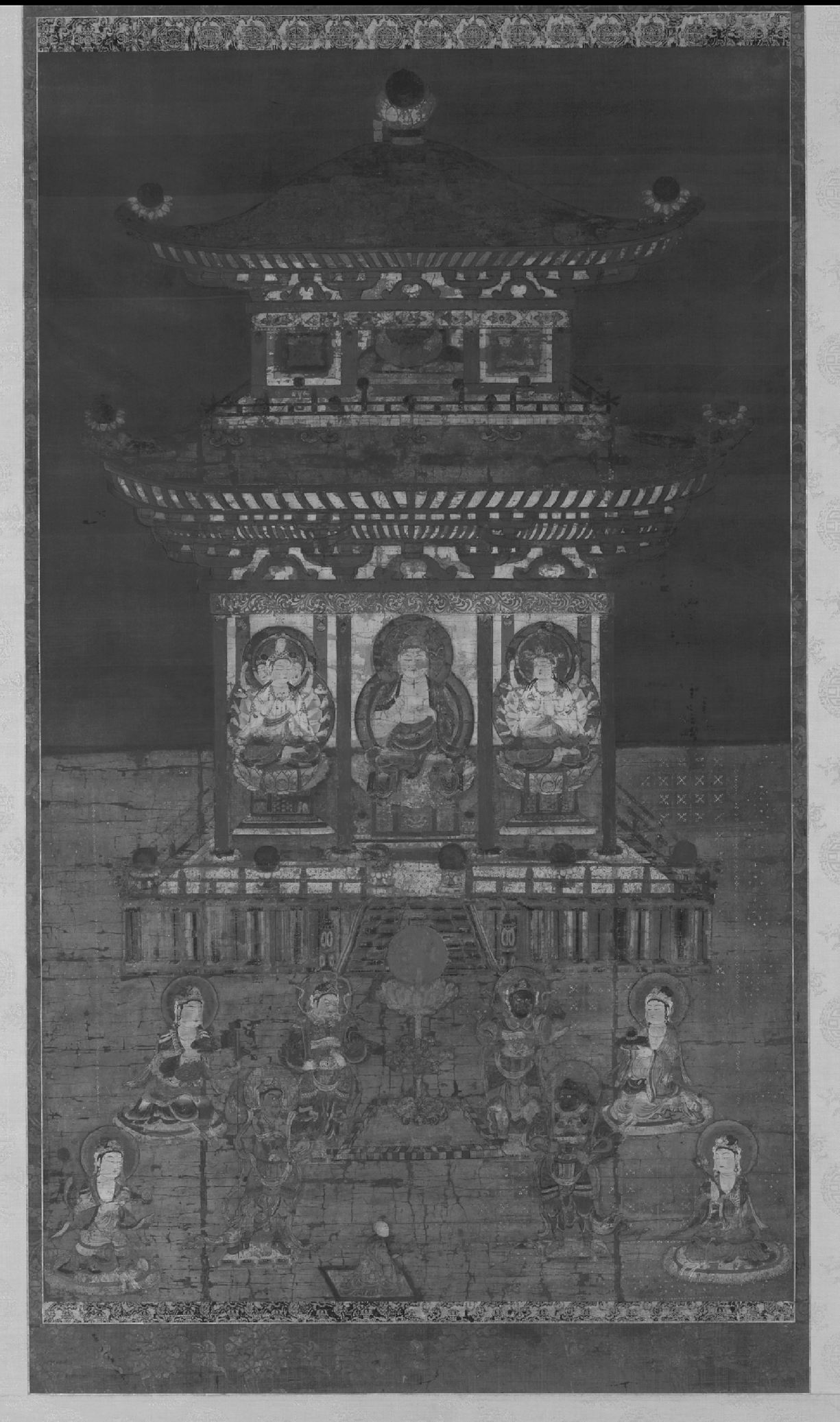
The catalogues were likewise used to flaunt family and social contacts, yet another marketing strategy used to certify the Asianness and hence the superiority of the cultural productions the merchants were selling. On one particular occasion, Matsuki stated that he was able to acquire some rare examples of Japanese armor, which were “from famous daimyo families with whom [he] was fortunately brought into contact during his visit to Japan last year.”Footnote 57 His many purchases from wealthy and patriotic Japanese families, who were relinquishing their heirlooms in order to support Japan's military efforts against Russia during the early days of the twentieth century, would lend the items even more importance because of the intriguing stories behind them, not to mention the fact that they appeared to have been ancient family treasures. Ever the cunning businessman, Matsuki added an aura of mystery and intrigue by refusing to divulge the origins of his merchandise, insisting that absolute secrecy was necessary because other dealers could “take advantage” of the networks that he had cultivated and steal valuables from him.Footnote 58 Once again, this pledge enabled Matsuki to confirm that the goods he proffered were unquestionably Japanese and not the export art shunned by experienced connoisseurs. In another 1901 publication, Matsuki boasted that much of the collection in his possession had come from the Lord of Riukiu.Footnote 59 In this instance, he was selling the nobleman's Satsuma ware. This was one of the most popular and recognizable Japanese ceramic styles for Western collectors – not surprisingly, then, they also were widely produced for sale overseas. This was precisely the type of object that Matsuki and Yamanaka vowed they would not carry in their shops. It would have been difficult to discern the domestic pieces from those manufactured specifically for the West. Furthermore, it was doubtful that art dealers of the era made any concerted attempts to point out such distinctions. Nonetheless, publicizing their relationships with renowned families in Asia worked to guarantee the authenticity of the relics (Figure 5).
Horokaku Mandara: The Buddha and Attendant Divinities, Japanese, Heian period, twelfth century, hanging scroll, color and gold on silk panel. 101r43 1/8a. (Freer Gallery of Art, Smithsonian Institution, Washington, DC, Purchase, F1929.2.) Purchased in 1929 by Charles Lang Freer from Yamanaka & Company, the scroll was originally owned by Baron Kawasaki Yoshitaro (1869–1920)
In another advertising gimmick, Matsuki and Yamanaka repeatedly emphasized their direct access to Japan and China. They characterized themselves as well-connected collectors, who were able to locate some of the most prized relics through sheer determination on their many trips “back home.”Footnote 60 The curio dealers routinely recorded detailed accounts of their buying expeditions in their sales catalogues as a tactic to substantiate their Asian ties. One particular advertisement, for example, announced that Matsuki “spent five months of last winter in Japan selecting these articles.”Footnote 61 The merchants asserted that because of the amount of energy and effort expended traveling through Asia to scour for treasures, collections sometimes took years to amass.Footnote 62 This proclamation would make the objects seem even more unique and remarkable. These collecting trips functioned as an advertising tool for the dealers – while visits to Asia served the practical purpose of acquiring merchandise, in some cases they could be deemed publicity stunts. Likewise, Yamanaka promised that he had a “corps of searchers at work in the Orient throughout the year, aside from the annual visits made to China by New York representatives and members of the home house in Japan” to make certain that he could always provide his clientele with the most spectacular relics.Footnote 63 As such, he claimed that he was able to gain control of the Manchu royal family's home furnishings, which included rugs, religious statuettes, gold ornaments, and other personal items. In the Ancient Chinese Art catalogue (1914), as a testament to his fame and renown, Yamanaka detailed how he and his staff had been invited by Prince Gong to purchase antiquities from the imperial palace in Beijing in 1912.Footnote 64 In actuality, this invitation did not necessarily mean that Yamanaka had special access to the rarified world of Chinese aristocrats. Amidst great political instabilities and economic downturns, many wealthy Americans, like millionaire J. P. Morgan (1837–1913), also were asked to view various imperial collections with the hope of enriching the royal coffers.Footnote 65 Nevertheless, as a way of legitimizing their credibility as cultural insiders, Matsuki and Yamanaka attempted to foster the notion that they occupied unique positions within the elite art and social circles in Japan and China.Footnote 66
As a part of their efforts to characterize themselves as passionate patrons of art with pure intentions, Matsuki and Yamanaka sought to distance themselves from the commercial aspects of their vocation. In order to advance their business ventures, they had to convince suspicious collectors that they were not motivated by economic incentives. In the process, the catalogues became useful tools for depicting the art dealers as erudite and well-meaning educators; Matsuki and Yamanaka appeared to be selfless aficionados of art, who merely wanted to share high-quality artifacts with other like-minded individuals. At one particular auction in 1902, potential buyers were reminded that “Mr. Matsuki has also included in the sale all his personal collection of screens by famous masters.”Footnote 67 In fact, Matsuki and Yamanaka were supposedly so dedicated to their clients that they were willing to give up their own family heirlooms and private possessions.Footnote 68 For all of their diligence and industriousness, they maintained that they felt the most satisfaction and contentment when they were recognized for amassing relics that even knowledgeable, university-trained Japanophiles believed “should be carefully studied” for their aesthetic and cultural significance.Footnote 69
Matsuki and Yamanaka's catalogues, moreover, stressed that it was only through their tireless efforts that certain collections remained intact and were preserved for future generations to enjoy and study.Footnote 70 In one instance, Yamanaka claimed that in putting together “this exhibition of works by the masters of the schools of Ukiyoye, Kano, and Shijo, I have taken particular pains in choosing those having finer quality, beauty of colors, desirable subjects, and designs of greater rarity.”Footnote 71 It was almost as though he was a museum curator, instead of a merchant intent on making money. Indeed, “to show them [the objects] in [the shops and at auction houses] is not altogether a commercial act; it may well … be regarded as a distinct benefit to the general public.”Footnote 72 To avoid being portrayed as greedy opportunists, Matsuki and Yamanaka thus accentuated their status as selfless connoisseurs, who were not peddling art simply for monetary gain, but rather to help introduce an ancient cultural form to the rest of the world. In the end, though, they were more entrepreneurs than mere art enthusiasts; at best, they had coalesced their business acumen with their cultural convictions.
By the same token, curio dealers of Japanese descent took great care to cultivate their ties with prominent American intellectuals such as marine zoologist Morse as well as literary scholar and Asian art connoisseur Ernest Fenollosa (1853–1908). Consequently, the forewords of the Matsuki and Yamanaka sales catalogues were frequently penned by well-known college professors, whose approval seemingly provided further legitimacy for the artifacts while separating the merchants from crass financial incentives. When Fenollosa wrote the Prefatory Note for one of Matsuki's 1906 catalogues, his involvement served to give validity to the value of the objects for sale. In the preface, he praised the dealer for offering up “examples that belong to the most interesting and most creative middle period of Japanese prints … This fact gives the collection unique interest, for so many prints of this culminating period have rarely been brought together.”Footnote 73 In another catalogue, the renowned scholar described the goods as “quite extraordinary” and “uniquely rare.”Footnote 74 More importantly, perhaps, Fenollosa often confirmed that the “dating of pieces and special appreciations of artistic qualities have been done” by him personally.Footnote 75 The items, therefore, could be deemed to be “of the greatest rarity and beauty” because they had been substantiated as such by an impartial and well-respected academic. The Japanophile's support of the art dealer's endeavors was especially important since he was recognized in Asian as well as American art and social circles for his knowledge of Oriental aesthetics and cultures.Footnote 76 In yet another catalogue, Matsuki credited “Professor B. Dean of Columbia University,” a celebrated admirer of Japanese antiquities, for the inspiration to put together an auction focussing on Japanese military paraphernalia, suggesting that the scholar played a part in the sale.Footnote 77 For Matsuki and Yamanaka, there was no contradiction between their dual functions as educators and businessmen and they seemed to move seamlessly between the ostensibly divergent realms. Ultimately, though, the conscious division between the two worlds aided their economic interests since their self-professed status as unprejudiced and neutral connoisseurs would enable them to assign monetary worth to the goods that they sold without the appearance of avarice.Footnote 78
CONCLUSION
The notion of detached connoisseurship, along with other strategies, enabled Matsuki and his colleague, Yamanaka, to become trusted cultural mediators and guides, who helped to popularize the market for Asian artifacts in the United States. At the turn of the twentieth century, affiliation with East Asia frequently served as a more reliable touchstone for gauging the legitimacy of an art dealer than any academic training that he or she might have had. By the 1940s, however, it was no longer desirable to be so closely linked with Japan. Whereas the earlier decades saw the vilification of the seemingly backward and uncivilized Chinese, the course of international politics would redefine China's position within the American consciousness. The country was now perceived to be a “Flowery Kingdom” that brought to mind a sense of “mystery, romance, beauty and culture.” Its peoples were reconstituted as “creative artisans” with a “native aesthetic sense” and “an instinct for the beautiful.”Footnote 79 In contrast, Japan was reimagined as an evil military power. Anti-Japanese sentiments would lead to the closure of the Boston Museum of Fine Arts' Japanese galleries in 1941. The museum, in its place, opened a series of small exhibits on the Art of Our Allies, giving emphasis to Chinese relics.Footnote 80 Contrary to what Matsuki experienced in Boston in the 1890s, it was now beneficial to be aligned with the Chinese culture.
Neither Matsuki nor Yamanaka lived to see the commencement of hostilities between the United States and Japan. Yamanaka's stores, however, would suffer the consequences of wartime enmity. In May of 1944, the US government forced the venerable firm to liquidate all of the merchandise in its three American shops in Chicago, New York City, and Boston. Reporting on the news, art historian Alfred Salmony contended that “these brief days are bound to become landmarks in the history of collecting in America … The Yamanaka Sale will be followed by a new type of collector who has never received attention in this country – the man with small purse and ardent desire.”Footnote 81 There was no mention of the political and social implications of the sale to be conducted by order of the Alien Property Custodian. Instead, Salmony preferred to celebrate the coming democratization of collecting in East Asian art circles. During the heat of the global conflict, Yamanaka and Company's most dependable credential and cultural commodity, its deep roots within Japan, had become associated with threats of imperialism and militarism.