African American Language (AAL) is the most widely recognized – and controversial – ethnic variety of English in the world.Footnote 1 In the United States national controversies about the speech of African Americans have erupted periodically for more than a half-century now, from the difference-deficit debates in the 1960s (Labov, Reference Labov1972) to the Ebonics controversy in the 1990s (Rickford, Reference Rickford1999) and linguistic profiling in the 2000s (Baugh, Reference Baugh, Makoni, Smitherman, Ball and Spears2003, Reference Baugh2018). Further, the adoption of performance genres from AAL into languages other than English, such as hip-hop and rap, has given the speech of African Americans even wider international recognition and global status (Omoniyi, Reference Omoniyi2006). The curiosities and controversies about African American speech symbolically reveal (1) the depth of people's beliefs and opinions about language differences; (2) the widespread level of public misinformation about language diversity; and (3) the need for informed knowledge about language variation in public life and in education.
Many linguists who study AAL take advocacy positions that research and engagement should be partnered in the consideration of AAL given its marginalized and stigmatized status. As Cameron et al. (Reference Cameron, Fraser, Harvey, Rampton and Richardson1992: 24) note, ‘if knowledge is worth having, it is worth sharing’ – not only with our colleagues in the academy, but with others who might benefit from it, including the communities who provide us with our data and the public in general. This commitment has led to outreach programs that aim to raise language awareness through venues that range from formal educational curricular programs to informal social media campaigns (Wolfram, 2017). Infrequent documentaries about language variation on television and in educational media in the United States (e.g., American Tongues [Alvarez & Kolker, Reference Alvarez and Kolker1986] and The Story of English [MacNeil, Reference MacNeil1986] have played a role in this process, but these programs have been rare and exceptional.
Over the past two decades the Language and Life Project at North Carolina State University has tried to change the role of documentary production in sociolinguistics, producing more frequent documentaries on different regional and ethnic varieties that have appeared on regional and national broadcast in the U.S. These production activities have now become an integral part of the sociolinguistics program supported by core university funds and skilled, full-time videographers. Public television viewers can expect a new documentary annually, which is then available as a DVD in our online store (http://talkingnc.com) or streamed on our YouTube channel (https://www.youtube.com/user/NCLLP).
Talking Black in America: The Story of African American Language
Given the widespread recognition of AAL, it is ironic that no documentary dedicated to this variety had been produced until our recent production (https://talkingblackinamerica.org). There are probably practical, logistical reasons for this absence, since it takes substantial funding resources and filmmaking expertise that most sociolinguists simply do not have. There are additional theoretical and practical challenges, such as what issues and topics to cover, who should be involved in the production, and how to present it in a way that is entertaining, informative, and accessible to the public. The production of Talking Black in America certainly has been our biggest production challenge to date, but it is an undertaking that is essential if we are serious about educating the public about linguistic diversity. Under a National Science Foundation (NSF) grant, a group of AAL experts and two experienced filmmakers with a couple of decades of experience in the production of language documentaries have partnered to produce a one-hour documentary for television broadcast and a series of institutional screenings. The television broadcast is scheduled for February 2019 as a part of Black History Month on PBS (Public Broadcasting Service). This feature will be followed by the production of a four-part series (currently in production) that will also be broadcast on television and supported by a web-based educational curriculum.
Talking Black in America (TBiA) was filmed in locations that extend from the Caribbean and coastal islands of South Carolina to the rural South and metropolitan areas of the North. It examines the historical roots of AAL, its contemporary status in society, its role in everyday and educational life, and its functional utility in artistic performance. The documentary is constructed around the comments and activities of everyday speakers and performers, reflecting real-world experiences, curated alongside the observations of linguists, historians, and educators. It showcases the development and changing role of language in the lives of African Americans, as well as the impact it has had on the speech and culture of the United States and beyond. The documentary confronts persistent stereotypes and prejudices about AAL and positions it solidly as an integral part of the cultural legacy of all Americans. The four episodes of the sequel series will feature episodes on Black American Sign Language, the history and distribution of AAL, the social and educational consequences of AAL, and performance genres of language in Black America.
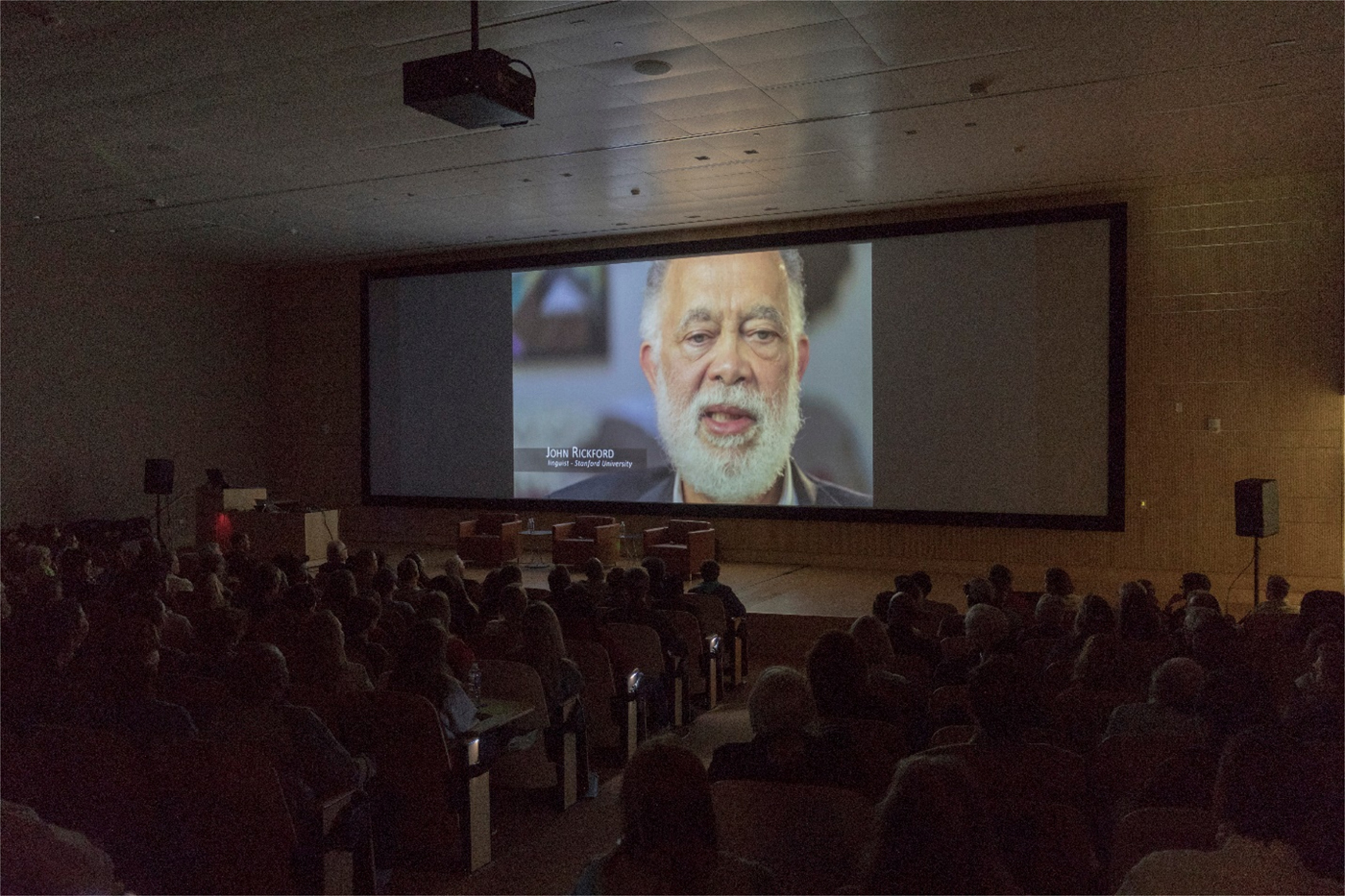
Talking Black in America has screened to packed houses at more than 150 universities, secondary schools, and corporations in the last year (photo by Danica Cullinan).

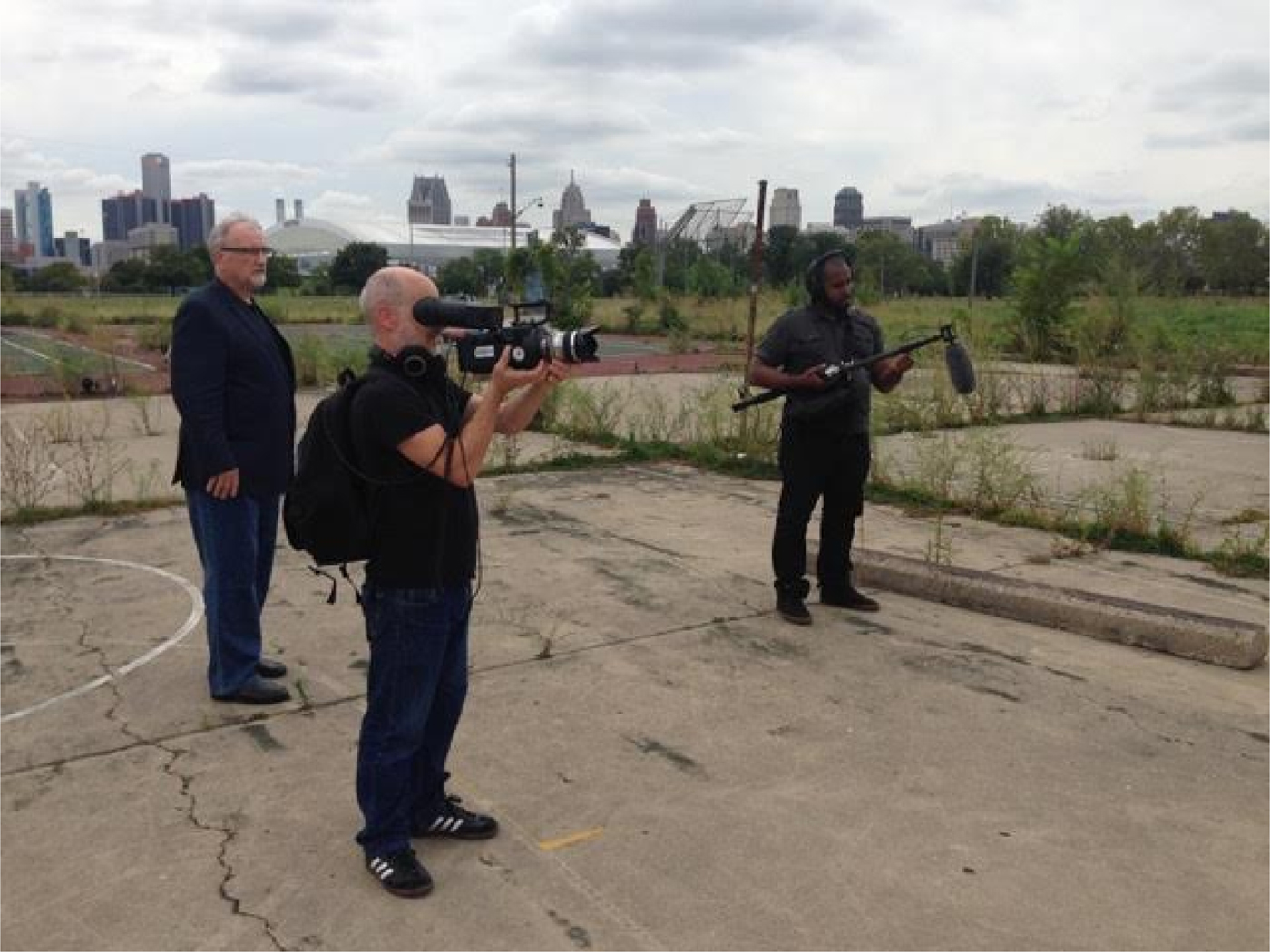
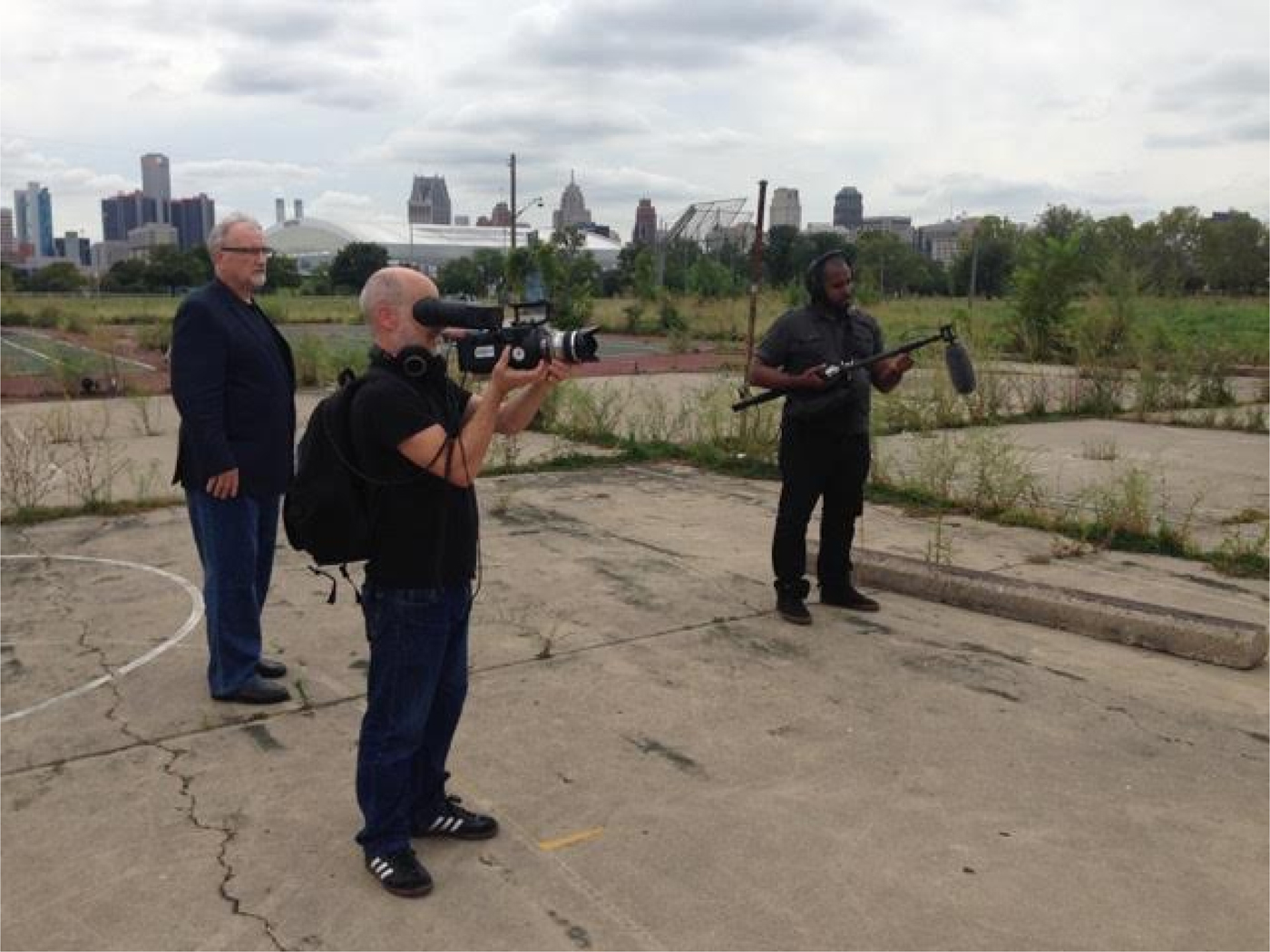
Filming at the former site of the Brewster Projects in Detroit, Michigan, where 6 buildings 12 stories each housed 8,000 African American migrants from the South in the 1960s (photo by Danica Cullinan).
Benefits of documentary production
Given the role of the media in public life, documentaries about language variation seem like a natural and ideal opportunity for linguists to promote an understanding of language diversity. As Bell and Garrett (Reference Bell and Garrett1998: 3-4) note, ‘the media reflect and influence the formation and expression of culture, politics and social life’ while they offer ‘a rich source of readily accessible data for research and teaching.’
The highlight event for most documentaries is typically their one-time broadcast on television. In reality, however, the amenities of contemporary media technology offer a breadth of distribution that can be much more expansive and effective than a one-and-done broadcast. The affordable mass production of DVDs that can be used for educational purposes and institutional distribution have much greater potential for sustained and substantive impact than the original broadcast, and the recent proliferation of streaming services only furthers the potential reach. Practically every student exposed to sociolinguistics in the United States in the last three decades can recall scenes from American Tongues (Alvarez & Kolker, Reference Alvarez and Kolker1986), but the senior author, who worked closely with the filmmakers in its production, has rarely met a linguist or older student who actually watched the original broadcast of this on PBS or during its three-year cycle of regular reruns on the Discovery Channel.
Websites, such as the one that we designed for TBiA (https://www.talkingblackinamerica.org), allow us to distribute trailers, small vignettes, additional footage, and other video footage can be utilized for promotion or classroom instruction, to say nothing of the supporting resources and materials for enhanced viewing. For example, TBiA (https://www.talkingblackinamerica.org/category/resources/) has an extensive viewer's guide (discussed below) that gives key terminology used in the film, the key points in each chapter, misconceptions, fun facts, and some discussion questions for pre- and post-viewing. As a tool for instruction, the guide posted on the website, used with the DVD and/or some posted vignettes, has much greater potential for effective formal and informal education than a chance viewing on television. Furthermore, vignettes from these documentaries become available for public use at websites and our YouTube channel (http://www.youtube.com/user/NCLLP/featured). Once accessed these features can then be integrated into a formal dialect curriculum, such as the curriculum Reaser and Wolfram (Reference Reaser and Wolfram2007) designed on dialect awareness for a Grade 8 social studies curriculum, endorsed by the Department of Public Instruction in the State of North Carolina (https://linguistics.chass.ncsu.edu/thinkanddo/vonc.php). Past experiences with the production of language documentaries indicate that they typically have a life span of 20 to 25 years. For example, the documentary American Tongues, broadcast originally on national television in 1986, is still sometimes used in classrooms and other public venues, and a short documentary that we produced in 1994 called The Ocracoke Brogue (Blanton & Waters, Reference Blanton and Waters1994) still runs on a loop at the Ocracoke Preservation Society 25 years since its original production. During that period, well over a million visitors to the island have viewed the documentary. Streaming of documentaries and the postings of selected clips from documentaries on YouTube and other media outlets has proven to be highly productive dissemination venues, and comments from viewers of these vignettes have provided invaluable insight into their effect on viewers (Wolfram & Eisenhauer, forthcoming).
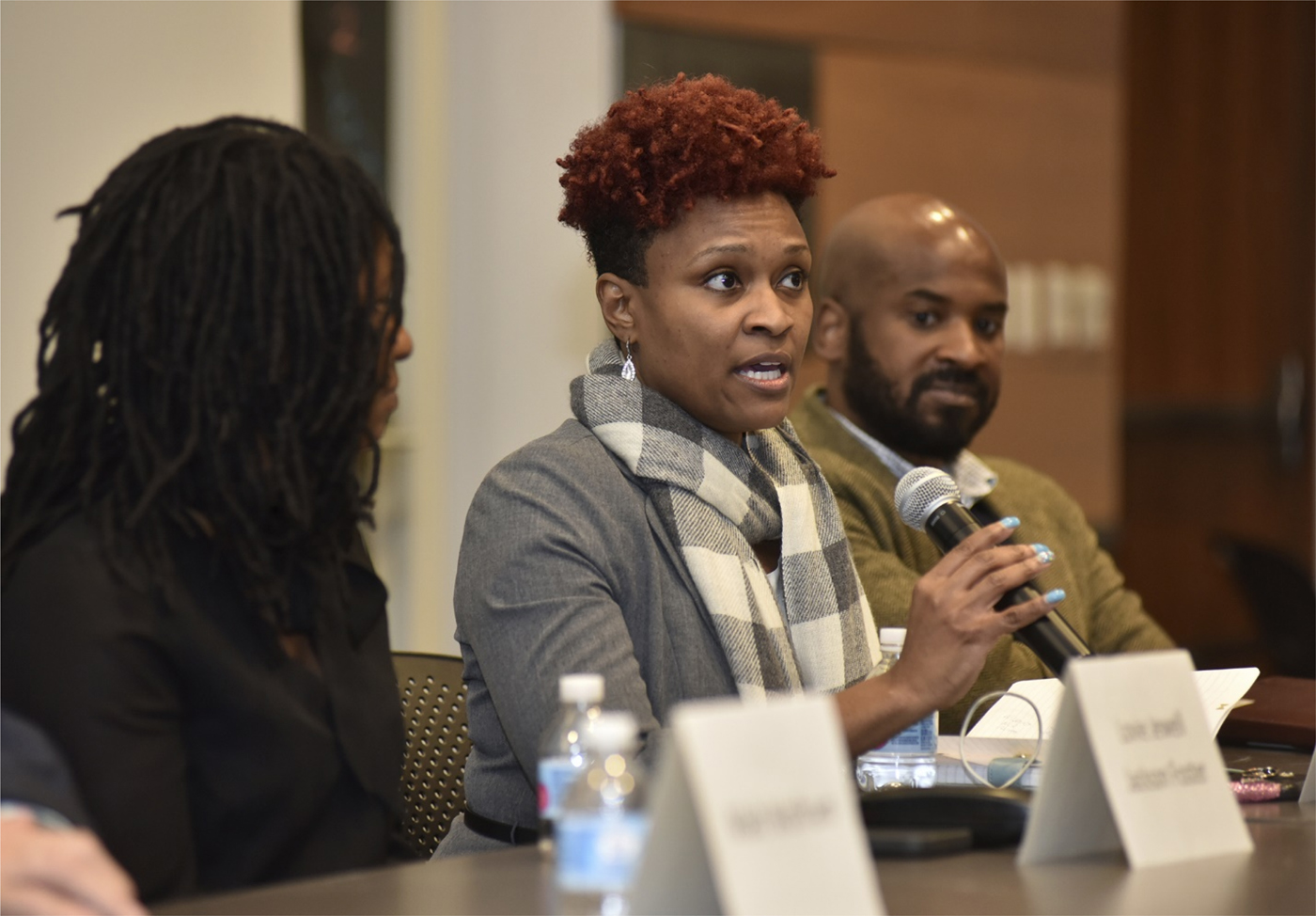
Post-screening discussions by local communities and experts have greatly enhanced the impact of the documentary (photo by Walt Wolfram).

Filming with local residents in rural Mississippi (photo by Neal Hutcheson).

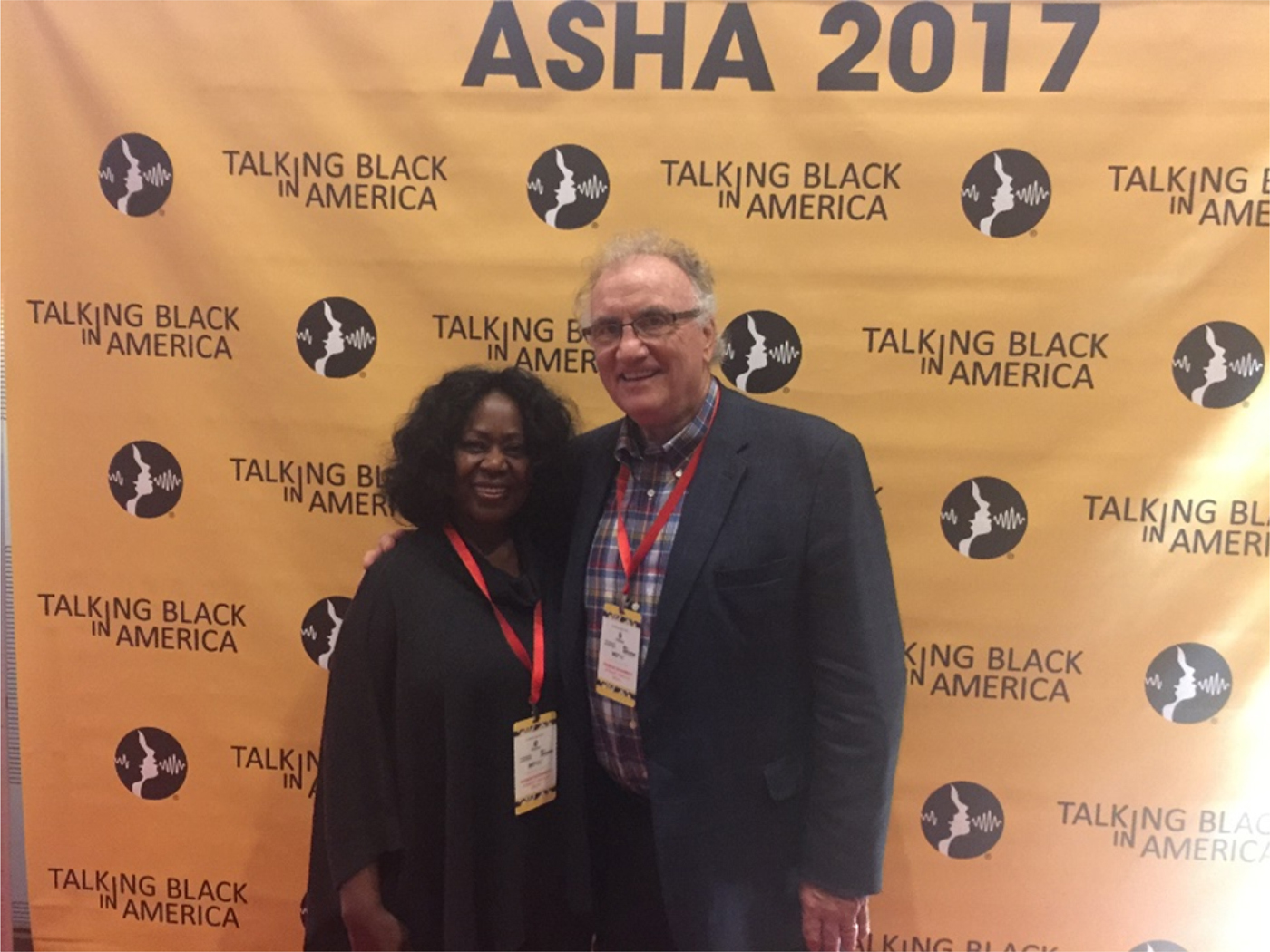
The American Speech and Hearing Association hosted a red-carpet premier of Talking Black in American attended by more than 500 speech and language pathologists (photo by American Speech and Hearing Association).

Finally, there is the opportunity for live screenings and discussions at institutions that include universities, secondary schools, government agencies, civic groups, and corporations. In the year leading up to the television broadcast of TBiA, the executive producer, associate producers, and other associated personnel participated in more than 100 screenings at universities throughout North America, as well as in England, Germany, Switzerland, China, and other countries, typically accompanied by post-viewing panel discussions including both local communities and institutional personnel as well as professional experts. Even major corporations such as Turner Broadcasting (Atlanta, Georgia) and AT&T (Dallas, Texas) held screenings that were streamed to all interested employees around the country for special events, such as Black History Month and diversity celebration events. While a special broadcast on a television network may seem to be a major landmark, the network grid of media opportunities for screenings and discussion constitutes the substantive formal and informal educational utility of modern documentaries.
The language story is complemented by entertaining performances by a range of different community members (photo by Neal Hutcheson).

The collaborative process
The effective production of a documentary necessarily involves the collaboration of communities of speakers, linguistic experts, and video producers. Documentary production often expands the role of a linguist well beyond traditional venues of presentation and professional expertise in the field to the world of film festivals, premieres, publicity, marketing, vendors, and virtual stores, to say nothing about editing content for entertaining, information, and accessible public presentation. Few linguists have thought seriously about these issues of presentation or the logistics of maximizing the distribution of a documentary. At the same time, these distribution dimensions of documentary production – alongside considerations for optimal distribution via modern means – are essential to the goals of outreach, sometimes as important as the products themselves. If we want our efforts to reach as wide an audience as possible, we cannot afford to dismiss these practical, collaborative dimensions of outreach.
Collaboration among linguists, community members, and producers is an ongoing process of negotiation and compromise that is both process and product. For TBiA, an engaged Board of Advisors comprised of linguists at the forefront of research on AAL (e.g., John Baugh, Renée Blake, Patricia Cukor-Avila, Lisa Green, Sonja Lanehart, John R. Rickford, John Singler, Arthur Spears, Tracey Weldon, etc.) oversaw the production of the documentary. Naturally, the Board consists of a majority of scholars of colour, an important consideration for presenting a film on AAL, but they also represent diverse native language backgrounds, regional settings, and other social background traits. In addition to their advisory role, these scholars assisted in coordinating with local communities for the collection of video footage. They were further invited into the editing process at a preliminary stage of editing and a series of rough cuts before they also approved the final version. The Advisory Board's level of involvement led to their designation as associate producers. The goal of this strategy was to produce a work of scholarship that would be a community effort of prominent scholars active in research and education about AAL. We also collaborated with historians, community leaders, performers, and other community members, thanks to an extensive network of people who assisted us on a local level. The Board of Advisors met at professional society meetings, such as the Linguistic Society of America (LSA) and the New Ways of Analyzing Variation (NWAV) annual meetings, and several virtual meetings were held to discuss particular editing decisions. The film has no scripted narration; instead, narration in the documentary is carried out by different experts and community members for different sections of the documentary. While final editing and presentation of issues are ultimately the responsibility of the producers, the development of this documentary was undertaken in a way that made it as collaborative as possible, which was an important guiding goal given a venture of this type.
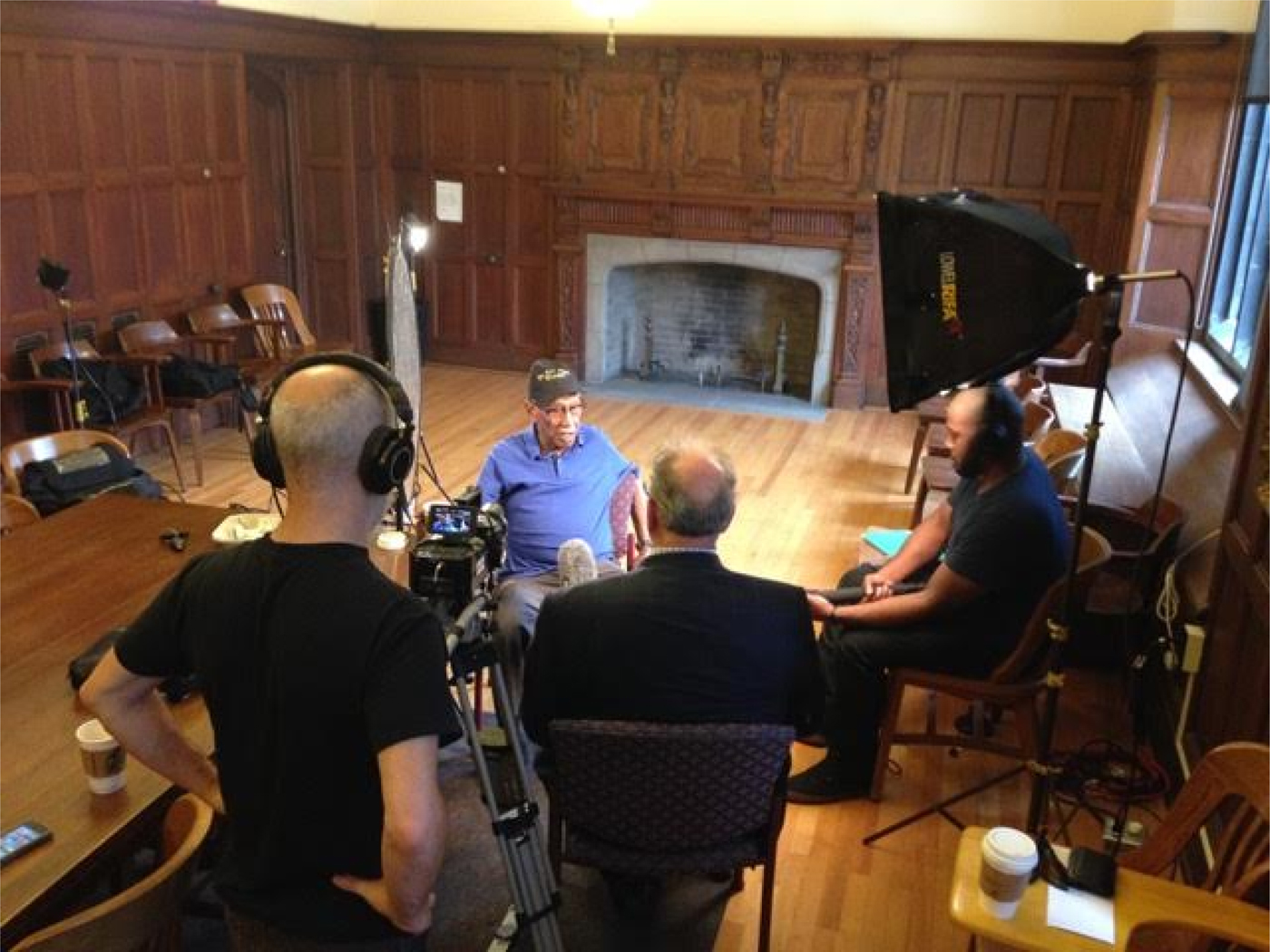
Interviews with linguists, historians, performers, and community members provide the narration (photo by Danica Cullinan).

Linguists and producers need to be sensitive to criticism and input from a variety of interest groups throughout the production of a documentary, remembering why the project is undertaken in the first place. Criticism must be taken seriously, but not personally, and linguists cannot afford to be defensive about the investment of their professional expertise, creativity, energy, resources, and good intentions. We further need to be flexible as a project evolves and realize that the documentary production should reflect as much concern for this process as the final product.
Accompanying materials: The viewers’ discussion guide
Some linguists have sought to make linguistic research more accessible to the general public through informal educational initiatives (Reaser & Myrick, Reference Reaser and Myrick2015; Wolfram, Reaser & Vaughn, Reference Wolfram, Reaser and Vaughn2008), while others have produced materials for inclusion in established K-12 educational contexts (e.g., Denham, Reference Denham2007; Charity Hudley & Mallinson, Reference Charity Hudley and Mallinson2011; Reaser et al., Reference Reaser, Adger, Wolfram and Christian2017). Despite these efforts, there remains the need for additional materials in general – and specifically about AAL – for teachers who wish to integrate sociolinguistic information in general, and TBiA in particular, into their classrooms. As sociolinguists we need to redouble our efforts to provide high-quality, accessible educational materials that seek to disrupt the transmission of the Standard Language Ideology: a persistent belief system that perpetuates the idea that some dialects are inherently substandard. Working towards those goals, the documentary is a tool in and of itself, but the Viewers’ Guide that accompanies TBiA makes the themes easily understandable to non-linguists, especially teachers and students from middle school to university.
TBiA promotes four goals: (a) illustrating the social role of AAL in community life; (b) understanding the sociohistorical roots and orderly development of AAL; (c) understanding of the systematic language patterning of AAL; and (d) undermining language prejudice and stereotypes common in the public's perception of AAL. However, the documentary's impact can only be realized if teachers are provided materials that help them lead their students toward critical understandings of language, power, and discrimination. In alignment with these goals, we developed a guide (https://www.talkingblackinamerica.org/category/resources/) comprised of an introduction and eight chapters paralleling the sections of the documentary: (1) Talking Black, (2) Access, (3) Exclusion and Language Systems, (4) The Imprint of History, (5) Migration, (6) Skills, (7) Transformation, and (8) Legacy. Each chapter includes a brief summary, key points, common misconceptions, fun facts, discussion questions, audio-visual links, and additional resources.
In a similar spirit of collaboration to the documentary process, we sought input and advice from educators and students throughout the development of the viewers’ guide. It was particularly crucial to consult with educators, a primary target user group of the guide, to ascertain what would be most helpful for them and for their students. We screened the documentary for a group of middle school and high school English and History teachers, and after each section of the film we would pause to discuss topics for which they needed greater clarity in order to teach the documentary confidently. They also gave feedback on which concepts would be most difficult and most engaging for their students and pointed out different ways in which the film related to their curricula. For example, a secondary school Civics teacher explained how a more extensive explanation of the Oakland School Board Ebonics Controversy could be applied to lessons about the United States government proceedings. Graduate students also proved to be invaluable contributors to the process. They helped test the effectiveness of early drafts of discussion questions and activities, allowing us to discern which pieces evoked the richest and most thoughtful critical examinations of the documentary and its contents.
Through each step of development, we considered ways in which we could make the guide more accessible and usable in the classroom. It was important that the guide be written in easily understandable language that avoided extensive use of linguistic terminology and that we defined basic linguistic terminology that was included. We also endeavored to make the guide visually appealing, which included avoiding long, intimidating chunks of text. The guide is free and accessible online via sectionalized PDFs which are easy to download and print. We sought to balance the combination of text and audio/visual resources through a multimedia design that would allow teachers and students to engage in various modes of learning: reading, listening, and viewing. The format was developed with the intention of having multiple applications to a variety of classroom and homework activities such as active reading and viewing, class discussions, journals, independent research, mini linguistics lessons, and essay writing.
Similarly, we wanted the guide to be appealing to both teachers and students. For example, the discussion question sections include pre-viewing, active viewing, and post-viewing questions. Pre-viewing questions include teacher tips which suggest creative ways to spark early discussions on sociolinguistic topics. Active viewing questions are designed to give viewers, especially students, focus elements to look for in each section to keep them engaged during the viewing process. Teachers could develop a film viewing worksheet or writing assignment based on these active viewing questions. The post-viewing questions could be posed aloud in a post-film discussion or utilized as prompts for the purposes of reflective journaling, exit tickets, comprehension checks, or argumentative-style essay writing.
It was also important to find ways to integrate scholarly content with engaging real life examples. Links and QR codes were used to pair outside materials such as songs, videos, interviews, TED Talks, and articles with the key points for each section. Especially with the topic of language, it is essential to have audio-visual illustrations for engagement. Teachers may find these useful in creating ‘buy-in’ for the lessons and for expanding beyond the documentary investigations into language. Teachers might use a culturally salient video from Key & Peele, a TED Talk, or a song from Cameo to first pique their students’ interest in the subject before moving into the linguistic or historical material. These culturally relevant artifacts can serve as memorable touchstones for students in concretizing the material by connecting linguistic phenomena to specific examples. For each chapter, annotated additional resources regarding the chapter topic and themes are provided. These are provided to teachers who may want to develop their linguistic knowledge in any of these areas or who need some additional materials for planning supplementary lesson plans. Students could also take advantage of these resources for essays or research projects related to the documentary material. Overall, the content aims to satisfy the scholarly desire for rigorously researched material as well as the human desire for personal connection and engaging examples.
The potential impact of Talking Black in America
The goal of TBiA is to inform and to challenge misconceptions, stereotypes, and prejudices associated with AAL. This can hardly be done in a solitary documentary or a lone event. Furthermore, a number of metrics need to be utilized given the vast, complementary media options for disseminating information. Evaluation extends far beyond the simplistic ‘viewer-share’ that is used to gauge the popularity of a television program. Although our evaluation plans call for a full array of evaluation metrics, our preliminary screenings have provided some feedback of audience responses to TBiA.
In order to evaluate the effectiveness of the documentary in terms of attainment of educational goals, we developed a set of pre- and post-viewing surveys to administer to viewers before and after watching the documentary. Each question was designed to match up with one of the educational objectives of the film. For example, for the objective ‘To demonstrate how various language contact situations, sociohistorical developments, and sociocultural circumstances have led to the development of the ethnolinguistic repertoires utilized by African Americans,' we created the question ‘Can you name any contributing (historical, cultural, or social) factors or influences in the development of African American Language?’ Questions in the pre- and post-viewing surveys are identical in order to gauge possible changes in knowledge of and/or attitude towards AAL after a viewing.
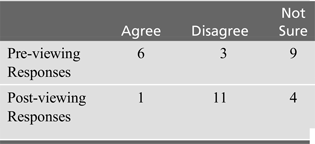
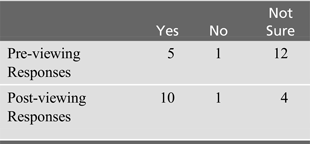
Some preliminary responses from a diverse, public high school English class in Durham, North Carolina, are illuminating and encouraging. Note that a few students did not complete the post-viewing survey so the numbers between the two rounds are not identical. Sample responses from a selection of survey questions and statement are shown in Table 1, Table 2, Table 3, Table 4 and Table 5.
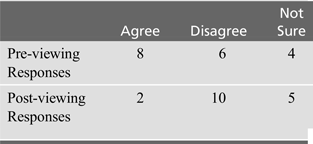
Sample responses to the statement, ‘AAL is a collection of grammatical errors and slang’

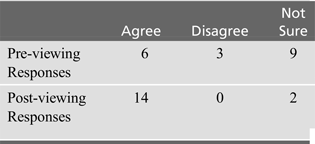
Sample responses to the statement, ‘There are times when AAL is more valuable than Standard American English’

Sample responses to the statement, ‘AAL is one/a singular speech variety’

Sample responses to the question, ‘Does AAL follow systematic grammatical patterns?’

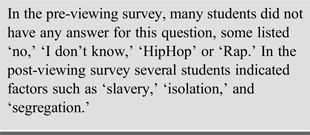
Sample responses to the question, ‘Can you name any contributing (historical/cultural/social) factors or influences in the development of AAL?’

While several students remained unsure following the screening, the number of students who agree with the statement declined. After only an hour of content, the students were able to reject this widespread misconception.
Many students seemed to consider the potential value of this language variety for the first time after an initial viewing of the film.
Responses here point to the effectiveness of the documentary in portraying the wide range of variation included within the label AAL.
Even though students still struggled to describe or explain specific grammatical patterns of AAL after watching the documentary, more of them were able to answer that it does in fact follow those patterns.
These preliminary assessments from secondary school students indicate potential achievement towards educational objectives as well as some continued misunderstanding and uncertainty regarding AAL. This is to be expected of those who are being introduced to this material for the first time – or for the first time in a positive manner. This pilot evaluation is limited, but extensive evaluation will continue to be a critical measure for us as we seek to address any areas for improvement as we develop future documentary installments and educational materials.
A final word
As filmmaker Hutcheson notes in a personal email to the senior author (2007), ‘microscopic and macroscopic decisions made in the filmmaking process ensure a highly selective portrait, no matter who is involved and what their intentions are … and the filmmaker is ultimately responsible for what is in the film and the final representation.’ Selectivity is inevitable in the process of winnowing hours of footage into a coherent narrative in a one-hour documentary, and decisive choices are made at every point in the process. We have to acknowledge this in spite of all of our efforts to be collaborative. For better or worse, these are the ultimately the producer's decisions. Hutcheson (Reference Hutcheson2007: email) further observes, ‘the trust that the subjects place in filmmakers lays a heavy responsibility on them to set aside their inclinations, assumptions, and convictions, even aesthetic ones, in the service of the subject.’ The community portrayed in the documentary deserves to recognize itself and to feel comfortable with what it sees in its portrayal. If the community can see itself comfortably in the final product, then we can be assured that, despite the interpretation imposed by the producer and linguists in the process, the community will be well-served. We hope this is the case for TBiA.
 WALT WOLFRAM is William C. Friday Distinguished University Professor at North Carolina State University, where he also directs the Language and Life Project. He has pioneered research on social and ethnic dialects since the 1960s and published more than 20 books and over 300 articles. He also has served as executive producer for more than 10 documentaries broadcast on television, and served as curator on a number of museum exhibits on language variation. Talking Black in America is his latest documentary. Email: wolfram@ncsu.edu
 KELLYNOEL WALDORF received her B.A. in linguistics and international comparative studies at Duke University and her M.A. in sociolinguistics from North Carolina State University. At North Carolina State University she worked with the Language and Life Project and the Language Diversity Ambassadors on various public outreach initiatives including educational programs for high school students. She helped author the Viewers’ Guide to Talking Black in America. Email: kwaldor@ncsu.edu