Introduction
Schistosomiasis, caused by Schistosoma japonicum, affects several population groups in the Philippines (WHO, 2020a). Transmission occurs through skin penetration by infective cercariae upon exposure to snail-infested waters (Colley et al., Reference Colley, Addiss and Chitsulo1998). Schistosomiasis remains a global public health concern with approximately 143 million infected with the disease globally (James et al., Reference James, Abate, Abate, Abay, Abbafati and Abbasi2018). The infection remains endemic in 78 countries with 236 million people infected globally in 2019 (WHO, 2020a). Chronic infection may lead to undernutrition and poor cognitive development among children, and decreased productivity in adults, contributing to persisting poverty (WHO, 2018).
The World Health Organization (WHO) recommends several core strategic interventions to address schistosomiasis, including: 1) preventive chemotherapy; 2) case management; 3) veterinary public health activities; 4) vector control; and 5) provision of safe water, sanitation and hygiene (WASH), with the inclusion of strategies for behaviour change (WHO, 2020a). Chemotherapy using praziquantel delivered through Mass Drug Administration (MDA) as a preventive measure – that is, periodic deworming through the large-scale treatment of at-risk population – is the main strategy for morbidity control of schistosomiasis. The WHO has targeted a 75% MDA coverage of all at-risk groups including school-aged children, in endemic regions by 2020 (WHO, 2017a).
The programme to prevent schistosomiasis transmission has a long history in the Philippines, yet schistosomiasis remains a major health concern in the country. It is endemic in 28 out of 71 provinces across 12 regions and affects approximately 12 million people with a moderate national prevalence of 4.0% (Department of Health, 2018). A report from the Philippines Department of Health (DOH) (Department of Health, 2019b) showed that although a marked decrease in prevalence has been observed in the past half-century, some provinces still had a prevalence as high as 9.5%. Studies have shown that generally there was a higher prevalence of schistosomiasis and other NTDs in Geographically Isolated and Disadvantaged Areas (GIDAs) in the Philippines (Belizario et al., Reference Belizario, Totanes, de Leon, Lumampao and Co2011; Leonardo et al., Reference Leonardo, Chigusa, Kikuchi, Kato-Hayashi, Kawazu and Angeles2016; Liwanag et al., Reference Liwanag, Uy, Bataller, Gatchalian and De La Calzada2017; Collado, Reference Collado2019; Delorino, Reference Delorino2021). Residents in these areas, including indigenous people groups and economically disadvantaged populations, are especially vulnerable given the geographical challenges in accessing economic, social and health services.
To overcome the burden of schistosomiasis in the Philippines, the Philippine DOH is implementing a national Schistosomiasis Control and Elimination Programme (SCEP) composed of five key components that are in line with WHO recommendations: 1) preventive chemotherapy; 2) intensified case management; 3) water, sanitation and hygiene; 4) veterinary public health and the promotion of animal health under the One Health Approach; and 5) effective intermediate host control and surveillance (Department of Health, 2019a).
Mass Drug Administration (MDA) is delivered through a community-based approach facilitated by local government units (LGUs) through rural health midwives and community health workers, and through a school-based deworming programme conducted by trained school teachers under the supervision of health personnel (Department of Health, 2009), with the latter supported with counterpart human resources and venues for programme activities from the Philippine Department of Education. Although the SCEP has a target of 85% MDA coverage in ages 5–65 years (Department of Health, 2018), the national MDA coverage in school-aged children and adults was low at 55.84% in 2019 (WHO, 2020b).
Schistosomiasis is included in a group of diseases known as Neglected Tropical Diseases (NTD), labelled as such as these are commonly found among populations living in tropical and subtropical climates, incurring the greatest burden in poor rural communities with poor access to safe water and sanitation (WHO, 2012). They are ‘neglected’ as they are given low priority in public health programmes in countries where these persist.
The agenda of NTD control programmes are closely aligned with achieving Universal Health Coverage (UHC). Such programmes consider attaining MDA coverage targets as vital to realizing UHC – specifically essential health service coverage (WHO, 2015). Moreover, preventive chemotherapy has been proposed as a tracer intervention for monitoring equity in progress towards achieving UHC across population groups (WHO, 2017b). The inability to meet the WHO target for MDA coverage is, therefore, a challenge in the realization of UHC in the Philippines.
Schistosomiasis, and how people manage it and its symptoms, is more than a biomedical issue. Studies have shown that over 50% of people afflicted with the illness are poor with little access to safe water and sanitation facilities (Acka et al., Reference Acka, Raso, N’Goran, Tschannen, Bogoch and Séraphin2010; Olveda et al., Reference Olveda, Li, Olveda, Lam, McManus and Chau2014). Poverty has been found to be the most important factor related to schistosomiasis (Acka et al., Reference Acka, Raso, N’Goran, Tschannen, Bogoch and Séraphin2010; Francisco et al., Reference Francisco, Jiz, Rosenbaum, Baltazar and Steele2019; Garchitorena et al., Reference Garchitorena, Sokolow, Roche, Ngonghala, Jocque and Lund2017; Leonardo et al., Reference Leonardo, Acosta, Olveda and Aligui2002; Manderson et al., Reference Manderson, Aagaard-Hansen, Allotey, Gyapong and Sommerfeld2009; Mduluza et al., Reference Mduluza, Chisango, Nhidza, Marume and Luis2017). Other risk factors for schistosomiasis include age and occupation – particularly vulnerable are persons engaged in farming, fishing and other occupations that entail repeated exposure to waterborne S. japonicum vulnerable (Leonardo et al., Reference Leonardo, Acosta, Olveda and Aligui2002; Inobaya et al., Reference Inobaya, Olveda, Chau, Olveda and Ross2014; Masaku et al., Reference Masaku, Mwende, Odhiambo, Musuva, Matey and Kihara2017) and to animal reservoirs (Huang & Manderson, Reference Huang and Manderson2005; Olveda et al., Reference Olveda, Li, Olveda, Lam, McManus and Chau2014; Carabin et al., Reference Carabin, McGarvey, Sahlu, Tarafder, Joseph and De Andrade2015; Gordon et al., Reference Gordon, Acosta, Gobert, Jiz, Olveda and Ross2015). Social and behavioural dimensions have also been linked to schistosomiasis transmission and control (Bruun & Aagaard-Hansen, Reference Bruun and Aagaard-Hansen2008). Knowledge, attitudes and practices have been identified that contribute to peoples’ participation or non-participation in MDA. Francisco and colleagues (2019) showed that belief in the preventability of schistosomiasis was a key factor in peoples’ participation in the control programme. Gender roles and norms have also been related to schistosomiasis. Gender-based tasks such as fetching water for domestic use and washing clothes in rivers by women and girls, and farming and fishing among the men, place them at risk of schistosomiasis (Michelson, Reference Michelson1993; Inobaya et al., Reference Inobaya, Olveda, Chau, Olveda and Ross2014). The physical environment, particularly the presence of Oncomelania (the snail host for S. japonicum), infected domesticated animals like carabaos and dogs and the lack of access to safe water and sanitation facilities have been identified as key factors in the cycle of schistosomiasis infection (Carabin et al., Reference Carabin, McGarvey, Sahlu, Tarafder, Joseph and De Andrade2015; Grimes et al., Reference Grimes, Croll, Harrison, Utzinger, Freeman and Templeton2015; Gordon et al., Reference Gordon, Kurscheid, Williams, Clements, Li and Zhou2019; Olveda & Gray, Reference Olveda and Gray2019).
There is therefore a need for a rigorous investigation of the social, cultural, economic and political contexts of endemic populations for a deeper understanding of their knowledge and practices in relation to the management of schistosomiasis. The present study aimed to identify the socio-ecological contexts that enable or constrain participation in MDA in the Philippines. It also aimed to identify recommendations for a programme to prevent and control schistosomiasis in the country. The Critical Ecology for Medical Anthropology (CEMA) model was adopted, coupled with intersectionality perspectives. This combination allowed a deeper understanding of schistosomiasis within the One Health framework given that the socio-ecological contexts are key concepts to both the CEMA and the One Health approaches. Léger and colleagues (2020) demonstrated the need to investigate the ecosystem contexts that affect the transmission dynamics of schistosomiasis within a One Health approach.
This study was part of a broader research project on community-based schistosomiasis control covering human health, animal health, vector ecology and management, environmental health and socio-cultural dimensions using the One Health approach.
Methods
Data collection
A qualitative case study design was used to obtain in-depth and situated descriptions of the various contexts surrounding the implementation of MDA. Qualitative data collection methods included key informant interviews and focus group discussions (FGDs) with the mothers of school-aged children, farmers, barangay (community) health workers and teachers. These were conducted separately for each group. A community member fluent in both the local language (Cebuano) and the Philippines lingua franca (Tagalog) was present during the FGDs to help translate questions into the local language and vice versa, when necessary. The research investigators facilitated the FGDs and a project staff recorded the discussions. Endemicity of schistosomiasis was a major factor in the choice of the barangays. Field data collection was done in June and October 2019.
Secondary sources of data included barangay level statistics and historical records. The data gathered included social, economic, demographic and political contexts, as well as a brief history of the implementation of MDA and other health interventions at the study sites, and in the region and nation.
Key informants (n = 33) included government health personnel and other local stakeholders engaged in programme implementation at the barangay, municipal/city and regional levels (control programme coordinators, provincial and municipal health officers, a municipal agriculturist, elementary school teachers and barangay health workers). The interview guide covered questions on current strategies, constraints and recommendations for the implementation of MDA for school-aged children. The interviews were recorded with the consent of research participants. Notes were also taken to ensure that nothing was missed. The interviews were transcribed, and thematic analysis was done based on codes for the themes and sub-themes derived from the transcribed data.
The FGD participants were the mothers of school-aged children (n = 22) and male farmers from the study sites (n = 20). A purposive sample of mothers who had school-aged children and men whose main occupation was farming were invited to participate in the FGDs. Availability during the scheduled FGD sessions was also a criterion for participation. Eight FGDs were conducted to understand the knowledge, attitudes and practices regarding the transmission, prevention and control of schistosomiasis. The FGD participants also participated in a community mapping exercise, where participants were asked to pinpoint their house and other defining landmarks (e.g. barangay halls, churches, schools) in the community on a print-out of the base maps of Barangay P and Barangay M. Participants were then provided stickers labelled with activities of daily living and were asked to post them onto the barangay base maps. Four main categories of activities were pre-determined to identify areas where: a) participants obtained water for a variety of domestic activities; b) defecation of adults, children and carabaos occurred; (c) common occupational activities of adults and children took place; and d) snails may be found. The community members were familiar with the species of snails associated with schistosomiasis because of the community’s long engagement with the schistosomiasis control programme, including molluscicide interventions, in the past.
Analytical framework
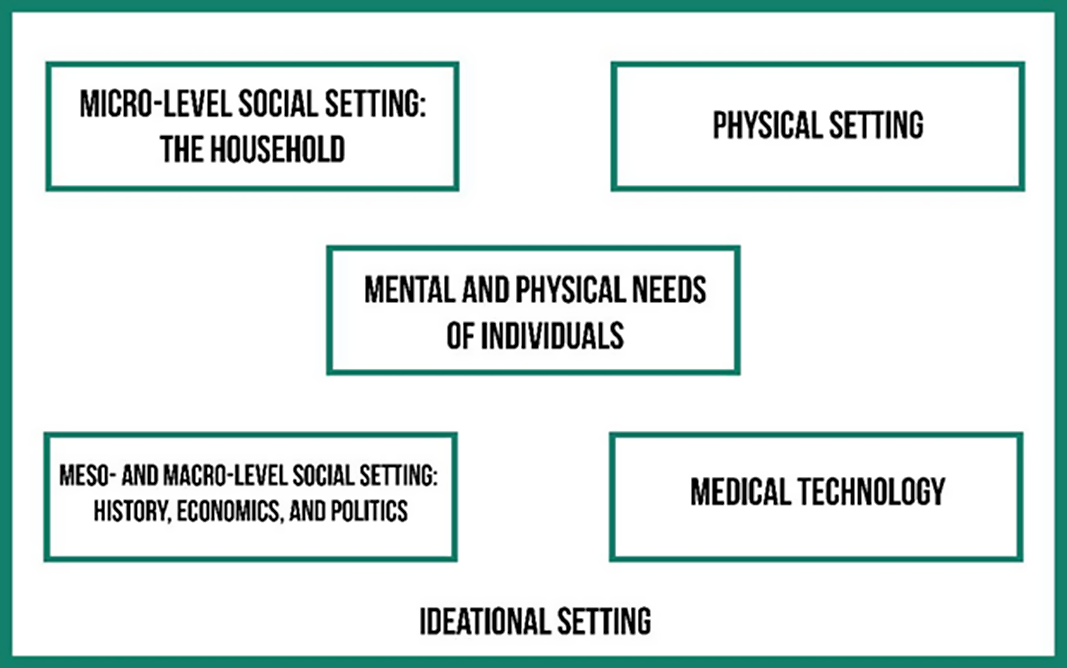
Data analysis was informed by the CEMA model, complemented by the intersectionality approach. How people respond to health programmes, such as schistosomiasis control, can best be understood when viewed within its wider social, cultural, economic and political contexts (Bruun & Aargaard-Hansen, 2008). The CEMA model incorporates multi-level settings or contexts that are useful in understanding a group of people’s behaviours towards MDA as a health intervention. Figure 1 shows the CEMA model framework (Young, Reference Young2002, p. 342). In this study, the micro-level social setting refers to the way the household is organized in terms of the socioeconomic characteristics of its members, including age, occupation and gender. The physical setting included a description of the village, and the presence of infected snail sites and areas where the pathogen may thrive. Medical technology was taken as MDA, including aspects affecting its delivery. Meso- and macro- level social setting covered historical, economic and political events that contribute to schistosomiasis endemicity, as well as MDA participation in the study sites. At the centre of Figure 1 are the physical needs of the population, which refer to the prevalence of schistosomiasis in the study communities as well as the participants’ perceptions of the illness, which determine schistosomiasis treatment and control measures. All of these are situated within the ideational setting that encompasses people’s concepts of health and illness in general and of schistosomiasis.
The Critical Ecology for Medical Anthropology Model.

The intersectionality approach complements the CEMA model by emphasizing the interactions among the different dimensions of an individual’s social identity, such as income class, gender as well as ethnicity. Gender, cultural factors and other social aspects of health shape and influence peoples’ experience of NTDs like schistosomiasis, as well as their ability to access care and treatment (Allotey & Gyapong, Reference Allotey and Gyapong2005; Ozano et al., Reference Ozano, Dean, MacPherson, Theobald, Yoshimura and Linou2019). Intersectionality aids in understanding ways in which multiple axes of identity, such as class, sexual orientation, race and gender intersect and dictate how individuals view and act on health issues they encounter in their daily lives (McCall, Reference McCall2005; Corus & Saatcioglu, Reference Corus and Saatcioglu2015). With this approach, the overlapping advantages and disadvantages of individuals and social groups can be assessed, and how these contribute to the (in)ability of individuals to seek care (Gopaldas, Reference Gopaldas2013).
The combined CEMA model and intersectionality approach allows a deeper understanding of underlying context-specific social and structural processes that determine who and how certain population groups attain some level of success in terms of MDA and why other population groups are left behind. Equity issues in MDA are integral to both the CEMA and intersectionality perspectives. This holistic view of an illness such as schistosomiasis is useful in the development of integrated programmes, helping address the multi-faceted dimensions that contribute to illness. It is also important to point out that both the CEMA and intersectionality approach build on the One Health approach, which includes the core concepts of human health, animal health and environmental health (WHO, 2017c; Léger et al., Reference Léger, Borlase, Fall, Diouf, Diop and Yasenev2020).
Results
Study setting
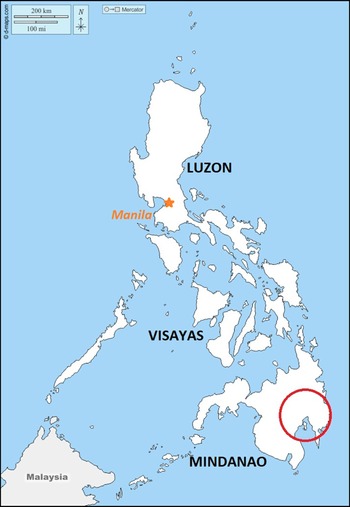
This study was conducted in two known schistosomiasis-endemic communities in Mindanao in the Philippines (Figure 2). Barangay M within Municipality B was selected as it had high community-based MDA coverage for schistosomiasis (Municipal Health Office, 2018a), meeting the DOH target of 85%, while Barangay P in the Municipality of C was included as it had low MDA coverage of less than 20% for schistosomiasis (Provincial Health Office, 2018b). In a focal survey conducted in 2015, there was a moderate prevalence of schistosomiasis in the municipality of Barangay M, while the municipality where Barangay P is located had a low schistosomiasis prevalence (Department of Health, 2019b). Both study sites had a higher poverty incidence compared with the national rate of 21.6% for the Philippines in 2015 (Philippine Statistics Authority, 2017).
Map of the Philippines showing the study sites.

Barangay P
Barangay P belongs to a ‘first-class’ municipality (Philippine Statistics Authority, 2018). The municipality has a state college, high school and elementary school. The municipality’s main source of income is agriculture – the main crops are rice, corn and bananas (Provincial Government, 2017). The majority of residential houses are small single-story buildings constructed from low-cost housing materials (e.g. nipa, wood, galvanized iron sheets). Concrete hollow blocks are only used in a handful or select segments of houses. The majority of residents have access to safe water, but only about three-quarters of households in the have their own sanitary toilets (Municipal Health Office, 2018b).
The barangay has a total population of a little less than 2000, with slightly more males than females (Philippine Statistics Authority, 2018). Almost half of the population are married. The labour force makes up over half of the total population and depends largely on private business establishments and banana plantations for work. Migrant groups dominate, with the majority belonging to the major ethno-linguistic group called Cebuano. Indigenous people groups and indigenous cultural communities are also present. More than 70% of the residents are Catholic; other unspecified religious affiliations have also been noted (Barangay Development Council, 2020).
Barangay M
Barangay M is located in a fourth-class municipality (Philippine Statistics Authority, 2018). Residential houses are constructed from materials of varying strength, with some houses built from cement and hollow blocks, and others built from lighter materials such as nipa and wood (Barangay Development Council, 2012). Access to safe water is a challenge in Barangay M, with over half of households dependent on water from unsafe sources. Almost all households are reported to have access to sanitary toilets, but the exact portion of households in possession of unshared sanitary toilets is unknown (Provincial Health Office, 2018a).
There is a central elementary school and municipal health centre, and various places of worship are dispersed across the vicinity. Similar to Barangay P, Barangay M’s major source of income is agriculture – rice, coconuts and bananas (Barangay Development Council, 2012). An unfinished and uncemented dike, which doubles as a rough elevated road, separates the barangay from a river, which overflows up to three times a year during the rainy season.
The barangay’s population is a little below 2000 (Philippine Statistics Authority, 2018). Males outnumber females by a small margin (5%). The number of residents who are single is almost the same as those who are married. Farmers make up a third of the working population. Residents are from various ethno-linguistic groups and almost 70% are Catholic (Barangay Development Council, 2012).
Community mapping
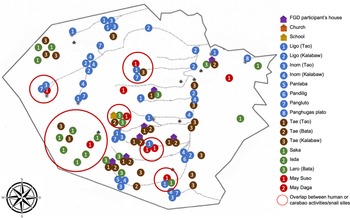
Seventeen mothers of school-aged children and 21 male farmers joined the community mapping exercises. Mothers and male farmers were identified as participants of the community mapping exercise to determine the gendered dimensions of their various activities in relation to risk for schistosomiasis. Figure 3 shows a digitized version of one of the maps generated by the mothers in Barangay P.
A digitized version of the map produced by mothers in Barangay P.

Farmers were at an increased risk of infection due to their use of carabaos in agriculture, which are major reservoirs of S. japonicum (Olveda & Gray, Reference Olveda and Gray2019). Mothers, on the other hand, were engaged in domestic activities involving water, which increased their exposure to the pathogen. The age of the mothers ranged from 30 to 56 years, while that of the male farmers ranged from 25 to 71 years. Drinking water in both barangays was predominantly obtained from water refilling stations. Generally, residents from both barangays had water available at home for bathing, drinking, cooking, dishwashing, laundry and watering plants. Other sources of water for domestic activities were wells and nearby creeks.
Adults and children from both communities defecated in toilets in their households or accessed the toilet facilities of neighbouring community members. On the other hand, carabaos bathed and defecated in open areas near rice fields and creeks where people also bathed. Possible snail sites were also identified by community members of Barangay M near these areas. In Barangay P, possible snail sites were pinpointed near areas where some residents obtained water for drinking, bathing and cooking, or where some farmers planted rice and where their carabaos drank water. Mothers of school-aged children from Barangay P noted a possible snail site located within the premises of the village elementary school. In the vector ecology and management component of the broader study, which this project was part of, four samples of Oncomelania hupensis quadrasi (OHQ) snails were collected from the village elementary school that tested positive for fork-tailed cercaria. Participants from both villages also noted that rats, which are potential animal reservoirs for schistosomiasis, dwelled in rice fields and inside houses.
Identified agricultural areas in both barangays were either basakan (rice fields) or sagingan (banana plantations). Some residents who engaged in farming situated their houses near these areas in the map. A few sites for fishing were identified in Barangay M, while no fishing sites were identified for Barangay P, it being land-locked. Children often play around their houses, in schools or in the farming areas.
Prevalence of schistosomiasis and MDA coverage
Schistosomiasis prevalence in the two areas did not meet the DOH target of <1% (Department of Health, 2018). Even at low-to-moderate intensities of infection, schistosomiasis negatively impacts the nutritional status of preschool and school-aged children (Adeniran et al., Reference Adeniran, Mogaji, Aladesida, Olayiwola, Oluwole and Abe2017). Local surveys on children under 6 years of age have revealed that about one in every five children in Barangay P (Barangay Development Council, 2015) and one in every four in Barangay M are malnourished. Additionally, about one-fifth of the total population of elementary school children in Barangay M is considered underweight (Barangay Development Council, 2012). Research participants in the FGDs conducted in both barangays recognized that schistosomiasis was a serious illness necessitating treatment and control. A 2018 report of the provincial government showed that less than one-fifth of Barangay P residents aged 5–65 years participated in MDA for schistosomiasis (Provincial Health Office, 2018b). As for Barangay M, a 2018 report stated that MDA coverage was approximately nine-tenths of the target population in the community, which was the highest coverage in the municipality for the year (Municipal Health Office, 2018a).
Ideational setting
‘Sisto’ as an illness: its transmission and treatment
The FGD participants in both barangays claimed to value their own health as well as that of their family members. All knew that schistosomiasis, or ‘sisto’ as it is known in the local language, is an illness that needs to, and can be, cured. In fact, they were aware of the different government programmes and drugs used to cure the illness. They shared what they knew about schistosomiasis and its causes, modes of transmission and treatment. While they expressed that the people in their barangays had been suffering from sisto for some time, they still believed that the time would come when their communities would be finally rid of schistosomiasis. They also mentioned that without treatment, people with sisto may develop patol, which is characterized by epilepsy-like symptoms, including convulsions and loss of consciousness.
The FGD participants in both study sites had some local knowledge about sisto that they had received from various health education campaigns launched in their communities. Mothers and farmers in both communities believed that farming and fishing were occupations that put people at risk for schistosomiasis. They also knew that the basak and the fishing areas in their communities could be sites where snails harbouring the pathogen can be found. Their knowledge on the locations of snail sites came from snail control activities that had been implemented in the past. Both the mothers and the farmers in both communities had local perceptions on animal hosts. In Barangay M, the mothers said that any animal with fur was likely to be an animal reservoir. Specifically, they mentioned cats and pigs in addition to carabaos, rats and dogs. However, some incorrect perceptions were also present, e.g. the belief that frogs are animal reservoirs for schistosomiasis. Men in both barangays also perceived that certain fish species such as tilapia (Oreochromis niloticus), gurami (Osphronemidae) and catfish (Siluriformes) were reservoirs of schistosomiasis and that eating these could result in infection. In Barangay P, the mothers in the FGD advised against eating kilawin – a local delicacy of raw slices of fish soaked in vinegar. Eating infected snails was also mentioned as a mode of transmission. However, these practices are related to foodborne helminthiasis, not schistosomiasis.
The FGD participants in the two study sites knew that the best cure for sisto was praziquantel. They were familiar with the drug because of the MDA that was regularly done in the schools and in the community health centres. The farmers in Barangay P mentioned some of the locally available foods that they believed could cure sisto, such as ripe jackfruit (Artocarpus heterophyllus) and seeds of the ipip-ipil (Leucaena leucocephala) tree. The fruits were believed to be safer compared to praziquantel because these did not have the side-effects associated with the drug. The farmers in Barangay P also shared that a local brand of alcohol was believed to be effective in preventing the transmission of the pathogen to humans. It was believed that the alcohol would inebriate parasites and eventually kill them, and the afflicted person would eventually pass these out during defecation. According to one FGD participant:
…you will not contract sisto if you consume Tanduay Rum… (Farmer, Barangay P)
As a key informant, an MDA worker reported that a prevailing notion among community members was that only those who were symptomatic should take part in MDA and that those who did not exhibit symptoms should no longer take praziquantel. Furthermore, it was also believed that a single dose of praziquantel guaranteed prolonged immunity, thereby dismissing the need for periodic treatment. Several of the farmers also believed that only individuals with weak immune systems were susceptible to sisto. Hence, those who were healthy and presented no symptoms were believed to be exempt from interventions such as MDA.
The fear of side-effects
Most of the study participants in both sites cited fear of possible side-effects of praziquantel as a critical factor in deciding whether to participate in MDA. Those who did not experience symptoms of schistosomiasis believed that they were not sick. Moreover, they believed that taking the drug would make them sick due to its side-effects, which, as reported by study participants, included headaches, fever, abdominal pain and nausea. Experiencing these after MDA were attributed to the drug. According to one informant:
If you take all of that [deworming tablets], you will experience headache, fever, abdominal pain, [and] nausea. No, I don’t want to take it. If I’m not sick, I will get sick if I take the drug. (Mother of SAC, Barangay M)
Community members perceived that adults were more likely to suffer from side-effects, and thus less likely to participate in MDA. A barangay health worker in one of the study barangays saw this as one of the major constraints in community deworming:
This is why adults do not participate. They were more likely to experience side-effects. There are more participants in school than in the community. Last year, only about 50 out of 1000 of the targeted people participated [in the community deworming]. (Barangay health worker, female, Barangay P)
Micro-level social setting: the individual and the household
Farming as a major and vulnerable occupation
Most residents in the two study barangays were primarily engaged in farming. Farmers are the most vulnerable to infection due to their repeated exposure to water. According to an LGU worker, male farmers in the municipality of Barangay P generally dismissed the use of protective gear in farming, such as boots, as a preventive measure against schistosomiasis. The men who participated in the FGDs mentioned that they knew that using boots while farming would help prevent the transmission of SCH, yet they preferred not to use them because they were too cumbersome. They said that wearing boots had interfered with their work and had affected their productivity. One LGU staff member noted that:
It is difficult to work with boots. You cannot move freely because when the mud sticks to the boots, it gets heavy. (LGU personnel, Barangay P)
Loss of income opportunity
Economic accessibility often refers to the affordability of a service but also includes the indirect costs of lost time at work. According to health workers, non-participation in MDA among some farmers may be due to the perceived risk of loss of income due to downtime necessary to recover from the side-effects of the drug. One of the farmers narrated during an FGD that he could not skip work on the farm even for a day because losing a day’s income would mean losing a day’s meals for his family:
I cannot miss work even for a day. I need to feed my family. (Farmer, FGD participant, Barangay P)
Missing breakfast on the MDA day
It was not uncommon for pupils in economically depressed areas to come to school without breakfast. Department of Health (2016) guidelines state that praziquantel must be administered after a full meal. Since MDA was done in the morning, some of those who had not had breakfast experienced considerable side-effects. Non-participation in the succeeding years of MDA implementation has been attributed to fear of experiencing side-effects again:
We have pupils who, because of poverty, come to school without breakfast. They cannot take praziquantel because taking it on an empty stomach will only exacerbate the side-effects. (Teacher, Barangay P)
Some of the schools implemented a child feeding programme in conjunction with MDA to ensure that children were fed prior to ingesting praziquantel. However, because of logistical concerns, this was implemented only in selected schools and meals were only given to pupils who were already known to be nutritionally vulnerable, i.e. those identified to be suffering from wasting and stunting based on a nutrition survey.
Meso- and macro-level social settings
Historical context
The control programme for the elimination of schistosomiasis in the Philippines has a history of periods when schistosomiasis was prioritized and periods when it was relegated to the background. Schistosomiasis was first reported in the Philippines in 1906. Over the years, the incidence of the disease has risen with the growth of the population, especially in rural settings (Olveda et al., Reference Olveda, Li, Olveda, Lam, McManus and Chau2014). Praziquantel was first introduced in the Philippines in 1980 with a programme shift from snail control to a chemotherapy-based programme. A decade later, schistosomiasis became a priority through the establishment of the National Schistosomiasis Control Programme under the Philippine Health Development Project. This programme emphasized case finding and treatment in endemic areas. Shifts in priority health programmes in subsequent years, however, resulted in massive budget cuts that severely affected the schistosomiasis control programme (WHO, 2017a). The operation of the schistosomiasis control teams was stopped. In 1995, schistosomiasis control was again given attention with yet another shift from case finding and treatment to MDA. Recent data, however, have revealed a decline in MDA compliance in some areas. In Mindanao, as well as the islands of Samar and Leyte and the province of Oriental Mindoro, advanced cases and deaths due to schistosomiasis have been reported (Olveda et al., Reference Olveda, Li, Olveda, Lam, McManus and Chau2014).
Religious prescriptions
A health worker shared that a faith-based organization existed in certain areas in the province, with some of its members settling in identified GIDAs. Several of these in the municipality of Barangay P, while none was known to reside in Barangay M. This organization holds beliefs and practices favouring the use of plant-based medications and adherence to their own traditional methods of managing illness over manufactured drugs like praziquantel. Hence, members of this group were averse to MDA:
There is a group that only adheres to herbal medicine…They can be found in [the province] among other places. It is difficult for us to account for all these populations, which is why we cannot reach 100%… (DOH programme worker, female)
Masculine gender roles and expectations
There was the notion among some of men that seeking treatment for schistosomiasis was emasculating, while others thought that everyone was vulnerable to the disease, including men, and that everyone who had schistosomiasis should seek treatment. A male FGD participant said that ‘no one is macho when it comes to “sisto”’. Perceived risk for schistosomiasis, however, may not necessarily lead to compliance in MDA. As previously mentioned, according to several informants, men believed that alcohol consumption helped prevent schistosomiasis. These informants readily posited that this notion was articulated to justify the propensity of men towards drinking liquor as a male bonding activity.
An LGU worker in the municipality of Barangay P shared that some of the men in their municipality articulated, in a display of masculine bravado, that they were not afraid to die of schistosomiasis. According to the key informant:
The men say, if they are not cured of schistosomiasis and die, they will bring it to their graves. (LGU personnel, male, Municipality of Barangay P)
MDA in security-compromised areas
Providers of MDA may not feel safe when trying to reach specific population groups, including transient population groups, living in security-compromised areas (Dean et al., Reference Dean, Ozano, Adekeye, Dixon, Fung and Gyapong2019). Fear for the safety of MDA providers can be a challenge in the implementation of MDA in GIDAs. Indigenous people groups, and some members of the faith-based organization mentioned earlier, reside in GIDAs. Department of Health personnel interviewed shared that there had been instances when health workers on medical missions were not welcomed by these groups. Fearing for their own safety and security, MDA health personnel have become hesitant to cover known security risk areas:
[During immunization] women from the group were almost willing to participate, but the male members brandished their machetes at us…If there are [faith-based] groups, they [health workers] often don’t attempt to go in those areas. (DOH programme workerl, female)
Doubts about community health services
Two key informants narrated a news report about the death of a child following her participation in deworming activities in Zamboanga in 2015 (Peñas et al., Reference Peñas, de Los Reyes, Sucaldito, Ballera, Hizon and Magpantay2018). The child’s death had been attributed to ingesting deworming drugs. The news spread in the region and stirred fear of deworming among parents. This prevented them from allowing their children to participate further in MDA.
In 2016, the Department of Health launched a dengue vaccination programme using Dengvaxia (dengue vaccine) in several regions of the Philippines. Later, the vaccine’s manufacturer issued a statement regarding the possibility that some persons inoculated with Dengvaxia, specifically those without prior dengue infection, may be put at a higher risk of developing severe dengue; this created the perception that the vaccine was unsafe, with some deaths of children attributed to the vaccine. The Dengvaxia issue fueled doubts in government health programmes and strategies including MDA. The Dengvaxia controversy and its effects on the delivery of health services through government-led programmes, including deworming activities, have been discussed elsewhere (Labana et al., Reference Labana, Romero, Guinto, Caril, Untalan and Reboa2019). The controversy had set back the deworming campaign and jeopardized the future of the programme in the Philippines (Leonardo et al., Reference Leonardo, Hernandez, Magturo, Palasi, Rubite and de Cadiz2020):
When the news on the Dengvaxia issue broke out, people were alarmed and stopped participating [in MDA] even if they had a history of participating in the past. The people said that they were not afraid of the drug, rather, they were afraid of the government that provides the drug. (Elementary school teacher, male, Barangay P)
Lack of confidence in MDA personnel administering the drug
A teacher informant observed that some community members had greater confidence in MDA if medical professionals were the ones who administered the drug. Greater confidence in MDA meant that parents were more likely to believe in its safety and efficacy, and thus more likely to participate herein. She recommended that nurses and, if possible, doctors be present during deworming activities to encourage participation. She said:
It is better if medical personnel are around [during MDA in schools]. While we are the ones who give the pupils the drug, having a medical professional in the room with us seems to give the parents greater confidence that no adverse event will happen because we are being supervised by someone who is medical professional. Moreover, in case adverse events do happen, a doctor or a nurse is nearby to provide treatment. (Teacher, female, Barangay P)
These findings support the results of a similar study done in Central Philippines, wherein there was lack of confidence in teachers who administered the drug, supposedly because they were not trained in the management of side-effects (Parikh et al., Reference Parikh, Totañes, Tuliao, Ciro, Macatangay and Belizario2013).
Medical technology
Delays in drug procurement
According to a DOH programme worker, the availability of drugs during scheduled MDA is a challenge in both provinces. The LGUs may lack a supply of drugs from the DOH Central Office during the scheduled month of MDA due to delays in procurement and extended time periods required for processing drug donations from the WHO.
Limited MDA implementation schedules
The MDA campaign in a municipality spans an entire month, followed by 2 months of mop-up activities. A schedule is determined for each barangay in a municipality to allow the full deployment of MDA staff in one barangay to maximize coverage. However, this shortens the number of days for MDA per barangay. In addition, non-residents are not allowed to participate in MDA in another barangay. For instance, one of the teachers in Barangay M mentioned that she could not participate in MDA in the school where she was working because she was not a resident of the barangay where the school was located. She also could not participate in MDA in the barangay where she was a resident because of her work schedule. She said:
I cannot take praziquantel here in the school where I work because I am not a resident here. I also cannot go to my barangay for the praziquantel because I cannot be absent from work. (Teacher, female, Barangay M)
Hence, those who, for various reasons, are not able to participate in the scheduled MDA in their barangay have to wait for the next round of implementation, which could be in the following year. While the intention is to allow for a more efficient use of human resources in MDA implementation, the scheduling system in fact results in a proportion of the target population being missed.
Unpleasant experiences with the drug
Programme implementers and MDA providers interviewed noted that people usually complained of their unpleasant experiences with the taste, smell and size of praziquantel tablets. Recipients were generally averse to the smell and taste of praziquantel. Children also have trouble swallowing the tablets due to their large size. In response, some initiatives to improve the drug’s palatability have been administered among pupils by school teachers. These included the provision of candy or bananas during drug intake to mask the tablet’s bitter taste. Sometimes they crushed the tablets and dissolve them in water together with brown sugar to make the drug more acceptable to the pupils in Barangay M.
‘Mop-up’ activities
The midwives in both communities felt that ‘mop-up’ activities were vital to increasing coverage. These aim to cover individuals who were not able to participate in MDA as originally scheduled, and include house-to-house deworming for absentee students.
Linking MDA with other effective government programmes
The Pantawid Pamilyang Pilipino Programme (4Ps) is a conditional cash transfer programme under the Department of Social Welfare and Development that aims to eradicate poverty through cash transfers to poor families for investments in the health and education of children. Two of the key informants from the Department of Education noted that the addition of MDA as a requirement for the 4Ps was a major driver for programme recipients to ensure the participation of children in the biannual deworming for soil-transmitted helminthiasis. In the study sites, MDA for schistosomiasis was also integrated in the programme. This has similarly been done in other parts of the country (Lorenzo et al., Reference Lorenzo, Manzanilla, Cortel and Tangog2019).
Discussion
This study points out the enabling practices that have contributed to participation in MDA in schistosomiasis endemic provinces in Mindanao in the Philippines. These include the conducting of mop-up activities, linking MDA with other government programmes with high participation and high awareness and knowledge of MDA. These enablers should be given emphasis and enhanced to widen the reach of MDA in the area. The presence of parents during school-based MDA was also viewed to be an enabling factor in MDA by the respondents interviewed in the study. Cooperative parents can also provide the necessary stimulus to parents who were sceptical about MDA. Additionally, there are parents who help nurses and teachers to administer the drug by encouraging pupils to take the tablets.
While the study has revealed enabling practices, the implementation of MDA has been shown to be beset by several constraints. The history of government strategies to eliminate MDA has shown periods of neglect, which have left schistosomiasis on the ‘back burner’ of the country’s health priorities.
The identified barriers to health services have led to some of the population being missed, due to factors that are ‘avoidable, unfair, and remediable’ (WHO, 2017b). The application of the combined CEMA framework and intersectional analysis in this study has provided a lens to explore the complex dynamics of intersecting factors within wider geographic and sociocultural contexts, allowing for a more nuanced understanding of the inequities that play out in MDA.
Highly inclusive and equitable health care services are achieved when a system is flexible and responsive to the needs of its diverse recipients (Rendtorff, Reference Rendtorff2009). An important step towards greater inclusivity is allowing programme recipients to inform programme development. Such understandings must be recognized and taken into consideration in planning MDA. Many of the constraints identified in this study are rooted in underlying social structures that give rise to inequities in MDA coverage. Thus, the study points out the need for more qualitative research on NTDs to understand local conceptions of disease transmission and treatment, which shape decisions on accessing health services, and the role of micro-narratives in improving MDA (Krentel et al., Reference Krentel, Damayanti, Titaley, Suharno, Bradley and Lynam2016).
The foremost priority of health service delivery, aside from the availability of health services, is ensuring that the target population can access and receive the service. Although MDA schedules are structured to cover as much of the target population as possible, there are still sectors of the population that are not being reached. This study has shown that schistosomiasis persists in impoverished farming communities in the Philippines, and farmers cannot take leave of absence from work for MDA because of the effect on their income. The impact is felt not just by the farmers themselves, but by their family members as well. Efforts to mitigate these constraints must be made, such as adding more weekends to the MDA schedules to allow more extensive participation of the population. Furthermore, as this may entail an additional burden for MDA providers, incentives may be offered to compensate for lost weekends such as off-setting of workdays or, if funds are available and if the system allows, giving honoraria or overtime pay for working weekends.
Health education and promotion appear to be key to addressing the major constraints to MDA. Greater participation in MDA for schistosomiasis may be achieved with intensive health education campaigns that not only provide disease-specific information but also address misconceptions about transmission, prevention and treatment, including drug side-effects (Fleming et al., Reference Fleming, Fenwick, Tukahebwa, Lubanga, Namwangye, Zaramba and Kabatereine2009; Inobaya et al., Reference Inobaya, Chau, Ng, MacDougall, Olveda and Tallo2018). Health programme-related incidents, like the death of a child following the intake of the drug in a school-based deworming in Zamboanga (Peñas et al., Reference Peñas, de Los Reyes, Sucaldito, Ballera, Hizon and Magpantay2018) and the Dengvaxia controversy (Labana et al., Reference Labana, Romero, Guinto, Caril, Untalan and Reboa2019), have fueled fear among parents on the safety of MDA. While the Dengvaxia incident was not related to deworming, it cast doubt on the safety of government health services in general. Risk communication before, during and after deworming is highly recommended to prevent mass hysteria following health interventions (Peñas et al., Reference Peñas, de Los Reyes, Sucaldito, Ballera, Hizon and Magpantay2018). Health education campaigns may also focus on demonstrating how programme benefits outweigh these perceived barriers (Amarillo et al., Reference Amarillo, Belizario, Sadiang-Abay, Sison and Dayag2008). The use of information, education and communication (IEC) materials in the local language and built upon local knowledge, as well as information dissemination using traditional methods such as storytelling, may be more culturally sensitive. These ideas have been articulated elsewhere (Hankivsky, Reference Hankivsky2012). Furthermore, health education campaigns could also include messages that reinforce MDA as a preventive measure rather than solely a curative measure. Incorporating such messages may address the notion that asymptomatic individuals no longer need to participate in MDA.
The men who exhibited openness to MDA and who believed that ‘there are no macho men when it comes to “sisto”’ could serve as role models in health education campaigns to broaden participation among men. Moreover, greater openness to MDA was observed among female members of the faith-based organization in Barangay P. The MDA implementers might find it helpful to start health education and MDA promotion among women with the hope that they will eventually be able to convince the men in their group to join MDA activities. This may be further complemented by targeted health education among men networked through existing associations such as the Farmers’ Association.
It is also worth mentioning that in some instances, programme implementers responded positively to constraints by adopting strategies to avoid disruptions to MDA. One example involved teachers masking the bitter taste of praziquantel during school-based MDA in Barangay M. Another notable strategy adopted by schools was to coincide the feeding programme for pupils with MDA. This ensured that pupils were able to take praziquantel on a full stomach. The provision of pre-treatment snacks has been also shown to improve coverage in Uganda (Muhumuza et al., Reference Muhumuza, Olsen, Katahoire, Kiragga and Nuwaha2014) as it prevents the exacerbation of the drug’s side-effects. It would be wise to document various innovative practices that have attained positive results.
Universal Health Care aims to make health services accessible to all people at the time and place of need. The array of services within UHC encompasses essential health services, ranging from health promotion to prevention, treatment, rehabilitation and palliative care (WHO, 2019). Echoing insights into the use of the conceptual framework that was developed for this study allowed a nuanced understanding of the barriers to the implementation of MDA, which pinpoint where programmatic adjustments can be made. Lessons from strengthening health systems and engaging communities to achieve more equitable and effective coverage of NTD interventions inform other health interventions and accelerate progress towards the attainment of UHC (Ozano et al., Reference Ozano, Dean, MacPherson, Theobald, Yoshimura and Linou2019). It is hoped that this study will contribute to broadening the perspective used in planning for health interventions such as MDA so that the goal of UHC can be attained.
The constraints presented have contributed, in several ways, to the difficulties in attaining MDA coverage targets, and certain population groups are more vulnerable. Intersecting identities based on income class, gender, ethnicity, affiliations based on faith and other axes of social differentiation compound inequities in MDA coverage. Some population groups in the identified GIDAs proved difficult to reach. These areas are usually where indigenous people groups live. The faith-based group mentioned earlier also live in remote areas. All population groups in these areas commonly lived in poverty. Some of these GIDAs are reachable only by foot, and at times health service providers have to trek for more than a day to reach them. During the rainy season, the challenge of reaching these areas doubles as the rains loosen the soil and made it prone to landslides. These sites are not only hard to reach, but also pose security and safety concerns for the health service providers as they are usually conflict areas where armed groups reside. Thus, health providers take overlapping risks when entering these sites. The groups residing in such areas have adopted traditional methods as a means of managing their health concerns. Because they are accustomed to these, they are wary of new health interventions, including deworming. Population groups in GIDAs with intersecting identities entrenched within ethnicity, faith and economics tend to not be reached not only by MDA, but by other health and social services as well.
The employed population who participated in this study articulated concerns over their inability to participate in MDA even if they wanted to. The policy on the place where an individual can participate in MDA has prevented those who work outside their barangay of residence from participating in MDA. Those who cannot apply for a leave of absence from work during the MDA day said that they would rather forgo MDA than miss work and lose income. Subsistence farmers also refused to lose a day of work in the fields. For them, each day of lost income pushes them further into poverty. A cross-sectional parasitological survey in eighteen barangays in northern Samar in 2012 revealed that farmers had the second highest prevalence of schistosomiasis by occupation (Ross et al., Reference Ross, Olveda, McManus, Harn, Chy and Li2017).
Adult male farmers from the study sites may simultaneously experience privilege and exclusion in accessing health services. In agricultural communities, men perform most of the tasks associated with farming, thus increasing their exposure to snail-infested bodies of water and their risk of acquiring schistosomiasis (Parker, Reference Parker1993; Aagaard-Hansen & Chaignat, Reference Aagaard-Hansen, Chaignat, Blas and Kurup2010). Patriarchal structures often put primacy on health decisions on fathers because they tend to be household heads of nuclear families. This, in turn, compromises the autonomy of other individuals, especially women, in accessing health services. Men often opt against accessing health services for their own well-being either to preserve a masculine image or to avoid compromising livelihood activities (Gyapong et al., Reference Gyapong, Gyapong, Weiss and Tanner2000). This is consistent with findings from a local study, which found that infected men who were engaged in farming would not seek treatment if it meant taking time off work (Leonardo et al., Reference Leonardo, Acosta, Olveda and Aligui2002). The interconnection of traditional gender norms and economic factors contribute to men not being reached by MDA.
Conclusions and Recommendations
The study revealed that there were enabling practices, as well as constraining factors, encountered in MDA in the study setting. The interplay of income, geographical location, gender norms and faith-based practices may have led to key populations being missed during MDA in the study sites. Echoing insights on the use of CEMA and intersectionality that were used in interrogating schistosomiasis in this study allowed a nuanced understanding of the barriers in the implementation of MDA, which pinpoint where programmatic adjustments can be made. Constraints faced by the target population, as well as programme implementers, must be addressed to enhance service delivery and control morbidity due to schistosomiasis. Improving MDA compliance also requires intensive health education campaigns that address not only misconceptions regarding disease prevention and treatment, but other barriers to participation, which are shaped by wider social and structural processes. This study posits an intervention strategy fusing a holistic perspective that investigates the intersecting multiple dimensions of schistosomiasis and how to address these in the different areas and populations in the country.
This study further revealed that schistosomiasis is a multi-dimensional problem that needs to be addressed through a comprehensive and multi-sectoral intervention package. The interventions for the prevention and control of schistosomiasis need to include programmes aimed at addressing structural inequalities such as poverty alleviation, gender inclusiveness and health education on proper sanitation practices at the micro- and meso-levels. At the same time, environmental concerns may be addressed through interventions that control snail intermediate hosts and prevent open defecation. For medical technology, innovations can be adopted to improve on the way praziquantel (the drug of choice for MDA) is ingested for greater acceptability. Moreover, the security and safety of health service providers need to be ensured to help them cover the GIDAs, where many of the underserved communities are situated. To undertake all this, schistosomiasis needs to be prioritized consistently in the health agenda of the government. Concerted efforts from various agencies such as the Department of Health, Department of Education, National Anti-Poverty Commission, National Economic Development Authority and National Commission are needed to attain the goal of schistosomiasis control, if not elimination.
Specific programme recommendations cover the strengthening of existing ones such as the Zero Open Defecation Programme (ZODP) of the DOH of the Philippines, wherein recognition and incentives can be provided to communities that will reach Zero Open Defecation status. Another example of a specific intervention entails collaboration between government agencies such as the DOH and the LGU Municipal Agricultural Office for the deworming of carabao hosts. For collaborative projects involving the government and private enterprises, a joint project between public schools and the corporate social responsibility offices or foundations of private enterprises may help strengthen existing school-based programmes such as Water, Sanitation and Hygiene in Schools (WinS) through the provision of infrastructure support for the promotion of proper handwashing and use of sanitary toilets. Furthermore, the engagement of civil society organizations like the community-based farmers’ organizations or mothers’ cooperatives is also recommended to foster farming and housekeeping practices that help in arresting the spread of schistosomiasis. Involving civil society organizations empowers the people by providing them with the space within which they could make decisions for their own lives and futures.
Acknowledgments
The project team sincerely acknowledges the following partners and individuals for their invaluable support for the successful implementation of the project: 1) Department of Health Philippines, 2) Department of Education Philippines, 3) local government units of the study barangays, 4) key informants, and 5) focus group discussion participants.
Funding
This work was supported by the Commission on Higher Education Philippines.
Conflicts of Interest
The authors declare that there is no conflict of interest.
Ethical Approval
The study protocol was approved by a Research Ethics Board of the University of the Philippines Manila (UPMREB-2019-326-01). Adherence to the provisions in the Declaration of Helsinki was observed. Consent for participation and audio-recording was obtained. Anonymity and confidentiality were maintained, and all participants were advised of their right to withdraw from the study at any given time. The names of the informants were not revealed, and the names of the study barangays were coded. Access to data was limited to the research team.