Weaning poses various challenges for piglets, such as being separated from their mothers and adapting to new environmental and nutritional conditions. These changes can contribute to digestive disturbances, reduced growth performance and an elevated risk of mortality(Reference Tang, Xiong and Fang1). The intestine is particularly vulnerable to stress, with significant morphological and functional changes occurring in the first week after weaning. In addition, the immature development of the intestine makes weaned piglets prone to digestive disorders such as intestinal inflammation, gut dysbiosis and impaired barrier function(Reference Wang, Zeng and Tan2–Reference Pié, Lallès and Blazy4). Therefore, implementing nutritional strategies that preserve intestinal physiology and barrier function is essential for improving the efficiency of pig production.
Lipids contribute to key biological functions, including cell membrane formation, energy production and signal transduction(Reference Liu5). Recently, nutritionists have sought to increase dietary energy density by supplementing different lipids to meet the energy needs of high-performance pigs. Studies have demonstrated that dietary lipid sources such as soyabean oil (SO), flaxseed oil and fish oil distinctly influence the growth performance of young animals(Reference Braundmeier-Fleming, Skenandore and Gil6–Reference Park, Kim and Lee8). Notably, the dietary fat needs of animals are largely influenced by the fatty acid composition. Thus, the composition of fatty acids in the diet should be adapted to the immature digestive function of piglets and improve the symptoms caused by weaning stress. Long-chain TAG (LCT) are widely used in pig feeds to supply energy and essential fatty acids. Due to its high caloric density, adding LCT to the diet could reduce feed intake and prevent small intestinal discomfort in young animals. However, studies have reported that the digestibility of LCT decreased to 65–75 % because of the low activity of intestinal lipase during weaning(Reference Crowe, Royle and Wagner9). Thus, the absorption efficiency of dietary fat in the intestine is low during weaning. Compared with LCT, medium-chain TAG (MCT) are broken down by lipase into medium-chain fatty acids (MCFA), which are subsequently absorbed by intestinal epithelial enterocytes. MCFA occur naturally as MCT in milk fat and various vegetable oils, especially coconut oil and palm kernel oil. MCFA serve as rapidly available energy sources for enterocytes and help mitigate intestinal structural damage in piglets experiencing weaning stress. Recent evidence has reported that MCT play a beneficial role in improving the growth performance and intestinal health of weaned piglets(Reference Li, Zhang and Yang10). However, the supplemented fats in feed are mainly rich in long-chain fatty acids (LCFA) and rarely contain MCF. Hence, MCFA, as crucial nutritional factors, should be exogenously supplied in the diet.
The ratio of fatty acids, such as n-3:n-6 PUFA and UFA:SFA, has gained significant attention for its positive effects on animal health(Reference Dong, Wei and Wang11). Varying n-6:n-3 PUFA ratios in sow diets impact the fatty acid composition in the muscles and adipose tissue of weaned piglets, with a ratio of 4 positively influencing their growth performance(Reference Manaig, Sandrini and Panseri12). A UFA:SFA ratio of 5 in the diet has been found to effectively lower the feed:weight ratio and improve growth performance in growing pigs(Reference Tartrakoon, Tartrakoon and Kitsupee13). While these studies highlight the connection between fatty acid balance and pig health, the effects of different MCFA:LCFA (M:L) ratios on weaned piglets remain poorly understood. Herein, this study aimed to explore the effects of different M:L ratios on the growth performance, intestinal function and gut microbiota of weaned piglets. These findings will help identify the optimal M:L ratio in the diet for weaned piglets, providing a nutritional strategy to mitigate weaning stress and improve feed efficiency.
Methods
Experimental design
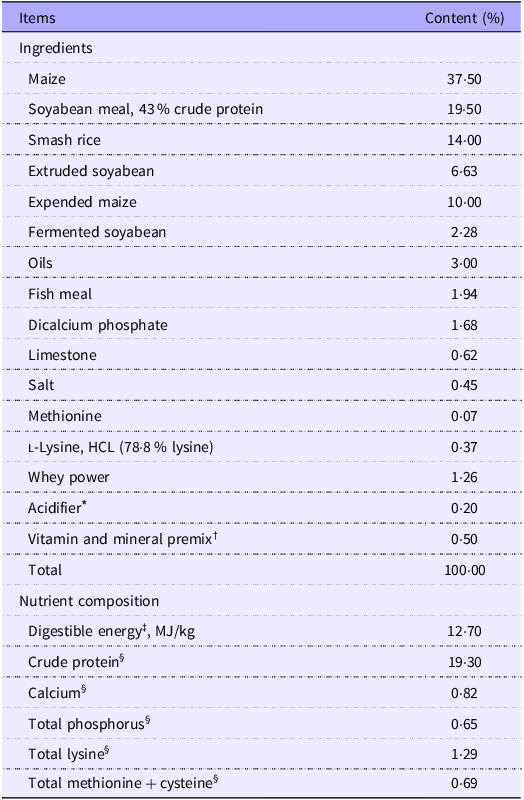
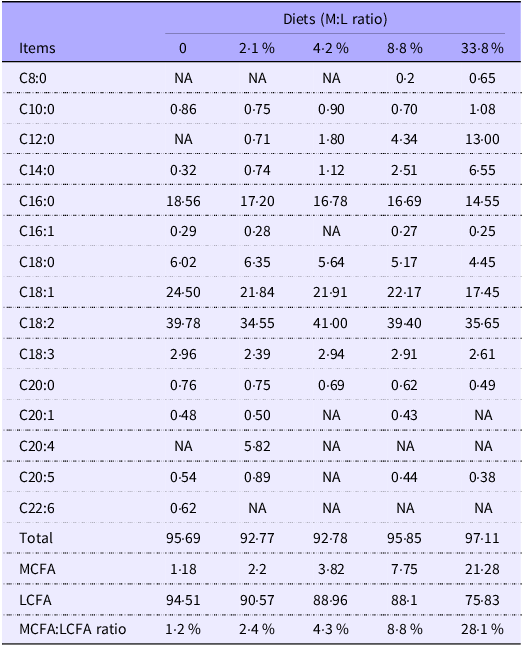
A total of 250 male piglets (Duroc × Landrace × Yorkshire), weaned at 21 d of age, were adapted for 7 d prior to the experiment. After 7 d of weaning, piglets with a body weight (BW) of 7·77 (sem 0·87) kg were randomly allocated to five treatments based on initial BW and sex. Each group had five replicates of ten pigs per pen, and the piglets were maintained in the confinement pens (3·6 m × 3·6 m) with concrete-slatted floors and given free access to feed and fresh water throughout. The experimental diets were as follows: control diet (containing 3 % SO), 2·1 % M:L diet (containing 2·75 % SO and 0·25 % coconut oil (CO)), 4·2 % M:L diet (containing 2·5 % SO and 0·5 % CO), 8·8 % M:L diet (containing 2 % SO and 1 % CO) and 33·8 % M:L diet (containing 3 % CO). The selected M:L ratios were based on the fatty acid composition of mammalian milk, with human milk containing approximately 6·45 % M/L, cow milk about 12·5 % and goat milk around 25·7 %, providing a biologically relevant reference for the study. The M:L ratio was calculated based on the total fatty acid content of the diet. The experimental diets were designed to meet or exceed NRC (2012) nutrient requirements (Table 1). We analysed crude protein, calcium and phosphorus levels in the diets in line with the national standard of China: GB/T 6432–2018, GB/T 6436–2018 and GB/T 6437–2018. Lysine, methionine and cysteine concentrations were measured using the automatic amino acid analyser (L-8900, HITACHI), in compliance with GB/T 18246-2019 guidelines. The fatty acid profiles for each diet are provided in Table 2. CO and SO were purchased from Yihai Oils & Grains Industries Co., Ltd. Fatty acid composition was determined by GC (Agilent 7890B) equipped with a flame ionisation detector and an Agilent DB-23 capillary column (30 m × 0·25 mm i.d., 0·25 μm film thickness). Helium was employed as the carrier gas at a constant flow rate of 1·0 mL/min. The temperature programme was initiated at 130°C (held for 1 min) and then ramped at 5°C/min to 200°C (held for 5 min). Fatty acids were methylated using BF₃-methanol (14 %), and C19:0 methyl ester was added as an internal standard prior to extraction. The proportions of individual fatty acids were determined by measuring the peak area using ChemStation software. Fatty acid profiles of the test oils are presented in online Supplementary Table 1. On days 1, 14 and 28, we recorded BW and feed intake to calculate average daily gain (ADG), average daily feed intake and feed:gain ratio (F:G). The experiment lasted for 28 d.
Composition and nutritional level of the basal diet

* A compound acidifier including lactic acid and phosphoric acid, provided by Shanghai Aodeng Biotechnology Company, Shanghai, China.
† Vitamin and mineral premix provided the following amounts per kg of complete diet: retinol acetate, 2700 μg; cholecalciferol, 62·5 μg; dl-α-tocopheryl acetate, 20 mg; menadione, 3 mg; vitamin B12, 18 mg; riboflavin, 4 mg; niacin, 40 mg; pantothenic acid, 15 mg; choline chloride, 400 mg; folic acid, 700 mg; thiamine, 1·5 mg; pyridoxine, 3 mg; biotin, 100 mg; Zn, 80 mg (ZnSO4·7H2O); Mn, 20 mg (MnSO4·5H2O); Fe, 83 mg (FeSO4·H2O); Cu, 25 mg (CuSO45 H2O); I, 0·48 mg (KI); Se, 0·30 mg (Na2SeO3).
‡ Digestible energy was analysed.
§ Nutrient levels are measured values.
Fatty acid composition of the experimental diets (% total fatty acids)

MCFA, medium-chain fatty acids; LCFA, long-chain fatty acids; NA, not detected. The trace amounts and undetectable fatty acids are not shown in the table.
Sample collection
At the end of the experiment, six piglets per group were selected for sacrifice and sample collection based on their BW. Specifically, one piglet from each replicate was chosen based on its weight being closest to the average weight of that replicate. The sixth piglet was selected from the entire study population, again based on its weight being closest to the overall average weight. Prior to sample collection, pigs were fasted overnight, and their morning meal was provided to ensure sampling of intestinal contents before slaughter. Piglets were euthanized as described in Wang et al. (2022a)(Reference Wang, Zhang and Chen14), with pigs receiving 80 mg/kg BW pentobarbital sodium by intramuscular injection to induce anaesthesia before slaughter. Then, the abdomen was immediately opened, and jejunum, ileum and cecum samples were quickly collected. Intestinal mucosa was removed, flushed with PBS, gently scraped off with a glass slide and subsequently stored at –80°C until analysis. On days 14 and 28, heparinised blood was randomly collected via jugular vein puncture after fasting for 8 h and then centrifuged at 3000 g for 10 min at 4°C. Approximately 2 g of cecal contents from the control diet, 8·8 % M:L and 33·8 % M:L diet were collected and frozen at –80°C for subsequent microbial community analysis.
Intestinal histology
Fresh intestinal tissue was fixed in 4 % paraformaldehyde and subsequently embedded in paraffin. Then, cross-sections (4 µm thick) were prepared from each intestinal segment and stained using haematoxylin and eosin. Intact villus-crypt structures from each field were chosen for measuring villus height and crypt depth. This measurement was conducted using a light microscope with 40× combined magnification. Finally, we measured at least nine well-oriented intact villi and corresponding crypt depths for the small intestine of each pig and then calculated the ratio of villus height:crypt depth.
Determination of antioxidant enzymes
Quantitative assessment of the serum antioxidative properties, specifically total antioxidant capacity (no. A015–1), superoxide dismutase (SOD, no. A001–1), glutathione peroxidase (GSH-Px, no. A005–1) and malondialdehyde (MDA, no. A003–1) concentrations, was executed utilising commercial assay kits sourced from Nanjing Jiancheng Bioengineering Institute according to the manufacturer’s procedures. Enzymatic activities of total antioxidant capacity, SOD and GSH-Px were expressed in units per millilitre (U/mL), while MDA concentrations were expressed as nanomoles per millilitre (nmol/mL) in serum.
Western blot
Proteins were extracted from jejunal tissue using the KeyGEN commercial kit, following the procedure described by Wang et al. (2023)(Reference Wang, Kuang and Lv15). Briefly, the samples were lysed in RIPA buffer (KeyGEN, No. KGP704) containing 1 mmol/L phenylmethylsulfonyl fluoride and then centrifuged at 12 000 g for 15 min. Protein concentration was measured using a commercial protein detection kit. Proteins underwent electrophoresis on 10 % SDS-PAGE gels, after which they were transferred to polyvinylidene fluoride membranes. Then, these membranes were blocked with 5 % bovine serum albumin solution in TBS/Tween-20 buffer and incubated sequentially with primary and secondary antibodies. Specific primary antibodies included rabbit anti-ZO-1 (1:1000, Santa Cruz), rabbit anti-occludin (1:1000, Abcam), rabbit anti-claudin-1 (1:1000, Invitrogen) and mouse anti-β-actin (1:1000, Sigma). The intensity of protein bands was quantified using ImageJ software and normalised to β-actin.
Gene mRNA expression analysis
Total RNA extraction from jejunal samples was accomplished using the Trizol reagent from TaKaRa Biotechnology. Subsequently, reverse transcription of RNA to cDNA was performed using the PrimeScript® RT reagent kit (TaKaRa), according to the manufacturer’s protocol. Quantitative real-time PCR for target genes was conducted using the ABI 7500 Real-Time PCR System and SYBR® Premix Ex TaqTM kit (TaKaRa). Relative mRNA expression of the target gene was normalised to the housekeeping gene β-actin using the 2−ΔΔCt method. Primers for target genes were synthesised commercially by Tsingke Biotech Co., Ltd, and the sequences are exhibited in online Supplementary Table 2.
16S rRNA sequencing
Following the manufacturer’s guidelines, we extracted bacterial DNA from cecal contents using a commercial kit (Vazyme Biotech Co., Ltd). Then, the quality and concentration of DNA were assessed by performing 1 % agarose gel electrophoresis. PCR was employed to amplify the V3 to V4 hypervariable regions of the bacterial 16S rRNA gene, using forward primer 338F (5′-ACTCCTACGGGAGGCAGCA-3′) and reverse primer 806R (5′-GGACTACHVGGGTWTCTAAT-3′). Subsequently, qualified DNA samples were sent to Majorbio (Shanghai, China) for amplicon pyrosequencing using the Illumina HiSeqPE3000 platform (Illumina). Microbial abundance and diversity were analysed using operational taxonomic units via UPARSE (version 7.0), and relative abundance was assessed at the phylum and genus levels.
Statistical analysis
All results are expressed as means (sem). Growth performance data were analysed by repeated measures using the MIXED procedure of SAS (version 9.4; SAS Inst. Inc.). The pen was treated as the experimental unit. The statistical model incorporated initial BW, treatment and their interaction as main effects, along with the random effect of block. The following model was used: Y ijk = µ + A i + B j + (AB) ij + e ijk , in which Y ijk = dependent variable, µ = mean, A i = initial BW (i = 1 to 4 pigs), B j = dietary treatment (j = 1 to 5 diets), AB ij = interaction effect between initial BW and dietary treatment and e ijk = random error. Other data were analysed using Duncan’s multiple range test, with significance set at P < 0·05 and a tendency identified when 0·05 ≤ P < 0·1. The effects of increasing M:L ratios were analysed by partitioning them into linear and quadratic components using orthogonal polynomial contrasts.
Results
Growth performance and organ indices
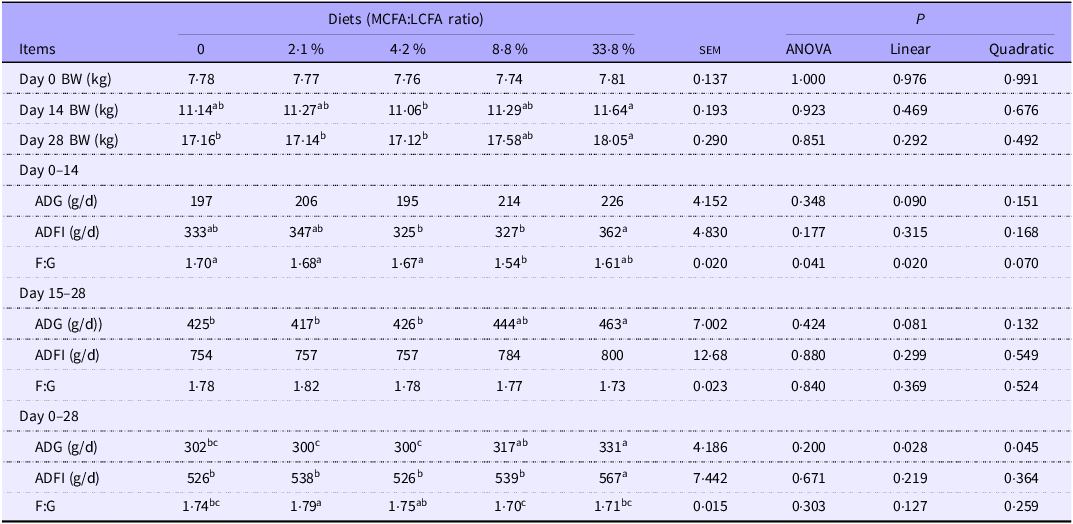
Growth performance is provided in Table 3. The initial BW of piglets at the beginning of the experiment ranged from 7·74 to 7·81 kg, with no significant differences observed between treatment groups. After the 28-d experiment, piglets fed with 33·8 % M:L diet had a greater final BW compared with 0, 2·1 or 4·2 % M:L diet. During the earlier period (days 0–14), 8·8 % M:L diet reduced the F:G of piglets compared with 0, 2·1 or 4·2 % M:L diet (P < 0·05) and reduced average daily feed intake compared with 33·8 % M:L diet (P < 0·05). With the increasing ratio of M:L, the F:G was increased (linear, P = 0·020; quadratic, P = 0·070). During the later period (days 15–28), 33·8 % M:L diet increased ADG of piglets compared with 0, 2·1 or 4·2 % M:L diet (P < 0·05). Increasing the ratios of M:L from 0 to 33·8 % in the diets tended to have linear effects (P = 0·081) on ADG of piglets. During the whole feeding period (days 0–28), piglets fed with 33·8 % M:L diet had a higher ADG and average daily feed intake compared with the other four diets (P < 0·05). In addition, the F:G of piglets fed 8·8 % M:L diet was the lowest among the five treatments (P < 0·05).
Effect of different ratios of medium-chain/long-chain fatty acids (MCFA:LCFA) on growth performance of piglets

BW, body weight; ADG, average daily gain; ADFI, average daily feed intake; F:G, feed:gain ratio.
Values are mean, n 5 (10 pig/pen). Labelled means in a row without a common letter differ, P < 0·05.
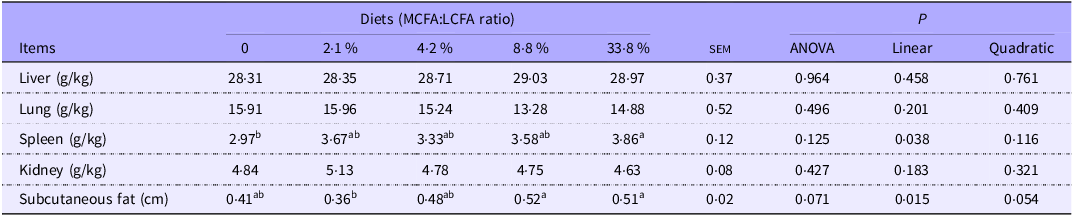
We then measured the weight of the piglets’ internal organs at the end of the experiment (Table 4). There was no difference in liver, lung and spleen indices by increasing the ratios of M:L from 0 to 33·8 % in the diets. With the increasing ratio of M:L, the spleen index and thickness of subcutaneous fat were increased linearly (P = 0·038). Piglets fed with 33·8 % M:L diet had a higher spleen index than those on the 0 M:L diet (P < 0·05). Compared with the 2·1 % M:L diet, the thickness of subcutaneous fat of the 8·8 and 33·8 % M:L diet was increased (P < 0·05).
Effect of different ratios of medium-chain:long-chain fatty acids (MCFA:LCFA) on organ indices of piglets at 56 d of age

Values are mean, n 6 (1 pig/pen). Labelled means in a row without a common letter differ, P < 0·05.
Antioxidant parameters
As shown in Table 5, with the increasing ratio of M/L, SOD and GSH-Px activity in serum linearly and quadratically increased (linear, P = 0·015 and 0·007; quadratic, P = 0·009 and 0·015). MDA concentration was decreased linearly and quadratically (linear, P = 0·004; quadratic, P < 0·001). However, there was no difference in total antioxidant capacity in serum by increasing the ratios of M:L from 0 to 33·8 % in the diet. The 33·8 % M:L diet decreased MDA concentration and enhanced SOD activity in serum compared with 0, 2·1 or 4·2 % M:L diet (P < 0·05). Compared with the 0 M:L diet, the 4·2 or 1·7 M:L diet significantly improved GSH-Px activity in serum (P < 0·05).
Effect of different ratios of medium-chain:long-chain fatty acids (MCFA:LCFA) on antioxidant parameters in serum of piglets at 56 d of age

T-AOC, total antioxidant capacity; SOD, superoxide dismutase; MDA, malondialdehyde; GSH-Px, glutathione peroxidase.
Values are mean, n 6 (1 pig/pen). Labelled means in a row without a common letter differ, P < 0·05.
Intestinal morphology
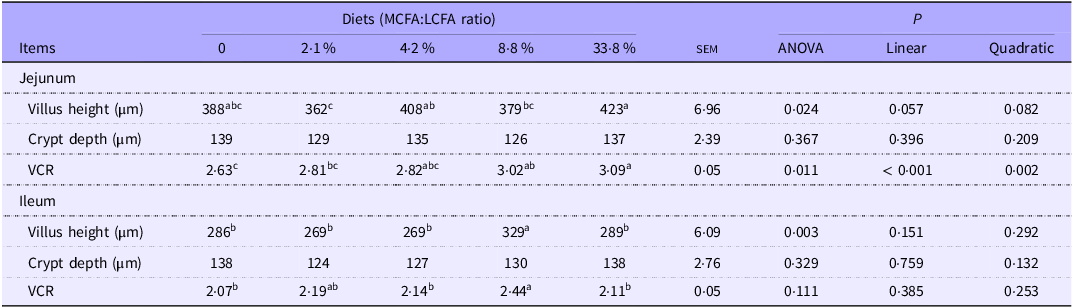
As shown in Table 6, increasing the ratios of M:L from 0 to 33·8 % in the diets tended to improve villus height in the jejunum of piglets (linear, P = 0·057; quadratic, P = 0·082). Piglets fed with 33·8 % M:L diet had higher villus height in the jejunum than that of 2·1 or 8·8 % M:L diet (P < 0·05). However, the villus height in the ileum of piglets fed 8·8 % M:L diet was the highest among the five treatments (P < 0·05). There was no difference in crypt depth in the jejunum and ileum by increasing the ratios of M:L from 0 to 33·8 % in the diets. Increasing the ratios of M:L from 0 to 33·8 % in the diets linearly and quadratically increased the villus height/crypt depth in the jejunum (linear, P < 0·001; quadratic, P = 0·002). The 33·8 % M:L diet increased the villus height/crypt depth in the jejunum compared with the 0 or 2·1 % M:L diet (P < 0·05). Additionally, significantly higher villus height/crypt depth in the ileum was observed in the 8·8 % M:L diet compared with the 0, 4·2 or 33·8 % M:L diet (P < 0·05).
Effects of different ratios of medium-chain:long-chain fatty acids (MCFA:LCFA) on intestinal morphology in piglets at 56 d of age

VCR, the ratio of villus height to crypt depth. Values are mean, n 6 (1 pig/pen). Labelled means in a row without a common letter differ, P < 0·05.
Intestinal barrier function
As shown in Figure 1, with the increasing ratios of M/L, the protein expression of occludin and ZO-1 increased quadratically (P = 0·002). The 2·1, 4·2, 8·8 or 33·8 % M:L diet enhanced the protein expression of occludin compared with the 0 M:L diet in the jejunum (P < 0·05). Piglets fed with 4·2 % M:L diet had a greater ZO-1 protein expression compared with that of 0, 2·1 or 33·8 % M:L diet (P < 0·05). However, there was no difference in claudin-1 protein expression in the jejunum by increasing the ratios of M:L from 0 to 33·8 % in the diet.
Effects of different ratios of medium-chain:long-chain fatty acids on tight junction protein expression in the jejunum of piglets at 56 d of age. (a) Representative bands of tight junction protein. (b)–(d) Protein expression of claudin-1 (b), occludin (c) and ZO-1 (d) in the jejunum. Values are means (sem), n 6. abcMeans without a common letter differ significantly (P < 0·05).

Intestinal development
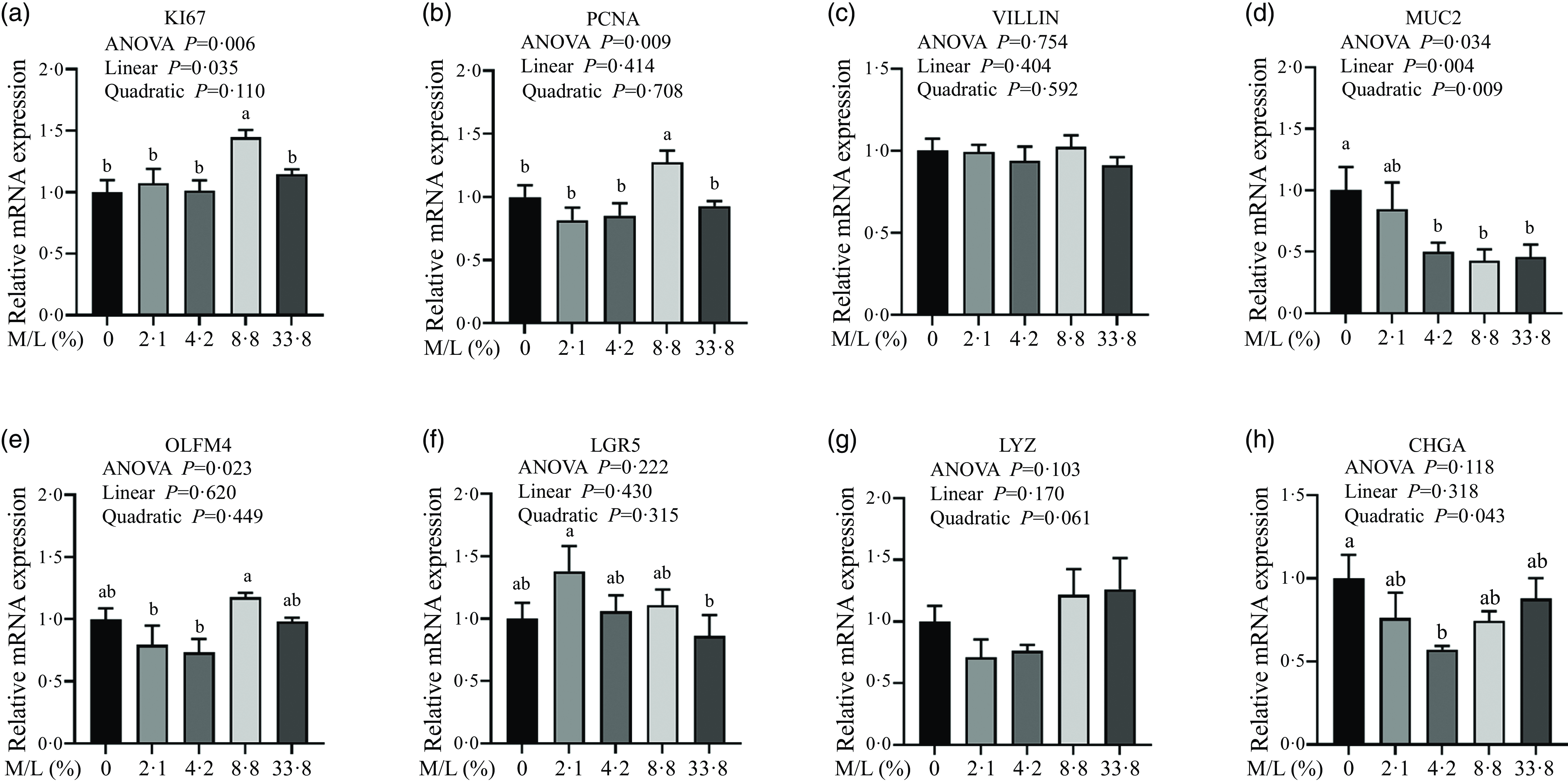
As shown in Figure 2, with the increasing ratios of M:L in the diet, the mRNA expression of KI67 increased linearly (P = 0·035), and mucin 2 (MUC2) decreased linearly and quadratically (linear, P = 0·004; quadratic, P = 0·009), and lysozyme and chromogranin A decreased quadratically (P = 0·061 and 0·043). Compared with the 0 M:L diet, the diet with M:L of 8·8 % increased the mRNA expression of Ki67 and proliferating cell nuclear antigen (PCNA) in the jejunum (P < 0·05), while the diet with M:L of 4·2, 8·8 and 33·8 % significantly reduced the mRNA expression of MUC2 (P < 0·05). Compared with the 8·8 % M:L diet, the mRNA expression of olfactomedin 4 (OLFM4) in 2·1 or 4·2 % M:L diet was decreased (P < 0·05); Compared with the 2·1 % M:L diet, the mRNA expression of leucine-rich-repeat-containing G-protein-coupled receptor 5 (LGR5) in 33·8 % M:L diet was decreased (P < 0·05). Supplementation with different M:L ratios did not affect the mRNA expression of villin in the jejunum.
Effects of different ratios of medium-chain:long-chain fatty acids on proliferative and functional marker expression in the jejunum of piglets at 56 d of age. (a)–(h) The mRNA expression of Ki-67 antigen (KI67) (a), proliferating cell nuclear antigen (PCNA) (b), Villin (VIL1) (c), mucin 2 (MUC2) (d), olfactomedin 4 (OLFM4) (e), leucine-rich-repeat-containing G-protein-coupled receptor 5 (LGR5) (f), lysozyme (LYZ) (g) and chromogranin A (CHGA) (h) in the jejunum. Values are means (sem), n 6. abMeans without a common letter differ significantly (P < 0·05).

Intestinal microbiota analysis
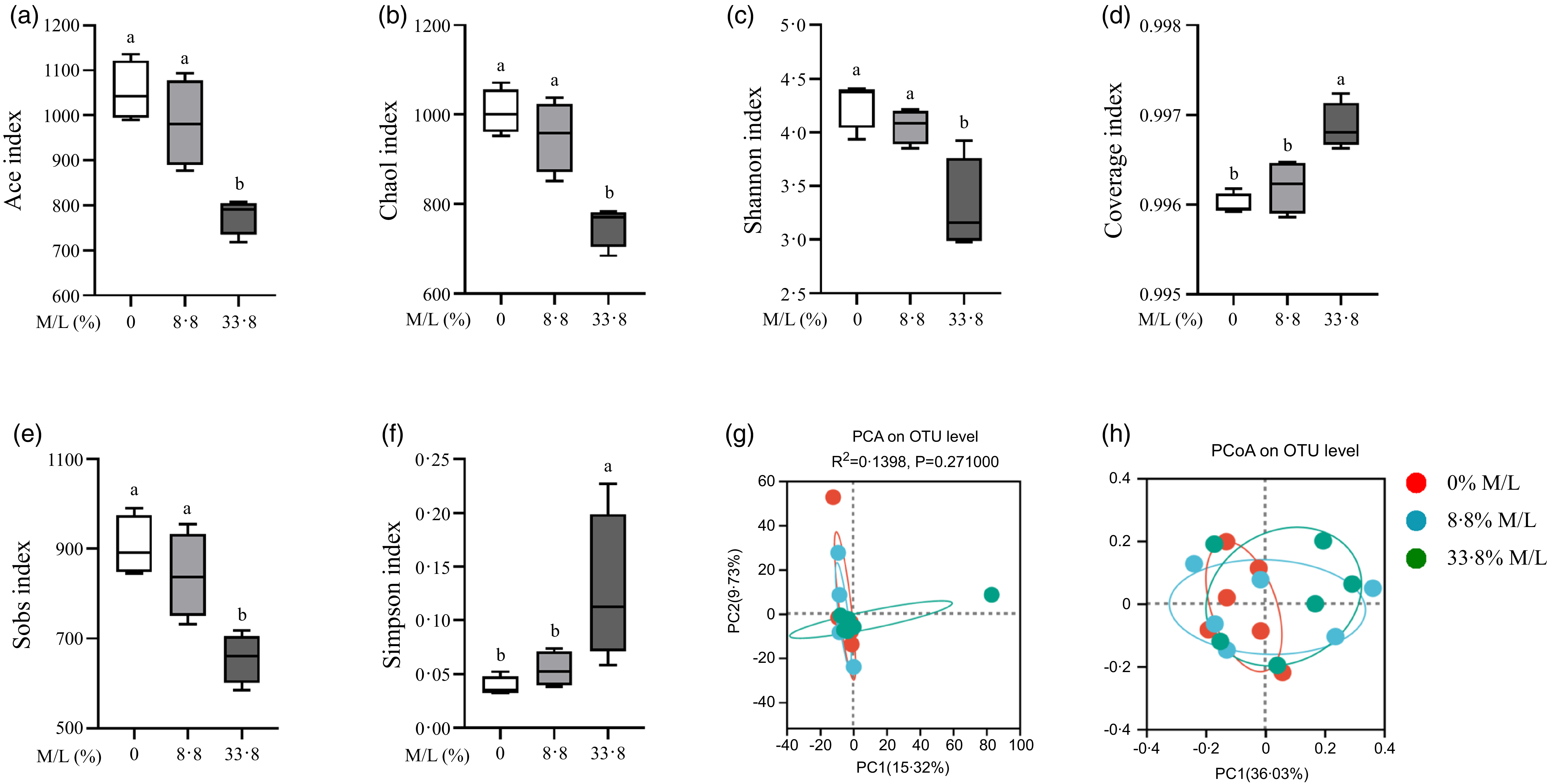
The gut microbiota of piglets fed diets with 0, 8·8 and 33·8 % M:L ratios was examined through 16S rDNA sequencing. Alpha-diversity metrics of the cecal microbiota in piglets are displayed in Figure 3(a)–(f). The Ace, Shannon, Chao1 and Sobs indices in piglets fed the 33·8 % M:L diet were significantly lower compared with the other groups (P < 0·05). Piglets fed the 33·8 % M:L diet had the highest Simpson index relative to the other groups (P < 0·05). As the M:L ratio increased, α-diversity in the cecal microbiota significantly declined (P < 0·05). The principal coordinate analysis demonstrated that the dietary treatments did not lead to a more distinct separation of cecal microbiota (Figure 3(g)–(h)), suggesting no difference in the beta diversity of intestinal microbiota composition among pigs fed the diets with the ratios of M:L from 0 to 33·8 %.
Effects of different ratios of medium-chain:long-chain fatty acids on the diversity of gut microbiota in weaned piglets at 56 d of age. (a)–(f) Alpha-diversity analyses for ACE index (a), Chao1 index (b), Shannon index (c), Coverage index (d), Sobs index (e) and Simpson index (f). (g)–(h) Beta diversity was assessed by principal coordinate analysis (PCoA) and principal component analysis (PCA) at Braye–Curtis distances. n 6. abMeans without a common letter differ significantly (P < 0·05). OTU, operational taxonomic unit.

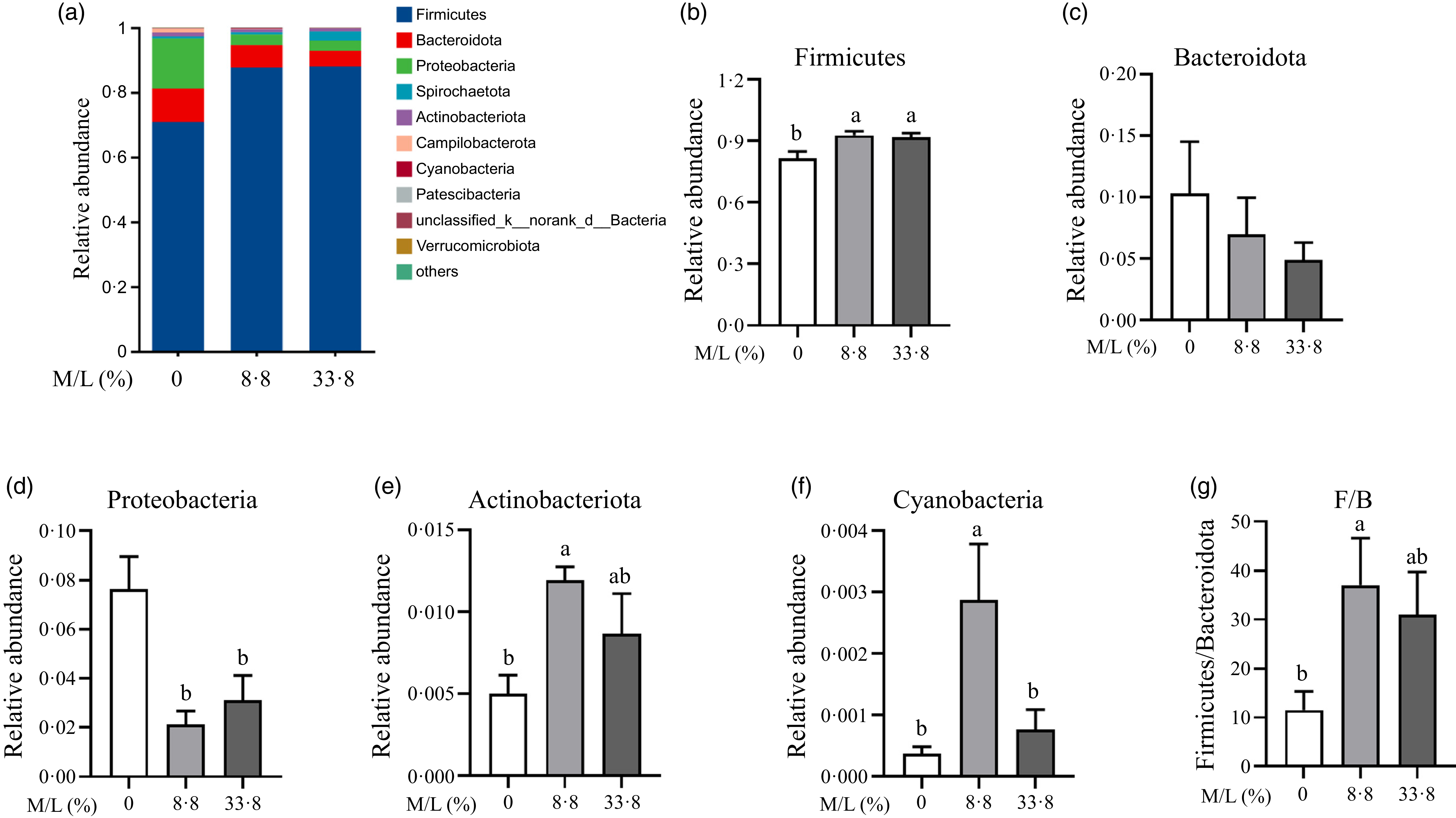
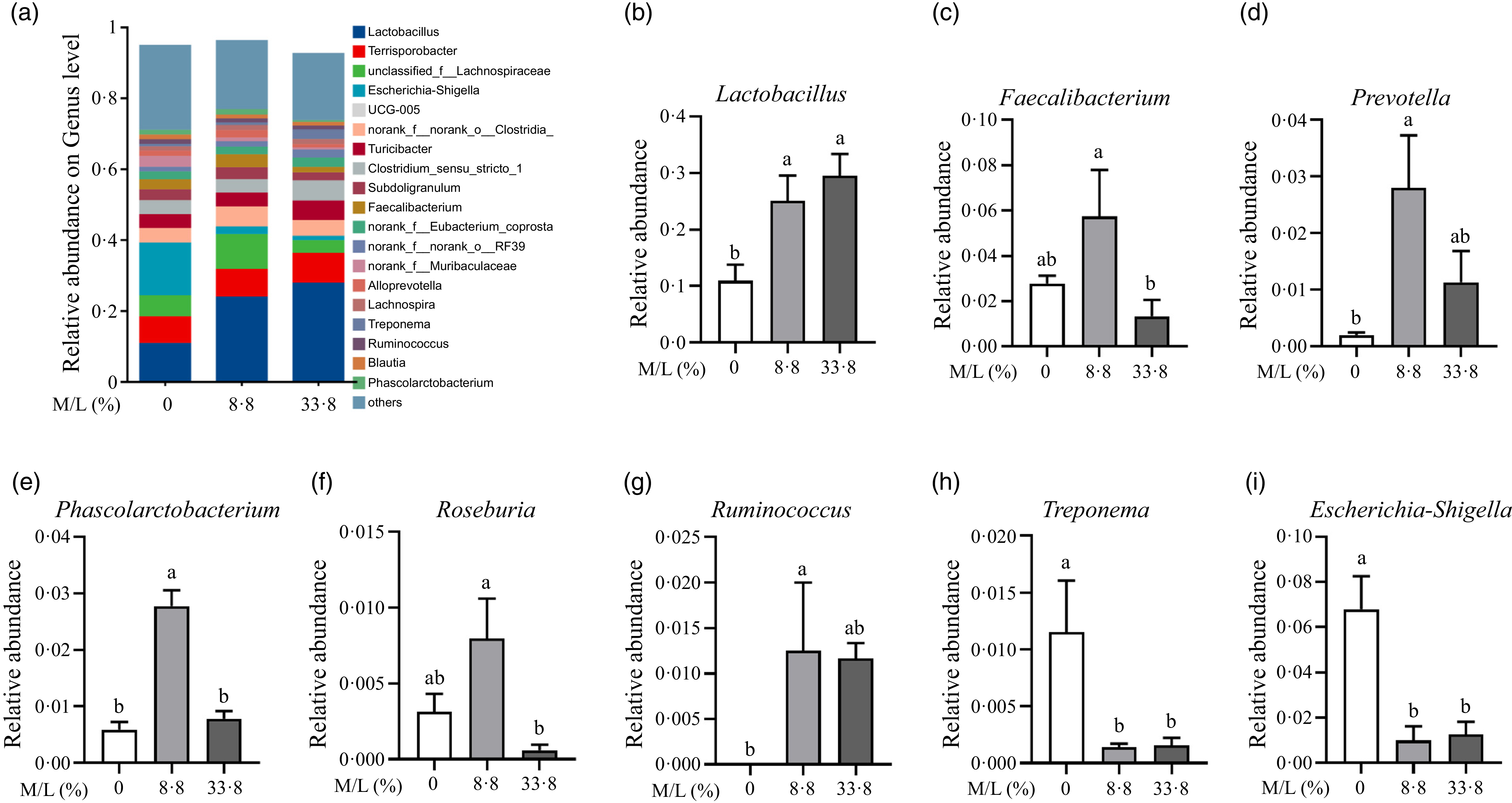
Subsequently, we analysed the intestinal microbial composition at the phylum and genus levels. As shown in Figure 4(a), Firmicutes, Bacteroidetes, Proteobacteria and Actinobacteria were the most predominant phyla in all groups. At the phylum level, Firmicutes abundance increased and Proteobacteria abundance decreased in piglets fed the 8·8 or 33·8 % M:L diets compared with the 0 M:L diet (P < 0·05). In addition, the 8·8 % M:L diet led to higher Actinobacteria, Cyanobacteria and Firmicutes/Bacteroidetes than the 0 M:L diet (P < 0·05). There was no difference in the abundance of Bacteroidetes among the three diets. At the genus level (Figure 5), the 8·8 % M:L diet showed an increased abundance of beneficial bacteria, including Lactobacilli, Phascolarctobacterium, Prevotella and Ruminococcus, compared with the 0 M:L diet (P < 0·05). In contrast, the 8·8 % M:L diet significantly reduced the relative abundance of harmful bacteria, such as Treponema and Escherichia-Shigella (P < 0·05). Faecalibacterium, Phascolarctobacterium and Roseburia abundance decreased in the 33·8 % M:L diet group compared with the 8·8 % M:L group (P < 0·05). Similarly, the 33·8 % M:L diet reduced the relative abundance of Escherichia-Shigella compared with the 0 M:L diet (P < 0·05). Our results highlight the beneficial effects of the 8·8 % M:L diet in modulating intestinal microbial diversity and promoting the growth of beneficial bacteria.
Effects of different ratios of medium-chain:long-chain fatty acids on the phylum level of gut microbiota in weaned piglets at 56 d of age. (a) Relative abundance of microbiota at phylum level; (b)–(f) relative abundance of Firmicutes (b), Bacteroidetes (c), Proteobacteria (d), Actinobacteriota (e) and Cyanobacteria (f) in cecal microbiota in piglets; (g) Firmicutes/Bacteroidetes (F/B) in cecal microbiota in piglets. Values are means (sem), n 6. abMeans without a common letter differ significantly (P < 0·05).

Effects of different ratios of medium-chain:long-chain fatty acids on genus level of gut microbiota in weaned piglets at 56 d of age. (a) Relative abundance of microbiota at genus level; (b)–(i) relative abundance of Lactobacillus (b), Faecalibacterium (c), Prevotella (d), Phascolarctobacterium (e), Roseburia (f), Ruminococcus (g), Treponema (h) and Escherichia-Shigella (i) in cecal microbiota in piglets. Values are means (sem), n 6. abMeans without a common letter differ significantly (P < 0·05).

Discussion
Weaning stress typically results in the destruction of intestinal structure, imbalance of intestinal microbiota and oxidative stress, which in turn leads to growth retardation in piglets(Reference Tang, Xiong and Fang1). Numerous studies have reported that dietary lipids are generally beneficial for the health of weaned piglets, such as enhancing BW and feed conversion rate and inhibiting inflammatory response(Reference Lauridsen16). However, some studies support that dietary lipids are harmful to intestinal health in animals(Reference Beyaz, Mana and Roper17). The discrepancy may be attributed to the differences in the composition, saturation and supplementation levels of dietary lipids. Nowadays, limited studies are focusing on the application of the ratios of n-3:n-6 PUFA and UFA:SFA in pig production(Reference Yin, Lee and Kim18,Reference Manaig, Mármol-Sánchez and Castelló19) . However, few researchers have investigated the effects of the M:L ratio in the diet on the growth and health of weaned piglets. Coconut oil is a natural vegetable oil rich in MCFA, which is used to control the proportion of MCFA in the diet. This study found that increasing the ratios of M:L enhanced the ADG while reducing the F:G in weaned piglets, indicating the beneficial role of MCFA in improving the growth performance of weaned pigs. The possible explanation is that the absorption efficiency of MCFA in the small intestine is faster than that of LCFA. Compared with LCFA, MCFA do not rely on fatty acid binding proteins to enter enterocytes. Additionally, MCFA can be directly transported to the liver for metabolism and utilisation, without requiring synthesis of TAG or the formation of chylomicrons in enterocytes (Reference Zentek, Buchheit-Renko and Ferrara20). Thus, supplementing MCFA in the diet could serve as a nutritional regulation strategy to meet the energy demands of weaned piglets. Gebhardt et al. (2020) have reported that adding 1·5 % MCFA to the diet significantly increased BW gain and feed conversion rate in nursery pigs(Reference Gebhardt, Thomson and Woodworth21). Interestingly, piglets fed the 8·8 % M:L exhibited the lowest F:G during days 0–14 but not during days 15–28, likely due to metabolic adaptation. During the initial phase, the piglets may utilise feed more efficiently, resulting in a lower F:G ratio. However, by days 15–28, metabolic changes to the higher coconut oil content likely affect feed efficiency, leading to an increased F:G ratio. This adaptive response is common in animal studies as animals adjust to dietary changes. Collectively, the data show that the M:L ratio of the diet influences the growth performance of piglets, with the highest growth efficiency achieved when the M:L ratio is 8·8 %.
Oxidative stress often occurs in piglets under weaning stress, and these disorders lead to growth retardation. It is reported that MCFA sustain redox equilibrium and safeguard against intestinal inflammation in piglets under weaning stress(Reference Li, Zhang and Yang10). SOD and GSH-Px, essential enzymes of the antioxidant defense system, play a vital role in neutralising reactive oxygen species and are significantly decreased in weaned piglets. Here, plasma MDA concentration was decreased, and GSH-Px and SOD activities were upregulated with the increasing ratios of M:L from 0 to 33·8 % in the feeds. A possible explanation is that LCFA-enriched SO contains more than 50 % n-6 PUFA, mainly linoleic acid. Oils rich in PUFA are prone to peroxidation, resulting in free radical-induced cellular damage, as evidenced by the highest MDA content in the control group(Reference Levene, Wigglesworth and Desai22). As the main metabolite produced by lipid peroxidation, MDA is the gold standard for evaluating oxidative stress. Similar research also reported that plasma MDA concentrations were reduced in pigs fed the MCT-rich diet compared with LCT-rich diet(Reference Li, Zhang and Yang10). The main reason is that MCFA are exceptionally stable to oxidation due to their absence of unsaturated fatty acids. This finding supports that supplementing MCFA is an important nutritional strategy for improving oxidative stress in weaned piglets.
Weaning stress leads to structural and functional damage in the small intestine, characterised by villus atrophy and heightened intestinal permeability(Reference Zhu, Zhao and Chen23). MCFA serve as a direct energy source for intestinal epithelial cells, helping to preserve intestinal integrity in piglets after weaning(Reference Jackman, Boyd and Elrod24). In this study, increasing the ratios of M:L in the diets enhanced the villus height and villi height:crypt depth ratio in the jejunum. Consistent with our findings, Dierick et al. (2004) and our previous study also reported that dietary MCFA significantly improved villus height, reduced crypt depth and preserved the intestinal morphology of weaned piglets(Reference Dierick, Michiels and Van Nevel25,Reference Xu, Chen and Wang26) . The increase in the villus height:crypt depth ratio is beneficial for the digestion and absorption of nutrients, which explains the reason that MCFA improves growth performance. In addition, MCFA are known to boost the expression of tight junction proteins, supporting the structural integrity of the intestinal epithelium. We observed that increasing the ratio of M:L in the diet enhanced the expression of occludin and ZO-1 in the jejunum. A previous study has reported that capric acid enhances the expression of ZO-1 and occludin in cyclophosphamide-treated miniature pigs(Reference Lee and Kang27). The mechanism by which MCFA maintains intestinal integrity may involve the proliferation and differentiation of intestinal cells, as it can be directly utilised by the enterocytes for energy production(Reference Guillot, Vaugelade and Lemarchal28). The intestinal epithelium contains various functional cells, including enterocytes, enteroendocrine cells, goblet cells and intestinal stem cells. Intestinal stem cells have the ability to proliferate and differentiate into enterocytes or secretory-lineage cells(Reference Wang, Li and Odle29). We observed that the 8·8 % M:L diet significantly increased proliferative markers including Ki67 and PCNA expression. These findings suggest that the addition of MCFA helps enhance intestinal development and barrier function.
The intestinal microbiota is essential for maintaining host health by acting as a defense barrier against invading pathogens. Weaning stress disturbs the equilibrium of gut microbiota, promoting the colonisation of pathogenic bacteria in the intestines(Reference St-Pierre, Perez Palencia and Samuel30). In addition, dysregulation of the gut microbiota produces more toxic metabolites including lipopolysaccharide and bacteriocins, with the potential for translocation into the systemic circulation. MCFA are classified as anionic surfactants with well-documented antimicrobial and antiviral characteristics. Generally, MCFA have a significant inhibitory role in the diversity and abundance of bacterial populations(Reference Zentek, Buchheit-Renko and Ferrara20). Our study demonstrated that increasing the M:L ratio to 33·8 % in the diet changed the structure of gut microbiota in piglets, as evidenced by a decrease in the α-diversity. This reduction in diversity may reflect functional specialisation of the gut microbiota, where specific beneficial microbes become more dominant in response to the dietary composition, rather than pathological simplification. MCFA’ antibacterial action likely arises from their amphiphilic nature, which disrupts microbial membranes, causing leakage and cell death. Adding different proportions of M:L resulted in slight changes in cecal bacterial populations. Notably, the relative abundance of Firmicutes was increased, and Proteobacteria was decreased in the 8·8 and 33·8 % M:L diets. Similarly, Han et al. (Reference Han, Tang and Zhao31) reported that the combination of supplementing organic acids and MCFA significantly increased the abundance of Firmicutes and reduced the abundance of Proteobacteria. The phylum Proteobacteria, which includes genera such as Escherichia and Salmonella, is associated with piglet diarrhoea due to its opportunistic pathogenic potential(Reference Shin, Whon and Bae32). In the study, the decrease in Proteobacteria caused by the increase of MCFA may be a factor in improving growth performance. Additionally, we found that probiotic bacteria Lactobacilli, Prevotella, Phascolarctobacterium and Ruminococcus were increased, and harmful bacteria Treponema and Escherichia-Shigella were decreased in the 8·8 % M:L diet. The increase in Lactobacilli and Prevotella, along with the reduction in Escherichia-Shigella in the 8·8 % M:L group, may be mediated by enhanced production of SCFA, such as acetate, propionate and butyrate, which promote gut health and reduce the diarrhoea rate of weaned piglets. Additionally, the reduction in Escherichia-Shigella may lower lipopolysaccharide production, potentially decreasing systemic inflammation and improving their immunity and antioxidant capacity. Similarly, Jiao et al. (Reference Jiao, Zheng and Zhuang33) reported that dietary MCFA improved growth performance and feed efficiency, accompanied by an increase in Prevotella and a decrease in Treponema. These results suggest that MCFA could increase the number of probiotic bacteria and inhibit the growth of harmful bacteria and improve intestinal health in weaning piglets.
Conclusion
In conclusion, our study demonstrated that raising the M:L ratio in the diet enhanced piglet growth performance, with the optimal growth efficiency observed at an M:L ratio of 8·8 %. These beneficial effects on growth are likely linked to improved intestinal development, strengthened intestinal barrier function, reduced permeability and modulation of microbial composition. Our findings offer important insights into the strategic balance of MCFA and LCFA in piglet nutrition and its implications for health management.
Supplementary material
For supplementary material/s referred to in this article, please visit https://doi.org/10.1017/S0007114525105382.
Acknowledgements
This research was financially funded by the Project of the Hubei Province’s Key Project of Research and Development Plan (no. 2023BBB047) and the National Natural Science Foundation of China (no. U22A20517).
D. W.: conceptualisation, data curation, writing – original draft, writing – review & editing. X. Z.: conceptualisation, data curation, visualisation. S. L.: data curation. W. H.: investigation. N. W.: methodology, resources. D. W.: investigation. H. Z.: methodology. Y. L.: conceptualisation, writing – review & editing.
The authors declare no conflict of interest.
All animal experimental procedures were performed in accordance with the Guidelines for Care and Use of Laboratory Animals of Wuhan Polytechnic University (Wuhan, China), and experiments were approved by the Animal Ethics Committee of Wuhan Polytechnic University (approval no. WPU2023080901).