Introduction
The prevalence of balance disorders in the UK adult population is high, with a significant economic impact. Eighty per cent of adults with vertigo suffer disruption of daily activities.Reference Neuhauser, von Brevern, Radtke, Lezius, Feldmann and Ziese1 Vestibular rehabilitation is the cornerstone of treatment for many vestibular disorders.Reference Wrisley and Pavlou2 A recently completed Cochrane review found that vestibular rehabilitation is a safe and effective management option for patients with unilateral peripheral vestibular dysfunction.Reference Hillier and Hollohan3
The National Health Service (NHS) Modernisation Agency has advocated a new framework to enable better management of balance-disordered patients.4 In our experience, patients referred with balance symptoms to our institution have often endured disjointed and variable management before commencing vestibular rehabilitation. The NHS Modernisation Agency framework including the 18-week waiting time targets for out-patient treatment, provided us with the impetus to change our balance service; previously, our average waiting time for vestibular rehabilitation had been 21 weeks (from the point of referral).5
Our NHS Trust has undergone a rationalisation of ENT, audiology and physiotherapy services, with the creation of a multidisciplinary balance clinic run by allied health professionals. One of the aims of this change was a reduction in waiting times for vestibular rehabilitation. We present here our experience of providing a reconfigured, multidisciplinary balance clinic, focussing specifically on our management of 194 patients during the initial 12-month pilot project stage (April 2008 to April 2009).
Materials and methods
Our multidisciplinary balance clinic was based on a service model introduced to the ENT consultants and registrars of Guy's and St Thomas’ NHS Foundation Trust during a departmental audit meeting. This service model was based on a clinic developed at York District Hospital in response to the NHS Modernisation Agency balance service framework (Sally Winterburn and Andreas Nicolaides from York Teaching Hospital NHS, personal communication).
A checklist was produced to help identify which patients should be referred directly to the multidisciplinary balance clinic (J Ferguson, personal communication).6 This checklist enabled patients to be screened for potential sinister pathology, and also directed referrals of suspect cases away from the multidisciplinary balance clinic towards more appropriate services.
All referrals addressed to our ENT department for patients complaining of dizziness and vertigo were screened by senior ENT specialist registrars and clinical fellows, who had received prior guidance from consultants. If there was cause for concern, then patients were directed to consultants for review (as stated in the relevant referral sheet option). Otherwise, an appointment to attend the multidisciplinary balance clinic's balance assessment clinic was arranged.
We believed that the ENT specialist registrars and clinical fellows involved in this screening process had the knowledge and skills to distinguish between urgent and non-urgent reviews. This new arrangement was considered advantageous, as we received a significant number of postal referrals every day, the assessment of which would have been overwhelming for consultants alone.
Patients referred to the multidisciplinary balance clinic were first assessed at the balance assessment clinic, a ‘one-stop shop’ style clinic run by audiologists and physiotherapists with a special interest in vestibular rehabilitation. This balance assessment clinic ran for four 3-hour sessions per week. Four patients (two new and two follow-up patients) could be seen within each session; hence, the weekly capacity of the balance assessment clinic was eight new patients and eight follow-up patients. At the balance assessment clinic, a semi-structured interview was conducted to obtain a thorough patient history. A structured clinical examination was then conducted, as outlined in Table I, followed by selected ancillary audiovestibular tests.
Balance assessment clinic: examination & investigation

*e.g. Dix–Hallpike test. †In selected cases. ‡A locally developed survey of patient satisfaction evaluating the quality of balance services.
Once a week, a multidisciplinary balance clinic review meeting was held to review in detail all the cases assessed the previous week. This meeting was attended by the balance rehabilitation physiotherapists, the audiologist and an ENT consultant with an interest in balance disorders, and followed a ‘round table’ structure. Clinical decisions were made jointly but governed by the consultant.
The clinical decisions made at the weekly review meetings involved: diagnostic categorisation and appropriate triage including referral for vestibular rehabilitation; discharge; further diagnostic tests; and whether to follow up in the adult otology clinic or refer to the (ENT consultant led) balance specialist clinic. The latter option was selected for patients with indeterminate diagnoses or extra-vestibular pathology.
A professional competency framework agreed by the ENT consultant ensured that all allied health professionals involved in the multidisciplinary balance clinic received appropriate professional supervision and development.
Vestibular rehabilitation was delivered by two specialist physiotherapists, who individualised vestibular rehabilitation to suit each patient's needs. Vestibular rehabilitation incorporated current exercises for honing gaze and postural stability and for remediating space and motion sensitivity. The Cooksey–Cawthorne regime constituted part of the exercise package devised.Reference Cawthorne9, Reference Cooksey10 For those patients displaying signs and symptoms of space and motion sensitivity, exercises were implemented in environments containing discordant full field motion. Patients attended up to eight supervised sessions. This enabled patients’ exercise programmes to be continually tailored and updated according to individual performance and symptom severity. All programmes were goal-focussed and incorporated an educational element about the processes underlying vestibular compensation.
Following completion of the rehabilitation programme, each patient was asked to complete a satisfaction survey, employing a five-point Likert scale, developed by one of our authors (JC).
The goals of the new service model for provision of balance services were as follows: to ensure a normal range of diagnoses for balance-disordered patients seen in secondary care; to reduce the number of patients requiring ENT consultant management (previously 100 per cent of those referred to the Trust annually); to reduce waiting times for patients requiring vestibular rehabilitation; and to provide a service with favourable user satisfaction.
During the study period, a small number of patients continued to be assessed and managed under our old balance service model. These patients were not included in data analysis.
Results and analysis
Clinic activity
We were able to assess 194 patients (females 72 per cent; males 28 per cent). The mean patient age was 54 years (standard deviation (SD) 16 years; range 21 to 91 years). The mean waiting time for the balance assessment clinic was 12 weeks (SD six weeks). Over the first year of multidisciplinary balance clinic operation, patient waiting times reflected a mismatch between demand and service capacity. The variance in waiting times also reflected inconsistent administration of patient referrals. The largest proportion of referrals came from other ENT consultants (38 per cent), followed by neurologists (27 per cent), general practitioners (23 per cent) and others (e.g. gerontologists; 12 per cent). The corresponding figures for balance specialist clinic referrals were: ENT 37 per cent, neurology 22 per cent, general practice 18 per cent and ‘other’ 24 per cent.
Diagnostic outcomes
Figure 1 categorises the diagnoses made in the multidisciplinary balance clinic weekly review meetings. The three predominant categories were unilateral peripheral vestibulopathy, benign paroxysmal positional vertigo and central lesions.
Categorisation of diagnoses made at the multidisciplinary balance clinic weekly review meetings. Categories include the following: *vascular, infectious, traumatic, chronic or poorly compensated, and atypical peripheral lesions; †cases strongly suspected of benign paroxysmal positional vertigo (BPPV), even without corroborative Dix-Hallpike findings secondary to apparent remission; ‡vascular, degenerative, inflammatory or neoplastic lesions, and investigation of status following skull base surgery; **non-focal pathology (e.g. multisensory syndromes combined with motor processing and effector problems); §drug-induced ototoxicity, metabolic and autoimmune disorders; #cholesteatoma, cervicogenic dizziness, cardiovascular disorders and physiological vertigo.

Triage outcomes
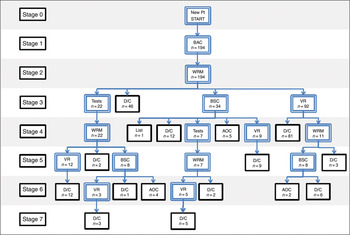
Figure 2 shows the various care pathways employed at the multidisciplinary balance clinic, and the number of stages per pathway. Each patient's outcome was noted, thereby minimising reporting bias. There were three end-points for patient care: discharge, listing for surgery, and follow up at the adult otology clinic. The latter option was used for patients suspected of fluctuating, unstable labyrinthine pathology, for whom periodic review was considered to be of potential benefit.
Patient care pathways and outcomes. Possible investigations included autoimmune markers, C-reactive protein, erythrocyte sedimentation rate, treponemal serology, thryoid function, glucose assessment, electrocochleography, magnetic resonance imaging of the internal auditory canals and high resolution computed tomography of the temporal bones. Blue outline = care pathway remains active; black outline = care pathway ends; pt = patient; BAC = balance assessment clinic; WRM = weekly review meeting; D/C = discharge; BSC = balance specialist clinic; VR = vestibular rehabilitation; list = list for surgery; AOC = 6-monthly monitoring in adult otology clinic.

Final analysis indicated that 121 patients (74 per cent) received vestibular rehabilitation, 29 (15 per cent) required adjunctive tests, 11 (6 per cent) were regularly followed up at the adult otology clinic, and one was listed for a labyrinthectomy for intractable Ménière's disease. One hundred and eighty-two patients were discharged. Fifty (26 per cent) patients were reviewed by the consultant at the balance specialist clinic. A small number of patients required re-evaluation at the weekly review meeting.
Patient satisfaction
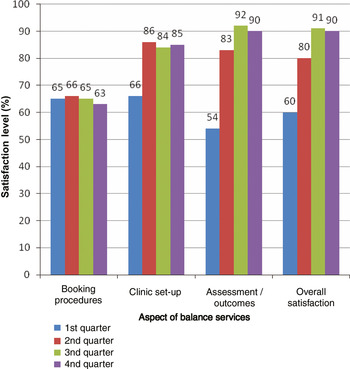
Figure 3 demonstrates patient satisfaction levels over the 12 months assessed. These data are positive but by no means compelling. Patients expressed increasing levels of satisfaction as the 12 months progressed, with the exception of responses pertaining to the bookings procedure. Further analysis allowed us to conclude that this was due to the shortfall in balance assessment clinic capacity and resultant prolonged waiting times.
Results of patient satisfaction survey.

Discussion
Diagnostic outcomes
Our analysis of patients’ major diagnostic categories identified a predominance of peripheral vestibular pathology. This is in agreement with the findings of Bath et al. Reference Bath, Walsh, Ranalli, Tyndel, Bance and Mai11 Our service accepted referrals from multiple sources: ENT, neurology, general practice and other medical specialties. Central lesions were also common in our series; we hypothesise that this was because a significant proportion of referrals originated from neurology clinics, including a regional neurofibromatosis unit. More than 50 per cent of referrals came from our ENT and neurology colleagues. If they had referred directly to vestibular rehabilitation, one would assume that the waiting list would have reduced. However, our experience of our pre-existing balance services arrangement showed that this was not the case. Informal discussion with our ENT colleagues revealed that a significant proportion continued to prefer their patients to undergo a thorough neurotological assessment at the multidisciplinary balance clinic's balance assessment clinic, prior to vestibular rehabilitation.
The multidisciplinary balance clinic incorporated all pre-existing services for balance-disordered patients. Our next objective is to make this clinic widely known amongst local general practitioners, in order to attract referrals.
Our analysis indicated that 40 per cent of patients discussed at our weekly review meetings were not deemed to need immediate vestibular rehabilitation. This highlights the complexity of the referrals received. It also emphasises the undesirability of swift, less regulated access to vestibular rehabilitation, as such treatment may not be required in the first instance. Alternatively, patients may instead need a face-to-face consultant review.
Investigations
The two specialist physiotherapists employed in the multidisciplinary balance clinic possessed the appropriate knowledge and skills to undertake the testing procedures allotted to them. They had both received training from eminent UK consultant audiological physicians, and gained extended experience in neurological physiotherapy and vestibular rehabilitation (from attachments to specialist consultant clinics).
The complete array of audiovestibular tests available at the balance assessment clinic is listed in Table I. The choice of tests was individualised to suit each patient's requirements. For example, if a patient was deemed to have a clear diagnosis of benign paroxysmal positional vertigo, following history-taking and physical examination, bithermal caloric examination would not be undertaken, and they would proceed directly to appropriate particle repositioning manoeuvres.
The cost of routinely offering comprehensive audiovestibular investigation was offset in several ways.
Primarily, our thorough, integrated balance assessment clinic and weekly review meetings meant that patients required fewer clinic attendances for each episode of care. Diagnoses were reached in a more timely manner and management strategies implemented more quickly, compared with the previous balance services arrangement. This reduced the number of follow-up clinic appointments, thus sparing ENT department resources.
In addition, ENT consultants’ workloads were reduced by utilising allied health professionals with vestibular specialisation. Our new balance services model meant that the ENT consultant balance specialist spent less time on the overall delivery of balance services, but still oversaw clinical decision-making for every patient seen in the multidisciplinary balance clinic.
A total of 29 patients required additional testing. However, this number may be artificially low because some patients may already have had some form of imaging study (e.g. magnetic resonance imaging [MRI]) prior to engagement with balance services.
Regarding cost savings, it is also worth emphasising that, during the weekly review meetings, the consultant was able to make an informed decision on requesting more complex testing, including computed tomography and MRI. This assisted our service to be efficient as well as comprehensive.
We acknowledge that the use of bithermal caloric testing in the routine assessment of patients with balance symptoms continues to be controversial. The key issue in this debate is whether the results of caloric testing influence subsequent patient management. Throughout our first year of operation, we encountered a small but significant number of cases in which caloric test results prompted the need for further investigations, in the absence of any worrisome clinical symptom or sign. We have striven to optimise the safety of our service, and we therefore feel that this small cohort justifies incorporation of bithermal caloric testing in our assessment procedure. Furthermore, our analysis indicated that 30 per cent of our patients had unilateral peripheral vestibulopathy and a further 10 per cent had central lesions. One would expect bithermal caloric testing to be helpful in assisting the diagnosis of these conditions. In future research, it would be useful to investigate whether bithermal caloric testing is useful, in addition to our routine investigations, in our specific demographic of balance-disordered patients.
We often encountered complex cases in which there was a strong psychological component. In such cases, it was helpful to have available the results of a range of investigations when making clinical decisions.
Balance specialist clinic
One of the positive outcomes of the first year of our service was the proportion of patients (47 per cent) for whom a decision was made to pursue vestibular rehabilitation without prior assessment at the balance specialist clinic (Figure 2, Stage 3). We believe this to be a more efficient use of resources, compared with our previous model of balance services. Overall, only 26 per cent of patients required assessment at the balance specialist clinic, compared with 100 per cent previously. This indicates the efficiency of the overall multidisciplinary balance clinic model. However, we acknowledge that the low number of patients requiring balance specialist clinic assessment may also have been partly due to the substantial proportion of referrals originating from fellow ENT consultants; such referrals could be expected to be better informed. Further analysis indicated that patients seen at the balance specialist clinic originated from very similar referral sources, compared with the whole patient group (Figure 1).
Our original balance services arrangement, whereby patients were seen by ENT consultants at the point of entry, remained active concurrently during the study period. However, patients seen under this old service arrangement were not included in the current study.
The balance specialist clinic represented a crucial ‘safety net’ for those patients with more complex presentations. We believe that incorporation of a balance specialist clinic into our new balance services model appropriately acknowledged the clinical risks of our patient population.
Regarding patients discharged from the multidisciplinary balance service, we acknowledge that it is challenging to determine the exact number of potential missed diagnoses. However, such data are also not readily available from the other ENT clinics which previously managed our balance-disordered patients, so comparisons would be problematic. We followed up all patients who were offered vestibular rehabilitation. The 11 patients who did not respond to vestibular rehabilitation were either reassessed at the weekly review meeting or seen at the balance specialist clinic, in order to exclude more sinister pathology. We continued to record these patients’ outcomes, and at the time of writing were unaware of any misdiagnoses.
Nine patients were sent for vestibular rehabilitation following balance specialist clinic consultation. Analysis suggests that these patients had complex and atypical clinical presentations.
Vestibular rehabilitation waiting times
Following assessment at the weekly review meeting, waiting times for vestibular rehabilitation were no more than three weeks, throughout the 12-month study period. This is encouraging. Furthermore, we estimated adherence rates of over 90 per cent for patients assigned to vestibular rehabilitation.
However, the waiting time for the initial balance assessment clinic appointment was a disappointing 12 weeks. This was unexpected, although no worse than our previous average ENT clinic waiting time. This waiting time reflects a mismatch between demand and capacity which is typical of new services; at the time of writing, we were actively seeking appropriate management solutions.
We were unable to collect data on waiting and follow-up times for all the general and specialist ENT clinics run by our Trust prior to and during the multidisciplinary balance clinic's first year of operation, for the purpose of comparison. Our analysis of our own, balance service data indicated a reduction in waiting time from balance services referral to vestibular rehabilitation, from 21 to 15 weeks. Our analysis indicates that a large proportion of the dizzy patients assessed at our tertiary care centre received vestibular rehabilitation. This high demand provides the impetus to further enhance the efficiency of our novel service.
Efficacy of vestibular rehabilitation
In their study from Wexham Park Hospital, UK, of a service model focussed solely on streamlining the management of benign paroxysmal positional vertigo, Leong et al. reported a reduction in the delay between referral and particle repositioning manoeuvre, from 24 weeks to three weeks.Reference Leong, Barker and Bleach12
In another study, Yardley et al. examined the effectiveness of vestibular rehabilitation provided in a primary care setting, which involved providing an information booklet to read, followed by one 40-minute session of generic vestibular rehabilitation delivered by nursing staff.Reference Yardley, Donovan Hall, Smith, Walsh, Mullee and Bronstein13 Subjective improvements were found in patients’ Dizziness Handicap Inventory and Hospital Anxiety and Depression Scales scores.
Both of these service models differed from our own. However, the recent NHS ‘Action on ENT’ framework has encouraged the development of different practices, in order to help identify service models which are both efficient and clinically responsive. We acknowledge that no single service design is likely to represent the ‘best fit’ for the entire UK, given the disparities in socioeconomic and patient demographics.
• A multidisciplinary balance clinic is reported, created in response to UK Department of Health directives
• Vestibular rehabilitation is fundamental to the treatment of many balance symptoms; allied health professionals can play an important role
• The multidisciplinary balance clinic combined comprehensive balance assessment (by allied health professionals) with ENT consultant led review, to streamline access to vestibular rehabilitation
• Of 194 patients assessed, only 26 per cent required individual consultant assessment; 74 per cent were treated with vestibular rehabilitation
• Patient satisfaction with the service was encouraging
In the future, we aim to conduct an effectiveness study of our multidisciplinary balance clinic, by collecting and comparing data from our old and new models of balance services provision. We would like to investigate whether our new balance services model could safely reduce the requirement for selected ancillary tests.
Conclusion
Our results indicate that our new multidisciplinary balance clinic model ascribed diagnoses to balance-disordered patients which were comparable to those made in other tertiary care settings. Prior to institution of this new service model, balance-disordered patients had been seen in our Trust's general ENT clinics, which were often filled beyond capacity. The new multidisciplinary balance clinic model unified all pre-existing care pathways for balance-disordered patients. Assessment by allied health professionals spared valuable ENT consultant resources. Vestibular rehabilitation waiting times were reduced, and no untoward events were recorded. Users were generally satisfied with the service. We aim to continue using this balance services model to serve the needs of our patient population. Overall, we believe that the goals of this new service have been achieved.
Acknowledgements
We gratefully acknowledge Drs N Julian Holland and J Ferguson for their work in the initial planning and running of this clinic, and Ms N Koloutsou, Mr S Sriskandarajah and Ms S Hajir for their continued support.