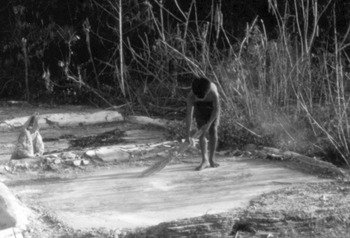
INTRODUCTION
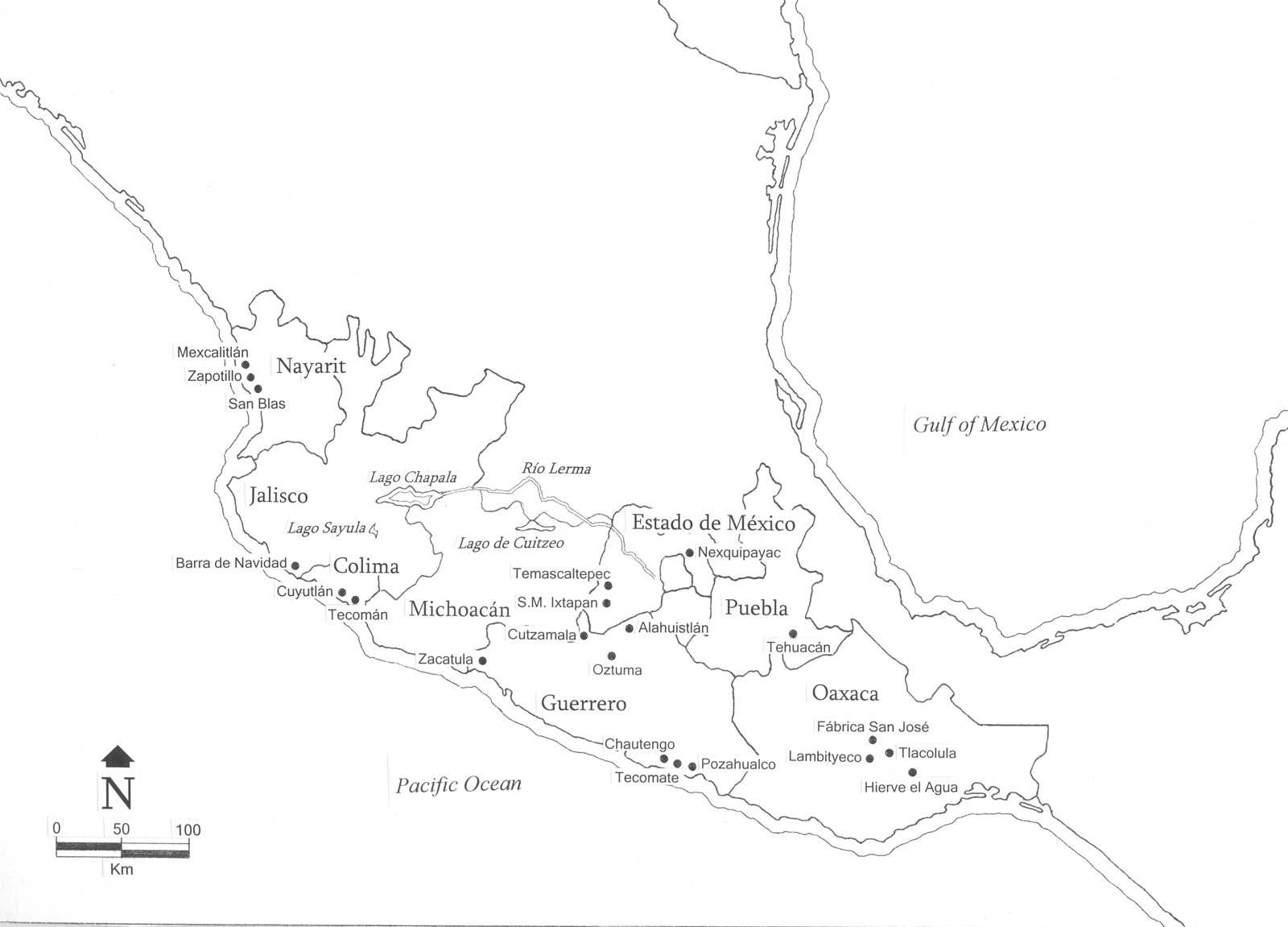
Common salt, or sodium chloride, has always been a strategic resource of primary importance throughout the world. In pre-Hispanic Mesoamerica, salt was used mainly for human consumption, as the native diet (consisting mainly of plants such as maize, beans, chili peppers, squash, and so on) had little chloride or sodium (Williams Reference Williams, Staller and Carrasco2010). Worldwide, once people began cultivating crops, they began looking for salt to add to their diets (Kurlansky Reference Kurlansky2002). Diamond (Reference Diamond2012:415) has stated that “today, salt comes from a salt-shaker on every dining table and ultimately from a supermarket, is cheap, and is available in essentially unlimited quantities.” However, in the past, “salt didn't come from salt-shakers but had somehow to be extracted from the environment … most farmers had a daily salt intake below three grams … hence traditional peoples crave salt and go to great lengths to obtain it.” In the pre-industrial world, sodium chloride had several other important uses, apart from its role in the diet, particularly as a preservative of animal flesh, as a mordant for fixing textile dyes, as a medium of exchange, and as a principle component in the preparation of soaps and other cleansing agents (Parsons Reference Parsons, Hodge and Smith1994). The flow of strategic and scarce goods (including salt) throughout Mesoamerica depended on widespread lines of communication and trade routes that were critical aspects of the economic and social life of most Mesoamerican polities (Figure 1). What follows is a brief discussion of several key aspects of this essential mineral, based on archaeological, ethnohistorical, and ethnographic sources.
Map showing particularly important salt-producing sites in western and central regions of Mesoamerica. Map by author.

First, I consider the concept of assemblage as it relates to salt production. The word assemblage refers to “a group of artifacts recurring together at a particular time and place, and representing the sum of human activities” (Renfrew and Bahn Reference Renfrew and Bahn2000:565). The assemblage concept is quite old in archaeological parlance. John Lubbock, one of the pioneers of British archaeology, first used this term in 1865 to describe animal remains found in stratigraphic cave deposits. Later, Childe (Reference Childe1956) used the same word as a specialized term for the distinctive materials enclosed in a specific layer of the stratigraphic sequence (Joyce and Pollard Reference Joyce, Pollard, Hicks and Beaudry2010:294–295).
A decade after Childe, Clarke (Reference Clarke1968:35) wrote that “most archaeological entities consist of clusters or aggregates of entities of lower taxonomic rank … culture groups are clusters of cultures, cultures are clusters of assemblages, assemblages are clusters of types, types are clusters of traits. To the archeologist the process of grouping objects into ‘sensible’ groups, clusters, or sequences has been a normal activity for decades.” According to Clarke (Reference Clarke1968:245, italics in the original), “archaeological usage has established an … assemblage as an associated set of contemporary artifact-types. The important aspects of an artefact assemblage … are that the artefacts may belong to more than one type and that they occur together in definite contemporary association with one another.” However, “the occurrence of several artefact-types of uncertain chronology, within the same limited geographical area, does not constitute an assemblage in the sense defined here but rather constitutes an ‘aggregate’ of lesser significance and information value” (Clarke Reference Clarke1968:245). Clarke ends his discussion by stating that “an archaeological culture is expressed by a set of specific artefact-types and represented by a group of assemblages containing some of those artefact-types” (Clarke Reference Clarke1968:246).
According to Beck (Reference Beck2018:2), the components of an assemblage “include both tangible and intangible as well as human and non-human elements … the assemblage is not reducible to its components, as the interaction and relations between the components are also giving the assemblage some specific properties of its own.” As we know from ethnoarchaeology, “an assemblage is never a static phenomenon but in a constant process of being assembled, re-assembled, and de-assembled … As such the perspective from assemblage theory automatically gives a strong focus on the ongoing dynamics creating and recreating the assemblage and therefore also on the inherent temporalities of the assemblage rather than its static being” (Beck Reference Beck2018:2). Obviously, archaeological assemblages do not appear in a vacuum. They are usually found in sites that preserve evidence from the ancient past, as discussed below.
SALT-MAKING SITES AND TECHNIQUES IN MESOAMERICA
Salt-making sites and tool assemblages are analyzed in the following sections, where I present a summary discussion of the traditional salt industries in Michoacán, Colima, Guerrero, the Basin of Mexico, and Puebla, from the perspective of ethnoarchaeology and ethnohistory.
The Lake Cuitzeo Basin, Michoacán
The Lake Cuitzeo Basin has natural salt deposits and thermal springs with a high mineral content that have been used for salt-making for centuries. This basin was a key economic area in ancient times, thanks to its salt and obsidian deposits, as well as abundant aquatic resources (see discussion in Williams Reference Williams2015). The towns of Araró and Simirao on the eastern margin of Lake Cuitzeo have been renowned for their high-quality salt since the sixteenth century (Escobar Reference Escobar and Reyes1998). This is a geologically active basin whose subterranean water deposits have a rich mineral content and are used in the salt-making process (Williams Reference Williams1999, Reference Williams2015, Reference Williams2018).
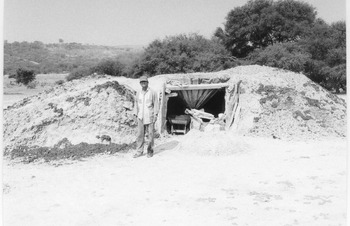
A salt production unit in Simirao is known as a finca, and consists of two or more estiladeras, which are wooden structures used as filters for leaching the salt from the earth. An estiladera is roughly 1.5–2.0 m high (Figure 2). Inside there is a layer of earth near the top, then a layer of two kinds of grass (fine and rough), and below a kind of sieve made with small sticks. The bottom of the estiladera rests atop a thick wooden plank, placed on a trough-shaped basin made of a hollowed-out log, into which the brine falls. Terreros are mounds around the estiladera, produced by the accumulation of earth that is discarded after leaching. These can be recycled and used in future salt-making operations.
The leached soil is thrown to the sides of the estiladera, where it accumulates over time, forming the terrero or mound. Photograph by the author.

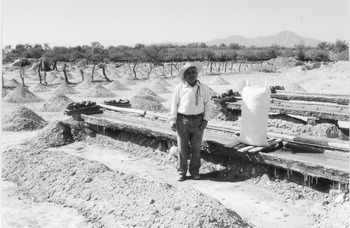
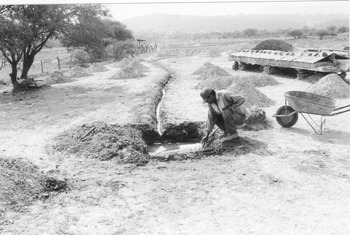
A finca usually has several wooden troughs (hollowed-out tree trunks) called canoas (Figure 3), measuring 6–10 m long, where the brine is collected after filtering in the estiladera, so it can be evaporated by the sun. Formerly, large tree trunks were brought down from the hills by oxen in order to make the canoas, but those wooden canoas are now being replaced by cement troughs because large trees are rare in the area. In addition to these features, each finca has an area of some 400 m2 where salt-bearing soils are excavated and mixed. There is a network of canals that bring water from the springs to the fincas (Figure 4). These canals are 50–80 cm deep and several meters long. In some cases, the water from the springs has “fossilized” the canals on account of its high mineral content, thus producing enduring material evidence of salt production.
A finca usually has several canoas to evaporate brine under the sun. In some cases, a canoa may be up to 150 years old. Photograph by the author.

At Simirao there is a network of canals linking nearby springs to the saltworks. A constant flow of mineral-rich water from the thermal springs is essential for salt production. Photograph by the author.

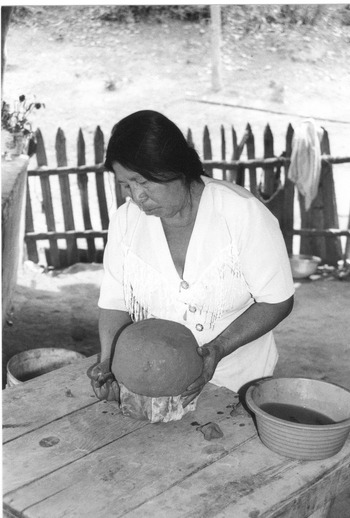
The tools employed by salt-makers are relatively simple: shovels and hoes for removing the soil, wheelbarrows for moving soil from one place to another within the finca, and buckets for moving and storing water and brine. The tools used in the past included a sack made of ixtle fiber (Agave sp.) called guangoche, used to transport earth (Figure 5), and clay vessels known as chondas for moving and storing water and brine. Until recent years, chondas were made in the barrio de alfareros or potter's quarter in Zinapécuaro, the main town in the Lake Cuitzeo Basin (Figure 6).
This sack made of ixtle fiber was used to gather soil for salt-making at Simirao. Photograph by the author.

The clay pots used by salt-makers in the Lake Cuitzeo Basin into the mid-twentieth century were made by potters in Zinapécuaro, the main town in the basin. Photograph by the author.

The salt-making process in the study area can be divided into four sequential stages: (1) earth is extracted, prepared and mixed; (2) salt is obtained by leaching the earth in the estiladera with water from local springs; (3) the brine is evaporated in the canoas and the crystallized salt is gathered; and (4) the final product is packed and sold.
There are two types of earth used in the salt-making process: tierra tirada (thrown earth) and tierra picada (pecked earth), both of which are found in the fincas. Tierra tirada is recycled from previous salt-making operations. Once the earth's salt content is diminished by leaching, it is taken out of the estiladera and heaped on the terrero, or mound of leached soil. After a while, earth builds up and is carried away by shovel and wheelbarrow to be spread over the ground of the finca and sprinkled with spring water. It is left there for a day or two and then used again once it has been mixed with tierra picada. The latter is extracted with shovels or hoes from the upper layer of soil. One can see several small heaps of tierra picada and large mounds of tierra tirada inside every finca.
Because the estiladeras are made of wood, they do not last for long periods of time. Instead, what we would expect to find at a pre-Hispanic saltworks as evidence of the leaching process would be wells used to obtain salt-rich water, canals, and the stone foundations upon which the canoas, estiladeras, and other features may have rested. Abandoned terreros, meanwhile, are the most visible indicator of salt-making operations in the study area (Williams Reference Williams2015:Figure 57), and in many other regions of Mesoamerica (Noguera Reference Noguera1975; Sanders et al. Reference Sanders, Parsons and Santley1979).
The Coast of Michoacán
In 2000, I conducted ethnoarchaeological fieldwork around the town of La Placita on the coast of Michoacán, one of the few salt-working communities in Mexico that still used traditional (in part, pre-Hispanic) techniques at the time of my visit (Williams Reference Williams2002, Reference Williams, Staller and Carrasco2010, Reference Williams2015).
The saltworks at La Placita have been abandoned since my fieldwork there. The ecological conditions of this area—that is, the coastal strip that stretches from Cuyutlán (Colima) in the north to Maruata (Michoacán) in the south—are ideal for salt production, as sodium chloride is an abundant ingredient of seawater, and sunlight, an essential requirement for evaporating brine, is constant and intense through almost the entire year, especially during the dry season (October to May).
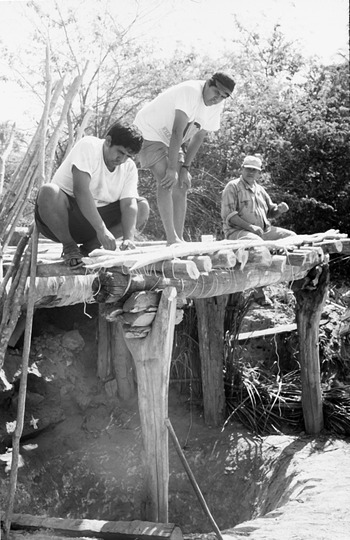
The salt-making process at La Placita traditionally consisted of filtering salty water from the nearby estuary or lagoon through a layer of salty earth locally called salitre, which is obtained from the beach around the estuary and was used to produce salt by leaching in a tapeixtle, a filtering device discussed below (Figure 7).
Building a tapeixtle to filter salty water was a laborious process involving several men. Photograph by the author.

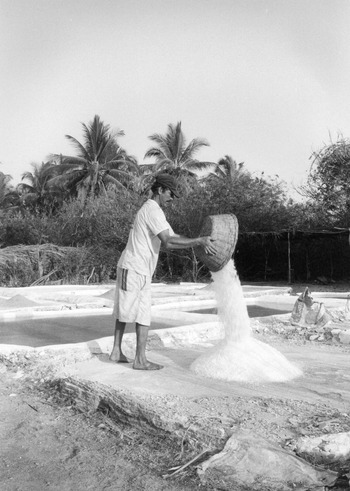
Once the brine was obtained by leaching the earth, it was poured into solar evaporation pans called eras, where the water disappeared under the hot sun, leaving crystallized salt (Figure 8). Once salt had dried, it was packed and taken away to be sold or exchanged for other commodities. The salt-making unit here is called a plan. It covers an extension of 400–600 m2 and consists of a tapeixtle, several eras, and at least one terrero.
The crystallized salt was removed from the eras (background) and thrown on the ground to complete the drying process under the sun's rays. Photograph by the author.

The salt-making season in the coastal area of Michoacán and Colima occupied the driest part of the year (roughly early April to mid-May), because the fresh water that falls during the rainy season drastically reduces the level of salinity in the estuary and the soil around it, while the greater cloud cover reduces the sunlight required to evaporate the brine. Salt-makers carried out other activities when salt-making was not possible, such as fishing, agriculture or wage labor, either within the area or outside it. Traditionally, it was the men who worked in the saltworks because, as they used to say, “this kind of labor is too hard” for women, who came only to collect the salt, receiving part of the production as payment. Most of these women were related to the salineros by blood, marriage, or ritual kinship.
The leaching process was carried out in the aforementioned tapeixtle, a flat platform made of branches supported by tree trunks. The upper part of the tapeixtle was called cajete, the bottom part taza, and together they were known as a pozo. The cajete was made out of mud (from the soil that was discarded after leaching) and was formed by a ring made with branches and banana tree leaves, known as a ñagual. The filtering device included several layers of grass, small stones, and sand.
Each era was filled with 20 buckets of brine (one bucket holds 20 liters); subsequently, two or three buckets a day were added to the era, and after five days it was possible to collect the first batch of salt. Thereafter, salt was collected every other day, on average 25–30 kg each time. Each plan, or salt-making unit, produced seven tons of salt on average during the season, if the weather conditions were good.
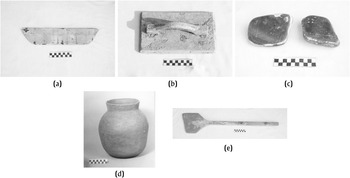
To evenly spread the sand mixed with lime on the era, the salineros used a small wooden slat (about 20 cm long) called a paleta (Figure 9a). After spreading the sand-lime mixture, another wooden tool called a menapil was used to smooth the surface of the era (Figure 9b). Finally, the salineros polished the surface of the era with a river cobble (Figure 9c). A clay pot was used to transport and store water and brine (Figure 9d). The salitre was excavated from the comederos—that is, the areas of the beach adjoining the estuary with the highest level of soil salinity. Before extracting the salitre with a shovel (Figure 9e), the ground was prepared by raking it with the gata, a wooden instrument with iron spikes that was dragged by a horse to loosen the soil and allow the salineros to easily make small heaps of salitre. This salty earth was carried on horseback from the beach to the tapeixtles, though in olden days the salineros carried the baskets of salitre on their heads. After these operations were completed, the workers carried salty water in buckets from the estuary to the cajete; later, brine was taken from the taza under the tapeixtle to the eras. In the past, they used balsas for this, or vessels made of gourds that the salineros themselves planted, but clay pots have been used since pre-Hispanic times (Figure 10). A trade network once existed whereby artisans who made baskets and pots, among many other articles, would come to the salt-producing villages and exchange their goods for salt.
Part of the salt-making assemblage formerly used at La Placita and other coastal sites: (a) paleta; (b) menapil; (c) polishing stones; (d) pot; (e) shovel. (a–c, e) La Placita, photographs by Teddy Williams; (d) Maruata, photograph by the author.

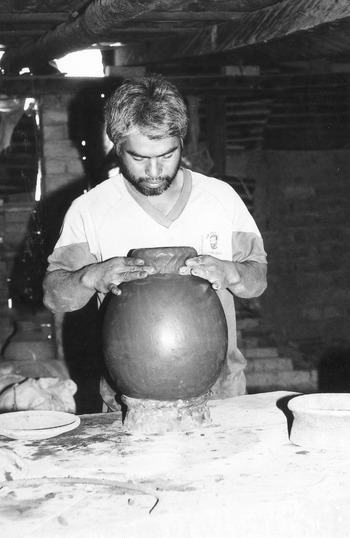
Potter working in her household workshop at Maruata, on the coast of Michoacán. Photograph by the author.

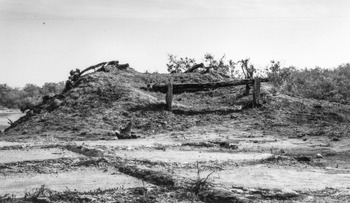
The leached soil, meanwhile, was removed from the tapeixtle and heaped on top of the terrero, where it accumulated in large mounds (Figure 11). Eventually, this soil was withdrawn by shovel and spread over the comederos. After a few days, the recycled soil once again became rich in salt and could be used anew. The salineros had to work constantly to harvest the crystallized salt and ensure that the eras were full of brine at all times.
In the abandoned salt-making sites of La Placita, one can still see the remains of eras, or salt evaporation pans, and mounds of leached earth, called terreros. Photograph by Teddy Williams.

In ancient times, the coast of Western Mexico was very important as a provider of salt to inland populations. Numerous salt-making sites have been discovered along the coast in Sinaloa, Jalisco, Colima (Weigand and Weigand Reference Weigand and Weigand1997:5–8), and Nayarit (Mountjoy Reference Mountjoy, Foster and Gorenstein2000:102–103). From pre-Hispanic times until some 60 years ago, the stretch of the coast of Michoacán and Colima from Cuyutlán in the north to Maruata in the south was a veritable salt emporium, with countless sites, large and small, where salt was produced. Three types of sites were found during my survey of the coast of Michoacán: (1) locales where salt was produced until around 2010 (the pre-Hispanic materials found at most of these sites attest to their occupation in ancient times); (2) places where salt production was carried out until perhaps 60 years ago, but are now abandoned (at most of these sites, pre-Hispanic material is found on the surface); and (3) sites where salt may have been produced in ancient times, some of which appear to be both habitation and production sites.
After talking with informants and checking material evidence on the ground, we identified 16 abandoned salt-producing sites near La Placita, but the total was probably much higher in pre-Hispanic times. Around all the estuaries along this portion of the coast there are many salt-making sites, with the remains of eras, tapeixtles, and terreros that have been abandoned for the past 70 years or so.
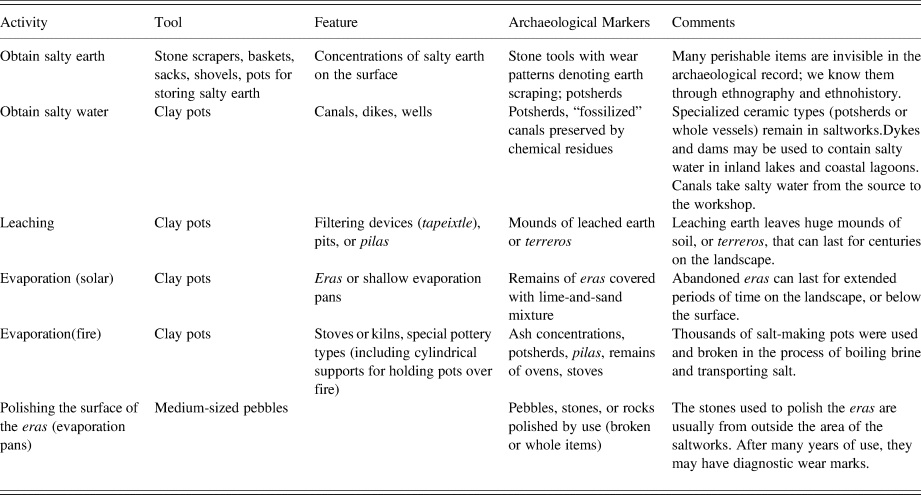
Because salt is rarely preserved in the archaeological record, unlike other strategic resources that were produced and exchanged among the indigenous peoples in the coastal area of Michoacán—obsidian, shells, metals, turquoise, and many other items—identifying archaeological sites where salt was produced, stored or traded presents certain difficulties. However, in light of the ethnographic and ethnohistorical information discussed above, we can postulate the existence of several kinds of material evidence that serve as markers of salt production at specific sites. The main indicators (or archaeological markers) of salt production using traditional techniques (some of clear pre-Hispanic origin) in the areas under discussion are presented in Table 1. They include mounds of discarded soil, or terreros; abandoned solar evaporation pans, or eras (Figure 11); and specialized pottery types associated with salt production sites.
Summary of tools, features, and archaeological markers associated with salt-making in Mesoamerica.

The northwest coast of Michoacán and adjoining areas of coastal Colima produced great amounts of salt. Based on the production figures reported by informants for the pre-1950 period, the coast as a whole must have produced hundreds of tons of salt. However, during the 2000 field season, only four salineros were working at La Placita. The author stated in the original report (Williams Reference Williams2003) that “the techniques, tools and features reported in these pages will probably disappear from La Placita as the old salineros retire or die and all their knowledge and traditions are forgotten.” Alas, this prediction has been fulfilled: the saltworks studied by the author almost 20 years ago now stand vacant and the salt-making tools of old are all but forgotten.
The Coast of Colima
North of the coast of Michoacán discussed above lies the present-day state of Colima. The coast of Colima is one of the most notable salt-producing regions in Mesoamerica, with the town of Cuyutlán serving as the epicenter of salt manufacture and trade since the colonial period, though it was likely active from much earlier times (Weigand and Weigand Reference Weigand and Weigand1997).
Nowadays, salt production in Cuyutlán is based on the solar evaporation technique, carried out in great evaporation pans, or eras, densely distributed around pits. Instead of the lime coating used in the past, the pans are now covered by huge plastic sheets in the saltworks at Cuyutlán, where rubber hoses are used to take the brine to the eras, and the salt water is extracted using gasoline-powered pumps. Traditional indigenous production seems to have been carried out in a similar way, except that the pans were less regular and water was conveyed by means of canals, wells, and shallow ditches. In some cases, the remains of ancient ditches can still be seen, but conclusive identification of ancient solar evaporation pans is problematic (Weigand and Weigand Reference Weigand and Weigand1997:7–8).
Salt was the most important product for the economy of Colima from the sixteenth to the nineteenth century. The economic role of salt production in this region was considerable, since Indians, Creoles, and Spaniards alike paid salt as tribute to the Crown, and the guilds also paid their tithes in salt. The guilds sometimes owned saltworks that had been bequeathed to them in wills (Reyes and Leytón Reference Reyes and Leytón1992).
Although the saltworks are near the sea, salt is not taken directly from sea water; rather, it is extracted from the deposits left when the sea retreats from the estuaries and lagoons that are connected to it during the rainy season. The same techniques described for colonial Michoacán (Williams Reference Williams2015:95–101) may have been used during the pre-Hispanic period up to the mid-sixteenth century in Colima as well. The first description of these techniques—which have prevailed with only minor modifications right up to the present—comes from the eighteenth century. The way to make a pozo or salt-making unit was first to form a basin or tank, place a tapestle—a variant of the term tapeixtle—on top of it, and then fill the tapestle with salty earth. Salt water was poured on top of the earth to distill it and transform it into brine, which was then transferred into the lime-covered evaporation pans. After a while, the heat of the sun evaporated the brine and the end result was crystallized salt (Reyes and Leytón Reference Reyes and Leytón1992).
The pozo is the most important feature used in this salt-making process since all activities are performed in or around it. It consists of the filtering device and the basin where brine is stored. Rectangular in form, it features two levels, measuring roughly 5 m wide by 3 m deep. The upper part consists of the cajete (bowl) that sits atop the filtro (filtering device). At the bottom is the taza, or basin, into which the brine falls, while at the back of the structure is the terrero, or mound of leached earth.
In front of the taza are the evaporation pans, arranged in a rectangular pattern, each one measuring 5 × 5 m or 7 × 7 m, with a depth of 15 cm (Figure 12). One pozo may have 36 or more eras, depending on the owner's productive capacity and the quality of the earth around the production unit. The eras are interconnected by small canals and are built at different levels so they can be filled by gravity.
In the Cuyutlán saltworks, the salineros begin at an early age, learning the trade in a household context. Photograph by Evelyn Flores.

Near the eras is the asoleadero, where the crystallized salt is heaped up under the sun to extract the remaining humidity. Around the plan or plot are the comederos, the land that contains the salty earth. The comederos measure on average 2 ha, but their size varies according to the quality of the soil where the pozo is located. The same pozo can be used for an undetermined number of years, but it must be rebuilt at the beginning of each salt-making season because the rising water of the lagoon during the rains will have covered and partially destroyed it (Reyes and Leytón Reference Reyes and Leytón1992:138–139).
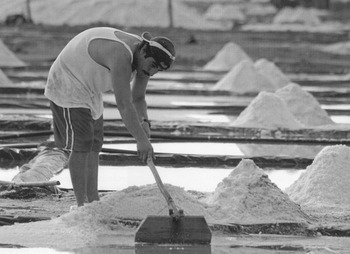
The salt-making process begins with gathering the salty earth from the comederos, using only soil from the uppermost layer. After this, the earth is heaped up in small piles using a wooden rake, then placed in the cajete and mixed with salt water to commence the gravity-driven filtering process. Brine falls into the taza, where it is stored and later taken to the eras. As the salt crystallizes, it concentrates in one part of the era, then it is collected with a rastrillo, a wooden rake without tines (Figure 13), and taken to the asoleadero, where it is heaped up in a cone-shaped mound. Today, the salt is carried in wheelbarrows, though formerly baskets made of reeds were used (Reyes and Leytón Reference Reyes and Leytón1992:140–141).
Crystallized salt in the era is collected with a rastrillo in Cuyutlán, Colima. Courtesy of Blas Castellón.

As far as technology is concerned, the influence of the Colima saltworks extended from southern Sinaloa to northern Oaxaca. In pre-Hispanic times, the most common salt-making technique was based on boiling brine. Basically, when sea water or water from saline wells was not used directly, it was necessary to first obtain water with a high saline content, commonly known as brine (salmuera). This could be achieved by several different processes of leaching and cleansing salt-bearing soils. After that, the brine would be boiled to produce crystallized salt by evaporation. Both processes, leaching and evaporation, were carried out using clay pots. Although this method was effective, it was not very practical if one wanted to produce great volumes of salt, so as demand increased it became necessary to develop new technology. Thus it was that in the second half—or perhaps closer to the end—of the sixteenth century, the tapeixtle made its appearance in Colima. This innovation made it possible to leach great amounts of earth and obtain copious amounts of high-quality brine, which was no longer boiled, but rather evaporated under the intense rays of the sun (Reyes Reference Reyes and Reyes1995:152).
The tapeixtle appears with many incarnations along the entire Pacific coast of Mesoamerica, from Sacapulas, Guatemala (where it is called cajón; see Andrews Reference Andrews1983:Figure 4.11) to Guerrero's Costa Chica (Quiroz Reference Quiroz1998), and on to Sinaloa (Reyes Reference Reyes and Williams2004). Many names were given to the different varieties of this brine-leaching feature: tapesco, tapanco, tapeite, tapeixtle, tapestle, and tapextle. In many cases, the tapeixtle and its variants were used in conjunction with solar evaporation pans, which have been reported from the Yucatán Peninsula in the south (Andrews Reference Andrews1997) to Escuinapa, Sinaloa, in the north (Grave Reference Grave2019:Figure 1).
The Coast of Guerrero
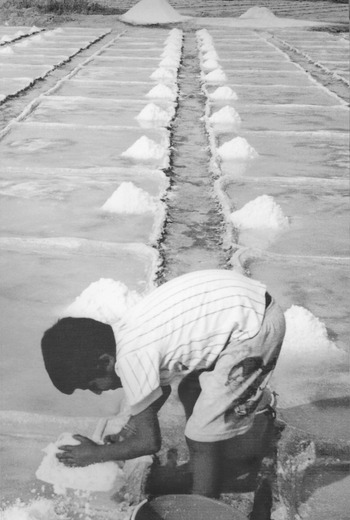
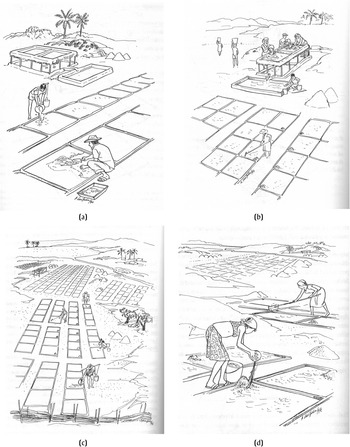
There are several salt-making sites on the coast of Guerrero, many of them located in swamps and estuaries in the littoral south of Acapulco. At four of these localities—Tecomate, Los Tamarindos, Chautengo, and Pozahualco—saltworks are exploited during the dry season, independently of each other and on a domestic scale or household level of production (Good Reference Good1995). At the first three sites named above, salt is made by leaching swamp soils that dry up during the long, hot, dry season. Salt-makers here carefully break the thin upper layer of earth and carry the pieces in sacks or buckets to the saltworks, where they put them in a filter called a tapeite (a variant of the term tapeixtle discussed above; Figure 14a). This tapeite is built over a base of wooden planks or carrizo reeds covered by palm fronds or thick grass, with the sides made of adobe to form a rectangular bowl, covered by thick sand and a second layer of fine, sieved sand. Salty water is taken from a shallow well excavated close to the tapeite and poured over the salty earth. After trickling down through the filter, the water is channeled to a holding tank coated with a mixture of sand and clay (Good Reference Good1995:Figures 4 and 5). The concentrated brine that falls into the tank is then moved to the eras, where it evaporates and is transformed into white, granular crystallized salt, called la flor de la sal (Figure 14b). The pans are square or rectangular, carefully built with clay and coated with lime. They are arranged in single or double lines called mecates (Figure 14c). These pans are approximately 15 cm deep, and their size varies from 1.2 to 2.2 m per side. The salt-makers sometimes shaped an independent circular pan called comalli or comal. The salt produced in this feature was destined for ceremonial purposes.
Summary of salt-making activities in the coastal area of Guerrero: (a) brine is taken from the tapeite and poured into the era (top), and the eras receive periodic maintenance (bottom); (b) salty water is brought from the estuary to the salt-making site (upper left), then poured into the tapeite, where it is leached into brine (upper right), which becomes white salt in the eras under the rays of the sun (bottom); (c) salt-making sites are spread over an extended area near the saltwater sources; (d) the eras are raked to collect the salt and, finally, the crystallized salt is gathered from the era. Courtesy of Haydée Quiroz.

Salt-makers fill the tapeite twice a day, after first removing the thick mud of previously leached earth, which is heaped on top of the mounds of discarded soil called muros de tierra (earth walls) that rise on either side of the tapeite to a height of 2 m or more. Salt can be harvested daily (Figure 14d) from the smaller pans if the brine is salty enough and the sunlight sufficiently intense through the day. Salt is gathered early in the afternoon using a hoe-like wooden implement, brooms and buckets (Figure 15), after which it is placed in a circular storage area, where excessive humidity is drained away and the grains of salt are left to dry thoroughly. Each saltworks also has one or two salt mounds of conical shape, called muros de sal (salt walls; Good Reference Good1995:2).
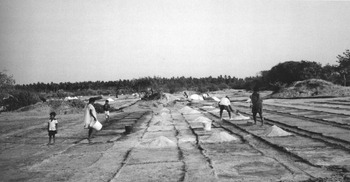
The eras are a common feature of the salt-making landscape in the area around Pozahualco and other towns on the Guerrero coast. Courtesy of Haydée Quiroz.

Operating these saltworks on the Guerrero coast has been considered a feminine activity in both historic and present times, and each family's technical knowledge is passed on from women to their daughters or granddaughters (Good Reference Good1995:3). Men contribute to the salt-making industry mainly by building the tapeites, evaporation pans, and holding tanks, but the routine, daily tasks, such as gathering and moving the salty earth, filling up and emptying the tapeites twice a day, pouring the brine into the salt pans, and harvesting the crystallized salt, are usually performed by women and children. The preparation of the tapeite, storage tanks, and evaporation tanks requires between 14 and 18 days of labor (Good Reference Good1995:3–4).
Successful production in these coastal saltworks depends on the adequate handling of several elements. The knowledge required is obtained and transmitted through collective practice—for instance, selecting the right earth for leaching is crucial in order to produce brine with the appropriate degree of salinity. The tapeite system requires that the individual production units be dispersed in order to obtain adequate supplies of salt within a short distance. Each area can be harvested approximately once a month, since the intense sun constantly causes the salt to flare up to the ground surface (Good Reference Good1995:5).
A considerable part of the salt from the Costa Chica of Guerrero circulates through exchange networks. In some cases, this is the main mechanism for commercialization of the salt produced there. Most of the exchange is controlled by women, and an astounding amount and variety of goods are included: maize, beans, fruit, cheese, meat, fish, sugar, baskets, petates, straw hats, pottery, blankets, and wood articles (Good Reference Good1995:10; see also Quiroz Reference Quiroz1998).
This area of the coast has an excellent level of preservation of the material features used in salt production, despite the floods that occur in the swamps every year during the rainy season. The storage tanks and fragments of the wooden poles that support the tapeites can still be seen in situ, but the most long-lasting remains of the salt-making activities here are the mounds of discarded leached earth, which survive for decades (Good Reference Good1995:10).
In the area under discussion, salt-making and fishing are the primary economic activities, but there are other occupations as well, such as small-scale trade and wage labor (both within the area and outside it). These may be considered optional, alternative or complementary strategies. During the rainy season, many families are active in fishing and, in some cases, agriculture, while in the dry season, part of the population is involved in salt-making, as discussed above (Quiroz Reference Quiroz and Reyes1995:187).
In Guerrero's Costa Chica, salt is still used as a unit of exchange, as shown by Haydeé Quiroz's research. This author says that the expression “thanks to our saltworks we don't lack anything,” is a statement of salt production as a way of life, whereby salt becomes a trade good that allows the acquisition of a wide variety of goods, both regional and imported from afar. The list includes fruit drinks, chilate (a typical Central American drink made of chili peppers, roasted maize, cacao, anise, pepper and cinnamon), prepared meals, maize, fruit, clothes, cosmetics, gold jewelry, bicycles, tape recorders, electric fans, and many other products (Quiroz Reference Quiroz1998:347). According to Quiroz (Reference Quiroz2009), salt production on the coast of Guerrero is geared primarily towards satisfying the needs of the salt-producing households, while the households that do not produce salt obtain this product through exchange based on kinship networks that extend out to the local and regional levels. In addition to forming part of the diet, salt has other uses in the area under discussion—for example, as a preservative for dehydrated fish and other kinds of meat.
In addition to its exchange value, salt is an important source of cash for satisfying the everyday needs of households, especially during the dry season. It can also help finance exceptional cash requirements, such as constructing a new house, or purchasing some electronic appliance like a television, stereo or even a refrigerator. But salt wealth can go further in its role within the economy, as it may be used to finance a wedding, or to cover expenses related to a sickness or accident (Quiroz Reference Quiroz2009:6).
The Basin of Mexico
In the Basin of Mexico, salt has long been an essential element of culture and the economy, a mineral widely consumed throughout history. According to Sanders et al. (Reference Sanders, Parsons and Santley1979), archaeological evidence suggests that demand, always widespread and consistent, led to an increase in production during the Late Postclassic (ca. a.d. 1200–1520), possibly related to the dense populations that lived in the basin but had only a limited supply of animal protein. There are good archaeological markers for identifying salt production sites during this period, so we know that salt manufacture was more intensive on the western margin of Lake Texcoco, and on the southern and northern boundaries of the sprawling urban center of Tenochtitlan. Sodium chloride was also extracted, although on a smaller scale, along the other margins of the lake, as well as around Lake Xaltocan. There may have been a natural basis for this distribution of production; for example, variability in the concentrations of salts most suitable for human consumption, though the pressure from the huge urban mass at Tenochtitlan was without doubt a motivating factor in the intensity of salt manufacture along the urban periphery, as producers sought to achieve the greatest proximity to the largest concentration of consumers (Sanders et al. Reference Sanders, Parsons and Santley1979).
Around Lakes Texcoco, Xaltocan, and Zumpango, there was a strip of salty earth 500–1,000 m in width, which was the primary salt-making area in antiquity. In this area, there are earthen mounds covered with fragments of an abundant ceramic type called Texcoco Fabric Marked (TFM), a late type related to Aztec salt production (Figure 16). These features provide strong evidence of the intensity and scale of salt manufacture in the pre-Hispanic past (Sanders et al. Reference Sanders, Parsons and Santley1979:85, 292–293).
Texcoco Fabric Marked is an abundant ceramic type related to Aztec salt production in the Basin of Mexico. Courtesy of Jeffrey Parsons.

The identification of salt-making archaeological sites in the Basin of Mexico depends on several unique, specialized features. Each of these sites consisted of at least one low mound of varying size, but with homogeneous earth fill, distributed along the beaches around Lake Texcoco, roughly within the boundaries of a strip of land that is subject to intermittent flooding. Apparently, the process of salt extraction here included leaching sodium chloride from the highly salty soils, and these mounds are the accumulated residues from this process. Only in a few cases were architectonic elements found in association with these sites—for example, house mounds atop larger earth mounds. Another essential characteristic of these sites is that the artifacts found consist almost entirely of TFM pottery. There is good archaeological evidence indicating that this pottery was used in salt production (though Parsons [2001] has suggested other possible uses, see below). Finally, it is significant that most of these sites show no signs of permanent occupation.
Because TFM pottery is limited to Aztec occupation phases, all the salt-making sites discovered are chronologically late. However, the occasional presence of earlier pottery in these localities suggests that some of them may also have a Teotihuacan (ca. a.d. 100–500) or Formative period (ca. 500 b.c.) component. There are also indications (because of the surface distribution of high concentrations of TFM pottery) that salt manufacture was carried out at other Aztec sites, which have been defined as hamlets and villages (Sanders et al. Reference Sanders, Parsons and Santley1979:57–58).
Parsons (Reference Parsons, Hodge and Smith1994, Reference Parsons, Mastache, Parsons, Santley and Serra1996, Reference Parsons2001, Reference Parsons2019) found that TFM pottery appears in great concentrations around the margins of the Texcoco-Xaltocan-Zumpango lakes. This pottery type is quite abundant in Late Postclassic sites around the margins of salty Lake Texcoco, but virtually absent around Lake Chalco, which is a freshwater lake. More than anything else, this regional distribution indicates the association between TFM pottery and salt-making activities in this area (Parsons Reference Parsons2001:249). TFM pottery has been found in concentrations above 90 percent on the surface of low, irregularly shaped mounds, most of which are 10–20 m long by 1.0–1.5 m wide, though some are as long as 400 m and 2 or 3 m high. In most cases, these mounds are in areas where natural soil salinity is so great that there is almost no vegetation (Parsons Reference Parsons2001:251).
The presence of mounds covered by TFM pottery, together with accounts from the sixteenth century that describe salt-making activities on the shores of Lake Texcoco, have allowed several archaeologists to link this ceramic type with the production of sodium chloride by the Aztecs. Some authors, notably Charlton (Reference Charlton1969, Reference Charlton1971), have suggested that TFM pottery was used to boil brine over a fire to obtain crystallized salt, but nowadays the prevailing viewpoint is that these vessels were not used for boiling, but rather to pack salt for distribution throughout the Basin of Mexico and neighboring areas. However, because of the few archaeological excavations carried out to date in what we assume to be salt-making sites, it has been very difficult to define the real link between TFM pottery and the salt-making industry in the Basin of Mexico (Parsons Reference Parsons2001:251).
Parsons has emphasized the possibility that while TFM pottery may not have been used to boil brine, it could have been involved in other steps of the salt-making process—for instance, the final drying of crystallized salt using a source of low heat, perhaps over, or near a bonfire. The variations in the shape and volume of this pottery type have led to the hypothesis that some effort was made to produce salt for exchange in loaves of standard shapes and sizes (Parsons Reference Parsons2001:257).
Even the oldest methods of salt production could still be found in some places within the Basin of Mexico in the first half of the twentieth century. In the 1940s, Ola Apenes documented salt-making activities in San Cristóbal Nexquipayac, a village of some 900 people on the northwest margins of Lake Texcoco (Apenes Reference Apenes1944). At that time, Nexquipayac was the only remaining community in the Basin of Mexico with a significant interest in salt production (Parsons Reference Parsons, Hodge and Smith1994:259). Salt production at Nexquipayac has always been concentrated in an isolated barrio called Las Salinas, located some 250 m southwest of Nexquipayac's center (Parsons Reference Parsons2001).
The simplest way to exploit the saline substances that lie around Lake Texcoco involves breaking up the crusts that form in puddles during the dry season. This mineral is called tequesquite, and is sold for home use or to be utilized in chemical facilities (Apenes Reference Apenes1944:37). The objective of the most elaborate process witnessed by Apenes involved breaking down the tequesquite into its constituent elements to produce simpler products, mainly white salt for home use, dark salt for meat conservation, and, lastly, salitre (saltpeter).
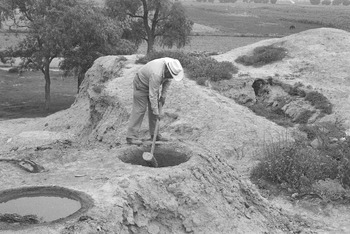
Salt-makers in the Valley of Mexico have an intimate knowledge of the characteristics of the earth in different areas of the basin, especially in terms of its salt content. According to the desired final product, different kinds of earth are mixed and placed on the ground, where the salt-makers then walk barefoot over the mixture. Other kinds of earth are added to the mix because they are assumed to have a cleansing effect on the final product; one of these is called “sweet earth” (necuticapoyatl in Nahuatl). After this, the earth mixture is placed in a cylindrical excavation called a pila (Figure 17), which is situated in such a way that it can be drained through a small pipe that protrudes from the center-bottom part (Parsons Reference Parsons2001:Figure 2.3). The pipe's inner opening is protected by a filter made of ayate (maguey fiber). When fresh water is poured over the earth inside the pila, it dissolves the salts and drips slowly through the pipe. The concentrated solution is gathered in a clay pot and then placed in a paila, or rectangular pan, that is transferred to a primitive adobe stove. This is where crystallization takes place—a process that may take from one to three hours. The fuel formerly used consisted of maize stalks, grasses, or animal dung, since wood is scarce in the region.
This salt-maker uses a large wooden mallet to prepare the pila for leaching in an example of the material culture associated with the maintenance of salt-making sites in Nexquipayac. Courtesy of Jeffrey Parsons.

When a finer product is desired, the mass of crystallized salt is washed by sprinkling water on it. The salt-maker (iztatlero) fills his mouth with water and then sprays it on the salt, though others use a water sprinkler called a rociador. A more complicated method consists of retrieving the water before the crystallization process is totally completed, and then drying the solidified salts. Due to the varying degrees of solubility of different kinds of salt at different temperatures, the resulting solutions have distinct compositions that produce different varieties of salt once crystallized. This procedure may be repeated to obtain several kinds of salt, but salitre is always the last one in the sequence (Apenes Reference Apenes1944:35–40).
During the archaeological survey that he undertook in the Texcoco region in 1967, Parsons discovered that salt was still being manufactured in Nexquipayac, apparently using techniques identical to the ones reported by Apenes some 30 years earlier. According to Parsons (Reference Parsons, Hodge and Smith1994), despite the general knowledge we have accumulated in relation to salt-making activities during the Postclassic period in the Basin of Mexico, there is little specific information regarding this industry, especially for the early phases of the pre-Hispanic era.
Salt manufacture in Nexquipayac consists of six steps: (1) gathering the soils from which salt will be extracted; (2) mixing those soils in the prescribed manner in order to obtain one of four possible products (white salt, black salt, yellow salt, or salitre) and sprinkling the soil with brine; (3) filtering water through the earth to leach the salt and concentrate it in a brine solution; (4) boiling the brine to obtain crystallized salt; (5) drying the crystallized salt; and (6) selling the final product (Parsons Reference Parsons2001:16–17). The production of sodium chloride in Nexquipayac requires three kinds of investment in terms of labor and capital: maintenance of workshops and other production areas, securing access to appropriate lands, and procuring fuel for the boiling operations (Parsons Reference Parsons, Hodge and Smith1994:263).
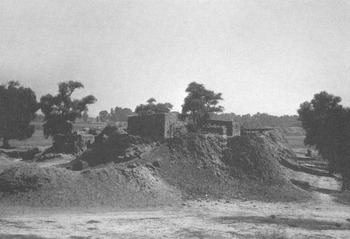
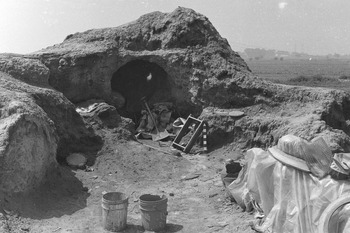
Parsons (Reference Parsons2001) conducted a thorough study of the natural and cultural landscapes associated with salt-making in the area of Nexquipayac known as Las Salinas. He found that “the main part of the workshop occupies an area of about 15 × 15 m atop a large mound that has built up to a height of 3–6 m above the surrounding plain over the course of approximately a century of salt-making” (Parsons Reference Parsons2001:24; Figure 18). He tells us that during a period of 25–30 years, “the main product of the workshop has been sal blanca [white salt], with approximately 10 percent of the total output devoted to sal negra [black salt] … a separate area … was reserved for the production of these materials” (Parsons Reference Parsons2001:26). In one of the workshops he studied, earth from the mound of leached soil was mixed with lakeshore soil to make sal blanca, though the site's primary function was to provide storage space for a variety of artifacts used by the salt-makers in different activities (Figure 19). According to Parsons, in the 1930s, “the lakebed source-area zone was … much wetter than it is at present.” This may indicate that “at least during the rainy season, some crude ditching and banking facilitated the soil-collecting process and that the salty earth was collected as mud and placed in a basket for transport to the workshop” (Parsons Reference Parsons2001:70).
A salt-making workshop in Nexquipayac, showing two separate boiling huts, used, respectively, to produce sal blanca (white salt) and sal negra (black salt). Courtesy of Jeffrey Parsons.

Salt-making workshop in Nexquipayac, showing the tool storage area (foreground) and the mound of leached soil (background). Courtesy of Jeffrey Parsons.

Sources from the sixteenth century suggest that there may have been two distinct salt manufacturing processes at Lake Texcoco at the moment of the Spanish conquest: one similar to that seen nowadays in Nexquipayac, involving the leaching of salty soils and boiling of brine, and a simpler one, which consisted in solar evaporation of shallow puddles of salty water.
Parsons (Reference Parsons, Hodge and Smith1994) suggests that, because of high fuel costs and the need for the knowhow and technical experience that only specialized production could offer, it is highly unlikely that the leaching-boiling method was very popular in the Basin of Mexico before the Middle Postclassic (ca. a.d. 1150–1350). The incentive for the transformation from a more generalized form of production, such as solar evaporation, to a more specialized one, like leaching-boiling, may have been linked to the combination of two important factors that made it necessary to increase production after a.d. 1200: first, considerable and sustained population growth on a regional level; and second, changes in the political economy that required greater amounts of salted fish, dyed textiles, cleansing agents, and uniformly packed salt, all of which were required to supply the increasingly urbanized communities, as well as for the functioning of the market and tribute systems. Finally, salt production played an important role in defining a more complex sociopolitical hierarchy (Parsons Reference Parsons, Hodge and Smith1994:284).
According to Parsons, it is likely that salt has been produced for centuries (perhaps millennia) by means of solar evaporation in the dry season in shallow ponds around the lake margins. Both production methods—boiling brine over fire and solar evaporation—have been used simultaneously in historic times, and both were likely used in pre-Hispanic times as well. However, this idea has one inherent problem: no one has yet described the solar evaporation technique in this area; consequently, we do not have sufficient information about the material manifestations of this method. We do know that this process survived until the 1940s in this region, and that it was clearly less complex than the leaching-boiling method in terms of the procedures and artifacts used, fuel requirements, and the degree of specialized knowledge required (Parsons Reference Parsons, Mastache, Parsons, Santley and Serra1996:446).
If solar evaporation pans were used in the area under discussion, it is possible that they were coated with lime, like the examples we know from elsewhere in Mesoamerica (Williams Reference Williams2015). In this regard, it is worth noting that lime works are known to have existed in the Basin of Mexico during the colonial period. Parsons (Reference Parsons2008:102) reports that “there is abundant historic and ethnographic documentation about the importance of the Zumpango region … as a source of lime during the colonial and modern periods.”
De Leon (Reference De Leon and Hirth2009) conducted a study of the household organization of salt production among the Aztecs. He arrived at the conclusion that in the Aztec case, salt-making was carried out by households together with other subsistence activities, such as agriculture, hunting, and the gathering of aquatic resources. Salt-making took place in the dry season, and the production activities took place outside the salt-makers’ homes. These data, together with the work of Parsons (Reference Parsons2001, Reference Parsons, Williams, Sánchez, Weigand and Gándara2011, Reference Parsons2019) and others (e.g., de Lucia and Overholtzer Reference De Lucia and Overholtzer2014; Hirth Reference Hirth and Hirth2009), have important implications for our understanding of full-time versus part-time activities, as well as for the interpretation of independent activity areas and their relationship with nearby households.
Thanks to historical sources, we know that salt was widely available in the regional marketplaces of the Basin of Mexico. This was made possible by an efficient and extensive distribution system (Berdan Reference Berdan2014). Sodium chloride from the Basin of Mexico, however, was not the only salt available in those markets: “White fine grained salt was sea salt from the coast, probably the northeastern Yucatán peninsula, which exported salt all the way to the Basin of Mexico” (Hirth Reference Hirth2016:164).
Puebla
During the second half of the sixteenth century, land, water, and salt were, in that order, the most valuable natural resources in the Tehuacán Valley, Puebla (Sisson Reference Sisson1973). Salt was a basic commodity in trade systems that included both raw materials and finished products, and spanned a huge region: from the present-day state of Hidalgo to Guatemala. But the importance of salt was even greater in pre-Hispanic times, as evidenced by the numerous salt-producing sites, like those from the Venta Salada phase (ca. a.d. 700–1540). These sites are widely distributed, suggesting that this was a basic industry during the Postclassic period. The distribution of salt-making sites in the Tehuacán Valley corresponds quite closely to the Tehuacán geological formation, which consists of a geological stratum with an abundant content of salt-rich sediments that were deposited when part of the valley was covered by seawater eons ago (Sisson Reference Sisson1973:81).
Edward Sisson's 1970s study of the modern traditional salt industry in Zapotitlán and other towns in this region of Puebla showed that each saltworks was considered the private property of one or more owners. In some cases, the owners themselves performed the salt-making process, though they more frequently employed paid labor. The construction and maintenance of saltworks required substantial capital investment, and the shortage of capital was the main reason why several such operations around Zapotitlán were eventually abandoned (Sisson Reference Sisson1973:85).
In those saltworks, water was first allowed to collect in deep round pits excavated into the bedrock, but was later removed by men using large metal containers or clay pots. The pits were reached by means of spiral staircases that circled them and reached below the water table. Once the water was taken out of the pits, it was held in a storage tank before being carried to the evaporation pans. Canals conducted water from springs to a storage tank or pond, where some concentration of its salt content was carried out. From there, the liquid was transported to pools called calentadores (heaters), where earth was added to the salty water to make a stronger saline mixture. Once the mud had settled at the bottom of the calentador, the remaining salty water was taken, with care, to a nearby patio called a salinera, where the final evaporation process took place. When salt crystals began to form on the surface of the brine in the salinera, the water was stirred with a stick called an aflojador (loosener), which supposedly facilitated the formation of larger crystals. Salt was scraped from the bottom of the salinera and kept temporarily near the patios. Finally, it was stored in natural caves or cavities in saline mounds (the latter perhaps of pre-Hispanic origin; Sisson Reference Sisson1973:85–86). When the brine was ready, handfuls were thrown into the center of the salinera to form a mound of salt that was later removed and stored as a humid mass in a nearby cave.
Although salt could be produced almost continuously throughout the year, there was a strong tendency towards seasonal work, mainly during the dry season. The best time of the year for making salt was at the end of winter and during the spring—that is, before the onset of the summer rains. This particular region produced two kinds of salt: sal de comer (table salt), which was gathered from the center of the salineras, and sal de animales (salt for animals), which was obtained by scraping the bottom of the pond. Since these two different kinds of salt crystallized at different moments, they had distinct proportions or compositions of mineral salts.
Sisson's description shows that few specialized tools were used in salt production that might be preserved in the archaeological record. The wooden aflojadores and woven baskets or storage bags could only be preserved in particularly dry caves, while the pots used for brine transportation would not be readily distinguishable from the ones used to carry or store fresh water. Nonetheless, some material remains produced by salt-making activities and the elements that required a high level of capital investment might be recognizable archaeologically. Among these, we could mention the remains of pits or wells, canals, storage tanks, solar evaporation pools or pans, and accumulations of mud. In fact, “fossilized” canals have been preserved in association with pre-Hispanic salt-making sites in several places in the Tehuacán Valley (Byers Reference Byers and Byers1967:Figure 15; Sisson Reference Sisson1973:87–88).
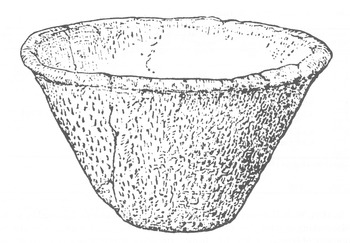
The characteristics of archaeological salt-making sites are quite variable, but they can be recognized thanks to the presence of the following: (1) a distinctive ceramic assemblage; (2) peculiarly shaped earth mounds; and (3) in some cases, the remains of solar evaporation pans. The ceramics involved would include hand-molded solid cylinders and numerous small fragments of the vessels that were used as molds or containers for boiling brine. Some of these vessels are typologically similar to the Texcoco Fabric Marked type from the Basin of Mexico discussed above. Also, some of the earth mounds had pottery tubes or pipes in the center, which may have functioned as parts of filtration systems.
On the basis of geological, ethnohistorical and archaeological data, Sisson (Reference Sisson1973) arrived at some general ideas in relation to the elaboration of salt in the Postclassic and colonial periods in the Tehuacán Valley. For example, if salt was extracted primarily from salty earth, then a preliminary stage of preparation was required, since the process would have involved leaching. Because of the enormous volumes of earth that would have had to be leached, this stage would have been performed very close to the source of the earth used; otherwise the process would have been unprofitable. Leaching salt from the earth requires some kind of container, as well as an ample water supply and some means of trapping the water once it passes through the earth. One possible way to filter the water may have consisted of a high platform made of wooden posts, with a layer of fibrous material (possibly a petate or reed mat) at the top. A load of earth would be placed on top of the petate for leaching, and the saline solution would be caught below in a pot, a pit, or some other kind of receptacle placed on the ground under the platform. In fact, Castellón found such a filtering device in a pre-Hispanic context at Zapotitlán, Puebla (Castellón Reference Castellón2016:Figures 11 and 28). Obviously, the by-product of this stage would consist of huge amounts of discarded, leached earth. If water was not available for leaching at the salt production site, it had to be carried to the site and stored there. The archaeological markers of these activities would be pots, canals, and water storage tanks.
Two evaporation methods were employed in the Tehuacán Valley before the Conquest: solar evaporation and boiling over fire. The first method required only a waterproof container, like the large, shallow pans that have been preserved in the archaeological record. Today, such pans are waterproofed by adding a lime coating over a base of small stones. The oven that would have been required to produce the lime might also be preserved in the archaeological record (Sisson Reference Sisson1973:91).
The second method of salt production involved heating the brine over a slow fire. This process was more efficient than the one described above because it did not require a large capital investment to build the solar evaporation pans; all that was needed was a vessel to hold the brine, a bonfire, and some kind of base to support the vessel over the fire. In this case, the archaeological evidence that might persist into posterity would consist of clay vessels, fire stains on the soil, and ash from the fire.
Once the salt was ready, whether by means of solar evaporation or boiling over fire, it had to be packed for storage or shipping. During the early colonial period in the area of Zapotitlán Salinas, baskets may have been used to store and transport salt. Another form of packing may have consisted of making “loaves” of humid salt, either by hand-molding or using clay molds (Sisson Reference Sisson1973:93).
The presence of fabric-marked pottery in parts of Puebla has been interpreted as proof that molds were used to manufacture salt blocks or loaves. This would indicate that salt was being packed in a uniform, easy-to-carry form. It could also mean that salt units were created following standardized qualities, volumes, and weights in pre-Hispanic times (Castellón Reference Castellón2014:77).
There are also many salt deposits around the site of Cuthá, some 4 km from Zapotitlán. In an area between the streams that run towards the Zapotitlán River and the gully excavated by this river, salt is still being made using pre-Hispanic techniques. There, water is extracted by hand from a well and then placed in a small chute-like masonry feature called a cajón, which is located at the entrance to a long canal that runs for 50 or 60 m, at a depth of 3 m from the surface, before emptying into a complex of evaporation pans (Martínez and Castellón Reference Martínez, Castellón and Reyes1995:60–61). In many cases, modern pans have been constructed in the form of terraces in order to be closer to the wells. This is reminiscent of the pre-Hispanic construction method, of which there are many examples at Cuthá and other sites in Puebla. Once the water fills the pans, it is left for a month to six weeks, depending on the weather conditions. When the pan is free of sediments and salt begins to crystallize on the surface, forming large salt crusts or scales, the pan is scraped to break up the lumps of salt. This process is carried out with a long wooden shovel used to lift the salt, which by now is almost completely dehydrated. The small blocks of salt formed on the pan are broken up and pulverized by hitting them with a long stick (Martínez and Castellón Reference Martínez, Castellón and Reyes1995:64–65).
The use of salt evaporation pans like the ones discussed above is a pre-Hispanic tradition that has persisted up to the present. Close to the pans currently used in Cuthá one sees abundant remains of similar ancient features, as well as mounds of discarded potsherds (up to 3 m in height) and alignments of stone slabs that undoubtedly were the boundaries of ancient evaporation pans. These mounds consist exclusively of pottery of three different types, all of them probably associated with the production and distribution of salt loaves in antiquity (Martínez and Castellón Reference Martínez, Castellón and Reyes1995:64–65, 71).
Castellón (Reference Castellón2016) reported on the results of his fieldwork in the salt-producing region of Puebla, where he made several significant discoveries. First, his excavations turned up a pre-Hispanic tank for holding brine after leaching at Salinas Antiguas, Zapotitlán, Puebla. This find allowed him to make a hypothetical reconstruction of the pre-Hispanic leaching process using a tapeixtle-like feature. Another notable contribution of Castellón's investigations is a theoretical scheme that explains the actual use of fiber-marked pottery in the salt-making process. This involved a hearth with clay cylinders that supported vessels over fire inside a combustion structure that was used for evaporating brine at Zapotitlán, Puebla.
Archaeological research on salt production cannot rely on ancient material culture alone—that is, solar pans, potsherds, and so on—since a good part of the tool assemblage used in the saltworks consists of perishable artifacts and materials, such as the following items reported by Castellón (Reference Castellón2016) from Puebla: a wooden box used for measuring salt, called a cuartillo and several kinds of baskets, made of rushes and reeds, that are indispensable for operations in the saltworks.
After the foregoing discussion of salt-making material culture, techniques, and sites in different areas of Mesoamerica, in the following section I discuss the tools and features used by pre-Hispanic salt-makers, as well as their possible interpretation in light of the available archaeological, ethnographic, and ethnohistorical information.
THE SALT-MAKING TOOL ASSEMBLAGE
What follows is a brief discussion of several tool assemblages drawn from the literature in Mesoamerica and other areas. In most cases, they come from archaeological excavations or collections, but a few are from ethnographic or “systemic” contexts. The first example is linked to pre-Hispanic salt production on the Caribbean coast of southeastern Belize. This was an outstanding region, thanks to the many saltworks that existed there in ancient times. Saltworks located in the extensive littorals of Mesoamerica were always critical, as they may have contributed salt of superior quality and in greater amounts than that produced inland. On the Atlantic coast, the saltworks in Celestún, Yucatán, for example, were among the most productive in the entire Maya area, though many others produced salt at the local level—for instance, Stingray Lagoon in Belize. Andrews (Reference Andrews1983) stated that the principle salt source in Mesoamerica, in both past and present times, has been the coast of Yucatán, where salt is still obtained by solar evaporation of the water from an extensive system of pools. Many saltworks were found in the northern coast of the Yucatán Peninsula, and during historical times there were small solar saltworks on several islands off the Yucatán coast as well. Archaeological evidence shows that the exploitation of these and other saltworks in Yucatán goes back to the Late Formative period (ca. 300 b.c.–a.d. 300; Andrews Reference Andrews1983).
Sodium chloride is unique among the strategic resources studied by archaeologists because salt is usually not preserved in the archaeological record. In the case of the saltworks studied by Heather McKillop (Reference McKillop1995, Reference McKillop2002, Reference McKillop2019) on the Caribbean littoral of Belize, the rise of sea levels in recent centuries has obliterated most ancient salt-making sites. At the same time, however, the marine environment preserved part of the material culture associated with salt production, including wooden structures and many artifacts. McKillop analyzed the structures, pottery and other preserved materials to evaluate the scale, intensity and organization of the salt industry and the role of this strategic resource in Classic Maya domestic and political economies.
The case study discussed here is the Paynes Creek salt production area on the coast of southern Belize. McKillop (Reference McKillop2019) evaluates the scale and social organization of production at this location during the Classic period, as well as its impact on regional trade networks, in particular the nearby inland populations.
There are some 100 salt-making sites in the Paynes Creek area, and the wooden structures documented in McKillop's (Reference McKillop2019) excavations indicate a high level of production. Indeed, if all the locations were in production at the same time, they would have been able to provide a considerable amount of salt. After the downfall of Maya civilization at the end of the Classic period (ca. a.d. 900), however, many of the sites that relied on salt from the Paynes Creek area ceased to exist and the salt industry disappeared.
By documenting the material culture—artifacts and features—preserved underwater, McKillop offers a new perspective on an indispensable component of Maya culture. In McKillop's book Maya Salt Works, salt is revealed as a “mover and shaker of ancient Maya society” (McKillop Reference McKillop2019:179). The social functions of salt were, and still are, multifaceted, wide-ranging, and everlasting. According to McKillop (Reference McKillop2019:179), “as a basic biological necessity, as a flavor enhancer, as a food preservative, and as a currency equivalent, salt … was a common commodity in the ancient Maya economy.” Although we tend to think that white table salt is the most desirable outcome of the salt-making process, McKillop (Reference McKillop2019:191) argues that in the case under study, “salt workers adjusted the length and intensity of boiling, the soil or sediment selected for enriching the brine … and whether fresh water or sea water was filtered through the soil in the enrichment process” in order to alter the chemical composition of the salt. This may seem surprising, but it makes sense if salt was not being produced for household consumption, but rather for making salt loaves used as exchange units, and for salting fish as part of a well-developed fishing industry that functioned within a widespread, complex trade structure.
McKillop (Reference McKillop2019) found a clay tube in her excavations on the southern Belizean coast. She identified this unique find as a “pipe reducer,” used to join two pipes with different sized openings. Items like this suggest the existence of a piping system for brine, probably used in conjunction with thick-walled clay vessels. The salt industry on the coast of Belize was closely linked to fishing in estuaries and the open sea. The local assemblage includes artifacts identified as fishnet sinkers, such as a stone disc with notches found in the salt-producing area in southeastern coastal Belize (McKillop Reference McKillop2019:Figure 6.6).
In addition to items directly linked to salt production and fishing, the local assemblage includes chert objects identified as cutting and scraping tools, probably used for processing salted fish (McKillop Reference McKillop2019; McKillop and Aoyama Reference McKillop and Aoyama2018). One of the most salient characteristics of McKillop's (Reference McKillop2002, Reference McKillop2019) work in Belize is the fact that salt water has contributed to the preservation of many perishable features and artifacts at the ancient salt-making sites, most of which have been submerged by rising sea levels. Such is the case of many preserved wooden instruments, including a possible gouge handle (McKillop Reference McKillop2019:Figure 6.11) that may have been linked to salt production or fish-processing, the main economic activities in the area.
Based on her excavations of the salt-producing sites in Belize, McKillop (Reference McKillop2002) made a hypothetical reconstruction of the techniques used for boiling brine to produce crystallized salt, which relied on pots with clay supports that were held over fire in order to evaporate the brine.
In another part of Belize, Satoru Murata (Reference Murata2011) studied salt-making and pottery production in a non-residential setting at Wits Cah Ak'al, a Classic period (ca. a.d. 250–900) site located in a mangrove landscape some 12 miles west of Belize City. Excavations of a ceramic assemblage consisting of briquetage (coarse pottery used to make evaporation vessels and supporting pillars for extracting salt from brine or seawater over fire) revealed at least one salt-boiling pit furnace that may have involved several pottery vessels used to boil brine.
The data for analogy used in this research are not limited to Mesoamerica, for Yankowski (Reference Yankowski2019) made a study of salt-making and pottery production in Alburquerque, Bohol, central Philippines. Following an ethnoarchaeological approach, Yankowski examines these two contemporary craft activities, highlighting their interdependence for the manufacture and trade of salt. The pots in question function as containers for boiling brine in stoves, as well as standard units of measurement for trade, something we see in Mesoamerica and many other areas of the world, including the island of Fiji (Melanesia, South Pacific Ocean). In Fiji, clay pots were used in the process of salt elaboration, though the technology employed there relied on solar evaporation rather than boiling brine over fire (Burley et al. Reference Burley, Tache and Purser2011), as occurred in the Philippines. The assemblage here consists of decorated jars, probably used for water (or brine) transport in the saltworks, and a type of shallow vessel called a “salt tray,” used for the solar evaporation of brine.
As we have seen in the foregoing pages, many of the tools and artifacts that comprise the modern salt-making assemblage consist of perishable materials, such as baskets and wooden structures. In fact, reed baskets are among the most indispensable and ubiquitous items that one sees today in saltworks, yet they are seldom preserved in the archaeological record. The same is true for the sacks made of ixtle fiber (Agave sp.), called guangoche, which go back to pre-Hispanic times in Michoacán. The guangoche can be used for gathering and storing soil for making salt, as well as the crystallized salt itself.
Given that under normal circumstances, baskets and textiles are not preserved in the archaeological record, one of the few ways that the archaeologist can approach this component of the assemblage is by looking for the types of tools that could be linked to basket-making, such as deer antler and bone tools (Williams Reference Williams2020:Figure 88). As for maguey fiber production, ethnoarchaeological work by Parsons (Reference Parsons and Williams2005) has identified the spindle whorls employed in spinning the fibers used to make sacks, cordage, and countless other items. In addition to textiles such as ixtle fiber, the assemblage used by salt-makers throughout Mesoamerica relied on baskets, mats, and many other items made of rushes and reeds, including improvised “brooms” for sweeping the eras, which are little more than bundles of twigs, like the example seen at La Placita (Figure 20).
The broom used for sweeping the era was little more than a bundle of twigs, yet it was an important component of the assemblage used in the saltworks on the coast of Michoacán. Photograph by the author.

In discussing the assemblage as an archaeological concept, Hamilakis and Jones (Reference Hamilakis and Jones2017:77) mention that this term “is common to a number of academic disciplines, most notably archaeology and art, but also geology and paleontology.” They also point out that “its omnipresent use in archaeology seems to have taken on two distinct but related meanings: the aggregation of objects made of the same material (i.e., an assemblage of pottery or lithics) or held together by shared typological or stylistic similarities” (Hamilakis and Jones Reference Hamilakis and Jones2017:77). According to Hamilakis and Jones (Reference Hamilakis and Jones2017), objects can be broken up and shared between people to establish material relationships. Objects can also be "accumulated, or assembled, and these relations will be expressed anew” (Hamilakis and Jones Reference Hamilakis and Jones2017:81). The relationship between objects and people, be it merely “everyday things” or archaeological artifacts, has also been approached by Hodder (Reference Hodder2012). In his discussion of the relationships between humans and things, Hodder (Reference Hodder2012:5) stated that “objects and materials can endure over time spans considerably greater than individual human experience … we depend on an apparent durability of things … and yet at other scales things are always changing and moving.” In Hodder's opinion, “it is because we take things for granted, often not focusing on them, that we fail to … see that things are connected to and dependent on other things. We do not recognize that they are not inert. And we forget they have temporalities different from ours, until those temporalities intrude in on us, causing us to take action” (Hodder Reference Hodder2012:6). Hodder then poses the rhetorical question, “What is a thing?”, and goes on to answer it as follows: “A thing is an entity that has presence … it has a configuration that endures, however briefly … We are more likely to use the word object for things that are relatively stable in form … The term ‘object’ … connotes an … approach in which material matter is analyzed, codified and caught in disciplinary discourse” (Hodder Reference Hodder2012:7–8).
The plot thickens once we factor humans into the equation. In Hodder's (Reference Hodder2012:10) view, “humans would never have evolved without things … the human dependence on things leads to an entanglement between humans and things that has implications for the ways in which we have evolved and for the ways in which we live in societies today.” Hodder further argues that “humans and human social life depend on things … as technologies … as tools to feed us, to keep us warm, to forge social relations in exchange, to worship … as humans we have evolved with certain physical and cognitive capacities because of our dependence on things” (Hodder Reference Hodder2012:16). Going one step further in his discussion of this entanglement between humans and things, Hodder (Reference Hodder2012:40, 41) says that “things depend on other things,” and elaborates on this idea thus: “We are used to discussions of how humans depend on other humans, but we are perhaps less used to thinking about thing–thing dependence. We need to understand how things depend on each other before we can explore how they depend on us … things are connected to and flow into other things, always transforming and being transformed.” The foregoing statement leads to the conclusion that “in our everyday dealing with the world there is a web of functional relationships in which things are encountered in their interdependent functions and in terms of their relevance to what we are doing” (Hodder Reference Hodder2012:41). These arguments lead Hodder (Reference Hodder2012:44) to the following conclusion:
Even the earliest cultural acts, such as the making of fire … involved an assemblage of objects from fire-making tools, to the pit in which the fire was made, to the wood used for fuel, and thus the containers or tools used to cut or collect wood, and so on. It involved social units that participated in receiving warmth, protection and cooked food from the fire. The energy from the fire coalesced humans around things in the projects of keeping warm, gaining energy, getting light, cooking food, forming social alliances and so on. Keeping the fire going must itself have involved duties and obligations.
In the same vein as making a fire and keeping it alive, making, maintaining, and using an era at La Placita, or a canoa at Simirao (or any other salt-making site), involved a whole range of artifacts, actions, and social relationships that are materialized in the tool assemblage.
We have to bear in mind that the core components of an archaeological assemblage are the artifact together with the patterned relationships with artifacts, always mediated by human culture and agency. Ingold (Reference Ingold2013:27) wrote that “there seem to be two sides to materiality. On one side is the raw physicality of the world's ‘material character’; on the other side is the socially and historically situated agency of human beings who, in appropriating this physicality for their purposes … project upon it both design and meaning in the conversion of naturally given raw materials into the finished form of artefacts.”
Addressing a culture–nature dichotomy in the intrinsic essence of artifacts, Ingold (Reference Ingold2013:38) argues that “culture furnishes the forms, nature the materials; in the superimposition of the one upon the other human beings create the artefacts with which, to an ever increasing extent, they surround themselves.” But going beyond the single artifact, an assemblage is defined by its overall function. We have an example of this in the aquatic lifeway, which is characterized by an assemblage geared towards the exploitation of lake and marsh environments by targeting several clusters of resources (and activities): fishing, hunting, gathering, and manufacture (Williams Reference Williams2014). Here I have added salt-making to the spectrum of subsistence activities, production sites, artifacts, and assemblages, in the context of aquatic adaptations in Mesoamerica (Williams Reference Williams2021).
CONCLUSIONS
The ethnoarchaeological perspective followed in my research on salt manufacture and exchange relates to the creation, use, and discarding of the different elements of material culture related to subsistence activities, including production sites and tool assemblages, as discussed above. No less important are the traditional beliefs and knowledge, as well as a whole worldview or cosmovision associated with salt, an indispensable commodity with dietary, industrial, medicinal, and ritual uses.
This article is based on the book Aquatic Adaptations in Mesoamerica (Williams Reference Williams2021), which explores the strategies that the ancient Mesoamericans devised to thrive in their natural and social landscapes. From the aquatic lifeway I discuss (Williams Reference Williams2014, Reference Williams2020, Reference Williams2021) to the salt-making sites and tool assemblages explored here, our discussion has taken us to many different places and discovered exceptional cultural adaptations to distinct physical and social environments. One fact that should be taken into account in the study of archaeological salt-making sites is the wide range of artifacts currently used in the manufacture of salt that are made of perishable substances (wood, fibers, basketry, animal skins, and so on) that would leave few, if any, archaeological remains. This is why the ethnographic observation of systemic contexts (Schiffer Reference Schiffer1988) is essential for achieving an understanding as complete as possible of ancient salt-making activities. Archaeological excavation on its own would never be able to give us a complete vision of this industry.
I have developed a “functional” view of the different tool assemblages and production sites I have come across in ethnoarchaeological fieldwork, since I have been able to observe the salt-makers, potters, fishers, basket-makers, and other artisans in their actual work areas. Obviously, the observations made in a systemic or ethnographic context leave no doubt as to the actual function of tools and other artifacts. The “tool-kits” studied in an ethnographic context become part of a heuristic process many archaeologists use to understand the archaeological assemblages—and their functions—by means of analogy (Binford Reference Binford1983; Schiffer Reference Schiffer1992).
Most traditional crafts linked to salt-making, such as pottery production, basket-weaving, and lime manufacture, are all activities that have disappeared almost entirely from the areas discussed in this article. The knowledge required to successfully carry out salt-making activities was obtained and transmitted through collective practice—for instance, selecting the right kind of earth for leaching is crucial for producing brine with the appropriate degree of salinity (Good Reference Good1995:5). This knowledge is a central component of the cultural heritage in salt-producing communities, one that goes hand-in-hand with general knowledge about the ecological environment and that, over time, has shaped a particular cultural landscape.
The natural and cultural landscapes associated with salt production, both ancient and modern, in the Basin of Mexico (and other areas) are an example of a cultural heritage that is under threat. Parsons (Reference Parsons2008:104) bemoans “the serious destruction of many archaeological sites, and entire landscapes, during the decades after the original surveys were carried out [in Lake Zumpango]. We might well ask whether it is realistic to think that we will ever be able to address the [research] problems we have defined with the surviving archaeological record in the Valley of Mexico.”
Parsons (Reference Parsons2008:104) “undertook a general reconnaissance throughout most surveyed portions of the Valley of Mexico, including the Zumpango Region, in order to evaluate the general condition of archaeological sites. We found that while there is much really bad news, at the same time there is also a little room for cautious optimism for new archaeological fieldwork in the future.” From Parsons’ perspective, there have been many destructive forces at work over the past three decades in the Basin of Mexico: “Urban sprawl … the mechanization of agriculture … the construction of massive terraces using bulldozers, and the reforestation of many of these terraces … large-scale quarrying for sand, gravel, and lime; and … large trash dumps” (Parsons Reference Parsons2008:104). Nevertheless, Parsons ends on a positive note: “there are still sites and landscapes that remain sufficiently intact to justify new archaeological study.” But time is of the essence, since “another decade will probably bring an end to [most] archaeology in the Zumpango Region and throughout the Valley of Mexico” (Parsons Reference Parsons2008:104).
The study of traditional salt-making and related topics outlined in this article should be a priority in order to salvage little-known aspects of a lifeway—indeed, a forgotten heritage—that is essential for the construction of our collective memory.
RESUMEN
La sal común, o cloruro de sodio, siempre ha sido un recurso estratégico de primordial importancia en todo el mundo. En la Mesoamérica prehispánica, la sal se utilizaba principalmente para el consumo humano, ya que la dieta nativa tenía poco cloruro o sodio, dos elementos químicos indispensables para la salud y la nutrición humanas. También se utilizó sal como preservativo para alimentos (pescado principalmente) y como mordiente para colorantes en la industria textil. Aquí analizo las industrias tradicionales de la sal de Michoacán, Colima, Guerrero, la Cuenca de México y Puebla, prestando atención especial a los conjuntos de herramientas (assemblages) y los sitios vinculados con la producción salinera en estas regiones de Mesoamérica. Examino el papel de la sal en la cultura y la historia de la antigua ecúmene mesoamericana a través de la lente de la etnoarqueología y la etnohistoria.
En el centro de esta narrativa se encuentra una de las adaptaciones culturales que los antiguos mesoamericanos idearon no solamente para sobrevivir, sino para prosperar en sus paisajes naturales y sociales. Desde el modo de vida lacustre, discutido por este autor en otro lugar, hasta los paisajes y conjuntos de artefactos de producción salinera explorados aquí, nuestra discusión nos ha llevado a muchos lugares diferentes y ha descubierto adaptaciones culturales excepcionales a distintos entornos físicos y sociales. Un dato que debe tenerse en cuenta en el estudio de los sitios de producción de sal es la amplia gama de artefactos que se utilizan actualmente y que están hechos de sustancias perecederas (madera, fibras, cestería, pieles de animales, etcétera), que dejan pocos o nulos restos arqueológicos. Es por esto que la observación etnográfica de contextos sistémicos es esencial para lograr una comprensión lo más completa posible de las actividades relacionadas con la producción de sal.
ACKNOWLEDGMENTS
Thanks are due to the following colleagues for providing comments and/or illustrations: Blas Castellón, Dan M. Healan, Jeffrey R. Parsons, Haydée Quiroz, and Andrea Yankowski. The following institutions provided financial support for my fieldwork in Michoacán: Foundation for the Advancement of Mesoamerican Studies (FAMSI); Universidad Michoacana de San Nicolás Hidalgo; and Universidad de Colima. Part of the data presented here is based on my book La sal de la tierra (Williams Reference Williams2003, Reference Williams2015, Reference Williams2018). This book was written while I was a Visiting Scholar at the Middle-American Research Institute of Tulane University (New Orleans). Thanks are due to Dan Healan and Will Andrews for their support during my stay at Tulane (1999), which was made possible by the National Council for Science and Technology (Conacyt) and the Fulbright Exchange Program.