Introduction
The ingestive behaviour of grazing animals has usually been studied on temperate and tropical grasses as a means of establishing management targets that maximize herbage intake and animal performance. This requires an understanding of the grazing process which, in turn, demands characterization of factors interfering with herbage intake and their relationship with sward structural characteristics (the grazing environment), which are important features of the plant–animal interface. The rate of herbage intake is the result of the interaction between bite rate (BR) and bite mass (BM) (Allden & Whittaker Reference Allden and Whittaker1970), the latter derived from bite volume (mainly determined by bite depth) and bulk density of the herbage in the grazing horizon (Burlison et al. Reference Burlison, Hodgson and Illius1991). This highlights the importance of the sward structure in determining herbage and nutrient intake by grazing animals and indicates the possibility of using sward-based targets to guide management practices (Da Silva & Carvalho Reference Da Silva, Carvalho and McGilloway2005).
Sward structure is normally defined and measured as the distribution and arrangement of above-ground plant parts within a community (Laca & Lemaire Reference Laca, Lemaire, ‘t Mannetje and Jones2000). As descriptors some structural variables are used such as height, herbage bulk density and leaf area index. Several studies with temperate and tropical forage grasses in which the sward structure was evaluated reported a similar pattern of vertical distribution of the morphological components characterized by the predominance of leaves in the top half and of stem and dead material in the bottom half. Such a distribution results in increasing tensile resistance of the morphological components at the bottom strata of the sward, limiting bite depth. Under grazing, herbage intake is increased by the ease of herbage prehension and harvest (Barre et al. Reference Barre, Emile, Betin, Surault, Ghesquière and Hazard2006), and has a positive relationship with sward height until a maximum intake is reached (Laca et al. Reference Laca, Ungar, Seligman and Demment1992). Underlying this relationship is the bite depth, which appears to be related positively to sward height and constitute a constant proportion of sward height (Griffiths et al. Reference Griffiths, Hodgson and Arnold2003), normally around 0·50 (Laca et al. Reference Laca, Ungar, Seligman and Demment1992; Demment et al. Reference Demment, Peyraud, Laca, Journet, Grenet, Farce, Thèriez and Demarquilly1995; Cangiano et al. Reference Cangiano, Galli, Pece, Dichio and Rozsypalek2002; Gonçalves et al. Reference Gonçalves, Carvalho, Kunrath, Carassai, Bremm and Fischer2009; Gregorini et al. Reference Gregorini, Gunter, Beck, Caldwell, Bowman and Coblentz2009). In this context, height is the structural characteristic of the sward most influential to BM and therefore constitutes important information for identifying management targets that favour high rates of herbage intake necessary to ensure high levels of herbage intake (Hodgson Reference Hodgson1990). The majority of studies that relate sward structure to rate of herbage intake, however, have been carried out using temperate and tropical forage grasses.
The use of forage legumes in pastures has been proposed as a means of generating sustainable grazing environments for producing animal products with low cost and environmental impact. The main role of legumes in pastures is to provide nitrogen (N) to forage grasses with the additional benefit of increasing the nutritive value of the consumed herbage. The limited use of forage legumes, particularly in tropical pastures, is partially due to the limited knowledge regarding its utilization by grazing animals, a condition that hampers the establishment of adequate management targets. Among the tropical legumes, the forage peanut (Arachis pintoi Krapovickas & Gregory cv. Belmonte) stands out as a promising alternative due to the high potential for dry matter (DM) production, nutritive value and persistence (Lascano Reference Lascano, Kerridge and Hardy1994). However, information regarding the influence of sward structure on the ingestive behaviour of grazing animals is scarce, highlighting the need for studies analogous to those carried out with forage grasses as a means of ensuring its adequate and efficient utilization on pastures. The present study was based on the hypothesis that the pattern of ingestive behaviour of cattle grazing pure stands of forage peanut in relation to variations in sward height is similar to that described for forage grasses, allowing for the identification of management targets for maximizing the short-term rate of herbage intake.
Materials and methods
Experimental site
The experiment was carried out at E.S.A. ‘Luiz de Queiroz’ (ESALQ), University of São Paulo, Piracicaba, SP, Brazil (22°42′S, 47°37′W and 550 m a.s.l.), on a forage peanut (A. pintoi Krappovickas & Gregory cv. Belmonte) stand established on a Eutric Kandiudalf. Average soil chemical characteristics for the 0–20 cm layer were: pH calcium chloride (CaCl2): 5·85; organic matter (OM) = 41 dg/dm3; phosphorus (P, ion-exchange resin extraction method) = 77 mg/dm3; calcium (Ca) = 87·5 mmolc/dm3, magnesium (Mg) = 50 mmolc/dm3; potassium (K) = 16·3 mmolc/dm3; hydrogen + aluminium (H + Al) = 26·5 mmolc/dm3; sum of bases = 146·3 mmolc/dm3; cation exchange capacity = 172·8 mmolc/dm3; base saturation = 84%. These were considered adequate for the forage species used (CEPLAC 2012), with no need for additional fertilization.
The area was planted in November 2011 using stolons and considered established in September 2012, when it was divided into 16 paddocks of approximately 200 m2 each and treatments allocated according to a randomized complete block design, with four replications. Treatments corresponded to four levels of grazing intensity (severe – S, moderate – M, lenient – L, and very lenient – VL) represented by the management sward heights of 5, 10, 15 and 20 cm maintained throughout short grazing periods once or twice a week. Sward height was monitored throughout the experimental period twice a week (3 and 4-day intervals) using a sward stick (Barthram Reference Barthram and Barthram1985). In October, after treatments had been allocated to experimental units, monitoring of sward height was initiated and animals started to be for short grazing periods to maintain management target heights from November 2012 onwards. In January 2013, all paddocks were being maintained at the targeted heights. Paddocks were grazed by dairy heifers (body weight (BW) = 200 ± 30 kg) used only as grazers, and irrigation used as a means of avoiding soil water deficits during the experiment. The experiment was carried out from January to November 2013, and the evaluations were performed in two seasons of the year: autumn (May 20 to June 06, 2013) and spring (11–22 November 2013). A total of 16 grazing trials was carried out during each season of the year. These lasted for 45 + 5 min, the minimum necessary for detecting fluctuations in BW with 10 g precision on an electronic scale, during the evaluations of the short-term rate of herbage intake (Penning & Hooper Reference Penning and Hooper1985). All grazing sessions were performed either early in the morning or late in the afternoon.
Sward measurements
During the grazing trials monitoring of sward height was carried out through 90 sward stick readings per paddock (Barthram Reference Barthram and Barthram1985). Measurements were performed before and after each grazing trial as a means of certifying that differences in sward height at the beginning and end of the trial did not exceed 10%, essential for ensuring that the same sward structure was available throughout the grazing sessions.
Measurements of sward herbage mass and herbage bulk density were carried out by harvesting herbage samples contained within the limits of 0·33 m2 (0·90 × 0·37 m2) metallic frames. Two samples were harvested per paddock during each season of the year. Samples were cut to ground level and taken to the laboratory for weighing and sub-sampling, before drying in a forced draught oven at 65 °C until constant weight. Data were used to calculate sward herbage mass (kg/DM/ha). Herbage bulk density was calculated by dividing sward herbage mass by the corresponding average sward height, and expressed in mg/cm3.
The relative proportions and vertical distribution of the morphological and botanical within the vertical profile of the swards were evaluated with an inclined point quadrat (Wilson Reference Wilson1959). The equipment was placed on areas that were representative of sward condition at the time of sampling (visual assessment of sward height and herbage mass). Measurements consisted of the introduction of the graduated stem (cm) throughout the vertical profile of the sward in a 32·5° angle from the top towards the base. Along the trajectory, as the tip of the stem touched different herbage components, each contact was recorded, specifying the morphological/botanical component touched (leaflet, petiole, stolon, dead material and weeds) and the corresponding reading on the scale. A final reading on the equipment scale was recorded when the tip of the stem reached the ground, which was used as a reference to calculate the real height of the previous contacts. A minimum of 100 contacts was recorded per paddock. Contact heights were recorded sequentially within 2 cm vertical bands from the ground level.
During the grazing trials, herbage samples (~200 g fresh weight) of simulated grazing (de Vries Reference de Vries1995) were harvested for estimating DM content and the botanical/morphological and chemical composition of the grazed stratum. They were taken to the laboratory soon after harvest, weighed and separated manually into leaflet, petiole, stolon, dead material and weeds. After separation, all components were dried in a forced draught oven at 65 °C until constant weight. After drying, samples were ground using a Wiley mill to pass a 1-mm screen for chemical analysis. These were carried out in duplicate for the following components: neutral detergent fibre (NDF) and acid detergent fibre (ADF) according to Van Soest et al. (Reference Van Soest, Robertson and Lewis1991); in-vitro dry matter digestibility (IVDMD) according to Tilley & Terry (Reference Tilley and Terry1963) adapted by Van Soest et al. (Reference Van Soest, Robertson and Lewis1991); and crude protein (CP) was determined in a N analyser (LECO FP-2000 nitrogen analyser, Leco Instruments, Inc., St. Joseph, MI, USA).
Animal measurements
Measurements of ingestive behaviour were made using three Holstein heifers (10 ± 1 month-old; 200 ± 30 kg BW), two for actual measurements and the third only to ensure minimum group size. The total number of animals used during each grazing trial was defined taking into account the need to maintain relatively stable sward height throughout the measurement period (variation in sward height at the beginning and end of each grazing trial smaller than 10%). Approximately 10 days before the test, animals were habituated to the experimental procedure and remained on an adjacent pure forage peanut area. They were not subjected to fasting prior to measurements, since it could influence the estimates of herbage intake rate (Greenwood & Demment Reference Greenwood and Demment1988) and diet selection (Newman et al. Reference Newman, Penning, Parsons, Harvey and Orr1994). As a result, all grazing trials were performed early in the morning (06:00–07:00 am) and late in the afternoon (05:00–07:00 pm), i.e. periods of normally intense grazing activity.
The short-term rate of herbage intake was determined using the double weighing technique described by Penning & Hooper (Reference Penning and Hooper1985). Before the grazing trials, animals were fitted with faeces and urine collecting bags. After the tests, they were maintained in an adjacent area, with no access to water or feed for 45 min to estimate metabolic losses (water evaporation and carbonic gas and methane production – insensible weight loss). All weights (pre- and post-grazing, and post-metabolic losses determination) were obtained using an electronic scale with a 10-g precision level. The short-term rate of herbage intake was calculated using the following equation:
 $${\rm STIR} = {\rm \;} d \times \left\{ {\left[ {\displaystyle{{(W_2 - W_1 )} \over {(t_2 - t_1 )}}} \right] + \left[ {\displaystyle{{(W_3 - W_4 )} \over {(t_4 - t_3 )}}} \right]} \right\} \times \left[ {\displaystyle{{(t_2 - t_1 )} \over {{\rm ET}}}} \right]$$
where short-term herbage intake rate (STIR) = short term herbage intake rate; d = dry matter content of herbage (proportion); W 1 and W 2 = animal body weight at pre- and post-grazing (kg); t 1 and t 2 = pre- and post-grazing time (min); W 3 and W 4 = animal body weight at pre- and post-period of insensible weight losses measurement (kg); t 3 and t 4 = pre- and post-period of insensible weight losses measurement (min); ET = effective eating time (min).
Measurements of BR were performed during each grazing trial by a trained observer equipped with a stopwatch and a manual counter. Animals were observed for 10 min and readings of the time required to take 20 bites were taken for each test animal (Forbes & Hodgson Reference Forbes and Hodgson1985). Bite mass was calculated by dividing the total amount of DM consumed during the grazing trial by the total number of bites, adjusted for the animals’ body weight.
Statistical analysis
The control variable, i.e. sward height, was considered as a discrete variable. Sward heights of 5, 10, 15 and 20 cm corresponded to four levels of grazing intensity (severe, moderate, lenient and very lenient). For that reason, data originated from pasture-related measurements were subjected to ANOVA using the MIXED Procedure of SAS® (Statistical Analysis System). The choice of the variance/covariance matrix was made using the Schwarz's Bayesian Criterion (Wolfinger Reference Wolfinger1993). The model included the fixed effects of sward height, season of the year (autumn and spring) and the interaction between them. Block was considered as a random effect. Treatment means were estimated using the LSMEANS command and comparison, when necessary, made using Student's t test at P < 0·05. For animal ingestive behaviour data, regression models were run using the Mixed procedure of the same statistical package, with linear (yij = a + bx + Eij), quadratic (yij = a + bx + cx 2 + Eij) and segmented (broken line, yij = L + U [(x < R) (x − R)] + Eij) models, where: ‘yij’ is the dependent variable, ‘a’ is the intercept, ‘b’ the linear coefficient, ‘c’ is the quadratic coefficient, ‘x’ is the independent variable (actual sward height), ‘L’ is the maximum observed value, ‘U’ is a constant of the equation, ‘R’ is the break point and ‘Eij’ represent the experiment error. When more than one model was significant (P < 0·05), the equation with the highest coefficient of determination (R 2) was chosen. The effect of season of the year (autumn and spring) was included in the regression equations to detect if the behaviour responses in relation to actual sward height differed between seasons at P < 0·05.
Results
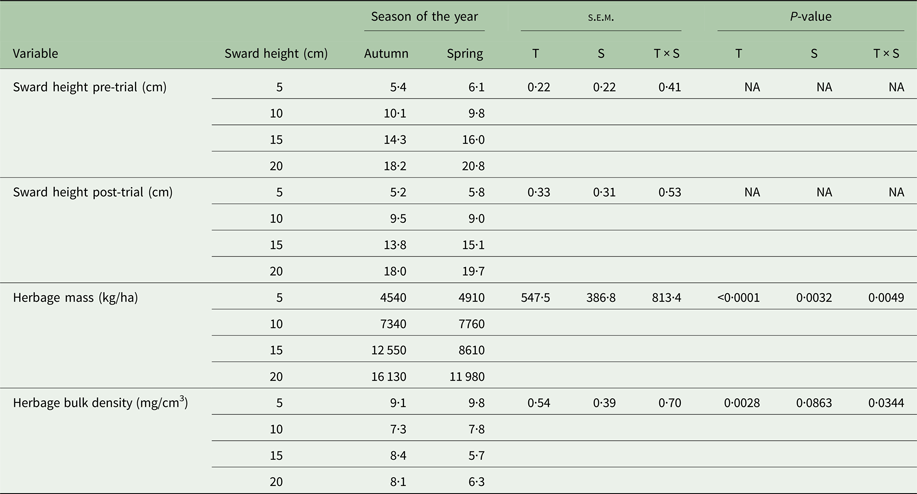
The variation in sward height during the grazing trials throughout the experimental period was smaller than the planned 10% limit (Table 1). Herbage mass (HM) varied with treatment (P < 0·001) and season of the year (P = 0·003), and the interaction was significant (P = 0·005). Sward herbage mass increased as management height increased during autumn and spring. There was no difference between seasons of the year for swards managed at 5 and 10 cm, with greater HM values recorded during autumn relative to spring on those managed at 15 and 20 cm. Herbage bulk density (BD) varied with sward height (P = 0·003) and sward height × season of the year interaction (P = 0·005). During autumn, there was no difference in BD among treatments. On the other hand, during spring, BD decreased as management height increased, with similar values recorded for swards managed at 15 and 20 cm. Differences between seasons of the year were seen only for swards managed at 15 cm, with greater values recorded during autumn relative to spring (Table 1).
Sward height at pre- and post-grazing trial, sward herbage mass and herbage bulk density of Arachis pintoi cv. Belmonte subjected to intensities of grazing (means; n = 16) during autumn and spring 2013
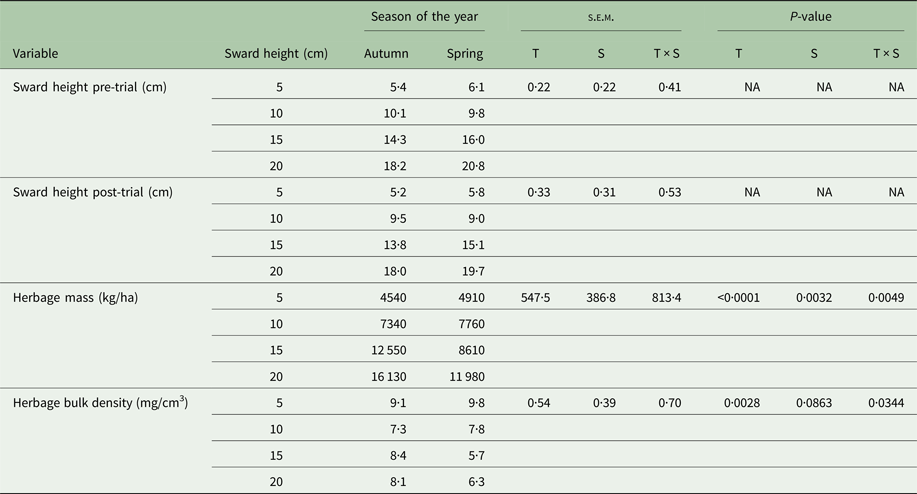
s.e.m., standard error of the mean; P-value, significance level; T, treatment; S, season of the year; NA, not analysed (control variable).
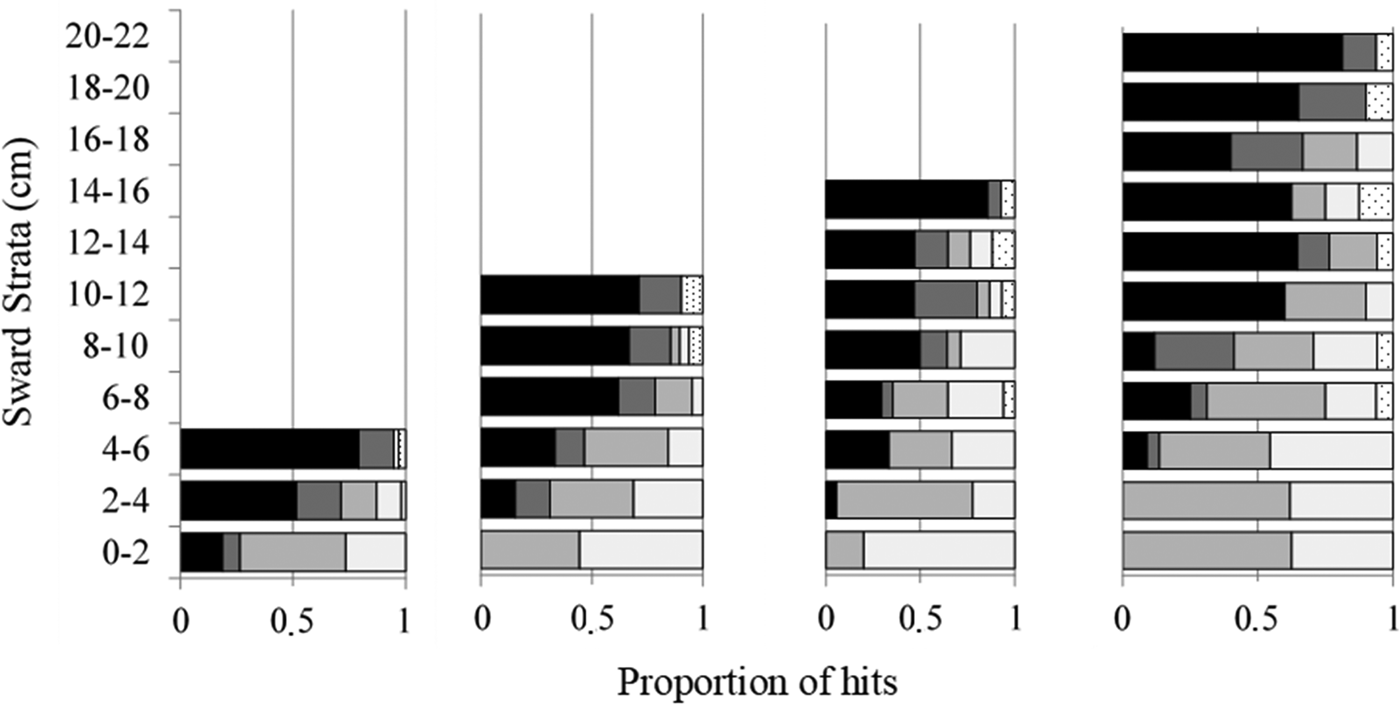
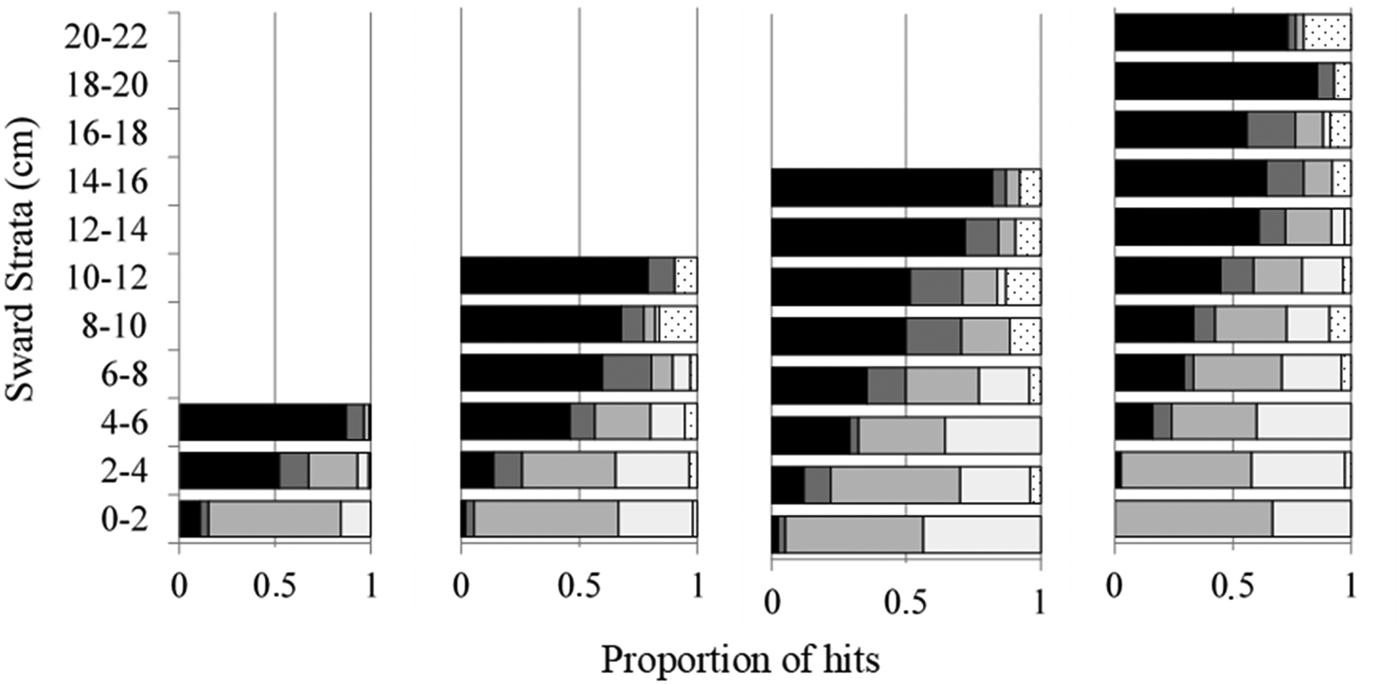
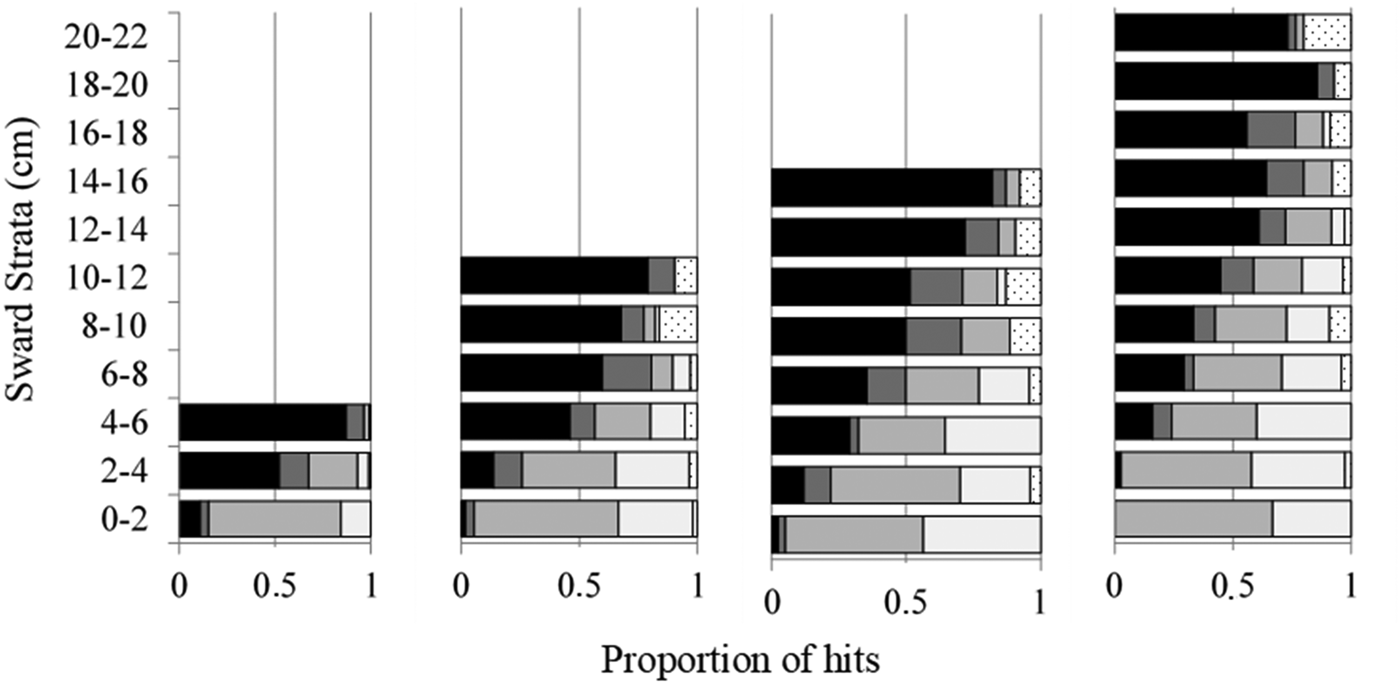
During autumn and spring, the top half of the sward height was mainly composed of leaves (leaflets and petioles) and the bottom half composed mainly of stolon and dead material regardless of management height, with a greater proportion of weeds on swards managed at 15 and 20 cm (Figs 1 and 2).
Vertical distribution of the botanical/morphological components of sward at 2-cm strata from ground level of Arachis pintoi cv. Belmonte subjected to intensities of grazing during autumn 2013. Leaflets ( ), petioles (
 ), stolon (
 ), dead material (
 ), weeds (
 ).

Vertical distribution of the botanical/morphological components of sward herbage mass at 2-cm strata from ground level of Arachis pintoi cv. Belmonte subjected to intensities of grazing during spring 2013. Leaflets ( ), petioles (
 ), stolon (
 ), dead material (
 ), weeds (
 ).
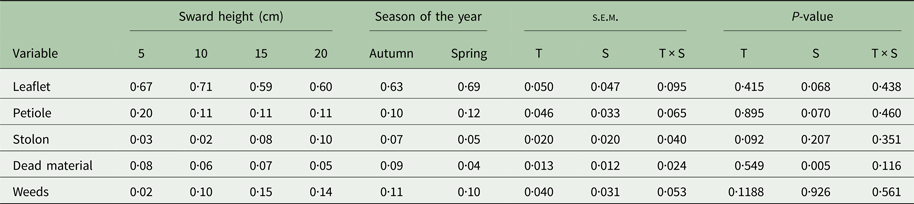
The botanical and morphological composition of simulated grazing herbage samples did not vary with sward height or season of the year (Table 2), except for dead material, for which greater values were recorded during autumn relative to spring (0·091 and 0·044 ± 0·0118, respectively). The herbage consumed was composed mainly of leaves (leaflets and petioles).
Proportion of leaflet, petiole, stolon, dead material and weeds in simulated grazing herbage samples of Arachis pintoi cv. Belmonte subjected to intensities of grazing during autumn and spring 2013
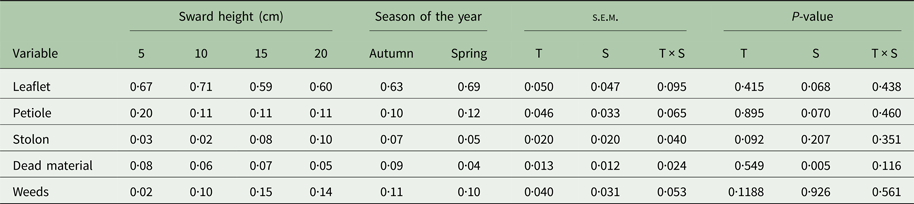
s.e.m., standard error; P-value, significance level; T, treatment; S, season of the year.
The chemical composition of the simulated grazing herbage samples varied with a season of the year for all the chemical traits studied (Table 3). Greater values of NDF and ADF were recorded during autumn. On the other hand, greater values of IVDMD and CP were recorded during spring. In relation to treatment, greater values of CP were recorded on swards managed at 5 and 10 cm relative to those managed at 15 and 20 cm.
Composition (g/kg DM) and in vitro dry mater digestibility (IVDMD) of simulated grazing herbage samples of Arachis pintoi cv. Belmonte subjected to intensities of grazing during autumn and spring 2013

s.e.m., standard error of the mean; NDF, neutral detergent fibre; ADF, acid detergent fibre; IVDMD, in vitro dry matter digestibility; CP, crude protein.
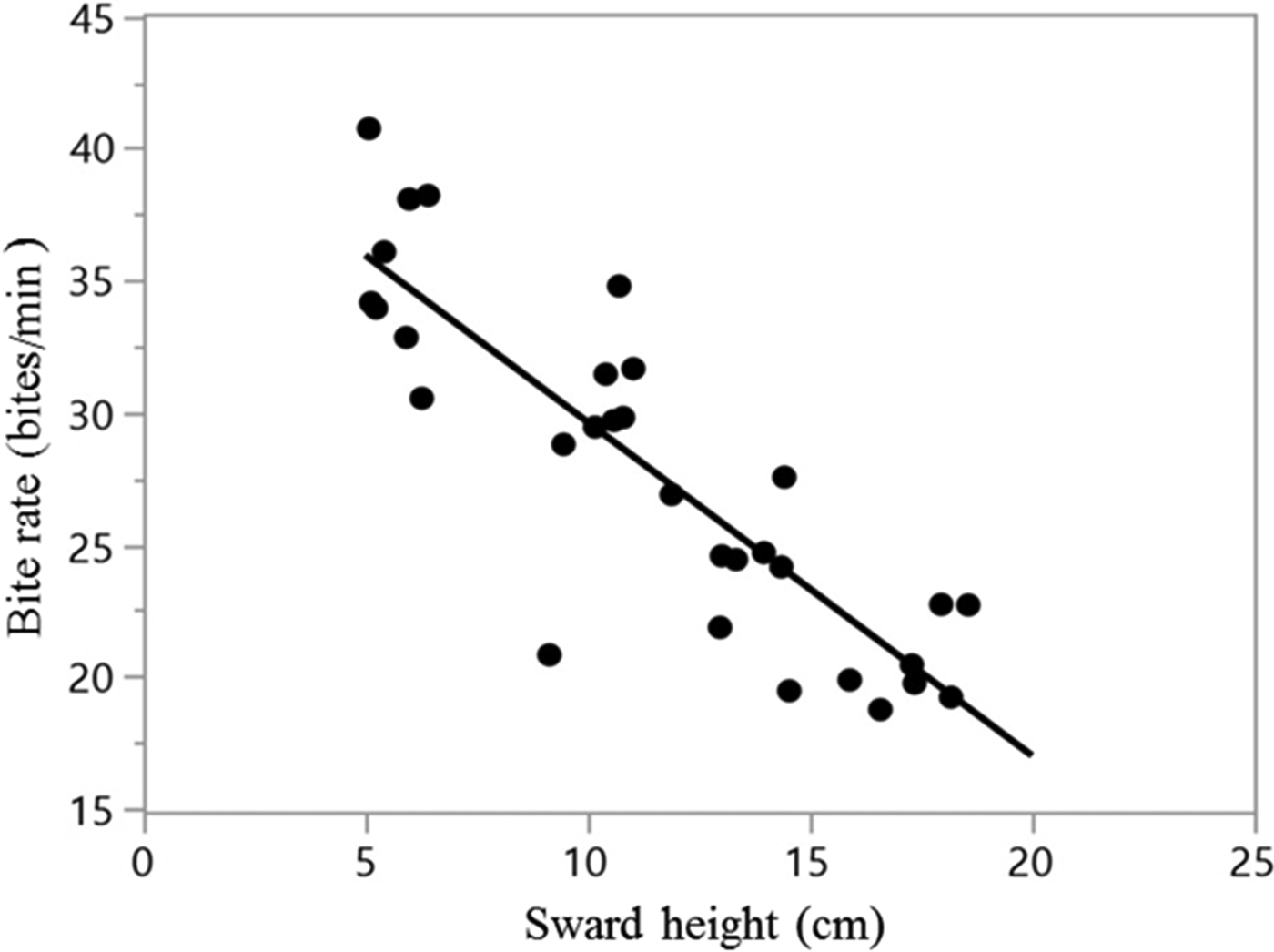
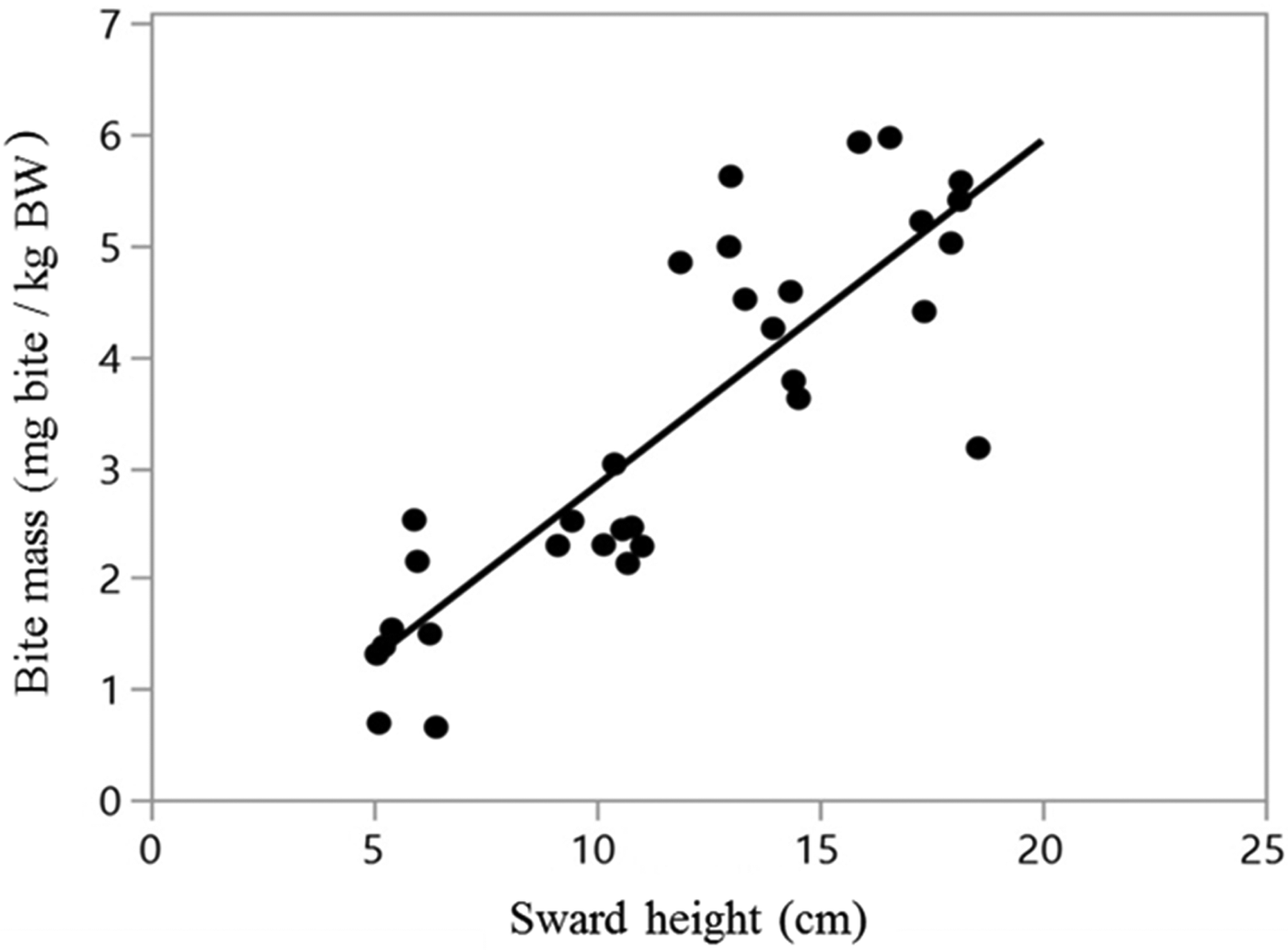
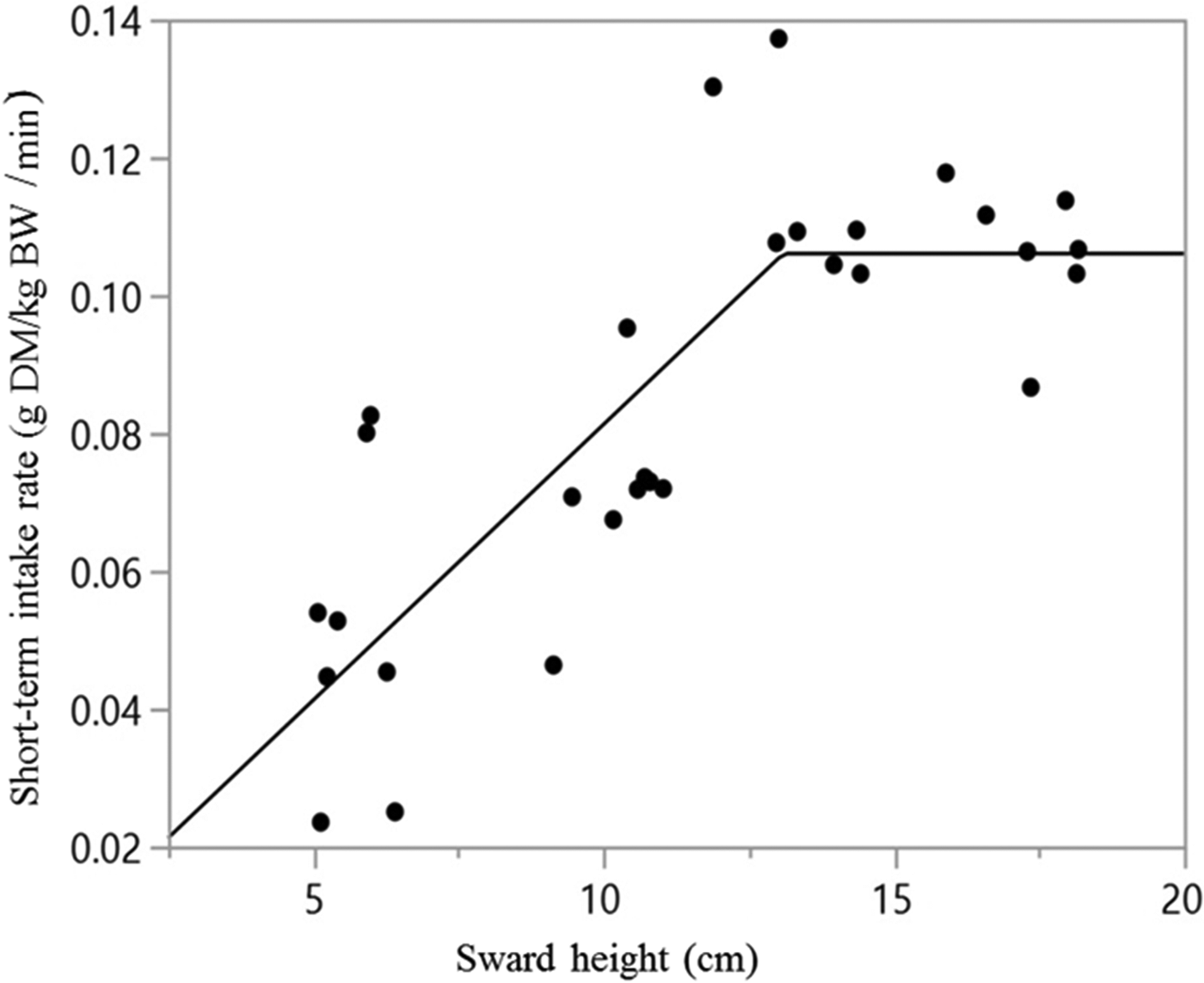
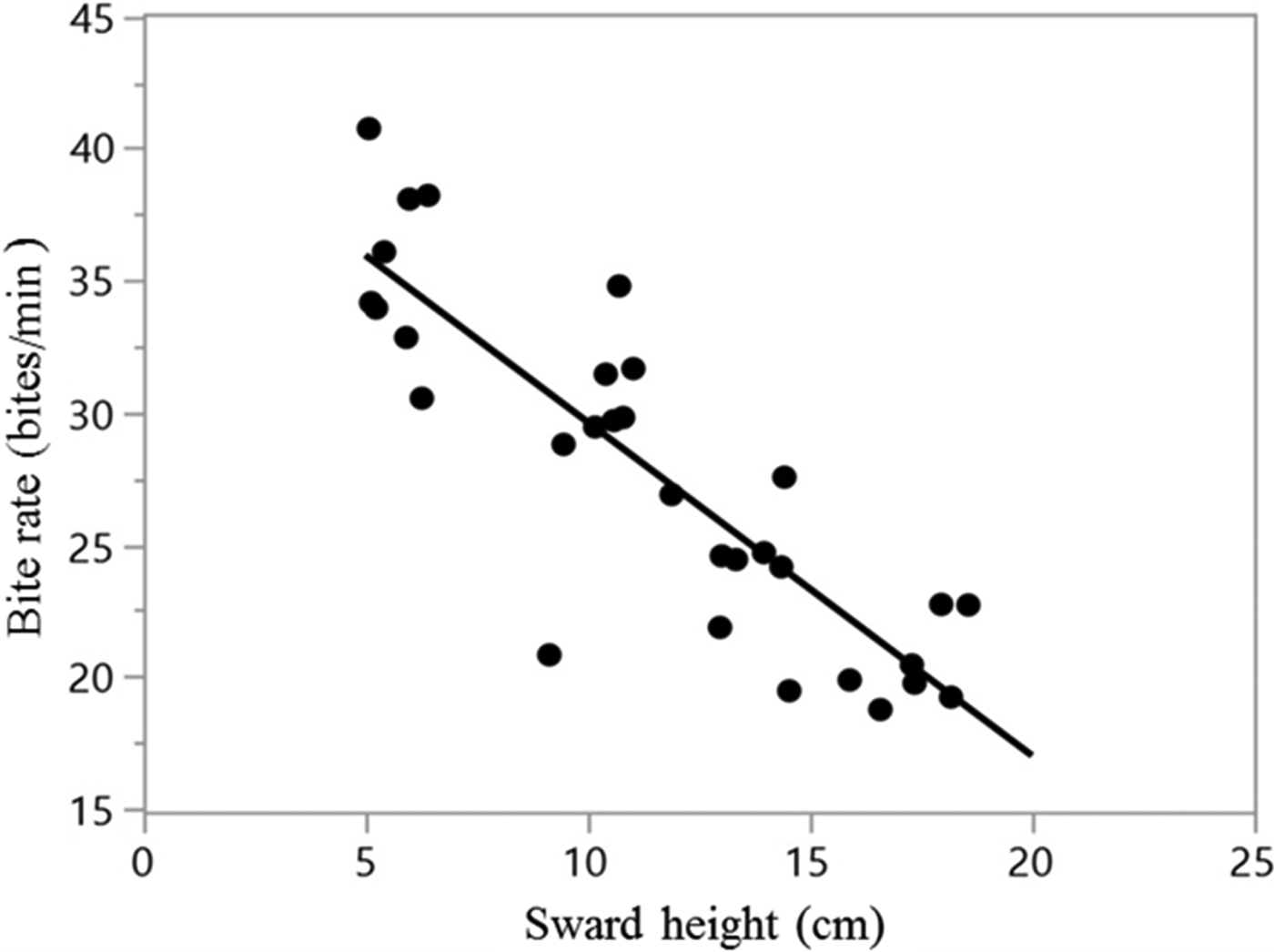
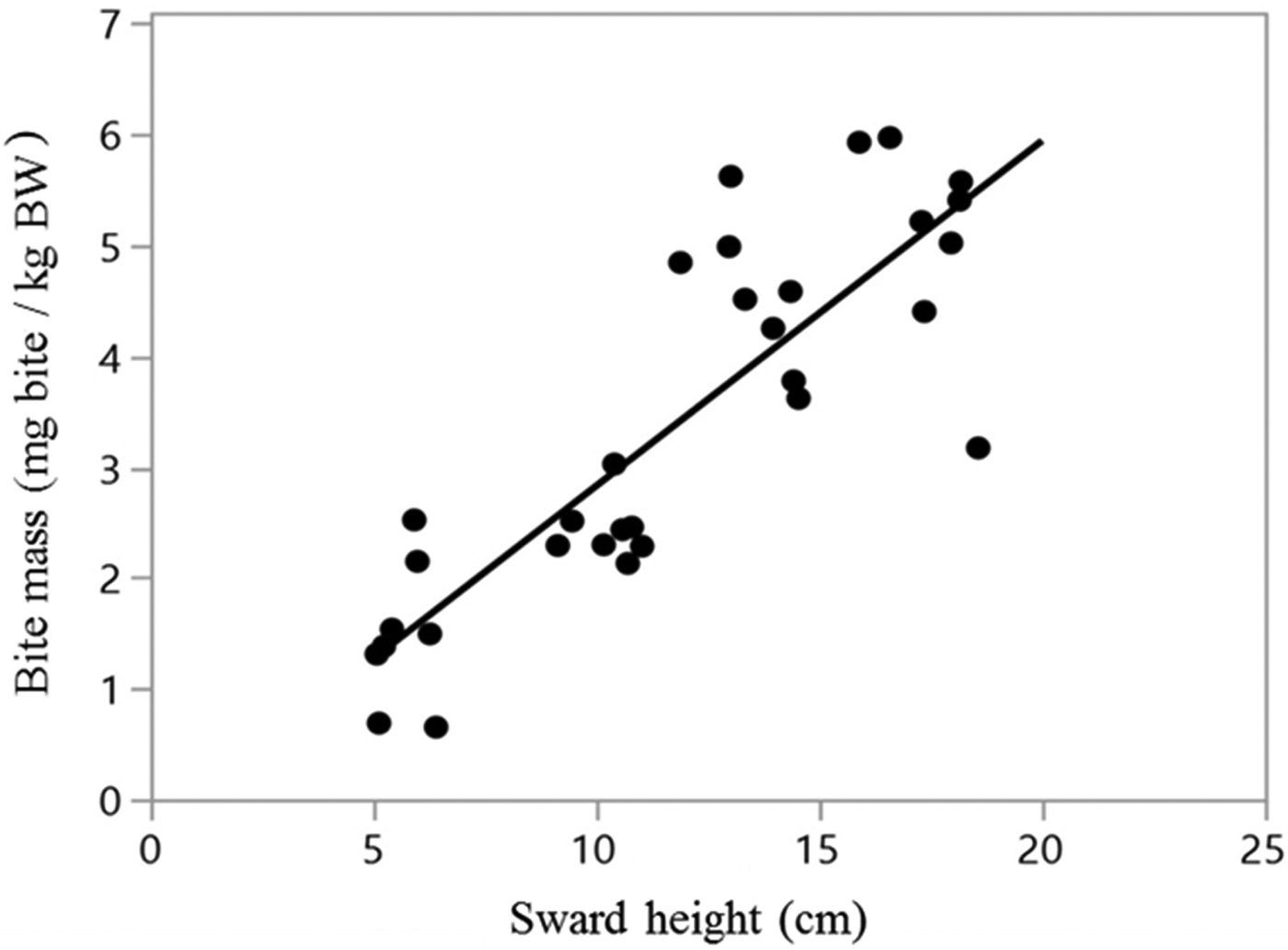
Bite rate, BM and herbage intake rate varied with sward height (P < 0·001 for all variables), but not with a season of the year. Bite rate showed a negative linear relationship with sward height (Fig. 3), while BM showed a positive linear relationship (Fig. 4). The rate of intake followed a broken line response to sward height, with increasing values up to 13·1 cm, when a maximum value was achieved (0·106 g DM kg/BW/min) and no further increase was observed (Fig. 5).
Bite rate of cattle grazing Arachis pintoi cv. Belmonte (y = 42·25–1·26x; R 2 = 0·75; s.d. = 3·26; P < 0·001; n = 32) during autumn and spring 2013.
Bite mass of cattle grazing Arachis pintoi cv. Belmonte expressing in mg bite per kg body weight (BW) (y = −0·28 + 0·31x; R 2 = 0·73; s.d. = 0·86; P < 0·001; n = 32) during autumn and spring 2013.
Short-term rate of herbage intake of cattle grazing Arachis pintoi cv. Belmonte (y = 0·0012 + 0·008x, if x < 13·1; and y = 0·106, if x > 13·1; R 2 = 0·68; P < 0·001; n = 30) during autumn and spring 2013.

Discussion
Control of sward structure was achieved efficiently during autumn and spring, as demonstrated by the actual values of management height of the paddocks before and after each grazing trial. The difference in sward heights pre- and post-trials was smaller than the stipulated 10% limit, indicating that the same sward structure was available throughout the grazing sessions. Herbage bulk density did not vary with management height during autumn, but decreased with the increase in sward height during spring, probably a consequence of the greater height recorded for treatments 15 and 20 cm during spring relative to autumn. Additionally, the proportion of dead material in sward herbage mass was greater during autumn, causing herbage bulk density to be greater during autumn relative to spring. Recorded values varied from 9·8 to 6·3 mg/cm3 for swards managed at 5 and 20 cm, respectively. The pattern of variation in bulk density relative to sward height in spring was similar to that described for temperate (Hodgson Reference Hodgson1990; Brink & Soder Reference Brink and Soder2011) and tropical climate (Stobbs Reference Stobbs1973; Sollenberger & Burns Reference Sollenberger, Burns and Gomide2001; Fonseca et al. Reference Fonseca, Mezzalira, Bremm, Filho, Gonda and Carvalho2012) forage grasses. The high values obtained for bulk density are probably a consequence of the growth habit (stoloniferous) and leaf architecture (horizontal) of the forage peanut cv. Belmonte. For white clover (Trifolium repens cv. Rivendel), a temperate forage legume of similar growth habit to forage peanut, reported values of herbage bulk density vary from 8·9 to 11·8 mg/cm3 for swards managed at 12 and 26 cm, respectively (Combes et al. Reference Combes, Decau, Rakocevic, Jacquet, Simon, Sinoquet, Sonohat and Varlet-Grancher2011). For the stoloniferous tropical grass Tifton 85 subjected to an experimental protocol analogous to the one used in the present study, herbage bulk density values corresponded to 6·1, 4·8, 4·2 and 3·7 mg/cm for the management heights of 5, 10, 15 and 20 cm, respectively (Carnevalli et al. Reference Carnevalli, Da Silva, Fagundes, Sbrissia, de Carvalho, Pinto and Pedreira2001).
Information about the nutritive value of the consumed herbage (simulated grazing samples) allows inferences about potential nutrient intake from morphological/botanical composition and short-term rate of herbage intake data. The higher nutritive value of the herbage during spring was a consequence of the smaller proportion of dead material on the top strata of the swards relative to autumn (0·044 and 0·091 ± 0·0118, respectively). Swards managed at 5 and 10 cm resulted in herbage with greater CP percentage and higher IVDMD, possibly due to the younger tissues comprising the sward herbage mass. Under more intense defoliation (5 and 10 cm management height), the frequency of defoliation (Sollenberger & Vanzant Reference Sollenberger and Vanzant2011) and consequently the turnover of leaves and stolons is greater than under more lenient defoliation (15 and 20 cm management height), resulting in younger plants and greater proportion of leaf in sward herbage mass. Nevertheless, it is worth noting that the variation in chemical composition detected was within limits that did not hamper herbage intake or animal performance (Reid Reference Reid, Fahey, Collins, Mertens and Moser1994; Noller Reference Noller and Gomide1997), supporting the importance of sward structure as a determinant of the ingestive behaviour and nutrient intake of grazing animals. In this context, management and knowledge of sward height is key for controlling morphological composition and thus potential intake and animal performance. Nutritive value is not necessarily related to intake (Boval et al. Reference Boval, Coppry and Sauvant2014).
The general pattern of morphological component distribution along the vertical profile of the swards was consistent during autumn and spring. Regardless of sward height, leaves (leaflets + petioles) were the predominant component in the top half, and stolons and dead material the predominant components in the bottom half of swards. This proportionality in vertical distribution of morphological components in sward herbage mass was originally described for temperate forage grasses (Wilson Reference Wilson1959; Brink & Soder Reference Brink and Soder2011) and subsequently verified for tropical forage grasses (Stobbs Reference Stobbs1973; Fonseca et al. Reference Fonseca, Carvalho, Mezzalira, Bremm, Galli and Gregorini2013; Lemos et al. Reference Lemos, Ruggieri, Silva, Campos, Malheiros and Teixeira2014), indicating the existence of a common and consistent pattern of sward structure for different forage species and plant growth habits.
The constant proportion of the sward height consisting mainly of leaves (top 0·50) indicates an increase of the potential grazing stratum (bite depth) for taller management heights, a BM determining characteristic and, consequently, very influential on the short-term rate of herbage intake (Barrett et al. Reference Barrett, Laidlaw, Mayne and Christie2001). According to Brink & Soder (Reference Brink and Soder2011), the predominance of leaves in the top half of sward height is the most important sward characteristic related to herbage intake, since leaves are the morphological component with the least shearing strength for bite prehension relative to other plant components (Flores et al. Reference Flores, Laca, Griggs and Demment1993). Bite mass, defined as the amount of herbage harvested per bite, is determined by the depth the animal's mouth reaches into the sward and with the bulk density of the herbage in the stratum being explored (Gordon & Lascano Reference Gordon, Lascano, Baker, Crush and Humphrey1993). As a result, it has a positive linear relationship with sward height (Hodgson et al. Reference Hodgson, Clark, Mitchell and Fahey1994). Research with forage grasses has demonstrated that bite depth corresponds to a constant proportion equivalent to 0·50 of sward height (Laca et al. Reference Laca, Ungar, Seligman and Demment1992; Cangiano et al. Reference Cangiano, Galli, Pece, Dichio and Rozsypalek2002; Gonçalves et al. Reference Gonçalves, Carvalho, Kunrath, Carassai, Bremm and Fischer2009; Gregorini et al. Reference Gregorini, Gunter, Beck, Caldwell, Bowman and Coblentz2009), which is in agreement with the increase in BM with increasing sward height seen in the present study. On swards managed at 15 and 20 cm, BM was almost three times greater than on swards managed at 5 cm (1·57 v. 4·61 mg DM/kg BW). The results have similar magnitude to those reported by Fonseca et al. (Reference Fonseca, Carvalho, Mezzalira, Bremm, Galli and Gregorini2013) for forage sorghum (Sorghum bicolour) managed at 30, 40, 50, 60, 70 and 80 cm, when the maximum rate of herbage intake was recorded for the 50-cm management height and corresponded to 4·55 mg DM/kg BW. For Cynodon sp. managed at 10, 15, 20, 25, 30 and 35 cm, BM varied from 1·90 to 3·90 mg DM/kg BW, with the greatest values recorded on swards managed at 20 cm (Mezzalira et al. Reference Mezzalira, Carvalho, Fonseca, Bremm, Cangiano, Gonda and Laca2014). Such a pattern of response was also reported by Soder et al. (Reference Soder, Sanderson, Gregorini, Orr, Rubano and Rook2009) in a study on sward structure and its influence on BM using four forage grasses (Dactylis glomerata, Elymus repens, Schedonorus pratensis and Phalaris arundinacea) during two consecutive years. Those authors reported greater sward heights in the first year relative to the second year for the different species (25·7 v. 17·0 cm), a condition that was associated with the greater BM (1·05 v. 0·50 g DM, respectively). Their conclusion was that differences in sward height during the 2 years were more important than differences in plant species for determining BM.
Variations in BM are normally compensated by variations in BR, a condition that generates a relatively stable rate of herbage intake within a range of sward management heights (Hodgson Reference Hodgson1990). Bite rate decreased linearly as sward height increased, an inverse pattern to that described for BM, ratifying the inverse relationship between these two response-variables and suggestive of a compensation mechanism as a means of maximizing herbage intake rate when BM varies in response to particular characteristics of the grazing environment. A similar response pattern was also described by Gibb et al. (Reference Gibb, Huckle, Nuthall and Rook1999) for perennial ryegrass (Lolium perenne L. Cv. Melle), which was characterized by an increase in jaw movements (75·3–80·3 movements/min) as sward management height decreased (9, 7 and 5 cm). The increase in jaw movements, however, did not compensate the smaller BM, resulting in a linear decrease of the herbage intake rate as sward management height decreased (24·6–18·9 g DM/min).
The intake rate of herbage usually increases with increasing sward management height or herbage mass until reaching a maximum value (plateau) defined by some limitation of the animals’ ability to process the harvested herbage (Gordon & Illius Reference Gordon, Illius and Speedy1992). As described for forage grasses, the rate of herbage intake of forage peanut cv. Belmonte increased with increasing sward management height during both autumn and spring, reaching a maximum value at a management height equivalent to 13·1 cm (106·0 mg DM/kg BW/min). On swards managed at 5 and 10 cm, the smaller BM was associated with greater BRs, but smaller rates of herbage intake. In this case, the increase in BR was not big enough to compensate the reduction in BM, and rate of intake decreased linearly. The rate of herbage intake was 147% greater on swards managed at 15 and 20 cm relative to those managed at 5 cm. On the other hand, the 15 and 20 cm management heights resulted in greater BM, but with no difference in intake rate between the two management heights, probably a consequence of the longer period necessary for completion of each bite (e.g. smaller BR). That is suggestive of a stabilization in the rate of herbage intake of A. pintoi cv. Belmonte at sward management heights taller than 13·1 cm.
Sward structure played an important role in determining the short-term rate of herbage intake of the grazing animals, highlighting the importance of its knowledge and understanding for ensuring a favourable grazing environment characterized by high rates of herbage intake for forage peanut cv. Belmonte, similar to what is already known for temperate and tropical forage grasses (Carvalho Reference Carvalho, Pedreira, Moura, Silva and Faria2005). Variations in sward structure result in changes in BM that, in turn, result in changes in BR as a means of maximizing the rate of herbage intake. Sward management height is an effective way of managing sward structure and, for forage peanut cv. Belmonte, such compensation mechanism operates in sward management heights taller than 13·1 cm.
Conclusion
For maximizing the short-term rate of herbage intake of dairy heifers under continuous stocking management, swards should be managed at swards heights not <13·1 cm. The chemical composition of the simulated grazing samples demonstrated that within the range of management heights studied, herbage nutritive value was not limiting for a wide range of animal species and categories, confirming the importance of sward structure as a determinant of herbage and nutrient intake by grazing animals and appropriate means for defining management targets. Another interesting finding is that there are more similarities than differences between forage grasses and A. pintoi cv. Belmonte regarding variations in ingestive behaviour relative to changes in sward structure, highlighting the potential and applicability of the variable sward height as a management tool for monitoring, controlling and executing grazing management.