INTRODUCTION
The genus Helianthus is large and polymorphic. Sunflower systematics and taxonomy have been subject to continual changes and amendments (Hladni & Miklič Reference Hladni, Miklič and Terzić2012). According to the newest taxonomy, the genus Helianthus consists of 51 species of which 14 are annual and 39 perennial (Seiler et al. Reference Seiler, Lili L and Marek2017). The ‘giant’ sunflower, also referred to as H. annuus var. macrocarpus is the most important form of the species H. annuus L. and is used for seed production. The cultivated sunflower is a globally significant oilseed crop and an important source of non-oil confectionary seed. All modern domesticated sunflowers can be traced to a single centre of domestication in the interior mid-latitudes of eastern North America (Smith Reference Smith2014). Originally domesticated from the self-incompatible common sunflower (H. annuus L.), it was used by the Native Americans as a source of edible seeds (Soleri & Cleveland Reference Soleri and Cleveland1993). Native Americans were the first breeders of sunflower, and they gradually changed the genetic composition of the plant by repeatedly selecting the largest seeds (Smith Reference Smith2014).
Differing sunflower confectionary types arrived from the USA to Europe, reaching Spain, France, England, Germany and other European countries and then spread along trade routes to Russia, Egypt, India and China (Simpson & Ogorzaly Reference Simpson and Ogorzaly1986). In the mid-19th century, confectionary sunflower types were transferred to Bolivia, Paraguay and Argentina where sunflower was used for human consumption as a roasted and salted confection (Feoli & Ingaramo Reference Feoli, Ingaramo, Martínez-Force, Dunford and Salas2015). The agronomic development of sunflower for oil (‘oilseed’ types) and edible achenes (‘confectionary’ types) occurred in Eastern Europe and Russia, where by the late 1800s, a number of landraces had been developed (Cronn et al. Reference Cronn, Brothers, Klier, Bretting and Wendel1997). Russia is considered to be a secondary domestication centre for sunflower, as seeds of local open-pollinated (OP) sunflower varieties were reintroduced into the USA in the late 18th century, and then spread to Canada and Argentina by Russian and Ukrainian immigrants. As a result, oilseed production soon surpassed that of non-oilseed sunflowers, and breeders increasingly shifted their focus toward developing improved oilseed cultivars (Cheres & Knapp Reference Cheres and Knapp1998).
Confectionary sunflower is distinguished from the standard oil type by larger plant and seed size (SS), higher protein content and lower oil content. Seeds of confectionary and oil-type sunflower are distinguished by ease of de-hulling, pericarp colour, seed weight, morphology and the kernel-to-pericarp weight ratio (Hladni et al. Reference Hladni, Jocić, Miklič, Saftić-Panković and Kraljević-Balalić2011). Confectionary seed is usually black, white, or black with white stripes, and significantly larger than the seed of oil type sunflower. It has high hull %age, as well as variable seed shape (SSH). The thick hull is easily separated from the kernel and allows the seed to be dehulled as a whole (Fernandez-Martinez et al. Reference Fernandez-Martinez, Perez-Vich, Velasco, Vollmann and Rajcan2009; Hladni & Miklič Reference Hladni, Miklič and Terzić2012).
Around 0·10 of the world's annual production of sunflower seed is used for non-oil purposes, for instance, it is used mainly for confectionery and snack food, as well as for bird and pet food (National Sunflower Association 2011). Approximately 0·90 of production in the USA is oil-type sunflower seed and 0·10 confectionary seed (USDA ERS 2017). Market demands and production area of confectionary sunflower show a steady increase due to its nutritional value and use in human nutrition. Confectionary sunflower for human consumption has found its place in production in Turkey, China, USA, Canada, Spain, Russia, Ukraine, Israel, Argentina, Pakistan, Iran and many other countries (Lofgren Reference Lofgren and Schneiter1997; Kaya Reference Kaya and Seiler2004; Zhang Reference Zhang and Seiler2004; Dong et al. Reference Dong, Liu and Li2007; Kholghi et al. Reference Kholghi, Bernousi, Darvishzadeh and Pirzad2011). Breeding of confectionary sunflower is directed by different market demands regarding SS, hull colour and other traits, which makes this process more difficult and costly (Hladni Reference Hladni, Kaya and Hasancebi2016). Although the favoured seed colour of confectionary hybrid in Turkey is white with grey stripes, in Balkan countries such as Serbia, Bulgaria, Moldova and Romania, as well as Russia, black seeds are preferred (Ergen & Saglam Reference Ergen and Saglam2005; Sincik & Goksoy Reference Sincik and Goksoy2014). Grey seeds with stripes are popular in the USA, Spain and China (Kaya et al. Reference Kaya, Evci, Pekcan, Gucer, Yilmaz and Smrikarov2008).
Knowledge of the amount and distribution of genetic diversity within the cultivated sunflower germplasm is of great value for ongoing crop improvement efforts (Mandel et al. Reference Mandel, Dechaine, Marek and Burke2011). Land races and OP varieties have huge genetic variation and are well adapted to local soil types and climatic conditions, as well as other environmental factors. They are the source of many desirable genes, especially those addressing higher adaptability to environmental conditions and resistance to certain diseases (Kaya Reference Kaya and Gupta2015). Collection and evaluation of such genetic resources are thus important for breeding of modern varieties (Gavrilova et al. Reference Gavrilova, Rozhkova and Anisimova2014; Tan et al. Reference Tan, Aldemir, Altunok, Kaya and Hasancebi2016a ), while the accuracy of evaluation is improved by determining descriptor discriminative power and selecting optimal descriptors (Tessier et al. Reference Tessier, David, This, Boursiquot and Charrier1999; Perić Reference Perić2015).
Exhaustive literature relating to genetic diversity, character association, heterosis and combining ability has been generated for oilseed sunflower type, but there is limited research on confectionary sunflower (Hladni Reference Hladni, Kaya and Hasancebi2016). A study of genetic diversity in a core collection of confectionary sunflower in China based on amplified fragment length polymorphism (AFLP) and morphological analysis revealed that accession origin often did not correspond closely with the clustering pattern (Dong et al. Reference Dong, Liu and Li2007). While analysing seed yield and yield-related traits in an Iranian confectionary sunflower population, Kholghi et al. (Reference Kholghi, Bernousi, Darvishzadeh and Pirzad2011) found that yield is positively associated with 100-seed weight, head diameter, number of seeds per head, stem diameter and plant height (PH). Sunflower breeding efforts are focused mainly on high oil varieties, while confectionary lines were developed following the same general approach, albeit from a narrow genetic base (Cheres & Knapp Reference Cheres and Knapp1998; Mandel et al. Reference Mandel, Dechaine, Marek and Burke2011).
Morphological characterization can serve as a good starting point to increase the knowledge of genetic diversity as the basic prerequisite of a plant breeding programme (Smith et al. Reference Smith, Al-Dos and Warburton1991). Therefore, the aim of the current study was to: (1) determine the extent of phenotypic diversity in confectionary sunflower based on morphological traits; (2) analyse the efficiency of available descriptors for classification of the studied material; and (3) determine the possibility for use of the studied material in confectionary sunflower-breeding programmes.
MATERIALS AND METHODS
Plant material
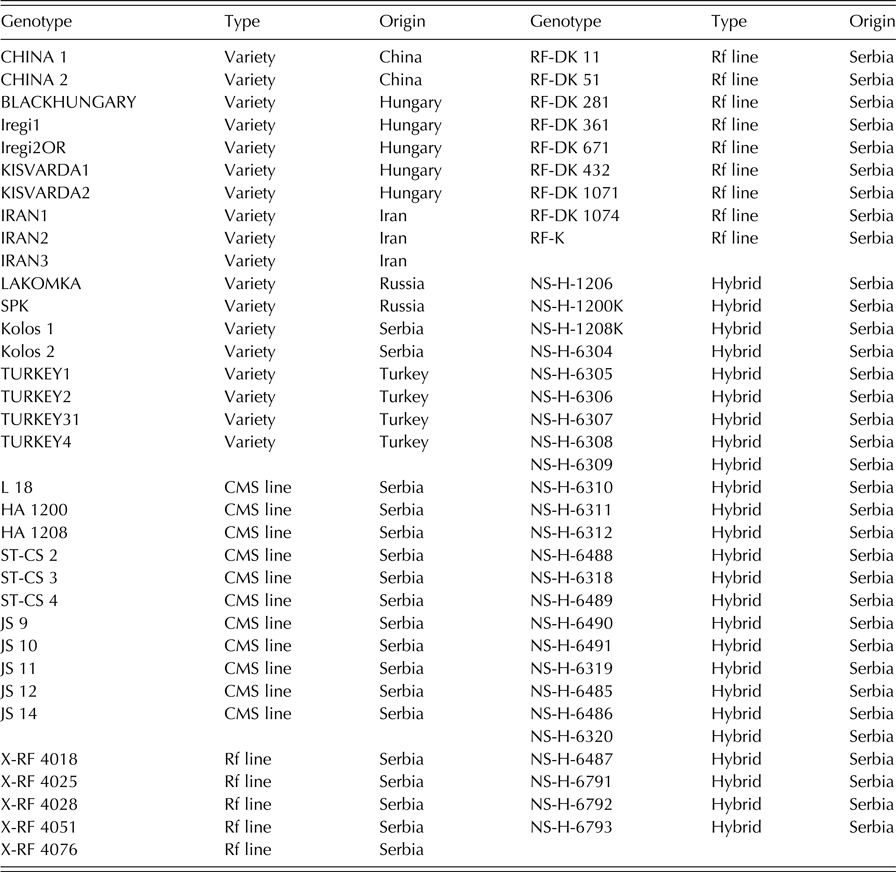
Confectionary sunflower varieties used in the present study were sampled from Hungary (5), Russia (2), Turkey (4), China (2), Iran (3) and Serbia (2). Female inbred lines (11), male inbred lines (14) and hybrids (25) were developed at the Institute of Field and Vegetable Crops in Novi Sad (Table 1).
Identifier, improvement type and country of origin of genotypes sampled from the IFVCNS confectionary sunflower collection*

CMS, cytoplasmic male sterile lines; Rf, restorers of fertility.
* All presented material except for Rf lines is available to the public.
Experimental design
The experiment was conducted on basic 28 m2 plots. The spacing between the rows and plants was 70 × 28 cm2, which provided a plant density of 46 000–50 000 plants/ha. Seeds were sown by hand in eight rows for varieties and four for inbred lines and hybrids. Homozygous lines of confectionary sunflower created by self-pollination and their hybrids have uniform plants, so the visual estimation of a smaller number of plants was reliable. The experiment was organized as a RCBD (randomized complete block design) with three replications. The recommended technology of growing confectionary sunflower was applied. Phenotypic diversity of the tested material was determined using distinctness, uniformity and stability (DUS) test guidelines based on precise descriptor classes prescribed by the International Union for Protection of New Varieties of Plants (UPOV 2000). The material was examined during two growing seasons (2013, 2014), at Rimski Šančevi location in the Vojvodina region. Visual estimates were performed in the field on ten plants per genotype. Observations of leaves, flowers, bracts and stems were made in flowering phase R-5·5 according to the scale proposed by Schneiter & Miller (Reference Schneiter and Miller1981). Head attitude (HA), head shape of the grain side of the sunflower infloresence (strongly concave, weakly concave, flat, weakly convex, strongly convex or deformed, UPOV 2000) and PH were estimated at maturity (R-9), while the seeds were evaluated after harvest.
Data analysis
The Shannon & Weaver (Reference Shannon and Weaver1949) diversity index (H) was estimated as a measure of morphological diversity of the genotypes for a particular trait. The estimated H′ value was normalized by dividing it by its maximum value (log2n), which ensured that all H′ values were in the range of 0–1. Furthermore, an estimation of the diversity of sunflower genotypes was performed by homogeneity analysis (HOMALS) by means of alternating least squares techniques, also known as PCA (principal component analysis) for categorical data. The HOMALS technique is based on contingency tables, in which principal results of decomposition are the coordinates of lines and columns, further used for visualization of the results of techniques by scatterplot graph. The HOMALS scatterplots enable close grouping of objects of the same category, whereas different objects are located at a certain mutual distance. The distance between points representing two objects depends on the similarities of their profile. Categories divide objects into homogenous groups, so that each object is in close proximity to the points, which represent the object category. The distance between the object and the origin reflects a deviation from the standard pattern of the most frequent category for each variable. Therefore, objects with unique profiles are located further away from the origin, while objects with more similar profiles to the standard are close to the origin (Michailidis & De Leeuw Reference Michailidis and De Leeuw1998).
RESULTS
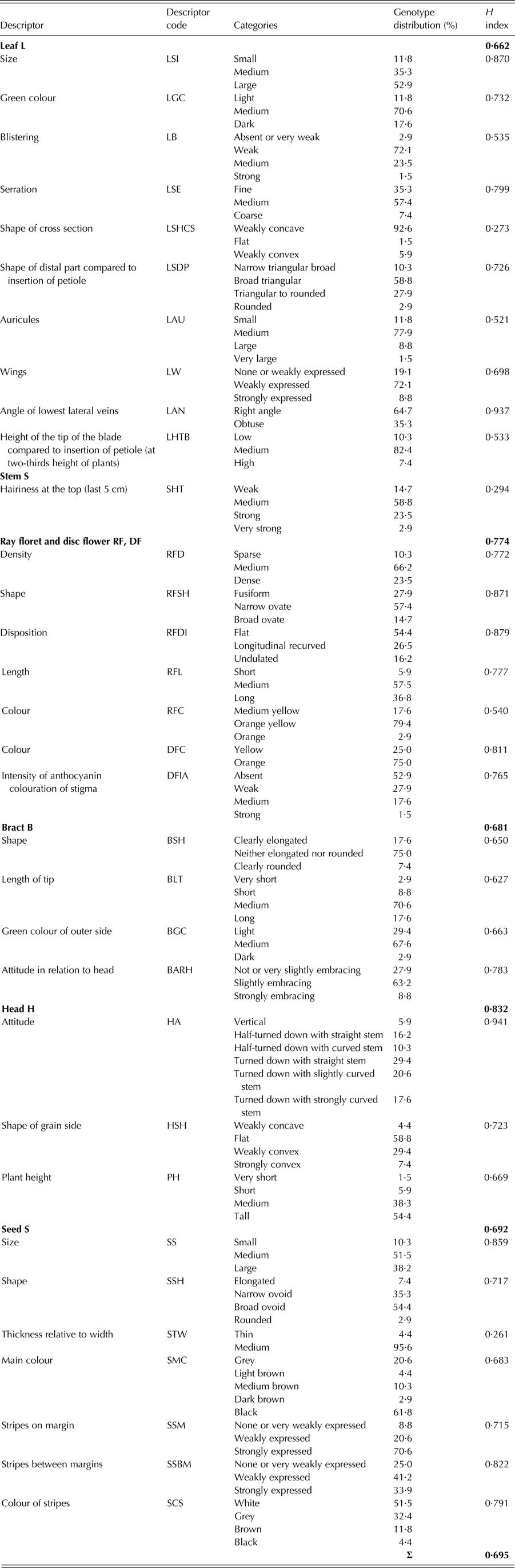
The Shannon (H) diversity index was used to evaluate the variability of 68 confectionary sunflower genotypes based on 32 morphological descriptors (Table 1). A diversity index was used as a measure of richness and was determined by the number of categories and evenness in the distribution of genotypes in each category (Shannon & Weaver Reference Shannon and Weaver1949). Higher values of H index reveal even distributions of genotypes within the phenotypic classes, while a low H index indicates an extremely unbalanced distribution for an individual trait and a lack of diversity (Moreno et al. Reference Moreno, Nishinakamasu, Loray, Alvarez, Gieco, Vicario, Hopp, Heinz, Paniego and Lia2013).
Genotype diversity
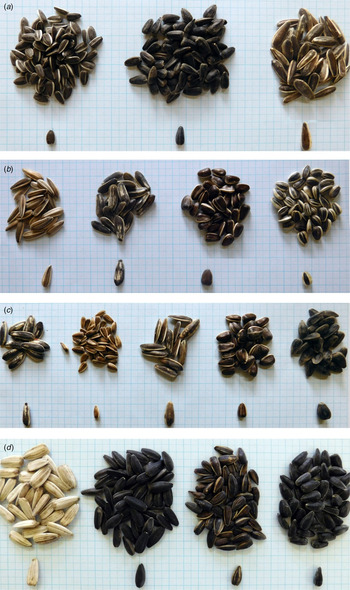
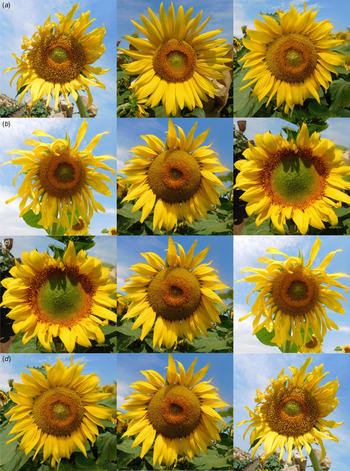
The mean diversity index of all trait groups was 0·70 and varied from 0·64 to 0·77. The index value was the lowest for leaf descriptors, moderately high to high for seed traits (Fig. 1), while the highest values were found for disc flowers and ray florets (Fig. 2). Morphological descriptor categories, genotype distribution and diversity index of the analysed confectionary sunflower collection is presented in Table 2.
Confectionary sunflower genotypes representative for seed descriptor categories (a) size (small, medium, large), (b) shape (elongated, narrow ovoid, broad ovoid, rounded) (c) main colour (grey, light brown, medium brown, dark brown, black) and (d) colour of stripes (white, grey, brown, black). Colour online.

Confectionary sunflower genotypes representative for descriptor categories of ray floret (a) density (sparse, medium, dense), (b) shape (fusiform, narrow ovate, wide ovate) (c) length (short, medium, long) and (d) disposition (flat, longitudinally curved, undulating). Colour online.

Morphological descriptor categories, genotype distribution and diversity index of a confectionary sunflower collection

Discriminative power of descriptors
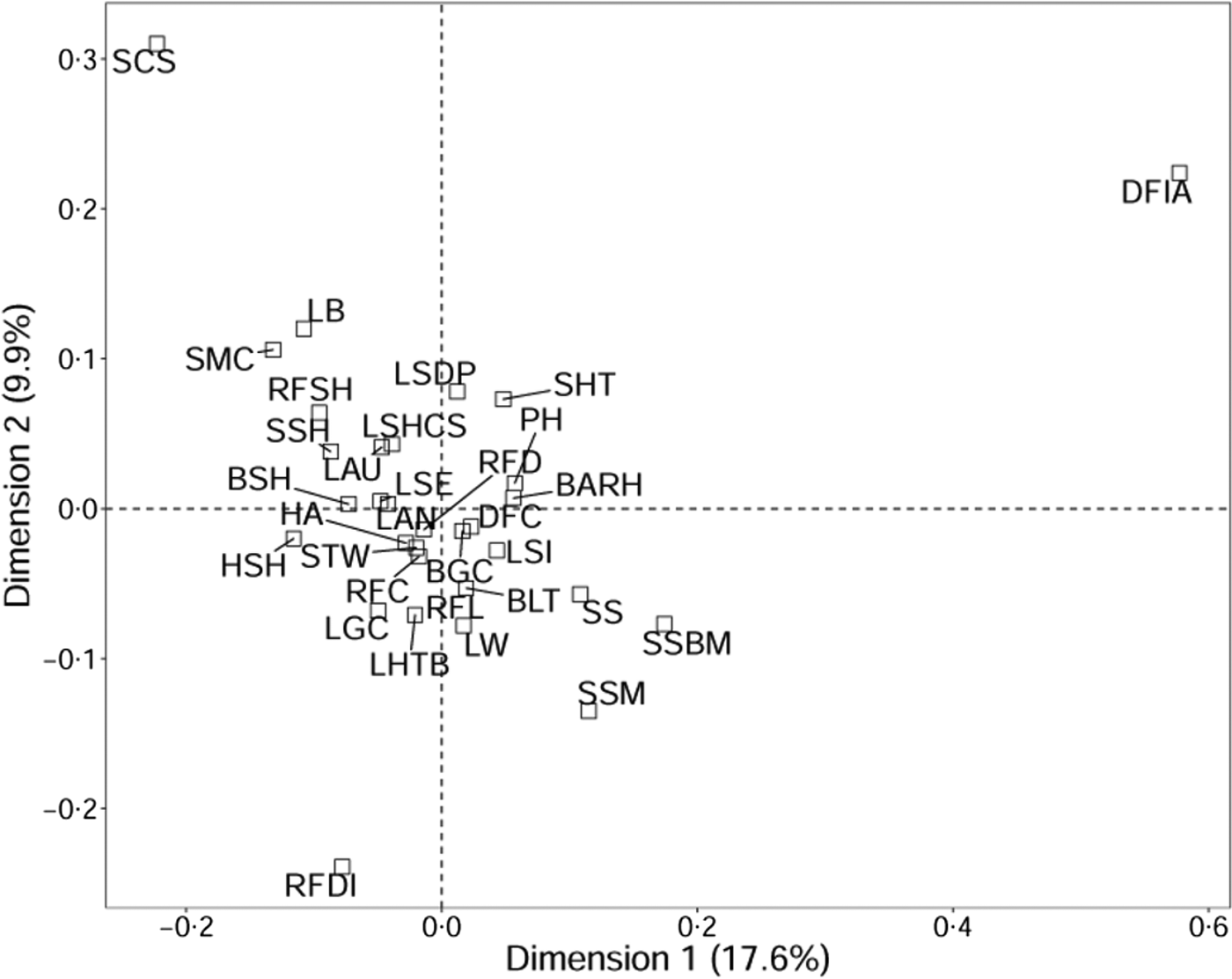
Two dimensions occupied 27·5% of total variability of optimally scaled categorical data (Fig. 3). The first dimension was related to descriptors with a higher cutoff on the first axis, thus differentiating genotypes according to: seed stripes between margin (SSBM), seed stripes on margin (SSM), seed colour of stripes (SCS), seed main colour (SMC), head shape of grain side (HSH) and, to some extent, leaf blistering (LB) and SS. The second dimension was also related to SCS, SSBM, LB and SSM. Besides those, ray floret disposition (RFDI) was most informative for genotype discrimination, together with ray floret shape (RFSH), shape of leaf distal part (LSDP), stem hairiness at the top (SHT), leaf green colour (LGC), height of the tip of the leaf blade (LHTB), ray floret length (RFL) and leaf wings (LF) (Fig. 3).
Discriminative power of descriptors.

Morphological descriptors with shorter vectors, positioned close to the biplot origin (bract attitude in relation to head (BARH), bract green colour of outer side (BGC), bract shape (BSH), disk flower colour (DFC),HA, leaf angle of lowest lateral veins (LAN), leaf auricules (LAU), leaf serration (LSE), leaf shape of cross section (LSHCS), leaf size (LSI),PH, ray floret colour (RFC), ray floret density (RFD),SSH and seed thickness relative to width (STW) were less variable among genotypes, less informative and thus with lower discriminative power for identification of confectionary sunflower genotypes (Fig. 3).
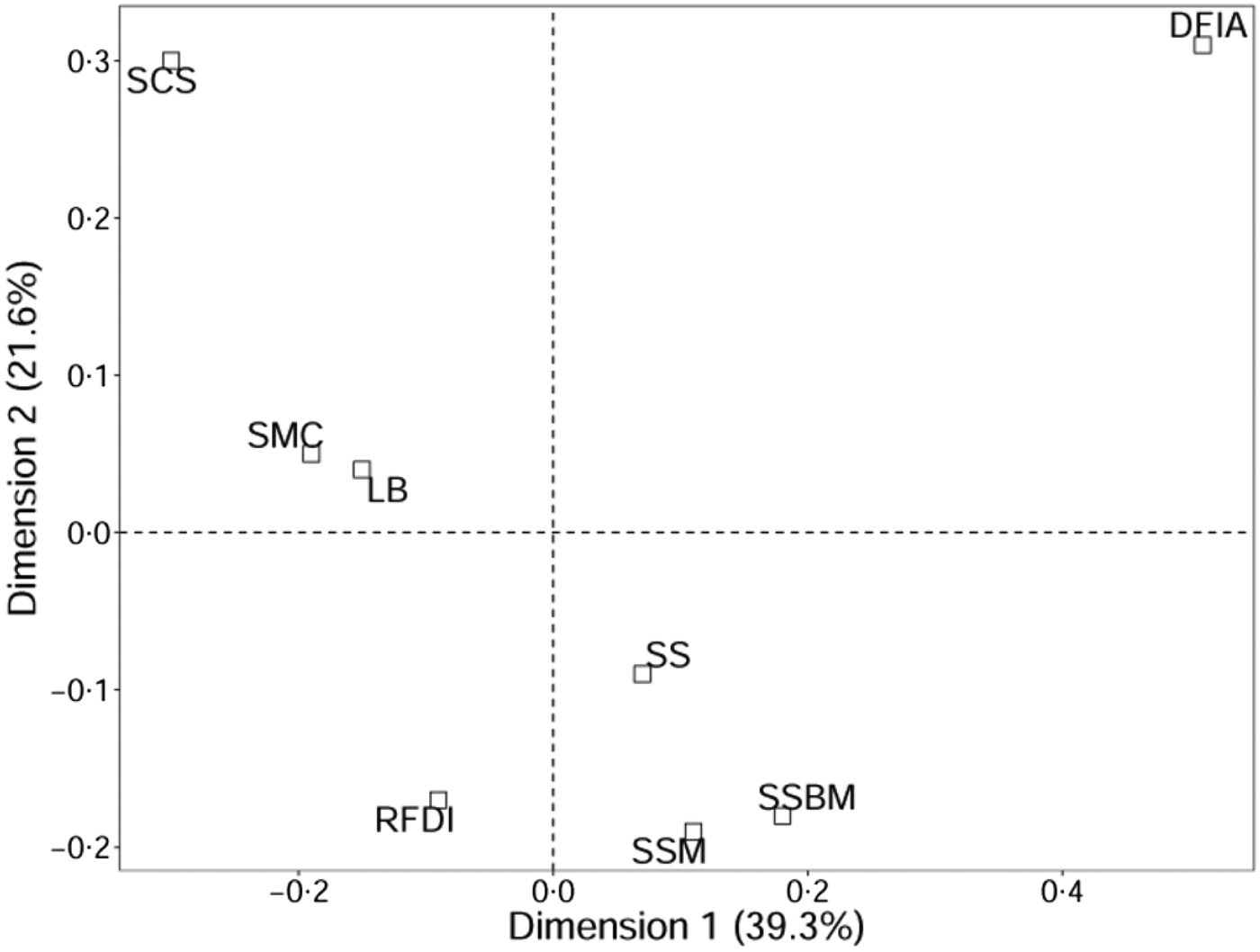
Descriptors such as: intensity of anthocyanin colouration of stigma (DFIA), SCS, LB, RFDI, SMC,SS, SSM and SSBM had high discriminative power and the highest vector length. These eight traits had the highest variability and therefore the highest discriminative power among genotypes (Fig. 3).
Based on these results, the discriminative power of eight selected descriptors was examined and it was concluded that two dimensions constitute 60·9% of the total variability of optimally scaled categorical data (Fig. 4).
Discriminative power of eight most informative descriptors.

Genotype grouping and distribution
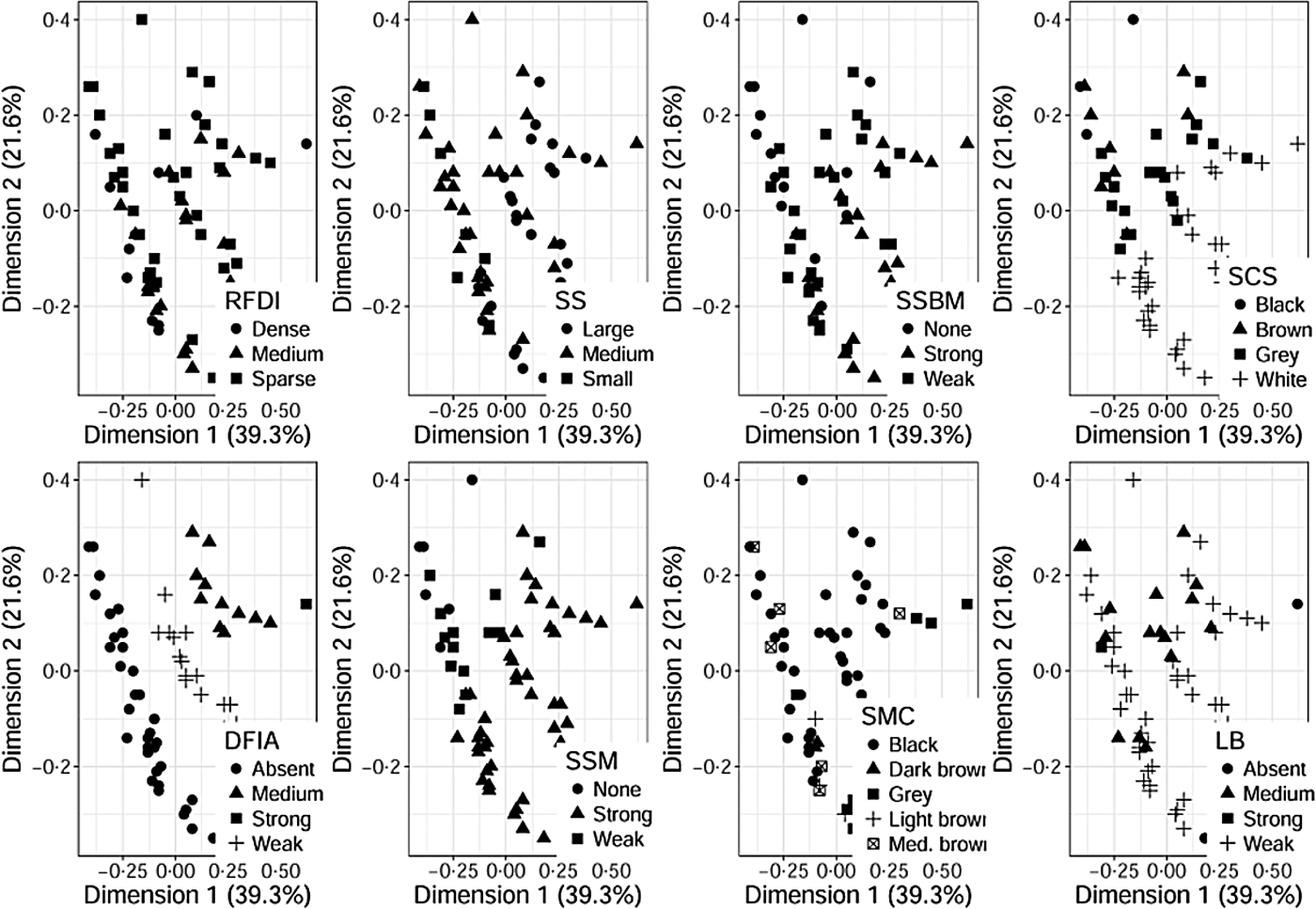
Based on the HOMALS analysis (Figs 3 and 4), it was concluded that DFIA, SCS and SMC had the highest variability, and also the highest discriminative power among genotypes. By identifying such descriptors, it enabled the selection of a smaller number of traits with the highest variability. The best grouping was found with DFIA (Fig. 5).
Grouping of genotypes for eight selected traits.

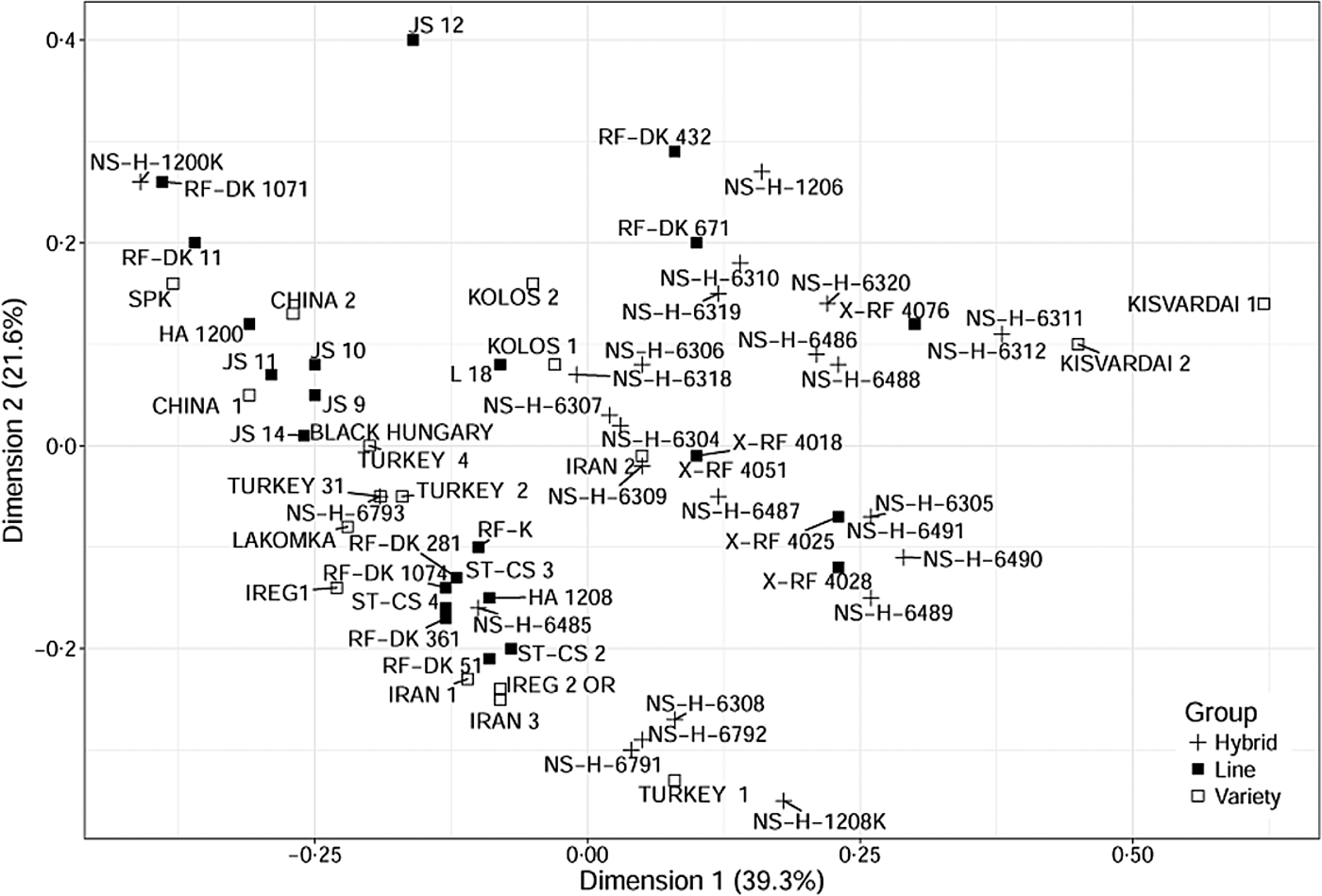
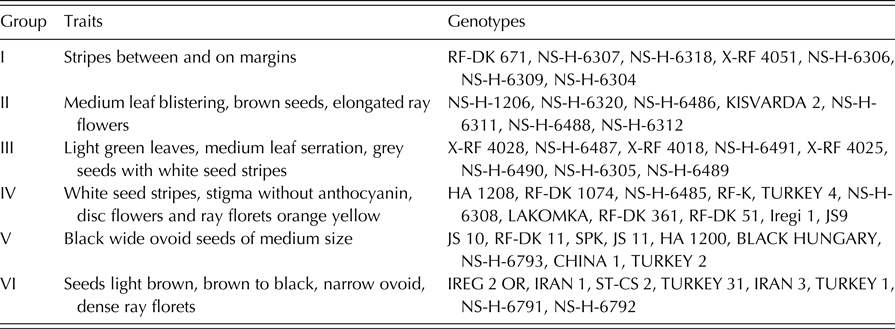
Genotypes with similar profiles for morphological descriptors were divided into six homogenous and moderately separated groups (Table 3; Fig. 6).
Distribution of 68 confectionary sunflower genotypes based on the HOMALS analysis of morphological traits with groups of varieties, inbred lines and hybrids.

Groups of genotypes according to similar morphological traits

Besides the observed groups, certain genotypes had unique profiles that positioned them furthest from the biplot origin. The most isolated one was Kisvardai 1, with strong DFIA and absent LB, followed by Kisvardai 2, with strong anthocyanin on stigma and dark leaf colour, JS 12 and NS H 1200K with black seed stripes.
Genotypes with similar morphological descriptors close to the biplot origin were NS H 6304 and NS H 6309. They had large medium green leaves with moderate blistering and hairiness, low serration, leaf tip ovate to round, orange disc flowers, dense flat and long orange-yellow ray flowers, weak DFIA, large ovoid black seed of medium thickness with grey stripes, weakly expressed in the centre, and strongly expressed at edges. Relationships between confectionary sunflower genotypes (OP confectionary varieties, lines and hybrids) were examined based on HOMALS analysis of 32 morphological characters. Significant variation was observed between the examined genotypes, which affected their wide dispersion along the two axes. The first axis explained 39·3% of the total variability, whereas the second explained 21·6% of morphological variability contained in the original set of data (Fig. 6).
A study of the distribution of 68 genotypes revealed their division into two large groups: cultivars and hybrids, while the inbred lines were widely dispersed along both axes. Most of the genotypes were clearly separated, indicating their heterogeneity. Overlapping was found for cultivar Turkey 31 with hybrid NS H 6793, between hybrids NS H 6305 and NS H 6491, NS H 6311 and NS H 6312, between lines X RF 4018 and X RF 4051, ST CS 3 and RF DK 281.
DISCUSSION
Landraces and OP confectionary varieties are mainly used for production in China, Turkey, Iran, Russia and Hungary (Zhang Reference Zhang and Seiler2004; Szabó et al. Reference Szabó, Szabó, Varga, Tóth and Vagvölgyi2010; Tan & Tan Reference Tan and Tan2010; Gontcharov & Beresneva Reference Gontcharov and Beresneva2011; Kholghi et al. Reference Kholghi, Bernousi, Darvishzadeh and Pirzad2011). Old cultivars and local landraces possess unique morphological and physiological traits that can be useful in solving certain problems in sunflower production through breeding (Kaya Reference Kaya and Gupta2015), while they also provide breeders the genetic variability necessary for the successful realization of their breeding programmes (Tan et al. Reference Tan, Altunok, Aldemir, Kaya and Hasancebi2016b ). Genetic diversity plays an important role in confectionary sunflower plant breeding, so characterization of existing sunflower collections is essential for breeders (Tan et al. Reference Tan, Altunok, Aldemir, Kaya and Hasancebi2016b ).
The development of productive sunflower hybrids requires the formulation of a desired hybrid model suitable for certain agro-ecological conditions, and determining the priorities when breeding for most important traits. This can be achieved by planned development and the use of sunflower genetic variability (Hladni Reference Hladni2010). Visual assessment of variability as an indicator of potential heterosis is widely used and usually performed using phenotypic characterization by the International Union for the Protection of New Varieties of Plants (UPOV) descriptors (Babić et al. Reference Babić, Pajić, Prodanović, Babić and Filipović2010). Luczkiewicz & Kaczmarek (Reference Luczkiewicz and Kaczmarek2004) found that the effect of morphological differences between inbred lines on the mean specific combining ability for individual yield components was significant for oil yield per plant and for the number of seeds per plant. Darvishzadeh (Reference Darvishzadeh2012) found that both morphological and genetic distances have a significant relation with F1 performance, specific combining ability and heterosis and suggested that both could effectively be utilized in order to identify heterosis for certain traits. Morphological characterization can thus be used together with genotyping to improve description and classification of germplasm when evaluating genetic diversity.
Genotype diversity
The distribution of genotypes according to categories of 32 morphological descriptors was variable. Mean diversity index value was moderately high, which was expected as the studied material had a heterogeneous origin and phenotype. Even though the diversity of evaluated confectionary sunflower collection was high, some descriptor categories were not found in the evaluated genotypes. The UPOV (2000) guidelines were adapted for the conduct of DUS test for sunflower to the evaluated material of confectionary sunflower. Descriptor categories that were not recognized in the material were not taken into account for the calculation of diversity index.
Leaves
One of the targets in sunflower breeding is to increase the rate of photosynthesis. If the genetic variability of wild sunflower's relatives is also taken into account, then the full potential of changing leaf number, shape, activity and other traits becomes more obvious (Seiler Reference Seiler, Škorić, Seiler, Zhao, Jan, Miller and Charlet2012). The expression of leaf size and shape is influenced significantly by the environment, so the comparison of genotype performance is only possible if they are grown in the same environmental conditions. Most genotypes in the current trial had medium or large lamina, which is characteristic for confectionary sunflower. Even though leaf area is most commonly inherited by dominance (Škorić Reference Škorić, Škorić, Seiler, Zhao, Jan, Miller and Charlet2012), diversity index for this trait was high, resulting from the occurrence of genotypes with the small lamina. Genotypes with small lamina may be useful for the production of confectionary hybrids that obtain maximum leaf area with greater speed by producing a larger number of smaller leaves (Yang et al. Reference Yang, Niklas, Xiang and Sun2010). Reduced leaf expansion time can also potentially reduce herbivore damage (Moles & Westoby Reference Moles and Westoby2000).
Inflorescence
Many researchers have studied the inheritance of ray floret colour in sunflower and obtained different results, which can be attributed to the different genetic backgrounds of their respective material (Fick Reference Fick1976; Miller & Fick Reference Miller, Fick and Schneiter1997). The fertile disc flowers forming the sunflower head vary in colour and all have the attributes of a true flower, with developed male and female organs (Škorić Reference Škorić, Škorić, Seiler, Zhao, Jan, Miller and Charlet2012). Except for attracting pollinators, ray floret and disc flower shape and colour may not have a significant impact on the yield of confectionary sunflower. However, anthocyanin pigmentation in the corolla of the disc florets is associated with the second layer of the pericarp (Mosjidis Reference Mosjidis1982), while pericarp thickness is important for confectionary sunflower as it determines kernel-to-pericarp weight ratio and oil content (Miller & Fick Reference Miller, Fick and Schneiter1997). Ray floret and disc flower shape and colour can thus be useful descriptors for discrimination of varieties, as confirmed in the current trial for the intensity of DFIA in disc flowers and (RFDI).
Bracts
In their studies of oil and confectionary sunflower hybrids, Weisheng et al. (Reference Weisheng, Lanxiang and Zhiying1991) stated that confectionary hybrids have a significantly higher number of bract leaves and area of bract leaves (cm2). Variability was also expected for bract length, as it is under control of more than two genes with epistatic gene effects influencing the selection for this trait (Miller & Fick Reference Miller, Fick and Schneiter1997). All bract trait categories were represented, which confirmed high variability of the studied material.
Head position and plant height
A head position at an angle of 135°–180° and firmly attached to the stem is the most preferred configuration by breeders, as it lowers the incidence of some diseases and availability to birds (Fernandez-Martinez et al. Reference Fernandez-Martinez, Perez-Vich, Velasco, Vollmann and Rajcan2009; Škorić Reference Škorić, Škorić, Seiler, Zhao, Jan, Miller and Charlet2012; Kaya Reference Kaya and Gupta2015). Different head positions also determine the amount of solar radiation intercepted, which affects sunflower seed composition (Santalla & Mascheroni Reference Santalla and Mascheroni2003). Half of all studied genotypes were found to have the desired head position of turning down with the straight or slightly curved stem. Even though six different categories were recognized for this trait, the descriptor was less useful than expected for genotype discrimination, which may be caused by intensive selection for the described head position in most breeding centres.
Plant height is a very important trait because it has an influence on the stability of the plant, i.e. tolerance to lodging and some diseases (Hladni et al. Reference Hladni, Miklič, Jocić, Kraljević-Balalić and Škorić2014; Kaya Reference Kaya and Gupta2015). Most of the plants were in the tall category, which is typical for confectionary sunflower. Height of the selection material, especially of inbred lines, is one of the first traits to be evaluated as it is directly correlated to yield, while parental lines are recommended to be about 40 cm lower than the predetermined in F1 hybrids (Škorić Reference Škorić, Škorić, Seiler, Zhao, Jan, Miller and Charlet2012). That was the situation in the studied material, where restorer (male fertile) father lines averaged between 130 and 150 cm, cytoplasmatic male sterile mother lines between 120 and 160 cm, while hybrids were in the range of 170–210 cm. Because of the high variability in each of the main groups of cultivars (lines and hybrids), PH did not have high discriminative power.
Seed
Seed size, shape, and colour are important for confectionary sunflower, with varying requirements depending on the international market (Hladni Reference Hladni, Kaya and Hasancebi2016). Seed size is a quantitative trait which is successfully used as a morphological descriptor in phenotypic characterization (UPOV 2000). The three parameters that define the size of a sunflower seed are its thickness, length and width. Seed size significantly affects the determination of 1000 seed weight, and can be used for the improvement of seed yield in sunflower breeding (Hladni et al. Reference Hladni, Jocić, Mijić, Miklič and Miladinović2015). Unfortunately, the inheritance of these traits has been under-studied, and there is relatively little data about it in the research literature (Khazaei et al. Reference Khazaei, Jafari, Noorolah, Nagatsuka and Ninomiya2008; Jafari et al. Reference Jafari, Khazaei, Arabhosseini, Massah and Khostaghaza2011; Škorić Reference Škorić, Škorić, Seiler, Zhao, Jan, Miller and Charlet2012). Jafari et al. (Reference Jafari, Khazaei, Arabhosseini, Massah and Khostaghaza2011) and Santalla & Mascheroni (Reference Santalla and Mascheroni2003) pointed out that sunflower seed properties also depend on moisture content, making seed size traits even more variable.
In the current trial, seed size (SS) followed by SSH were found to be rich in both diversity and discriminative power. That is valuable information, because this indicates the basic quality traits of confectionary sunflower, together with colouration. All four descriptors associated with colouration, including SMC, occurrence, position and colour of stripes were medium to high in diversity, but all four were among the eight most informative by discriminative power.
Discriminative power of descriptors
As the Shannon index is dependent on the number of categories and uniformity of genotype distribution, the recorded diversity can be high, but the descriptors do not necessarily have high discriminative power. Therefore, discriminative power was determined by analysing the distance of descriptors from the plot origin using HOMALS analyses. Dispersion of descriptor categories along a certain dimension defined descriptors with unique profiles.
Usually, the first two components explain the importance of a larger number of variables in the total variation, and the first component is the most important because it has the greatest contribution to the data variation (Da Silva & Padovani Reference Da Silva and Padovani2006). The total variability explained by the first two principal components in the current trial can be considered as high, keeping in mind a large number of highly variable traits that were used for the analysis. The first component, was positively associated with seed size and occurrence of seed stripes (SSM, SSBM). This means that genotypes with higher values of principal component 1 (PC1) have larger seeds with stripes that correspond to positioning of most of the hybrids developed for larger seeds and yield. The second component was closely correlated with SCS, grouping lines and several cultivars with dark seed stripes in the upper left quadrant of the biplot. The most informative was DFIA in disc flowers which, unlike other descriptors, discriminated genotypes along the axis from the lower left to upper right corner of the biplot. Discriminative power of DFIA is most obvious by the similarity in patterns of genotype distribution of only using DFIA and eight selected descriptors with highest discriminative power.
Genotype grouping and distribution
In order to use germplasm collections more efficiently and effectively, it is important to characterize the diversity of the germplasm (Terzić et al. Reference Terzić, Zorić, Dedić, Atlagić, Jocić, Miladinović, Ovuka, Kaya and Hasancebi2016). Morphological characterization of plant genetic resources should, nonetheless, be done with environmental influence in mind (Rao et al. Reference Rao, Reddy, Kulkarni, Lalitha Reddy and Ramesh2004). Certain traits can be under strong genotype by environment (G × E) influence and may require multiple environments for proper discrimination of descriptor categories. Germplasm from different regions can be thus found closely related regardless of their geographic origin due to the environmental effect.
The primary materials for the development of sunflower inbred lines are local and foreign populations and cultivars. The development of inbred lines and their hybrids depends on the aim of selection. Grouping of cultivars and hybrids in two recognizable groups in the current trial is a result of the selection process, where inbred lines are developed from cultivars as starting material for hybrid development. Because they originate from cultivars and are used as parental lines for hybrids, they were widely dispersed, thus connecting the two main groups. Genotypes from a single breeding programme usually show higher similarity which was the case with two hybrids from the NS breeding programme. Overlapping between cultivar Turkey 31 and hybrid NS H 6793 may point to a shared origin or possibly similar breeding goals. Hybrids NS H 6318 and NS H 6307 are both positioned close to the plot origin which is a result of a shared mother line (HA 1200) but also the fact that their father lines are on the opposite side of the first dimension (X-RF-4076 and X-RF-4025), confirming the desired heterogeneity of parental lines in hybrid breeding.
Different breeding programmes in the same region can also lead to similarities in the cultivars created (Perić et al. Reference Perić, Nikolić, Babić, Sudarić, Srebrić, Đorđević and Mladenović-Drinić2014). For example, genotypes from Turkey were found to scatter over different groups of typical morphological traits. This indicates that material may have been introduced into Turkey from different regions and/or breeding programmes. The finding that grouping cannot always be assumed to correspond closely to the origin is similar to the findings of Dong et al. (Reference Dong, Liu and Li2007) in a core collection of confectionary sunflower. Therefore, the selection of parents for hybridization needs to be based on both geographic and genetic diversity information.
CONCLUSIONS
The primary objective of the current research was to determine the extent of phenotypic diversity in confectionary sunflower. The high diversity index value (0·7) suggests that the material evaluated is representative as a confectionary sunflower germplasm collection. Shannon index of diversity was the lowest for leaf descriptors, moderately high for seed traits, while the highest values were found for disc flowers and ray florets.
Out of the 32 descriptors used in the trial, HOMALS analysis helped determine eight of the highest discriminative power that can be used efficiently for germplasm classification. Colouration of stigma in disc flowers (DFIA), SMC and SCS were the most informative traits.
Considering the confirmed diversity of the studied material, it is safe to assume that it has good potential for long-term use. It is likely that genotypes that may not be representative by yield or seed-specific traits can provide a unique source of traits in the confectionary sunflower breeding programme.
The establishment, evaluation and the utilization of confectionary sunflower from the collection in Novi Sad is a long term and combined effort. The programme was started by Professor Dr Dragan Škorić, who was the Head of Oil Crops Department at the Institute of Field and Vegetable Crops in Novi Sad. Doctors Radovan Marinković, Branislav Dozet and Siniša Jocić contributed by inspecting the inheritance of traits important for confectionary sunflower breeding, while Dr Dejan Jovanović developed several confectionary sunflower hybrids. We also thank our technical assistants Katalin Ivanić and Goran Marinković for their valuable help in all steps of the work on the collection. The financial support from the Institute of Field and Vegetable Crops in Novi Sad and Ministry of Science and Education of the Republic of Serbia is greatly appreciated as the current work was also part of the TR31025 project.