Summations
-
∙ Neurophysiology units based in neuropsychiatry departments should meet the basic standards set out by existing recommendations in terms of both personnel/facilities and emergency procedures in order to run a safe and clinically effective service.
-
∙ The potential advantages of integrated neuropsychiatry/neurophysiology services include the increased availability of facilities which are under great demand across healthcare systems, the possibility of implementing appropriate diagnosis communication and other treatment strategies at an early and crucial stage of the patient’s care pathway.
-
∙ Service evaluations, experts’ surveys and guideline development are among the further steps needed to improve safety awareness and evidence-based practice across multidisciplinary neuropsychiatry/neurophysiology facilities.
Considerations
-
∙ The development of neuropsychiatry-based neurophysiology facilities poses considerable challenges related to practical issues that may hinder achievement of compliance to the reviewed safety standards.
-
∙ Implementation of the required safety measures to accommodate video-electroencephalography telemetry units within neuropsychiatry services is likely to involve additional personnel and may be costly, since current technologies for seizure detection offer inadequate performance and expose to clinical risk.
-
∙ Although emergency resuscitative equipment is required in all medical facilities, access to additional care may be required. In neuropsychiatry outpatient units this may include arrangements with nearby hospitals to provide emergency services when needed, whilst neuropsychiatry inpatient units incorporating neurophysiology facilities require ready access to an intensive care unit and anaesthesia services in the event of status epilepticus.
Neuropsychiatry and neurophysiology
Over the last few decades there has been a considerable expansion in neuropsychiatry as a clinical discipline with the development of specialised services for a number of conditions at the interface between neurology and psychiatry (Reference Arambepola, Rickards and Cavanna1). The services provided within multidisciplinary neuropsychiatric settings often include the assessment and management of epilepsy-related behavioural problems and non-epileptic attack disorder (Reference Tonkonogy and Geller2,Reference Eddy and Cavanna3).
The differential diagnosis between epilepsy and non-epileptic attack disorder can be particularly challenging and often requires the availability of a range of neurophysiological tests alongside clinical observation and other investigations (Reference McCorry and Cavanna4). An effective care pathway for patients with non-epileptic attack disorder requires the contribution of a wide range of clinicians, often with different backgrounds and approaches (Reference Whitehead and Reuber5). The expertise of the multidisciplinary team should include psychology, psychiatry, social work, occupational therapy, counselling, neuroradiology, clinical nurse specialists, neurophysiology, neurology, neurosurgery and neuroanaesthesia (6,Reference Delgado Nunes, Sawyer, Neilson, Sarri and Cross7). The responsible physician should be the clinician who coordinates the patient’s care: this is typically a neurologist with special interest in epilepsy or a behavioural neurologist/neuropsychiatrist for patients with non-epileptic attack disorder.
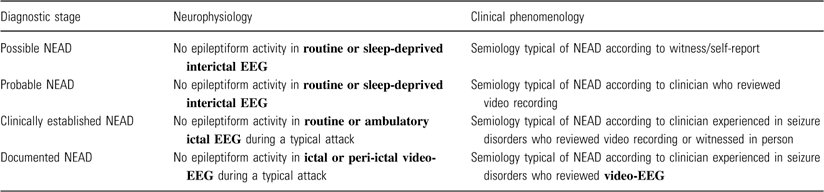
A recently published report from the International League Against Epilepsy-Nonepileptic Seizures Task Force presented the guidance on standards for the diagnosis of non-epileptic attack disorder, as agreed by an international consensus group of clinician-researchers in epilepsy, neurology, neuropsychology, and neuropsychiatry (Reference LaFrance, Baker, Duncan, Goldstein and Reuber8). This multidisciplinary group developed a staged approach to the diagnosis of non-epileptic attack disorder, based on a consensus review of the literature. According to this approach, four key levels of diagnostic certainty can be achieved (possible, probable, clinically established, and documented diagnosis) following a range of diagnostic steps that include history taking (Reference Plug and Reuber9) with focus on the ictal phenomenology (Reference Ali, Rickards, Bagary, Greenhill, McCorry and Cavanna10–Reference Roberts and Reuber15), laboratory tests (Reference Drazkowski and Chung16), neuroimaging (Reference Mann and Cavanna17,Reference Bagshaw and Cavanna18), neuropsychological testing (Reference Prigatano and Kirlin19), neurophysiological investigations (routine electroencephalography (EEG), ambulatory EEG, video-EEG telemetry) (Reference Eddy and Cavanna3), plus possibly hypnosis (Reference Khan, Baade, Ablah, McNerney, Golewale and Liow20) and conversation analysis (Reference Schwabe, Howell and Reuber21). The agreed definitions for the proposed diagnostic levels in non-epileptic attack disorder acknowledge the central role of combined phenomenology and neurophysiology assessments, following the electro-clinical approach to the classification of epileptic seizures previously developed by the International League Against Epilepsy (22,Reference Velis, Plouin, Gotman and Lopes da Silva23) (Table 1).
Diagnostic levels* of diagnostic certainty for non-epileptic attack disorder proposed by the International League Against Epilepsy-Nonepileptic Seizures Task Force: roles of neurophysiology (bold) and clinical phenomenology

EEG, electroencephalogram; NEAD, non-epileptic attack disorder.
*In all levels the clinical history is consistent with non-epileptic attack disorder.
In addition to evaluating key diagnostic approaches, this group suggested avenues for improvements along the care pathways of patients with non-epileptic attacks and identified needs for future research. The latter included reducing the delay in diagnosis of non-epileptic attack disorder and improving the transition from neurologic to neuropsychiatric treatment for patients with this condition. A streamlined care pathway with early diagnosis and adequate communication can be highly cost-effective, as it has the potential to improve clinical outcomes in a considerable proportion of patients (Reference Hall-Patch, Brown and House24–Reference LaFrance, Reuber and Goldstein26).
In order to meet increasing demand, neurophysiology facilities are currently expanding particularly within neuropsychiatry services to provide specialised diagnostic tests such as ambulatory EEG and video-EEG telemetry, which is currently considered the gold standard investigation to confirm the diagnosis of non-epileptic attack disorder (Reference Eddy and Cavanna3,Reference Ribaï, Tugendhaft and Legros27,Reference Kandler, Lai, Ponnusamy, Bland and Pang28). The availability of these neurophysiology facilities within neuropsychiatry services may open opportunities to fulfil some of the unmet needs for the care of patients with non-epileptic attack disorder, as specialist input can be provided at a key stage of the diagnostic process and care pathways can be timely implemented within a multidisciplinary setting.
This paper reviews existing evidence to define standards for neurophysiological investigations (with focus on video-EEG telemetry) within neuropsychiatry services, from safety issues to implementation of multidisciplinary care pathways. We conducted a systematic literature review in order to identify the scientific literature on the best practices when using neurophysiological investigations in patients with suspected epileptic seizures or non-epileptic attacks. The following search terms were entered into the PubMed database: Epilep* AND (neurophysiolog* OR EEG OR telemetry) AND (guideline* OR recommendation*). Limits were set to studies conducted on human populations, published in English language between 1990 and 2015. The reference lists of the identified articles were manually screened for any further relevant article. We also searched online indexes of scientific journals relevant to the field, including Epilepsia, Seizure, Epilepsy & Behavior, Journal of Clinical Neurophysiology, Epileptic Disorders, Clinical EEG and Neuroscience, and Clinical Neurophysiology, in order to ensure that no relevant articles had been omitted. Finally, the grey literature was surveyed through Google Scholar. Our systematic literature review yielded two main themes of relevance to the neuropsychiatry/neurophysiology interface (safety issues and integrated pathways), which are presented in the following sections.
Safety issues in video-EEG telemetry
Although the majority of routine neurophysiological investigations are carried out safely, studies on video-EEG telemetry in epilepsy monitoring units have highlighted the need to address potential adverse events (Reference Noe and Drazkowski29–Reference Lee and Shah31). The most common risks include falls, increased seizure frequency potentially evolving to status epilepticus and psychiatric complications, such as ictal behavioural changes and post-ictal psychosis (Reference Jones, Rickards and Cavanna32,Reference Shafer, Buelow and Ficker33).
The incidence and type of adverse events in video-EEG telemetry units have been the focus of several surveys conducted in recent years. A large retrospective study (Reference Dobesberger, Walser and Unterberger34) analysed 5090 events from 507 patients in a single unit and showed adverse events occurring in 9% of seizures, with equal frequency between day and night. The frequency of the events was 3% for post-ictal psychosis and injuries, and 2% for status epilepticus. A further retrospective study across US centres was commissioned by the American Epilepsy Society (AES) (Reference Shafer, Buelow and Ficker33) to address concerns over the lack of consensus on patient care in video-EEG units. Findings showed that 69% of centres experienced falls, 63% status epilepticus, 54% post-ictal psychosis, 6% fractures, 7% cardiac arrest, and 3% death. Finally, there have been rare reports of both fatalities (including sudden unexpected death in epilepsy) and near-fatalities during video-EEG telemetry (Reference Tomson, Nashef and Ryvlin35–Reference Espinosa, Lee, Tedrow, Bromfield and Dworetzky37).
As the success of the video-EEG investigation mainly depends on recording the patients’ typical seizure type, provocation manoeuvres, including antiepileptic medication tapering/withdrawal and sleep deprivation, are often employed to increase the likelihood of recording a seizure (Reference Eddy and Cavanna3). These manoeuvres are known to increase the risk for adverse events, particularly in patients with a previous history of generalised tonic-clonic seizures, as a proportion of them may experience prolonged uncontrolled seizures and status epilepticus and require treatment in the intensive care unit (Reference Kandler, Lai, Ponnusamy, Bland and Pang28). As neurophysiology facilities including video-EEG telemetry become more widely available, concerns about safety of investigative procedures carried out in different settings are increasing requiring implementation of effective measures to anticipate and prevent adverse events and to ensure patient safety and surveillance during monitoring.
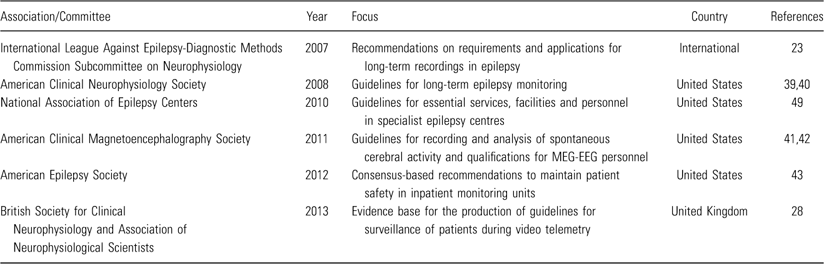
Despite heterogeneity in video-EEG protocols and practical parameters (drug withdrawal, seizure observation, rescue procedures, etc.) across epilepsy services (Reference Buelow, Privitera, Levisohn and Barkley38), a few guidelines have recently been published to address these important points (Table 2).
Main sources for recommendations on safety protocols for video-EEG telemetry services.

ILAE, International League Against Epilepsy.
In 2007, the International League Against Epilepsy (ILAE) produced some recommendations on the basic requirements for long-term EEG recordings, with focus on electrical safety and availability of resuscitation equipment (Reference Velis, Plouin, Gotman and Lopes da Silva23). This document, however, does not specifically address more general aspects, such as the level and type of staffing required in a video-EEG telemetry unit to ensure safety. Likewise, the American Clinical Neurophysiology Society guidelines published in 2008 (39,40) aimed to define the minimum technical standards for specific indications, including presurgical assessments and differential diagnosis between epileptic and non-epileptic attacks. The American Clinical Magnetoencephalography Society produced similar guidelines addressing the minimum standards for the routine clinical recording and analysis of MEG-EEG studies in all age-groups. MEG-EEG studies, including qualifications of MEG-EEG personnel (Reference Bagić, Knowlton, Rose and Ebersole41,Reference Bagić, Barkley, Rose and Ebersole42).
Acknowledging the importance of potential hazards and safety measures issues in video-EEG telemetry units, the AES formed a workgroup to establish evidence and implement best practices. This effort produced two documents so far: a survey of adverse events occurring in the video-EEG telemetry unit, published in 2011 (Reference Shafer, Buelow and Ficker33), and a set of consensus practice recommendations published in 2012 (Reference Shafer, Buelow and Noe43). As the reviewed literature showed lack of evidence, a process consisting of a series of iterative questionnaires and anonymous feedback (Delphi methodology (Reference Linstone and Turoff44)) was used to generate these recommendations based on expert consensus. In the first stage of this process, a set of safety statements was developed by four workgroups in the key areas of seizure observation, seizure provocation, management of acute seizures, and activity/environment. These statements were consolidated by a screening committee and further revised following evaluation by a small group of independent experts. The resulting statements were then sent in an e-mailed survey to members of the AES, an expert group and workgroup members, for rating on a scale between one (completely agree) and nine (completely disagree). In a second survey, participants were asked to re-evaluate each item in the light of its mean score and spread: these efforts led to widespread consensus on a number of recommendations assessing safety standards across video-EEG telemetry units. There should be pre-admission screening for patients at high risk, particularly for falls. A clear chain of command for communication and decision making should be clearly identified in the protocols and charts. Patients should be informed about possible changes, especially behavioural (Reference Eddy, Rickards and Cavanna45,Reference Piedad, Rickards, Besag and Cavanna46) and cognitive (Reference Cavanna, Ali, Rickards and McCorry47,Reference Eddy, Rickards and Cavanna48), resulting from antiepileptic medication tapering. Non-medical staff participating in seizure observation, including volunteers and relatives, should receive specific instructions about the process and their role in maintaining patient safety. The description or video recording of clinical events should be reviewed with patient/witnesses to ascertain whether the typical type of attacks was captured. The safety of bathroom facilities, including degree of staff assistance/supervision, should be assessed. Continuous cardiac monitoring should be in place with a minimum of a single-lead electrocardiography (ECG).
Interestingly, consensus on continuous observation was reached only for patients with invasive (intracranial) electrode monitoring, at high risk for injury, or undergoing withdrawal of their antiepileptic medications. This point incorporated only partially the recommendation from the National Association of Epilepsy Centers (NAEC), which had advocated the use of continuous seizure observation for all patients undergoing video-EEG telemetry (Reference Labiner, Bagic, Herman, Fountain, Walczak and Gumnit49). It has been pointed out that acknowledging the need for continuous seizure observation is a pivotal step not only for the prevention of adverse events in the epilepsy monitoring unit, but is also necessary for diagnostic purposes (Reference Kanner and Bergey50). Possible reasons for lack of expert consensus on such a crucial point include different interpretations of the concept of ‘continuous observation’ and artefacts of the Delphi methodology process to infer agreement between experts’ opinions. Importantly, it should be noted that a lack of consensus as defined by these relatively stringent criteria does not necessarily indicate that a particular recommendation on safety measures should not be implemented. For example, although the use of a pulse oximeter did not reach the consensus threshold, its ease of implementation, low cost, and potential effectiveness as an adjunctive alarm device makes it a good candidate for wider implementation. Likewise, a retrospective study of 752 seizures in 149 patients from a single epilepsy monitoring unit implementing 24-h surveillance by a technician and specially trained nurses with a minimum nurse-to-patient ratio of 1 : 4 showed that safety measures involving continuous observation significantly reduce the incidence of preventable adverse events (Reference Noe and Drazkowski29). In fact, although adverse events occurred in 7% of patients (status epilepticus, post-ictal psychosis, serious ECG abnormalities and vertebral fractures during a generalised tonic-clonic seizure), there were no reports of falls, lacerations or dental injuries.
In the AES survey, a high degree of consensus was reached on other important aspects of seizure management: physicians who are able to manage seizure emergencies should be available in house 24/7 and intravenous access or alternative methods for drug administration should be established at the beginning of the monitoring period. Moreover, specific seizure precautions and seizure first aids should be utilised and should at a minimum include the following: responding in a timely fashion to consciousness or behavioural changes; monitoring vital signs both during acute seizures and during/after intravenous administration of antiepileptic drugs; turning patients on their side as soon as possible after a seizure and removing hazards from the surrounding environment; ensuring that suction and oxygen are available; providing padded side rails; assessing patients frequently until return to baseline; recording the length of the event and documenting observations; establishing criteria for when to inform the responsible physician about a seizure, when to intervene with rescue medications, and when and how to resume preadmission antiepileptic drugs; developing specific protocol for response to seizures in video-EEG telemetry units.
Finally, in the AES recommendations there was consensus that the discharge planning at a minimum should consist of the following information: when and whom to call for emergency help; when to contact the epilepsy specialist for changes in seizures or behaviour; information on antiepileptic drug changes that occurred during monitoring period and medications to be taken after discharge; how to manage seizures after discharge, including temporary treatment of seizures if clinically indicated; timing of follow-up appointments; safety precautions and activity limitations; recognition and treatment of post-ictal psychosis or other behavioural changes that may occur after discharge.
A recent study by Kandler et al. (Reference Kandler, Lai, Ponnusamy, Bland and Pang28) investigated the optimal requirement for healthcare professional surveillance of patients in video-EEG telemetry units in the United Kingdom through a national service evaluation. This study captured data from 31 out of 63 clinical neurophysiology units who had expressed an interest via the professional societies (British Society for Clinical Neurophysiology and Association of Neurophysiological Scientists) in participating in national audit studies that covered around 80% of the neurophysiology units based in the United Kingdom. This multicentre survey provided an evidence base to help formulate national recommendations for patient safety. After consultation with experts, a minimum time from seizure onset to attendance by a healthcare professional of 30 seconds was deemed to be satisfactory for patient safety. It was therefore suggested that all videotelemetry beds should have 24-h surveillance (either direct observation or video monitors and nurse alarms) by healthcare professionals throughout the monitoring period. Importantly, the healthcare professionals in charge of patient surveillance (either qualified nurses or unqualified healthcare assistants) should be trained to recognise seizures and major disturbances of cardiac rhythms and should be dedicated to the video-EEG telemetry unit and not be expected to perform other duties during monitoring. A nurse-to-patient ratio of not less than 1 : 4 was suggested as appropriate and it was stated that the patient’s heart rate should be clearly displayed to the monitoring healthcare professional (by ECG or pulse oximetry) to allow prompt intervention in case of serious ictal cardiac arrhythmias. Finally, it was recommended that video-EEG telemetry studies be reviewed by neurophysiology staff within 24 h to reduce consequences of unnoticed seizures. A study of 971 admissions to video-EEG telemetry unit investigated the potential benefits of introducing a safety protocol including an education program for staff and surveillance by EEG technologists at all times, in place of alternating shifts between EEG technologists and nurses (Reference Spanaki, McCloskey and Remedio51). Although there was no reduction in the frequency of patients’ falls, the authors found a significant reduction in the number of missed seizures, thanks to the additional skills of EEG technologists in analysing the EEG trace as well as the video information.
Standards for an integrated pathway
According to the staged approach to the minimum requirements for the diagnosis of non-epileptic attacks proposed by the ILAE-Nonepileptic Seizures Task Force, neurophysiology investigations (especially video-EEG telemetry) have a key diagnostic role, alongside clinical phenomenology (Table 1). Early diagnosis of non-epileptic attack disorder, coupled with appropriate psychoeducation and targeted treatment interventions, have been associated with better outcomes by allowing minimization of exposure to anticonvulsants, reduction of attack frequency and/or severity and improvement of health-related quality of life (Reference Hall-Patch, Brown and House24,Reference Durrant, Rickards and Cavanna25,Reference Walczak, Papacostas, Williams, Scheuer, Lebowitz and Notarfrancesco52). Referral to a video-EEG telemetry unit has therefore been recommended as appropriate early in the evaluation process of patients with a suspected diagnosis of non-epileptic attack disorder (Reference Labiner, Bagic, Herman, Fountain, Walczak and Gumnit49).
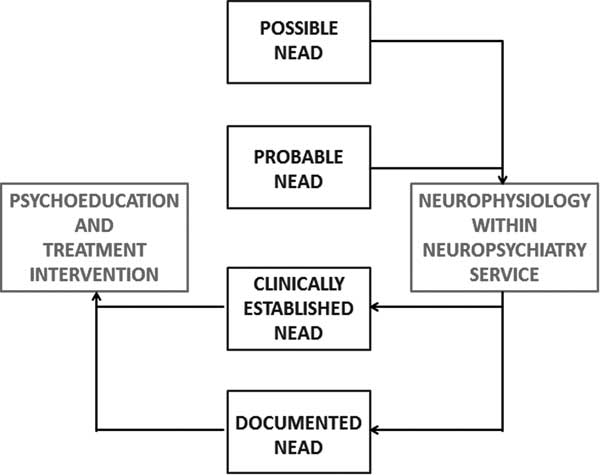
A multidisciplinary model for an integrated approach to the staged diagnosis and management of non-epileptic attack disorder (Fig. 1) exploits the potential advantages of an early involvement of neuropsychiatry services for neurophysiology investigations and treatment intervention. In these highly specialised services, behavioural neurologists working side-to-side with neuropsychiatrists will be ideally placed to coordinate the care pathways of patients with non-epileptic attack disorder. However the implementation of video-EEG telemetry facilities will require compliance to the safety parameters outlined for the epilepsy centres. First, patients with a provisional diagnosis of possible or probable non-epileptic attack disorder can receive a final diagnosis of epilepsy either in isolation or in association with non-epileptic attack disorder; recognising this has wide implications, ranging from the appropriateness of management options for patients with a dual diagnosis to the risk of misdiagnosis of refractory epilepsy (Reference Mitchell, Seri and Cavanna53). Second, it is important to appreciate that patients with non-epileptic attacks in the video-telemetry unit are also at significant risk of harm (Reference Atkinson, Shah, Hari, Schaefer, Bhattacharya and Shah54). In addition to falls and drop-attacks, patients with non-epileptic attack disorder can experience a range of clinical events not accompanied by ictal EEG changes: generalised convulsions, incontinence, alterations of consciousness, as well as non-epileptic status (Reference Asadi-Pooya, Emami, Emami and Sperling55). It has been highlighted that patients in non-epileptic status who are not monitored with EEG to confirm the non-epileptic nature of their clinical presentation run the risk of potential iatrogenic harm secondary to administration of intravenous benzodiazepines, intubation, and anaesthetic-induced coma (Reference Dworetzky, Mortati, Rossetti, Vaccaro, Nelson and Bromfield56). Data on injuries during non-epileptic seizures are mainly based on patients’ accounts (Reference Mostacci, Bisulli, Alvisi, Licchetta, Baruzzi and Tinuper57), and studies showed prevalence rates as high as 40%, with 9% of patients reporting significant injuries involving bone fracture or requiring sutures (Reference Peguero, Abou-Khalil, Fakhoury and Mathews58). Of note, 44% of the patients who reported injuries during their non-epileptic seizures had tongue biting, and 32% reported suicide attempt. A recent study by Atkinson et al. (Reference Atkinson, Hari, Schaefer and Shah30) sought to determine the presence of potentially unique safety concerns that should be considered when monitoring patients with non-epileptic attack disorder as opposed to patients with epilepsy. The authors reviewed the different types of adverse events that occurred in their video-EEG telemetry unit during 116 non-epileptic attacks potentially leading to harm or injury to the patients and compared them to the adverse events occurred during 170 epileptic seizures. There were several incidents in both groups. Falls were evenly distributed, with 3 (2.6%) during non-epileptic attacks and 6 (3.5%) during epileptic seizures. The number of clinical events without staff response was high, represented by 39 non-epileptic attacks and 101 epileptic seizures. In this study, the majority (30/39) of the non-epileptic attacks missed by the staff were less than one minute in duration. The authors concluded that standardised safety measures should be applied to all patients admitted to the video-EEG telemetry units, regardless of whether they suffer from epileptic or non-epileptic attacks, and advocated a review of the patient surveillance protocol in order to include a 24-h dedicated board-certified EEG technician whose sole responsibility is to monitor patients continuously (Reference Atkinson, Hari, Schaefer and Shah30).
Multidisciplinary approach to the staged diagnosis and management of non-epileptic attack disorder (NEAD), with early involvement of the neuropsychiatry service (red) for neurophysiology investigations and treatment intervention.

As it has been shown, these recommendations about video-EEG telemetry for non-epileptic attack disorder are in line with both the NAEC guidelines (Reference Labiner, Bagic, Herman, Fountain, Walczak and Gumnit49) and experts’ advice on continuous seizure observation (Reference Kanner and Bergey50), despite the lack of formal consensus according to the Delphi survey promoted by the AES (Reference Shafer, Buelow and Noe43). Video-EEG investigations in neurophysiology units embedded in neuropsychiatry services should be primarily directed at selected groups of patients (e.g. patients with possible or probable diagnosis of non-epileptic attack disorder), reflecting the specific range of competencies represented in neuropsychiatry teams. However these procedures are not free of risks, which need to be understood and addressed, as they are potentially preventable with the implementation of adequate safety protocols.
According to the NAEC guidelines, originally developed in 1990 (59) and subsequently revised in 2001 (Reference Walczak60) and 2010 (Reference Labiner, Bagic, Herman, Fountain, Walczak and Gumnit49), the services using video-EEG telemetry as an essential diagnostic tool are referred to as third- and fourth-level epilepsy centres, to which patients should be referred if non-epileptic attacks are suspected or if epileptic seizures are not controlled by initial pharmacological interventions after 1 year (Reference Kwan and Brodie61). The main difference between third- and fourth-level centres is the comprehensive nature of the services provided, with third-level centres not providing the more complex forms of intensive neurodiagnostic monitoring, such as intracranial electrodes studies for epilepsy surgery. The safety standards of a neuropsychiatry-based neurophysiology unit should match those set out for a third-level epilepsy centre, as the major distinction between a third-level neurophysiology service based in a neurology setting and an equivalent service based in a neuropsychiatry setting is the primary focus of the investigation (non-epileptic attack disorder vs. treatment-refractory epilepsy), reflecting the different ranges of expertise.
The NAEC guidelines advocate an interdisciplinary team approach, whereby patients’ care at third-level centres is provided by a collaborative care team that is directed by a neurologist (or neurosurgeon) with special expertise in epilepsy (Reference Labiner, Bagic, Herman, Fountain, Walczak and Gumnit49). The multidisciplinary team typically includes professionals with expertise in clinical neurophysiology, EEG technologists, neuropsychologists, nurse specialists, plus skilled personnel for psychosocial, rehabilitation and support services. The NAEC recommendations for third-level video-EEG telemetry units include personnel, emergency protocols, and access to intensive care unit specifications. Recommendations regarding personnel also include a higher than standard nurse-to-patient ratio, in addition to continuous observation by EEG technologists or epilepsy staff nurses. Epilepsy nursing staff and at least one physician must be continuously present on site and there should be 24 h availability of EEG technologists and at least one epileptologist, which can be guaranteed by job planning review in order to accommodate the need for continuous availability. Mandatory protocols (modified as necessary to account for individual situations) should include those for the examination of the ictal and post-ictal phenomenology (consciousness, speech, memory, motor function), the number or duration of attacks over given period requiring physician notification, and measures to be taken if number, duration, or severity of the observed attacks is excessive. Finally, the NAEC guidelines for third-level centres recommend ready access to additional care (intensive care unit and anaesthesia services in case of status epilepticus).
Based on the reviewed evidence, neurophysiology units based in neuropsychiatry departments should meet the basic standards set out by the outlined recommendations in terms of both personnel/facilities and emergency procedures in order to run a safe and clinically effective service (Reference Kandler, Lai, Ponnusamy, Bland and Pang28,39,Reference Shafer, Buelow and Noe43). One of the main challenges for the further development of neuropsychiatry-based neurophysiology facilities is related to practical issues that may hinder achievement of compliance to the reviewed safety standards. Implementation of the required safety measures to accommodate video-EEG telemetry units within neuropsychiatry services is likely to involve additional personnel and may be costly, since current technologies for seizure detection offer inadequate performance and expose to clinical risk (Reference Shin, Pennell, Lee, Doucette, Srinivasan and Dworetzky62). Although emergency resuscitative equipment is required in all medical facilities, access to additional care may be required. In neuropsychiatry outpatient units this may include arrangements with nearby hospitals to provide emergency services when needed, while neuropsychiatry inpatient units incorporating neurophysiology facilities require ready access to an intensive care unit and anaesthesia services in the event of status epilepticus (Reference Labiner, Bagic, Herman, Fountain, Walczak and Gumnit49). In addition to continuous seizure monitoring, members of staff designated to administer status protocols must be readily available for intervention within minutes and therefore must not be allocated to other clinical commitments that might prevent them from being responsive in a timely fashion to emergency situations.
The potential advantages are manifold and include the increased availability of facilities which are under great demand across healthcare systems, the possibility of implementing appropriate diagnosis communication and other treatment strategies at an early and crucial stage of the patient’s care pathway (Reference Hall-Patch, Brown and House24,Reference Carton, Thompson and Duncan63–Reference Mayor, Brown and Cock65). Early diagnosis is a major predictor of favourable outcome in patients with non-epileptic attack disorder (Reference Reuber, Pukrop, Bauer, Helmstaedter, Tessendorf and Elger66), with converging evidence suggesting significant clinical improvements following video-EEG telemetry and presentation of diagnosis (Reference Farias, Thieman and Alsaadi67–Reference Zhang, Bromfield, Hurwitz, Nelson, Sylvia and Dworetzky69). Implementing a comprehensive neuropsychiatry input at an early stage of the care pathway is likely to be highly clinically and cost-effective, as the approach of both medical and non-medical staff with neuropsychiatry expertise promotes patient interaction modalities aimed at minimising reinforcement of illness behaviour (Reference Eddy and Cavanna3,Reference Carson, Brown and David70). Service evaluations, experts’ surveys and guideline development are among the further steps needed to improve safety awareness and practice across these promising types of multidisciplinary care facilities (Reference Ryvlin, Nashef and Lhatoo71,Reference Sander72).
Authors’ Contributions
Both authors made substantial contributions to (1) conception and design of article, (2) drafting the article and revising it critically for important intellectual content and (3) final approval of the version to be published.
Financial Support
This research received no specific grant from any funding agency, commercial or not-for-profit sectors.
Conflicts of Interest
A.E.C. has received Board Membership fees and research grants from Eisai Pharmaceuticals and lectureship grants from Eisai Pharmaceuticals, UCB Pharma, and Janssen-Cilag. S.S. has received unrestricted educational grants from Eisai Pharmaceuticals, UCB Pharma, and Beacon Pharmaceuticals Limited.