Aconsiderable amount of literature has acknowledged the important role that psychosocial factors such as social relationships can have on the psychological well-being among crisis-affected populations. 1 Social capital (SC), which is understood as “the features of social life – networks, norms, and trust – that enable participants to act together more effectively to pursue shared objectives”Reference Putnam 2 (p664), has drawn attention from social scientists, policy-makers, and international institutions for its claimed contribution to health inequalities.Reference Henderson and Whiteford 3 However, much contention surrounds the concept’s definition and measurement, making it difficult to obtain a clear picture of the evidence base.
The evidence on associations between SC and the mental health of communities and individuals is mixed. On one hand, higher levels of SC are associated with emotional health,Reference Rose 4 lower incidence of psychosis,Reference Kirkbride, Boydell and Ploubidis 5 lower rates of binge drinking in college,Reference Weitzman and Kawachi 6 and less psychiatric morbidity.Reference McCulloch 7 On the other hand, however, an interdisciplinary review highlighted that SC could be an asset or a liability depending on socio-economic and cultural factors.Reference Almedom 8 In a collectivist society, for example, in which reciprocity among community members is an injunctive norm, high SC may be harmful to an individual’s mental health if, owing to financial constraints, the individual cannot adhere to the social norm.
The understanding of SC and its impact has been shaped according to 3 particular points of focus: (1) who has SC, (2) what is SC, and (3) in relation to whom does a person/group have SC. In the literature, SC is used both as an individual attribute and an ecological construct (ie, as being a property of groups), and it has 2 components: “structural social capital” referring to a behavior or activity (eg, rules, procedures, and roles, as reflected by civic participation) and “cognitive social capital” as an attitude or perception (eg, norms, values, beliefs such as trust).Reference Uphoff and Wijayaratna 9 Both structural SC and cognitive SC can refer to linkages and perceptions in relation to people who are similar to each other, called “bonding social capital,” or to people who are different, called “bridging social capital.”Reference Putnam 10 Finally, taking into account the vertical power differentials in social relations, SC occurring “across explicit formal or institutionalized power or authority gradients in society” is called “linking social capital.”Reference Szreter and Woolcock 11 (p655)
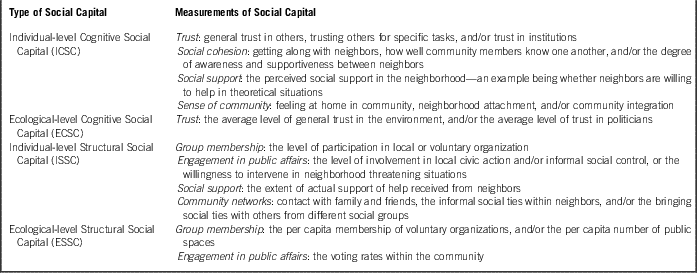
The multi-faceted nature of the concept has made reaching a consensus on how best to measure SC challenging. AldrichReference Aldrich 12 has identified 4 quantitative measurement approaches: attitudes, behaviors, participation in activities, and field experiments. A variety of proxies have assisted the measurement within each category. Individual trust in others and perceived social support are used to measure cognitive SC. Proxies that have been used in the measurement of structural SC include the individual’s level of participation in local/voluntary organizations or the social support received from neighbors and their community networks. The individual responses to similar questions at different group levels (eg, post codes) can be aggregated to produce ecological measures of cognitive SC. Ecological structural SC measures include per capita data on participation in voluntary organizations or voting rates within a given community.Reference De Silva, Harpham, Tuan, Bartolini, Penny and Huttly 13
Different types of SC may exert different effects on health. A review examining the link between SC and mental illness revealed a potential inverse association between levels of individual cognitive SC and mental disorders, whereas the evidence for individual structural SC and ecological SC (both cognitive and structural) was deemed inadequate for any firm conclusions.Reference De Silva 14 However, later evidence suggested that both ecological cognitive SC and ecological structural SC could positively influence mental health.Reference Hamano, Fujisawa, Ishida, Subramanian, Kawachi and Shiwaku 15 Looking across cultures, De Silva et alReference De Silva, Huttly, Harpham and Kenward 16 found that although individual cognitive SC was associated with a reduced likelihood of maternal common mental disorders in 4 countries (Peru, Ethiopia, Vietnam, and India), findings concerning structural SC (both individual and ecological) were mixed and context specific.
Until recently, most evidence looking at SC and mental health is cross-sectional, making it hard to determine a causal relationship. However, an updated review based on cohort studies reported strong evidence that high cognitive SC may help prevent common mental disorders.Reference Ehsan and De Silva 17 The evidence concerning individual structural SC and ecological SC remained ambiguous, pointing toward potential negative consequences of high levels of SC.Reference Whitley and McKenzie 18 , Reference Mitchell and LaGory 19
Research in post-disaster mental health pays increasing attention to SC.Reference Aldrich 12 , Reference Scholte and Ager 20 A disaster is “an occurrence disrupting the normal conditions of existence and causing a level of suffering that exceeds the capacity of adjustment of the affected community.” 21 (p3) On average, 68,000 people die and millions of people are affected by natural disasters annually. 22 In addition, in 2015 alone, there were more than 167,000 fatalities worldwide because of armed conflicts. 23 Disasters can have a profound impact on the social fabric of communities,Reference Gordon 24 and the combined impact of collective traumas on communities may be greater than the sum of its individual parts.Reference Kleinman, Das and Lock 25 Unsurprisingly, rates of general disability, and psychopathology specifically, greatly increase in the aftermath of disasterReference Neria, Nandi and Galea 26 and conflict situationsReference Murthy and Lakshminarayana 27 owing to the onset of mental health difficulties,Reference Kar and Bastia 28 the exacerbation of pre-existing conditions,Reference Milligan and McGuinness 29 and stressful material and social conditions.Reference Miller and Rasmussen 30
Despite the acknowledged impact of social factors, mental health programs in post-disaster settings focus predominantly on war trauma and post-traumatic stress disorder (PTSD), targeting the individual, rather than social relationships. Recently, more attention is accorded to social approaches and community-level resources—for example, socio-therapy interventions.Reference Jansen, White and Hogwood 31
SC expands the social determinants of mental health to encompass quantity and quality of social relationshipsReference Ehsan and De Silva 17 and is hypothesized as a missing link to disaster recovery.Reference Nakagawa and Shaw 32 However, no systematic review of the evidence concerned with the association between SC and post-disaster mental health has yet been conducted. This review complements a recent review on the association between SC and common mental disordersReference Ehsan and De Silva 17 by focusing on studies in the context of disasters. Specifically, this review aimed to synthesize how SC is conceptualized and measured in post-disaster literature; what dimensions of SC are studied in these settings; how indices of SC are associated with mental health outcomes in post-disaster/conflict contexts; and what methodological limitations are present in current literature. An improved understanding about SC and post-disaster mental health may foster the development of more targeted interventions aiming to enhance post-disaster recovery, alleviating mental health difficulties, and promoting mental well-being.
Methods
Reporting
This review followed the Preferred Reporting Items for Systematic Reviews and Meta Analyses (PRISMAFootnote a ) StatementReference Moher, Liberati, Tetzlaff and Altman 33 and is registered with PROSPEROFootnote b .
Information Sources
A multi-pronged approach was used to identify quantitative studies investigating the direct association between SC and post-disaster/conflict mental health outcomes. A systematic search was undertaken in May 2016 using four electronic databases: Medline, Embase, CINAHL, and PsychINFO. Bibliographic mining and cited reference searches were also carried out. Experts in the field were contacted for study recommendations.
Search Strategy
Terms relating to “mental health” (eg, “psychology,” “mental disorders,” “psychological stress”), “social capital” (eg, “social ties,” “social networks,” “collective efficacy”), “post-disaster,” and “post-conflict” were used for the search. All search terms previously used in systematic reviews relating to mental health and SC were included for consistency and completeness. Additional terms relating to the lack of SC (eg, “social exclusion,” “social isolation”) were included to flag potential sources of references. The complete search strategy can be found in Appendix 1 (online data supplement).
Study Selection
To be included in this review, studies had to be published in peer-reviewed journals, should have used quantitative methods, and should have reported primary data looking at the direct association between SC and mental health (and/or mental well-being) outcomes in post-disaster/conflict settings. There was no time-frame restriction for the identification of a post-disaster or post-conflict setting. Instead, the time frames of each study are included in the narrative synthesis of the results. Papers investigating mental health of current military combatants, veterans, first responders, relief, or humanitarian workers were excluded. Only papers reporting mental health or well-being outcomes of civilian survivors (including all ages in all country-income levels) assessed with standardized measures were considered for inclusion. Studies recruiting participants who were exposed to a disaster but were no longer in the setting were also excluded, as distress induced by relocation or resettlement was not the focus of the review. Further, studies using measures assessing aspects of SC were considered for inclusion whether or not they explicitly identified these measures as assessing SC. The list of measures recognized as assessing aspects of SC is consistent with previous systematic reviews on SCReference De Silva 14 , Reference Ehsan and De Silva 17 (see Table 1). Finally, papers published in English, French, Spanish, or Catalan were considered for inclusion. There was no date or quality restriction for consideration.
Types and Measures of Social Capital Included in This Review (From Ehsan and De SilvaReference Ehsan and De Silva 17 )

After removing duplicated articles, 2 independent researchers (P.N. and C.C.) completed the screening of titles and abstracts. Discrepancies were resolved through discussion. Thereafter, full-text articles were assessed for eligibility.
Data Extraction and Analysis
A data extraction form was created and used to gather data from the studies, including author(s) and year of publication, study design, location and sample characteristics, aspect(s) of SC measured and tools used, mental health outcome(s) investigated, tools used to measure it, and main findings.
The risk of bias and overall quality of individual studies were evaluated using the National Institute of Health quality assessment tool for observational cohort and cross-sectional studies. 35 The assessment is included in the narrative synthesis of the results.
Results
Study Selection
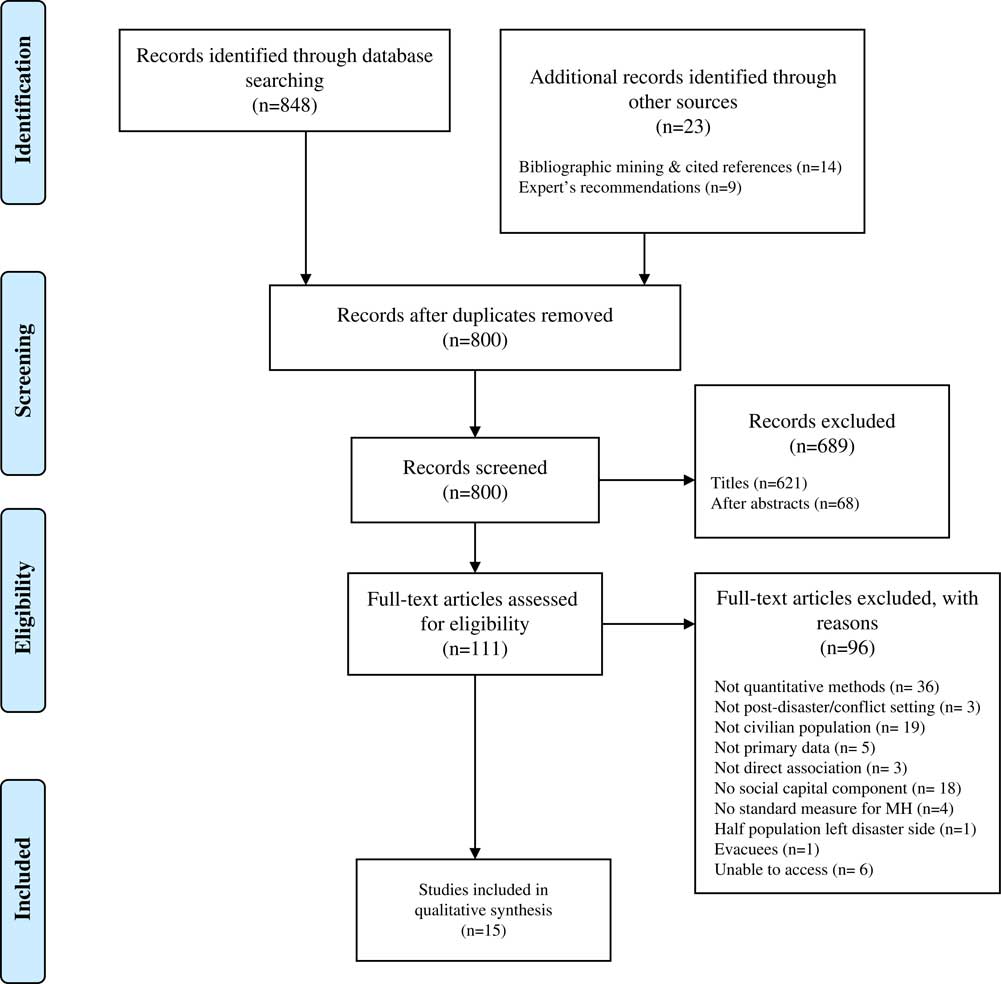
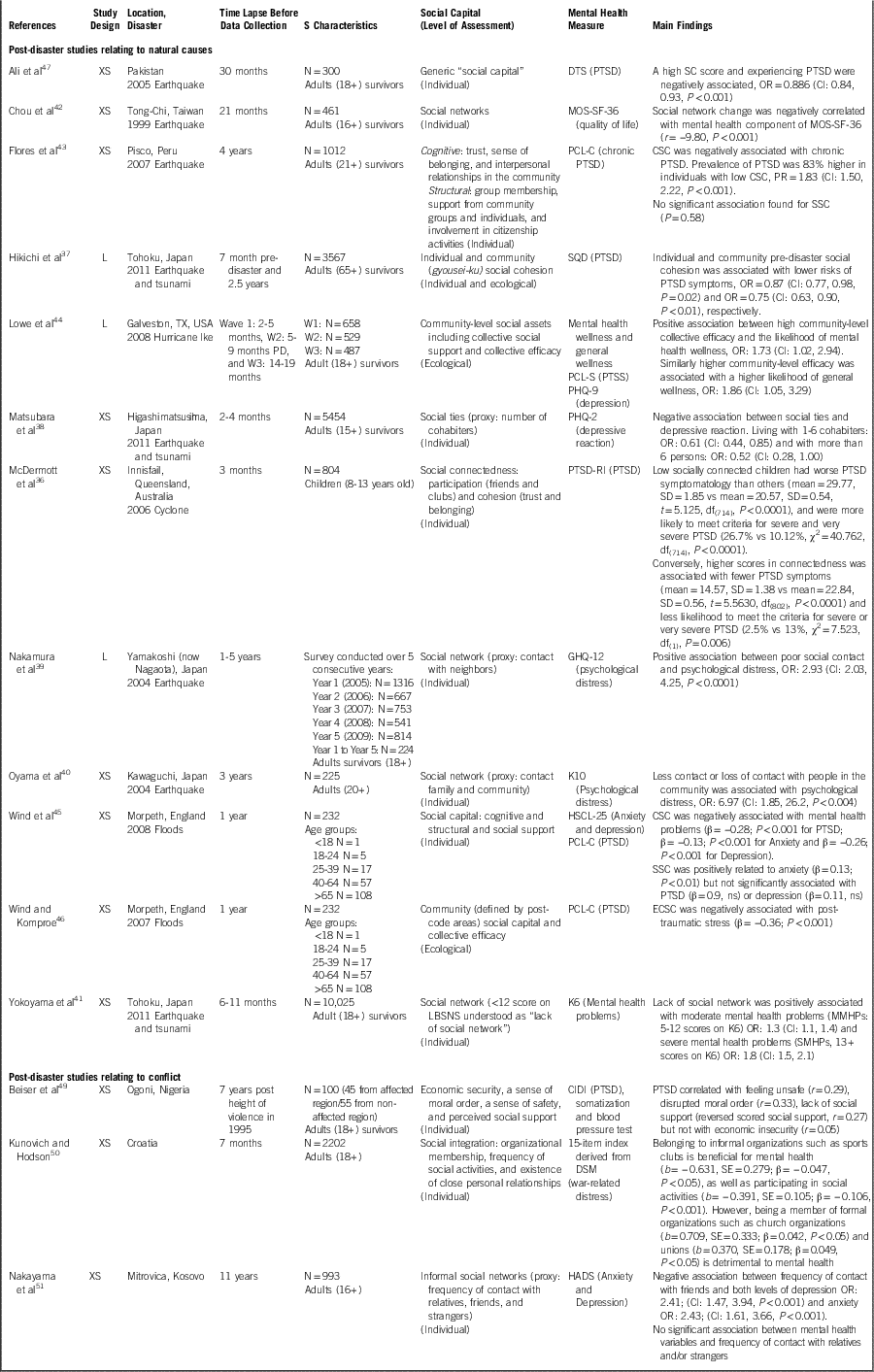
Figure 1 portrays the results of the literature search. In total, 871 articles were initially identified (which were screened for eligibility according to title and abstract), 111 full-text articles were screened, and 15 articles were included. Details of the included studies are presented in Table 2.
Flow Chart of Study Selection.

Description of the Studies Included

Abbreviations: XS, cross-sectional; DTS, Davidson Trauma Scale; PTSD, post-traumatic stress disorder; SC, social capital; OR, odds ratio; MOS-SF-36, Medical Outcome Study Short Form; PCL-C, PTSD Checklist- Civilian version; L, longitudinal; SQD, Screening Questionnaire for Disaster-Related Mental Health; PCL-S, PTSD Checklist-specific version; PTSS, post-traumatic stress symptoms; PHQ 2 and 9, Patient Health Questionnaire 2 and 9; PTSD-RI, Post-traumatic Stress Disorder Reaction Index; GHQ, General Health Questionnaire; K6 and 10, Kessler Psychological Distress Scale 6 and 10; HSCL, Hopkins Symptom Checklist; CIDI, Composite International Diagnostic Interview; HADS, Hospital Anxiety and Depression Scale; CSC, cognitive social capital; PR, prevalence ratio; SSC, structural social capital; PD, post disaster; LBSNS, the lubben’s social network scale; MMHP, moderate mental health problems.
Included Studies: Overview
Studies in Post-Disaster Contexts Relating to Natural Causes
In total, 12 post-disaster studies were included. On the basis of World Health Organization (WHO) regions, 7 studies are located in the Western Pacific Region: 1 in Australia,Reference McDermott, Berry and Cobham 36 5 in Japan,Reference Hikichi, Aida, Tsuboya, Kondo and Kawachi 37 - Reference Yokoyama, Otsuka and Kawakami 41 and 1 in TaiwanReference Chou, Chou and Su 42 ; 2 studies are located in the region of the Americas: PeruReference Flores, Carnero and Bayer 43 and USAReference Lowe, Joshi, Pietrzak, Galea and Cerdá 44 ; 2 in the Europe region: EnglandReference Wind, Fordham and Komproe 45 , Reference Wind and Komproe 46 ; and 1 in the Eastern Mediterranean Region: Pakistan.Reference Ali, Farooq, Bhatti and Kuroiwa 47
Eleven data sets were unique, and 2 studies shared a data set.Reference Wind, Fordham and Komproe 45 , Reference Wind and Komproe 46 The total sample of these studies was 26,829 (median=804, IQR: 4091-300). All but 2 studies focused on adults. McDermott et alReference McDermott, Berry and Cobham 36 focused on children (aged 8-13 years old), and Hikichi et alReference Hikichi, Aida, Tsuboya, Kondo and Kawachi 37 focused on senior adults (65+). Nine studies were cross-sectionalReference McDermott, Berry and Cobham 36 , Reference Hikichi, Aida, Tsuboya, Kondo and Kawachi 37 , Reference Oyama, Nakamura, Suda and Someya 40 - Reference Chou, Chou and Su 42 , Reference Wind, Fordham and Komproe 45 - Reference Ali, Farooq, Bhatti and Kuroiwa 47 and 3 were longitudinal.Reference Hikichi, Aida, Tsuboya, Kondo and Kawachi 37 , Reference Nakamura, Kitamura and Someya 39 , Reference Lowe, Joshi, Pietrzak, Galea and Cerdá 44
The median length of time between the disaster and the data collection was 21 months (IQR: 7.5-33) for the cross-sectional studies and 2 months (IQR: −7 to 12) for the longitudinal studies. The median for the last follow-up period was 30 months post disaster (IQR: 60-19).
Studies in Post-Disaster Contexts Relating to Conflict
Of the 3 studies in post-conflict settings, 1 was located in the WHO African Region—NigeriaReference Beiser, Wiwa and Adebajo 48 —and 2 were located in the WHO European Region—CroatiaReference Kunovich and Hodson 49 and Kosovo.Reference Nakayama, Koyanagi and Stickley 50 The time elapsed between the conflict and the study ranged from 7 monthsReference Kunovich and Hodson 49 to 11 years.Reference Nakayama, Koyanagi and Stickley 50 The total data set was 3295 (median=993, IQR: 2202-100). All studies focused on adults and were cross-sectional.
Key Features of Studies in Post-Disaster Contexts Relating to Natural Causes
Mental Health Conceptualizations and Measures
Two studies looked at positive mental health conceptualized as “mental health wellness”Reference Lowe, Joshi, Pietrzak, Galea and Cerdá 44 and “quality of life.”Reference Chou, Chou and Su 42 Two studies conceptualized mental health difficulties as “psychological distress”Reference Nakamura, Kitamura and Someya 39 , Reference Oyama, Nakamura, Suda and Someya 40 and 1 as “mental health problems.”Reference Yokoyama, Otsuka and Kawakami 41 The remaining studies focused on specific diagnoses: 5 studies looked exclusively at PTSDReference McDermott, Berry and Cobham 36 , Reference Hikichi, Aida, Tsuboya, Kondo and Kawachi 37 , Reference Flores, Carnero and Bayer 43 , Reference Wind and Komproe 46 , Reference Ali, Farooq, Bhatti and Kuroiwa 47 and 2 investigated PTSD but also included depressionReference Lowe, Joshi, Pietrzak, Galea and Cerdá 44 and anxiety.Reference Wind, Fordham and Komproe 45 Finally, only 1 study explored “depressive reaction.”Reference Matsubara, Murakami and Imai 38 The most commonly used measures were the Kessler Psychological Distress Scale,Reference Kessler, Andrews and Colpe 51 the PTSD Checklist-Civilian version (PCL-C),Reference Blanchard, Jones-Alexander, Buckley and Forneris 52 and the Patient Health Questionnaire (PHQ).Reference Kroenke and Spitzer 53 , Reference Inagaki, Ohtsuki and Yonemoto 54
Social Capital Conceptualizations and Measures
Four of 12 studies self-defined as investigating SC.Reference Flores, Carnero and Bayer 43 , Reference Wind, Fordham and Komproe 45 - Reference Ali, Farooq, Bhatti and Kuroiwa 47 The remaining studies had conceptualizations appropriate for inclusion: 4 studies assessed “social network,”Reference Nakamura, Kitamura and Someya 39 - Reference Chou, Chou and Su 42 1 measured “social cohesion,”Reference Hikichi, Aida, Tsuboya, Kondo and Kawachi 37 1 looked at “collective efficacy,”Reference Lowe, Joshi, Pietrzak, Galea and Cerdá 44 and another at “social ties”Reference Matsubara, Murakami and Imai 38 and “social connectedness.”Reference McDermott, Berry and Cobham 36
Nine studies measured individual-level SCReference McDermott, Berry and Cobham 36 , Reference Matsubara, Murakami and Imai 38 - Reference Flores, Carnero and Bayer 43 , Reference Wind, Fordham and Komproe 45 , Reference Ali, Farooq, Bhatti and Kuroiwa 47 and 3 studies measured ecological SC.Reference Hikichi, Aida, Tsuboya, Kondo and Kawachi 37 , Reference Lowe, Joshi, Pietrzak, Galea and Cerdá 44 , Reference Wind and Komproe 46 Three studies used the Social Capital Assessment Tool (SCAT).Reference Flores, Carnero and Bayer 43 , Reference Wind, Fordham and Komproe 45 , Reference Wind and Komproe 46 The remaining studies used a range of other measures.
Association Between SC and Mental Health Variables
Individual Social Capital
Individual Cognitive Social Capital.
Studies investigating individual cognitive SC showed an inverse relationship between cognitive SC and PTSD.Reference Wind, Fordham and Komproe 45 In post-disaster Peru, the prevalence of chronic PTSD was found to be 83% higher in individuals with low cognitive SC.Reference Flores, Carnero and Bayer 43 In a more recent study, pre-disaster individual perceptions of social cohesion were associated with a lower risk of developing severe PTSD symptoms post disaster.Reference Hikichi, Aida, Tsuboya, Kondo and Kawachi 37
Individual Structural Social Capital (ISSC).
Findings concerning individual structural SC were mixed. The 2 studies that were explicit about studying structural SC did not find any significant association with PTSD.Reference Flores, Carnero and Bayer 43 , Reference Wind, Fordham and Komproe 45 However, Wind et alReference Wind, Fordham and Komproe 45 found structural SC to be positively related to experiencing more anxiety.
Four studies focused on community networks, a dimension of structural SC, and post-disaster mental health outcomes. Nakamura et alReference Nakamura, Kitamura and Someya 39 assessed the association between the presence of social networks and the prevalence rates of psychological distress for 5 consecutive years (2005 to 2009) in earthquake survivors. Although general prevalence rates gradually decreased from 2005 (51%) to 2008 (30.1%), the trend did not hold for individuals reporting infrequent social contact. Further analyses identified social contact with neighbors as an independent factor relating to psychological distress: individuals with comparatively poor social contact were almost 3 times more likely to experience psychological distress. Another study found that individuals who “lack a social network” (ie, scored below 12 points on the Lubben Social Network Scale) were 1.3 times more likely to experience moderate mental health problems (5-12 scores on K6) and 1.8 times more likely to experience severe mental health problems (13+ scores on K6).Reference Yokoyama, Otsuka and Kawakami 41 Several studies also investigated the impact of change in the strength of networks before and after disaster on mental health. Changes in frequency of contact negatively influenced mental health aspects of quality of lifeReference Chou, Chou and Su 42 and increased the risk of psychological distress: individuals who lose or reduce contact with community are 7 times more likely to experience psychological distress.Reference Oyama, Nakamura, Suda and Someya 40
Community networks were also quantified looking at the presence or absence and quantity of “informal social ties.” Matsubara et alReference Matsubara, Murakami and Imai 38 used the presence of cohabiters as an indicator of social ties among survivors of the 2011 Japan Earthquake. The presence of cohabiters was a potentially protective factor against a depressive reaction post earthquake. Compared with people living alone, people living with 1 to 6 cohabiters were 1.64 times more unlikely to have a depressive reaction. The depressive reaction was negatively correlated with the number of cohabiters.
Combined Cognitive and Structural SC.
Finally, 2 studies focused on individual SC without making a distinction between cognitive and structural components; instead, they used measures that had aspects of both. In speaking of a “generic social capital,” Ali et alReference Ali, Farooq, Bhatti and Kuroiwa 47 found that a high SC score was the strongest predictor against the development of PTSD in earthquake victims compared with 10 other independent variables. Individuals with comparatively low SC scores were 1.12 times more likely to experience PTSD. Similarly, in a study including children, McDermott et alReference McDermott, Berry and Cobham 36 captured 2 structural SC components (ie, contact and participation) and 2 cognitive SC components in a single factor named “child connectedness.” Less connected children had a greater number and more severe PTSD symptoms and were 4 times more likely to develop PTSD. In sum, these studies found that adults and children with higher SC were comparatively less likely to experience PTSD symptoms in the aftermath of a disaster.
Ecological Social Capital
Three studies measured ecological SC: 2 cross-sectionalReference Hikichi, Aida, Tsuboya, Kondo and Kawachi 37 , Reference Wind and Komproe 46 and 1 longitudinal.Reference Lowe, Joshi, Pietrzak, Galea and Cerdá 44 “Community” was operationalized as post-code areas,Reference Wind and Komproe 46 as administrative units wherein residents are organized for disaster response drillsReference Hikichi, Aida, Tsuboya, Kondo and Kawachi 37 and as census blocks.Reference Lowe, Joshi, Pietrzak, Galea and Cerdá 44 Two studies uniquely studied cognitive SC,Reference Hikichi, Aida, Tsuboya, Kondo and Kawachi 37 , Reference Lowe, Joshi, Pietrzak, Galea and Cerdá 44 whereas 1 study investigated both cognitive and structural components.Reference Wind and Komproe 46 However, although beneficial for mental health, the results concerning ecological structural SC were indirect and therefore were not a point of focus of the current review. Consequently, all the results concerning ecological SC are ecological cognitive SC.
Ecological cognitive SC was negatively associated with post-traumatic stress (PTS): individuals living in communities with high levels of cognitive SC presented fewer post-traumatic symptoms.Reference Wind and Komproe 46 A similar relationship was found by Hikichi et al.Reference Hikichi, Aida, Tsuboya, Kondo and Kawachi 37 In a longitudinal study focusing on mental well-being, Lowe et alReference Lowe, Joshi, Pietrzak, Galea and Cerdá 44 measured social cohesion, trust, and perception of informal social control (named “collective efficacy”). Building on the concept of resilience, they looked at “mental health wellness” (resilience across multiple mental health conditions) and general wellness (resilience across mental health, physical health, and role functioning) in adult Hurricane Ike survivors in order to identify predictors of wellness. Higher “collective efficacy” was associated with higher likelihood of mental and general wellness, suggesting that these “collective efficacy” components of cognitive SC might be important resources in promoting mental well-being post disaster.
Key Features of Studies in Post-Disaster Contexts Relating to Conflict
Mental Health Conceptualizations and Measures
No study focusing on post-disaster contexts assessed mental well-being; the focus instead was on different forms of mental distress. Kunovich and HodsonReference Kunovich and Hodson 49 studied “war-related distress” (assessed by 15-items derived from DSM-IV 55 ), a specific form of PTS. Beiser et alReference Beiser, Wiwa and Adebajo 48 focused solely on PTSD [as assessed by the Composite International Diagnostic Interview (CIDI) 56 ] and Nakayama et alReference Nakayama, Koyanagi and Stickley 50 assessed levels of depression and anxiety (assessed by the Hospital Anxiety and Depression ScaleReference Zigmond and Snaith 57 ). Every study used a different mental health assessment measure (see Appendix 3 of online data supplement).
Social Capital Conceptualizations and Measurement
Beiser et alReference Beiser, Wiwa and Adebajo 48 conceptualized SC as consisting of the following 4 components: economic security, feeling safe, feeling part of a moral/social order, and social support. Kunovich and HodsonReference Kunovich and Hodson 49 measured “social integration” operationalized as the participation in organizations, the frequency of social activities, and the existence of close personal relationships. Nakayama et alReference Nakayama, Koyanagi and Stickley 50 looked at “social networks,” which they viewed as being imbued with components of “trust in others (social cohesion), social connections, social support, and social integration,” and as being the means by which people can access or achieve SC within communities. They explicitly mention their aim to also assess “bridging social networks” (ie, to measure contact with strangers).
The measures used were variegated across studies, and none used the same assessment tool. Beiser et alReference Beiser, Wiwa and Adebajo 48 used a scale with 1 item on economic security, 1 item on feelings of security, 5 items on disrupted moral and social order, and 14 items on perceived social support. Kunovich and HodsonReference Kunovich and Hodson 49 measured 3 types of social integration: organizational membership, frequency of social activities, and existence of close relationships. Finally, Nakayama et alReference Nakayama, Koyanagi and Stickley 50 used a 3-item scale to measure social network depth.
Association Between Social Capital and Mental Health Variables
The 3 cross-sectional studies in post-conflict contexts conceptualized and measured SC at the individual level: 2 studies focused on individual structural SCReference Kunovich and Hodson 49 , Reference Nakayama, Koyanagi and Stickley 50 and 1 study on individual cognitive SC.Reference Beiser, Wiwa and Adebajo 48
Individual Cognitive Social Capital, Associations With Mental Health Variables in Post-Conflict Contexts
Beiser et al.’sReference Beiser, Wiwa and Adebajo 48 study in Nigeria found that 7-8 years after the peak of episodes of violence, 3 of 4 of the SC elements were significantly correlated with higher levels of PTSD: feelings of being unsafe, a disrupted moral order, and the lack of social support. They were all independent predictors of PTSD.
Individual Structural Social Capital, Associations With Mental Health Variables in Post-Conflict Contexts
Nakayama et alReference Nakayama, Koyanagi and Stickley 50 found a relationship between community networks and mental health difficulties in post-conflict Kosovo. Individuals who maintained less frequent contact with their friends were more than twice as likely to experience feelings of depression and anxiety. This association did not hold for contacts with relatives or strangers.
Kunovich and HodsonReference Kunovich and Hodson 49 explored the relationship between “social integration” and war-related distress in Croatia. The concept of “social integration” encompassed 3 components of structural SC: organizational memberships, frequency of social activities, and existence of close personal relationships. Some support for positive direct effects of social integration on distress was found; however, there were also negative consequences. For instance, belonging to informal organizations such as sports clubs was found to be beneficial. However, being a member of formal organizations such as church and unions was harmful for mental health. Participating in social activities was positive for mental health.
Quality Assessment
As a whole, the body of evidence reviewed was of moderate quality, with the exception of 1 study of high quality.Reference Flores, Carnero and Bayer 43 All but 3 studies were cross-sectional. Despite the weakness of the design, all studies were transparent about their research questions and provided a clear statement of their objectives. Adequate information about their population eligibility criteria was provided and outcome measures were defined, valid, reliable and implemented across all study participants. Potential confounding variables were measured and adjusted to take into account their impact on the relationship under investigation. Both the sampling techniques used and the participation rate in all the studies (at least 50% of all eligible participants) suggest that the samples were adequately representative. However, although the independent variables were also well defined throughout, the measures used were not standardized and the validity and reliability of the items used was not consistently reported. Finally, a common limitation was the absence of a sample size justification limiting the assessment of potential type II errors (see online data supplement Appendices 4 and 5 for study-by-study quality assessment).
Discussion
Social capital helps conceptualize and measure the social world. Although efforts are made to clarify the evidence base surrounding social capital and mental illness,Reference De Silva 14 , Reference Ehsan and De Silva 17 the current systematic review sought to synthesize and evaluate research studies that specifically explore direct associations between social capital indices and mental health outcomes in post-disaster and post-conflict contexts. Fifteen studies met the inclusion criteria; the majority of the studies (12 out of 15) were in post-natural disaster settings and only 3 in conflict-affected settings. Making direct comparisons between the pattern of findings in settings affected by natural disasters and conflict-affected settings was rendered difficult owing to the comparatively small number of studies conducted in post-conflict contexts. First and foremost, this review highlights that the overwhelming majority of the studies looking at the association between indices of social capital and mental health outcomes in post-disaster/conflict settings are cross-sectional in design, which limits concluding causal remarks. As previously noted,Reference Miller and Rasmussen 30 the predominance of PTSD research in post-disaster/conflict mental health research was also evident in this review. In addition, there was a relative neglect of investigations on indicators of mental well-being compared with mental ill health. Although future efforts aimed at supporting recovery from mental ill health in post-crisis settings will be important, so will be the efforts aimed at promoting mental well-being. Finally, a gap in the evidence concerning post-disaster/conflict child mental health was noted, with the majority of the studies focusing on adult populations.
Referring back to the 3 particular points of focus by which the understanding of social capital is generally shaped (ie, who has SC, what is SC, and in relation to whom does a person/group have SC), over 80% of the studies reviewed conceptualized and measured social capital as an individual construct, and most focused on the behavioral (ie, structural) component of social capital. The predominant relational component of social capital explored (ie, bonding, bridging, or linking) was less clear. Only 1 study explicitly distinguished between bonding and bridging social capital. Despite the predominant focus on structural social capital, there was a high heterogeneity in the tools used to measure and assess social capital, making comparisons across studies difficult. This review also identifies a shortage of standard, valid, and reliable tools, aside from the SCAT.Reference De Silva, Harpham, Tuan, Bartolini, Penny and Huttly 13
This review provides evidence of potential negative associations that individual cognitive SC has with PTSD, depression, and anxiety in post-disaster contexts, in accordance with previous research.Reference Ehsan and De Silva 17 No study found a positive association between individual cognitive SC and mental distress. Furthermore, no studies investigate the relationship between individual cognitive SC and mental health. Conversely, there is evidence of a positive association between elements of ecological cognitive SC such as perceptions of social cohesion, trust, and informal social control and “mental wellness,” as well as an inverse relationship with PTS. These ecological-level SC findings point to the importance of social context on mental health. However, different mental health problems might not share the same pattern of association with SC indices,Reference McKenzie, Whitley and Weich 58 highlighting the need for future research to focus on these differential associations. Further, the findings of the review suggest the potential benefit of promoting particular aspects of cognitive SC including trust, social cohesion, and social support for post-conflict populations. Future research is required to causally test this to determine whether interventions supporting individuals and communities to restore a sense of moral and social order are essential in mitigating the risk of PTSD in post-conflict settings. Supporting previous research, the evidence reviewed around individual structural SC is more mixed. Although some evidence suggests no association between individual structural SC and PTSD, there is also evidence of a positive association between individual structural SC and anxiety and a negative association between components of individual structural SC and more general conceptualizations of “psychological distress” or “mental health problems” in post-disaster settings.
Disasters disrupt daily routines for individuals and communities, including their social network patterns. Support for a negative association between individual structural SC and mental distress was predominantly found in relation to indices assessing these community networks. The evidence suggests that a social network may protect against psychological distress in post-disaster/conflict settings. In addition, it flags an association between the harmful impact of a disaster on a social network (in terms of reduced frequency of contact) and increased psychological pain and reduced quality of life. Understanding the fact that it is essential, for mental health, to be able to preserve—post disaster or post conflict—one’s relationship with a social network may be important to guide interventions in these contexts. In war-affected contexts in particular, specific types of networks may be beneficial for mental health, such as frequency of contact with friendsReference Nakayama, Koyanagi and Stickley 50 or being part of informal organizations (such as sports teams), whereas belonging to formal organizations such as church or unions may have the opposite effect.Reference Kunovich and Hodson 49 These findings highlight the importance of differentiating between bonding, bridging, and linking in SC research.
Together, these findings constitute the first step to understanding the state of the evidence surrounding SC and post-disaster mental health. Although the associations identified are important, the high level of heterogeneity in SC’s conceptualizations and measurements and the predominant cross-sectional design of the studies included in the review do not allow for any causal conclusions. Therefore, alternative interpretations cannot be ruled out. Although the pathway may well be from lower/higher social capital to poorer/better mental health outcomes, the reverse pathway is equally possible, suggesting that poorer/better mental health leads to lower/higher social capital. The review itself is not without shortcomings. First, our decision to exclude studies that focus on individuals and communities that were relocated or resettled after a disaster and/or conflict surely excluded a substantial proportion of populations affected by crises. However, we considered the experience of relocation/resettlement to be distinct enough from the experience of those having stayed within the setting of the disaster/conflict, especially in terms of social capital and mental distress, to require a separate review. Second, some post-disaster- and post-conflict-related concepts such as “chronic crisis” were not directly included in the search strategy. Similarly, there is a need to reflect on how indices associated with SC might overlap with related constructs such as “sense of community” and “community attachment,” as research on these concepts may be relevant to this area of research. Here a conscientious effort was made not only to include all search terms used in previous systematic reviews on SC but also to complete the search with other methods of identification. Third, only studies published in peer-reviewed journals were included. The exclusion of unpublished papers and gray literature may have left the findings of this review susceptible to issues relating to publication bias. Fourth, the focus on quantitative rather than qualitative methods of investigation may have limited the understanding that may have emerged from the narrative accounts of people living in post-disaster contexts. Finally, only studies looking at a direct association between SC and post-disaster mental health difficulties were included, potentially obscuring important mechanisms between SC and mental health.
Notwithstanding its limitations, the current review identified methodological and conceptual issues that future research should be aware of. First, in order to allow for comparisons across studies, future research should use standardized assessment tools—eg, SCAT. In addition, future SC assessment tools would benefit from making a distinction between bonding, bridging, and linking SC, as indications for important differences in their effect on mental health were highlighted here. Second, more research efforts focusing on SC and post-disaster child mental health are required, as findings from adult samples may not be generalizable. Third, there are potential avenues of research that are not trauma-focused and more akin to the emphasis that Miller et alReference Miller and Rasmussen 30 , Reference Nakayama, Koyanagi and Stickley 50 place on daily stressors—for example, looking at how SC may help mitigate the generally difficult socio-economic conditions contributing to mental distress in disaster/conflict settings. In order for the evidence to be able to confidently inform interventions, research designs that permit causal inferences to be made are necessary.
Moving forward, there is a need for a future review to complement the current review by focusing on qualitative studies that have investigated social capital and mental health in post-disaster/conflict contexts. In addition, a review should be conducted to synthesize research findings relating to social capital and mental health in displaced/resettled populations, which were not a focus for the current review.
Unfortunately, our capacity to anticipate and/or prevent disasters will continue to be frustratingly poor, and these events will continue to affect the lives of millions of people. It is imperative for research endeavors to focus on better understanding important processes of change that can help individuals and communities to cope with these events.
Supplementary material
To view supplementary material for this article, please visit https://doi.org/10.1017/dmp.2017.147