Introduction
The negative symptoms of psychosis include low motivation, anhedonia, alogia, social withdrawal and blunted affect (Kirkpatrick et al., Reference Kirkpatrick, Fenton, Carpenter and Marder2006). Research has shown that these symptoms have a significant impact on functioning (Rocca et al., Reference Rocca, Montemagni, Zappia, Pitera, Sigaudo and Bogetto2014; Robertson et al., Reference Robertson, Prestia, Twamley, Patterson, Bowie and Harvey2014; Menendez-Miranda et al., Reference Menendez-Miranda, Garcia-Portilla, Garcia-Alvarez, Arrojo, Sanchez, Sarramea, Gomar, Bobes-Bascaran, Sierra, Saiz and Bobes2015), with some studies suggesting these difficulties are a bigger barrier to recovery than other symptom domains (Berenbaum et al., Reference Berenbaum, Kerns, Vernon and Gomez2008; Marchesi et al., Reference Marchesi, Affaticati, Monici, De Panfilis, Ossola, Ottoni and TONNA2015). Negative symptoms were initially conceptualised as primary, a core feature of schizophrenia-spectrum diagnoses, or secondary – present due to other factors such as substance misuse, medication side-effects, depression or as a response to the positive symptoms (Peralta et al., Reference Peralta, Cuesta, Martinez-Larrea and Serrano2000). This conceptualisation allows for the co-occurrence of depressive and negative symptoms in non-affective psychosis. Recent research has focused on a further distinction within negative symptoms – experiential v. expressive (Messinger et al., Reference Messinger, Tremeau, Antonius, Mendelsohn, Prudent, Stanford and Malaspina2011) which enables more reliable measurement. Experiential symptoms include low motivation, anhedonia and withdrawal, whereas expressive symptoms are identified as blunted affect and alogia. Depression also includes a range of symptoms with similarities to experiential negative symptoms, with loss of pleasure (anhedonia), low motivation and low mood highlighted as key in the diagnostic criteria (American Psychiatric Association, 2013). A narrative review concluded that depressive symptoms are very common in people with a schizophrenia diagnosis and worsen their prognosis; it has been reported that up to 50% would also meet criteria for depression (Siris, Reference Siris, Hirsch and Weinberger2003; Buckley et al., Reference Buckley, Miller, Lehrer and Castle2009).
The diagnostic conceptualisation of negative and depressive symptoms is that they relate to distinct disorders which are driven by different organic processes and commonly occur (Malaspina et al., Reference Malaspina, Walsh-Messinger, Gaebel, Smith, Gorun, Prudent, Antonius and Tremeau2014). It is important to consider that depression is defined by self-report criteria (experiential), whereas psychosis is defined by clinician-rated (expressive) criteria. Some attempt has also been made to identify people for whom low mood is a significant problem alongside psychosis and this has resulted in diagnoses such as ‘schizoaffective disorder’, ‘depression with psychotic features’ and applies of course to bipolar disorder. The usefulness of these diagnostic labels in clinical practice, particularly schizoaffective disorder, is still debated in the field (Siris, Reference Siris, Hirsch and Weinberger2003). The DSM-V (American Psychiatric Association, 2013) recommends the assessment of eight domains in schizophrenia-spectrum disorders, including depression, which represents a move towards dimensional as well as categorical assessment. Kirschner et al. (Reference Kirschner, Aleman and Kaiser2016) concluded in their narrative review that the presence of depressive symptoms in someone with psychosis may be missed because of the lack of clarity regarding how to assess them reliably and this may negatively impact on their treatment options. A more recent review of the field highlights the continuing lack of clarity regarding how to validly distinguish whether reported phenomenology are reflective of psychotic or depressive disorder (Krynicki et al., Reference Krynicki, Upthegrove, Deakin and Barnes2018).
The symptom-specific conceptualisation views depressive symptoms as part of the maintenance cycle of negative symptoms, driven by psychological processes such as low self-efficacy beliefs and reduced anticipatory pleasure (Sarkar et al., Reference Sarkar, Hillner and Velligan2015). Indeed, psychological models of psychosis, e.g. Garety et al. (Reference Garety, Kuipers, Fowler, Freeman and Bebbington2001), have proposed a direct route from emotional changes to psychotic symptoms. The phenomenological overlap between negative and depressive symptomatology is more apparent with experiential negative symptoms which include low motivation and anhedonia, commonly seen in depression (American Psychiatric Association, 2013). Older measures of negative symptoms are in an interview format and conceptualise negative symptoms as a single construct including multiple symptoms, they do not make the distinction between experiential and expressive negative symptoms. Newer measures of negative symptoms include specific subscales of experiential symptoms and there is some evidence that they show good divergent validity from depressive measures (Forbes et al., Reference Forbes, Blanchard, Bennett, Horan, Kring and Gur2010; Llerena et al., Reference Llerena, Park, Mccarthy, Couture, Bennett and Blanchard2013). This has been achieved by focusing on low motivation across several areas of functioning (social, employment, hobbies) rather than using terms such as ‘low energy’ or ‘low mood’ which can measure affective and somatic depressive symptoms. Experiential subscales do not assess cognitive symptoms, specifically beliefs about self, world and the future, and there is some indication in the literature that this may be where distinctions can also be drawn from depressive symptoms although findings are mixed (Kirkpatrick, Reference Kirkpatrick2014). Cognitions which seem to be more specific to depression are those related to guilt, hopelessness and suicidality. Some cognitions such as defeatist beliefs appear to play a role in negative symptoms and have been incorporated into the cognitive model of negative symptoms (Grant and Beck, Reference Grant and Beck2009). There is a clear need to investigate relationships between cognitive, somatic–affective and behavioural phenomena associated with depressive and negative symptoms to improve targeted treatments.
The evidence regarding the overlap between these symptoms has been mixed with some studies finding an association between depressive symptoms and negative symptoms and others reporting none (Blanchard et al., Reference Blanchard, Horan and Brown2001; Pelizza and Ferrari, Reference Pelizza and Ferrari2009; Amr and Volpe, Reference Amr and Volpe2013; Edwards et al., Reference Edwards, Cella, Tarrier and Wykes2015). Studies focusing on the primary and secondary conceptualisation of negative symptoms consistently report low levels of co-occurring depressive symptoms in people with psychosis identified as having primary negative symptoms (Kirkpatrick, Reference Kirkpatrick2014). The variation in findings may also be due to the range of measures used to assess both depression and negative symptoms in people with psychosis. It has been shown that in depression, measures have very little overlap with one another, reflecting the heterogeneity of these symptoms (Fried, Reference Fried2017). Measures aim to have high divergent validity between depressive and negative symptoms, adopting the diagnostic rather than symptom-specific approach. However, a recent review (Krynicki et al., Reference Krynicki, Upthegrove, Deakin and Barnes2018) showed that the domains of anhedonia, avolition and anergia may be common to both and used this to suggest an overlapping, dimensional model of negative, positive and depressive symptoms. The findings of this narrative review concluded that the symptom domains of pessimism, low mood and suicidal ideation may be specific to depression, while alogia and blunted affect are specific to negative symptoms. Hopelessness is an important factor in terms of the relationship with suicidal intent and attempts; this has been shown to be present in both depression and psychosis, although hopelessness is more commonly seen in depression (Radomsky et al., Reference Radomsky, Haas, Mann and Sweeney1999; Warman et al., Reference Warman, Forman, Henriques, Brown and Beck2004). The time is therefore ripe for a systematic meta-analysis of this field which aims to establish whether there is a quantitative relationship between negative and depressive symptoms in psychosis.
This method improves on previous systematic reviews by applying rigorous meta-analytic techniques and will include studies which have assessed both negative and depressive symptoms. Finally, this meta-analysis will be the first to look at the relationships between depression measures and specific sub-domains of negative symptoms as assessed by newer measures, which may help to improve our understanding of how they interact.
The following research questions will be addressed in this review and meta-analysis:
(1) Is there a significant relationship between negative symptoms and depression in people with a diagnosis of non-affective psychosis?
(2) Does the relationship between negative and depressive symptoms varies according to the measures or subscales used?
(3) Is this relationship moderated by depressive or negative symptom severity?
(4) Is this relationship moderated by the diagnosis of the sample, quality of the study or demographic factors?
Method
Literature search
PROSPERO was examined for reviews with an overlapping research question, none were identified. This review was then registered on the PROSPERO database (ID: CRD42017083440). Relevant studies were identified through the systematic search of the databases Medline, Embase and PsycINFO in February 2017 with no time period specified. These databases were selected to fully capture the range of journals in this field. The following search terms were used as heading or keyword searches: (SCHIZOPHREN* OR SCHIZOAFFECT OR PSYCHOSIS OR PSYCHOTIC) AND (NEGATIVE SYMPTOMS) AND (DEPRESS*). The use of search terms targeting specific depressive or negative symptoms (e.g. anergia, alogia, motivation) were considered but not included as the focus of this review is on the whole range of depressive and negative symptomatology and including individual symptoms may have biased the sample of papers identified. A recent narrative review (Krynicki et al., Reference Krynicki, Upthegrove, Deakin and Barnes2018) which did include individual symptoms returned a similar number of papers as the current review suggesting this strategy captured all relevant papers.
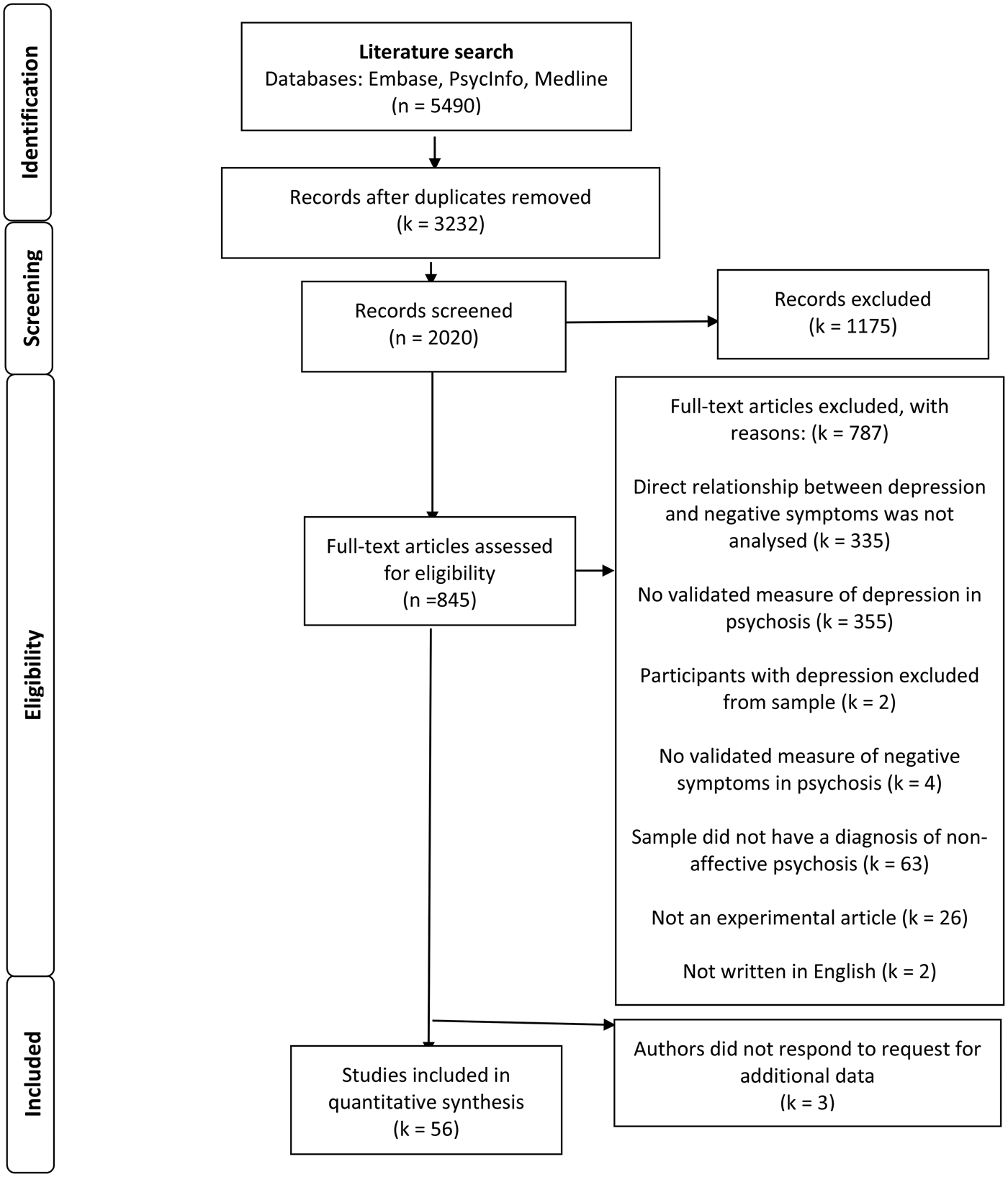
The current review followed the flow of information as suggested by the PRISMA statement (Moher et al., Reference Moher, Liberati, Tetzlaff and Altman2009). Following the initial search, duplicate records were removed, and the inclusion and exclusion criteria were applied. The search was conducted by CE and any studies where inclusion was unclear were discussed with AH and PAG.
Inclusion criteria
Studies were included if they (i) include a sample with at least one of the non-affective psychosis diagnoses, (ii) include a validated measure of negative symptoms in psychosis, (iii) include a validated measure of depression in psychosis, (iv) have been published in a peer-reviewed publication and (v) have been written in English. Studies were included if the results reported a test of a direct association between the negative symptom measure and depression measure regardless of whether this was the primary outcome of the study. Validated measures of depressive and negative symptoms were identified organically through the literature search – if a validation paper was cited for the measure, then it was considered eligible for inclusion.
Exclusion criteria
Studies were excluded if they were (i) conference abstracts, (ii) book chapters, (iii) theoretical or review articles, (iv) qualitative data only were presented or (v) they were single case studies or dissertations. Studies were also excluded if: the sample included people with a diagnosis of bipolar affective disorder or depression with psychotic features as low mood is primary in these diagnoses; they removed people who met criteria for depression from their sample as we wished to analyse the relationship at all levels of depressive symptoms; they only used a single item to assess depressive symptoms as this was not considered sufficiently robust. Studies were also excluded if insufficient statistical information was provided for the paper to be included in the analyses, e.g. only associations for change scores presented or authors did not respond to request for additional data within the time frame of the study (k = 3) (Dollfus and Petit, Reference Dollfus and Petit1995; Forbes et al., Reference Forbes, Blanchard, Bennett, Horan, Kring and Gur2010; Schennach et al., Reference Schennach, Riedel, Obermeier, Seemuller, Jager, Schmauss, Laux, Pfeiffer, Naber, Schmidt, Gaebel, Klosterkotter, Heuser, Maier, Lemke, Ruther, Klingberg, Gastpar and Moller2015).
Quality assessment
Studies were assessed using an adapted version of the Quality Assessment Tool for Quantitative Studies (Thomas et al., Reference Thomas, Dobbins, Fau and Micucci2004); see online Supplementary Material for rating scale and instructions. This was included for the purpose of characterising the studies included, and to analyse quality as a potential moderator of our findings. The measure was adapted by removing sections C, D and G which were relevant for randomised controlled trials only. One additional item was added which assessed whether the analyses of negative and depressive symptoms were outlined in the design of the study or whether it was the result of secondary analyses. This was identified as an important quality criterion in this group of studies. All studies were rated by CE and a sample of 10% (k = 6) was rated by an independent assessor. One of these six papers had a discrepancy >2 between raters which are specific to the selection bias item. This was discussed, and a consensus reached. The ratings were shown to have excellent reliability [intraclass correlation = 0.94, 95% confidence interval (CI) 0.76–0.99].
Data extraction and analytic procedure
Based on the inclusion criteria, 56 studies were considered eligible for inclusion in the final meta-analyses. The following data were extracted from each study by CE: sample size, age, gender, ethnicity, diagnosis (% schizoaffective disorder), mean scores on depression and negative symptoms measures, r statistic and p value for the correlation. To ensure each study was weighted appropriately where multiple Pearson's r values were presented for different subscales, these were averaged to combine them for the main analysis, allowing all data points to be included without introducing bias (Borenstein et al., Reference Borenstein, Hedges, Higgins and Rothstein2009). Individual subscales were reported in sub-group analyses. All scores were converted to Fisher's z scores to represent the continuous nature of the data and to minimise the risk of bias associated with Pearson's r (Borenstein et al., Reference Borenstein, Hedges, Higgins and Rothstein2009). All analyses were conducted in Stata (StataCorp, 2017) using the metan package for meta-analyses and metareg for meta-regressions. We hypothesised that the true effect sizes would vary with sample characteristics acting as moderating variables. Therefore, random-effect models were chosen for the meta-analyses of main effects as well as meta-regressions and subgroup analyses (Borenstein et al., Reference Borenstein, Hedges, Higgins and Rothstein2010). The main analysis was conducted to assess the relationship between depressive and negative symptoms and included all the studies. Sub-group analyses were conducted to examine this relationship when different measures were used. Meta-regression analyses were carried out to examine whether the severity of depressive or negative symptoms, age, gender, ethnicity, diagnosis or quality score moderated the findings.
For all analyses, heterogeneity statistics (I 2 and τ 2) are reported to examine the amount of variance across studies. The I 2 statistic was included as it has greater power to detect true heterogeneity when analyses only include a small number of studies. The convention is to consider an I 2 statistic higher than 25%, 50% or 75% as representing low, moderate or high heterogeneity, respectively. The τ 2 statistic measures the between-study variance in the meta-analyses and a value >1 is suggestive of very high heterogeneity (Deeks et al., Reference Deeks, Altman and Bradburn2008). For the reporting of the main effect, rather than the 95% CI, the more rigorous 95% prediction interval was used, which takes into account the heterogeneity and describes the range of values in which 95% of effect sizes in future studies can be expected to fall (Borenstein et al., Reference Borenstein, Hedges, Higgins and Rothstein2009).
Publication bias was assessed with the metabias package in Stata which includes Egger's test for asymmetry (Egger et al., Reference Egger, Smith, Schneider and Minder1997) and Begg's test (Begg and Mazumdar, Reference Begg and Mazumdar1994). A funnel plot will also be produced to aid our assessment of bias. Egger's test is limited in its ability to detect bias in random-effects models as it was designed for fixed-effects analyses. The analysis of quality ratings as a potential moderator is also a method of bias analysis.
Results
Characteristics of studies
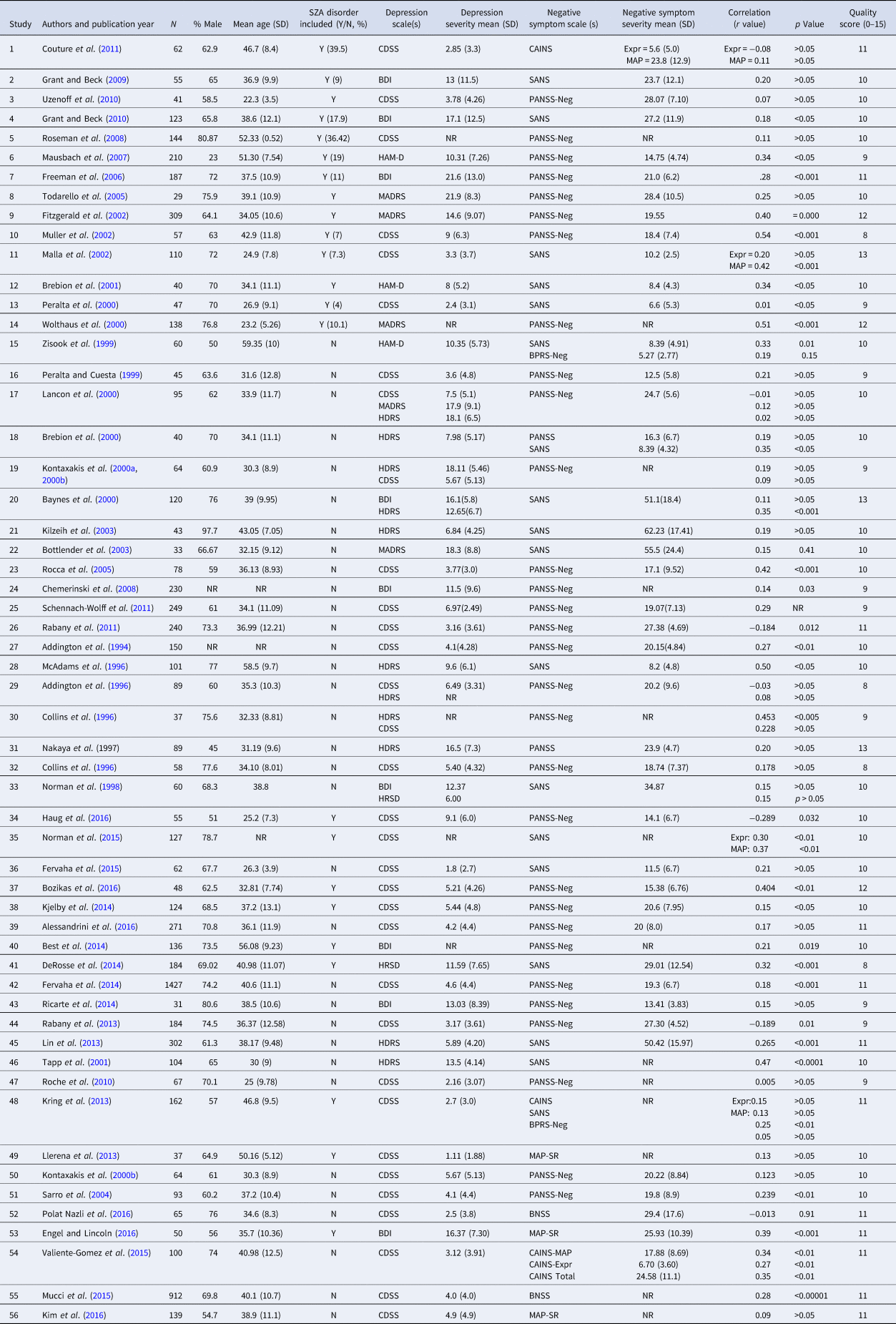
Fifty-six papers were included in the analyses, see PRISMA flow diagram in Fig. 1. The included studies are summarised in Table 1 below. Based on the data available, there were 8177 unique participants in these studies and 66.79% were male. The mean age reported for the samples ranged from 22.3 to 59.35 with a composite mean age of 37.16 (SD = 9.58). Two studies selected people aged over 40 years for inclusion in their sample (Zisook et al., Reference Zisook, McAdams, Kuck, Harris, Bailey, Patterson, Judd and Jeste1999; Mausbach et al., Reference Mausbach, Cardenas, Goldman and Patterson2007). A further two studies did not report mean age or gender for their samples (Addington et al., Reference Addington, Addington and Maticka-Tyndale1994; Chemerinski et al., Reference Chemerinski, Bowie, Anderson and Harvey2008) and one did not report mean age (Norman et al., Reference Norman, Manchanda, Harricharan and Northcott2015). Only 10 studies reported the ethnicity of the sample, with an average of 49.25% of participants identifying as belonging to a Black and Minority Ethnic (BAME) group. This composite ethnicity categorisation was compared to a composite category of ‘white’ for the purposes of the meta-analysis to maximise power. Thirty-four of the studies included in the analyses only included people with a diagnosis of schizophrenia. Of the 23 studies that did include people with schizoaffective disorder, only 10 reported the percentage of their sample that had this diagnosis, with a mean of 16.12%. The majority of studies (k = 48) reported findings from community samples, two studies included mixed inpatient and outpatient participants and three studies included people solely from an inpatient setting. Three studies reported findings from participants experiencing their first or second episode of psychosis.
PRISMA flow diagram.

Table of Included Studies

Quality ratings of studies
The quality scores are listed in Table 1. Studies generally scored moderate–high for selection of the sample with the majority recruiting from a wide pool of participants. Studies scored lower in this area when they sampled from clinic, service or ward only or their recruitment procedure was not described clearly. Studies did not consistently report subscales for the negative symptom measures used and this prevented them from achieving the full score in this section. The lower scores in the analysis section were given to studies which did not account for multiple correlational analyses in their analysis or significance levels.
Measures of negative symptoms
Four measures of negative symptoms were used in the studies included in the analysis; these are detailed in Table 1. The most commonly used assessment was the negative symptom subscale of the Positive and Negative Syndrome Scale (PANSS) (Kay et al., Reference Kay, Feszbein and Opler1987) with 34 studies using this measure. The second most common was also an older measure of negative symptoms – the Scale for the Assessment of Negative Symptoms (SANS) (Andreasen, Reference Andreasen1989) with 17 studies using this measure. These measures are the most widely used which reflect the historical conceptualisation of primary and secondary negative symptoms. The newer measures – the Clinical Assessment Interview for Negative Symptoms (CAINS) (Forbes et al., Reference Forbes, Blanchard, Bennett, Horan, Kring and Gur2010) (k = 5) and the Brief Negative Symptom Scale (BNSS) (Kirkpatrick et al., Reference Kirkpatrick, Strauss, Nguyen, Fischer, Daniel, Cienfuegos and Marder2011) (k = 2) were used far less often in these studies. The most important differences in the newer measures are that they draw a distinction between expressive and experiential symptoms. Where these data were reported, expressive and experiential subscales from the CAINS, BNSS and SANS were analysed separately in the sub-group meta-analyses. Three is the minimum number of studies needed to conduct a robust sub-group analysis (Borenstein et al., Reference Borenstein, Hedges, Higgins and Rothstein2010) and therefore the studies which solely used the BNSS were not analysed separately.
Measures of depression
Four measures of depression were used in the sample of studies included in the analyses; these are also detailed in Table 1. The most commonly used measure was the Calgary Depression Scale for Schizophrenia (CDSS, k = 34) (Addington et al., Reference Addington, Addington and Schissel1990). This measure was designed specifically for use in this population and the scale was developed not to include items which overlap with negative symptoms and has been shown to reliably distinguish these two symptom clusters (Lako et al., Reference Lako, Bruggeman, Knegtering, Wiersma, Schoevers, Slooff and Taxis2012). The second most common measure was the Hamilton Depression Rating Scale (HDRS, k = 16) (Hamilton, Reference Hamilton1960) which is a more general measure used in many different populations and includes many of the physical symptoms of depression. The other two measures used, the Beck Depression Inventory (BDI, k = 9) (Beck et al., Reference Beck, Steer and Carbin1988) and the Montgomery–Asberg Depression Rating Scale (MADRS, k = 5) (Williams and Kobak, Reference Williams and Kobak2008), were developed initially for the assessment of people with mood disorders and include the full range of depressive symptoms, including cognitive features such as hopelessness and low self-esteem.
Meta-analysis findings
(1) Is there a relationship between negative symptoms and depression in people with psychosis?
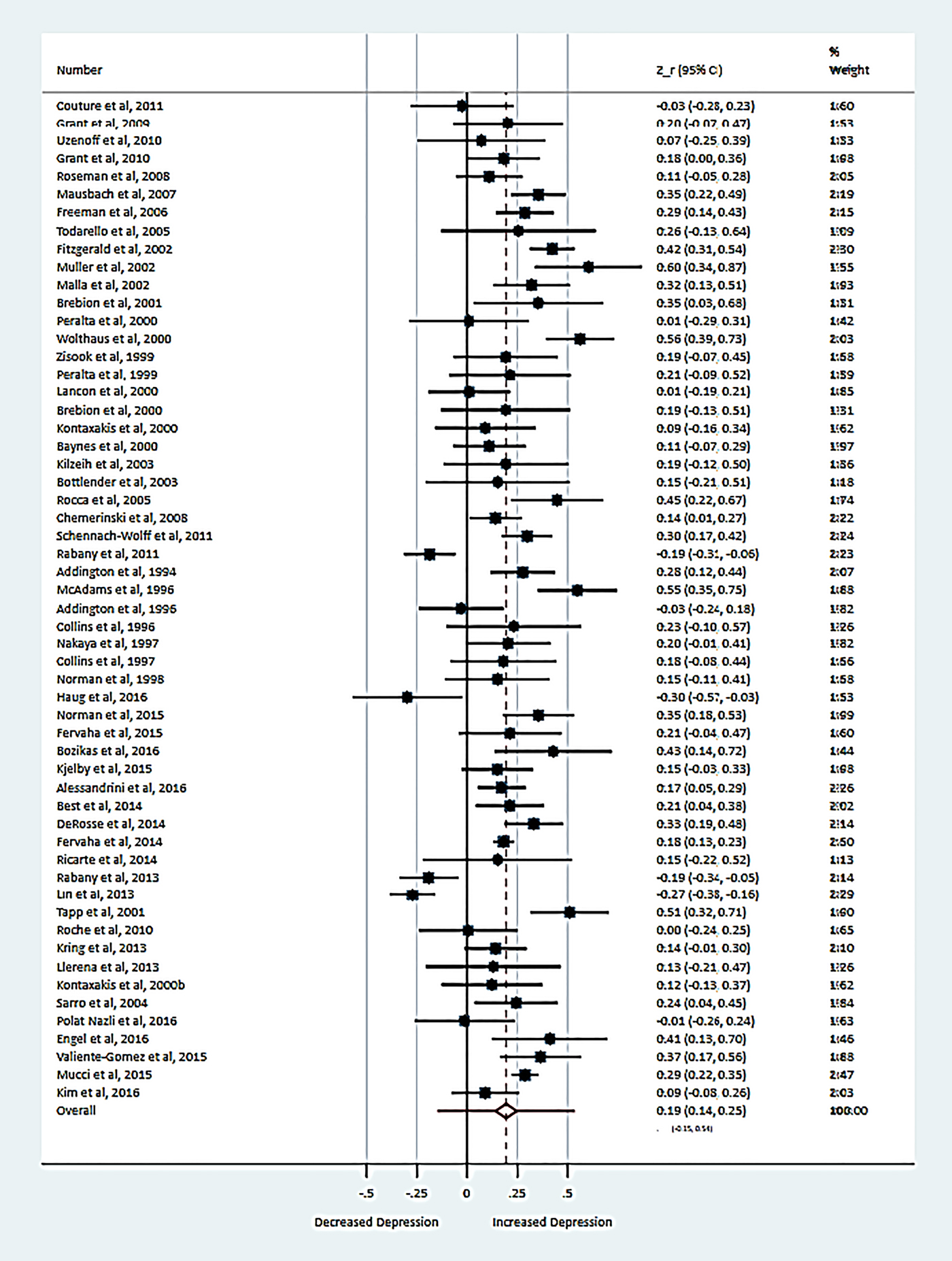
The meta-analysis testing the relationship between negative symptoms and depression showed a small but significant association between increased levels of reported negative symptoms and depressive symptoms in people with non-affective psychosis [k = 56, pooled standardised effect size (SES) = 0.194, 95% CI 0.141–0.247, z = 7.20, p < 0.001] (see Fig. 2).
(2) Does this relationship vary according to depression or negative symptom measures or subscales used?
The relationship was consistently present across the sub-group analyses looking at each depression and negative symptoms measure. When the most common combination – PANSS Neg and CDSS – was examined, the effect size was also small but significant (k = 23, pooled ES = 0.135, 95% CI 0.055–0.216, z = 3.29, p = 0.001). The expressive (k = 6, pooled ES = 0.189, 95% CI 0.090–0.288, z = 3.75, p < 0.001) and experiential (k = 12, pooled ES = 0.263, 95% CI 0.185–0.341, z = 6.58, p < 0.001) subscales also had small but significant relationships with measures of depression which was numerically larger for experiential subscales. However, the CIs for the pooled ESs slightly overlap, and so it is not possible to conclude whether there is a stronger relationship between depressive and experiential symptoms than alogia and blunted affect.
Forest Plot of the relationship between negative and depressive symptoms.
Heterogeneity analyses
The full sample included in the main effect analyses showed high levels of heterogeneity (p < 0.001, I 2 = 79.5%, τ 2 = 0.0283) as expected given the wide range of different measures used. The 95% prediction interval (−0.15 to 0.54) is displayed around the main effect size in the Forest Plot (see Fig. 2).
In line with this, the heterogeneity was lower in the sub-group analyses (see online Supplementary Material for full results), and for expressive (p = 0.216, I 2 = 29.3%, τ 2 = 0.0308) and experiential (p = 0.263, I 2 = 25.3%, τ 2 = 0.007) subscales, the heterogeneity was even lower and non-significant.
Publication bias
Visual inspection of the funnel plots showed publication bias to be unlikely. This was confirmed by the Egger's and Begg's tests conducted which found no evidence of publication bias in the main effect analyses (Egger's p = 0.962, Begg's p = 0.772). This was consistent across the negative symptom (Egger's p = 0.138–0.932, Begg's p = 0.621–1.0) and depression measures used (Egger's p = 0.224–0.687, Begg's p = 0.419–0.917).
(3) Is this relationship moderated by depressive or negative symptom severity?
Meta-regression analyses using the subset of the full sample that reported severity scores showed that the severity of depressive symptoms positively predicted a relationship with negative symptoms (k = 51, t = 2.08, p = 0.044). Negative symptom severity also predicted the association with depressive symptoms but in the opposite direction (k = 43, t = −2.45, p = 0.019). As these analyses included the whole sample, the heterogeneity was high (I 2res = 78.13%, 73.84%, τ 2 = 0.02579, 0.02569) and thus the results should be considered with caution. This analysis was not repeated by specific measure sub-groups as the overall relationship was consistent across all measures when analysed separately.
(4) Is this relationship moderated by the diagnosis of the sample, quality of the study or demographic factors?
To investigate whether variables which differed between samples accounted for heterogeneity in findings, meta-regression analyses were conducted for demographic data and study characteristics including those studies which reported these data (see Table 1). No significant results were found for age, gender or ethnicity (ts = 0.10–0.85, ps = 0.418–0.924). The proportion of the sample with schizoaffective disorder also did not significantly moderate the findings (t = 0.22, p = 0.829). The quality ratings for each study were also examined to assess whether they moderated the presence of an association between the measures, this analysis was non-significant (t = 0.51, p = 0.61).
Discussion
The findings confirm that there is a relationship between negative symptoms and depressive symptoms in people with non-affective psychosis. In the first large meta-analysis to examine this, with data from 56 studies and over 8000 unique participants, and across a range of measures, a clear pattern emerges showing that overall there is a small, significant relationship between depressive and negative symptoms. The relationship was consistent across measures, so it does not appear to be the result of measurement artefacts. The effect size did vary with the measure used, but not greatly. There were no significant moderating effects of demographic or quality variables suggesting it is robust and generalisable. A non-reciprocal relationship was highlighted in the findings – higher depression severity was linked to higher negative symptom severity but there was an inverse relationship in the other direction whereby higher negative symptom severity was linked to lower depression severity. All these findings support the hypothesis that this relationship is consistent with a symptom-specific approach and highlights the phenomenological overlap in the dimensions of depression and negative symptoms.
These findings support the model proposed in the recent review by Krynicki et al. (Reference Krynicki, Upthegrove, Deakin and Barnes2018) which suggests that an overlapping, symptom-specific approach to these symptom categories may best represent their relationships. This approach allows the co-occurrence of specific symptoms in the dimensions, as suggested by the evidence. Depression may act as a driver of negative symptoms as proposed in cognitive models, which highlight the role of emotion in psychosis, e.g. Garety et al. (Reference Garety, Kuipers, Fowler, Freeman and Bebbington2001). This is also consistent with the secondary negative symptom conceptualisation, where depression drives the presentation of negative symptoms (Kirkpatrick, Reference Kirkpatrick2014). Indeed, the inverse reciprocal relationship found in this study supports the existence of primary negative symptoms which do not predict co-occurring depressive symptoms as highlighted in the work of Kirkpatrick and Carpenter (Kirkpatrick et al., Reference Kirkpatrick, Fenton, Carpenter and Marder2006; Kirkpatrick and Galderisi, Reference Kirkpatrick and Galderisi2008). A recent factor analysis concluded that a five-factor not two-factor solution is more appropriate within the category of negative symptoms, providing further evidence supporting a symptom-specific approach (Strauss et al., Reference Strauss, Nunez, Ahmed, Barchard, Granholm, Kirkpatrick, Gold and Allen2018).
The sub-group analyses of negative symptom sub-domains and depression suggested that, as expected, the experiential negative symptoms have phenomenological overlap with depression, with expressive symptoms appearing more distinct from depression. These symptoms of low motivation, apathy and anhedonia are present in the majority of both the negative and depressive symptom measures used in the studies in this meta-analysis. However, an important difference in anhedonia in depression and psychosis is not commonly assessed in these measures. A recent review highlights that people with psychosis do not experience a reduction in their capacity to experience pleasure (Strauss and Cohen, Reference Strauss and Cohen2018), whereas this is commonly seen in people with depression and described as anhedonia. Unfortunately, the subscales reported in the depression measures included are not detailed enough to analyse this difference in our findings, but it should be considered in future research. Measures such as the CDSS have attempted to reduce phenomenological overlap by excluding experiential symptoms in their assessment of depression, but this may result in false negatives and could therefore lack validity. It seems from recent reviews of the area that suicidal ideation, pessimism and guilt are a more common characteristic of depression (Krynicki et al., Reference Krynicki, Upthegrove, Deakin and Barnes2018). Expressive symptoms, with poorer verbal and emotional expression, are more uniquely found in people experiencing negative symptoms (Kirkpatrick, Reference Kirkpatrick2014; Krynicki et al., Reference Krynicki, Upthegrove, Deakin and Barnes2018).
Importantly, the findings were not moderated by demographic variables such as age, ethnicity and diagnosis suggesting the depression and negative symptom relationship is present across the population of people with schizophrenia-spectrum diagnoses. The quality ratings did not moderate the findings, although there was a limited range of scores because of the measure used and inclusion criteria applied to the studies. The lack of moderation by schizoaffective disorder is perhaps surprising as people with this diagnosis might be expected to report more symptoms related to mood. It therefore tentatively suggests that the overlap between depressive and negative symptoms is consistent across the diagnoses included.
The findings of the meta-regressions showed a non-reciprocal relationship between negative and depressive symptoms. As the severity of depressive symptoms increases, the more likely they are to demonstrate a positive association with negative symptoms. However, if a person reports more severe negative symptoms, the less likely they are to be related to depressive symptoms. This is a cross-sectional finding and hypotheses regarding a directional relationship are therefore speculative at this stage. As negative symptom severity increases, the person is more likely to experience expressive deficits and greater apathy or numbing of emotion. This may either limit their ability to report depressive symptoms or be protective against them. It is important to consider that depressive symptoms are more often self-reported, whereas negative symptoms are always interviewer-rated. This may explain this non-reciprocal relationship in terms of how symptoms are expressed in an interview – which may be more challenging for someone with severe negative symptoms. Negative symptoms may also be a less potent bridge to co-occurring depressive symptoms (Borsboom, Reference Borsboom2017). The role of depressive symptoms in driving psychosis has been discussed previously (Garety et al., Reference Garety, Kuipers, Fowler, Freeman and Bebbington2001; Sarkar et al., Reference Sarkar, Hillner and Velligan2015) and it may be that this is a more potent route to co-occurring negative symptoms. A true symptom-specific approach would explore the phenomena associated with the concepts of ‘depressive’ and ‘negative’ symptoms across a broad population. Such an approach will assist with determining the factors contributing to the presenting symptoms, and specifically whether apparent negative symptoms are primary or secondary to depressive symptoms.
The main analysis and some of the sub-group analyses had high heterogeneity in the included studies which is a limitation of including different measures in the analysis, although this did increase power. Only two studies were excluded due to missing data; however, many studies did not report the sample demographics, with ethnicity data particularly lacking. Meta-analyses that consider symptoms are only as good as the measures of those symptoms used. Several studies did not report the measure total scores and so they could not be included in the meta-regressions, which limits these findings. More robust conclusions would have been possible with a greater number of studies in the sub-group analyses considering subscales of both negative (i.e. expressive and experiential) and depressive symptoms (e.g. behavioural, cognitive and somatic–affective symptoms). The role of positive and cognitive symptoms cannot be elucidated from the data available; future analyses may wish to include these data if possible to examine whether these difficulties play a moderating role in the relationship between depressive and negative symptoms. The narrow range of quality ratings provided by the scale used may have limited the power of the moderation analysis. Future meta-analyses addressing these questions may wish to include a wider range of bibliographical sources, although this may increase heterogeneity.
These important findings tell us that depressive and negative symptoms can both be present in people with non-affective psychosis. This means both should be assessed using the most current and robust measures, and care should be taken to ensure the measure selected captures the full range of symptoms the person is experiencing. It follows that treatment for both depressive and negative symptoms might be indicated, although further research is required to explore whether this requires targeting the same or different causal mechanisms.
The findings highlight the importance of mood across the psychosis spectrum as proposed in several cognitive models of psychosis (Chadwick et al., Reference Chadwick, Birchwood and Trower1996; Garety et al., Reference Garety, Kuipers, Fowler, Freeman and Bebbington2001; Freeman et al., Reference Freeman, Garety, Kuipers, Fowler and Bebbington2002; Birchwood, Reference Birchwood2003). A symptom-specific approach to considering these difficulties in the context of fuzzy boundaries between diagnostic categories may have the greatest clinical utility (van Os and Reininghaus, Reference Van Os and Reininghaus2016). Indeed, the findings of a recent factor-analysis suggest that negative symptoms are best conceptualised as five factors: blunted affect, alogia, anhedonia, avolition and asociality rather than the two expressive and experiential factors discussed previously (Strauss et al., Reference Strauss, Nunez, Ahmed, Barchard, Granholm, Kirkpatrick, Gold and Allen2018). Thus, it seems there is increasing evidence that each of these symptoms is best considered as a unique entity and subsequently each can be expected to have a different relationship with depressive symptoms. Although the findings of the review suggest that depressive and negative symptoms mirror each other, we are aware that there is a phenomenological complexity behind this and research focused on gaining a deeper understanding of these symptoms is required. This further work is needed to develop our theoretical understanding of the causes and maintenance factors underlying specific symptoms in order to improve therapeutic outcomes. Assessment of these individual symptoms is important, as the diagnostic and conceptual lines we have drawn so far appear to be more complex than we anticipated. The impact of these symptoms is at least as, if not more significant than any other group of symptoms and they are a priority for service users (Rose, Reference Rose2014).
Supplementary material
The supplementary material for this article can be found at https://doi.org/10.1017/S0033291719002381.
Acknowledgements
PAG acknowledges the support from the National Institute for Health Research (NIHR) Biomedical Research Centre of the South London and Maudsley NHS Foundation Trust and King's College London. The views expressed are those of the author(s) and not necessarily those of the NHS, the NIHR, the Department of Health.
Conflict of interest
None.