Consistent with Kraepelin's early descriptions (1921), it is now well established that bipolar disorder (BP) occurs in children and adolescents (Kowatch, Fristad, et al., 2005; Kowatch, Youngstrom, Danielyan, & Findling, 2005; Pavuluri, Birmaher, & Naylor, 2005). However, as discussed in detail below, many bipolar children and adolescents have very short and frequent periods of syndromal and subsyndromal mania, hypomania, or depression and comorbid disorders, making their diagnosis especially difficult.
Because of the current uncertainty regarding the diagnosis of BP youth (Kowatch, Youngstrom, et al., 2005), the real prevalence of BP in this population is unknown. A community study reported that approximately 1% of adolescents had BP (mainly BP II and cyclothymia) and 5.6% had significant subthreshold symptoms (Lewinsohn, Klein, & Seeley, 1995). Retrospective studies in adults with BP have reported that up to 60% had the onset of their mood symptoms before the age of 20 (Chengappa et al., 2003; Joyce, 1984; Lish, Dime-Meenan, Whybrow, Price, & Hirshfield, 1994; Shaw, Egeland, Endicott, Allen, & Hostetter, 2005). Also, recent evidence has shown strong secular trends in the incidence of unipolar disorder and BD in successive birth cohorts, with ages at first onset of the disorder occurring earlier in later cohorts (e.g., Gershon, Hamovit, Guroff, & Nurnberger, 1987; Klerman et al., 1985; Ryan et al., 1992). These findings suggest that the prevalence of BP in children and adolescents has been underestimated.
Despite the growing evidence that the consequences of BP arising during childhood can be devastating, with high rates of mixed and rapid cycling presentations, substance abuse, suicidal risk, and social, family, vocational, and academic impairment (Birmaher et al., 2006; Pavuluri et al., 2005), the long-term course of BP in youth has been insufficiently studied. In this article, the extant literature regarding the longitudinal course of pediatric BP in community and clinical samples is described and contrasted with studies in adult BP populations. In addition, predictors of outcome, consequences, and the limitations of the current longitudinal studies will be reviewed.
Prospective Naturalistic Studies
Community samples
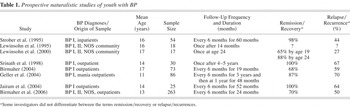
There is only one community study prospectively following a small sample of adolescents with BP (Table 1). Lewinsohn et al. (1995; Lewinsohn, Klein, & Seeley, 2000) evaluated 1,709 high schoolers (ages 16.6 ± 1.2 years; 54% females, 91% Caucasian) with the Kiddie Schizophrenia and Depression Schedule Present (K-SADS-P) and Epidemiological (K-SADS-E) versions (Chambers et al., 1985) and found 1% (n = 18) with Diagnostic and Statistical Manual of Mental Disorders, 3rd Edition—Revised (DSM-III-R; American Psychiatric Association, 1987) BP disorder (mainly BP II and cyclothymia). These subjects were reinterviewed 14 months after intake and compared with 316 subjects with major depressive disorder and 845 healthy adolescents. The BP subjects had the worse course, with a median duration for their index episode of illness of 80 weeks. They also had significantly more functional impairment, psychosis, suicidality, comorbid anxiety, disruptive disorders, and mental health utilization than the other two groups. The cohort was reassessed at age 24 to reconstruct the course of mood symptoms as they entered young adulthood. Approximately 35% of the BP adolescents had not remitted by age 19, and about 12% had not remitted by age 24. Of the subjects who remitted by age 19, 27% had a subsequent mood episode by age 24.
Prospective naturalistic studies of youth with BP

At intake, Lewinsohn et al. (1995, 2000) also found that 5.7% (n = 97) had subsyndromal BP symptoms defined as “a distinct period of abnormally and persistently elevated, expansive, or irritable mood.” They had on average 2.9 (SD = 2.1, range = 0–7) associated manic symptoms. These subjects had levels of impairment, comorbidity, and family history or BP and depression that were comparable to the BP group. However, at follow-up they only showed increased risk for depression, but not BP. Therefore, the definition of subsyndromal BP used in this study may have been too “soft,” and the presence of only one or two symptoms, particularly irritability, does not necessarily mean that these adolescents had or will develop BP (Hazell, Carr, Lewin, & Sly, 2003).
Clinical samples
Six prospective studies, mainly including small samples of youth with BP I have been published (Table 1). The results of each of these studies will be described below.
Strober, Freeman, Bower, Lampert, and DeAntonio (1995) reported that all but one of 52 adolescents that were hospitalized for BP-I and followed for 5 years recovered fully from their index episode (defined as ≥8 weeks with ≤2 symptoms). About 44% had at least one syndromal recurrence. The rate of recurrence increased to 70% when the definition of recurrence was expanded to include subthreshold symptomatology. Approximately 20% of the sample had suicide attempts requiring medical attention. Recovery was most rapid in subjects with pure mania (M = 9 weeks) or mixed states (M = 11 weeks) at intake, followed by subjects who were cycling at the time of presentation (M = 15 weeks). In contrast, a strikingly protracted time to recovery was observed in subjects with pure depression at intake (M = 26 weeks). Subjects with cycling or mixed episodes at intake had the highest probability of recurrences (mixed/rapid cyclers: 60 vs. 40% at approximately 60 weeks after intake).
Srinath et al. (1998) evaluated 30 children and adolescents who, 4 to 5 years earlier, were diagnosed with the DSM-III. All subjects eventually recovered (absent or mild DSM-III-R BP symptoms for at least 2 months) from their index episode. However, 67% had at least one recurrence. One subject committed suicide.
Geller, Tillman, Craney, and Bolhofner (2004) followed a cohort of 86 BP I children (ages 7–16) for 4 years, who at intake were required to have elation and/or grandiosity as a criterion symptom for study inclusion. Psychiatric symptomatology was ascertained using the Washington University K-SADS (Geller et al., 2001). Subjects were recruited from outpatient psychiatric clinics and pediatric offices, and were followed every 6 months for the first 3 years and yearly thereafter. Eighty-seven percent of the subjects recovered (defined as no mania or hypomania and a Children's Global Assessment Scale [CGAS; Schaffer et al., 1983] score of >60 for at least 2 weeks) in a mean time of 60.2 ± 47 weeks. However, in an average time of 40.4 ± 33.4 weeks after recovery, 70% of these subjects had at least one recurrence. Subjects met criteria for any BP diagnosis for 67% of the follow-up weeks. Mania/hypomania accounted for 57% of this time period and subsyndromal or syndromal depressive symptoms for the remainder. The presence of psychosis at study entry was a predictor of a greater proportion of weeks spent ill with mania or hypomania over follow-up. Low levels of maternal warmth increased the risk to relapse. However, these predictors should be taken as preliminary because the effects of parents' psychopathology, and other important variables such as SES status were not taken into account. Only half of the sample received treatment with medications for mania.
A multicenter pilot study (Birmaher, 2004) evaluated 73 outpatient adolescents with BP I (mean age = 17.1 ± 1.8, 75% female, 84% Caucasian) with the K-SADS Parent and Epidemiological versions and followed them every 4 months with the Longitudinal Interval Follow-Up Evaluation (LIFE; Keller et al., 1987) for a mean of 76 ± 62 weeks. The LIFE evaluated the course of symptoms by identifying “change points.” frequently anchored by memorable dates for the subject (e.g., holidays and beginning of school). The severity of ongoing symptoms, as well as the onset of new symptoms and the episode polarity for BP since the last appointment were tracked on a week by week basis using the LIFE Psychiatric Status Rating (PSR) scale. For DSM-IV (American Psychiatric Association, 1994) mood disorders, the PSR scores range from 1 for no symptoms, 2–4 for varying levels of subthreshold symptoms and impairment, and 5–6 for full criteria with different degrees of severity or impairment. Comorbid disorders and psychosis are also rated on a weekly basis on a 3-point scale of 1–3, where 3 indicates threshold symptomatology.
Approximately 68% of the subjects recovered (PSR = 1–2 for 8 weeks) in 20 to 40 weeks. It took a significantly longer time for the mixed (M = 58 weeks) bipolar patients to recover than those with manic (M = 42 weeks) or depressive (M = 20 weeks) presentations. Despite the high recovery rate, 59% of the patients had at least one recurrence, with mixed bipolar patients having more recurrences and less time before the onset of the recurrent episode. During the follow-up time almost all patients were on psychotropic medications and 26% of the follow-up time patients received three medications (e.g., mood stabilizer, antidepressants, and stimulants). Moreover, 70% had at least one hospitalization and the patient's bipolar illness caused severe family, interpersonal, and economic burden.
Jairam, Srinath, Girimaji, and Seshadri (2004) conducted follow-up at 6-month intervals for 4–5 years on 25 youths (ages 9–16 years) with DSM-IV mania with elation and/or grandiosity diagnosed through the Diagnostic Interview for Children and Adolescents—Revised (DICA-R; Herjanic & Reich, 1982). In about 2 months, 100% of the subjects showed recovery (≤2 mild mood symptoms for at least 8 weeks). Despite intense treatment, after a mean period of 18 months of follow-up, 64% of these subjects had at least one relapse (no DSM criteria for BP plus a CGAS score of <60). One completed suicide and two had suicide attempts.
Recently, a large multicenter study, the Course and Outcome for Bipolar Youth (COBY), reported the longitudinal course of 263 children and adolescents, ages 7–17 years (M = 13 years), with BP I (n = 151), BP II (n = 20), and BP not otherwise specified (NOS; n = 92; Birmaher et al., 2006). Subjects were interviewed at intake with the K-SADS Present and Lifetime versions (Kaufman et al., 1997) and thereafter every 6 months for approximately 2 years using LIFE (Keller et al., 1987).
All analyses were adjusted for the effects of any significant demographic variables, pubertal status, subtype of BP, lifetime psychosis, age of onset of BP symptoms (depression and/or mania/hypomania), duration of illness, and their interactions.
Because the DSM-IV definition of BP-NOS is vague, for COBY, BP-NOS was defined as the presence of clinical relevant BP symptoms that do not fulfill the DSM-IV criteria for BP I or BP II and a minimum of the following symptoms: (a) elated mood, plus two associated DSM-IV symptoms, or irritable mood plus three DSM-IV associated symptoms; (b) change in the level of functioning; (c) duration of a minimum of 4 hr within a 24-hr period; and (d) at least 4 cumulative lifetime days meeting the criteria. In COBY, at intake, subjects with BP-NOS showed similar clinical characteristics and psychiatric family history to those subjects with BP I and II (Axelson et al., in press). The main difference between children with BP-NOS and the other two BP subgroups was the lack of sufficient duration to fulfill criteria for BP I or BP II. In fact, 90% of COBY's BP-NOS subjects met the DSM-IV symptom criteria for a manic/hypomanic episode when the threshold for presence of a DSM-IV criterion was set at mild or greater. Even with the DSM-IV symptom threshold set at moderate or higher, 64% of the BP-NOS subjects met DSM-IV symptom criteria for a manic/hypomanic episode.
In COBY, after an average of 20 months from the onset of the index episode, about 70% of the subjects showed recovery (8 consecutive weeks with a PSR score of ≤2: minimal or no symptoms). Although about 95% of the subjects were on pharmacological treatment, in a mean period of 15 months after recovery, about 50% of them had at least one full syndromal recurrence (PSR score ≥ 5, with 1-week duration for mania/hypomania and 2 weeks for depression). Subjects with BP I recovered and recurred from their index episode more frequently than those with BP-NOS. In contrast, subjects with BP-NOS had a more protracted illness, but once they recovered from their index episode, they showed a longer time to recurrence than those with BP I and II. On average, subjects had 1.5 syndromal recurrences per year, particularly depressive episodes.
To provide a more complete picture of the longitudinal course of BP in youth, the same methodologies used by a long-term naturalistic study of adults with BP I (Judd et al., 2003), were applied to the COBY sample. The percentage of follow-up weeks spent asymptomatic or symptomatic in the different mood symptom status categories (e.g., mania, mixed, and subsyndromal symptoms) was computed, based on the PSR ratings for each subject. In addition, change in polarity was defined as a switch between depression (PSR ≥ 3) and mania/hypomania (PSR ≥ 3) or vice versa, with or without intervening weeks at the asymptomatic status. For these last two analyses, similar to Judd et al. (2003), weeks with mixed symptoms of depression and mania/hypomania were included together.
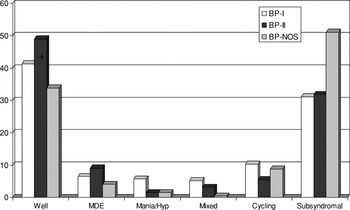
The weekly symptom analyses showed that subjects were symptomatic approximately 60% of the follow-up time, with about 22% of the time in full-syndromal episodes and 38% of the time with subsyndromal symptoms (Birmaher et al., 2006; Figure 1). Subjects with BP I had more manic/hypomanic and mixed episodes than those with BP-NOS, and subjects with BP II had more depression that those with BP I and NOS (all p values < .05). In contrast, subjects with BP-NOS showed more subsyndromal mania and mixed symptomatology.

A comparison of the weekly symptoms status of youth with bipolar I disorder, bipolar II disorder, and not otherwise specified. The weekly symptom status is the percentage of follow-up weeks that were asymptomatic or symptomatic in different mood categories.
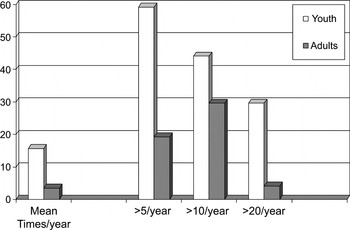
During the follow-up, children and adolescents with BP experienced numerous and frequent fluctuations in their mood (Birmaher et al., 2006). Shifts in polarity occurred at a mean of 15.8 ± 18.5 times per year. About 31% of patients changed polarity once per year or less, 56.6% changed polarity 5 or more times per year, 46.1% more than 10 times per year, and 34.1% more than 20 times per year. Low socioeconomic status (SES), prepubertal BP-onset, lifetime psychosis, and BP-NOS predicted greater number of changes in polarity (all p values ≤ .001).
Approximately 20% of subjects who had an intake diagnosis of BP II converted into BP I. Twenty-five percent of the BP-NOS subjects converted to either BP I or II. Another study followed a community sample of 54 adolescents who had subsyndromal BP symptomatology and found an increased risk for major depression but not for BP (Lewinsohn et al., 2000). However, in comparison to COBY's definition of BP-NOS, this later study defined subsyndromal BP less stringently, suggesting possibly less liability for full BP than captured by COBY's more restrictive definition.
Preliminary analyses showed that subjects with prepubertal-onset BP were approximately two times (95% confidence interval = 1.3–2.8) less likely than those with postpubertal-onset BP to recover. In addition, subjects with prepubertal-onset BP had more chronic symptoms (defined as percentage of follow-up time with any mood symptoms, F = 4.61, p = .01, pairwise p = .008), spent more follow-up time with subsyndromal mood symptoms (Kruskal–Wallis χ22 = 8.4, p = .02, pairwise p ≤ .05), and had more polarity changes per year (Kruskal–Wallis χ22 = 10.3, p = .006, pairwise p ≤ .05) than postpubertal-onset BP subjects. Preliminary analyses showed that mixed episodes, psychosis, low SES, comorbid attention-deficit/hyperactivity disorder, conduct, anxiety, substance abuse, and family psychopathology were associated with significantly more follow-up time with syndromal and subsyndromal symptoms.
At intake and during the follow-up, above 90% of the subjects were treated with pharmacotherapy and a form of psychotherapy (e.g., individual, family) and required frequent hospitalizations. These results attest to the high level of health system utilization required to treat youth with BP disorders and the need for efficacious treatments to control this devastating disorder.
Other Studies
Studies that have retrospectively followed BP subjects for longer periods of time have reported similar findings, including high rates of recurrences, hospitalizations, psychosis, suicide attempts and completion, substance abuse, unemployment, and poor psychosocial functioning (Bashir, Russell, & Johnson, 1987; Carlson, Davenport, & Jamison, 1977; Carlson, Bromet, Driessens, Mojtabai, & Schwartz, 2002; Himmelhoch & Garfinkel, 1986; Jarbin, Ott, & von Knorring, 2003; Landlot, 1957; McGlashan, 1988; Rajeev et al., 2003; Welner, Welner, & Fishman, 1979; Werry & McClellan, 1992). For example, Landlot (1957), in a 5- to 25-year retrospective study of 60 BP I patients first hospitalized between 15 and 22 years of age, found that 90% had a recurring course, whereas Carlson et al. (1977) reported that 20 to 40% of 40 adolescents with BP I remained impaired or incapacitated through adulthood. Quackenbush, Kutcher, Robertson, Boulos, and Chaban (1996) found that onset of BD during adolescence had a substantial effect on academic achievement, on-time completion rates for high school, and expected progression into college. Himmelhoch and Garfinkel (1986) noted that BP I disorder in adolescents might predispose them to episodic drinking and sedative drug use. Welner et al. (1979) described the course of 12 BP I adolescents 8 to 10 years following discharge. At follow-up, three had committed suicide, and all remaining patients were chronically ill with poor social and vocational adjustment, rehospitalizations, and suicide attempts. Linkages between suicide and BP disorder among adolescents have also been reported in other follow-up (Otto, 1972) and case-controlled studies (Brent et al., 1988).
Consequences
In summary, the above-noted studies showed that BP considerably affects the normal psychosocial development of the child. BP increases the risk for academic, social, interpersonal (family, peers, work), and health utilization. Moreover, BP increases the risk for suicidal behaviors and completed suicide, substance abuse, conduct, and legal problems, and it takes a substantial toll on family functioning and economy. These negative consequences are not only observed in BP subjects recruited from clinical populations, but in adolescents with BP recruited in community studies (Lewinsohn et al., 1995).
It is important to note that it is not clear whether the negative effects of having BP are solely attributable to this disorder, because youth with BP usually have other comorbid disorders and may be living in families with high psychopathology and/or chaotic environments that may also influence the child's psychosocial functioning.
Limitations of Current Studies
The results and comparisons among the studies summarized above should be taken with caution because of dissimilar methodologies such as differences in inclusion and exclusionary criteria, definition of BP, demographics, instruments, and definitions of BP outcome (recovery, remission, relapse, and recurrence; Kowatch, Youngstrom, et al., 2005). In addition, most of the pediatric samples had the following characteristics: (a) were small; (b) subjects were followed infrequently or for relatively brief periods; (c) included subjects who primarily were BP I; (d) very few studies prospectively collected syndromal and subsyndromal course data on both children and adolescents, and only two included children with subsyndromal symptoms; (e) some studies did not interview the children directly; (f) the effects of development and other important factors such as treatment, family psychopathology, or child's comorbid psychiatric disorders on the course of BP were not taken into account; and (h) several studies were retrospective in nature or relied on chart reviews for depicting the follow-up course rather than direct clinical interviews.
Are There Any Differences Between the Long-Term Outcome of Adults and Youth With BP?
Prospective naturalistic studies in adults with BP I and II
Overall, the adult longitudinal naturalistic studies have found that BP is a strongly recurrent illness associated with substantial psychosocial morbidity, mortality due to both suicide and medical illnesses, substance abuse, incarceration, and mental health utilization (Angst, Gerber-Werder, Zuberbühler, & Gamma, 2004; Coryell, Scheftner, Keller, & Endicott, 1993; Coryell et al., 1998; Goodwin & Jamison, 1990; Judd, Akiskal, Schettler, & Endicott, 2002; Klerman, Olfson, Leon, & Weissman, 1992; Kupfer, 2005; Tohen et al., 2003; Turvey, Coryell, Arndt, et al., 1999; Turvey, Coryell, Solomon, et al., 1999; Winokur, Coryell, Akiskal, & Endicott, 1994; Winokur, Coryell, Keller, Endicott, & Akiskal, 1993). Moreover, BP drastically impacts the subject's family functioning, economy, and well-being.
Recent studies showed that adults with BP have ongoing syndromal and subsyndromal symptoms with fluctuating changes in their mood, particularly depression (Angst et al., 2004; Judd et al., 2002). The ongoing symptoms of BP in adults is clearly exemplified in the largest and longer naturalistic follow-up study in adults with BP I or II disorders published (Judd et al. 2002, 2003). This study showed that continuous recurrences were the rule. A substantial proportion of the follow-up time was characterized by the presence of symptoms of subsyndromal intensity, mainly depressive, with frequent shifts in polarity. In the case of BP I illness (Judd et al., 2002), probands were ill for nearly 50% of weeks through a mean of 12.8 years of prospective follow-up, manifested depressive symptoms in 30% of follow-up weeks, changed symptom severity level an average of six times per year, and shifted polarity an average of three times per year. In contrast, BP II probands (Judd et al., 2003) were ill an average of 54% of all follow-up weeks during a mean of 13 years of prospective follow-up, spent 39-fold more time depressed than hypomanic, had an average 3.8 changes in symptoms intensity level per year, and averaged 1.3 shifts in polarity each year, thus suggesting greater overall chronicity in BP II versus BPI illness. Even so, BP II probands were prescribed somatic treatment a substantially lower percentage of time during and between affective episodes.
Comparison of adult versus children BP prospective naturalistic studies
The outcome of children and adolescents with BP appears to be comparable to the studies in adults in which polyphasic episodes and interepisodic symptoms of subthreshold intensity are frequent (Akiskal et al., 2000; Angst et al., 2004; Goodwin & Jamison, 1990; Keitner et al., 1996; Kraepelin, 1921; Perlis et al., 2004; Turvey, Coryell, Arndt, et al., 1999; Turvey, Coryell, Solomon, et al., 1999). Also, similar to the few studies in youth, early onset, mixed, rapid cycling, and depressive presentations, longer duration, recurrent episodes, persistence of subsyndromal affective symptoms during the course of long-term prophylaxis, psychosis, comorbid substance abuse, exposure to negative events, poor adherence to treatment, family discord, and low SES have been found to be associated with poor prognosis in adults with BP (Coryell, Endicott, & Keller, 1990; Coryell, Keller, Lavori, & Endicott, 1990; Coryell et al., 1997; Dunner & Fieve, 1974; Himmelhoch & Garfinkel, 1986; Judd et al., 2002, 2003; Keller et al., 1986; Keller, Lavori, Coryell, Endicott, & Mueller, 1993; Lucas, Rigby, & Lucas, 1989; Miklowitz, Goldstein, Nuechterlein, Snyder, & Mintz, 1988; O'Connell, Mayo, Flatow, Cuthbertson, & O'Brien, 1991; Post et al., 1989; Rosen, Rosenthel, Dunner, & Fieve, 1983; Rosen, Rosenthel, VanDusen, Dunner, & Fieve, 1983; Tohen, Waternaux, Tsuang, & Hunt, 1990; Tsuang, Woolson, & Fleming, 1979).
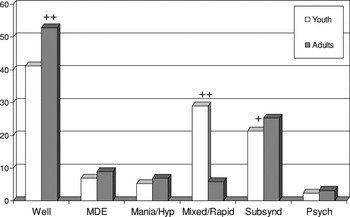
Despite the above-noted similarities, it appears that there are developmental differences in the course of BP between children and adults (Biederman et al., 2004; Findling et al., 2001; Geller et al., 2004; Pavuluri et al., 2005; Post et al., 2003; Schneck et al., 2004). For example, when grouping COBY's BP I subjects by syndromal and subsyndromal episodes as proposed by Judd et al. (2003), youth with BP I spent significantly more time symptomatic and had more mixed/cycling and subsyndromal episodes (Figure 2, symptomatic periods and mixed = p < .001, subsyndromal = p < .05) than adults with BP I. Moreover, BP I youth showed significantly more polarity switches than adults with BP I (Figure 3, all comparisons p < .001), Thus, across the age span and especially in youth, BP usually follows an ongoing changeable and sinuous course with patients having a wide spectrum of mood symptoms ranging from mild to severe depression, mania, and/or hypomania. These results substantiate what Kraepelin (1921) other investigators (Angst et al., 2004; Coryell et al., 1998) and clinicians have observed, and explain, at least in part, the difficulties encountered when treating subjects with BP spectrum disorders, especially if the mood symptoms are rapidly changing. Furthermore, it is likely that the very rapid fluctuation in mood symptoms combined with the developmental issues influencing the clinical picture of BP in youth, the difficulties children and sometimes adolescents have verbalizing their emotions, and the high rates of comorbid disorders, account for the complexity and current controversies in diagnosing and treating children and adolescents with BP.

A weekly symptoms status comparison between youth and adults with bipolar I disorder. The weekly symptom status is the percentage of follow-up weeks that were asymptomatic or symptomatic in different mood categories; +p = .05; ++p ≤ .001.

A comparison of the change in polarity between youth and adults with bipolar I disorder. The change in polarity is the switch between depression and mania/hypomania or vice versa with or without intervening weeks in asymptomatic status. All comparisons are significant at p < .001.
Another possible difference between youth and adults with BP is the rate of conversion between BP I and BP II. The rate of conversion found in COBY was higher than the cumulative rate of conversion reported in the adult literature (Coryell et al., 1995). These results suggest that BP II and perhaps BP-NOS is less developmentally stable in the pediatric age group.
In contrast to reports in adult BP literature (Goodwin & Jamison, 1990; Post et al., 2003), the prevalence of substance abuse in child studies has been low. However, most subjects included in extant prospective studies had not yet reached the age of high risk for developing substance abuse. Therefore, this finding emphasizes the importance of prompt treatment of youth with BP before they begin to use substances that could complicate the management of their mood disorder and worsen their long-term prognosis.
Finally, although controversial, some, but not all, studies in adults with BP have shown that the interval between episodes (i.e., the cycle length) appears to decrease as the illness progresses (the so called “kindling phenomena”; Hlastala et al., 2000; Post, 1992), whereas longer periods of time in remission are associated with reduced risk of subsequent relapse (Coryell et al., 1995). If additional research confirms these findings, because children and adolescents begin their illness early in life and pediatric BP mainly manifests by rapid mood changes, it is expected that children will be poor responders to treatment when they become adults. Thus, there is a need for prompt and accurate diagnosis of children and adolescents with BP disorder and further treatment studies.
Conclusions and Future Directions
Although there are methodological differences among the current pediatric BP naturalistic follow-up studies, they have consistently shown that 70 to 100% of children and adolescents with BP will eventually recover from their index episode. However, despite ongoing treatment, up to 80% will experience recurrences after recovery.
Youth with BP manifests with frequent changes in symptom polarity in a fluctuating course showing a dimensional continuum of BP symptom severity from subsyndromal to mood syndromes meeting full DSM-IV criteria. These rapid fluctuations in mood appear to be more accentuated than in adults with BP, and may explain, at least in part, the difficulties encountered treating BP symptoms in youth. Children and adolescents with early onset, low SES, long duration, rapid mood fluctuation, mixed episodes, psychosis, comorbid disorders, and family psychopathology have worse longitudinal outcome.
The enduring and rapid changeability of symptoms of this illness in children and adolescents from very early in life and at crucial stages of their lives deprive them of the opportunity for normal psychosocial development. BP in children and adolescents is associated with high rates of hospitalizations, psychosis, suicide behaviors, and poor psychosocial functioning. Moreover, BP negatively affects parents' and siblings' relationships and family economics. Thus, early recognition and acute and maintenance treatment of BP in children and adolescents is of utmost importance to ameliorate ongoing syndromal and subsyndromal symptoms and to reduce or prevent the serious psychosocial morbidity that usually accompanies this illness.
A substantial proportion of youth with BP have comorbid psychiatric disorders that add to the negative burden caused by the BP disorder (Pavuluri et al., 2005). Therefore, longitudinal studies carefully evaluating mood and other psychiatric symptoms are needed to tease out the longitudinal effects of these comorbid disorders above and beyond the effects of the BP disorder.
Children included in the above-noted studies received naturalistic applied pharmacological and psychosocial treatments for both their BP and other comorbid disorders, but no reports have yet been completed regarding the positive or negative effects of these treatments on the child's outcome. For example analyses are needed regarding questions such as: are conventional therapies are effective in accelerating recovery and reducing risk of recurrences in youth with BP; do changes in effectiveness of these treatments become evident as subjects mature; will treatments will improve the psychosocial outcome when these children become adults; will prompt identification and treatment of comorbid disorders influences the outcome; and do certain medications (e.g., antidepressants) worsen the course of illness by triggering manic/mixed episodes. Moreover, the effects of psychotherapies such as family focused therapy (Miklowitz et al., 1988; 2004), cognitive behavior therapy (Brent et al., 1997; Lam et al., 2003; Lam, Hayward, Watkins, Wright, & Sham, 2005), multifamily psychoeducational group therapy (Fristad, Goldberg-Arnold, & Gavazzi, 2002), and interpersonal psychotherapy (Mufson, Weissman, Moreau, & Garfinkel, 1999) for the acute and prevention of recurrences in youth with BP is warranted.
Extensive follow-up time is needed to evaluate the continuity of BP symptoms from childhood to adulthood. Finally, studies should evaluate and analyze the positive or negative contributions to the child's outcome of factors such as the child's emotional and cognitive development, social and coping skills, circadian/social rhythms (e.g., patterns), and the child's home and community environment. Regarding this last factor, important issues such as parental lifetime and current psychopathology, support, exposure to negative events (e.g., abuse, poor school or neighborhoods, ongoing family conflicts) should be considered.