Introduction
The peach fruit fly, Bactrocera (Bactrocera) zonata (Saunders) (Diptera: Tephritidae), is one of the most harmful species of Tephritidae and causes large amounts of damage in Asia (Butani, Reference Butani1976; Butani & Verma, Reference Butani and Verma1977; Agarwal et al., Reference Agarwal, Kumar and Kumar1999). B actrocera zonata is a serious and polyphagous pest of peach and custard apples in India (Butani, Reference Butani1976; Grewal & Malhi, Reference Grewal and Malhi1987) and of guava and mango in Pakistan (Syed et al., Reference Syed, Ghani and Murtaza1970). It attacks some 40 species of fruits and vegetables (White & Elson-Harris, Reference White and Elson-Harris1992) and has also been recorded from wild host plants of such families as Euphorbiaceae, Lecythidaceae and Rhamnaceae (Syed et al., Reference Syed, Ghani and Murtaza1970; Kapoor & Agarwal, Reference Kapoor and Agarwal1983).
Bactrocera zonata causes losses of 25–50% in guava fruits (Syed et al., Reference Syed, Ghani and Murtaza1970) and is possibly more important in Pakistan than Bactrocera dorsalis (Qureshi et al., Reference Qureshi, Hussain and Siddiqui1991). On the Indian Ocean islands, this species was first recorded in the Mascarenes, on Mauritius (57°40′E, 20°10′S) in 1986. This invasive species represents a new major threat to agriculture on Reunion Island, owing to the pest's broad host range. The current distribution of B. zonata suggests that it is an important threat to the whole Mediterranean area (Duyck et al., Reference Duyck, Sterlin and Quilici2004). B actrocera zonata now has spread and established itself in Egypt, where it has caused an estimated 190 million EUR damage per year (OEPP/EPPO, 2005).
Despite its economic importance, B. zonata has been insufficiently investigated, and its potential for colonizing new areas has been inadequately estimated. In addition, global climate change is widely accepted to have produced global temperature increases of approximately 0.6°C throughout the 20th century, with temperatures expected to continue to increase in the current century (Christ et al., Reference Chris, Thomas and Salinger2002). Bactrocera zonata was considered as exclusively in tropical areas (e.g. Mauritius, Réunion) (OEPP/EPPO, 2005); however, it now has established and widespread in Egypt (Hashem et al., Reference Hashem, Mohamed and El-Wakkad2001), which is colder than Mauritius and Réunion. Therefore, B. zonata ranges are likely to expand poleward in response to changes in temperature, soil moisture and humidity patterns, so the implications of climate change for biosecurity and pest risk assessment for B. zonata are very important.
The CLIMEX model has been used to describe the potential distribution of other tephritid fruit fly species, such as Ceratitis capitata (Wiedemann) (Worner, Reference Worner1988; Vera et al., Reference Vera, Rodriguez, Segura, Cladera and Sutherst2002), B. tryoni (Froggatt) (Yonow & Sutherst, Reference Yonow and Sutherst1998; Sutherst et al., Reference Sutherst, Collyer and Yonow2000), Carpomya vesuviana Costa (Lv et al., Reference Lv, Lin, Li, Geng, Wan and Wang2008), Bactrocera tsuneonis (Miyake) (Wang et al., Reference Wang, Li, Chen, Geng, Wang and Wan2009), Bactrocera scutellata (Hendel) (Ni et al., Reference Ni, Li, Wan and Wang2009), Toxotrypana curvicauda Gerstaecker (Qu et al., Reference Qu, Li, Wan and Wang2009). This model has also previously been used to predict the effects of climate change on species’ potential distributions using both a regional global climate model (GCM) (Kriticos, Reference Kriticos and Shepherd1996) and synthetic climates (Kriticos et al., Reference Kriticos, Sutherst, Brown, Adkins and Maywald2003a,Reference Kriticos, Sutherst, Brown, Adkins and Maywaldb). Species examined using this approach include B. dorsalis (Handel) (Stephens et al., Reference Stephens, Kriticos and Leriche2007) and Melaleuca quinquenervia (Watt et al., Reference Watt, Kriticos and Manning2009). To know the potential distribution of the fruit fly B. zonata under climate change assumptions due to potential climate change impact, the CLIMEX 3.0 model was used in this study to assess the response of B. zonata to climate and to make predictions for the 2070s.
Moreover, differing with other studies, such as predicting the potential distribution of B. dorsalis (Stephens et al., Reference Stephens, Kriticos and Leriche2007), B. scutellata (Ni et al., Reference Ni, Li, Wan and Wang2009) and Rhagoletis pomonella (Geng et al., Reference Geng, Li, Rajotte, Wan, Lu and Wang2011), etc., both the projected generations number of B. zonata generated by this model compared with the known generational data and the receiver-operating characteristic (ROC) plots were used to validate the accuracy of the CLIMEX model.
Models can be assessed with four measures of model accuracy: sensitivity, specificity, Cohen's kappa and the area under the curve (AUC) of receiver-operating characteristic (ROC) plots. The AUC of ROC was developed from signal detection theory (Kraemer, Reference Kraemer1988) and have been adapted for several areas of medical diagnostics (Robertson & Zweig, Reference Robertson and Zweig1981; Van Steirteghem et al., Reference Van Steirteghem, Zweig, Robertson, Bernard, Putzeys and Bieva1982; Zweig & Robertson, Reference Zweig and Robertson1982; Robertson et al., Reference Robertson, Zweig and Van1983; Zweig et al., Reference Zweig, Broste and Reinhart1992; Zweig & Campbell, Reference Zweig and Campbell1993). Compared with other measures, such as Cohen's kappa (McPherson et al., Reference McPherson, Jetz and Rogers2004) and TSS (true skill statistic) (Allouche et al., Reference Allouche, Tsoar and Kadmon2006), AUC is largely unaffected and does not respond to changes, thus it is a more reliable. So far, AUC has been used extensively in the species’ distribution modeling literature, and measures the ability of a model to discriminate between sites where a species is present, versus those where it is absent (Hanley & McNeil, Reference Hanley and McNeil1982).
Materials and methods
Overview of the CLIMEX model
CLIMEX is a dynamic model (Sutherst et al., Reference Sutherst, Maywald and Kriticos2007) that integrates the weekly responses of a population to climate using a series of annual indices. The growth and stress indices are calculated weekly and then combined into an overall annual index of climatic suitability, the Ecoclimatic Index (EI). This index is expressed on a scale of 0 to 100. Some suggested guidelines are provided (Sutherst et al., Reference Sutherst, Maywald, Bottomley and Bourne2004; Sutherst & Mayweld, Reference Sutherst and Maywald2005) based on the EI. An EI of 0.00–0.49 indicates that the climate is unsuitable for the species and that the species cannot persist in an area under average environmental conditions. An EI of 0.50–9.99 indicates marginal conditions, an EI of 10.00–19.99 indicates suitable conditions, and an EI of 20+ indicates optimal conditions. An EI of 100 indicates that conditions are perfect throughout the year. However, few environments are sufficiently stable to provide perfect habitat all year (Stephens et al., Reference Stephens, Kriticos and Leriche2007).
To visualize the results, the CLIMEX output was ‘loose-coupled’ (Kriticos et al., Reference Kriticos, Sutherst, Brown, Adkins and Maywald2003b) to a geographical information system (ArcGIS). This system was purchased from ESRI to create thematic maps. ArcGIS was also used to make projections of the land areas that would have a suitable climate for the pest species.
Meteorological databases and climate change
Two climate databases were used in this modeling exercise. By default, CLIMEX uses 30-year averages of climate data to estimate climatic suitability. The CLIMEX standard meteorological dataset was first used to create an initial fit. This dataset accompanied CLIMEX version 3.0 and consists of 30-year averages from 1961 to 1990 for an irregularly spaced set of 2500 climate stations. Subsequently, a regular girded dataset of the normal climate for the same period TYN SC 2.0 (http://www.cru.uea.ac.uk/~timm/grid/TYN_SC_2_0.html) (Mitchell et al., Reference Mitchell, Carter, Jones, Hulme and New2004; Kriticos et al., Reference Kriticos, Alexander, Kolomeitz, Preston, Watts and Crossman2006) was used to fine-tune the parameter fit. The dataset consisted of 67,420 points spaced on a 0.5° latitude×0.5° longitude regular grid for significant land areas worldwide.
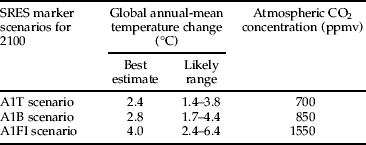
The original TYN SC2.0 dataset consists of data for precipitation, mean temperature, diurnal temperature range, vapors pressure and cloudiness. The TYN SC2.0 data-set also includes climate change scenario results from GCMs, and the emission scenarios A1 (A1 T, A1B, A1FI) (table 1) were selected to represent the range of ecological scenarios for B. zonata. These data and the processing needed to format them for CLIMEX are described in detail in Stephens et al. (Reference Stephens, Kriticos and Leriche2007).
Projected global average surface warming and approximate CO2-eq concentrations.
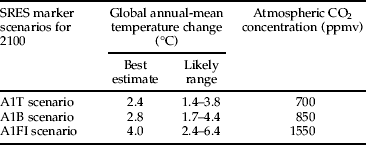
Note: T, non-fossil-fuel intensive; B, balanced; FI, fossil fuel intensive. The A1FI is the most extreme SRES scenario (IPCC-TGCIA, 1999; IPCC, 2007; Stephens et al., Reference Stephens, Kriticos and Leriche2007).
For the emission scenarios, A1 consists of a set of three A1 variants: A1 T, non-fossil-fuel intensive; A1B, balanced; A1FI, fossil fuel intensive, of which the A1FI is the most extreme SRES scenario. It was projected that global surface will become warm, which will bring many changes, such as the global mean temperature increasing, global average sea level rising, decreases in snow and ice extent and the changes for atmospheric CO2 concentration, global rainfall and vapor pressure, etc. (Stephens et al., Reference Stephens, Kriticos and Leriche2007). The main factors to effect the potential distribution of B. zonata are temperature, rainfall and humidity, while at the regional scale, both increases and decreases in precipitation are projected, typically of 5 to 20%. For example, increases are projected over northern mid-latitudes, tropical Africa and Antarctica in winter, and in southern and eastern Asia in summer. Australia, Central America and southern Africa show consistent decreases in winter rainfall (IPCC, 2001).
We, therefore, listed only atmospheric CO2 concentration and the annual-mean temperature change for 2100 in table 1. The temperature change of T, B and FI scenarios are 2.4, 2.8 and 4.0°C, respectively.
Known distribution of B. zonata
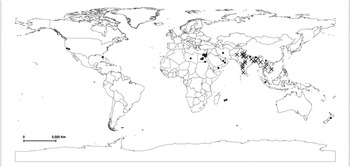
Bactrocera zonata is native to India, where it was first recorded in Bengal (Kapoor, Reference Kapoor1993). This species has a wide distribution, occurring primarily in Asia and Africa (Egypt) (fig. 1). In 1924, Bactrocera zonata was declared to be present in Egypt. In 1998, B. zonata was identified for the first time on infested guavas collected in Agamy and Sabahia, near Alexandria. In 1999, the first traps were set up and showed high capture rates in Alexandria and Cairo. In October 2000, B. zonata was detected in North Sinai. At present, B. zonata is considered widespread in Egypt (www.eppo.org). Abdel-Galil (Reference Abdel-Galil2007) studied the distribution and infestation patterns of B. zonata in the New Valley Oases (Abdel-Galil, Reference Abdel-Galil2007). A map of the known distribution (n=52) of B. zonata was generated by ArcGIS (fig. 1) using the literature on the species (Spaugy, Reference Spaugy1988; Carey & Dowell, Reference Carey and Dowell1989; Kapoor, Reference Kapoor1993; OEPP/EPPO, 2005; CABI, 2010).
The current global distribution of B. zonata. ●, invasive; ×, native. Note: Bactrocera zonata has been eradicated or is under an eradication plan in some of the invasive ranges depicted in the figure.

Fitting CLIMEX parameters
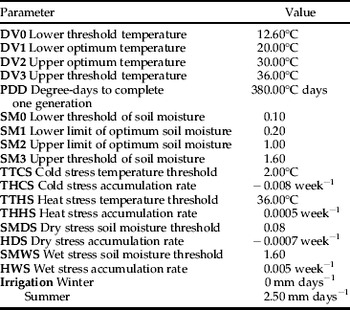
To fit the CLIMEX model for B. zonata, the parameters were manually and iteratively adjusted until the simulated geographical distribution, as estimated by the EI values, coincided with the species’ known native distribution and the reported description of its range. Parameters used in the CLIMEX model are presented in table 2.
Parameters used in the CLIMEX model for the peach fruit fly, B. zonata.

Degree-days per generation (PDD)
Degree-days required for a generation (PDD) are calculated per the equation PDD=t×(c–a), where t is the average generation time, c is the experimental temperature and a is the hypothetical base temperature (Stephens et al., Reference Stephens, Kriticos and Leriche2007). The value of the parameter PDD was reported to be 340 degree-days (FAO, 2000); we adjusted it to 380 degree-days for use in the CLIMEX model.
Temperature index
Lower developmental thresholds of B. zonata for the egg, larval and pupal stages were 12.7, 12.6 and 12.8°C, respectively (Duyck et al., Reference Duyck, Sterlin and Quilici2004). In this paper, the minimum temperature for development (DV0) was set at 12.6°C. The lower and upper optimum temperatures for B. zonata populations were set at 25–30°C (Qureshi et al., Reference Qureshi, Hussain, Carey and Dowell1993). Bactrocera zonata was originally considered to be an exclusively tropical fruit fly. However, this species is now established in Egypt, so the lower and upper temperature optima (DV1 and DV2) were set at 20 and 30°C, respectively. The upper temperature threshold was close to 35°C (Duyck et al., Reference Duyck, Sterlin and Quilici2004), so the upper threshold temperature was set at 36°C.
Moisture index
Ceratitis capitata and especially B. zonata are more relatively tolerant to desiccation than Ceratitis catoirii and Ceratitis rosa. At 100% RH, all species survive well (=80% emergence). At 30% RH, B. zonata survives better than C. capitata, whereas the two other species do not survive at all. Bactrocera zonata also tolerates immersion in water much longer than do C. rosa and C. catoirii. This species has been found to exhibit the highest tolerance of all the species tested, with 10% survival after a one-day immersion, whereas no pupae of other species survived (Duyck et al., Reference Duyck, David, Pavoine and Quilici2006).
The lower soil moisture limit for development (SM0) was set to 0.1 to indicate the permanent wilting point of the pest's host plants. This limit normally corresponds to approximately 10% of the soil moisture level. The lower and upper limits for optimal growth (SM1 and SM2) were set to levels considered biologically reasonable for many host plants. These values were 0.2 and 1.0, respectively. To determine these values, the current study referred to other fruit fly species to set SM1 and SM2, such as B. dorsalis, Bactrocera tryoni and C. capitata. The upper soil moisture limit for development, SM3, was set to 1.6.
Cold stress
Cold stress temperature threshold (TTCS) and cold stress accumulation rate (THCS) were set to 2.0°C and −0.008 week−1, respectively. This value affects the distribution in the Mediterranean region significantly. EI in Egypt would be very low if the TTCS parameter had a higher value. However, a higher TTCS value would not be consistent with the fact that B. zonata is widespread in Egypt and causes huge damage there. Cold stress also limits the establishment of B. zonata in the northern USA and South Africa. The pest does not occur in these areas.
Heat stress
Heat stress affects the distribution of B. zonata in the Sahara, inland Australia and India. Heat stress temperature threshold (TTHS) was set to 36°C in this study because the upper temperature threshold is close to 35°C (Duyck et al., Reference Duyck, Sterlin and Quilici2004). The heat stress accumulation rate (THHS) was adjusted to be consistent with the insect's current distribution. This distribution covers almost all of India, including Bihar, Madhya Pradesh and West Bengal.
Dry stress
Dry stress soil moisture threshold (SMDS) and Dry stress accumulation rate (HDS) limit the southern boundary of the insect's distribution in Egypt. These parameters define the southern limits of the insect's distribution: Pasni and Karachi (OEPP/EPPO, 2005) in Pakistan, and Punjab, Karnataka, Kerala, Madhya Pradesh and Maharashtra in India (Kapoor, Reference Kapoor1993). They also define the northern limits of this distribution in Myanmar and Thailand (Kapoor, Reference Kapoor1993; OEPP/EPPO, 2005).
Wet stress
Wet stress was adjusted to ensure that the predictions of areas suitable for the insect were consistent with the insect's current absence from the EU and distribution in India, southern Iran and Pakistan.
Irrigation
Climatic conditions throughout Egypt are dry. Most of the country has a tropical desert climate. Alexandria's annual rainfall is 190 mm, and Cairo's is only 33 mm. Indeed, areas south of Cairo have no rain during the entire year. In Egypt, agriculture is completely dependent on the water of the Nile for irrigation. More than 420 billion m3 of water, 86% of the country's annual water consumption, are consumed for agricultural irrigation.
In Egypt, B. zonata has been reported to have established itself on the mainland, the whole Nile Delta region, Nile Valley, and Kharga and Dakla oases; on the Sinai peninsula, this species occurred in Ras El Sudr, El Tur and Nuweiba in South Sinai Governorate and all along the North Sinai Governorate from El Qantara (north-west) to Rafah (north-east) (OEPP/EPPO, 2005). However, EI values in some parts of Egypt were zero if the irrigation parameter was not set, especially for Cairo, EI Tur, Suez etc. in the whole Nile Delta region or Sinai peninsula, where it is reported that B. zonata has established itself and is widespread.
The setting of irrigation will have no significant influence on other areas, such as Taklimakan desert in Sinkiangn of China, where no occurrence has been reported.
When predicting the potential geographical distribution of Rhagoletis pomonella, in order to make the predicted distribution similar to the actual distribution in the US, the effects of irrigation were also considered by Geng et al. (Reference Geng, Li, Rajotte, Wan, Lu and Wang2011). Thus, irrigation (summer) was set to 2.5 mm per day in this study.
Model validation
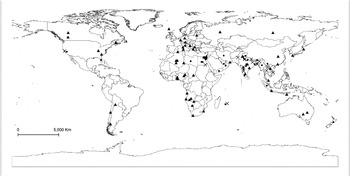
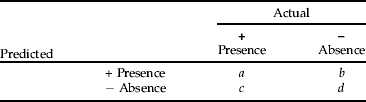
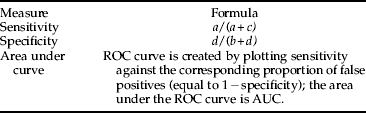
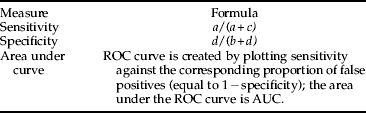
The CLIMEX model was then evaluated as follows: (i) to compare the projected potential distribution with the actual data for regions where B. zonata has invaded or established itself; (ii) to validate the projected generations generated by running the CLIMEX model, and compare them with the known generational data for areas where B. zonata has invaded or established itself; (iii) to use receiver operating characteristics (ROC) analysis to evaluate the ability of the models to predict independent test points accurately in this study. The evaluation of performance measures first required the derivation of matrices of confusion that identified (i) true positive, (ii) false positive, (iii) false negative and (iv) true negative cases predicted by the model (table 3: Fielding & Bell, Reference Fielding and Bell1997). Generally, there is only ‘presence’ data, but no absence data where the species did not occur; we assume all the points in TYN SC2.0 dataset, except the known distribution points, as ‘background pseudo-absence’ unit. Then, we select some points randomly from the ‘background pseudo-absence data’ and replace the absence data of this species to calculate the false positive rates (i.e. 1–specificity, table 4: Wang et al., Reference Wang, Xie, Wan, Xiao and Dai2007). The ROC curve was obtained by plotting true positive rates (sensitivity) (table 4) against the corresponding proportion of false positive rates using SPSS 13.0. In fig. 2 for example, according to the occurrence record, the 67,420 points of TYN SC2.0 dataset were divided into two groups, one is known distributional points and the other (no occurrence record) is ‘background pseudo-absence’ unit. Then, 75% points (n=37) from the known distributional points (n=52) of B. zonata were randomly selected as the training dataset and demonstrated by black dots. The remaining 25% of points (n=15) from the known distributional points, demonstrated by crosses, and some points (n=57) from ‘background pseudo-absence’ unit, demonstrated by black triangles, were selected randomly for use as the test dataset. After being predicted by CLIMEX using the training dataset, the predicted EI values of the training dataset and the test dataset were then extracted to calculate the true positive rates and false positive rates, respectively, and imported to SPSS to obtain the ROC curve. The area under the curve was described by AUC [0,1]. The area under diagonal is just 0.5; the farther the ROC curve left off the diagonal, the greater the area, which means that it isn't randomness for CLIMEX model to predict the ‘background pseudo-absence’ points as presence (EI>0) points, but regular and reasonable. AUC values of 0.5–0.7 are usually taken to indicate low accuracy; values of 0.7–0.9 indicate useful applications; and values >0.9 indicate high accuracy (Swets, Reference Swets1988).
The distribution map of points that have been taken for the training and test datasets. ●, training dataset; × and ▲, test dataset.

An error matrix used to evaluate the predictive accuracy of models.
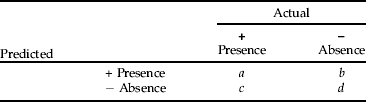
a, true positive; b, false positive; c, false negative; d, true negative.
Measures of predictive accuracy indicators calculated from a 2×2 error matrix.
Estimating the size of land areas of suitable climate projected by the CLIMEX model
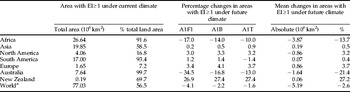
The land areas projected to have a climate suitable under current and future climatic conditions for B. zonata (EI≥1) were quantified for Africa, Asia, North America, South America, Europe, Australia and New Zealand (table 5).
Projected area that is climatically suitable (EI≥1) for B. Zonata under the current climate, expressed as an area (106 km2) and as a percentage of the total land area per country or region, and the percentage changes in these areas for 2070 in comparison with those obtained under the current climate. The climate model was run for the A1F1, A1B and A1T emissions scenarios (IPCC, 2007; Stephens et al., Reference Stephens, Kriticos and Leriche2007).

a The land area given for the world excludes Antarctica.
Results
Evaluation of the performance of the model
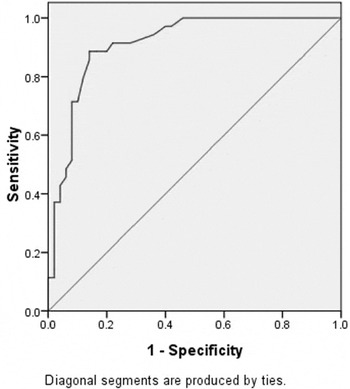
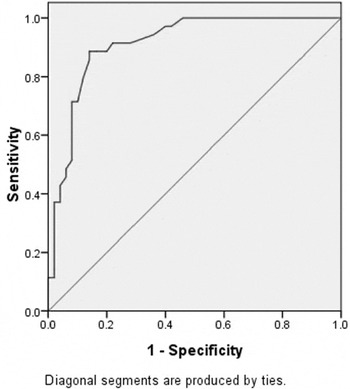
The results of the analysis indicated that: (i) all localities (n=52) in the insect's known distribution were modeled as having a suitable climate (EI>1); and (ii) the numbers of generations modeled by CLIMEX in El Tur, Alexandria, the Dakhla oases and Cairo (Egypt) were 8.32, 7.69, 9.71 and 8.4, respectively. These values agree with the reported values of those locations about eight generations from the literature. Bactrocera zonata has been reported to complete eight to nine generations per year in Egypt (Mahmoud, Reference Mahmoud2004). (iii) We calculated the ROC curves (fig. 3) and found an AUC value of 0.912 with a standard error of 0.031 and asymptotic significance of 0.000, P<0.01. These results indicate that the CLIMEX model performs very well and that its predictions of the potential distribution of B. zonata are highly accurate.
The ROC curves of the CLIMEX model used to predict the potential geographical distribution of peach fruit fly, B. zonata.
The potential distribution of B. zonata under current climatic conditions
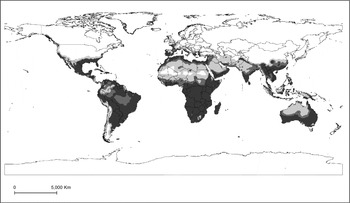
The projections using the model suggest that under current climatic conditions, B. zonata can potentially establish itself throughout much of the tropics and subtropics (fig. 4). The modeled suitability of the climate for the insect fits the pest's known occurrences very well. The results of the analysis indicate that the southern and eastern parts of Australia, southern Asia and southern Africa, parts of the Mediterranean area, Central America, South America, and the southeastern US would be expected to offer optimal climatic conditions for the possible spread and establishment of the pest.
Climatic suitability (EI) for the peach fruit fly, B. zonata, under the reference climate (1961–1990 averages) projected using CLIMEX. □, unsuitable (0.00–0.49);  , marginal (0.50–9.99;
 , suitable (10–19.99);
 , optimal (20.00+).

After CLIMEX modeling, the extent of the land area that is climatically suitable for B. zonata under the current climate is quantified for each continent by ArcGIS in table 5. A total of 56.5% of the world's land mass (excluding Antarctica), or 77.02×10⁶ km2, is climatically suitable. The results of the analysis indicated that, expressed as a percentage of total land area, most parts of Africa, South America and Australia were projected to be climatically suitable, whereas the potential amounts of suitable areas in Europe and North America were lower (7.2 and 16.8%, respectively) (table 5).
The potential distribution of B. zonata under future climate scenarios
The potential distribution of B. dorsalis and the invasive weed Nassella neesiana under future climate scenarios have been projected (Stephens et al., Reference Stephens, Kriticos and Leriche2007; Bourdôt et al., Reference Bourdôt, Lamoureaux, Watt, Manning and Kriticos2010), which can provide the distinct trend of potential distribution change under different future climate scenarios.
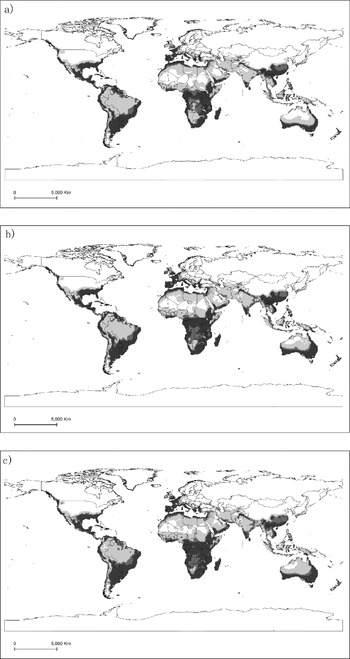
In this study, the potential distribution of B. zonata under future climate scenarios (A1 T, A1B, A1FI) was also projected and quantified climatically suitable areas for each continent. All three climate-change scenarios (non-fossil-fuel intensive scenario A1 T, 2.4°C increasing; balanced scenario A1B, 2.8°C increasing; and the most extreme SRES scenario, fossil fuel intensive scenario A1FI, 4.0°C increasing) produced a clear decrease in the area having a suitable climate worldwide (columns 4–6 in table 5). The total suitable land mass was reduced by 5.19×10⁶ km2, or 2.6% on average. The most extreme SRES scenario, A1F1, predicted 4.1% as the mean decrease in area. Most of this decrease resulted from a drastic contraction in the area of suitable climate in Africa and Australia (table 5). This result is the consequence of lethal heat stress, a result of increased temperature. These contractions were offset to a limited extent by the expansion of potentially suitable areas in Asia, North America, South America, Europe and New Zealand. This expansion occurred because climate change in this region was sufficient to overcome the cold stress limitations on B. zonata. Changes in the potentially suitable area within these continents were relatively consistent under the three scenarios tested. However, the projection based on the A1 T scenario predicted that the potentially suitable areas in South America would contract, whereas the other two scenarios predicted an increase (table 5).
In general, the potential distribution of B. zonata followed an obvious trend under the scenarios for future climate (fig. 5a–c) (Stephens, et al., Reference Stephens, Kriticos and Leriche2007; Bourdôt, et al., Reference Bourdôt, Lamoureaux, Watt, Manning and Kriticos2010). The distribution of the insect was projected to expand poleward into the northern hemisphere where conditions are currently too cold, whereas some regions in the southern hemisphere regions exhibited a decreased potential for invasion. The shift in the potential distribution of B. zonata under climate change was also the most obvious under A1FI, the most extreme SRES scenario, compared with the B and T SRES scenarios. For example, a decreased threat of invasion by B. zonata in Africa (in Zambia, Angola, Zimbabwe and Namibia) was projected under A1FI, but the B and T SRES scenarios projected that many regions in Africa would still offer optimal conditions. The results projected by these three SRES scenarios in many other regions were very similar. Some mid-latitude countries, such as Spain, France and the UK, were expected to see an increased threat of invasion by B. zonata. For North America, the optimal conditions in the US only occurred in the southwest of California and south of Texas under the current climate. Under the future scenarios, however, the optimal range extended farther northwards, towards Washington State. For South America, climate change was projected to produce marginal conditions in most parts of Venezuela, Surinam, Guyana, Brazil, Paraguay, Uruguay and Peru. In Asia, the projected potential range also expanded poleward in China and elsewhere. In China, the northern boundary expanded to Sichuan, Hubei and Anhui provinces. However, heat stress reduced the optimal range of B. zonata in India, Myanmar and Thailand. In Oceania, the optimal range increased in northern New Zealand and decreased in southern and eastern Australia.
Climatic suitability (EI) for the peach fruit fly in the 2070s projected using CLIMEX™. Source meteorological data adjusted using CSIRO Mark 2.0 GCM running the SRES A1 scenario. (a) FI, SRES scenario; (b) B, SRES scenario; (c) T, SRES scenario. □, unsuitable (0.00–0.49); , marginal (0.50–9.99); , suitable (10–19.99); , optimal (20.00+).

Discussion
The results of this study indicate that B. zonata is expected to be able to establish itself under tropical and subtropical conditions. Such conditions are to be found in Laos, Myanmar, Thailand, Vietnam, South Carolina (USA), southern China and Australia. However, cold, hot and dry stresses limit the insect's establishment in the Sahara, Central and South America, and inland Australia.
Moreover, the results suggested that as climate changes, the potential distribution of B. zonata would expand poleward into cold regions. With fossil fuel emissions taken into consideration, the three scenarios analyzed project different shifts in the potential distribution of B. zonata (e.g. Zambia, Angola, Zimbabwe and Namibia). However, the areas offering suitable conditions in the US, some countries in the Mediterranean region, China and New Zealand were projected to expand northward. In addition, the EPPO Workshop on B. zonata has recommended that this species should be specified individually on the EPPO A1 list because of the damage that B. zonata can cause, the frequency of its interception and its ability to adapt to local conditions (Iwahashi & Routhier, Reference Iwahashi and Routhier2001).
Bactrocera zonata can establish itself and become widespread in Egypt and is more competitive than C. catoirii and C. rosa to desiccation and immersion conditions (Duyck et al., Reference Duyck, David, Pavoine and Quilici2006). That is, B. zonata should be more tolerable to stress; and, therefore, strict biosecurity strategies should be taken to prevent and control it.
To make the result more precise, our model combined native and exotic ranges of B. zonata. What is also noteworthy, because the model will underestimate the potential distribution of the target if the parameters were fit using the limited exotic range but not the native range, in its native range, the species is assumed to more fully occupy the realizable part of its fundamental niche.
Some authors just evaluate the performance of the model with EI>0 where the target species has occurred. However, we used the predicted numbers of generations of B. zonata and the AUC value to validate the CLIMEX model in this study, which raise the prediction accuracy.
Potential distributions cannot be predicted based on climate alone. There is also a need to consider dispersal and species interactions, such as host availability. For example, mangoes, Mangifera indica Linn, are distributed in over 70 countries, more than 90% are grown in Asia (India, Pakistan, Bangladesh, Myanmar, Malaysia, China, Thailand, etc.), while Tanzania, Zaire, Brazil, Mexico, the United States, etc., also cultivate mangoes (Ye & Huang, Reference Ye and Huang2002). Competition and the effects of natural enemies (Baker et al., Reference Baker, Sansford, Jarvis, Cannon, MacLeod and Walters2000) should also be considerations. Moreover, the limiting factors considered to affect the geographical distributions of pests should include soil type, geographical features, natural and geographical barriers (such as deserts, oceans, mountains, etc.) and human activities. For example, the host plant B. tsuneonis limited citrus (Wang et al., Reference Wang, Li, Chen, Geng, Wang and Wan2009), so the prediction of the potential distribution of B. tsuneonis in China considered the factor of host distribution. Additionally, the irrigation and land use map were also taken into consideration for Carpomya vesuviana (Lv et al., Reference Lv, Lin, Li, Geng, Wan and Wang2008) and Rhagoletis pomonella (Geng et al., 2011). The land use map removed the desert, river and lake, and urban land use type, etc. Therefore, the predictions based on the model and the results discussed above surely have some limitations; these additional factors should also be considered, and more detailed risk assessments should be useful for obtaining more scientific predictions.
Acknowledgements
The authors would like to thank Dapeng Li, Qianqian Yang, Zhimei Li and all other members of the Plant Quarantine Laboratory of China Agricultural University (CAUPQL). This study received financial support from the 973 project (2009CB119200).