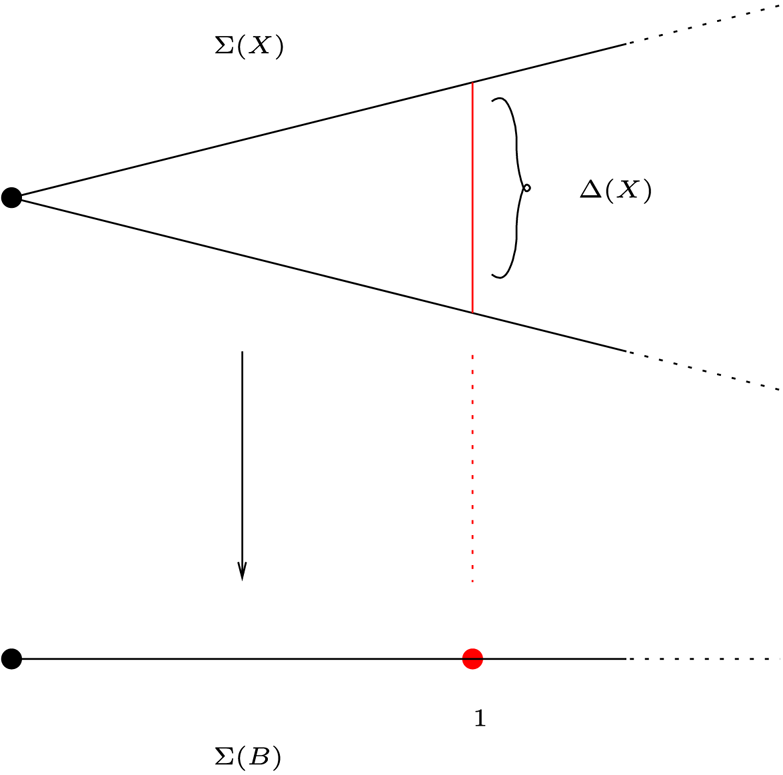
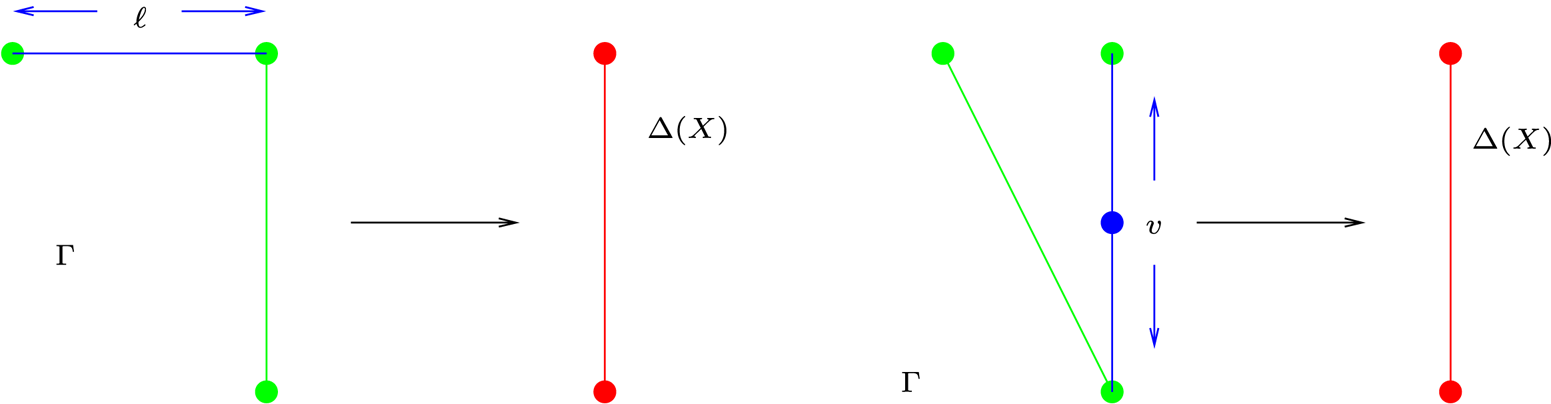
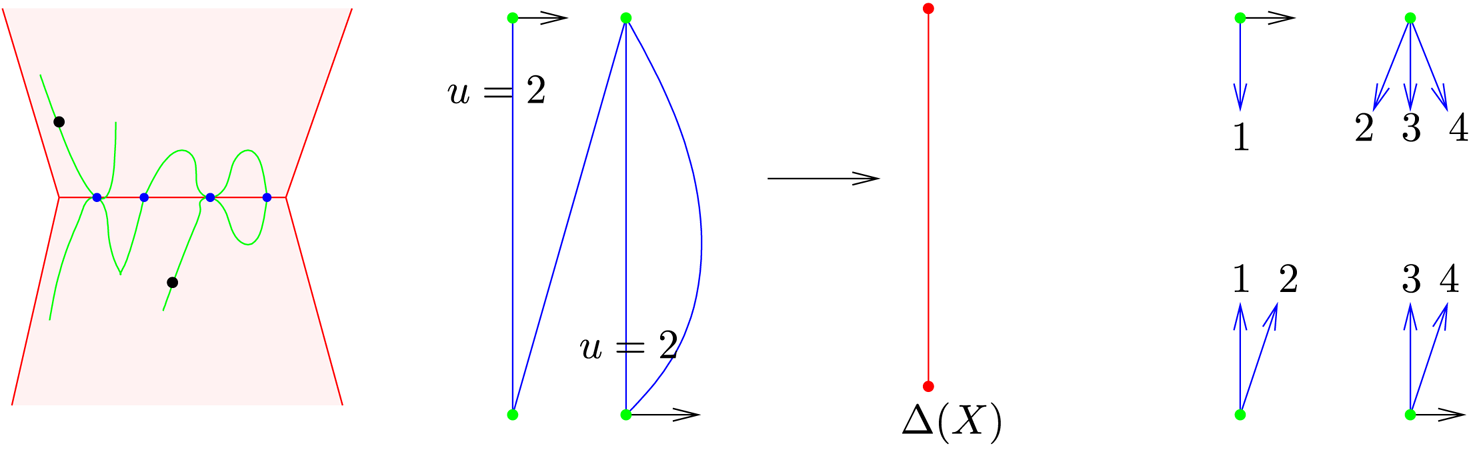
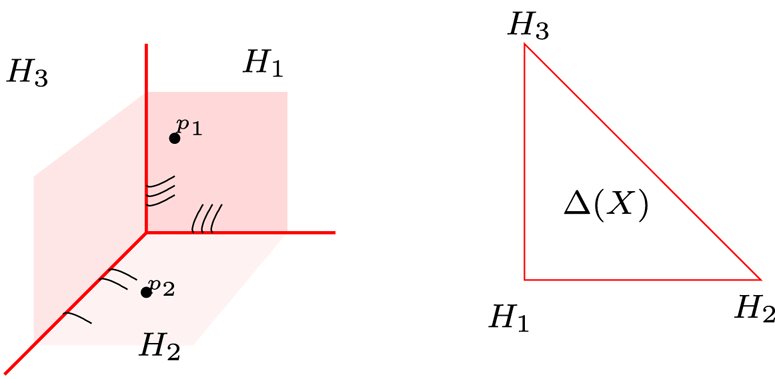
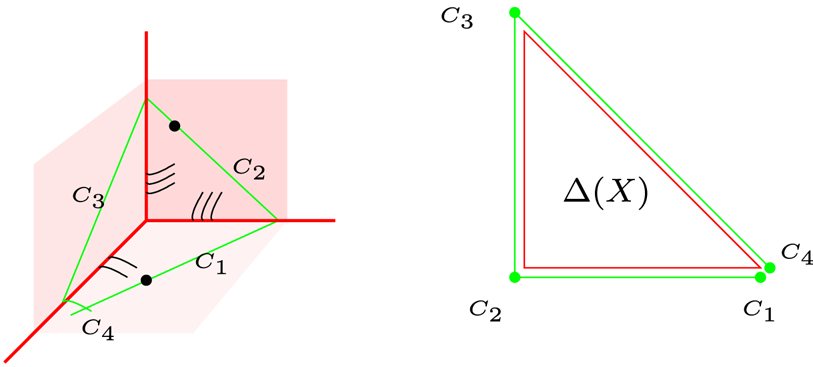
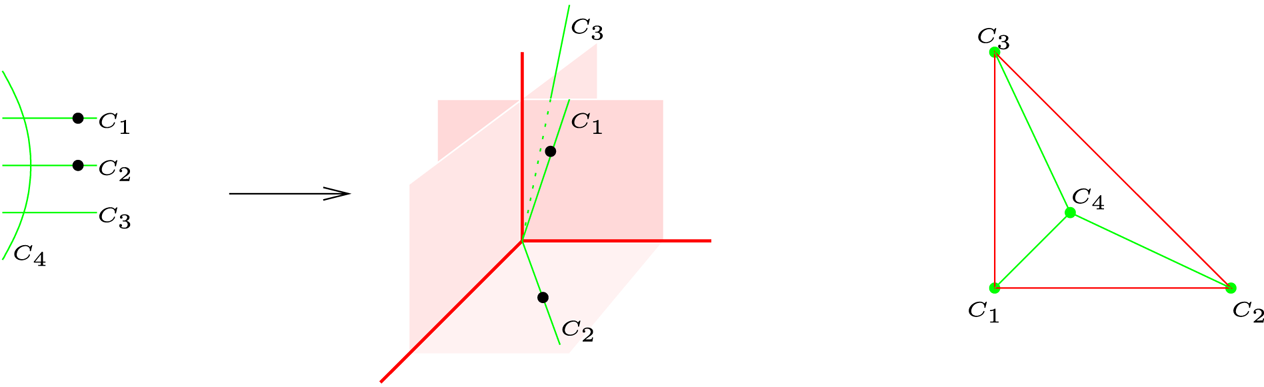
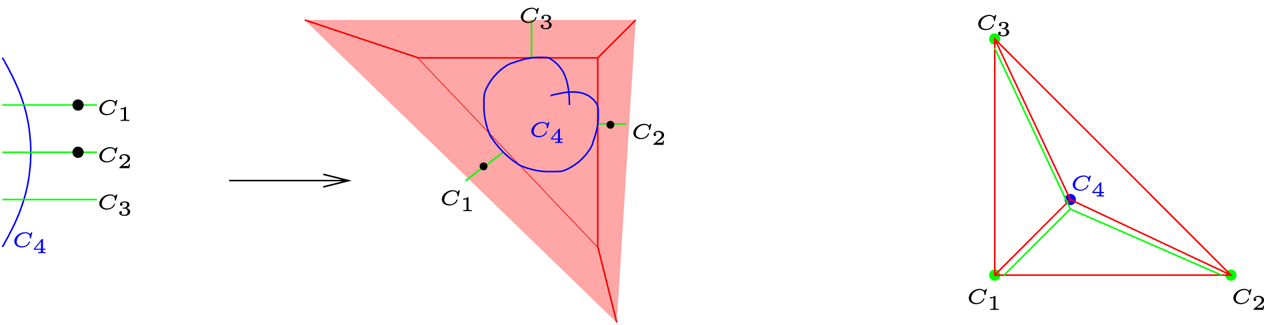
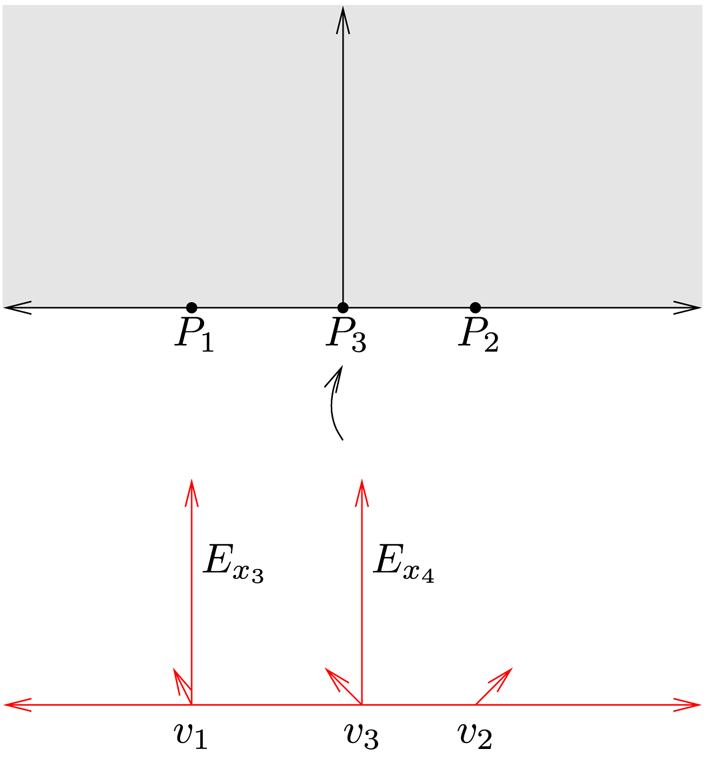
1. Introduction
1.1 Statement of results
One of the main goals of logarithmic Gromov–Witten theory is to relate the Gromov–Witten invariants of a smooth projective variety to invariants of a degenerate variety  $X_0$.
Consider a logarithmically smooth and projective morphism  $X \longrightarrow B$, with
 $B$ a logarithmically smooth curve having a single closed point
 $b_0\in B$ where the logarithmic structure is non-trivial. In the language of [Reference Kempf, Knudsen, Mumford and Saint-DonatKKMS73, Reference Abramovich and KaruAK00], this is the same as saying that the underlying schemes
 $\underline {X}$ and
 $\underline {B}$ are provided with a toroidal structure such that
 $\underline {X} \longrightarrow \underline {B}$ is a toroidal morphism, and
 $\underline {\{b_0\}}\subset \underline {B}$ is the toroidal divisor. One defines as in [Reference Gross and SiebertGS13], see also [Reference ChenChe14, Reference Abramovich and ChenAC14], an algebraic stack
 $\mathscr {M}(X/B,\beta )$ parameterizing stable logarithmic maps
 $f: C \longrightarrow X$ with discrete data
 $\beta = (g,A,u_{p_1},\ldots ,u_{p_k})$ from logarithmically smooth curves to
 $X$. Here:
•
 $g$ is the genus of $C$;
•
$A$ is the homology class $\underline {f}_*[\underline {C}]$, which we assume is supported on fibres of $\underline {X} \longrightarrow \underline {B}$; and•
$u_{p_1},\ldots ,u_{p_k}$ are the contact orders of the marked points with the logarithmic strata of $X$.


Writing  $\underline \beta = (g,k,A)$ for the non-logarithmic discrete data, there is a natural morphism
 $\mathscr {M}(X/B,\beta ) \longrightarrow \mathscr {M}(\underline {X}/\underline {B},{\underline{ \beta} })$ ‘forgetting the logarithmic structures’, which is proper and representable [Reference Abramovich, Chen, Marcus and WiseACMW17, Theorem 1.1.1]. The map
 $\mathscr {M}(X/B,\beta ) \longrightarrow \mathscr {M}(\underline {X}/\underline {B},{\underline{\beta} })$ is in fact finite, see [Reference WiseWis19, Corollary 1.2]. There is also a natural morphism
 $\mathscr {M}(X/B,\beta ) \longrightarrow B$, and we denote its fibre over
 $b\in B$ by
 $\mathscr {M}(X_b/b,\beta )$.
Since  $X \longrightarrow B$ is logarithmically smooth there is a perfect relative obstruction theory
 $\mathbf {E}^\bullet \longrightarrow \mathbf {L}_{\mathscr {M}(X/B,\beta )/{\operatorname {Log}}_B}$ in the sense of [Reference Behrend and FantechiBF97], hence defining a virtual fundamental class
 $[\mathscr {M}(X/B,\beta )]^{\operatorname {virt}}$ and logarithmic Gromov–Witten invariants.
An immediate consequence of the formalism is the following (this is indicated after [Reference Gross and SiebertGS13, Theorem 0.3]).
Theorem 1.1 (Logarithmic deformation invariance) For any point  $\{b\}\stackrel {j_b}\hookrightarrow B$ one has
 \[ j_b^![\mathscr{M}(X/B,\beta)]^{\operatorname{virt}} = [\mathscr{M}(X_b/b,\beta)]^{\operatorname{virt}}. \]
This implies, in particular, that Gromov–Witten invariants of  $X_b$ agree with those of
 $X_0=X_{b_0}$. Now holomorphic curves in
 $X_0$ come in various families depending on the intersection pattern with the irreducible components of
 $X_0$. Thus one may hope that logarithmic Gromov–Witten invariants similarly group according to some discrete data reflecting such intersection patterns. The main result of this paper shows that this is indeed the case, with the intersection patterns recorded in an interesting and very transparent fashion in terms of the underlying tropical geometry.
Theorem 1.2 (The logarithmic decomposition formula; Theorem 3.11 below) Suppose the morphism  $X_0 \longrightarrow b_0$ is logarithmically smooth and
 $X_0$ is simple. Then we have the following equality in the Chow group of
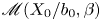 $\mathscr {M}(X_0/b_0,\beta )$ with coefficients in
 $\mathbb {Q}$:
 \[ [\mathscr{M}(X_0/b_0,\beta)]^{\operatorname{virt}} = \sum_{{\boldsymbol{\tau}}=(\tau,\mathbf{A})} \frac{m_\tau}{|\operatorname{Aut}(\boldsymbol{\tau})|}\, {j_{\boldsymbol{\tau}}}_*[\mathscr{M}(X_0,{\boldsymbol{\tau}})]^{\operatorname{virt}}. \]
See Definition 2.1 for the notion of simple logarithmic structures. The notations  $\mathscr {M}(X_0,{\boldsymbol{\tau }})$,
 $m_\tau$ and
 $j_{\boldsymbol{\tau }}$ are briefly explained as follows. First, the tropicalization of
 $X_0 \longrightarrow b_0$ defines a polyhedral complex
 $\Delta (X_0)$ (§§ 2.1.4 and 2.5.4), and
 $\tau$ stands for a rigid tropical map to
 $\Delta (X)$ (Definition 3.6). Each such rigid
 $\tau$ comes with a multiplicity
 $m_{\tau } \in \mathbb {N}$, the smallest integer such that scaling
 $\Delta (X)$ by
 $m_\tau$ leads to a tropical curve with integral vertices and edge lengths.
The symbol  $\mathbf {A}$ stands for a partition of the curve class
 $A\in H_2(X)$ into classes
 $\mathbf {A}(v)$, one for each vertex
 $v$ in the graph underlying
 $\tau$.
The moduli stack  $\mathscr {M}(X_0,{\boldsymbol{\tau }})$ is the stack parameterizing basic stable logarithmic maps to
 $X_0$ over
 $b_0$ decorated by
 ${\boldsymbol{\tau }}=(\tau ,\mathbf {A})$ (Definition 2.31). The marking exhibits
 ${\boldsymbol{\tau }}$ as a degeneration of the tropicalization of any stable logarithmic map in this moduli stack. The map
 $j_{\boldsymbol{\tau }}:\mathscr {M}(X_0,{\boldsymbol{\tau }}) \longrightarrow \mathscr {M}(X_0/b_0,\beta )$ forgets the marking by
 ${\boldsymbol{\tau }}$. The sum runs over all isomorphism classes of decorated rigid tropical maps
 $\boldsymbol{\tau} = (\tau,\mathbf{A})$.
Remark 1.3 In general, the sum over  ${\boldsymbol{\tau }}$ will be infinite, but because the moduli space
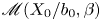 $\mathscr {M}(X_0/b_0,\beta )$ is of finite type, all but a finite number of the moduli spaces
 $\mathscr {M}(X_0,{\boldsymbol{\tau }})$ will be empty. In practice one uses the balancing condition [Reference Gross and SiebertGS13, Proposition 1.15] to control how curves can break up into strata of
 $X_0$. This is carried out in some of the examples in § 5.
Theorems 1.1 and 1.2 form the first two steps toward a general logarithmic degeneration formula. In many cases this is sufficient for meaningful computations, as we show in § 5. These results have precise analogies with results in [Reference LiLi02], as explained in § 5.1. Theorem 1.1 is a generalization of [Reference LiLi02, Lemma 3.10], while Theorem 1.2 is a generalization of part of [Reference LiLi02, Corollary 3.13], where the notation  ${\mathfrak M}(\mathfrak {Y}_1^{\textrm {rel}}\cup \mathfrak {Y}_2^{\textrm {rel}},\eta )$ describes an object playing the role of our
 $\mathscr {M}(X_0,{\boldsymbol{\tau }})$.
The current paper does not, however, include a description of the moduli stack  $\mathscr {M}(X_0,{\boldsymbol{\tau }})$ analogous to that given in the proof of [Reference LiLi02, Lemma 3.14]. There, the moduli space is described by gluing together relative stable maps to the individual components of
 $X_0$. However, in general this will not be the case: while a curve in
 $\mathscr {M}(X_0,{\boldsymbol{\tau }})$ may be glued schematically from stable maps to individual components of
 $X_0$, it is not possible to do this at the logarithmic level, in the sense that the maps to individual components of
 $X_0$ may not be interpretable as relative maps. We give an example in § 5.2 in which
 $X_0$ has three components meeting normally, with one triple point. Our example features a log curve contributing to the Gromov–Witten invariant which has a component contracting to the triple point, and this curve cannot be interpreted as a relative curve on any of the three irreducible components of
 $X_0$.
In fact, a new theory is needed to give a more detailed description of the moduli spaces  $\mathscr {M}(X_0,{\boldsymbol{\tau }})$ in terms of pieces of simpler curves. In the follow-up paper [Reference Abramovich, Chen, Gross and SiebertACGS20] we define stable punctured maps admitting negative contact orders to replace the relative curves in Jun Li's gluing formula. Crucially, we will explain how punctured curves can be glued together to describe the moduli spaces
 $\mathscr {M}(X_0,{\boldsymbol{\tau }})$.
The results described here are analogous to results of Brett Parker proved in his category of exploded manifolds. He defines Gromov–Witten invariants in this category in the series of papers [Reference ParkerPar15, Reference ParkerPar19a, Reference ParkerPar19b, Reference ParkerPar19c]. The analogue of logarithmic deformation invariance, Theorem 1.1 above, is proved in [Reference ParkerPar19c, Theorems 5.20 and 5.22], while Theorem 1.2 is analogous to parts of [Reference ParkerPar19c, Theorem 5.22 and Lemma 7.3]. A gluing formula in terms of Gromov–Witten invariants of individual irreducible components of  $X_0$ is given in [Reference ParkerPar17, Theorems 4.7 and 5.2]. The aim in proving a general gluing formula is a full logarithmic analogue of these theorems.
This paper has a somewhat long genesis, with the main ideas contained in draft versions first presented in a talk by B.S. at the conference ‘Algebraic, Analytic, and Tropical Geometry’ in Ein Gedi, Israel, in Spring 2013. A first full version was posted on Q.C.'s website in October 2016. The follow-up paper [Reference Abramovich, Chen, Gross and SiebertACGS20] has furthermore been distributed via M.G.'s website since March 2017.
Several related works have appeared during this long period of preparation. The 2016 version has been used in [Reference Mandel and RuddatMR20]. Concerning the decomposition formula, the one closest to our point of view is [Reference Kim, Lho and RuddatKLR18], giving a formula of logarithmic Gromov–Witten invariants of the central fiber  $X_0$ of a degeneration with smooth singular locus in terms of Gromov–Witten invariants of the reducible components. This paper is a full logarithmic analogue of Jun Li's formula in [Reference LiLi02], without using expanded degenerations. This case is considerably simpler than the case with points of multiplicity greater than 2 and in particular does not require the introduction of punctured Gromov–Witten invariants, see § 5.1 and [Reference Abramovich, Chen, Gross and SiebertACGS20].
A gluing formula for a special case has also been proved by Tony Yue Yu in his developing theory of Gromov–Witten invariants in rigid analytic geometry [Reference YuYu20, Theorem 1.2].
Very recently, Ranganathan has suggested an alternative approach to fully general gluing formulas for logarithmic Gromov–Witten invariants using expanded degenerations [Reference RanganathanRan20].
The structure of the paper is as follows. In § 2, we review various aspects of logarithmic Gromov–Witten theory, with a special emphasis on the relationship with tropical geometry. We develop tropical geometry in the setup of generalized cone complexes, introduced in § 2.1. While this point of view was present in [Reference Gross and SiebertGS13], we make it more explicit here, and in particular discuss tropicalization in a sufficient degree of generality as needed here. As an application, in § 2.6 we introduce the refined moduli spaces  $\mathfrak {M}(X_0,{\boldsymbol{\tau }})$ appearing in the decomposition formula. Section 2.2 reviews the notion of Artin fans, an algebraic stack associated to any generalized cone complex. Our decomposition result is based on a decomposition of the fundamental class in a moduli space of stable log maps to the Artin fan of
 $X_0$ over
 $b_0$.
Section 3 proves the main theorem, the decomposition formula. In § 3.1 we first prove a general decomposition of the fundamental class for a space log smooth over the standard log point. The main insight in § 3.2 is that replacing  $X_0$ with its relative Artin fan the moduli space of stable log maps becomes unobstructed, and hence has a fundamental class that can be decomposed. The main theorem then follows in § 3.3 by lifting this decomposition to the virtual level.
The remainder of the paper is devoted to applications. As a preparation, § 4 closes a gap in the literature, building on work of Nishinou and Siebert in [Reference Nishinou and SiebertNS06]. This concerns the logarithmic enhancement problem, the problem of constructing stable logarithmic maps with a given usual stable map, previously considered only in special cases. We address the problem through a two-step process. In the first step, we use the tropical geometry of the situation to identify a proper, birational, logarithmically étale map, i.e. a logarithmic modification, which reduces the problem to a situation where no irreducible component of the domain curve maps into the singular locus of  $X_0$ and maps no node into strata of
 $X_0$ of codimension larger than 1. The second step is the main result of § 4, Theorem 4.13, giving the number of logarithmic enhancements in fully general situations, including non-reduced
 $X_0$.
Section 5 employs these formulas in the discussion of a number of hopefully instructive examples. Section 5.1 contains the already announced discussion of our decomposition formula in the traditional situation of [Reference LiLi02]. In § 5.2 we retrieve the classical number  $12$ of nodal plane sections of a cubic surface passing through two points via a degeneration into three copies of
 $\mathbb {P}^2$, blown up in zero, three and six points, respectively. The topic of § 5.3 is an interpretation of the imposing of point conditions in tropical geometry via degenerating scheme-theoretic point conditions in the trivial product
 $Y\times \mathbb {A}^1$. The decomposition formula in this case (Theorem 5.4) provides an alternative view on tropical map counting with point conditions as in [Reference MikhalkinMik05, Reference Nishinou and SiebertNS06]. The final section § 5.4 features an example with two rigid tropical maps such that only one of them arises as the tropicalization of a stable log map, but the contribution to the virtual count comes from the other, non-realizable rigid tropical map.
1.2 Conventions
All logarithmic schemes and stacks we consider here are fine and saturated and defined over an algebraically closed field  $\Bbbk$ of characteristic
 $0$. We will usually only consider toric monoids, i.e. monoids of the form
 $P=P_{\mathbb {R}}\cap M$ for
 $M\simeq \mathbb {Z}^n$,
 $P_{\mathbb {R}}\subset M_{\mathbb {R}}=M\otimes _{\mathbb {Z}} \mathbb {R}$ a rational polyhedral cone. For
 $P$ a toric monoid, we write
 \[ P^{\vee}={\operatorname{Hom}}(P,\mathbb{N}),\quad P_\mathbb{R}^{\vee}= {\operatorname{Hom}}(P,\mathbb{R}_{\ge0}),\quad P^*={\operatorname{Hom}}(P,\mathbb{Z}). \]
For  $Q$ a toric monoid and
 $\varphi :Q\to R$ a homomorphism to the multiplicative monoid of the
 $\Bbbk$-algebra
 $R$, the notation
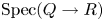 $\operatorname {Spec}(Q \longrightarrow R)$ denotes
 $\operatorname {Spec} R$ with the log structure induced by
 $\varphi$. For our conventions concerning graphs see § 2.3.6.
2. Preliminaries
2.1 Cone complexes associated to logarithmic stacks
2.1.1 The category of cones
We consider the category of rational polyhedral cones, which we denote by  $\mathbf {Cones}$. The objects of
 $\mathbf {Cones}$ are pairs
 $\sigma = (\sigma _\mathbb {R}, N)$ where
 $N\simeq \mathbb {Z}^n$ is a lattice and
 $\sigma _\mathbb {R}\subset N_{\mathbb {R}}=N\otimes _{\mathbb {Z}}\mathbb {R}$ is a top-dimensional strictly convex rational polyhedral cone. A morphism of cones
 $\varphi :\sigma _1 \longrightarrow \sigma _2$ is a homomorphism
 $\varphi :N_1 \longrightarrow N_2$ which takes
 ${\sigma _1}_\mathbb {R}$ into
 ${\sigma _2}_\mathbb {R}$. Such a morphism is a face morphism if it identifies
 ${\sigma _1}_\mathbb {R}$ with a face of
 ${\sigma _2}_\mathbb {R}$ and
 $N_1$ with a saturated sublattice of
 $N_2$. If we need to specify that
 $N$ is associated to
 $\sigma$ we write
 $N_\sigma$ instead.
2.1.2 Generalized cone complexes
Recall from [Reference Kempf, Knudsen, Mumford and Saint-DonatKKMS73, II.1] and [Reference Abramovich, Caporaso and PayneACP15] that a generalized cone complex is a topological space with a presentation as the colimit of an arbitrary finite diagram in the category  $\mathbf {Cones}$ with all morphisms being face morphisms. If
 $\Sigma$ denotes a generalized cone complex, we write
 $\sigma \in \Sigma$ if
 $\sigma$ is a cone in the diagram yielding
 $\Sigma$, and write
 $|\Sigma |$ for the underlying topological space. A morphism of generalized cone complexes
 $f:\Sigma \longrightarrow \Sigma '$ is a continuous map
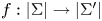 $f:|\Sigma | \longrightarrow |\Sigma '|$ such that for each
 $\sigma _\mathbb {R}\in \Sigma$, the induced map
 $\sigma \longrightarrow |\Sigma '|$ factors through a morphism
 $\sigma \longrightarrow \sigma '\in \Sigma '$. For a cone
 $\sigma \in \mathbf {Cones}$, we use the same symbol
 $\sigma$ to also denote the cone complex of all its faces.
Note that two generalized cone complexes can be isomorphic yet not have the same presentation. This phenomenon does not occur for so-called reduced presentations, which have the defining property that every face of a cone in the diagram is in the diagram, and every isomorphism in the diagram is a self-map. By [Reference Abramovich, Caporaso and PayneACP15, Proposition 2.6.2] any generalized cone complex has such a reduced presentation. In this paper we only work with reduced presentations of generalized cone complexes.
2.1.3 Generalized polyhedral complexes
We can similarly define a generalized polyhedral complex, where in the above set of definitions pairs  $(\sigma _\mathbb {R},N)$ live in the category
 $\textbf {Poly}$ of rationally defined polyhedra. This is more general than cones, as any cone
 $\sigma$ is in particular a polyhedron (usually unbounded). For example, an affine slice of a fan is a polyhedral complex.
2.1.4 The tropicalization of a logarithmic scheme
Now let  $X$ be a Zariski fine saturated (fs) log scheme of finite type. For the generic point
 $\eta$ of a stratum of
 $X$, its characteristic monoid
 $\overline{\mathcal {M}}_{X,\eta }$ defines a dual monoid
 $(\overline{\mathcal {M}}_{X,\eta })^{\vee } := {\operatorname {Hom}}(\overline{\mathcal {M}}_{X,\eta }, \mathbb {N})$ lying in the group
 $(\overline{\mathcal {M}}_{X,\eta })^* := {\operatorname {Hom}}(\overline{\mathcal {M}}_{X,\eta }, \mathbb {Z})$, see § 1.2, and hence a dual cone
 \begin{equation} \sigma_{\eta}:=((\overline{\mathcal{M}}_{X,\eta})^{\vee}_\mathbb{R},\,(\overline{\mathcal{M}}_{X,\eta})^*). \end{equation}
If  $\eta$ is a specialization of
 $\eta '$, then there is a well-defined generization map
 $\overline{\mathcal {M}}_{X,\eta } \longrightarrow \overline{\mathcal {M}}_{X,\eta '}$ since we assumed
 $X$ is a Zariski logarithmic scheme. Dualizing, we obtain a face morphism
 $\sigma _{\eta '} \longrightarrow \sigma _{\eta }$. This gives a diagram of cones indexed by strata of
 $X$ with face morphisms, and hence gives a generalized cone complex
 $\Sigma (X)$. We call this the tropicalization of
 $X$, following [Reference Gross and SiebertGS13, Appendix B].Footnote 1 For
 $\sigma \in \Sigma (X)$ we denote by
 \[ X_\sigma\subset X \]
the closure of the corresponding stratum of  $X$, endowed with the reduced induced scheme structure. We refer to these subschemes with reduced induced structure as closed strata of
 $X$.
This construction is functorial: given a morphism of log schemes  $f:X \longrightarrow Y$, the map
 $f^{\flat }:f^{-1}\overline{\mathcal{M}}_Y \longrightarrow \overline{\mathcal{M}}_X$ induces a map of generalized cone complexes
 $\Sigma (f):\Sigma (X) \longrightarrow \Sigma (Y)$.
Definition 2.1 [GS13, Definition B.2] We say  $X$ is monodromy free if
 $X$ is a Zariski log scheme and for every
 $\sigma \in \Sigma (X)$, the natural map
 $\sigma \longrightarrow |\Sigma (X)|$ is injective on the interior of any face of
 $\sigma$. We say
 $X$ is simple if the map is injective on every
 $\sigma$.
Here is an example of a Zariski log structure that is monodromy free, but not simple. Take  $X$ to be the Neron
 $2$-gon, the fibred sum of two copies of
 $\mathbb {P}^1$ joined at two pairs of points. Thus
 $X$ has two irreducible components
 $X_1,X_2$ and two nodes
 $q_1,q_2$. Take a log structure
 $\mathcal {M}_X$ on
 $X$ with
 $\overline{\mathcal{M}}_X$ constant with fibres
 $\mathbb {N}^2$ along
 $X_1$, with fibers
 $\mathbb {N}$ on
 $X_2\setminus \{q_1,q_2\}$ and with generization maps
 $\overline{\mathcal{M}}_{X,q_i}=\mathbb {N}^2\to \mathbb {N}$ to the generic point of
 $X_2$ the two projections. See also [Reference Gross and SiebertGS13, Expl. B.1] for another example.
Simplicity is, however, true in the Zariski log smooth case over a trivial log point. Such log schemes can in fact be viewed as toroidal pairs without self-intersections and the following statement follows readily from the classical treatment in [Reference Kempf, Knudsen, Mumford and Saint-DonatKKMS73, pp. 70–72].
Proposition 2.2 Let  $X$ be a Zariski log scheme, log smooth over
 $\operatorname {Spec} \Bbbk$ with the trivial log structure. Then
 $X$ is simple.
As remarked in [Reference Gross and SiebertGS13], more generally we can define the generalized cone complex associated with a finite type logarithmic stack  $X$, in particular allowing for logarithmic schemes
 $X$ in the étale topology. In fact, one can always find a cover
 $X' \longrightarrow X$ in the smooth topology with
 $X'$ a union of simple log schemes, and with
 $X''=X'\times _{X} X'$; then define
 $\Sigma (X)$ to be the colimit of
 $\Sigma (X'')\rightrightarrows \Sigma (X')$. The resulting generalized cone complex is independent of the choice of cover. This process is explicitly carried out in [Reference Abramovich, Caporaso and PayneACP15, Reference UlirschUli15].
Examples 2.3 (1) If  $X$ is a toric variety with the canonical toric logarithmic structure, then
 $\Sigma (X)$ is abstractly the fan defining
 $X$. It is missing the embedding of
 $|\Sigma (X)|$ as a fan in a vector space
 $N_{\mathbb {R}}$, and should be viewed as a piecewise linear object.
(2) Let  $\Bbbk$ be a field and
 $X=\operatorname {Spec}(\mathbb {N} \longrightarrow \Bbbk )$ the standard log point with
 $\mathcal {M}_X=\Bbbk ^{\times } \times \mathbb {N}$. Then
 $\Sigma (X)$ consists of the ray
 $\mathbb {R}_{\ge 0}$.
(3) Let  $C$ be a curve with an étale logarithmic structure with the property that
 $\overline{\mathcal {M}}_C$ has stalk
 $\mathbb {N}^2$ at any geometric point, but has monodromy of the form
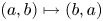 $(a,b)\mapsto (b,a)$, so that the pull-back of
 $\overline{\mathcal {M}}_C$ to an unramified double cover
 $C' \longrightarrow C$ is constant but
 $\overline{\mathcal {M}}_C$ is only locally constant. Then
 $\Sigma (C)$ can be described as the quotient of
 $\mathbb {R}_{\ge 0}^2$ by the automorphism
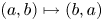 $(a,b)\mapsto (b,a)$. If we use the reduced presentation,
 $\Sigma (C)$ has three cones, one each of dimension
 $0$,
 $1$ and
 $2$.
2.2 Artin fans
Let  $X$ be a fine and saturated algebraic log stack. We are quite permissive with algebraic stacks, as delineated in [Reference OlssonOls03, (1.2.4)–(1.2.5)], since we need to work with stacks with non-separated diagonal. An Artin stack logarithmically étale over
 $\operatorname {Spec}\Bbbk$ is called an Artin fan.
The logarithmic structure of  $X$ is encoded by a morphism
 $X \longrightarrow {\operatorname {Log}}$ to Olsson's stack
 ${\operatorname {Log}}$ of fine log structures, see [Reference OlssonOls03]. One crucial idea developed in the context of the present paper is a refinement of the stack
 ${\operatorname {Log}}$ by an Artin fan that takes into account the stratification of
 $X$ defined by
 $\overline{\mathcal {M}}_X$. Following preliminary notes written by two of us (Chen and Gross), the paper [Reference Abramovich and WiseAW18] introduces a canonical Artin fan
 $\mathcal {A}_X$ associated to a logarithmically smooth fs log scheme
 $X$. This was generalized in [Reference Abramovich, Chen, Marcus and WiseACMW17, Proposition 3.1.1] as follows.
Theorem 2.4 Let  $X$ be a logarithmic algebraic stack over
 $\operatorname {Spec}\Bbbk$ which is locally connected in the smooth topology. Then there is an initial strict étale morphism
 $\mathcal {A}_X \longrightarrow {\operatorname {Log}}$ over which
 $X \longrightarrow {\operatorname {Log}}$ factors. Moreover, the morphism
 $\mathcal {A}_X \longrightarrow {\operatorname {Log}}$ is representable by algebraic spaces.
Note that  $\mathcal {A}_X$ in the theorem is indeed an Artin fan because
 ${\operatorname {Log}}$ is logarithmically étale over
 $\operatorname {Spec}\Bbbk$.
If  $X$ is a Deligne–Mumford stack,
 $\mathcal {A}_X$ can be constructed from the cone complex
 $\Sigma (X)$ as follows. For any cone
 $\sigma \subset N_{\mathbb {R}}$, let
 $P=\sigma ^{\vee }\cap M$ be the corresponding monoid. We write
 \begin{equation} \mathcal{A}_\sigma=\mathcal{A}_P:=[\operatorname{Spec}\Bbbk[P]/\operatorname{Spec} \Bbbk[P^{{\mathrm{gp}}}]]. \end{equation}
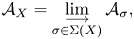
This stack carries the standard toric logarithmic structure induced by descent from the global chart  $P \longrightarrow \Bbbk [P]$. Then
 $\mathcal {A}_X$ is the colimit
 \begin{equation} \mathcal{A}_X=\varinjlim_{\sigma\in\Sigma(X)} \mathcal{A}_\sigma, \end{equation}
in the category of sheaves over  ${\operatorname {Log}}$.
Remark 2.5 Unlike  $\Sigma (X)$, the formation of
 $\mathcal {A}_X$ is not functorial for all logarithmic morphisms
 $Y \longrightarrow X$. This is a result of the fact that the morphism
 $Y \longrightarrow {\operatorname {Log}}$ is not the composition
 $Y \longrightarrow X \longrightarrow {\operatorname {Log}}$, unless
 $Y \longrightarrow X$ is strict. Note also that not all Artin fans
 $\mathcal {A}$ are of the form
 $\mathcal {A}_X$, since
 $\mathcal {A} \longrightarrow {\operatorname {Log}}$ may fail to be representable.
Our next aim is to prove functoriality of the formation of Artin fans for maps with Zariski log smooth domains, stated as Proposition 2.8 below. We need two lemmas.
Lemma 2.6 Suppose  $X$ is a log smooth scheme over the trivial log point
 $\operatorname {Spec}\Bbbk$ and with Zariski log structure. Then
 $\mathcal {A}_X$ admits a Zariski open covering
 $\{\mathcal {A}_{\sigma } \subset \mathcal {A}_X\,|\, \sigma \in \Sigma (X)\}$.
Proof. Since  $X$ has Zariski log structure, we may select a covering
 $\{U \longrightarrow X\}$ by Zariski open sets such that
 $U \longrightarrow \mathcal {A}_{\sigma _U}$ is the Artin fan of
 $U$. By the log smoothness of
 $X$, the morphism
 $X \longrightarrow \mathcal {A}_{X}$ is smooth, and hence the image
 $\tilde U \subset \mathcal {A}_X$ of
 $U$ is an open substack.
It remains to show that  $\tilde U$ is the Artin fan of
 $U$. By [Reference Abramovich and WiseAW18, § 2.3 and Definition 2.3.2(2)], this amounts to showing that
 $\tilde U$ parameterizes the connected components of the fibres of
 $U \longrightarrow {\operatorname {Log}}$. Since both
 $X \longrightarrow {\operatorname {Log}}$ and
 $U \longrightarrow {\operatorname {Log}}$ are smooth morphisms between reduced stacks, it suffices to consider each geometric point
 $T \longrightarrow {\operatorname {Log}}$. Since
 $U \subset X$ is Zariski open,
 $U_T = T\times _{{\operatorname {Log}}}U \subset X_{T} = T\times _{{\operatorname {Log}}}X$ is also Zariski open. Thus, for each connected component
 $V \subset U_T$, there is a unique connected component
 $V' \subset X_T$ containing
 $V$ as a Zariski open dense set. As the set of connected components of
 $X_T$ is parameterized by
 $T\times _{{\operatorname {Log}}}\mathcal {A}_X$, we observe that the set of connected components of
 $U_T$ is parameterized by the subscheme
 $T\times _{{\operatorname {Log}}}\tilde U \subset T\times _{{\operatorname {Log}}}\mathcal{A}_X$.
Lemma 2.7 Suppose  $X$ is a log smooth scheme with Zariski log structure and
 $\tau \in \mathbf {Cones}$. Then any morphism
 $X \longrightarrow \mathcal {A}_{\tau }$ has a canonical factorization through
 $\mathcal {A}_{X} \longrightarrow \mathcal {A}_{\tau }$.
Proof. By Lemma 2.6, we may select a Zariski covering  $\mathcal {C} := \{\mathcal {A}_\sigma \subset \mathcal {A}_X\}$ of
 $\mathcal {A}_X$, and hence a Zariski covering
 $\{U_{\sigma } := \mathcal {A}_{\sigma }\times _{\mathcal {A}_X}X \subset X\}$ of
 $X$. We may assume that if
 $\sigma ' \subset \sigma$ is a face, then
 $\mathcal {A}_{\sigma '} \subset \mathcal {A}_{\sigma } \subset \mathcal {A}_X$ is also in
 $\mathcal {C}$.
Locally, the morphism  $U_{\sigma } \longrightarrow \mathcal {A}_{\tau }$ induces a morphism
 $\tau ^{\vee } \longrightarrow \Gamma (U_{\sigma },\overline{\mathcal{M}}_{U_{\sigma }}) = \sigma ^{\vee }$, and hence a canonical
 $\phi _{\sigma }: \mathcal {A}_{\sigma } \longrightarrow \mathcal {A}_{\tau }$ through which
 $U_{\sigma } \longrightarrow \mathcal {A}_{\tau }$ factors.
To see the local construction glues, observe that the intersection  $\mathcal {A}_{\sigma _1}\cap \mathcal {A}_{\sigma _2}$ of two Zariski charts in
 $\mathcal {C}$ is again covered by elements in
 $\mathcal {C}$. It suffices to verify that
 $\phi _{\sigma _1},\phi _{\sigma _2}$ agree on
 $\mathcal {A}_{\sigma '} \in \mathcal {C}$ if
 $\mathcal {A}_{\sigma '} \subset \mathcal {A}_{\sigma _1}\cap \mathcal {A}_{\sigma _2}$. Taking global sections, we observe that the composition
 $\tau ^{\vee } \longrightarrow \Gamma (U_{\sigma _i},\overline{\mathcal{M}}_{U_{\sigma _i}}) \longrightarrow \Gamma (U_{\sigma '},\overline{\mathcal{M}}_{U_{\sigma '}}) = (\sigma ')^{\vee }$ is independent of
 $i = 1,2$ as they are determined by the restriction of
 $U_{\sigma _i} \longrightarrow \mathcal {A}_{\tau }$ to the common Zariski open
 $U_{\sigma '}$. Hence
 $\phi _{\sigma _1}|_{U_{\sigma '}} = \phi _{\sigma _2}|_{U_{\sigma '}}$.
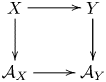
Proposition 2.8 Let  $X \longrightarrow Y$ be a morphism of log schemes. Suppose
 $X$ is log smooth with Zariski log structure. Then there is a canonical morphism
 $\mathcal {A}_X \longrightarrow \mathcal {A}_Y$ such that the following diagram commutes.
Proof. By the claimed uniqueness and étale descent, the statement can be checked étale locally on  $\mathcal {A}_Y$. We may then assume
 $\mathcal {A}_Y = \mathcal {A}_{\tau }$ for some
 $\tau \in \mathbf {Cones}$, for which the statement is exactly Lemma 2.7.
Using Proposition 2.8 we can also define a relative notion of Artin fan for maps with log smooth domains.
Definition 2.9 The relative Artin fan for a morphism  $X \longrightarrow B$ of log schemes with
 $X$ log smooth with Zariski log structure is defined as the fibre product
 \[ \mathcal{X}= B\times_{\mathcal{A}_B} \mathcal{A}_X. \]
While not, strictly speaking, needed for this paper, we end this subsection with the instructive result that giving a log morphism to the Artin fan  $\mathcal {A}_X$ of a log scheme
 $X$ is combinatorial in nature, captured entirely by the induced map of cone complexes.
Proposition 2.10 Let  $X$ be a Zariski fs log scheme log smooth over
 $\operatorname {Spec}\Bbbk$. Then for any fs log scheme
 $T$ there is a canonical bijection
 \[ {\operatorname{Hom}}_{\mathrm{fs}}(T,\mathcal{A}_X) \longrightarrow {\operatorname{Hom}}_{\mathbf{Cones}}(\Sigma(T),\Sigma(X)), \]
which is functorial in  $T$.
Proof. Step I. Description of  $\mathcal {A}_X$. By Lemma 2.6, we may select a Zariski covering
 $\mathcal {C} := \{\mathcal {A}_\sigma \subset \mathcal {A}_X\}$, and hence a Zariski covering
 $\{U_{\sigma } := \mathcal {A}_{\sigma }\times _{\mathcal {A}_X}X \subset X\}$. We may assume that if
 $\sigma ' \subset \sigma$ is a face, then
 $\mathcal {A}_{\sigma '} \subset \mathcal {A}_{\sigma } \subset \mathcal {A}_X$ is also in
 $\mathcal {C}$. Thus
 $\Sigma (X)$ can be presented by the collection of cones
 $\{\sigma \}$ glued along face maps
 $\sigma ' \longrightarrow \sigma$. In particular, this shows that
 $\Sigma (X)=\Sigma (\mathcal {A}_X)$. Since
 $\Sigma$ is functorial, there is then a map
 ${\operatorname {Hom}}(T,\mathcal {A}_X) \longrightarrow {\operatorname {Hom}}(\Sigma (T),\Sigma (X))$. We need to construct the inverse.
Step II.  $T$ is atomic. Suppose
 $T$ has unique closed stratum
 $T_0$ and a global chart
 $P \longrightarrow \mathcal {M}_T$ inducing an isomorphism
 $P\simeq \overline{\mathcal{M}}_{T,\bar t}$ at some point
 $\bar t\in T_0$; in the language of [Reference Abramovich and WiseAW18, Definition 2.2.4] the logarithmic scheme
 $T$ is atomic. Then with
 $\tau :={\operatorname {Hom}}(P,\mathbb {R}_{\ge 0})$,
 $\Sigma (T)=\tau$.
Using the presentation of  $\Sigma (X)$ described in Step I, a map
 $\alpha :\Sigma (T) \longrightarrow \Sigma (X)$ has image
 $\alpha (\tau ) \subset \sigma _i\in \Sigma (X)$ for some
 $i$. Observe that
 ${\operatorname {Hom}}(T,\mathcal {A}_{\sigma _i})={\operatorname {Hom}}(Q_i,\Gamma (T,\overline{\mathcal{M}}_T))$ by [Reference OlssonOls03, Proposition 5.17]. Now
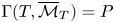 $\Gamma (T,\overline{\mathcal{M}}_T)=P$, and giving a homomorphism
 $Q_i \longrightarrow P$ is equivalent to giving a morphism of cones
 $\tau \longrightarrow \sigma _i$. Thus
 ${\operatorname {Hom}}(T,\mathcal {A}_{\sigma _i})={\operatorname {Hom}}(\tau ,\sigma _i)$. In particular,
 $\alpha$ induces a composed map
 $T \longrightarrow \mathcal {A}_{\sigma _i}\subset \mathcal {A}_X$, yielding the desired inverse map
 ${\operatorname {Hom}}(\Sigma (T),\Sigma (X)) \longrightarrow {\operatorname {Hom}}(T,\mathcal {A}_X)$.
Step III.  $T$ general. In general
 $T$ has an étale cover
 $\{T_i\}$ by atomic logarithmic schemes, and each
 $T_{ij}:=T_i\times _T T_j$ also has such a covering
 $\{T_{ij}^k \}$ by atomic logarithmic schemes. This gives a presentation
 $\coprod {\Sigma (T_{ij}^k)}\rightrightarrows \coprod \Sigma (T_i)$ of
 $\Sigma (T)$. In particular, a morphism of cone complexes
 $\Sigma (T) \longrightarrow \Sigma (X)$ induces morphisms
 $\Sigma (T_i) \longrightarrow \Sigma (X)$ compatible with the maps
 ${\Sigma (T_{ij}^k)} \longrightarrow \Sigma (T_i),\Sigma (T_j)$. Thus we obtain unique morphisms
 $T_i \longrightarrow \mathcal {A}_X$ compatible with the morphisms
 ${T_{ij}^k} \longrightarrow T_i, T_j$, inducing a morphism
 $T \longrightarrow \mathcal {A}_X$.
Example 2.11 Let  $X=\mathbb {A}^1$ with the toric log structure. Then
 $\mathcal {A}_X=\mathcal {A}_\mathbb {N} = [\mathbb {A}^1/\mathbb {G}_m]$. Given an ordinary scheme
 $\underline{T}$, a morphism
 $\underline{f}:\underline{T} \longrightarrow \mathcal {A}_X$ is equivalent to giving a strict log morphism
 $T \longrightarrow \mathcal {A}_X$, by endowing
 $\underline{T}$ with the pull-back
 $f^*\mathcal {M}_{\mathcal {A}_\mathbb {N}}$ of the log structure on
 $\mathcal {A}_\mathbb {N}$. From this point of view, the universal
 $\mathbb {G}_m$-torsor
 $\mathcal {P}$ on
 $\mathcal {A}_\mathbb {N}$ agrees with the
 $\mathbb {G}_m$-torsor subsheaf of
 $\mathcal {M}_{\mathcal {A}_\mathbb {N}}$ defined by the generating section of
 $\overline{\mathcal {M}}_{\mathcal {A}_\mathbb {N}}$. Thus the pull-back log structure
 $\underline{f}^*\mathcal {M}_{\mathcal {A}_\mathbb {N}}$ is given by a line bundle
 $\mathcal {L}$ on
 $\underline{T}$, the line bundle with associated torsor
 $\mathcal {L}^\times = \underline{f}^* \mathcal {P}$, and a homomorphism
 $\mathcal {L}\to \mathcal {O}_{\underline{T}}$ of
 $\mathcal {O}_{\underline{T}}$-modules defining the structure morphism, or its restriction to
 $\mathcal {L}^\times$. Conversely, the morphism
 $\underline{f}$ from
 $\underline{T}$ to the quotient stack
 $\mathcal {A}_\mathbb {N}= [\mathbb {A}^1/\mathbb {G}_m]$ can be recovered from
 $\mathcal {L}\to \mathcal {O}_{\underline{T}}$ by the associated
 $\mathbb {G}_m$-equivariant morphism from the
 $\mathbb {G}_m$-torsor
 $\operatorname {Spec}_{\underline{T}}\big (\bigoplus _{d\in \mathbb {Z}}\mathcal {L}^{\otimes -d}\big )$ to
 $\mathbb {A}^1_{\underline{T}}$.
Thus for an arbitrary log structure  $\mathcal {M}_T$ on
 $\underline{T}$, a log morphism
 $f:(\underline{T},\mathcal {M}_T) \longrightarrow \mathcal {A}_\mathbb {N}$ is the same data as the restriction of
 $\mathcal {M}_T\to \mathcal {O}_T$ to a
 $\mathbb {G}_m$-torsor subsheaf
 $\mathcal {L}^\times \subset \mathcal {M}_T$. Indeed, such an isomorphism yields the identification of
 $\underline{f}^*\mathcal {P}$ with a
 $\mathbb {G}_m$-torsor subsheaf
 $\mathcal {L}^\times \subset \mathcal {M}_T$, and the property of being a log morphism forces
 $\underline{f}$ to be associated to the restriction of the structure morphism
 $\mathcal {M}_T \longrightarrow \mathcal {O}_{\underline{T}}$ to
 $\mathcal {L}^\times$.
Now Proposition 2.10 assumes a log structure  $\mathcal {M}_T$ on
 $\underline{T}$ is already given and then says that the set of log morphisms
 $T=(\underline{T},\mathcal {M}_T) \longrightarrow \mathcal {A}_X$ equals the set of morphisms
 $\Sigma (T)\to \mathbb {R}_{\ge 0}=\Sigma (X)$ of cone complexes. Indeed, such a morphism of cone complexes is equivalent to specifying
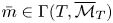 $\bar m\in \Gamma (T,\overline{\mathcal {M}}_T)$, and then the
 $\mathbb {G}_m$-torsor subsheaf
 $\mathcal {L}^\times \subset \mathcal {M}_T$ is simply defined by the preimage of
 $\bar m$ under
 $\mathcal {M}_T\to \overline{\mathcal {M}}_T$.
2.3 Stable logarithmic maps and their moduli
This section reviews the theory of stable logarithmic maps developed in [Reference Gross and SiebertGS13, Reference ChenChe14, Reference Abramovich and ChenAC14], emphasizing the tropical language from [Reference Gross and SiebertGS13]. Most references in the following are therefore to [Reference Gross and SiebertGS13], but of course all results have analogues in [Reference ChenChe14, Reference Abramovich and ChenAC14] under the slightly stronger assumption of global generatedness of  $\overline{\mathcal {M}}_X$. Note that the restriction on global generatedness has been removed in [Reference Abramovich, Chen, Marcus and WiseACMW17] by base changing to a refinement of the Artin fan
 $\mathcal {A}_X$ of
 $X$.
2.3.1 Definition
We fix a log morphism  $X \longrightarrow B$ with the logarithmic structure on
 $X$ being defined in the Zariski topology. Recall the following from [Reference Gross and SiebertGS13, Definition 1.6].
Definition 2.12 A stable logarithmic map  $(C/S,\mathbf {p}, f)$ is a commutative diagram
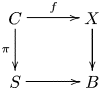
where the following hold.
(i)
$\pi :C \longrightarrow S$ is a proper, logarithmically smooth and integral morphism of log schemes together with a tuple of sections ${\mathbf {p}}=(p_1,\ldots ,p_{k})$ of $\underline {\pi }$ such that every geometric fibre of $\pi$ is a reduced and connected curve, and if $U\subset \underline {C}$ is the non-critical locus of $\underline {\pi }$ then $\overline{\mathcal{M}}_C|_U \simeq \underline {\pi }^*\overline{\mathcal{M}}_S\oplus \bigoplus _{i=1}^{k}p_{i*}\mathbb {N}_S$.(ii) For every geometric point
$\bar s \longrightarrow \underline {S}$, the restriction of $\underline {f}$ to $\underline {C}_{\bar s}$ together with ${\mathbf {p}}$ is an ordinary stable map.







2.3.2 Basic maps
The crucial concept for defining moduli of stable logarithmic maps is the notion of basic stable logarithmic maps. To explain this in tropical terms, we begin by summarizing the discussion of [Reference Gross and SiebertGS13, § 1] where more details are available. The terminology used in [Reference ChenChe14, Reference Abramovich and ChenAC14] is minimal stable logarithmic maps.
2.3.3 Induced maps of monoids
Suppose given  $(C/S, \mathbf {p}, f)$ a stable logarithmic map with
 $S=\operatorname {Spec}(Q' \longrightarrow \Bbbk )$, with
 $Q'$ an arbitrary sharp fs monoid and
 $\Bbbk$ an algebraically closed field. We will use the convention that a point denoted
 $p\in C$ is always a marked point, and a point denoted
 $q\in C$ is always a nodal point. Denoting
 $\underline {Q}' = \pi ^{-1} Q'$, the morphism
 $\pi ^\flat$ of logarithmic structures induces a homomorphism of sheaves of monoids
 $\psi = \bar \pi ^\flat :\underline {Q}' \longrightarrow \overline{\mathcal{M}}_{C}$. Similarly
 $f^\flat$ induces
 $\varphi = \bar f^\flat :f^{-1}\overline{\mathcal{M}}_X \longrightarrow \overline{\mathcal{M}}_{C}$.
2.3.4 Structure of $\psi$

The homomorphism  $\psi$ is an isomorphism when restricted to the complement of the special (nodal or marked) points of
 $C$. The sheaf
 $\overline{\mathcal{M}}_C$ has stalks
 $Q'\oplus \mathbb {N}$ and
 $Q'\oplus _{\mathbb {N}}\mathbb {N}^2$ at marked points and nodal points, respectively. The latter fibred sum is determined by a map
 \begin{equation} \mathbb{N} \longrightarrow Q',\quad 1\longmapsto \rho_q \end{equation}
and the diagonal map  $\mathbb {N} \longrightarrow \mathbb {N}^2$, see [Reference Gross and SiebertGS13, Definition 1.5]. The map
 $\psi$ at these special points is given by the inclusion
 $Q' \longrightarrow Q'\oplus \mathbb {N}$ and
 $Q' \longrightarrow Q'\oplus _{\mathbb {N}}\mathbb {N}^2$ into the first component for marked and nodal points, respectively.
2.3.5 Structure of $\varphi$

For  $\bar x\in C$ a geometric point with underlying scheme-theoretic point
 $x$, the map
 $\varphi$ induces maps
 $\varphi _{\bar x}:P_{x} \longrightarrow \overline{\mathcal{M}}_{C,\bar x}$ for
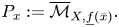 \[ P_x:=\overline{\mathcal{M}}_{X,\underline{f}(\bar x)}. \]
Note that  $\overline{\mathcal{M}}_{X,\underline{f}(\bar x)}$ is independent of the choice of
 $\bar x \longrightarrow x$ since the logarithmic structure on
 $X$ is Zariski. Following Discussion 1.8 of [Reference Gross and SiebertGS13], we have the following behaviour at three types of points on
 $C$.
(i)
$x=\eta$ is a generic point, giving a local homomorphismFootnote 2 of monoids
(2.6)\begin{equation} \varphi_{\bar\eta}:P_{\eta}\longrightarrow Q'. \end{equation}(ii)
$x=p$ is a marked point, giving the composition
(2.7)The element\begin{equation} u_p:P_p\stackrel{\varphi_{\bar p}}{\longrightarrow} Q'\oplus\mathbb{N}\stackrel{\operatorname{pr}_2}{\longrightarrow} \mathbb{N}. \end{equation}$u_p\in P_p^{\vee }$ is called the contact order at $p$.(iii)
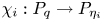
$x=q$ is a node contained in the closures of $\eta _1$, $\eta _2$. If $\chi _i:P_q \longrightarrow P_{\eta _i}$ are the generization maps there exists a homomorphism
called contact order at\[ u_q:P_q \longrightarrow \mathbb{Z}, \]$q$, such that
(2.8)with\begin{equation} \varphi_{\bar\eta_2}(\chi_2(m))-\varphi_{\bar \eta_1}(\chi_1(m) )=u_q(m)\cdot \rho_q, \end{equation}$\rho _q\neq 0$ given in (2.5), see [Reference Gross and SiebertGS13, (1.8)]. The maps $\varphi _{\bar \eta }\circ \chi _i$ and $u_q$ are equivalent to providing the local homomorphism $\varphi _{\bar q}:P_q \longrightarrow Q'\oplus _{\mathbb {N}} \mathbb {N}^2$.












The choice of ordering  $\eta _1,\eta _2$ for the branches of
 $C$ containing a node is called an orientation of the node. We note that reversing the orientation of a node
 $q$ (by interchanging
 $\eta _1$ and
 $\eta _2$) results in reversing the sign of
 $u_q$.
2.3.6 Dual graphs and combinatorial type
In this paper, a graph  $G$ consists of a set of vertices
 $V(G)$, a set of edges
 $E(G)$ and a separate set of legs or half-edges
 $L(G)$, with appropriate incidence relations between vertices and edges, and between vertices and half-edges. We admit multiple edges, loops and legs. In order to obtain the correct notion of automorphisms, we also implicitly use the convention that every edge
 $E \in E(G)$ of
 $G$ is a pair of orientations of
 $E$ or a pair of half-edges of
 $E$ (disjoint from
 $L(G)$), so that the automorphism group of a graph with a single loop is
 $\mathbb {Z}/2\mathbb {Z}$.
Given a stable logarithmic map  $(C/S,\mathbf {p},f)$ over a logarithmic point, let
 $G_C$ be the dual intersection graph of
 $C$. This is the graph which has a vertex
 $v_{\eta }$ for each generic point
 $\eta$ of
 $C$, an edge
 $E_q$ joining
 $v_{\eta _1}, v_{\eta _2}$ for each node
 $q$ contained in the closures of both
 $\eta _1$ and
 $\eta _2$, and where
 $E_q$ is a loop if
 $q$ is a double point in an irreducible component of
 $C$. Note that an ordering of the two branches of
 $\underline{C}$ at a node gives rise to an orientation on the corresponding edge. Finally,
 $G_C$ has a leg
 $L_p$ with endpoint
 $v_{\eta }$ for each marked point
 $p$ contained in the closure of
 $\eta$. Occasionally we view
 $V(G), E(G)$ and
 $L(G)$ as subsets of
 $C$ and then write
 $x\in C$ for a vertex, edge or leg of
 $G$ corresponding to a generic point, node or marked point of
 $C$ respectively.
Definition 2.13 Let  $(C/S,\mathbf {p},f)$ be a stable logarithmic map over a logarithmic point
 $S=\operatorname {Spec}(Q \longrightarrow \Bbbk )$. The combinatorial type of
 $(C/S,\mathbf {p},f)$ consists of the following data:
(1) the dual intersection graph
$G=G_C$ of $C$;(2) the genus functionFootnote 3
$\mathbf {g}: V(G) \longrightarrow \mathbb {N}$ associating to $v\in V(G)$ the genus of the irreducible component $C(v)\subset C$;(3) the map
$\boldsymbol {\sigma }: V(G)\cup E(G)\cup L(G) \longrightarrow \Sigma (X)$ mapping $x\in C$ to $\big (\overline{\mathcal {M}}_{X,f(x)}\big )_\mathbb {R}^\vee \in \Sigma (X)$;(4) the contact data
$\mathbf {u}=\{u_p,u_q\}$ at marked points $p$ and nodes $q$ of $C$.










2.3.7 The basic monoid
Given a combinatorial type of a stable logarithmic map  $(C/S,\mathbf {p},f)$, we define a monoid
 $Q$ by first defining its dual
 \begin{equation} Q^{\vee}= \Big\{ ((V_{\eta})_{\eta}, (e_q)_q ) \in \bigoplus_{\eta} P_{\eta}^{\vee}\oplus \bigoplus_q\mathbb{N} \mid \forall q: V_{\eta_2}-V_{\eta_1}=e_qu_q \Big\}. \end{equation}
Here the sum is over generic points  $\eta$ of
 $C$ and nodes
 $q$ of
 $C$. Readers with background in tropical geometry should recognize this monoid as the moduli cone of tropical curves of fixed combinatorial type, as will be discussed in § 2.5. We then set
 \[ Q:={\operatorname{Hom}}(Q^{\vee},\mathbb{N}). \]
It is shown in [Reference Gross and SiebertGS13, § 1.5], that  $Q$ is a sharp monoid, fine and saturated by construction as the dual of a finitely generated submonoid of a free abelian group. Note also that
 $Q$ indeed only depends on the combinatorial type of
 $(C/S,\mathbf {p},f)$.
Given a stable logarithmic map 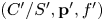 $(C'/S',\mathbf {p}',f')$ over
 $S'=\operatorname {Spec}(Q' \longrightarrow \Bbbk )$ of the same combinatorial type, we obtain a canonically defined map
 \begin{equation} Q \longrightarrow Q' \end{equation}
which is most easily defined as the transpose of the map
 \[ (Q')^{\vee} \longrightarrow Q^{\vee}\subset \bigoplus_{\eta} P_{\eta}^{\vee} \oplus\bigoplus_q \mathbb{N},\quad m\longmapsto ((\varphi_{\bar\eta}^t(m))_{\eta}, (m(\rho_q))_q), \]
with  $\varphi _{\bar \eta }$ and
 $\rho _q$ defined in (2.6) and (2.5), respectively.
Definition 2.14 (Basic maps) Let  $(C/S, \mathbf {p}, f)$ be a stable logarithmic map. We say
 $f$ is basic if at every geometric point
 $\bar s$ of
 $S$, the map
 $Q \longrightarrow Q'=\overline{\mathcal {M}}_{S,\bar s}$ from (2.10) defined by the restriction
 $(C_{\bar s}/\bar s, \mathbf {p}_{\bar s}, f|_{C_{\bar s}})$ is an isomorphism.
2.3.8 Degree data and class
In what follows,  $H_2^+(X)$ denotes a semigroup carrying degree data for curves in
 $X$, which are locally constant in flat families, such as effective
 $1$-cycles on
 $X$ modulo algebraic or numerical equivalence or, working over
 $\mathbb {C}$, classes in singular homology
 $H_2(X,\mathbb {Z})$ pairing non-negatively with a Kähler form. We require that the moduli spaces of ordinary stable maps of fixed curve class, genus and number of marked points are of finite type.
Definition 2.15 A class  $\beta$ of stable logarithmic maps to
 $X$ consists of the following:
(i) the data
$\underline {\beta }$ of an underlying ordinary stable map, i.e. the genus $g$, a curve class $A\in H_2^+(X)$, and the number of marked points $k$;(ii) integral elements
$u_{p_1},\ldots ,u_{p_k}\in |\Sigma (X)|$.Footnote 4



We say a stable logarithmic map  $(C/S,\mathbf {p},f)$ is of class
 $\beta$ if two conditions are satisfied. First, the underlying ordinary stable map must be of type
 $\underline{\beta} =(g,A,k)$. Second, define the closed subset
 $\underline{Z}_i\subset \underline{X}$ to be the union of strata with generic points
 $\eta$ such that
 $u_{p_i}$ lies in the image of
 $\sigma _{\eta } \longrightarrow |\Sigma (X)|$. Then for any
 $i$ we have
 $\operatorname {im}(\underline {f}\circ p_i)\subset \underline {Z}_i$ and for any geometric point
 $\bar s \longrightarrow \underline {S}$ such that
 $p_i(\bar s)$ lies in the stratum of
 $X$ with generic point
 $\eta$, there exists
 $u\in \sigma _\eta ={\operatorname {Hom}}(\overline{\mathcal {M}}_{X,\bar \eta },\mathbb {N})$ mapping to
 $u_{p_i}\in |\Sigma (X)|$ making the following diagram commute.

Here  $\chi$ is the generization map. In particular,
 $s_i$ specifies the contact order
 $u_{p_i}$ at the marked point
 $p_i(\bar s)$ as defined in (2.7).
We emphasize that the class  $\beta$ does not specify the contact orders
 $u_q$ at nodes.
Definition 2.16 Let  $\mathscr {M}(X/B,\beta )$ denote the stack of basic stable logarithmic maps of class
 $\beta$. This is the category whose objects are basic stable logarithmic maps
 $(C/S,\mathbf {p},f)$ of class
 $\beta$, and whose morphisms
 $(C/S,\mathbf {p},f) \longrightarrow (C'/S',\mathbf {p}',f')$ are commutative diagrams

with the left-hand square cartesian,  $S \longrightarrow S'$ strict, and
 $f=f'\circ g$,
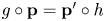 $g\circ {\mathbf {p}}= {\mathbf {p}}'\circ h$.
Theorem 2.17 If  $X \longrightarrow B$ is proper, then
 $\mathscr {M}(X/B,\beta )$ is a proper Deligne–Mumford stack. If furthermore
 $X \longrightarrow B$ is logarithmically smooth, then
 $\mathscr {M}(X/B,\beta )$ carries a perfect obstruction theory, defining a virtual fundamental class
 $[\mathscr {M}(X/B,\beta )]^{{\operatorname {virt}}}$ in the rational Chow group of
 $\mathscr {M}(X/B,\beta )$.
Proof. Under the given assumption that  $X$ is a Zariski log scheme, [Reference Gross and SiebertGS13, Theorem 2.4] proves that
 $\mathscr {M}(X/B,\beta )$ is a Deligne–Mumford stack. Properness was shown in [Reference Gross and SiebertGS13, Theorem 2.4] under a technical assumption, and in general in [Reference Abramovich, Chen, Marcus and WiseACMW17].
The existence of a perfect obstruction theory when  $X \longrightarrow B$ is logarithmically smooth was proved in [Reference Gross and SiebertGS13, § 5].
2.4 Stacks of pre-stable logarithmic curves
For the obstruction theory in Theorem 2.17 one works over the Artin stack  $\mathfrak {M}_B$ of pre-stable logarithmically smooth curves defined over
 $B$. Since this stack will be important later on, let us briefly recall its construction. First, working over a field
 $\Bbbk$, there is a stack
 ${\mathbf {M}}$ of pre-stable basic logarithmic curves over
 $\operatorname {Spec}\Bbbk$, essentially constructed by Kato in [Reference KatoKat00]. Endowing
 ${\mathbf {M}}$ with its basic log structure, the fibre product
 ${\mathbf {M}}\times _{\operatorname {Spec}\Bbbk } B$ in the category of log stacks is a fs log stack. We can then define
 $\mathfrak {M}_B$ using Olsson's stack over
 ${\mathbf {M}}\times B$:
 \[ \mathfrak{M}_B:={\operatorname{Log}}_{{\mathbf{M}}\times B}. \]
Indeed, an object in this stack is a log scheme  $T$ with two morphisms
 $T\to {\mathbf {M}}$ and
 $T \longrightarrow B$. The corresponding pre-stable log smooth curve over
 $T$ is the logarithmic pull-back to
 $T$ of the universal pre-stable curve over
 ${\mathbf {M}}$.
We also consider the following refinements of  $\mathbf {M}$ introduced in [Reference Behrend and ManinBM96, Definition 2.6] and further discussed in [Reference BehrendBeh97, p. 603]. Let
 $G$ be a graph decorated by a map
 \[ \mathbf{g}: V(G) \longrightarrow \mathbb{N}, \]
associating to each vertex its genus. Then there is an algebraic stack
 \begin{equation} \mathbf{M}(G,\mathbf{g})\quad \textrm{of} \quad(G,\mathbf{g})\text{-marked pre-stable curves} \end{equation}
with objects over a  $B$-scheme
 $S$ given by:
(1) for each
$v\in V(G)$, a family of pre-stable curves $C_v\to S$ of genus $\mathbf {g}(v)$, together with marked sections $x_L:S\to C_v$ defined by the legs $L\in L(G)$ with $v\in L$;(2) for each edge
$E\in E(G)$ with vertices $v,w$, a pair of marked sections $y_v, y_w$ of $C_v\to S$, $C_w\to S$, respectively.


All marked sections are required to be mutually disjoint and to have image in the non-critical locus of  $\coprod _v C_v \longrightarrow S$. Taking the fibred sum of
 $\coprod _v C_v$ along the pairs of marked sections associated to the edges, we may as well view the objects of
 $\mathbf {M}(G,\mathbf {g})$ as families of marked nodal curves
 \begin{equation} (C \longrightarrow S,x); \end{equation}
from this point of view, each edge  $E$ defines a nodal section
 $y_E:S\to C$ and each vertex a closed embedding
 $C_v\to C$ of a family of pre-stable curves of genus
 $g(v)$ and with image a union of irreducible components. Thus we have a morphism of algebraic stacks
 \begin{equation} \textbf{{M}}(G,\mathbf{g}) \longrightarrow \textbf{{M}}, \end{equation}
turning  $\textbf {M}(G,\mathbf {g})$ into a logarithmic algebraic stack by pulling back the log structure from
 $\textbf {M}$. Note that on the level of the underlying stacks, (2.13) induces the identification of the stack quotient
 $[\mathbf {M}(G,\mathbf {g})/ \operatorname {Aut}(G,\mathbf {g})]$ with the normalization of a closed substack of
 $\mathbf {M}$, defining the well-known stratified structure of
 $\mathbf {M}$. See [Reference Arbarello, Cornalba and GriffithsACG11, XII, § 10] for a detailed discussion. Now define
 \begin{equation} \mathfrak{M}_B(G,\mathbf{g}):={\operatorname{Log}}_{\mathbf{M}(G,\mathbf{g})\times B},\quad \mathfrak{C}_B(G,\mathbf{g}):=\mathfrak{M}_B(G,\mathbf{g})\times_{\mathbf{M}(G,\mathbf{g})} \mathbf{C}(G,\mathbf{g}). \end{equation}
An important feature of the collection of stacks  $\mathbf {M}(G,\mathbf {g})$ and in turn of
 $\mathfrak {M}_B(G,\mathbf {g})$ is their functorial behaviour under contraction morphisms of decorated graphs
 \begin{equation} \phi:(G,\mathbf{g}) \longrightarrow (G',\mathbf{g}'), \end{equation}
that is, an isomorphism of  $G'$ with the graph
 $G/E_\phi$ contracting a subset of edges
 $E_\phi \subset E(G)$ such thatFootnote 5
 \[ \mathbf{g}'(v')= b_1(\phi^{-1}(v'))+ \sum_{v\in V(\phi)^{-1}(v')} \mathbf{g}(v) \]
holds for all  $v'\in V(G')$ [Reference Behrend and ManinBM96, Definition 1.3]. Here
 $V(\phi ):V(G) \longrightarrow V(G')$ is the surjection on the set of vertices defined by
 $\phi$, and we have in addition a compatible inclusion
 $E(\phi ): E(G')\smash {\mathop {\longrightarrow }\limits ^{\simeq }} E(G)\setminus E_\phi \subset E(G)$ of the sets of edges and a bijection
 $L(\phi ):L(G')\to L(G)$ on the sets of legs. This notion of morphism captures the behaviour of the combinatorial type of pre-stable curves under generization and is indeed compatible with the finite maps (2.13) to
 $\mathbf {M}$.
Proposition 2.18 For any contraction morphism  $(G,\mathbf {g}) \longrightarrow (G',\mathbf {g}')$ of genus-decorated graphs, there are finite unramified morphisms of ordinary stacks
 $\mathbf {M}(G,\mathbf {g}) \longrightarrow \mathbf {M}(G',\mathbf {g}')$ and
 \[ \mathfrak{M}_B(G,\mathbf{g}) \longrightarrow \mathfrak{M}_B(G',\mathbf{g}'). \]
Proof. By base change and the definition of the log structures it is enough to prove the statement for the morphism of stacks underlying  $\mathbf {M}(G,\mathbf {g}) \longrightarrow \mathbf {M}(G',\mathbf {g}')$. In this case the statement follows by iterated application of the clutching morphisms of [Reference KnudsenKnu83, Corollary 3.9].
We emphasize that Proposition 2.18 is purely on the level of stacks with no log structures involved. Incorporating log structures in the picture is more subtle and is part of the gluing formalism developed in [Reference Abramovich, Chen, Gross and SiebertACGS20].
2.5 The tropical interpretation
The basic monoid  $Q$ was originally derived from its tropical interpretation, which will play an important role here. We review this in our general setting. Given a stable logarithmic map
 $(C/S,\mathbf {p},f)$, we obtain an associated diagram of cone complexes.
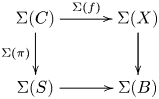
This diagram can be viewed as giving a family of tropical curves mapping to  $\Sigma (X)$, parameterized by the cone complex
 $\Sigma (S)$. Indeed, a fibre of
 $\Sigma (\pi )$ is a graph and the restriction of
 $\Sigma (f)$ to such a fibre can be viewed as a tropical curve mapping to
 $\Sigma (X)$. We make this precise.
To avoid difficulties in notation, we shall assume that  $X$ is simple (Definition 2.1). This is not a restrictive assumption in this paper since we assume
 $X$ to be log smooth over the trivial log point
 $\operatorname {Spec}\Bbbk$, and as
 $X$ is assumed to be Zariski in any event, it follows that
 $X$ is simple (Proposition 2.2). We use the reduced presentation of
 $\Sigma (X)$ from 2.1.2. Then simplicity implies that if
 $\tau ,\sigma \in \Sigma (X)$ and the image of
 $\tau$ in
 $|\Sigma (X)|$ is a face of the image of
 $\sigma$, then there is a unique face map
 $\tau \longrightarrow \sigma$ in the diagram.
The left-hand vertical arrow of (2.16) is a family of abstract tropical curves according to the following definition, cf. also [Reference Cavalieri, Chan, Ulirsch and WiseCCUW20, Definition 3.2].
Definition 2.19 A (family of) tropical curves  $(G,\mathbf {g},\ell )$ over a cone
 $\omega \in \mathbf {Cones}$ is a connected graph
 $G$ together with a bijection
 $L(G) \longrightarrow \{1,\ldots ,k\}$ (leg ordering) and two maps
 \[ \mathbf{g}: V(G) \longrightarrow \mathbb{N},\quad \ell: E(G) \longrightarrow {\operatorname{Hom}}(\omega\cap N_\omega,\mathbb{N})\setminus\{0\}. \]
For  $v\in V(G)$ and
 $E\in E(G)$ we call
 $g(v)$ the genus of
 $v$ and
 $\ell (E)$ the length function of
 $E$.
The genus of a family of tropical curves  $(G,\mathbf {g},\ell )$ is defined by
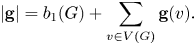 \begin{equation} |\mathbf{g}|= b_1(G) + \sum_{v\in V(G)} \mathbf{g}(v). \end{equation}
Note that given a tropical curve  $(G,\mathbf {g},\ell )$ over a cone
 $\omega$ and
 $s\in \omega$ not contained in any proper face, then
 $s\circ \ell$ assigns a strictly positive real number to each edge. Together with the convention that legs are infinite length,
 $(G,s\circ \ell )$ therefore specifies a metric graph, reproducing the traditional definition of an abstract tropical curve. Hence our definition makes precise the notion of a family of abstract tropical curves parameterized by
 $\omega \in \mathbf {Cones}$.
Construction 2.20 We suppress the genus decoration in the notation  $(G,\mathbf {g},\ell )$ and conflate
 $(G,\mathbf {g},\ell )$ with its associated morphism of cone complexes
 \begin{equation} \Gamma=\Gamma(G,\ell)\stackrel{\pi_\Gamma}{\longrightarrow} \omega, \end{equation}
constructed as follows. For each  $v\in V(G)$ take one copy
 $\omega _v$ of
 $\omega$, while for each
 $E\in E(G)$ take the cone
 \begin{equation} \omega_E=\{ (s,\lambda)\in\omega\times\mathbb{R}_{\ge0}\,|\, \lambda\le \ell(E)(s)\}. \end{equation}
The cone  $\omega _E$ has two facets, each isomorphic to
 $\omega$ via projection to the first factor. The corresponding inclusions,
 \[ s\longmapsto (s,0),\quad s\longmapsto (s,\ell(s)), \]
define face morphisms  $\omega _v,\omega _{v'} \longrightarrow \omega _E$ for the two vertices
 $v,v'$ adjacent to
 $E$. Note this definition is independent of the chosen labellings
 $v,v'$ and works also for graphs with loops. Finally, for each
 $L\in L(G)$ with adjacent vertex
 $v$ take
 $\omega _L=\omega \times \mathbb {R}_{\ge 0}$ with face morphism
 $\omega _v\to \omega _L$ defined by the facet
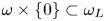 $\omega \times \{0\}\subset \omega _L$. Then
 $\Gamma$ is the generalized cone complex defined by this directed system in
 $\mathbf {Cones}$. The morphism to
 $\omega$ is defined on each
 $\omega _E$ by the projection to the first factor.
By construction, each vertex  $v\in V(G)$ defines a section of
 $\pi _\Gamma : \Gamma \to \omega$ denoted as follows:
 \begin{equation} \omega \longrightarrow \Gamma,\quad s\longmapsto v(s)\in \omega_v. \end{equation}
Then for  $s\in \omega$ not contained in a proper face, the fibre
 ${\pi _\Gamma }^{-1}(s)$ is the metric graph
 $(G,s\circ \ell )$ previously defined.
It is also not hard to replace individual cones as base spaces for families of tropical curves by cone complexes. See [Reference Cavalieri, Chan, Ulirsch and WiseCCUW20, § 3] for an elaboration of such ideas.
Definition 2.21 A (family of) tropical maps (from a tropical curve) to  $\Sigma (X)$ over a cone
 $\omega \in \mathbf {Cones}$ is a tropical curve
 $(G,\mathbf {g},\ell )$ over
 $\omega$ (Definition 2.19) with associated cone complex
 $\Gamma =\Gamma (G,\ell )$ (Construction 2.20), together with a morphism of cone complexes
 \[ h:\Gamma\longrightarrow \Sigma(X). \]
Remark 2.22 There are a number of discrete data that we can extract from a tropical map 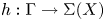 $h:\Gamma \longrightarrow \Sigma (X)$ over
 $\omega \in \mathbf {Cones}$ which are of importance in the sequel.
(1) Image cones. For a vertex, edge, or leg  $x$ of
 $G$, let
 $\omega _x\in \Gamma$ be the cone associated to
 $x$. Define
 \begin{equation} \boldsymbol{\sigma}: V(G) \cup E(G) \cup L(G) \longrightarrow \Sigma(X) \end{equation}
by mapping  $x$ to the minimal cone
 $\tau \in \Sigma (X)$ containing
 $h(\omega _x)$. Note that if
 $E$ is a leg or edge incident to a vertex
 $v$, then there is an inclusion of faces
 $\boldsymbol {\sigma }(v)\subset \boldsymbol {\sigma }(E)$ in the (reduced) presentation of
 $\Sigma (X)$.
(2) Contact orders at edges. Let  $E_q\in E(G)$ be an edge with a chosen order of vertices
 $v,v'$ (orientation). Then by the definition of the cone
 $\omega _{E_q}$ of
 $\Gamma$ associated to
 $E_q$ in (2.19), the image of
 $(0,1)\in N_{\omega _{E_q}}= N_\omega \times \mathbb {R}$ under
 $h$ defines
 $u_q\in N_{\boldsymbol {\sigma }(E_q)}$ such that in
 $N_{\boldsymbol {\sigma }(E_q)}$,
 \begin{equation} h(v(s))-h(v'(s))=\ell(E_q)(s)\cdot u_q \end{equation}
holds for any  $s\in \omega _{E_q}$. Here
 $v(s)\in \Gamma$ is the section of
 $\Gamma \to \omega$ defined in (2.20). Reversing the orientation of
 $E_q$ results in replacing
 $u_q$ by
 $-u_q$.
(3) Contact orders at marked points. Similarly, for a leg  $L_p\in L(G)$, the image of
 $(0,1)\in N_{\omega _{L_p}}= N_\omega \times \mathbb {R}$ defines
 $u_p \in N_{\boldsymbol {\sigma }(L_p)}\cap \boldsymbol {\sigma }(L_p)$ with
 $h(\operatorname {Int}(\omega _{L_p}))\subset \operatorname {Int}(\boldsymbol {\sigma }(L_p))$.
Definition 2.23 (1) The type of a family of tropical maps 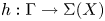 $h:\Gamma \longrightarrow \Sigma (X)$ over
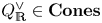 $Q^\vee _\mathbb {R}\in \mathbf {Cones}$ is the quadruple
 $\tau =(G,\mathbf {g},\boldsymbol {\sigma },\mathbf {u})$ consisting of the associated genus decorated graph
 $(G,\mathbf {g})$, the map
 $\boldsymbol {\sigma }$ from (2.21) recording the strata and the contact orders
 $\mathbf {u}=\{ u_p,u_q\}$ as defined in Remark 2.22. Note that we are suppressing the leg numbering, viewing the set
 $L(G)$ as identical with
 $\{1,\ldots ,k\}$.
(2) For a type  $\tau$ of a family of tropical maps,
 $\operatorname {Aut}(\tau )$ denotes the subset of automorphisms of
 $G$ commuting with the maps
 $\mathbf {g},\boldsymbol {\sigma },\mathbf {u}$.
(3) Given a type  $\tau$ of a family of tropical maps, the associated basic monoid
 $Q(\tau )$ is the dual of the monoid
 $Q^\vee$ defined in (2.9), depending only on
 $G,\boldsymbol {\sigma }$ and
 $\mathbf {u}$.
(4) If in addition we have given a map
 \[ \mathbf{A}: V(G) \longrightarrow H_2^+(X), \]
we call  ${\boldsymbol{\tau }}=(\tau ,\mathbf {A})$ the decorated type of a family of tropical maps, the pair
 $(h,\mathbf {A})$ a decorated family of tropical maps and
 \[ |\mathbf{A}| = \sum_{v\in V(G)} \mathbf{A}(v) \]
the total curve class of  $\mathbf {A}$.
Generalizing (2.15) we have a notion of contraction morphism for (decorated) types of families of tropical maps needed below.
Definition 2.24 Let  $\tau =(G,\mathbf {g},\boldsymbol {\sigma },\mathbf {u})$ and
 $\tau '=(G',\mathbf {g}',\boldsymbol {\sigma }',\mathbf {u}')$ be types of families of tropical maps. A contraction morphism
 $\tau \to \tau '$ is a contraction morphism
 $\phi :(G,\mathbf {g})\to (G',\mathbf {g}')$ of decorated graphs (2.15) with the following additional properties.
(i) For all
$x\in V(G)\cup E(G)\cup L(G)$ the cone $\boldsymbol {\sigma }'(\phi (x))\in \Sigma (X)$ is a face of $\boldsymbol {\sigma }(x)$.(ii) For all
$x\in E(G')\cup L(G')$ it holds that $\mathbf{u}'(x)=\mathbf{u}((E(\phi)\cup L(\phi))(x))$.





Similarly, a contraction morphism  ${\boldsymbol{\tau }}=(\tau ,\mathbf {A}) \longrightarrow {\boldsymbol{\tau }}'=(\tau ',\mathbf {A}')$ of decorated types of families of tropical maps is a contraction morphism
 $\tau \longrightarrow \tau '$ such that
 $\mathbf {A}'(v')=\sum _{v\in V(\phi )^{-1}(v')} \mathbf {A}(v)$ holds for all
 $v'\in V(G')$.
2.5.1 Families of tropical curves from logarithmically smooth curves
Now suppose
 \[ S=\operatorname{Spec}(Q \longrightarrow\Bbbk) \]
for some monoid  $Q$ and
 $(C/S,\textbf {p})$ is a family of marked log smooth curves, as in Definition 2.12(i).
Proposition 2.25 The tropicalization
 \begin{equation} \Sigma(\pi):\Sigma(C)\longrightarrow \Sigma(S)=Q^{\vee}_{\mathbb{R}} \end{equation}
of  $(C/S,\textbf {p})$ naturally has the structure of a family of tropical curves
 $(G,\mathbf {g},\ell )$ over
 $Q^\vee _\mathbb {R}$.
Proof. Take for  $G$ the dual intersection graph of
 $C$. If
 $\eta$ is a generic point of
 $C$, then
 $\omega _{\eta }=Q^{\vee }_{\mathbb {R}}$ and
 $\Sigma (\pi )|_{\omega _{\eta }}$ is the identity. Thus each fibre of
 $\Sigma (\pi )|_{\omega _{\eta }}$ is a point
 $v$. We take the weight
 $\mathbf {g}(v) = g(C(v))$, the geometric genus of the component
 $C(v)$ with generic point
 $\eta$. The cone of
 $\Sigma (C)$ defined by a node
 $q$ of
 $C$ is
 \[ \omega_q={\operatorname{Hom}}(Q\oplus_{\mathbb{N}} \mathbb{N}^2,\mathbb{R}_{\ge 0})=Q_{\mathbb{R}}^{\vee} \times_{\mathbb{R}_{\ge 0}} \mathbb{R}^2_{\ge 0}, \]
where the maps  $Q^{\vee }_{\mathbb {R}} \longrightarrow \mathbb {R}_{\ge 0}$ and
 $\mathbb {R}^2_{\ge 0} \longrightarrow \mathbb {R}_{\ge 0}$ are given by evaluation at
 $\rho _q\in Q\setminus \{0\}$ and by
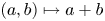 $(a,b)\mapsto a+b$, respectively. The projection
 $\mathbb {R}^2_{\ge 0} \longrightarrow \mathbb {R}_{\ge 0}$ to, say, the first factor, defines an isomorphism
 \[ Q_{\mathbb{R}}^{\vee} \times_{\mathbb{R}_{\ge 0}} \mathbb{R}^2_{\ge 0} \longrightarrow \{ (m,\lambda)\in Q_\mathbb{R}^\vee\times\mathbb{R}_{\ge0}\, |\, \lambda\le m(\rho_q)\}. \]
Thus defining  $\ell (E_q)= \rho _q$, we have a canonical isomorphism
 $\omega _q\simeq \omega _{E_q}$ with
 $\omega _{E_q}$ defined in (2.19). For a marked point
 $p_i\in C$, we have
 $\omega _{p_i}=Q^{\vee }_{\mathbb {R}} \times \mathbb {R}_{\ge 0}$, and
 $\Sigma (\pi )|_{\omega _{p_i}}$ is the projection onto the first component, again compatible with the definition of
 $\Gamma =\Gamma (G,\ell )$ in Construction 2.20.
2.5.2 Families of tropical maps to $\Sigma (X)$ from stable logarithmic maps

We continue working over a logarithmic point  $S=\operatorname {Spec}(Q \longrightarrow \Bbbk )$ and assume in addition given an fs log scheme
 $X$, which is simple in the sense of Definition 2.1.
Proposition 2.26 The tropicalization of a stable logarithmic map  $(C/S,\textbf {p},f)$ over the logarithmic point
 $S=\operatorname {Spec}(Q \longrightarrow \Bbbk )$ defines a family of tropical maps to
 $\Sigma (X)$ over
 $Q_\mathbb {R}^\vee$.
Proof. In view of Proposition 2.25 the statement follows readily from the definitions.
Remark 2.27 An element  $x\in V(G)\cup E(G)\cup L(G)$ corresponds to a point
 $x\in C$ – either a generic point, a double point, or a marked point. The cone
 $\boldsymbol {\sigma }(x)$ introduced in Remark 2.22 is
 \[ \boldsymbol{\sigma}(x)=(P_x)^{\vee}_{\mathbb{R}}={\operatorname{Hom}}(\overline{\mathcal{M}}_{X,\underline{f}(\bar x)},\mathbb{R}_{\ge 0}) \in \Sigma(X), \]
for any geometric point  $\bar x$ mapping to
 $x$. With this identification of cones understood, it is a matter of unravelling the definitions that the other discrete data introduced in Remark 2.22, the contact orders
 $u_{L_p},u_{E_q}$, agree with
 $u_p,u_q$ defined in § 2.3.5. Note in particular how (2.22) appears as the tropical manifestation of (2.8). Thus the type of the tropicalization of a stable logarithmic map, as a family of tropical maps (Definition 2.23), agrees with its combinatorial type from Definition 2.13.
2.5.3 Traditional tropical maps: the relative situation
A situation of particular interest arises when working over the standard log point  $b_0=\operatorname {Spec}(\mathbb {N}\to \Bbbk [\mathbb {N}]))$. Then all generalized cone complexes come with a morphism
 $\pi$ to
 $\Sigma (b_0)=\mathbb {R}_{\ge 0}$. Taking the fiber of
 $\pi$ over
 $1\in \mathbb {R}_{\ge 0}$ then produces a generalized polyhedral complex as introduced in § 2.1.3. Conversely, let
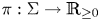 $\pi :\Sigma \to \mathbb {R}_{\ge 0}$ be a map of generalized cone complexes such that no maximal cone of
 $\Sigma$ maps to
 $0\in \mathbb {R}_{\ge 0}$. Then
 $\Sigma$ and
 $\pi$ can be recovered from the generalized polyhedral complex
 $\pi ^{-1}(1)$ by replacing each polyhedron
 $\sigma =(\sigma _\mathbb {R},N)$ by the closure of
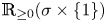 $\mathbb {R}_{\ge 0}(\sigma \times \{1\})$ in
 $N_\mathbb {R}\times \mathbb {R}$.
If  $X$ is a finite type logarithmic stack over the standard log point
 $b_0$ with associated tropicalization
 $\pi :\Sigma (X) \longrightarrow \Sigma (B_0)=\mathbb {R}_{\ge 0}$, we now write
 \[ \Delta(X)= \pi^{-1}(1) \subset \Sigma(X) \]
for the associated polyhedral complex.
In particular, this discussion applies to the logarithmic scheme  $X_0$ and logarithmically smooth morphism
 $X_0 \longrightarrow b_0$ from the main theorem in this paper, Theorem 1.2. Let
 $(C/S,\mathbf {p},f)$ be a stable log map to
 $X_0$ with
 $S=\operatorname {Spec}(Q\to \Bbbk )$ a log point as in § 2.5.2, but now coming with a map to
 $b_0$. Let
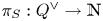 $\pi _S:Q^\vee \to \mathbb {N}$ be the tropicalization of
 $S \longrightarrow b_0$. Then the family of tropical maps
 $\Sigma (C) \longrightarrow \Sigma (X_0)$ over
 $Q^\vee$ carries the same information as its restriction to the fiber over
 $1\in \mathbb {R}_{\ge 0}$, a family of maps from metric graphs to
 $\Delta (X)$ parameterized by the polyhedron
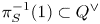 $\pi _S^{-1}(1)\subset Q^\vee$.
The transition from cone complexes to polyhedral complexes provides the link to more traditional tropical language. In the remainder of this paper we use cone complexes for most of the general results and polyhedral complexes for explicit computations. With regards to using both cones and polyhedra as parameter spaces for families of tropical maps, note that there is no conflict of language: a family of tropical maps to  $\Sigma (X_0)$ over a cone
 $\sigma$ can be viewed as a family of maps of metric graphs to
 $\Sigma (X_0)$ interpreted as a polyhedral complex, now parameterized by
 $\sigma$ as a polyhedron.Footnote 6
As a matter of notation, we indicate the transition from cone complexes to polyhedral complexes by overlining. Thus a family of tropical maps  $h:\Gamma \longrightarrow \Sigma (X_0)$ over a cone
 $\sigma$ with a map
 $\pi _S: \sigma \longrightarrow \mathbb {R}_{\ge 0}$ induces the family of tropical maps
 \begin{equation} \bar h:\bar \Gamma \longrightarrow \bar\Sigma(X)=\Delta(X) \end{equation}
over the polyhedron  $\bar \sigma =\pi _S^{-1}(1)$.
2.5.4 Basic maps and tropical universal families
Basicness of a stable logarithmic map  $(C/S,\mathbf {p},f)$ over a logarithmic point can then be recast as follows.
Proposition 2.28 Let  $(C/S,\mathbf {p},f)$ be a stable logarithmic map over a logarithmic point
 $S=\operatorname {Spec}(Q \longrightarrow \Bbbk )$ and
 $\tau$ its combinatorial type (Definition 2.13). Then
 $(C/S,\mathbf {p},f)$ is basic if and only if the family of tropical maps in Proposition 2.26 is universal among families of tropical maps to
 $\Sigma (X)$ of type
 $\tau$.
Proof. The definition of the dual of the basic monoid  $Q^{\vee }$ precisely encodes the data of a family of tropical maps to
 $\Sigma (X)$ over
 $\sigma =\mathbb {R}_{\ge 0}$ of type
 $\tau$ (Definition 2.23). Indeed, let
 $G_C$ be the dual intersection graph of
 $C$ from § 2.3.6, with vertices
 $v_\eta$, edges
 $E_q$ and legs
 $L_p$. Then a tuple
 $((V_{\eta })_{\eta }, (e_q)_q)\in \operatorname {Int}(Q^{\vee }_{\mathbb {R}})$ specifies a family of tropical maps
 \[ h:\Gamma(G,\ell) \longrightarrow \Sigma(X) \]
over  $\mathbb {R}_{\ge 0}$ of the given type, by defining
 $\ell (E_q)=e_q$ and
 $h|_{\omega _v}$ by mapping
 $1\in \mathbb {R}_{\ge 0}=\omega _{v_\eta }$ to
 $V_{\eta }\in \Sigma (X)$. The type also determines
 $h$ on each leg
 $L_p$. It is shown in [Reference Gross and SiebertGS13, Proposition 1.9] that if one such tropical map to
 $\Sigma (X)$ of a certain type exists then there exists one over
 $Q_\mathbb {R}^\vee$; moreover, any other tropical map of the same type, say over
 $\sigma \in \mathbf {Cones}$, is obtained from this one by pull-back via a homomorphism
 $\sigma \to Q_{\mathbb{R}}^\vee$.
Remark 2.29 Note that if  $S$ is not a log point, the diagram (2.16) still exists, but the fibres of
 $\Sigma (\pi )$ may not be the expected ones. In particular, if
 $\bar s$ is a geometric point of
 $S$, there is a functorial diagram
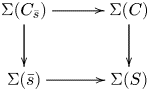
but this diagram need not be Cartesian due to monodromy in the family  $S$. For example, it is easy to imagine a situation where
 $C_{\bar s}$ has two irreducible components and two nodes for every geometric point
 $\bar s$, but the nodal locus of
 $C \longrightarrow S$ is irreducible, as there is monodromy interchanging the two nodes. Then a fibre of
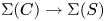 $\Sigma (C) \longrightarrow \Sigma (S)$ may consist of two vertices joined by a single edge, while a fibre of
 $\Sigma (C_{\bar s}) \longrightarrow \Sigma (\bar s)$ will have two vertices joined by two edges. Similarly, there may be monodromy interchanging irreducible components, and hence a fibre of
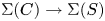 $\Sigma (C) \longrightarrow \Sigma (S)$ may have fewer vertices than
 $C_{\bar w}$ has irreducible components. This issue can be resolved by redefining moduli of tropical curves as stacks, following [Reference Cavalieri, Chan, Ulirsch and WiseCCUW20].
2.5.5 Decorated tropical maps from stable logarithmic maps
In the situation of Proposition 2.26, the tropical map  $h:\Sigma (C)\to \Sigma (X)$ comes with the natural decoration
 \begin{equation} \mathbf{A}: V(G) \longrightarrow H_2^+(X),\quad v\longmapsto [f(C(v))]. \end{equation}
Here  $C(v)\subset C$ is the irreducible component corresponding to the vertex
 $v$ and
 $[f(C(v))]$ is the class of
 $f(C(v))$ in
 $H_2^+(X)$. The decoration by curve classes is compatible with the contraction morphisms of decorated graphs (Definition 2.24) defined by generization.
Lemma 2.30 Let  $(C/S,\mathbf {p},f)$ be a stable logarithmic map to
 $X$ over some logarithmic scheme
 $S$ and
 $(\tau _{\bar s},\mathbf {A}_{\bar s})$ with
 $\tau _{\bar s}= (G_{\bar s},\mathbf {g}_{\bar s},\boldsymbol {\sigma }_{\bar s},\mathbf {u}_{\bar s})$ its decorated type at the geometric point
 $\bar s\to S$ according to Definition 2.23 and (2.25). Then if
 $\bar s,\bar s'\to S$ are two geometric points with
 $\bar s$ a generization of
 $\bar s'$, the induced map
 \[ (\tau_{\bar s'},\mathbf{A}_{\bar s'}) \longrightarrow (\tau_{\bar s},\mathbf{A}_{\bar s}) \]
is a contraction morphism (Definition 2.24).
Proof. [Reference Gross and SiebertGS13, Lemma 1.11] says that  $\tau _{\bar s'}\to \tau _{\bar s}$ is a contraction morphism. To check the statement on the curve classes, recall that the preimage of
 $v\in G_{\bar s}$ in
 $G_{\bar s}'$ consists of those vertices
 $v'\in G_{\bar s'}$ with
 $C_{\bar s'}(v')$ contained in the closure of
 $C_{\bar s}(v)$. Since this closure defines a flat family of curves, invariance of classes in
 $H_2^+(X)$ in flat families then implies
 \[ [f(C_{\bar s}(v))] = \sum_{v'\mapsto v} [f(C_{\bar s'}(v'))], \]
as claimed.
2.6 Stacks of stable logarithmic maps marked by tropical types
We now put ourselves in the situation of the main result in this paper, Theorem 1.2, and assume  $X_0 \longrightarrow b_0$ is logarithmically smooth and
 $X_0$ is simple. In particular, curve classes are understood to take values in
 $H_2^+(X_0)$.
Similar to  $\mathbf {M}(G,\mathbf {g})$, we can now define stacks of stable logarithmic maps to
 $X_0$ over
 $b_0$ with restricted decorated types of tropicalizations.
Definition 2.31 Let  ${\boldsymbol{\tau }}=(G,\mathbf {g},\boldsymbol {\sigma },\mathbf {u},\mathbf {A})=(\tau ,\mathbf {A})$ be the decorated type of a tropical map as defined in Definition 2.23. A marking by
 ${\boldsymbol{\tau }}$ of a stable logarithmic map
 $(C/S,\mathbf {p},f)$ to
 $X_0$ over a logarithmic base scheme
 $S$ over
 $b_0$ is the following data:
(1) an isomorphism of
$\underline{C}/\underline{S}$ with a $(G,\mathbf {g})$-marked pre-stable curve (2.12);(2) the restriction of
$\underline{f}$ to the closed subscheme $Z\subset \underline{C}$ (a subcurve or nodal or punctured section of $C$) defined by $x\in V(G)\cup E(G)\cup L(G)$ factors through $X_{\boldsymbol {\sigma }(x)}\subset X_0$;(3) for each geometric point
$\bar s \longrightarrow S$ with decorated type ${\boldsymbol{\tau }}_{\bar s}=(G_{\bar s},\mathbf {g}_{\bar s},\boldsymbol {\sigma }_{\bar s},\mathbf {u}_{\bar s},\mathbf {A}_{\bar s})$ of $(C/S,\mathbf {p},f)$, the morphism $(G_{\bar s},\mathbf {g}_{\bar s}) \longrightarrow (G,\mathbf {g})$ of decorated graphs from (1) defines a morphism
of decorated types of tropical maps; in particular, there is an associated localization map\[ {\boldsymbol{\tau}}_{\bar s}=(\tau_{\bar s},\mathbf{A}_{\bar s}) \longrightarrow {\boldsymbol{\tau}}=(\tau,\mathbf{A}) \]of the corresponding basic monoids;\[ \chi_{\tau\tau_{\bar s}}: Q_{\tau_{\bar s}} \longrightarrow Q_\tau \](4) in the situation of (3), the preimage
$\mathcal {K}_{{\boldsymbol{\tau }},\bar s}\subset \mathcal {M}_{S,\bar s}$ of $Q_\tau \setminus \{0\}$ under the composition
maps to\[ \mathcal{M}_{S,\bar s} \longrightarrow \overline{\mathcal{M}}_{S,\bar s}= Q_{\tau_{\bar s}}\stackrel{\chi_{\tau\tau_{\bar s}}}{ \longrightarrow} Q_\tau \]$0$ under the structure morphism $\mathcal {M}_{S,\bar s} \longrightarrow \mathcal {O}_{S,\bar s}$.










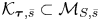



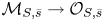
Remark 2.32 Definition 2.31 calls for some explanations. The isomorphism in (1) just identifies a contraction of the dual intersection graph of each geometric fiber of  $\underline{C}\to \underline{S}$ with a fixed genus-decorated graph
 $(G,\mathbf {g})$, in a way compatible with generization. Then (2) and (3) ask that the decorated graphs associated to geometric fibers of the stable log map
 $(C/S,\mathbf {p},f)$ are refinements of the decorated type
 $(\tau ,\mathbf {A})$. Condition (4) is maybe the least obvious, but is necessary to restrict the decorated type on a schematic level. It effectively takes the reduction of the moduli space in unobstructed situations, or on a virtual level later on. We could, in fact, omit Condition (4) at the expense of taking reductions in some formulas below, e.g. in
 $\mathfrak{M}(\mathcal{X}_0,\tau)$ in Corollary 3.8.
Given a decorated type  ${\boldsymbol{\tau }}=(\tau ,\mathbf {A})$ of tropical maps, we define
 \begin{equation} \mathscr{M}(X_0,{\boldsymbol{\tau}}) \end{equation}
as the stack with objects over a scheme  $S$ basic stable logarithmic maps
 $(C/S,\mathbf {p},f)$ over
 $b_0$ marked by the decorated type
 ${\boldsymbol{\tau }}$. We emphasize
 $\mathscr {M}(X_0,{\boldsymbol{\tau }})$ is a moduli space of stable maps over
 $b_0$, but we suppress
 $/b_0$ in the notation for simplicity. Similarly, we henceforth write
 $\mathscr {M}(X_0,\beta )$ instead of
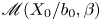 $\mathscr {M}(X_0/b_0,\beta )$.
For later use let us also show here that the monoid ideals in Definition 2.31(4) define a coherent sheaf of ideals [Reference OgusOgu18, Proposition II.2.6.1] in  $\mathcal {M}_{\mathscr {M}(X_0,{\boldsymbol{\tau }})}$.
Lemma 2.33 For each decorated type  ${\boldsymbol{\tau }}$ of tropical maps, there exists a unique coherent sheaf of ideals
 $\mathcal {K}_{\boldsymbol{\tau }}\subset \mathcal {M}_{\mathscr {M}(X_0,{\boldsymbol{\tau }})}$ with stalks
 $\mathcal {K}_{{\boldsymbol{\tau }},\bar s}$ as defined in Definition 2.31(4).
Proof. The statement follows by [Reference OgusOgu18, Proposition II.2.6.1(2)] since  $\mathcal {K}_{\bar s}$ is defined by a monoid ideal in a chart.
Let  $\beta =(g,A,u_{p_1},\ldots ,u_{p_k})$ with
 $g=|\mathbf {g}|$,
 $A=|\mathbf {A}|$,
 $k=|L(G)|$.
(1) The stack
$\mathscr {M}(X_0,{\boldsymbol{\tau }})$ is a proper Deligne–Mumford stack.(2) The morphism
$\mathscr {M}(X_0,{\boldsymbol{\tau }}) \longrightarrow \mathscr {M}(X_0,\beta )$ is finite and unramified.


Proof. By condition (1) in Definition 2.31, we have a morphism of stacks
 \[ \mathscr{M}(X_0,{\boldsymbol{\tau}}) \longrightarrow \mathscr{M}(X_0,\beta)\times_\mathbf{M} \mathbf{M}(G,\mathbf{g}) = \mathscr{M}(X_0,\beta)\times_\mathfrak{M} \mathfrak{M}(G,\mathbf{g}). \]
Conditions (2) and (4) in Definition 2.31 defines a closed substack of the fibre product on the right-hand side. Prescribing the contact orders  $u_p, u_q$ at
 $p\in L(G)$,
 $q\in E(G)$ and the curve classes for the subcurves of
 $C$ defined by each
 $v\in V(G)$ imposes locally constant conditions, and hence select a union of connected components of this closed substack. Thus
 $\mathscr {M}(X_0,{\boldsymbol{\tau }})$ is isomorphic to a closed substack of the algebraic stack
 $\mathscr {M}(X_0,\beta )\times _\mathbf {M} \mathbf {M}(G,\mathbf {g})$, proving (1). The second statement follows since
 $\mathfrak {M}(G,\mathbf {g}) \longrightarrow \mathfrak {M}$ is finite and unramified (Proposition 2.18).
3. From toric decomposition to virtual decomposition
Throughout this section, denote by  $b_0= (\operatorname {Spec}\Bbbk ,\Bbbk ^\times \oplus \mathbb {N})$ the standard log point over
 $\Bbbk$. We also fix a logarithmically smooth and projective morphism
 $X_0\to b_0$ of log schemes.
3.1 Decomposition in the log smooth case
The decomposition formula is based on the following simple fact in toric geometry. Let  $\pi : W \longrightarrow \mathbb {A}^1$ be a morphism of toric varieties with
 $\Sigma _\pi :\Sigma _W\to \Sigma _{\mathbb {A}^1}$ the corresponding morphism of fans, defined by a homomorphism
 $N \longrightarrow N_{\mathbb {A}^1}$ of co-character lattices. We identify
 $\Sigma _W$ with the cone complex
 $\Sigma (W)$ associated to
 $W$ with its toric log structure, by forgetting the embedding of
 $|\Sigma _W|$ into
 $N_\mathbb {R}$, and similarly for
 $\Sigma _{\mathbb {A}^1}$. For a ray
 $\gamma \in \Sigma _W$ denote by
 $D_\gamma \subset W$ the corresponding toric divisor and by
 $m_\gamma \in \mathbb {N}$ the generator of the image of
 \[ \mathbb{Z}\simeq N_\gamma\stackrel{\Sigma(\pi)}{\longrightarrow} N_{\mathbb{A}^1}\simeq\mathbb{Z}. \]
Proposition 3.1 We have the following equality of Weil divisors on  $W$:
 \[ \pi^*(\{0\}) = \sum_{\gamma} m_\gamma D_\gamma. \]
Proof. The map  $\Sigma (\pi ):N \longrightarrow \mathbb {Z}$ defines a monomial function
 $z^m$,
 $m\in {\operatorname {Hom}}(N,\mathbb {Z})$ on
 $W$. It is standard that the order of vanishing of
 $z^m$ on the divisor
 $D_{\gamma }$ is the value of
 $m$ on the generator of
 $\gamma \cap N_{\gamma }$. But this value is precisely
 $m_{\gamma }$, giving the result.
Proposition 3.1 can equivalently be stated as a decomposition of the fundamental class of 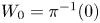 $W_0=\pi ^{-1}(0)$. Our decomposition theorem is based on the generalization of this statement to a log smooth morphism
 $W_0 \longrightarrow b_0$ of logarithmic algebraic stacks locally of finite type. Note first that in this situation,
 $W_0$ is locally pure-dimensional by log smoothness over
 $b_0$. Thus it makes sense to define the fundamental cycle
 $[W_0]$ as locally finite formal linear combination of locally top-dimensional integral substacks.
Next, to define the multiplicities  $m_\gamma$, consider the morphism of generalized cone complexes
 $\Sigma (W_0) \to \Sigma (b_0)$ associated to
 $W_0 \longrightarrow b_0$ as defined after Proposition 2.2. We have
 $\Sigma (b_0) \simeq \mathbb {R}_{\geq 0}$ with the lattice
 $N_{b_0} \simeq \mathbb {Z}$. Working in charts, there is still a correspondence between rays
 $\gamma \in \Sigma (W_0)$ and integral substacks
 $W_\gamma \subset W_0$, now locally of top dimension. Note that if
 $\sigma \in \Sigma (W_0)$ and
 $\gamma \to \sigma$ is a morphism in
 $\Sigma (X)$, then the pull-back of
 $W_\gamma$ to a chart for
 $W_0$ at a geometric point of the stratum
 $W_0(\sigma )$ is contained in the union of all toric divisors for rays
 $\gamma '\subset \sigma$ with
 $\gamma \simeq \gamma '$ in
 $\Sigma (W_0)$. Hence
 $W_\gamma$ may not be locally irreducible if
 $\Sigma (W_0)$ has cones with self-identifications. But since we work with cone complexes with reduced presentations, such rays
 $\gamma ,\gamma '\subset \sigma$ define the same one-dimensional cone in
 $\Sigma (W_0)$. These rays may be identified by self-maps of
 $\sigma$ or simply correspond to several maps
 $\sigma ^\vee \to \gamma ^\vee$ defined by generization in
 $\overline{\mathcal{M}}_{W_0}$.
For a ray  $\gamma$ with integral lattice
 $N_{\gamma }$, we have
 $\gamma \cap N_{\gamma }\simeq \mathbb {N}$, and the homomorphism
 $\mathbb {Z}\simeq N_\gamma \longrightarrow N_{b_0}\simeq \mathbb {Z}$ is multiplication by an integer
 $m_\gamma$.
For the following statement recall also the notion of idealized log structures and idealized log smoothness from [Reference OgusOgu18, III.1.3 and IV.3]. In a nutshell, this notion is designed to treat strata of logarithmic spaces, by adding sheaves of ideals  $\mathcal {K}\subset \mathcal {M}_X$ defining these strata as part of the data.
Corollary 3.2 Let  $\pi :W_0 \longrightarrow b_0$ be a log smooth morphism locally of finite type from a logarithmic algebraic stack to the standard log point
 $b_0$. Denote by
 $[W_0]$ the fundamental cycle of
 $W_0$, well-defined since
 $W_0$ is locally pure-dimensional. Then the following formula holds
 \[ [W_0] = \sum_{\gamma} m_\gamma [W_\gamma] \]
in the group of locally top-dimensional algebraic cycles on  $W_0$ [Reference KreschKre99]. The sum runs over the one-dimensional cones in the generalized cone complex
 $\Sigma (W_0)$ of
 $W_0$.
Moreover,  $W_\gamma$ is idealized log smooth over
 $b_0$ for some sheaf of ideals
 $\mathcal {K}_\gamma \subset \mathcal {M}_{W_\gamma }$.
Proof. The claimed equality of cycles can be checked on a cover by smooth charts. We may thus assume that  $W_0$ is covered by a neat chart, that is, that we have a commutative diagram
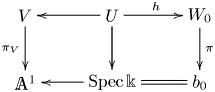
where (i)  $h$ is an étale surjection, (ii)
 $\operatorname {Spec}\Bbbk \longrightarrow \mathbb {A}^1$ is the inclusion of the origin and
 $g:U\to \operatorname {Spec}\Bbbk \times _{\mathbb {A}^1} V= \pi _V^{-1}(0)$ is smooth, (iii)
 $V$ is the affine toric variety
 $\operatorname {Spec}\Bbbk [\sigma ^\vee \cap N^*]$ defined by
 $(\sigma _\mathbb {R},N)\in \Sigma (W_0)$ and
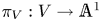 $\pi _V:V\to \mathbb {A}^1$ is a toric morphism. Thus we have
 \[ h^*[W_0]=[U]=g^*([V_0]) \]
via flat pull-back, where  $V_0=\pi ^{-1}(0)$. Now Proposition 3.1 describes
 $[V_0]$ in terms of the toric divisors
 $D_{\gamma '}\subset V$ defined by the rays
 $\gamma '\subset \sigma$. Thus
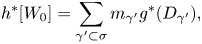 \begin{equation} h^*[W_0]= \sum_{\gamma'\subset\sigma} m_{\gamma'} g^*(D_{\gamma'}), \end{equation}
with  $m_{\gamma '}$ the generator of the image of
 $\mathbb {Z}\simeq N_{\gamma '}\to N_{\mathbb {A}^1}=\mathbb {Z}$. Each such
 $\gamma '$ defines a one-dimensional cone
 $\gamma \in \Sigma (W_0)$ with
 $m_\gamma =m_{\gamma '}$. Moreover, for two different rays
 $\gamma ',\gamma ''\subset \sigma$, the geometric generic points of
 $D_{\gamma '}$,
 $D_{\gamma ''}$ map to the same geometric generic point of
 $W_0$ if and only if there exists a one-dimensional cone
 $\gamma \in \Sigma (W_0)$ and morphisms
 $\gamma \to \gamma '$ and
 $\gamma \to \gamma ''$. Since
 $\Sigma (x)$ is the colimit of such
 $\sigma$ appearing in neat charts of
 $W_0$, the equality (3.1) in a chart verifies the claimed equation of cycles.
The claim on idealized log smoothness of  $W_\gamma$ follows from the local description as a union of toric strata and the criteria in [Reference OgusOgu18, IV.3.1.21 and IV.3.1.22].
3.2 Logarithmic maps to the relative Artin fan $\mathcal {X}_0$

To lift the decomposition result Corollary 3.2 to the moduli space  $\mathscr {M}(X_0,\beta ) =\mathscr {M}(X_0/b_0,\beta )$ of stable logarithmic maps in Theorem 1.2, we factor the map
 $\mathscr {M}(X_0,\beta ) \to \mathfrak {M}_{b_0}$ forgetting the logarithmic map to
 $X_0$ via an intermediate log stack that is log étale over
 $\mathfrak {M}_{b_0}=\mathfrak {M}_B\times _B b_0$. This intermediate log stack is the stack
 $\mathfrak {M}(\mathcal {X}_0,\beta ')$ of basic logarithmic maps to the relative Artin fan
 $\mathcal {X}_0 = b_0\times _B \mathcal {X}$ of
 $X_0$ over
 $b_0$ (Definition 2.9). Since curve classes do not make sense on
 $\mathcal {X}_0$, we have no stability in
 $\mathfrak {M}(\mathcal {X}_0,\beta ')$ and
 \[ \beta'=(g,u_{p_1},\ldots,u_{p_k}) \]
only keeps the genus and the contact orders at the marked points from  $\beta =(g,A,u_{p_1},\ldots ,u_{p_k})$. The point is that
 $\mathfrak {M}(\mathcal {X}_0,\beta ')$ is pure-dimensional, has unobstructed deformations and captures the tropical geometry of the situation, while the decomposition according to Corollary 3.2 has a simple tropical interpretation on this stack.
(1) The stack of basic logarithmic maps
$\mathfrak {M}(\mathcal {X}_0,\beta ')$ to $\mathcal {X}_0$ over $b_0$ is algebraic.(2) The morphism
$\mathfrak {M}(\mathcal {X}_0,\beta ) \longrightarrow \mathfrak {M}_{b_0}$ forgetting the logarithmic map to $\mathcal {X}_0$ is strict and étale.




Proof. Let  $\mathfrak {C}_{b_0}$ denote the universal curve over
 $\mathfrak {M}_{b_0}$. By openness of basicness,
 $\mathfrak {M}(\mathcal {X}_0,\beta ')$ is an open substack of
 ${\operatorname {Hom}}_{\mathfrak {M}_{b_0}}(\mathfrak {C}_{b_0}, \mathfrak {M}_{b_0}\times _{b_0} \mathcal {X}_0)$. This Hom-stack is algebraic by [Reference WiseWis16, Corollary 1.1.1], proving (1).
For (2), the morphism  $\mathfrak {M}(\mathcal {X}_0,\beta ') \longrightarrow \mathfrak {M}_{b_0}$ is strict by definition. Since
 $\mathcal {A}_X\to \mathcal {A}_B$ is logarithmically étale, it follows that
 $\mathcal {X}_0$ is logarithmically étale over
 $b_0$. Now [Reference Abramovich and WiseAW18, Propostion 3.2] implies that
 $\mathfrak {M}(\mathcal {X}_0,\beta ')\to \mathfrak {M}_{b_0}$ is logarithmically étale.
Note that Proposition 3.3(2) also shows that  $\mathfrak {M}(\mathcal {X}_0,\beta ')$ is log smooth over
 $b_0$, because
 $\mathfrak {M}_{b_0}$ is, and that the obstruction theory of
 $\mathscr {M}(X_0,\beta )$ over
 $\mathfrak {M}_{b_0}$ induces an obstruction theory for
 $\mathscr {M}(X_0,\beta )$ over
 $\mathfrak {M}(\mathcal {X}_0,\beta ')$.
Remark 3.4 Implicit in the discussion in Proposition 2.28 applied with  $X=\operatorname {Spec}\Bbbk$ and in Remark 2.29 is the fact that log-smoothness of
 $\mathbf {M}$ can be used to relate the moduli space of abstract tropical curves to the tropicalization of
 $\mathbf{M}$, properly interpreted as a stacky cone complex [Reference Cavalieri, Chan, Ulirsch and WiseCCUW20]; see the precise statement in [Theorem 3.14, Reference UlirschUli20]. In view of Proposition 3.3(2) we can now similarly relate the moduli space of tropical maps to
 $\Sigma (X_0)=\Sigma (\mathcal {X}_0)$ of class
 $\beta '$ to the stacky cone complex associated to
 $\mathfrak {M}(\mathcal {X}_0,\beta ')$. While we do not develop the details of this picture here, it should be clear that this interpretation is at the basis of many arguments in this paper.
We also need the  $\tau$-marked refinements
 $\mathfrak {M}(\mathcal {X}_0,\tau )$ of
 $\mathfrak {M}(\mathcal {X}_0,\beta ')$, similar to
 $\mathscr {M}(X_0,{\boldsymbol{\tau }})$ for
 $\mathscr {M}(X_0,\beta )$. Omitting the curve class,
 $\tau$ is now a type of tropical map to
 $\Sigma (X_0)$ of total genus
 $g$ and with
 $k$ legs (Definition 2.23(1)). Then
 \[ \mathfrak{M}(\mathcal{X}_0,\tau) \]
is defined as in Definition 2.31 with  $\mathcal {X}_0$ replacing
 $X_0$ and disregarding the curve classes in Definition 2.31(3). Analogous to
 $\mathcal {K}_{\boldsymbol{\tau }}$ for
 $\mathscr {M}(X_0,{\boldsymbol{\tau }})$ constructed in Lemma 2.33, we have a sheaf of ideals
 \begin{equation} \mathcal{K}_\tau\subset \mathcal{M}_{\mathfrak{M}(\mathcal{X}_0,\tau)}. \end{equation}
We first observe the following analogue of Proposition 2.34.
Proposition 3.5
(1) The stack
$\mathfrak {M}(\mathcal {X}_0,\tau )$ is algebraic.(2) The morphism
$\iota _\tau :\mathfrak {M}(\mathcal {X}_0,\tau ) \longrightarrow \mathfrak {M}(\mathcal {X}_0,\beta ')$ forgetting the marking by $\tau$ is finite and unramified.



Proof. The proof is identical to the proof of Proposition 2.34.
We are now in position to apply Corollary 3.2 to  $\mathfrak {M}(\mathcal {X}_0,\beta ')\to b_0$. The key is the description of the components
 $W_\gamma$ in this corollary in terms of rigid tropical maps.
Definition 3.6 A family of tropical maps  $h:\Gamma \to \Sigma (X_0)$ of type
 $\tau$ is rigid if the corresponding basic monoid
 $Q(\tau )$ from Definition 2.23(3) is isomorphic to
 $\mathbb {N}$.
In the language of polyhedral complexes, being rigid is equivalent to saying that the restriction 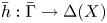 $\bar h: \bar \Gamma \longrightarrow \Delta (X)$ of
 $h$ to the fiber over
 $1\in \mathbb {R}_{\ge 0}=\Sigma (b_0)$ cannot be deformed as a map of generalized polyhedral complexes. In other words, as a traditional tropical map, any deformation of
 $\bar h$ keeping the combinatorial data (i.e. of constant type) is trivial.
The following decomposition of the Artin stack  $\mathfrak {M}(\mathcal {X}_0,\beta ')$ according to rigid tropical curves is the main result of this section.
Theorem 3.7 (Virtual decomposition) For each irreducible component  $W_\gamma$ of
 $\mathfrak {M}(\mathcal {X}_0,\beta ')$ according to Corollary 3.2 there exists a unique type
 $\tau$ of a rigid tropical map such that
 $W_\gamma$ is an irreducible component of the image of the finite map
 $\iota _\tau :\mathfrak {M}(\mathcal {X}_0,\tau ) \longrightarrow \mathfrak {M}(\mathcal {X}_0,\beta ')$ from Proposition 3.5.
In particular,  $\mathfrak {M}(\mathcal {X}_0,\tau )$ with the sheaf of ideals
 $\mathcal {K}_\tau \subset \mathcal {M}_{\mathfrak {M}(\mathcal {X}_0,\tau )}$ from (3.2) is idealized.
Proof. The logarithmic stack  $\mathfrak {M}(\mathcal {X}_0,\beta ')$ is logarithmically smooth over
 $b_0$ by Proposition 3.3 and since
 $\mathfrak {M}_{b_0}/b_0$ is logarithmically smooth. Up to a smooth factor, the map
 \[ \mathfrak{M}(\mathcal{X}_0,\beta') \longrightarrow b_0 \]
is locally given by base change to the central fibre of the map of toric varieties  $\operatorname {Spec} \Bbbk [Q] \longrightarrow \operatorname {Spec} \Bbbk [\mathbb {N}]$ with
 $Q$ the basic monoid of a tropical map to
 $\Sigma (X)$ of some type
 $\tau '$ and
 $\mathbb {N}\to Q$ induced by the structure map
 \[ \Sigma(\pi): \Sigma(X) \longrightarrow \Sigma(B)=\mathbb{R}_{\ge0}. \]
Locally the subschemes  $W_\gamma$ are defined by the toric divisors in
 $\operatorname {Spec}\Bbbk [Q]$, which are in bijection to extremal rays in
 $Q_\mathbb {R}^\vee$. Each extremal ray defines a rigid tropical map, say of type
 $\tau$. Any localization map of the associated basic monoids
 $Q_{\tau '} \longrightarrow Q_\tau =\mathbb {N}$ is the contraction of the codimension one face dual to the one-dimensional cone in
 $Q_{\tau '}^\vee$ defined by
 $\tau$. By the definition of
 $\mathcal {K}_\tau$, the monoid ideal defining the corresponding toric prime divisor agrees with the ideal in
 $Q_{\tau '}$ given by
 $\mathcal {K}_\tau$. Since this description is compatible with the restriction of charts, the first statement follows.
Corollary 3.2 also shows that  $W_\gamma \to b_0$ is idealized log-smooth. The corresponding sheaf of ideals has just been checked to agree with
 $\mathcal {K}_\tau$ locally along
 $W_\gamma$.
Corollary 3.8 We have the following equality of top-dimensional algebraic cycles in the pure-dimensional algebraic stack  $\mathfrak {M}(\mathcal {X}_0,\beta ')$:
 \[ [\mathfrak{M}(\mathcal{X}_0,\beta')] = \sum_\tau m_\tau\cdot [\iota_\tau(\mathfrak{M}(\mathcal{X}_0,\tau))]. \]
The sum is over all types  $\tau$ of rigid tropical maps to
 $\Sigma (X)$ and
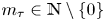 $m_\tau \in \mathbb {N}\setminus \{0\}$ is the projection of the generator of the dual basic monoid
 $Q_\tau ^\vee \simeq \mathbb {N}$ to
 $\Sigma (b_0)=\mathbb {R}_{\ge 0}$.
Proof. The statement merely spells out the definition of the multiplicities  $m_\tau$ in Corollary 3.2.
3.3 Proof of the decomposition theorem
To prove the main theorem, Theorem 1.2, it remains to apply the virtual bivariant machinery developed by Costello [Reference CostelloCos06] and Manolache [Reference ManolacheMan12]. We need two lemmas.
Lemma 3.9 The degree of the finite map
 \[ \iota_\tau:\mathfrak{M}(\mathcal{X}_0,\tau) \longrightarrow \iota_\tau(\mathfrak{M}(\mathcal{X}_0,\tau))\subset\mathfrak{M}(\mathcal{X}_0,\beta') \]
from Proposition 3.5(2) over any irreducible component of the image is  $|\operatorname {Aut}(\tau )|$.
Proof. The description of the smooth cover of  $\mathfrak {M}(\mathcal {X}_0,\beta ')$ given in the proof of Theorem 3.7 shows that each geometric generic point
 $\operatorname {Spec} K\to \mathfrak {M}(\mathcal {X}_0,\beta ')$ of
 $\iota _\tau (\mathfrak {M}(\mathcal {X}_0,\tau ))$ is a basic logarithmic map to
 $\mathcal {X}_0$ over
 $b_0$, defined over
 $K$ and with basic monoid
 $Q(\tau )=\mathbb {N}$ and tropical type isomorphic to
 $\tau$. Thus a geometric generic point of
 $\mathfrak {M}(\mathcal {X}_0,\tau )$ is a basic logarithmic map
 $(C/S,\mathbf {p},f)$ to
 $\mathcal {X}_0$ over a standard logarithmic point
 $S=\operatorname {Spec}(\mathbb {N} \longrightarrow K)$. Writing
 $\tau =(G,\mathbf {g},\boldsymbol {\sigma },\mathbf {u})$, the fibre of
 $\iota _\tau$ over
 $(C/S,\mathbf {p},f)$ is an isomorphism of the dual intersection graph of
 $C$ with
 $G$ identifying
 $\mathbf {g},\boldsymbol {\sigma },\mathbf {u}$ with the genera, strata and contact orders of
 $(C/S,\mathbf {p},f)$. The statement now follows by observing that the automorphism group
 $\operatorname {Aut}(\tau )$ of the decorated graph
 $\tau$ acts simply transitively on this set of isomorphisms of graphs.
As an intermediate object we define the stack of basic stable logarithmic maps marked by a tropical type  $\tau$ by
 \begin{equation} \mathscr{M}_\tau(X_0,\beta):= \mathfrak{M}(\mathcal{X}_0,\tau)\times_{\mathfrak{M}(\mathcal{X}_0,\beta')}\mathscr{M}(X_0,\beta). \end{equation}
Compared to  $\mathscr {M}(X_0,{\boldsymbol{\tau }})$, this stack keeps the total curve class
 $A$ from
 $\beta =(g,A,u_{p_1},\ldots ,u_{p_k})$, but drops the restriction on the distribution of
 $A$ to the subcurves given by the vertices.
For the following statement recall that  $\mathscr {M}(X_0,{\boldsymbol{\tau }})$ is the stack defined in (2.26) of basic stable log maps over
 $b_0$ marked by the decorated type
 ${\boldsymbol{\tau }}$ and
 \[ j_{\boldsymbol{\tau}}: \mathscr{M}(X_0,{\boldsymbol{\tau}}) \longrightarrow \mathscr{M}(X_0,\beta) \]
is the morphism forgetting the marking.
Lemma 3.10 Let  $\tau =(G,\mathbf {g},\boldsymbol {\sigma },\mathbf {u})$ be the type of a tropical map to
 $\Sigma (X_0)$ and
 $\beta =(g,A,u_{p_1},\ldots ,u_{p_k})$. Then we have the decomposition
 \[ \mathscr{M}_\tau(X_0,\beta) = \coprod_{\mathbf{A}}\mathscr{M}\big(X_0,{\boldsymbol{\tau}}\big), \]
where the sum is over all  $\mathbf {A}: V(G)\to H_2^+(X_0)$ with
 $|\mathbf {A}|=A$ and
 ${\boldsymbol{\tau }}=(\tau ,\mathbf {A})$.
Proof. The result follows since the map  $\mathbf {A}: V(G)\to H_2^+(X_0)$ of curve classes is locally constant on
 $\mathscr {M}_\tau (X_0,\beta )$.
Before stating the main theorem, we note that  $\mathscr {M}_\tau (X_0,\beta )$ inherits a perfect obstruction theoryFootnote 7
 $\mathfrak {E}_\tau$ over
 $\mathfrak {M}(\mathcal {X}_0,\tau )$ from the perfect obstruction theory
 $\mathfrak {E}$ of
 $\mathscr {M}(X_0,\beta )$ over
 $\mathfrak {M}(\mathcal {X}_0,\beta ')$ by base change by
 $\iota _\tau : \mathfrak {M}(\mathcal {X}_0,\tau )\to \mathfrak {M}(\mathcal {X}_0,\beta ')$. Restricting to the open substacks
 $\mathscr {M}(X_0,{\boldsymbol{\tau }})\subset \mathscr {M}_\tau (X_0,\beta )$ in Lemma 3.10, we also have an obstruction theory
 $\mathfrak {E}_{\boldsymbol{\tau }}$ on
 $\mathscr {M}(X_0,{\boldsymbol{\tau }})$. If
 $\tau$ is rigid,
 $\mathfrak {M}(\mathcal {X}_0,\tau )$ is pure-dimensional of the same dimension as
 $\mathfrak {M}(\mathcal {X}_0,\beta ')$. Thus we have virtual fundamental classes
 \[ [\mathscr{M}(X_0,\beta)]^{\operatorname{virt}},\quad [\mathscr{M}_\tau(X_0,\beta)]^{\operatorname{virt}},\quad [\mathscr{M}(X_0,{\boldsymbol{\tau}})]^{\operatorname{virt}} \]
on the moduli spaces  $\mathscr {M}(X_0,\beta )$,
 $\mathscr {M}_\tau (X_0,\beta )$ and
 $\mathscr {M}(X_0,{\boldsymbol{\tau }})$.
Here is our main theorem, stated as Theorem 1.2 in the introduction.
Theorem 3.11 For any  $\beta =(g,A,u_{p_1},\ldots ,u_{p_k})$ we have the equality
 \[ [\mathscr{M}(X_0,\beta)]^{\operatorname{virt}} = \sum_{{\boldsymbol{\tau}}=(\tau,\mathbf{A})} \frac{m_\tau}{|\operatorname{Aut}(\boldsymbol{\tau})|}\, {j_{\boldsymbol{\tau}}}_*[\mathscr{M}(X_0,{\boldsymbol{\tau}})]^{\operatorname{virt}} \]
in the Chow group of the underlying stack  $\underline{\mathscr {M}}(X_0,\beta )$ with coefficients in
 $\mathbb {Q}$. The sum is over all isomorphism classes of decorated types of rigid tropical maps
 ${\boldsymbol{\tau }}=(G,\mathbf {g},\boldsymbol {\sigma },\mathbf {u},\mathbf {A})=(\tau ,\mathbf {A})$ of total genus
 $|\mathbf {g}|=g$, total curve class
 $|\mathbf {A}|=A$ and
 $|L(G)|=k$.
Proof. By Corollary 3.8 and Lemma 3.9 we can write the fundamental class of  $\mathfrak {M}(\mathcal {X}_0,\beta ')$ as
 \begin{equation} [\mathfrak{M}(\mathcal{X}_0,\beta')]= \sum_\tau \frac{m_\tau}{|\operatorname{Aut}(\tau)|}\, {\iota_\tau}_*[\mathfrak{M}(\mathcal{X}_0,\tau)]. \end{equation}
For each  $\tau$, compatibility of virtual pull-back with push-forward [Reference ManolacheMan12, Theorem 4.1(3)] applied to the cartesian square
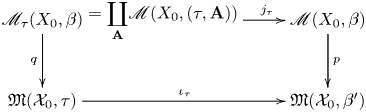
yields
 \[ p_\mathfrak{E}^!{\iota_\tau}_*[\mathfrak{M}(\mathcal{X}_0,\tau)] = {j_\tau}_* q_{\mathfrak{E}_\tau}^! [\mathfrak{M}(\mathcal{X}_0,\tau)] = {j_\tau}_* [\mathscr{M}_\tau(X_0,\beta)]^{\operatorname{virt}}. \]
Moreover, from Lemma 3.10 and the definition of  $\mathfrak {E}_{\boldsymbol{\tau }}$ by restriction of
 $\mathfrak {E}_\tau$, we have
 \[ [\mathscr{M}_\tau(X_0,\beta)]^{\operatorname{virt}} = \sum_\mathbf{A} [\mathscr{M}(X_0,(\tau,\mathbf{A}))]^{\operatorname{virt}}. \]
Plugging the last two equalities into (3.4) now gives the desired result:
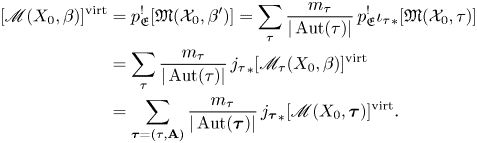 \begin{align*} [\mathscr{M}(X_0,\beta)]^{\operatorname{virt}} &= p_\mathfrak{E}^![\mathfrak{M}(\mathcal{X}_0,\beta')] = \sum_\tau \frac{m_\tau}{|\operatorname{Aut}(\tau)|}\, p_\mathfrak{E}^!{\iota_\tau}_*[\mathfrak{M}(\mathcal{X}_0,\tau)]\\ &= \sum_\tau \frac{m_\tau}{|\operatorname{Aut}(\tau)|}\, {j_\tau}_* [\mathscr{M}_\tau(X_0,\beta)]^{\operatorname{virt}}\\ &= \sum_{{\boldsymbol{\tau}}=(\tau,\mathbf{A})} \frac{m_\tau}{|\operatorname{Aut}(\boldsymbol{\tau})|}\, {j_{\boldsymbol{\tau}}}_*[\mathscr{M}(X_0,{\boldsymbol{\tau}})]^{\operatorname{virt}}. \end{align*}
4. Logarithmic modifications and transversal maps
There is a general strategy which is often useful for constructing stable logarithmic maps. This is the most powerful tool we have at our disposal at the moment; eventually, the hope is that gluing technology will replace this construction. However, we expect it to be generally useful, as illustrated by the examples in the next section.
Suppose we wish to construct a stable logarithmic map to  $X/B$, with, as usual,
 $X$ logarithmically smooth with a Zariski logarithmic structure over one-dimensional
 $B$ with logarithmic structure induced by
 $b_0\in B$. Suppose further we wish the stable logarithmic map to map into the fibre
 $X_{0}$ over
 $b_0$. Generalizing a method introduced in [Reference Nishinou and SiebertNS06], this construction is accomplished by the following two-step process: (i) apply a logarithmic modificationFootnote 8 of
 $X$ to reduce to a transverse situation; (ii) study logarithmic enhancements in the transverse case.
4.1 Logarithmic modifications
First, we will choose a logarithmic modification  $h:\tilde X \longrightarrow X$. The modification
 $h$ is chosen to accommodate a situation at hand, in our applications the datum of a rigid tropical map.
Given a modification  $h$, [Reference Abramovich and WiseAW18] constructed a morphism
 $\mathscr {M}(h):\mathscr {M}(\tilde X/B) \longrightarrow \mathscr {M}(X/B)$ of moduli stacks of basic stable logarithmic maps, satisfying
 \[ \mathscr{M}(h)_*([\mathscr{M}(\tilde X/B)]^{{\operatorname{virt}}})=[\mathscr{M}(X/B)]^{{\operatorname{virt}}}. \]
The construction of  $\mathscr {M}(h)$ is as follows. Given a stable logarithmic map
 $\tilde f:\tilde C/S \longrightarrow \tilde X/B$, one obtains on the level of schemes the stabilization of
 $h\circ \tilde f$, i.e. a factorization of
 $h\circ \tilde f$ given by
 \[ \underline{\tilde C}/\underline{S}\stackrel{g}{\longrightarrow} \underline{C}/\underline{S} \longrightarrow \underline{X} \]
such that  $\underline {C}/\underline {S} \longrightarrow \underline {X}$ is a stable map. One gives
 $\underline {C}$ the logarithmic structure
 $\mathcal {M}_{C}:=g_*\mathcal {M}_{\tilde C}$, and with this logarithmic structure one obtains a factorization of
 $h\circ \tilde f$ through
 $C$ at the level of log schemes, giving
 $f:C/S \longrightarrow X/B$. Note that this is one of the rare occasions where push-forward of logarithmic structures behaves well. If
 $\tilde f$ was basic, there is no expectation that
 $f$ is basic, but by [Reference Gross and SiebertGS13, Proposition 1.22] there is a unique basic map with the same underlying stable map of schemes such that the above constructed
 $f$ is obtained by pull-back from the basic map. This yields the map
 $\mathscr {M}(h)$.
4.2 Transverse maps, logarithmic enhancements, and strata
Second, if we have a stable map to  $\underline {X}_0$ which interacts sufficiently well with the strata, we will compute in Theorem 4.13 the number of log enhancements of this curve. This generalizes a key argument of Nishinou and Siebert in [Reference Nishinou and SiebertNS06]. There are two differences: our degeneration
 $X \longrightarrow B$ is only logarithmically smooth and not necessarily toric; and the fibre
 $X_0$ is not required to be reduced. Not requiring
 $X_0$ to be reduced makes the situation more complex and perhaps explains why it was avoided in the past; we hope our treatment here will find further uses. The precise meaning of ‘interacting well with logarithmic strata’ is as follows.
Definition 4.1 (Transverse maps and constrained points) Let  $X \longrightarrow B$ be a logarithmically smooth morphism over
 $B$ one-dimensional carrying the divisorial logarithmic structure
 $b_0\in B$ as usual. Let
 $X_0^{[d]}$ denote the union of the codimension
 $d$ logarithmic strata of
 $X_0$. Suppose
 $\underline {f}:\underline {C}/\operatorname {Spec} \Bbbk \longrightarrow \underline {X}_0$ is a stable map. We say that
 $\underline {f}$ is a transverse map if the image of
 $\underline {f}$ is contained in
 $X_0^{[0]}\cup X_0^{[1]}$, and
 $\underline {f}^{-1}(X_0^{[1]})$ is a finite set.
We call a node  $q\in \underline {C}$ a constrained node if
 $\underline {f}(q)\in X^{[1]}_0$, otherwise it is a free node. Similarly a marked point
 $x\in \underline {C}$ with
 $\underline {f}(x)\in X^{[1]}_0$ is a constrained marking, otherwise it is a free marking.
The term ‘transverse map’ is shorthand for ‘a map meeting strata in a logarithmically transverse way’.
4.2.1 Cones and strata in the transverse setting
For the rest of this section strata of higher codimension are irrelevant and we henceforth assume 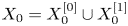 $X_0= X_0^{[0]} \cup X_0^{[1]}$. Then
 $\Sigma (X_0)$ is a purely two-dimensional cone complex, with rays in bijection with the irreducible components of
 $X_0$. There are two types of two-dimensional cones: first, there is one cone for each component of the double locus
 $X_0^{[1]}$; second, there is one cone for each other component of
 $X_0^{[1]}$, forming a smooth divisor in the regular locus of
 $X_0$.
4.2.2 Logarithmic enhancement of a map
We codify what it means to take a stable map and endow it with a logarithmic structure.
Definition 4.2 Let  $X \longrightarrow B$ be as above and
 $\underline {f}: \underline {C} \longrightarrow \underline {X}_0$ a stable map. A logarithmic enhancement
 $f: C \longrightarrow X$ is a stable logarithmic map whose underlying map is
 $\underline {f}$. Two logarithmic enhancements
 $f_1,f_2$ are isomorphic enhancements if there is an isomorphism between
 $f_1$ and
 $f_2$ which is the identity on the underlying
 $\underline {f}$. Otherwise we say they are non-isomorphic or distinct enhancements.
4.2.3 Discrete invariants in the transverse case
Notation 4.3 Let  $\underline {f}: \underline{C}/\operatorname {Spec}\Bbbk \longrightarrow \underline{X}_0$ be a transverse map and
 $x\in \underline{C}$ a closed point with
 $\underline {f}(x)$ contained in a stratum
 $S\subset X_0^{[1]}$ and let
 $\eta \in \underline{C}$ be a generic point with
 $x\in \mathrm {cl}(\eta )$. We now associate a number of invariants to the pair
 $(\eta ,x)$, all related to the rank two toric monoid
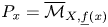 $P_x=\overline{\mathcal{M}}_{X,\underline {f}(x)}$. Denote by
 $m_{\eta ,x}\in P_x$ the generator of the kernel of the localization map
 $P_x \longrightarrow \overline{\mathcal{M}}_{X,\underline {f}(\eta )}\simeq \mathbb {N}$ and by
 $m'_{\eta ,x}\in P_x$ the generator of the other extremal ray. Denote by
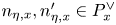 $n_{\eta ,x},n'_{\eta ,x}\in P_x^\vee$ the dual generators of the extremal rays of
 $P_x^\vee$, satisfying
 $\langle n_{\eta ,x},m_{\eta ,x}\rangle =0$. A third distinguished element
 $\rho _x\in P_x$ is defined by pulling back the generator of
 $\Gamma (B,\overline{\mathcal{M}}_B)=\mathbb {N}$ under the log morphism
 $X \longrightarrow B$.
For the following discussion denote by  $\ell (m)$ the integral length of an element
 $m\in M\otimes _\mathbb {Z}\mathbb {Q}$, that is, for
 $m\neq 0$ the maximum of
 $\alpha \in \mathbb {Q}_{>0}$ with
 $\alpha ^{-1}\cdot m\in M$, while
 $\ell (0)=0$.
Definition 4.4
(1) The index of
$x\in \underline{C}$ or of the stratum $S\subset X_0^{[1]}$ containing $\underline {f}(x)$ is the index of the sublattices in $P_x^{\mathrm {gp}}$ or in $P_x^*$ generated by $m_{\eta ,x},m'_{\eta ,x}$ and $n_{\eta ,x},n'_{\eta ,x}$, respectively, that is,
For a constrained node\[ \operatorname{Ind}(S)= \operatorname{Ind}_x = \langle n_{\eta,x},m'_{\eta,x}\rangle = \langle n'_{\eta,x}, m_{\eta,x}\rangle. \]$x=q$, the length $\lambda (q)=\lambda (S)\in \mathbb {Q}$ is the integral length of the interval $\rho _q^{-1}(1)$ when viewing $\rho _q$ as a map $P^*_q\otimes _\mathbb {Z}\mathbb {Q} \to \mathbb {Q}$.(2) If
$\eta \in \underline{C}$ is a generic point with $x\in \mathrm {cl}(\eta )$, denote by $w_{\eta ,x}\in \mathbb {N}\setminus \{0\}$ the local intersection number of $\underline{f}|_{\mathrm {cl}(\eta )}$ at $x$ with $S$ inside the irreducible component of $X_0$ containing $\underline {f}(\eta )$.





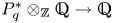





When the choice of  $x$ and
 $\eta$ is understood we write
 $m_1=m_{\eta ,x}$,
 $m_2=m'_{\eta ,x}$,
 $n_1=n_{\eta ,x}$,
 $n_2=n'_{\eta ,x}$,
 $\rho _x\in P_x$ and
 $w_1=w_{\eta ,x}$.
4.2.4 Relations between discrete invariants
Lemma 4.5 In the situation of Definition 4.4 denote by  $\mu _1$ the multiplicity of the irreducible component of
 $\underline{X}_0$ containing
 $\underline {f}(\eta )$. If the stratum
 $S\subset X_0^{[1]}$ is contained in two irreducible components of
 $\underline{X}_0$, denote by
 $\mu _2$ the multiplicity of the other component and otherwise define
 $\mu _2=0$.
(1)
$\mu _i= \langle n_i,\rho _x\rangle$;(2)
$\operatorname {Ind}_x \cdot \rho _x =\mu _2 m_1+\mu _1 m_2$;(3)
$\lambda (q)=\tfrac {\ell (\rho _q)\cdot \operatorname {Ind}_q}{\mu _1\mu _2}$.


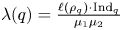
In particular, if  $X_0$ is reduced then
 $\mu _i\in \{0,1\}$ for all
 $i$ and
 \[ \operatorname {Ind}_x\cdot \rho _x= m_1+m_2, \quad \lambda (q)=\ell (\rho _q)\cdot \operatorname {Ind}_q.\]
Proof. For (1) note that since  $n_i\in P_x^\vee$ is a primitive vector with
 $\langle n_i,m_i\rangle =0$, the pairing with
 $n_i$ computes the integral distance from the face
 $\mathbb {N} \cdot m_i$ of
 $P_x$. Now étale locally, the log smooth morphism
 $X \longrightarrow B$ is the composition of a smooth map with
 $\operatorname {Spec} \Bbbk [P_x] \longrightarrow \operatorname {Spec}\Bbbk [t]$ defined by sending
 $t$ to
 $z^{\rho _x}\in \Bbbk [P_x]$. Hence the multiplicity
 $\mu _i$ equals the integral distance of
 $\rho _x$ to
 $\mathbb {N}\cdot m_i$, that is, the image of
 $\rho _x$ under the quotient map
 $P_x\to P_x/\mathbb {N} m_i\simeq \mathbb {N}$.
For (2), since the sublattice of  $P^{\mathrm {gp}}$ generated by
 $m_1, m_2$ is of index
 $\operatorname {Ind}_x$, there are
 $a_1,a_2\in \mathbb {Z}$ with
 $\operatorname {Ind}_x\cdot \rho _x= a_1 m_1+a_2 m_2$. Pairing with
 $n_1$ and using (1) and the definition of
 $\operatorname {Ind}_x$ yields
 \[ \operatorname{Ind}_x\cdot \mu_1= \operatorname{Ind}_x\cdot\langle n_1,\rho_x\rangle = a_2 \langle n_1,m_2\rangle = a_2\cdot\operatorname{Ind}_x. \]
This shows  $a_2=\mu _1$, and similarly
 $a_1=\mu _2$, yielding the claim.
To prove (3) note that (1) implies
 \[ \langle \mu_2 n_1,\rho_q\rangle=\mu_1\mu_2 = \langle \mu_1 n_2,\rho_q\rangle. \]
Hence  $\rho _q: P_q^*\to \mathbb {N}$ maps both
 $\mu _2 n_1$ and
 $\mu _1 n_2$ to
 $\mu _1\mu _2$. Since
 $\lambda (q)$ is defined as the integral length of
 $\rho _q^{-1}(1)$, we see that
 $\mu _1\mu _2\cdot \lambda (q)$ equals the integral length of
 $\mu _2 n_1-\mu _1 n_2$. Choosing an isomorphism of
 $P_q$ with
 \[ \mathbb{Z}^2\cap(\mathbb{R}_{\ge 0}\cdot (1,0) +\mathbb{R}_{\ge 0}\cdot (r,s)) \]
with  $r,s>0$ pairwise prime and
 $\rho _q$ mapping to
 $(a,c)$, then
 \[ m_1=(1,0),\quad m_2=(r,s),\quad \mu_1= c,\quad \mu_2= as-cr,\quad \operatorname{Ind}_q=s. \]
In the dual lattice  $P_q^*\simeq \mathbb {Z}^2$ we have
 $n_1=(0,1)$,
 $n_2=(s,-r)$ and
 $\mu _2 n_1-\mu _1 n_2= s\cdot (-c,a)$ has integral length
 $\operatorname {Ind}_q\ell (\rho _q)$. Thus
 $\lambda (q)= \operatorname {Ind}_q\ell (\rho _q)/\mu _1\mu _2$ as claimed.
4.2.5 Necessary conditions for enhancement
As we now show, the data listed in Definition 4.4 determine the discrete invariant  $u_x\in P_x^\vee$ at each special point
 $x\in \underline{C}$. Recall that (2.8) characterizing
 $u_q$ implies
 $\langle u_q, \rho _x\rangle =0$. To fix the sign of
 $u_q$ we use the convention that
 $\chi _1$ in the defining equation is the generization map to
 $\eta$. Similarly, for each marked point
 $p$, it holds that
 $\langle u_p, \rho _p \rangle =0$ by definition of
 $u_p$. We now deduce a number of necessary conditions for a logarithmic enhancement of a transverse stable map to exist.
Proposition 4.6 Let  $f:C \longrightarrow X$ be a logarithmic enhancement of a transverse stable map
 $\underline{f}:\underline{C} \longrightarrow \underline{X}_0$. Let
 $\eta \in \underline{C}$ be a generic point and
 $x\in \mathrm {cl}(\eta )$. If
 $\underline {f}(x)\in X_0^{[1]}$ then following Definition 4.4 write
 $m_1=m_{\eta ,x}$,
 $m_2=m'_{\eta ,x}$,
 $n_1=n_{\eta ,x}$,
 $n_2=n'_{\eta ,x}$,
 $\rho _x\in P_x$ and
 $w_1=w_{\eta ,x}$.
(I) Node. If  $x=q$ is a constrained nodal point of
 $\underline{C}$, then the second generic point
 $\eta '$ of
 $C$ with
 $x\in \mathrm {cl}(\eta ')$ maps to a different irreducible component of
 $X_0$ than
 $\eta$. Moreover, with
 $w_2=w_{\eta ',x}$ the following hold:
(1)
$\displaystyle u_q={1}/{\operatorname {Ind}_q}\cdot (w_1 n_2-w_2 n_1)$;(2)
$u_q(m_1)=w_1$, $u_q(m_2)=-w_2$;(3)
$\mu _1 w_2=\mu _2 w_1$;(4) the integral length of
$u_q$ equals $\ell (u_q)={\mu _2 w_1\lambda (q)}/{\operatorname {Ind}_q} = ({w_1}/{\mu _1})\ell (\rho _q)$.






If  $x=q$ is a free node then
 $u_q=0$.
(II) Marked point. If  $x$ is a smooth point of
 $\underline{C}$, then
 $\underline {f}(x)$ is contained in only one irreducible component of
 $X_0$. Moreover, if
 $x=p$ is a marked point then
 $u_p=0$ in the free case, while in the constrained case the following hold:
(1)
$w_1$ is a multiple of $\operatorname {Ind}_p$;(2)
$u_p= ({w_1}/{\operatorname {Ind}_p})n_2$.



Proof. Setup for (I). Let  $C$ be defined over the log point
 $S=\operatorname {Spec}(Q \longrightarrow \Bbbk )$. For any generic point
 $\eta \in \underline{C}$, there is a commutative square as follows.

Free node. In the case of a free node, both generic points  $\eta ,\eta '\in \underline{C}$ containing
 $q$ in their closure map to the same irreducible component of
 $X_0$. Thus
 $u_q=0$ by the defining equation (2.8).
Image components of constrained node. Let now  $x=q$ be a constrained node. Since the generization map
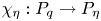 $\chi _\eta :P_q \longrightarrow P_\eta$ is a localization of fine monoids there exists
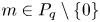 $m\in P_q\setminus \{0\}$ with
 $\chi _\eta (m)=0$. Then also
 $\bar f^\flat _q(m)$ is a non-zero element in
 $\overline{\mathcal {M}}_{C,q}$ with vanishing generization at
 $\eta$. But
 $\overline{\mathcal {M}}_C$ has no local section with isolated support at
 $q$. Hence
 $\chi _{\eta '}(m)\neq 0$, which implies that the two branches of
 $C$ at
 $q$ map to different irreducible components of
 $X_0$.
Computations for a constrained node. (1) follows from (2) by pairing both sides with  $m_1$,
 $m_2$ since these elements generate
 $P_q\otimes _\mathbb {Z}\mathbb {Q}$. We now prove (2). Since
 $u_q$ is preserved under base-change, we may assume
 $C$ is defined over the standard log point
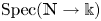 $\operatorname {Spec}(\mathbb {N}\to \Bbbk )$. Then
 $\overline{\mathcal{M}}_{C,q}\simeq S_e$ for some
 $e\in \mathbb {N}\setminus \{0\}$ with
 $S_e$ the submonoid of
 $\mathbb {Z}^2$ generated by
 $(e,0),(0,e),(1,1)$, see e.g. [Reference Gross and SiebertGS13, § 1.3]. The generator
 $1\in \mathbb {N}$ of the standard log point maps to
 $(1,1)$, while a chart at
 $q$ maps
 $(e,0)$ to a function restricting to a coordinate on one of the two branches of
 $C$, say on
 $\mathrm {cl}(\eta )$, while vanishing on the other. Similarly,
 $(0,e)$ restricts to a coordinate on
 $\mathrm {cl}(\eta ')$. By transversality we conclude
 \[ \bar f_q^\flat(m_1)=w_1\cdot(e,0),\quad \bar f_q^\flat(m_2)=w_2\cdot(0,e). \]
Equation (2.8) defining  $u_q$ says
 \begin{equation} \chi_2\circ\bar f_q^\flat-\chi_1\circ \bar f_q^\flat= u_q\cdot e, \end{equation}
with  $\chi _i: S_e\to \mathbb {N}$ the generization maps. With our presentation,
 $\chi _1$ and
 $\chi _2$ are induced by the projections
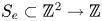 $S_e\subset \mathbb {Z}^2\to \mathbb {Z}$ to the second and first factors, respectively. Hence
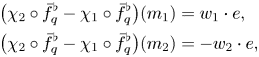 \begin{align*} \big(\chi_2\circ\bar f_q^\flat-\chi_1\circ \bar f_q^\flat\big) (m_1)&= w_1\cdot e,\\ \big(\chi_2\circ\bar f_q^\flat-\chi_1\circ \bar f_q^\flat\big) (m_2)&= -w_2\cdot e, \end{align*}
showing (2).
Statement (3) is obtained by evaluating (1) on  $\rho _q$:
 \[ 0= \operatorname{Ind}_q\cdot \langle u_q, \rho_q\rangle = w_1\langle n_2,\rho_q\rangle - w_2\langle n_1,\rho_q\rangle = w_1\mu_2-w_2\mu_1. \]
For (4) observe from (1) that  $\operatorname {Ind}_q\cdot u_q$ is the vector connecting the extremal elements
 $w_2n_1$ and
 $w_1 n_2$ of
 $P_q^\vee$. Thus
 $\operatorname {Ind}_q\cdot \ell (u_q)$ equals the integral length of
 $\rho _q^{-1}(h)$ for
 $h=\langle w_1 n_2,\rho _q\rangle = \mu _2 w_1= \mu _1 w_2= \langle w_2 n_1,\rho _q\rangle$. This length equals
 $h\cdot \lambda (q)$, yielding the stated formula. This finishes the proof of (I).
Marked point. Turning to (II), let  $x\in \underline{C}$ be a smooth point with
 $\underline {f}(x)\in X_0^{[1]}$ and again assume without restriction
 $C$ is defined over the standard log point. If
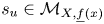 $s_u\in \mathcal {M}_{X,\underline {f}(x)}$ is a lift of
 $m_1$, then by transversality,
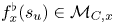 $f_x^\flat (s_u)\in \mathcal {M}_{C,x}$ maps under the structure homomorphism
 $\mathcal {M}_{C,x} \longrightarrow \mathcal {O}_{C,x}$ to
 $z^{w_1}$, with
 $z$ a local coordinate of
 $\underline{C}$ at
 $x$. Thus
 $x=p$ is a marked point,
 $\overline{\mathcal{M}}_{C,x}=\mathbb {N}^2$ and
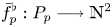 \[ \bar f_p^\flat: P_p\longrightarrow \mathbb{N}^2 \]
maps  $m_1$ to
 $(0,w_1)$. Here we are taking the morphism
 $C \longrightarrow \operatorname {Spec}(\mathbb {N}\to \Bbbk )$ to be defined by
 $\mathbb {N}\to \mathbb {N}^2$,
 $1\mapsto (1,0)$. Moreover, by compatibility of
 $f_p^\flat$ with the morphism of standard log points that
 $C$ and
 $X_0$ are defined over,
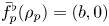 $\bar f_p^\flat (\rho _p)=(b,0)$ for some
 $b\in \mathbb {N}\setminus \{0\}$. Thus by Lemma 4.5(2),
 $\rho _p=({\mu _1}/{\operatorname {Ind}_p} )m_2$ spans an extremal ray of
 $P_p$. In particular,
 $\underline {f}(p)$ is contained in only one irreducible component of
 $X_0$ and
 $u_p(m_2)=0$. Thus
 \[ u_p(m_1)=w_1 = \frac{w_1}{\operatorname{Ind}_p} \langle n_2,m_1\rangle,\quad u_p(m_2)=0= \frac{w_1}{\operatorname{Ind}_p} \langle n_2,m_2\rangle. \]
This shows (2), which implies (1) since  $n_2$ is a primitive vector.
Finally, at a free marked point  $p\in \underline{C}$, commutativity over the standard log point again readily implies
 $u_p=0$.
Remark 4.7 If  $X_0$ is reduced, then in Proposition 4.6(I) there is a well-defined contact order
 $w=w_1=w_2$ of
 $\underline{f}$ with the double locus, and the formulas simplify to
 \[ u_q=\frac{w}{\operatorname{Ind}_q}\big(n_2-n_1\big),\quad \ell(u_q)= w\ell(\rho_q). \]
4.2.6 Transverse pre-logarithmic maps
Summarizing the necessary conditions of Proposition 4.6, we are led to the following definition.
Definition 4.8 Let  $X \longrightarrow B$ be as above, and let
 $\underline {f}:\underline {C}/ \operatorname {Spec}\Bbbk \longrightarrow \underline {X}_0$ be a transverse map. We say
 $\underline {f}$ is a transverse pre-logarithmic map if any
 $x\in \underline{C}$ with
 $\underline {f}(x)\in X_0^{[1]}$ is a special point and if in the notation of Proposition 4.6 the following holds.
(I) Constrained node. If  $x=q$ is a constrained node then the two branches of
 $C$ at
 $q$ map to different irreducible components of
 $X_0$. In addition,
 $\mu _1 w_2=\mu _2 w_1$ and the reduced branching order
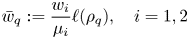 \begin{equation} \bar w_q:= \frac{w_i}{\mu_i}\ell(\rho_q), \quad i=1,2 \end{equation}
is an integer.
(II) Constrained marking. If  $x=p$ is a constrained marking then
 $\underline{f}(x)$ is a smooth point of
 $X_0$ and
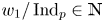 $w_1/\operatorname {Ind}_p\in \mathbb {N}$.
Note that if a logarithmic enhancement of  $\underline{f}$ exists, then by Proposition 4.6 the reduced branching order
 $\bar w_q$ agrees with
 $\ell (u_q)$. Note also that in the case of reduced
 $X_0$, we have
 $\ell (\rho _q)=1$ and all
 $\mu _i=1$, and hence
 $\bar w_q=w_1=w_2$.
Definition 4.9 (Base order) For a transverse pre-logarithmic map  $\underline {f}:\underline {C}/ \operatorname {Spec}\Bbbk \longrightarrow \underline {X}_0$ define its base order
 $b\in \mathbb {N}$ to be the least common multiple of the following natural numbers: (1) all multiplicities of irreducible components of
 $X_0$ intersecting
 $\underline {f}(\underline{C})$ and; (2) for each constrained node
 $q\in \underline{C}$ the quotient
 $\mu _1 w_2/\gcd (\operatorname {Ind}_q, \mu _1 w_2)$, notation as in Proposition 4.6.
Theorem 4.10 Let  $X \longrightarrow B$ be as above, and let
 $\underline {f}:\underline {C}/ \operatorname {Spec}\Bbbk \longrightarrow \underline {X}_0$ be a transverse map. Suppose that there is an enhancement of
 $\underline {f}$ to a basic stable logarithmic map
 $f:C/S \longrightarrow X/B$. Then we have the following.
(1)
$\underline {f}$ is a transverse pre-logarithmic map.(2) The combinatorial type of
$f$ is uniquely determined up to possibly a number of marked points $p$ with $u_p=0$, and the basic monoid $Q$ is
\[ Q=\mathbb{N}\oplus \bigoplus_{q\ \text{a free node}} \mathbb{N}. \](3) The map
$S=\operatorname {Spec}(Q \longrightarrow \Bbbk ) \longrightarrow B$ induces the map $\overline{\mathcal {M}}_{b_0}=\mathbb {N} \longrightarrow Q$ given by $1\mapsto (b,0,\ldots ,0)$, where the integer $b\in \mathbb {N}$ is the base order of $\underline {f}$.







Proof. Parts (1) and (2) follow readily from Proposition 4.6. For (3), recall that the basic monoid  $Q$ is dual to the monoid
 $Q^{\vee } \subset Q_{\mathbb {R}}^{\vee }$, the latter being the moduli space of tropical maps
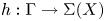 $h:\Gamma \longrightarrow \Sigma (X)$ of the given combinatorial type, and
 $Q^{\vee }$ consists of those tropical maps whose edge lengths are integral and whose vertices map to integral points of
 $\Sigma (X)$.
If  $\eta$ is a generic point of
 $\underline {C}$, denote by
 $\mu _{\eta }$ the multiplicity of the irreducible component of
 $(X_0)_{{\mathrm {red}}}$ in
 $X_0$ containing
 $\underline {f}(\eta )$. Thus the induced map
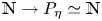 $\mathbb {N} \longrightarrow P_{\eta }\simeq \mathbb {N}$ coming from the structure map
 $X \longrightarrow B$ is multiplication by
 $\mu _{\eta }$. Write
 $\rho :\Sigma (X) \longrightarrow \Sigma (B)$ for the tropicalization of
 $X \longrightarrow B$. The restriction of
 $\rho$ to the ray
 ${\operatorname {Hom}}(P_\eta ,\mathbb {R}_{\ge 0})$ of
 $\Sigma (X)$ corresponding to the irreducible component of
 $X_0$ containing
 $\underline {f}(\eta )$ is multiplication by
 $\mu _{\eta }$. Thus given a tropical map
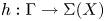 $h:\Gamma \longrightarrow \Sigma (X)$ with vertex
 $v_\eta$ for
 $\eta \in \underline{C}$ and
 $b$ the image of
 $\rho \circ h$ in
 $\Sigma (B)$, we see that
 $h(v_{\eta })$ is integral if and only if
 $\mu _{\eta }|b$.
The edges of  $\Gamma$ corresponding to free nodes have arbitrary length independent of
 $\mu$. But an edge corresponding to a constrained node
 $q$ must have length
 \begin{equation} e_q=b\frac{\lambda(q)}{\ell(u_q)}=b\frac{\operatorname{Ind}_q}{\mu_1 w_2}. \end{equation}
This must also be integral for  $h$ to represent a point in
 $Q^{\vee }$. Thus the map
 $\Sigma (S) \longrightarrow \Sigma (B)$ must be given by
 $(\alpha , (\alpha _q)_q)\mapsto b\alpha$ where
 $b$ is as given in the statement of the theorem. Dually, we obtain the stated description of the map
 $S \longrightarrow B$.
4.3 Existence and count of enhancements of transverse pre-logarithmic maps
We now turn to count the number of logarithmic enhancements of a transverse stable map  $\underline{f}:\underline{C} \longrightarrow \underline{X}_0$. Denote by
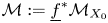 $\mathcal {M}:= \underline{f}^*\mathcal {M}_{X_0}$ the pull-back log structure on
 $\underline{C}$ and by
 $\mathcal {M}^{\text {Zar}}$ the corresponding sheaf of monoids in the Zariski topology, noting that the log structure on
 $X_0$ is assumed to be defined in the Zariski topology.
4.3.1 The torsor of roots
The count of logarithmic enhancements involves a torsor  $\mathcal {F}$ under a sheaf of finite cyclic groups
 $\mathcal {G}$ on a finite topological space encoding compatible choices of roots of elements occurring in the construction of logarithmic enhancements. The following discussion is trivial if
 $X_0$ is reduced and can be skipped by the reader only interested in this case. Given a transverse map
 $\underline {f}:\underline{C}/\operatorname {Spec}\Bbbk \longrightarrow \underline{X}_0$, the finite topological space consists of the set of constrained nodes
 $q\in \underline{C}$ and generic points
 $\eta \in \underline{C}$. As basis for the topology we take the sets
 $U_\eta = \{\eta \}\cup \{q\in \mathrm {cl}(\eta )\}$ and
 $U_q=\{q\}$ (which is opposite to the topology as a subset of
 $\underline{C}$). Let
 $\rho \in \Gamma (\underline{C},\mathcal {M})$ be the preimage of a generator
 $\rho _0$ of
 $\mathcal {M}_{B,b_0}$, that we assume fixed in this subsection. The stalks at a constrained node
 $q\in \underline{C}$ and at a generic point
 $\eta \in \underline{C}$ are various roots of the germs
 $\rho _x$ of
 $\rho$:
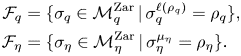 \begin{align*} \mathcal{F}_q&=\{ \sigma_q\in\mathcal{M}_q^{\text{Zar}}\,|\, \sigma_q^{\ell(\rho_q)}=\rho_q\},\\ \mathcal{F}_\eta&=\{ \sigma_\eta\in\mathcal{M}_\eta^{\text{Zar}}\, |\, \sigma_\eta^{\mu_\eta} =\rho_\eta\}. \end{align*}
We note that any of these sets may be empty, as Example 4.12 below shows. In such case we do not define a sheaf  $\mathcal {F}$ and declare
 $|\Gamma (\mathcal {F})| = \emptyset$ in what follows. Otherwise we define the sheaf
 $\mathcal {F}$ as follows. For
 $q\in \mathrm {cl}(\eta )$, a choice
 $\sigma _\eta$ with
 $\sigma _\eta ^{\mu _\eta }= \rho _\eta$ determines a unique
 $\sigma _{\eta ,q}\in \mathcal {F}_q$ with restriction to
 $\eta$ equal to
 $\sigma _\eta ^{\mu _\eta /\ell (\rho _q)}$. Note that by Lemma 4.5(1) we have
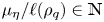 $\mu _\eta / \ell (\rho _q) \in \mathbb {N}$. We define the generization map
 $\mathcal {F}_\eta \to \mathcal {F}_q$ by mapping
 $\sigma _\eta$ to
 $\sigma _{\eta ,q}$. Observe that a different choice of
 $\rho$ leads to an isomorphic sheaf
 $\mathcal {F}$.
Replacing the elements  $\rho _q$ and
 $\rho _\eta$ in the definition of
 $\mathcal {F}$ by the element
 $1$, we obtain a sheaf
 $\mathcal {G}$ of abelian groups, for which
 $\mathcal {F}$ is evidently a torsor.
4.3.2 Global sections of $\mathcal {G}$ and $\mathcal {F}$


General theory [SP17, Tag 03AH], or direct computation, implies that the set of global sections  $\Gamma (\mathcal {F})$ is a pseudo-torsor for the group
 $G:= \Gamma (\mathcal {G})$. Here
 $G$ is computed as the kernel of the sheaf-axiom homomorphism
 \begin{equation} \partial: \prod_{\eta\in\underline{C}}\mathbb{Z}/\mu_\eta\longrightarrow \prod_{q\in\underline{C}}\mathbb{Z}/\ell(\rho_q),\quad \partial\big(\big(\zeta_\eta\big)_\eta\big) := \big(\zeta_{\eta(q)}^{\mu_{\eta(q)}/\ell(\rho_q)}\cdot \zeta_{\eta'(q)}^{-\mu_{\eta'(q)}/\ell(\rho_q)}\big)_q. \end{equation}
Here  $\eta (q),\eta '(q)$ are the generic points of the two adjacent branches of a constrained node
 $q\in \underline{C}$, viewed in the étale topology. The notation implies a chosen order of branches. Multiplication of
 $\sigma _q$ by
 $\zeta _q$ and of
 $\sigma _\eta$ by
 $\zeta _\eta$ describes the natural action of
 $G= \Gamma (\mathcal {G})$ on
 $\Gamma (\mathcal {F})$. Note that if
 $X_0$ is reduced then all
 $\mu _i=1$ and
 $G$ is the trivial group.
Lemma 4.11 If  $\Gamma (\mathcal {F})\neq \emptyset$ the action of
 $G$ on
 $\Gamma (\mathcal {F})$ is simply transitive. In particular, it then holds
 $|\Gamma (\mathcal {F})|= |G|$. If the dual intersection graph of
 $C$ is a tree or if
 $X_0$ is reduced then
 $\Gamma (\mathcal {F})\neq \emptyset$.
Proof. Simple transitivity is the fact that  $\Gamma (\mathcal {F})$ is a pseudo-torsor for
 $G$.
If  $X_0$ is reduced then
 $\mu _\eta =1$ for all
 $\eta$ and
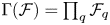 $\Gamma (\mathcal {F})=\prod _q \mathcal {F}_q$ is non-empty. If
 $C$ is rational we can construct a section by inductive extension over the irreducible components. Indeed, if
 $\sigma _q\in \mathcal {F}_q$ and
 $\eta$ is the generic point of the next irreducible component, we can define
 $\sigma _\eta$ as any
 $\mu _\eta /\ell (\rho _q)$-th root of the restriction of
 $\sigma _q$ to
 $\eta$. By the definition of
 $\mathcal {F}$ this choice then also defines
 $\sigma _{q'}$ for all other
 $q'\in \mathrm {cl}(\eta )$.
Example 4.12 Here is a simple example with  $\Gamma (\mathcal {F})=\emptyset$, in fact
 $\mathcal {F}_\eta =\emptyset$ for the unique point
 $\eta$ in our space. Let
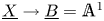 $\underline{X} \longrightarrow \underline{B}=\mathbb {A}^1$ be an elliptically fibred surface with
 $\underline{X}_0\subset \underline{X}$ a
 $b$-fold multiple fibre with smooth reduction. Endow
 $\underline{X}$ and
 $\underline{B}$ with the divisorial log structures for the divisors
 $\underline{X}_0\subset \underline{X}$ and
 $\{0\}\subset \underline{B}$. Then the generator
 $\bar \rho _0\in \overline{\mathcal {M}}_{B,0}$ maps to
 $b$ times the generator
 $\bar \sigma \in \Gamma (\underline{X}_0,\overline{\mathcal {M}}_{X_0})=\mathbb {N}$. The preimage of
 $\bar \sigma$ under
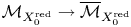 $\mathcal {M}_{X_0^{\mathrm {red}}} \longrightarrow \overline{\mathcal {M}}_{X_0^{\mathrm {red}}}$ is the torsor with associated line bundle the conormal bundle
 $N^{\vee }_{X_0^{\mathrm {red}}|X}$. This conormal bundle is not trivial, but has order
 $b$ in
 $\operatorname {Pic}(\underline{X}_0^{\mathrm {red}})$. Thus there exists no section
 $\sigma _\eta$ with
 $\sigma _\eta ^b$ extending to a global section
 $\rho$ of
 $\mathcal {M}_{X_0}$ lifting
 $\bar \rho = b\cdot \bar \sigma$.
The following statement generalizes and gives a more structural proof of [Reference Nishinou and SiebertNS06, Proposition 7.1], which treated a special case with reduced central fibre.
Theorem 4.13 Suppose given  $X \longrightarrow B$ as above, and let
 \[ \underline{f}:(\underline{C},p_1,\ldots,p_n)/\operatorname{Spec}\Bbbk \longrightarrow\underline{X}_0 \]
be a transverse pre-logarithmic map. Suppose further that the marked points  $\{p_i\}$ include all points of
 $\underline {f}^{-1}(X_0^{[1]})$ mapping to non-singular points of
 $(X_0)_{{\mathrm {red}}}$.
Then there exists an enhancement of  $\underline {f}$ to a basic stable logarithmic map if and only if
 $\Gamma (\mathcal {F})\neq \emptyset$, in which case the number of pairwise non-isomorphic enhancements is
 \[ \frac{|G|}{b} \prod_q \bar w_q. \]
Here  $G$ is as in (4.4), the integer
 $b$ is the base order (Definition 4.9), and the product is taken over the reduced branching orders (4.2) at constrained nodes.
If  $X_0$ is reduced there is no obstruction to the existence of an enhancement and the count is
 $b^{-1}\prod _q \bar w_q$ and
 $\bar w_q=w_1=w_2$ either of the two contact orders in Definition 4.4 and Proposition 4.6.
Proof. Counting rigidified objects. We are going to count diagrams of the form
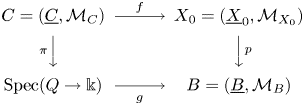
with  $p$ and
 $\underline {f}$ given by assumption and
 $g$ determined by
 $b$ as in Theorem 4.10(3) uniquely up to isomorphism. For the final count we will divide out the
 $\mathbb {Z}/b$-action coming from the automorphisms of
 $\operatorname {Spec}(Q\to \Bbbk ) \longrightarrow B$.
Simplifying the base. By Theorem 4.10 we have  $Q=\mathbb {N}\oplus \bigoplus _{\text {free nodes}}\mathbb {N}$ and the map
 $\mathbb {N}=\overline{\mathcal{M}}_{B,b_0} \longrightarrow Q$ is the inclusion of the first factor multiplied by the base order
 $b$. Pulling back by any fixed sharp map
 $Q\to \mathbb {N}$ replaces the lower left corner by the standard log point
 $O^\dagger =\operatorname {Spec}(\mathbb {N} \longrightarrow \Bbbk )$. To be explicit, we take
 $Q\to \mathbb {N}$ to restrict to the identity on each summand. Since this map
 $Q \longrightarrow \mathbb {N}$ is surjective we do not introduce automorphisms or ramification. The universal property of basic objects guarantees that the number of liftings is not changed.
The composition  $\overline{\mathcal {M}}_{B,b_0} \longrightarrow Q \longrightarrow \mathbb {N}$ is then multiplication by
 $b$. We have now arrived at a counting problem over a standard log point. Note also that the given data already determines (4.5) at the level of ghost monoids, that is, the data determines the sheaf
 $\overline{\mathcal {M}}_C$, and maps
 $\bar f^\flat : \overline{\mathcal {M}}= \underline{f}^*\overline{\mathcal {M}}_{X_0} \longrightarrow \overline{\mathcal {M}}_C$ and
 $\bar \pi ^\flat : \overline{\mathcal {M}}_{O^\dagger } \longrightarrow \overline{\mathcal {M}}_C$, uniquely.
Pulling back the target monoid. Pull-back yields the two log structures 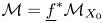 $\mathcal {M}=\underline{f}^*\mathcal {M}_{X_0}$ and
 $\pi ^*\mathcal {M}_{O^\dagger }$ on
 $\underline{C}$. Recall our choice of generator
 $\rho _0$ of
 $\mathcal {M}_{B, b_0}$ and its pull-back
 $\rho \in \Gamma (\underline{C},\mathcal {M})$, introduced earlier in § 4.3. For later use let also
 $\tau _0\in \mathcal {M}_{O^\dagger ,0}$ be a generator with
 $g^\flat (\rho _0)= \tau _0^b$. Then for any log smooth structure
 $\mathcal {M}_C$ on
 $\underline{C}$ over
 $O^\dagger$ we have a distinguished section
 $\tau =\pi ^\flat (\tau _0)$.
Simplifying the target monoid. Now define  $\mathcal {M}'_C$ as the fine monoid sheaf given by pushout of these two monoid sheaves over
 ${\underline \pi} ^*{\underline g}^*\mathcal {M}_B$:
 \[ \mathcal{M}'_C= \underline{f}^*\mathcal{M}_{X_0}\oplus^{\text{fine}}_{{\underline \pi}^* {\underline g}^*\mathcal{M}_B} \pi^*\mathcal{M}_{O^\dagger}. \]
Since  $\overline{\mathcal{M}}_{B,b_0} = \mathbb {N}$, by [Reference KatoKat89, (4.4)(ii)]
 $X_0 \longrightarrow B$ is an integral morphism. Hence the pushout
 $\mathcal {M}'_C$ in the category of fine monoid sheaves agrees with the ordinary pushout. In particular, the structure morphisms of
 $X_0$ and
 $O^\dagger$ define a structure morphism
 $\alpha '_C: \mathcal {M}'_C\to \mathcal {O}_C$.
Restating the counting problem. Classifying diagrams (4.5) amounts to finding an fs log structure  $\mathcal {M}_C$ on
 $\underline{C}$ together with a morphism of monoid sheaves
 \[ \phi:\mathcal{M}'_C\longrightarrow \mathcal{M}_C \]
compatible with  $f^\sharp$ and such that the composition
 $\pi ^*\mathcal {M}_{O^\dagger } \longrightarrow \mathcal {M}_C$ of
 $\phi$ with
 $\pi ^*\mathcal {M}_{O^\dagger } \longrightarrow \mathcal {M}'_C$ is log smooth.
We will soon see that  $\bar \phi :(\overline{\mathcal{M}}'_C)^{\mathrm {gp}}\longrightarrow \overline{\mathcal{M}}_C^{\mathrm {gp}}$ necessarily decomposes into the quotient by some finite torsion part and the inclusion of a finite index subgroup.
Lifting the quotient morphism to  $\mathcal {M}'_C$ leads to the factor
 $|G|$, while the finite extension of the resulting log structure to
 $\mathcal {M}_C$ receives a contribution by the reduced branching order
 $\bar w_q$ from each constrained node. Note that
 $\bar w_q = \ell (u_q)$ by Proposition 4.6(I)(4); it is in this form that it appears in the proof.
The ghost kernel. To understand the torsion part to be divided out, note that  $(\overline {\mathcal {M}'_{C,x}})^{\mathrm {gp}}$ at
 $x\in \underline{C}$ equals
 $P_x^{\mathrm {gp}}\oplus _\mathbb {Z} \mathbb {Z}$ with
 $1\in \mathbb {Z}$ mapping to
 $\bar \rho _x\in P_x^{\mathrm {gp}}$ and to the base order
 $b\in \mathbb {Z}$, respectively. Since
 $\ell (\bar \rho _x)$ divides the multiplicities of some irreducible components of
 $\underline{X}_0$, Theorem 4.10(3) implies
 $b/\ell (\bar \rho _x)\in \mathbb {N}$. If
 $\bar \rho _x$ has integral length
 $\ell (\bar \rho _x)>1$, then
 $(\bar \rho _x/ \ell (\bar \rho _x),-b/ \ell (\bar \rho _x))$ is a generator of the torsion subgroup
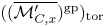 $((\overline {\mathcal {M}'_{C,x}})^{\mathrm {gp}})_{\operatorname {tor}}$, which has order
 $\ell (\bar \rho _x)$. This element has to be in the kernel of the map to the torsion-free monoid
 $\overline{\mathcal {M}}_C$.
The  $|G|$ embodiments of the ghost image. The interesting fact is that the lift of
 $(\bar \rho _x/\ell (\bar \rho _x),-b/ \ell (\bar \rho _x))$ to
 $(\mathcal {M}'_{C,x})^{\mathrm {gp}}$ is only unique up to an
 $\ell (\bar \rho _x)$-torsion element in
 $\mathcal {O}_{\underline{C},x}^\times$, that is, up to an
 $\ell (\bar \rho _x)$-th root of unity
 $\zeta _x\in \Bbbk ^\times$. Explicitly, the lift is equivalent to a choice
 $\sigma _x\in \mathcal {M}_x$ with
 $\sigma _x^{\ell (\bar \rho _x)}=\rho _x$ by taking the torsion subsheaf in
 $(\mathcal {M}'_C)^{\mathrm {gp}}$ generated by
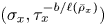 $(\sigma _x,\tau _x^{-b/\ell (\bar \rho _x)})$. The quotient by this subsheaf means that we upgrade the relation
 $f^\flat (\rho _x)=\tau _x^b$ coming from the commutativity of (4.5) to
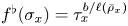 $f^\flat (\sigma _x)= \tau _x^{b/\ell (\bar \rho _x)}$.
To define this quotient of the monoid  $\mathcal {M}'_C$ globally amounts to choosing the roots
 $\sigma _x$ of
 $\rho _x$ compatibly with the generization maps, leading to a global section of the sheaf
 $\mathcal {F}$ introduced directly before the statement of the theorem. For this statement note that for
 $x=\eta$ a generic point,
 $\ell (\bar \rho _\eta )$ equals the multiplicity
 $\mu _\eta$ of the irreducible component of
 $\underline{X}_0$ containing
 $\underline{f}(\eta )$.
The quotient is a logarithmic structure. Assume now  $\sigma \in \Gamma (\mathcal {F})$ has been chosen and denote by
 $\mathcal {M}''_C$ the quotient of
 $\mathcal {M}'_C$ by the corresponding torsion subgroup of
 $(\mathcal {M}'_C)^{\mathrm {gp}}$. Since
 $\alpha '_C(\sigma _x)=\alpha '_C(\tau _x)=0$, the homomorphism
 $\alpha '_C$ descends to the quotient, thus defining a structure homomorphism
 $\alpha ''_C: \mathcal {M}''_C\to \mathcal {O}_C$.
The log structure  $\mathcal {M}_C$ is determined at smooth points. Note that the map
 $(\pi ^*\mathcal {M}_{O^\dagger })_\eta \to \mathcal {M}''_{C,\eta }$ is an isomorphism and hence we must have
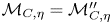 $\mathcal {M}_{C,\eta }=\mathcal {M}''_{C,\eta }$. The log structure
 $\mathcal {M}_C$ is then also defined at each marked point
 $p\in \underline{C}$ by adding a generator of the maximal ideal in
 $\mathcal {O}_{\underline{C},p}$ as an additional generator to
 $\mathcal {M}_{C,p}$. It is also clear that
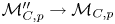 $\mathcal {M}''_{C,p} \longrightarrow \mathcal {M}_{C,p}$ exists and is determined by the corresponding map at
 $\eta$ and by
 $f^\sharp$.
The log structure  $\mathcal {M}_C$ is determined at free nodes. At a free node
 $q$ we have
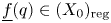 $\underline{f}(q)\in (X_0)_\mathrm {reg}$ and hence there is a unique specialization
 $\sigma _q\in \mathcal {M}_q$ of
 $\sigma _\eta$ for the two generic points
 $\eta \in \underline{C}$ with
 $q\in \mathrm {cl}(\eta )$. The log structure
 $\mathcal {M}_C$ on
 $C$ is then determined by
 $f^\flat _\eta$ and by the universal log structure
 $\mathcal {M}_C^\circ$ of
 $\underline{C}$ as follows. Let
 $x,y\in \mathcal {O}_{C,q}$ be coordinates of the two branches of
 $\underline{C}$ at
 $q$ in the étale topology. Then there exist unique lifts
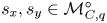 $s_x,s_y\in \mathcal {M}^\circ _{C,q}$ such that
 $s_x\cdot s_y$ is the pull-back of a generator
 $\epsilon _q$ of the
 $q$-th factor in the universal base log structure
 ${\rm Spec} \big(\oplus _{{\rm nodes\,of\, }{\rm \underline{C} }}{\mathbb N}\to {\rm \Bbbk } \big )$. Our choice of pull-back
 $O^\dagger \longrightarrow \operatorname {Spec}(Q \longrightarrow \Bbbk )$ turns
 $\epsilon _q$ into
 $\lambda \tau _0^{e_q}$ for some
 $\lambda \in \Bbbk ^\times$ and
 $e_q\in \mathbb {N}$ determined by basicness as in (4.3). Thus
 $\mathcal {M}_{C,q}$ is generated by
 $s_x,s_y$ and
 $\tau _q$ with single relation
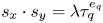 $s_x\cdot s_y=\lambda \tau _q^{e_q}$ and mapping to
 $x,y$ and
 $0$ under the structure homomorphism, respectively. The morphism
 $f^\flat :\mathcal {M}_q \longrightarrow \mathcal {M}_{C,q}$ factors over
 $\pi ^*\mathcal {M}_{O^\dagger }$ and is therefore completely determined by
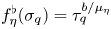 $f^\flat _\eta (\sigma _q)= \tau _q^{b/\mu _\eta }$.
Constrained nodes: Study of the image log structure  $\mathcal {M}''_C$. It remains to extend
 $\mathcal {M}''_C$ to the correct log structure at each constrained node
 $q\in \underline{C}$. On the level of ghost sheaves we have the following situation, where we include the above description of the kernel for completeness.
Proposition 4.14 The homomorphism of abelian groups
 \[ P_q^{\mathrm{gp}}\oplus\mathbb{Z}\longrightarrow \overline{\mathcal{M}}_{C,q}^{\mathrm{gp}},\quad (m,k)\longmapsto \bar f^\flat_q(m)+ k\cdot\bar\tau_q, \]
has kernel generated by  $(\bar \rho _q/\ell (\bar \rho _q),-b/\ell (\bar \rho _q))$ and cokernel a cyclic group of order
 $\ell (u_q)$.
Proof The kernel is described in the discussion above. Indeed, if  $(m,k)\in P_q^{\mathrm {gp}}\oplus \mathbb {Z}$ lies in the kernel then
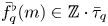 $\bar f^\flat _q(m)\in \mathbb {Z}\cdot \bar \tau _q$. Because
 $\bar f^\flat _q$ is injective and
 $\bar f^\flat _q(\bar \rho _q)=\bar \tau _q^b$ we conclude that
 $(m,k)$ is proportional to
 $(\bar \rho _q, -b)$. The stated element is a primitive element of this one-dimensional subspace.
For the determination of the cokernel observe that the composition
 \[ P_q^{\mathrm{gp}}\stackrel{\bar f^\flat_q}{\longrightarrow} \overline{\mathcal{M}}_{C,q}^{\mathrm{gp}} \longrightarrow \overline{\mathcal{M}}_{C,q}^{\mathrm{gp}}/\mathbb{Z}\bar\tau_q\simeq \mathbb{Z} \]
equals  $u_q$ up to sign. Indeed, the quotient by
 $\mathbb {Z}\bar \tau _q$ maps the two generators of extremal rays of
 $\overline{\mathcal {M}}_{C,q}$ to
 $\pm 1\in \mathbb {Z}$. Hence
 $m_i\in P_q^{\mathrm {gp}}$ maps to
 $\pm w_i$, which by Proposition 4.6(I)(2) agrees with
 $\pm u_q(m_i)$. The order of the cokernel now agrees with the greatest common divisor of the components of
 $u_q$, that is, with
 $\ell (u_q)$.
Once again we follow [Reference Gross and SiebertGS13, § 1.3] and denote by  $S_e\subset \mathbb {Z}^2$ the submonoid generated by
 $(e,0),(1,1),(0,e)$, for
 $e\in \mathbb {N}\setminus \{0\}$. Up to a choice of ordering of extremal rays there is a canonical isomorphism
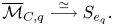 \begin{equation} \overline{\mathcal{M}}_{C,q} \stackrel{\simeq}{\longrightarrow} S_{e_q}. \end{equation}
Using Proposition 4.14 we can now determine the saturation of  $\overline{\mathcal {M}}''_{C,q}$. For readability we write
 $\ell =\ell (u_q)$.
Corollary 4.15 Using the description (4.6), the saturation of  $\overline{\mathcal {M}}''_{C,q}$ equals
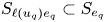 $S_{\ell (u_q)e_q}\subset S_{e_q}$.
Proof. By construction of  $\mathcal {M}''_C$, the image of the homomorphism in Proposition 4.14 equals
 $(\overline{\mathcal {M}}''_{C,q})^{\mathrm {gp}}$. In the notation of (4.6), the statement now follows from the fact that by the proposition, the image has index
 $\ell (u_q)$ in
 $\overline{\mathcal {M}}_{C,q}^{\mathrm {gp}}$ and
 $(e_q,0)\in S_{e_q}$. Hence
 $(\ell e_q,0)\in (\overline{\mathcal {M}}''_{C,q})^{\mathrm {gp}}$, which together with
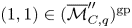 $(1,1)\in (\overline{\mathcal {M}}''_{C,q})^{\mathrm {gp}}$ generates
 $S_{\ell e_q}\subset S_{e_q}$.
The saturation is then computed by taking all integral points in the real cone in  $\overline{\mathcal {M}}_{C,q}^{\mathrm {gp}}\otimes _\mathbb {Z} \mathbb {R}$ spanned by
 $\overline{\mathcal {M}}''_{C,q}$.
Constrained nodes: Extending the log structure. In this step we extend the log structure to the saturation of  $\mathcal {M}''_C$, described in Corollary 4.15.
Lemma 4.16 The log structure  $\alpha '':\mathcal {M}''_C\to \mathcal {O}_C$ extends uniquely to the saturation
 $(\mathcal {M}''_C)^{\mathrm {sat}}$.
Proof. We continue to write  $\ell =\ell (u_q)$. The saturation can at most be non-trivial at a constrained node
 $q$. By Corollary 4.15 we have an isomorphism
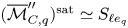 $(\overline{\mathcal {M}}''_{C,q})^{\mathrm {sat}}\simeq S_{\ell e_q}$. The definition of the weights
 $w_i$ implies
 $(w_1 e_q,0),(0,w_2 e_q)\in \overline{\mathcal {M}}''_{C,q}$, for the appropriate ordering of the branches of
 $C$ at
 $q$. As a sanity check, notice that
 $w_i$ divides
 $\ell$ by Proposition 4.6(I)(2). Let
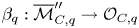 $\beta _q: \overline{\mathcal {M}}''_{C,q} \longrightarrow \mathcal {O}_{C,q}$ be the composition of a choice of splitting
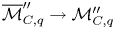 $\overline{\mathcal {M}}''_{C,q} \longrightarrow \mathcal {M}''_{C,q}$ and the structure morphism
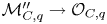 $\mathcal {M}''_{C,q} \longrightarrow \mathcal {O}_{C,q}$. Then
 $\beta _q ((w_1 e_q,0))$ vanishes at
 $q$ to order
 $w_1$ on one branch of
 $C$ and
 $\beta _q((0,w_2 e_q))$ vanishes to order
 $w_2$ on the other branch. Thus, étale locally there exist generators
 $x,y\in \mathcal {O}_{C,q}$ for the maximal ideal at
 $q$ with
 \[ \beta_q((w_1 e_q,0))=x^{w_1},\quad \beta_q((0,w_2 e_q))=y^{w_2}. \]
Thus any extension  $\beta _q^{\mathrm {sat}}$ of
 $\beta _q$ to a chart for
 $(\mathcal {M}_{C,q}'')^{\mathrm {sat}}$ has to fulfill
 \begin{equation} \beta_q^{\mathrm{sat}}((\ell e_q,0))=\zeta_1\cdot x^{\ell},\quad \beta_q^{\mathrm{sat}}((0,\ell e_q))=\zeta_2\cdot y^{\ell}, \end{equation}
with  $\zeta _i\in \Bbbk$,
 $\zeta _i^{w_1/\ell }=1$. On the other hand, the
 $\zeta _i$ are uniquely determined by compatibility of
 $\beta _q^{\mathrm {sat}}$ with
 $\beta$ at the generic points of the two branches of
 $C$ at
 $q$ since
 $(\ell e_q,0),(0,\ell e_q)\in \overline{\mathcal {M}}_{C,q}$. Conversely, with this choice of the
 $\zeta _i$, the equations (4.7) provide the requested extension of
 $\alpha ''$.
Finally, we extend  $\mathcal {M}''_C$ to a log structure of a log smooth curve over the standard log point. The situation is largely the same as with admissible covers, see, e.g. [Reference MochizukiMoc95, § 3].
Lemma 4.17 Up to isomorphism of log structures over the standard log point, there are  $\ell =\ell (u_q)$ pairwise non-isomorphic extensions
 $\alpha _q:\mathcal {M}_{C,q}\to \mathcal {O}_{C,q}$ of the image log structure
 $\alpha ''_q:\mathcal {M}''_{C,q}\to \mathcal {O}_{C,q}$ at the constrained node
 $q$ to a log structure of a log smooth curve.
Proof. Let
 \[ \beta_q^{\mathrm{sat}}: S_{\ell e_q}\longrightarrow \mathcal{O}_{C,q} \]
be a chart for the log structure  $(\mathcal {M}''_C)^{\mathrm {sat}}$ at
 $q$. The task is to classify extensions to a chart
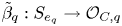 $\tilde \beta _q: S_{e_q} \longrightarrow \mathcal {O}_{C,q}$ up to isomorphisms of induced log structures. Similar to the reasoning in Lemma 4.16, in terms of coordinates
 $x,y\in \mathcal {O}_{C,q}$ with
 \[ \beta_q^{\mathrm{sat}}((\ell e_q,0))= x^{\ell},\quad \beta_q^{\mathrm{sat}}((0,\ell e_q))= y^{\ell}, \]
we have to define
 \begin{equation} \tilde\beta_q(( e_q,0))= \zeta_1\cdot x,\quad \tilde\beta_q((0, e_q))= \zeta_2\cdot y, \end{equation}
with  $\zeta _i\in \Bbbk$,
 $\zeta _i^\ell =1$. Dividing out isomorphisms amounts to working modulo
 $\varphi \in {\operatorname {Hom}}(S_{e_q},\mathbb {Z}/\ell )$ with
 $\varphi ( (1,1))=1$. In other words, we can change
 $\zeta _1,\zeta _2$ by
 $\zeta \zeta _1,\zeta ^{-1}\zeta _2$ for any
 $\ell$-th root of unity
 $\zeta$. This leaves us with
 $\ell$ pairwise non-isomorphic extensions of the log structure at
 $q$.
Counting non-rigidified lifts. For the final count we need to divide out the action of  $\mathbb {Z}/b$ by composition with automorphisms of
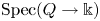 $\operatorname {Spec}(Q\to \Bbbk )$ over
 $B$. The stated count follows once we prove that this action is free. The action changes
 $\tau _0$ to
 $\zeta \cdot \tau _0$ for
 $\zeta$ a
 $b$-th root of unity. For this change to lead to an isomorphic log structure
 $\mathcal {M}_C$ requires
 $\zeta _1\zeta _2\in \Bbbk ^\times$ in (4.8) to be unchanged at any constrained node
 $q\in \underline{C}$. This shows
 $\zeta ^{e_q}=1$ for all
 $q$. Similarly, for the map
 $\mathcal {M}_{X_0,\underline {f}(\eta )} \longrightarrow \mathcal {M}_{C,\eta }$ to stay unchanged relative
 $\mathcal {M}_{B,b_0} \longrightarrow \mathcal {M}_{O^\dagger ,0}$ requires
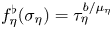 $f^\flat _\eta (\sigma _\eta ) =\tau _\eta ^{b/\mu _\eta }$ to stay unchanged. Thus also
 $\zeta ^{b/\mu _\eta }=1$ for all generic points
 $\eta \in \underline{C}$. But by Theorem 4.10 the base order
 $b$ is the smallest natural number with all
 $e_q= b\cdot \operatorname {Ind}_q/\mu _2 w_1$ and all
 $b/\mu _\eta$ integers. Thus the
 $e_q$ and
 $b/\mu _\eta$ have no common factor. This shows that
 $\zeta ^{e_q}=1$ and
 $\zeta ^{b/\mu _\eta }=1$ for all
 $q, \eta$ implies
 $\zeta =1$. We conclude that the action of
 $\mathbb {Z}/b$ is free as claimed
Remark 4.18 The obstruction to the existence of a logarithmic enhancement in Theorem 4.13 can be interpreted geometrically as follows.
Let  $\bar \mu$ be a positive integer and
 $\underline {\tilde {B}} \longrightarrow {\underline{B}}$ be the degree
 $d$ cyclic cover branched with ramification index
 $d$ over
 $b_0$. Let
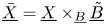 $\underline {\bar {X}}=\underline {X}\times _{\underline{B}}\underline {\tilde {B}}$, and let
 $\underline {\tilde {X}} \longrightarrow \underline {\bar {X}}$ be the normalization, giving a family
 $\underline {\tilde {X}} \longrightarrow \underline {\tilde {B}}$. It is a standard computation that the inverse image of a multiplicity
 $\mu$ irreducible component of
 $\underline {X}_0$ in
 $\underline {\tilde X}$ is a union of irreducible components of
 $\underline {\tilde X}_0$, each with multiplicity
 $\mu /\gcd (\mu ,d)$.
At the level of log schemes, in fact  $\bar {X}$ carries a fine but not saturated logarithmic structure via the description
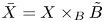 $\bar {X}=X\times _B \tilde {B}$ in the category of fine log schemes, while
 $\tilde X$ carries an fs logarithmic structure via the description
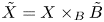 $\tilde {X}=X\times _B\tilde {B}$ in the category of fs logarithmic structures. Here
 $\tilde {B}$ carries the divisorial logarithmic structure given by
 $\tilde b_0\in \tilde B$, the unique point mapping to
 $b_0$.
Similarly, the central fibres are related as follows. The map  $\tilde B \longrightarrow B$ induces a morphism on standard log points
 $\tilde b_0 \longrightarrow b_0$ induced by
 $\mathbb {N} \longrightarrow \mathbb {N}, 1\mapsto d$ for some integer
 $d$. Then
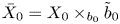 $\bar X_0 =X_0\times _{b_0}\tilde b_0$ in the category of fine log schemes, and
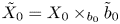 $\tilde X_0=X_0\times _{b_0}\tilde b_0$ in the category of fs log schemes.
Given a transverse pre-logarithmic map  $\underline {f}:\underline {C}/\operatorname {Spec}\Bbbk \longrightarrow \underline {X}$, take the integer
 $d$ above to be the positive integer
 $b$ given by Theorem 4.10(3). Then one checks readily that
 $\underline {f}$ has a logarithmic enhancement if and only if there is a lift
 $\underline {\tilde {f}}:\underline {C} \longrightarrow \underline {\tilde {X}}_0$ of
 $\underline {f}$. Indeed, if
 $\underline {f}$ has a logarithmic enhancement
 $f:C/S \longrightarrow X_0$ with
 $S$ carrying the basic log structure, the morphism
 $S \longrightarrow b_0$ factors through
 $\tilde b_0$ by the description of Theorem 4.10. Thus the universal property of fibred product gives a morphism
 $\tilde f:C \longrightarrow \tilde X_0$. Conversely, given a lift, it follows again from the definition of
 $b$ in Theorem 4.10 that the multiplicity
 $\mu$ of any irreducible component of
 $\underline {X}_0$ meeting
 $\underline {f}(\underline {C})$ divides
 $b$. So the multiplicity of any component of
 $\underline {\tilde {X}}_0$ meeting
 $\underline {\tilde {f}}(\underline {C})$ is
 $1$ and by shrinking
 $\underline {X}_0$ we can assume that
 $\underline {\tilde {X}}_0$ is reduced. One also checks that the reduced branching order
 $\bar {w}_q$ associated to a node
 $q$ is the same for
 $\underline {f}$ and
 $\underline {\tilde {f}}$, and thus
 $\underline {\tilde {f}}$ is still transverse pre-logarithmic. By Lemma 4.11 and Theorem 4.13,
 $\underline {\tilde {f}}$ has a logarithmic enhancement, and then the composed morphism
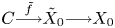 $C\smash {\mathop {\longrightarrow }\limits ^{\tilde f}}\tilde {X}_0 \smash {\mathop {\longrightarrow }\limits ^{}} X_0$ gives the desired logarithmic enhancement of
 $\underline {f}$.
5. Examples
We will now study explicit examples of the decomposition formula for a logarithmically smooth morphism  $X\to B$. We mostly use the traditional tropical language of polyhedral complexes and metric graphs discussed in § 2.5.3.
5.1 The classical case
Suppose  $X \longrightarrow B$ is a simple normal crossings degeneration with
 $X_0=Y_1\cup Y_2$ a reduced union of two irreducible components, with
 $Y_1\cap Y_2=D$ a smooth divisor in both
 $Y_1$ and
 $Y_2$. In this case,
 $\Sigma (X)=(\mathbb {R}_{\ge 0})^2$ and the map
 $\Sigma (X) \longrightarrow \Sigma (B)=\mathbb {R}_{\ge 0}$ is given by
 $(x,y)\mapsto x+y$. Thus
 $\Delta (X)$ admits an affine-linear isomorphism with the unit interval
 $[0,1]$, see Figure 1.
Proposition 5.1 In the above situation, let  $f:\Gamma \longrightarrow \Delta (X)$ be a decorated tropical map. Then
 $f$ is rigid if and only if every vertex
 $v$ of
 $\Gamma$ maps to the endpoints of
 $\Delta (X)$ and every edge of
 $\Gamma$ surjects onto
 $\Delta (X)$.
The cones  $\Sigma (X)$ and
 $\Sigma (B)$ and the interval
 $\Delta (X)$.
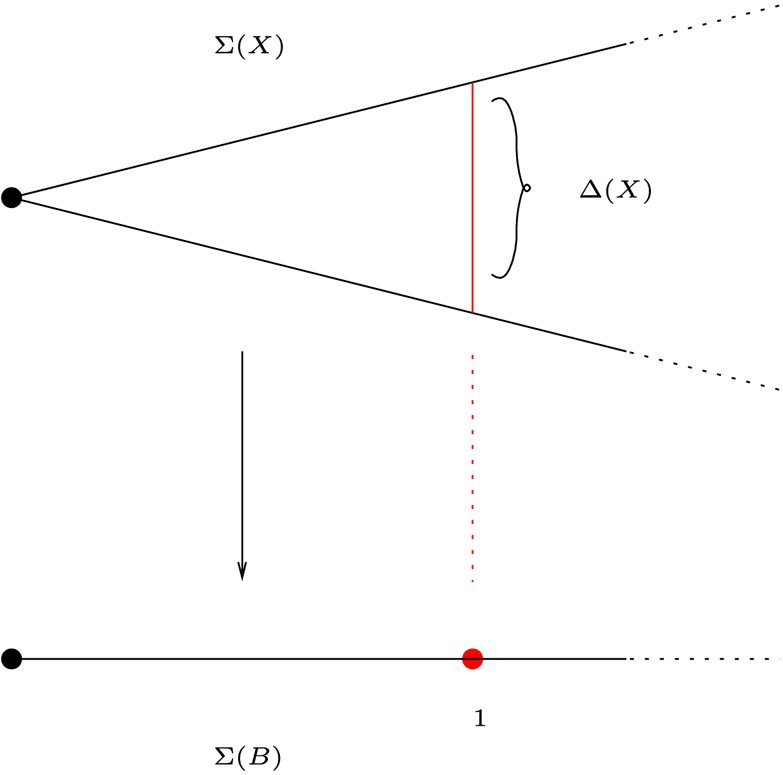
Note that necessarily every leg of  $\Gamma$ is contracted, as
 $\Delta (X)$ is compact.
Proof. First note that if an edge  $E_q$ is contracted, then
 $u_q=0$ and the length of the edge is arbitrary. By changing the length, one sees
 $f$ is not rigid, see Figure 2 on the left.
A graph with a contracted bounded edge or an interior vertex is not rigid.
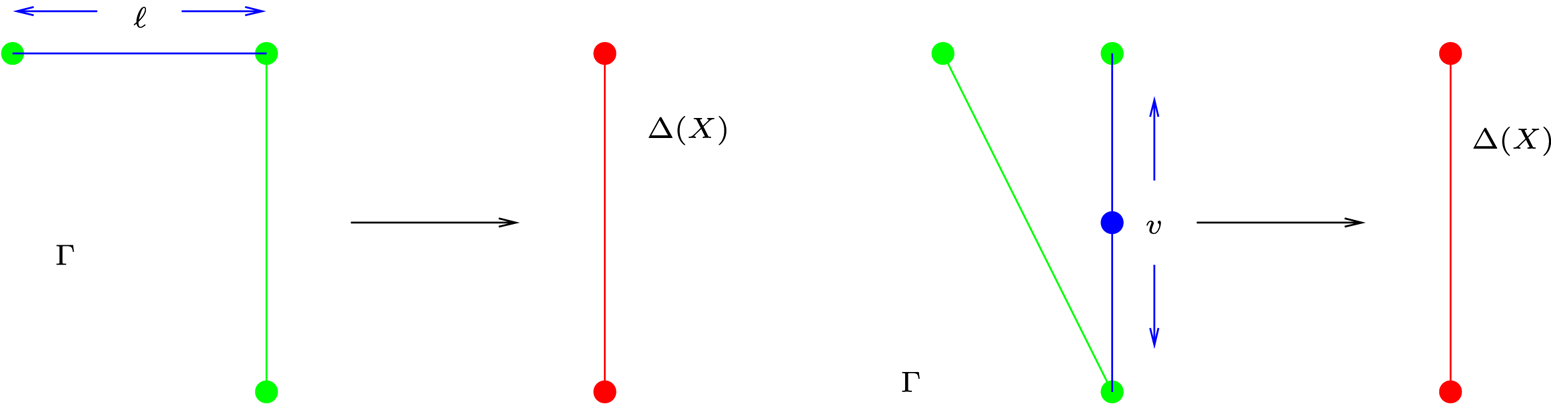
Next, suppose  $v$ is a vertex with
 $f(v)$ lying in the interior of
 $\Delta (X)$. Identifying the latter with
 $[0,1]$, we can view
 $u_q\in \mathbb {Z}$ for any
 $q$. Let
 $E_{q_1},\ldots ,E_{q_r}$ be the edges of
 $\Gamma$ adjacent to
 $v$ with lengths
 $\ell _1,\ldots ,\ell _r$, oriented to point away from
 $v$. We can then write down a family
 $f_t$ of tropical maps,
 $t$ a real number close to
 $0$, with
 $f=f_0$,
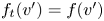 $f_t(v')=f(v')$ for any vertex
 $v'\not =v$, and
 $f_t(v)=f(v)+t$. In doing so, we also need to modify the lengths of the edges
 $E_{q_i}$, as indicated in Figure 2 on the right. Any unbounded edge attached to
 $v$ is contracted to
 $f_t(v)$. So
 $f$ is not rigid. Thus if
 $f$ is rigid, we see that all vertices of
 $\Gamma$ map to endpoints of
 $\Delta (X)$, and any compact edge is not contracted, and hence surjects onto
 $\Delta (X)$. The converse is clear.
A choice of decorated rigid tropical map in this situation is then exactly what Jun Li terms an admissible triple in [Reference LiLi02]. Indeed, by removing  $f^{-1}(1/2)$ from
 $\Gamma$, one obtains two graphs (possibly disconnected)
 $\Gamma _1, \Gamma _2$ with legs and what Jun Li terms roots (the half-edges mapping non-trivially to
 $\Delta (X)$). The weights of a root, in Li's terminology, coincide with the absolute value of the corresponding
 $u_q$. The set
 $I$ in the definition of admissible triple indicates which labels occur for unbounded edges mapping to, say,
 $0\in \Delta (X)$. An illustration is given in Figure 3.
A rigid tropical map is depicted with four edges and two legs, the latter corresponding to marked points with contact order  $0$. The corresponding admissible triple of Jun Li is depicted on the right, with roots corresponding to half-edges and legs corresponding to the legs of the original graph. The half-edges marked
 $1$ and
 $3$ have
 $u=2$.
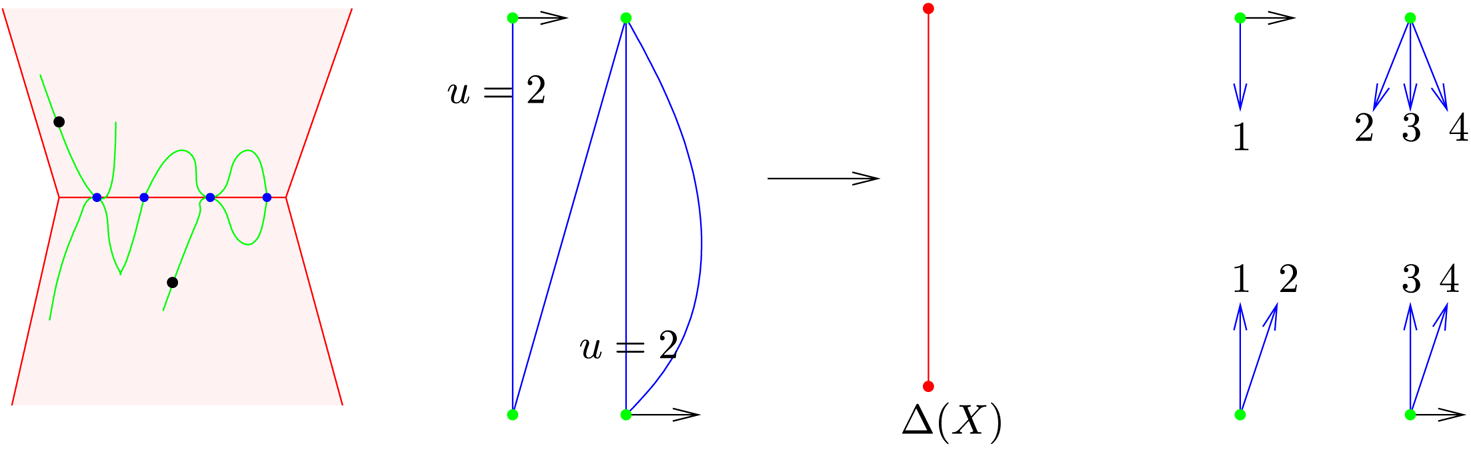
We emphasize that our virtual decomposition of the moduli space of stable logarithmic maps in terms of rigid tropical maps does not depend on transversality. Already in this simple situation, the tropicalization of a basic stable logarithmic map parameterizes a family of tropical maps with several rigid limits, one for each facet of the basic monoid. The main result of this paper refines the virtual counting problem in providing a count for each such choice of rigid limit. This count applies even in more general situations where the vertices of the tropical curve do not necessarily map to vertices of the polyhedron associated to the target, as the next section shows. Note also that this case has been carried out in detail and with somewhat different notation after distribution of a first version of this paper in [Reference Kim, Lho and RuddatKLR18].
5.2 Rational curves in a pencil of cubics
It is well known that if one fixes eight general points in  $\mathbb {P}^2$, the pencil of cubics passing through these eight points contains precisely
 $12$ nodal rational curves. Blowing up six of these eight points, we get a cubic surface we denote
 $X_1' \subset \mathbb {P}^3$, and the enumeration of
 $12$ nodal rational cubics translates to the enumeration of
 $12$ nodal plane sections of
 $X_1'$ passing through the remaining two points
 $p_1,p_2$.
We will give here a non-trivial demonstration of the decomposition formula by degenerating the cubic surface to a normal crossings union  $H_1\cup H_2\cup H_3$ of three blown-up planes.
5.2.1 Degenerating a cubic to three planes
Using coordinates  $x_0,\ldots ,x_3$ on
 $\mathbb {P}^3$, consider a smooth cubic surface
 $X_1'\subset \mathbb {P}^3$ with equation
 \[ f_3(x_0,x_1,x_2,x_3)+x_1x_2x_3=0. \]
We then have a family  $X' \longrightarrow B=\mathbb {A}^1$ given by
 $X'\subset \mathbb {A}^1\times \mathbb {P}^3$ defined by
 $tf_3+x_1x_2x_3=0$. The fibre
 $X'_0$ is the union of three planes
 $H'_1\cup H'_2\cup H'_3$. Pick two sections
 $p_1,p_2:B \longrightarrow X'$ such that
 $p_i(0)\in H'_i$. This can be achieved by choosing two appropriate points on the base locus
 $f_3(x_0,x_1,x_2,x_3)=x_1x_2x_3=0$.
5.2.2 Resolving to obtain a normal crossings family
The total space of  $X'$ is not a normal crossings family: it has nine ordinary double points over
 $t=0$, assuming
 $f_3$ is chosen generally: these are the points of intersection of the singular lines
 $H_i'\cap H_j'$ with
 $f_3=0$. One manifestation is the fact that
 $H_i'$ are Weil divisors which are not Cartier. By blowing up
 $H'_1$ followed by
 $H'_2$, we resolve the ordinary double points. We obtain a family
 $X \longrightarrow B$, which is normal crossings, hence logarithmically smooth, in a neighbourhood of
 $t=0$, as depicted on the left in Figure 4. Denote by
 $H_i$ the proper transform of
 $H_i'$.
The left-hand picture depicts  $X_0$ as a union of three copies of
 $\mathbb {P}^2$, blown up at six, three or zero points. The right-hand picture depicts
 $\Delta (X)$.
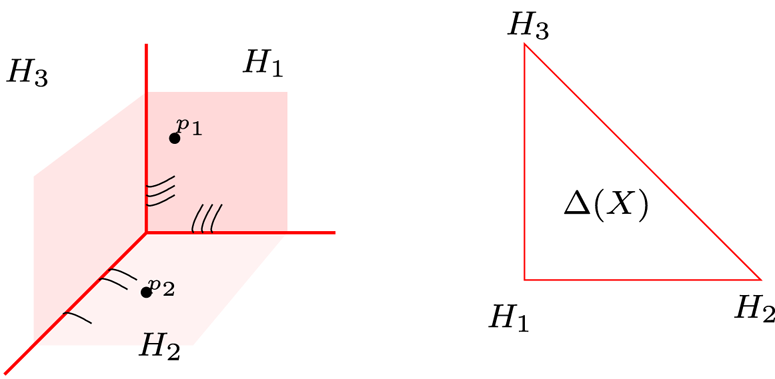
We identify  $\Sigma (X)$ with
 $(\mathbb {R}_{\ge 0})^3$, so that
 $\Delta (X)$ is identified with the standard simplex
 $\{(x_1,x_2,x_3)\,|\,x_1+x_2+x_3=1, x_1,x_2,x_3\ge 0\}$, as depicted on the right in Figure 4.
5.2.3 Limiting curves: triangles
Since the limit of plane curves on  $X'_t = X_t$ should be a plane curve on
 $X'_0$, limiting curves on
 $X_0$ would map to plane sections of
 $X_0'$ through
 $p_1,p_2$. This greatly limits the possible limiting curves, in particular the image in each of
 $H_i'$ is a line.
General triangles do not occur. It is easy to see that a plane section of  $X'_0$ passing through
 $p_1, p_2$ whose proper transform in
 $X_0$ is a triangle of lines cannot be the image of a stable logarithmic curve
 $C \longrightarrow X_0$ of genus
 $0$. Indeed, there would be a smooth point of
 $\underline{C}$ mapping to
 $(X_0)_\mathrm {sing}$, contradicting Proposition 4.6(II).
Triangles through double points. On the other hand, consider the total transform of a triangle in  $X_0'$ passing through
 $p_1$,
 $p_2$, and one of the nine ordinary double points of
 $X'$. The resulting curve will be a cycle of four rational curves, one of the curves being part of the exceptional set of the blowup of
 $H_1'$ and
 $H_2'$. We can partially normalize this curve at the node contained in the smooth part of
 $X_0$, getting a stable logarithmic curve of genus
 $0$. See Figure 5 for one such case.
Proper transform of a triangle through a double point. The curve is normalized where  $C_1$ and
 $C_4$ meet.
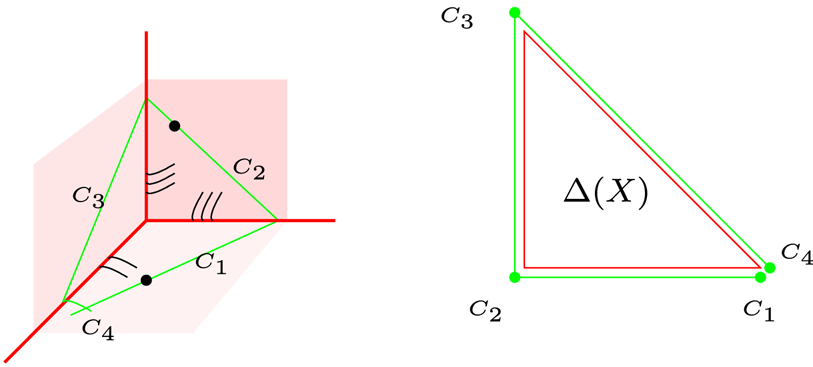
Tropical picture. We depict to the right the associated rigid tropical curve. Here the lengths of each edge are  $1$, and the contact data
 $u_q$ take the values
 $(-1,1,0)$,
 $(0,-1,1)$ and
 $(1,0,-1)$. This accounts for nine curves.
Logarithmic enhancement and logarithmic unobstructedness. Note that the above curves are transverse pre-logarithmic curves, and, by Theorem 4.13, each of these curves has precisely one basic logarithmic enhancement. Since the curve is immersed it has no automorphisms. One can use a natural absolute, rather than relative, obstruction theory to define the virtual fundamental class, which is governed by the logarithmic normal bundle. In this case each curve is unobstructed: since it is transverse with contact order 1, the logarithmic normal bundle coincides with the usual normal bundle. The normal bundle restricts to  $\mathcal {O}_{\mathbb {P}^1},\mathcal {O}_{\mathbb {P}^1}(1),\mathcal {O}_{\mathbb {P}^1}(1)$, and
 $\mathcal {O}_{\mathbb {P}^1}(-1)$ on the respective four components
 $C_1,C_2,C_3$ and
 $C_4$, and hence it is non-special. We note that this does not account for the incidence condition that the marked points land at
 $p_i$. This can be arranged, for instance, using (5.1) in 5.3.2.
It follows that indeed each of these nine curves contributes precisely once to the desired Gromov–Witten invariant.
5.2.4 Limiting curves: the plane section through the origin
The far more interesting case is when the plane section of  $X_0'$ passes through the triple point. Then one has a stable map from a union of four projective lines, with the central component contracted to the triple point, see Figure 6 on the left.
A curve mapping to a plane section through the origin, and its tropicalization.
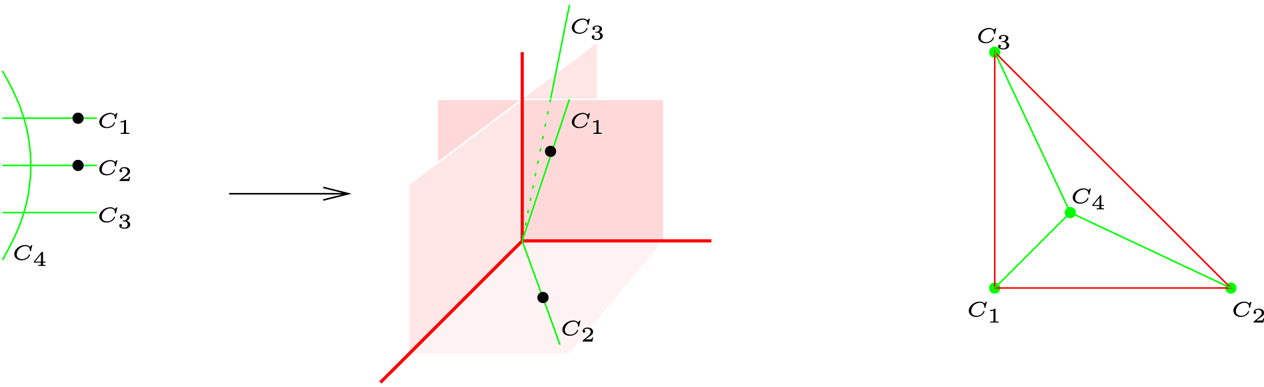
There is in fact a one-parameter family  $\underline {W}$ of such stable maps, as the line in
 $H_3$ is unconstrained and can be chosen to be any element in a pencil of lines. Only one member of this family lies in a plane, and we will see below that indeed only one member of the family admits a logarithmic enhancement.
Tropical picture. To understand the nature of such a logarithmic curve, we first analyse the corresponding tropical map. The image of such a map will be as depicted in Figure 6 on the right, with the central vertex corresponding to the contracted component landing somewhere in the interior of the triangle. However, the tropical balancing condition must hold at this central vertex, by [Reference Gross and SiebertGS13, Proposition 1.14]. From this one determines that the only possibility for the values of  $u_q$ are
 $(-2,1,1)$,
 $(1,1,-2)$ and
 $(1,-2,1)$, all lengths are
 $1/3$, and the central vertex is
 $(1/3,1/3,1/3)$. The multiplicity of this rigid tropical map
 $\Gamma$ according to Corollary 3.8 then is
 $m_{\Gamma }=3$.
5.2.5 Logarithmic enhancement using a logarithmic modification
We now show that only one of the stable maps in the family  $\underline {S}$ has a logarithmic enhancement. To do so, we use the techniques of § 4, first refining
 $\Sigma (X)$ to obtain a logarithmic modification of
 $X$. The subdivision visible in Figure 6 gives a refinement of
 $\Sigma (X)$, the central star subdivision of
 $\Sigma (X)$. This corresponds to the ordinary blow-up
 $h:\tilde X \longrightarrow X$ at the triple point of
 $X_0$. We may then identify logarithmic curves in
 $\tilde X$ and use the induced morphism
 $\mathscr {M}(\tilde X/B) \longrightarrow \mathscr {M}(X/B)$.
Lifting the map to  $\tilde X_0$. The central fibre
 $\tilde X_0$ is now as depicted in Figure 7. We then try to build a transverse pre-logarithmic curve in
 $\tilde X$ lifting one of the stable maps of Figure 6. Writing
 $C=C_1\cup C_2\cup C_3\cup C_4$, with
 $C_4$ the central component, we map
 $C_1$ and
 $C_2$ to the lines
 $L_1$ and
 $L_2$ containing the preimages of
 $p_1$ and
 $p_2$, respectively, as depicted in Figure 7, while
 $C_3$ maps to some line
 $L_3$ in
 $H_3$. On the other hand, by (4.2) in the definition of transverse pre-logarithmic maps,
 $C_4$ must map to the exceptional
 $\mathbb {P}^2=E$, which is of multiplicity
 $3$, in such a way that it is triply tangent to
 $\partial E$ precisely at the points of intersection with
 $L_i$,
 $i=1,2,3$.
The lifted map. The middle figure is only a sketch: the nodal cubic curve  $C_4$ meets each of the visible coordinate lines at one point with multiplicity 3. Moreover, these three points are collinear.
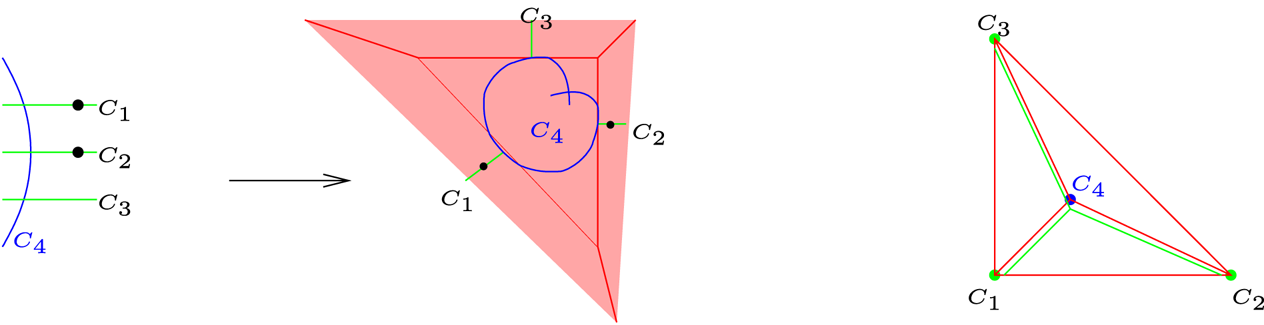
Uniqueness of liftable map. We claim that there is precisely one such map, necessarily with image containing a curve of degree  $3$ in the exceptional
 $\mathbb {P}^2$, with image as depicted in Figure 7. The number of transverse pre-logarithmic maps can be determined by considering linear series as follows. The three contact points on
 $C_4 \simeq \mathbb {P}^1$ can be taken to be
 $0,1$ and
 $\infty$, and the map
 $C_4 \longrightarrow \mathbb {P}^2$ corresponds, up to a choice of basis, to the unique linear system on
 $\mathbb {P}^1$ spanned by the divisors
 $3\{0\}$,
 $3\{1\}$ and
 $3\{\infty \}$. Since these points map to the coordinate lines, the choice of basis is limited to rescaling the defining sections. The choice of scaling of the defining sections results in fixing the images of
 $0$ and
 $1$, and the image point of
 $\infty$ is then uniquely determined.
This determines uniquely the point  $L_3\cap E$. In particular, the line
 $L_3$ is determined. Thus we see that there is a unique transverse prelogarithmic map
 $\underline {f}:C \longrightarrow \tilde{\underline{X}}_0$ such that
 $\underline {h}\circ \underline {f}$ lies in the family
 $\underline {S}$ of stable maps to
 $X$.
Logarithmic enhancement. Since the curve is rational, Theorem 4.13 assures the existence of a logarithmic enhancement. Only the exceptional component is non-reduced, of multiplicity  $\mu =3$, and for each node
 $q\in C$ we have
 $\operatorname {Ind}_q=1$ and
 $\bar w_q=1/1=3/3=1$. Hence
 $b=3$,
 $G=\mathbb {Z}/\mu =\mathbb {Z}/3$ and the count of Theorem 4.13 gives
 \[ \frac{|G|}{b}\prod_q\bar w_q= \frac{3}{3}\cdot 1^3=1 \]
basic log enhancement of this transverse prelogarithmic curve. This gives one more basic stable logarithmic map  $h\circ f$.
Unobstructedness. Once again we check that  $h\circ f$ is unobstructed, if one makes use of an absolute obstruction theory: the logarithmic normal bundle has degree 0 on each line, hence degree 1 on
 $C_4$, and is non-special. Again the map has no automorphisms, which accounts for one curve, with multiplicity
 $3$, because
 $m_{\Gamma }=3$. Hence the final accounting according to Theorem 3.11 is
 \[ 9+3\times 1 = 12, \]
which is the desired result.
5.2.6 Impossibility of other contributions
Note our presentation has not been thorough in ruling out other possibilities for stable logarithmic maps, possibly obstructed, contributing to the total. For example,  $\underline {S}$ includes curves where
 $L_3$ falls into the double point locus of
 $X_0$, but a more detailed analysis of the tropical possibilities rules out a possible log enhancement. We leave it to the reader to confirm that we have found all possibilities.
5.3 Degeneration of point conditions
We now consider a situation which is common in applications of tropical geometry; this includes tropical counting of curves on toric varieties [Reference MikhalkinMik05, Reference Nishinou and SiebertNS06]. We fix a pair  $(Y,D)$ where
 $Y$ is a variety over a field
 $\Bbbk$ and
 $D$ is a reduced Weil divisor such that the divisorial logarithmic structure on
 $Y$ is logarithmically smooth over the trivial point
 $\operatorname {Spec}\Bbbk$. We then consider the trivial family
 \[ X=Y\times\mathbb{A}^1 \longrightarrow \mathbb{A}^1= B, \]
where now  $X$ is given the divisorial logarithmic structure with respect to the divisor
 $(D\times B)\cup (Y\times \{0\})$.
5.3.1 Evaluation maps and moduli
Fix a type  $\beta$ of stable logarithmic maps to
 $X$ over
 $B$, getting a moduli space
 ${\mathscr M}(X/B,\beta )$. We assume that the curves of type
 $\beta$ have
 $n$ marked points
 $p_1,\ldots ,p_n$ with
 $u_{p_i}=0$ (and possibly some additional marked points
 $x_1,\ldots ,x_m$ with non-trivial contact orders with
 $D$). Given a stable map
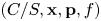 $(C/S,\textbf {x},\mathbf {p},f)$, a priori for each
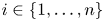 $i\in \{1,\ldots ,n\}$ we have an evaluation map
 $\mathrm {ev}_i:(\underline{S},p_i^*\mathcal {M}_C) \longrightarrow X$ obtained by restricting
 $f$ to the section
 $p_i$. Noting that
 $u_{p_i}=0$, the map
 $\mathrm {ev}_i^{\flat }:(f\circ p_i)^{-1}\overline{\mathcal{M}}_X \longrightarrow \overline{\mathcal{M}}_S\oplus \mathbb {N}$ factors through
 $\overline{\mathcal{M}}_S$, and thus we have a factorization
 $\mathrm {ev}_i:(\underline{S},p_i^*\mathcal {M}_C) \longrightarrow S \longrightarrow X$. In a slight abuse of notation we write
 $\mathrm {ev}_i$ for the morphism
 $S \longrightarrow X$ also, and thus obtain a morphism
 \[ \mathrm{ev}:{\mathscr M}(X/B,\beta) \longrightarrow X^n:= X\times_B X\times_B\times\cdots\times_B X. \]
If we choose sections  $\sigma _1,\ldots ,\sigma _n:B \longrightarrow X$, we obtain a map
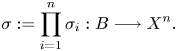 \[ \sigma:=\prod_{i=1}^n \sigma_i:B \longrightarrow X^n. \]
This allows us to define the moduli space of curves passing through the given sections,
 \[ \mathscr{M}(X/B,\beta,\sigma):=\mathscr{M}(X/B,\beta)\times_{X^n} B, \]
where the two maps are  $\mathrm {ev}$ and
 $\sigma$.Footnote 9
5.3.2 Virtual fundamental class on $\mathscr {M}(X/B,\beta ,\sigma )$

We note that the moduli space  $\mathscr {M}(X/B,\beta ,\sigma )$ of curves passing through the given sections carries a virtual fundamental class. The perfect obstruction theory is defined by
 \begin{equation} \mathfrak{E}^{\bullet} = \Big(R\pi_*\Bigl[f^*\Theta_{X/B} \longrightarrow \bigoplus_{i=1}^n (f^*\Theta_{X/B})|_{p_i(S)}\Big]\Big)^{\vee}, \end{equation}
for the stable map  $(\pi :C \longrightarrow S, \textbf {x}, \mathbf {p}, f)$. Here the map of sheaves above is just restriction. See [Reference Abramovich, Chen, Gross and SiebertACGS20, § 4] for a detailed discussion of how to impose logarithmic point conditions on a virtual level, cf. also [Reference Bryan and LeungBL00, Proposition A.1] for an earlier study in ordinary Gromov–Witten theory.
5.3.3 Choice of sections and $\Delta (X)$

We can now use the techniques of previous sections to produce a virtual decomposition of the fibre over  $b_0=0$ of
 $\mathscr {M}(X/B,\beta ,\sigma ) \longrightarrow B$. However, to be interesting, we should in general choose the sections to interact with
 $D$ in a very degenerate way over
 $b_0$. In particular, restricting to
 $b_0$ (which is now the standard log point), we obtain maps
 \[ \sigma_i:b_0 \longrightarrow Y^\dagger, \]
where  $Y^\dagger = Y \times O^\dagger$ is the product with the standard log point. Note that
 \[ \Sigma(Y^\dagger)=\Sigma(X)=\Sigma(Y)\times \mathbb{R}_{\ge 0}, \]
with  $\Sigma (X) \longrightarrow \Sigma (B)$ the projection to the second factor. So
 $\Delta (X)=\Sigma (Y)$ and
 $\Sigma (\sigma _i):\Sigma (B) \longrightarrow \Sigma (X)$ is a section of
 $\Sigma (X) \longrightarrow \Sigma (B)$ and hence is determined by a point
 $P_i\in \Delta (X)$, necessarily rationally defined.
5.3.4 Tropical fibred product
We wish to understand the fibred product
 \[ \mathscr{M}(X/B,\beta,\sigma):=\mathscr{M}(X/B,\beta)\times_{X^n} B \]
at a tropical level. We observe the following.
Proposition 5.2 Let  $X,Y$ and
 $S$ be fs log schemes, with morphisms
 $f_1:X \longrightarrow S$,
 $f_2:Y \longrightarrow S$. Let
 $Z=X\times _S Y$ in the category of fs log schemes,
 $p_1,p_2$ the projections. Suppose
 $\bar z\in Z$ with
 $\bar x= p_1(\bar z)$,
 $\bar y=p_2(\bar z)$, and
 $\bar s=f_1(p_1(\bar z))=f_2(p_2(\bar z))$. Then
 \[ {\operatorname{Hom}}(\overline{\mathcal{M}}_{Z,\bar z},\mathbb{N})= {\operatorname{Hom}}(\overline{\mathcal{M}}_{X,\bar x},\mathbb{N})\times_{{\operatorname{Hom}}(\overline{\mathcal{M}}_{S,\bar s},\mathbb{N})} {\operatorname{Hom}}(\overline{\mathcal{M}}_{Y,\bar y},\mathbb{N}) \]
and
 \[ {\operatorname{Hom}}(\overline{\mathcal{M}}_{Z,\bar z},\mathbb{R}_{\ge 0})= {\operatorname{Hom}}(\overline{\mathcal{M}}_{X,\bar x},\mathbb{R}_{\ge 0})\times_{{\operatorname{Hom}}(\overline{\mathcal{M}}_{S,\bar s},\mathbb{R}_{\ge 0})} {\operatorname{Hom}}(\overline{\mathcal{M}}_{Y,\bar y},\mathbb{R}_{\ge 0}). \]
Proof. The first statement follows immediately from the universal property of fibred product applied to maps  $\bar z^{\dagger } \longrightarrow Z$, where
 $\bar z^{\dagger }$ denotes a geometric point
 $\bar z$ with standard logarithmic structure. The second statement then follows from the first.
5.3.5 Tropical moduli space
We now provide a simple interpretation for the tropicalization of  $S:=\mathscr {M}(X/B,\beta ,\sigma )$. If
 $\bar s\in S$ is a geometric point, let
 $Q$ be the basic monoid associated with
 $\bar s$ as a stable logarithmic map to
 $X$. Then by Proposition 5.2, we have
 \[ {\operatorname{Hom}}(\overline{\mathcal{M}}_{S,\bar s},\mathbb{R}_{\ge 0}) ={\operatorname{Hom}}(Q,\mathbb{R}_{\ge 0})\times_{\prod_i {\operatorname{Hom}}(P_{p_i},\mathbb{R}_{\ge 0})} \mathbb{R}_{\ge 0}. \]
Here as usual 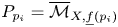 $P_{p_i}=\overline{\mathcal{M}}_{X,\underline{f}(p_i)}$, which here equals
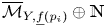 $\overline{\mathcal {M}}_{Y,\underline{f}(p_i)}\oplus \mathbb {N}$. The maps defining the fibred product are as follows. The map
 ${\operatorname {Hom}}(Q,\mathbb {R}_{\ge 0}) \longrightarrow \prod _i{\operatorname {Hom}}(P_{p_i},\mathbb {R}_{\ge 0})$ can be interpreted as taking a tropical map
 $\Gamma \longrightarrow \Sigma (X)=\Sigma (Y)\times \mathbb {R}_{\ge 0}$ to the point of
 ${\operatorname {Hom}}(P_{p_i},\mathbb {R}_{\ge 0})$ which is the image of the contracted edge corresponding to the marked point
 $p_i$. The map
 $\mathbb {R}_{\ge 0} \longrightarrow \prod _i{\operatorname {Hom}}(P_{p_i},\mathbb {R}_{\ge 0})$ is
 $\prod _i \Sigma (\sigma _i)$ and hence takes
 $1$ to
 $((P_1,1),\ldots ,(P_n,1)$.
This yields the following.
Proposition 5.3 Let  $m\in \Delta (S)$, and let
 $\Gamma _C= \Sigma (\pi )^{-1}(m)$. Then
 $\Sigma (f):\Gamma _C \longrightarrow \Delta (X)$ is a tropical map with the unbounded edges
 $E_{p_i}$ being mapped to the points
 $P_i$. Furthermore, as
 $m$ varies within its cell of
 $\Delta (S)$, we obtain the universal family of tropical maps of the same combinatorial type mapping to
 $\Delta (X)$ and with the edges
 $E_{p_i}$ being mapped to
 $P_i$.
5.3.6 Restatement of the decomposition formula
Write
 \[ \mathscr{M}(Y^\dagger/b_0,\beta,\sigma) := \mathscr{M}(X_0, \beta) \times_{X^n} B \]
and, for  ${\boldsymbol{\tau }}=(\tau ,\mathbf {A})$ a decorated type of a rigid tropical map (Definition 2.23),
 \[ \mathscr{M}(Y^\dagger,{\boldsymbol{\tau}},\sigma) := \mathscr{M}(X_0, {\boldsymbol{\tau}}) \times_{X^n} B. \]
Theorem 3.11 now translates to the following.
Theorem 5.4 (The logarithmic decomposition formula for point conditions) Suppose  $Y$ is logarithmically smooth. Then
 \[ [\mathscr{M}(Y^\dagger/b_0,\beta,\sigma)]^{\operatorname{virt}} = \sum_{{\boldsymbol{\tau}}=(\tau,\mathbf{A})} \frac{m_\tau}{|\operatorname{Aut}(\tau)|}\, {j_{\boldsymbol{\tau}}}_*[\mathscr{M}(Y^\dagger,{\boldsymbol{\tau}},\sigma)]^{\operatorname{virt}}. \]
Example 5.5 The above discussion allows a reformulation of the approach of [Reference Nishinou and SiebertNS06] to tropical counts of curves in toric varieties. Take  $Y$ to be a toric variety with the toric logarithmic structure, and fix a curve class
 $\beta$. By fixing an appropriate number
 $n$ of points in
 $Y$, one can assume that the expected dimension of the moduli space of curves of genus
 $0$ and class
 $\beta$ passing through these points is
 $0$. Next, after choosing suitable degenerating sections
 $\sigma _1,\ldots ,\sigma _n$, one obtains points
 $P_1,\ldots ,P_n \in \Sigma (Y)$, the fan for
 $Y$. Finally, one explicitly describes
 $\mathscr {M}(X/B,\beta ,\sigma )$ through an analysis for each rigid tropical map to
 $\Sigma (Y)$ with the correct topology. In particular, the domain curve is rational and should have
 $D_{\rho }\cdot \beta$ unbounded edges parallel to a ray
 $\rho \in \Sigma (Y)$, where
 $D_{\rho }\subset Y$ is the corresponding divisor. The argument of [Reference Nishinou and SiebertNS06] essentially carries out an explicit analysis of possible logarithmic curves associated with each such rigid curve after a log blow-up
 $\tilde Y^\dagger \longrightarrow Y^\dagger$. Theorem 5.4 also generalizes part of [Reference Nishinou and SiebertNS06] to some higher genus cases, with the determination of the contribution of individual maps left open.
5.4 An example in $\mathbb {F}_2$

We now consider a very specific case of § 5.3 above. This example deliberately deviates slightly from the toric case of Example 5.5 and exhibits new phenomena.
5.4.1 A non-toric logarithmic structure on a Hirzebruch surface
Let  $Y$ be the Hirzebruch surface
 $\mathbb {F}_2$. Viewed as a toric surface, it has four toric divisors, which we write as
 $f_0$,
 $f_{\infty }$,
 $C_0$ and
 $C_{\infty }$. Here
 $f_0,f_{\infty }$ are the fibres of
 $\mathbb {F}_2 \longrightarrow \mathbb {P}^1$ over
 $0$ and
 $\infty$,
 $C_0$ is the unique section with self-intersection
 $-2$, and
 $C_{\infty }$ is a section disjoint from
 $C_0$, with
 $C_{\infty }$ linearly equivalent to
 $f_0+f_{\infty }+C_0$.
We will give  $Y$ the (non-toric) divisorial logarithmic structure coming from the divisor
 $D=f_0+f_{\infty }+C_{\infty }$, deliberately omitting
 $C_0$.
5.4.2 The curves and their marked points
We will consider rational curves representing the class  $C_{\infty }$ passing through three points
 $y_1,y_2,y_3$. Of course there should be precisely one such curve.
A general curve of class  $C_{\infty }$ will intersect
 $D$ in four points, so we will set this up as a logarithmic Gromov–Witten problem by considering genus
 $0$ stable logarithmic maps
 \[ f:(C,p_1,p_2,p_3,x_1,x_2,x_3,x_4) \longrightarrow Y, \]
imposing the condition that  $f(p_i)=y_i$, and
 $f$ is constrained to be transversal to
 $f_0, f_{\infty }, C_{\infty }$ and
 $C_{\infty }$ at
 $x_i$ for
 $i=1,\ldots , 4$, respectively. This transversality determines the vectors
 $u_{x_i}$, while we take the contact data
 $u_{p_i}=0$.
Since the maps have the points  $x_3$ and
 $x_4$ ordered, we expect the final count to amount to two rather than one.
5.4.3 Choice of degeneration
We will now see what happens when we degenerate the point conditions as in § 5.3, by taking  $X=Y\times \mathbb {A}^1$ and considering sections
 $\sigma _i:\mathbb {A}^1 \longrightarrow X$,
 $1\le i \le 3$. We choose these sections to be general subject to the condition that
 \[ \sigma_1(0)\in f_0, \quad \sigma_2(0)\in f_{\infty},\quad \sigma_3(0)\in C_0. \]
Since 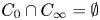 $C_0\cap C_{\infty }=\emptyset$, any curve in the linear system
 $|C_{\infty }|$ which passes through this special choice of three points must contain
 $C_0$, and hence be the curve
 $f_0+f_{\infty }+C_0$.
5.4.4 The complex $\Delta (X)$ and the tropical sections

Note that  $\Delta (X)$ is as depicted in Figure 8, an abstract gluing of two quadrants, not linearly embedded in the plane. The choice of sections
 $\sigma _i$ determines points
 $P_i\in \Sigma (X)$ as explained in § 5.3. For example, if, say, the section
 $\sigma _1$ is transversal to
 $f_0\times \mathbb {A}^1$, then
 $P_1$ is the point at distance
 $1$ from the origin along the ray corresponding to
 $f_0$. Since
 $C_0$ is not part of the divisor determining the logarithmic structure,
 $P_3$ is in fact the origin.
The polyhedral complex  $\Delta (X)=\Sigma (Y)$ and a potential tropical map. The small arrows indicate
 $E_{p_i}$ which are contracted to
 $P_i$. The suggested positions of
 $E_{x_3}$ and
 $E_{x_4}$ are shown below to contribute
 $0$ to the virtual count.
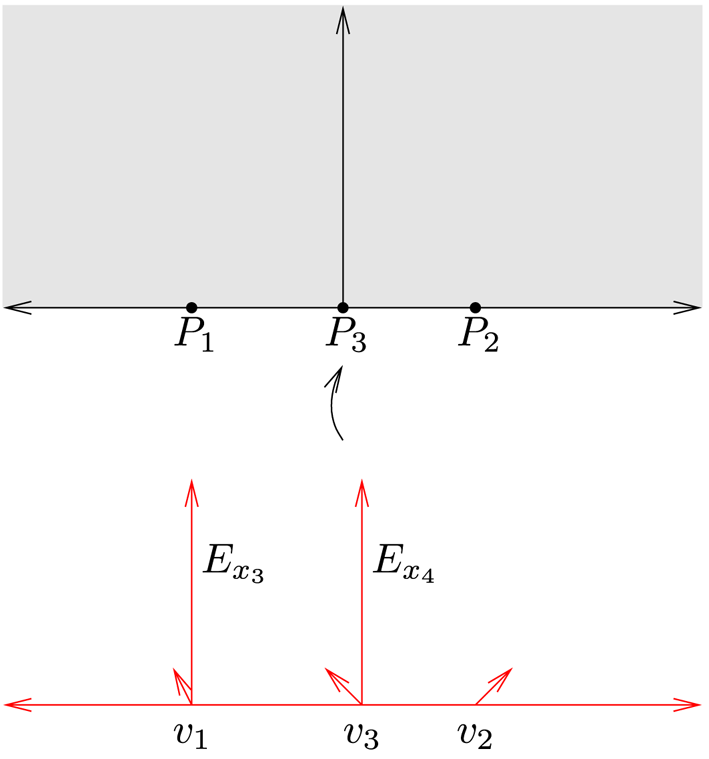
5.4.5 The tropical maps
One then considers rigid decorated tropical maps passing through these points.
• The curves must have seven unbounded edges,
$E_{p_i}$, $E_{x_j}$.• The map contracts
$E_{p_i}$ to $P_i$.• Each
$E_{x_j}$ is mapped to an unbounded ray going to infinity in the direction indicating which of the three irreducible components of $D$ the point $x_j$ is mapped to.


5.4.6 Rigid tropical maps
It is then easy to see that to be rigid, the domain of the tropical map must have three vertices,  $v_1,v_2,v_3$, with the edge
 $E_{p_i}$ attached to
 $v_i$ and
 $v_i$ necessarily being mapped to
 $P_i$.
The location of the  $E_{x_i}$ is less clear. One can show using the balancing condition [Reference Gross and SiebertGS13, Proposition 1.15] that
 $E_{x_1}$ must be attached to
 $v_1$ and
 $E_{x_2}$ must be attached to
 $v_2$. There remains, however, some choice about the location of
 $E_{x_3}$ and
 $E_{x_4}$. Indeed, they may be attached to the vertices
 $v_1$,
 $v_2$ or
 $v_3$ in any manner. Figure 8 shows one such choice.
5.4.7 Decorated rigid tropical maps
We must however consider decorated rigid tropical maps, and in particular we need to assign curve classes  $\mathbf {A}(v)$ to each vertex
 $v$. Let
 $n_i$ be the number of edges in
 $\{E_{x_3},E_{x_4}\}$ attached to the vertex
 $v_i$. Since
 $E_{x_3}$ and
 $E_{x_4}$ indicate which ‘virtual’ components of the domain curve have marked points mapping to
 $C_{\infty }$, it then becomes clear that
 \[ \mathbf{A}(v_1)=n_1 f,\quad \mathbf{A}(v_2)=n_2 f,\quad \mathbf{A}(v_3)=C_0+n_3f, \]
where  $n_1+n_2+n_3 = 2$.
5.4.8 The seeming contradiction
In fact, as we shall see shortly, there are logarithmic curves whose tropicalization yields any one of the curves with  $n_1=n_2=1$, and there is no logarithmic curve over the standard log point whose tropicalization is the tropical map with
 $n_3=2$. Surprisingly at first glance, the only decorated rigid tropical map which provides a non-trivial contribution to the Gromov–Witten invariant is the one which cannot be realized, with
 $n_3=2$. We will also see that the case
 $n_1=2$ or
 $n_2=2$ plays no role. Before we exhibit this counterintuitive behaviour, we point out that this is no contradiction. Indeed, consider a stable log map to
 $X_0$ with non-rigid tropicalization. This stable log map will lie in the intersection of the images in
 $\mathscr {M}(X_0,\beta )$ of more than one subspace
 $\mathscr {M}_\tau (X_0,\beta )$ from (3.3). Tropical geometry cannot thus tell how these stable log maps with non-rigid tropicalizations contribute to the virtual count on any of these components.
5.4.9 Curves with $n_1=n_2=1$ contribute zero

To exhibit this seemingly contradictory behaviour, first recall the standard fact that there is a flat family  $\underline {W} \longrightarrow \underline {\mathbb {A}}^1$ such that
 $\underline {W}_0\simeq \underline{X}_0=\mathbb {F}_2$ and
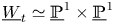 $\underline {W}_t\simeq \underline {\mathbb {P}}^1\times \underline {\mathbb {P}}^1$ for
 $t\not =0$. Furthermore, the divisor
 $f_0\cup f_{\infty }\cup C_{\infty }$ extends to a normal crossings divisor on
 $\underline {W}$ with three irreducible components:
 $\{0\}\times \mathbb {P}^1, \{\infty \}\times \mathbb {P}^1,$ and a curve of type
 $(1,1)$. This endows
 $\underline {W}$ with a divisorial logarithmic structure, logarithmically smooth over
 $\mathbb {A}^1$ with the trivial logarithmic structure. However, no curve of class
 $C_0$ in
 $W_0$ deforms to
 $W_t$ for
 $t\not =0$. Hence no curve representing a point in the moduli space
 $\mathscr {M}_{\tau }(X_0,\beta )$ for
 $\tau$ one of the decorated rigid tropical maps with
 $n_3=0$ deforms. The usual deformation invariance of Gromov–Witten invariants then implies that the contribution to the Gromov–Witten invariant from such a
 $\tau$ is zero.
Another transparent explanation for the vanishing of this count is given by the gluing formalism further developed in [Reference Abramovich, Chen, Gross and SiebertACGS20]: the moduli space of punctured stable maps corresponding to the  $(-2)$-curve has negative virtual dimension and by [Reference Gross and SiebertGS19, Theorem A.16] any moduli space of stable maps with such a component has vanishing virtual count.
5.4.10 Expansion and description of moduli space for $n_1=n_2=1$

To explore the existence of the relevant logarithmic curves, we again turn to § 4. First let us construct a curve whose decorated tropical map has  $n_1=n_2=1$. The image of this curve in
 $\Delta (X)$ yields a subdivision of
 $\Delta (X)$ which in turn yields a refinement of
 $\Sigma (X)$, and hence a log étale morphism
 $\tilde X \longrightarrow X$. It is easy to see that this is just a weighted blow-up of
 $f_0\times \{0\}$ and
 $f_{\infty }\times \{0\}$ in
 $X=Y\times \mathbb {A}^1$; the weights depend on the precise location of
 $P_1$ and
 $P_2$, but if they are taken to have distance 1 from the origin, the subdivision will correspond to an ordinary blow-up. The central fibre is now as depicted in Figure 9, with the proper transforms of the sections meeting the central fibre at the points
 $p_1,p_2,p_3$ as depicted.
A central fiber with  $n_1=n_2=1$.
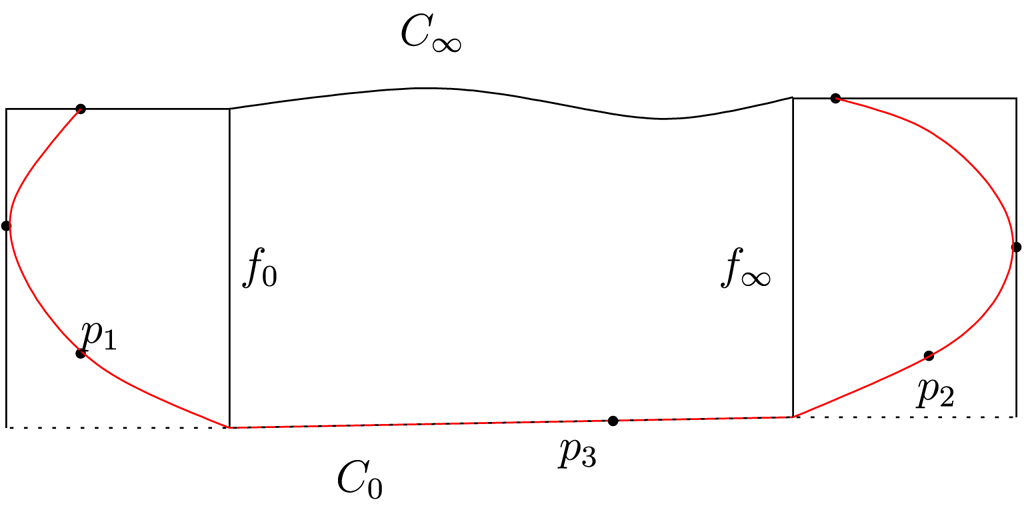
The logarithmic curve then has three irreducible components, one mapping to  $C_0$ and the other two mapping to the two exceptional divisors, each isomorphic to
 $\mathbb {P}^1\times \mathbb {P}^1$. These latter two components each map isomorphically to a curve of class
 $(1,1)$ on the exceptional divisor, and is constrained to pass through
 $p_i$ and the point where
 $C_0$ meets the exceptional divisor. There is in fact a pencil of such curves. We remark that all seven marked points are visible in Figure 9, but the curves in the exceptional divisors meet the left-most and right-most curves transversally, and not tangent as it appears in the picture. By Theorem 4.13, any such stable map then has a log enhancement, and composing with the map
 $\tilde X \longrightarrow X$ gives a stable logarithmic map over the standard log point whose tropicalization is one of the rigid curves with
 $n_1=n_2=1$. Thus the relevant moduli space of stable log maps to
 $\tilde X_0$ has two components, each isomorphic to
 $\mathbb {P}^1 \times \mathbb {P}^1$, depending on which sides
 $x_3$ and
 $x_4$ lie. This moduli space maps injectively to the moduli space of stable log maps to
 $X_0$.
To see that the virtual count gives zero, one can again consider the absolute deformation and obstruction theory of all the maps parameterized by  $\mathbb {P}^1 \times \mathbb {P}^1$. Over the open subset
 $\mathbb {C}^* \times \mathbb {C}^*$ the maps admit a normal line bundle with degrees
 $2,-2,2$ on the three components of the curve. To account for the point conditions we twist down by the points
 $x_i$, obtaining a line bundle
 $N$ of degrees
 $1,-3,1$ respectively. Restricting to the middle components gives an isomorphism of the obstruction space
 $H^1(C, N) \to H^1(\mathbb {P}^1, \mathcal {O}(-3)) = \mathbb {C}^2$. One checks that the isomorphism extends across the boundary of
 $\mathbb {P}^1 \times \mathbb {P}^1$, giving a trivial obstruction bundle with zero Chern classes representing the virtual fundamental class 0.
5.4.11 Curves with $n_1=n_2=0$

Now consider the case that  $n_1=n_2=0$ and
 $n_3=2$. This rigid tropical curve cannot be realized as the tropicalization of a stable logarithmic map over the standard log point. Indeed, to be realized, the curve must have an irreducible component of class
 $C_0+2f=C_{\infty }$, and we know there is no such curve passing through
 $\sigma _3(0)$, a general point on
 $C_0$. However, this tropical map can in fact be realized as a degeneration of a different, non-rigid tropical map, as depicted in Figure 10.
A realizable tropical map with  $n_1=n_2=0$.
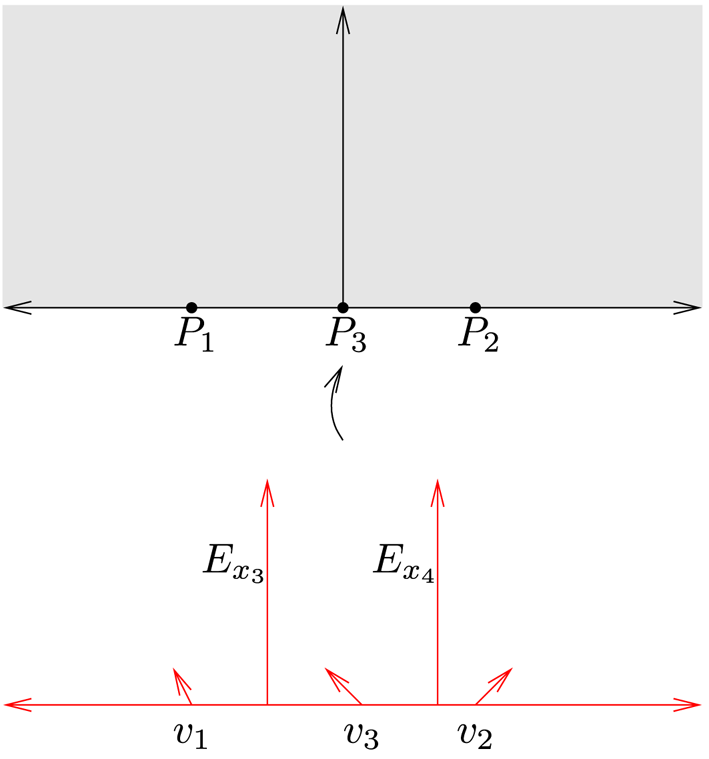
To construct an actual logarithmic curve with  $n_1=n_2=0$, we use refinements again. Assume for simplicity of the discussion that
 $P_1$ and
 $P_2$ have been taken to have distance
 $2$ from the origin. Subdivide
 $\Delta (X)$ by introducing vertical rays with endpoints
 $P_1$ and
 $P_2$, and in addition introduce vertical rays which are the images
 $E_{x_3}$ and
 $E_{x_4}$; again for simplicity of the discussion take the endpoints of these rays to be at distance
 $1$ from the origin.
This corresponds to a blow-up  $\tilde X \longrightarrow X$ involving four exceptional components, and Figure 11 shows the central fibre of
 $\tilde X \longrightarrow \mathbb {A}^1$, along with the image of a stable logarithmic map which tropicalizes appropriately (once again the curves on the second and fourth components of
 $\tilde X$ meet the first and fifth components with order 1, and no tangency). Composing this stable logarithmic map with
 $\tilde X \longrightarrow X$ then gives a non-basic stable logarithmic map to
 $X$ over the standard log point. It is not hard to see that the corresponding basic monoid
 $Q$ has rank
 $3$, parameterizing the image of the curve in
 $\Sigma (B)$ as well as the location of the edges
 $E_{x_3}$ and
 $E_{x_4}$. The degenerate tropical curve where the edges
 $E_{x_3}$ and
 $E_{x_4}$ are attached to the vertex
 $v_3$ represents a one-dimensional face of
 $Q^{\vee }$, so the rigid tropical map with
 $n_3=2$ does appear in the family
 $Q^{\vee }$, but only as a degeneration of a tropical map which is realisable by an actual stable logarithmic curve over the standard log point.
A logarithmic map with  $n_1=n_2=0$.
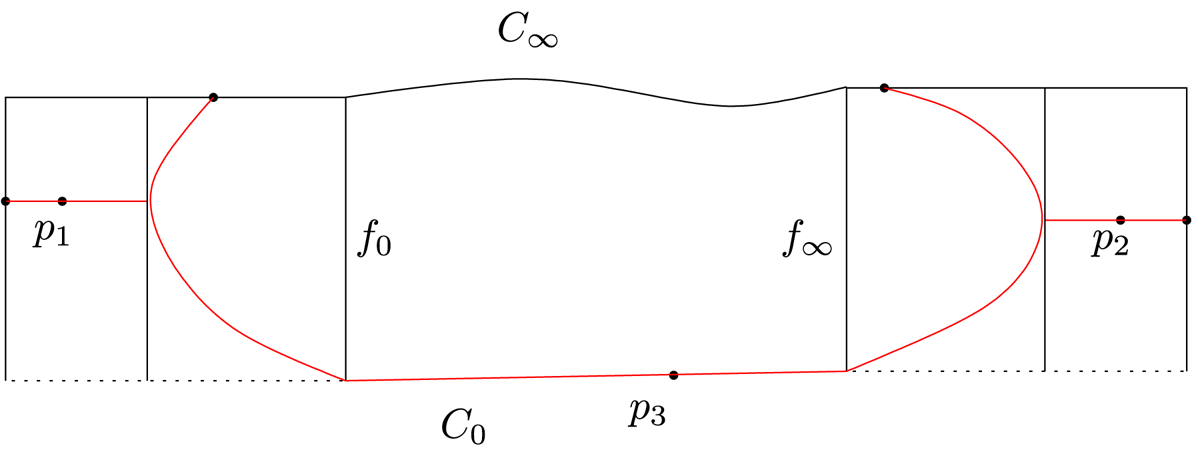
One can again show that the relevant moduli space in  $\tilde X_0$ has two components isomorphic to
 $\mathbb {P}^1 \times \mathbb {P}^1$. This time the virtual fundamental class of each component is the top Chern class of
 $\mathcal {O}(1)\boxplus \mathcal {O}(1)$, which has degree 1. Each of these maps to
 $\tilde X_0$ define the same map to
 $X_0$, and indeed the corresponding moduli space
 $\mathscr {M}_{n_i=0}(X_0)$ is discrete and unobstructed.
5.4.12 Curves with $n_1+n_2=1$

In this case  $\mathbf {A}(v_3)=C_0+n_3 f=C_0+f$ and either
 $\mathbf {A}(v_1)=f,\mathbf {A}(v_2)=0$ or
 $\mathbf {A}(v_1)=0,\mathbf {A}(v_2)=f$. The expanded degeneration picture then looks like a hybrid of Figures 9 and 10, with the depicted behaviour describing one end each. A computation similar to the one presented for the case
 $n_1=n_2=1$ shows vanishing of this count as well.
5.4.13 Curves with $n_i=2$

To complete the analysis, we end by noting that the case  $n_1=2$ or
 $n_2=2$ cannot occur. Consider the case
 $n_1=2$. Any stable logarithmic curve over the standard log point with a tropicalization which degenerates to such a rigid tropical map must have a decomposition into unions of irreducible components corresponding to the vertices
 $v_1, v_2$ and
 $v_3$, with the homology class of the image of the stable map restricted to each of these unions of irreducible components being
 $2[f_0]$,
 $0$ and
 $[C_0]$ respectively. In particular, this will prevent the possibility of having any irreducible component whose image contains
 $\sigma _2(0)$. Thus this case does not occur.
Acknowledgements
That there are analogies with Parker's work is not an accident: we received a great deal of inspiration from his work and had many fruitful discussions with him. We also benefited from discussions with Steffen Marcus, Dhruv Ranganathan, Ilya Tyomkin, Martin Ulirsch and Jonathan Wise.