Introduction
The formation of stereotypes and their use is a natural human process that is important in helping individuals make sense of the social environment. Reference Gilmour1 Stereotypes help manage expectations and interactions, simplifying a complex world. For example, when a patient attends radiotherapy for the first time, when they meet a radiographer, they may stereotype that person based on a range of characteristics they expect a health professional to have, which itself will be based on previous exposure to other health professionals such as nurses, and information they may have read/heard about radiographers and radiotherapy. The brain takes a cognitive shortcut and falls back on recognised patterns of behaviour.
Usually, when you consider people from a particular group, you mentally emphasise the groups shared characteristics while minimising their differences, which may lead to the production of group stereotypes and prejudice. Although we may be more acutely aware of this in relation to gender inequalities and racism, stereotype formation can exist with any social categorisation including professions.
A stereotype contains grains of truth and can therefore be classed as category-based generalisations Reference Correll, Judd, Park and Wittenbrink2 rather than being false or baseless as is the case with prejudice. A stereotype tends to be shared by members of a group through common experiences and because by nature behaviour in groups tends to become more co-ordinated. Reference McGarty, Yzerbyt and Soears3
Health Profession’s Stereotypes
Effective interprofessional working is important in the National Health Service in order to provide the best patient outcomes. How a group is viewed leads to expectations of both the group and the individuals representing the group, and this is therefore one of the key determinates in intragroup and intergroup interactions. Although stereotypes can speed up interactions, they often interfere and disrupt intergroup relationships through various methods such as interprofessional rivalry, status and tribalism. Reference Czopp, Kay and Cheryan4–Reference Fiske6 The relative status of the groups is important in defining the relations between groups which may affect how the different groups work with each other. The doctor stereotype is that of being a strong leader, but with poor interpersonal skills compared to other health professionals. Reference Braithwaite, Clay-Williams and Vecellio7 According to Cummings, Reference Cummings8 nursing is widely perceived as being a vocation rather than a highly skilled profession, whereas Allied Health Professionals (AHPs) are the hidden workforce dominated by nurses. Reference Nagus, Greenfield, Travaglia, Westbrook and Braithwaite9 The professional stereotype might be in part explained by gender stereotypes. Traditionally, the medical profession attracted males; in fact, you could not gain a licence to practise medicine as a female until the 20th century. Nursing and some AHPs are seen as being matriarchal as these professions were originally seen as an extension of a woman’s social role, that of caring and nurturing. This difference in genders entering the relevant professions has introduced a subconscious set of stereotypes, personally I can’t remember how many times as a student I was called ‘doctor’ and the qualified female radiographer I was working with ‘nurse’; to many patients, men are doctors and females are nurses, and although lessened by time, these professional gender stereotypes still continue.
It is argued that collaboration between different professions will not happen automatically or well if merely based on the notion of patient benefit. Reference D’Amour, Ferrada-Videla, San Martin Rodriguez and Beaulieu10 Respect and trust between the groups are paramount to success, and this can only exist if professions are aware of the role of the other health professionals. One common solution suggested to help break down interprofessional rivalry, tribalism and stereotypes is interprofessional education (IPE). A number of papers have been published looking at stereotypes held by students and the effect on this by IPE in multiple health disciplines, most of which were summarised by a systematic review by Cook and Stoecker in 2014. Reference Cook and Stoecker11–Reference White, Lambert and Viskerb14 The basis of this research is that stereotypes can be formed, changed and/or reinforced at this time, which may provide benefits for interprofessional collaboration once qualified. Research in this field has also indicated that students tend to rate their own profession more positively than they do other professions. Doctors tend to be rated poorly in the area of caring/interpersonal skills Reference White, Lambert and Viskerb14,Reference Biehle, Mann and Fox15 but highly in other areas such as leadership and confidence, whereas nurses are seen as being team players but are ranked low in independence and leadership abilities. Reference Biehle, Mann and Fox15–Reference Thurston, Chesson, Harris and Ryan17
Two studies have included radiographers in the groups investigated. Hean et al. Reference Hean, Macleod, Adams and Humphris16 looked at eight different student healthcare groups including radiographers. It was found that radiography students rate themselves similar to how other student groups see them in most areas and were differentiated from other student groups as being professionally competent. However, radiography students see themselves differently from the other professions in being team players and in decision-making. A second study including radiography students was undertaken by Tunstall-Perdoe et al. Reference Tunstall-Perdoe, Rink and Hilton18 looking at the effect of IPE within a common foundation programme on stereotypes. Medical students and AHP/nursing students saw radiography as being caring and that they are also hard workers although there was a significant shift in the student’s opinions after IPE with radiographers being seen as less decisive and more detached than they were before the IPE.
Present Work
The primary aim of this paper is to explore the student radiographer’s stereotype perception of their own profession compared to that of the other radiography profession, specifically, to consider
the auto- and hetero-stereotypes of both the diagnostic and therapeutic professions and identity where differences exist between the two professions;
if each professional groups’ perception of stereotype changes with time.
Method
An online questionnaire was created around an existing measurement tool called the Student Stereotypes Rating Questionnaire (SSRQ) developed by Barnes et al. 2000 and adapted by Hean et al. in 2006. Reference Hean, Macleod, Adams and Humphris16 The questionnaire utilised consisted of a short demographic section followed by a section looking at the amount of IPE they had done in that year and who with, and then finally the SSRQ. The SSRQ asks respondents to rate the group in question on nine characteristics using a five-point Likert scale ranging from 1 (very low) to 5 (very high). The SSRQ was repeated four times so that respondents could comment on their own profession and on three other professions. The four professions included were doctors, diagnostic radiographers, therapeutic radiographers and nurses.
Ethical approval for the research was granted on the 28th of January by the School of Health Sciences Research Ethical Committee (Ref:Staff/18–19/13). Following ethical approval, the questionnaire was published online using QualtricsXM (Provo, USA), and an approach was made to the Heads of Radiography group, which includes representatives from all 18 English Higher Education Institutions (HEIs) that have radiography programmes to forward an invite to their radiography students via email. The email contained background information about the research and an HTML hyperlink and a quick response code to the questionnaire so allowing the students to readily access the questionnaire via computer, tablet or mobile phone. In May 2019, a follow-up email was sent to an academic in any HEI with radiographic training where no data had been received asking them to consider dissemination of the invite letter to their students. The questionnaire was available for a five-month period starting February 2019 and terminating at the end June 2019. A version of the survey used can be viewed by using the following link: https://cityunilondon.eu.qualtrics.com/jfe/form/SV_3LeeF0Rz3f7qhHT.
Statistical analysis was undertaken using IBM SPSS Statistics 25 (Seattle, USA) and MedCalc Statistical Software version 19·0·4 (Ostend, Belgium).
Results
The survey response was 233 of which 211 (90·6%) had useable information in relation to stereotype information. Data were received from students from 16 of the 18 English universities that currently provide radiography education to qualification. The study population consisted of 148 (70%) diagnostic students and 63 (30%) therapeutic students. 81·5% respondents were female and 18·5% male; 33% were first-year students, 35% second-year and 32% final-year students; two subjects (1%) failed to declare their year of study.
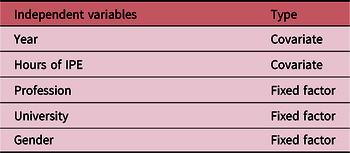
A full factorial general linear model (GLM) was then undertaken on the mean stereotype score. The analysis was undertaken twice looking at auto-stereotype, and then again on hetero-stereotypes, the variables in the analysis are listed in Table 1.
Independent variables use in the GLM procedure

The auto-stereotype analysis revealed a corrected model of F = 0·918, p = 0·616 with no main effect or interaction reaching significance. For hetero-stereotypes, the corrected model was F = 1·635, p = 0·016. The main effect of profession on mean stereotype score was significant, F = 12·011, p < 0·001. No other interaction was significant although the interaction between profession and gender was approaching significance F = 3·750, p = 0·054.
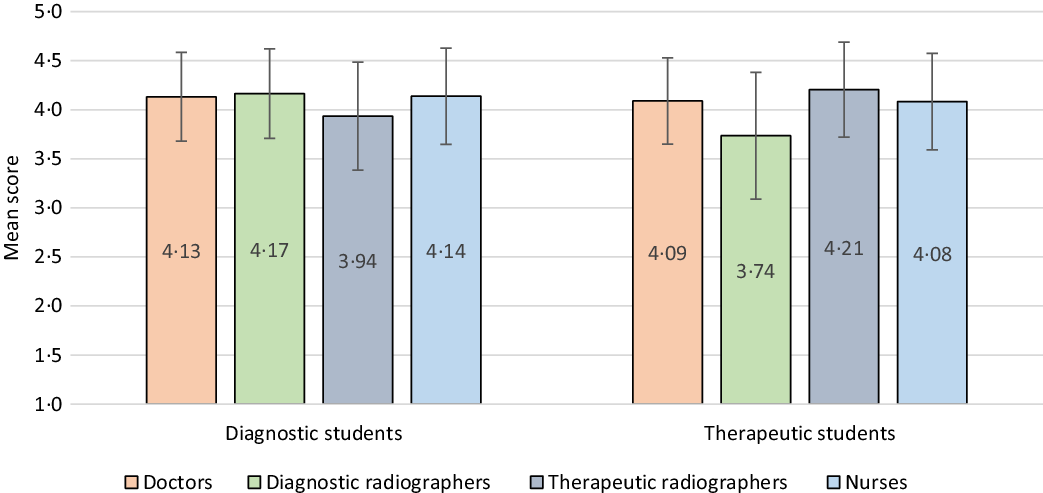
A post hoc test revealed that for each profession there was no significant difference in how they rated their own profession and that of both nurses and doctors. However, students in each radiographic profession significantly scored the other radiographic profession significantly lower than their own and the other two professions (Figure 1).
The individual profession’s mean SSRQ score of own and other professions.

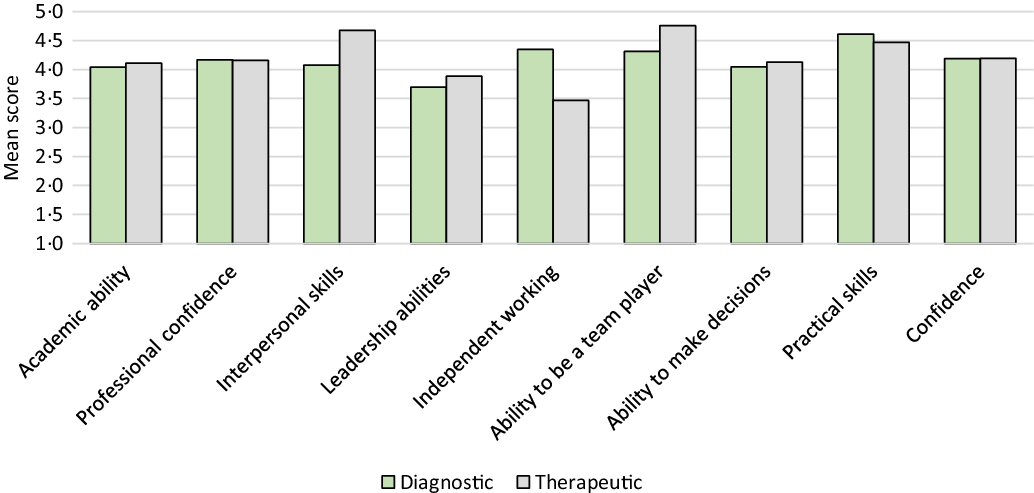
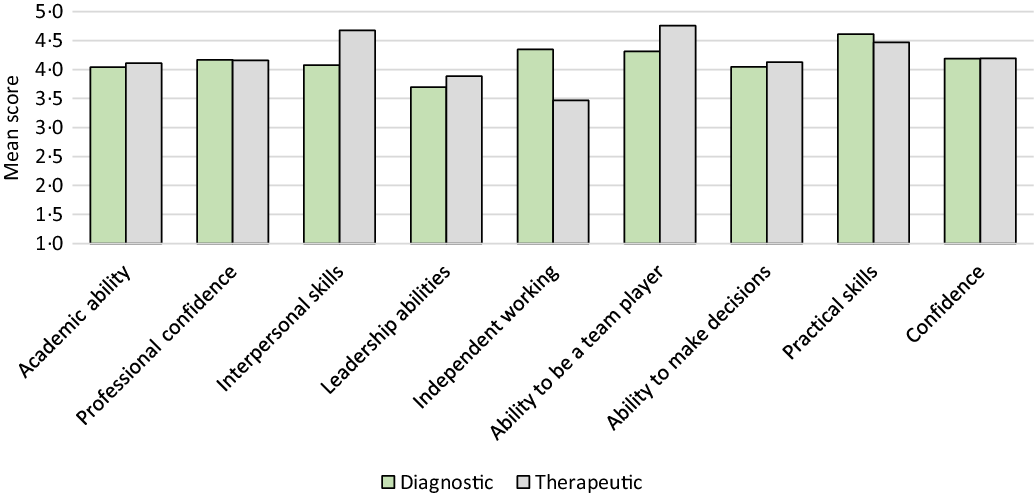
The mean ratings for each of the nine individual characteristics that made up the SSRQ were also considered. Figure 2 considers how each of the radiographic profession’s students viewed their own profession. Mann–Whitney tests indicated that students distinguished between the two radiography professions in three areas, interpersonal skills, U = 6371, p < 0·001, which were rated higher in their own profession by therapeutic students, independent working, U = 2233, p < 0·001, rated higher by diagnostic students and the ability to be a team player, U = 5937, p < 0·001, rated higher by therapeutic students.
Auto-stereotypes for the radiographic professions.
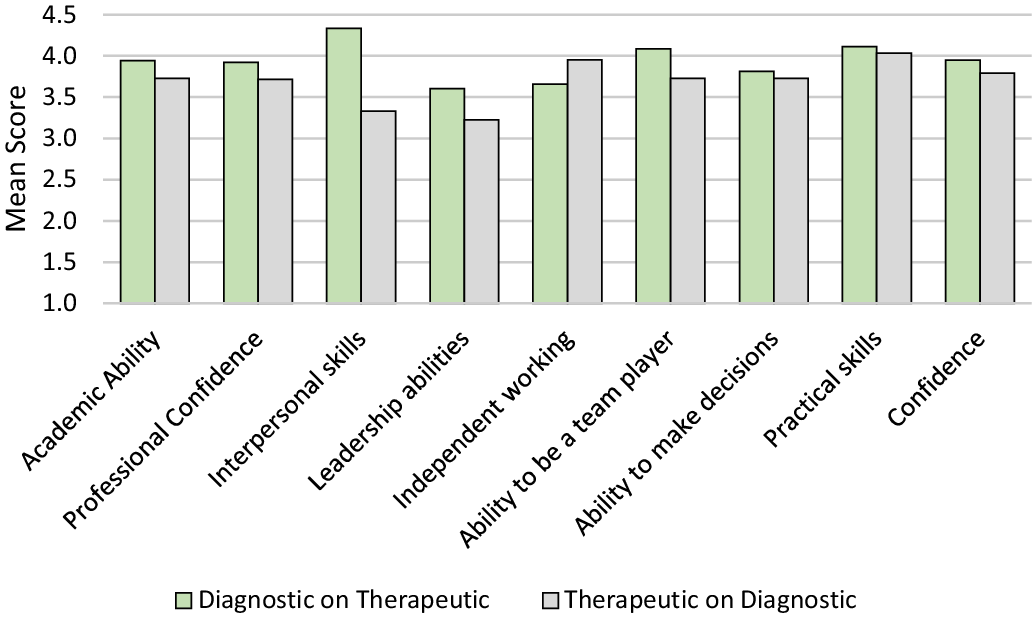
The next consideration was to investigate where the similarities and differences between how the students in each radiographic profession viewed the other radiographic profession by looking at the nine characteristics (Figure 3). Mann–Whitney tests indicated that students distinguished between the two professions in the same three areas as above and additionally in leadership abilities. In the three repeated characteristics, the same pattern was observed as before, diagnostic students rating the therapy profession higher in interpersonal skills, U = 1953, p < 0·001 and the ability to be a team player, U = 3569, p = 0·018 than the therapy students rated the diagnostic profession, and as before the diagnostic profession rating higher for independent working, U = 5412, p = 0·008. For the new characteristic, leadership abilities diagnostic students rated therapeutic students higher than the therapy students who rated the diagnostic profession, U = 3557, p = 0·014.
Hetero-stereotypes of the radiographic professions.

Although there was no difference in overall mean SSRQ score with both gender and year of training, further non-parametric tests were undertaken on the individual characteristics scores to see if these were affected by these two variables.
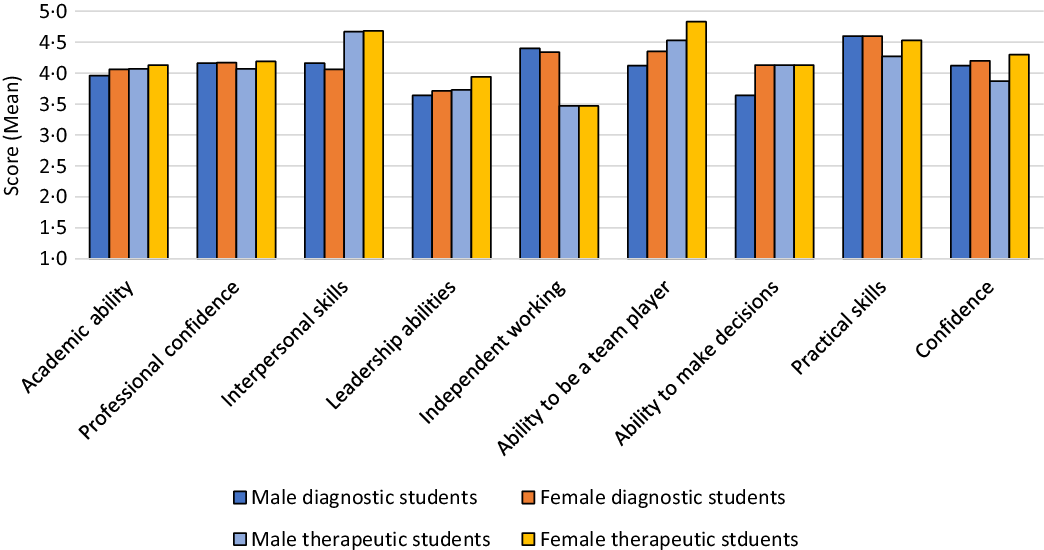
Figure 4 shows variation within each field by gender. Female students tended to score their profession higher than the males did, although male diagnostic students scored interpersonal skills and independent working higher than the females. Within the diagnostic student group, significance was only reached for ability to make decisions U = 1087, p = 0·022, which females rated higher than males. For therapeutic students, ability to be a team player U = 248, p = 0·021 and confidence U = 240·5, p = 0·044 were rated significantly higher than males within the group.
Auto-stereotypes scores by gender.

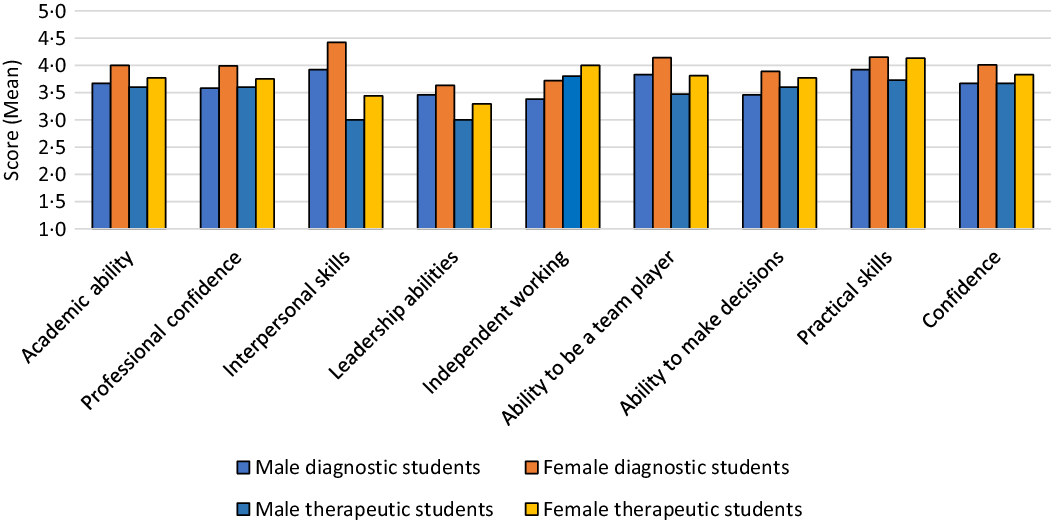
A similar picture exists in how genders from one profession view the other in that females score the other profession higher than males do. No significant difference existed in any score for therapeutic radiographers, but there was a gender difference for how diagnostic students viewed therapeutic radiographers for academic ability, U = 1112·5, p = 0·041; professional confidence, U = 1103·5, p = 0·034; interpersonal skills, U = 943·0, p = 0·003; ability to make decisions, U = 1015·5, p = 0·012 and confidence, U = 1114·5, p = 0·046 (Figure 5).
Hetero-stereotypes scores by gender.

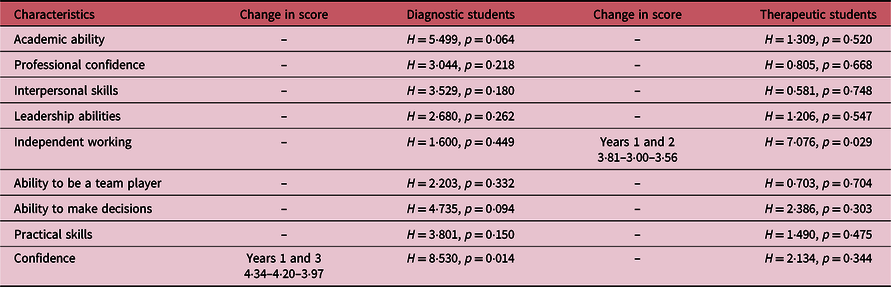
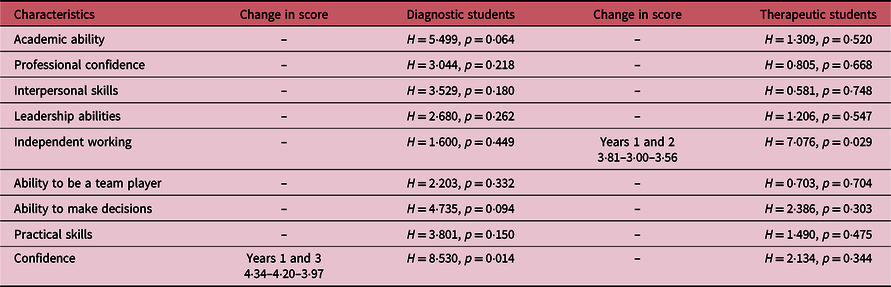
The therapeutic auto-stereotype remained relatively constant between years 1 and 3 of the programme; however, diagnostic students saw scores of three characteristics drop during the programme (Table 2).
Change in auto-stereotypes score from year 1 to year 3
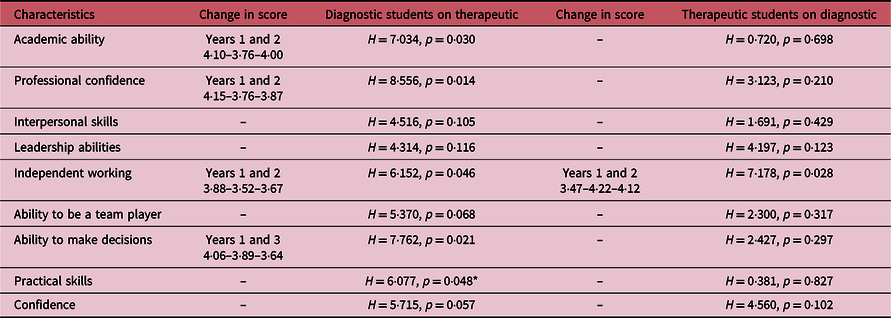
Opinions of the other radiographic profession remained similar for each profession for eight of the nine characteristics. The diagnostic opinion of the therapeutic ability to make decisions dropped, and the therapeutic student’s opinion of the diagnostic radiographer’s ability to work independently increased (Table 3).
Change in hetero-stereotypes score from year 1 to year 3
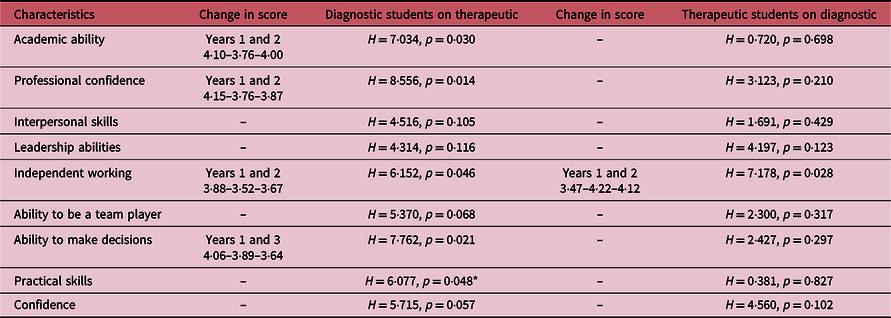
Note: *Adjusted significance for pairwise comparisons, not significant.
Discussion
There was no difference in how each profession scored themselves overall compared to the other professions, but there was a difference in how they perceived others. Students in each radiographic profession scored their own profession highest, and the other profession significantly lower than every other profession. This pattern whereby students gave their own profession the highest score could be seen as emphasising their own ‘positive distinctiveness’. Michalec et al. Reference Michalec, Giordano, Arenson, Antony and Rose19 in a study looking at first-year health student’s perception of health professions noted a similar pattern and attributed this high scoring of the student’s own profession to the social identity theory. As mentioned in the introduction, one of the key premises of this theory is the production of positive self-esteem within the ingroup status evidenced by the high mean score for their own profession. Again, linked to this is the possibility of outgroup prejudice which appears to have been reserved mainly for the other radiographic profession where a significant difference was seen to exist. Each radiography student group perhaps exaggerates differences between the professions in order to establish their own uniqueness and raise their own profession at the expense of the other (Figure 1).
Although outgroup bias may exist simply due to the fact that there are two or more different groups, it may be mediated by conflict. It could be argued that the root cause of any outgroup prejudice is evolutionary based in that distrust and caution of others which leads to a safer course of action and protection. Reference Kaya20 The realistic conflict theory (RCT) developed by Sherif suggests that outgroup bias can be affected by both conflicting goals and competition between the groups which may be real such as resources or power or perceived, for instance, values and group distinctiveness. Reference Esses, Jackson, Bennett-AbuAyyash, Dovidio, Hewstone, Glick and Esses21 This can be interpreted by the different groups as an outgroup threat. The greater the threat the greater the feelings of discrimination towards the outgroup and the more negative the stereotype. With scores for the students’ own group and both nurses and doctors being similar, it appears that student radiographers within both radiographic professions perceive no major outgroup threats from these professions but may from students of the other radiographic profession, so explaining the significantly lower scores students of each radiographic profession scored the other. Another factor that affects the perception of intergroup threats is that of the relative power of the groups. Groups that perceive themselves to be of low power are more likely to perceive or experience threats compared with high-power groups, Reference Stephan, Ybarra, Morrison and Nelson22 which might explain the lower score given to diagnostic profession by the students in the smaller therapeutic group. It is important to recognise this outgroup bias as it might be carried on into professional practice once the students have graduated as evidence does exist that stereotypes in qualified healthcare professionals do in some way parallel to that of the students. Reference Cook and Stoecker11 If this bias is carried over, then it in turn might affect effective collaboration within the healthcare teams.
The overall score was not affected by the amount of IPE students had, and there was no difference between the different training sites or year of study. This appears to suggest that the overall view radiographers have of each other and the other professions remains relatively fixed and is therefore formed before entry into the respective profession or very soon after. IPE within the student groups has been suggested as a way of reducing negative stereotypes of other professions and fostering a means of better inter-collaborative work. Most evidence in support of this theory comes from studies measuring stereotypes before and after an IPE intervention rather than self-reporting of IPE as was performed in this study. Another point to note was the variation in amount of IPE reported by students at the same point of study in the respective institutions and the relatively small amounts of IPE being reported.
Looking at the individual characteristics that make up the SSRQ results (Figures 2 and 3) indicate that therapeutic students see themselves as having better interpersonal skills and being more of a team player than diagnostic students see themselves in their profession. Diagnostic student radiographers rated their profession higher for independent working than therapeutic students rated their profession. The differences and similarities in how the student groups saw themselves were largely repeated in how each student group saw each other’s profession. Diagnostic students rated the student therapeutic radiographers as having higher interpersonal skills and being more of a team player than therapeutic radiographers rated the diagnostics. Therapeutic student radiographers rated the diagnostic profession as having more independent working. The higher score for therapeutic radiography for being more of a team player and for diagnostic radiographers being higher for independent working is not a surprise given the nature of each respective role, and these two differences were present whether students were looking at their own roles or at each other’s. Interpersonal skills are mentioned in the Health and Care Professions Council’s standards of proficiency for radiographers as being important to both professions. Interpersonal skills such as communication, empathy, negotiation and patience are important for both roles in order to establish patient trust and effective outcomes.
There was one difference identified between how students viewed themselves and how they viewed each other and that was in leadership abilities, where the diagnostic students rated the therapeutic profession to have more leadership abilities than the therapeutic students rated the diagnostic profession. The diagnostic students scored themselves 3·7 and the therapeutic radiographers 3·6, whereas the therapeutic students scored themselves 3·9 and the diagnostics 3·2, a far bigger difference. Neither profession was willing to concede superiority in leadership to the other, but clearly therapeutic students felt that they were superior in terms of leadership compared to diagnostic students.
Two other studies Reference Hean, Macleod, Adams and Humphris16,Reference Tunstall-Perdoe, Rink and Hilton18 looking at stereotypes had radiography students as part of their study population. Hean, Reference Hean, Macleod, Adams and Humphris16 who also used the SSRQ, identified that radiography students saw themselves as being distinct from nine other health professions surveyed on three characteristics, professional competence, being team players and decisions-making all of which were rated high. Being team players was scored highly by both professions as an auto-stereotype in this study; however, it was a characteristic that both radiography professions considered themselves to be different on. Both Hean’s and Tunstall-Perdoe’s classification of therapeutic and diagnostic student radiographers together under the blanket term ‘radiographers’ would have led to an average score, as although asked to comment on radiographers, both sets of students would have presumably based their score on their own profession. This finding might further be expanded to other professions such as nursing and doctors within these studies commenting on radiographers as they too might be generalising their score or basing it more on one of the two professions depending on who they work with most so leading to a score that is not truly reflective of either radiographic profession. Furthermore, if radiographers perceive themselves differently to each other, professions where sub-groups exist such as the different nursing branches may perceive themselves as different to each other depending on whether they see themselves as nurses or more as a child/adult/mental health nurse. And, if this was the case this would lead to bias in the scores reported for a profession, especially if the sub-groups were not equally represented.
Female therapeutic students saw their profession in a more superior light than did the male students although only two characteristics: ability to be a team player and confidence reached significance. A similar general picture was seen for diagnostic students with females tending to score most characteristics higher than males, with the exception of interpersonal skills and independent working which were scored higher by males. A gender difference existed for diagnostic students in how they viewed the ability to make decisions, which was viewed a lot more negatively by male students. As regards hetero-stereotypes the difference between gender scores of each other’s profession is even more evident and, in every characteristic, we can observe that female scores are higher than the male scores. No statistically significant gender difference was noted for therapeutic students, but it must be noted that the group size was smaller and perhaps the analysis lacked power, whereas for diagnostic students statistical significance was reached for five characteristics so indicating a strong gender effect on how diagnostic students view therapeutic radiography, males having a more negative view on the therapeutic profession than females. Male diagnostic students are therefore more likely to differentiate between the ingroup and outgroup for certain characteristics. Males tend to be more competitive when faced with intergroup interactions and be more discriminating against outgroups than women, Reference McDonald, Navarrete and Van Vugt23 while also demonstrating a greater social dominance orientation. Reference Sugiura, Mifune, Tsuboic and Yokota24 This could explain these differences; however, it must be noted that this difference was only identified in certain characteristics and no significant difference in the overall mean scores.
As with the overall score, the change of each characteristic over the course of the programmes. Some changes were identified between years 1 and 2; however, by year 3, the score was again not statistically different to that of year 1. For diagnostic students, their views on confidence significantly increased from year 1 to year 3 and their view of the therapeutic students’ ability to make decisions decreased significantly. However, care must be taken with these results, and there might be natural variation in student views for each respective year and each year group might have a different gender ratio which could affect the results of this analysis. This possible relationship could be evaluated better in future studies by following a cohort through the programme to see if opinions change over time.
Stereotypes themselves may be accurate or inaccurate, but what we observe within this study is the student’s view of the diagnostic and therapeutic professions from both within and from the outside. And, if as suggested earlier that the stereotypes may have formed before entry to the programmes, knowledge of the student’s view of their own profession and other professions might help inform areas to focus on at recruitment. It would also be interesting to see how and when these stereotypes form and if indeed they do mirror that of qualified staff or change after qualification.
Conclusion
Social categorisation where we tend to see ourselves as part of a group inevitably leads to intergroup comparison and, according to the social identity theory, the need to promote the self-esteem and status of the group compared to other groups. This work demonstrated that the two student radiography groups each see themselves as more important than the other on a range of characteristics so supporting the relevance of this theory. In many institutions, there are elements of shared teaching and IPE meaning that for many students the other radiographic profession is the health care profession that they have most interaction with, yet this does not stop this negative outgroup view. It was also postulated that the RCT where prejudice is produced by competition might also play a part in how the two professions view each other which might arise in part to the closeness in training mentioned above.
Overall, the student impressions were positive of their own and the other radiographic profession with most scores being above 4, leadership abilities being the one exception, constantly scored below 4. Radiography students distinguish between themselves in three key professional characteristics. Therapeutic students see themselves as having better interpersonal skills and being more of a team player, and diagnostic students see themselves as being more independent workers. It is also important that the students view of the outgroup reflected that of the ingroup as this uniformity of view would help in any group or interprofessional work once qualified. The one difference identified was that diagnostic students considered that the therapeutic profession had more leadership abilities.
There were gender differences identified on how students perceived themselves and more importantly the other profession with diagnostic student radiographers scoring the therapeutic profession lower than the female diagnostic students on a number of characteristics.
The picture on the perception of radiographers on their own and sister profession is very complicated, and various theories have been used to try and explain these differences. However, further research is needed to look at how we view ourselves and each other in order to ensure that there is harmony between the two professions, as well as the need to see if these findings are also repeated in the qualified workforce.
Acknowledgements
I would like to thank the students who took time out from their studies to take the survey. In particular, I would like to thank the students at City, University of London from the 2016 who used this questionnaire in their statistics lectures and drew my attention to the possibility of this study.
Conflicts of Interest
None.
Ethical Standards
The author asserts that all procedures contributing to this work comply with the ethical standards of the relevant national guidelines on human experimentation (please name) and with the Helsinki Declaration of 1975, as revised in 2008, and have been approved by the institutional committees (City, University of London).