The term ‘Mediterranean Diet’ generally refers to a dietary pattern that represents the healthy eating habits of countries surrounding the Mediterranean Sea(Reference Laganà, Coniglio and Corso1). The Mediterranean diet is characterised by a high intake of plant-based foods such as fruits and vegetables, whole grains, legumes, oilseeds and olives; a moderate intake of fish and seafood; a moderate intake of dairy products, eggs, poultry and wine; and a low intake of red meat(Reference Gönder and Akbulut2).
Evidence suggests that adherence to the Mediterranean diet is associated with improvements in CVD risk factors, encompassing blood pressure, insulin sensitivity, lipid profile, inflammation and oxidative stress(Reference Martinez-Gonzalez, Salas-Salvado and Estruch3). The Mediterranean diet and its components help prevent the onset of obesity, cancer, diabetes, CVD and chronic neurodegenerative diseases such as amyotrophic lateral sclerosis, Parkinson’s disease and Alzheimer’s disease(Reference Laganà, Coniglio and Fiorino4). In addition, it has been determined that the Mediterranean diet is associated with an increase in life expectancy and that deaths due to health problems such as heart disease and cancer are reduced by 10–20 % as a result of compliance with the Mediterranean diet(Reference Pérez-López, Chedraui and Haya5).
High-intensity exercise can increase the formation of reactive oxygen species and other free radicals(Reference Jackson, Vasilaki and McArdle6). A diet containing antioxidant-rich foods, such as fruits and vegetables, is recommended to help reduce high levels of oxidative stress in athletes(Reference Thomas, Erdman and Burke7,Reference Kerksick, Wilborn and Roberts8) . Inflammation is a key component of the injury response in athletes who frequently exercise at high intensity and volume. It has been reported that the Mediterranean diet may be an effective alternative to the use of non-steroidal anti-inflammatory drugs in some cases(Reference Griffiths, Matu and Whyte9). Some studies report that the Mediterranean diet has an anti-inflammatory effect by reducing levels of inflammation-associated C-reactive protein, TNF-α and IL-6 and by downregulating the NF-κB pathway(Reference Arpon, Riezu-Boj and Milagro10,Reference Perez-Martinez, Lopez-Miranda and Blanco-Colio11) . A systematic review and meta-analysis reported higher bone mineral density and a lower risk of fractures with higher adherence to the Mediterranean diet(Reference Malmir, Saneei and Larijani12).
In elite athletes, suppression of immune cells, travel, fatigue, allergies, increased anxiety, sleep disturbances and poor nutrition have been implicated in the development of disease(Reference Engebretsen, Soligard and Steffen13). The Mediterranean diet, with its abundance of polyphenols, plays a role in maintaining immune system function, protecting against infections and improving cognitive function(Reference Griffiths, Matu and Whyte9). The Mediterranean diet is thought to improve exercise performance due to its antioxidants, nitrates and alkalising components, as well as the n-3 fatty acids found in fish(Reference Griffiths, Matu and Whyte9,Reference Baker, Decesare and Johnson14) . It is thought that the Mediterranean diet may be a good choice to meet the nutritional needs of athletes, as it contains high-quality protein, low-glycaemic index foods and unsaturated fats(Reference Calella, Gallè and Cerullo15).
Orthorexia nervosa, commonly described as an obsession with healthy eating, although not formally classified among eating disorders according to Diagnostic and Statistical Manual of Mental Disorders (DSM) criteria, is characterised by an obsessive focus on ‘healthy’ eating and dietary inflexibility, whereby individuals devote an excessive amount of time and cognitive effort to healthy eating, leading to clinically significant medical or psychosocial impairments(Reference Canella, Donini and Graziani16). Orthorexia is defined as a pathological obsession with consuming healthy foods that are biologically pure and free of herbicides, pesticides or artificial ingredients(Reference Bonaechea, Rial and Sanchez17). There is strong and consistent evidence that eating disorders are prevalent in sports, particularly in weight-sensitive sports such as endurance, weight category, aesthetic sports and jumping events(Reference Currie18). Groups with a high orthorexic tendency include professional athletes, performance artists and healthcare professionals such as physicians, nurses and dietitians(Reference Brytek-Matera, Gramaglia and Gambaro19,Reference Yılmaz, Karakuş and Tamam20) . Some studies suggest a link between orthorexia nervosa and exercise habits. Among elite athletes, there is a widespread tendency to take control over their diet to maximise training adaptations, improve performance, accelerate recovery and achieve target body weight and/or body composition(Reference Thomas, Erdman and Burke7). The prevalence of eating disorders is reported to be higher in athletes than in the general population(Reference Surala, Malczewska-Lenczowska and Sadowska21). However, there are not many studies on the prevalence of orthorexia nervosa in athletes. Only a few studies suggest that orthorexia nervosa occurs more frequently in athletes than in non-athletes(Reference Surala, Malczewska-Lenczowska and Sadowska21,Reference Krentz and Warschburger22) .
The aim of this study was to evaluate the level of compliance with the Mediterranean diet, which is considered a healthy eating pattern, and the tendency to orthorexia nervosa in professional athletes and to examine the relationship between compliance with the Mediterranean diet, tendency to orthorexia nervosa and physical activity level.
Methods
Study design and subjects
This research was conducted with volunteer athletes aged 15–21 years who trained at the Eryaman Türkiye Olympic Preparation Center (TOHM) between January and March 2025, participating in weightlifting, wrestling, taekwondo, judo, water polo, track and field, badminton and fencing. Athletes who are not between the ages of 15 and 21 years, who have a past/current psychological disorder and who are pregnant or breast-feeding are not included in the study. The sample size of the study was determined as 134 individuals using the G Power program for a 95 % CI, 5 % type 1 error and 0·3 effect size(Reference Martinovic, Tokic and Martinovic23). This study was conducted in accordance with the principles of the Declaration of Helsinki. Ethical approval for the study was obtained from the Ankara University Ethics Committee, dated 20 February 2023 and numbered 04/29, and permission to conduct the study was granted by the Ministry of Youth and Sports. Participation was voluntary, and informed consent was obtained from all participants prior to data collection.
Data collection tools
The questionnaire form, prepared by the researchers and applied through face-to-face interviews, consists of six sections, including the athletes’ sociodemographic information, nutritional habits, anthropometric measurements, Mediterranean Diet Quality Index (KIDMED Index), International Physical Activity Questionnaire-Short Form (IPAQ-Short Form) and Orthorexia-11 (ORTO-11) scale.
Sociodemographic information
Individuals’ age, sex, marital status, educational status, information about sports life, training information, diseases diagnosed by a physician and medication use were questioned.
Information on nutritional habits
In this section of the questionnaire, athletes were asked to report their daily number of main meals and snacks, whether they skipped main meals, which meal was skipped, and the reasons for skipping meals. In addition, information was collected on water and fluid consumption, use of sports supplements, dietary practices before, during and after training and competition, current dieting practices, self-perceived level of knowledge about sports nutrition and the sources from which they obtained this information.
Anthropometric measurements
In this section, the athletes’ body weight, height and waist circumference were measured, and their BMI was calculated. All anthropometric measurements were performed by the researcher. Body weight was measured using the bioelectrical impedance method using a TANITA MC 780 MA. Height was measured with a stadiometer, with feet sideways and the head in a Frankfort plane. Participants’ waist circumference was determined by measuring the circumference between the last rib and the cristae iliac crest, passing through the midpoint, with a non-stretchable tape measure(Reference Lohman, Roche and Martorell24). A non-stretchable tape measure with a precision of 1 mm was used for circumference measurements. BMI was calculated by dividing body weight in kilograms by the square of the height in metres(25).
Mediterranean Diet Quality Index
The KIDMED, developed by Serra-Majem et al. (Reference Serra-Majem, Ribas and Ngo26) to assess nutritional habits in order to determine some principles related to the Mediterranean diet, consists of a total of sixteen questions. This index consists of twelve positive questions and four negative questions. Those who answer ‘Yes’ to positive questions receive a score of +1, and those who answer ‘Yes’ to negative questions receive a score of −1. The sum of these scores yields scores ranging from 0 to 12. A score of ≥ 8 indicates a ‘good’ level of adherence to the Mediterranean diet, a score of 4–7 indicates a ‘moderate’ level of adherence that needs improvement and a score of ≤ 3 indicates a ‘low’ level of adherence to the Mediterranean diet(Reference Serra-Majem, Ribas and Ngo26). Internal consistency of the KIDMED questionnaire was assessed using Cronbach’s α (α = 0·857) in the Turkish validation study(Reference Kaya and Temiz27).
International Physical Activity Questionnaire-Short Form
It was developed by Craig et al. (Reference Craig, Marshall and Sjöström28) to determine individuals’ physical activity status. It is a seven-question form whose Turkish validity and reliability were developed by Öztürk(Reference Öztürk29). In this form, where the time spent walking, moderate activity, vigorous activity and sitting is questioned, the weekly Metabolic Equivalent of Task (MET) values of the individuals are calculated and the individuals are classified as inactive, minimally active and very active according to the results. A score of ‘MET/min/week’ is obtained by multiplying the minutes, days and MET of physical activity. Walking score calculations use a walking time of 3·3 MET, a moderate-intensity physical activity of 4 MET and a vigorous-intensity physical activity of 8 MET. The calculated value was classified as inactive if it was < 600 MET/min/week, minimally active if it was between 600 and 3000 MET/min/week and very active if it was > 3000 MET/min/week. The test–retest reliability of the IPAQ short form was found to be r = 0·69, and the criterion validity was found to be r = 0·30(Reference Öztürk29).
ORTO-11 scale
The scale, developed by Donini et al. (Reference Donini, Marsili and Graziani30) to determine individuals’ obsession with healthy eating, consists of fifteen items. The validity and reliability study of ORTO-15 in Turkish was conducted by Arusoğlu et al. (Reference Arusoğlu, Kabakçı and Köksal31) and adapted as the ORTO-11 scale. The ORTO-11 is a four-point Likert-type scale consisting of eleven items. Responses indicating orthorexic symptom tendency are given one point, and responses indicating normal eating tendency are given four points; only the eighth item is reverse-scored. A higher total score indicates a decrease in orthorexic symptoms. The Cronbach’s α coefficient for the scale was determined as 0·62(Reference Arusoğlu, Kabakçı and Köksal31). In the present study, the internal consistency of the ORTO-11 scale was evaluated using Cronbach’s α coefficient and found to be α = 0·64. The cut-off point used to evaluate the ORTO-11 scale in our study was determined using the cut-off point method used in Arusoğlu’s Turkish adaptation study(Reference Arusoğlu, Kabakçı and Köksal31). The cut-off point for this study was set at 25 points at the 25th percentile, and a score of 25 or below was defined as ‘orthorexic tendency’.
Data analysis
Data were analysed using SPSS 22.0 IBM (Statistical Package for the Social Sciences). Statistical significance was accepted as P < 0·05 in all analyses. Quantitative variables were expressed as mean (X̄), standard deviation (sd), lower and upper values, and categorical variables were expressed as numbers (S) and percentages (%). The Kolmogorov–Smirnov test was used to assess the suitability of variables for normal distribution. Means of two independent groups were compared using the independent-samples t test for normally distributed groups and the Mann–Whitney U test for non-normally distributed groups. One-way ANOVA was used to compare the means of more than two groups with normal distribution. In cases where normal distribution was not achieved, differences between groups were analysed using the Kruskal–Wallis test. The χ2 test was used to analyse categorical variables. When normal distribution was not achieved, the relationship between continuous variables was assessed using Spearman’s correlation analysis.
Results
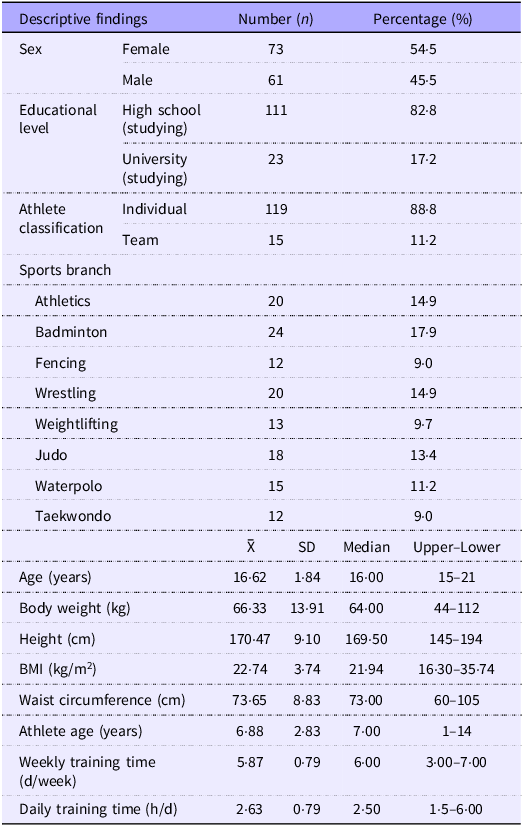
Table 1 presents the demographic and anthropometric characteristics, as well as the training frequency of the athletes who participated in the study. It was determined that 54·5 % of the participants were female, while 45·5 % were male. When the educational background of the athletes is examined, 82·8 % are high school students and 17·2 % are university students. In the study, sports were divided into two categories: individual and team sports. According to this classification, 88·8 % of the participants participated in individual sports and 11·2 % in team sports. The athletes average age was 16·62 (sd 1·84) years, their average height was 170·47 (sd 9·10) cm, their average BMI was 22·74 (sd 3·74) kg/m2 and their average waist circumference was 73·65 (sd 8·83) cm. The athletes had a mean sports age of 6·88 (sd 2·83) years, an average of 5·87 (sd 0·79) training days per week and an average daily training duration of 2·63 (sd 0·79) h per d.
Demographic and anthropometric characteristics, sports history and training frequency of athletes
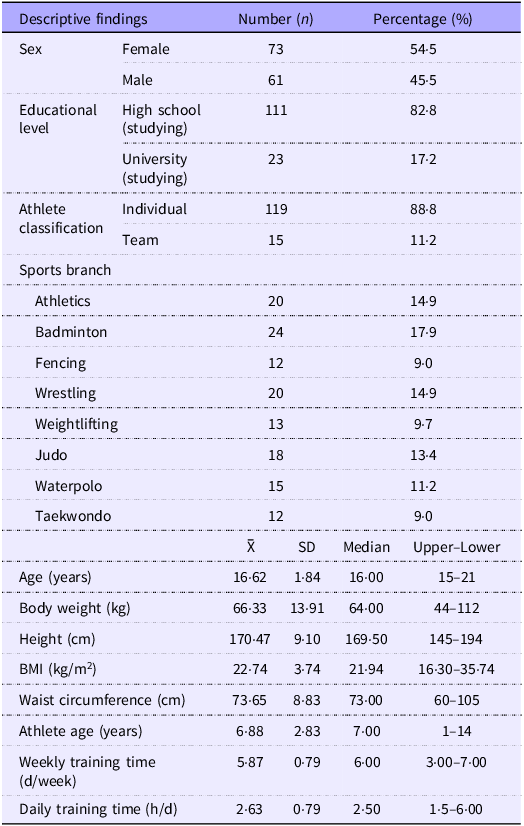
Table 1 Long description
The table presents demographic and anthropometric characteristics, sports history, and training frequency of athletes. It has 12 rows and 3 columns. The columns are labeled Descriptive findings, Number (n), and Percentage (%). The rows are grouped into categories: Sex, Educational level, Athlete classification, Sports branch, Age (years), Body weight (kg), Height (cm), BMI (kg/m^2), Waist circumference (cm), Athlete age (years), Weekly training time (d/week), and Daily training time (h/d). Each row provides specific data points under these categories. For example, under Sex, there are 73 females (54.5 percent) and 61 males (45.5 percent). Under Educational level, 111 athletes are high school students (82.8 percent) and 23 are university students (17.2 percent). The table also includes detailed statistics on athlete classification, sports branch, and various physical measurements and training frequencies.
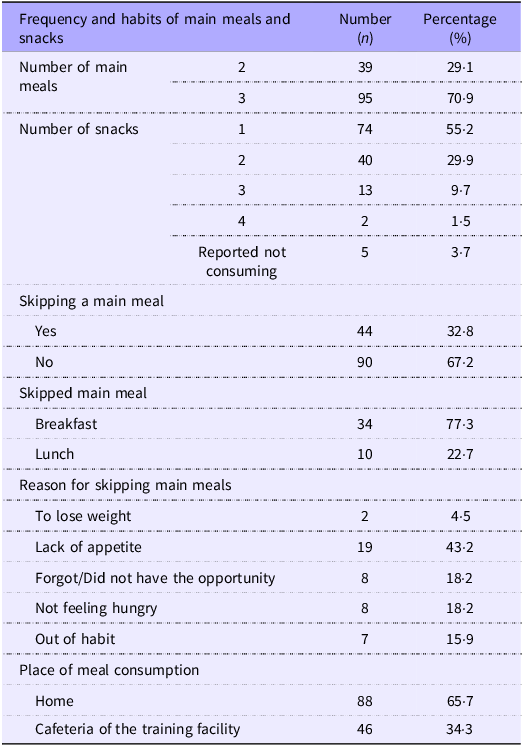
Table 2 presents the findings related to the athletes’ nutritional habits. While 70·9 % of the participants reported consuming three main meals per d, 29·1 % stated that they consumed two main meals. In terms of snack consumption, 55·2 % of the participants reported having one snack per d, 29·9 % had two snacks, 9·7 % had three snacks and 1·5 % had four snacks per d. When main meal skipping status was evaluated, 32·8 % of the participants stated that they skipped at least one main meal, while 67·2 % reported that they did not skip a main meal. Among those who skipped main meals, 77·3 % reported skipping breakfast, while 22·7 % skipped lunch. When the findings regarding participants’ reasons for skipping main meals were evaluated, the highest rate (43·2 %) was ‘because I didn’t feel like it’. This was followed by ‘because I forgot/couldn’t find the time’ (18·2 %) and ‘because I wasn’t hungry’ (18·2 %). While 15·9 % of participants said they skipped main meals ‘because it was a habit’, 4·5 % said they skipped main meals ‘to lose weight. It was determined that 65·7 % of the participants usually consumed their meals at home, while 34·3 % usually consumed their meals in the facility cafeteria.
Findings on the nutritional habits of athletes
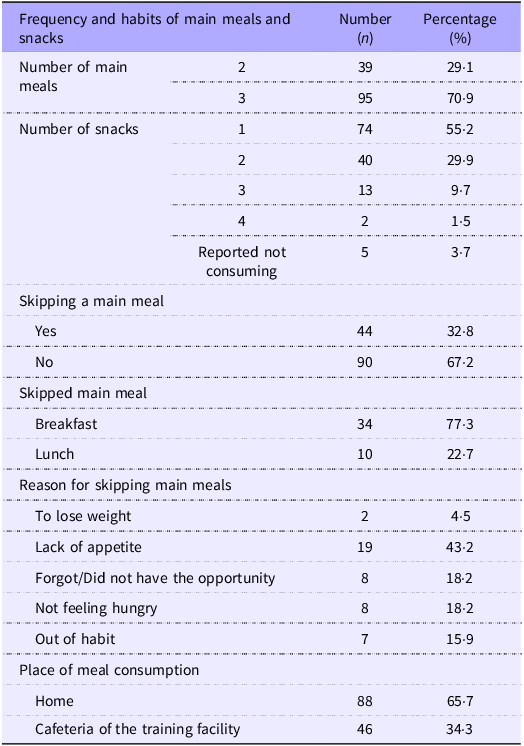
Table 2 Long description
A table detailing the nutritional habits of athletes. The table has 13 rows and 3 columns. Column headers are Frequency and habits of main meals and snacks, Number (n), and Percentage (%). Row labels include Number of main meals, Number of snacks, Skipping a main meal, Skipped main meal, Reason for skipping main meals, and Place of meal consumption. Row 1: Number of main meals, 2, 39, 29.1 percent. Row 2: Number of main meals, 3, 95, 70.9 percent. Row 3: Number of snacks, 1, 74, 55.2 percent. Row 4: Number of snacks, 2, 40, 29.9 percent. Row 5: Number of snacks, 3, 13, 9.7 percent. Row 6: Number of snacks, 4, 2, 1.5 percent. Row 7: Reported not consuming, 5, 3.7 percent. Row 8: Skipping a main meal, Yes, 44, 32.8 percent. Row 9: Skipping a main meal, No, 90, 67.2 percent. Row 10: Skipped main meal, Breakfast, 34, 77.3 percent. Row 11: Skipped main meal, Lunch, 10, 22.7 percent. Row 12: Reason for skipping main meals, To lose weight, 2, 4.5 percent. Row 13: Reason for skipping main meals, Lack of appetite, 19, 43.2 percent. Row 14: Reason for skipping main meals, Forgot/Did not have the opportunity, 8, 18.2 percent. Row 15: Reason for skipping main meals, Not feeling hungry, 8, 18.2 percent. Row 16: Reason for skipping main meals, Out of habit, 7, 15.9 percent. Row 17: Place of meal consumption, Home, 88, 65.7 percent. Row 18: Place of meal consumption, Cafeteria of the training facility, 46, 34.3 percent.
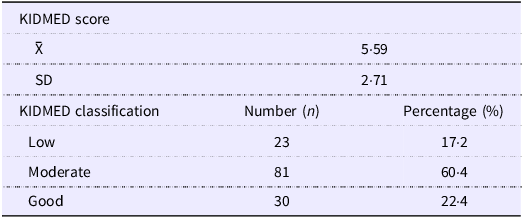
Table 3 shows the findings regarding the athletes’ KIDMED scores. The average KIDMED score of the athletes was 5·59 (sd 2·71). According to the KIDMED classification, 17·2 % of the participants had low-level, 60·4 % had moderate-level and 22·4 % had good-level diet quality.
Distribution of athletes’ KIDMED scores
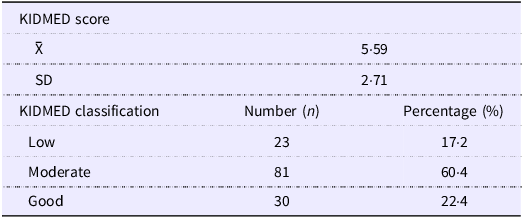
Table 3 Long description
A table with two sections. The first section shows the average KIDMED score and standard deviation. The average score is 5.59 with a standard deviation of 2.71. The second section classifies the athletes' diet quality into three categories: low, moderate, and good. There are 23 athletes with low-level diet quality, 81 with moderate-level diet quality, and 30 with good-level diet quality. The percentages for these classifications are 17.2 percent, 60.4 percent, and 22.4 percent, respectively.
KIDMED, the Mediterranean Diet Quality Index.
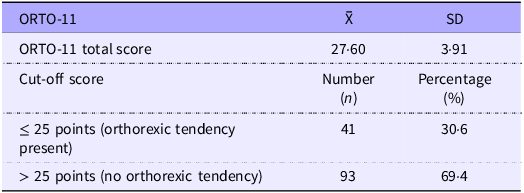
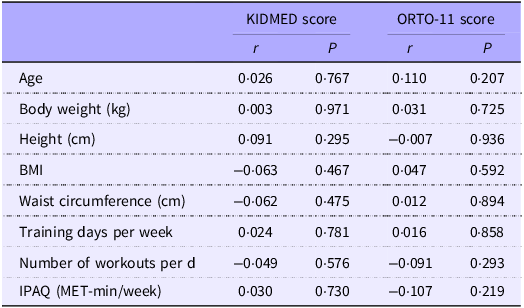
The findings regarding the athletes’ scores obtained from the ORTO-11 scale are presented in Table 4. The athletes’ average ORTO-11 score was determined to be 27·60 (sd 3·91), and 30·6 % of the athletes were found to have orthorexic tendencies. Table 5 shows the relationship between athletes’ KIDMED and ORTO-11 scale scores and demographic, anthropometric and athletic characteristics. No statistically significant relationship was found between KIDMED and ORTO-11 scores and body weight, height, BMI, waist circumference, number of training days per week, number of daily training sessions or physical activity level (MET-min/week) (P > 0·05). In addition, no significant correlation was observed between KIDMED and ORTO-11 scores (P > 0·05).
Distribution of athletes according to ORTO-11 average scores and cut-off score
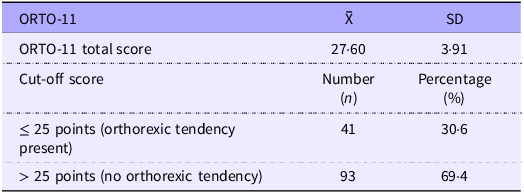
Table 4 Long description
A table showing the distribution of athletes' ORTO-11 scores and cut-off scores. The table has 4 rows and 4 columns. The columns are labeled ORTO-11, X, SD, Cut-off score, Number (n), and Percentage (%). The rows are labeled ORTO-11 total score, Cut-off score <= 25 points (orthorexic tendency present), and Cut-off score > 25 points (no orthorexic tendency). The ORTO-11 total score has an average of 27-60 and a standard deviation of 3-91. For the cut-off score <= 25 points, 41 athletes (30.6 percent) have orthorexic tendencies. For the cut-off score > 25 points, 93 athletes (69.4 percent) do not have orthorexic tendencies.
ORTO-11, Orthorexia-11.
The relationship between athletes’ ORTO-11 and KIDMED scale scores and their demographic, anthropometric and sportive characteristics
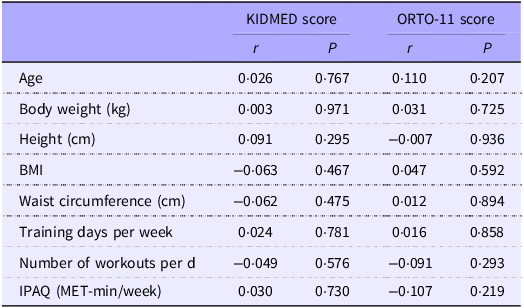
Table 5 Long description
A table with 9 rows and 4 columns showing the relationship between athletes' scores on the ORTO-11 and KIDMED scales and various characteristics. The columns are labeled KIDMED score and ORTO-11 score, each with sub-columns for r and P values. The rows are labeled with different characteristics: Age, Body weight (kg), Height (cm), BMI, Waist circumference (cm), Training days per week, Number of workouts per day, and IPAQ (MET-min/week). Each row lists the r and P values for both KIDMED and ORTO-11 scores. The table presents correlation coefficients (r) and significance values (P) for each characteristic.
KIDMED, the Mediterranean Diet Quality Index; ORTO-11, Orthorexia-11.
Spearman’s correlation analysis.
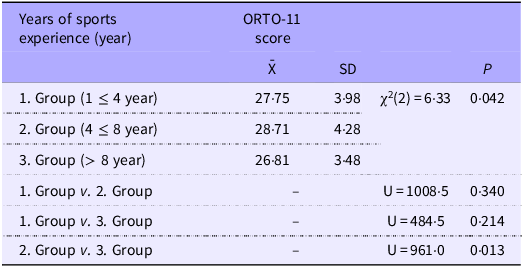
Table 6 presents the ORTO-11 scale scores of athletes according to their years of sports experience. A statistically significant difference was found between the groups in terms of ORTO-11 scores based on years of sports experience (χ2(2) = 6·33, P = 0·042). Pairwise comparisons revealed a significant difference only between Group 2 (4–8 years) and Group 3 (> 8 years) (U = 961·0, P = 0·013). No statistically significant differences were observed in the other group comparisons (P > 0·05).
ORTO-11 scale scores of athletes according to years of sports experience
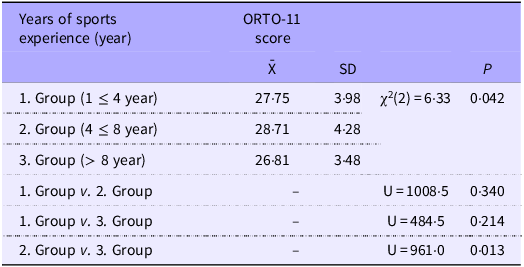
Table 6 Long description
A table comparing ORTO-11 scores based on years of sports experience. The table has 3 rows and 5 columns. Column headers are: Years of sports experience (year), ORTO-11 score, X, SD, and P. Row labels are: 1. Group (less than or equal to 4 years), 2. Group (4 less than or equal to 8 years), 3. Group (greater than 8 years), 1. Group v. 2. Group, 1. Group v. 3. Group, and 2. Group v. 3. Group. Row 1: 1. Group (less than or equal to 4 years), 27.75, 3.98, χ2(2) = 6.33, 0.042. Row 2: 2. Group (4 less than or equal to 8 years), 28.71, 4.28, -, -. Row 3: 3. Group (greater than 8 years), 26.81, 3.48, -, -. Row 4: 1. Group v. 2. Group, -, U = 1008.5, 0.340. Row 5: 1. Group v. 3. Group, -, U = 484.5, 0.214. Row 6: 2. Group v. 3. Group, -, U = 961.0, 0.013.
ORTO-11, Orthorexia-11.
Kruskal–Wallis.
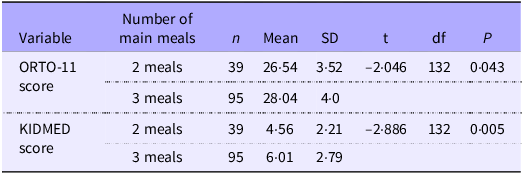
Table 7 shows the distribution of ORTO-11 and KIDMED scores according to the number of main meals consumed by athletes. ORTO-11 scores were found to be 26·54 (sd 3·52) on average in athletes who consumed two meals, while they were found to be 28·04 (sd 4·00) on average in those who consumed three meals (P = 0·043). Similarly, KIDMED scores were found to be 4·56 (sd 2·21) on average in athletes who consumed two meals and 6·01 (sd 2·79) on average in those who consumed three meals, and this difference was also statistically significant (P = 0·005).
Distribution of athletes’ ORTO-11 and KIDMED scores according to number of daily meals
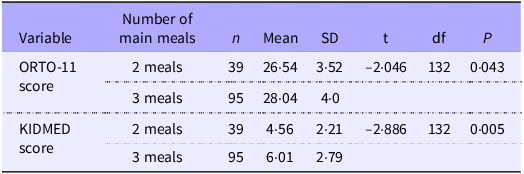
Table 7 Long description
A table with 2 rows and 7 columns comparing ORTO-11 and KIDMED scores based on the number of daily meals consumed by athletes. The columns are labeled Variable, Number of main meals, n, Mean, SD, t, df, and P. The row labels are ORTO-11 score and KIDMED score. For ORTO-11 score, athletes consuming 2 meals have a mean score of 26.54 with a standard deviation of 3.52, while those consuming 3 meals have a mean score of 28.04 with a standard deviation of 4.0. For KIDMED score, athletes consuming 2 meals have a mean score of 4.56 with a standard deviation of 2.21, while those consuming 3 meals have a mean score of 6.01 with a standard deviation of 2.79. The P values for these comparisons are 0.043 and 0.005, respectively.
ORTO-11, Orthorexia-11; KIDMED, the Mediterranean Diet Quality Index.
Independent-sample t test.
Table 8 presents that the athletes’ tendencies towards orthorexia nervosa were compared according to their dieting status, and it was found that athletes who diet had a significantly higher tendency towards orthorexia nervosa compared with those who did not diet (P = 0·045).
Comparison of athletes’ orthorexia nervosa tendencies according to their dieting status

Table 8 Long description
A table comparing athletes' orthorexia nervosa tendencies based on dieting status. The table has 4 rows and 6 columns. Column headers are No orthorexia tendency, Orthorexia tendency present, and Total, each with sub-columns for n and percent. Row labels are Dieting status with sub-labels Yes and No. Row 1: Yes, No orthorexia tendency n 17, percent 54.8, Orthorexia tendency present n 14, percent 45.2, Total n 31, percent 23.1. Row 2: No, No orthorexia tendency n 76, percent 73.8, Orthorexia tendency present n 27, percent 26.2, Total n 103, percent 76.9. Row 3: Total, No orthorexia tendency n 93, percent 69.4, Orthorexia tendency present n 41, percent 30.6, Total n 134, percent 100.0. Row 4: Chi-squared value and P-value. Notable trends include a higher tendency towards orthorexia nervosa in athletes who diet compared to those who do not.
Discussion
In the present study, professional athletes training at TOHM demonstrated overall moderate adherence to the Mediterranean diet, while orthorexic tendencies were observed in nearly one-third of the participants. A central finding of the study was the absence of a significant association between adherence to the Mediterranean diet and orthorexic tendencies. From an athlete health perspective, this suggests that orthorexic tendencies may not be fully explained by diet quality alone. Rather, these tendencies may reflect a multifactorial construct involving psychological characteristics and sport-related factors(Reference Yılmaz, Karakuş and Tamam20,Reference Surala, Malczewska-Lenczowska and Sadowska21) . Therefore, the evaluation of orthorexic tendencies in athletes should not be limited to diet quality alone but should also consider the psychological and behavioural dimensions of eating behaviours. In this context, the early identification and monitoring of orthorexic tendencies may be supported through holistic and multidisciplinary approaches involving dietitians, psychologists and sports medicine physicians in order to protect athlete health.
To contextualise these findings, orthorexic tendencies and adherence to the Mediterranean diet were further examined in relation to demographic and training-related variables. The mean ORTO-11 score was 27·60 (sd 3·91), with orthorexic tendencies observed in 30·6 % of the athletes. No significant relationship was found between the athletes’ ORTO-11 scale score and age, body weight, height, BMI, waist circumference, number of training days per week, number of daily training sessions and physical activity level. This finding may be related to the relatively homogeneous training load and structured lifestyle characteristics of athletes training within the same Olympic preparation centre. In a study conducted on elite athletes, no significant relationship was found between the risk of orthorexia nervosa and body fat percentage, lean tissue mass and training intensity. A significant relationship was found between orthorexia nervosa tendency and BMI and bone mineral density in male athletes in weight-category-based sports only, and between weekly training duration in female sprint athletes(Reference Surala, Malczewska-Lenczowska and Sadowska21). In a study by Uriegas et al. (Reference Uriegas, Winkelmann and Pritchett32), 17·7 % of athletes were found to have a tendency to orthorexia nervosa. In a study conducted in Türkiye with 118 individuals aged 18–56 years who practiced yoga, the mean ORTO-11 scale score was found to be 24·05 (sd 4·36), and 75·4 % of the participants were found to be at risk of orthorexia nervosa(Reference Erkin and Göl33). In another study examining the exercise addiction and orthorexia nervosa tendencies of individuals who regularly exercise, the average ORTO-11 score of the participants was found to be 26·55 (sd 4·02) and 25·7 % showed a tendency to orthorexia nervosa(Reference Kuzu and Çiçekoğlu Öztürk34). In another study conducted in our country with 144 weight-class athletes, the average ORTO-11 score was determined to be 24·18 (sd 4·7). 75·5 % of the athletes were at risk of orthorexia nervosa(Reference Civil35). A meta-analysis found a 55·3 % prevalence of orthorexia nervosa in individuals who participate in sports(Reference Hafstad, Bauer and Harris36). In a study conducted with university student athletes, the mean ORTO-15 score was found to be significantly lower in athletes who exercised ≥ 10 h per week (36·65 (sd 4·38)) than in athletes who exercised < 10 h per week (37·38 (sd 3·65)). The findings of that study indicated that longer exercise duration was associated with greater orthorexic tendencies(Reference Clifford and Blyth37). In the systematic mini-review conducted by Paludo et al. (Reference Paludo, Zabransky and Silva38), it was found that athletes evaluated with the ORTO-15 scale showed orthorexic tendencies at rates ranging from 35 % to 38 %. In this study, the mean KIDMED score of professional athletes was found to be 5·59 (sd 2·71), and according to the KIDMED score classification, 17·2 % had low adherence, 60·4 % had moderate adherence and 22·4 % had good adherence. No statistically significant relationship was found between the KIDMED score and body weight, height, BMI, waist circumference, number of training days per week, number of daily training sessions and physical activity level (IPAQ) (P > 0·05). In a study evaluating the adherence of elite futsal players to the Mediterranean diet, it was found that 58·3 % had low adherence and 41·7 % had moderate adherence. Furthermore, no significant relationship was found between the diet quality index and body composition or athletic performance test values(Reference Rubio-Arias, Ramos-Campo and Ruiloba-Nunez39). In a study conducted by Köse et al. (Reference Köse, Yeşil and Özdemir40) with football players, the average KIDMED score was found to be 6·8 (sd 2·17) in professional football players and 6·9 (sd 2·37) in amateur football players. It was determined that 9·8 % of amateur football players and 8·6 % of professional football players had poor diet quality. A negative correlation was found between athletes’ KIDMED scores and body weight, and a positive correlation was found between weekly training days. In the study conducted by Manzano-Carrasco et al. (Reference Manzano-Carrasco, Felipe and Sanchez-Sanchez41) on young football players, the average KIDMED score of the athletes was found to be 7·14 (sd 1·95), and their adherence levels to the Mediterranean diet were determined as 49·5 % low, 47·9 % moderate and 2·6 % high. In another study evaluating adherence to the Mediterranean diet in elite female skiers, it was reported that according to their KIDMED scores, 42·2 % of the athletes had moderate adherence and 56·6 % had high adherence to the Mediterranean diet. No significant relationship was found between anthropometric parameters and adherence levels to the Mediterranean diet in the athletes(Reference Alacid, Vaquero-Cristóbal and Sánchez-Pato42). In our study, athletes who consumed three main meals had significantly higher ORTO-11 scores than those who consumed two main meals. A study found that orthorexic tendencies were higher in athletes who regularly consumed main meals than in those who did not consume regular meals(Reference Baysal and Kızıltan43). In a study evaluating the relationship between meal consumption frequency and orthorexia nervosa tendencies in adults, the relationship between individuals’ weight, BMI, main meals, snacks and number of meals with ORTO-11 scores was found to be negative but statistically insignificant(Reference Eminsoy and Eminsoy44). In this study, the tendency to orthorexia nervosa was significantly higher in dieting individuals than in non-dieting individuals. A study examining the relationship between dieting behaviour and orthorexia nervosa tendency in healthy individuals found that the tendency to orthorexia nervosa was statistically significantly higher in dieting individuals compared with non-dieting individuals(Reference Novara, Pardini and Visioli45). In another study conducted on physically active individuals, the average orthorexia nervosa score of those who dieted (25·70 (sd 4·41)) was found to be significantly lower than that of those who did not diet (26·91 (sd 3·81))(Reference Kuzu and Çiçekoğlu Öztürk34). The higher prevalence of orthorexic tendencies among dieting individuals suggests an association between dieting behaviour and pathological dimensions of healthy eating motivations. Moreover, individual psychological characteristics such as perfectionism and low self-esteem have been reported to play a role in increased orthorexic tendencies(Reference Novara, Pardini and Visioli45). Orthorexia nervosa tendencies involve obsessive thoughts about food healthiness and compulsive behaviours related to researching, planning and preparing foods, which may contribute to a tendency towards dieting behaviours(Reference Dunn, Gibbs and Whitney46). On the other hand, diets consisting of healthy foods, especially those implemented with dietitian support, and individuals’ attempts to follow these diets rigidly and without alternatives may also be associated with a higher prevalence of orthorexic tendencies among dieting individuals.
The findings obtained in this study show that there is a significant relationship between sports age and orthorexic tendency. Specifically, a significant difference was found between individuals who had been involved in sports for 4–8 years and those with a sports history of 8 years or more. This finding indicates an association between longer duration of sports participation and more pronounced behaviours related to an obsession with healthy eating. Similarly, in the study conducted by Karaağaç et al. (Reference Karaağaç, Çetinkaya and Bellikci Koyu47), a significant positive correlation was found between sports duration and orthorexic tendency. In the same study, a relationship was found between exercise addiction and orthorexia, and it was stated that student athletes who engaged in sports for a long time had a higher risk for both exercise addiction and orthorexia nervosa. This finding is similar to the results of the current study. In a cross-sectional study conducted by Dell’Osso et al. (Reference Dell’Osso, Carpita and Muti48) in Italy, it was also reported that individuals engaging in long-term physical activity exhibited higher orthorexic tendencies. Although the effect size was considered low, this finding supports the idea that longer duration of physical activity is associated with a higher prevalence of orthorexic tendencies. These findings indicate that athletes’ nutritional habits, and therefore their risk of orthorexia nervosa, may be influenced by factors such as their sport and individual athletic experience. Furthermore, they emphasise the need for close monitoring by multidisciplinary healthcare teams to address this condition, which can negatively impact both athletes’ physical performance and psychological well-being. In this context, supporting athletes’ healthy lifestyle habits and early identification of pathological tendencies are critical for performance and overall health(Reference Paludo, Zabransky and Silva38). The study also found that athletes who consumed three main meals had significantly higher KIDMED scores than those who consumed two (P < 0·05). A study with adolescents found that low adherence to the Mediterranean diet was significantly associated with skipping meals. However, adolescents who participated in high levels of physical activity and consumed more meals with their families had higher diet quality(Reference Mitri, Boulos and Ziade49). In another study with adolescent students, increasing the total number of main meals and snacks significantly improved their diet quality(Reference Ateş Özcan, Yesilkaya and Yaldiz50). In the present study, adherence to the Mediterranean diet was not associated with orthorexic tendencies. Similarly, Guidotti et al. (Reference Guidotti, Fiduccia and Sanseverino51) reported that adherence to the Mediterranean diet was not significantly related to orthorexia nervosa in a multidimensional assessment. The authors suggested that orthorexic tendencies may reflect a multifaceted construct that cannot be sufficiently explained by dietary patterns alone. Rather, orthorexia nervosa has been proposed to emerge in the context of healthy eating motivations while being shaped by psychological, cognitive and behavioural dimensions. From this perspective, the assessment of orthorexic tendencies based solely on diet quality indices may be subject to certain limitations. Accordingly, the lack of a significant association between KIDMED and ORTO-11 scores observed in the present study may indicate that adherence to healthy dietary patterns among professional athletes does not necessarily coincide with pathological eating behaviours.
As a limitation of the study, although the ORTO-11 scale has been widely used to assess orthorexic eating tendencies, current literature reports substantial psychometric limitations regarding its validity and reliability(Reference Roncero, Barrada and Perpiñá52,Reference Missbach, Dunn and König53) . High prevalence rates obtained using ORTO-11 and ORTO-15 derivatives have been linked to an increased risk of false-positive classification and difficulties in distinguishing health-conscious eating from pathological orthorexic behaviours(Reference Dunn, Gibbs and Whitney46,Reference Roncero, Barrada and Perpiñá52) . Moreover, the limited discriminative validity of ORTO-11 and the absence of orthorexia nervosa as a formally recognised diagnosis in the DSM-5 necessitate a cautious interpretation of findings derived from self-report measures, framing results as screening indicators rather than diagnostic outcomes(Reference Dunn, Gibbs and Whitney46,Reference Missbach, Dunn and König53,Reference Niedzielski and Kaźmierczak-Wojtaś54) . These measurement limitations may have influenced the estimation of orthorexic tendencies in the present study and may have contributed to a potential overestimation of orthorexic tendency prevalence, as screening instruments such as ORTO-11 may classify highly health-conscious eating behaviours as orthorexic traits(Reference Dunn, Gibbs and Whitney46,Reference Roncero, Barrada and Perpiñá52) . In addition, the ORTO-11 scale has not been specifically validated in adolescent populations. Therefore, the findings related to orthorexic tendencies should be interpreted as screening indicators rather than diagnostic outcomes. Due to the cross-sectional design of the study, the findings should not be interpreted in terms of causality but rather within the framework of associations between variables. Another limitation of this study concerns the assessment of dietary quality using the KIDMED, which may not fully capture sport-specific nutritional practices in athlete populations. Physical activity levels were assessed using the IPAQ-SF; however, previous studies have indicated that this instrument may overestimate physical activity levels in highly active individuals and may have limited capacity to reflect training intensity, training load and day-to-day variability(Reference Lee, Macfarlane and Lam55). Similarly, the reliance on self-reported dietary and physical activity measures may have introduced measurement bias, as such measures are inherently subject to recall bias and social desirability bias. These biases may lead participants to overreport healthy behaviours and may consequently attenuate the observed associations between lifestyle behaviours and orthorexic tendencies. Accordingly, the findings of the present study should be interpreted within this methodological framework. Finally, as data in this study were collected using self-report instruments, the potential influence of such biases and the institutional context should not be overlooked. Nevertheless, data collection was conducted in accordance with the principles of voluntariness and anonymity among athletes training at the TOHM, and participants were explicitly informed that their responses were not linked to any performance evaluation, athletic achievement metric or institutional feedback process. In this context, the likelihood that these potential biases exerted a determining influence on the study findings is considered to be limited. Future research employing multidimensional orthorexia assessment tools and longitudinal study designs may provide a more comprehensive understanding of the development and determinants of orthorexic tendencies among athletes.
Conclusion
The findings of this study suggest that professional athletes demonstrated moderate adherence to the Mediterranean diet, while orthorexic tendencies were observed in a notable proportion of participants. Importantly, no significant association was identified between adherence to the Mediterranean diet and orthorexic tendencies, suggesting that orthorexic behaviours in athletes may represent a multifactorial phenomenon that cannot be explained solely by diet quality. From an athlete health perspective, these findings highlight the importance of multidisciplinary approaches in sports nutrition that extend beyond a sole focus on performance and address the psychological dimensions of eating behaviour. In particular, collaboration between dietitians and psychologists may help support balanced eating practices and facilitate the early identification and regular monitoring of potentially problematic eating attitudes among athletes. Accordingly, integrating routine nutritional and psychological screening into athlete health programmes may represent a valuable approach to supporting athlete well-being. Future research employing longitudinal designs and multidimensional orthorexia assessment tools is needed to better understand the complex relationships between dietary patterns, sports participation and orthorexic tendencies. Such research may support the development of evidence-based preventive strategies and targeted interventions tailored to athlete populations.
Acknowledgements
The authors thank all athletes who voluntarily participated in this study.
This research did not receive any specific grant from funding agencies in the public, commercial or not-for-profit sectors.
D.K.: conceptualisation, methodology, investigation, data collection, statistical analysis and writing – original draft. F.P.Ç.: conceptualisation, project administration, methodology, investigation, writing – review and editing, validation and supervision.
The authors declare no conflict of interest.