
Technology of Empire
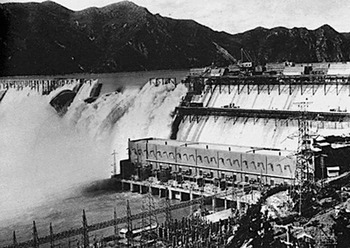
“Through humanity's power to boldly take on Mother Nature, the Yalu River's eternal flow has been completely subjugated and transformed into electricity, the driving force of modern industry,” proclaimed Keijō nippō (Seoul daily) on August 26, 1941—one day after Sup'ung (Suihō) Dam on the northern Korea border began transmitting electricity to neighboring Manchukuo (see figure 1 and figure 2). Yalu River Hydropower Company (Ōryokkō suiryoku hatsuden kabushiki kaisha; hereafter Yalu Hydropower) officials and colonial bureaucrats called the dam an “eternal pyramid,” the “project of the century,” and a victory for “Scientific Japan.” They noted that its domestically produced 100,000 kilowatt generators and 220 kilovolt transmission lines were the world's most powerful, and that the project would form the basis for “constructing East Asia” through future dams on China's Yellow and Yangtze Rivers (Keijō nippō August 26, 1941; August 28, 1941; September 29, 1941). Sup'ung was also part of a plan to build seven dams along the river and transform the frontier region into a coastal urban industrial zone—complete with year-round ports at Dadong and Tasa-do, improved transportation links to natural resources in the Dongbiandao region, and modern cities around Andong and Sinŭiju with large factory and residential areas that would herald the “Yalu River Era of Developing Asia” (Kodaira [1942] 1990, 130; Son Reference Son, Miyuki, Yasuhiko and Ji2004, 182–94). Capable of producing 700,000 kilowatts and measuring 106.4 meters tall, 899.5 meters wide, and 3,110,000 cubic meters in mass, the gravity concrete dam was the world's second largest after Grand Coulee Dam. Built between 1937 and 1945, it required 850,000 tons of cement and an estimated twenty-five million laborers in manpower (CNK 1981, 415, 535; HHHI 1989, 636).Footnote 1 While in many ways the project indeed represented a great “pyramid,” as officials proclaimed, these officials' triumphalist, technocratic discourse about the dam hid the contingent, contested, and colonial origins of “Scientific Japan's” demonstrated expertise. The world-class dam not only produced cheap, abundant electricity for wartime industrialization but also helped form and naturalize a powerful regime of techno-scientific expertise for large-scale, comprehensive development. This regime served as an important pillar of Japanese imperial power, survived the war's end, and later reemerged in different forms of “developmentalism” throughout Asia.
Sup'ung Dam under construction, July 1942. Source: Wikipedia, “Sui-ho Dam under Construction.” http://en.wikipedia.org/wiki/File:Sui-ho_Dam_under_construction.JPG.

Map of Sup'ung Dam and surrounding region. Map by Becky Eden.

Scholars have recently examined the role of science and technology in planning and justifying Japan's imperial rule across Asia, and thereby challenged earlier views of war and empire as the product of spiritual fanaticism and a runaway military (Mimura Reference Mimura2011; Mizuno Reference Mizuno2009). But as Daqing Yang (Reference Yang2011, 5) notes, “the material means of either building Japan's empire or holding it together are still largely taken for granted rather than being thoroughly investigated.” Although scholars have shown that Japanese imperialism, particularly in Manchuria, was infused with a modernist utopianism and a spirit of experimentation that resulted in the construction of planned cities, advanced heavy and chemical industries, thousands of kilometers of roads and railways, and vast telecommunications networks, few of these scholars have examined how these construction projects operated as a form of imperial power and mobilization. They have noted that these schemes rested on the “iron fist of a despotic alien power,” for example, or were otherwise related to utopian ideologies and imperial agendas, but they do not adequately address the techniques of power involved in their very construction—particularly the processes behind the formation of the technical expertise that enabled and legitimized their projects (Sewell Reference Sewell2004; Young Reference Young1998, 303). Existing work on technology in the Japanese empire has largely affirmed James Scott's influential analysis of state-sponsored public works projects during the mid-twentieth century as examples of “high-modernist” ideology—a strong “self-confidence about scientific and technical progress, the expansion of production, the growing satisfaction of human needs, the mastery of nature . . ., and, above all, the rational design of social order commensurate with the scientific understanding of natural laws” (Scott Reference Scott1998, 4).
In justifying itself, Japan's colonial technocratic discourse often invoked this high-modernist aura of stability, order, and progress, which was in turn associated with the materiality, rationality, and grandeur of large technical systems and physical structures. But as David Tucker (Reference Tucker1999) and Yang (Reference Yang2011) demonstrate, technical expertise and infrastructure were neither preexisting wholes in the minds of Japanese planners nor monolithic entities brought by engineers to the colonies, but rather messy effects produced by a range of complex practices and negotiations that involved many actors, institutions, and forces—and often resulted in conflict.
Illuminating the contentious histories behind the formation of technical expertise in the colonies reveals how the larger discourse of “Scientific Japan” tried to legitimate and naturalize itself, as well as the types of power utilized to create this high-modernist effect of stability, rationality, and progress. This article analyzes how one prominent project helped constitute a powerful regime of colonial development expertise used to justify and entrench Japanese imperial rule. By examining the conflicts inherent within the various processes and negotiations involved in the formation of technical expertise at the dam as well as its power effects, it denaturalizes Japan's colonial technocratic discourse, which survived as Japan became a global force in development after the war. Whereas Scott (Reference Scott1998, 348–49) argues that “monotonic schemes of centralized rationality” such as Sup'ung Dam “straitjacketed” the human and natural worlds, and thereby unilaterally suppressed the variety and complexity of local interests, knowledge, and conditions to conform to its uniform visions, this article insists that conflict and negotiations with such variety lay at the heart of forming technical expertise and the engineering process itself.
As Martin Reuss notes, “successful engineering requires more than the application of scientific rationalization” in accordance with the dictates of high-modernist ideology, but also necessitates various “social inputs” from different groups and difficult interactions with unfamiliar environments (Reuss Reference Reuss2008, 545–46). Moreover it requires the invocation of various types of bureaucratic, military, and ideological power. Two recent articles on Manchukuo in this journal have revealed how law and education constituted techniques of power and mobilization, thereby complicating our conceptions of Manchukuo as a “puppet state” and forced “imperialization” (kōminka) in wartime Japanese cultural policy respectively (DuBois Reference Dubois2010; Hall Reference Hall2009). This study continues this conversation by analyzing technology's relationship to power in Manchukuo and Korea, and thereby deepens our understanding of the colonies as a space for high-modernist experimentation.
Dam construction serves as a highly visible arena to explore how developmentalist states deployed technical expertise as a form of power and mobilization. In its conclusion, this article reveals important continuities from the colonial period within the postwar deployment of technical expertise for development in Cold War Asia. Analyzing the discourse and techniques of power involved in the building of large-scale projects such as Sup'ung Dam contributes to the debate over the legacies of Japan's heavy industrial infrastructure construction in the colonies. This debate has so far focused on compiling a socioeconomic “balance sheet” to determine the degree to which Japanese imperialism constituted economic plunder or contributed to the high-speed economic growth of individual East Asian nations such as South Korea and Taiwan (Booth Reference Booth2007). This focus on comparing national economic indicators of “development” from the colonial and postcolonial eras, however, overlooks the commonalities of power and expertise among these nations that made the realization of the development represented by such national statistics possible. This study therefore adds to the debate by focusing on how otherwise different national and ideological systems such as South Korea, North Korea, and Japan in the colonial and postwar contexts—governments that Bruce Cumings (Reference Cumings and Cumings1999, 88–92) argues share a common “bureaucratic-authoritarian industrializing regime”—converged over common terms of developmental discourse, which continued to serve as powerful forms of mobilization in various countries emerging from the war's destruction.
Rationalizing Rivers
Dam construction in Japan took off during World War I as industrial demand for electricity rapidly increased and engineers grew more familiar with the technologies of high dams. They learned about these technologies primarily from the United States, then the global leader in high dam technology as exhibited by Boulder Dam (1936) and the twenty-six dams initiated by the Tennessee Valley Authority (TVA) starting in 1933. Korea became the frontline for dam construction in the 1920s as engineers for Noguchi Jun's Chōsen Nitrogenous Fertilizer Company completed the Pujŏn River Dam (1929) and the Changjin River Dam (1938) under the Government-General's industrialization policy. Thus when Sup'ung Dam's construction began in 1937, Japanese engineers had already demonstrated and established their significant expertise in dam building (Hirose Reference Hirose and Motoi1993, 138–39).
Dam development in Korea first began under the guidance of Government-General engineers after its annexation in 1910. This involved transforming rivers from free-flowing waterways into regulated hydropower-producing systems, a task that required an entirely new way of understanding, negotiating, and shaping the environment. Examining how these engineers acquired knowledge about Korea's rivers during the 1920s reveals that these engineers were not engaged in a simple, progressive process of gaining scientific knowledge about an unknown environment for hydropower development. These engineers were instead engaged in the dynamic constitution of a new object of calculability in the form of comprehensively managed, high electricity yielding rivers. Although Korea's rivers were presented by engineers as quantifiable and manageable in the form of officially compiled statistics, the entire process of “rationalizing the river” in this manner was quite unstable and imprecise, and involved various extra-scientific practices (Mitchell Reference Mitchell2002; White Reference White1995).
Government-General engineers only realized Korea's hydropower potential during the Second Hydropower Study (1921–29), when they began collecting data on the maximum and normal streamflows for building the high dams necessary to meet the electricity needs of Korean industrialization and urbanization.Footnote 2 First they determined the most promising dam sites based on earlier hydropower and flood control studies as well as the army's topographical maps. Engineers took into account a variety of factors such as weather conditions, topography, geology, and estimated construction and transmission costs. After forecasting electricity output for each location, state engineers conducted meteorological and hydrometric tests as they discovered new sites and established precipitation and streamflow measurement stations at the most promising ones. Their budget, however, limited their building as many stations as they needed, or conducting as many tests as they would have liked. For example, they had only one hydrometric station per 1,600 square kilometers, which forced engineers to make uniform generalizations based on sparse data about streamflow across vast river basins. The final published study disguised such generalizations through what appeared to be organized statistical charts, giving the sense of a relatively uniform environment subject to expert manipulation and control (CST 1930, 15, 22, 171; Kawai Reference Kawai, Toshihiko and Atsushi2009, 314–15).
Obtaining the measurements was difficult because it required negotiations with different institutions and people. The Communications Division (Teishinkyoku) supervising the study had to conclude formal agreements with other government divisions to share their stations. Koreans who were “somewhat illiterate” with a poor command of Japanese had to be trained to take daily precipitation and hydrometric measurements, as well as submit monthly reports. Local post offices and police stations had to be enlisted to oversee these Korean observers. Poor weather was also a frequent problem, with floods that washed away gauges or prevented teams from reaching remote stations. Korea's rivers were wide and sometimes doubled or tripled in width during the summer rainy season. State engineers were therefore often forced to conduct makeshift streamflow measurements or rely on local hearsay to calculate maximum water levels. Finally, the need to determine a uniform streamflow coefficient that could calibrate varying water velocity gauges resulted in the hasty construction of a gauge inspection facility in 1924. Using a sedimentation tank at a water treatment facility outside Keijō (Seoul), state engineers built a 48.5-meter-long track for a special rail car equipped with a velocity gauge that reached into the tank. By moving the car at different speeds and taking readings, they arrived at a gauge coefficient that would then uniformly measure streamflow across Korea. Thus seemingly scientific devices designed to accurately measure the environment disguised the uncertainty and ambiguity within their very structure (CST 1930, 12, 75, 161, 183, 194–96; Kawai Reference Kawai, Toshihiko and Atsushi2009, 314–15).
The environment did not simply lie outside of the above practices, ready to be transformed into precise data and shaped by Japanese technical expertise. It was actively constituted through many unstable, extra-scientific processes such as training Koreans to take measurements, attempting to make erratic rivers conform to new knowledge and devices, relying on generalization and local hearsay for data, and building makeshift facilities to anchor the new forms of measurement. As examined below, the Yalu River was never fully “rationalized” during the dam's construction and continued to defy scientific expectations through its frequent fierce floods, which betrayed the images of control and transparency presented by the Government-General's official statistics.
“Korea-Manchukuo Unity” and the Development of the Colonial Periphery
Sup'ung Dam's story involved not only engineers struggling to manage a difficult environment, but also colonial regimes with differing views on industrial policy and economic planning that undercut their proclamations of “Korea-Manchukuo Unity” (Sen-Man ichinyo) in “constructing East Asia” (tōa kensetsu). Whereas the Government-General historically adopted policies friendly to capital, in Manchukuo Guandong Army officers proceeded to design a controlled economy self-sufficient in natural resources and with the industrial power to wage total war against the Soviet Union. Abe Kōrō, an engineer who led hydropower studies for Manchukuo's Temporary Industrial Research Bureau (Rinji sangyō chōsakyoku), suggested Noguchi as someone who could develop the Yalu due to his experience in constructing dams for Japan Nitrogenous Fertilizer Company's (Nitchitsu) expanding industrial empire in Korea. Softening their stance on private business after earlier industrial planning efforts failed, Guandong Army officers conditionally approved plans presented by Nitchitsu's chief hydropower engineer, Kubota Yutaka, after he impressed them with his speed, efficiency, and thrift in building dams in Korea (MHK 1973, 1062; Tanigawa Reference Tanigawa2008, 67).
The Manchukuo Industrial Five-Year Plan in 1937 helped move the project forward. This 2.58 billion yen plan emphasized increasing iron, steel, coal, synthetic fuel, automobile, and aircraft production. The plan also emphasized hydropower development as it sought to increase total electricity from 459,000 kilowatts to 1,405,000 kilowatts (590,000 kilowatts from hydropower), a figure that was later doubled in 1938 as the war with China intensified. Korea also shifted from a more capitalistic system to a “bureaucratic command economy” in line with an intensified industrialization campaign to transform Korea into an “advanced military supply base” (Eckert Reference Eckert1991, 107, 116; Hori Reference Hori1987, 18, 20).
Determining who would administer and implement the project was contentious, since both authorities disagreed on the issue of state versus private control. To resolve this, the 1937 “Memorandum on Yalu and Tumen River Electricity Projects” asserted a principle of equality by establishing two special companies under Manchukuo and Japanese law (collectively referred to as Yalu Hydropower Company). Both governments provided the initial capital of fifty million yen each for their respective companies, with Manchukuo relying primarily on the Manchuria Development Bank and Korea on the Bank of Chōsen, the Oriental Development Company, and Nitchitsu's subsidiaries. While both companies were separate entities on paper, they had the same management and personnel, with Noguchi as president and Kubota as managing director. As a special company, however, it was required to consult both governments' authorities on matters such as personnel selection, profit distribution, and business plans. In this manner, Nitchitsu asserted direct control over the project while both governments maintained their right to intervene and shape its direction (CNK 1981, 202, 290–91; Kubota Reference Kubota1966, 299–300).
This compromise never resolved basic differences between the two regimes as Manchukuo authorities protected its special companies and Korea officials defended Nitchitsu's interests. For example, as a result of construction “costs increasing threefold,” Yalu Hydropower and the Government-General asked Manchukuo's government in 1941 to approve an electricity rate hike from the originally agreed eight rin per kilowatt-hour to one sen one rin per kilowatt-hour.Footnote 3 In dozens of meetings, Yalu Hydropower argued that without an increase, there would be insufficient funds for the construction's second phase, while representatives from Manchukuo industries argued that they had already begun factory construction based on the earlier rate and would suffer large losses with any increase. At the end of June 1941, they reached an agreement of one sen per kilowatt-hour, two months before the dam began production (Maeil sinbo June 27, 1941; June 29, 1941).
Electrical cycles were also an issue, since Manchukuo used 50 hertz while Korea operated on 60 hertz, which obstructed uniform, efficient electricity production. The Guandong Army pushed for 50 hertz, arguing that possible expansion into the Soviet Union necessitated connecting into European networks, while officials in Korea resisted, citing the high cost of transforming its industrial infrastructure. They then reached a compromise whereby electricity output was split in half at different cycles between both countries, although the Guandong Army continued to push for unification at 50 hertz. Thus bureaucrats', businessmen's, and officers' visions of capital and economic planning continually clashed, once again belying the whole discourse of “Korea-Manchukuo Unity” in transforming the region into an East Asian industrial center. Arriving at a consensus between the different interests proved just as difficult as managing the river (CNK 1981, 286; Tamaoki 1960, 22–23).
Managing the Yalu
In addition to entrusting the project to Kubota and his team of experienced Nitchitsu engineers, the colonial regimes consulted some of Japan's leading specialists in line with their declarations to mobilize the expertise of “Scientific Japan.” Nakagawa Kichizō, one of Japan's pioneers in dam construction and president of its World Dam Congress delegation, headed the intergovernmental Technology Committee charged with overseeing dam design. Experienced Manchukuo civil engineers like Naoki Rintarō and Haraguchi Chūjirō, as well as leading experts on concrete and construction materials such as Tokyo Imperial University professors Yoshida Tokujirō and Yamaguchi Noboru, served on the committee. Many top engineers involved in the dam's design and construction were leading members of engineering societies such as the Japan Society of Civil Engineers (Doboku gakkai) and had published articles in the society's journal or other forums like Civil Engineering Manchuria (Doboku Manshū) or the Journal of the Manchuria Technology Association (Manshū gijutsu kyōkaishi). Thus Sup'ung Dam was more than an individual engineering project but also closely tied to the centers of knowledge production linking colony and metropole.
Nishimatsu-gumi and Hazama-gumi, two construction companies with experience building dams and other infrastructure projects in the colonies, were contracted, and construction began in 1937. Similar to the earlier process of transforming Korea's rivers into a rationalized hydropower-producing system through the acquisition of scientific data, constructing the dam itself also revealed that messiness, uncertainty, and haphazardness formed the very core of their engineering expertise.
The summer rains caused the most problems for state and company engineers. Although they were prepared for some flood damage, the sudden water level rises continuously defied their scientific data. Fierce floods in the summer of 1940 overflowed the dam's finished portions five times, washing away eight steel construction towers and flooding the power station and gravel pits. Since five of the seven generator intakes were not built high enough over the unexpectedly high water levels, the reservoir had to be subsequently lowered for short periods during the year to complete their construction. This in turn resulted in temporary electricity suspensions from the higher intakes and generators, which began transmission in 1941, thereby affecting industrial production. Future summers were no better as workers constantly mobilized to repair flood damage, which would delay the dam's completion by two whole years (CNK 1981, 439–40; Nishimatsu-gumi shahō August 1940, 13; September 1940, 15).
One engineer captured the tension and uncertainty involved in managing the Yalu when describing the construction's most difficult procedure—simultaneously closing the central floodgates at the flood season's height in preparation for electricity production. He said:
When the three gates were closed over the ferociously flowing and foaming water, all eyes stopped blinking for a few minutes. Once we breathed a sigh of relief, however, the water began leaking with a vengeance. We threw all of the cotton blankets on them to no avail. The water pressure gradually increased. It was like children covering leaky water faucets with their hands. We had to throw in rocks and whatever available inside and outside of the gates and when water pressure finally decreased, all of us thanked heaven. (Mansŏn ilbo August 27, 1941)Footnote 4
Apparently the two-year-old concrete near the floodgates was damaged from timber, along with other floating material, and insufficient waterproofing led to leaks of 20 tons per second. At the construction's beginning, engineers led by Yoshida spent a year experimenting with different materials to produce the right cement for the frigid winter climate—since normal cement cracked in the −30 degrees Celsius temperatures, and low-temperature cement lost strength in other seasons. They continued to struggle to produce a cement to withstand the river's unpredictable force and the region's climate, especially with frequent wartime materials shortages (CNK 1981, 303; Harada Reference Harada1942, 81–83, 114–15; Nishimatsu-gumi shahō August 1941, 16).
In their articles for academic journals, presentations to professional associations, and accounts to the media, top-level engineers often presented difficulties within a progressive narrative of Japanese science accompanied by bold resolutions to each and every problem. But their articles and accounts also reveal that their superior expertise and preexisting intelligence did not direct their work as much as the actual implementation of the project itself. As shown above, solutions to unforeseen problems were worked out on the ground, and scientific expertise took shape through difficult, unpredictable negotiations with the environment. Thus Japan's colonial civil engineering expertise was always a hybrid assemblage of metropolitan scientific learning and know-how acquired in the colonies, rather than a well-defined body of knowledge confidently adapted to the environment, which was how civil engineering publicly and professionally presented, perpetuated, and justified itself (Mitchell Reference Mitchell2002, 37).
Contesting “East Asian Construction”Footnote 5
It was not only nature that compromised and challenged Japanese expertise but also the business interests, landowners, and residents whose livelihoods were affected by the dam. From the beginning of its construction, company officials, bureaucrats, and business leaders promoted its benefits for regional industrial development to local residents and business people. For example, the Andong Chamber of Commerce proclaimed that damming the Yalu signified its transformation from a “river of transportation” into a “river of production.” Andong was rapidly gaining attention as a “frontline base for developing Asia,” and heavy industrial factories nearly doubled in number between 1938 and 1941. New port facilities were being built at Dadong to accommodate the larger ships that the dam would enable to navigate the Yalu. The dam was shortening the freezing period and evening out tide differentials, and future dams would enable even smoother river navigation. Similar plans for regional industrial development were made across the river in Sinŭiju. In sum, state officials and business leaders on both sides argued that by stimulating the development of “Japan's continental heavy industrial base,” Sup'ung Dam would become the “load center” for the region (Antō shōkō kōkai 1943, 129–30, 171; Harada Reference Harada1942, 135).
The area's powerful timber industry also began deploying the language of development to contest the state's discourse once it became clear that the dam would adversely affect its interests. Every winter people cut timber and floated it downriver in rafts during the spring to Andong and Sinŭiju for processing. In Korea alone, thirty thousand people were engaged in cutting and transporting trees, and thousands of Chinese and Japanese also depended on the trade. In the peak summer season, around 960,000 cubic meters floated downriver, mostly to Sinŭiju where primarily Mitsui's Ōji Paper Company and Korea's Forestry Management Bureau processed them. From the beginning, timber industry representatives demanded non-obstruction guarantees, which were incorporated into Yalu Hydropower's permit. Against the company's claims of hydropower's benefits for industrial development, they asserted timber's strategic importance for Japan's war economy; they also insisted on the company and the state's duty to protect people's livelihoods (CNK 1981, 280, 282, 305–6; Hirose Reference Hirose1998, 42).
In response, Yalu Hydropower put faith in its own technical expertise and began designing six special logging channels despite serious internal doubts about its ability to calculate the proper inclines to facilitate varying and unpredictable streamflows. Its plan was to unbundle the rafts before they reached the dam, rebundle them into smaller sizes, transport them by tugboats to the floodgates, direct them through the special channels, and then rebundle them on the other side. Company and state engineers conducted a week of tests at a timberyard in November 1938 to determine the average time to guide logging rafts of different sizes through a sluice gate as well as the average travel time over 100 meters. However, they had difficulty simulating the proper glide effect present in an actual channel. Additionally, two days of tests were conducted using two tugboats along a 4-kilometer river section to determine average travel times and the numbers and proper boat sizes required to facilitate peak timber trade. Amidst pressures from the timber industry, engineers from Yalu Hydropower and the Government-General hastened to shape the environment according to their wishes (CNK 1981, 297; Nōrinkyoku iin 1938, 247–48; 1939, 142–43).
Yalu Hydropower, however, delayed channel construction, and by the time the river was closed in November 1939 and logging season began the following spring, only two temporary logging channels were completed. Engineers had not resolved how to adjust the special channel water levels and determine proper inclines in relation to the river's varying streamflow. Thus when the rafts arrived, the bundles shattered from the water's force within the channels. In response, engineers proposed a more gradual slope and more water-level-adjustment mechanisms along the channels. Yet Yalu Hydropower would remain unable to facilitate the following year's logging season since the delays associated with the dam's construction forced engineers to build three logging channels at much lower levels than originally planned. While the company insisted on its technical ability to resolve the issues, dealing with demanding factors such as high timber volume, uncertain technology, construction delays, and the unpredictable river overwhelmed its expertise (Hirose Reference Hirose1998, 47; Nōrinkyoku iin 1941, 25–27).
These technical failures devastated the timber industry and exacerbated an already tense relationship between the involved parties. In Sinŭiju, industry representatives continuously held the company accountable to its earlier promises. Operators reacted cautiously to the company's special logging channel plans at a meeting in April 1939, as they asked the company to invest in roads and railways in case the channels failed. When technical problems became clear in November 1939 and rumors circulated that the river would become unnavigable, Japanese and Korean timber interests and city councilors immediately formed a countermeasures committee. They travelled to Keijō and petitioned Government-General officials to pressure the company to ensure smooth timber transportation. An agreement was concluded between Yalu Hydropower and the Yalu River Timber Industry Union in April 1940 to make more concerted efforts to facilitate the trade. But when rafting season subsequently peaked and the volume arriving at Andong and Sinŭiju only reached 5.7 percent of the previous year's volume, the Sinŭiju Chamber of Commerce and Korean councilors fended off calls for a mass rally and demanded Kubota, Yalu Hydropower's managing director, to address their grievances directly. At an angry meeting, industry representatives pointed to the discrepancy between the company's promises to facilitate forty rafts a day and the reality of only accommodating four, the inadequate facilities for breaking up and rebundling rafts, and the economic effects of factory closures and unemployment. Kubota apologized and promised to tackle the technical issues while arguing that his engineers were already making progress in resolving these issues. However, as the difficulty of fully accommodating the timber industry became clear, company officials asserted that the industry's sacrifice was inevitable in the wake of hydropower's adoption into national policy, and then more aggressively pushed the benefits of future industrial development (Hirose Reference Hirose1998, 48, 50–51; Shingishū shōkōkaigijo geppō June 1939, 11; January 1940, 28; August 1940, 10–11).
According to the Sinŭiju Timber Association's director, despite increased company efforts to facilitate their trade, 1940 still ended disastrously with only 70 percent of the timber transported around the dam (Hyōya Reference Hyōya1941). Since large factory timber was prioritized, small operators suffered—which resulted in the closure of processing factories, the slowing of production, small shops' eventual inability to fill orders, and the collapse of financing. In February 1942, the North P'yŏng'an Province governor finally brokered a deal whereby Yalu Hydropower purchased lands in Manp'o, which had better railway facilities, and paid the relocation expenses for some private lumber companies. By year's end, Yalu Hydropower purchased Sinŭiju's largest remaining factory, and the timber industry reorganized itself into a larger association under state wartime controls.
In sum, whereas the company and state officials emphasized the dam's benefits for promoting heavy industry, regional timber interests expanded that discourse to include discussions of balanced development and rights to livelihood. Although the company responded by employing the same faith in technology's power that had already been embodied by the entire project in designing the special channels, the effort failed, leading to a hastily drawn-up and vigorously contested settlement. Japanese officials presented these issues as difficulties to be overcome with technology or future industrial development; however, their expertise and discourse of development were challenged throughout as the timber industry and local councilors altered the terms and meanings of their discourse (Hirose Reference Hirose1998, 51–52; Hyōya Reference Hyōya1941; Maeil sinbo February 22, 1942).
We catch another glimpse of how local residents challenged the discourse of “Scientific Japan” and “East Asian Construction” in a five-part travelogue written in 1940 by Kang Ik-Sŏn, the Lagushao branch head for Mansŏn ilbo (Manchuria-Korea daily). The series was written as authorities made final preparations to relocate the seventy thousand residents within the submersion zone. As a writer, Kang was clearly restricted as he was escorted by police officers in Ch'angsong County, warned by an official to be careful in his reporting, and banned from taking photographs in the county, which had the most productive land scheduled for submersion (Mansŏn ilbo January 29, 1940). While he supported the project, his entire account was tinged with sadness about the area's disappearance and the loss of homes and livelihoods. For example, Kang documented compensation levels in one district and described landowners' complaints about the compensation levels' failure to reflect market prices, include the value of housing structures and crops, and be enough to maintain their livelihoods. He then wrote, “I believe that as citizens of a nation that is building the power plant as a glorious foundation for the construction of a new Greater East Asia . . . all of them should not feel the need to further complain.” Yet the article also had this rather poetic headline: “Steep Mountains and Peaks, Silky Green Farmlands in Front of Farm Houses, Submerged in an Instant—All but a Momentary Dream . . . Oh How Powerful Science Is!” (Mansŏn ilbo January 28, 1940). As the Japanese media triumphantly celebrated science and technology's power to modernize East Asia, Kang subverted their meanings to signify destruction and impermanence.
In his last article, he described the successful efforts of the Manchukuo Concordia Association (Manshū teikoku kyōwakai), the party charged with mobilizing the different ethnicities for pan-Asian cooperation, to convince and relocate the “listless residents” through films, lecture tours, and public meetings proclaiming hydropower's importance for “East Asian Prosperity.” But in contrast to this and earlier descriptions of residents happily accepting compensation and relocation, Kang ended his series with the following thoughts:
For those villagers, who had to desert their beloved homes and livelihoods to join relocation groups and look for new ones, it would be impossible to understand the national policy of building a prosperous Asia. To them it was only a matter of their own life's disaster. Vacant homes demolished! Whole villages completely vacant! Truly sad scenes!
Wind was blowing towards me in the freezing cold weather. My eyes were filled with images of the vagabond villagers on their way to being relocated. At this sight, my body quickly began generating a strange heat. (Mansŏn ilbo February 1, 1940)
Thus as the governments were pronouncing Japanese technology as the basis for Asian development, Kang's account revealed an attempt by the colonized to appropriate that discourse. The discourse of “Scientific Japan” was inherently unstable, an instability often not captured in narratives of colonial expertise except as bumps on the road to progress.
Colonial Power in the Purchase of Land and Transfer of Residents
The formation and implementation of Japan's civil engineering expertise during the dam's construction also rested on multiple forms of colonial power—legal, police, administrative, economic, and ideological—in order to relocate the residents and mobilize workers to build the enormous structure. Residents and workers hardly appear in engineer and official accounts except as patriots who willingly parted with their lands for the greater good of East Asia, or as heroes building a great pyramid on the continent. Behind the expertise of “Scientific Japan,” a whole array of institutions central to the colonial enterprise had to be coordinated to ensure the dam's successful completion.
The dam submerged 106 square kilometers in Korea and 99 square kilometers in Manchukuo, displacing 32,780 and around 40,000 people respectively (CNK 1981, 298–99; Hirose Reference Hirose2003, 8). Even if authorities emphasized a spirit of cooperation as well as care in conducting negotiations with these soon-to-be-displaced residents, the actual process of compensating and transferring them involved a wider range of actors. As Kobayashi Hideo (Reference Kobayashi1975, 347–52) and Hirose Teizō (Reference Hirose1991b, 19–20) note, colonial despotism and police power were key factors in purchasing lands and relocating residents. But an overemphasis on these aspects overlooks the many other forms of legal, bureaucratic, and disciplinary power also used during the process. From their beginnings, Manchukuo and Korea established laws and procedures for approving projects, procedures defined by an obligation to negotiate with and compensate affected parties; however, these were more streamlined than Japan's laws and lacked its checks and balances. In Korea's eminent domain law, there was no true third-party mediation, no mechanisms for dispute resolution beyond appealing to government authorities, and no language on fair value and instances requiring different compensation levels. Throughout the compensation and relocation process, colonial authorities invoked the law as a means to legitimize the forced purchase of lands and diffuse resistance among residents through bureaucratic procedures (Hirose Reference Hirose1999, 2–9).
Different interests, such as the residents and their representatives, the provincial government, Yalu Hydropower, and the Government-General, invoked bureaucratic procedures and laws in accordance with their respective interests. Land prices jumped when residents learned about the project. In response, a police chief set the precedent in one district by issuing construction consent forms to 335 landlords with predetermined compensation amounts. Yalu Hydropower objected to the amounts and issued its own valuations based on tax records and land registers, which valued the lands 15 to 20 percent lower than market value. Sometimes it used the poorest quality land as the basis for determining value, angering many residents. In one 1937 sale, the company only paid one-third to one-half of the market price, using food and drink as a tool of persuasion during negotiations. Since registers did not reflect market value, lands were usually priced too high or low, causing a wave of speculation and an influx of brokers, which created more anxiety and ill will towards Yalu Hydropower. Residents complained to authorities about arrogant company officials who treated the area as their private enclave, conducted hostile negotiations with landowners, engaged in private land speculation, and showed insensitivity towards residents about to lose their homes and livelihoods. The province also criticized the company's valuations and “backroom tactics,” urging it and the Government-General in November 1937 to let it form a committee to take over the negotiation process out of sensitivity to local opinion towards the project. Thus from the very beginning, tensions broke out among residents demanding fair compensation and rights to livelihood, the province trying to win popular support for the dam and future projects, the police pressuring the residents to settle, the company trying to minimize costs, and the Government-General mediating the process (Heianhokudō iin 1938b, 217–19, 221, 223; Hirose Reference Hirose2003, 8; Tanaka 1939, 391, 393–95).
The governor headed the new compensation committee, which consisted primarily of provincial councilors, provincial and local bureaucrats, and police heads. It met five times before announcing its conclusions in February 1939. The meetings were contentious, with Kubota pressuring the members to assess lands according to lower Manchukuo prices, the governor pushing for higher valuations, provincial councilors demanding popular representation on the committee, and the Government-General caught among all of them. In the meantime, Yalu Hydropower continued using tactics such as having Korean employees act on the company's behalf to negotiate and purchase land cheaply, causing further distress. The province tried placating residents through lecture tours and discussions, but it also strictly banned public protests and assemblies. Reacting to popular sentiment, the committee's evaluations were more detailed and higher than Yalu Hydropower's earlier ones—particularly in reference to paddies, fields, forests, and housing (Heianhokudō iin 1938b, 219–21, 223; Hirose Reference Hirose1991b, 10–12, 17; Shokugin chōsa geppō March 1939, 92–94).
In the end, total compensation was lower than the announced levels and used a more streamlined classification scheme, suggesting that company pressure to lower costs as well as increasing police intimidation succeeded. In sum, while the bureaucratic process was employed to legitimize acquiring land for the project, the residents, company, and province each contested the terms and nature of that process by appropriating the language of public interest and development for their own goals. At the same time, under the guise of “fairness,” “sincerity,” and “sympathy” towards the residents, the province, police, and company exploited their authority, existing colonial inequalities, and lack of civil protections to pressure residents into accepting their terms when the legal process failed. Meanwhile, the affected residents used whatever bureaucratic recourse available to them (official meetings, petitions to authorities and the press, provincial councilors, and sympathetic bureaucrats) to win more favorable terms and contest the discourse of development. The ideology of “Scientific Japan” and its narrative of superior technical expertise generally ignored and marginalized all of these issues as minor obstacles in the larger scheme of building a prosperous, heavy industrial future. Yet it was police, bureaucratic, and legal power that in fact made the exercise and further development of expertise possible (Hirose Reference Hirose1991b, 18–20; Shokugin chōsa geppō March 1939, 91).
Relocating residents also involved other institutions of colonial power. The intergovernmental Development Committee decided to incorporate residents into ongoing emigration programs that would resettle Koreans as colonial “pioneers” and independent farmers in Manchukuo. The arrangements were first made in 1939 and 1940 to settle nearly two thousand affected households in “collective villages” (shūdan buraku) managed by the Korea-Manchuria Development Company (Sen-Man takushoku kabushiki kaisha) in northern Manchuria, and to issue “dispersed settler” (bunsan imin) permits to other residents who would cultivate land near their friends and relatives already there. Residents were also resettled in “safety villages” (anzen nōson) in Manchuria and northern China as part of the Guandong Army's campaigns. Both governments established these large, militarized settlements with attached farmlands in 1932 to resettle Korean refugees fleeing hostilities after the Manchurian Incident the previous year. For the Manchukuo government, Korean settlers were valuable tools for colonization. For example, many of the resettled participated in building dykes and reclaiming swamplands in collective villages in northern Manchuria (Hirose Reference Hirose1991b, 23, 25; Naimukyoku iin 1941, 31).
As Hyun Ok Park (Reference Park2005) shows, development companies appealed to the hopes of poor peasants by promising them land ownership, organizing them into cooperatives, and providing them with credit. These together served as techniques of power as they incorporated peasants into bureaucratized regimes of debt and mobilized them into mutual aid associations that promoted values of work discipline and community. Many of these settlements, particularly the safety villages, were highly militarized. Their spaces were planned to allow for their constant surveillance by police and self-defense groups and included central squares for collective activities and drills. As it purchased land, Yalu Hydropower systematically targeted poorer tenants, whom it persuaded to pressure their more resistant landlords to settle. Despite their sadness over leaving their homes and ancestral gravesites, as well as anxiety over relocating, many poor peasants readily left since they had less to lose than large landowners. In his travelogue, Kang describes a group of villagers in Sakchu County who were happy to sell their land to Yalu Hydropower since it was of inferior quality, demonstrating that some were perhaps attracted by promises of better prospects elsewhere (Mansŏn ilbo January 27, 1940). Many wealthier landowners who were pressured into resettling, however, fared poorly in Manchuria since they had almost no agricultural experience and were not used to the different land and climate. In sum, whereas engineers and officials presented the project as an achievement of Japanese expertise and technology, its completion in fact rested on collective emigration programs that incorporated the hopes of poor peasants into capitalist regimes of dependence, agricultural development projects that increased Japanese control over the Manchurian countryside, and counterinsurgency campaigns that disciplined collective villages into structures of mobilization (Heianhokudō iin 1938b, 221; Hirose Reference Hirose1991b, 19; Mansŏn ilbo January 27, 1940; Naimukyoku iin 1941, 32; Park Reference Park2005, 162–97).
Mobilizing and Disciplining Labor
Labor appears in engineering accounts largely as an invisible force that implemented experts' designs or in the form of “industrial warriors” who dutifully worked and even sacrificed their lives for “constructing East Asia.” But securing and mobilizing this labor was crucial to engineers' demonstrating their expertise. An equivalent of twenty-five million workers in manpower were used over the seven-year construction period—ten thousand per day at its peak between 1941 and 1942. Labor was procured from three sources. First, the Government-General established the “government assignment” (kan assen) system to secure labor from the south to the less populated north to work in construction, mining, transportation, and industry. Quotas were assigned to provinces and districts, and officials aggressively recruited poor Korean farmers by making false wage promises, taking advantage of natural disasters, enlisting patriotic organizations, and using police pressure. Second, Chinese labor brokers, who were usually landed elites with a network of clients, were used to recruit the necessary labor. Construction companies paid lump sums to these brokers who paid the wages, loans, transportation, and upkeep of groups of fifteen to ninety workers (known as the batou system). Finally, nearby residents forced into “collective hamlets” as part of the Guandong Army's counterinsurgency campaigns to separate the general population from anti-Japanese guerillas were employed, many of whom had no other choice since they were deprived of their livelihoods. There is also evidence that war prisoners and detainees were used as unpaid forced laborers. Thus a further condition of exercising expertise was securing stable labor sources, which required employing different forms of colonial power such as national labor mobilization campaigns, Chinese labor brokers utilizing semi-feudal power relations, and military force (Harada Reference Harada1942, 59, 119; HHHI 1989, 636; Hirose Reference Hirose1991a, 130–31; Reference Hirose1995, 7–8; Lee Reference Lee1983, 271–75; Zhang Reference Zhang1999, 38, 41).
Disciplinary techniques of policing, surveillance, and mobilization were also required to increase productivity so as to meet construction deadlines. The construction area was heavily guarded since Yang Jingyu's Northeast Anti-Japanese United Army and Kim Il-Sung's division operated nearby, prompting a three-year campaign by the Guandong Army. As the number of laborers increased, authorities became worried about “impure elements” posing as workers to organize and recruit. Nakamura Harujirō, Hazama-gumi office head, noted that workers were rounded up daily in 1938 and company officials went to work armed (Harada Reference Harada1942, 89). That year, thirty-one policemen were stationed on the dam's Korean side and thirty-four on the Manchukuo side. Two policemen patrolled the work site, housing areas, and villages at all times. Officers also compiled a worker register and conducted frequent sweeps to check workers' identification, and made more detailed inquiries into the backgrounds of suspicious persons. Bunkhouses' signs listed all of their occupants' names, and foremen reported all movements and changes. “Good morals and manners” were taught at neighborhood association meetings to address a rise in gambling, theft, and prostitution in the newly thriving town of Sup'ung-dong and to promote ethnic harmony among disparate transient workers (Heianhokudō iin 1938a, 236, 239; Keimukyoku iin 1939, 131–32, 135).
Over time, many Korean workers mobilized through the government assignment system fled either to return home or to pursue more lucrative opportunities in the nearby fishing industry and the growing northern port cities. One group of 1,200 Koreans in 1938 was described as “having a vacation-like mood,” and only 326 of them ended up staying and working hard enough to send money to their families. The construction companies thereafter focused more on securing Chinese migrant labor and people from nearby collective hamlets. They also attempted to transform the largely rural workers into a disciplined industrial workforce. For example, they initiated campaigns to create “harmony between capitalist, administrator, and worker” and encourage good manners, hard work, and thrift. At the beginning of concrete pouring and setting in 1939, construction company employees ran around “like Nanjing rats” trying to teach “coolies” how to operate machinery, and they also struggled to coordinate their workforce with the new mechanized system of conveyor belts, iron buckets, cranes, rail cars, and mixing and crushing facilities (Harada Reference Harada1942, 90). To motivate workers at the construction's height in 1941, both construction companies initiated a contest in which workers competed against each other as to which company could set more concrete each day. Living and working conditions, however, remained terrible. Laborers worked day and night on continuous twelve-hour shifts all year round and were susceptible to frequent accidents and outbreaks of communicable diseases. Japanese supervisors were only concerned about speed, and they cursed at or hit workers when the pace slackened. Sabotage, or pretending to work hard when the foreman was watching and working half-heartedly when he was not, was a common worker tactic (Dong Reference Dong1999, 46; Heianhokudō iin 1938a, 238–40; HHHI 1989, 638; Hirose Reference Hirose1995, 31–38; Keimukyoku iin 1939, 135; Zhang Reference Zhang1999, 40–44).Footnote 6
Similar to the compensation and resettlement process, the dam's construction required the mobilization of multiple forms of colonial power: the transfer and organization of colonial surplus labor through the government assignment system in Korea and Chinese labor brokers; the employment of peasants displaced into collective hamlets by the military; multiple layers of supervision ranging from the labor broker to the foreman to the police officer; and government and company campaigns to promote discipline, productivity, and ethnic harmony. “Scientific Japan” and its technocratic expertise thus relied upon multiple techniques of violence, surveillance, management, and mobilization utilized by many different organizations.
Postcolonial Legacies
An important aspect of Japan's imperial ideology was a strong belief in the power of technocratic expertise to shape the environment and develop the Asian continent. As Louise Young (Reference Young1998, 240) notes, “the truly radical and novel facet of Manchurian development lay in the plans for heavy industrialization and the hope to make Manchukuo the advance guard of Japanese industrial capitalism.” In this way, Sup'ung and other large hydropower projects such as Fengman (Hōman) Dam were distinctive since other colonial governments such as the British in Africa rejected similar schemes as too expensive and argued that colonies were not ready for large-scale heavy industrial development (Hoag Reference Hoag2008, 3). In examining Japan's grand colonial infrastructure projects, historians have tended to emphasize the brutal, exploitative aspects that made their construction possible. However, these projects not only were made possible by the existence of despotic colonial conditions such as exploitative wages, forced labor and resettlement, and state violence but also were the product of a powerful regime of technocratic developmental expertise motivated by “scientific nationalism” and a strong sense of needing to catch up with and overcome the West (Mizuno Reference Mizuno2009). Although some scholars have dismissed Japan's ideology of colonial development as empty propaganda that hid a brutal reality, I have instead examined the politics of formation behind this regime of technical expertise to reveal how the discourse of “Scientific Japan” naturalized itself and operated as a system of imperial power.
This technocratic ideology continued to be invoked in different ways as an integral part of Japan's postwar developmentalist state and, more broadly, by the new regimes of South Korea, North Korea, and Taiwan. For example, after Japan's surrender on August 15, 1945, Sup'ung Dam was incorporated into North Korean visions of socialist development. Kim Il-Sung made Korean industrialization and dam construction key pillars of his “self-sufficiency” (juche) ideology and mammoth “Grand Plan to Remake Nature” schemes to reclaim tidelands, produce power, and provide irrigation for large-scale agriculture. A drawing of Sup'ung Dam with water overflowing its spillway beneath a bright red star, accompanied by transmission lines, a power station, and budding rice stalks, became the North Korean national seal. It was ostensibly drawn by Kim's first wife with the goal of winning the hearts of Koreans divided between north and south. With the founding of the Democratic People's Republic of Korea in 1948, electricity transmission was cut to the south where only 16 percent of Korea's power infrastructure was located. These power cuts created a crisis and thus put further pressure on a South Korean regime engaged with United States assistance in suppressing flourishing left-wing people's committees (Moiseyev Reference Moiseyev, Moltz and Mansourov2000, 54; Tanigawa Reference Tanigawa2008, 72–73).
As North Korea enjoyed some of the world's highest industrial growth rates after the Korean War during the 1950s with Soviet help, Japan began pursuing TVA-inspired multipurpose dam construction with United States assistance under the 1950 Comprehensive National Land Planning Law. Many Sup'ung Dam engineers joined Japan's public hydropower development company, the Electric Power Development Corporation (Denpatsu), and utilized their expertise to complete Sakuma Dam (1956) in only three years. It was billed as the “largest in the Orient” and was Japan's first large-scale development project after the war. Similar to Sup'ung Dam, Sakuma Dam was presented by state and company officials as an example of Japanese science and technology's power to improve life in the region through flood control, irrigation, and power production. Sacrifice on the part of the affected residents was deemed necessary, insofar as Japan had a pressing need for electricity to rebuild its shattered industrial infrastructure. While the Sakuma district boomed during the dam's construction, in the years afterward, its timber industry declined, residents then increasingly moved to the cities, and tax revenues dried out. In the end, Sakuma Dam's electricity would benefit industrial growth in Tokyo and Nagoya more than the Sakuma region itself (Kawamura Reference Kawamura and Takashi2006, 79–80; Kodama Reference Kodama and Takashi2006, 161–63; Machimura Reference Machimura and Takashi2006, 1, 15, 18; Yamamoto Reference Yamamoto and Takashi2006, 44–46).
Kubota, Yalu Hydropower's president from 1940 until the war's end, returned from Korea to start Nippon Kōei, a development consultancy. Its core business came to center on the application of Japanese foreign aid assistance to comprehensive overseas development projects. Kubota's philosophy was that technical assistance was not only a way to help developing nations, but also the first step to promoting lucrative contracts with Japanese firms. During war reparations negotiations with Burma in 1954, Kubota persuaded Prime Minister Yoshida Shigeru to include the construction of Balu Chaung Dam within future payments, on the basis that the dam would benefit Japanese construction and engineering firms. In the late 1960s, he convinced Indonesia's president Suharto and the Japanese government to build the Asahan River Dam in northern Sumatra, a Dutch-conceived project that Kubota had surveyed during the war when he conducted studies for the Japanese military. Japanese equipment suppliers and construction firms benefited from the $2 billion project, in which local smelters provided cheap aluminum to Japanese manufacturers. The 2,600 smelting jobs created by the project went to migrant Javanese laborers, but the project failed to promote the additional development of industrial infrastructure in that region. Similar to the colonial period, such development projects never seriously incorporated the interests of local residents, but subsumed them under grand visions of comprehensive national development through technology (Kubota Reference Kubota1966, 316–17; Los Angeles Times June 9, 1992).
As part of their postwar “economic miracles,” Japan and other East Asian “bureaucratic authoritarian industrializing regimes” that were involved in implementing large-scale infrastructure projects continued to appeal to technocratic regimes of developmental expertise that had been formed during the colonial era. Many of them involved the same actors and interests that constructed Sup'ung Dam and other colonial infrastructure.Footnote 7 While postwar projects should be examined more closely in terms of their historical context, different confluence of actors, and new ideological and political formations, the naturalizing of technocratic discourse through various means and the exertion of disciplinary power over populations in the name of science, technology, and comprehensive development during the colonial and the postwar period bear a striking resemblance and continuity. For example, as the United States sponsored ambitious integrated development projects to promote democratization and capitalism in “buffer states” like Afghanistan as part of its Cold War strategy of combating Soviet-sponsored programs in the same areas, the Japanese government and private development consultants began promoting their “comprehensive development” (sōgō kaihatsu) projects as a “third way” to achieve rapid industrialization under the banner of “Asian co-prosperity and co-existence”—thereby translating Japan's colonial pan-Asianist discourse into the new language of Japanese development (Cullather Reference Cullather2002; Nagatsuka Reference Nagatsuka1966, 327).
There is therefore an urgent need to assess techno-scientific regimes of expertise with roots in Japanese imperialism because they have so significantly shaped the postwar histories of Japan and East Asia. Utilizing expertise acquired in colonial Korea, Nitchitsu reemerged as a giant in Japan's heavy chemical industry after the state prioritized petrochemicals as part of its national resource policy. In addition to its role in shaping Japan's overseas development policy, Nippon Kōei became an important member of the “construction state” (doken kokka), which promised to “comprehensively develop” Japan by introducing the most advanced, efficient infrastructure. In both cases, former colonial networks of businessmen, experts, bureaucrats, and engineers revived and reinvented techno-scientific regimes of expertise under Japan's new banner of developmentalism in order to legitimate their projects. Yet these same two companies were also responsible for two events that galvanized Japanese civil society in the 1960s and 1970s to question the technocratic system that they had previously credited for Japan's phenomenal economic growth—first, the widespread mercury poisoning around Nitchitsu's Minamata plant, and second, Nippon Kōei's participation in Narita Airport's construction against the wishes of Sanrizuka farmers. The same construction and power companies involved in wartime, colonial, and postwar hydropower dam construction (such as Hazama-gumi and Denpatsu) also played a major role in shifting Japan to nuclear power in the face of widespread antinuclear sentiment. As Martin Dusinberre and Daniel Aldrich show in a recent article in this journal, power companies systematically targeted localities with weak civil societies and made great efforts to co-opt “vertical social networks” in order to win popular support for nuclear plant construction (Aldrich and Dusinberre Reference Aldrich2011). In the aftermath of the recent Fukushima nuclear disaster, Japanese are once again questioning the state's strong commitment to nuclear energy since the 1950s, as well as the energy industry's longtime promise of clean, abundant, and safe power. Meanwhile, as if taking a cue from earlier Japanese development policy of providing advanced technology to third-world regimes in exchange for access to natural resources, China has built on its longtime commitment to dam construction to become the world's leading dam builder.Footnote 8 But similar to China's own historical experience, this has come at serious cost for the host communities and environments in the Sudan, Burma, and Cambodia, for example (Bosshard Reference Bosshard2009/2010). Such trends highlight the continuing need to denaturalize and critique techno-scientific regimes of expertise that have survived the colonial era in renewed forms in developmentalist states in Japan and East Asia.
Acknowledgments
I would like to thank Hirose Teizō, Tanigawa Ryūichi, and the Nishimatsu Construction Company for sharing with me their documents and knowledge about Sup'ung Dam. I am also grateful to UCLA's Terasaki Center for Japanese Studies for awarding me a postdoctoral fellowship in 2008–2009 during which the research was conducted. Special thanks to Yong Kim, Lisa Onaga, Stephen MacKinnon, James Rush, Wesley Sasaki-Uemura, Nilanjana Bhattacharjya, and the three anonymous reviewers for their helpful comments on the manuscript.