Introduction
The importance of coastal seagrass ecosystems is comparable to that of mangroves, reefs, rocky shores and estuaries in terms of providing food and shelter to fishes and invertebrates (Beck et al., Reference Beck, Heck, Able, Childers, Eggleston, Gillanders, Halpern, Hays, Hoshino, Minello, Orth, Sheridan and Weinsten2001; Heck et al., Reference Heck, Hays and Orth2003). The structural complexity of seagrass meadows allows for more food retention, settlement and protection against predators than is available in surrounding habitats (Heck et al., Reference Heck, Hays and Orth2003; Gillanders, Reference Gillanders, Kaiser, Attrill, Jennings, Thomas and Barnes2007; Marques & Creed, Reference Marques and Creed2008).
These vegetated environments change with their abiotic and biotic conditions. To deal with temporal variation, plants exhibit morphological plasticity to adapt or respond to environmental and climatic changes (Erftemeijer & Herman, Reference Erftemeijer and Herman1994; Creed, Reference Creed1999; Sordo et al., Reference Sordo, Fournier, Oliveira and Panizza2011; Barros & Rocha-Barreira, Reference Barros and Rocha-Barreira2013, Reference Barros and Rocha-Barreira2014). When the characteristics of a seagrass meadow change seasonally, its associated fauna also change qualitatively and quantitatively due to the specific characteristics of each faunal group and/or their association with the plants of the community (Rosa & Bemvenuti, Reference Rosa and Bemvenuti2007). However, external factors such as predation, which also varies seasonally, may also influence these variations and their effects (Gambi et a l., Reference Gambi, Conti and Bremec1998).
Across spatial scales, the seagrass ecosystem can be divided into meadows, beds and patches. Fragmentation of seagrass meadows, patches, etc. occurs mainly at high-energy sites, but this does not necessarily mean there is a loss of the associated fauna under these conditions (Arponen & Boström, Reference Arponen and Boström2011). Furthermore, meadows exhibit variations in biomass values and morphometric parameters within and among patches, even when patches are close to each other (Jensen & Bell, Reference Jensen and Bell2001), and these variations influence their associated fauna (Webster et al., Reference Webster, Rowdena and Attrill1998). The spatial arrangement of patches affects their fauna in scale-specific and species-specific ways, depending on the behaviour, dispersion, size and mobility of different animal species (Stoner & Lewis, Reference Stoner and Lewis1985; Edgar, Reference Edgar1990; Bologna & Heck, Reference Bologna and Heck1999; Jensen & Bell, Reference Jensen and Bell2001; Nakaoka, Reference Nakaoka2005; Boström et al., Reference Boström, Jackson and Simenstad2006; Heck & Valentine, Reference Heck and Valentine2006). Seagrasses can also influence their own associated fauna, especially benthic invertebrates, by modifying the flow and characteristics of the sediment; thus even neighbouring patches may sustain different infauna assemblages (Stoner, Reference Stoner1980; Frost et al., Reference Frost, Rowden and Attrill1999; Bologna & Heck, Reference Bologna and Heck2000; Heck et al., Reference Heck, Hays and Orth2003; Casares & Creed, Reference Casares and Creed2008; Marques & Creed, Reference Marques and Creed2008).
Among invertebrates, molluscs are present at high abundances and with high species richness in seagrass meadows (Hemminga & Duarte, Reference Hemminga and Duarte2000; Bologna & Heck, Reference Bologna and Heck2002; Couto et al., Reference Couto, Silveira and Gayana2003; Rosa & Bemvenuti, Reference Rosa and Bemvenuti2007; Casares & Creed, Reference Casares and Creed2008; Barros & Rocha-Barreira, Reference Barros and Rocha-Barreira2009/2010). This taxon directly influences the seagrass bed by exerting both negative and positive top-down controls (Hemminga & Duarte, Reference Hemminga and Duarte2000; Holzer et al., Reference Holzer, Rueda and McGlathery2011a), which promote changes in the sediment and nutrient availability for plants (Peterson & Heck, Reference Peterson and Heck2001; Reynolds et al., Reference Reynolds, Berg and Zieman2007). Molluscs can also act indirectly as important trophic connections within the food chain, and due to the considerable number of individuals present they can also be very important components of the high biological productivity of seagrass meadows (Bologna & Heck, Reference Bologna and Heck2002; Valentine & Duffy, Reference Valentine, Duffy, Larkum, Orth and Duarte2006).
In Brazil, there are five species of marine angiosperms belonging to three genera: Halodule emarginata den Hartog, Halodule wrightii Ascherson, Halophila baillonis Ascherson in Dickie, Halophila decipiens Ostenfeld and Ruppia maritima Linnaeus (Marques & Creed, Reference Marques and Creed2008). Recently, highly diverse meadows were discovered in the Timonha-Ubatuba estuary in Piauí State, north-eastern Brazil, expanding the northernmost limit of the marine angiosperm species found along the Brazilian coast. This estuary is now known to have the greatest abundance and richness of marine angiosperm species in Brazil among its meadows (Copertino et al., Reference Copertino, Creed, Lanari, Magalhães, Barros, Lana, Sordo and Horta2016). The Piauí coast is included in a conservation unit, the Environmental Protection Area Delta of Parnaiba (APA Delta of Parnaíba), which is a wildlife refuge that is a nursery and feeding area for many species, including animals of importance to fisheries and also threatened species (Mai & Loebmann, Reference Mai and Loebmann2010; Guzzi, Reference Guzzi2012). However, few studies have been carried out in this region, and the present study is the first to analyse the fauna associated with the seagrass meadows in this region. This study was carried out to improve knowledge of the molluscan community associated with the meadows in this region and determine whether and how this vegetated environment influences malacofauna across different temporal and spatial scales.
Materials and methods
Study area
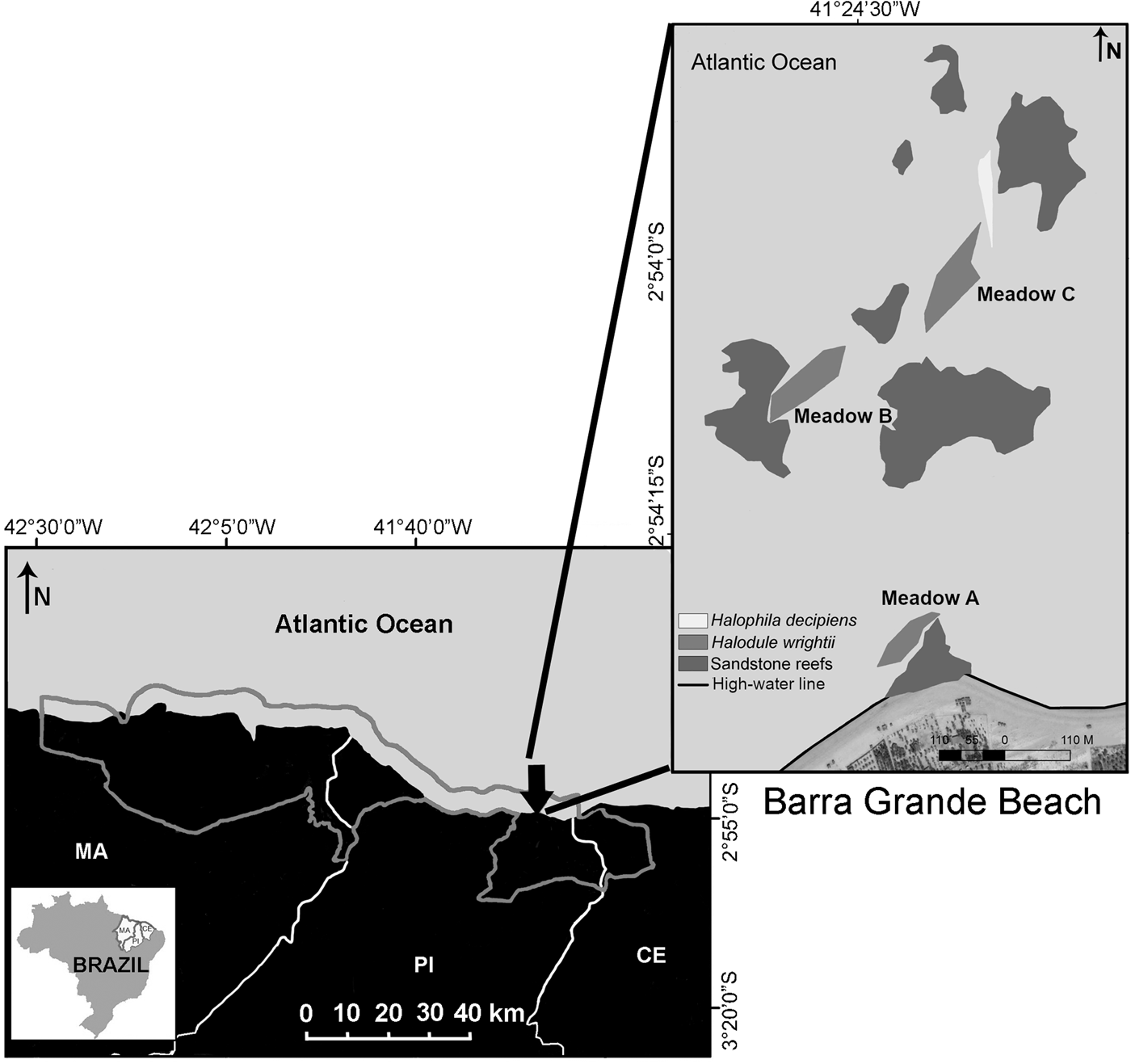
Barra Grande Beach, in Piauí State, Brazil (02°54′07.5″S 41°24′ 34.4″W), is located ~8 km from the mouth of the Ubatuba-Timonha estuarine system, one of the main continental contributors of sediment to the eastern coast of the state (Paula, Reference Paula2013). In addition to sandstone reefs in the intertidal zone, which form a small embayment, this beach also has sandy banks where extensive meadows of seagrass and algae develop, forming a mosaic of environments that intercalate in the intertidal zone (Figure 1). According to the Köppen climate classification, the climate here is tropical with summer–autumn rains (‘Aw’ type).
Map of the study area (Piauí State – PI, north-eastern Brazil), highlighting the APA Delta do Parnaíba (delimited by grey line) and intertidal zone of Barra Grande Beach, with Halodule wrightii meadows (A, B and C). Source: Geographic coordinates system Datum: SIRGAS 2000. Cartographic Base: IBGE. Images: OLS-TRS LandSat8 Satellite (modified).

In this area, Halodule wrightii form long, dense beds along the beach that are separated by sandstone reefs or sandy banks. A small bed of Halophila decipiens, covering an area of 2045 m2, was found in a site that is always submerged. These vegetated environments possibly extend into deeper waters, but this is unconfirmed.
The meadows of H. wrightii at Barra Grande Beach are quite distinct from their surroundings, which are composed of sandbanks or sandstone reefs. Thus, the seagrass meadows could be defined with the support of GPS. They were named as follows: meadow A has an area of 3219 m2 and is located in the upper mid-littoral zone (02°54′20.2″S 41°24′26.2″W); meadow B (area = 6314 m2) is located 400 m from the maximum high tide line (02°54′05.0″S 41°24′31.6″W); and meadow C (area = 6489 m2) is located in the lower part of the intertidal zone, 600 m from the maximum high tide line (2°54′0.90″S 41°24′25.40″W) (Figure 1).
Collection and processing of samples
Samples were collected on a bimonthly basis from December 2013 to October 2014, covering both the rainy season (February 2014, April 2014 and June 2014) and the dry seasons (December 2013, August 2014 and October 2014). Despite there being little precipitation in June 2014, this month was still considered part of the rainy season because it was close to the timing of the highest rainfall of the year, which occurred in May 2014. Specimens were collected under the permission of an official licence (Instituto Brasileiro do Meio Ambiente e dos Recursos Naturais Renováveis, IBAMA/Sistema de Autorização e Informação em Biodiversidade, SISBIO permit no. 45240-1).
Substrate samples from the H. wrightii meadows were taken to inventory their malacofauna. Following the methodology proposed by Burdick & Kendrick (Reference Burdick, Kendrick, Short and Coles2001) and Duarte & Kirkman (Reference Duarte, Kirkman, Short and Coles2001), a random point was chosen inside each meadow, and four points following the cardinal directions (north, east, south and west) were sampled within a 10-m radius from the central point for analysis. If a collection point was not colonized by H. wrightii, the nearest point in which the grass was present was sampled instead. This sampling was performed twice within each meadow, totalling 10 samples per meadow. Samples were collected with a corer (cylindrical polyvinyl chloride (PVC) sampler) that was 10 cm in diameter and buried up to 10 cm deep, stored in labelled plastic bags with 70% ethanol, and transported to the Laboratório de Invertebrados Marinhos do Ceará (LIMCE) of the Universidade Federal do Ceará (UFC).
In the laboratory, each sample was pre-sorted using a sieve with a 0.5 mm mesh, stored in labelled plastic bags, and preserved in 70% ethanol with Rose Bengal colourant to highlight the biological materials. In each sample, the fauna and plant materials were separated under a stereoscopic microscope and then preserved in 70% ethanol. Molluscs were identified to the most specific taxonomic level possible using appropriate references, and incorporated into the ‘Prof. Henry Ramos Matthews – Series B’ Malacological Collection of the Universidade Federal do Ceará (CMPHRM-B, UFC).
The plants in each sample were separated into aerial parts (shoots) and underground parts (roots and rhizomes). Each of these parts was dried for three days at 60°C until its dry weight stabilized, after which the above-ground and below-ground biomasses were obtained in grams dry weight per square metre (g DW m−2). The number of shoots was counted in each sample to obtain the density of shoots per m2.
In each meadow, three samples were collected for granulometric and organic sediment analysis. This sampling was carried out using a corer that was 4 cm in diameter and buried up to 10 cm deep. The samples were stored in labelled plastic bags, frozen and transported to the Laboratório de Oceanografia Geológica in the Instituto de Ciências do Mar (LABOMAR, UFC). The sediment samples were analysed by using the sieving method to quantify the granulometric classes they contained according to Suguio (Reference Suguio1973). For the analysis of organic matter, 2 g of dry sediment of each sample were weighed in their own compartments and burned in a muffle furnace at 800°C for 8 h. The percentage of organic matter in the sample was the result of the difference between the initial and final weights.
Data analyses
The granulometric portions of the sediment and the percentage of organic material obtained from each sample were entered into ANASED version 5.0 software (Lima et al., Reference Lima2001). The criteria selected to characterize the sediment in each time period and seagrass meadow were grain diameter, degree of selection on the phi scale (ɸ), and the percentages of sand, gravel, mud and organic matter.
The species of the malacofauna were classified according to their presence during the months sampled as follows: constant (present in five or six of the analysed months), common (present in three or four of the analysed months) and rare (present in only one or two of the analysed months). Information on the dietary habits of each species and their relationship with the substrate (i.e. epifauna or infauna) was obtained from Rosenberg et al. (Reference Rosenberg, Moretzsohn, García, Felder and Camp2009). The density of epifauna was calculated using the area of the corer (0.00785 m2), while for the infauna, we used the corer volume (0.000785 m3). Since the species were classified according to their feeding habits, we also identified different trophic guilds among the species sampled.
We inferred that the different faunal assemblages (epifauna and infauna) likely experience different environmental pressures, and therefore that it is essential to identify the variables that create these different pressures for each group. Therefore, we also performed all analyses separately for each assemblage.
Differences among meadows and changes between seasons in plant features, including above-ground biomass (g DW m−2), below-ground biomass (g DW m−2), and shoot density (no. m−2), as well as in sediment composition in terms of the percentages of gravel, sand, mud and organic matter, were analysed via two-way permutational multivariate analyses of variance (PERMANOVA). These tests were conducted with the respective dissimilarity matrices constructed for each plant and sediment composition feature, based on the Euclidean distances among standardized forms of these variables (to deal with zero means and achieve homogeneity of variances). In the case of plant features, because samples were conducted in two different areas within each meadow, the model design accounted for the fact that sample data were spatially nested within the same meadow.
Differences and changes in mollusc species composition, richness and abundance (analysed separately for gastropods and bivalves) were also tested via PERMANOVA. In these cases, the dissimilarity matrices were constructed using the Bray–Curtis distances calculated among square-root transformations of the original data (to diminish the weight of common species) for composition, and using Euclidean distances for richness and abundance. Again, the fact that duplicate samples were nested within the same meadows and months was accounted for in these models. However, at this point these models also included the plant features measured (above-ground biomass, below-ground biomass, and shoot density) to assess which aspect of the seagrass bed might have been affecting the composition of the molluscs present. A classic (i.e. metric) multidimensional scaling (MDS) was performed that provided a visualization of the PERMANOVA results. To highlight any significant differences eventually detected by the PERMANOVA, we have signalled the centroid and included a convex hull around the datapoints of each meadow in the MDS scatterplots. Additionally, a SIMPER analysis was used to highlight which species of each taxon contributed the most to the differences among meadows and between seasons (as measured by the Bray–Curtis dissimilarity index). All tests were carried out in R 3.4.3 (R Core Team, 2016), using the package VEGAN 2.4-6 (Oksanen et al., Reference Oksanen, Guillaume Blanchet, Friendly, Kindt, Legendre, Dan McGlinn, Minchin, O'Hara, Simpson, Henry, Stevens, Szoecs and Wagner2018) and using a significance level of 0.05.
Results
Seagrass-associated molluscs
Sampling efforts conducted in 2013 and 2014 found 53 molluscan species, distributed among three higher molluscan taxa (Bivalvia, Gastropoda and Polyplacophora) (Appendix 1). The most well-represented taxon was Gastropoda, with a total of 1476 individuals found that were distributed among 15 families, 21 genera and 25 species, and represented 88.4% of the molluscs associated with the meadows of H. wrightii at Barra Grande Beach, Brazil. The most species-rich gastropod family in the meadows sampled was Pyramidellidae, with six species, while the most abundant was Neritidae with 545 individuals. In addition, the larger gastropod species such as Aurantilaria aurantiaca (Lamarck, 1816) and Turbinella laevigata (Anton, 1839) were also observed in the meadows, but not sampled with the corer. Gastropod egg masses were also observed on the leaves of plants during the study period.
Bivalvia represented 11.5% of the molluscs associated with H. wrightii, with 200 specimens found that were comprised of members of 13 families, 19 genera and 27 species. The most species-rich and most abundant bivalve family in the seagrass meadows was Tellinidae, of which six species and 33 individuals were found. Lucinidae was the second most species-rich bivalve family, with four species present.
Polyplacophora was represented by only three individuals of Ischnochiton striolatus (Gray, 1828), which comprised 0.17% of the molluscs found. Some bivalve and gastropod individuals could not be identified to the species level due to them being newly metamorphosed. Several specimens of both epifauna and infauna were found at much smaller sizes than those described in the literature for adults.
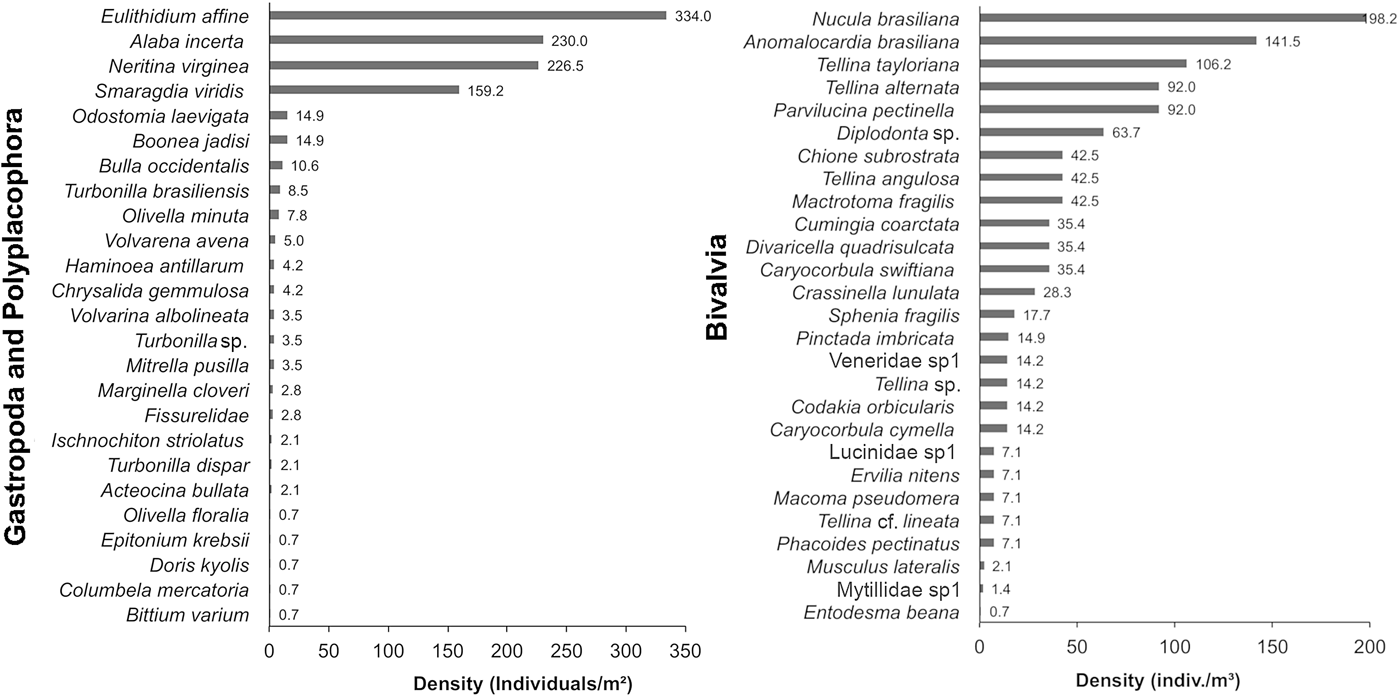
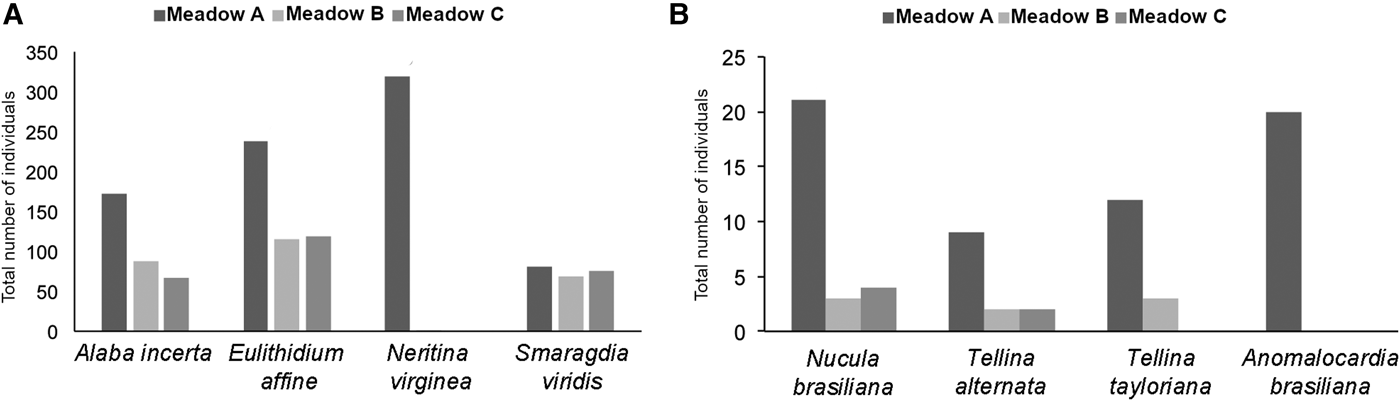
The total densities of molluscan community are presented in Figure 2. The gastropod community showed high dominance of four species: Eulithidium affine (Linnaeus, 1758), Alaba incerta (d'Orbigny, 1841), Neritina virginea (Linnaeus, 1758) and Smaragdia viridis (Linnaeus, 1758). These species represented 90.7% of the abundance of all gastropods sampled in this study. The other species showed much lower densities, ranging from 1 to 14 individuals m−2. For Bivalvia, the distribution of densities was more homogeneous among the species. The species with the highest density were: Nucula brasiliana (Esteves, 1984), Anomalocardia brasiliana (Gmelin, 1791), Tellina tayloriana (Sowerby II, 1867), Tellina cf. alternata (Say, 1822), and Parvilucina pectinella (Adams, 1852), representing 44.5% of the abundance of all bivalve species found in this study. Most bivalve species belonged to the infauna; however, some could be classified as epifauna, since they were found attached directly to the plant shoots through their byssus.
Total density of Gastropoda and Polyplacophora (individuals m−2) and Bivalvia (individuals m−3) associated with Halodule wrightii (Ascherson) meadows in Barra Grande Beach, Piauí State, north-eastern Brazil.

Seasonal and spatial variation
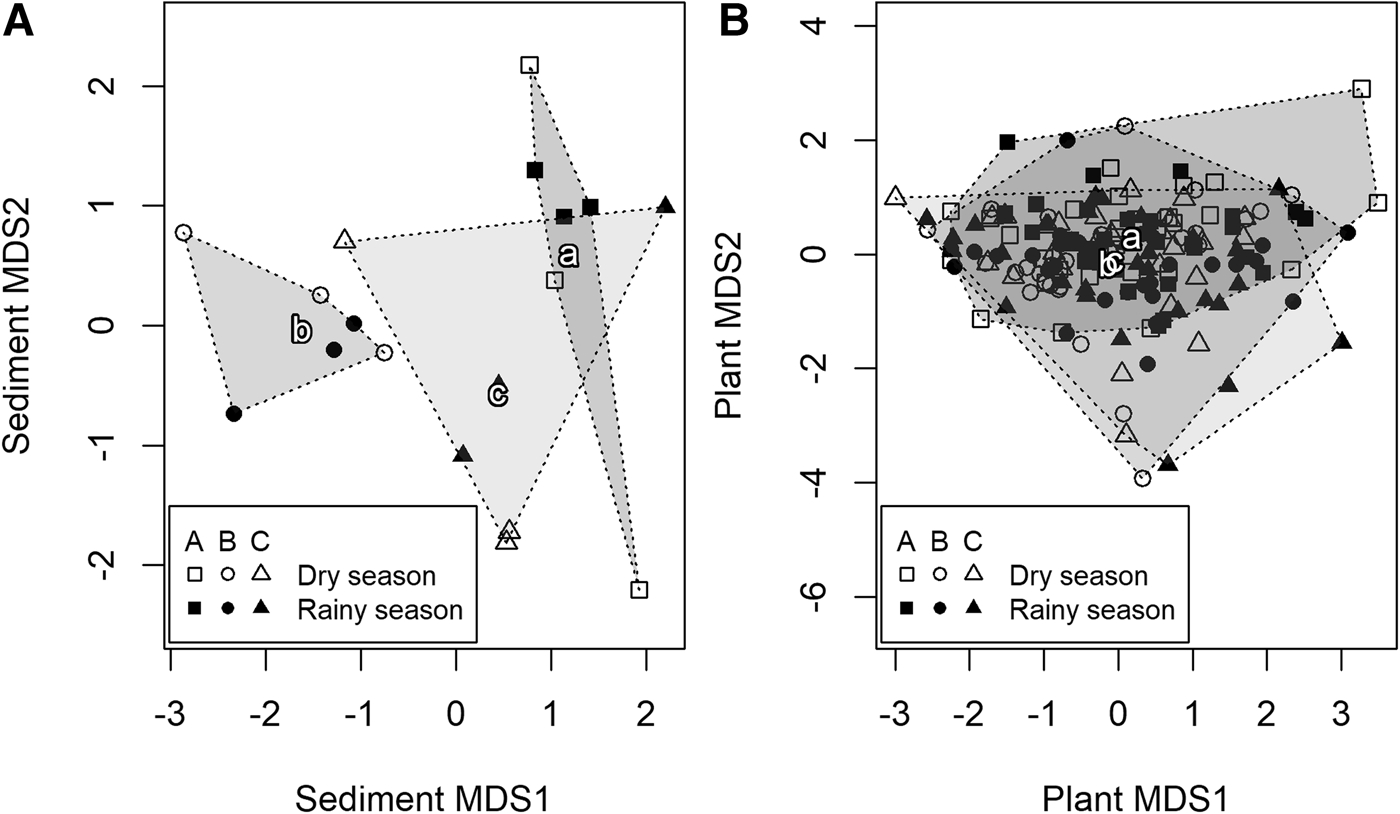
Sediment composition was significantly different among the three meadows analysed (PERMANOVA F 2,12 = 6.1, P = 0.001), with meadow B exhibiting a larger proportion of sand and a smaller proportion of mud than the other two meadows, and with meadows A and C having finer sediment and more organic matter than meadow B (Figure 3A). The sediment features of meadows did not change between the rainy and dry seasons. Plant features also differed among meadows (F 2,144 = 2.7, P = 0.018), with there being a larger below-ground biomass and lower shoot density in patch A than in the other meadows (Figure 3B). Additionally, plant features seemed to change among months (F 4,144 = 2.1, P = 0.025), but without a clear seasonal pattern. The variations in sediment and plant features recorded among meadows are listed in Tables 1S and 2S of Appendix 2.
Multidimensional scaling (MDS) of sediment characteristics (A) and seagrass population parameters (B) in three seagrass meadows (respective data points are delimited by convex hulls and each group centroid is signalled by letters ‘a’, ‘b’ and ‘c’) in Barra Grande Beach, Piauí State, north-eastern Brazil. Notice (in panel A) the significant difference of meadow B in terms of sediment composition.

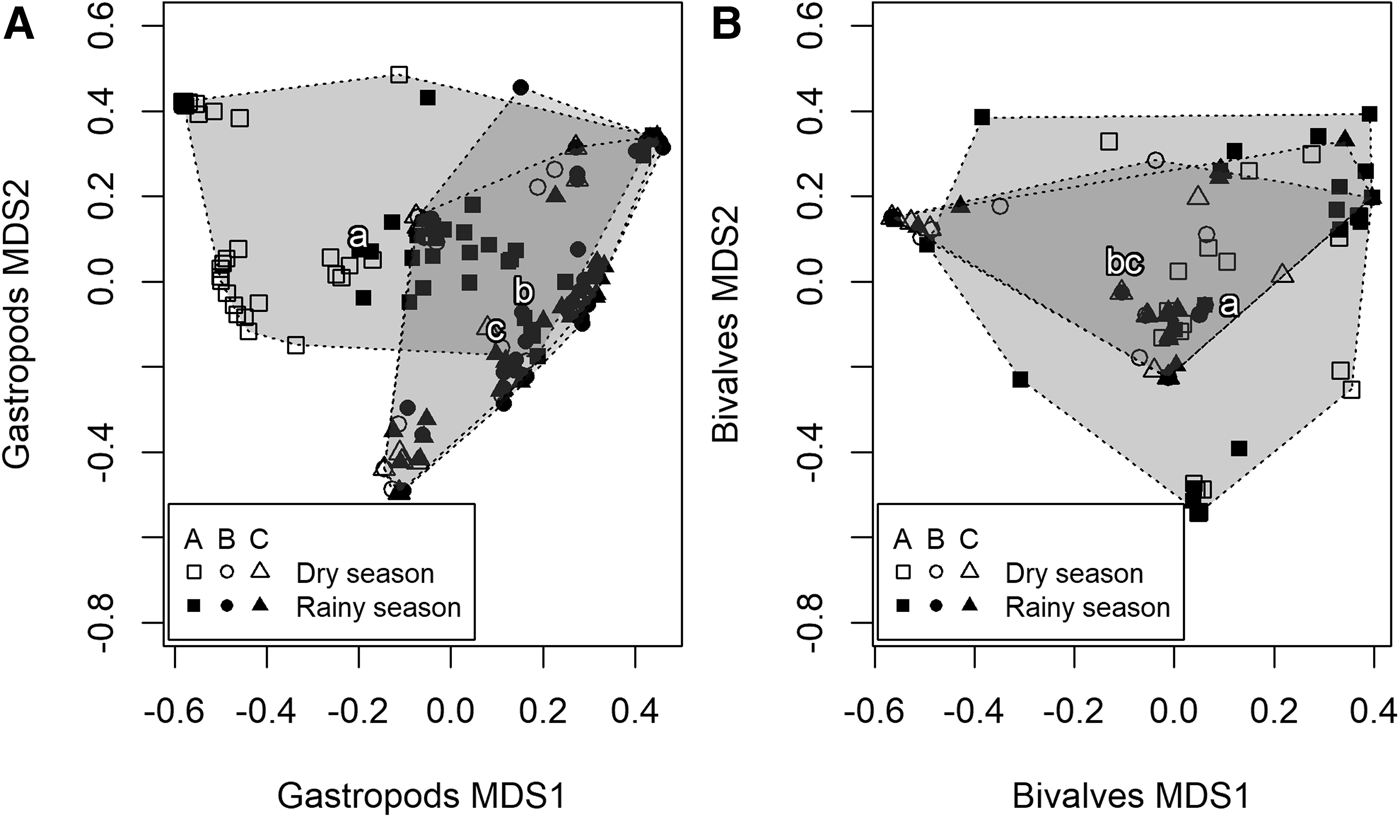
Regarding species composition, gastropod assemblages differed among meadows (F 2,113 = 22.8, P = 0.001), with the community in meadow A being distinct from that in the other two meadows (Figure 4A). Gastropod composition also changed between seasons (F 1,113 = 27.5, P = 0.001), although there was a significant interaction between differences among time periods and meadows (F 2,113 = 4.1, P = 0.001).
Multidimensional scaling (MDS) of gastropod (A) and bivalve (B) composition in three seagrass meadows (respective data points are delimited by convex hulls and each group centroid is signalled by letters ‘a’, ‘b’ and ‘c’) in Barra Grande Beach, Piauí State, north-eastern Brazil. Notice (in panel A) the significant difference of meadow A in terms of species composition.

The SIMPER analyses showed that the variations in the relative abundance of the four most common species (i.e. Neritina virginea, Eulithidium affine, Alaba incerta and Smaragdia viridis) were mainly responsible for these spatiotemporal differences in gastropod composition. In particular, N. virginea and E. affine achieved much higher numbers in meadow A than elsewhere, being mainly responsible for differentiating meadow A from the others (cumulative contribution of 50%) and the seasons (N. virginea for dry season and E. affine for rainy season) (Table 3S in Appendix 2).
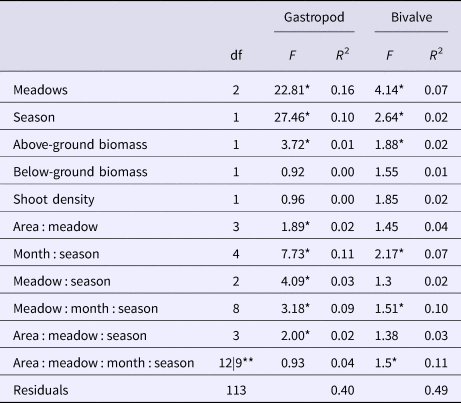
In the case of bivalves, the PERMANOVA test also showed that there were significant differences in species composition among meadows (F 2,60 = 4.1, P = 0.001) and seasons (F 1,60 = 2.6, P = 0.005). Once again, meadow A seemed to sustain a distinct assemblage of species from the other meadows (Figure 4B). However, the differences were less intense for bivalves than for gastropods, without a consistent pattern of differences in the relative abundances of particular species among meadows (Table 4S in Appendix 2). On the other hand, seasonal fluctuations seemed to be more uniform for bivalves (i.e. the interaction between season and meadows was not significant for them, F 2,60 = 1.3, R 2 = 0.02, P = 0.17). It is noteworthy that, besides meadow and season, there was a significant effect of plant above-ground biomass on the species composition of both gastropods and bivalves (Table 1).
Results of the Permutational Multivariate Analysis of Variance Using Distance Matrices (PERMANOVA) relating molluscan species composition to seagrass bed characteristics in Barra Grande Beach, Piauí State, north-eastern Brazil

The symbol : represents interaction between factors.
* Significant at P < 0.05; ** Degrees of freedom for gastropod and bivalve, respectively.
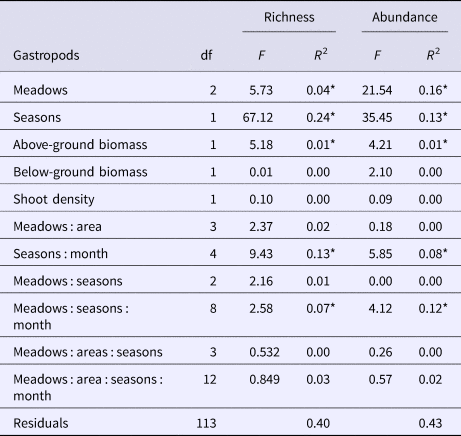
For gastropods, the greatest abundances occurred in meadow A and the highest species richness occurred in meadow C, and both of these peaks were observed during the rainy season. Gastropod richness and abundance differed among meadows and seasons (Table 1). Season explained a greater percentage of the variation in gastropod richness than other factors (R 2 = 0.24), and we also observed that above-ground biomass influenced the richness and abundance of Gastropoda (Table 2).
Results of the Permutational Multivariate Analysis of Variance Using Distance Matrices (PERMANOVA) relating richness and abundance of gastropod species to seagrass bed characteristics in Barra Grande Beach, Piauí State, north-eastern Brazil
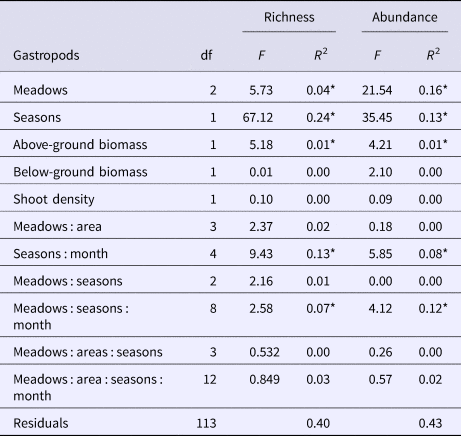
The symbol : represents interaction between factors.
* Significant at P < 0.05.
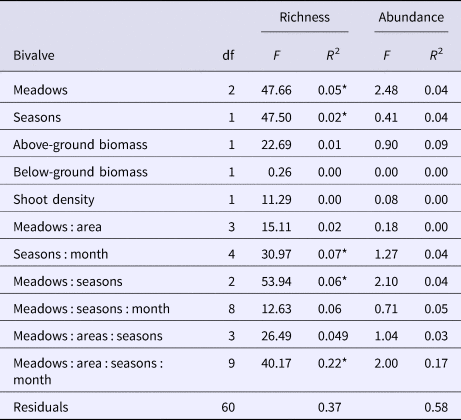
Only the richness of Bivalvia varied interactively among different combinations of meadows and seasons (Table 3), in that it was greatest in meadow A during the dry season, while meadow B had the lowest richness values in both seasons. However, this variation also appeared to depend on the month in the season at which species were sampled. The abundance of bivalves did not show any significant differences among meadows or seasons, or any influence of the species and sediment factors analysed. We also did not observe any direct influence of meadow characteristics on the richness or abundance of this taxon.
Results of the Permutational Multivariate Analysis of Variance Using Distance Matrices (PERMANOVA) relating richness and abundance of bivalve species to seagrass bed characteristics in Barra Grande Beach, Piauí State, north-eastern Brazil
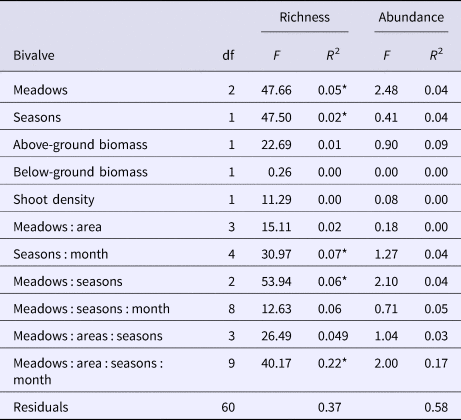
The symbol : represents interaction between factors.
*Significant at P < 0.05.
Variation in species ecology
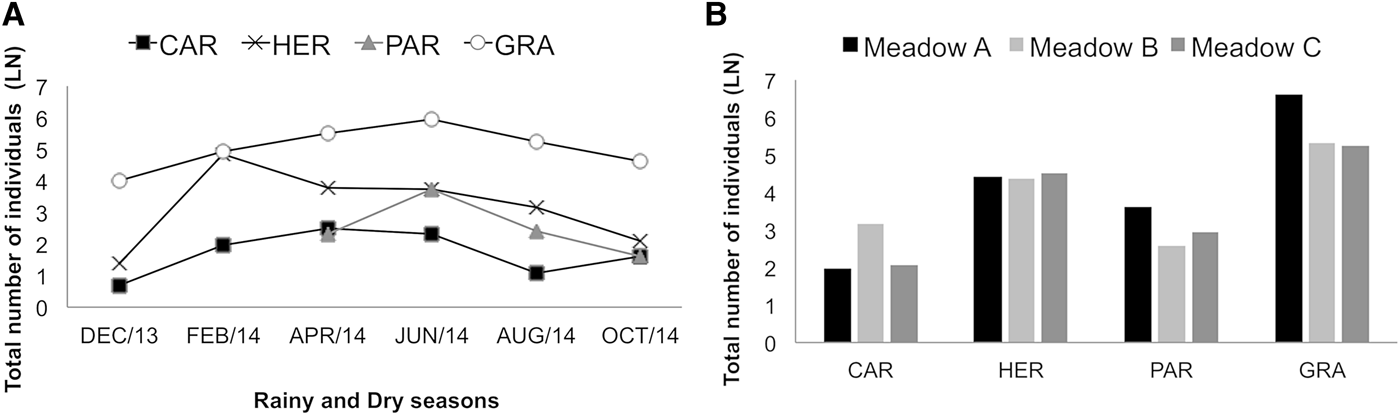
Regarding the feeding habits of the sampled molluscs, their trophic guilds showed great temporal variation (Figure 5A). Each meadow showed a greater abundance of a specific type of guild that differed from the most abundant guild of the other meadows (Figure 5B). In meadow A, there was a greater abundance of grazers (729 individuals) and parasites (36 individuals). Meadow B showed a greater abundance (24 individuals) and richness (8 species) of carnivores. On the other hand, meadow C had a greater abundance of herbivores (91 individuals).
Annual (A) and space (B) variations of the total number of individuals per trophic guild associated with Halodule wrightii meadowns (A, B and C) in the intertidal zone of Barra Grande Beach, Piauí State, north-eastern Brazil. The total number of individuals was standardized with LN (natural logarithm). The rainy season is February/14, April/14 and June/14, the dry season is December/13, August/14 and October/14. The trophic guilds are CAR, carnivore; HER, herbivore; GRA, grazer; and PAR, parasite.

The distribution of the most abundant species of gastropods was also unique for each meadow. The grazers N. virginea, E. affine and A. incerta were more abundant in meadow A, with N. virginea occurring exclusively in this zone. The herbivorous S. viridis exhibited the most homogeneous distribution among the meadows (Figure 6A). The most abundant bivalve species also presented distinct distributions among the analysed meadows. Nucula brasiliana, T. alternata and T. tayloriana were more abundant in meadow A than in other meadows (Figure 6B), and the bivalve Anomalocardia brasiliana was sampled only in meadow A.
Total number of individuals of the most representative species of Gastropoda (A) and Bivalvia (B) in three Halodule wrightii meadows in the mesolittoral of Barra Grande Beach, Piauí State, north-eastern Brazil.

Discussion
Molluscs associated with seagrass meadows
The species richness and density of molluscs found in the H. wrightii meadow at Barra Grande Beach, Piauí, Brazil, were found to be higher than those of other H. wrightii meadows in Brazil (Alves & Araújo, Reference Alves and Araújo1999; Creed & Kinupp, Reference Creed and Kinupp2011; Barros & Rocha-Barreira, Reference Barros and Rocha-Barreira2013). The high mollusc densities found in the present study were most likely related to the high plant biomass values of the seagrass meadows at the studied site, since Barra Grande meadow is one of the densest seagrass meadows on the Brazilian coast (Copertino et al., Reference Copertino, Creed, Lanari, Magalhães, Barros, Lana, Sordo and Horta2016). Previous studies showed that increased plant biomass is generally associated with greater diversity in the meadow (Irlandi, Reference Irlandi1994; Reusch, Reference Reusch1998; Heck et a l., Reference Heck, Hays and Orth2003; Casares & Creed, Reference Casares and Creed2008), which agrees with our results.
The proximity of Barra Grande Beach to estuarine areas also influenced its community composition, since typical estuarine species like Crassinella lunulata, Mactra fragilis, Tellina lineata, Anomalocardia brasiliana, Sphenia fragilis and Neritina virginea (Rosenberg et al., Reference Rosenberg, Moretzsohn, García, Felder and Camp2009) were found in the H. wrightii beds sampled.
Pyramidellidae is the gastropod family for which the most species were identified in this study. This family is composed almost entirely of species that are parasites of invertebrate hosts, such as other molluscs, polychaetes and echinoderms (Rios, Reference Rios1994). Ecological characteristics, such duration of the larval phase, dispersion of larvae and adults, and life cycle are still very scarce (Pimenta et al., Reference Pimenta, Absalão and Myiaji2009). The genera Boonea and Odostomia (which contained the most abundant species) are parasites of oysters and mussels (Cole & Hancock, Reference Cole and Hancock1955; Ward & Langdon, Reference Ward and Langdon1986; White et al., Reference White, Ray, Wilson and Zastrow1988). However, it is important to emphasize that, in our study, the pyramidellid snails we found were associated with the sediment, although its typical hosts are present in this area. In other studies conducted in Brazil, parasitic mollusc species were not reported in association with seagrass (Alves & Araújo, Reference Alves and Araújo1999; Creed & Kinupp, Reference Creed and Kinupp2011; Barros et al., Reference Barros, Rocha-Barreira and Magalhães2013).
Among bivalves, the families Lucinidae and Tellinidae were the most abundant in this study. The frequent presence of Lucinidae with marine angiosperms has been previously reported (Johnson et al., Reference Johnson, Fernandez and Pergent2002; Barbier et al., Reference Barbier, Meziane, Forêt, Tremblay, Robert and Olivier2017). The greater abundance of lucinids in meadow C can be directly related to the feeding habits of this family. Although species of Lucinidae can feed on particles, most of their nutrition is derived from symbioses with sulphide-oxidizing bacteria (Taylor & Glover, Reference Taylor and Glover2000) obtained from anoxic sediments (Gros et al., Reference Gros, Liberge and Felbeck2003), and these are generally found within very dense aggregations of marine angiosperms. The characteristics of the sediment observed in meadow C, which was the finest and richest in organic matter of all meadows’ sediments and was very poorly selected (i.e. had low hydrodynamic activity), should have favoured greater activity of sulphate-reducing bacteria and the production of high levels of hydrogen sulphide (Johnson et al., Reference Johnson, Fernandez and Pergent2002), which would thus likely have favoured the presence of lucinids. Members of Tellinidae were probably more abundant in meadow A because of the proximity of this meadow to an extensive coarse sand bank, which is a typical habitat of the species in this family (Rueda et al., Reference Rueda, Gofas, Urra and Salas2009a).
Variation in molluscan communities among meadows and seasons
Seasonal variation was the main factor that explained variations in the richness and species composition of epifauna among meadows. This was probably because the majority of these data were composed of four gastropod species that were much more abundant than all other species, and whose abundances underwent marked seasonal and spatial variations. However, for infauna, aside from the spatial and temporal variations observed the factors analysed here explained relatively little of the variation in their data, which is a result also found in other studies of this faunal assemblage (Bologna & Heck, Reference Bologna and Heck2000; Bowden et al., Reference Bowden, Rowden and Attrill2001; Barbier et al., Reference Barbier, Meziane, Forêt, Tremblay, Robert and Olivier2017). Furthermore, all parameters (e.g. presence or absence and abundance of bivalves) analysed showed that seasonal changes in these assemblages were meadow-dependent, with the intra-annual differences being, again, larger in meadow A.
The present study's results suggested that variations in the community composition and relative abundance of molluscs in seagrass meadows are influenced by a combination of factors, such as seasonality (variations in temperature and precipitation) and unique characteristics in each meadow, particularly the above-ground biomass of plants. Moreover, the location of a meadow in the intertidal zone (i.e. the level of exposure to tides) and size of the meadow should also be considered. The intertidal location is well-known as a key factor for explaining the spatial patterns in assemblages of macroinvertebrates in seagrass habitats, which is more important generally than meadow size (Bowden et al., Reference Bowden, Rowden and Attrill2001; Boström et al., Reference Boström, Jackson and Simenstad2006; Mills & Berkenbusch, Reference Mills and Berkenbusch2009). In this study, we found that faunal composition was influenced by location, since the species we recorded in meadow A, which is located higher in the intertidal zone and experiences more unstable conditions, included those that are most well-adapted to these conditions in addition to other species. As a result, in meadow A the most species-rich malacofauna was found, even though this was the smallest meadow.
The SIMPER analyses revealed that the variation of gastropods among meadows was driven by the four most abundant species in the study area, with meadow A having the highest abundances of E. affine and N. brasiliana, as well as being the only meadow with records of N. virginea and A. brasiliana, which are species adapted to the unstable conditions of the upper zones of the littoral. These features made meadow A quite different from the others. At a larger scale, this may indicate that the location of the meadows in the intertidal is a more important primary factor determining the composition and richness of macroinvertebrates than are meadow sizes or features of the seagrass.
At a small scale, our results show that the particular characteristics of each seagrass meadow can also affect the richness of its fauna. Meadow A, which had the lowest average shoot density, had the greatest richness of bivalve species. These results corroborate those of other studies of bivalves in seagrass meadows that showed there is greater growth by members of this taxon in beds with low shoot density, and in places with high wave energy regimes (Irlandi, Reference Irlandi1996; Boström & Bonsdorff, Reference Boström and Bonsdorff1997). Lower average shoot density leads to more flow of ocean currents within the meadow, providing better access to settling infaunal bivalves and providing them with better access to food particles suspended in the water (Irlandi, Reference Irlandi1996; Boström & Bonsdorff, Reference Boström and Bonsdorff1997). Meadow A also has a smaller area and high amount of epiphytes (corroborated by the greater number of grazer gastropods), characteristics pointed out as predictors for greater richness of bivalves in meadows (Bologna & Heck, Reference Bologna and Heck2000; Newell et al., Reference Newell, Short, Hoven, Healey, Panchang and Cheng2010). Finally, recruitment by passive rafting and resuspension (wind-mediated disturbance) may also have contributed to greater bivalve richness in meadow A, which receives the highest wave energy, closer to the supralittoral (Boström & Bonsdorff, Reference Boström and Bonsdorff2000).
Moreover, despite their proximity, the faunas of meadows located in the inferior meso-littoral zone had completely opposing characteristics. Meadows B and C had lower bivalve species richness, with meadow B having fewer species than meadow C. Meadow B had lower above-ground biomass, although higher shoot density, resulting in less current-baffling and sediment-binding, confirmed by more sand (%) in its sediment, when compared with those meadows. Lower above-ground biomass of H. wrightii in a meadow would decrease its retention of the fine particles that would be used by the filter-feeding fauna, which may have led to the lower bivalve richness observed in meadow B. Lower values of above-ground biomass have also been found to be related to higher mortality of bivalves due to predation (Irlandi, Reference Irlandi1994) and lower settlement rates by larvae (Bologna & Heck, Reference Bologna and Heck2000). Meadow C, on the other hand, presented the lowest values of below-ground biomass, which may also have had a negative influence on the bivalve assemblage there by providing them with a less stable substrate. However, its higher above-ground biomass may have allowed it to maintain a greater bivalve richness when compared with meadow B by particle-trapping.
Therefore, the location of the meadows on the intertidal zone and their sizes, together with meadow characteristics (i.e. epiphytes and shoot density), seemed to influence the composition and richness of associated fauna. For seasonal variations, recruitment periods appeared to be the main cause of temporal changes in the structure of the associated fauna, and these recruitment processes appear to be influenced mainly by the location in the intertidal zone and the unique characteristics of each meadow.
Trophic guild variations among patches and seasons
The characteristics of each meadow also influenced the trophic guild composition of its Gastropoda. Meadow A had a greater abundance of grazers and parasites, patch B had relatively more carnivores and meadow C had more herbivores.
Grazers were much more abundant in terms of the number of individuals present than were the other trophic guilds in the present study. Even if the presence of N. virginea in meadow A (a species exclusive to this patch) is not considered, this meadow had a greater abundance of grazers than other meadows. The density of epiphytes in meadow A was possibly higher than that in other meadows, which could explain this fact, although more studies are needed to confirm this. Grazers tend to be more common than herbivores in marine meadows due to the greater difficulty of digestion and energetic response associated with consuming plant (i.e. seagrass) vs algal tissue (Bologna & Heck, Reference Bologna and Heck1999; Arroyo et al., Reference Arroyo, Salas, Rueda and Gofas2006; Valentine & Duffy, Reference Valentine, Duffy, Larkum, Orth and Duarte2006; Holzer et al., Reference Holzer, Rueda and McGlathery2011a, Reference Holzer, Rueda and McGlathery2011b).
The grazers E. affine, A. incerta and N. virginea, and the herbivorous S. viridis, were the gastropod species found at the four highest densities in the meadow of Barra Grande in this study. These two trophic guilds (grazers and herbivores) are closely linked to the dynamics within the H. wrightii meadow at Barra Grande because they are an important means of mobilizing carbon from the plants and the periphyton for transfer to higher trophic guilds (Valentine & Duffy, Reference Valentine, Duffy, Larkum, Orth and Duarte2006). Grazers associated with marine angiosperms have been shown to exert direct control over epiphytic biomass (Valentine & Duffy, Reference Valentine, Duffy, Larkum, Orth and Duarte2006), which could otherwise compromise the growth, distribution and productivity of marine angiosperms (Howard & Short, Reference Howard and Short1986). On the other hand, Holzer et al. (Reference Holzer, Rueda and McGlathery2011a) showed that a population of the small herbivorous species S. viridis is able to exert negative top-down control on seagrass populations because this gastropod has a preference for feeding on certain species of marine angiosperms, including H. wrightii (Rueda et al., Reference Rueda, Salas, Urra and Marina2009b; Holzer et al., Reference Holzer, Rueda and McGlathery2011b).
The carnivorous species exclusively found in meadow B (C. fuscescens, E. krebsii, O. floralia and O. minuta) are inhabitants of sandy sediments (Oliveira & Rocha-Barreira, Reference Oliveira and Rocha-Barreira2009; Petracco et al., Reference Petracco, Camargo, Tardelli and Turra2014), similar to the sediment of meadow B. Despite their lower abundance, these carnivorous gastropods were better represented in the total number of species when compared with the other trophic guilds. The most abundant carnivore was Olivella minuta, which feeds on materials of animal origin, such as fragments of crustaceans and foraminifera (Arruda et al., Reference Arruda, Domanesch and Amaral2003). Meadow C had a higher above-ground biomass of H. wrightii, which supported greater abundances of herbivores at this site. Both carnivorous and parasitic molluscs were present at higher densities during the rainy season, probably because they were attracted by the greater number of prey and hosts available during this period. The greatest abundance of parasites occurred in June 2014, especially in meadow A, along with the greatest abundance of bivalves, which are among their possible hosts.
In this way, in the Parnaíba Delta region, which is already considered an important area for biological diversity, these seagrass ecosystem must be considered, together with estuaries, coastal lagoons, algae banks and sandstones reefs, as important sites for the reproduction, feeding and development of various taxa. These seagrass ecosystems must therefore be preserved not only for their importance as food for manatees and for their role in carbon assimilation, but also because they contain a rich and diverse associated fauna that forms a very complex ecosystem among the seagrass plants themselves. In the state of Piauí especially, this complexity seems to be associated with the size, biomass and richness of the seagrass meadows, as these are the largest in Brazil. Given this, future conservation actions should take these factors and ecosystem characteristics into account.
Conclusions
In the present study, the molluscs found in H. wrightii meadows at Barra Grande, north-eastern Brazil, were found to be very diverse in terms of their specific composition, abundances, trophic guilds and ecosystem services. On a temporal scale, the biomass and shoot density of meadow did not exhibit obvious variations between seasons, and the variations in epifauna (gastropods and chitons) were better explained by seasonal variations during their recruitment period. The changes across space were more stable, and molluscs were affected by particular features of the seagrass meadows, which were also mediated by the seasons (such as meadow's location in the intertidal zone, above-ground biomass and shoot density). The present study shows that molluscs can serve as model organisms for understanding some of the variations in the invertebrate communities of inter-tidal seagrass meadows, as well as how these environments are important to all other levels of the ecosystem.
Supplementary material
The supplementary material for this article can be found at https://doi.org/10.1017/S0025315419000183.
Author ORCIDs
Lorraine Lopes Cavalcante, 0000-0001-7893-0804; Cristiane Xerez Barroso, 0000-0001-9933-9394; Pedro Bastos De Macêdo Carneiro, 0000-0002-4577-3803.
Acknowledgements
We thank our research friends Soraya G. Rabay and Valesca P. Rocha in Marine Invertebrates Laboratory (Universidade Federal do Ceará, Brazil), Francimeire Costa and Kcrishna Vilanova in Zoobenthos Laboratory (Universidade Federal do Ceará, Brazil) and Dra. Karine Magalhães and her team in the Universidade Federal Rural de Pernambuco for special help in the development of this work. Thank to the Geological Oceanography Laboratory of the Instituto de Ciências do Mar (Universidade Federal do Ceará, Brazil). L.L. Cavalcante also thanks the Tropical Marine Sciences Graduate Program.
Financial support
Coordenação de Aperfeiçoamento de Pessoal de Nível Superior (CAPES) provided a master's degree fellowship to L.L. Cavalcante and sponsored the study.