




No CrossRef data available.
Article contents
- Abstract
- Introduction
- 2. Previous Analyses: Unresolved Issues and Problems.
- 3. Theoretical Notions.
- 4. Relating the Senses ofes : A Partial Look at thees Category.
- 5. The DAT Category and the Notion of Bilateral Involvement.
- 6.3 SGVerb Agreement is Meaningful in Impersonal Constructions.
- 7. Conclusion.
- References
The Conceptual Structure of German Impersonal Constructions
Published online by Cambridge University Press: 09 June 2005
Article contents
- Abstract
- Introduction
- 2. Previous Analyses: Unresolved Issues and Problems.
- 3. Theoretical Notions.
- 4. Relating the Senses ofes : A Partial Look at thees Category.
- 5. The DAT Category and the Notion of Bilateral Involvement.
- 6.3 SGVerb Agreement is Meaningful in Impersonal Constructions.
- 7. Conclusion.
- References
Abstract
German impersonal constructions manifest an array of morphosyntactic properties, such as so-called expletive dummy subjects, 3rd person singular verb agreement, and, in some cases, experiencer nominals bearing “quirky” case (usually dative), that have traditionally been regarded as purely accidental, idiosyncratic, or semantically vacuous. This article argues that these properties typically associated with impersonal constructions in German can be semantically motivated and explained within the theoretical framework of Cognitive Grammar (see Langacker 1987a, 1991a, 1991b). Within this framework, it is assumed that morphosyntactic markers are meaningful and polysemous: they are complex conceptual categories with distinct but related senses radiating from a prototypical sense. As a result, impersonal constructions and their component substructures are seen to be meaningful in their own right in reflecting a particular way of construing a scene, rather than as epiphenomena of autonomous syntactic processes.I would like to acknowledge the perceptive and helpful feedback of the anonymous JGL reviewers. I have tried to follow their suggestions wherever possible. Of course, I take full responsibility for any errors or lack of clarity that may remain.
Information
- Type
- ARTICLES
- Information
- Copyright
- © 2005 Society for Germanic Linguistics
Introduction
It is probably safe to say that impersonal constructions have received considerably less attention in grammatical theory over the years than they deserve, and yet they display a number of interesting and challenging structural features that are not only descriptively significant in and of themselves in particular languages, but are also of potentially great theoretical import in expanding our understanding of how speakers conceptualize states, actions, and events, and how these conceptualizations can be realized in linguistic structure. Assuming the theoretical framework of Cognitive Grammar (CG) (see Langacker 1987a, 1991a, 1991b), this paper examines the structures of some of the most common impersonal constructions in modern German. It investigates the meaning and function of the so-called expletive dummy subject es, 3rd person singular verb agreement, and experiencer nominals with so-called quirky case (usually dative) rather than nominative case. These morphosyntactic phenonema are typically found in German impersonal constructions, but they have been difficult to explain under traditional approaches because their contribution to the overall meaning of the clause is unclear.
There are, of course, a number of different kinds of impersonal constructions in German, as illustrated by the following sentences (the traditional names for each kind of impersonal constuction appear in parentheses):1
I use the following abbreviations in the text, diagrams, and interlinear glosses: NOM (nominative case), DAT (dative case), ACC (accusative case), REFL (reflexive), 3sg (3rd person singular), AG (agent), and PAT (patient).


The syntax of impersonal passives (1a,b) and of indefinite extraposition constructions (1c) was treated extensively in the relational grammar framework by Perlmutter and Postal (1984) and Perlmutter and Zaenen (1984), respectively.2
I continue to refer to the construction type exemplified in 1c as an indefinite extraposition construction, even though the term stems from the generative tradition that the postverbal nominal has been moved from the initial position of the clause by some kind of syntactic operation. While I propose an analysis of this (and other) impersonal constructions that does not assume a derivational model of syntactic structure, I retain this terminology because it is commonly recognized and used in the syntactic literature to identify this construction.
Although I will consider aspects of morphosyntax that are common to all of these construction types, I primarily focus on the kind of impersonal clause type in German illustrated in 1f above, the IMPERSONAL EXPERIENCER CONSTRUCTION, because it contains all three elements mentioned above. Some additional examples of this construction are found in 2–4.


These examples illustrate the following properties of impersonal experiencer constructions:
- (a) The so-called expletive (dummy) subject pronoun es in the nominative (NOM) case occurs in initial position in 2a, 3a, and 4a,3but is absent (or optional) postverbally (see 2b, 3b, and 4b).4
The analysis below shows that, though the expletive es in impersonals is marked with NOM (according to native speaker judgments), there is independent semantic evidence that it is the subject of impersonal clauses. Its case marking is not the only diagnostic for its subjecthood.
Some native speakers allow postverbal es in this construction type with schwindeln ‘be dizzy’ and grauen ‘be afraid’ (and other predicates) (Smith 1985a, 1987). According to my consultants, postverbal es is almost never found in sentences such as 2b (?Mir ist es kalt), though Pütz (1986:1) claims that it is possible. There are also some speakers who do not readily accept es in initial position in examples such as 1f and 2a, but again others do (Pütz 1986:30). The facts are therefore more complex and variable than presented here and in typical descriptive accounts. In this paper, I concentrate on the clear fact that this construction tolerates the absence of postverbal es (as opposed to those which do not), though I return to the problem of its apparent optionality for some speakers below. I also assume that es is possible in initial position in impersonal experiencer constructions such as those in 1f and 2a for at least some speakers.
- (b) The verb bears impersonal 3rd person singular (3sg) verb agreement in all the sentences (even in those in which the expletive subject is absent).
- (c) The experiencer nominals bear so-called quirky dative (DAT) case.5
A very small number of German predicates occurring in this construction either allow or require ACC marking on the experiencer nominal: hungern ‘be hungry’ and frieren ‘be freezing’ both require ACC and do not allow DAT; and ekeln ‘be scared, nauseated, disgusted’ allows either case (though the facts are often dependent upon dialect differences). While consideration of this additional complexity in the data is beyond the scope of this paper, preliminary investigation in Smith 1987 indicates that in many instances the case difference can be semantically motivated. See section 5 below for discussion of the DAT case on the experiencers in this construction, and Smith 2001 for a detailed account of similar facts in Icelandic arguing that both DAT and ACC marked nominals occurring in this kind of construction can be semantically motivated.
At first glance it is unclear what meaning and/or function (if any) the subject es may be assigned, why impersonals typically require 3sg verb agreement even in cases where there is no apparent 3rd person lexical subject nominal for the verb to agree with, and why the experiencer nominals occur in the DAT case as opposed to the NOM (subject) case.6
Other kinds of impersonals may exhibit only some of these properties. For example, the impersonal passive and weather constructions lack experiencer nominals with quirky case.
In the next section, I summarize the main issues and problems posed for earlier accounts by each of these structural aspects of impersonal constructions, and will cite some representative references where relevant analyses can be found.
2. Previous Analyses: Unresolved Issues and Problems.
Though specific details vary from one researcher to another (and from one theoretical framework to another), the standard treatment of expletive elements in early generative grammar (Chomsky 1965) and its various revisions (Chomsky 1981, 1986) including minimalism (Chomsky 1993, 1995), and also in relational grammar (Perlmutter 1983, Perlmutter and Rosen 1984), is that they are meaningless elements inserted into the sentence for purely structural reasons. Representative accounts reflecting this view can be found in Chomsky 1986:131–144 and Stroik 1996 from the perspective of Chomsky’s more recent minimalist program, and in such representative introductions to generative syntax as Haegeman 1994:62, Cook and Newson 1996:180, and Carnie 2002:176 for government and binding theory. Perlmutter and Postal (1984) and Perlmutter and Zaenen (1984) give representative relational grammar analyses of constructions in Dutch and German involving dummy subjects. As an example of the typical view of expletive subjects in English, Franks (1990:2) notes that in a sentence such as It is getting dark “no theta-role is assigned to subject position, with the result that it is occupied by the expletive element it . The pleonastic pronoun it in all these constructions is non-referential; it fills the subject position, but plays no meaningful role in the interpretation of the sentence”.
In its apparent denial of the semantic contribution of the initial pronominal element to the meaning of the clause, this view is representative of most formalist accounts of syntax, which generally assume a separate (autonomous) level of grammatical (syntactic) structure that is independent of meaning. This approach allows for the syntax to contain elements such as the expletive subject es, which are assumed to be meaningless but are required for purely syntactic reasons; namely, to occupy the subject position when nothing else is available.7
The persistence of this view is reflected in a recent statement by Jackendoff (2002) that “there are also words that have phonology and syntax but no semantics, for instance the it in It’s hot in here […] (p. 132).” Similarly, in a discussion of argument structure a few pages later in the same work he also notes that “the minimum number of semantic arguments is zero, in ‘weather’ verbs such as rain, snow, and drizzle, whose subjects are normally a ‘dummy’ it ” (p. 135).
With specific reference to German, it is well known that the syntactic behavior of the expletive es varies in different kinds of German impersonal constructions.8
For representative syntactic accounts of expletive subjects in German and/or Germanic languages in general, see Reuland 1983, Fagan 1992, McKay 1985, Hoeing 1994, 1995, and Vikner 1995. Kirsner 1979 deals with similar problems in Dutch.
The status of es as the grammatical subject of its clause is also generally in dispute, especially in this sort of impersonal construction (as well as in impersonal passives), largely because of its restricted syntactic distribution (clause initial position only) and apparent meaninglessness (Siewierska 1984:111). In most of its occurrences the expletive es is assumed to be a non-argument entity having no thematic role and no meaning. Its optionality when another constituent within the clause occupies initial position in 2b, 3b, and 4b has been addressed in the literature to some extent, but remains problematic (see, among others, Reuland 1983:30–35, Safir 1985:196–198, Fagan 1992:177–184, Perlmutter and Zaenen 1984:176). It has been claimed, for example, that when the expletive es is missing, either the sentence has no grammatical subject (Siewierska 1984:102–111), or the subject is a phonologically null expletive or dummy element with structural significance (see Fagan 1992:178, Perlmutter and Postal 1983:101, 1984, and Perlmutter and Zaenen 1984 on silent dummies, and Reuland 1983:30–35). It has also been suggested that the experiencer nominal is the clausal subject, in spite of its quirky case marking (Siewierska 1984:104–108, also Andrews 1982:461–466 for similar Icelandic data).
In addition to overlooking the possible semantic contribution of the expletive es, these approaches do not adequately explain why it only usually appears clause initially in one subset of impersonal constructions, but not in others. The standard syntactic account, to the extent that one exists, is that German simply allows empty expletive (non-argument) subjects that can be realized lexically in initial position only; that is, the position immediately before the verb (Safir 1985). Those expletives that can appear in other positions (such as “weather es ” in Es regnet ‘It’s raining’) must then be assumed not to be fully expletive, but to have quasi-argument status. This apparently is an admission, however tentative, that there may be more than one kind of expletive, and that the two (or possibly more?) expletives may differ in their thematic content.9
Some syntactic accounts have claimed that some expletives in German (and also English it when used as an expletive; see Postal and Pullum 1988) may have a kind of quasi-argument status, that is, some kind of thematic content and thus meaning. An example is the expletive subject es of weather constructions, since es can apparently control the understood (PRO) subject in a following infinitival clause: Es regnete, ohne aufzuhören ‘It rained without stopping’ (Safir 1985:226). Interestingly, the nature of the purported thematic content of this sort of expletive is not explored. Note that Chomsky (1981:325) proposed the possibility that English “weather it ” may have a quasi-argument status for the same reason. Carnie (2002:176) explicitly claims that there are at least two different kinds of it in English: one is “the expletive found with weather verbs. The other is the neuter pronoun it found in sentences like It bit me on the leg ”. These accounts imply the need to recognize the possibility of varying degrees of thematic content or argument status in the expletive category itself.
Prior attempts to understand the grammar of impersonal constructions have also had difficulty explaining why impersonal sentences show 3sg verb agreement as opposed to some other kind of agreement. Intuitively speaking, the problem amounts to the fact that there does not seem to be anything in many impersonal clauses for the verb to agree with. This is reflected theoretically in the following excerpt from Webelhuth 1995, who notes that in sentences such as Es ist uns kalt ‘We are cold’ (a variant of 2a above), there is a problem in the number clash with respect to the expletive-argument pair es/uns. He notes that if the NP uns ‘us’ “does not move at LF [logical form] to replace the expletive, the LF would be ruled uninterpretable. On the other hand, if the NP does move, then the LF should be ruled out due to a number clash: in each case the verb appears in the singular but the respective NP is plural. In either case, a plural verb is ungrammatical. We must assume that the verb in these cases agrees with the expletive exclusively” (Webelhuth 1995:51).
From this quote it is apparent that the assumptions of generative grammar make it difficult to explain why the verb agrees as it does in impersonals, since the expletive es is assumed to be a nonargument and agreement is only supposed to occur with arguments. It is usually stipulated (or tacitly assumed) in autonomist frameworks such as generative grammar that the agreement is 3sg by default (with or without the expletive subjects) when there is no NOM subject of the verb to agree with (see Perlmutter and Postal 1984:151; Andrews 1982:492–499 treats this kind of otherwise unexplained 3sg agreement in similar Icelandic data). In essence, the assumption or assertion that the agreement is 3sg by default implies that there is no semantic basis for it. Interestingly, Webelhuth’s final statement in the above quote indicates a realization that the verb must agree with the expletive, but it is clear that this solution is non-optimal and problematic in the framework he is assuming. In this paper, I show how the claim that the verb agrees with the expletive element follows naturally from theoretical assumptions of CG in which all grammatical devices (including expletives) are viewed as having some kind of semantic import, though their meanings are often very abstract.
Finally, the so-called quirky DAT case on the experiencer nominals that occur in German impersonal experiencer constructions like those exemplified in 2–4 above are difficult for syntactic accounts to explain in an elegant way. This use of DAT case in German (and DAT and ACC in languages such as Icelandic) is often dubbed quirky, because a formalist account in the generative or relational grammar tradition would expect (if not predict) that the case assignment rules in the language would assign the one lexical nominal in each sentence, such as the pronouns mir and dir in the data in 2–4, NOM (subject) case under the assumption that this nominal is the best candidate for subject. Indeed, any case other than NOM assigned to such experiencers is difficult to explain from a purely structural (syntactic) viewpoint.
In many languages these quirky case nominals manifest clear syntactic subject-like properties, as demonstrated for similar Icelandic data by Andrews (1982:464–466) and for other languages by Siewierska (1984:104–108), which lends credence to the frequent claim that they are some kind of subject. The failure of these nominals, which seem to otherwise behave in some respects like syntactic subjects, to take the expected NOM case marking is a problem that is usually explained as an arbitrary oddity of the lexical semantics of the clausal predicates in the language in question (which we explore further below). Some traditional analyses assume that the nominals actually are the surface subjects of their clauses with the quirky case marking considered merely a surface feature of the morphosyntax with no semantic importance.10
In such accounts, an attempt is usually made to assign DAT case (or sometimes ACC in Icelandic) by default if the proper conditions for NOM and/or ACC (usually stated in terms of structural configurations) are not met. As an example, following Chomsky 1981, 1986, Belletti and Rizzi (1988:332) distinguish between structural case and inherent case. Structural case (NOM and ACC) is “assigned at S-structure under government, and inherent case (genitive, dative […]) [is] assigned at D-structure and realized at S-structure. Inherent case is lexically idiosyncratic and thematically related.” Accordingly, psych verbs (or other predicates) of the kind which typically occur in impersonal experiencer constructions simply assign inherent case to the relevant nominals, theta-marked as experiencers, according to the case grids in their lexical entries. Though the recognition of inherent case implies that such case is tied somehow to the semantics of the psych predicate, one could claim that such analyses are lacking because they do not actually explain why the case markings pattern the way they do, but rather just restate the facts using formal rules and notations. Rarely do analyses involving inherent case inquire into the semantic characteristics of why psych verbs assign such case as opposed to structural case. Other representative recent syntactic treatments of case assignment of this sort may be found in Zaenen, Maling, and Thráinsson 1985 and in Van Valin 1991 for Icelandic, and in H. Smith 1994 for German and Icelandic. Smith (2001) offers an alternative view of the Icelandic facts from the perspective of CG. See also the various papers in Verma and Mohanan 1990 for discussion of experiencer subjects in south Asian languages.
To some extent, these nominals in German impersonal experiencer constructions also appear to have many-though not all-of the properties characteristic of syntactic subjects. For example, although they do not control the verb agreement, they are able to control reflexivization and EQUI-deletion (in its traditional sense referring to the deletion of the subject of a subordinate clause when it is coreferential with a nominal in the matrix clause) and tend to appear in clause initial position (as in 2b, 3b, and 4b).11
Smith (1985c) provides arguments that the DAT-marked experiencer nominals in impersonal experiencer constructions have such subject-like characteristics as the ability to control reflexiviztion and EQUI-deletion. Cole, Harbert, Hermon and Sridhar (1980) claim that German experiencer nominals do not manifest such subject-like behavior. However, they do not consider impersonal data, but only sentences such as Mir gefallen diese Damen ‘I like these ladies’. This is not an impersonal clause, but rather an example of a personal experiencer clause type in which only the NOM-marked grammatical subject (diese Damen) has subject-like characteristics. Smith (1985c) shows that in German impersonal clauses with no lexical nominal other than a DAT-marked experiencer, such as those in 2–4 above, this DAT-marked nominal exhibits subject-like behavior.
Although this survey is not exhaustive and does not review all recent work on these issues that might address some of the problems raised, I believe it is reflective of how impersonal constructions have been treated historically in the linguistic literature and highlights some of the problems associated with previous analyses. We have seen that because the three kinds of properties discussed above are not fully determined by or predictable from semantic factors, they are usually considered to be accidental, idiosyncratic, or semantically vacuous in nature. Impersonals are thus traditionally regarded as prime examples of both the self- containedness and arbitrariness of grammar in the sense of Croft 1995.
The broader theoretical issue I address in this paper can be stated as follows: is there a nonarbitrary relationship between prelinguistic conceptual (semantic) categories and syntactic or morphological categories in human languages? If so, then it should be possible to semantically motivate the presence of properties a–c (see page 82 above) in the German impersonal constructions in 2–4 above. This in turn would suggest that prior accounts of impersonals might be missing important insights about clause structure, and that grammar itself is semantically motivated to some degree. I show how the relevant properties of impersonals can be explained and semantically motivated from the perspective of CG, the important assumptions of which are sketched in the following section. My conclusion is close to Croft’s (1995:516) position of INTEGRATIVE FUNCTIONALISM, according to which while some aspects of grammar are probably arbitrary much morphosyntactic patterning can be semantically motivated (though not strongly predicted).
3. Theoretical Notions.
In this section, I present essential background in CG, focusing on the constructs that are most important to my analysis of German impersonal experiencer constructions. These include the notions of image schemas, the network model of categorization, and how the theory models actions and events. It should be understood, however, that space limitations preclude all but a cursory discussion of theoretical matter (see works such as Langacker 1987a and 1991a,b, Lakoff 1987, and Taylor 1995 for more detailed information).
3.1. Some Basics of Cognitive Grammar.
The theoretical framework of CG diverges significantly from autonomist approaches to grammar that assume some form of what Langacker (1991b:515) calls the AUTONOMY THESIS. According to this view, which is not assumed by cognitive linguists, “grammar constitutes a separate, irreducible level of linguistic structure (one with its own constructs, representations, primitives, etc.) that is properly described without essential reference to meaning” (Langacker 1991b:515).
From the autonomist perspective, the semantic characterization of a clause is claimed not to be directly mirrored by the surface morphosyntactic elements, but rather to be affected by interpretive rules of various sorts that mediate between purely syntactic structures and other components (modules) of the grammar, most importantly LF (see chapter 1 in Chomsky 1981 and chapter 9 in Haegeman 1994 for representative treatments).12
For an insightful discussion and appraisal of the debate between functionalist and formalist approaches to linguistics, see Haspelmath 2000.
In contrast to the objectivist truth conditional semantics assumed by many autonomist theories, Langacker (1987a, 1991a, 1991b) proposes what he calls a SYMBOLIC ALTERNATIVE to autonomist approaches residing in the assumption that “grammar is inherently symbolic; only units with both semantic and phonological import are required for its proper characterization” (Langacker 1991b:516). In other words, CG adopts a conceptual view of meaning, whereby semantic structure is equated with conceptual structure-meaning is equated with conceptualization and is assumed to be ultimately reducible to cognitive processing. Consequently, CG assumes that much of grammar is inherently meaningful, not autonomous or accidental, and that “all valid grammatical constructs have some kind of conceptual import” (Langacker 1991a:282).
A fundamentally important feature in CG theory for the elucidation of linguistic structure and meaning in general and for the problem in this paper in particular is IMAGERY, which Langacker defines as the ability speakers have to construe an objective event or situation in different ways for purposes of grammatical coding. Note that imagery is a technical term within CG and is not restricted to the visual realm, but encompasses all aspects of construal. From a practical standpoint it can be taken as asserting that the meaning of a linguistic expression involves not only its objective content, but also how that content is construed. A transparent example to illustrate this is a pair of sentences such as The glass is half empty and The glass is half full, which clearly differ in meaning while describing the same objective situation.
CG posits that grammatical constructions involve the grammaticization (or encoding) of conventional imagery. That is, grammar involves the structuring and symbolization of conceptual content, and a grammar is defined not as an algorithmic device for generating all and only the grammatical sentences of a language, but rather as “a structured inventory of conventional linguistic units” (Langacker 1987a:57). The content requirement of CG is highly restrictive in that the only linguistic units posited in the elucidation of linguistic expressions are the following: semantic structures (predications), the phonological units that symbolize these structures, the symbolic unit itself, structures that are schematic for these units, and categorizing relationships between permitted structures (Langacker 1991b:2). Significantly, no autonomous syntactic level is posited.
Grammatical rules in CG take the form of constructional schemas, that is, schematic “patterns for combining simpler symbolic expressions to form progressively larger ones” (Langacker 1991a:278). Such schemas are assumed to coexist in the grammar along with their instantiations, and are viewed as complex conceptual categories in their own right. The theory does not posit any kind of derivational operations that derive surface structures from underlying deep ones.
There are several aspects of imagery that figure prominently in defining linguistic predications and prove useful in the analysis that follows. First, linguistic predications are defined through the imposition of a figure/ground organization on one or more cognitive domains (complex knowledge structures of varying degrees of complexity). Within a given domain, a particular subpart will be invoked for purposes of linguistic coding. This linguistically relevant subpart, the scope of predication, can be characterized as “the array of content a predication specifically evokes for its characterization” (Langacker 1991a:4).
The PROFILE is the structure within the background (scope of predication) that is singled out for specific designation by a linguistic predication, and the relation between the profile and background (BASE) of a predication determines its semantic value. Profiling is often a matter of degree. Nominals profile things (regions in some domain), and verbs and adjectives profile different kinds of relations among entities. The figure in a relational profile is called the TRAJECTOR (TR). A salient entity in the profile other than the trajector is called a LANDMARK (LM). As an example, consider the two English prepositions above and below. Both prepositions can be used to profile the same objective locative relation between two entities (typically things), but they differ in their TR/LM assignments (and this is a matter of imagery). Whereas the TR of above is construed to be located spatially superior to its LM, the opposite configuration holds for below: its TR is construed as being located under its LM. This resulting difference in imagery results in a difference in meaning that no one would dispute. As demonstrated below, the same kind of theoretical machinery can be used to analyze German impersonals in a way that makes their grammatical structure transparently indicative of their meanings.
Finally, it is important to note that CG assumes that absolute predictabilty is unrealistic and unnecessary in showing that semantico- conceptual structure often shapes and motivates (though does not strongly predict) morphosyntactic structure. “Cognitive grammar does not claim that grammar is predictable from meaning, but rather that it is meaningful because it embodies and symbolizes a particular way of construing conceptual content” (Langacker 1991b:517).
3.2. Image Schemas.
Another important background concept relevant to this paper has been explored in some depth in Lakoff and Johnson 1980, Lakoff 1987, and Johnson 1987, where it is suggested that much of what we call grammar is organized around certain cognitively fundamental pre-linguistic conceptions called IMAGE SCHEMAS, such as container-content, source-path-goal, and link image schemas, to name but a few. Image schemas are assumed to be grounded in everyday physical or bodily experience, and are viewed as mental “structures for organizing our experience and comprehension” that lend “pattern and order to our actions, perceptions, and conceptions […]. [An image schema is] a recurrent pattern, shape and regularity in, or of, these ongoing ordering activities” (Johnson 1987:29).
A fundamental claim of CG is that speakers have the ability to relate and then metaphorically extend prelinguistic image-schematic concep- tions of this sort, which are grounded in a concrete physical domain, to more abstract domains including those relevant to the structuring of conceptual content for purposes of grammatical coding. In other words, image schemas are assumed to “play an important role in structuring cognitive domains […] that support the characterization of basic grammatical constructs” (Langacker 1991b:399).13
See Smith 1992 for additional information about how image schemas are reflected in German grammatical organization.
3.3. Polysemy and the Network (Prototype) Model of Categorization.
Paying careful consideration to the full range of meanings of individual linguistic expressions in human languages, CG views all linguistic expressions, including grammatical structures themselves and gram- matical morphemes such as case, agreement, and expletive elements such as German es, as meaningful and polysemous, with interrelated meanings clustering around prototypical senses, and with senses motivated as semantic extensions from the prototype. Polysemy is therefore recognized as an important aspect of linguistic knowledge that must be represented within the grammar. Each sense of a linguistic structure is viewed as dependent in great part on its particular contextual uses. Some senses may become entrenched, thoroughly mastered structures and thus achieve what Langacker calls unit status (that is, they become cognitive routines, while others may arise as innovations in particular contexts), and may themselves become units if they are activated often enough.
A model of categorization that accommodates this conception of meaning, the network model, is thus employed to represent as precisely as possible the interrelated senses of each morpheme and structure of the language. In such a model, a particular sense of a linguistic predication may be related to others in multiple ways, though usually the set of interrelationships reflects aspects of schematicity and/or semantic ex- tension. That is, one sense may be schematic for another, or it may arise as a semantic extension from another sense when in spite of their perceived similarity its semantic specifications conflict in some way with those of the other (see Langacker 1991a:2–5). The perception of this similarity is then captured by higher order schemas (figure 1). Each semantic network, representing the range of conventional senses of a particular linguistic expression, is conceived as a complex conceptual category, which, as already mentioned, is usually organized around prototypes. It should be noted that the image schemas discussed in the previous section are often schematic for a variety of more specific notions or conceptualizations (subschemas) that may have grammatical import, such as the constructional schemas mentioned earlier (see also Lakoff 1987).

Complex category structure (from Langacker 1993:2).
Note that the categorizing operations involving judgments of schematicity and semantic extension among interrelated senses of a linguistic structure represent two of the restricted array of linguistic units posited within CG mentioned earlier; that is, structures that are schematic for other structures, and categorizing relationships between permitted structures (including those that judge the degree to which one sense or structure within a network is related to another). The network model of categorization has the following advantages: it allows us to represent important information about our conventional knowledge of the lexical items and grammatical structures of a language, which should be included in any analysis that purports to be comprehensive. Further, it accommodates in a natural way the dynamic nature of this knowledge with respect to innovation and change. As I show below, this model of categorization is very useful in elucidating the interrelated meanings and structures of the German es, the DAT case, and the 3sg agreement.
3.4. The Modeling of Prototypical Actions and Events within CG.
Langacker has proposed that our conceptions of prototypical actions and events can be represented in what he refers to as the canonical event model (see figure 2 on p. 96), in which there is “the notion of an event occurring within a setting and a viewer (V) observing it from an external vantage point” (Langacker 1991a:286). A prototypical event is usually thought of as consisting of a chain of asymmetrical interactions initiated by a highly potent, energetic entity (typically an agent) which transmits physical energy toward one or more less potent entities. In our conception of such an action chain, one entity downstream from the agent-induced energy flow (typically a patient) is usually conceived as the energy sink and thus as undergoing some kind of change of state, though there may be other participants in the event (such as experiencers), which are also involved to some degree or another (see chapter 7 in Langacker 1991a and chapter 9 in Langacker 1991b). In figure 2, circles represent entities involved in a conceived event. The transmission of physical energy by the head of the action chain (typically an agent) is represented by a double arrow, and the wavy arrow inside the patient represents the resulting change of state undergone by this entity. The rectangular box encompassing the action chain represents the setting. Profiled entities are conventionally represented in CG diagrams by putting them in boldface (note that in figure 2 the setting is assumed not to be in profile).14
It should be stressed that these typical CG diagrams are meant only to represent some of the most important relationships holding among entities in a linguistically coded event. They should not be taken as formal representations of semantic structure. They are not, in other words, meant to be or represent the actual meanings of particular clauses.

Canonical event model.
It is of course clear that the canonical event model serves as the conceptual basis for transitive active clauses. However, speakers obviously have the ability to conceptualize other kinds of states and/or interactions involving entities of varying types, so this model is by no means the only one that is operative in organizing how we construe actions and events for purposes of linguistic coding, but in its role as a prototypical conceptualization it can serve as the prototype from which other kinds of less typical conceptualizations can be related.
Let us now consider how a CG account of German impersonal experiencer constructions such as those exemplified in 2–4 above fully integrates the alledgedly meaningless grammatical properties under investigation into a unified meaning-based analysis.
4. Relating the Senses ofes : A Partial Look at thees Category.
We turn first to the meaning contributed to impersonal constructions by the so-called expletive es, and then examine how this meaning influences certain other aspects of the clause structure in impersonal experiencer constructions. This section therefore addresses the following question: If it is assumed that expletive es is meaningful, then what does this meaning look like? In order to motivate es in impersonal constructions as meaningful, I consider how various representative senses of this pronominal that are uncontroversially meaningful can be related to its apparent expletive use.15
See Pütz 1986 for a treatment of German es that is representative of works giving exhaustive lists of different senses and/or uses of a form without trying to determine how they are related to each other.
The material in this section recounts and summarizes those parts of Smith 2002 dealing with the senses of es that are specifically relevant for impersonal constructions. The remainder of Smith 2002 deals in much greater detail with the full range of meanings of the German es, both anaphoric and cataphoric, and its role in encoding conceptual distance.
4.1. German “es” as a Pronominal Anaphor (Probable Prototype).
In this section, I discuss the anaphoric function of es . This is perhaps its most fundamental use and the one that clearly has semantic import. I give examples showing some of the various kinds of notions for which it can be anaphoric. The following uses of es are discussed: es as an anaphor for 3sg neuter thing, es as an anaphor for other types of things, and es as an anaphor for reified relational predications.
When es is used as anaphor for a 3sg neuter thing it simply refers to an earlier 3sg neuter entity in the discourse. In other words, it is an action chain participant. The traditional subscript notation shows the relevant reference relationships between the nominal:

In these sentences the pronominal es refers back to an earlier participant in the respective actions, Buch ‘book’ in 5 and Kind ‘child’ in 6, both of which are 3sg neuter nouns.
When used as an anaphor for other types of things, es can replace non-neuter NPs as in 7–8, have a plural NP antecedent as in 9, or be used as a general kind of indeterminate ACC object pronoun (referred to as bloßes formales Objekt ‘mere formal object’ in many German grammars), in which it does not refer to any particular antecedent, but rather to some unspecified thing or concept, as in 10–11.17
Note that the circumstances determining whether es is used in place of either the masculine pronoun er ‘he’ in 7 or the plural pronoun sie ‘they’ in 9 are not relevant for the purposes of this paper. The point of this variability in the present study is that some speakers do allow es in these extended uses, which indicates that es has extended senses beyond its prototypical sense as a 3sg neuter anaphor.


These data show that es is susceptible to semantic bleaching (see Sweetser 1988) even in its basic anaphoric sense: its erstwhile neuter gender specification may be lost, as in 7–8; its singular sense may be lost, as in 9; and in a further extension es may be used to profile no more than some thing, unspecified for gender or number, which has no apparent antecedent in the discourse, as in 10–11. However, in 5–11 es clearly profiles a thing of some kind.
Finally, as a crucial way station toward its more grammaticalized uses es can be used as an anaphor for reified relational predications (and not just action chain participants). In 12–13, es refers back to the atemporal relations expressed by the adjectives arm ‘poor’ and angenehem ‘pleasant’, respectively:


In 14–15, es is anaphoric for reified temporal relations in which the entire processes of reciting in 14 and something having been stolen in 15 are construed as abstract things and referred to by es . Therefore, es is anaphoric for an entire reified action chain conceptualization.18
See Langacker 1991b:22, 34–35 for an explication of the notion of reification. Note that example 14 is taken from Pütz 1986:13, with the past participle gehört instead of the expected infinitival form hören in a double infinitive construction. I defer to Pütz in this case as I presume the cited form was elicited from a native speaker.

Accordingly, the data in section 4.1 demonstrate that es can be used as an anaphor for anything from a thing construed as an action chain participant to a reified clause. Each semantic extension along this meaning chain results in the meaning of anaphoric es becoming increasingly abstract as its antecedent changes from a concrete thing of some kind, as in 5–9, to entities which are construed either as relations, as in 12–13, or reified events, as in 14–15. My claim, which I develop in the next section, is that this latter sense provides the bridge for the use of es to profile settings of various sorts in impersonal constructions.
4.2. German “es”: Profiling Settings of Various Sorts.
In order to motivate the crucial notion that es profiles the setting in an impersonal construction, we need to seriously consider the important fact recognized by native speakers that impersonals have a presentational feel. In other words, they appear to evoke the heightened relevance of the setting or surroundings to the linguistically coded situation. Furthermore, the increased conceptual importance of the setting evoked by impersonal constructions usually coincides with the decreased importance of the participants (if any) involved in the activities construed to take place within the setting. Impersonal constructions thus typically evoke a kind of imagery in which actions or events are described without significantly highlighting or accentuating who or what is doing, or affected by, the action. This is easily seen in weather constructions, such as 1d, in which no agent entity can be mentioned at all, and can also occur in a variant of the agentless impersonal experiencer construction, such as 2–4 above, if the nominal expressing the experiencer participant is omitted, which is often possible:

Impersonal constructions typically provide a way of linguistically encoding an event in which the actor (or agent) participant (if any) has been defocused, though other participants affected in some way by the action (such as experiencers) may be mentioned.19
The notion of agent defocusing in passives is adopted from Shibatani 1985.
German provides another type of impersonal construction with the indefinite subject pronoun man, as in Man kann hier viele Leute sehen ‘One can see many people here’. In this construction, man designates a human agent entity that is specified as 3sg and NOM (it cannot occur in positions where DAT or ACC objects occur), but is otherwise relatively nonspecific. As such, the man - construction represents an intermediate type between constructions with fully specified agent subject nominals on the one hand, and setting subject constructions introduced by the pronoun es that completely defocus the agent, on the other hand.
It cannot be overemphasized that a characteristic crosslinguistic feature of impersonal constructions is that any notion of an agent participant, if one is relevant at all, is left unspecified (see Langacker, to appear). Consequently some languages provide a means of according another aspect of the scene heightened prominence as grammatical subject in lieu of the missing (or non-salient) agent entity. Recalling the above discussion of the canonical event model, a potential candidate for such special prominence is a more peripheral, though still conceptually salient, non-participant element such as the setting within which the action is conceived to occur.
If we accept the possibility that certain grammatical constructions (for example, impersonals) can accentuate the conceptual importance of the setting within which a state or process is conceived to occur, we must next consider the plausibility of the claim that this kind of meaning can be encoded by a personal pronoun such as es . An immediate concern is the fact that personal pronouns are usually regarded as definite in reference; that is, they typically single out one particular entity in a sentence or discourse. If a pronoun like es is semantically definite, then how can it be used to refer to the setting, which seems to be something that is extremely diffuse and vague in reference?
One key to motivating an analysis in which the pronoun es designates or profiles the setting in German impersonal constructions is that even in their prototypical anaphoric uses the meanings of personal pronouns are inherently schematic with respect to what they refer to: their intrinsic semantic and/or grammatical content basically amounts only to specifications of gender (masculine, feminine, or neuter), number (singular, plural), and case.
Another key to motivating such an analysis is the idea that there is nothing intrinsic in the meaning of a pronoun that necessarily restricts its potential referents to entities of a particular limited size or extent. Just as a lexical item such as place can be used to profile regions in space ranging from the narrowly specific location where a book can be found (The place where I put the book) to the location of a galaxy relative to our own in the universe (The place where the Andromeda galaxy is located relative to the Milky Way), so too can a pronoun’s delimitation- to use Langacker’s (to appear) term-vary with the context in which it is used. Clearly, the larger the region profiled by a noun such as place, the more difficult it is to conceptualize the specifics of the region, but it is still semantically definite. Also, consider how a plural pronoun such as they, which profiles a group of people that excludes both the speaker and hearer in a conversational dyad, has the potential to refer to any group from a few people (They met regularly at the local restaurant) to a group that could plausibly include everyone in the world but the speaker and hearer (They’ll never understand why we chose to give up the reward). Crucially, using a pronoun in a sense that maximizes its delimitation does not necessarily revoke its definiteness. A group designated by they that represents everyone except the speaker and hearer still picks out a particular group. What differentiates such a use of they from one in which the pronoun refers to a smaller group is that its delimitation is large and relatively vague with respect to the actual number of people in the indicated group.
The upshot is that there is nothing intrinsically unreasonable or unmotivated in assuming that es can be used to profile the setting in which an action occurs if we understand that this kind of use represents the endpoint on a scale of increasing vagueness and non-delimitation (see Langacker, to appear). The definiteness of es is still relevant in this use when we take into account that it identifies a unique entity, that is, the setting that is readily discernable in the non-linguistic context even though es has no nominal antecedent. In this regard, Langacker’s remarks about the English impersonal it warrant repeating here, since they are fully applicable to the German es as well:
[It] is not only definite but also referential, given that our mental world includes highly abstract entities. What makes it special, compared to straightforward cases of anaphoric it, is that its referent is maximally diffuse, being wholly undelimited within the immediate scope of discourse […]. Of all the English definite nominals, it does the least by way of singling out and identifying a particular, well-delimited referent. Its own [meaning], something like “neuter” or “non-human thing,” is highly sche- matic and applicable to the widest possible array of entities […]. Still, its vagueness or generality of meaning is not the same as meaninglessness (Langacker, to appear:23).
With this kind of background it should not be surprising that German es could be used to profile the setting, which is maximally diffuse and vague though definite in reference.21
Langacker (to appear) provides more detailed discussion about the meaning of impersonally used pronouns such as English it .
The setting es is likely related to the presumed prototype 3sg anaphor and its extensions exemplified in 7–13 above through a series of semantic extensions in which its anaphoric use is gradually broadened, that is, a kind of semantic bleaching to the extent that it loses its association with a participant on the action chain (however indeterminate), and becomes anaphoric for a reified clause or the action itself (see 14–15). From this point it requires only a slight conceptual adjustment to posit a further extension of the meaning of es in which its anaphoric sense is lost completely (that is, it has no apparent antecedent). It becomes associated with the setting in which an action or state is conceived to occur, as opposed to a participant entity in a state or event within the setting, and then actually profiles this setting. It is comparable with the sense of -er in an English word such as kegger, where an erstwhile agentive suffix is associated by a similar process with the event itself. This use of es is easy to regard as meaningless because of its abstractness and its dependence on construal (rather than objective factors), not to mention its recognizable grammatical function as subject. But it is important to note here that from the CG standpoint es has a setting sense and that this is a meaning.
Readers familiar with the work of Lakoff and Johnson (1980) will recognize the sequence of semantic extensions posited above as reminiscent of a kind of metonymy, in which a linguistic predication’s use shifts so that it can be used to designate an entity with which it is frequently associated. In particular, I view the situation with the setting es as a kind of “whole for the part” metonymy (as opposed to the more frequent type, “part for the whole” metonymy, as in We need some new hands around here), where the setting as profiled by es represents the whole within which the part (a state or event) is conceived to occur. Note that such a phenomenon is also known in English. For instance, in a sentence such as The arena witnessed a fierce contest between the fighters, the arena is plausibly construed as a physical setting-subject. Indeed, Langacker (1991b:351 and 1993c) suggests that the setting in which an event is conceived to occur can easily serve as a kind of conceptual reference point with respect to which the event in question can be mentally located.
Es usually structures the scene by setting up a region of some type (often perceived as either physical or temporal) wherein actions, states, or other entities are conceived to be located. In this way the pronominal evokes the container-content image schema discussed in Lakoff and Johnson 1980 and Johnson 1987, with the setting construed as the container and the action or state profiled therein as the content. Such a view is based on the reasonable assumption that humans have the tendency to take a wide-angle view on a scene before focusing upon specific entities or actions within that space.
In the following discussion, I show how the setting senses ofes can be successively linked in a meaning chain from its use as a presentational focusing device or scene setter to a sense in which the imagery evokes the idea that the setting is construed as actually involved in the situation occuring along the action chain. I argue that this is the sense found in 2– 4 above.22
A question this type of analysis has to address is whether the notion of a setting-subject has any kind of independently verifiable psychological reality or validity. In point of fact, the notion is a theoretical construct of CG that has been shown to be useful on totally independent grounds in explaining numerous kinds of semantic and grammatical phenomena in a variety of languages (Langacker 1986, 1987b, 1993a, 1993b, Achard 1998, and Smith 1985a, 1992, 1993a, 1994, 2001; see also Smith 2002:77–78 for additional discussion). Given our present state of knowledge about how language and the mind work, it is unreasonable to demand stringent standards of independent psychological justification for each construct of a particular theory. A theoretical construct should rather be judged on the basis of whether it offers an enlightening and revealing account of a particular problem.
4.3 German “es”: Profiling Physical or Temporal Settings.
Let us now turn to a sense of es that profiles physical or temporal settings and appears in the clause-initial position only. This instance of es is best viewed functionally as a kind of presentative or wide-angle focusing device that profiles a physical or temporal setting within which some state or action is conceived to take place. Es can evoke, for example, a fairly concrete physical setting, as in the indefinite extraposition constructions in 17a and 18a below (see Perlmutter and Zaenen 1984:171–216). Note that 17a contains the intransitive verb stehen ‘stand’ with a postverbal nominal in the NOM case that is construed as a kind of theme, whereas 18a contains the intransitive verb tanzen ‘dance’ with a postverbal nominal in the NOM case that is clearly an agent. As shown by the ungrammaticality of 17b and 18b, es is unacceptable in any but initial position in this construction type, an issue that is addressed below.

Here the pronominal es can be analyzed as a physical region construed as the locus of a physical relation between two entities, that is, as a setting subject whose function is primarily presentative (analogous to a wide camera angle). Native speaker intuitions support this spatial sense as does the meaning suggested by the typical English translation of such sentences with the deictic there .23
As noted by Langacker (1991b:354), this construction meets the well known discourse principle of introducing a new entity or participant (eine Vase ‘a vase’) into the scene only after beginning the clause with an element that is already known or given, that is, the setting in which the relationship is construed to exist.
While es seems to evoke a slightly more abstract physical setting in impersonal passives, as illustrated in 19, its use still seems essentially presentative.

The difference in abstractness between the settings in 17–18 and 19, though probably valid, is actually quite negligible and does not affect the grammatical behavior of the pronoun, since in both clause types it can appear only in initial position. The only difference is that in 17, for example, the region profiled by es is construed to surround a concrete physical contact relation between two specific entities (profiled by the preposition auf ‘on’), whereas in 19 the profiled region seems more diffuse and abstract, specifying merely a vaguely-defined region in which such activities as laughing, singing, or dancing are construed to occur without the necessary overt mention of the participants. The inclusion of the optional prepositional agent phrase in 19c shows that agent participants are conceptually present in this construction, but usually omitted because they are defocused. The slight difference in abstractness of the settings will not have any bearing on the analysis to follow, but does illustrate the polysemous nature of the morpheme.
The examples in 20 show that es can also evoke a temporal setting.

A temporal rather than a spatial setting is most likely involved here because the sentence describes when rather than where an event took place. In this case, the setting is construed not so much as a concrete physical place, but rather as a time span, a kind of abstract temporal space if you will, within which a more specific time adverbial (häufig ‘often’) indicates the frequency with which the swimming activity took place. To bring out more precisely the posited meaning, 20a may be paraphrased as “there was a time within which swimming was often going on.” Similar paraphrases could be proposed for the impersonals in 17–19.24
Note that English also allows a more concrete temporal setting to serve as grammatical subject in examples such as Tuesday witnessed yet another stimulating game . Note also that the suggested English paraphrase of 20a is offered only as a way of roughly indicating the imagery proposed to exist in this construction. The translations given immediately under 20a are possible ways of rendering the meaning of this kind of construction in English.
The scene-setting function of es, as in 17a and 18a, explains why it appears only in the clause initial position (see Smith 1985a). Since the setting profiled by es is mainly presentative, it is not construed as involved in the action per se; that is, it is not construed as being on the action chain. Therefore, its scene-setting function is only logical when it occurs first, whereas mentioning other constituents within the clause first, as in 17b and 18b, eliminates the need for the scene-setting function, since reference has already been made to an entity (or manner adverbial closely associated with the state or action) profiled inside the setting.25
An anonymous referee raised a question about this analysis of impersonal passive and indefinite extraposition constructions. If es has a scene-setting function, why does it not appear in embedded clauses, as in Alle glauben, daß (*es) getanzt wurde ‘All believe that dancing was going on’. This issue is discussed in detail in Smith 2002:80–81, but the main point is that it is debatable whether the scene-setting function is relevant when the impersonal clause is embedded under a higher predicate. It turns out that multiple factors can contribute to determining whether es will in fact appear in German. In the given example, the conceptual and concomitant syntactic subordination of the impersonal passive clause under the higher predicate glauben ‘believe’ likely precludes any functional motivation for the scene-setting es to appear, since its typical function in German is to establish an initial wide-angle perspective on a scene before the speaker zeroes in on particular subparts of that scene. Since in this case a belief context has already been mentioned with the use of the verb glauben, the initial scene-setting function of es is most likely irrelevant, and thus es does not appear.
This sense of es is sketched in figure 3, with the light dashed line signifying that the relation between the setting and the action chain consists only in the scene-setting function (see also Smith 1993a:630). The rectangular box representing the setting is in boldface because it is in profile designated by es . Note that figure 3 abstracts away from some of the minor differences between the indefinite extraposition and impersonal passive constructions. The specification of the action chain head in the figure as an agent in the NOM case is only valid for the indefinite extraposition sentence in 18a, since the postverbal nominal in 17a is not an agent. Also, a slight modification would have to be made in the figure for the impersonal passive, since this construction type does not have a NOM-marked agent, but only allows an agent entity to be expressed periphrastically within a prepositional phrase introduced by von, as shown in 19c.

Impersonal scene-setting es construction.
From the CG perspective, in the relational predications profiled in these kinds of impersonal clauses, the setting is plausibly construed as the most prominent entity (that is, the figure in the relational profile) due to its pivotal presentative function as a reference point in shaping how the actions or states are to be accessed by the speaker and/or hearer. We have already noted that in CG the TR is defined as the figure in a relational profile, so the setting in these constructions is analyzed as the clausal TR. Langacker (1991b:305–321) argues persuasively that a schematic definition of the notion “grammatical subject” abstract enough to subsume all of its various instantiations is that of the relational figure of the clause. Thus, the CG analysis concludes that the setting profiled by es in impersonal constructions, that is, the clausal TR, is the grammatical subject in the NOM case. The other prominent entities are LMs.26
Note that in sentence 18a the verb agrees with the plural postverbal nominal viele Leute ‘many people’ rather than es . In general, the verb in indefinite extraposition constructions in German agrees with plural postverbal nominals as in this example, but manifests 3sg agreeent elsewhere. Although at first glance this could cast doubt on my claim that es functions as the subject in this construction type-since it does not always seem to control the verb agreement-it is important to remember that analyzing certain uses of es as designating a setting-subject implies from the outset that its status as a member of the subject category is peripheral and non-prototypical. In other words, subjecthood is typically a matter of degree, with the subject category conforming to the same kind of prototype structure as other kinds of linguistic categories. As we have already seen, the peripheral status of es as a member of the subject category is reflected semantically in its highly diffuse and abstract meaning, and syntactically in its restriction, for the most part, to clause initial position. Consequently, its failure to control the verb agreement in indefinite extraposition constructions should not be surprising. Indeed, there is a plausible explanation for why es does not always control the verb agreement in this construction type, as opposed to some other impersonal construction types: indefinite extraposition constructions clearly contain alternative NOM-marked nominals with substantial lexical content for the verb to agree with. In point of fact, the morphosyntactic behavior of es in this construction type provides additional evidence that es is semantically different in different construction types, in that its grammatical behavior in not controlling the verb agreement in 18a is consistent with its status as a peripheral member of the subject category. See Smith 2002:78–83 for additional discussion and examples motivating the meaningfulness of es in indefinite extraposition and impersonal passive constructions and its status as an atypical subject. See also Cardinaletti 1997 for an alternate explanation of why verb agreement in this construction type is with the postverbal plural nominal (or plural associate) and not with the pronoun es . Cardinaletti’s syntactic-based account argues that agreement is with the NOM- marked associate nominal if the expletive pronoun is not unambiguously marked as NOM (note that German es could also be ACC). I believe this account is compatible with my remarks.
4.4. German “es”: Profiling Restricted Settings (Facilitative “es”).
Another kind of setting sense for es is facilitative es . It arises in so-called reflexive impersonal passives such as those in 21, and profiles restricted settings construed as quasi action chain heads.

Despite their name (see Perlmutter and Postal 1984:134-139), these are not analyzed as passives in CG (note that they have no passive morphology). Though the meanings of these sentences evoke the conceptual salience of agentive humans engaging in the designated activities, these entities are completely defocused: the overt expression of an agent is not possible in this construction type. Here the physical setting evoked by es can be motivated as restricted in scope to the area immediately relevant to the action profiled by the clause, and also as being involved in some way with that action as the action chain head, rather than merely as a scene-setter (see Smith 2002). We may therefore speak of such restricted settings as more closely connected conceptually with the other profiled entities than the purely presentative settings illustrated in 17–20 above, and as having a higher degree of perceived potency to affect them. In Smith 2002:89, the term facilitative es is used to describe the pronoun that profiles this kind of setting.
Supporting evidence for this view is the necessity for the manner and place adverbials in 21, which clearly accentuate the importance of the suitability of the setting (place) for the profiled activities to be carried out in a particular manner. The place adverbials accentuate the restriction of the action to a location profiled by the adverbial, and the manner adverbials highlight the suitability of the setting for the profiled activities and its role in facilitating these activities (as though it has quasi-agentive properties). These constructions are judged ungrammatical by native speakers, if the manner or place adverbials are missing. Consider the paraphrase for 21b that brings out the relations posited: ‘The setting enables good working conditions here’.27
Obviously, the reflexive morpheme sich plays a nontrivial role in the overall meaning and structure of this clause type, but I will not pursue its contribution here. Smith 1993c represents an attempt to deal with the semantic contribution of this morpheme.
The fact that this kind of facilitative es also appears in non-initial position in the clause (see 21b, where the place adverbial hier ‘here’ occupies initial position) reflects this difference in meaning, and so the syntactic difference reflects the semantic one. The claim is that this kind of es is not just presentative, but is construed as involved in some way in facilitating the action profiled by the clause as a kind of quasi action chain head. Its influence upon events is shown in figure 4 by the dark arrow connecting the setting to the action chain (see also Smith 1993a:630). Again, as indicated earlier for figure 3, the setting is in boldface because it is in profile and represented by es . In addition, as discussed in the previous section, this kind of es is also analyzed as the clausal TR due to its conceptual importance in facilitating the profiled actions, so it too is the grammatical subject in the NOM case. Since the conceptual importance of the agent is completely backgrounded (defocused) and thus never expressed, the action chain entity marked as the agent in figure 4 is not specified as taking NOM case.

Impersonal facilitative es construction.
4.5. German “es”: Profiling Settings Construed as Action Chain Heads.
From facilitative es it is only a small conceptual step to a sense of es that profiles settings construed as action chain heads that affect participants on the action chain. The use of es in examples 2–4 above (the impersonal experiencer constructions) may be construed as profiling a setting entity that exerts some kind of physical or psychological effect on an experiencer entity along the action chain, such as mir ‘me’ in 2 (repeated below as 22), as opposed to profiling an entity construed as facilitating an action in general, as in 21 above.

I propose that in this construction type es is also a setting subject, as in 17–21 above, and also the action chain head, as in 21, but that it differs crucially with respect to how its role in the conceived states or actions is construed. In the impersonal experiencer construction, es is viewed as the source of energy directed toward the experiencer par- ticipant in the action, profiled in 22 by mir . Note that this is a matter of imagery and is not necessarily part of the objective situation, but depends on how the situation is construed.
Because motivating this particular variety of es as meaningful in the way just described is central to the thesis of this paper, let us examine in greater depth the above claim; namely, that this es profiles a setting entity construed as acting in some way on the experiencer. Although I am aware that taken by itself and without adequate motivation the claim might seem improbable, I think it is possible to motivate such an analysis with native speaker intuitions and the theoretical assumptions of CG providing the necessary supporting evidence. Three main types of evidence when considered together lead to this kind of solution. I will present two of these immediately below, and take up the third one (which deals with the case-marking of the experiencer) in section 5.
First, we have already seen evidence that es is polysemous, and that its use in the impersonal constructions can be related to its more prototypical pronominal senses. Its purely presentative sense (in impersonal indefinite extraposition constructions and impersonal passives) was motivated in section 4.3 as a plausible semantic extension from its pronominal anaphoric senses, especially the one in which it profiles a reified temporal relation (see discussion in section 4.1). Its facilitative sense as a quasi action chain head was then analyzed as a semantic extension from the presentative sense, since es in the so-called reflexive impersonal passive construction, while still mildly presentative, could also be motivated as more intimately involved in the profiled actions than was presentative es . If we accept this sort of meaning chain linking one sense of impersonal es to another, then impersonal experiencer es likely also profiles a setting of some type.
The next question concerns whether this setting is construed differently from the others we have investigated. This leads to the next piece of evidence: the intuitions of native speakers about the meanings of impersonal experiencer constructions. The native speakers I have consulted about this construction type agree, after careful reflection, that such sentences evoke the sense of an abstract force or influence being exerted upon the experiencer, and that this force or influence in turn affects the experiencer in some way (usually, though not always, negatively). In other words, according to native intuition whatever state or activity is involved in these sentences, such as being cold in 2, being dizzy in 3, or being scared in 4, it is conceived to be imposed upon the experiencer from without and not to originate from within the experiencer. Whatever psychological activity is felt to be located within the experiencer is a reaction to this outside influence, and not the cause of it. If this native intuition is to be taken seriously, then what could conceivably serve as the source of this force but the setting profiled by es ?
Given this conclusion, we have a situation in this clause type in which the setting (es) is construed to manifest behavior ordinarily (and prototypically) reserved for human agents in the canonical event model discussed earlier in section 3.4 and sketched in figure 2. However, while settings are of course neither human nor agents in the strict sense, it is possible for humans to conceive of them in this way, that is, as a kind of abstract energy source. My claim is that the impersonal experiencer construction type represents a semantic extension of the canonical event model that has conventionalized this particular kind of imagery. It makes available for speakers of German a conventionalized structure with unit status that allows speakers at their discretion and depending upon individual circumstances to accentuate the relatively passive nature of the experiencer in these kinds of conceptualizations, while highlighting the enhanced role of external factors (represented by the setting) in inducing the experience. Though it differs markedly from the canonical event model in that the head of the action chain is construed atypically as the setting rather than as a human participant, it nevertheless shares important features with the more prototypical conceptualization which suggest the ultimate relation between the two: both profile activities conceived to take place within a setting in which one entity is construed to exert energy and/or some kind of influence toward another. The difference, of course, lies in which entity is construed as the energy source and the nature of the perceived energy (see Smith 1985a, 1993a, 2002 for additional discussion).
The sketch in figure 5 illustrates the main relationships discussed in the above paragraphs (see also Smith 1993a:631). The setting profiled by es in this construction is also the clausal TR, and thus the grammatical subject in the NOM case. As a matter of fact, in its putative role as the head of the action chain that is conceived to affect a downstream experiencer participant, the subject properties of es are construed as particularly strong in this construction (compared to its role in the other impersonals we have examined). Figure 5 follows the convention of showing the setting-subject in boldface to indicate that it is profiled by the lexical item es . Note that the double arrow now extends from the setting toward the experiencer to indicate the setting’s construal as the source of the energy flow in this construction.28
An anonymous referee suggested that the different meanings evoked in the impersonal constructions under investigation may not be due to differences in the meanings of es itself, but rather due to differences in meaning among the different construction types in which es appears. While CG recognizes, along with construction grammar (Goldberg 1995), that different constructions have different meanings, the proposed polysemy of es is also warranted because if the meaning differences were attributed solely to differences in the structures of each impersonal construction, then we might expect that other pronominal elements, such as das ‘that’, could occur in place of es, and that the impersonal constructions themselves would impose the requisite meanings. Yet we do not find such forms as *Das wurde getanzt in place of (or even along with) the attested Es wurde getanzt with the sense ‘There was dancing going on’. Nor is Das ist eine Vase auf dem Tisch possible with the relevant impersonal presentative sense ‘There’s a vase on the table’; it can only mean ‘That (some particular entity) is a vase on the table’. Consequently, it is reasonable to conclude that es is polysemous, and that its various senses accommodate themselves to the particular semantics of each impersonal construction type.

Impersonal experiencer construction.
4.6. Explaining the Absence of Postverbal “es”.
If es profiles the head of the action chain and is directly involved in affecting the experiencer participant, its absence in examples such as 2b, 3b, and 4b above when another clausal element occupies initial position is unexpected and requires an explanation. By way of contrast, the es in the reflexive impersonal passive construction discussed in section 4.4, also analyzed as a kind of action chain head, does appear postverbally. In other words, the meaning and function of es in the impersonal experiencer construction is clearly more than just presentative, and thus we would predict that, due to its status as action chain head and grammatical subject, es would occur in all syntactic positions usually occupied by subjects, including the postverbal position. How can one explain its inability to appear postverbally?
A partial answer may indeed lie in its presentative function, since the absolute absence of postverbal es in the indefinite experiencer and impersonal passive constructions was explained in section 4.3 as correlated strongly with those constructions’ presentative function, which is only invoked if es appears initially. Impersonal experiencer constructions still have a degree of presentative feel, and it makes sense that initial mention of an entity within the setting (the experiencer) obviates the need to make explicit later reference to the setting itself. However, additional factors are involved. A more careful examination of the data reveals complexities, and sometimes indeterminacies, which deserve consideration. As indicated in note 4, recall for example that for some speakers predicates such as grauen ‘be afraid of’ and schwindeln ‘be dizzy’ allow es optionally in postverbal position in this construction, though it is usually omitted. In what follows, I show how the strong tendency to omit es postverbally in this construction, as well as its occasional optionality (depending upon the clausal predicate), has a functional explanation that can be motivated by semantic factors as a natural consequence of the imagery that it embodies. The key to the explanation lies in the presence of the experiencer nominals in the construction and the meanings of the psychological predicates with which they cooccur.
I propose that the general tendency to omit es in any but initial position in this kind of clause is due to the fact that the psychological predicates structure the scene in such a way that the experiencer participant is construed as an actual or potential locus of perceptual and/or mental energy in its own right, in spite of its non-subject status (Smith 1985a). In other words, the pre-linguistic imagery embodied in this construction type involves a conceptualization with two entities competing for the status of clausal TR, or the grammatical subject, due to their semantic or conceptual factors. On the one hand, the setting is construed as conceptually important due to its conceived influence on the experiencer and the necessity of accentuating the latter’s passive role in the conceptualization. On the other hand, the experiencer itself (almost always human) is construed as potent in some way in its reaction to the force directed toward it from the setting. In spite of this competing motivation, a choice has to be made, and the setting is designated as TR in this conventionalized construction type in order to make explicit the kind of imagery just described. Due to its undeniable active nature, however, there is a tendency for speakers to put the experiencer nominal in initial position in this construction type (as shown in 2b, 3b, and 4b). This tendency may be viewed as a grammatical strategy to accentuate the perceived potency of the experiencer vis-à-vis that of the setting. This is not surprising since humans are more likely to identify with and attribute actions to other humans than to an abstract entity such as the setting. When the experiencer appears in initial position, the canonical position for subjects, its subject-like potential then effectively overshadows that of the setting whose own diminished status is signaled by its not being expressed phonologically (though it can be in some instances with some predicates). However, I would argue that the setting is still semantically relevant (construed as the TR of its clause), and that it is therefore the grammatical subject even when its lexical realization by es is left unexpressed, since the experiencer maintains its DAT case marking and the verb agreement is still 3sg (see also Smith 1993a). These are grammatical facts that only make sense if we maintain that the setting is invariably construed as the clausal TR in impersonal experiencer constructions, regardless of word order differences.
Thus, the omission of es in postverbal position in impersonal experiencer constructions can be explained within CG not only as an aspect of its presentative function, but also as a functional consequence of the natural tension between two subject-like entities when a non- subject, the experiencer, is still deemed significant enough to behave in some ways like subjects. Though the experiencer’s increased semantic significance is not great enough to cause a realignment of grammatical relations (that is, the setting keeps its subject status), there is a syntactic consequence-namely, omission of es postverbally-to mark the difference. The claim is that the syntactic behavior of es once again mirrors its semantic contribution to the clause and can be sensitive to functional factors.
In its recognition of the importance of semantico-conceptual factors in the elucidation of grammatical phenomena, this analysis may suggest an explanation for the fact that some speakers are more likely to allow postverbal es optionally with some predicates but not with others. This property may be due to subtle meaning differences among the psycho- logical predicates occuring in this construction with respect to the strength of their perceived effect upon the experiencer. Though a full treatment of this problem is beyond the scope of this study because it would require an in-depth analysis of the meanings of all the clausal predicates that can be used in this construction, the main idea is relatively straightforward to convey by briefly considering again the examples in 2–4. While postverbal es is generally not possible with the copula plus adjective (kalt ‘cold’) combination in 2, it is possible for some speakers with grauen ‘be afraid’ in 3 and schwindeln ‘be dizzy’ in 4.29
Once again, some speakers apparently tolerate postverbal es in the example with kalt, but the speakers I consulted did not-a difference likely due to dialect variation.
Even a cursory consideration of the meanings of these predicates indicates that the verbs grauen ‘be afraid’ and schwindeln ‘be dizzy’ imply a somewhat more direct and forceful effect upon the experiencer by the setting subject es than does the copula plus adjective sequence profiling the state involving kalt ‘cold’. The obvious difference in grammatical coding in this instance, that is, the verb in 3–4 versus the copula plus adjective in 2, reinforces this observation in that the verbs in 3–4 profile actions not states.30
It should be noted that I am not claiming here that the verb versus adjectival coding is the only criterion determining the optionality of postverbal es in this construction. There may also be verbs that do not allow es to appear here.
A consequence of this analysis is that the usual English translations given for impersonal constructions of this type, such as ‘You feel dizzy’ for Dir schwindelt (es) in example 3, are probably wrong in implying that the experiencer is the most active entity in the events. Standard English only allows the experiencer nominal to be coded as the grammatical subject, which I claim skews the actual imagery (and thus the meaning) in this construction type.
Therefore, the tendency of es in impersonal experiencer con- structions not to appear postverbally would seem to be semantically motivated. But it should also be emphasized that despite the fact that the optional occurrence of postverbal es with some predicates seems to correlate with the meaning of that predicate, it is not possible to strongly predict which predicates will allow optional postverbal es, nor even to predict on a given occasion whether or not es will appear with those predicates for which it is allowed. This is due to the fact that the previously discussed tension between the setting and experiencer in this construction differs depending upon the predicate involved. The conceived relative importance of the setting and experiencer in each instance is not absolute, but a matter of degree. Each variant, therefore, likely reflects a subtle difference in the degree of profiling of the setting vis-à-vis the experiencer. Though the inherent indeterminacy, and thus unpredictability, of this phenomenon is troublesome to those who seek clear-cut rules for all linguistic phenomena, it is a fact about the language that cannot be avoided, and a consequence of imagery that has to be taken into account.
From the CG point of view, the syntactic variants of the impersonal experiencer construction are thus semantically distinct, with each assumed to have its own constructional subschema to sanction particular instances of that variant. The theory posits, for example, a separate subschema under a more abstract impersonal experiencer schema for each of these variants of 4: Es graut mir, Mir graut, and Mir graut es (or possibly Mir graut’s) for those speakers who tolerate postverbal es in this construction. Their clear relation to each other is evident, since each evokes basically the same conceptualization of a setting profiled by es construed as an abstract force or influence that affects an experiencer in a particular way (causing fear). The main difference among the variants lies in how strong that effect is construed to be in comparison to the experiencer’s reaction, represented syntactically, as we have seen, by differences in linear order and the presence or absence of es . Any overt mention of es implies a slightly greater conceptual salience of the setting and a concomitant lesser salience of the experiencer’s role; omission of es implies just the opposite-the setting is downplayed and the experiencer’s role is highlighted.32
Some might ask whether native speakers perceive any significant difference in meaning between the syntactic variants of the impersonal experiencer construction discussed above. If not, then what is the point of linking differences in meaning to the corrresponding morphosyntactic differences? Though native speakers I have consulted downplay major differences in meaning between the variants, this does not necessarily nullify the results of this study. First, just as native speakers are often unaware of grammatical structures in their own languages, they are also often unaware of fine differences in meaning. Many people, for example, have to be explicitly shown how active and passive sentences differ in meaning. Second, even if most native speakers cannot consciously perceive the differences in imagery proposed for the syntactic variants of the impersonal experiencer construction, this is to some extent beside the point. Though diagnostic tests to detect such semantic differences might be constructable, it would not be surprising if they yielded indeterminate results. Strong predictability is not criterial for meaningfulness. From the CG perspective, data of this type are significant because the language provides a range of semantically similar (but distinct) conventionalized structures with a certain class of psychological predicates, and thus reflects structurally the range of ways the actions profiled by these predicates can be conceptualized. What is really significant, then, is not so much the circumstances under which a speaker would use a particular variant (which are probably inherently impossible to predict), but rather the fact that the variants are associated with a certain class of predicates that evoke the relevant imagery.
The relationship among the variants comprising the conceptual category represented by the impersonal experiencer construction can be captured by positing a superschema subsuming each structural variant which abstracts away from their syntactic differences and represents those features that they share: a profiled setting construed as head of the action chain, a psychological predicate cooccurring with a DAT-marked experiencer, and 3sg agreement. A rough picture of this category is given in figure 6 (see page 122), where I attempt to represent the relative differences in the degree of profiling of the setting versus the experiencer by differences in the darkness of the boldface used to represent these entities. The strong salience of the setting when es is in initial position is therefore represented by a very dark boldface in contrast to that used for the experiencer (Es graut mir), whereas just the opposite is shown when es is missing and the experiencer is highlighted by being clause-initial (Mir graut). The intermediate case (Mir graut’s) is represented in the middle diagram in which the relative salience of both entities is more equally distributed, as reflected in the fact that es (sometimes in a phonologically reduced form) is possible for some speakers. Note, also, that this kind of representation elegantly accounts for the fact that some speakers do not tolerate postverbal es in this construction: they simply do not have the intermediate subschema in their grammar.

Impersonal experiencer construction category.
4.7. A Preliminary Network Model of the German “es” Category.
Before I turn to the evidence provided by the experiencer’s DAT case marking for analyzing es in impersonal experiencer constructions as a setting construed to affect the experiencer in some way, I briefly consider a rough picture of what the es category looks like up to this point. In figure 7, I sketch a rough approximation of the structure of this conceptual category, as motivated to a great extent in this paper; namely, in its anaphoric senses and the setting-subject senses. These senses have been enclosed within a double lined box. However, it should be noted that the picture of the es category as motivated in this paper is by no means complete. As shown in figure 7, other uses of es are cataphoric. They evoke various kinds of more abstract settings similar to Fauconnier’s (1985) mental spaces which reflect a shift to other kinds of abstract cognitive domains, including those using the pronominal as a kind of iconic distancing device in the grammar for separating one part of a clause from another. Although the cataphoric senses are not relevant to the current study, I include them in figure 7 (see page 124) in order to give a rough idea of the structural complexity of the entire es category. Solid arrows represent relations of schematicity, and dashed arrows represent semantic extensions from one sense to another.33
Note that one of these cataphoric senses (that is, the anticipatory es found in extraposition constructions such as Es ist sicher, dass Hans gekommen ist ‘It is certain that Hans arrived’) is also a kind of abstract setting subject. This is distinct from the more concrete indefinite extraposition es discussed in section 4.3 above (examples 17–18). See Smith 2000, 2004 for a fuller treatment of cataphoric it and es in English and German, respectively, also Smith 2002 for a treatment of both the anaphoric and cataphoric senses of German es and how they are related to each to each other.
We are now in a position to demonstrate how the assumption thates profiles the setting allows us to explain and motivate the DAT case marking on the experiencer nominal in the impersonal experiencer construction.

Proposed es category.
5. The DAT Category and the Notion of Bilateral Involvement.
We saw earlier that explaining the (quirky) DAT case marking on the experiencer in the impersonal experiencer construction can be problematic because the case marking is usually viewed as arbitrary, accidental, and semantically unmotivated. However, in accord with the assumptions of CG outlined earlier in this paper, the DAT case in German can be shown to be meaningful in its own right, as well as polysemous, constituting a complex conceptual category that can be represented in a semantic network in which its individual senses are related to each other via relations of schematicity and/or semantic extension. To a great extent this has been done for a wide variety of senses of the German DAT, both clausal and prepositional, as shown in Smith 1985b, 1987, 1993a, 1993b.34
H. Smith (1994) discusses quirky case in Icelandic in some depth from an autonomist perspective. See also Maling 2001, which discusses the well-known lack of correlation between morphological DAT case, grammatical functions such as indirect objects, and thematic roles such as experiencer in a variety of languages, including German.
In this section, I use the terms DAT-marked nominal, DAT-marked object, DAT nominal, and DAT-marked experiencer interchangably to indicate any nominal that bears DAT case marking in one of the construction types I discuss. The slight differences in terminology are meant to accentuate slightly different aspects of the nominals in question in a particular example.
I follow Langacker (1991b:404) in claiming that case marking on a nominal “evokes in schematic terms the conception of a relationship in which the nominal referent participates.” For example, in a typical case-marked nominal the noun itself (typically a content morpheme) profiles a participant in an event that has certain detailed semantic specifications associated with it. The case that attaches to that nominal is viewed in CG as a nominal predication in its own right which designates the same participant as the content morpheme, but its semantic contribution is schematic apart from the information it bears about the role that the more specifically characterized noun plays in the conceived event. Obviously, in profiling the same entity as the content noun, the case’s contribution to the meaning of the clause is largely redundant, as is typical of grammatical morphemes, though this redundancy need not be equated with lack of meaning. Indeed, the additional information conveyed by the case about the content noun’s role in the profiled event is not otherwise indicated within the nominal itself, so it actually does contribute some unique content of its own, even though this content is quite abstract.
Thus, if a case marking is viewed as a schematically characterized nominal predication whose main semantic contribution is to specify information about the content noun’s role in an event, how does this relate to clausal DAT in German? An examination of some of the main occurrences of the German DAT in the clausal realm reveals that all of its uses, related in some way to the experiencer prototype via avenues of semantic extension, share an important abstract principle that I refer to as BILATERAL INVOLVEMENT, which is conditioned by the semantic context in which the DAT-marked nominal occurs. Basically, bilateral involvement means that in terms of its role in a conceived state or event, a DAT-marked nominal is construed by the speaker-conceptualizer as simultaneously affected by an action (its passive sense) and as an actual or potential actor in its own right (its active sense).36
Note that Croft 1991, especially Chapter 5, is compatible with this analysis, as is Jackendoff 1990:140–142, though the latter assumes the autonomy of grammar.
5.1. DAT Objects in Ditransitive (Three-Place) Constructions.
This kind of DAT marks the nominal as a sort of experiencer construed in particular as a possessor and/or recipient of another entity:

Note that the possessor/recipient in 23, Kind ‘child’, is affected by the movement of the book into its sphere of influence, but also that it exerts (or comes to exert) control over that entity. Each of these distinct aspects of the child’s role in the event is clearly significant to the meaning of the clause, and the DAT reflects this as a marker of a particular manifestation of bilateral involvement.
5.2. DAT-Marked Nominals in Various Two-Place Constructions.
In this section, I present data from several two-place constructions that contain DAT-marked nominals manifesting experiencer properties evocative of bilateral involvement, and also NOM-marked nominals functioning as grammatical subject. While space limitations allow neither a detailed listing of examples, nor a fine-grained treatment of how the imagery of each type of construction differs from the others, the following examples should suffice for showing that the DAT in each instance evokes some aspect of bilateral involvement (see Smith 1993a for more details).
It has been argued elsewhere (Smith 1987, 1993a, 1993b) that the DAT objects required by a subset of German verbs (DAT verbs) are not arbitrary, but can be semantically motivated. A careful consideration of the clausal semantics shows that they have properties characteristic of experiencers and thus manifest bilateral involvement in some way. One kind of DAT object is conceived as an actual or potential secondary actor in its own right in response to the action instigated by the clausal TR (subject), as shown in the following example with the DAT verb helfen ‘help’.

This kind of object can be said to have its own initiative potential, given that the teacher’s help allows the child to do something on its own, that is, the help is conceived to induce a reaction in the child. A similar analysis could be given for other DAT verbs, such as folgen ‘follow’, in which the object’s potency may be reflected either in its ability to move as a result of the subject’s pursuit, as in Der Polizist folgte dem Dieb ‘The policeman followed the thief’, or in its perceived superiority to other alternatives, as in Wir folgten seinem Rat ‘We followed his advice’. Note that though this secondary actorhood is not specifically profiled, it is still within the scope of predication of the DAT, and thus part of the DAT’s meaning.37
See Smith 2001:126–130 for discussion of why different languages might use different cases to mark the objects of verbs such as helfen ‘to help’, and why such case marking is nevertheless semantically motivated. The main point is that different languages might select slightly different ways of construing a particular scene evoked by a particular verb, any one of which may be semantically motivated, though it may not be strongly predictable from objective factors. In the case of helfen, a language like German accentuates the fact that the object of the verb can be construed as a potential actor in some way, and thus marks this notion with DAT, while a different language might select ACC to mark the object of the corresponding verb, since the verbal object is also construable as affected in some sense. To a certain extent, this variation from one language to another is not predictable, but the lack of predictability and variation in case marking do not entail that the use of a particular case is semantially vacuous.
Another kind of DAT object is illustrated in 25, where the verb trauen ‘trust’ profiles a particular kind of asymmetrical relation between two persons in which the object is not construed as totally passive within the profiled relation, but as manifesting properties often characteristic of agent-like participants, though it is not the grammatical subject of the clause. That is, in being regarded as trustworthy, for example, the child is construed to possess knowledge or have an active potential that the subject can rely on.

The bilateral involvement evoked here therefore involves the sense that the DAT-marked object of the verb is acted upon by being the object of the subject’s trust (its passive aspect), but it is also construed as having properties worthy of that trust (its active potential). Other DAT verbs evoking similar kinds of imagery include glauben ‘believe’, gehorchen ‘obey’, dienen ‘serve’, etc.38
Of course, these verbs can also take DAT objects that do not denote human entities, as in the example Ich traue dem Frieden nicht ‘I don’t trust the peace’. However, this does not contradict the point that verbs taking DAT objects have meanings evocative of the idea that the objects are construed as potent in some way. In this particular example, an entity that I don’t trust is something that I conceive to be potent or quasi-agent-like in some way. It should also be noted that while it is not possible to strongly predict which verbs take DAT objects, the marking can still be semantically motivated where it occurs. CG asserts that lack of strong predictability should not be equated with lack of meaning (see Smith 1987, 1993a, 1993b for a more detailed discussion).
The construction illustrated by 26a,b evokes a somewhat different kind of imagery in that from a purely conceptual viewpoint the DAT- marked experiencer would be expected to appear as the grammatical subject in the NOM case, given that it is the only human entity in the profiled relations and clearly the primary source of energy. However, it is the other nominal, a kind of theme, that is coded (non-canonically) as subject in the NOM case:

This construction type, sometimes called the DAT subject construction to indicate the subject-like potential of the experiencer in spite of its case marking, represents a kind of marked coding in which the expected array of grammatical relations and case assignment is bypassed in order to accentuate a construal in which the perception of another entity by the experiencer induces some kind of evaluative reaction, as in 26a, or other perceptual reaction within the experiencer, as in 26b (see Smith 1993a for an extensive discussion from the CG perspective). In 26b, for example, the experiencer’s perception of the melting ice cream (its active role) plausibly results in a reaction or realization of the change in the ice cream (its passive role), and the DAT case explicitly codes the relevance of both of these aspects of the experiencer’s bilateral involvement in the event.39
For those speakers who feel that the DAT-marked nominal in 26b can be better construed as a possessor of the ice cream rather than an experiencer, bilateral involvement is also invoked: we saw in the discussion of 23 above that possessors have experiencer-like attributes.
Another way in which the DAT subject construction differs from the other constructions discussed in this section is that there is a tendency for the DAT- marked experiencer nominal to occur in initial position (the usual subject position). See Smith 1993a for more details.
5.3. DAT Experiencers in Setting-Subject Constructions.
Given the analysis I have proposed, it should now be apparent that the impersonal experiencer construction evokes a kind of imagery in which the experiencer is bilaterally involved. Recalling the discussion in section 4.5 above and summarized in figure 5, native speaker intuition about the meanings of these constructions confirmed the conceptualization of an abstract/diffuse entity of some sort (that is, the surrounding environment or setting) exerting a force or influence on the experiencer, which in turn induces a psychological and/or physical reaction in the experiencer. We have argued for an analysis in which the pronominal es profiles a setting subject, construed as head of the action chain, that is conceived to affect the experiencer in just this way. Therefore, it is clear that the DAT case marking on the experiencer participant in this construction evokes the same general kind of meaning (bilateral involvement) evoked by the other uses of clausal DAT discussed earlier. The experiencer in this construction is a LM entity construed to lie downstream from the clausal TR (the setting). Apart from the fact that the TR is construed as the setting, the experiencer’s role is very similar to that of other experiencers we have discussed. The DAT is certainly not quirky or unmotivated when its sense here (to mark experiencers of an impersonally-induced action) is related to its other senses in the German DAT category. Its occurrence is rather an integral part of the meaning of the construction, which itself is a conventional unit in the grammar, that is, a thoroughly entrenched and mastered structure.
5.4. The Meaningfulness of DAT and the Setting Subject Analysis.
The above discussion shows that the various occurrences of DAT case used to mark experiencers are not semantically arbitrary, but meaningful in evoking aspects of the nominal’s bilateral involvement in the action profiled by the clause. Each kind of bilateral involvement differs slightly from one construction to another, and a fine-grained analysis would even show that individual senses of DAT within a single construction type probably differ, depending upon nuances of meaning of individual clausal predicates. The individual senses of DAT examined here, including its sense in the impersonal experiencer construction, form a subfamily of senses related to each other in a semantic network (via paths of semantic extension and/or schematicity) which instantiates the bilateral involvement schema. This schema itself is then only part of a much larger and more complex DAT conceptual category that includes other clausal and prepositional senses that can be represented by a still larger semantic network.
Analyzing the DAT as evoking some aspect of bilateral involvement therefore reinforces the setting-subject analysis presented earlier in this paper, and provides the third main argument for this analysis. As a matter of fact, it is clear that from the perspective of CG the occurrence of DAT marking on experiencers and the so-called expletive es in the impersonal experiencer construction are mutually supporting from a semantic point of view, given the assumption that both are meaningful.
6.3 SGVerb Agreement is Meaningful in Impersonal Constructions.
We now come to the final property of impersonal constructions that resists explanation in autonomist accounts: the 3sg agreement on the clausal predicate. Recall that the problem resides in the traditional assumption that verbs should not be able to agree with expletives because the latter are not arguments. However, if the expletive does not control the verb agreement, then there is no other nominal in the clause for the verb to agree with, so 3sg agreement must occur by default. It should now be clear that this problem is merely a consequence of the mistaken assumption that expletives and grammatical categories such as verb agreement are meaningless. Assuming that all morphosyntactic expressions have some kind of semantic import that can be accom- modated and structured in a network/prototype model of categorization leads to the plausibility of viewing person/number agreement as also manifesting multiple related meanings. Given the analysis developed to this point, it is apparent that the agreement morphology fits naturally into the impersonal experiencer construction’s architecture (see M. Smith 1994 for a detailed treatment of how this can be done for 3sg agreement in Russian impersonal constructions).
Langacker notes that verb agreement, along with case marking, is typical of linguistic predications whose meanings overlap with those of other clausal components. He suggests that in its prototypical sense it “designates a process whose characterization is schematic apart from what it indicates about the participant in question; it is manifested morphologically on a verb stem that generally characterizes the process in greater detail” (Langacker 1991b:375).
This sort of semantic characterization of verb agreement looks very similar to that considered earlier for case morphology with respect to its abstractness. The agreement morphology on a verb with its subject is therefore viewed in CG as a schematic verbal predication whose only independent contribution to the meaning of the clause is the person and number of the TR of the process that it profiles schematically. But this is still considered to be a meaning in CG, because it explicitly grounds, or relates, the profiled process to the specific speech event and one of its participants.
In order to determine whether 3sg agreement is meaningful in the impersonal experiencer construction, let us consider first the meaning of ordinary (prototypical) 3sg agreement in German in a bit more detail. It designates specifically that the clausal TR (subject) in a particular process is a single entity that is not construed as belonging to the immediate speech act situation (that is, neither speaker nor hearer, which are marked 1st and 2nd person, respectively), but some entity outside this dyad. It seems reasonable to state that even in this usual sense 3sg agreement marks the subject as removed from the immediate speech event.
Given an analysis in which es in the impersonal experiencer construction (and the other impersonals as well) is construed as meaningful as the setting-subject, it is reasonable to construe it as a 3sg entity, which then motivates 3sg agreement in these constructions as simply agreement with the setting subject profiled by es . Granted, this agreement is atypical, because it expresses agreement with a nominal representing the setting and not with a participant entity. However, such agreement can still be motivated as a separate, peripheral member of the 3sg verb agreement category, because the setting is simply another degree removed (beyond that already noted for ordinary 3sg participants) from the immediate speech act situation. This is a completely natural semantic extension from its more central sense to mark ordinary 3sg participants as subjects. Therefore, this kind of 3sg agreement with the setting profiled by es may be viewed as a semantic extension of ordinary 3sg agreement, with its own node within the semantic network of the 3sg agreement category.
We conclude, therefore, that the abstractness of the meaning of agreement, its largely redundant meaning, and its obligatory occurrence, all hallmarks of grammatical morphemes, need not imply that it has no meaning at all. As a matter of fact, given the above analysis, the case can be made that in situations when es is absent, as in 2b, 3b, and 4b, 3sg agreement is even more meaningful than in typical personal con- structions, because it alone indicates the conceptual importance of the setting as the clausal TR in its independent designation of it as a 3sg entity (see M. Smith 1994 for similar Russian data). However, such an insight is only available from a theoretical standpoint that recognizes the meaningfulness of grammatical items.
The account proposed here that the 3sg agreement in impersonal experiencer constructions is agreement with the setting profiled by es is a transparent and natural solution for a problem that has proven difficult for previous analyses.
7. Conclusion.
As we have seen, earlier approaches to impersonal constructions tend to treat the grammatical morphemes characteristic of these constructions (that is, expletive es, case-marking, and 3sg agreement) as meaningless markers of morphosyntactic relationships and/or structure, and have typically ignored their semantic import. Properties such as the following (from Langacker 1988:167–168) are often taken by autonomists as evidence for their meaningless status: (a) their failure to exhibit a constant meaning in all uses; (b) their primary semantic content residing in construal rather than purely lexical content; (c) their highly abstract meanings (if they are accorded any meanings at all); (d) their meanings being partially or fully overlapped by those of other elements with which they enter into valence (combinatory) relationships; and (e) their obligatory occurrence and identifiable grammatical functions. This paper has argued that in spite of having most (if not all) of these properties the grammatical morphemes under consideration (expletive es, DAT case, and 3sg agreement) are not arbitrary, but semantically motivated in all their uses, including impersonal constructions; and that each morpheme is polysemous, constituting a complex conceptual category consisting of distinct but related senses radiating from a prototype (so some senses are less central than others). Consequently, this analysis has shown that the grammatical structure of impersonal experiencer constructions is actually quite transparent when viewed from the CG perspective. Each morphosyntactic element we have examined has a meaning and function that juxtaposes conceptually with the others in a coherent fashion. Here is an overview of the results.
A CG-based analysis has shown that the so-called expletive element es is not a meaningless syntactic placeholder, but a linguistic expression that can be plausibly analyzed as meaningful and polysemous. We have seen that the conceptual content of es in impersonals reflects an abstraction of the container-content image schema in its profiling of the setting in which the conceived situations occur, and that in its role as the clausal figure (TR) it is the subject of its clause. Its syntactic behavior in impersonal experiencer constructions (and in other impersonals) has been shown to have a clear functional motivation that is overlooked in prior accounts. All impersonal constructions in German are thus analyzed within CG as having grammatical subjects, with es (and not the experiencer nominal) fulfilling this role. When es is phonologically absent for functional reasons, the setting’s semantic import is still reflected indirectly in the (impersonal) meaning evoked by the construction, the DAT case marking on the experiencer, and the 3sg verb agreement, which we have argued is agreement with the setting.
In addition, we have seen that the 3sg impersonal agreement is also plausibly analyzed as having an abstract meaning of its own which is related to other senses of 3sg agreement via a semantic extension in which its TR is identified with the setting rather than a more prototypical participant entity. Impersonal 3sg agreement is simply agreement with this setting entity and is not semantically vacuous or arbitrary. Finally, the analysis has shown that the DAT case appearing on experiencers in this construction is also not arbitrary, but meaningful in explicitly marking the experiencer as having both agent-like and patient-like properties (bilateral involvement) as a result of a construal in which it is conceived to be affected by the setting and to then manifest some reaction to this effect. The meaning of DAT case was found to be compatible, therefore, with that of the psychological predicates that tend to occur in this construction. In this respect, the experiencers occurring in this construction type are really not so different from those appearing in other constructions.
Before closing, it bears repeating that in arguing that the grammatical structure of the impersonal experiencer construction is semantically motivated in reflecting a particular kind of imagery I am not claiming that its structure is completely predictable from semantic factors, but rather that it is meaningful because it reflects semantico-conceptual structure. I conclude by suggesting that the analysis given here of how the three morphosyntactic properties can be motivated to interrelate semantically in the impersonal experiencer construction strengthens the claim that a functional account of this sort achieves a principled, motivated, and even explanatory analysis that heretofore has been lacking.
References
Achard Michel.
1998.
Representation of cognitive structures: Syntax and semantics of French sentential complements
Cognitive Linguistics Research, 11.
Berlin and New York:
Mouton de Gruyter.
Andrews Avery D.
1982.
The representation of case in modern Icelandic.
The mental representation of grammatical relations, ed. by
Joan Bresnan,
427–
503.
Cambridge, MA:
MIT Press.
Bellettii Adriana, and
Luigi Rizzi.
1988.
Psych-verbs and theta-theory.
Natural Language and Linguistic Theory 6.
291–
352.
Breckenridge Janet.
1975.
The post-cyclicity of es -insertion in German.
Chicago Linguistic Society 11.
81–
91.
Cardinaletti Anna.
1997.
Agreement and control in expletive constructions.
Linguistic Inquiry 28.
521–
533.
Carnie Andrew.
2002.
Syntax: A generative introduction.
Oxford:
Blackwell.
Chomsky Noam.
1965.
Aspects of the theory of syntax.
Cambridge, MA:
MIT Press.
Chomsky Noam.
1981.
Lectures on government and binding.
The Pisa lectures.
Dordrecht, Holland and Cinnaminson, USA:
Foris Publications.
Chomsky Noam.
1986.
Knowledge of language: Its nature, origin, and use.
NewYork:
Praeger.
Chomsky Noam.
1993.
A minimalist program for linguistic theory.
The view from building 20, ed. by
Ken Hale and
Samuel J. Keyser,
1–
52.
Cambridge, MA:
MIT Press.
Chomsky Noam.
1995.
Bare phrase structure.
Government and binding theory and the minimalist program. Principles and parameters in syntactic theory, ed. by
Gert Webelhuth,
383–
439.
Oxford:
Blackwell.
Cole Peter,
Wayne Harbert,
Gabriella Hermon, and
S. N. Sridhar.
1980.
The acquisition of subjecthood.
Language 56.
719–
743.
Cook Vivian J., and Mark Newson (eds.).
1996.
Chomsky's universal grammar.
An introduction.
2nd edition.
Oxford:
Blackwell.
Croft William.
1991.
Syntactic categories and grammatical relations.
Chicago:
University of Chicago Press.
Croft William.
1995.
Autonomy and functionalist linguistics.
Language 71.
490–
532.
Fagan Sarah M. B.
1992.
The syntax and semantics of middle constructions. A study with special reference to German.
Cambridge:
Cambridge University Press.
Fauconnier Gilles.
1985.
Mental spaces: Aspects of meaning construction in natural language.
Cambridge, MA:
MIT Press.
Franks Steven.
1990.
On the status of null expletives.
Lingua 81.
1–
24.
Goldberg Adele E.
1995.
Constructions: A construction grammar approach to argument structure (Cognitive Theory of Language and Culture Series).
Chicago:
The University of Chicago Press.
Haegeman Liliane.
1994.
Introduction to government and binding theory.
2nd edition.
Oxford:
Blackwell.
Harris Alice C..
1984.
Inversion as a rule of universal grammar: Georgian evidence.
Studies in relational grammar 2, ed. by
David M. Perlmutter and
Carol G. Rosen,
259–
291.
Chicago:
University of Chicago Press.
Haspelmath Martin.
2000.
Why can't we talk to each other?
Lingua 110.
235–
255.
Hoeing Robert G..
1994.
Empty, expletive, and missing subjects in German.
New York:
Peter Lang.
Hoeing Robert G.
1995.
Subject sich and expletive pro : impersonal reflexive passives in German. Insights in Germanic linguistics I: Methodology in transition (Trends in Linguistics, Studies and Monographs, 83.), ed. by
Irmengard Rauch and
Gerald F. Carr,
161–
167.
Berlin and New York:
Mouton de Gruyter.
Jackendoff Ray.
1990.
Semantic structures.
Cambridge, MA:
MIT Press.
Jackendoff Ray.
2002.
Foundations of language. Brain, meaning, grammar, evolution.
Oxford:
Oxford University Press.
Johnson Mark.
1987.
The body in the mind: the bodily basis of meaning, imagination, and reason.
Chicago:
University of Chicago Press.
Kirsner Robert S.
1979.
The problem of presentative sentences in modern Dutch (North-Holland Linguistic Series, 43).
Amsterdam and New York:
North-Holland Publishing Company.
Lakoff George.
1987.
Women, fire, and dangerous things: What categories reveal about the mind.
Chicago:
University of Chicago Press.
Lakoff George and Mark Johnson.
1980.
Metaphors we live by.
Chicago:
University of Chicago Press.
Langacker Ronald W.
1986.
Settings, participants, and grammatical relations.Proceedings of the annual meeting of the Pacific Linguistics Conference 2.
1–
31.
Langacker Ronald W.
1987a.
Foundations of cognitive grammar, vol. 1: Theoretical prerequisites.
Stanford:
Stanford University Press.
Langacker Ronald. W.
1987b.
Grammatical ramifications of the setting/participant distinction.
Proceedings of the annual meeting of the Berkeley Linguistics Society 13.
383–
394.
Langacker Ronald W.
1988.
Autonomy, agreement, and cognitive grammar.
Chicago Linguistic Society 24.
147–
180.
Langacker Ronald W.
1991a.
Concept, image, and symbol. The cognitive basis of grammar (Cognitive Linguistics Research, 1).
Berlin:
Mouton de Gruyter.
Langacker Ronald W.
1991b.
Foundations of cognitive grammar, vol. 2: Descriptive application.
Stanford:
Stanford University Press.
Langacker Ronald W.
1993a.
Clause structure in cognitive grammar.
Studi Italiani di Linguistica: Teorica e Applicata 22.
465–
508.
Langacker Ronald W.
1993b.
Grammatical traces of some “invisible” semantic constructs.
Language Sciences 15.
323–
355.
Langacker Ronald W.
1993c.
Reference-point constructions.
Cognitive Linguistics 4.
1–
38.
Langacker Ronald W.
To appear. On the subject of impersonals. Ms, Department of Linguistics,
University of California,
San Diego.
Maling Joan.
2001.
Dative: The heterogeneity of the mapping among morphological case, grammatical functions, and thematic roles.
Lingua 111.
419–
464.
McKay Terence.
1985.
Infinitival complements in German.
Cambridge:
Cambridge University Press.
Perlmutter David M. (ed.).
1983.
Studies in relational grammar 1.
Chicago:
University of Chicago Press.
Perlmutter David M., and
Paul M. Postal.
1983.
Some proposed laws of basic clause structure.
Studies in relational grammar 1, ed. by
David M. Perlmutter,
83–
128.
Chicago:
University of Chicago Press.
Perlmutter David M., and
Paul M. Postal.
1984.
Impersonal passives and some relational laws.
Perlmutter and Rosen 1984,
126–
170.
Perlmutter David M., and
Carol G. Rosen (eds.).
1984.
Studies in relational grammar 2.
Chicago:
University of Chicago Press.
Perlmutter David M., and
Annie Zaenen.
1984.
The indefinite extraposition construction in Dutch and German. Perlmutter and Rosen
1984,
171–
216.
Postal Paul M., and
Geoffrey K. Pullum.
1988.
Expletive noun phrases in subcategorized positions.
Linguistic Inquiry 19.
635–
670.
Pütz Herbert.
1986.
Über die Syntax der Pronominalform “es” im modernen Deutsch.
Tübingen:
Gunter Narr Verlag.
Reuland Eric J.
1983.
On the subject of nonargument subjects.
On the formal syntax of the Westgermania, ed. by
Werner Abraham,
3–
46.
Amsterdam and Philadelphia:
John Benjamins.
Safir Ken.
1985.
Missing subjects in German.
Studies in German grammar, ed. by
Jindrich Toman,
193–
229.
Dordrecht, Holland and Cinnaminson, USA:
Foris Publications.
Shibatani Masayoshi.
1985.
Passives and related constructions: A prototype analysis.
Language 61.
821–
848.
Siewierska Anna.
1984.
The passive.
A comparative linguistic analysis.
London:
Croom Helm.
Smith Henry.
1994.
“Dative sickness’ in Germanic.
Natural Language and Linguistic Theory 12.
675–
736.
Smith Michael B.
1985a.
An analysis of German dummy subject constructions in cognitive grammar.
Proceedings of the first annual meeting of the Pacific Linguistics Conference, ed. by
Scott Delancey and
Russell S. Tomlin.
412–
425.
Eugene, OR:
Department of Linguistics, University of Oregon.
Smith Michael B.
1985b.
Event chains, grammatical relations, and the semantics of case in German.
Chicago Linguistic Society 21.
388–
407.
Smith Michael B.
1985c.
On the correlation of subjecthood and ephemeral dummies in German.
Linguistic Notes from La Jolla 13.
96–
132.
Smith Michael B.
1987.
The semantics of dative and accusative in German: An investigation in cognitive grammar.
Doctoral dissertation,
University of California,
San Diego.
Smith Michael B.
1992.
The role of image schemas in German grammar.
Leuvense Bijdragen 81.
385–
410.
Smith Michael B.
1993a.
Aspects of German clause structure from a cognitive grammar perspective.
Studi Italiani di Linguistica: Teorica e Applicata 22.
601–
638.
Smith Michael B.
1993b.
Cases as conceptual categories: Evidence fromGerman. Conceptualizations and mental processing in language (Cognitive Linguistics Research, 2), ed. by
Richard A. Geiger and
Brygida Rudzka-Ostyn,
531–
565.
Berlin:
Mouton de Gruyter.
Smith Michael B.
1993c.
German sich and polysemy: The meaning and structure of a (pseudo)-grammatical category.
Paper presented at the 1993 International Cognitive Linguistics Conference, Leuven, Belgium.
Smith Michael B.
1994.
Agreement and iconicity in Russian impersonal constructions.
Cognitive Linguistics 5.
5–
56.
Smith Michael B.
2000.
Cataphors, spaces, propositions: Cataphoric pronouns and their function.
Chicago Linguistic Society 36.
483–
500.
Smith Michael B.
2001.
Why quirky case really isn't quirky, or how to treat dative sickness in Icelandic.
Polysemy in Cognitive Linguistics (Current Issues in Linguistic Theory, 177), ed. by
Hubert Cuyckens and
Britta Zawada,
115–
159.
Amsterdam and Philadelphia:
John Benjamins.
Smith Michael B.
2002.
The polysemy of German es, iconicity, and the notion of conceptual distance.
Cognitive Linguistics 13.
67–
112.
Smith Michael B.
2004.
Cataphoric pronouns as mental space designators:Their conceptual import and discourse function.
Cognitive and Communicative Approaches to Linguistic Analysis (Studies in Functional and Structural Linguistics, 51), ed. by
Ellen Contini-Morava,
Robert S. Kirsner, and
Betsy Rodriguez-Bachiller,
61–
90.
Amsterdam and Philadelphia:
John Benjamins.
Stroik Thomas S.
1996.
Extraposition and expletive-movement: A minimalist account.
Lingua 99.
237–
251.
Sweetser Eve. E.
1988.
Grammaticalization and semantic bleaching.
Berkeley Linguistics Society 14.
389–
405.
Taylor John R.
1995.
Linguistic categorization: Prototypes in linguistic theory.
2nd edition.
Oxford:
Oxford University Press.
Van Valin, Jr. Robert.
1991.
Another look at Icelandic case marking and grammatical relations.
Natural Language and Linguistic Theory 9.
145–
194.
Verma Manindra K., and
K. P. Mohanan.
1990.
Experiencer subjects in south Asian languages.
Stanford:
Center for the Study of Language and Information.
Vikner Sten.
1995.
Verb movement and expletive subjects in the Germanic languages.
Oxford:
Oxford University Press.
Webelhuth Gert.
1995.
X-bar theory and case theory.
Government and binding theory and the minimalist program. Principles and parameters in syntactic theory, ed. by
Gert Webelhuth,
15–
95.
Oxford:
Blackwell.
Zaenen Annie,
Joan Maling, and
H. Thráinsson.
1985.
Case and grammatical functions: The Icelandic passive.
Natural Language and Linguistic Theory 3.
441–
483.

Complex category structure (from Langacker 1993:2).

Canonical event model.

Impersonal scene-setting es construction.

Impersonal facilitative es construction.

Impersonal experiencer construction.
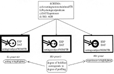
Impersonal experiencer construction category.
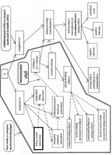
Proposed es category.
 You have
Access
- 4
- Cited by