The years from 1704 to 1706 must have been rough for university philosopher Claude Mallemant de Messange (1646–1723). The original system of the world he had introduced twenty-five years earlier had been recently plagiarized by Sébastien Le Clerc (1637–1714), an engraver who lived and worked in the royal manufactures of the Gobelins. Even worse, the scholarly Journal de Trévoux initially seemed to accept Le Clerc's pathetic excuse, that he had simply been unaware of Mallemant's publications. This is patently implausible, exclaimed the professor. An apologetic assertion, such as the one Le Clerc offered, makes sense if similar ideas are published at almost the same time, or by those separated by great distance. By the time of their dispute, however, both authors had been residing in Paris for decades, and Mallemant had without question already communicated his ideas in scholarly circles and to the reading public already by 1679. ‘Surely, I would not say that he should read everything printed’, reasoned Mallemant, ‘but I do claim that an engraver who finds the time to write about Mathematics, is not so busy that he cannot spare some strokes of the burin [an engraving tool] to take a look at the books that treat subjects he plans to discuss, especially when such books hold genuine innovations’. These innovations were also discussed by astronomers and philosophers in colleges, learned circles and the Academy of Sciences. Shouldn't someone writing about mathematics at least peruse the Journal des sçavans, published in his own city?Footnote 1
In Mallemant's mordant portrait, Le Clerc certainly appears in the guise of an artisan, whose craft might impede his ability to follow up on scientific innovation. Yet he also appears as a scientific author, whose work on mathematics ought to be held to the highest scholarly standards. For this reason he should also shoulder the burdens incurred by participation in the scientific life. He ought to keep abreast of new publications and of discussions in the numerous intellectual fora dotting Paris and its environs. Even a hostile critic, writing with more than a hint of irony, treated Le Clerc as both an engraver and a scientific author writing on mathematics, an artisan and a scholar.
Understanding Le Clerc's entanglement in a priority debate with an established philosopher sheds new light on the relations between artisans and scholars, one of the key issues for the history of early modern science. Recent studies have done much to refute the notion that the craftsman's role in the Scientific Revolution ‘was passive, to provide some of the raw material with which the transformation [in science] was to be effected’ by the ‘active’ scholar and to undermine the binary opposition between scholars and artisans on which such claims relied.Footnote 2 Instead, historians of science have followed Pamela Long and Pamela Smith in the search for encounter and exchange between a ‘hands-on’ component or ‘artisanal epistemology’, and the more theoretically based sciences that formed the core of the changes in early modern physics.Footnote 3 In this vein, historians have identified ‘trading zones’, social environments or technical projects that facilitated such exchanges, and have concentrated on the rise of technical experts in fields such as mining, architecture or clock-making, and the ways they interacted with emerging state bureaucracies.Footnote 4
This article goes beyond the confines of the state and the institutions it sponsored to reconstruct an unknown debate over an unrecognized system of the world. It shows that numerous actors outside royal academies took an active interest in the cosmological controversies that proliferated in the seventeenth century. Specifically, this article argues for the impact that writing and publication practices had on interactions among scholars and artisans.Footnote 5 Since current research demonstrates how the experience, values and approach of craftsmen fed into a burgeoning scientific culture, there is something especially intriguing in examining the publication of an artisanal cosmology, surely a topic as removed from the workshop as can be.Footnote 6
A debate articulated in books and journals illuminates the problem from a new angle. Relations between scholars and artisans had numerous aspects that required social and cultural mediation: between ‘high’ and ‘low’ culture, ‘hands-on’ and ‘bookish’ approaches, the workshop and the cabinet, craft pragmatism and learned detachment. Since the contrasting categories of ‘craftsman’ and ‘scholar’ are always locally constructed, knowledge of the particular institutions and practices involved in forming these definitions acquires vital importance.Footnote 7 Moreover, books arguably constitute quintessential objects for studying the relations between artisans and scholars: books mediated interactions among authors, institutions, reading publics and the grandees who protected authors. Further, writing and publishing committed authors to sets of ideas and meanings, while at the same time shaping their social identity and highlighting their associations with patrons and institutions. This makes them an ideal point of entry for studying the complex relations between scholars and craftsmen.Footnote 8
A new system of the world?
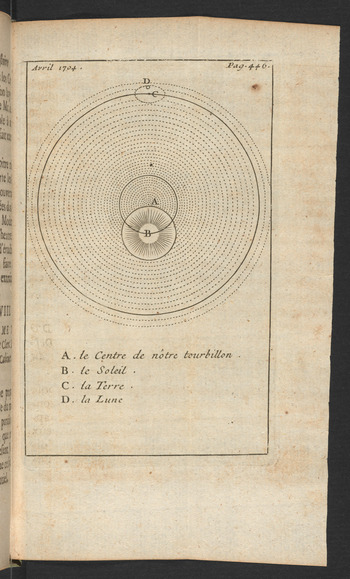
In April 1704 the Journal de Trévoux published a description of a new system of the world proposed by Le Clerc. The hypothesis structuring the system claimed that the Sun and the Earth both revolve around the empty centre of their shared vortex.Footnote 9 The Earth completes its revolution around the centre in one year, as Copernicus suggested, while the Sun completes its own in ‘only six months, minus several seconds’ (Figure 1). This system required circular motion alone, with no eccentricities, epicycles or ‘violent movement’ needed to explain a range of phenomena, such as the variations in the length of natural days or the distance between the Sun and the Earth. It also served to refute Copernicus and to establish the physical nature of the firmament according to Genesis.Footnote 10
Le Clerc's system, Journal de Trévoux, April 1704 (HH1B6N, Houghton Library, Harvard University).

Mallemant was quick to respond. In April 1705 the journal published a notice on the authorship of this system, based on information received from Mallemant and Le Clerc. The journal presented Mallemant's claim, published ‘more than thirty years ago’, to be the author of a system of the world in which the Sun and the Earth both revolve in a circular motion around a common centre, the Sun taking six months to complete its orbit, the Earth a year. Consequently, Mallemant claims, it explains heavenly phenomena ‘without eccentricities, epicycles, or trepidation’. The journal also presented the proofs Mallemant brought: he had published the system in two editions, with a royal privilege; it was discussed in scholarly journals, and presented to the Academy of Sciences. In his defence Le Clerc argued that he had conceived his hypothesis without knowledge of Mallemant's texts or ideas. There were precedents: Fabri publicly lectured about the circulation of the blood in Lyon before Harvey published his work; Simon Marius discovered the satellites of Jupiter in December of 1609, before Galileo publicized his own discovery. Even the editors admitted that they had not been aware of Mallemant's system, and expressed their hope that it would be possible to evaluate the glory the professor deserved after he delivered a synopsis of it.Footnote 11
This was not enough for Le Clerc, who moved on to the attack in a letter published in July of 1705. He had managed to find several copies of Mallemant's system, published twenty-six or twenty-seven years earlier. And still he would swear that he had not heard of it until five months ago, when Mallemant came to the Gobelins to accuse him of plagiarism. Yet this point paled in comparison with the defects in Mallemant's work, which in actuality was rather different from Le Clerc's system. Mallemant attributed a revolution of six months to the Sun, while Mercury has to complete a larger orbit in three months; the Sun has to turn against the current of celestial matter, in contrast to the other planets. Most seriously, according to Mallemant's system the firmament should appear to advance from east to west, whereas it appears to move in the other direction. Le Clerc pointed out that his system was free of these defects, and, further, that even the basic movements in his system differed from those described by Mallemant. According to Le Clerc, the Sun completes a revolution around the centre of our vortex in a day, and its semestral (six-monthly) movement is hence a composite of these daily revolutions. The Sun completes its orbit in slightly less than six months, whereas Mallemant held that it takes slightly longer than six months. Additionally, the Sun revolves in the right direction in Le Clerc's system. Le Clerc also underscored the difference in their conceptions of the firmament: he conceived of it as a solid orb, whereas for Mallemant only a void lay at the edge of the universe. All of this makes it quite clear that he did not plagiarize Mallemant's work.Footnote 12 In 1706 and 1708, Le Clerc proceeded with the publication of this system, devoting considerable space in the text to a refutation of Mallemant's claim of authorship.Footnote 13
Mallemant's insistence on circular orbits meant that, from a purely astronomical point of view, his system was antiquated even when he suggested it in early 1679. Since the late 1650s, most astronomers, even supporters of Tychonic systems, had adopted elliptical, instead of circular, orbits.Footnote 14 As readers knowledgeable in astronomy might have noticed, Mallemant's system was not only outdated, but also lent itself to inconsistencies and manipulations. Most prominently, it could be collapsed to a Copernican system by making the radius of the Sun's orbit very small in comparison to the orbits of the other planets.Footnote 15 Le Clerc indeed used this trick for dealing with several problems, most notably the fact that in such a system, the Sun, like the inferior planets, should have a retrograde motion.Footnote 16
It would be futile to offer a rational reconstruction of a glaringly inconsistent, obsolete system. However, a historical reconstruction of the dispute offers a privileged window for observing the motives, methods and objects of an artisan and a scholar debating a subject of central importance for the Scientific Revolution. In particular, understanding the ways in which these actors used exact data permits a nuanced understanding of the ‘values of precision’ they held in common.
Le Clerc and Mallemant alike valued the conformity between their systems and Holy Scripture. As Ann Blair has observed, philosophers in early modern Europe generally strove to align their work with the tenets of Christianity, as they understood them, with a smaller group of ‘Mosaic’ philosophers who relied on Scripture for physical evidence on nature.Footnote 17 Le Clerc and Mallemant did not quite go to these lengths, but both adduced scriptural evidence to support their astronomical assertions. Mallemant was the more systematic of the two: the first section of his work was organized as a commentary on the first chapter of Genesis, holy writ serving to explain the creation of the world and the physical principles governing it. For example, the phrase ‘darkness over the face of the abyss’ (Genesis 1:2) is taken to show that since light is produced by the shocks between bodies, light could not exist before motion, which was created only later.Footnote 18 Indeed, the frontispiece of his work illustrated the first verse of Genesis (In the beginning God …).
Le Clerc, for his part, did not build his text around Scripture. Rather, in magpie fashion, he selected Mosaic quotes, mostly from Genesis 1, which seemed to support his positions on the nature of the firmament (a hard crystal composed of frozen water), or the centrality of ‘our’ vortex in the universe. He also drew on Psalm 103 and Josephus’ Antiquities of the Jews to substantiate claims concerning the movement of air in the vortex and the nature of the firmament respectively. In his preface, he stated, ‘My system would have remained flawed had I not reflected on Genesis, which revealed to me its main foundations: these are the waters of the firmament, which I see as delimiting the universe. It seems to me that without them, the idea of vortices cannot hold’.Footnote 19
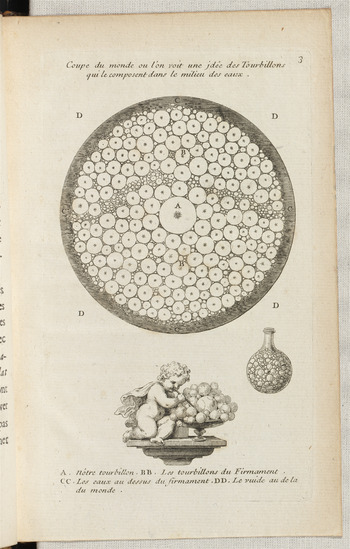
Le Clerc's artisanal background is apparent in two major aspects of his work: his reliance on a couple of visualized images to develop and communicate his astronomical ideas, and his use of illustrations. The image of bubbles was central to Le Clerc's thinking about vortices. As he explained, ‘the small bubbles that a child blows with a straw in soap water represent to us very well our vortices in the water’.Footnote 20 This was an issue of some importance, since Le Clerc assumed that the firmament was a vast expanse of frozen waters, which enclosed an ‘infinite number’ of vortices, each containing a star or a shining body. It was this hard orb, in his opinion, that held the vortices together. Moreover, astronomical phenomena, such as comets, were explained by recourse to this image. Le Clerc envisioned the vortices as open to one another at the points at which they touch, although he warned his readers against imagining that matter continuously flows between adjacent vortices, ‘as air can go from the main bubble a child inflates to other bubbles encircling it’. These passages between the vortices allow comets and magnetic matter to pass, something that accounts for the motion of comets as well as the magnetic orientation of the Earth.Footnote 21
Such passages were also leveraged by Le Clerc to explain the occasional appearance of new stars, a phenomenon that had troubled astronomers since Tycho Brahe demonstrated that the ‘new star’ of 1572 was superlunary. Le Clerc argued that if a star from another vortex should be in our line of sight across the passage, we would probably not see it, because the light would be refracted in the passage. If it were visible at night, it would appear and then disappear. A comet can further expand the passage and render a star from another vortex more visible. The Sun itself can be reflected from our own vortex, whose vault is composed of frozen waters. Again, Le Clerc drew on a concrete image that he could have used in teaching art to make his claims tangible to readers: those who cannot grasp this phenomenon might take a candle and pass it behind a piece of concave or convex glass. ‘They will have the pleasure of seeing it [the candle] disappear just when it will go around the edge of the glass’.Footnote 22 Similarly, Le Clerc expressed sensitivity to visual texture in his discussion of the Milky Way, which he supposed might have formed like the white spots visible in rock crystal. As he put it, when we look through cracked glass or crystal with a light source behind it, we can see numerous small points, shining like small stars. This crystal of the firmament could be similarly cracked, producing identical effects.Footnote 23
The use of images and analogies was common in seventeenth-century science, and in fact bubbles received serious attention as scientific objects from celebrated figures like Isaac Newton and Robert Hooke.Footnote 24 Hooke described the changes in colour and form over the brief life course of a bubble, and exclaimed that even though the subject matter of such an experiment might seem trivial, it could be instructive ‘to the finding out the nature and cause of reflection, refraction, colours, congruity and incongruity, and several other properties of nature’.Footnote 25 Newton, too, paid attention to the colours of the bubbles he studied, and used their refractions to substantiate previous optical observations.Footnote 26 For Newton and Hooke, studying the natural philosophy of the bubble was part of a broader inquiry in optics, while for Le Clerc the bubble provided a key to natural philosophy. Certainly, even against the widespread use of analogies based on common objects, bubbles seem exceptional among the range of mechanical devices such as balls, levers or balances, so persuasively studied by Domenico Bertoloni Meli.Footnote 27
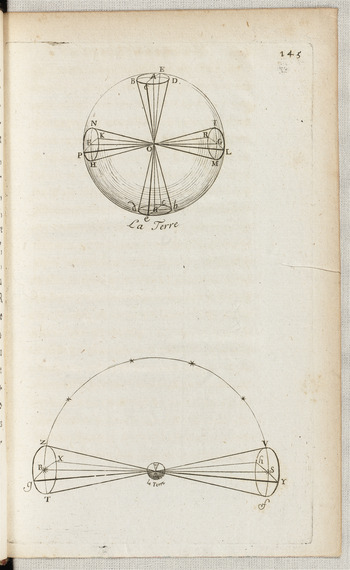
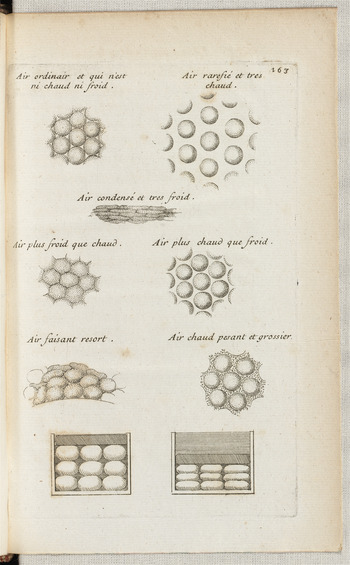
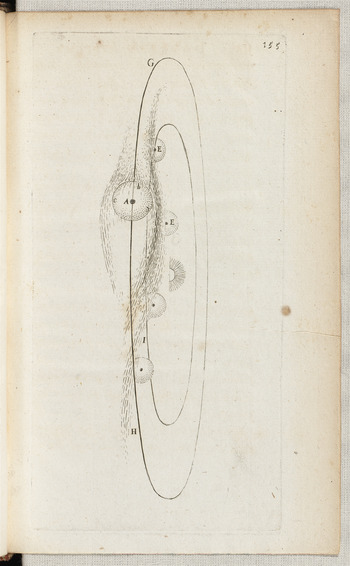
Le Clerc the illustrator and engraver enlivened his text with more than fifty illustrations, some of which appear to be iconographically unusual. Most of the images in the book were standards in astronomical texts, such as geometrical drawings illustrating the retrograde motions of planets. At times, however, Le Clerc went beyond the common iconography and chose to illustrate clearly phenomena such as ‘trepidation’ (Figure 2 and below). In other cases, especially when illustrating the physical aspects of his system, Le Clerc made use of images uncommon in natural-philosophical works. Notable amongst this is a putto blowing bubbles, illustrating how the firmament holds different vortices together. Others show air in its different conditions (hot, cold or pressed to produce ‘spring’), or a side view of the system that allows one to see how planets could decline from the ecliptic (Figures 3, 4 and 5).
Trepidation in Le Clerc's system (Sébastien Le Clerc, Nouveau système du monde, conforme à l’écriture sainte: Où les phenomenes sont expliquez sans excentricité de mouvement, Paris: P. Emery, 1708; first published Paris: Pierre Giffart, 1706, p. 145) (Bibliothèque nationale de France).

Putto blowing bubbles, illustrating Le Clerc's system (Le Clerc, Nouveau système, op. cit., p. 3) (Bibliothèque nationale de France).

Air in different conditions (Le Clerc, Nouveau système, op. cit., p. 163) (Bibliothèque nationale de France).

Side view of Le Clerc's system (Le Clerc, Nouveau système, op. cit., p. 155) (Bibliothèque nationale de France).

Despite these traces of Le Clerc's artisanal background, the bulk of the arguments in the debate were framed in physical and astronomical terms. Le Clerc even included in his publication the list of phenomena Mallemant alleged to explain with his system: the apogee, the movement of the apogee, the variation of the solstices, the variation of the equinoxes, the inequalities between the times it takes the Sun to cover different parts of the ecliptic, the changes in the declination of the ecliptic, the inequalities of the oppositions of the Moon and changes to the so-called fixed stars.Footnote 28
To distinguish between their systems, Le Clerc presented a series of physical and astronomical arguments. For example, Le Clerc asserted that in Mallemant's account of Creation, nothing holds the vortices together; in his system, by contrast, a solid orb served that purpose. He and Mallemant attributed different velocities to the movement in ‘our great vortex’, they considered the properties of the air in different terms, and they explained the variations in the apogee and solstices through different movements.Footnote 29 The debate was therefore handled first and foremost in scientific terms.
The rivals’ commitment to quantitative, exact data lays bare their ‘values of precision’. Of the two, the artisan was more engaged with technical astronomy, going even beyond the commitment to visual accuracy inherent in the training of the eye for engraving and in the production and use of scientific engravings.Footnote 30 In this, the debate illuminates the general problem of determining the extent to which artisans relied on quantitative precision, or rather on rules of thumb and rough estimates; at the very least, it shows how capable Le Clerc was of aspiring to the standards of quantitative precision heralded by the new astronomy.Footnote 31 The use of exact data was in fact a crucial point for contemporaries. Whereas for Galileo reading the language of mathematics in the book of nature essentially meant relying on geometry, by the second half of the century discerning readers expected higher standards of quantitative precision in astronomy.Footnote 32 When Mallemant sent a version of his system to the Royal Society in 1679, Hooke – who had recently assumed responsibility for the society's correspondence – solicited Newton's opinion on the hypothesis. Hooke described the essential assumptions of the system and quipped, ‘he is not precise in Defining any thing, as Reserving a Liberty to himself to help him out where objections might stick’. Newton was quick to react to this point. He lauded the system's simplicity, if it would accord with the phenomena, but could not see how it could work. And he wanted to see numbers worked out for concrete examples, if this were to change his mind: ‘The readiest way to convince ye world of this truth would be I conceive to set forth first in some two of ye Planets, suppose ♂ [Mars] & ye earth a specimen thereof stated & determined in numbers’.Footnote 33 Standards of quantification and precision clearly served as professional markers in the debate.
At the most basic level, this cosmological system provided a qualitative explanation of the different distances between the Sun and the Earth, which reach their highest and lowest values in the apogee and the perigee respectively.Footnote 34 But Le Clerc and Mallemant arrived at this result via different routes, with Le Clerc exhibiting considerably greater awareness of exact data and the values related to celestial motion than Mallemant.
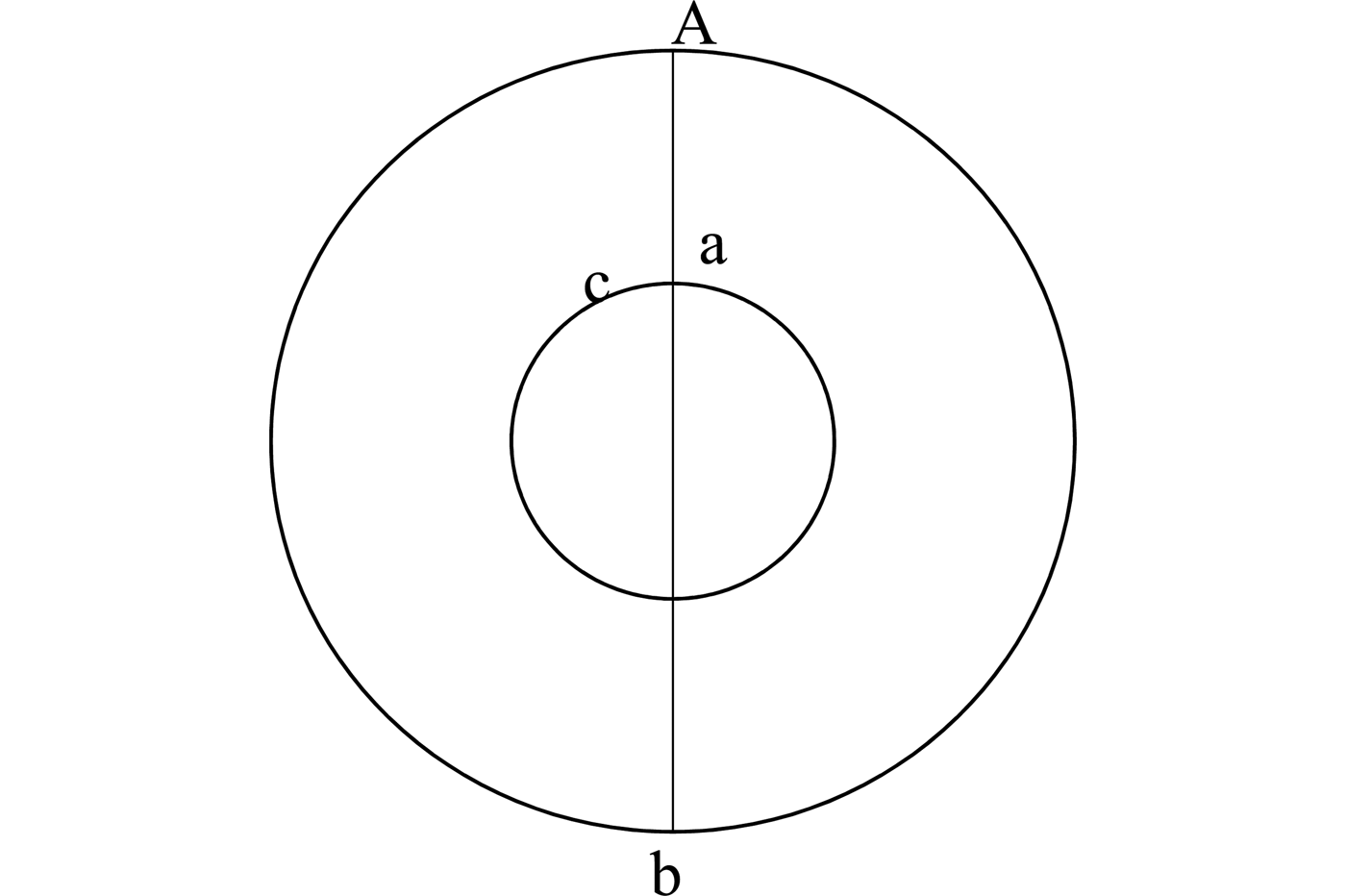
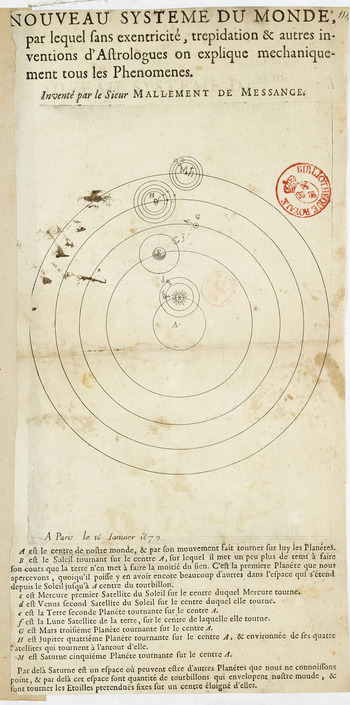
Beginning the inquiry with the latter, Mallemant used a simple image (Figure 6), in which the two circles represent the orbits of the Sun (the smaller one) and of the Earth. When both ‘planets’ are at A/a, the Sun is at its perigee. But after the Sun completes one cycle, the Earth would be at point b, meaning that the Sun would be at its apogee. But Mallemant knew that the dates at which the Sun is in its perigee and apogee do not repeat themselves exactly. So in a move that fits very neatly with what Alexandre Koyré famously called ‘the world of the more or less’, he claimed that it takes the Sun ‘a little longer’ to complete its orbit than it takes the Earth to complete half of its own. When the Sun does reach the apogee, it will be seen against a different area of the zodiac.Footnote 35
Apogee in Mallemant's system (adapted from [Claude Mallemant de Messange], Nouveau systheme du monde, s.l., s.d. (1679), p. 17) (Bibliothèque municipale Villon, Rouen).

Le Clerc, for his part, attributed two movements to the Sun. First, it completes a revolution around the centre of the world in twenty-three hours, fifty-two minutes and ‘a few’ seconds. This means that the Sun is eight minutes ahead of the Earth when it returns to the same meridian on the Earth, and is seen to move against the zodiac. This difference is supposed to generate an apparent orbital movement of six months, similar to the one used by Mallemant, but with one clear advantage: Le Clerc could criticize Mallemant's description of the Sun's orbit.Footnote 36 That is, in attributing an orbit of six months to the Sun, Mallemant had it moving more slowly than Mercury and Venus, even though the Sun is closer than these planets to the centre of the world.Footnote 37 Further, Le Clerc used estimates of the distance between the Earth and the Sun, measured in terrestrial orbits, as part of the structure of his system, whereas Mallemant did not specify any such values.Footnote 38 In fact, Mallemant made this explicit: ‘I am content to say here that the orbit of the Sun has to be small, without claiming what its exact size should be. I did not want to determine in my proposed system this, or the other orbits, or the exact time the planets and their satellites take to complete their orbits. These things can be of different values without disturbing the economy of my hypothesis’. He added that he awaited the results found by Jean-Dominique Cassini, the distinguished astronomer recently lured from Italy to the Parisian Academy of Sciences.Footnote 39
Both of our authors were concerned with changes in solstices and the equinoxes related to precession; that is (in our terms), the slow rotation of the Earth's celestial poles. In fact, Le Clerc and Mallemant would refer to this on occasion as ‘trepidation’, indicating their shared view that the value of annual precession was subject to change.Footnote 40 Le Clerc, however, showed more care than Mallemant to connect his explanations to physical arguments and to exact data. Using an illustrative diagram, he claimed that the precession was of fifty-one seconds of arc per year, and that it could result from a difference of fifty-one seconds between the length of the annual revolution of the Earth and the two six-month revolutions of the Sun.Footnote 41
In addition to such geometrical considerations, Le Clerc could resort to a physical argument to generate uncertainty and thus explain minor inconsistencies of measurement. He claimed that the Earth is composed of a large number of parts with different weights (pesanteur), which are constantly in motion: water in the seas (as in the tides), winds and underground fires. To paraphrase him, since all these shifts are not completely symmetrical, the Earth changes its centre of gravity a little bit, and with this comes a slight shift in its relation to the heavens.Footnote 42 The connection between the tides and a tilting motion of the Earth could have been based on current debates. César d'Arcon's work on the tides, for instance, served as the source for a tilting motion in a world system devised by the Huguenot pastor Philippe Le Noir de Crevain.Footnote 43
In his model building, Mallemant, too, relied on the small differences between the orbital times of the Earth and the Sun. Yet, as we have seen, he was content with the world of ‘more or less’. As such, he simply stated that the small changes in the positions of the Earth in the perigee and apogee also account for trepidation.Footnote 44 Thus Mallemant neglected to estimate the movement of ‘trepidation’ in quantitative terms, or to provide a more elaborate physical explanation for it. This omission is rather striking, as the author was explicitly claiming to solve the very vexing problem of trepidation.Footnote 45 It is easy to see why he could fail to persuade Hooke and Newton.
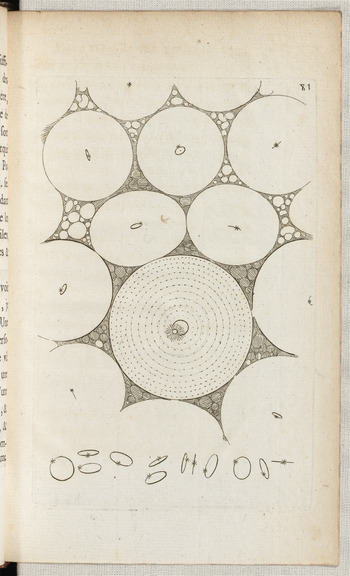
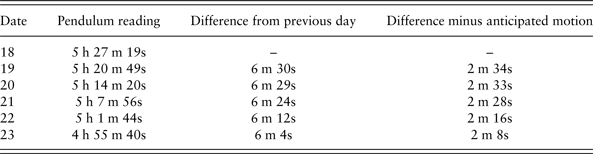
Le Clerc and Mallemant alike asserted that the fixed stars are not, in truth, really fixed; their planetary motions can therefore generate small changes in the constellations.Footnote 46 The proofs adduced by the authors, however, were quite different. In a characteristically simple fashion, Mallemant wrote that ‘skilled observers have noticed that they [the fixed stars] do not maintain an equal distance among themselves … I explain all these phenomena by Optics and by the planetary movement that I attribute to these stars’.Footnote 47 Le Clerc went to much greater lengths to support his claim. Asserting their incontestability, he proffered observations conducted by Jean Richer from the Parisian Academy of Sciences in Cayenne in 1672 and 1673.Footnote 48 Le Clerc explained that the firmament appears to move from West to East by three minutes and about fifty-six seconds each day, so the differences between measurements taken on consecutive days should be of the same size.Footnote 49 If they vary, and especially if the variation is not uniform (i.e. it cannot be attributed to another orderly motion), the stars are not really fixed (see Table 1 for one set of measurements). Le Clerc hoped that in several years it would be proven that these movements are periodical, although one should not expect that they would move in perfect circles. If the stars moved in their own vortices, they would appear to us in different inclinations, as he indicated to his readers in an explanatory image (Figure 7).Footnote 50 Again, what for Mallement was simply a rhetorical point was for Le Clerc a problem to solve through reliance on state-of-the-art data and calculations.
Planetary movement of other stars in Le Clerc's system (Nouveau système, op. cit., p. 81) (Bibliothèque nationale de France).

Observations of the heart of Scorpio, August 1672 (based on Le Clerc, Nouveau système, op. cit., pp. 70–72); h = hours, m = minutes, sec = seconds

Of the two authors, Le Clerc manifested much greater interest in and sensitivity to the intricacies involved in the use of data, and especially to problems of measurement. While Mallemant acknowledged the existence of atmospheric refraction and of parallax measurements, Le Clerc broached the implications of these problems and clarified their importance to his readers.Footnote 51 For example, while explaining the difficulties in measuring the location of the Sun in the zodiac, Le Clerc demonstrated the parallax resulting from the fact that the observer is on the surface of the Earth and not at its centre. In this context, Le Clerc also stated that the greater the distance between the Sun and the meridian, the greater its refraction due to the ‘vapours and exhalations’ in the air, something that could generate errors in the measurement.Footnote 52 At the time, ‘exhalations’ were in fact a common explanatory factor, intensively discussed in the Academy of Sciences.Footnote 53
Le Clerc also brought up the issue of refraction in trying to observe stars between different vortices.Footnote 54 In considering the observation of the ‘so-called fixed stars’, Le Clerc noted that refraction would not affect the timing of the passage of stars on the meridian, and that at any rate, at an angle of seventy-seven degrees, the effect would be negligible.Footnote 55 Refraction for angles above forty-five degrees was indeed neglected before Cassini, whose indispensable contributions to the Academy of Sciences relied in part on his ability to apply corrections for these angles and for the parallax resulting from the radius of the Earth.Footnote 56
More broadly, Le Clerc thought in terms of magnitudes and scales of observation. Hence in a discussion of the different daily revolutions of the Earth, he neglected the cumulative difference between the revolutions of the Earth around itself, and the revolutions of the Earth in relation to the centre of the world, ‘to avoid fractions, which are both cumbersome and useless for this demonstration’.Footnote 57 All in all, Le Clerc handled potential errors of measurement with much greater ease than Mallemant, who only affirmed the possibility of their existence.Footnote 58
The reconstruction of the debate has given us a glimpse of was at stake for the two authors, as well as demonstrated that Le Clerc possessed a quite sophisticated understanding of the technical astronomical issues at hand. Certainly, we see that his grasp of such issues was more secure than that of the scholar with whom he debated. This knowledge was not simply an effect of an artisanal identity or ‘persona’. Rather, Le Clerc acquired his skills, attitudes and interests over the course of a long and complex career, in which writing and publishing served as one of the structuring elements. The full intricacies of this exchange between an artisan and a scholar become clearer only against the backdrop of their publishing careers.
Writing, publishing and careers in letters
‘Literarization’ is a term that describes the enormous growth in the creation and circulation of texts outside formally recognized corporate bodies during the early modern period. This process, particularly in evidence in seventeenth-century France, reshaped the social relations among elites and writers, and is therefore crucial for understanding the dynamics that made Le Clerc into something of a ‘man of letters’ and not merely an artisan. In a world in which formally recognized corporate bodies delimited identity, writing and publishing allowed authors to transcend officially sanctioned boundaries. These activities were a means for moving in noble coteries, academies and informal literary circles. Authors could serve their protectors as propagandists, secretaries, educators and mediators precisely thanks to their relation to the written word and their ability to circulate freely in social space.Footnote 59 French painters were subject to similar tensions and underwent pressures to choose between corporatism and royal favouritism, a choice ultimately leading to the creation of academies and the intellectualization of painting.Footnote 60 Le Clerc, however, chose the written word as the medium through which to ply his craft, allowing him to navigate a broader range of social spaces and to engage with a wider array of topics.
This section puts the debate into a longer chronological perspective, and shows how Le Clerc and Mallemant developed careers in which authorship played a constitutive role. It situated them in the creases between different social spaces. Writing and publishing shaped their relations with patrons, their place in Parisian scholarly circles, and their authority in making priority claims.Footnote 61 This means that their careers, as they unfolded over a lengthy period, are crucial for understanding their positions in the debate; we shall even see that Mallemant was involved in a previous priority debate over the authorship of his system, and Le Clerc's career as an artist was helped by his ability to publish scientific texts.
Le Clerc was born in 1637 to a family of goldsmiths that resided in Metz, in the Duchy of Lorraine. This was a common professional background for visual artists, and engravers in particular, since goldsmiths decorated the metal they worked on with tools not unlike those used for engraving. The social milieu, comprising members of luxury guilds, sometimes connected to high society, was also relatively close, as marriages among the professions in Paris attest.Footnote 62 Le Clerc probably learned to draw from his father, and he could have learned the printing techniques necessary for engraving in Metz. He started producing engravings around the mid-1650s, and probably also learned geometry, mathematics and perspective at about the same time.Footnote 63
Sometime in the 1660s, Le Clerc left Metz and entered the service of aristocratic patrons, a move that would prove pivotal for his career as an artist and an author. After engraving his portrait, Le Clerc became in 1660 an engineer for the Marshal La Ferté-Senneterre, governor of Lorraine. He probably also drew fortifications on his behalf.Footnote 64 By 1665 or thereabouts Le Clerc had moved to Paris. His relocation was supported by Charles Le Brun, the first painter to the king, who in all probability also introduced Le Clerc to Minister Jean-Baptiste Colbert. As minister in charge of the royal household and manufactures, Colbert and his protégé Le Brun would prove highly instrumental for Le Clerc's career. Le Clerc moved to a residency at the royal manufactures at the Gobelins, one of Colbert's prize economic and cultural projects, where he would remain for the remainder of his life. Thanks to Le Brun, in 1672 Le Clerc gained an appointment to the Academy of Painting and Sculpture. His engraving of the catafalque raised for the funeral of Chancellor Pierre Séguier served as the masterpiece for his admission. In the late 1660s, Le Clerc also started to execute special commissions for Colbert's administration of the king's buildings, such as engravings for the luxurious publications of the Academy of Sciences. In 1673 he married Charlotte van der Kerkhove, the daughter of a dyer (teinturier) who also lived at the Gobelins. After his marriage Le Clerc started to produce more intensively for the market, and may have even renounced a royal pension as the price for his commercial freedom.Footnote 65 In 1691 Le Clerc started receiving regular remuneration as a drawing instructor at the Gobelins Academy; between 1693 and 1705 he also received a pension of four hundred livres per annum as an ‘ordinary engraver to the king’. Le Clerc's eyesight began to deteriorate around 1710, but he managed to complete a two-volume treatise on architecture before his death in 1714.
Le Clerc became a man of letters by writing and publishing work that served his career in different ways. Part of his initial service to Colbert was as a tutor in drawing and mathematics to at least one of the minister's sons.Footnote 66 Consequently, Le Clerc's first two publications, Pratique de la géométrie sur le papier et sur le terrain (1669) and Discours touchant le point de vue (1679) were dedicated to the Marquis de Seignelay, Colbert's second son, and to Colbert d'Ormoy, Colbert's sixth son, respectively. Le Clerc himself highlighted the pedagogical background to these books. Pratique de la géométrie was a manual of instruction in geometrical problems, and in its introduction Le Clerc praised the talents Seignelay had already displayed in his earlier studies, underscoring the place that ‘noble’ exercises in geometry would continue to occupy in Seignelay's studies. In the dedication to Discours touchant le point de vue Le Clerc emphasized Colbert d'Ormoy's precocious achievements in his studies, achievements that had supposedly earned him the admiration of the public at a young age, whereas youth are usually praised for their high birth or the virtue of their father.Footnote 67
It was at this time that Le Clerc developed an intense passion for science. He expressed his desire to participate in scientific discussions through his publications and, as Maxime Préaud has argued, also in his artwork.Footnote 68 Indeed, Le Clerc published on geometry and perspective. Knowledge of such topics was not rare among visual artists and certainly not among engineers; perhaps Le Clerc actively developed his engineering techniques during his work for the Marshal de La Ferté.Footnote 69 At this point, Le Clerc might have developed a career as an engineer–scientist, conversant with Latin lore but skilled in managing artisanal workshops, serving as a node of communication between these two worlds.Footnote 70 But he chose a different path, promoting his scientific ambitions through the connections that placed him in Colbert's orbit. Starting in 1668 – merely a year before the publication of his geometry – Le Clerc produced engravings for the anatomical projects of the Academy of Sciences, and he would continue to do so in the following decades.Footnote 71 In fact, his work for the academy probably gave him access to Richer's observations, which he used in his system, since they were published in a collection he illustrated himself.Footnote 72
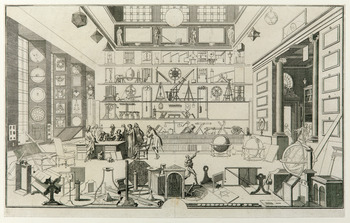
Le Clerc also cultivated the practices and self-images required of a man of letters. His children would read to him while he was working, as one of his sons, Laurent-Josse, recalled: ‘I read the works of Despréaux for the first time as a young schoolboy [écolier] … my father had me read them to him so he could unwind while he was working’.Footnote 73 Le Clerc hosted scholarly discussions, and according to one of his biographers he took part in the conversations and contributed to them with capability and precision.Footnote 74 Le Clerc built and probably acquired a collection of scientific aids, and he made good use of them: he constructed a projection specifically to elucidate the problem of retrograde motion in his system, and claimed that it provided a convincing demonstration.Footnote 75 By the time of his death, Le Clerc owned ‘a cardboard sphere following Copernicus, two small microscopes, six small wooden machines used for demonstrating perspective’, and several other mathematical instruments.Footnote 76 Le Clerc also produced a highly idealized engraving of his cabinet, which used instruments to underscore the learned elements of his persona (Figure 8). Over the course of his career, he had accumulated a library of 344 books on ‘mathematics, architecture, perspective, geometry, and other [subjects]’.Footnote 77
Le Clerc's cabinet (Bibliothèque nationale de France, estampes ED-59 (C)-FOL).

Like men of letters, Le Clerc occupied several social spaces: the household of a powerful protector, the royal manufacture, and the scholarly cabinet he assembled for himself. He also collaborated with the Academy of Sciences and produced for the artistic market. This social position allowed him to pursue a life of letters, in spite of his relatively limited education – as reflected in his rudimentary knowledge of Latin, for example.Footnote 78
Mallemant, like Le Clerc, published his scholarly works while moving between different social spaces. He was younger than Le Clerc, probably born in 1646, in the town of Beaune, in Burgundy. Two of Mallemant's brothers also showed intellectual and literary ambition: Etienne published poetry and Jean, who entered the clergy at a late age, published works of devotion and religious history. Claude himself entered the House of Instruction of the Oratory in 1674, and left it after a short while for the University of Paris, where he taught philosophy at the Collège du Plessis for thirty-four years.Footnote 79 In this he followed a career pattern that became more pronounced in the eighteenth century. The Oratory, initially founded by Pierre de Bérulle to train priests and educate youth, became an institution that provided instruction for those who sought a teaching career, not necessarily a life of devotion.Footnote 80
Alongside his philosophical teaching, Mallemant cultivated a publishing career and sought the protection of patrons, and he concentrated on scholarly and scientific topics. He dedicated his system of the world, as well as another work on magnets, to the Abbé Dangeau, a grammarian who served as reader to the king; this was a protector who could be flattered for his intellectual qualities.Footnote 81 In the 1680s, Mallemant dedicated a work on comets to the Procureur général du Grand Conseil, and a treatise on the mathematical problem of squaring the circle to Charles de Saint Maur, Duc de Montausier, who had been responsible for the education of the heir to the French throne.Footnote 82 In the 1690s he dedicated to the young Comte d'Ayen, Adrien Maurice of the distinguished de Noailles family, a work relating to the debate on the recently published official dictionary of the French language, and in 1699 he dedicated to him a timely treatise on the question whether the year 1700 would be the last year of the seventeenth century or the first year of the eighteenth.Footnote 83 Mallemant, then, used publishing to cultivate connections at the highest echelons of French society.
Mallemant's ambition was greater than that of most university professors, yet he relied on his affiliation with the university in his publications and disputes. In this he followed the university's claim to authority in the ‘social and geographic distribution of knowledge’.Footnote 84 Against Le Clerc, for example, he argued that it would have been impossible not to learn of his system, since the walls of the university quarter and the church portals (portail) were plastered with posters announcing both editions of Mallemant's system. He also underscored his ties to the world of teaching as proof of his scholarly stature. He recounted how the ‘Reverend Father de Challes’, a Jesuit who taught mathematics at Louis le Grand college,
honoured me by sending me the Theses of his school on the different systems of the world … he asked me to defend my new system against the objections of his students, to which I had the honour of replying in the presence of a great number of illustrious persons.Footnote 85
While he was composing his system of the world, Mallemant also frequented the intellectual gatherings known as the ‘Bourdelot Academy’, presided over by Pierre Bourdelot, physician to Louis II de Bourbon-Condé, the Prince de Condé. In the second half of the seventeenth century, this academy dealt with numerous physical and anatomical problems, and, thanks to Condé’s protection, was also a hotbed for the spread of Cartesian ideas.Footnote 86 In fact, Mallemant was embroiled in debates over this system with other participants in these gatherings. Some, like a certain Père Méron, or the ‘Cartesians’ – who were concerned with the physical properties of the Sun in Mallemant's new system – could be reasoned with. But an ugly exchange erupted with the Abbé Alexandre Tinelis, Sr de Castelet, in a meeting held in late January 1679 in the presence of ‘the great mathematicians Auzout and Hebert’; that is, the astronomer Adrien Auzout and a professor of mathematics at the Royal College.Footnote 87
Several days before the meeting, Mallemant had learned of potential objections to his system, related to the retrograde movement it produced for the Sun. He came prepared, bringing to the meeting a printed version of this objection, along with his reply and an explanatory figure. Mallemant circulated the documents among the scholars in attendance, until they reached Castelet. All those present, claimed Mallemant, thought that Castelet dwelled on the documents for too long, examining them from every angle, as if he had found an error in the calculation. It seemed that Castelet was keen on speaking, so Père Méron, who sat next to him, whispered to Castelet the objection about the motions of the Sun. Castelet seized on this opportunity and immediately repeated in a loud voice what Père Méron had whispered. Mallemant, familiar with this objection, had had a few days to formulate a convincing reply.Footnote 88 In Mallemant's eyes, Castelet was a quarrelsome, and not very original, scholar.
Castelet took a completely different view of the matter. At issue was not the abuse of a warmed-over argument intended to humiliate the presenter, as Mallemant would have it, but plagiarism. Claiming that Mallemant had stolen credit for a system he did not author, Castelet pointed to inconsistencies in Mallemant's system and asserted his priority in publication. First, Castelet argued that, contrary to Mallemant's claim, in the system at hand several planets would move in irregular orbits. The Moon, in particular, would have an eccentric orbit, since its distance from the Earth would not remain constant. Moreover, the Sun should have a retrograde motion when it is in the perigee, or at least should move more slowly in relation to the zodiac in comparison with its movement in the apogee. Castelet contended that he could identify more difficulties, but that these were enough to discredit Mallemant's system. He further noted inconsistencies among the three figures of the system that Mallemant provided at the meeting hosted by the Abbé Bourdelot. One of them even got the order of the planets wrong, as it showed Venus as a satellite of the Sun (Figure 9), a mistake that ran contrary to Mallemant's system, and that he had to correct in his later publication.Footnote 89
Defective illustration of Mallemant's system (Bibliothèque nationale de France, Fonds Clairambaut 1056).

Beyond these technical difficulties, Castelet tried to establish his priority claim to a system in which ‘the fixed point of our great vortex was neither the Earth nor the Sun, even though up to this point, one of the two bodies had always been taken to be immobile’. Castelet had explained to several ‘illustrious persons’ his hypothesis that ‘the fixed stars could be planets revolving in other vortices’, and that this idea allowed him to ‘diminish as much as one would want their size, in spite of their great distance’, thereby removing the strongest objection against the ‘Copernican opinion’.Footnote 90
Castelet turned to several forms of writing to disseminate his opinion and establish his intellectual priority. He claimed to have published his system in a letter addressed to ‘Saint Yon, ordinary physician [Médecin] to the King’, more than a year before Mallemant had published his system. He even referred Mallemant to the permission given by the Lieutenant de police to publish the system, dated 4 January 1678.Footnote 91 Castelet also referred Mallemant to the registers of the Academy of Sciences, which had discussed his proposal on February of the previous year.Footnote 92 Though Cassini was critical of the proposal, Castelet discovered new arguments for it. Perhaps most damningly for Mallemant's priority claim, Castelet pointed to the publication of his system in the Journal des sçavans, the recognized organ for establishing such claims, a month before the letters Mallemant published in support of his claim. The Abbé de la Roque, he said, ‘Author of this famous journal, honoured me by inserting my system there’. Castelet went on, ‘[the Abbé] says there that I supposed that the Sun's vortex, which has this star at the centre, and which holds as satellites all the planets known to us, is carried around a centre at a great distance from us’. The planets, comets, and fixed stars, claimed Castelet, are taken as proofs for his system.Footnote 93
Castelet offered to translate his letter into Latin and to circulate it to Europe's famous mathematicians, who would be able to pronounce their judgement in the dispute. However, he was not sure when he would publish his system, meaning, presumably, in its full version. This might take him ten or twenty years, or he might, as he speculated, even take Copernicus himself as his model, who waited until extremely old age before ‘printing his famous book on the Heavenly Revolutions’. Still, Castelet said, he wanted to have proof for his claim before writing such a long book.Footnote 94 All these forms of publication should have been more than enough to establish his priority in suggesting this system, he probably surmised, before crossing paths with Mallemant.
Many of Castelet's publications were scientific ephemera that would not directly impact the later debate on this system of the world; indeed, their publication history is hard to trace. The only printed copy of Castelet's letter to Saint Yon that I have located was published in 1681, in spite of the evidence for its earlier circulation.Footnote 95 One can imagine how Le Clerc could have leveraged this exchange to discredit Mallemant. He was probably honest to a fault when he claimed that he only discovered the details of Mallemant's system through the later publication, Ouvrage de la création.
Still, the debate with Castelet, and Mallemant's longer career trajectory, had left their mark on the texts published by its protagonists. Mallemant reacted to the debate and the broader environment of the Bourdelot Academy in at least two significant ways. First, as befits a scholar trained by the Oratorians, he tried to ground his argument in Scripture. In the preface, Mallemant averred that as he was developing his astronomical and physical ideas, he discovered that all of them were ‘literal explications of the words of Moses’. His education then allowed him to write the first section of the book as a detailed gloss on Genesis.Footnote 96 This would explain the striking differences between him and Le Clerc, who also drew his inspiration from Scripture. Yet his eclectic choice of biblical passages signals someone who acquired his rudimentary Latin from reading the Bible and Thomas à Kempis, indicating a personal devotion unrelated to formal training, which would have acquainted him with the Latin language, as well as with the techniques of writing formal commentaries on Scripture.Footnote 97
Bourdelot's position as physician to the Prince de Condé meant that medical questions received sustained treatment at his academy, and in fact Mallemant devoted an entire chapter to the related topic of astral influence. This was a controversial topic, but perhaps Mallemant could not avoid it on account of its medical implications. He explained, therefore, that he would rather not decide whether astral influences exist or not, but noted that if they do exist, then his system would be the best for explaining them, in terms of the matter moving in the great vortex. The subtle matter emitted by Mars, for example, is less subtle than that emitted by Venus, and so it imprints an inclination to arms rather than to love.Footnote 98
The relation of such arguments to Bourdelot's milieu can also be detected in Castelet's work. In the preface to his 1681 French translation of Galileo's Sidereus nuncius he complained of the atmosphere of perfidy, which ‘violates rights of all sorts’, and of people of repulsive character who ‘strangle all inventions at their birth’. These remarks could be read as a pre-emptive defence against potential critiques of Galileo's opinions. Yet they immediately follow Castelet's explanation that this ‘is not the only book that I plan to publish, and as I am deeply convinced that this is a laughable enterprise, the execution of which does not allow one to reform the world and abolish all vulgar errors’. This is a brief sketch of a resentful author, whose other work did not have the success he yearned for.Footnote 99
More importantly, Castelet added numerous pages to his translation of Galileo, collected in two parts. The first surveyed problems in astronomy and the uses of the telescope in observing the heavens. The second part consisted of a ruthless attack on the medical uses of astrology, relying on a reading of ancient medical authorities. Perhaps a direct attack on Mallemant and his attempt to relate his work to the medical interests of Bourdelot, there is no doubt that its publication relied on the latter's affiliations: Castelet's translation and accompanying texts appeared as a special issue of a short-lived medical journal published by Nicolas de Blegny, which managed to survive for three years only thanks to Bourdelot's influence with the Lieutenant de police.Footnote 100 But this was the last time Castelet would return to this topic in his literary work. Without further publications or better anchoring in the world of letters, Le Clerc would not even know of his claims, letting Mallemant off the hook in the second round of the debate.
When placed in the context of the literary field, the two phases of this debate reveal the importance of the writing and publication practices of the protagonists. These practices formed their relations with patrons, their connections in scholarly circles, their ability to fortify their priority claims, and ultimately the types of claim and argument in which they inscribed their systems of the world. Writing and publication practices constituted a nexus for our scholar and artisan around a central problem in early modern astronomy. Their positions in the debate were not simply determined by a social identity. They were mediated through a range of relations woven around the writing and publication of books. This section has reconstructed the roots of the debate in order to recover the complex interactions in the world of books; the following section will show why it became easy for future generations to assimilate Le Clerc and Mallemant to familiar models of artisanal creation and scholarship.
A changing space of reception
The previous sections have portrayed an intellectual world in which artisans and scholars could debate systems of the world in the same venues, appealing to identical authorities to validate their claims for priority. The differences between Le Clerc and Mallemant lay in their different trajectories and positions in the literary field rather than in some sort of inseparable divide between hands-on experience and theoretical learning. And yet these different social positions did relate to recognized classifications of the professions: a university philosopher could present himself differently than could an engraver. The final section of this article argues that these differences were at the root of shifting perceptions of Le Clerc and Mallemant, who began to be perceived according to criteria that were much different from their seventeenth-century images. Sketching the fluctuating fortunes of Le Clerc and Mallemant, we see a concrete example of the changing relations between art and science, and therefore of their broader importance to our understanding of the relations between artisans and scholars.
Like so many debates before and after, the debate between Le Clerc and Mallemant on the system of the world enjoyed no formal and widely recognized closure.Footnote 101 In this, it was merely an echo of the previous strife between Mallemant and Castelet. Contemporaries knew that certain problems are not worth resolving or even fighting for. A reviewer in the Journal des sçavans sardonically remarked that Le Clerc should have been free to enjoy the system he invented without fearing that someone would dispute his claim over such a system. As a final touch of irony for discerning readers, the reviewer alluded to an epigram by Jean Racine regarding a dispute between Michel Le Clerc, an undistinguished member of the literary Académie française, and a certain Coras over a version of the play Iphigenia: once it failed with the public, no one wanted to claim it as his own.Footnote 102
The earliest posthumous portrayals of Le Clerc easily combined artistic and scholarly models. The Abbé Vallemont, a close acquaintance of Le Clerc, published a eulogy in 1715, shortly after the engraver's death. For him, the scholarly and artistic merits of Le Clerc were complementary parts of the model of virtue that Le Clerc presented, a fitting paragon for the age of Louis XIV. ‘He seasoned his great talents in physics, mathematics, drawing, engraving and the beaux arts with modesty and an unassuming appearance, rare in a scholar’, declared Vallemont. ‘In a life of retirement, he cultivated the sciences and the beaux arts with passion and success. I think that nothing escaped his curiosity and penetrating [insight]. He possessed all disciplines, and not superficially’.Footnote 103 Vallemont also highlighted the role of Le Clerc's knowledge of physics, and his reading of ecclesiastical history, in his engravings.Footnote 104
The connoisseur, collector and dealer Pierre-Jean Mariette, another personal acquaintance of the Le Clerc family, depicted the scholarly engraver in similar terms. Mariette lauded Le Clerc's commitment to mathematics even as an engraver: ‘this is how we could see, coming out of his cabinet, marvellous works by his hand [engravings] alternating with different products of his spirit that marked the extent of his genius in the sciences’.Footnote 105 Indeed, Le Clerc knew ‘an infinite number of sciences which he had learned by himself’.Footnote 106 Both Vallemont and Mariette highlighted the learned conversations Le Clerc enjoyed in his cabinet, adding this element to the scholarly part of Le Clerc's persona.Footnote 107
Yet these texts also signal the way artistic consideration suppressed the scholarly image that Le Clerc cultivated. Vallemont composed a text that mixed multiple genres: the eulogy, which also served to underscore the virtues of the age of Louis XIV, and the artistic catalogue. He devoted the bulk of the text to discussions of particular engravings, and ended it with a list of works that were available for sale by Le Clerc's widow, also mentioning engravings of works by Le Clerc's son available for purchase. The intended audience was composed of collectors, like Vallemont: he even dedicated his text to a nobleman from the Parlement of Paris who allowed Vallemont to take all the interesting examples from a considerable number of ancient medals found at the nobleman's estate.Footnote 108 Mariette, too, composed his notes on artists with a keen collector's eye: he was attentive to other catalogues of Le Clerc's work, corrected attributions of his works, and was interested in their availability. For example, he described an engraving as ‘rare’ since he had heard that the patron who commissioned the work had destroyed the plate after printing a limited number of copies, in order to be the only one owning them.Footnote 109
By the second half of the eighteenth century, the artistic dimension of Le Clerc's portrayal became paramount, while his scholarly efforts were seen as wholly subsidiary. Moréri's biographical dictionary mentioned the progress Le Clerc had made in his studies of ‘geometry, perspective, fortifications, and architecture’, but presented the books he published as products of leisure, a distraction from Le Clerc's work as an engraver.Footnote 110 Charles-Antoine Jombert, the most diligent collector of Le Clerc in the eighteenth century, and the author of the most comprehensive catalogue of his work then available, went even further. For him, Le Clerc studied mathematics and fortifications so he could become a military engineer, having already understood the importance of perspective for painters. And then, ‘in spite of the considerable time Le Clerc devoted to his studies’, he found the means to produce engravings, while still in the service of the Marshal de la Ferté. In other words, the artistic vocation had been evident since Le Clerc's youth; studies were only a distraction in the pursuit of art.Footnote 111 When Jombert examined the engravings in Le Clerc's system of the world, which Le Clerc probably saw as one of the distinguishing features of his work, he was disappointed with their artistic quality. He described only the vignette describing God among the vortices, adding that although the work included fifty plates in Le Clerc's hand, they were not interesting.Footnote 112
A second development served to distort the nature of the debates between Le Clerc, Mallemant and Castelet, namely the emerging definition of ‘Cartesianism’. As J.B. Shank has shown, ‘Cartesianism’ and ‘Newtonianism’ were counterposed in the first third of the eighteenth century.Footnote 113 This bifurcation was retrenched by the publication of Voltaire's Lettres philosophiques, famously contrasting a Cartesian Paris, in which the universe was composed of vortices and the Earth shaped like a melon, with a Newtonian London in which the universe allowed a void and the Earth was ‘flattened from both sides’.Footnote 114
This Cartesian–Newtonian polarity could be projected backwards onto the seventeenth-century discussions, completely misrepresenting the views of the actors. Le Clerc, Mallemant and Castelet all argued very explicitly against ‘Cartesians’. We have seen how Mallemant debated with a particular group of Cartesians (which was even perceived to have its own senior leader) on the properties of the Sun and their relation to light in the vortex.Footnote 115 Castelet critiqued Malebranche for being a Cartesian and for the effects this had on his view of the system of the world. More broadly, he critiqued Cartesians for their epistemological attitude, which required biblical proof for believing in the reality of their own bodies.Footnote 116 Even Jombert noticed that Le Clerc's work on optics contained arguments against Descartes.Footnote 117 And yet Moréri's dictionary could describe Mallemant as a ‘capable man, inventive, and zealous for the philosophy of Descartes’; for Philibert Papillon, who composed a work on the history of authors from Burgundy, he was a ‘capable Cartesian’.Footnote 118 By painting all authors who espoused mechanical explanations, such as vortices, as Cartesian, these later representations occlude the interplay of positions that characterized authors such as Le Clerc and Mallemant (or even of self-styled Cartesians), making it easier for their peers and successors to pigeonhole them in places they do not belong.
The changes in the representations of Le Clerc, Mallemant and their contemporaries played a part in the broader cultural and intellectual shifts of the eighteenth century. For example, Papillon's work on the authors of Burgundy, which discussed Mallemant's career, fit into the new dignity accorded to provincial life around the middle of the eighteenth century.Footnote 119 Most broadly, Diderot's valorization of the mechanical arts in his famous Encyclopédie article on ‘Art’ presented a strict division between the artist, the academician and the rich patron, all of whom made different contributions to society: labour (main d'oeuvre), knowledge and money.Footnote 120 The backdrop for this description was an emerging differentiation between artisans and artists, with skill and manual labour attributed to the former, and freedom and ‘genius’ to the latter.Footnote 121 Le Clerc would have surely rejected these distinctions, yet they probably had as much to do with his posthumous reputation as with his remarkable engravings.
Conclusion
This article has charted the course of an unknown priority dispute regarding an unusual system of the world. By doing so, it traced the involvement of a prominent artisan and a university scholar in a complex array of writing and publication practices, related to several sites of sociability. Le Clerc and Mallemant demonstrate that even if, for some luminaries, the ‘great debate’ was over in astronomy by around 1650, authors could still publish cosmological claims after this date. The drive to invent new ‘systems of the world’ was persistent, for scholars as well as for artisans who wished to take part in the great game of the ‘new philosophy’.Footnote 122
Ultimately, Le Clerc presents a composite profile of artisanal excellence and learned ambition. He relied much more than his scholarly rival on precision astronomy in writing his cosmological tract. In publishing it, he relied on his involvement in a broad range of writing and publication ventures, which led to a resemblance between the social profile of his career and those of men of letters. This is the dimension of his career that has been concealed due to the cultural changes of the eighteenth century, an erasure that was fully accomplished by about 1750. Le Clerc's cosmological writing seems unrelated to his workshop experience, but it ought not to lead us to the opposite conclusion, namely that he was simply a scholar who outgrew his artisanal background.
Several facts point to the interweaving of Le Clerc's artisanal and scholarly activities, and to the ways both shaped his debate with Mallemant. Most concretely, Le Clerc's cosmology discloses traces of the artistic vocation, as it displayed the sensibilities and training of a visual artist. More broadly, the distinction between ‘artisan’ and ‘scholar’ was clearly important for Le Clerc and Mallemant, the latter of whom used it as a weapon against the former. Furthermore, both of them relied on these personae as part of their self-presentation. Most generally, since writing and publishing structured Le Clerc's career as an engraver, the influence of these activities is not easily discounted. Since other artisans were involved in the scientific debates of the time, from the inimitable Robert Hooke to the lens maker Nicolaas Hartsoeker, the focus on writing and publication can serve to show the common problems they faced, as well as the local specificities.Footnote 123
This article has sought to enrich the current literature on the relations between artisans and scholars, which foregrounds the role of trading zones and state-sponsored expertise. Most prominently, it signals the instrumental role of writing and publishing in the course of an artisanal career in the seventeenth century, and hence the importance of the literary field as a useful framework for studying the role of artisans in the Scientific Revolution. It also calls for an examination of the state from a new angle: the French monarchy certainly played a part in the literary field, as I have discussed elsewhere, but it was not the only actor.Footnote 124 Le Clerc and Messange take us to state-sponsored endeavours like the Gobelins manufactures, but also to the Bourdelot Academy and the university life of the Latin Quarter. Further, with its conflicts surrounding the production and circulation of texts, the literary field is fertile ground for dealing with cases in which communication was belligerent or broken, as it reveals the importance of the glory, status or authority at stake in writing and publishing scientific texts. The literary field is a particularly useful place for observing such interactions as happening not simply in space, but in social space, in which the social position and longer histories of the actors contribute important structuring elements.Footnote 125
Thanks to his involvement with the written word, Le Clerc operated in multiple social spaces. An understanding of his scientific publications requires that we take all of them into account against the backdrop of his professional career. Artisanal writing often generated an image of its authors’ expertise for potential patrons, or allowed them to perform intellectual operations (such as mathematical calculations) that were too difficult to undertake in a completely oral mode.Footnote 126 Le Clerc went much further, demonstrating the rich and varied nature of the relations between artisans, who were much more than ‘practical’ and ‘hands-on’, and scholars, who were much more than ‘scholarly’ or ‘theoretical’. Such relations will need to be studied in the full range of the social and cultural mediations that made them possible if we are to grasp their role in the Scientific Revolution.