


Introduction
Obsessive-compulsive disorder (OCD) is an anxiety disorder characterized by recurrent obsessions and/or compulsions that cause marked distress and interfere with daily functioning (American Psychiatric Association, 1994). OCD is a chronic disorder with symptoms that rarely remit spontaneously, particularly the repeated and persistent attempts to control thoughts and actions by using rituals. In fact Fischer and Wells (Reference Fisher and Wells2005) showed that extended recurrent exposure to problem stimuli without neutralization reinforces information that disproves erroneous associations and promotes habituation to obsessions as well as apprehension-evoking stimuli.
Cognitive behavioral therapy (CBT) incorporates both exposure and ritual prevention (ERP) as well as cognitive techniques that have been found to be effective for OCD (Abramowitz, Franklin, Zoellner and Dibernardo, Reference Abramowitz, Franklin, Zoellner and Dibernardo2002; Franklin and Foa, Reference Franklin, Foa, Nathan and Gorman2002; Cordioli et al., Reference Cordioli, Heldt, Bochi, Margis, Sousa, Tonello, Manfro and Kapczinski2003; Foa et al., Reference Foa, Liebowitz, Kozak, Davies, Campeas, Franklin, Huppert, Kjernisted, Rowan, Schmidt, Simpson and Xin2005; National Institute for Health and Clinical Excellence, 2007). More specifically, studies have reported that group therapy is generally as effective as individual therapy in reducing obsessive-compulsive symptoms (Emmelkamp, Bouman and Blaauw, Reference Emmelkamp, Bouman and Blaauw1994; Falls-Stewart, Marks and Schafer, Reference Falls-Stewart, Marks and Schafer1993). In a recent study meta-analysis was used to compare group ERP with individual ERP and concluded that both therapies were effective, although the authors did not determine which approach was the most effective (Rosa-Alcázar, Sánchez-Meca, Gómez-Conesa and Marín-Martínez, Reference Rosa-Alcázar, Sánchez-Meca, Gómez-Conesa and Marín-Martínez2008). Jónsson and Hougaard (Reference Jónsson and Hougaard2009) carried out a study comparing cognitive-behavioral therapy (CBT) using two identical protocols delivered either individually or in a group and showed that patients responded faster to the individual treatment. However, both treatments had equivalent rates of recovery assessed at one month follow-up. Nevertheless, not all patients benefit from CBT since previous studies have reported that about 30% of OCD patients remain clinically unchanged after CBT (Cordioli et al., Reference Cordioli, Heldt, Bochi, Margis, Sousa, Tonello, Manfro and Kapczinski2003; Whittal, Thordarson and McLean, Reference Whittal, Thordarson and McLean2005; Shavitt et al., Reference Shavitt, Belotto, Curi, Hounie, Rosário-Campos, Diniz, Ferrão, Pato and Miguel2006; Ferrão et al., Reference Ferrão, Shavitt, Bedin, Mathis, Lopes, Fontenelle, Torres and Miguel2006; Anderson and Rees, Reference Anderson and Rees2007). Perhaps the failure to successfully treat all patients using CBT is due to the difficulties imposed by ERP exercises. These exercises are usually challenging for OCD patients because they can lead to anxiety-provoking situations (Vogel, Hansen, Stiles and Gotestam, Reference Vogel, Hansen, Stiles and Gotestam2006). Consequently, many patients do not adhere to ERP and drop out of treatment (Cordioli et al., Reference Cordioli, Heldt, Bochi, Margis, Sousa, Tonello, Manfro and Kapczinski2003; Rowa et al., Reference Rowa, Antony, Summerfeldt, Purdon, Young and Swinson2007). However, most patients who predominantly use rituals and do not present obsessions frequently have a positive outcome (Basoglu, Lax, Kasviskis and Marks, Reference Basoglu, Lax, Kasviskis and Marks1988; Jenike, Reference Jenike, Jenike, Baer and Minichiello1990). Moreover, patients who are motivated to complete homework assignments have better outcomes than those patients who are not motivated to finish their ERP exercises (Araújo, Ito and Marks, Reference Araújo, Ito and Marks1996).
Motivational Interviewing (MI) was developed to motivate patients to help them accomplish behavior change (see Miller, Reference Miller1983, Reference Miller2000; Miller and Rollnick, Reference Miller and Rollnick2002). MI has been previously used in brief clinical interventions (Rollnick, Kinnersley and Stoot, Reference Rollnick, Kinnersley and Stott1993; Stott, Rollnick, Ress and Pill, Reference Stott, Rollnick, Rees and Pill1995; Rollnick, Reference Rollnick1996) with positive outcomes, suggesting that MI may be effective for the treatment of OCD (Rollnick, Heather, Gold and Hall, Reference Rollnick, Heather, Gold and Hall1992; Rollnick, Reference Rollnick1996). A meta-analysis study reported that MI was effective in brief encounters of 15 minutes and that more than one encounter enhanced outcomes (Rubak, Sandbæk, Lauritzen and Christensen, Reference Rubak, Sandbæk, Lauritzen and Christensen2005). MI has also been a helpful adjunct to treat anxiety disorder with improved outcomes for patients who had not initially responded to CBT (Westra and Phoenix, Reference Westra and Phoenix2003). Using MI with OCD cognitive therapy has been previously suggested (Steketee, Chambless and Tran, Reference Steketee, Chambless and Tran2001; Maltby and Tolin, Reference Maltby and Tolin2005; Pinto, A., Pinto, A. M., Neziroglu and Yaryura-Tobias, Reference Pinto, Pinto, Neziroglu and Yaryura-Tobias2007). In fact, it was reported that MI and CBT could be particularly promising for the treatment of anxiety and depression with MI directed at increasing motivation and resolving ambivalence about change and CBT directed at helping the patient achieve the desired changes (Arkowitz and Westra Reference Arkowitz and Westra2004; Westra and Dozois, Reference Westra and Dozois2006). MI was incorporated in this study to increase motivation by reducing ambivalence; identifying and exploring reasons for change to meet specific goals; overcoming perceived barriers/concerns for change; choosing personal change strategies; and providing affirmation of choices by promoting collaboration and reducing resistance (Miller and Rollnick, Reference Miller and Rollnick2002; Westra and Dozois, Reference Westra and Dozois2006).
Thought mapping (TM) is an established technique that has been described in detail (Leukefeld, Brown, Clark, Godlaski and Hays, Reference Leukefeld, Brown, Clark, Godlaski and Hays2000; Leukefeld et al., Reference Leukefeld, Pechansky, Martin, Surratt, Inciardi, Kessler, Orsi, Von Diemen and Meyer Da Silva2005; Inciardi et al., Reference Inciardi, Surratt, Pechansky, Kessler, Von Dimen, Meyer da Silva and Martin2006). TM is based on the first four stages of change in the transtheoretical model (Prochaska and DiClemente, Reference Prochaska, DiClemente, Miller and Heather1986). Briefly, TM is a structured approach aiming to visually connect feelings, thoughts and actions in order to understand the relationship between thoughts and actions. TM is used to facilitate: (1) problem recognition (precontemplation stage); (2) problem identification (contemplation stage); (3) consider various solutions (determination stage); (4) select best alternative (action stage); and, (5) assess the effectiveness of a solution (action stage).
The results from studies using thought mapping indicate that it can be useful when used in combination with other approaches for changing target behaviors (Knight, Dansereau and Joe, Reference Knight, Dansereau and Joe1994; Pitre, Dansereau and Joe, Reference Pitre, Dansereau and Joe1996; Martin, O'Connell, Inciardi, Surratt and Beard, Reference Martin, O'Connell, Inciardi, Surratt and Beard2003). Since TM has been useful in the treatment of others psychiatric disorders we hypothesized that TM could be helpful in facilitating change in OCD treatment. For example, during interviews some OCD patients have doubts about the content of the conversation. We suggest that in TM the use of visual aids, as well as note taking with paper and pencil, could assist patients by clarifying the content of the conversations during interviews. Moreover, we expect that these strategies will help patients to focus on behavior change. In this study, each participant developed their own thought map for their OCD-related dysfunctional thoughts and behaviors. This process allowed each patient to understand how behaviors and feelings are directly linked to negative behavioral consequences (or rituals). The purpose of incorporating TM was to help patients achieve a better understanding of their ritual behavior, which will assist the identification of individual strategies to stop or avoid rituals.
Similar to other cognitive interventions, the aim of using MI and TM is to help patients to modify their erroneous convictions about obsessive-compulsive symptoms, such as distortions about their source and meaning. These treatments further assist patients to deal with the guilt evoked by their symptoms, thereby helping them to (a) accept an alternative explanation that recognizes OCD symptoms as the manifestation of a disorder and not merely as exaggerated or excessive habits; (b) alter their beliefs concerning their negative expectation about their ability to change their symptoms
The overall purpose of this study was to evaluate the consequence of the addition of two individual sessions of MI+TM before OCD group treatment (CBGT). We compared the effectiveness of the MI+TM CBGT group with the CBGT group alone by examining treatment outcome. We hypothesized that the addition of two-individual sessions of MI+TM before 12-weeks of CBGT in adult outpatients would increase treatment outcomes.
Method
Participants
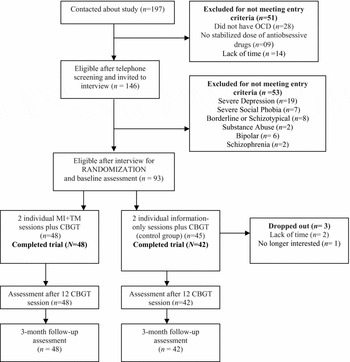
Participants were recruited through radio, TV, and newspaper advertisements offering group treatment for OCD. Participants were screened by telephone using the Yale-Brown Obsessive Compulsive Scale (Y-BOCS) symptom checklist (Goodman et al., Reference Goodman, Price, Ramussen, Mazure, Fleischmann, Hill, Heninger and Charney1989) and for the use of anti-obsessive drugs. An assessment interview was scheduled at the Hospital de Clínicas de Porto Alegre (HCPA), Anxiety Disorders Program (PROTAN). Inclusion criteria were: (1) DSM-IV diagnosis; (2) no use of anti-obsessional medication or use of a stable dose for at least 3 months prior to entering the study; (3) between 18 and 65 years of age; (4) Y-BOCS scores 16 or above. Exclusion criteria were: (1) major depression with suicidal risk; (2) severe personality disorders: borderline or schizotypical; (3) cognitive impairment or mental retardation; (4) lack of motivation for the treatment or lack of available time to attend the sessions; (5) refusal of the group setting, and (6) mild symptoms (Y-BOCS scores equal to or lower than 15). Although personality disorders were not assessed, eight patients with severe personality disorder who were previously diagnosed for borderline or schizotypical by their psychiatry assistant were excluded. However, patients with personality disorder may have been included in the study.
For this study, 146 participants were screened (see flowchart in Figure 1). Fifty-three were determined to be not eligible. Of the 93 eligible subjects, 90 completed the treatment from January 2006 through December 2007. Three patients (see Figure 1) dropped out of treatment and all of the remainder completed the 3-month follow-up.
Flowchart randomized clinical trial comparing MI+TM plus CBGT and CBGT treatment for obsessive- compulsive disorder

Pre-treatment baseline symptom severity was assessed at three points in time: at baseline (before the two individual sessions), post-treatment (after the 12th CBGT session), and at follow-up 3 months after treatment. Interviews were completed by trained psychiatrists or MA-level psychologists experienced in treating OCD patients and blinded to group assignment.
Measures
Pre and post-treatment measures were obtained by one independent psychiatrist and five independent psychologists who were trained on the data collection procedures and who had experience in working with OCD patients. An array of standardized instruments was applied. Each instrument was translated and back translated to Portuguese and has been extensively used by Brazilian authors. Although the scales (Y-BOCS, BDI) were designed for self-rating in this study, they were administered orally by an interviewer, mainly due to the great variability in the educational level of the sample.
Psychiatric diagnoses were determined with the Structured Clinical Interview for DSM-IV (SCID-I) (First, Spitzer, Gibbon and Williams, Reference First, Spitzer, Gibbon and Williams1997). Specifically, the SCID-I was used to confirm the OCD diagnosis and to identify co-morbid disorders.
Obsessive-compulsive symptoms were measured with the Yale-Brown Obsessive-Compulsive Scale (Y-BOCS) (Goodman et al., Reference Goodman, Price, Ramussen, Mazure, Fleischmann, Hill, Heninger and Charney1989). The scale is composed of 10 items – five for obsessions and five for compulsions, including time spent with the symptoms, the level of interference in daily activities and distress, resistance and control of symptoms. Each item was scored from 0 to 4 with a maximum score of 40.
Depression was measured with the Beck Depression Inventory (BDI; Beck, Ward, Mendelson, Mock and Erbaugh, Reference Beck, Ward, Mendelson, Mock and Erbaugh1961). Each participant rated the severity of each symptom on a 4-point scale, ranging from 0 (not at all) to 3 (severe). Scores were summed to overall composite score. The inventory is widely used to measure symptoms of depression and has been documented as a reliable and valid tool (Beck, Steer and Garbin, Reference Beck, Steer and Garbin1988).
Patient's OCD severity was assessed by the Clinical Global Impressions Scale Severity subscore (CGI-S; Guy, Reference Guy1976). The CGI-S determines the severity of OCD, considering the intensity and frequency of symptoms. Scores range from: 1 = normal; 2 = borderline mentally ill; 3 = mildly ill; 4 = moderately ill; 5 = markedly ill; 6 = severely ill; 7 = among the most extremely ill.
Cognitive-behavioral group therapy (CBGT)
The structured, manual-based CBGT was applied as previously described (Cordioli et al., Reference Cordioli, Heldt, Bochi, Margis, Sousa, Tonello, Manfro and Kapczinski2003; Braga, Cordioli and Manfro, Reference Braga, Cordioli and Manfro2005; Sousa, Isolan, Oliveira, Manfro and Cordioli, Reference Sousa, Isolan, Oliveira, Manfro and Cordioli2006). Briefly, CBGT was administered to eight patients per group, and was conducted in a closed-ended group during the course of 12 weekly two-hour sessions. Treatment included psycho-education, exposure and response prevention (ERP) techniques, cognitive techniques to change dysfunctional beliefs, and group techniques. The treatment procedure included specific homework exercises attached to each treatment component. A detailed description of the treatment protocol can be found in Cordioli et al. (Reference Cordioli, Heldt, Bochi, Margis, Sousa, Juliano, Tonello, Teruchkin and Kapczinski2002, Reference Cordioli, Heldt, Bochi, Margis, Sousa, Tonello, Manfro and Kapczinski2003). For each group sessions were conducted by the same therapist and co-therapist. Both therapists were postgraduate psychiatry or psychology students with prior CBGT experience and were blinded to the individual intervention. Patients were also instructed not to reveal or discuss the content of their individual sessions.
Motivational Interviewing (MI) + Thought Mapping (TM) plus CBGT condition
Intervention subjects received two, one-hour individual MI + TM sessions before group sessions began. The intervention was delivered by a doctoral-level therapist who had extensive experience with the MI and TM methods and who did not participate in the CBGT sessions. Individual sessions incorporated MI open-ended questions, avoided confrontation, and used empathy and reflective listening to encourage patients to talk about why, how and when they could change their use of rituals. The therapist called attention to the discrepancies, that is when patients perceive differences between their current situation and their hopes for the future. Moreover, the therapist supported patients' self-efficacy in order to identify their skills and how to generalize these skills to OCD context. Finally, the therapist helped summarize what the patient intended to achieve behaviorally. Bandura (Reference Bandura1977) introduced the notion of self-efficacy, postulating that an individual's self-estimation of their abilities in a specific situation greatly influences their decision in terms of what behaviors to attempt or not, and which to persevere in. Specifically, the therapist explained how the CBGT works, discussed ERP, and encouraged each subject individually to face the anxiety and fear associated with the ERP exercises. The therapist also reinforced the importance of completing ERP exercises and homework assignments. Responses to non-compliance included:
(1) “You do understand what could happen when you do not use rituals, don't you? Would you like to talk more about what could happen?”
(2) “Some OCD patients find it difficult to stop using rituals. For your treatment to be most effective, doing the exercises is important in order to stop using rituals. Does this make sense to you?”
(3) “I wonder if you can face the anxieties caused by the ERP exercises. Can we talk about what strategies others patients use to deal with their anxiety?”
(4) “The choice is yours. What can you do now?”
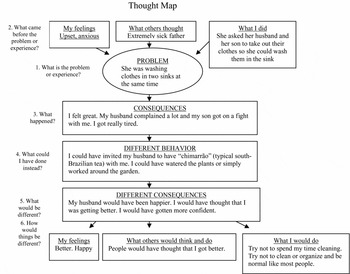
Patients were encouraged to analyze their thought map and to develop strategies to use alternative behaviors to face the anxiety associated with their obsessions. TM was used to present personalized information (see Figure 2 for an example of a completed Thought Map) to connect feelings, thoughts, and actions. The therapist and the patient completed a map in the individual session. The map has two parts: questions 1–3 are used to identify a specific problem (Antecedents), and questions 4–6 are used to “think through” problem solutions (Consequences).
A completed thought map

Completing the TM helps patients quickly focus on: (1) problem recognition: understanding how ritual behaviors are related to OCD; (2) problem identification: specifying circumstances, feelings, and values that contribute to ritual behavior; (3) considering various solutions: identifying available behavioral options; (4) selecting the best alternative: making a specific choice based on a rational projection of probable outcomes; and, (5) assessing the effectiveness of the solution: setting criteria to determine whether specific behaviors could be achieved.
Information-only condition plus CBGT (control group)
In order to control the length and frequency of sessions each patient received with the therapist in the MI+TM condition we created an equivalent control condition. The control condition consisted of two 60-minute individual weekly sessions before the 12 sessions of CBGT conducted by one doctoral-level therapist (who did not participate in the group sessions). As an information-only condition, the therapist provided information about smoking prevention (session 1), and physical activity (session 2). Sessions were conducted in lecture style and provided information such as: (a) Smoking can cause heart disease, stroke, lung disease, among other diseases. Smokers are at higher risk of developing pneumonia and other airway infections; (b) Tobacco smoke contains chemicals that are harmful to both smokers and nonsmokers; breathing even a little tobacco smoke can be harmful; (c) Regular physical activity can reduce the risk of developing coronary heart disease (CHD) and the risk of dying from CHD; (d) Some physical activity is usually better than none, physical activity is safe for almost all individuals, and the health benefits of physical activity far outweigh the risks. Although participants were encouraged to ask questions, MI+TM were not used and, presumably, the intervention did not focus on enhancing commitment to change.
Procedure
The Ethics Committee of the Hospital de Clínicas of Porto Alegre (Institutional Review Board equivalent) approved the study. Written informed consent was obtained from all participants, after a description of the study, emphasizing that consenting participants would be randomized into one of two treatment conditions: 1) two individual sessions of MI+TM and CBGT (intervention group); or 2) two individual information sessions and CBGT (control group). Each patient was assured that their decision to participate in the study would not affect their treatment (CBGT).
The study was conducted in six successive periods of 24 weeks. There were two groups per condition, with 6 or 8 participants in each group. All sessions were conducted by the same therapist and co-therapist, both with prior CBGT experience. Randomization to the MI+TM CBGT and the control group was performed using www.randomizer.org/index.htm).
Data analysis
Baseline data were compared between groups for demographic, severity of symptoms, and use of anti-obsessional medications using a Student's t-test for continuous variables, and Pearson χ2 test for nominal variables. The effect size of the MI+TM CBGT and the control group for the Y-BOCS scores was calculated according to the Cohen (Van Oppen et al, Reference van Oppen, De Haan, Van Balkom, Spinhoven, Hoogduin and Van Dyck1995) formula: 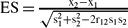 where x1 = pre-scores; x2 = post-scores; s1 = standard deviation of pre-scores; s2 = standard deviations of postscores; r12 = Pearson correlation between pre- and postscores. Interpretation of effect sizes followed the guidelines established by Cohen (Reference Cohen1988): 0.0–0.2 = trivial effect size, 0.2–0.5 = small effect size, 0.5–0.8 = moderate effect size, 0.8 and above = large effect size.
Outcome variables were examined using repeated measures ANOVA to compare patients at baseline, treatment completion, and 3-month follow-up. The criterion used was Wilks' Lambda. A significant interaction Student's t-test paired samples test or one-way ANOVA were used to examine differences. Analysis of covariance (ANCOVA) was used to control for potential confounding variables.
A positive treatment response was defined as a 35% or more decrease in baseline Y-BOCS scores. The Pearson χ2 test was used for dichotomous data: improved (reduction ≥35% on the Y-BOCS) was compared with non-improved (reduction ≤ 35% on the Y-BOCS). Patients who responded to treatment were also categorized as full remission if scores on the Y-BOCS were ≤ 8 and CGI < 2; or partial remission, if the reduction on the Y-BOCS was ≥35% with Y-BOCS score >8 and CGI = 2. Rates were compared across the two groups with the Pearson χ2 test. An intention-to-treat approach was used for subjects who dropped out by classifying dropouts as non-improved or non-completers. Participants who completed the treatment were classified as completers. All p values were two-tailed and with statistical significance set at the .05 level. Statistical analyses were performed with the Statistical Package for Social Sciences for Windows version 13.0.
Results
Subjects
Ninety-three subjects met study criteria and consented to participate (See Figure 1). Three-quarters (75.3%) were women. The mean age at assessment was 38.6 years (SD = 12.5). The mean age at onset of OCD was 10.7 years (SD = 4.53); the mean duration of the illness was 26.3 years (SD = 13.1). The mean age for OCD symptoms that started to interfere with daily activities was 28 years (SD = 12.4). There were no significant differences at baseline between MI+TM CBGT group and control group on age (t = −0.91, df = 91, p = .364); age of OCD onset (t = −0.42, df = 91, p = .679); mean duration of illness (t = −0.22, df = 91, p = .827), mean age when OCD symptoms started to interfere with daily activities (t = −1.20, df = 91, p = .232), BDI (t = −0.39, df = 91, p = .695), CGI-S (t = −0.18, df = 91, p = .859), or mean Y-BOCS scores with 30.9 (SD = 3.83) for the MI+TM CBGT and 31.3 (SD = 5.21) for the control group (t = −0.5, df = 91, p = .648). This similarity persisted independently of medication use: mean Y-BOCS total score (f = 0.49, df = 1,89, p = .487); BDI (f = 0.43, df = 1,89, p = .513); CGI-S (f = 0.37, df = 1,89, p = .543).
Study completers were not different from non-completers: gender (Fisher's Exact Test, p = .150); age (t = −0.91, df = 91, p = .364); age at obsessive-compulsive onset (t = −0.42, df = 91, p = .679); age of illness duration (t = −0.22, df = 91, p = .827); or age at OCD symptoms interference (t = −1.20, df = 91, p = .232); depression (t = 1.08, df = 91, p = .285); baseline clinical global severity (t = −1.01, df = 91, p = .314); or mean Y-BOCS total scores (t = −0.69, df = 91, p = .494).
Thirty-five (37.6%) patients were prescribed anti-obsessional drugs with 18 patients (37.5%) in MI+TM CBGT group and 17 patients (37.8%) in the control group (χ2 = 0.00, df = 1, p = 1.000).
Forty-six (49.5%) participants were married; 44 (37.6%) participants were single; 10 (10.8%) were divorced; and two (2.2%) were widowed. Participants had an average of 14.4 years of education (SD = 4.06). Sixty-nine (74.2%) participants were diagnosed with at least one co-occurring mental disorder. The most common comorbidities were major depressive disorder (32.3%), social phobia (29%), simple phobia (28%), and posttraumatic stress disorder (12.9%). Among impulsive control disorders, compulsive buying (12.9%) was the most common, followed by skin picking (10.8%).
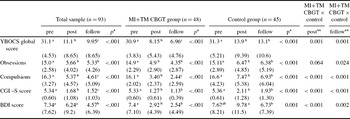
Baseline, intervention completion, and follow-up scores for the MI+TM CBGT and the control groups are presented in Table 1.
Mean (SD) outcome measures at baseline and post-treatment for the total sample, MI+TM CBGT group, and control group

YBOCS = Yale-Brown Obsessive-Compulsive Scale; CGI = Clinical Global Impressions Severity of Illness scale; BDI = Beck Depression Inventory; MI = Motivational Interviewing; TM = Thought Mapping; OCD = Obsessive-Compulsive Disorder; CBGT = Cognitive Behavioral Group Therapy; SD = Standard Deviation; Pre = pre-treatment; Post = post treatment; Follow = 3-month follow-up.
*Repeated measures ANOVA.
**One way ANOVA.
a, b, c In each line, different letters indicate statistically significant difference (p < .05) according Bonferroni test.
tabela
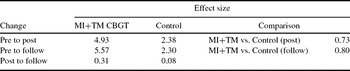
Repeated measures ANOVA showed a significant interaction between time and treatment condition: Y-BOCS scores [F(2,90) = 6.67, p = .002]; Y-BOCS Compulsions subscale [F(2,90) = 9.82, p < .001]; BDI [F(2,90) = 4.56, p = .013]; CGI-S [F(2,90) = 7.09, p = .001]. However, the Y-BOCS Obsessions subscale showed no significant interaction between time and treatment condition [F(2,90) = 2.51, p = .087]. The difference in mean change scores and effect sizes between the MI+TM CBGT and control groups are presented in Table 2.
Difference in mean change of Y-BOCS scores and comparison of effects sizes between groups for a sample of 93 OCD patients

Y-BOCS = Yale-Brown Obsessive-Compulsive Scale; MI = Motivational Interviewing; TM = Thought Mapping; CBGT = Cognitive Behavioral Group Therapy; OCD = Obsessive-Compulsive Disorder; Pre = pre-treatment; Post = post treatment; Follow = 3-month follow-up.
Treatment response
The mean reduction of symptoms (Y-BOCS) was 72.5% for patients in the MI+TM CBGT group and a 56.3 % symptom reduction for the control group (t = 3.41, df = 91, p = .001). The improvement in relative risk for the MI+TM CBGT group was 1.30 (95% CI = 1.09–1.54), compared to the control group. At the 3-month follow-up, the mean baseline Y-BOCS score reduction was 77.4% for the MI+TM CBGT group and 59.4% for the control group (t = 3.51, df = 91, p = .001). The improvement in relative risk for the MI+TM CBGT group was 1.32 (95% CI = 1.12–1.56) compared to the control group.
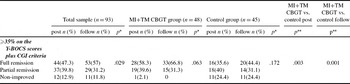
The rates that patients in the MI+TM CBGT and control group met the full remission criteria, partial remission, or non-improved status at post-treatment and three-month follow-up are presented in Table 3.
Rates of clinical improvement as measured by the reduction in the Y-BOCS scores using ≥35% plus a CGI score of 1 or 2

Y-BOCS = Yale-Brown Obsessive-Compulsive Scale; CGI = Clinical Global Impressions Severity of Illness scale; MI = Motivational Interviewing; TM = Thought Mapping; Post = post treatment; Follow-up = 3-months follow-up.
*McNemar Chi-Square test; **Pearson Chi-Square test
Discussion
This study is the first randomized clinical trial to test the effects of including individual sessions of Motivational Interviewing (MI) and Thought Mapping (TM) to CBGT in order to improve group treatment for obsessive-compulsive disorder (OCD). This cognitive behavioral trial provides initial support for adding MI and TM to CBGT to decrease symptoms and enhance remission for OCD patients. Post-treatment measures for the CBGT control group were similar to previous studies (Cordioli et al., Reference Cordioli, Heldt, Bochi, Margis, Sousa, Tonello, Manfro and Kapczinski2003; Braga et al., Reference Braga, Cordioli and Manfro2005; Sousa et al., Reference Sousa, Isolan, Oliveira, Manfro and Cordioli2006). Previous research reported that the fear of ERP may be the critical reason to explain why patients do not adhere to CBT (Maltby and Tolin, Reference Maltby and Tolin2005). In the present study patients who received the MI+TM CBGT were encouraged before CBGT to face their increased anxiety inherent to OCD prevention exercises (ERP). In addition, patients in the MI+TM CBGT group were “taught” to refrain from rituals and that cessation usually leads to long-term relief from frequent and distressing obsessions. We postulate that the use of MI and TM could have played a role in assisting patients in completing their homework assignment more often than the patients in the control group. The better outcome obtained in the MI+TM CBGT group, shown by the significantly higher symptom reduction and remission compared to the control group, may be a result of better homework compliance in the intervention group. This conclusion is a speculation that is partially based on empirical observation and clinical experience. Future studies that directly address the homework compliance and the difficulty in completing weekly assignment will be necessary to confirm our prediction that MI and TM help patients to complete their ERP exercise.
Although the effect sizes are relatively large in both groups, the effect size from pre-test to post-test was greater than those reported in other CBGT studies: 1.00 by McLean et al. (Reference McLean, Whittal, Thordarson, Taylor, Sochting, Koch, Paterson and Anderson2001), and 1.00 by Anderson and Rees (Reference Anderson and Rees2007). Several factors could account for this difference including: (a) study participants had pre-treatment mean Y-BOCS score that were significantly higher (p < .001) at 31.1 than those reported by McLean et al., Reference McLean, Whittal, Thordarson, Taylor, Sochting, Koch, Paterson and Anderson2001 (22.0), and by Anderson and Rees, Reference Anderson and Rees2007 (25.4); (b) selected comorbidities were excluded; (c) it is necessary to consider that the differences between the results of our study and those of previous studies could be due to differences in the method applied. As Miller (Reference Miller2001) described, motivational interviewing can synergistically amplify the effect of other treatments. In contrast to other studies, this research utilized two approaches in one condition. The best results were obtained using MI+TM in combination with CBGT. Additional CBGT trials that administer MI and TM separately would be helpful to clarify the mechanism of action or mediation of these strategies.
An important aspect of this study was the low attrition. The MI+TM CBGT group had no dropouts and the control group had a dropout rate of 3.2%, which is lower than previously reported. Typically 5 to 30% of patients do not complete clinical trials (Marks and O'Sullivan, Reference Marks and O'Sullivan1988). In ERP studies, the dropout rate was 20 to 30% (Maltby and Tolin, Reference Maltby and Tolin2005). A plausible explanation for the low dropout rate in our study is that most patients reported being satisfied with the treatment. Furthermore, patients explained that group interaction and suggestions given by other group members had a positive influence on treatment adherence.
Although depressive symptoms were not the focus of treatment, there was a statistically significant reduction in BDI depression symptoms in the MI+TM CBGT group when compared to the control group with a slight post-treatment increase in BDI scores. Although the initial BDI scores were low and not clinically relevant, changes in BDI scores were not associated with reductions in OCD symptoms.
Findings related to Axis I conditions reported in our study are similar to those reported in OCD clinical samples. Specifically, major depressive disorder is the most frequent comorbid condition, followed by general anxiety disorders, with rates for depressive episodes from 20–67%; specific phobias from 7%-22%,; and social anxiety disorder from 8–42% (Rasmussen and Eisen, Reference Rasmussen and Eisen1994; Crino and Andrews, Reference Crino and Andrews1996; Milanfranchi et al., Reference Milanfranchi, Marazziti, Pfanner, Presta, Lensi, Ravagli and Cassano1995; Sobin et al., Reference Sobin, Blundell, Weiller, Gavigan, Haiman and Karayiorgou1999; Attiullah, Eisen and Rasmussen, Reference Attiullah, Eisen and Rasmussen2000; Steketee et al., Reference Steketee, Chambless and Tran2001; Tükel, Polat, Ozdemir, Aksüt and Türksoy, Reference Tükel, Polat, Ozdemir, Aksüt and Türksoy2002).
The current study illustrates the importance of collecting post-treatment follow-up data. For example, subjects improved (reduction ≥ 35% on the Y-BOCS scores) from treatment completion to 3-month follow-up. Even though some patients in the control group showed some improvement from treatment completion to follow-up, the MI+TM CBGT group showed more improvement. In addition, the rates of patients from the intervention group with mild or sub-clinical symptoms (<16 on the Y-BOCS scores) also increased at the 3-month follow-up. It is important to note that there was a significant decrease on the Y-BOCS compulsion subscale score at the 3-month follow-up for the intervention group. Additional research with only MI or TM could help to clarify the effect of these sessions for patient improvement.
There are important limitations to this study. First, patients were explicitly recruited for group treatment because it is the only free OCD treatment offered by the Hospital de Clinicas de Porto Alegre. Thus, recruitment may have biased the types of patients who sought treatment. One hypothesis is that patients who choose group treatment may be more motivated to follow treatment. It is possible that positive expectations and motivation could influence treatment outcomes. Therefore, it would be interesting in the future to examine patients’ expectations as a function of treatment choice. Second, Y-BOCS inter-rater reliability was not analyzed, which could have biased Y-BOCS scores. However, data in this study were consistent with Rosario-Campos et al. (Reference Rosario-Campos, Leckman, Mercadante, Shavitt, Prado, Sada, Zamignani and Miguel2001), Fisher and Wells (Reference Fisher and Wells2005) and Yamanishi et al. (Reference Yamanishi, Nakaaki, Omori, Hashimoto, Shinagawa, Hongo, Horikoshi, Tohyama, Akechi, Soma, Iidaka and Furukawa2008) studies, who reported mean pre-treatment Y-BOCS scores of 30.3, 28.5 and 33.5 respectively. Lastly, outcomes were not examined after individual sessions, including motivation for change, treatment adherence, and homework compliance. Without discriminative measures to effect sizes for MI and TM interventions, it is not possible to determine which individual intervention is associated with the outcomes. Future research is needed to understand the possible differences between the effectiveness of MI and TM. Consequently, generalization is limited by the exclusion criteria, and the fact that participants included in the study came from a unique center located in a reference university hospital for the south of Brazil. University services for OCD treatment probably comprise more severe cases. Therefore, the results cannot be directly generalized to OCD patients from primary or secondary health care units, neither to community samples. Despite these limitations, findings from this first randomized trial are promising.
In conclusion, this study presents findings from the first randomized trial that used Motivational Interviewing and Thought Mapping to enhance the effectiveness of CBGT for OCD treatment. Although both groups showed improvement, superior and clinically meaningful outcomes were found for participants who received MI+TM in addition to CBGT.
Acknowledgements
We would like to thank the Hospital de Clinicas of Federal University of Rio Grande do Sul (HCPA-UFRGS) which has made this study possible. We would like to thank Andreia Raffin, Cenita Borges and Lucas Lovato for their assistance with treatment. We also would like to thank Katia Niederauer, Vinicius Dornelles e Ygor Londero for their assistance with assessment interviews. The authors thank Dr Manuela Polydoro, Dr Cynthia Campbell, Dr Brian Rush and Dr Ygor Ferrão for their suggestions and review of the preliminary forms of this manuscript. Finally, we would like to thank Jennifer R. Havens, Daniela Benzano and Ceres Oliveira for their statistical advice. Dr Elisabeth Meyer has a doctoral grant from Conselho Nacional de Desenvolvimento Científico e Tecnologico (CNPQ), process number 142030/2006-6. Dr Roseli G. Shavitt has a post-doctoral grant from Fundação de Amparo à Pesquisa do Estado de São Paulo (FAPESP), process number 06/61459-7.



Comments
No Comments have been published for this article.