Smectite, kaolinite, illite, talc and fibrous clays are among the phyllosilicates most widely used in the formulation of pharmaceutical and/or cosmetic products (Viseras et al., Reference Viseras, Meeten and Lopez-Galindo1999; Veniale et al., Reference Veniale, Barberis, Carcangiu, Morandi, Setti, Tamanini and Tessier2004; Choy et al., Reference Choy, Choi, Oh and Park2007; Tateo & Summa, Reference Tateo and Summa2007; López-Galindo et al., Reference López-Galindo, Viseras, Aguzzi, Cerezo, Galan and Singer2011; Shah et al., Reference Shah, Khattak, Valenzuela, Manan and F.V2013; Gomes & Rautureau, Reference Gomes and Rautureau2021; Bastos & Rocha, Reference Bastos and Rocha2022). Several research studies have demonstrated that these minerals have a beneficial effect on human health because of their therapeutic and curative properties, particularly their high cation-exchange capacity (CEC), high specific surface area and colloidal particle size (López-Galindo & Viseras, Reference López-Galindo, Viseras, Wypych and Satyanarayana2004; López-Galindo et al., Reference López-Galindo, Viseras and Cerezo2007; Carretero et al., Reference Carretero, Gomes and Tateo2006; Viseras et al., Reference Viseras, Aguzzi, Cerezo and Lopez-Galindo2007, Reference Viseras, Carazo, Borrego-Sánchez, García-Villén, Sánchez-Espejo, Cerezo and Aguzzi2019; Carretero & Pozo, Reference Carretero and Pozo2010; Modabberi et al., Reference Modabberi, Namayandeh, López-Galindo, Viseras, Setti and Ranjbaran2015; Moraes et al., Reference Moraes, Bertolino, Cuffini, Ducart, Bretzke and Leonardi2017; Khiari et al., Reference Khiari, Sánchez-Espejo, García-Villén, Cerezo, Aguzzi, López-Galindo, Jamoussi and Viseras2019; Barhoumi et al., Reference Barhoumi, Bekri-Abbes and Srasra2021; Gomes et al., Reference Gomes, Rautureau, Gomes, Silva, Gomes and Rautureau2021).
Moreover, clays are widely used in topical semisolid systems and particularly in pelotherapy, a form of balneotherapy, or therapeutic bathing, utilizing the application of peloids: therapeutic muds, clays or peat. Natural peloids consist of organic-derived phases such as humus and minerals, and they form over long periods of time through geological, biological, chemical and physical processes. Previous studies have discussed the suitability of various clay minerals and various medicinal or sea waters for the preparation of peloids and their effects on human health. In addition, several authors have concluded that the temperature and the organic and inorganic components of peloids play important roles in their penetration through the skin barrier and subsequent absorption during pelotherapy applications. Nevertheless, some studies have suggested that chemical elements in clays may pass through the skin barrier and potentially reach cells via transfollicular penetration (Poli et al., Reference Poli, Romano, Cordella, Orlando, Nicolaus and Ceschi Berrini2009; Tateo et al., Reference Tateo, Ravaglioli, Andreoli, Bonina, Coiro, Degetto and Summa2009; Wright et al., Reference Wright, Richards and Srai2014; Cervini-Silva et al., Reference Cervini-Silva, Ramírez-Apan, Gómez-Vidales, Palacios, Montoya and de Jesús2015; Sasaki et al., Reference Sasaki, Sathi and Yamamoto2017; Antonelli & Donelli, Reference Antonelli and Donelli2018; Gáti et al., Reference Gáti, Tefner, Kovács, Hodosi and Bender2018). Metals and toxic elements, or so-called potentially toxic elements (PTEs), such as cadmium, arsenic, nickel, copper, iron, chromium and cobalt, are frequently present in clays and medicinal mineral waters. Their excessive presence can pose risks to human health. Therefore, clays and waters must be thoroughly characterized in terms of their mineralogical, physicochemical and technological properties before being considered for health applications, particularly in pelotherapeutic treatments (Mefteh et al., Reference Mefteh, Khiari, Sánchez-Espejo, Aguzzi, López-Galindo, Jamoussi and Viseras2014). Ultimately, the goal is to develop products that can be safely applied to patients. For this reason, detailed information regarding the composition of these materials should be obtained (Gomes & Silva, Reference Gomes and Silva2007; Aguzzi et al., Reference Aguzzi, Sánchez-Espejo, Cerezo, Machado, Bonferoni and Rossi2013; Borowska & Brzóska, Reference Borowska and Brzóska2015; Schlosser et al., Reference Schlosser, Grathoff, Ostertag-Henning, Kaufhold and Warr2016; Bruzzoniti et al., Reference Bruzzoniti, Abollino, Pazzi, Rivoira, Giacomino and Vincenti2017; Glavaš et al., Reference Glavaš, Mourelle, Gómez, Legido, Šmuc, Dolenec and Kovač2017; Stuhli et al., Reference Sasaki, Sathi and Yamamoto2017; Khalil et al., Reference Khalil, Charef, Khiari, Pérez, Andolsi and Hjiri2018; García-Villén et al., Reference García-Villén, Sánchez-Espejo, Borrego-Sánchez, Cerezo, Perioli and Viseras2020; Srasra & Bekri-Abbes, Reference Srasra and Bekri-Abbes2020; Mefteh & Medhioub, Reference Mefteh, Medhioub, Çiner, Grab, Jaillard, Doronzo, Michard, Rabineau and Chaminé2022; Almeida et al., Reference Almeida, Rocha and Candeias2023; Bastos et al., Reference Bastos, Rocha, Patinha and Marinho-Reis2023; Sánchez Espejo et al., Reference Sánchez, Baschini, Pozo, Gramisci, Roca Jalil and Vela2023).
Reviews by Carretero (Reference Carretero2020) and, more recently, by Akimzhanova et al. (Reference Akimzhanova, Sabitova, Mussabayeva, Kairbekov, Bayakhmetova and Proch2024) investigated and classified the thermal muds, also called peloids, used in many countries for therapeutic purposes, to develop a standard for the mineralogical, chemical and physicochemical quality of peloids. However, many parameters can affect the properties of thermal muds, such as: (1) the composition of the clays (raw materials); (2) the type and quality of the water; (3) the period of maturation or the contact time of the clay–water suspension; and (4) the ability of thermal muds to trigger the growth of microorganisms characterized by therapeutic biomolecules (Calderan et al., Reference Calderan, Carraro, Honisch, Lalli, Ruzza and Tateo2020). These parameters should be considered because they directly affect the quality of the final mud.
In Tunisia, peloids are used in many thermal treatment spas as therapeutic mud baths. Most of these installations do not have detailed information regarding these products, and every centre has its own protocols and raw materials for preparing peloids, with some of them still being produced and used according to traditional methods. This is due to a lack of scientific evaluation and knowledge regarding the ideal composition and the effects of the natural clays used in peloid formulations, as well as the impacts of the quality and chemical composition of the thermal water used for the enrichment of the final product. This indicates that there is a need for studies to support the definition of such quality parameters and protocols to ensure that the desired goals are achieved.
As discussed in a previous work (Mefteh & Medhioub, Reference Mefteh and Medhioub2021), peloids can be considered medicinal or cosmetic products and, therefore, should comply with certain requirements, meet strict criteria and be certified by a specialized laboratory that can evaluate the composition of their raw materials and the final product. In the same investigation, Mefteh & Medhioub (Reference Mefteh and Medhioub2021) examined the quality and composition of two Tunisian peloids collected from the medical thermal stations of Jebel El Oust and Korbous in north-eastern Tunisia. The study focused on evaluating their mineralogical composition (main minerals and other non-suitable associated phases), chemical composition (heavy metal content and impurities), thermal analysis and technological properties (pH, CEC). The study showed that the peloid from Jebel El Oust is suitable for external use, whereas the Korbous peloids require purification to remove impurities, including quartz and other non-suitable associated mineral phases, as well as heavy metals such as arsenic, all of which are present at high levels. Consequently, these thermal muds could pose risks to human health and must be carefully controlled. If necessary, the raw material should be treated to eliminate these impurities, or even discarded.
Therefore, the objective of this study is to prepare and qualify three suitable artificial peloids via the maturation of some Tunisian smectitic clays with the thermal waters of Ain Echfa of Korbous (Cape Bon, north Tunisia), and to investigate the behaviour of these clays and the physicochemical changes that affect these clays during the maturation process.
To this end, some Tunisian smectitic clay samples of various ages age (from Lower Cretaceous to Mio-Pliocene) were brought into contact with thermal waters for long periods of up to 360 days. The matured clayey samples were evaluated regarding their richness and purity (percentage of main component) and associated minerals (quartz, gypsum and halite contents and fibrous minerals), as well as their safety, including determination of toxic element or heavy metal contents, such as arsenic and lead. Finally, a clay–water mixture was proposed that was usable for the formulation of a suitable peloid, which complies with requirements for use in pelotherapy.
Materials and methods
Raw materials
Tunisia has a large reserve of clays that generally extend over large areas and are easily accessible. The abundance of natural clays, at low cost and of high quality, makes these materials an good choice for research work in geomedicine. The valorization of these clays, particularly smectitic ones, mainly focuses on the discolouration of mineral and vegetable oils (Eloussaief et al., Reference Eloussaief, Chakroun, Kallel and Benzina2020; Chakroun et al., Reference Chakroun, Sghaier and Gaied2023), the manufacture of bricks and ceramics (Jeridi et al., Reference Jeridi, Hachani, Hajjaji, Moussi, Medhioub, Lopez-Galindo and Jamoussi2008; Chalouati et al., Reference Chalouati, Bennour, Mannai and Srasra2020), the retention of micropollutants (Chaari et al., Reference Chaari, Medhioub, Jamoussi and Hamzaoui2021; Aloulou et al., Reference Aloulou, Aloulou, Romdhani, Duplay and Amar2023) and the clarification and defluorination of phosphoric acid (Trabelsi & Tlili, Reference Trabelsi and Tlili2017; Hamza et al., Reference Hamza, Chtara and Benzina2013).
To evaluate the potential of certain Tunisian clays for the preparation of peloids, we collected three representative samples from various sedimentary rock outcrops in Tunisia. Each representative sample was obtained by mixing several individual samples collected from various points within the same site to ensure that it accurately reflected the overall composition of the deposit:
• Two samples from Jebel Romana (Rr) and Jebel Aidoudi (AYDr), belonging to the Aleg Formation of Coniacian to low Campanian age (Burollet, Reference Burollet1991).
• One sample from the clay potters’ formation in the Menzel Temime region (CBLLr) of Pliocene age (Colleuil, Reference Colleuil1976).
These deposits are sedimentary rocks that are primarily composed of clay-rich strata. The marine sedimentary layers that make up the Aleg Formation belong to a larger stratigraphic unit that spans over a sizable portion of Tunisia (Burollet, Reference Burollet1991). The Pliocene-formed continental sedimentary environment of the Menzel Temime deposits is mostly used for pottery production (Colleuil, Reference Colleuil1976).
The choice of these samples was based on the ease of extraction and the thickness of the beds, as well as on the nature of the raw materials (i.e. containing abundant clay fractions). The clayey materials were mixed and matured in situ with the thermal water of Ain Echfa (situated in the Cape Bon region (Korbous), north-east Tunisia (36°81′N, 36°56′E); Fig. 1).
Locations of the study areas.

Analytical methods
The mineralogical composition of the raw and matured samples was determined by X-ray diffraction (XRD) using a Philips® X-Pert diffractometer with Cu-Kα radiation (λ = 1.5405 Å) and a step size of 0.02°2θ s−1 in the 4–65°2θ range. The digital processing of the data was carried out using X’Pert HighScore Plus software. For the identification of clay minerals, orientated aggregates of clay fractions were prepared and placed on glass slides and dried in air. To better differentiate the clay minerals, three different glass slides were prepared: one glass slide was air dried without treatment, a second glass slide was treated with ethylene glycol and a third glass slide was heated at 550°C for 2 h (Moore & Reynolds, Reference Moore and Reynolds1997). For the semi-quantification of the clay minerals and their associated phases, values were obtained using the classic method (area measurement of peaks and reflective power) and were corrected according to the chemical composition (López-Galindo et al., Reference López-Galindo, Ruiz and Lopez1996).
To understand the effects of the maturation processes on the crystal order of the most abundant clay minerals, we calculated the crystal order index of smectite (Biscay index; BI), illite (Kubler index; KI) and kaolinite (Hinckley index; HI).
The BI was measured on a glycolated orientated aggregate (17 Å smectite peak) according to the following formula: BI = v/p, where v is the height of the ‘valley’ bordering the smectite peak (at 17 Å) towards the small angles and p is the height of the smectite peak relative to the background (Caillère et al., Reference Caillère, Hénin and Rautureau1982). The depth of the valley depends on where the smectite reflection intercepts the background. When the reflection is wide, the angle at which it intercepts the background becomes large and the valley is ill-defined. Well-ordered smectites have a well-defined peak that does not interfere with the background towards small angles (v/p = 1). Poorly ordered smectites develop a shoulder towards the small angles (v/p tends towards 0), and very poorly ordered smectites do not demonstrate any obvious peak and their valleys are almost non-existent (v/p < 0; Brown & Brindley, Reference Brown, Brindley, Brindley and Brown1980).
The HI of clayey samples was evaluated according to Hughes & Brown (Reference Hughes and Brown1979, in Plançon et al., Reference Plançon, Giese and Snyder1988) and Ndlovu et al. (Reference Ndlovu, Farrokhpay, Forbes and Bradshaw2015). It was measured from the bulk rock XRD traces. This provided an approximation of the degree of crystal order of the kaolinite.
The KI is the peak width at half-height for the illite (001) diffraction maximum (the peak at 10 Å), measured on an orientated aggregate treated with ethylene glycol (Eberl & Velde, Reference Eberl and Velde1989). This parameter is interpreted differently depending on the context considered. For KI values below 2.5 mm, illite is considered well-ordered, with little alteration and/or degradation. For values of 2.5 mm < KI < 4.0 mm, the illite is considered well or moderately ordered. Finally, for KI values >4 mm, the mineral is considered poorly ordered, as it is largely altered and/or degraded (Thorez, 1986).
The chemical composition (major and trace elements of the total rock) was determined by X-ray fluorescence (XRF) using a Bruker S4 Pioneer XRF spectrometer, and the quantification was made using the Spectra Plus software related to the equipment.
The size distribution of the raw and matured samples was determined using a Micromeritics Sedigraph 5100. The method used is based on Lorenz–Mie theory (Lock & Gouesbet, Reference Lock and Gouesbet2009), which gives the percentage distribution of particles according to their equivalent diameters.
CEC was estimated using inductively coupled plasma–optical emission spectrometry (ICP-OES; Optima 8300 ICP-OES Spectrometer, Perkin Elmer, Waltham, MA, USA). The exchangeable cations (Na+, Ca2+, Mg2+, K+) were displaced by mixing 1 g of dry total rock powder and 25 mL of an aqueous solution of tetramethylammonium bromide (TMAB; 1 M), followed by centrifugation at 8000 rpm for 30 min, after which the resultant was dispersed overnight at ambient temperature (25°C), and finally this suspension was filtered (0.45 µm pore size, MF-Millipore). Three replicates were obtained from each sample, and the CEC (meq 100 g–1 of clay) was evaluated as the sum of exchangeable cations between the TMAB solution and the cations present in the clay.
The specific surface area of the clay samples was calculated using the Methylene Blue method. In this method, 10 g of the clay sample are added to 100 mL of deionized water and stirred to ensure thorough dispersion of clay particles. Then, drops of Methylene Blue (C16H8N3SCl•3H2O) are added to the suspension. As the titration proceeds, the adsorption sites on the clay become saturated with the dye molecules that adsorb on their surface. Titration continues until the suspension reaches a point at which a permanent stain appears, signifying that the clay particles can no longer adsorb any more dye and the sample is saturated. A known calibration constant that links the volume of Methylene Blue with surface area is used to determine the specific surface area of the clay sample using this dye volume, and the result is given in m2 g–1 (Gürses et al., Reference Gürses, Karaca, Ç, Bayrak, Açıkyıldız and Yalçın2004; Mouni et al., Reference Mouni, Belkhiri, Bollinger, Bouzaza, Assadi and Tirri2018).
Determination of the plastic and liquid limits and plasticity index was done according to Portuguese Standard NP 143-1969 (Bastos & Rocha, Reference Bastos and Rocha2022). The pH of the normalized suspensions was measured with a Mettler Toledo pH meter by mixing 5 g of each sample in a suspension of 5% w/v distilled water. Three replicates were prepared for each sample (EP, 2020; USP, 2020).
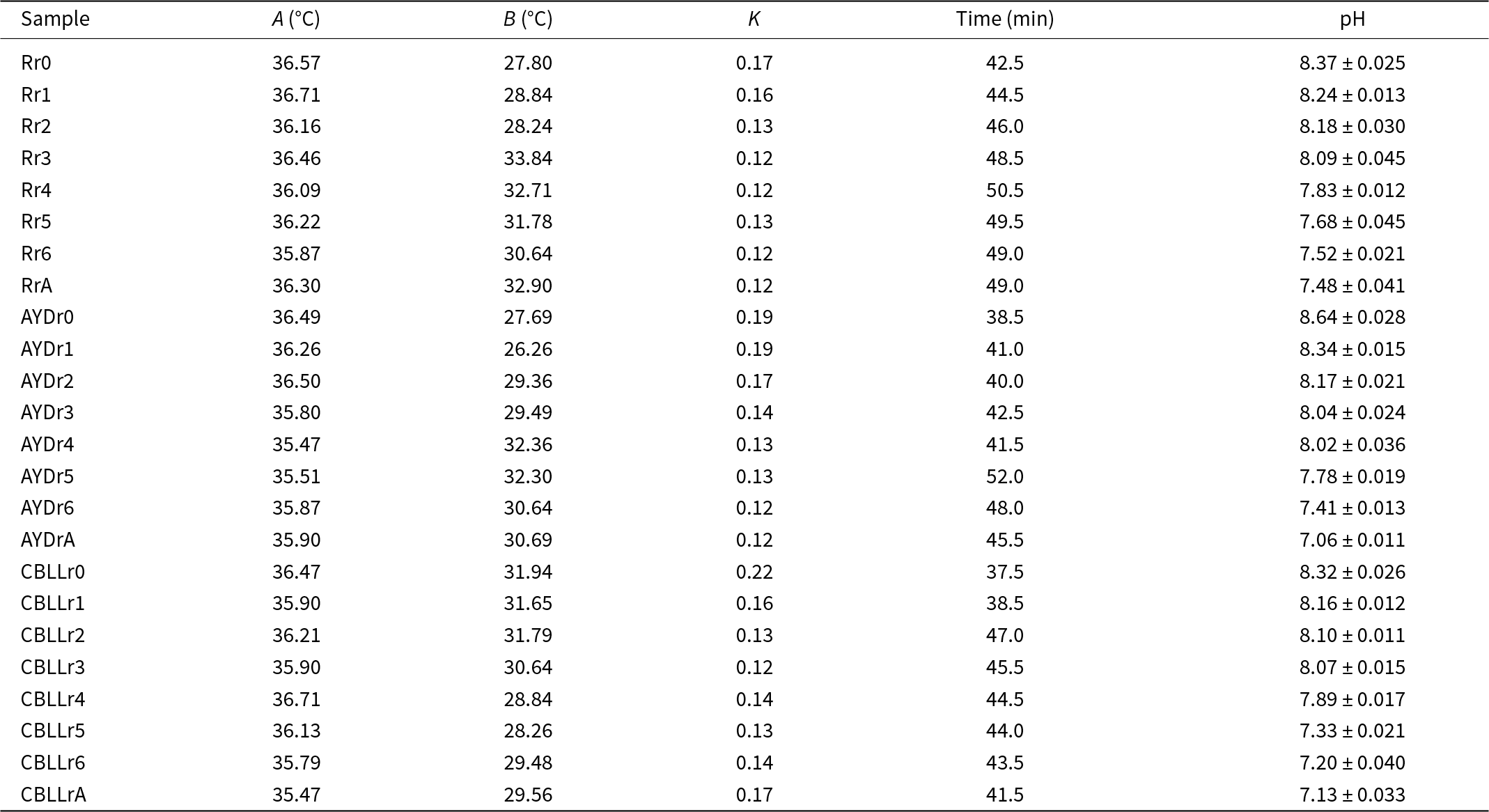
The estimation of the cooling kinetics of the samples was carried out according to Rebelo et al. (Reference Rebelo, Viseras, López-Galindo, Rocha and da Silva2011). In brief, 30 g of the dried samples were heated at 70°C and then placed in a water bath at 35°C. The temperature was measured every 30 s with a WT-1 digital thermometer. The experiment was stopped when the temperatures of the water bath and the mud became identical. The experimental cooling results were analysed using Origin 8.0 software via an exponential curve based on the function: T = A – Be−Kt, where A indicates the temperature of the thermostatic bath, B is the difference between the thermostatic bath temperature (A) and the initial temperature of the mud, K denotes the cooling speed and t denotes the cooling time (Legido et al., Reference Legido, Medina, Mourelle, Carretero and Pozo2007; Rebelo et al., Reference Rebelo, Viseras, López-Galindo, Rocha and da Silva2011).
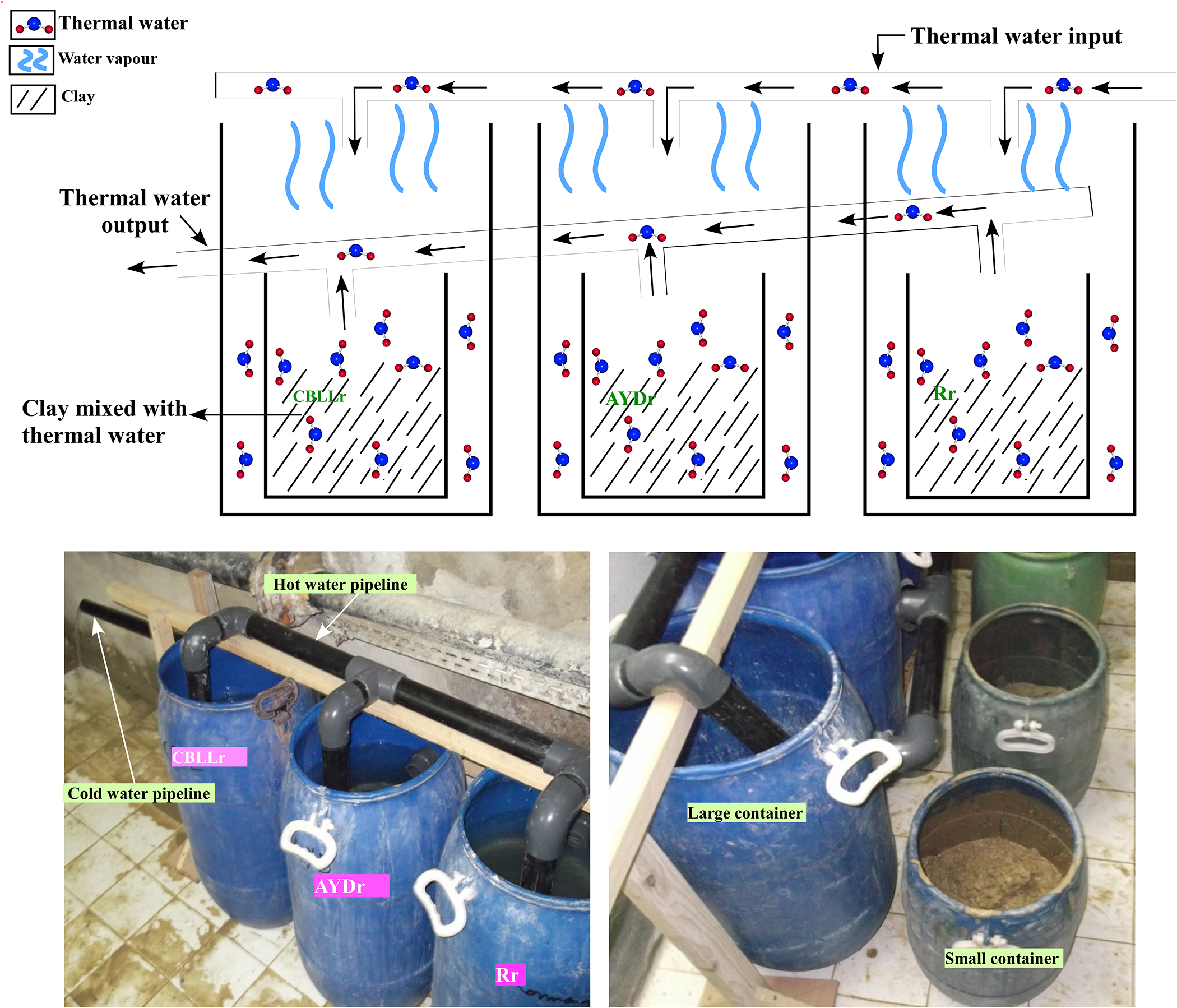
Maturation station used for the maturation of the Tunisian clays with the thermal water of Ain Echfa.

Maturation processes and peloid preparation
The representative clay samples (Rr, AYDr, CBLLr) previously described were matured with the thermal water of Ain Echfa in Korbous. For this reason, an appropriate system for the maturation of these Tunisian clays was prepared (Fig. 2). This system was fabricated from three large plastic containers that contain three other small containers carrying the clay. A hot water pipe allowed the circulation and the permanent contact between the hot water and the clay samples. An outgoing water pipe allowed for drainage, and this drainage was generally less hot than the entering water. To avoid contamination between the various containers used, it is worth noting that we tried to separate the three exits from the cold water. This system was placed near the thermal spring of Ain Echfa in Korbous so that the clays remained in contact with water from this source under natural light, with stirring occurring every 7 days. The flow of water was temporarily stopped during agitation to avoid both interference and the potential loss of the samples.
The thermal water/clay paste was prepared according to Gámiz et al. (Reference Gámiz, Martín-García, Fernández-González, Delgado and Delgado2009), with a liquid/solid ratio of 2:1 (w:w): 1.0 kg of liquid and 0.5 kg of solid. This ratio gives a relative excess of water, which makes it possible to permanently cover the clay/water mixture with a layer of water of a few centimetres in depth.
The maturation of these clays lasted for periods ranging from 7 up to 360 days. Table 1 describes the origins of the matured clays and the various periods of maturation and sampling.
Origins of the matured clays and maturation period.

” >a ‘0ʹ indicates the non-matured clay.
Thermal water characterization
The source of Ain Echfa mineral water used in this study is located in Korbous. The region of Korbous, in the north-east of Tunisia, has a Mediterranean climate. It is characterized by an annual average precipitation (relatively high) of ∼500 mm and an average daily temperature (relatively moderate) of 12–27°C (Ghozzi et al., Reference Ghozzi, Zemzem, Dhiab, Challouf, Yahia, Omrane and Ouada2013; Hammouda et al., Reference Hammouda, Bouaziz, Rebai and Rouis2014).
The origin of the thermal water of the north-east of Tunisia is meteoric (Trabelsi et al., Reference Trabelsi, Makni, Bouri and Dhia2015). This water infiltrates deeply into the Jurassic dolomite and reaches a high temperature as it rises upwards to supply the discharge zones (hot springs). The tectonic structures that affect the area are the main cause of the upwards movement of hot water from the depths to the surface. Moreover, the chemical composition of the thermal groundwater differs significantly depending on the geological and hydrogeological setting (Rossi et al., Reference Rossi, Dobrzyński, Moro, Zancato, Realdon, Bundschuh and Tomaszewska2018).
The therapeutic indications for this mineral water are respiratory pathologies, rheumatoid arthritis and neuralgic manifestations, and it is also recommended for dermatological problems and skin diseases (Bouraoui et al., Reference Bouraoui, Rebib, Aissa, Touzel, O’Donohue and Manai2013; Kiełczawa, Reference Kiełczawa, Bundschuh and Tomaszewska2018; Davinelli et al., Reference Davinelli, Bassetto, Vitale, Scapagnini, Rattan and Kyriazis2019).
The measurement of the temperature, salinity, electrical conductivity (EC) and pH of the Ain Echfa water was carried out in situ using portable meters: respectively, a digital thermometer (Elitech WT-1), a salinity meter (ORAPXI Digital Salinity Tester IP67) and a pH and conductivity meter (APERA PH850). The total dissolved solids (TDS) were calculated by evaporating 100 mL of the samples at 110°C for 24 h.
Determination of the major element contents of the spring water of Ain Echfa used for the maturation of the clay samples was carried out using liquid-phase ionic chromatography (Metrhom HPLC), and the experimental error was ±0.1 mg L–1. Trace elements were measured using atomic adsorption spectrometry (Perkin-Elmer 1100B), and the experimental error was ±0.2 μg L–1.
Results
Water composition
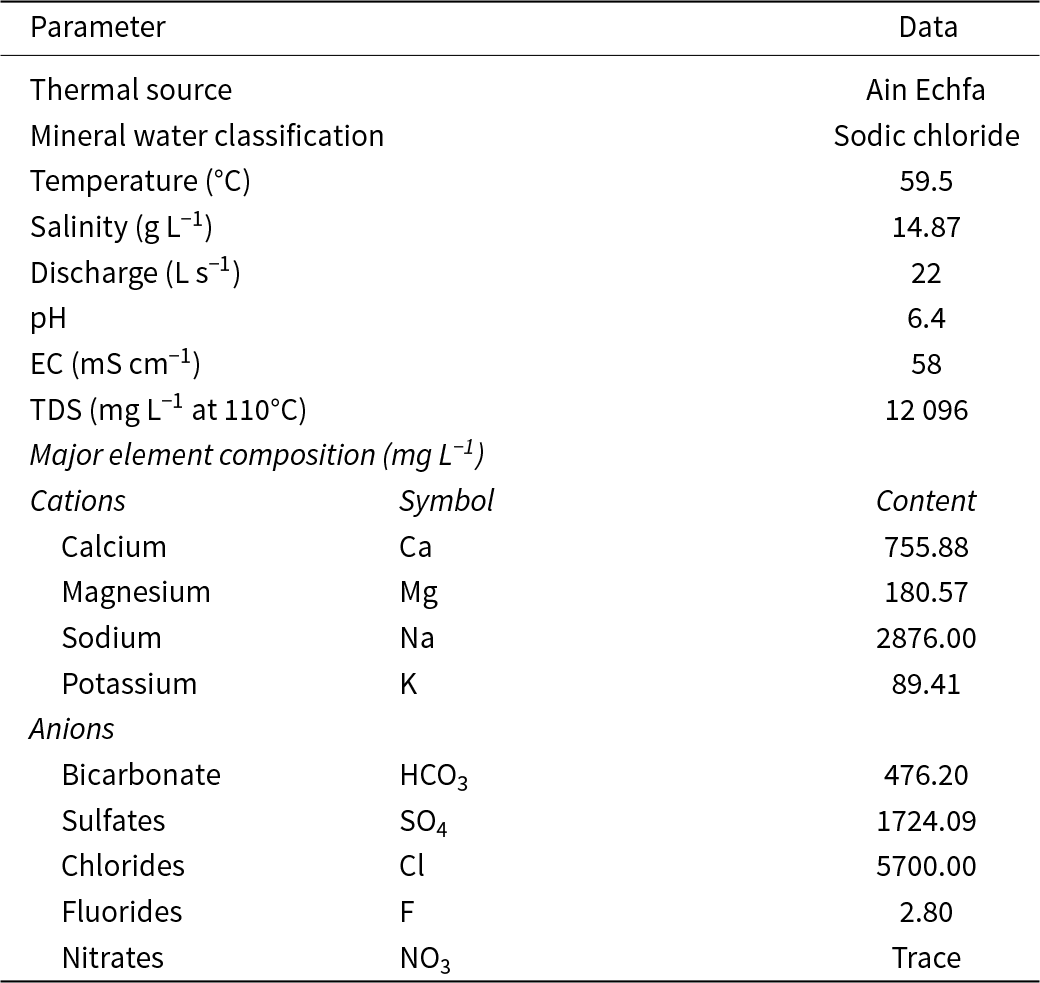
The physicochemical characterization of the spring water of Ain Echfa (Table 2) showed that:
• Regarding major elements contents, the thermal water of Ain Echfa is characterized as a chlorinated sodic water because of the predominance of chloride (5700 mg L–1) and sodium (2876 mg L–1) ions.
Table 2.Physicochemical analysis of the spring water of Ain Echfa.

• The high salinity level of the Ain Echfa water (9.87 g L–1) is related to significant mineralization, seemingly linked to the contact of Triassic evaporitic rocks with this water during its journey from the depths to the surface (Agoubi, Reference Agoubi2021).
• High EC was measured (58 mS cm−1). The EC of the water is defined as its ability to conduct an electrical current, which is related to the dissolved ions present in this water, and it is positively correlated with the TDS (Rusydi et al., Reference Rusydi2018).
• The high TDS (12 096 mg L–1) allows us to conclude that this is brackish water (WHO, 2011). Furthermore, the TDS measurement reflects the contents of inorganic and organic compounds in the water in ionized molecular and microgranular suspended forms (Dhouioui et al., Reference Dhouioui, Mzali and Hafsa2023).
• Because of the high temperature (exceeding 50°C), this source is classified as hyper-thermal, and this geothermal water is well known for its use in several therapies treating conditions such as rheumatism, mainly via therapeutic hot bathing (hammam). Indeed, temperature is an important factor to consider as it can influence the solubility of various chemical compounds in the water.
• The pH is slightly acidic, which is also the case for the other thermal sources in Korbous such as Ain Atrous (Ghozzi et al., Reference Ghozzi, Zemzem, Dhiab, Challouf, Yahia, Omrane and Ouada2013). The discharge is lower than 22 L s–1.

Mineralogical characterization
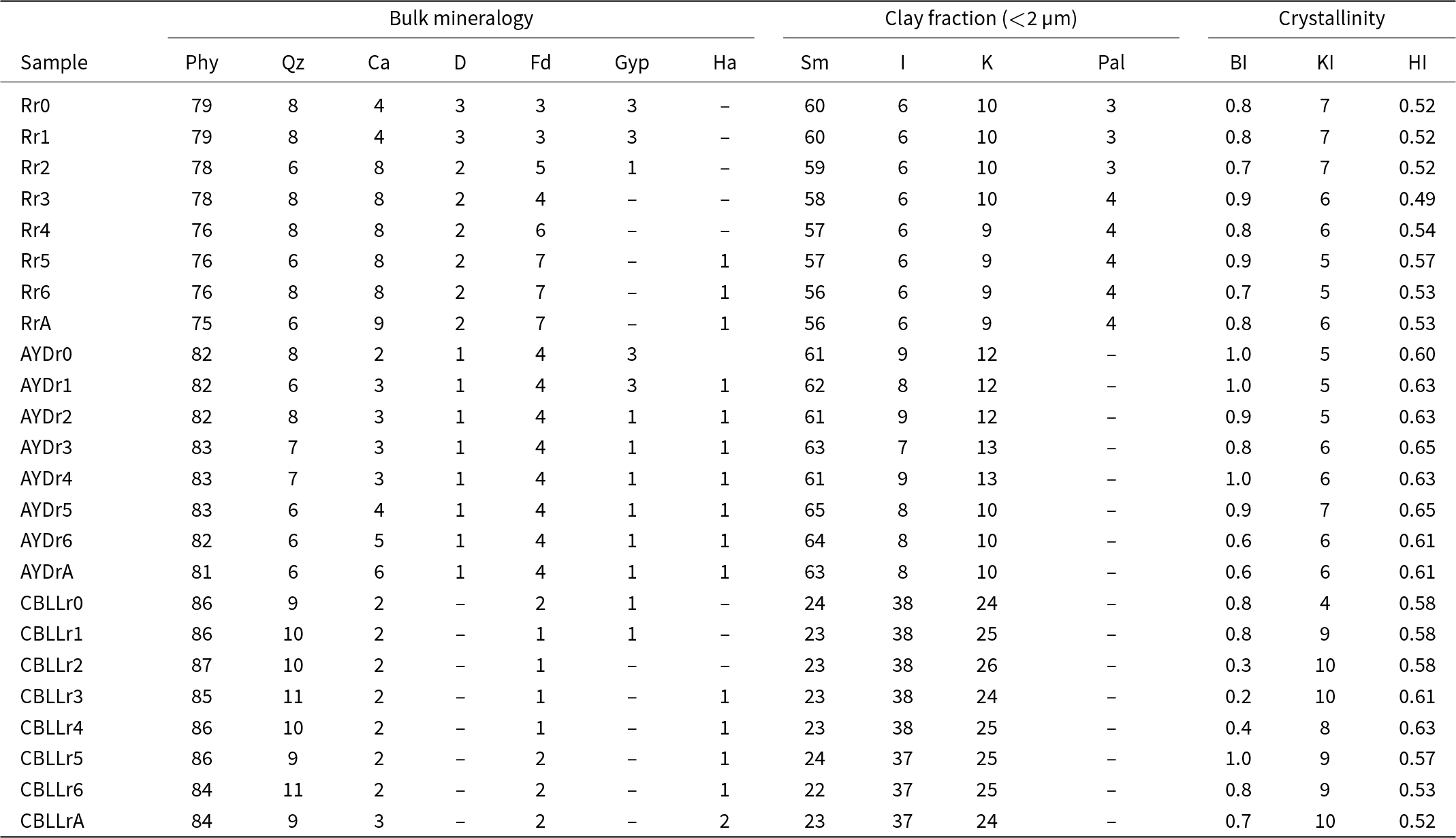
The mineralogical analysis carried out using XRD on the bulk rock and orientated aggregates of non-matured clays (so-called virgin clays) is characterized by a significant percentage of phyllosilicates (smectite, kaolinite, illite, palygorskite) generally associated with quartz, feldspars, dolomite, calcite and gypsum (Table 3).
Mineralogical composition (%) of the starting and matured clay samples as a function of the maturation period.

Ca = calcite; D = dolomite; Fd = feldspar; Gyp = gypsum; Ha = halite; I = illite; K = kaolinite; Pal = palygorskite; Phy = phyllosilicates; Qz = quartz; Sm = smectite.
Smectite is the main constituent of the two samples Rr0 and AYDr0, with its content reaching 61%, while illite is the dominant mineral (38%) in the Menzel Temime samples.
The mineralogical composition during the various maturation periods showed variations in the amounts of phyllosilicates, quartz, feldspars and calcite. The variations depended on the type of clay used and on the contact time between the clay and the thermal water. However, during maturation of the Jebel Romana clayey sample (Rr), the smectite and kaolinite contents decreased slightly, whereas that of illite remained constant. Gypsum (peak at 7.56 Å) disappeared after 60 days of contact with thermal water, the calcite content increased from 4% to 9% and halite appeared after 180 days. The increase of salts with time probably depended on the greater salinity of the maturation water that was rich in Ca2+ and Na+ ions.
However, the mineralogical composition of the Jebel Aidoudi sample (AYDr) remained unaffected during maturation, with only small variations of the smectite content (61–65%) and a slight decrease of kaolinite content towards the end of maturation (from 12% to 10%), whereas illite remained constant during maturation.
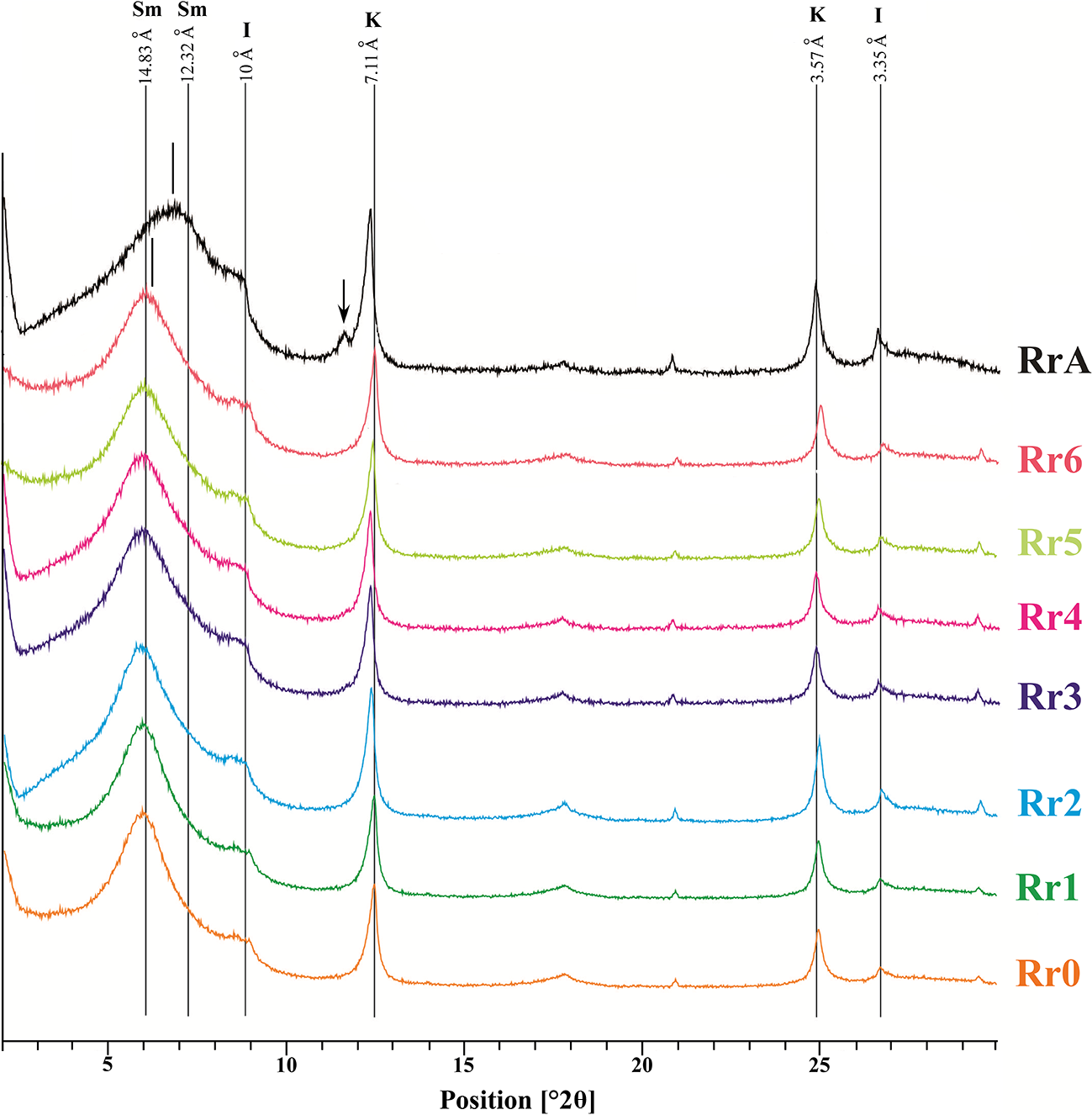
The most notable effect observed during maturation of the clay samples was the detection of a new peak at 7.7 Å after 360 days of contact with thermal water (sample RrA). A faint band near the detection limit (at the 7.7 Å position) was also noted during other maturation periods (Fig. 3). This peak may correspond to the neoformation of a new mineral phase, possibly mixed-layer smectite/kaolinite. The transformation from smectite to kaolinite involves the loss of interlayer water and the reduction of layer charge, leading to the formation of kaolinite. This process is well-documented in the literature and has been studied extensively (Rich, Reference Rich1968; Wilson, Reference Wilson1987; Veniale et al., Reference Veniale, Barberis, Carcangiu, Morandi, Setti, Tamanini and Tessier2004). The formation of mixed-layer clays can be influenced by various factors, including chemical composition, temperature and the presence of specific ions in the liquid phase. The neoformation of such mixed-layer clays can have significant implications for the physical and chemical properties of the samples, affecting their CEC and plasticity.
XRD traces of air-dried orientated aggregates of non-matured and peloid samples from Jebel Romana (Rr). I = illite; K = kaolinite; Sm = smectite.

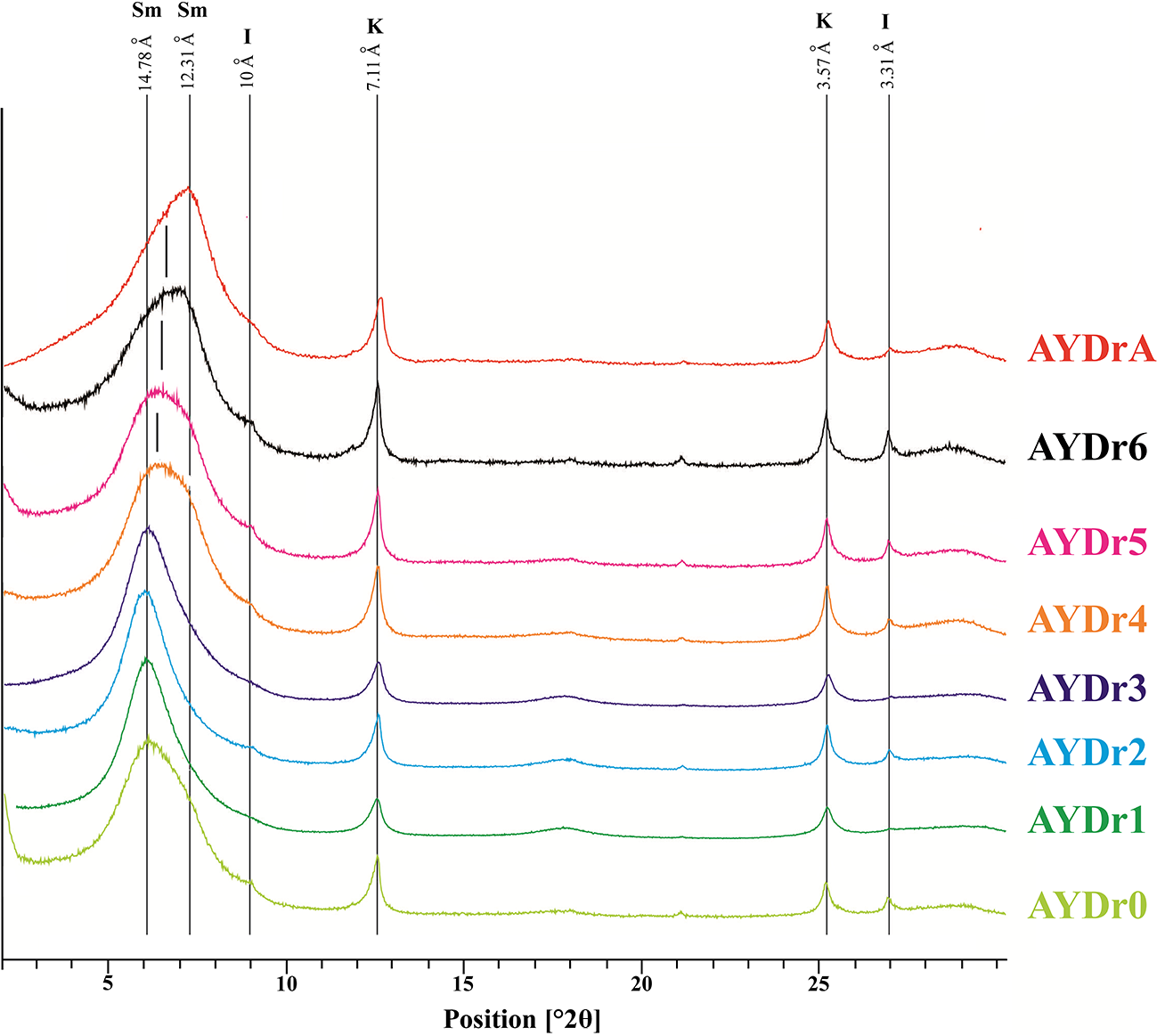
Moreover, a shift of the main smectite basal reflection was observed in the XRD traces of air-dried orientated AYDr aggregates during the maturation process (Fig. 4). As a result, the d 001 peak of smectite shifted to lower angles during the initial period (90 days) and then narrowed slightly after 180 days, shifting from 14 to 12 Å, probably due to the transformation of Ca-smectite into a Na-smectite. In addition, the Rr samples showed similar behaviour, but this was less pronounced. The width and shift in position of the main smectite basal peak were probably caused by the nature of the thermal water used, which can play a role in the cationic exchange between the solid and liquid phases, with this conclusion being confirmed in other previous reports (Sánchez et al., Reference Sánchez, Parras and Carretero2002; Carretero et al., Reference Carretero, Pozo, Sánchez, García, Medina and Bernabé2007; Tateo et al., Reference Tateo, Agnini, Carraro, Giannossi, Margiotta, Medici and Summa2010; Jalil et al., Reference Jalil, Sanchez, Pozo, Soria, Vela, Gurnik and Baschini2020).
XRD traces of air-dried oriented aggregates of non-matured and peloid samples from Jebel Aidoudi (AYDr). I = illite; K = kaolinite; Sm = smectite.

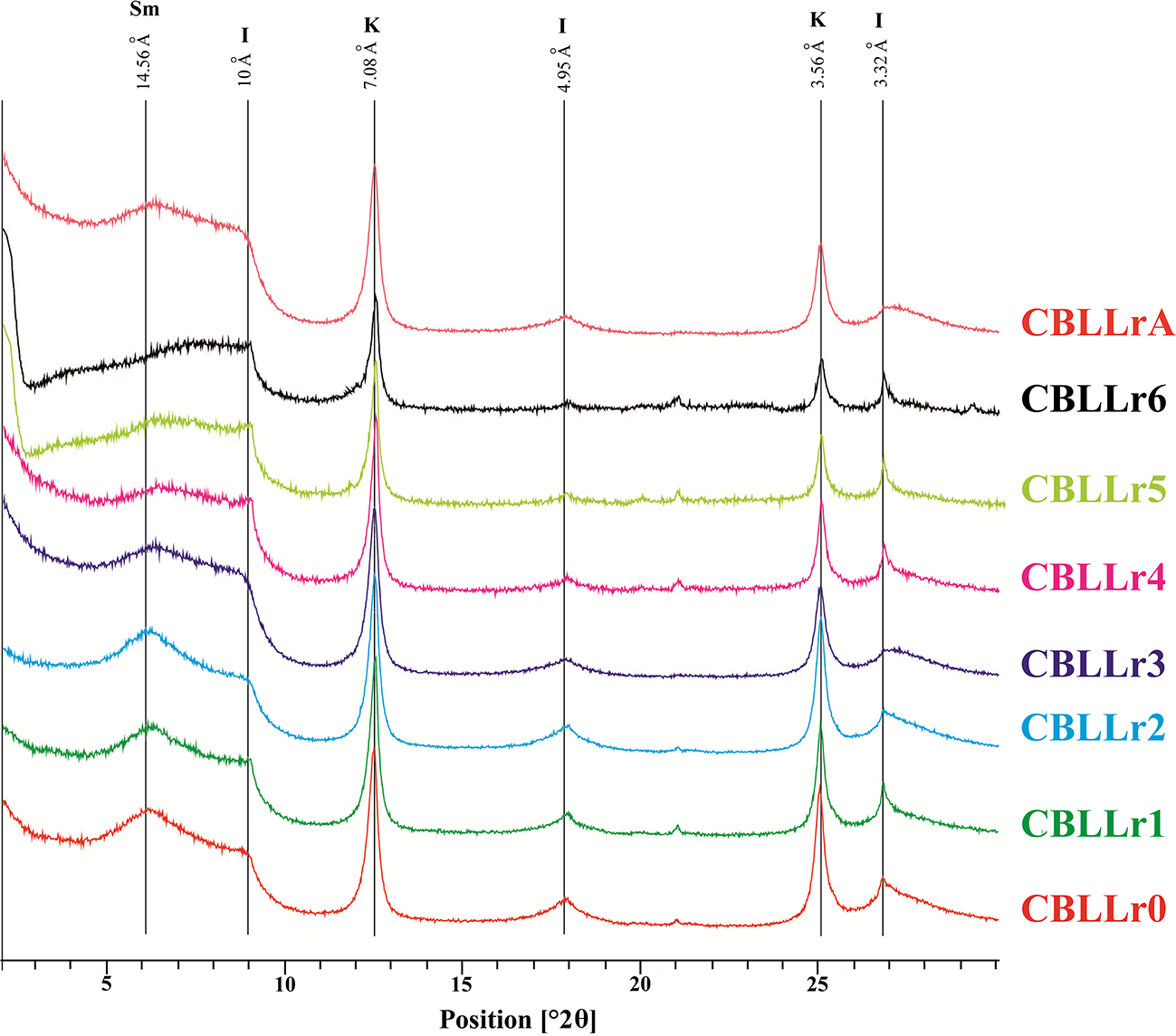
In contrast, the clayey sample of Menzel Temime (CBLLr) did not show significant variation in the initial mineral content during maturation (Fig. 5). The most important features were the newly formed halite and the disappearance of gypsum. The d 001 peak of smectite was less affected during contact with water, increasing by only to a small amount.
XRD traces of air-dried oriented aggregates of non-matured and peloid samples from Menzel Temime (CBLLr). I = illite; K = kaolinite; Sm = smectite.

The grain-size analyses of the raw materials and peloids are reported in Fig. 6. The non-matured samples can be classified as very fine (28–43% of <2 µm particles; USP, 2010). This fineness is very important for the quality of the thermal muds prepared, as it favours a large contact surface and good heat transfer, allowing good chemical and heat transfer with human skin. Additionally, the <2 µm fraction has been shown to reduce unpleasant sensations when applied to the skin (Veniale et al., Reference Veniale, Barberis, Carcangiu, Morandi, Setti, Tamanini and Tessier2004; Pozo et al., Reference Pozo, Armijo, Maraver, Ejeda and Corvillo2018).
Grain-size distribution of clay samples during maturation.

However, during the maturation, slight fluctuations were detected in the abundance of the <2 μm fraction, and of the 2–63 and >63 μm size fractions. Indeed, for the two clays Rr and AYDr, the <2 µm fraction contents decreased gradually and the >63 μm fraction contents increased during the first 60 days of maturation, followed by a slight increase of the <2 µm fraction towards the end of the maturation period. However, the CBLLr clay showed a continuous decrease in the <2μm fraction over the entire maturation period, favouring the other two fractions.
Chemical analysis
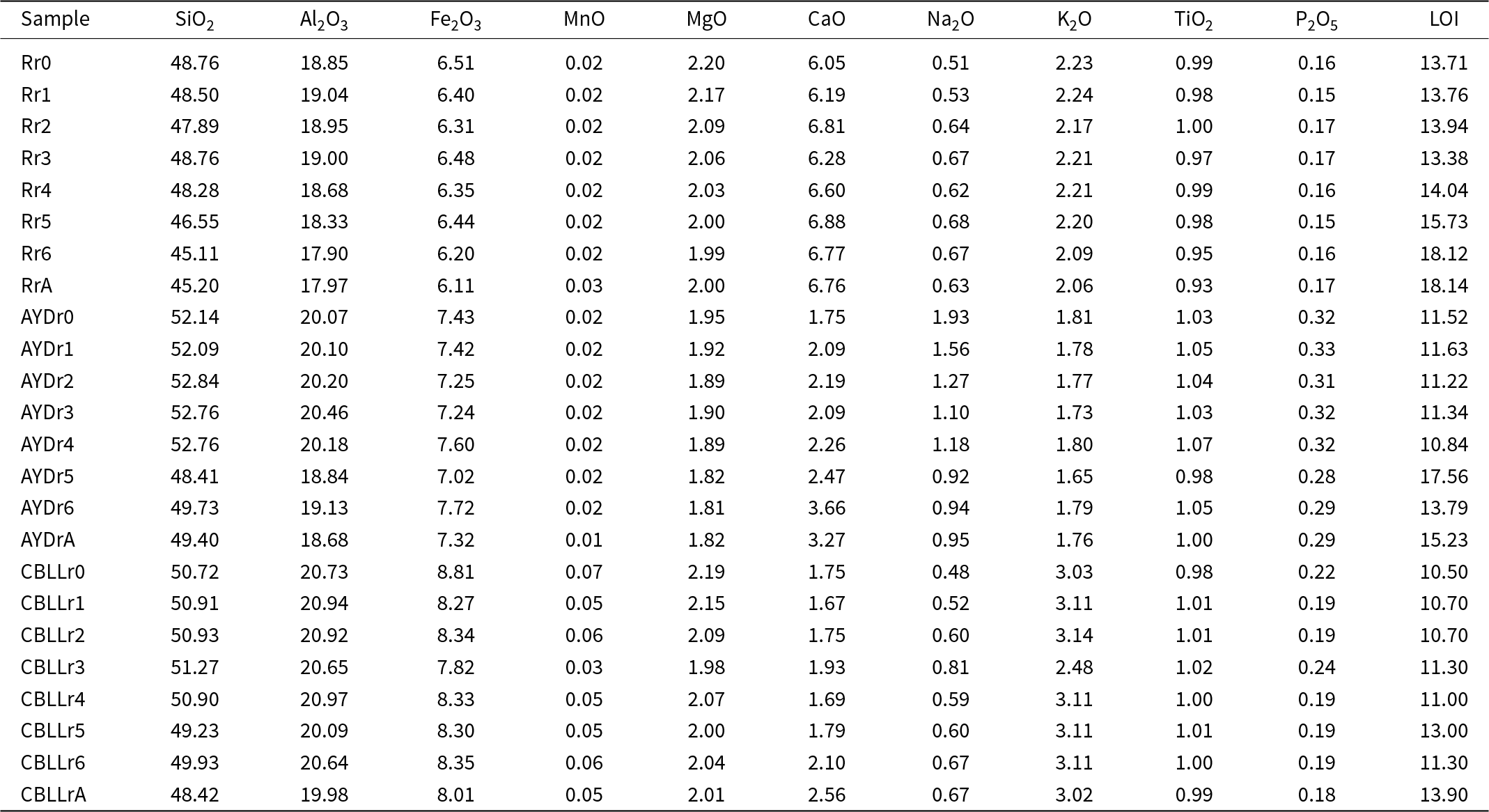
The major element composition of the matured samples (Table 4) is directly related to the mineralogical composition and the composition of the thermal water employed. The Rr clay showed decreases in SiO2 and Al2O3 contents of the matured clays by 3% and 1%, respectively. These decreases were accompanied by a decrease in the amount of phyllosilicates in the total rock. The CaO and Na2O contents increased towards the end of the maturation period, and this was confirmed by the increased calcite content. This is probably due to the composition of the thermal water used (chlorinated sodic), being rich in Ca2+ and Na+ ions. The MgO content showed a slight decrease (varying between 2.20% and 1.99%), accompanied by a decrease in the amount of dolomite present (result confirmed by XRD).
Major element analyses of the starting and matured clays (% mass/mass).

For the Jebel Aidoudi samples (AYDr), the SiO2 and Al2O3 contents varied during the different periods of maturation and tended to decrease. Compared with the XRD results, the decreases in the SiO2 and Al2O3 contents were accompanied by decreases in the quantities of kaolinite and illite in the rock. The MgO content was comparable for all of the samples and did not exceed 2.1%. The K2O content showed slight fluctuations, with a maximum of 1.81% for AYDr0. The CaO and Na2O contents increased towards the end of the maturation period, in parallel with increases in the amounts of calcite and halite.
In terms of the abundance of the major elements, the Menzel Temime (CBLLr) samples displayed decreases in the amounts of SiO2 (50.72% to 48.42%) and Al2O3 (20.73% to 19.98%), accompanied by increases in the CaO and Na2O contents at the end of the maturation period. The Fe2O3, MgO and MnO contents remained almost constant and showed only slight fluctuations.
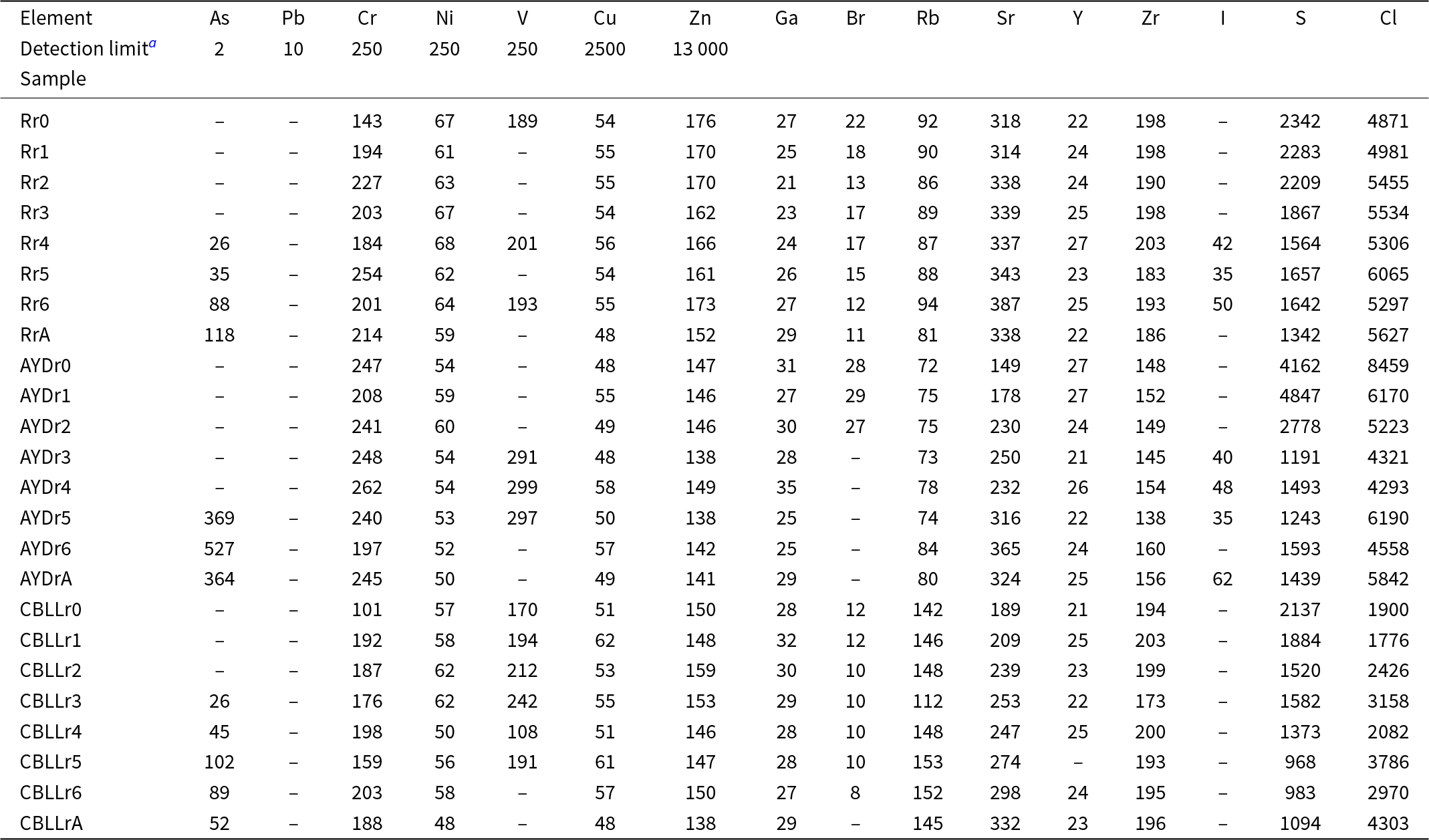
Trace element contents are presented in Table 5. The abundances of some trace elements such as Y, Br, Zr and Rb showed slight variations. However, the sulfur content decreased over the maturation periods, which can be attributed to the dissolution of gypsum. Indeed, the disappearance of gypsum began from the first days of contact with the thermal water, and sulfur content was closely related to the amount of gypsum in the whole rock. In addition, the chlorine values showed increases over the maturation periods. This can be attributed to the nature of the water of Ain Echfa that is rich in chlorine, which is adsorbed by the clay minerals. The Cu content showed slight fluctuations during the maturation period, with a maximum of 62 ppm for the CBLLr1 sample. A similar observation was made for Ni, with a maximum of 68 ppm for the Rr4 sample. Nonetheless, the levels of these elements remained within the accepted limits for cosmetic or pharmaceutical applications, which is 250 ppm (USP, 2010). However, the abundances of Cr and V sometimes exceeded the thresholds for pharmaceutical use. Their origin is probably the thermal water of Ain Echfa, in which the presence of these elements was detected at similar levels (Table 6).

Trace element composition of the thermal water of Ain Echfa (µg L–1).

Technical characterization of the peloids
CEC and main exchangeable cations
The variation of the main exchangeable cations and CEC during maturation is presented in Fig. 7. The CEC of the various matured clays tended to increase during the maturation process, reaching a maximum after a certain period of maturation. For Rr clays, the maximum of exchangeable cations (66.9 meq 100 g–1 for Rr4) was recorded after 90 days of contact with thermal water; for AYDr clays, the CEC maximum was observed after 360 days of maturation (71.25 meq 100 g–1); and for CBLLr clays, the CEC was at a maximum after only 60 days of maturation (56 meq 100 g–1), remaining almost constant thereafter.
The main exchangeable cations of the three studied samples were Ca2+ and Na+. In addition, the increase in CEC during the maturation process was reflected in the increase in the amount of Na+ and the decrease in the amount of Ca2+. This can be explained by the nature of the thermal water of Ain Echfa used for the maturation of these clays. The clays underwent a long period of contact with this water while carrying out cationic exchanges, but with variations that fluctuated in accordance with their mineralogical composition.
For the AYDr clays, a decrease in Ca2+ content in favour of the Na+ cation was detected from 90 days of maturation. Hence, the smectite had become Na-rich, which was confirmed by the shift of the 001 smectite diffraction maximum from 14 to 12 Å in the XRD traces. However, for the other two clays (Rr and CBLLr), the exchange of Ca2+ for Na+ cations was less pronounced than that observed for AYDr, and in fact the cationic exchange in these two clays involved a decrease in Ca2+ content, an increase in Na+ content and an increase in CEC after a certain period of maturation.
Specific surface area
The specific surface areas of the three samples during their maturation showed small variations, with an increasing trend for the two samples Rr and AYDr and a decreasing trend for CBLLr with time (Fig. 8). Indeed, for Rr clays, the specific surface area between the beginning of their contact with thermal water and after 1 year increased slightly from 331 m2 g–1 (Rr0) to 347.2 m2 g–1 (RrA). Similarly for AYDr clays, the specific surface area increased from 442 m2 g–1 for AYDr0 to 458.5 m2 g–1 for AYDrA. By contrast, for CBLLr clays, the specific surface area was at a maximum (230.3 m2 g–1) at the beginning and at a minimum (189.2 m2 g–1) at the end of the maturation process, with the decrease being more than twofold greater than the increase of the specific surface area observed for the Rr and AYDr clays.
Variation in the main exchangeable cations and CEC during maturation.

Variation in the specific surface area during maturation.

Variation of Atterberg limits and plasticity index during the maturation process
The plasticity of the Rr samples was increased by the maturation process, and the Atterberg limits showed an initial increase at the beginning of contact with the thermal water (after 7 days) and a second increase after 90 days (Fig. 9). Moreover, for AYDr clays, the variations in the liquid limit and plasticity were more pronounced from the first days of contact with the thermal water. Indeed, the liquid limit increased from 60% (AYDr0) to 67% at the end of maturation, and so did the plastic limit and the plasticity index.
Variation in the Atterberg limits and plasticity index during maturation.

Concerning the Menzel Temime sample (CBLLr), the Atterberg limits and the plasticity index remained almost constant, with only a slight increase after 90 days, as the liquid limit increased from 58% for CBLLr0 to 60% at the end of maturation.
Thermal analysis: cooling kinetics
The cooling kinetics indicated the ability of the peloids to retain or release heat. The goal of their use is to maintain a temperature for ∼15–30 min above body temperature. The cooling kinetics of the studied samples over a temperature from 65°C to 35°C ranged from 37.5 min (sample CBLLr0) to 49.5 min (sample Rr5; Table 7).
Variation in the cooling kinetics parameters, time to reach 35°C and pH of the studied samples (mean values ± SE; n = 3).

A = temperature of the thermostatic bath; B = difference between the temperature of the thermostatic bath (A) and the initial temperature of the mud.
The extents of the cooling times before and after maturation are shown in Fig. 10. At the beginning of the maturation process, sample Rr0 reached 35°C after 42.5 min, and after 90 days of maturation it reached 35°C after 50.5 min. Furthermore, the parameter K corresponding to the cooling rate decreased during the maturation period, so the cooling rate was also influenced by this process (Legido et al., Reference Legido, Medina, Mourelle, Carretero and Pozo2007).
Similarly, the contact of the AYDr samples with the thermal water of Ain Echfa caused a prolongation of the cooling duration and a reduction of the rate of cooling (decrease of K). A period of 180 days was sufficient for this sample to achieve optimal thermal properties of maintaining heat for the maximum duration.
The cooling kinetics of the Menzel Temime samples varied between 37.5 and 47.0 min. The longest duration was recorded after 60 days of contact with thermal water. Beyond this period, the maturation kinetics decreased to 41.5 min after 360 days.
pH analysis
All of the samples showed a slight decrease in pH during maturation. All of the peloids had an initial pH of ∼8, and with maturation the pH decreased slightly and tended to approach to the pH of the thermal water, which is slightly acidic (pH 6.4).
Discussion
In general, the mineralogical analysis results obtained during the maturation process of the clay samples are insignificant. However, for the three matured clay samples, changes in the ‘crystallinity indices’ were detected, including minor reductions in the indices of smectite, kaolinite and illite. These reductions, along with a decrease in the content of phyllosilicates, are also considered insignificant, however. For instance, the KI decreased from 7 to 6, and the HI values for kaolinite decreased slightly from 0.58 to 0.52 during the maturation of the Menzel Temime samples (CBLLr), which are deemed insignificant. These indices are sensitive to temperature and pressure, among other factors. Therefore, small variations in these indices, such as those observed in the studied samples, can be considered insignificant, especially if they fall within the expected natural variation ranges for these minerals. In conclusion, the minimal variations observed in the ‘crystallinity indices’ of the matured clay samples are considered insignificant and do not reflect substantial changes in the mineralogical compositions of the samples.
The quartz contents in clay samples intended for therapeutic applications should be well controlled, and samples with high quartz contents must be purified before use (Mefteh & Medhioub, Reference Mefteh and Medhioub2021), as this mineral is considered dangerous at high proportions (Elmore, Reference Elmore2003; IARC, 2012; Mossman & Glenn, Reference Mossman and Glenn2013).
The high content of the <2 μm fraction for AYDr and Rr clays is related to the high CEC and the high phyllosilicates content, especially smectite. In addition, the transformation of Ca-smectite into Na-smectite influenced the grain-size distribution of these two samples. Studies on the interaction between smectite and the two cations of calcium and sodium have shown that the particle size of Na-smectite is smaller than that of Ca-smectite (Foster et al., Reference Foster1953; Shomer & Mingelgrin, Reference Shomer and Mingelgrin1978; Slade et al., Reference Slade, Quirk and Norrish1991). Therefore, it can be concluded that maturation can slightly influence the particle-size distribution of the solid phase of peloids during their contact with thermal water. However, this modification is very small and sufficiently minor not to have a significant impact on the clay. Similar modifications have been observed previously by Summa & Tateo (Reference Summa and Tateo1998) and Fernández-González et al. (Reference Fernández-González, Martín-García, Delgado, Párraga, Carretero and Delgado2017), who demonstrated that the mineralogical composition and the type of thermal water used play key roles in these modifications.
Major elements are closely linked to the mineralogical composition and also to the chemical composition of the thermal water used in the maturation of the peloids. Indeed, fluctuations in SiO2 and Al2O3 contents were generally accompanied by variations in phyllosilicates content. In addition, the increased halite and calcite levels were accompanied by increased Na2O and CaO contents. Furthermore, the loss on ignition (LOI) allows for estimation of carbonate and organic matter contents (Wang et al., Reference Wang, Li and Wang2011; Bensharada et al., Reference Bensharada, Telford, Stern and Gaffney2022). An increase of LOI during the maturation periods for all three peloid samples was observed. This can be explained by presence of newly formed (during the maturation process) amorphous hydroxides from dehydroxylation of the clay minerals and the decomposition of carbonates (the dolomite content decreased) and organic matter (Carretero et al., Reference Carretero, Pozo, Martín-Rubí, Pozo and Maraver2010).
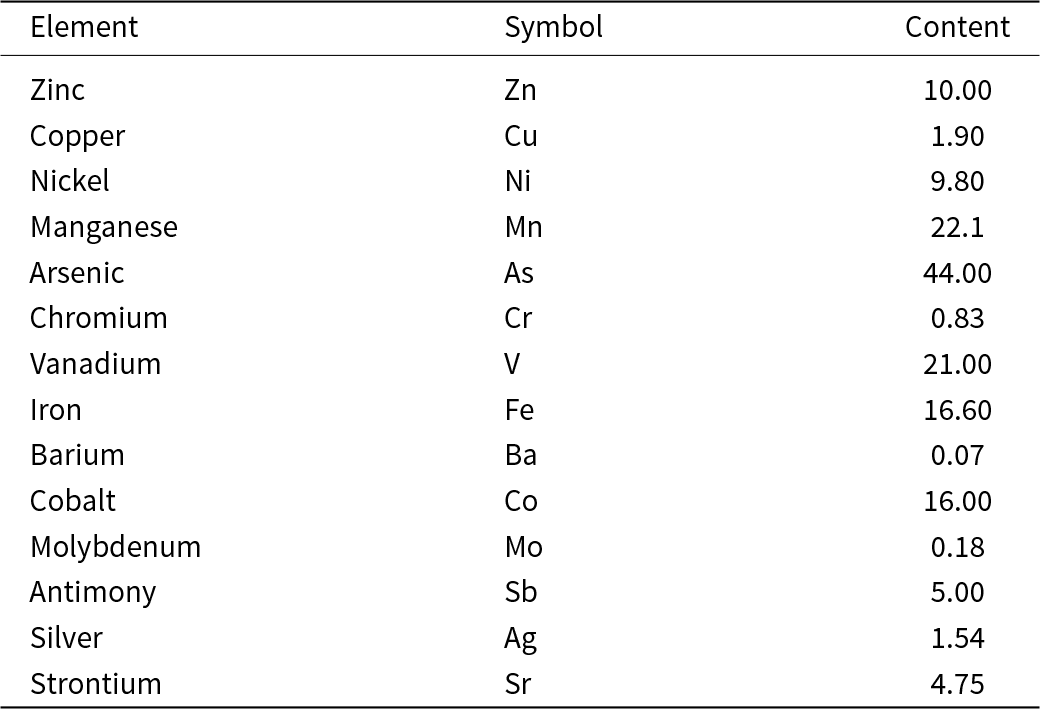
Concerning PTEs such as As, Cd, Sb and Pb, only As was detected in the clayey samples after a period of contact with the thermal water. Sample AYDr5 contained up to 369 ppm As, with the maximum acceptable level for a cosmetic use of this element being 2 ppm (USP, 2020). This raises the question of the origin of this As. Notably, the three non-matured representative samples did not exhibit As in their trace element chemical compositions. However, the Ain Echfa thermal water contained 44 μg L–1 As. Thus, it can be concluded that the origin of this element was the thermal water utilized. Additionally, the possible role of accessory minerals that could accumulate As, such as feldspars, carbonates and other minerals, should be considered. These minerals may serve as reservoirs for As, either by adsorption from the thermal water or by influencing its release and mobility during the maturation process (Ferguson & Gavis, Reference Ferguson and Gavis1972; Smedley & Kinniburgh, Reference Smedley and Kinniburgh2002). Calcite and dolomite, as well as feldspars, may concentrate As due to their surface properties and chemical interactions, which facilitate the adsorption and incorporation of As species (Di Benedetto et al., Reference Di Benedetto, Costagliola, Benvenuti, Lattanzi, Romanelli and Tanelli2006; Smedley & Kinniburgh, Reference Smedley and Kinniburgh2012). Furthermore, the smaller ionic radius of As3+ compared to cations such as Ca2+, K+ and Na+ may facilitate its incorporation into the mineral structures, allowing As to substitute for these larger cations in the lattice, thus enhancing its accumulation in these clays (Majzlan et al., Reference Majzlan, Drahota and Filippi2014; Yazdani et al., Reference Yazdani, Tuutijärvi, Bhatnagar and Vahala2016; Kar, Reference Kar, Giri, Kapoor, Wu and Varma2022).
Cooling kinetics from 65°C to 35°C of the studied samples.

The spring waters of the Korbous area originate from very deep aquifers located in the Middle Oligocene sandstones, fed by the infiltration of precipitation water over the entire syncline of the Takelsa region, whose recharge is very old (∼21 970 years BP; Agoubi, Reference Agoubi2021). Due to the long residence time and the depth of the aquifer (∼2000 m), the groundwater has an elevated temperature and emerges in highly mineralized hot springs in the Korbous region. Therefore, the As probably originates from the contact of groundwater with the surrounding rocks.
The origins and the harmful effects of As on the human body after exposure to high concentrations have been thoroughly studied (e.g. Abdul et al., Reference Abdul, Jayasinghe, Chandana, Jayasumana and De Silva2015; Loomis et al., Reference Loomis, Guha, Hall and Straif2018; Khan et al., Reference Khan, Chakraborty, Bundschuh, Bhattacharya and Parvez2020; Monteiro de Oliveira et al., Reference Monteiro de Oliveira, Caixeta, Santos and Pereira2021). This element is classified by as a substance with carcinogenic potential to humans (European Regulation, 2008), and it is especially harmful to the skin when applied as a mud. Arsenic is often present naturally in clays and thermal waters (i.e. the raw materials necessary for peloid formulation; Borowska & Brzóska, Reference Borowska and Brzóska2015; Gomes & Rautureau, Reference Gomes and Rautureau2021). The maximum permissible levels of As in cosmetic products are strictly regulated due to its toxicity and potential human health risks. However, the US Food and Drug Administration (FDA) enforces general safety standards and does not set a specific limit to this, it only recommends 10 ppm as a limit for As in raw materials used for skincare product production (US FDA, 2022). Additionally, the European Pharmacopoeia (EP, 2020) and the US Pharmacopeia (USP, 2020), which provide quality standards for medicinal and therapeutic products, set strict limits for heavy metals in substances used for therapeutic purposes. These limits generally range from 1 to 2 ppm for As, ensuring the safety of these materials in treatments (EP, 2020; USP, 2020). Similarly, the World Health Organization (WHO), although not specifically addressing As in cosmetic products, provides guidelines for As in drinking water, setting the maximum permissible level at 0.01 mg L–1 to reduce potential health risks, suggesting that similar precautions should apply to products that may be absorbed through the skin (WHO, 2013). European regulations set strict safety guidelines, recommending that As concentrations in cosmetics should generally not exceed 1 ppm (European Regulation, 2008). These regulations aim to minimize the risks of As exposure, because As may cause significant health issues after prolonged exposure.
To limit As accumulation, washing and filtration techniques might be considered to reduce and eliminate toxic element contamination in peloids (Khan et al., Reference Khan, Rasul, Munir, Habibuddowla, Alauddin, Newaz and Hussam2000; Meng et al., Reference Meng, Korfiatis, Christodoulatos and Bang2001). Indeed, processes such as precipitation followed by filtration can remove As from water by forming flocs, which are then eliminated through filtration. Additionally, adjusting maturation conditions such as pH, temperature or salinity can influence As accumulation. For example, certain autotrophic bacteria capable of synthesizing arsenite oxidase can accelerate As oxidation under low-oxygen conditions, thereby contributing to its reduction (Sher & Rehman, Reference Sher and Rehman2019). Furthermore, bioremediation techniques involving the use of plants or microorganisms to sequester or degrade As might provide eco-friendly and sustainable solutions. Indeed, certain microalgae, such as Nostoc and Chlorella species, can absorb and bioremediate As in freshwater systems (Yamamura & Amachi, Reference Yamamura and Amachi2014; Wang et al., Reference Wang, Wang, Xu, Liu, Liu, Wang and Ge2015; Alharbi et al., Reference Alharbi, Sholkamy, Alsamhary, Abdel-Raouf and Ibraheem2023; Tang & Foo, Reference Tang and Foo2024). Advanced treatments, such as activated charcoal filtration (Asadullah et al., Reference Asadullah, Jahan, Ahmed, Adawiyah, Malek and Rahman2014; Yin et al., Reference Yin, Zhou, Luo, Geng, Yu and Jiang2019), should also be explored to improve As removal. Finally, by combining these approaches, it could be possible to effectively reduce As levels in peloids, ensuring their safety for therapeutic use.
When these clays are mixed with thermal water, most of the properties of this water change due to ion exchange, either due to ions released from the clay or due to dissolution of minerals such as halite and gypsum. Cations such as Ca2+, Mg2+, K+ and Na+ are the most affected by ion exchange between the thermal water and the clay fraction (Veniale et al., Reference Veniale, Barberis, Carcangiu, Morandi, Setti, Tamanini and Tessier2004; Baschini et al., Reference Baschini, Pettinari, Vallés, Aguzzi, Cerezo, López-Galindo and Viseras2010; Stuhli et al., Reference Stuhli, Ademović, Zohorović, Imamović, Kurtanović and Kustura2022). The CEC is strongly influenced by the mineralogical composition of the clay used, and especially the phyllosilicates content (essentially the smectite content), as well as the nature of the thermal water used in the maturation process. Indeed, the prolonged contact of clays with thermal water allows ion exchange either in the interlayer or on the negatively charged surface sites of the clays. The decrease or stabilization of the CEC after a certain period of maturation is explained by the agglomeration of clay particles via blocking/reducing the available surface active sites capable of fixing the free cations from the suspension (Veniale et al., Reference Veniale, Barberis, Carcangiu, Morandi, Setti, Tamanini and Tessier2004).
Additionally, the correlation between the CEC and cooling kinetics in clay samples treated with thermal water rich in Na+ and Cl− offers valuable insights regarding how such treatments affect the thermal properties of clays (Fig. 11). A high determination coefficient (R 2) value, such as 0.9, would indicate a strong correlation, suggesting that the thermal water would significantly modify the clay’s mineral structure, increasing the CEC. A high CEC typically correlates with improved thermal retention, leading to slower cooling kinetics. This change probably results from interactions between Na+ and Cl− ions from the thermal water and the clay’s exchange sites, thereby increasing the clay’s heat retention capacity. Moderate R 2 values, such as 0.7 and 0.5, would imply that while the CEC plays a significant role, other factors also influence the clay’s thermal properties. Interactions between the thermal water and the clay might not only modify the CEC but also affect other physical properties such as porosity and density, contributing to those mechanisms that impact cooling kinetics.
Correlation between CEC and cooling kinetics of the matured clay samples.

The fact that the decrease in specific surface area of the CBLLr sample is associated with increased CaO and Sr contents suggests that carbonate formation may have a particular impact on this sample, which has a distinct clay mineralogy. The precipitation of carbonates can influence the properties of clays, particularly by modifying their structure and mineralogical composition, which can affect the specific surface area and other physicochemical characteristics. For instance, the nature of the carbonates present may influence their own solubility and, consequently, interactions with clays. Additionally, Sr affects the formation and transformation of clay minerals. Its presence might influence the structure and mineralogical composition of clays, thereby affecting their physical and chemical properties. Furthermore, the partitioning of Sr between the solid and liquid phases of the peloids is influenced by the CEC and pH, which may affect Sr interactions with clays. Thus, in the case of the CBLLr sample, the increase in Sr content might be linked to carbonate formation processes, such as the formation of strontianite, influencing the properties of the present clays.
The increased plasticity during maturation can be explained by the ability of smectitic clays to retain water. Furthermore, the diffusion of water molecules in the clay particles, and especially in smectite, is controlled mainly by the negative charge of the surfaces of the clays and by the concentration of cations capable of diffusing between the layers of these clays in the thermal waters used (Sato, Reference Sato1996). In this context, the evaluation of the pH of peloids is important, as pH contributes to stabilizing their crystallochemical structure, in particular the CEC. The natural pH of skin is slightly acidic (i.e. 4.1–5.8) and plays a crucial role in its protection. An unsuitable pH of peloids may contribute to various dermatological conditions (Proksch, Reference Proksch2018).
Summary and conclusions
The main objective of studying peloids in this contribution was the characterization of the mineralogical and physicochemical composition of the raw materials to obtain an adequate formulation and to guarantee their toxicological safety in terms of PTEs and associated minerals, posing a low risk to human health. In Tunisia, and particularly in some medical thermal stations or spas, there are no regulations in terms of the use of clay-based products such as peloids. Our aim was to propose a suitable formulation composed of smectitic clays collected from the best clay deposits in Tunisia and thermal water from Ain Echfa in Korbous.
These clays consist of phyllosilicates, quartz, feldspars, calcite, halite and gypsum with slightly variable contents, and these fluctuations are correlated with variations in major and trace elements. The progressive changes of the clay minerals during maturation indicated increases in their (re)activity, which can be considered as advantages for the target applications.
The main exchangeable cations are Na+ and Ca2+, followed by Mg2+ and K+, which promote the swelling of the clays and, therefore, better retention of water and, consequently, of heat. The presence of toxic elements, such as arsenic, beyond the limits established by European regulations and other global safety guidelines after long periods of maturation may pose significant risks during therapeutic treatments. Therefore, it is essential to study the mobility of these elements and determine whether these PTEs are easily exchangeable during therapy or if they are strongly bound to the mineral structures. Consequently, assessing the mobility of arsenic in these peloids is crucial to ensuring their safety and efficacy as therapeutic products, in accordance with the relevant regulatory standards.
The increased plasticity of these clays after maturation is due to their fine grain size as well as their swelling character due to their abundance of smectite, which allows them to be easily moulded and pleasant to the touch when applied to the skin. An improvement in the cooling kinetics was observed after the maturation process, and most thermal muds have advantageous thermal qualities characterized by a reasonably slow cooling rate allowing good heat retention and, therefore, better heat transfer.
In conclusion, the studied matured clays are not well suited for external use as healing or cosmetic muds, especially after prolonged maturation. Particular attention must be paid to the presence of PTEs, which might pose obstacles to their potential use. This evaluation of these peloids indicates that they meet all of the requirements necessary to ensure the safety and efficacy of finished products that include these peloids. Therefore, to mitigate health risks, these peloids should undergo thorough decontamination and rigorous safety evaluations prior to any therapeutic or cosmetic application.
Author contributions
SM: sampling, formal analysis, conceptualization, methodology, writing – original draft; KL: sampling, methodology, conceptualization, formal analysis; RCP: methodology, investigation, visualization; conceptualization, writing – original draft; MM: formal analysis, supervision, writing – review and editing; FR: supervision, writing – original draft, validation, resources.
Acknowledgements
We express our thanks to Professor Mohamed Gargouri (Director of LaSCOM Laboratory, Physics Department, Faculty of Sciences of the University of Sfax) for his availability and support during this work.
Financial support
Sources of funding for the work described in this publication are from the Laboratory of Spectroscopic Characterization and Optical Materials (LaSCOM), University of Sfax, Faculty of Sciences, Tunisia. This work was also partially funded by the Portuguese Fundação para a Ciência e Tecnologia (FCT) through national funds under the project UID/04035/2020 – GeoBioTec – GeoBioSciences, GeoTechnologies and GeoEngineering.
Competing interests
The authors declare that there are no known conflicts of interest associated with this publication and there has been no significant financial support for this work that could have influenced its outcome.
Data availability statement
The data used are available in the manuscript.