Both the Infectious Diseases Society of America (IDSA) and the US Preventive Services Task Force recommend that treatment of asymptomatic bacteriuria (ASB) should only occur in pregnancy or before endourologic procedures with anticipated mucosal trauma. Reference Nicolle, Gupta and Bradley1,Reference Force2 Despite these recommendations, 30%–50% of patients with ASB receive antibiotics. Reference Cope, Cevallos, Cadle, Darouiche, Musher and Trautner3–Reference Silver, Baillie and Simor8 Education, audit and feedback, and bundled interventions have all been shown to have some effect in reducing antibiotic therapy for ASB. Reference Bonnal, Baune and Mion9–Reference Zabarsky, Sethi and Donskey17 However, these interventions are labor intensive and difficult to sustain. Reference Bonnal, Baune and Mion9,Reference Linares, Thornton, Strymish, Baker and Gupta14,Reference Loeb, Brazil and Lohfeld15
Recent surveys have implicated a “reflex-to-treat” response to laboratory results as an important driver of ASB therapy Reference Eyer, Lang, Aujesky and Marschall18 : in one study, nearly 50% of residents treated ASB despite being aware of IDSA guidelines. Reference Leis and Soong19,Reference Lee, Kim and Kim20 In 2012, we undertook a pilot study in which positive midstream urine (MSU) culture results for adult inpatients were only released if clinicians called the microbiology laboratory. The results showed a 36% reduction in antibiotic therapy for ASB. Reference Leis, Rebick and Daneman21 However, MSU cultures were still processed, and the small sample size meant that we could not exclude the possibility of intervention-associated serious adverse events. In this study, we aimed to assess the safety, effectiveness and sustainability of a modification of this laboratory intervention to reduce treatment of ASB.
Methods
Setting and intervention
We performed a prospective observational study involving medical and surgical inpatients at Mount Sinai Hospital, a 472-bed tertiary-care teaching hospital, in Toronto, Canada, from November 2013 to April 2019. The intervention was first implemented on 2 surgical units in November 2013; 2 additional surgical units were added in May 2015; and 4 medicine units were added in September 2017.
The intervention consisted of the hospital computerized order-entry system flagging MSU cultures from participating units, such that the microbiology laboratory stored but did not process them on receipt, and the following preliminary result was posted to the patient medical record: “The majority of positive urine cultures from inpatients without an indwelling urinary catheter represent asymptomatic bacteriuria. If you strongly suspect that your patient has developed a urinary tract infection, please call the Microbiology lab within the next 48 hours to have this specimen processed. If a phone call is not received, this specimen will not be processed.” Any provider could call to have the urine processed until the specimen was discarded 72 hours after receipt.
Before implementation on each unit, information sessions for nurses, residents, and attending physicians were held; email notifications were sent; and posters and pamphlets were distributed.
Study procedures
This study was approved by the research ethics board of Mount Sinai Hospital. Trained study staff used standard questionnaires to interview patients within 48 hours of each MSU sample being received in microbiology to ask whether urinary symptoms (ie, dysuria, urgency, frequency, suprapubic pain/tenderness, and costovertebral angle pain or tenderness), and fever and/or chills were present on the day of culture (day 0). They also reviewed charts for documentation of urinary symptoms, symptoms and signs of systemic infection (including fever, hypothermia, hypotension, tachycardia, tachypnea, abnormal WBC count), Reference Levy, Fink and Marshall22,Reference Bone, Balk and Cerra23 and antibiotic orders. Study staff did not intervene to request MSU processing unless they deemed urosepsis to be present or imminent.
ASB was defined as bacteriuria (≥107 CFU/L) in the absence of urinary symptoms. Reference Sharp and McCarter24 Symptomatic urinary tract infection (UTI) was defined as bacteriuria with at least 1 urinary symptom. 25 UTI-directed antibiotic use was defined as any antibiotic started to treat a presumptive UTI, as documented in physician notes or determined by clinician interview. If patients were unable to answer questions, study staff interviewed the most responsible clinicians and the patient’s substitute decision maker. If multiple MSU cultures were ordered for a patient within 96 hours, the patient was enrolled upon receipt of the first MSU sample for culture, with the specimen coded as processed if any subsequent MSU culture was processed. An attempt was made to enroll consecutive patients, but staffing constraints (eg, vacation days) led to patients not being enrolled on some days.
If the specimen was processed and the culture was negative or contaminated, no follow-up was undertaken. From November 2013 to August 2017 (part 1), if the MSU culture was not processed or positive and the patient remained hospitalized on day 4, they were reassessed to identify adverse events potentially associated with the intervention, results of MSU processing, and changes in antibiotic therapy. Adverse events were defined according to Health Canada guidelines. 26 From September 2017 to April 2019 (part 2), all patient follow-up was conducted in person, by email (with web-based survey), or by telephone at day 4 and day 30 to identify adverse events. Chart reviews, including data from the initial and all readmissions, emergency department, and outpatient visits were performed for all episodes in which patients were not approached or for which day-4 follow-up information was not available.
All deaths, episodes of urosepsis, and prolonged hospitalization with chart documentation of a urinary reason were reviewed by 2 study investigators (M.M. and A.M.), and an external infectious disease physician, to assess relatedness to not processing the MSU. Other serious adverse events were reviewed by these physicians to assess relatedness unless a source other than a UTI was documented as causal in their medical record. Reviewers were not blinded to whether the MSU culture was processed because of the need to assess timing of result availability.
During the study, data were collected on the number of MSU cultures ordered and received by the microbiology laboratory, the proportion with a call for processing, and the number of patient days by unit. Laboratory workload for holding and processing MSU cultures was obtained from the microbiology laboratory database, and time required to receive calls and initiate urine processing was estimated by timing response to simulated calls.
Study outcomes
The study was designed and powered to assess the safety of not routinely processing MSU cultures in hospitalized patients. Accordingly, the primary outcome was serious adverse events occurring as a result of not processing MSU cultures. The following secondary outcomes were also included: (1) nonserious adverse events due to not processing MSU cultures, (2) rates of MSU submitted, (3) proportion of MSU cultures processed, (4) rate of UTI directed empiric antibiotic prescriptions; (5) proportion of patients receiving UTI directed empiric antibiotics; and (6) antibiotic associated adverse events (measured in part 2 only).
To estimate the number of antibiotic courses avoided, and the number of antibiotic courses that would have been stopped when a negative MSU culture was reported, we divided MSU culture episodes into 4 groups: those with urinary symptoms who did and did not receive empiric antibiotics, and those without urinary symptoms who did and did not receive empiric antibiotics. Within each of these 4 groups, we assumed that, if the MSU cultures that were held had been processed, the proportions of positive cultures and the treatment responses to them would have been the same as was observed for the episodes in that group whose MSU cultures were processed.
Statistical analysis
Data were entered and cleaned in Excel (Microsoft, Redmond, WA), and analysis performed using SAS version 9.3 (SAS Institute, Cary, NC). Differences between proportions were assessed using the χ2 or the Fisher exact test, and differences in continuous data between groups were assessed using the Mann-Whitney U test. Changes of rates and proportions over time were measured via linear regression and χ2 test for trend, respectively. P values < .05 were considered statistically significant.
Sample size
We hypothesized that the risk of serious adverse event due to not processing MSU cultures was less than or equal to the risk of nosocomial Clostridioides difficile infection associated with an antibiotic course, estimated at 0.41% in our hospital population (unpublished data). Because a cohort of 910 submitted MSU cultures without an intervention-associated serious adverse event would result in an upper 95% confidence limit of 0.41% on the risk of serious adverse event, the intervention was planned to continue until 910 episodes of held MSU cultures completed follow-up or until an intervention-associated serious adverse event occurred.
Results
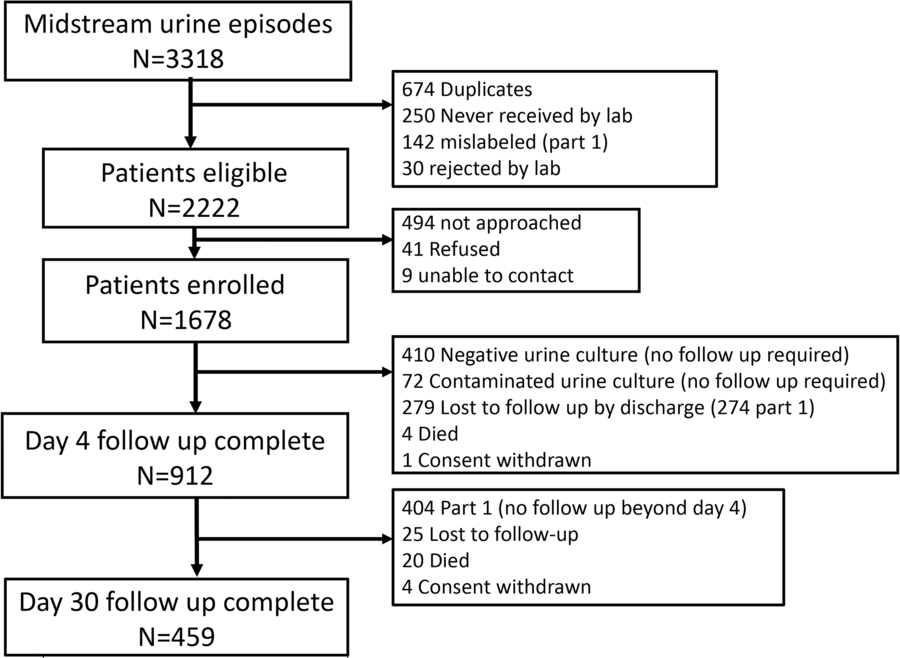
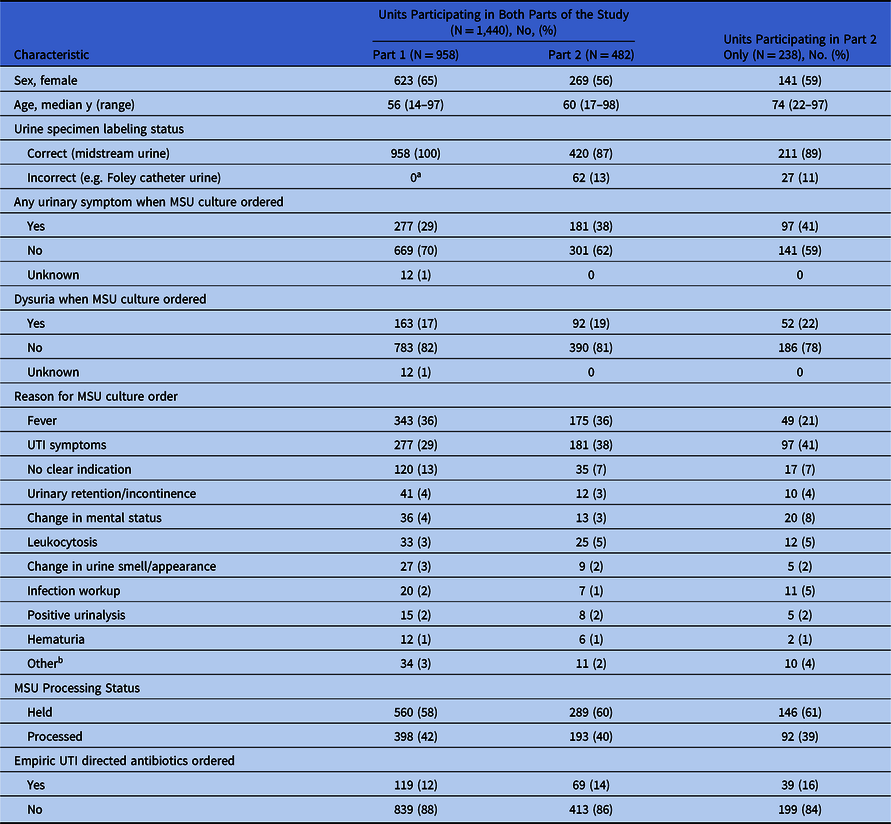
From November 2013 to April 2019, 3,318 MSU cultures were ordered during 203,605 patient days on participating units (Fig. 1). Of these, 674 (20%) were duplicates, 280 were not received or rejected by the laboratory, and 142 were found to be mislabeled in part 1 of the study. Of 2,222 eligible MSU samples submitted from 1,736 patients, there were 43 episodes in which patients declined participation. Of the remaining 2,179 episodes, patients were not approached for participation in 501 cases, 482 patients (29%) were known not to be at risk due to nonreporting because their MSU culture was processed and was culture negative or contaminated, 284 patients (17%) did not complete day-4 follow-up (274 patients, 96%, due to discharge in part 1 of the study); 912 patients completed day-4 follow-up, and 459 patients completed day-30 follow-up. Characteristics of enrolled patients are shown in Table 1. Of the 200 positive MSU cultures, 101 cultures (50.5%) represented ASB.
Flow chart of patient enrollment and follow-up.

Characteristics of Adult Patients on Participating Medical and Surgical Inpatient Units
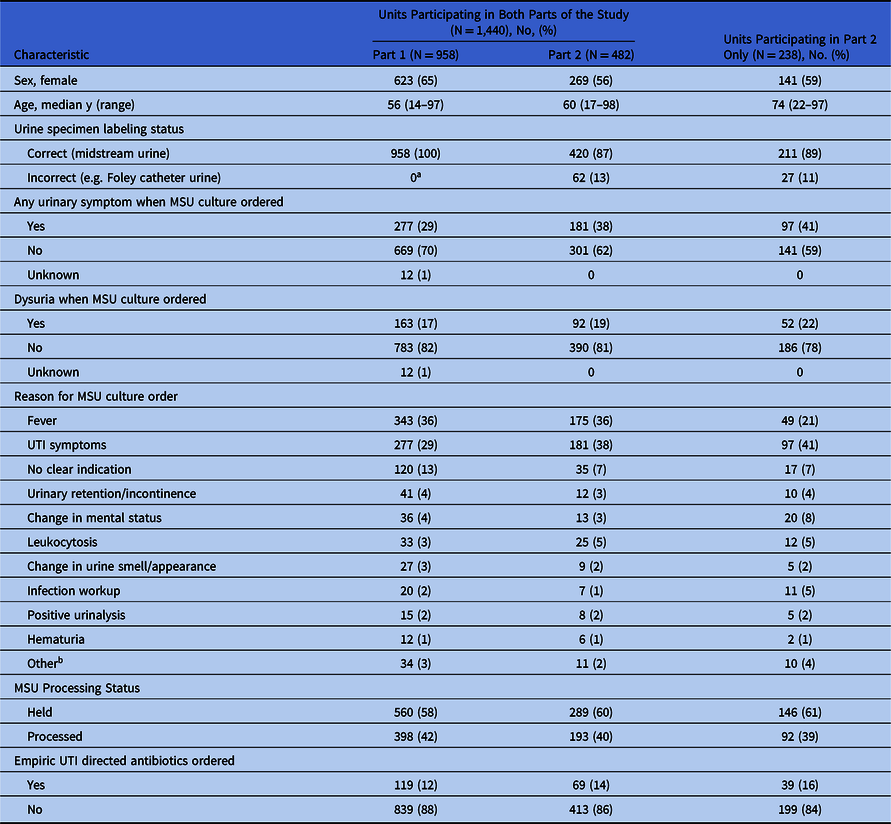
Note. MSU, midstream urine; UTI, urinary tract infection.
a These specimens were identified and excluded from part 1 of the study
b Other indications included abdominopelvic pain (N = 16), test of cure (N = 14), clinical deterioration (N=5), gastrointestinal/genitourinary tract discharge (N = 4), image findings (N = 3), patient request (N = 3), acute kidney injury (N = 3), voiding dysfunction (N = 2), nocturia (N = 2), initial antenatal test (N = 2), and ureteric stone (N = 1).
Primary outcome
During the study, 55 serious adverse events required review: 41 deaths and 14 episodes of sepsis from a urinary source. There were no situations in which study staff deemed culture processing necessary due to impending sepsis. No patient was rehospitalized or had prolonged hospitalization attributable to not processing the MSU. No deaths were adjudicated by any reviewer as related to not processing the MSU. All episodes of urinary sepsis were diagnosed at the time the first MSU culture was ordered, and blood cultures and appropriate and adequate empiric antibiotics were started at that time. In addition, blood culture results were available before or concurrent with MSU culture results in all cases.
Secondary patient outcomes
At day-4 follow-up, 6 of 912 patients (0.66%) were identified as having prolonged urinary symptoms possibly due to not processing MSU cultures. Of these, 3 patients had UTIs that were treated after a call for processing or the submission of a second urine with a call that yielded a positive culture (1, 2, and 6 days of prolonged symptoms). One patient recovered by day 4 without antibiotics. Also, 2 additional patients had mild-to-moderate symptoms that persisted for 32 and 34 days, respectively, despite 1 and 2 courses of empiric antibiotics, respectively, without subsequent MSU cultures ordered by their physicians. In chart reviews of the 510 patients not approached, and 294 without day-4 follow-up, we identified 1 additional patient with a 2-day delay in the start of adequate antibiotics for a P. aeruginosa cystitis (started on empiric trimethoprim-sulfamethoxazole).
During part 2 of the study, we assessed 82 patients who received antibiotics for a presumed UTI for antibiotic-associated adverse events. In the 54 patients with at least 1 UTI symptom, 8 (15%) had a nonserious antibiotic-associated adverse event: 4 vaginitis, 2 diarrhea (tested and negative for C. difficile toxin), 1 nausea, and 1 nausea and vaginitis. In the 28 patients without urinary symptoms, 2 (7%) had an antibiotic-associated adverse event: 1 vaginitis, and 1 nausea.
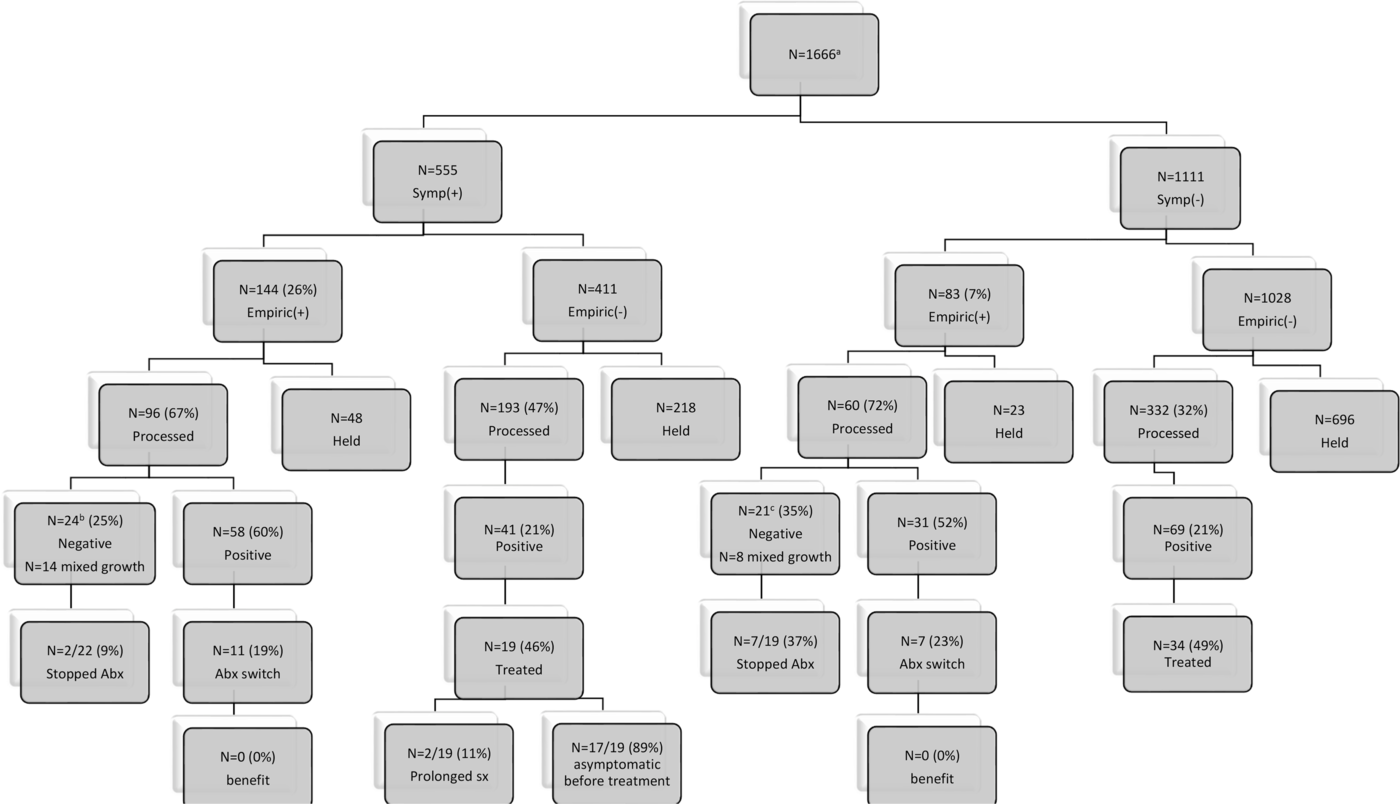
Figure 2 illustrates the patterns of antibiotic use and processing of MSU cultures by whether patients were symptomatic on day 0 and whether they received empiric antibiotics. Overall, 280 of 1,666 patients (17%) received 1 or more antibiotic courses for a presumed UTI: 227 (81%) were treated empirically, and 53 (19%) were treated in response to a positive MSU culture. UTI-directed empiric antibiotics were stopped in response to negative MSU cultures in 7 of 19 evaluable asymptomatic patients (37%), and 2 of 22 evaluable patients (9%) who were symptomatic on day 0. Overall, 143 of 144 (99%) symptomatic patients who received empiric antibiotics had resolution of symptoms within 4 days.
Patterns of antibiotic use, calls to process MSU cultures, and urine culture results in enrolled patients with and without urinary symptoms. Outcomes of patients are shown by presence or absence of urinary symptoms when the MSU culture was ordered and by whether or not empiric antibiotics were prescribed. Data from this figure were used to estimate the number of antibiotic courses avoided and the number not stopped because of negative urine cultures, by applying the outcomes of patients in each subgroup with processed urines to the parallel subgroup whose urine specimens were not processed. (a) Of 1,678 patients, 12 were excluded because they had missing data for urinary symptoms on day 0. (b, c) Because of concurrent other infections in 2 patients, we were unable to determine whether antibiotics would have been stopped in response to a negative urine culture. Symp(+), symp(−), emp(+), emp(−) denote symptomatic patients, asymptomatic patients, treated with UTI directed empiric antibiotics, not treated with UTI directed empiric antibiotics, respectively. Abx denotes antibiotic(s).

Among patients who did not receive empiric antibiotics, 34 of 69 (49%) with ASB received antibiotics in response to a positive MSU culture. Among 41 patients with processed MSU cultures who had had urinary symptoms on day 0 but had not received empiric antibiotics; 19 (46%) received antibiotics in response to a positive MSU culture, despite the fact that only 2 of 19 patients (11%) still had symptoms when the positive result was received. Among the 89 patients who received empiric antibiotics and had a positive MSU culture, 18 (20%) had a new antibiotic ordered, although none had persistent symptoms when the culture result was received, and 7 of the 18 patients (39%) had an organism susceptible to the empiric antibiotics.
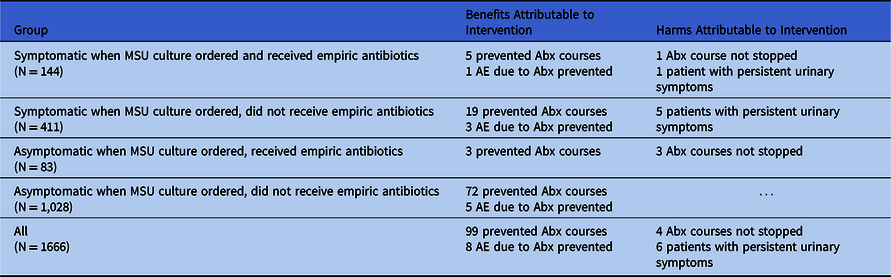
The estimated harms and benefits associated with not processing MSU cultures in our intervention are shown in Table 2. We estimated that 99 antibiotic courses and 8 antibiotic-associated adverse events were avoided, balanced against 6 patients with potentially avoidable persistence of urinary symptoms, and 4 antibiotic courses that would have been stopped early in response to a negative MSU culture.
Estimates of Overall Benefits and Harms to 1,666 Adult Medical and Surgical Inpatients Enrolled in the Intervention to Reduce Processing of Midstream Urine Specimens
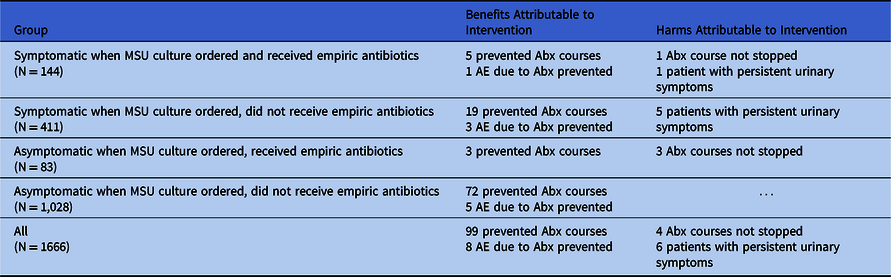
Note. MSU, midstream urine; Abx, antibiotic; AE, adverse event.
System outcomes
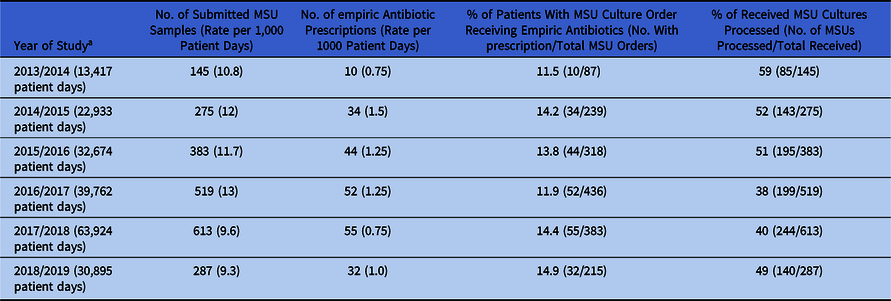
Secondary system outcomes are depicted in Table 3. The proportion of processed MSU cultures decreased from 59% in year 1 to 49% in year 6 (P < .0001). The rate of MSU cultures submitted, the rate of empiric antibiotic use for presumed UTIs, and the proportion of patients treated with UTI-directed empiric antibiotics did not change over time. Results did not differ when individual unit data were examined, with the exception that the rate of MSU cultures submitted from the 2 initially participating units declined over time from 10.8 per 1,000 patient days in year 1 to 7.1 per 1,000 patient days in year 6 (P = .0004).
Secondary Systems Outcomes of an Intervention to Reduce Processing of Midstream Urine Cultures From Adult Patients on Medical and Surgical Units
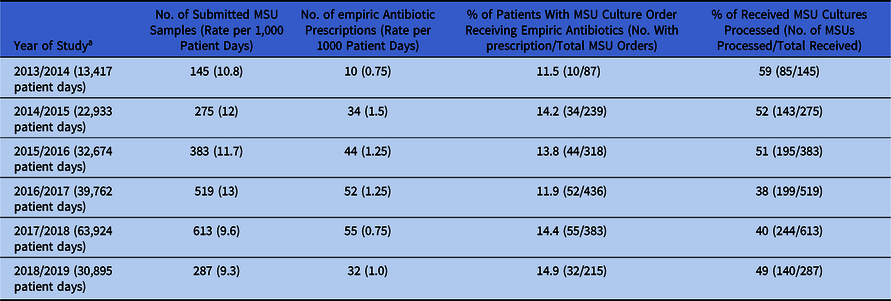
Note. MSU, midstream urine.
a Year 1 includes the 12 months from study start in November of 2013 to October 2014; all subsequent years are for the same 12 month period with the exception that 2018/2019 includes data from November 2018 to study end in April 2019.
Laboratory technologist time for processing an MSU culture is 12.3 minutes; rejecting processing a urine requires 0.45 minutes. During the study, 1,216 MSU samples were not processed, resulting in a saving of 240 hours (1,216×(12.3–0.45)/60). However, 1,006 MSU cultures involved a call to request processing. In 11 simulated calls, the mean time to initiate specimen processing was 3.29 minutes (range, 1.67–5.50). Thus, these specimens increased workload by 55 hours (1,006×3.29/60). In total, over the 66 months of study, the intervention reduced the microbiology laboratory workload by ~185 hours.
Discussion
We identified no serious adverse events attributable to not processing MSU cultures for 912 adult medical and surgical inpatients (upper 95% confidence limit for risk of serious adverse event, 0.4%). A small minority of patients (0.7%) had potentially avoidable days of urinary symptoms, and the opportunity to discontinue antibiotics based on a negative MSU culture was missed in an estimated 4 of 1,678 patients (0.2%). Balanced against this, we estimated that 99 of 1,678 patients (6%) avoided exposure to unnecessary antibiotics, and 8 of 1,678 (0.5%) avoided an antibiotic-associated adverse event.
In our setting, the low proportion (1 of 144, 0.69%) of symptomatic patients who received empiric therapy and whose symptoms had not completely resolved by day 4 demonstrates that MSU culture results were not needed to ensure adequate therapy. We found no evidence that physicians increased antibiotic prescribing in response to not having access to MSU culture results. Neither the rate of empiric UTI-directed antibiotic use nor the proportion of patients prescribed empiric antibiotic therapy changed over time.
The role of the “reflex to treat” phenomenon is also evident in our results. A substantial minority of symptomatic patients whose symptoms had resolved prior to positive MSU culture results being reported had antibiotics either started or changed in response to the report; one-quarter of antibiotic prescriptions estimated to be prevented by our intervention were in initially symptomatic patients. Similarly, in asymptomatic patients who had their MSU sample processed, 49% received antibiotics in response to their positive culture. Although this is a lower proportion of ASB treated than reported in a recent study of medical patients in Michigan, Reference Petty, Vaughn and Flanders27 it is not different than the proportion treated in our hospital 6 years ago. Reference Leis, Rebick and Daneman21 The increasing calls for action to reduce therapy for ASB Reference Nicolle, Gupta and Bradley1,Reference Force2,Reference Leis and Soong19 have not yet had a detectable impact at our hospital, which highlights the potential benefit of reducing urine culture processing.
At least 3 other studies have tested the idea of not processing MSU samples to reduce antibiotic treatment of ASB. Lamb et al Reference Lamb, Baillie and Pajak28 showed that not processing MSU samples from preoperative orthopedic clinics reduced the rate of ASB treatment before surgery and did not change the rate of prosthetic joint infection. Stagg et al Reference Stagg, Lutz and Kirpalaney29 demonstrated that holding MSU cultures from an emergency department resulted in significantly fewer visits with processed MSU cultures, and fewer antibiotic prescriptions for urinary indications. Finally, MacLaggan et al Reference MacLaggan, Le and Iverson30 demonstrated that not reporting positive urine culture results, combined with audit and feedback and education, decreased ASB treatment for inpatients. These studies demonstrate that this type of intervention is effective and safe in several different patient populations and reduces laboratory workload and costs. Reference Stagg, Lutz and Kirpalaney29,Reference MacLaggan, Le and Iverson30
Our study has several limitations. Because of staffing constraints (eg, vacation days), we were only able to approach 78% of eligible patients, and many patients were lost to follow-up because of discharge during part 1. We reviewed charts for all patients who were not approached or for whom follow-up to day 4 was incomplete, without identifying additional intervention-associated serious adverse events; however, some adverse events may have been missed. Documentation of symptoms may have varied in patients with cognitive impairment and language barriers. This variability may have affected our estimates of overall benefit and harm, but it does not affect our assessment of safety. A randomized controlled trial would have been a better design for assessing impact on the secondary outcomes of antibiotic courses and antibiotic-associated adverse events; the validity of our assumptions regarding the results processing held urine samples cannot be assessed. We did not record pregnancy or recent endourologic procedures and cannot comment on the impact of this intervention in these populations. Follow-up was limited to 30 days, and we did not discuss with clinicians reasons for not retesting and/or retreating 2 of the patients who had persisting symptoms, nor did we assess whether these symptoms were infection related. Both the distribution of organisms causing UTIs and their antibiotic resistance may change over time, and a potential long-term risk associated with this intervention is the loss of updated organism distribution and antimicrobial susceptibility data. Our power to detect changes in rates of antibiotic use was limited, and we did not have historical data regarding UTI-directed antibiotic treatment for patients with MSU cultures ordered before our intervention. Thus, we cannot rule out the possibility that empiric therapy increased when this intervention was implemented.
In conclusion, not processing MSU cultures from medical and surgical inpatients is safe, and it reduces inappropriate ASB therapy and laboratory workload. We believe that the benefits of reduced antibiotic use outweigh the harm of persistent symptoms in a very few patients. Understanding why some patients did not have urine cultures sent and processed despite persisting symptoms might reduce the rate of intervention-associated harm and increase its value. As work continues to reduce antibiotic therapy for ASB and “de-adopt” unnecessary urine culturing in hospitals, consideration should be given to the value of system-level approaches to this challenging problem.
Acknowledgments
We are grateful to all the staff of the medical and surgical units, the Microbiology Laboratory, the Department of Informatics, and the Department of Infection Prevention and Control of the Mount Sinai Hospital in Toronto, Canada, for their support for this study. We thank Dr Christopher Kandel, Dr Hector Felipe Garcia-Jeldes, and Dr Eric Coomes for their reviews of patient charts for attribution of serious adverse events.
Financial support
This study was supported in part by a research grant from Investigator-Initiated Studies Program of Merck Canada. The funders had no role in study design, data collection or analysis, the decision to publish, or preparation of the manuscript. The opinions expressed in this paper are those of the authors and do not necessarily represent those of Merck Canada. M.M.’s stipend was provided by this grant; other authors were not compensated for their role in this study.
Conflicts of interest
All authors report no conflicts of interest relevant to this article.