





Background
Obesity-related heart failure with preserved ejection fraction is increasingly recognised as a clinically distinct phenotype characterised by excess adiposity, impaired exercise reserve, high symptom burden, and reduced functional capacity. Reference Obokata, Reddy, Pislaru, Melenovsky and Borlaug1–Reference Kitzman, Brubaker and Morgan3 This phenotype is directly relevant to contemporary drug development because recent incretin trials have enrolled patients with obesity-related heart failure with preserved ejection fraction, whereas much of the sodium-glucose cotransporter 2 inhibitor evidence comes from broader heart failure with preserved ejection fraction or heart failure with mildly reduced ejection fraction/preserved ejection fraction (heart failure with mildly reduced ejection fraction/heart failure with preserved ejection fraction) outcome-trial populations. Reference Kosiborod, Abildstrom and Borlaug4–Reference Kosiborod, Bhatt and Claggett11
Patient-centred endpoints are central to this question. The Kansas City Cardiomyopathy Questionnaire Clinical Summary Score captures symptoms and physical limitations on a 0–100 scale, while the six-minute walk distance provides a pragmatic measure of functional capacity. Reference Green, Porter, Bresnahan and Spertus12,13 Both endpoints are particularly relevant when treatment is intended to improve daily function, rather than only to reduce event rates.
To our knowledge, no randomised trial has directly compared incretin-based therapy with sodium-glucose cotransporter 2 inhibitors in obesity-related heart failure with preserved ejection fraction. Standard publication-level pooling is problematic because several reports often arise from the same parent programmes, creating a risk of duplicate counting. Programme-level synthesis refers to treating all linked publications from a single randomised trial programme as one analytical unit. Therefore, we performed a programme-level systematic review and meta-analysis using the parent randomised trial programme as the unit of analysis.
Existing reviews and meta-analyses have evaluated incretin-based therapies, sodium-glucose cotransporter 2 inhibitors, and broader pharmacotherapy strategies for heart failure with preserved ejection fraction or heart failure with mildly reduced ejection fraction/heart failure with preserved ejection fraction. Reference Costa, Felix and Chagas14–Reference Chen, Tseng and Huang18 In contrast, this review addresses a narrower methodological gap by focusing on patient-centred outcomes in obesity-related heart failure with preserved ejection fraction. Its distinct contribution is the parent-programme synthesis framework, which treats linked publications from the same randomised trial programme as one analytical unit to avoid duplicate trial inflation. The primary aim was to evaluate Kansas City Cardiomyopathy Questionnaire Clinical Summary Score and six-minute walk distance using independent parent trial programmes as the unit of synthesis, while avoiding double-counting of linked reports and avoiding a formal network meta-analysis where transitivity assumptions were uncertain.
Materials and methods
Design and reporting
This systematic review and programme-level meta-analysis followed the PRISMA 2020 reporting principles. Reference Page, McKenzie and Bossuyt19 The review protocol was not prospectively registered; however, to improve transparency, the protocol and analytic framework were archived in the Open Science Framework as a retrospective transparency record before journal submission: https://osf.io/naqrg/. Eligibility criteria, outcomes, programme-level synthesis rules, and statistical methods were defined before final manuscript drafting and are reported in the main text and Supplementary Material (Supplementary table S1). The prespecified quantitative unit was the independent parent trial programme. Secondary, pooled, subgroup, imaging, biomarker, body mass index, sex-based, trajectory, and health status publications were linked to their parent programme and were not entered as independent observations.
A formal network meta-analysis was not performed because the evidence network was sparse, no direct incretin versus sodium-glucose cotransporter 2 inhibitor trial was available, and key transitivity assumptions were not credible across obesity specificity, follow-up duration, endpoint availability, and linked-source dependence.
Information sources and search strategy
PubMed/MEDLINE and ClinicalTrials.gov were searched, and sources identified through other methods were reconciled according to the PRISMA 2020 flow diagram process. Searches were conducted on May 18, 2026, with no filters. Three PubMed/MEDLINE search strategies were used to identify 1,377 raw records (Supplementary Table 2). After removing 337 duplicates, 1,040 unique PubMed records were screened. ClinicalTrials.gov searches identified 95 registry records; six parent registry records were retained after manual screening. Five additional reports were identified using other methods. Supplementary verification searches were performed in Cochrane CENTRAL and Europe PMC on May 25, 2026, using broad heart failure with preserved ejection fraction/heart failure with mildly reduced ejection fraction, obesity, incretin-based therapy, sodium-glucose cotransporter 2 inhibitor, KCCQ, and six-minute walk terms, as well as programme-specific trial names. These searches were used to check for additional independent parent randomised programmes and did not identify any eligible programme beyond the six already included. The search strategy prioritised parent-programme traceability and registry confirmation. The formal PRISMA search did not include Embase or Web of Science, so database-level incompleteness cannot be excluded. However, supplementary CENTRAL and Europe PMC verification, ClinicalTrials.gov review, parent-programme reconciliation, manual source verification, and linkage of secondary reports to their parent programmes partly mitigated this limitation.
An unfielded trial-name calibration query was not used in the PRISMA flow because generic trial terms retrieved a large number of irrelevant records. Deduplication was performed primarily using exact PMID matching, with DOI and normalised titles available as fallback rules.
Eligibility criteria
Eligible quantitative evidence comprised randomised parent programmes enrolling adults with heart failure with preserved ejection fraction or heart failure with mildly reduced ejection fraction/HFpEF and evaluating incretin-based therapies or sodium-glucose cotransporter 2 inhibitors against placebo or standard care. We prioritised obesity-related heart failure with preserved ejection fraction. However, broader heart failure with mildly reduced ejection fraction/heart failure with preserved ejection fraction populations were eligible only when relevant patient-centred treatment effects could be extracted.
The Kansas City Cardiomyopathy Questionnaire Clinical Summary Score was selected as the primary outcome because it directly reflects patient-reported symptoms and physical limitations. The six-minute walk distance was selected as the secondary outcome because it provides a practical measure of functional capacity. Additional outcomes, such as body weight, body mass index, inflammatory markers, natriuretic peptides, hospitalisation, mortality, and adverse events, were extracted solely when deemed relevant for contextual understanding. Reviews, earlier meta-analyses, narrative articles, observational phenotype studies, and non-pharmacological trials were not included in the quantitative synthesis because they did not provide independent randomised parent-programme treatment effects.
Study selection and data extraction
Titles and abstracts were first screened to identify potentially relevant records. Full texts were then assessed in detail, and each report was assigned to one of five groups: parent programme report, linked extraction source, subgroup or secondary publication, contextual review/meta-analysis, or background evidence. The six parent programmes included in the quantitative synthesis were STEP-heart failure with preserved ejection fraction, STEP-heart failure with preserved ejection fraction DM, SUMMIT, PRESERVED-HF, EMPEROR-Preserved, and DELIVER.
Data were extracted at the programme level. The extracted variables included intervention, comparator, population phenotype, heart failure with preserved ejection fraction definition, obesity criterion, sample size, follow-up duration, Kansas City Cardiomyopathy Questionnaire Clinical Summary Score estimate, six-minute walk distance estimate, confidence interval, variance handling, and analysis. Standard errors were derived from 95% confidence intervals when they were reported. No unreported numerical values were imputed. Study selection, parent-programme mapping, and extracted numerical values were prepared using a structured programme-level framework and independently checked by two additional authors against source reports, supplementary materials, and registry records. Disagreements were resolved by discussion.
Risk of bias
Risk of bias was assessed using the Cochrane RoB 2 framework at the parent-programme level and separately by outcome, as applicable. Reference Sterne, Savovic and Page20 Linked publications were considered under the relevant parent programme but were not assessed as independent trials.
Statistical analysis
Programme-level mean differences versus placebo were pooled using a random-effects meta-analysis with restricted maximum likelihood estimation and Knapp-Hartung inference in R/metafor. Reference Viechtbauer21 Analyses were performed in R version 4.6.0 (2026-04-24 ucrt) using the metafor package version 5.0.1. Kansas City Cardiomyopathy Questionnaire Clinical Summary Score was analysed as the mean difference in points, and six-minute walk distance as the mean difference in metres.
The primary analyses included incretin obesity-heart failure with preserved ejection fraction Kansas City Cardiomyopathy Questionnaire Clinical Summary Score synthesis and incretin obesity-heart failure with preserved ejection fraction six-minute walk distance synthesis. The secondary analysis included sodium-glucose cotransporter 2 Kansas City Cardiomyopathy Questionnaire Clinical Summary Score synthesis. Exploratory analyses included all-programme Kansas City Cardiomyopathy Questionnaire Clinical Summary Score and all-available six-minute walk distance syntheses. Small-study effects and formal meta-regression were not tested because the number of independent programmes was too small for reliable inference. Certainty of evidence was considered narratively using Grading of Recommendations Assessment, Development and Evaluation domains, including risk of bias, inconsistency, indirectness, imprecision, and publication bias. A full formal Grading of Recommendations Assessment, Development and Evaluation evidence profile was not prepared because the review used programme-level aggregate data and included few independent parent programmes.
Results
Study selection
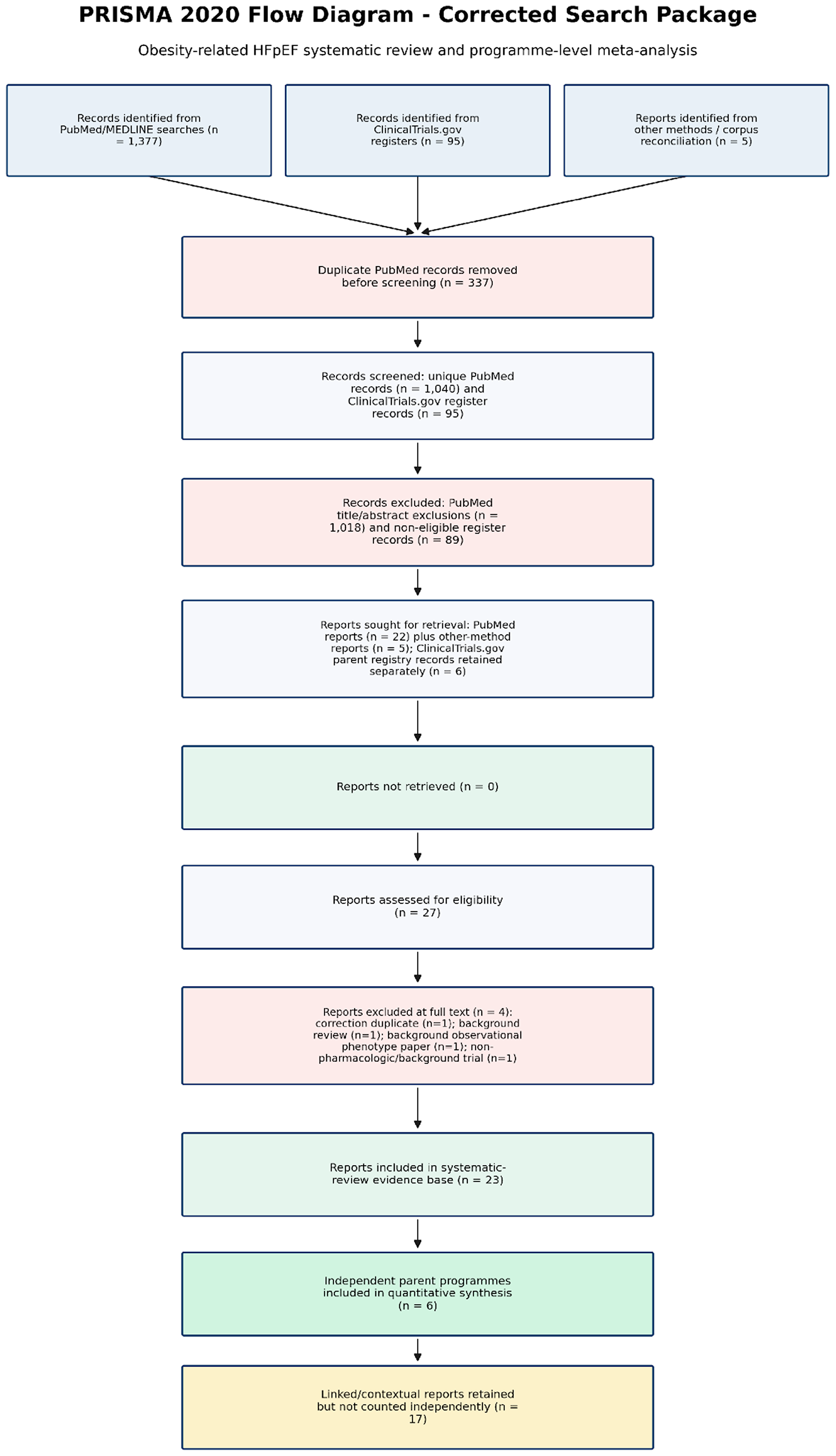
The corrected PRISMA flow identified 1,377 PubMed/MEDLINE records; 337 duplicates were removed, and 1,040 unique PubMed records were screened. Of these, 1,018 were excluded at title/abstract screening, and 22 proceeded to retrieval. ClinicalTrials.gov searches identified 95 registry records, of which 89 were excluded as not corresponding to eligible parent programmes and six parent registry records were retained. Five reports were identified using other methods. Overall, 27 reports were retrieved and assessed; four were excluded at the full-text stage (Supplementary Table 2), 23 reports were included in the evidence base, and six independent parent programmes contributed to the quantitative synthesis (Figure 1).
PRISMA 2020 flow diagram showing the identification, deduplication, screening, eligibility assessment, and inclusion of reports and independent parent programmes.

Included programmes and populations
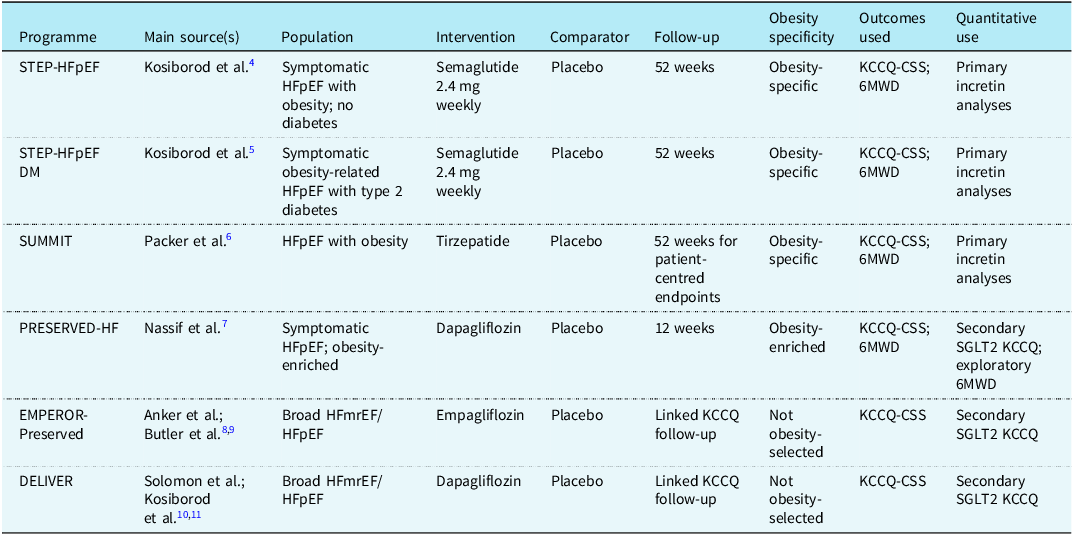
Six independent parent programmes were identified: STEP-heart failure with preserved ejection fraction, STEP-heart failure with preserved ejection fraction DM, SUMMIT, PRESERVED-HF, EMPEROR-Preserved, and DELIVER. STEP-HFpEF and STEP-HFpEF DM enrolled adults with symptomatic obesity-related HFpEF and randomised participants to semaglutide 2.4 mg weekly or placebo for 52 weeks. Reference Kosiborod, Abildstrom and Borlaug4,Reference Kosiborod, Petrie and Borlaug5 SUMMIT enrolled adults with heart failure with preserved ejection fraction and obesity and randomised participants to receive tirzepatide or placebo, with the Kansas City Cardiomyopathy Questionnaire Clinical Summary Score and six-minute walk distance assessed at 52 weeks. Reference Packer, Zile and Kramer6
PRESERVED-HF evaluated dapagliflozin over 12 weeks in symptomatic heart failure with preserved ejection fraction and was obesity-enriched but not obesity-restricted. Reference Nassif, Windsor and Tang7 EMPEROR-Preserved and DELIVER enrolled broader heart failure with mildly reduced ejection fraction/heart failure with preserved ejection fraction populations; KCCQ data were obtained from linked health-status analyses. Reference Anker, Butler and Filippatos8–Reference Kosiborod, Bhatt and Claggett11 A detailed programme-level characteristic table is provided in Table 1.
Parent programme characteristics

Table 1. Long description
The table compares different programs focused on heart failure with preserved ejection fraction (HFpEF). It includes six rows and eight columns. The columns are labeled Programme, Main source(s), Population, Intervention, Comparator, Follow-up, Obesity specificity, Outcomes used, and Quantitative use. Each row provides details for a specific program. Row 1: STEP-HFpEF, Kosiborod et al., Symptomatic HFpEF with obesity; no diabetes, Semaglutide 2.4 mg weekly, Placebo, 52 weeks, Obesity-specific, KCCQ-CSS; 6MWD, Primary incretin analyses. Row 2: STEP-HFpEF DM, Kosiborod et al., Symptomatic obesity-related HFpEF with type 2 diabetes, Semaglutide 2.4 mg weekly, Placebo, 52 weeks, Obesity-specific, KCCQ-CSS; 6MWD, Primary incretin analyses. Row 3: SUMMIT, Packer et al., HFpEF with obesity, Tirzepatide, Placebo, 52 weeks for patient-centered endpoints, Obesity-specific, KCCQ-CSS; 6MWD, Primary incretin analyses. Row 4: PRESERVED-HF, Nassif et al., Symptomatic HFpEF; obesity-enriched, Dapagliflozin, Placebo, 12 weeks, Obesity-enriched, KCCQ-CSS; 6MWD, Secondary SGLT2 KCCQ; exploratory 6MWD. Row 5: EMPEROR-Preserved, Anker et al.; Butler et al., Broad HFmrEF/HFpEF, Empagliflozin, Placebo, Linked KCCQ follow-up, Not obesity-selected, KCCQ-CSS, Secondary SGLT2 KCCQ. Row 6: DELIVER, Solomon et al.; Kosiborod et al., Broad HFmrEF/HFpEF, Dapagliflozin, Placebo, Linked KCCQ follow-up, Not obesity-selected, KCCQ-CSS, Secondary SGLT2 KCCQ.
Risk of bias
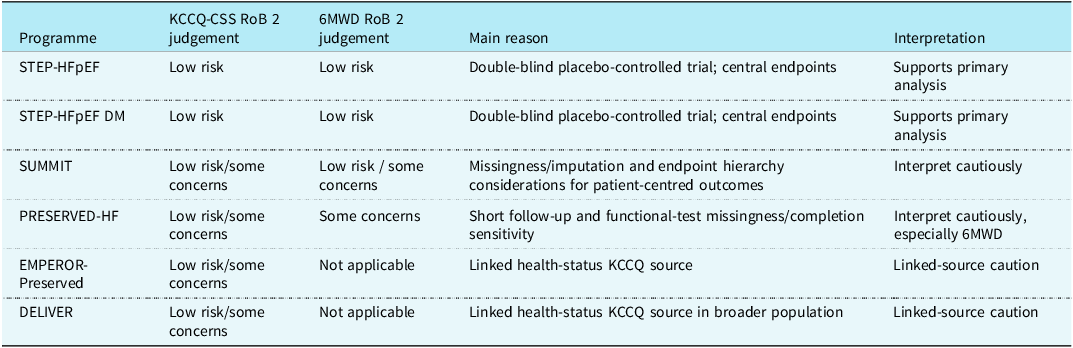
All six programmes were judged to be at low risk or to have some concerns; none was judged to be at high risk for Kansas City Cardiomyopathy Questionnaire Clinical Summary Score or six-minute walk distance outcomes (Table 3). Specifically, STEP-heart failure with preserved ejection fraction and STEP-heart failure with preserved ejection fraction DM were judged to be at low risk for both outcomes. SUMMIT was judged to be at low risk with some concerns. PRESERVED-HF was judged to have some concerns, particularly for six-minute walk distance. EMPEROR-Preserved and DELIVER were judged to have some concerns for Kansas City Cardiomyopathy Questionnaire Clinical Summary Score because the estimates came from linked health-status analyses in broader heart failure with mildly reduced ejection fraction/heart failure with preserved ejection fraction populations.
Risk of bias summary

Table 3. Long description
A table with six rows and four columns comparing risk of bias judgments for different programs. The columns are labeled Programme, KCCQ-CSS RoB 2 judgement, 6MWD RoB 2 judgement, Main reason, and Interpretation. The rows list different programs and their respective judgments and reasons. Row 1: STEP-HFpEF, Low risk, Low risk, Double-blind placebo-controlled trial; central endpoints, Supports primary analysis. Row 2: STEP-HFpEF DM, Low risk, Low risk, Double-blind placebo-controlled trial; central endpoints, Supports primary analysis. Row 3: SUMMIT, Low risk/some concerns, Low risk / some concerns, Missingness/imputation and endpoint hierarchy considerations for patient-centred outcomes, Interpret cautiously. Row 4: PRESERVED-HF, Low risk/some concerns, Some concerns, Short follow-up and functional-test missingness/completion sensitivity, Interpret cautiously, especially 6MWD. Row 5: EMPEROR-Preserved, Low risk/some concerns, Not applicable, Linked health-status KCCQ source, Linked-source caution. Row 6: DELIVER, Low risk/some concerns, Not applicable, Linked health-status KCCQ source in broader population, Linked-source caution.
The most frequent drivers of “some concerns” were missing patient-reported or functional outcome data, endpoint hierarchy, short follow-up for PRESERVED-HF six-minute walk distance, and reliance on linked health-status analyses for EMPEROR-Preserved and DELIVER Kansas City Cardiomyopathy Questionnaire Clinical Summary Score estimates. Detailed domain-level RoB 2 judgements are provided in the Supplementary Material (Supplementary Table 3).
Primary incretin analyses: Kansas City Cardiomyopathy Questionnaire Clinical Summary Score and six-minute walk distance
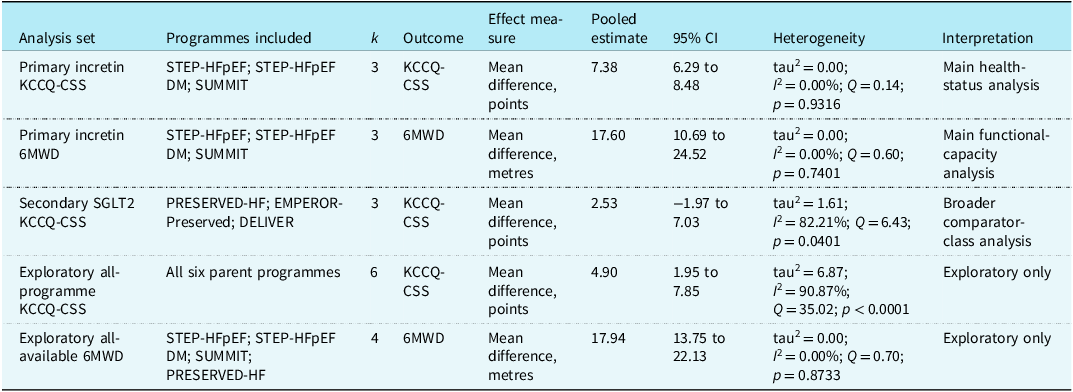
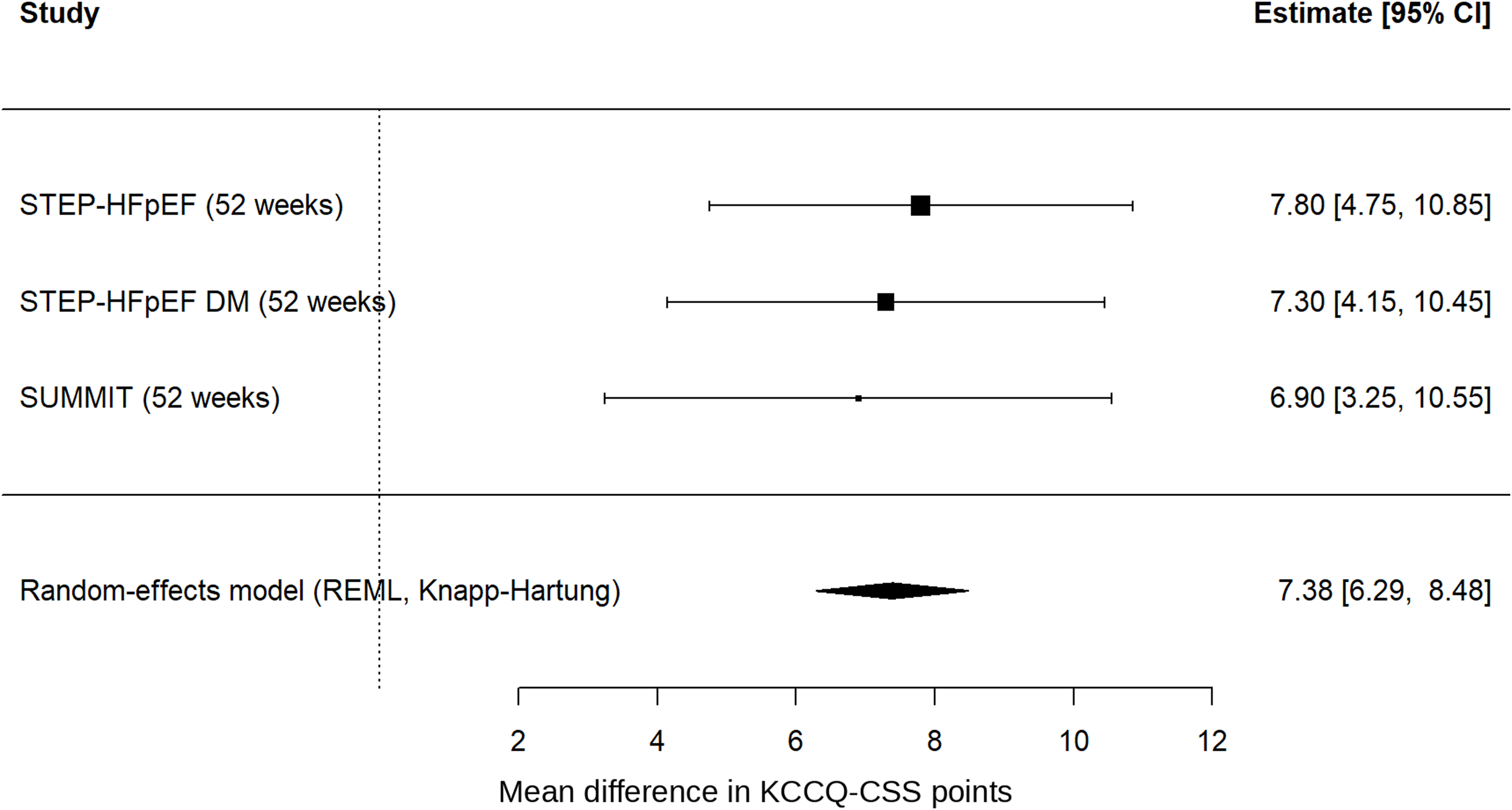
Three obesity-specific incretin programmes (STEP-heart failure with preserved ejection fraction, STEP-heart failure with preserved ejection fraction DM, SUMMIT) contributed to the primary Kansas City Cardiomyopathy Questionnaire Clinical Summary Score and six-minute walk distance analyses. Programme-level Kansas City Cardiomyopathy Questionnaire Clinical Summary Score mean differences versus placebo were consistent across programmes. The pooled mean difference was 7.38 points (95% confidence interval, 6.29 to 8.48), with no observed heterogeneity; full heterogeneity statistics are provided in Table 2 (Figure 2).
Programme-level meta-analysis summary

Table 2. Long description
A table with six rows and eight columns summarizing the meta-analysis of various health programs. The columns are Analysis set, Programmes included, k, Outcome, Effect measure, Pooled estimate, 95% CI, Heterogeneity, and Interpretation. The rows detail different analysis sets, the programs included in each, the number of studies (k), the outcome measured, the effect measure used, the pooled estimate, the 95% confidence interval (CI), heterogeneity statistics, and the interpretation of the results. Notable trends include the primary incretin analysis showing significant improvements in health status and functional capacity with low heterogeneity, while secondary and exploratory analyses show varying degrees of improvement and heterogeneity.
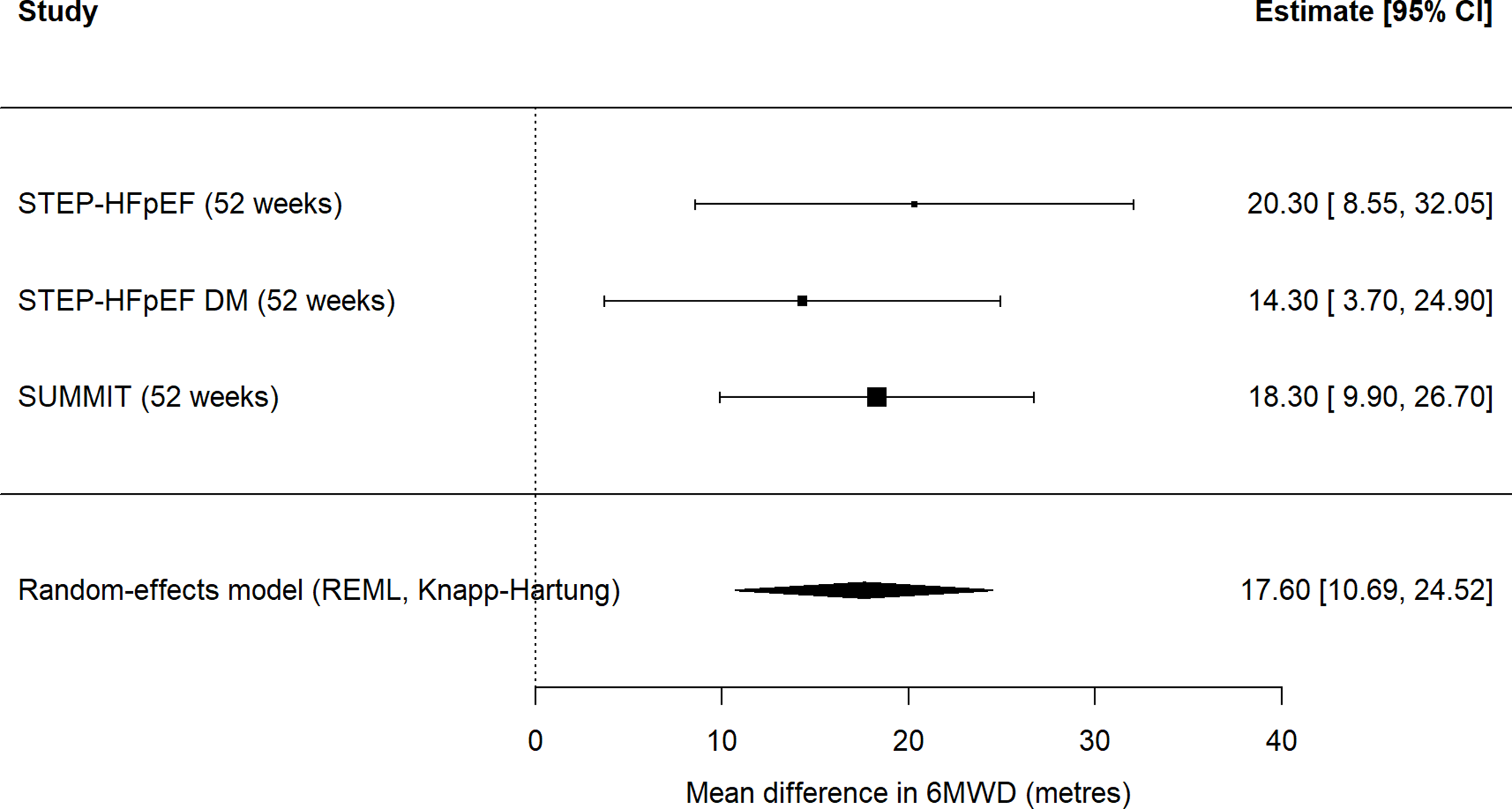
For the six-minute walk distance, programme-level mean differences were also directionally consistent. The pooled mean difference was 17.60 m (95% confidence interval, 10.69 to 24.52), with no observed heterogeneity; full heterogeneity statistics are provided in Table 2 (Figure 3). Given that only three programmes contributed to each primary synthesis, the absence of observed heterogeneity should be interpreted with caution and not as definitive evidence of complete clinical homogeneity.
Primary KCCQ-CSS forest plot for incretin obesity-HFpEF programmes. Random-effects programme-level synthesis of STEP-HFpEF, STEP-HFpEF DM, and SUMMIT using restricted maximum likelihood (REML) estimation with Knapp–Hartung inference. The effect measure is the mean difference in KCCQ-CSS points versus placebo.

Primary 6MWD forest plot for incretin obesity-HFpEF programmes. Random-effects programme-level synthesis of STEP-HFpEF, STEP-HFpEF DM, and SUMMIT using restricted maximum likelihood (REML) estimation with Knapp–Hartung inference. The effect measure is the mean difference in metres versus placebo.

Secondary sodium-glucose cotransporter 2 and exploratory analyses
Three sodium-glucose cotransporter 2 heart failure with preserved ejection fraction programmes (PRESERVED-HF, EMPEROR-Preserved, and DELIVER) contributed to the Kansas City Cardiomyopathy Questionnaire Clinical Summary Score data. The pooled mean difference for sodium-glucose cotransporter 2 Kansas City Cardiomyopathy Questionnaire Clinical Summary Score was 2.53 points (95% confidence interval −1.97 to 7.03), with substantial heterogeneity (I 2 = 82.21%). Given the broader heart failure with mildly reduced ejection fraction/heart failure with preserved ejection fraction populations and high heterogeneity, this estimate provides contextual sodium-glucose cotransporter 2 evidence and should not be interpreted as directly comparable with the obesity-specific incretin findings.
Pooling data from all six programmes yielded a descriptive Kansas City Cardiomyopathy Questionnaire Clinical Summary Score mean difference of 4.90 points (95% confidence interval, 1.95 to 7.85), but this result showed high heterogeneity and should not be interpreted as a comparative treatment estimate. Pooling all available six-minute walk distance data yielded a mean difference of 17.94 m (95% confidence interval, 13.75 to 22.13), with PRESERVED-HF included only in this exploratory analysis because it was the only sodium-glucose cotransporter 2 programme with extractable six-minute walk distance data and used a shorter follow-up (Table 2).
Discussion
Principal findings
This programme-level systematic review and meta-analysis found that incretin-based therapies in obesity-specific heart failure with preserved ejection fraction populations were associated with consistent patient-centred improvements in patient-reported health status and functional capacity compared with placebo. Sodium-glucose cotransporter 2 inhibitor programmes in broader heart failure with mildly reduced ejection fraction/heart failure with preserved ejection fraction populations showed smaller and more heterogeneous Kansas City Cardiomyopathy Questionnaire Clinical Summary Score effects, and six-minute walk distance data were available from only one short-term sodium-glucose cotransporter 2 trial.
Clinical interpretation
The pooled incretin Kansas City Cardiomyopathy Questionnaire Clinical Summary Score estimate exceeded the commonly used 5-point threshold for clinically meaningful improvement on the 0-100 KCCQ scale. Reference Spertus, Jones, Sandhu and Arnold22 In contrast, the pooled six-minute walk distance gain was modest (17.60 m, 95% confidence interval, 10.69 to 24.52). Values in the 15–30 m range are often interpreted as potentially meaningful in cardiopulmonary disease, but six-minute walk distance thresholds vary by population and are less established in heart failure with preserved ejection fraction than KCCQ thresholds. Reference Khan, Anker and Friede23 Therefore, the six-minute walk distance finding should be interpreted as a supportive functional-capacity signal rather than definitive evidence of a large improvement in exercise capacity.
These findings are biologically plausible in an obesity-related heart failure with preserved ejection fraction phenotype, in which adiposity, inflammation, haemodynamic loading, and peripheral limitations may contribute to symptoms and reduced exercise tolerance. Linked STEP-heart failure with preserved ejection fraction, SUMMIT, and DELIVER analyses provide additional context on obesity class, sex, inflammation, clinical trajectory, functional capacity, and body mass index-related heterogeneity, but these reports were not treated as independent quantitative studies. Reference Butler, Shah and Petrie24–Reference Adamson, Kondo and Jhund30
Comparison with prior evidence
Existing meta-analyses have evaluated incretin-based therapies, sodium-glucose cotransporter 2 inhibitors, and broader pharmacotherapy strategies for heart failure with preserved ejection fraction or heart failure with mildly reduced ejection fraction/heart failure with preserved ejection fraction. Reference Costa, Felix and Chagas14–Reference Chen, Tseng and Huang18 The present review is narrower but methodologically distinct; it focuses on Kansas City Cardiomyopathy Questionnaire Clinical Summary Score and six-minute walk distance, uses the parent programme as the quantitative unit, separates obesity-specific incretin evidence from broader sodium-glucose cotransporter 2 heart failure with preserved ejection fraction evidence, and avoids a forced network meta-analysis in which transitivity assumptions are weak. Unlike publication-level syntheses that may risk duplicate inclusion of linked trial reports, this approach prioritises independence of evidence over apparent sample size. The aim is not to rank drug classes statistically but to clarify how the current patient-centred evidence is structured for obesity-related heart failure with preserved ejection fraction.
Strengths and limitations
This review has several practical strengths. The eligibility framework and synthesis plan were finalised before quantitative synthesis, extraction was organised at the parent-programme level, and risk of bias was assessed separately for each outcome. The statistical approach was chosen with the small number of independent programmes in mind. The focus on Kansas City Cardiomyopathy Questionnaire Clinical Summary Score and six-minute walk distance keeps the analysis close to outcomes patients notice directly: symptoms, physical function, and day-to-day mobility.
The findings should be interpreted in light of several limitations. No trial directly compared incretin-based therapies with sodium-glucose cotransporter 2 inhibitors in obesity-related heart failure with preserved ejection fraction. The evidence base was small, and the incretin and sodium-glucose cotransporter 2 programmes differed in population phenotype, follow-up duration, and outcome availability. six-minute walk distance data were incomplete across sodium-glucose cotransporter 2 programmes, and some Kansas City Cardiomyopathy Questionnaire Clinical Summary Score estimates came from linked health-status publications rather than primary trial reports. Finally, the analysis used published programme-level data rather than individual participant data. The formal PRISMA search did not include Embase or Web of Science, so database-level incompleteness cannot be excluded. However, supplementary verification searches in Cochrane CENTRAL and Europe PMC did not identify additional eligible independent parent programmes, and registry review, source verification, and parent-programme reconciliation partly mitigated this limitation.
The small number of independent parent programmes limits the robustness and precision of the pooled estimates and precludes robust subgroup analysis, meta-regression, or formal small-study-effect testing. The absence of observed heterogeneity in the primary incretin analyses should not be interpreted as proof of complete clinical homogeneity because only three programmes contributed to each primary synthesis. Certainty should be interpreted cautiously because cross-class comparisons were indirect, sodium-glucose cotransporter 2 estimates were derived from broader heart failure with mildly reduced ejection fraction/heart failure with preserved ejection fraction populations, and heterogeneity was substantial in the secondary sodium-glucose cotransporter 2 Kansas City Cardiomyopathy Questionnaire Clinical Summary Score synthesis. Unpublished neutral studies, selective reporting of patient-centred endpoints, and exclusion of conference-only data cannot be fully excluded. Trial-registry verification and parent-programme reconciliation partly mitigated this risk.
For EMPEROR-Preserved and DELIVER, Kansas City Cardiomyopathy Questionnaire Clinical Summary Scoreestimates were extracted from linked health-status analyses rather than treated as separate parent trial reports. Although these analyses are relevant to patient-centred outcomes, they may differ from primary trial reports in analytic population, timing, missing-data handling, or endpoint hierarchy. These factors contributed to the “some concerns” judgement and support a cautious interpretation of the sodium-glucose cotransporter 2 Kansas City Cardiomyopathy Questionnaire Clinical Summary Score synthesis.
Implications and future research
The next step should be direct comparative trials in patients with obesity-related heart failure with preserved ejection fraction. These trials would be most useful if they measured the same patient-centred and clinical endpoints across treatment classes, including Kansas City Cardiomyopathy Questionnaire Clinical Summary Score, six-minute walk distance, body weight, congestion markers, inflammatory markers, and clinical events. Patient-level analyses could then examine whether treatment response differs by baseline body mass index, diabetes status, sex, inflammatory profile, or baseline Kansas City Cardiomyopathy Questionnaire Clinical Summary Score and six-minute walk distance. Until such data are available, cross-class comparisons should remain descriptive, even though contemporary heart failure guidelines support evidence-based treatment in HFpEF. Reference Heidenreich, Bozkurt and Aguilar31
Conclusions
In obesity-related heart failure with preserved ejection fraction, incretin-based therapies were associated with consistent programme-level improvements in Kansas City Cardiomyopathy Questionnaire Clinical Summary Score and six-minute walk distance. In the separate secondary sodium-glucose cotransporter 2 synthesis, Kansas City Cardiomyopathy Questionnaire Clinical Summary Score evidence was derived largely from broader heart failure with mildly reduced ejection fraction/heart failure with preserved ejection fraction populations and was more heterogeneous, with limited cross-class six-minute walk distance availability. These findings support further comparative research but do not establish class superiority. Cross-class comparisons should remain exploratory until direct comparative trials, harmonised endpoints, and patient-level analyses become available.
Supplementary material
The supplementary material for this article can be found at https://doi.org/10.1017/S1047951126124317.
Data availability statement
The data analysed in this systematic review and programme-level meta-analysis were extracted from published reports, supplementary materials, and trial registry records. The extracted datasets and analysis code are available from the corresponding author upon reasonable request.
Acknowledgements
The authors thank the investigators, participants, and trial teams whose work made this review possible. No individuals outside the author group contributed directly to the preparation of this manuscript.
Financial support
This study was conducted independently by the authors and did not receive any specific financial support or grants from funding agencies in the public, commercial, or not-for-profit sectors.
Competing interests
The authors declare no competing interests.
Ethical standard
As this systematic review and meta-analysis used previously published, aggregated data and did not involve new data collection from human participants or animals, formal ethics approval and informed consent were not required.
Consent for publication
Individual patient consent for publication was not required because only published, aggregated data were analysed.
Use of AI statement
During manuscript preparation, the authors used AI-assisted tools to support literature organisation, drafting assistance, language refinement, and consistency checks. The authors reviewed, verified, edited, and approved all content and take full responsibility for the final manuscript.
Copyright and originality statement
No third-party copyrighted figures, tables, images, or substantial text excerpts were reproduced. All figures and tables were created by the authors from extracted published data, with the original sources cited.


 Open access

