INTRODUCTION
Rice (Oryza sativa L.) being grown worldwide, it is a staple food crop for more than one-half of the world's population, with more than 90% of rice being grown and consumed in Asia (Chauhan, Reference Chauhan2012). It accounts for 35–75% of the total calories consumed by more than 3 billion Asians, and it is cultivated on 154 million hectares, around 11% of total World's cultivable land (Khush, Reference Khush, Aggarwal, Ladha, Singh, Devakumar and Hardy2007). In India, rice cultivation during kharif (rice grown during Jun–Jul to Oct–Nov, also known as winter rice) season contributes about 87% of the total rice production with yield of 2.3 Mg ha−1, whereas boro rice (rice grown during Dec–Jan to May–Jun, also known as summer rice) contributes 13.4% having yield of 3.3 Mg ha−1. However, weed occurrence is one of the most important causes for low yield of rice, especially in boro season in India. Weeds are one of the major worldwide biological constraints to rice production in both lowland and upland ecosystems. The types and the occurrence of weed infestation in rice fields are often determined by the type of rice ecosystem, stand establishment, moisture, land preparation and cultural practices (Matloob et al., Reference Matloob, Khaliq and Chauhan2014). Transplanted rice suffers from more number of weed species as it is cultivated under favourable moisture regimes and other input environment. The uncontrolled weed growth in transplanted rice causes 16–86% losses to the grain yield. To increase the efficiency of the other applied inputs, weed management is one of the important operations in transplanted rice.
The early crop growth stage (up to 45–60 days of transplanting) is the most competitive for weeds and hence the crop growth is affected negatively (Barua et al., Reference Barua, Borah, Deka and Deka2008). Singh et al. (Reference Singh, Ladha, Gupta, Bhushan and Rao2008) reported that both weed density and weed biomass were negatively correlated with rice yield and grassy weeds constituted 76–96% of total weed biomass in all rice establishment techniques. Usually, two to three hand weedings are needed for growing a rice crop depending upon the nature of weeds, their intensity of infestation and the nature of the crop grown. Sometimes, weeding delay causes drastic reduction in grain yield (Hasanuzzaman et al., Reference Hasanuzzaman, Islam and Bapari2008). In fact, crop management practices are very important in controlling weeds and their composition in the rice field. Chemical weed control has been widely used to manage weeds in several rice-growing countries, such as Malaysia, Philippines (Chauhan and Johnson, Reference Chauhan and Johnson2011) and India (Singh et al., Reference Singh, Bhullar and Chauhan2014). The use of herbicides in rice for controlling weeds has increased significantly because of increased labour wages, labour shortages and a shift in rice culture from transplanted to direct-seeded. Weed control in India is also done through herbicides application and hand weeding; however, the latter is becoming less common because higher wages and migration of labour to urban areas (Mahajan et al., Reference Mahajan, Chauhan and Gill2013). Thus, the application of herbicides for weed management in rice-growing tracts is being increased due to the scarcity of labour.
Several herbicides, with PRE (pre-emergence) activity, applied solely or with hand weeding, have been reported effective in weed control (Mahajan and Chauhan, Reference Mahajan and Chauhan2013). However, some issues related to the use of PRE herbicides exist due to their limited window of application timing and requirement of sufficient soil moisture at the time of application (Singh et al., Reference Singh, Bhushan, Ladha, Gupta, Rao and Sivaprasad2006). Earlier research suggests that sequential applications of PRE and POST (post emergence) herbicides were highly effective in controlling weeds in rice, reducing weed density and biomass more than that of repetitively application of single herbicides (Singh et al., Reference Singh, Bhushan, Ladha, Gupta, Rao and Sivaprasad2006; Mahajan and Chauhan, Reference Mahajan and Chauhan2013). However, the use of a narrow window application of herbicide does not provide effective and season-long weed control, which may result shifts in susceptible weed flora to tolerant one. Bispyribac-sodium, for example, controls Echinochloa colona (L.) Link. but does not provide effective control of Leptochloa chinensis (L.) Nees and Dactyloctenium aegyptium (L.) Richt. (Chauhan, Reference Chauhan and Johnson2011). Continuous and extensive use of herbicides raised concerns for the long-term sustainability of soil fertility. Herbicides do not affect soil physical properties but are expected to affect the catalytic efficiency, behaviour of soil enzymes (Sannino and Gianfreda, Reference Sannino and Gianfreda2001) and then change the total biological activity. However, the knowledge about the effect of herbicides on soil enzymatic activities and microbial population dynamics in the long-term applications has been limited.
The present study was designed to (i) compare the efficacy of seven herbicides (butachlor, 2,4 D, bensulfuron methyl, pretilachlor, chlorimuron, metsulfuron-methyl and pyrazosulfuron ethyl) in controlling weeds in boro rice; (ii) to elucidate the effects of herbicides on microbial biomass carbon (MBC) and enzyme activities, which can provide better understanding of the possible response of soil microorganisms to different herbicides, and (iii) to evaluate the productivity and profitability of boro rice under different herbicide treatments.
MATERIALS AND METHODS
Experimental site and climatic conditions
Field experiments were carried out in boro season of rice during two consecutive crop seasons (2012/13 and 2013/14) at the National Rice Research Institute Regional Station, Gerua, Assam (28°14ʹ59ʹʹN, 91°33ʹ44ʹʹE, 49 m above mean sea level). The boro rice is commonly known as summer rice. Soil of the experimental site has been characterised as slightly acidic (pH 6.1), high in organic carbon (1.12%), available nitrogen (290 kg ha−1), phosphorus (36.5 kg ha−1) and potassium (315 kg ha−1). Maximum and minimum air temperatures during the experimental period are shown in Supplementary Tables S1 and S2 (available online at http://dx.doi.org/10.1017/S0014479717000047). Crop received 532 and 563 mm of rainfall from Dec to Jun during 2012/13 and 2013/14, respectively. Average bright sunshine hours were 6.2 and 5.4 h, and monthly evaporation was 103.4 and 75.6 mm during 2012/13 and 2013/14, respectively (Tables S1 and S2).
Crop establishment
Land was prepared with 3–4 ploughings followed by 2–3 laddering (field levelling) prior to transplanting. High yielding boro rice (O. sativa L.) variety CR Dhan 601 (165 days duration) was tested in the experiment. Forty-five days old seedlings were transplanted at a spacing of 20 cm × 15 cm. Crop was transplanted in February and harvested in June in both seasons. Recommended dose of fertilizers, i.e. 80:40:40 kg ha−1 of N:P2O5:K2O, was applied as urea, diammonium phosphate (DAP) and muriate of potash (MOP). Full dose of P2O5, 1/3rd of N and 3/4th of K2O was applied as basal at the time of transplanting. Remaining N was applied in two equal splits at maximum tillering and panicle initiation stage, 1/4th of K2O was applied as top-dressing at panicle initiation. A thin layer of water about 2 cm was maintained up to 2–3 weeks of transplanting and beyond that it was 5 cm until dough stage.
Experimental details
The experiment was laid out in randomised complete block design with three replications having plot size around 30 m2. Five herbicide combinations, manual weeding and cono-weeder were evaluated for their efficacy in controlling weeds in boro rice. Pre-emergence herbicides viz., butachlor, bensulfuron methyl, pretilachlor, chlorimuron, metsulfuron-methyl and pyrazosulfuron ethyl were applied at 5 days after transplanting (DAT) with a knapsack sprayer through flat-fan nozzles as per the treatments (the detailed combination and dose were given in Table S3). 2,4D was applied at 25 (DAT) in butachlor-treated plots to control broad leaf weeds. In hand weeding and cono-weeder, weeding was done at 25 and 50 (DAT). Manually operated CRRI star cono-weeder developed by the National Rice Research Institute (Din et al., Reference Din, Mehta, Annamalai, Singh, Behera and Paikray2014) was used for weed cutting, churning and mulching in wet land. Its width of cut is 10–15 cm, covering one row at a time.
Data recording and analysis
Random sampling from each plot was done at 60 DAT to evaluate the efficacy of different herbicides and their combinations. Sampling was done by placing three squares of 1 m2 randomly in each plot to determine the weed density and biomass. From each square, weeds were separated by species and the number counted and sorted into three categories i.e. grasses, sedges and broadleaved weeds. For recording dry weight, weed samples were sun-dried for 2 days then oven-dried at 70 °C until constant weight recorded. Several weed indices were calculated to compute the efficacy of herbicides. Weed index (WI) represents the reduction in yield due to weeds in comparison with the weed-free plots.
 $$\begin{equation*}
{\rm{Weed\ Index}}\ \left( {{\rm{WI}}} \right) = \left[ {\left( {{Y_{WF}} - {Y_T}} \right)/{Y_{WF}}} \right] \times 100,
\end{equation*}$$
where YWF is the grain yield in weed-free plot; YT is the grain yield in treatment plot.
 $$\begin{equation*}
{\rm{Weed\ control\ efficiency}}\ \left( {{\rm{WCE}}} \right) = \left[ {\left( {W{D_C} - W{D_T}} \right)/W{D_c}} \right] \times 100,
\end{equation*}$$
where WDC is the weed density in control plot; WDT is the weed density in the treated plot.
 $$\begin{equation*}
{\rm{Weed\ control\ Index}}\ \left( {{\rm{WCI}}} \right) = \left[ {\left( {WD{M_C} - WD{M_T}} \right)/WD{M_c}} \right] \times 100,
\end{equation*}$$
where WDMC is the weed dry weight (g m−2) in weedy check; WDMT is the weed dry weight (g m−2) in the treated plot.
Weed persistence index (WPI): This index indicates the resistance in weeds against the tested treatments and confirms the effectiveness of selected herbicides.
 $$\begin{equation*}
{\rm{WPI}} = \frac{{{\rm{Weed\ population\ in\ check}}}}{{{\rm{Weed\ population\ in\ treated\ plot}}}}\ \times \ \frac{{{\rm{Weed\ dry\ weight\ in\ treated\ plot}}}}{{{\rm{Weed\ dry\ weight\ in\ check}}}}
\end{equation*}$$
Herbicide efficiency index: This index indicates the potential of herbicides for killing weeds and their phytotoxicity on the crop.
 $$\begin{eqnarray*}
{\rm{Herbicide\ efficiency\ index}}\ \left( {{\rm{HEI}}} \right) &=& \ \left[ {\left\{ {({Y_T} - {Y_C})/{Y_C}} \right\}\ \times \ 100} \right]/\\
&&\left\{ {\left( {WD{M_T}/WD{M_C}} \right) \times 100} \right\},
\end{eqnarray*}$$
where YT and YC stands for the yields of treatment and control, respectively; while WDMT and WDMC are weed dry matter in treatment and control, respectively.
Crop Resistance index (CRI) indicates the relationship between a proportionate increase in crop biomass and a proportionate decrease in weed biomass in the treated plots.
 $$\begin{equation*}
{\rm{CRI}} = \frac{{{\rm{Rice\ biomass\ in\ treated\ plot}}}}{{{\rm{Rice\ biomass\ in\ check}}}} \times \ \frac{{{\rm{Weed\ biomass\ in\ check}}}}{{{\rm{Weed\ biomass\ in\ treated\ plot}}}}
\end{equation*}$$
Weed management index (WMI) is the ratio of yield increase over the weedy check due to weed management and percent control of weeds by the respective treatment.
 $$\begin{equation*}
{\rm{WMI}} = \ \frac{{{\rm{Percent\ yield\ increase\ over\ check}}}}{{{\rm{Percent\ control\ of\ weeds}}}}
\end{equation*}$$
Agronomic management index (AMI):
 $$\begin{equation*}
{\rm{AMI}} = \ \frac{{{\rm{Percent\ yield\ increase}} - {\rm{percent\ control\ of\ weeds}}}}{{{\rm{Percent\ control\ of\ weeds}}}}
\end{equation*}$$
Integrated weed management index (IWMI):
 $$\begin{equation*}
{\rm{IWMI}} = \ \frac{{{\rm{WMI}} + {\rm{AMI}}}}{2}
\end{equation*}$$
Crop measurements
At maturity (90% of spikelets turning yellow), the number of surviving plants and panicles was counted on hill basis and grain yield was determined. Plants were separated into straw and panicles. Panicles from all the hills were hand-threshed and filled spikelets were separated from unfilled spikelets by submerging them in tap water. The number of filled spikelets and unfilled spikelets was determined to calculate spikelets/florets per panicle and grain filling percentage. Samples were oven-dried at 80 °C for 72 h. Grain yield was determined and adjusted to moisture content of 14%.
Microbial biomass carbon and soil enzymes activities
The effect of herbicidal treatments was tested on soil microbial properties at 7 and 15 days after application of herbicides. Soil MBC was determined by modified chloroform fumigation-extraction, whereas, dehydrogenase activity was determined by the reduction of 2,3,5-triphenyltetrazolium chloride (TTC). Fluorescein diacetate (FDA) hydrolysis activity was also measured at the same periods as MBC.
Economics
Net return ($ ha−1) and benefit:cost (B:C) ratio were calculated by considering the sale prices of crop and cost of cultivation. The amount of commercial product of herbicide required per hectare was calculated and the cost of each herbicide treatment was estimated based on their market price. Labour wages for weeding twice were US$175 and US$186.3 ha−1 while twice cono-weeder incurred US$58.2 and 67.5 ha−1 during both the years, respectively. The minimum support price of paddy (US$206.45 and US$223.33 per ton in 2012/13 and 2013/14, respectively) was used to calculate economics and profitability of the treatments during the year of experimentation. The net income per hectare for each treatment was calculated by deducting the net variable cost from the gross return.
Statistical analysis
The data on weed density and weed biomass were transformed by square-root [(x + 0.5)0.5] transformation to normalise their distribution before statistical analyses. Data were analysed following analysis of variance and means were compared based on the least significant difference (LSD) test at the 0.05 probability level.
RESULTS
Weed density and biomass
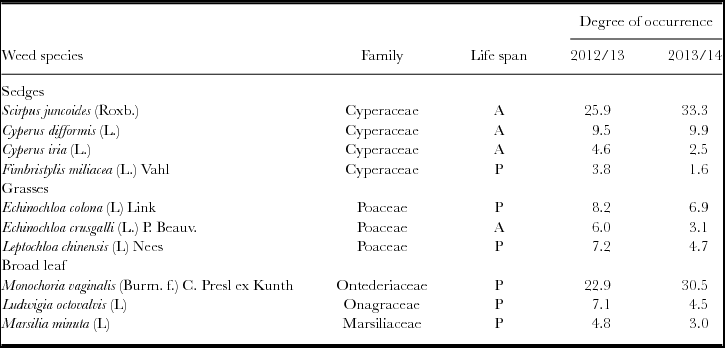
The experimental plot contained around 15 species during crop growth period; however, the results are presented only for six dominant species Scirpus juncoides Roxb, Cyperus difformis L., Cyperus iria L., E. colona L. Link, Monochoria vaginalis (Burm. f.) C. Presl ex Kunth and Ludwigia octovalvis (L). Other five species [Cyperus rotundus L., Leersia hexandra Sw., Paspalum distichum L., Pistia stratiotes L., and Eclipta prostrate L.) were insignificant and not found uniformly in all plots that is why they were not included in analysis study to create unuseful space in the manuscript. The degree of occurrence (percentage dominance in total weed population)of those prominent weeds includes 43.8% and 47.8% sedges, 34.8% and 38% broad leaf and 21.4% and 14.7% grasses during 2012/13 and 2013/14, respectively (Table 1).
Impact of weed control treatments on weed species and their degree of occurrence in boro rice during 2012/13 and 2013/14.

A: Annual; P: Perennial
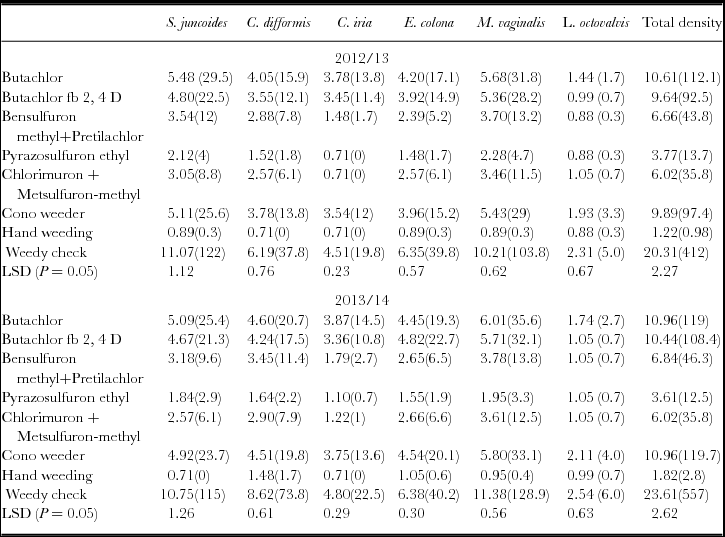
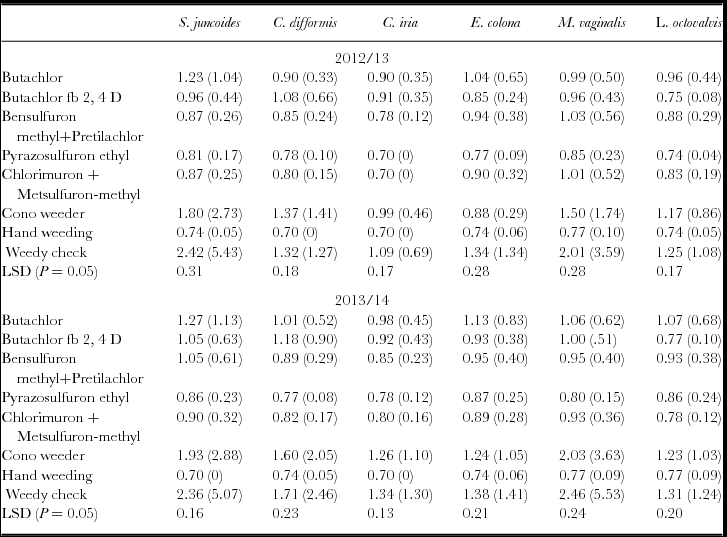
Pre-emergence application of pyrazosulfuron ethyl, chlorimuron + metsulfuron-methyl, bensulfuron methyl + pretilachlor reduced the weed density by 5.5-, 3.8- and 3.2-fold (Table 2) and weed biomass by 2.9-, 2.7- and 2.5-fold (Table 3) of S. juncoides relative to the non-treated weedy plots, respectively. The overall density was higher during 2012/13 irrespective of the treatments. After weedy check, higher weed density was observed with the application of sole butachlor followed by cono-weeding, whereas weed biomass was vice versa during both the years of experimentation (this might be due to growth of S. juncoides weed influenced by butachlor). M. vaginalis was the second dominant weed in the study after S. juncoides. Weed density and biomass of M. vaginalis were higher during 2013/14 and the highest weed density (after weedy check) was observed in butachlor either as sole or fb 2,4D. Weed biomass of M. vaginalis was the highest with cono-weeder followed by sole butachlor and butachlor fb 2,4D application during both seasons. The application of pyrazosulfuron ethyl resulted in the lowest weed density and biomass of M. vaginalis (Tables 2 and 3).
Impact of weed control treatments on weed density (m−2) at 60 days after transplanting of boro rice during 2012/13 and 2013/14. Weed density data were subjected to square-root [√(x+0.5] transformation before analysis, and original values are written in parenthesis.

Impact of weed control treatments on weed dry matter accumulation (g m−2) at 60 days after transplanting of boro rice during 2012/13 and 2013/14. Weed dry matter data were subjected to square-root [√(x+0.5] transformation before analysis, and original values are written in parenthesis.

The data of C. difformis and C. iria were combined as our emphasis was on Cyperus spp. Pyrazosulfuron ethyl and chlorimuron + metsulfuron-methyl resulted in the lowest density and biomass of both the species. Sedges densities in plots treated with butachlor, bensulfuron methyl + pretilachlor, pyrazosulfuron ethyl and chlorimuron + metsulfuron-methyl were 26, 10, 2 and 6 plants m−2 in 2012/13 and 32, 14, 3 and 9 plants m−2 in 2013/14, as compared to 58 and 96 plants m−2 in the non-treated weedy plots, respectively (Table 2). All treatments significantly reduced weed biomass of these sedges over weedy check while weed biomass in cono-weeding treatment remained similar to weedy check in both seasons (Table 3).
Compared with the weedy check, all herbicide treatments except butachlor provided excellent control and reduced E. colona density by 71.6–93.3%. Bensulfuron methyl + pretilachlor performed better in controlling E. colonaas compared to chlorimuron + metsulfuron-methyl, whereas the trend was reverse in all other weed species. The lowest weed density of E. Colona was observed with pyrazosulfuron ethyl (Table 2). The highest biomass of E. Colona was observed in sole butachlor in 2012/13, whereas, cono-weeder recorded the highest biomass in 2013/14 after weedy check (Table 3).
All herbicide treatments significantly reduced weed density of L. octovalvis, a broad leaf weed, with exception of sole butachlor (Table 2). Biomass of L. octovalvis was significantly reduced by all herbicides over weedy check and cono-weeder (Table 3). Pyrazosulfuron ethyl recorded the lowest weed density and biomass after hand weeding.
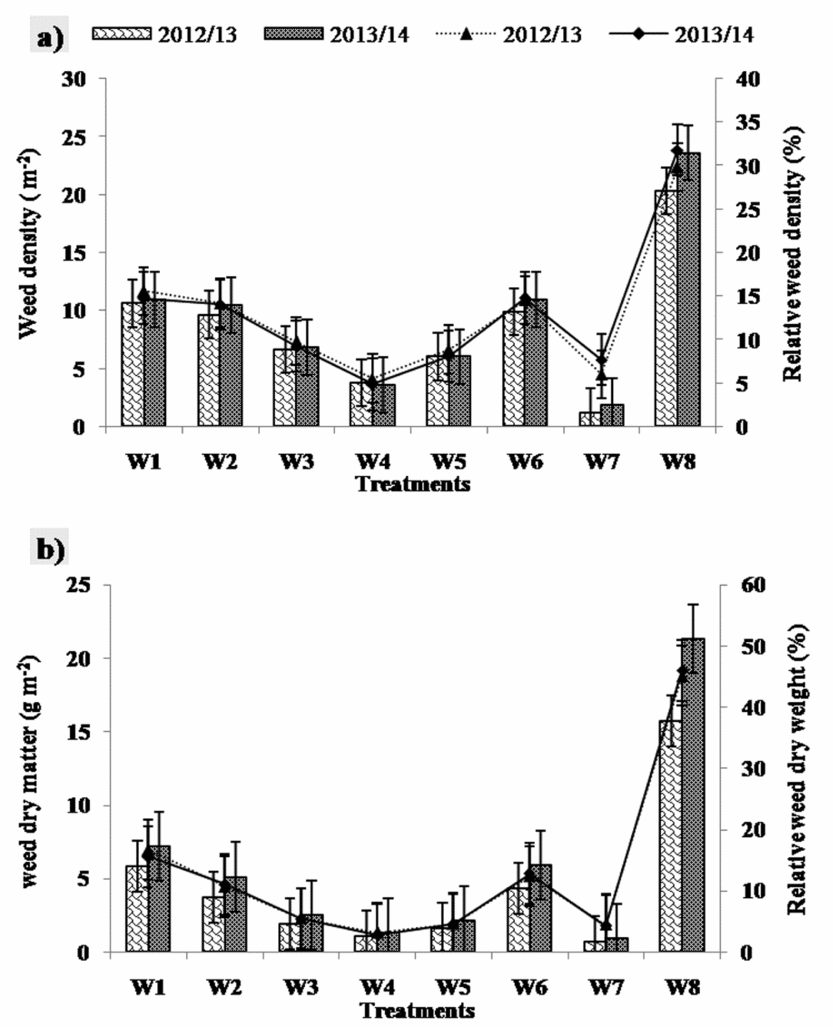
In general, herbicide treatments reduced total weed density and weed biomass compared with the non-treated plots. Herbicide treatments, on an average, reduced total density and biomass by 181% and 456% in 2012/13 and 212% and 492% in 2013/14 (Figure 1). Application of butachlor had less effect on weed density and biomass, being less effective than cono-weeding treatment. Pyrazosulfuron ethyl proved its superiority causing the lowest weed density and biomass, followed by chlorimuron + metsulfuron-methyl.
Effect of weed control treatments on (a) weed density and relative density and (b) weed dry matter and relative dry weight during the boro season of rice in 2012/13 and 2013/14. W1: Butachlor, W2: Butachlor fb 2, 4 D, W3: Bensulfuron methyl + Pretilachlor, W4: Pyrazosulfuron ethyl, W5: Chlorimuron + Metsulfuron-methyl, W6: Cono weeder, W7: Hand weeding and W8: Weedy check.

Above ground biomass of rice
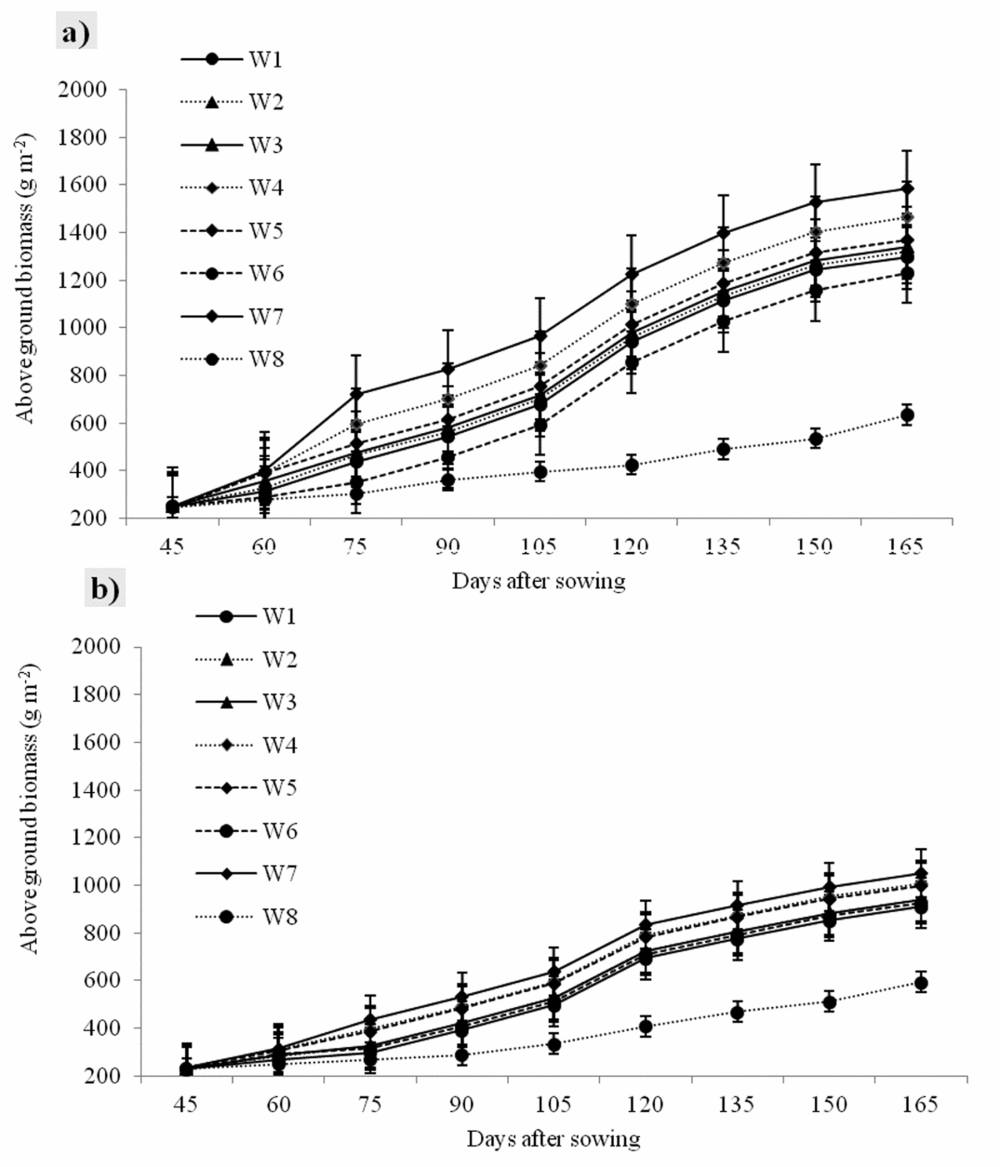
The biomass of rice recorded at periodical interval starting from day of transplanting up to harvest, was significantly affected by herbicide treatments (Figure 2). In general, rice biomass was lower during 2013/14 at all the stages of crop growth as compared to 2012/13. The highest aboveground biomass was recorded in the weed-free plots during both seasons, being similar to one recorded in treatments with pyrazosulfuron ethyl and chlorimuron + metsulfuron-methyl in 2013/14. Among the herbicide treatments, the sole application of butachlor produced the lowest biomass of rice, which was almost similar to butachlor fb 2,4D (this is in rotation to control post emergence broad leaf weeds). The cono-weeding resulted in equivalent biomass as in sole application of butachlor and butachlor fb 2,4D. In the herbicide-treated plots, the higher biomass of weeds proportionally decreased the biomass of rice during both seasons.
Effect of weed control treatments on above ground biomass of rice at 15 days periodical interval during the boro season in (a) 2012/13 and (b) 2013/14; W1: Butachlor, W2: Butachlor fb 2, 4 D, W3: Bensulfuron methyl + Pretilachlor, W4: Pyrazosulfuron ethyl, W5: Chlorimuron + Metsulfuron-methyl, W6: Cono weeder, W7: Hand weeding and W8: Weedy check.

Weed indices
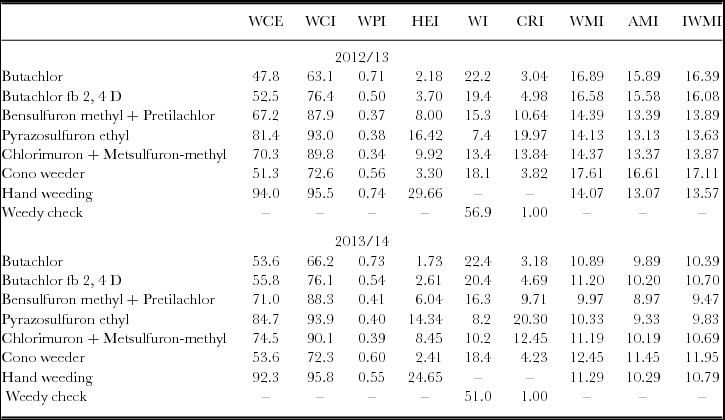
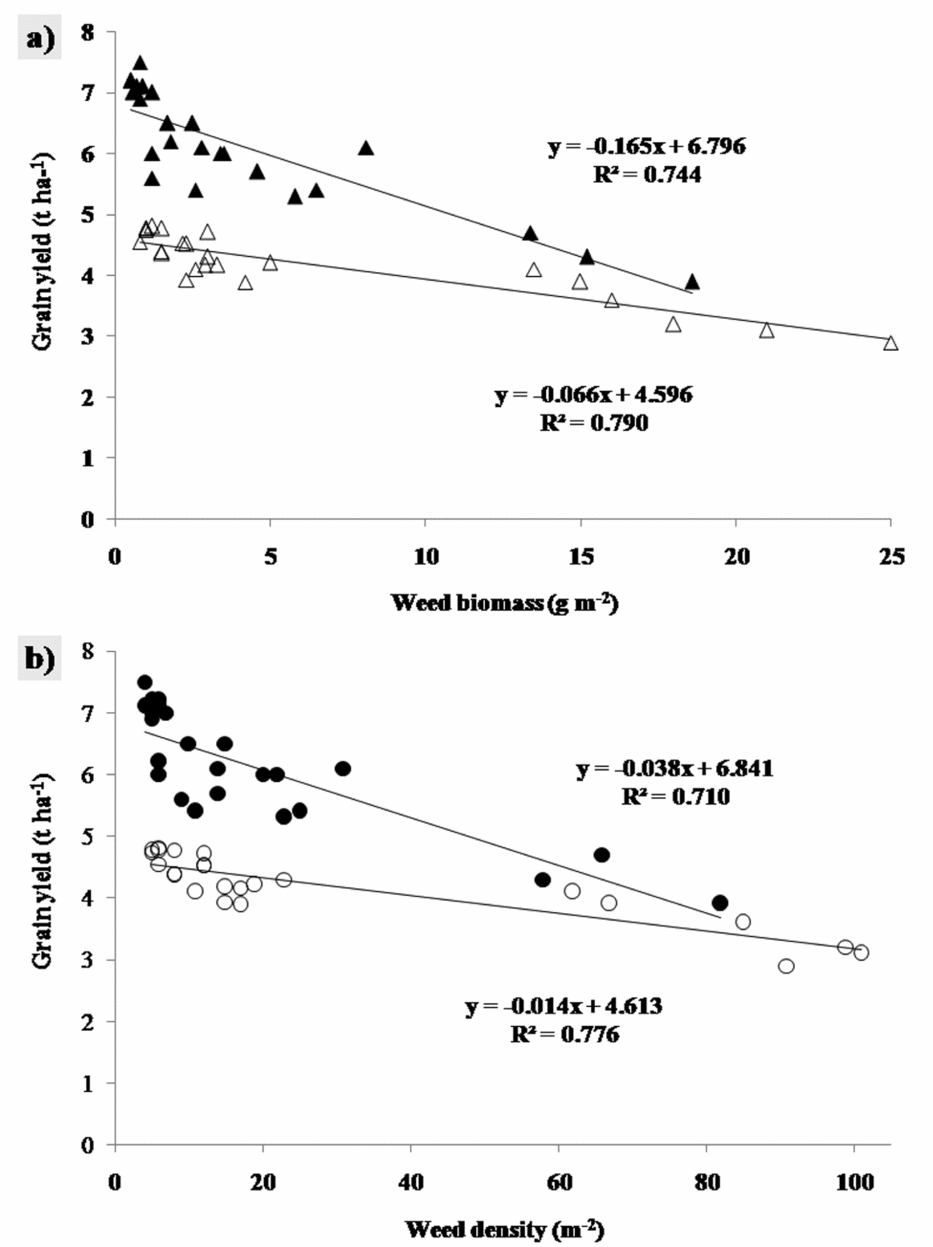
The pre-emergence application of pyrazosulfuron ethyl during both seasons caused the highest WCE, WCI, HEI and CRI and the lowest WI and WPI than the other weed control treatments (Table 4). Pyrazosulfuron ethyl application resulted in the lowest weed biomass and weed density, which was associated with higher grain yield. This statement was also supported by a strong negative correlation among weed density, weed biomass and grain yield (Figure 3).
Impact of weed control treatments on weed indices of boro rice during 2012/13 and 2013/14.

WCE: Weed control efficiency, WCI: Weed control index, WPI: Weed persistence index, HEI: Herbicide efficiency Index, WI: Weed index, CRI: Crop resistance index, WMI: Weed management index, AMI: Agronomic management index, IWMI: Integrated weed management index.
Relationship between (a) grain yield and weed biomass; (b) grain yield and weed density. Correlations of 2012/13 are represented by closed symbols and correlations of 2013/14 are represented by open symbols.

Yield attributes, productivity and profitability
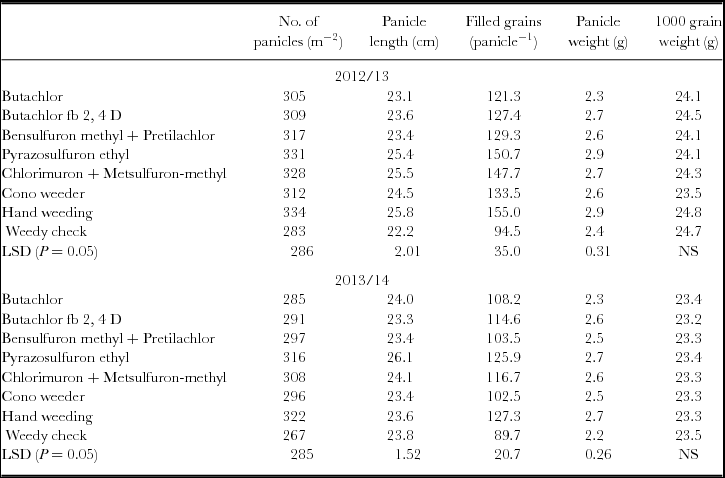
All weed control treatments highly affected the yield attributing parameters except 1000-grain weight of rice during both seasons (Table 5). All yield attributes were highest in weed-free plots and lowest in weedy check. Among herbicide application, pyrazosulfuron ethyl caused higher number of effective tillers, higher number of panicles, grains per panicle and panicle weight as compared to the other treatments, being followed by chlorimuron + metsulfuron-methyl. During 2012/13, application of butachlor either sole or fb 2,4D affected negatively rice yield attributes (Table 5). Even in plots where cono-weeding was done, recorded higher number of panicles and grains than butachlor (Table 5). Cono-weeder enhanced the plant growth by steering soil and roots during weeding and some buried weeds might be contributed to nutrition after decomposing.
Impact of weed control treatments on growth, yield attributes and grain yield of boro rice during 2012/13 and 2013/14.

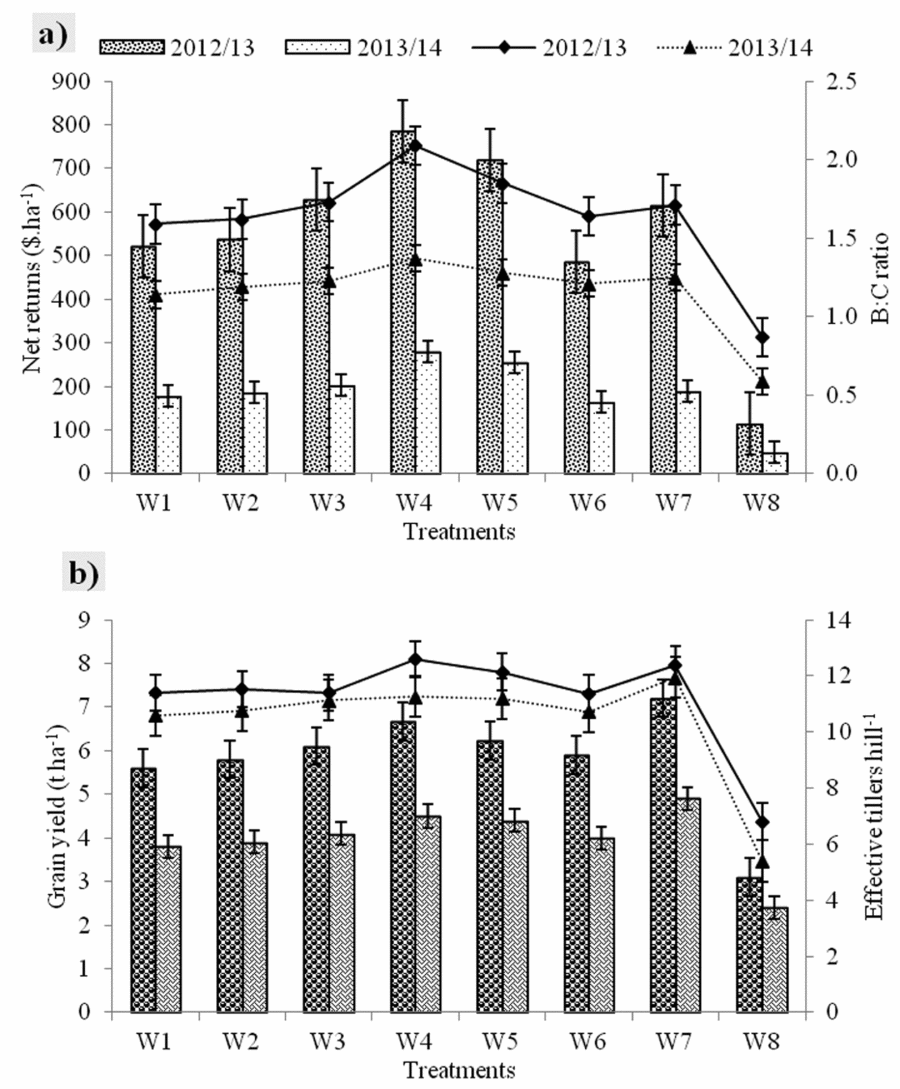
Grain yield was strongly influenced by weed control treatments, with the highest grain yield being obtained in weed-free plots in both crop seasons (Figure 4a). Herbicide-treated plots produced 81–116% higher grain yield in 2012/13 and 52–88% higher in 2013/14 than weedy plots. On the other hand, rice yield in herbicide treatments was 7.5–28.6% in 2012/13 and 8.9–28.9% in 2013/14 lower than one found in weed-free plots. The plots treated with pyrazosulfuron ethyl recorded the highest grain yield during crop seasons (6.7 and 4.5 Mg ha−1), being similar to chlorimuron + metsulfuron-methyl (6.2 and 4.4 Mg ha−1) in 2013/14. Among the herbicide treatments, sole application of butachlor produced the lowest grain yield, being the yield almost 5% lower than one obtained with cono-weeding treatment. It indicates that cono-weeding alone was superior to the sole application of butachlor.
Effect of weed control treatments on (a) economics of rice cultivation (bars on primary axis represents net returns and lines on secondary axis represents B: C ratio; (b) grain yield and effective tillers (bars on primary axis represents grain yield and lines on secondary axis represents effective tillers during the boro season in 2012/13 and 2013/14; W1: Butachlor, W2: Butachlor fb 2, 4 D, W3: Bensulfuron methyl + Pretilachlor, W4: Pyrazosulfuron ethyl, W5: Chlorimuron + Metsulfuron-methyl, W6: Cono weeder, W7: Hand weeding and W8: Weedy check.

The highest cost of cultivation was involved in weed-free treatments because of hand weeding followed by cono-weeding (Figure 4b). The highest net return and B:C ratio were recorded in pyrazosulfuron ethyl, which were around 27.5% and 47.2% higher than weed-free treatments in 2012/13 and 2013/14, respectively. Among the herbicide treatments, the lowest returns and B:C ratio were observed with sole application of butachlor. Cono-weeding also performed better in terms of profitability as returns were higher than butachlor application either as sole or fb 2,4D. The lowest B:C ratio was observed in weedy check.
Microbial biomass and soil enzymatic activities
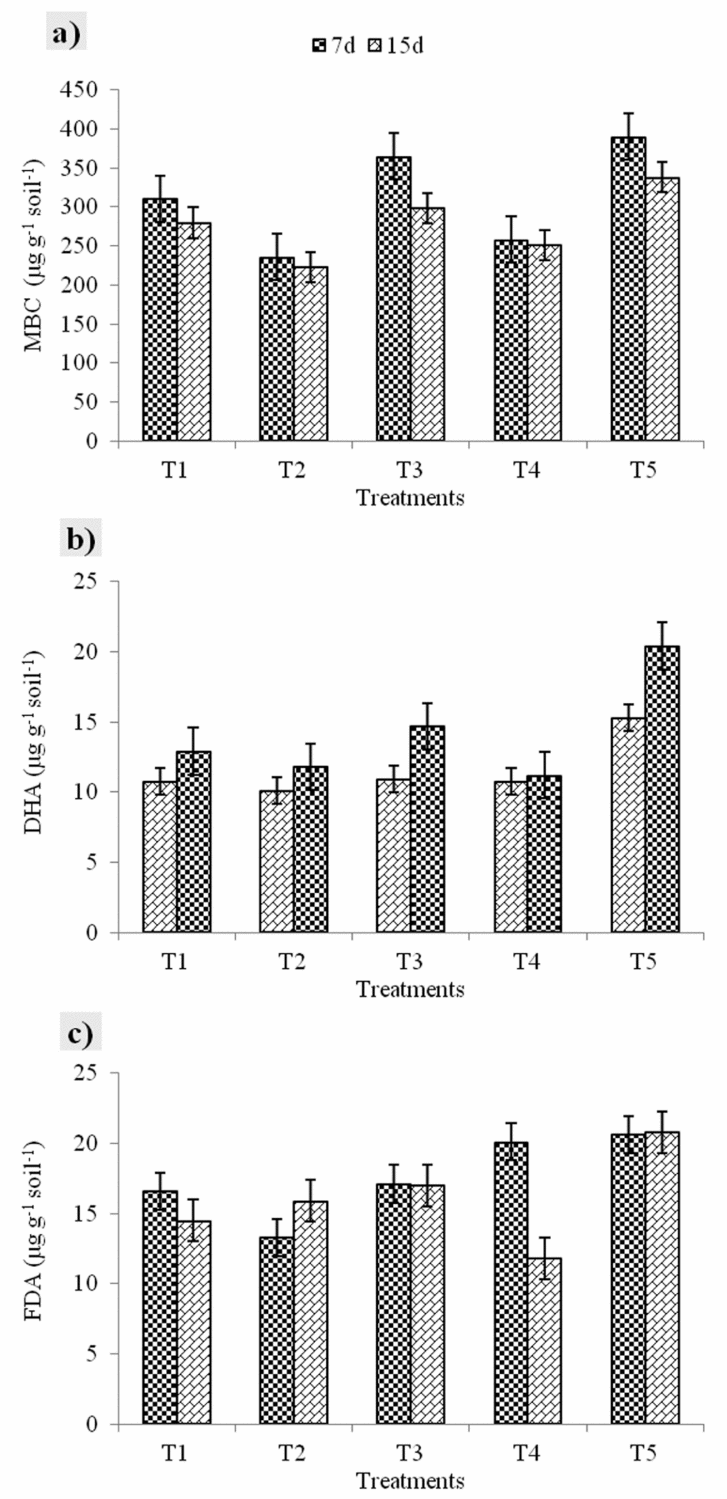
The MBC declined from the 7th day to the 15th day of herbicide application, whereas FDA and DHA activity increased in all treatments (Figure 5). Maximum MBC, DHA and FDA activity were recorded in weedy check, whereas the lowest MBC was recorded with the application of bensulfuron methyl + pretilachlor. After 7 days of herbicide application, DHA and FDA were lowest with the application of bensulfuron methyl + pretilachlor. After 15 days of herbicide application, DHA and FDA activity was lowest with chlorimuron + metsulfuron-methyl, followed by butachlor and pyrazosulfuron ethyl. The pyrazosulfuron ethyl and bensulfuron methyl + pretilachlor caused 45.5% and 19.5% increment in DHA and FDA when compared on day 7 and day 15 after herbicide application. By application of these herbicides DHA and FDA was higher at day 7 as compared to day 15 after application. On average, MBC reduced in 9.8% between evaluation times, irrespective of the herbicide treatments. Such reduction was highest (22.1%) with the application of pyrazosulfuron ethyl (Figure 5).
Impact of weed control treatments on microbial biomass carbon, Dehydrogenase and Fluorescin diacetate activity of boro rice. T1: Butachlor, T2: Bensulfuron methyl + Pretilachlor, T3: Pyrazosulfuron ethyl, T4: Chlorimuron + Metsulfuron-methyl, and T5: Weedy check.

DISCUSSION
Effect of herbicide on weed density, biomass and weed indices
Chemical weed control can play a pertinent role in suppressing weeds in rice, especially when it is used in integration with other weed management options. Herbicide applications are more effective for weed control in rice than other methods, mainly when weed density is high (Beltran et al., Reference Beltran, Pannell and Doole2012). In case of complex grass and broadleaved weeds, either sequential use of herbicides or herbicide mixture application was very effective in controlling weeds and enhancing the rice grain yield (Singh et al., Reference Singh, Bhushan, Ladha, Gupta, Rao and Sivaprasad2006).The use of a single PRE or POST herbicide was enough for efficient weed control (Jabran et al., Reference Jabran, Farooq and Hussain2012) and improvement in grain yield when weed flora was composed of only broadleaved weeds. In our study also PRE application of pyrazosulfuron ethyl reduced the weed density of S. juncoides, C. difformis, C. iria, E. colona and M. vaginalis relative to the non-treated weedy plots. Cono-weeding caused higher weed density than herbicide treatments, except for sole application of butachlor. Accordingly, Sheeja et al. (Reference Sheeja, Nimmy, Reena and Leenakumary2013) reported that mechanised transplanting with cono-weeding at 15, 30, and 45 DAT caused the maximum weed biomass accumulation. It was also reported that sequential application of herbicides reduced weed density as well as weed biomass more than that of single application of herbicides (Mahajan and Chauhan, Reference Mahajan and Chauhan2013). An herbicide treatment having high values of agronomic indices, such as WCE, WCI, HEI, CRI, WMI, AMI, and IWMI and lower values of WI and WPI should be considered a good treatment with high weed control efficiency (Singh et al., Reference Singh, Ladha, Gupta, Bhushan and Rao2008; Suria et al., Reference Suria, Juraimi, Rahman, Man and Selamat2011). In fact, WI is an ideal parameter to describe yield reduction caused by weed infestation in comparison with the weed-free plots (Suria et al., Reference Suria, Juraimi, Rahman, Man and Selamat2011), reflecting the effectiveness of the applied herbicide in securing yield loss against weed competition. In our study, lowest yield loss and WI were observed with pyrazosulfuron ethyl, suggesting this treatment as the most effective in weed control.
Effect of herbicide on productivity and profitability
Rice plants in the less weed-competitive environment recorded a higher number of panicles as compared to those planted in the high weed-competitive environment, mainly because of the more space occupied by rice plants and less competition with weeds for nutrient, water and light. In weed-free environments, rice plants are able to absorb more nutrients, thus, resulting in higher growth, yield attributes and yield. In rice, proper weed control during the first 30 or 45 days is crucial because of the slow canopy growth of rice (Mahajan and Chauhan, Reference Mahajan and Chauhan2013). Regarding herbicides, Singh et al. (Reference Singh, Ladha, Gupta, Bhushan and Rao2008) reported that pretilachlor and chlorimuron+metsulfuron could control all types of weed in rice, resulting in higher productivity and profitability. Awan et al. (Reference Awan, Hayat, Hassan, Kazmi and Hussain2004) and Rashid et al. (Reference Rashid, Alam, Rao and Ladha2012) also observed increments in grain yield with application of herbicides in rice. In accordance, we found higher grain yields due to herbicide treatments, which ranged between 3.8 Mg ha−1 and 6.7 Mg ha−1 and were higher than the weedy plots (2.4–3.1 Mg ha−1). Rice yield in herbicide treatments was 7.5–28.6% and 8.9–28.9% of the yield in weed-free plots in 2012/13 and 2013/14, respectively. Under weed pressure, the plots treated with pyrazosulfuron ethyl recorded the highest grain yield during both crop seasons, but it was at par with chlorimuron + metsulfuron-methyl in 2013/14. On the other hand, the lowest grain yield was noticed in weedy check as result competition for nutrients and moisture.
Apart from weeds, yield was also influenced by weather parameters. In this study, grain yield was mainly influenced by higher temperature and less sun shine hours during reproductive and grain filling stage in 2013/14 as compared to 2012/13 (Tables S1 and S2). According to Krishnan et al. (Reference Krishnan, Ramakrishnan, Reddy and Reddy2011), anthesis is the most sensitive process during reproductive stage to high temperature. Temperature higher than 35 °C at flowering stage result in poor pollen grain germination and seed set in lowland rice cultivars (Das et al., Reference Das, Krishnan, Nayak, Ramakrishnan, Prasad and Shivay2012). Higher temperatures during reproductive stage caused smaller panicles, less number of panicle m−2 and unfilled grains panicle−1 in 2013/14. Deng et al. (Reference Deng, Wang, Yao, Wang, Ren and Yang2009) also reported that after the heading stage, continuous cloud shading causes impairment in net photosynthetic rate as well as reduce dry matter accumulation and sink capacity in rice plants, leading to significant reduction in the number of filled grains and 1000-grain weight, and grain yield.
Effect of herbicide on microbial biomass and enzymatic activities of soil
Herbicides are biologically active chemical compounds, and an unintended consequence of its application to soil is related to changes in microbial populations and enzymatic activities, influencing microbial ecological balance and soil fertility. As herbicides are applied in pre-emergence and post-emergence, a high amount of herbicide may reach to the soil and accumulate in the microbiologically active top soil layer of 0–15 cm. The detracting effect of herbicides towards all fungi, bacteria and enzyme activities may decrease with time and this is because of the recovery of microbial population and enzyme activities after initial inhibition before microbial adaptation to these chemicals or due to their degradation. Such pattern was found herein, as suggested by increases in activity of DHA and FDA after 15 days of application. Vandana et al. (Reference Vandana, Rao and Padmaja2012) reported that increases in soil dehydrogenase activity in herbicide treated soil might be due to increases in microbial community capability in using herbicides as carbon source. In fact, dehydrogenase activity depends on the metabolic state of soil-biota and may be a good indicator of soil microbial activity. Further, the fate of herbicides is greatly affected by the presence of soil organic matter (Ayansina and Oso, Reference Ayansina and Oso2006) and their decomposition is frequently faster in soils with high organic carbon, presumably due to vigorous microbial activity. As herbicides are biologically active compounds, they may lead to significant changes in various soil microbial processes, inhibit decomposition, which depends upon the type and rate of application that can alter the microbial biomass quantitatively and qualitatively in both short-term and long-term. In this study, herbicide treatments caused variation in enzymatic activities, with the maximum values of MBC, DHA and FDA activity were recorded in weedy check. The lowest MBC was recorded with the application of bensulfuron methyl + pretilachlor, both after 7 and 15 days of application. The decrease in MBC may be due to the adsorption of small amount of pesticides on organic matter that mask the effects of these agrochemicals on soil microbial biomass, and subsequently led to lysis of microbial cells (Jayamadhuri and Rangaswamy, Reference Jayamadhuri and Rangaswamy2005). However, the effect of herbicides is transient on soil microbial population and enzyme activities associated with different type of herbicides when compared with natural, spatial and temporal variation in soil microbial biomass.
CONCLUSIONS
Weed competition in boro rice reduces grain yield, with S. juncoides and M. vaginalis being the most dominant weeds. Pyrazosulfuron ethyl proved to be the best herbicide in effectively controlling dominant weed species. In terms of weed control, chlorimuron + metsulfuron-methyl and bensulfuron methyl + pretilachlor had almost similar efficacy, when applied as pre-emergence herbicide. Only butachlor alone did not perform better in controlling weeds. The herbicides cause transient impact on microbial populations and enzyme activities associated with the type of herbicides. Our study showed that pyrazosulfuron ethyl as sole and chlorimuron + metsulfuron-methyl and bensulfuron methyl + pretilachlor in combination are economically beneficial in controlling all type of weeds in boro rice.
Acknowledgements
The authors are grateful to the Director – National Rice Research Institute (Formerly Central Rice Research Institute), Cuttack, India, and Officer In-Charge – Regional Rainfed Lowland Rice Research Station, Gerua, Assam for providing all the necessary facilities.
SUPPLEMENTARY MATERIAL
For supplementary material for this article, please visit https://doi.org/10.1017/S0014479717000047