Introduction
Plant Genetic Resources (PGR) consist of a wide diversity of traditional varieties, modern cultivars, crop wild relatives and other wild-plant species. They are the basis for food security, as their loss results in reduced crop genetic diversity or genetic erosion, increasing the vulnerability of the future food supply (Harlan, Reference Harlan1992). For decades, international organizations, such as FAO or Bioversity, and the scientific community, have encouraged the complete integration of all stakeholders in PGR conservation and use (Maxted et al., Reference Maxted, Dulloo and Ford-Lloyd2016). Landraces are the result of agriculture adapting to the environment and tastes of the local human population. Among landraces, heirloom tomatoes (Solanun lycopersicum L.) are of special interest to farmers, consumers, chefs and the general public due to their adaptation to low-input crop systems (Krishna et al., Reference Krishna, Pascual and Zilberman2010) and the lack of taste of commercial tomatoes (Fernqvist and Hunter, Reference Fernqvist and Hunter2012; Fernqvist and Ekelund, Reference Fernqvist and Ekelund2013). In the process of genetic erosion, much of the ownership of foods typically grown by family gardeners also gets lost. The growing interest in heirloom tomatoes has resulted in many scientific papers describing them in Spain (Gonzalez-Cebrino et al., Reference Gonzalez-Cebrino, Lozano, Ayuso, Bernalte, Vidal-Aragon and Gonzalez-Gomez2011; Casals et al., Reference Casals, Pascual, Canizares, Cebolla-Cornejo, Casanas and Nuez2012; Cebolla-Cornejo et al., Reference Cebolla-Cornejo, Rosello and Nuez2013; Garcia-Martinez et al., Reference Garcia-Martinez, Corrado, Ruiz and adn Rao2013; Bota et al., Reference Bota, Conesa, Ochogavia, Medrano, Francis and Cifre2014), southern Europe (Mazzucato et al., Reference Mazzucato, Papa, Bitocchi, Mosconi, Nanni, Negri, Picarella, Siligato, Soressi, Tiranti and Veronesi2008; Terzopoulos and Bebeli, Reference Terzopoulos and Bebeli2010; Sardaro et al., Reference Sardaro, Marmiroli, Maestri and Marmiroli2013; Siracusa et al., Reference Siracusa, Avola, Patane, Riggi and Ruberto2013) and worldwide (Labate et al., Reference Labate, Sheffer, Balch and Robertson2011; Bonilla-Barrientos et al., Reference Bonilla-Barrientos, Lobato-Ortiz, Garcia-Zavala, Cruz-Izquierdo, Reyes-Lopez, Hernandez-Leal and Hernandez-Bautista2014). Specifically, the European Union's recognition of territorial specificity through regulations 2081/92, 2082/92 and EC 509/06 which led to the origin of denomination labels or the Commission Directive 2008/62/EC of 20 June 2008 ‘providing for certain derogations for acceptance of agricultural landraces and varieties which are naturally adapted to local and regional conditions and threatened by genetic erosion…’ are examples of the appreciation of this plant material.
The history of tomato domestication, spread and environmental adaptation has been widely studied (Jenkins, Reference Jenkins1948; Blanca et al., Reference Blanca, Canizares, Cordero, Pascual, Diez and Nuez2012). Brought by the Spaniards from Mesoamerica to Spain, the tomato quickly spread throughout the whole country and was exported to the rest of the world. The main role played by Spain in tomato dispersion, together with geographical and cultural considerations, made our territory an important centre of diversification of this crop (Cebolla-Cornejo et al., Reference Cebolla-Cornejo, Rosello and Nuez2013). Since heterogeneity is an inherent characteristic of landraces (Bellon, Reference Bellon1996; Zeven, Reference Zeven2002), many efforts have been made to describe this variability and define its limits among varieties (Bota et al., Reference Bota, Conesa, Ochogavia, Medrano, Francis and Cifre2014), but information is still lacking on the agro-biodiversity of Spanish inland regions such as Madrid.
This study evaluates the agronomic and morphological traits of an undescribed collection of tomato landraces, their chemical composition related to nutritional content and sensory quality, as well as traits related to consumer perception. The main purpose is to structure the variation to find a clear differentiation among landraces. We also tried to answer the following questions: (1) Is morphological variation associated with variation in chemical composition or another type of variation? (2) What traits have determined farmers’ selection? and (3) What traits do consumers value?
Material and methods
Plant material
A total of 33 tomato accessions, namely samples of varieties that have been passed down through at least three generations of a family, were collected in 16 villages in the Madrid Region over a 26-year period (1984–2010) by the different staff of the IMIDRA and conserved in its germplasm bank. The Madrid region, which falls within a 60-km radius around the city of Madrid (5,457,561 habitants and 8028.5 km2), is the main agglomeration of consumers which also conserves a certain agrobiodiversity; i.e. landrace populations which have been cultivated since before the development of modern agriculture in the 1970s. However, many of them are now threatened by the growth of the city and changes in land use. Seven landraces from other Spanish regions and one commercial variety currently appreciated by local farmers (Empire) were used for reference (online Supplementary Table S1). All of them (except the commercial variety which is a hybrid) are open-pollinated populations, cultivated in villages for generations and known by the community with a local name.
Plant growth and plot design
All accessions were cultivated in an open-field farming system from May to October at the experimental station ‘La Isla’ in Arganda del Rey, Madrid (40°18.75′N; 3°29.89′W; 528 m a.s.l.) for 4 years. This experimental station is located in a Temperate Mediterranean (TE, Me) climate with (M) summer type according to Papadakis’ agro-climatic classification (INIA, 1977). Mean annual temperature and rainfall are 13.50°C and 494 mm, respectively. Temperatures in the tomato-growing season, usually the summer, range from 4 to 39.5°C. Soils belong to the alluvial terrace type, order Alfisol, Suborder Xeralf, Group Haploxeralf (USDA classification).
A randomized complete block design was carried out with ten plants of each accession replicated in three blocks. Seedlings grown in the greenhouse were transplanted to the field. Experimental plots were designed with 1.2 m between rows and 0.5 m between samples. Mulching was used to avoid weed growth, although plots were hand-weeded when necessary. Drip irrigation was applied once a day throughout the first week after sowing, and more frequently throughout fruit growth. Fertilization consisted of 40,000 kg ha−1 of organic manure 2 weeks before planting, 300 kg ha−1 of 15–15–15 mineral fertilizers and 500 kg ha−1 of 9–18–27 during the plant growth period. Nesidiocoris tenuis was introduced as a predator of the plague Tuta absoluta. Calcium foliar applications were made if necessary.
Morphological description
Each year the accessions were characterized by a set of 24 quantitative, qualitative and phenological characters by evaluating plants, immature fruits and mature fruits. Following Bioversity International's recommendations (http://www.bioversityinternational.org/) (IPGRI, 1996), we evaluated the following characters: plant growth type and foliage density (plant characters); the exterior colour of immature fruit; the presence of green shoulders on the fruit; predominant fruit shape; fruit weight (g), length (mm) and width (mm); the exterior colour of mature fruit; the intensity of exterior colour; secondary exterior colour; ribbing at calyx end; fruit split; fruit shoulder shape; fruit blossom end shape; width of pedicel scar (mm); the shape of pistil scar; fruit cross-sectional shape; the number of locules; flesh colour of pericarp (interior) and secondary flesh colour, fruit firmness (after storage); number of days to flowering and number of days to maturity.
Quantitative and qualitative traits were measured in 10–20 plants/fruits per accession. The quantitative traits included fruit length, diameter, weight, number of locules and scar size. The qualitative traits measured are detailed in Table 1. The phenological characters, days of flowering and days to maturity, were scored when 50% of the plants/fruits reached these phenological stages.
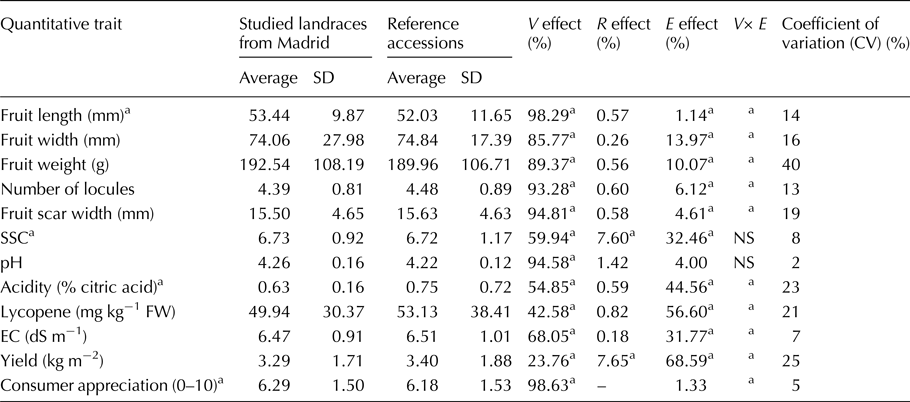
Variability (average and standard deviation (SD)) of each quantitative trait in the studied plant material

Effects of variety (V), repetition (R) and environment (E) were expressed as percentages of total sums of squares type III. Analysis of variance (ANOVA) was executed and a Duncan test was conducted to provide significant differences (P < 0.05); n = 2970 (morphological data), n = 420 (yield), n = 1485 (chemical analysis of nutrient content) and n = 6370 (consumer appreciation).
a Significant differences.
Yield
Harvest was initiated when the first fruits were ripe and continued once or twice a week. All well-formed ripe fruits on each plant were counted and weighed. The sum of all harvested fruits from each plot (weight and number) was calculated, and data from each plot were combined to estimate total production for each accession.
Quality analyses and nutrient content
Some physical–chemical parameters that are indicators of fruit quality were measured in the juice of five ripe fruits per accession and repetition each year. We measured total soluble solids (SSC or ° Brix) using a digital refractometer (Atago, Inc., Japan), pH, titratable acidity (with 0.1 N NaOH expressed as g of citric acid per 100 ml of tomato juice) and electrical conductivity (EC) at 25°C using a Conductivimeter (HI 5521, Hanna Instruments, Eibar, Guipuzcoa, Spain). Conductivity values were expressed in dS m−1. Lycopene content was measured by a spectrophotometric method (Nagata and Yamashita, Reference Nagata and Yamashita1992) and expressed as mg per kg of fresh weight.
Consumer preferences
A group of 60 consumers who normally purchase tomatoes (55% women and 45% men of all ages) tasted samples of all accessions at least twice during the 4 years of study. The consumers were asked to rate their overall level of satisfaction on a scale from 0 to 10.
Statistics
Descriptive statistical analyses were carried out to produce an initial report of the samples (mean and standard deviation per trait and accession). The standardized data-matrix was previously normalized to carry out analyses, which require normal variables: the Box–Cox transformation was applied to fruit width, weight, scar size, pH, EC, acidity and lycopene content. To perform a combined analysis using both the qualitative and quantitative variables, the qualitative characters were given values based on a quantitative scale, with the highest value representing the highest intensity of the character. Colour traits were codified according to the Royal Horticultural Colour Chart. The normalized data-matrix was the input for further analyses using the software XLSTAT (ver. 2010.3.09, 15.0 Addinsoft©): analysis of variance (ANOVA)–Duncan, Kaiser–Meyer–Olkin analysis (KMO), principal component analysis (PCA), cluster analysis (calculating the Euclidean distance between pairs of accessions using Ward's method), internal preference map and contour plot.
First, an ANOVA and a Duncan test were carried out to provide significant differences (P < 0.05) between traits, accessions and years. Effects of accession (V), repetition (R) and environment (E) were expressed as percentages of total sums of squares type III. KMO analysis was applied to determine if sampling was adequate to conduct a factorial analysis. Then, a PCA was performed to condense multidimensional datasets to fewer dimensions. The positive or negative correlation coefficients between the first three Principal Components (Fi) and the characters were also examined. To provide a visual profile of these results, a graphic representation was made indicating the location of the parameters and the position of the varieties in relation to the two first axes. This represents the relationship between the data points and the variables. Finally, a consumer preference map and contour plot were produced using the program XLSTAT (version 2010.3.09 Addinsoft, New York, USA) to determine which landraces were better positioned according to consumer judgment and to classify consumers’ preferences with regard to the studied tomato traits.
Results
Table 1 shows the average and standard deviation of the studied quantitative traits. Significant differences (P < 0.05) were found in fruit length, SSC, acidity and consumer appreciation between the studied landraces and the reference accessions. Significant differences were also found in all the evaluated characters among the studied accessions, and the effect of the environment was also significant. However, significant variability due to the repetition effect was only observed in SSC and yield. For all traits, except lycopene content and yield, the effect of accession accounted for more than 50% of the total sums of squares. A wide range of variation was found among accessions. The traits with a larger coefficient of variation (CV), defined as the ratio of the standard deviation to the mean, were fruit weight, acidity, lycopene content and yield, while the lowest CV was found in pH, days to maturity (data not shown) and consumer appreciation. The studied tomato collection contained all fruit shape categories except ellipsoid, but the most common fruit shapes were slightly flattened (54%) or flattened (32%). The main colour of the outer surface of mature fruits was red (69%), while the rest of the mature fruits were greenish, orange or pink. Ribbing was generally absent or weak (64 and 19%, respectively), and intermediate or strong ribbing at the calyx end was observed in 7 and 10% of fruits, respectively. Only 18% presented green shoulders on the fruit and 64% showed an irregular pistil scar shape. A round fruit cross-sectional shape was observed in 71% of fruits, while 20% presented an irregular shape.
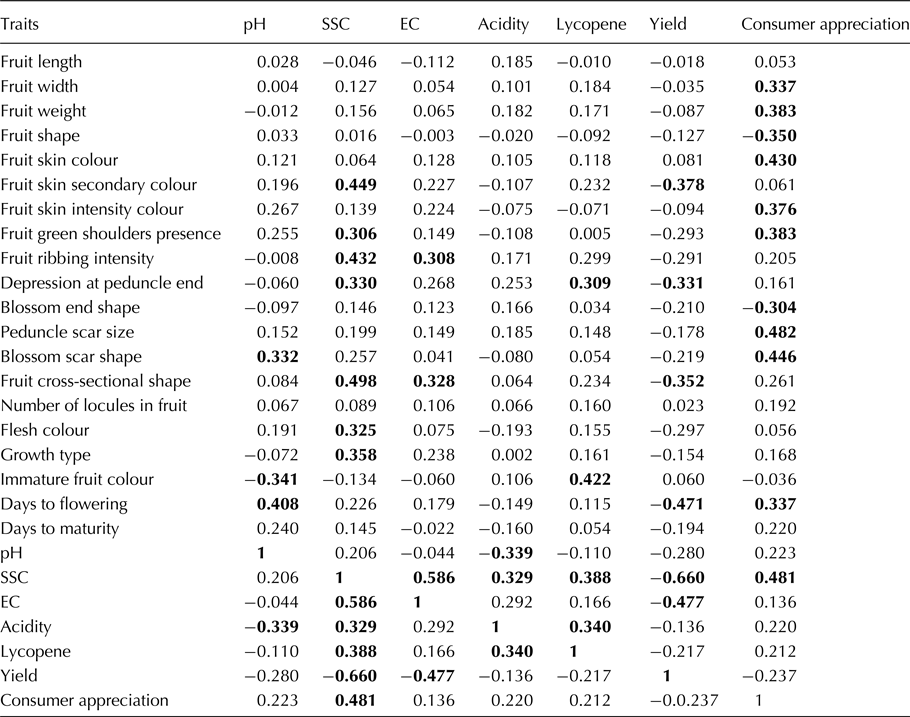
Significant Pearson correlations (P < 0.5) between fruit quality traits and morphological characters are shown in Table 2. Consumer appreciation was positively correlated with fruit width, weight, skin intensity colour, the presence of green shoulders in fruits, large peduncle, blossom scars, long cycles (number of days to flowering) and high SSC. SSC was positively correlated with EC, titratable acidity and lycopene content, but negatively correlated with yield.
Pearson correlations between mean fruit quality traits and some morphological characters

Values in bold are statistically significant at P < 0.05.
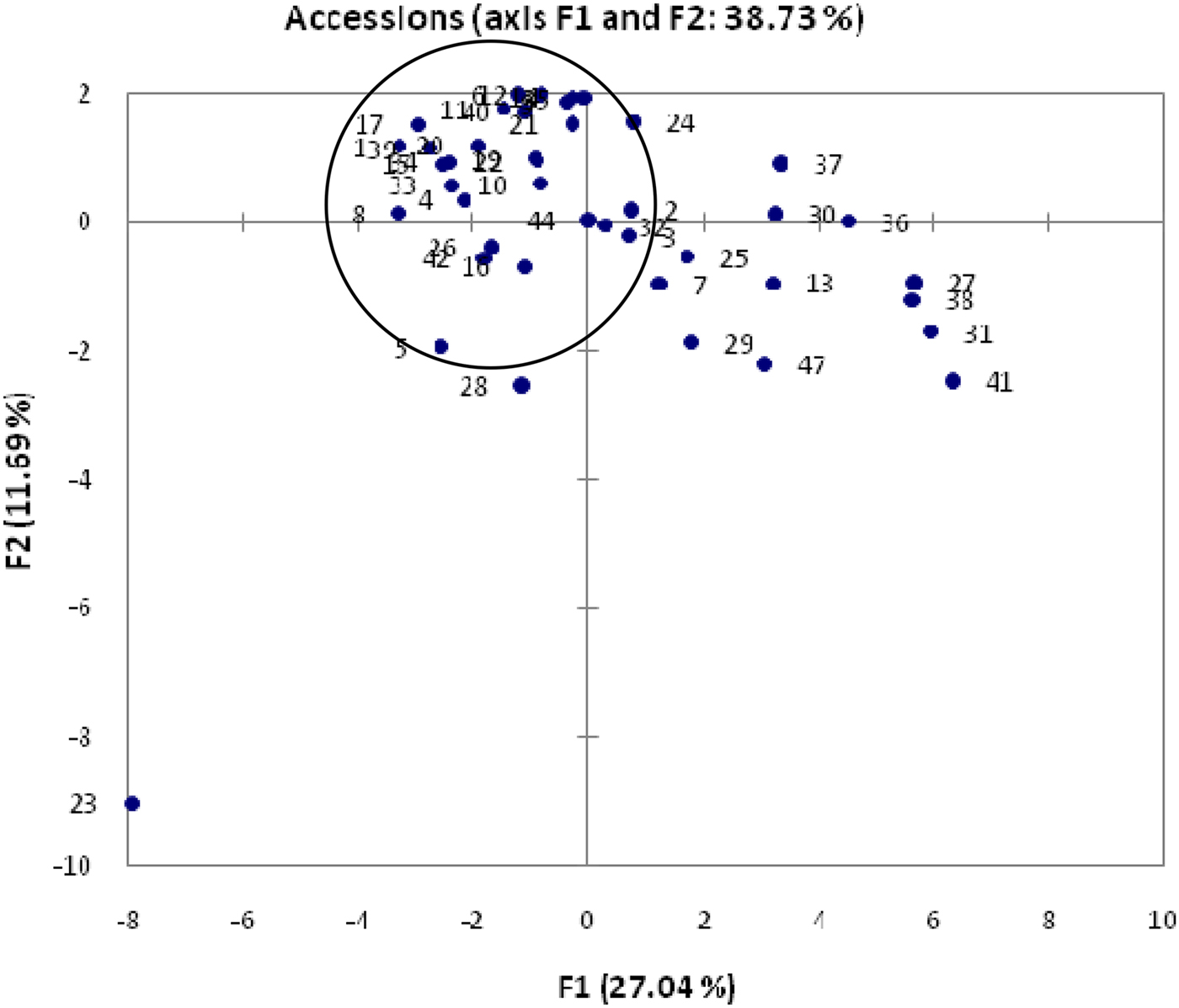
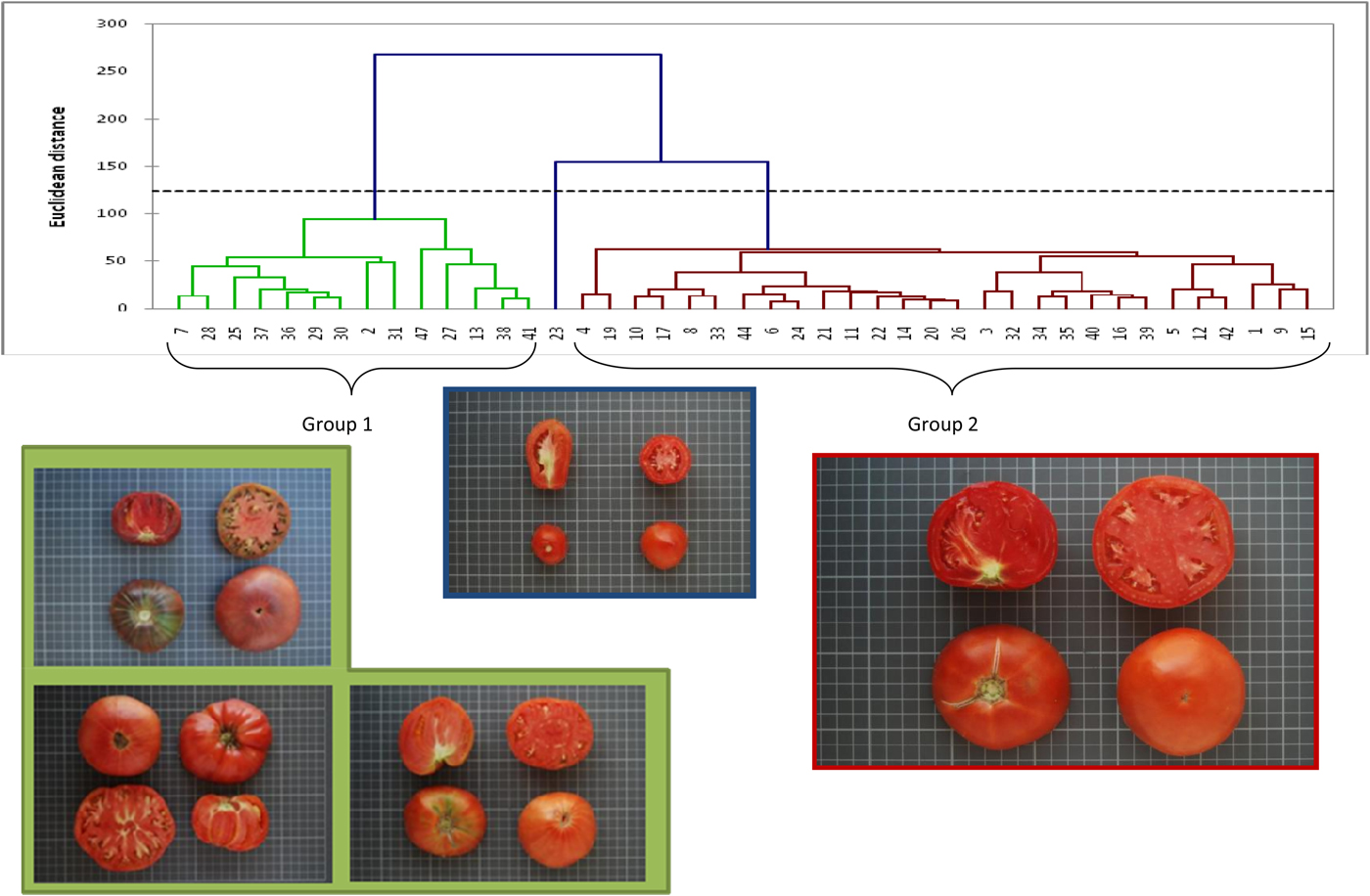
The first three components of the PCA, calculated with the whole set of variables, explained 47.5% of the variation (online Supplementary Table S2). The first was mainly explained by fruit size (width and weight), shape (ribbing at the calyx end and fruit cross-sectional shape) and scar size, separating big, wide, scared and ribbed fruits from smaller, smoother fruits. The second principal axis was explained by colour and fruit shape, separating flatter dark red or brownish tomatoes from orange ellipsoids or piriforms. The third was mostly described by some alimentary compounds such as EC, SSC or acidity (online Supplementary Table S2). Figure 1 shows the graphical representation of the PCA of the studied traits and accessions. One large group can be identified, while one accession clearly remains separated. Figure 2 represents the cluster analysis, calculated with the Euclidean distance between pairs of accessions, using Ward's method. Two groups were clearly defined, and only one accession did not join either group, i.e. accession 23, the same accession separated by the PCA.
Representation of the studied characters and accessions in the two first principal components obtained in the PCA. The circle encloses a group.

Cluster analysis obtained using all of the studied traits (quantitative, qualitative and phenological), the Euclidean distance and Ward's method.

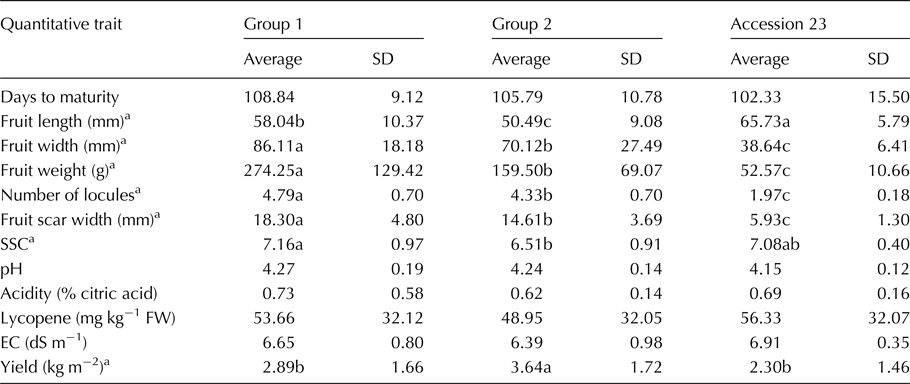
Group one was the most heterogeneous, but its fruits were significantly bigger (heavier and wider), scarred, multiloculated and higher SSC (P < 0.05). It was mainly composed of flattened or heart-shaped, red or pink tomatoes, sometimes ribbed at the calyx end. It was formed by 12 accessions collected in the Madrid region and two landraces from other regions. Among their local names, the most common was ‘Rosa’ (pink) or ‘Morado’ (purple) followed by the ‘Gordo’ (large). These names, given by farmers, defined the morphological characters of this type of tomato. These accessions fall outside the marked line in the PCA (Fig. 1). Group two was the largest with 27 landrace accessions and the commercial variety used as a reference. This group was quite homogeneous and enclosed in a circle in Fig. 1. Online Supplementary Tables 3 and S3 present the main characteristics defining the morphological type: slightly flattened or rounded red tomatoes, mainly smooth and significantly more productive than the others. Regarding the names given by farmers, 39% were known as ‘Moruno’, literally Moorish. Accession 23 remained unjoined in both the cluster tree and the PCA scatter diagram. This tomato is small, pear-shaped, smooth and red or orangish-red. Its name ‘Pera’ refers to the main fruit shape.
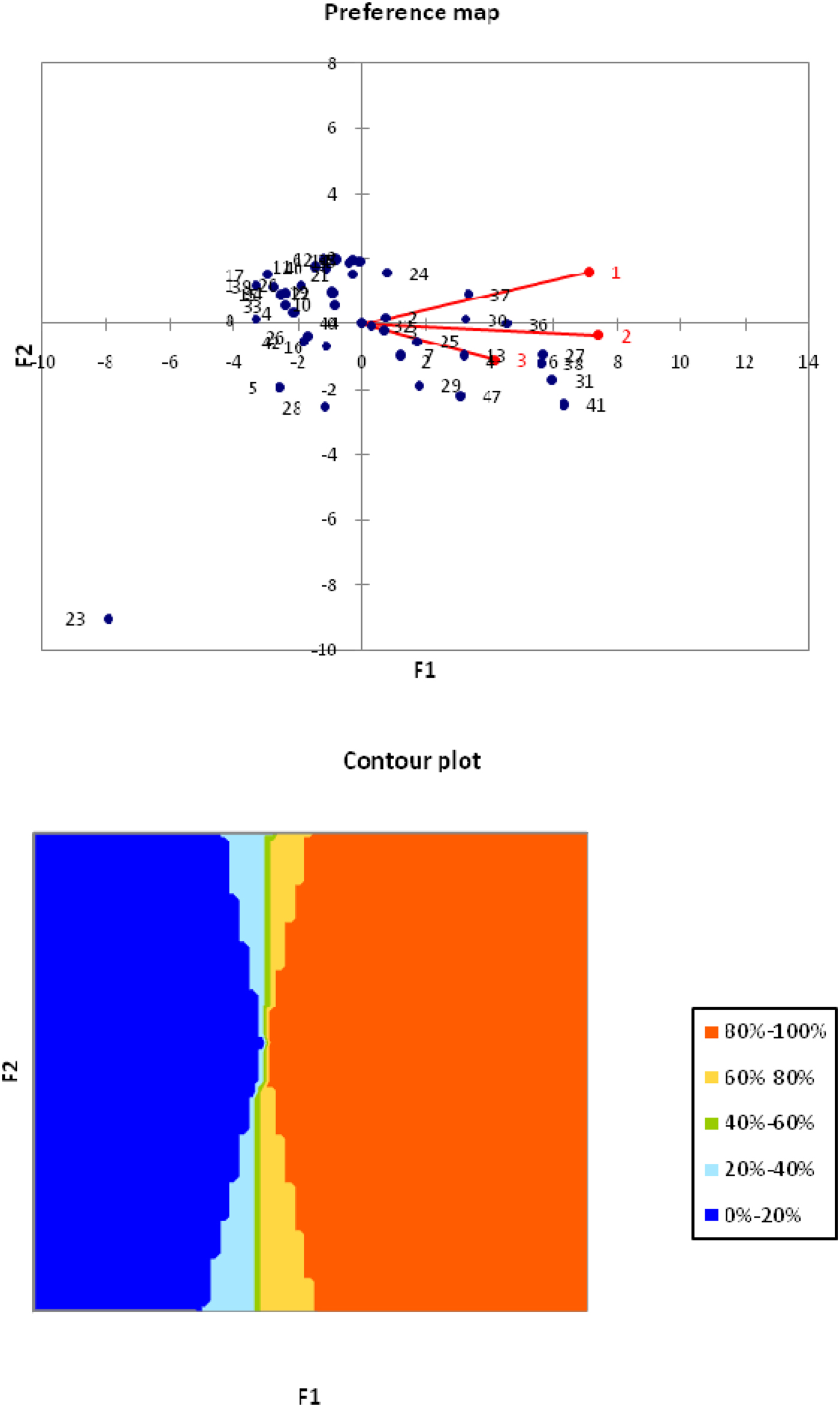
Figure 3 shows the map of preferences projected on PCA, showing vectors representing different consumer groups. The contour plot showed the consumer preference regions to analyse different market tendencies to satisfy these preferences.
Preference map with vectors representing different consumer groups. Projected on PCA. Below, a contour plot showing consumer preference regions.

Discussion
The studied landraces presented a semi-determinate plant growth type with an intermediate-dense foliage density as reported for other landraces from South Europe (Terzopoulos and Bebeli, Reference Terzopoulos and Bebeli2010). Thus, they are cultivated using a traditional open-field crop system, mainly in groves or orchards, which requires tutors for plant support and pruning for plant guidance and formation.
As the accessions were collected directly from farmers who grew them for self-consumption or to sell to nearby markets, the prevalent fruit shapes or colours demonstrated local preferences. All of the studied landraces had high SSC levels (6.7 average) and acidity (0.6 average) when cultivated in the open-field in summer. The sugar/acid balance is mainly responsible for tomato acceptation (Kader et al., Reference Kader, Stevens, Albright and Morris1978; Carli et al., Reference Carli, Barone, Fogliano, Frusciante and Ercolano2011), and excellent quality was obtained. This demonstrates the importance that farmers (and consumers) give to the selection of this plant material.
The high diversity found in the studied collection agrees with other studies on the diversity of morphological traits and chemical composition of local tomatoes (Cortés-Olmos et al., Reference Cortes-Olmos, Valcarcel, Rosello, Diez and Cebolla-Cornejo2015; Figàs et al., Reference Figàs, Prohens, Raigón, Fita, García-Martínez, Casanova, Borràs, Plazas, Andújar and Soler2015), which makes it more difficult to establish the standard characteristics of each landrace and define their genetic limit. This intrinsic variability must be considered either for genetic selection or for conservation purposes. Nevertheless, fruit size, shape, ribbing and colour seemed essential characters for the definition of tomato type, as pointed out by other authors (Cortés-Olmos et al., Reference Cortes-Olmos, Valcarcel, Rosello, Diez and Cebolla-Cornejo2015), even though a high degree of intra-population variation would be found.
Some of the studied morphological traits seem to be correlated to nutritional values (Table 2). For instance, SSC, which was the main contributor to tomato appreciation, also seemed positively related to ribbed fruit forms or those with a strong depression at the peduncle end, the presence of secondary skin colours, green shoulders and red flesh. These associations between morphology and taste could be the result of human selection of certain tomato forms they considered tasty, and this could help define market types.
The positive correlation found between fruit colour and lycopene content has been previously reported (Srivastava and Srivastava, Reference Srivastava and Srivastava2015), as lycopene is a red carotenoid. However, this correlation was not significant. Morphological colour description is difficult due to its qualitative nature and subjective quantification. Consequently, selection of local tomatoes with a high lycopene content is a pending task. The varieties that have survived to this day were selected because of their flavour. Farmers and consumers have associated these tomatoes with certain morphology, not with other less easily detected components.
The role played by climatic conditions
A significant environmental effect was found for all the studied quantitative traits (Table 1). Thus, character expression differed between climatic conditions. The variation due to the environment was astonishingly large for yield, nutritive fruit contents such lycopene, acidity and SSC, and fruit width. As soil fertilization and irrigation were the same throughout the experiment, the differences among years could only be caused by the temperature regime during the crop season, as previously documented (Adams et al., Reference Adams, Cockshull and Cave2001). Differences in all the quantitative traits were significant among the studied landraces, indicating the importance of genetics in varietal differentiation. This is particularly notable for fruit length, scar width and number of locules.
SSC and yield also varied significantly among repetitions in agreement with previous studies on landrace collections in southern Europe (Mazzucato et al., Reference Mazzucato, Papa, Bitocchi, Mosconi, Nanni, Negri, Picarella, Siligato, Soressi, Tiranti and Veronesi2008; Terzopoulos and Bebeli, Reference Terzopoulos and Bebeli2010; Casals et al., Reference Casals, Pascual, Canizares, Cebolla-Cornejo, Casanas and Nuez2012; Cebolla-Cornejo et al., Reference Cebolla-Cornejo, Rosello and Nuez2013; Garcia-Martinez et al., Reference Garcia-Martinez, Corrado, Ruiz and adn Rao2013; Bota et al., Reference Bota, Conesa, Ochogavia, Medrano, Francis and Cifre2014). This reveals the heterogeneity of plant landraces, mainly for parameters of agronomic importance.
Classification of landraces
The PCA analysis showed two groups and one different accession. The three first axes explained only 45% of total variation. This could be due to high intra-population heterogeneity or low inter-population variation possibly caused by a narrow genetic basis or geographical (and cultural) bias. The sampled area is quite small (8028.5 km2) and has some noteworthy characteristics: the remoteness of the maritime influence (350 km from sea), an altitude from 600 to 1000 m a.s.l. and a mean annual thermal oscillation from 10 to 12°C between day and night. From a cultural point of view, we could mention fruit uses and farmers’ preferences.
Except for sample 23, which is a pear-shaped tomato, local farmers in Madrid have conserved only two types of tomato: tomatoes with big, scarred, multiloculated and with high SSC (which is a quality parameters used to indicate sweetness) fruits, sometimes ribbed at the calyx end and often pink, and tomatoes that are red, slightly flattened or rounded, mainly smooth and significantly more productive. Although the resulted yields were low and extremely variable in all cases, once again the main selection pressure seemed to be fruit quality and self-supply.
The three main tomato types found herein not only show significant differences in morphological, phenological and agronomical traits (Table 3), but they also show significant differences in SSC and consumer appreciation.
Variability (average and standard deviation SD) and ANOVA test results of each quantitative trait in the three material types obtained in multivariate analyses

a Significant differences. Means within the same rows followed by the same letter are not significantly different by Duncan test (P ≤ 0.05).
Comparison with other Spanish and European tomato types
In addition to the features common to the local varieties already described (growth type, breeding and crop system, heterogeneity, etc.), the present work has verified many others previously reported in other tomato landraces from southern Europe. For instance, these features include the presence of a large blossom end or peduncle scars in fruits, the common occurrence of slightly flattened tomatoes or the pear shape of some accessions (Terzopoulos and Bebeli, Reference Terzopoulos and Bebeli2010; Mercati et al., Reference Mercati, Longo, Poma, Araniti, Lupini, Mammano, Fiore, Abenavoli and Sunseri2015), low and variable yields (Bota et al., Reference Bota, Conesa, Ochogavia, Medrano, Francis and Cifre2014) and good consumer acceptance of their sensory profiles (Ercolano et al., Reference Ercolano, Carli, Soria, Cascone, Fogliano, Frusciante and Barone2008).
However, other features are remarkably different. Some accessions described herein have extremely large fruits (fruit weight~500 g), and the sugar and acid content obtained in the whole collection was high (mean SSC>6; tritatable acidity >0.6%), although comparable with other Spanish tomato landraces (Figàs et al., Reference Figàs, Prohens, Raigón, Fita, García-Martínez, Casanova, Borràs, Plazas, Andújar and Soler2015). In general, these outstanding levels of measured compounds are probably due to both their genotypic potential and environmental adaptation to the crop system.
Consumer appreciation
All the studied accessions were well accepted by consumers (6.25 average), which verifies the good acceptation of tomato landraces or at least of those that have reached the present. However, tasters demonstrated a slight, but significant preference for the samples collected in Madrid (Table 1). As all samples were cultivated together in Madrid for evaluation, this preference could be explained by the better environmental adaptation of the preferred accessions, i.e. landraces seemed to reach their fullest potential when grown in their region of origin, making them the best candidates for proximity markets. Consumers also found significant differences between genotypes, but their preferences changed each year (interaction between genotype and environment). This demonstrates the strong environmental effect on the perception of tomato fruit quality.
Fruit width and weight, the intensity of skin colour, the presence of green shoulders, scar size, days to flowering, SSC, fruit form, blossom end shape and blossom scar shape played a main role in preference or consumers’ choice. All consumers preferred big, flat tomatoes with an intense skin colour, mainly with green shoulders and big peduncle or blossom scars. This tomato type has a long vegetative cycle which permits a high SSC.
No significant differences were found between consumers’ responses. A Wards’ cluster tree was calculated to stratify responses. Considering three major groups of consumers (three centroids Fig. 3), the largest group (83% of the people consulted) preferred tomatoes with large fruits (average 250 g fruit−1), dark skin colour, flat shape, green shoulders and a high SSC (7.5 average). Only 10% of consumers preferred smaller and lighter fruits (200 g/fruit) with higher titratable acidity (0.55% citric acid). The third group (7% of the people consulted) preferred a medium-sized tomato, which was sweet but much more acidic (7.1 SSC and 0.63% citric acid). Once again, diversity appears to be necessary to satisfy different types of consumers.
Conclusions
Remarkable variability of traditional tomatoes was found in a small area. Such variability appeared at all the studied levels – intra- and inter-accessions and in morphological, agronomical and quality traits – and was often dependent on the environmental conditions where the crop was grown. However, few morpho-types could be defined.
Some morphological traits of the studied samples appear to be associated. For instance, ribbed fruits ripened with green shoulder and dark flesh accumulate more soluble solids.
Consumer appreciation and fruit morphology seem to be the main determinants of tomato-type definition, mainly traits related to fruit size and shape. Nevertheless, nutrient content also plays an important role.
Consumers demonstrated their positive reception of heirloom tomatoes, especially when they were cultivated in the open-field and near their area of selection where they express their full potential in the nutrient synthesis and sensory properties. Although SSC seems to be the main trait related to appreciation, some morphological traits could also be determinant in consumers’ choice. There are some consumers who are more interested in different tomato typologies and other nutritional characters like acidity.
Supplementary material
The supplementary material for this article can be found at https://doi.org/10.1017/S1479262117000351
Acknowledgements
This work was carried out as a part of the quality studies of tomato accessions gathered in projects FP09-IA10 and FP12-VH funded by the Madrid Regional Government. We also thank the seed donors, tasters, laboratory assistants and personnel in ‘La Isla’ experimental facility. We especially thank Mrs I. Fernández-Navarro for the careful, skillful planning and monitoring of the open-field assay. Fruit photographs were taken by Dr F. Cabello. The English style was reviewed by Mrs Lori De Hond.