Introduction
Weedy rice (Oryza sativa L. f. spontanea) is one of the three worst weeds, together with species of Echinochloa and Leptochloa, in paddy fields worldwide; it can reduce rice yields by almost two-thirds (Xu et al. Reference Xu, Li, Su and Wang2018; Ziska et al. Reference Ziska, Gealy, Burgos, Caicedo, Gressel, Lawton-Rauh, Avila, Theisen, Norsworthy, Ferrero, Vidotto, Johnson, Ferreira, Marchesan, Menezes, Cohn, Linscombe, Carmona, Tang and Merotto2015). In addition, the mixture of weedy and cultivated rice (Oryza sativa) grains creates a rice quality decline problem in rice industry (Delouche et al. Reference Delouche, Burgos, Gealy, de San Martin, Labrada, Larinde and Rosell2007). At present, there is no selective chemical available to control weedy rice, because cultivated and weedy rice share similar morphological and physiological characteristics (Kuk et al. Reference Kuk, Guh and Chon1997). Weedy rice’s dominance in competition with cultivated rice for light, water, and nutrition can reduce rice yield by 70%; this dominance can be attributed to weedy rice often being taller than cultivated rice, producing more tillers, and having a well-developed root system (Bhagiraths and Davide Reference Bhagiraths and Davide2010; Dai et al. Reference Dai, Dai, Song, Lu and Qiang2014; Delouche et al. Reference Delouche, Burgos, Gealy, de San Martin, Labrada, Larinde and Rosell2007). In China, the widespread use of direct seeding has led to an increasing number of paddy fields becoming infested by weedy rice, resulting in 8.3% to 82.3% yield loss; this problem is particularly serious in Jiangsu, Guangdong, and Liaoning provinces (Zhang et al. Reference Zhang, Burgos, Kun, Zhou, Geng and Yu2008, Reference Zhang, Dai, Wu, Song and Qiang2012).
Weedy rice usually exhibits many weedy traits, such as seed shattering (Akasaka et al. Reference Akasaka, Konishi, Izawa and Ushiki2011; Nunes et al. Reference Nunes, Delatorre and Merotto2014; Thurber et al. Reference Thurber, Michael, Gross, Olsen, Jia and Caicedo2010, Reference Thurber, Hepler and Caicedo2011), dormancy (Gu and Foley Reference Gu and Foley2003; Gu et al. Reference Gu, Foley, Horvath, Anderson, Feng, Zhang, Mowry, Ye, Suttle, Kadowaki and Chen2011; Xia et al. Reference Xia, Wang, Xia, Zhao and Lu2011), competitive ability (Burgos et al. Reference Burgos, Norman, Gealy and Black2006; Dai et al. Reference Dai, Song, He, Valverde and Qiang2017), pigmented pericarp and stature variation (Kanapeckas et al. Reference Kanapeckas, Tseng, Vigueira, Ortiz, Bridges, Burgos, Fischer and Lawton-Rauh2018), and enhanced stress tolerance, including deep sowing (Gealy et al. Reference Gealy, Saldain and Talbert2000) and cold stress and drought (Bevilacqua et al. Reference Bevilacqua, Basu, Pereira, Tseng, Zimmer and Burgos2015; Ding et al. Reference Ding, Liu, Ma, Wang, Yang, Gao, Gao, Sun and Chen2013), that facilitate seed dispersal and persistence in the field (Londo and Schaal Reference Londo and Schaal2007). These traits make controlling weedy rice very difficult. Weedy rice can complete reproductive growth before crop harvest and escape harvesting (Zhao et al. Reference Zhao, Xu, Song, Dai, Dai, Zhang and Qiang2018). Our previous study proved that early flowering and shorter grain-filling stages promote early maturity in weedy rice, and together with heavy seed shattering, these traits contribute to weedy rice’s escape from harvesting (Zhao et al. Reference Zhao, Xu, Song, Dai, Dai, Zhang and Qiang2018).
Grain filling is a stage at which photosynthates are transported from sources to grains in the form of sugars, especially sucrose, forming starch through a series of enzymatic reactions and storing this starch in the grains (Yoshida Reference Yoshida1981). During grain filling, the endosperm cell development of rice is divided into four stages: coenocyte stage, cellularization stage, differentiation stage, and maturation stage (Zheng et al. Reference Zheng, Zeng, Wei, Xu, Gu and Wang2017). At the coenocyte stage, the primary endosperm nucleus enters a period of free nuclear division; at the cellularization stage, the formation of the cell wall begins when the free nuclei reach a certain number; at the development and differentiation stage, the endosperm starch accumulates rapidly, and the endosperm cells differentiate into aleurone cells and starchy endosperm; then, in maturation, the starchy endosperm continues to accumulate starch and finally becomes a location of nutrient storage without cellular activity (Becraft Reference Becraft2001). During the development of the caryopsis, the endosperm cells divide rapidly, and then the outermost layers (2 to 5 layers on the ventral and dorsal sides) of endosperm differentiates into the aleurone layer, while the inner cells develop into starch storage cells (Li et al. Reference Li, Li, Gu and Wang2014; Yu et al. Reference Yu, Zhou, Xiong and Wang2014). The development of the endosperm and caryopsis of early-maturing varieties are faster than in late-maturing varieties (Li et al. Reference Li, Li, Gu and Wang2014). Chen et al. (Reference Chen, Gu and Wang2009) determined that the caryopsis development of large-grain varieties was slower, and the number and dry weight of endosperm cells and the weight of each endosperm cell were greater than those in small-grain varieties.
Although many reports have detailed differences in caryopsis development among rice varieties (Yu et al. Reference Yu, Zhou, Xiong and Wang2014; Zheng et al. Reference Zheng, Zeng, Wei, Xu, Gu and Wang2017), the differences between weedy and cultivated rice in caryopsis development are still not fully understood. In previous research, we determined that weedy rice matured early regardless of sowing date. Both early flowering and shorter grain-filling stages contribute to the early maturity of weedy rice (Zhao et al. Reference Zhao, Xu, Song, Dai, Dai, Zhang and Qiang2018). In the present study, we observed the microstructure and ultrastructure of grains of weedy rice and associated cultivated rice (ACR) in Nanjing. We compared the characteristics of endosperm cell division and starch accumulation between weedy rice and ACR. Our objectives were to describe the rapid endosperm development process leading to a shorter grain-filling period in weedy rice. Our results on the differences in endosperm development between weedy rice and ACR may provide a new perspective for the control of weedy rice.
Materials and Methods
Plant Material and Growth Conditions
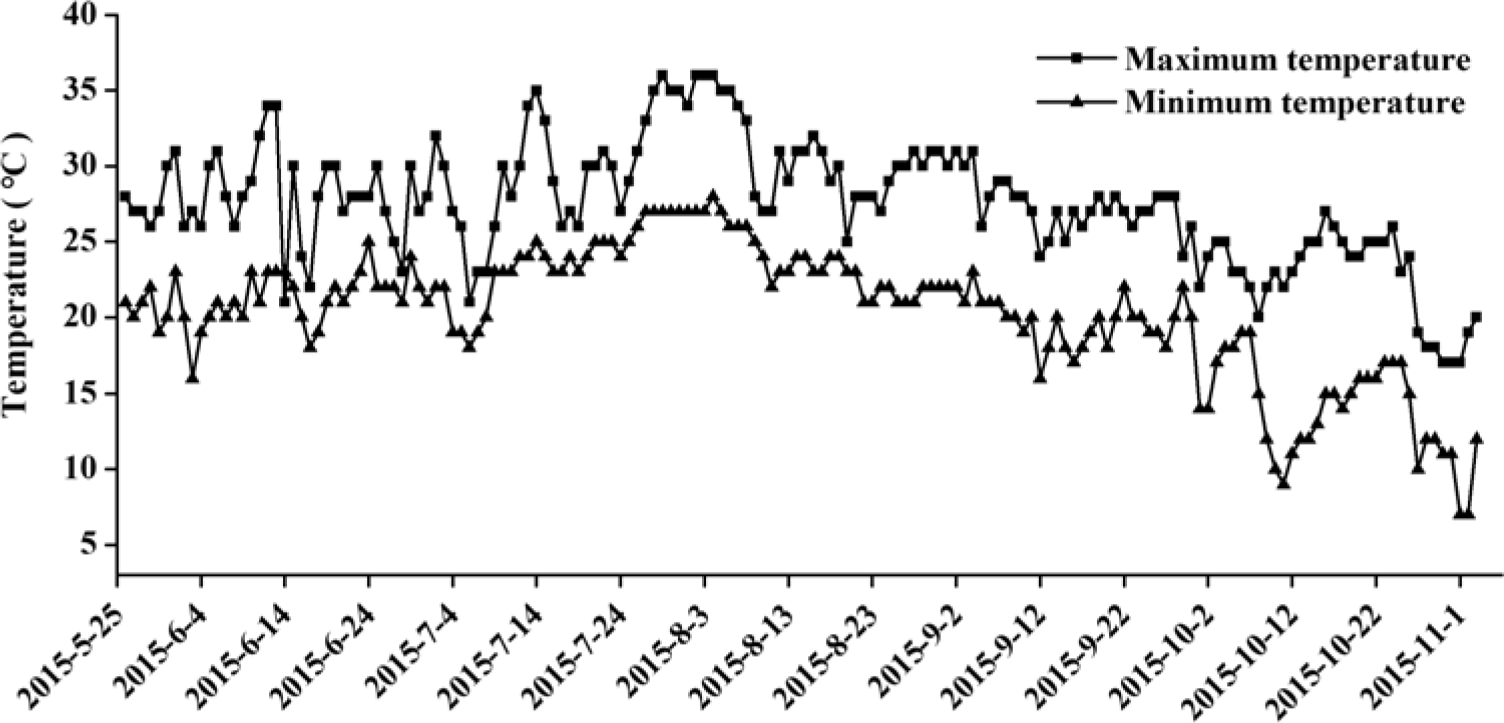
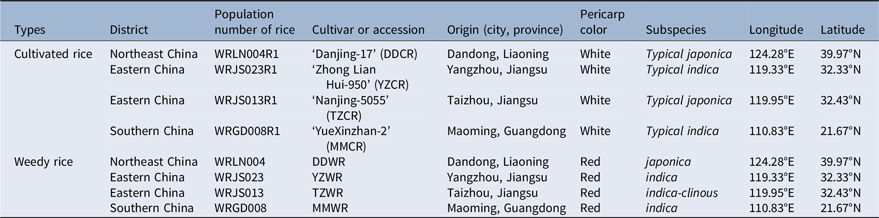
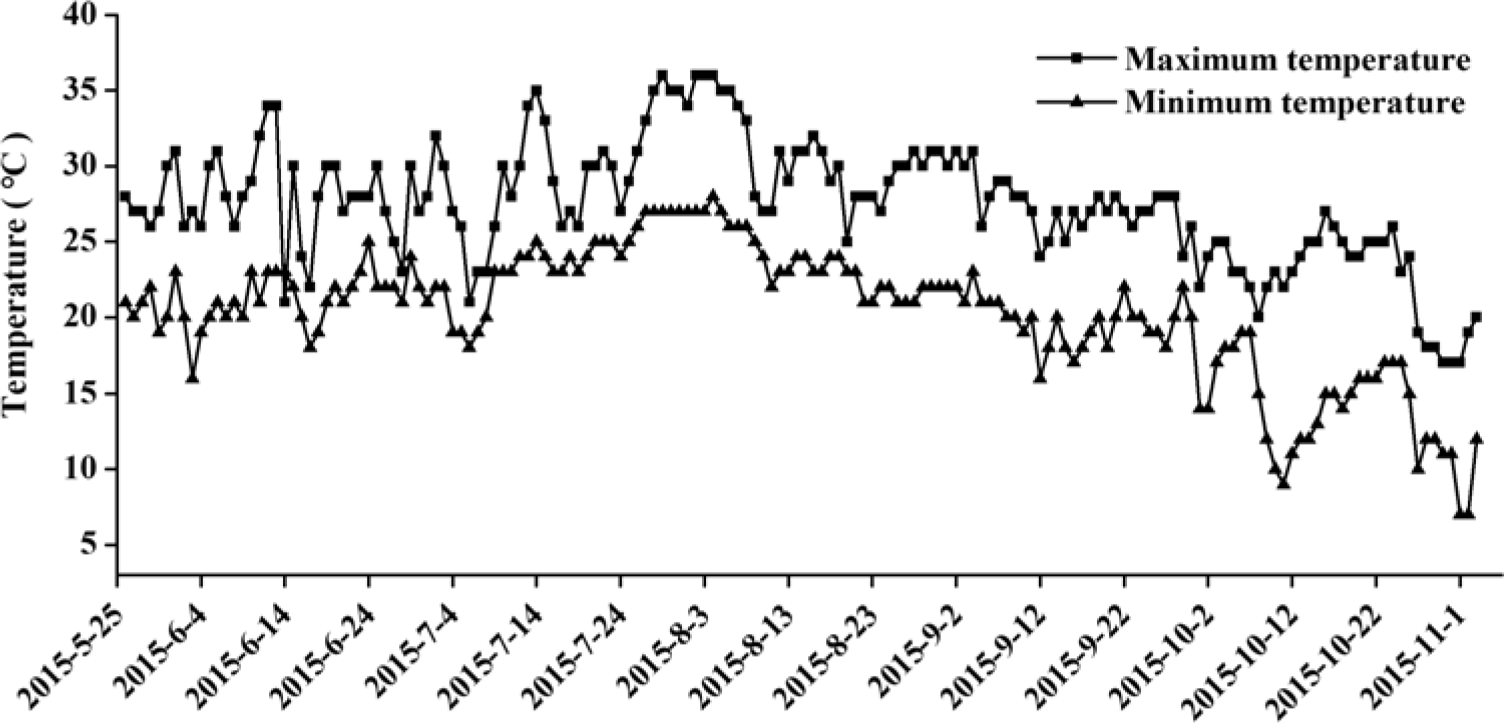
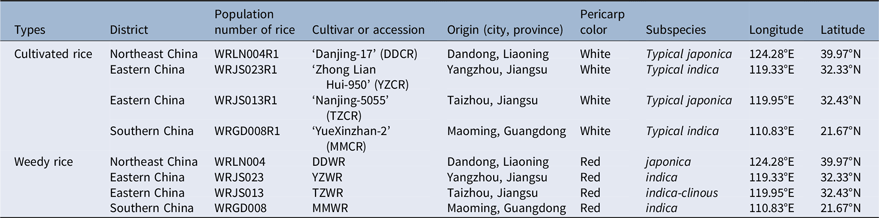
Field trials were established at Jiangpu Experimental Farm (118.62°E, 32.03°N), Nanjing Agricultural University, China, in the summer cropping season (between May and November) of 2015. The maximum and minimum temperatures per day during rice-growing season (from May to November) in 2015 at Nanjing are shown in Figure 1. The field sites have clay-loam soil with medium fertility (organic matter 2.8%, 97 mg N kg−1, 52 mg available P kg−1, 161 mg available K kg−1) and pH 7.1. The field was left fallow before the summer season and then subjected to rotary tilling. Based on our previous studies on the genetic diversity and morphological characteristics of various weedy rice accessions (Dai et al. Reference Dai, Dai, Song, Lu and Qiang2014; Shao et al. Reference Shao, Dai, Zhang and Qiang2011; Zhang et al. Reference Zhang, Dai, Wu, Song and Qiang2012),we selected four weedy rice accessions of different geographic origins along with their associated cultivars for planting at the collection site. These materials were previously described by Zhao et al. (Reference Zhao, Xu, Song, Dai, Dai, Zhang and Qiang2018). The characteristics of the four weedy rice accessions and their associated cultivar biotypes are listed in Table 1. The local cultivars included ‘Nangeng-5055’ (TZCR) and ‘Zhong Lian Hui-950’ (YZCR), which are both widely cultivated in Jiangsu Province; ‘Dangeng-17’ (DDCR), which is widely planted in Dandong City of Liaoning Province; and ‘Yue Xin Zhan-2’ (MMCR), which is from Maoming City of Guangdong Province. The area of each experimental plot was 20 m2, with 50-cm spaces between the adjacent plots, sowing distances of 30 by 15 cm, and a design of 20 rows by 20 columns. The individuals of each accession were planted in separate plots with three replications. For detailed plant traits and other information for weedy and cultivated rice, please see the Supplementary Material.
The maximum and minimum temperatures per day during the rice-growing season in 2015 at Nanjing, China.
Characteristics of the representative weedy rice (Oryza sativa f. spontanea) and cultivated rice (Oryza sativa) accessions used in the experiments.
Observation of Microstructure and Ultrastructure of Grains Using a Microscope
The paraffin sectioning method was described by Li et al. (Reference Li, Zhao, Zhou, Feng, Gao, Yao, Liu, Liu, Yang, Zhao and Wang2017). For paraffin sectioning, 10 grains of weedy and cultivated rice were collected at intervals of 2 d from 3-d post-anthesis (DPA) to 9 DPA and dehulled. The grains were sectioned by hand transversely into 2-mm slices using a razor blade. These slices were fixed in formaldehyde-acetate-alcohol fixative solution and embedded in paraffin after gradient ethanol dehydration and vitrification by turpentine oil, a clearing agent. The embedded kernel tissues were cut into approximately 8-µm-thick sections on a Leica RM2235 microtome (Leica Microsystems GmbH, Wetzlar, Germany). After dewaxing, gradient ethanol hydration, and Fasga staining, the paraffin sections were histologically analyzed as described previously (Zheng et al. Reference Zheng, Zeng, Wei, Xu, Gu and Wang2017) and imaged under a microscope (Zeiss Axio Cam HRc, Jena, Germany).
For transmission electron microscopy, sample preparation was performed according to Wei et al. (Reference Wei, Lan and Xu2002). We sampled 10 grains at 9 DPA, and the caryopses were sectioned by hand transversely into 1-mm slices using a razor blade and then fixed for 2 h in 2.5% glutaraldehyde (Sigma Chemical Company, St Louis, MO, USA) prepared in a 0.1 mol L−1 sodium phosphate buffer (pH 7.2). The samples were washed three times with the same buffer for 30 min each time and then postfixed in 1% osmium tetroxide (Sigma Chemical Company, St Louis, MO, USA) at 4 C overnight before being embedded in spur resin. Then, the samples were cut into 70-nm-thick sections with an ultramicrotome (Leica EMUC7, Hernalser Hauptstrasse, Germany), and the ultrathin slices were stained with uranyl acetate and alkaline lead citrate at room temperature. The sections were imaged under a Hitachi H-7650 transmission electron microscope (Hitachi High Technologies, Pleasanton, CA, USA).
Sampling and Determination of Endosperm Cell Division Rate and Starch Accumulation Rate
A total of 320 to 340 panicles that headed on the same day were chosen and tagged for each plot. The flowering date of each upper spikelet on the tagged panicles was recorded. The upper spikelets of weedy and cultivated rice were collected from 1 to 40 DPA and dehulled. Images of the grains were captured using a digital camera (Olympus DP71, Tokyo, Japan) connected to a microscope (Olympus SZX7, Tokyo, Japan). Approximately 20 tagged panicles from each plot were sampled at 3, 5, 10, 15, 20, 25, 30, 35, and 40 DPA. Another 20 to 30 sampled grains were dried at 70 C to a constant weight, dehulled, and weighed.
Determination of Cell Proliferation in Endosperm
The number of endosperm cells was counted according to the modified Panda’s method (Panda et al. Reference Panda, Badoghar, Sekhar, Shaw and Mohapatra2016). Briefly, 10 to 20 upper grains of weedy and cultivated rice were collected at 3, 5, 10, 15, 20, 25, 30, 35, and 40 DPA; a small hole was cut on the edge of each hull; and then the samples were fixed in Carnoy’s solution (absolute ethanol-glacial acetic acid-chloroform = 9:3:1, v/v/v) for 48 h and stored in 70% (v/v) ethanol pending examination of endosperm cell number. Following the removal of the embryo and pericarp with a dissecting needle, each sample was cut into pieces and then soaked and washed with distilled water three times, for 1 h each time. After soaking in 1 M HCl for 1 h, the samples were stained with acetocarmine for 1 to 2 h. After 0.3% cellulose (pH 5.5, 0.1 mol L−1 acetate buffer) treatment for 3 to 5 h at 40 C, the number of cells in these samples was determined through deposition on millipore filters (Solarbio, Beijing, China). The division processes of endosperm cells were estimated using Richards’s growth equation (Richards Reference Richards1959) as described by Zhu et al. (Reference Zhu, Cao and Luo1988):
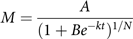 $$\(M = {{A}\over{{{{(1 + B{e^{ - kt}})}^{1/N}}}}}\)$$
where M is the cell number, A is the maximum cell number, t is the time after anthesis (days), and B, k, and N are coefficients established from the regression of the equation. The endosperm cell division rate (G) was calculated as the derivative of Equation 1:
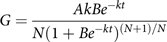 $$\(G = {{{AkB{e^{ - kt}}}}\over{{N{{(1 + B{e^{ - kt}})}^{(N + 1)/N}}}}}\)$$
Determination of Amylose and Amylopectin Accumulation
Fifty to sixty sampled grains (3, 5, 10, 15, 20, 25, 30, 35, and 40 DPA) were dried at 70 C to a constant weight, dehulled, weighed, and ground to powder for the determination of amylose and amylopectin contents. The amylose and amylopectin contents of weedy and cultivated rice were determined by the dual-wavelength method as described by Jiang and Hu (Reference Jiang and Hu2013). The processes of starch accumulation were estimated using the logistic equation as described by Birch (Reference Birch1999):
 $$\(S = A/(1 + B{{\it{e}}^{ - kt}})\)$$
where S is the amylose or amylopectin content (mg g−1), A is the final amylose or amylopectin content (mg g−1), t is the time after anthesis (days), and B and k are coefficients established from the regression of the equation. The starch accumulation rate (Q) was calculated as the derivative of Equation 3.
 $$\(Q = ABk{{\it{e}}^{ - kt}}/{(1 + B{{\it{e}}^{ - kt}})^2}\)$$
Data Analysis
The statistical analyses consisted of ANOVAs. When comparing the eight accessions, Duncan’s multiple range test (P < 0.05) was used. For weedy rice and its ACR, the means were compared using the independent-sample t-test (P < 0.05). All statistical analyses were conducted using the SPSS software package (v. 18.0, SPSS, Chicago, IL, USA), and graphs were generated using Origin v. 8.0 (OriginLab, Northampton, MA, USA).
Results and Discussion
Comparison of Caryopsis Morphology, Microstructure, and Ultrastructure in Weedy and Cultivated Rice
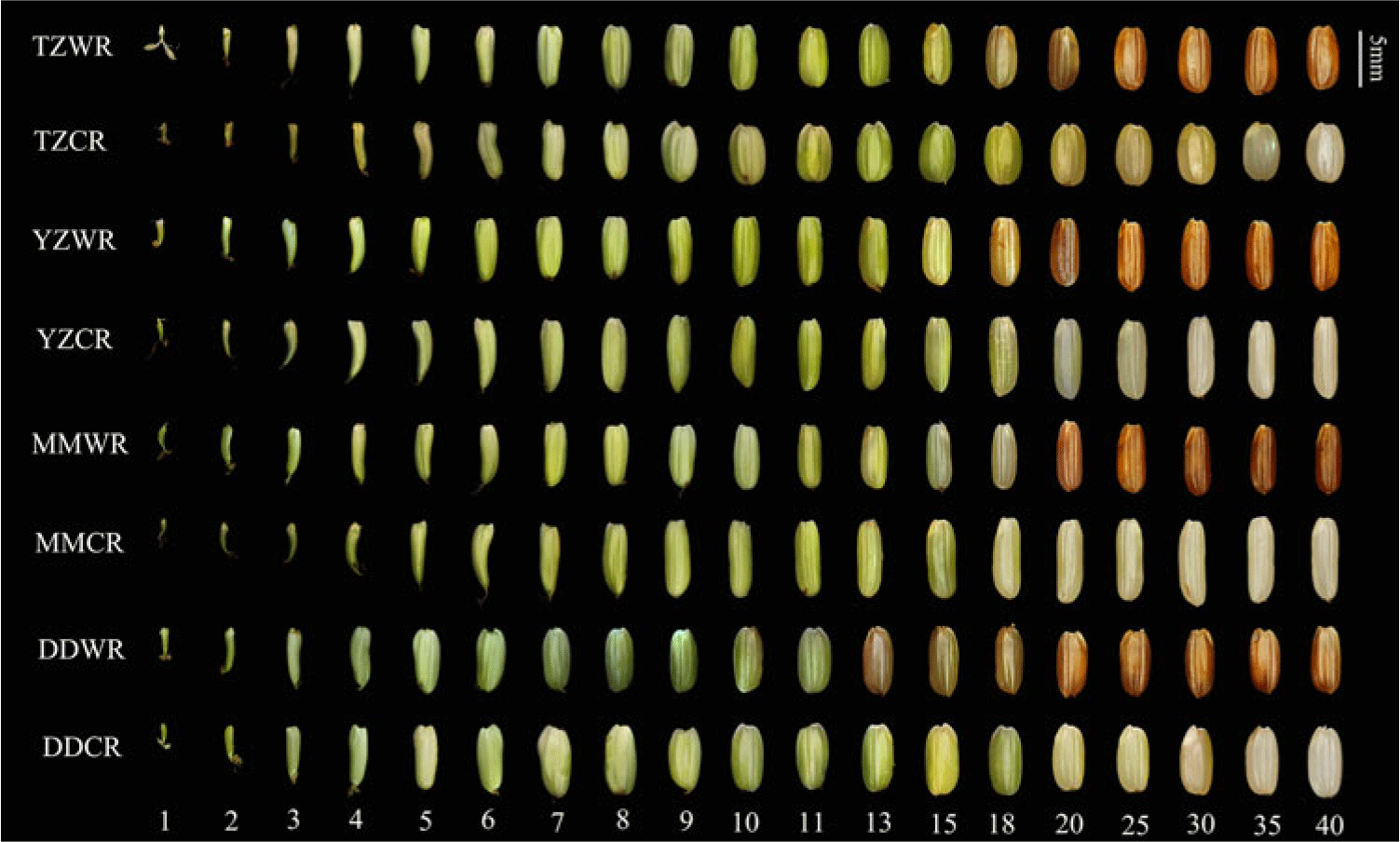
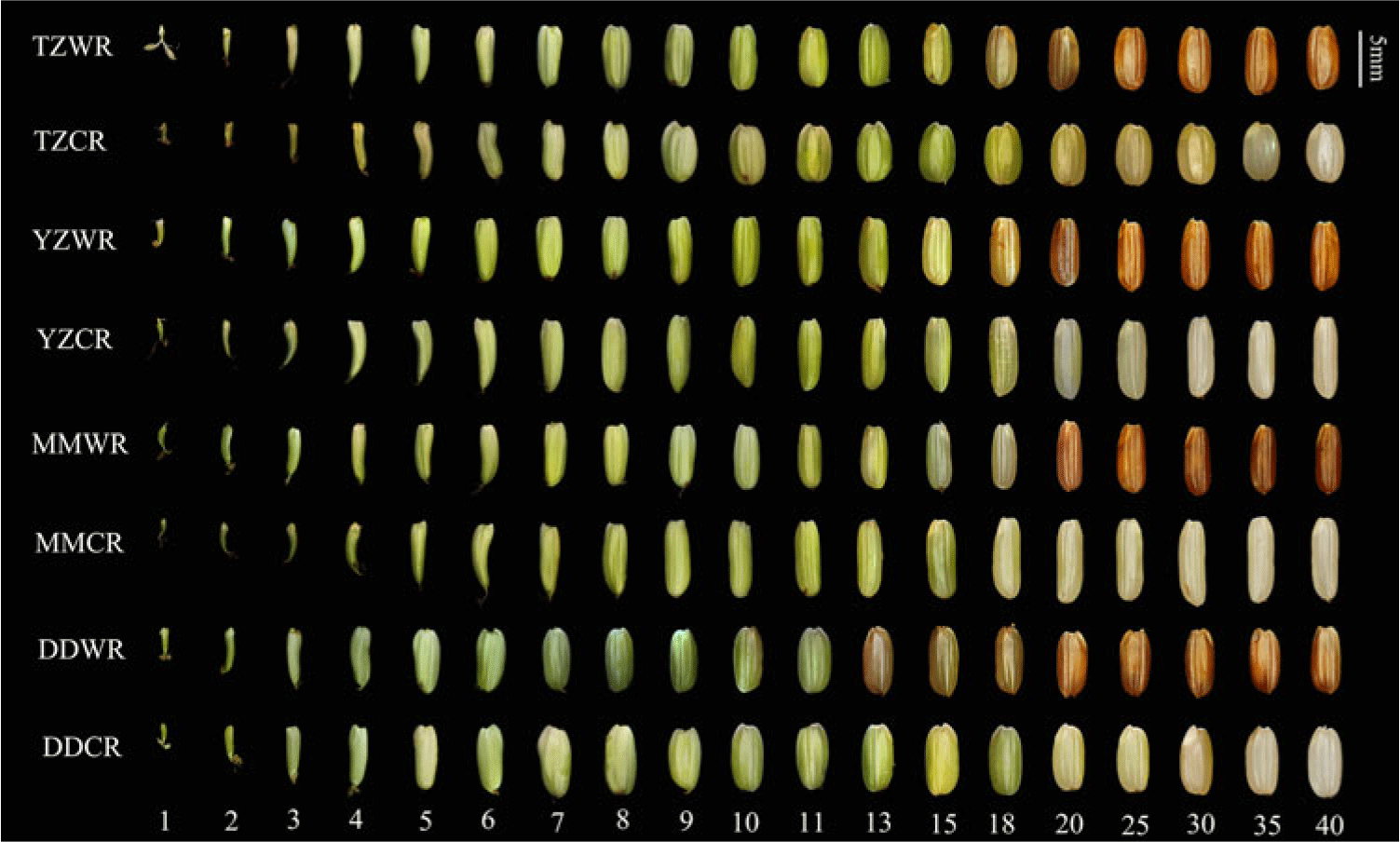
The changes in size, shape, and color of weedy and cultivated rice grains from 1 to 40 DPA are shown in Figure 2. Weedy rice completed grain filling 6 to 8 d earlier than ACR did (Figure 2). After fertilization, the grains began to fill, and weedy rice and ACR entered the milk stage. The pericarp color of weedy rice changed from green to brown at 13 to 15 DPA, and then the grains entered the soft dough stage; the pericarp color of cultivated rice changed from green to white at 15 to 20 DPA, and then the grains entered the soft dough stage. The change in color of weedy rice was 2 to 5 d earlier than that in cultivated rice (Figure 2). Different cultivated rice varieties have different grain-filling characteristics. Tang et al. (Reference Tang, Lv and Liang2009) proved that the caryopsis development of early-maturing ‘Shanyou 63’ (138 d) was faster than those of late-maturing ‘Wuyujing 3’ (150 d) and ‘Liangyou peijiu’ (142 d), and the active grain-filling period of Wuyujing 3 was longer than those of Shanyou 63 and Liangyou peijiu.
Process of caryopsis development in weedy rice (Oryza sativa f. spontanea) and cultivated rice (Oryza sativa). The number at the bottom of the figure represents the days post-anthesis (DPA). TZWR, weedy rice from Taizhou; TZCR, cultivated rice from Taizhou; YZWR, weedy rice from Yangzhou; YZCR, cultivated rice from Yangzhou; MMWR, weedy rice from Maoming; MMCR, cultivated rice from Maoming; DDWR, weedy rice from Dandong; DDCR, cultivated rice from Dandong. Scale bar: 5 mm.
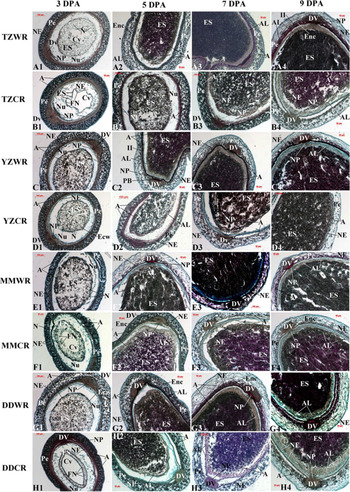
The endosperm cells of weedy rice completed the cellularization stage at 3 DPA and had more amyloplasts. Compared with that of ACR, the starch accumulation of weedy rice was faster, and the starch grains in the endosperm were arranged more closely (Figure 3). The outer layers of endosperm cells transformed into aleurone layer cells 7 d after flowering in the small-grain cultivated varieties but 10 d after flowering in the large-grain cultivated varieties (Chen et al. Reference Chen, Gu and Wang2009). It has been reported that at 1 to 2 d after anthesis, the endosperm of rice was in the coenocyte stage (Wei et al. Reference Wei, Lan and Xu2002; Yu et al. Reference Yu, Zhou, Xiong and Wang2014), which is consistent with our results. We showed that the endosperm cells of weedy and cultivated rice were in the coenocyte stage at 1 to 2 d after anthesis (Figure 3). At 3 DPA, the endosperm cells of weedy rice cellularized earlier and more rapidly than those of ACR. At 5 DPA, both weedy rice and ACR differentiated aleurone cells, the starch endosperm cells gradually increased, and many starch grains accumulated in the starch endosperm cells. From 5 to 9 DPA, the number and size of the starch grains in starch endosperm cells gradually increased, and compared with ACR, weedy rice more quickly accumulated starch grains that were arranged more closely than those of ACR. TZWR formed 6 layers of endosperm cells at 3 DPA, while TZCR remained at the coenocytic stage at 3 DPA. From 5 DPA to 9 DPA, both TZWR and TZCR rapidly accumulated starch, but the starch grains in weedy rice were arranged more closely than those in cultivated rice (Figure 3). YZWR had finished the cellularization stage at 3 DPA, and a small amount of starch grains had accumulated in the endosperm cells, while YZCR had formed only 6 to 7 layers of endosperm cells at 3 DPA without stored starch grains. Both YZWR and YZCR differentiated the aleurone layer from 5 DPA to 9 DPA, and there was a large amount of starch accumulation in the endosperm. Compared with those of YZCR, the amyloplasts of YZWR were larger, and the starch grains were arranged more closely (Figure 3). MMWR had finished the cellularization stage at 3 DPA, and its outer layer cells of endosperm had already stored some small amyloplasts, while MMCR had formed only 3 to 4 layers of endosperm cells at 3 DPA without stored starch grains (Figure 3). DDWR had already finished cellularization at 3 DPA, and the endosperm cells were fully formed in the endosperm with some small amyloplasts stored, while DDCR had formed only 2 layers of endosperm cells at 3 DPA (Figure 3). Li et al. (Reference Li, Li, Gu and Wang2014) found that compared with the late-maturing cultivar, the early-maturing cultivar had faster grain development, which was consistent with our observations.
Comparison of endosperm development in weedy rice (Oryza sativa f. spontanea) and cultivated rice (Oryza sativa). Microstructure of endosperm cell of the weedy rice and associated cultivated rice (ACR). The transverse sections of endosperm at 3, 5, 7, and 9 d post-anthesis (DPA) were used for the observation of microstructure. N, nucleus; ES, endosperm; A, amyloplast; Cv, central vacuole; Nu, nucellus; NE, nucellar epidermis; FN, free nucleus; NP, nucellar projection; DV, dorsal vascular bundle; AL, aleurone layer; Pe, pericarp; Enc, endocarp. Ecw, endosperm cell wall; NP, nucellar projection; PB, pigment bundle; II, inner integument.

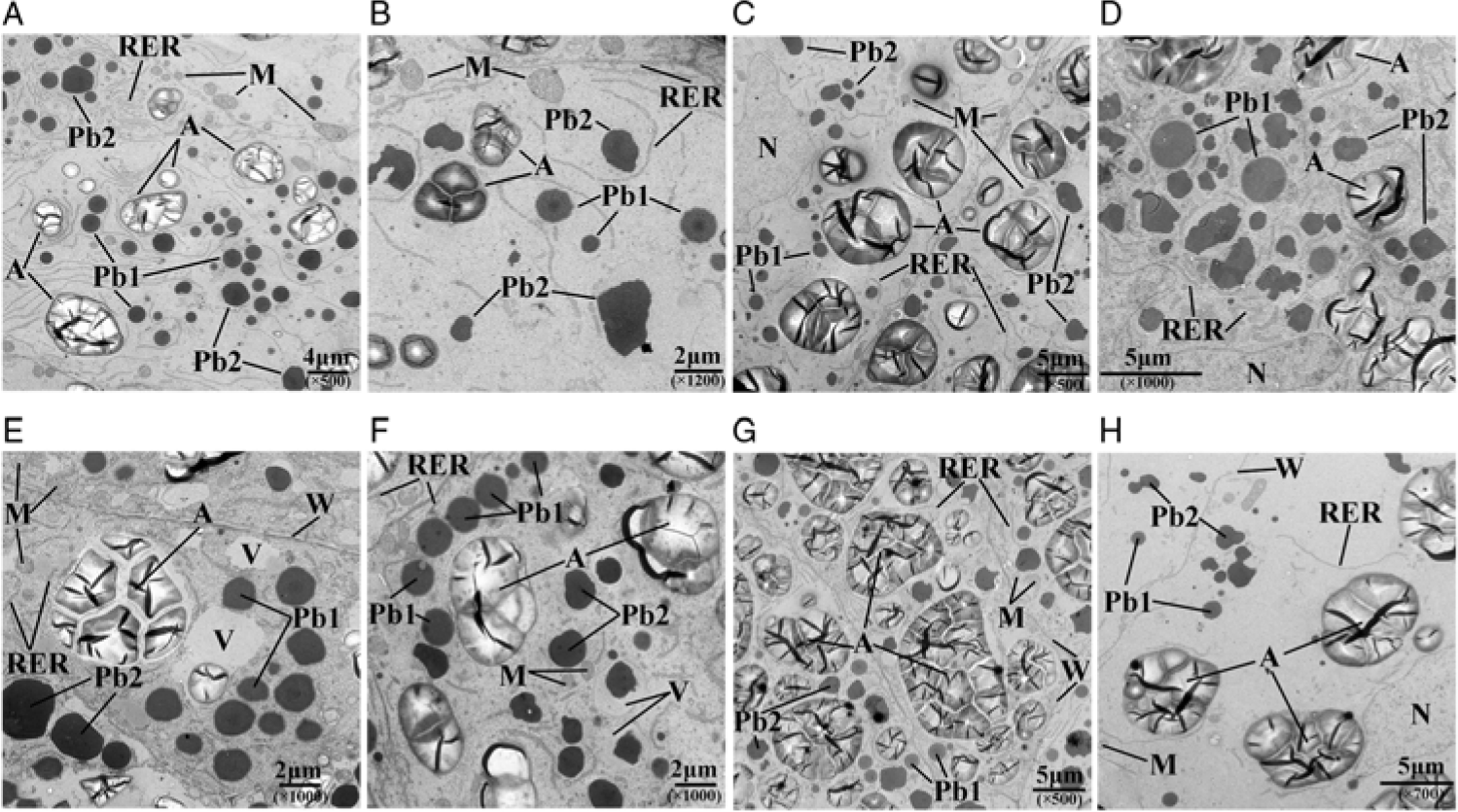
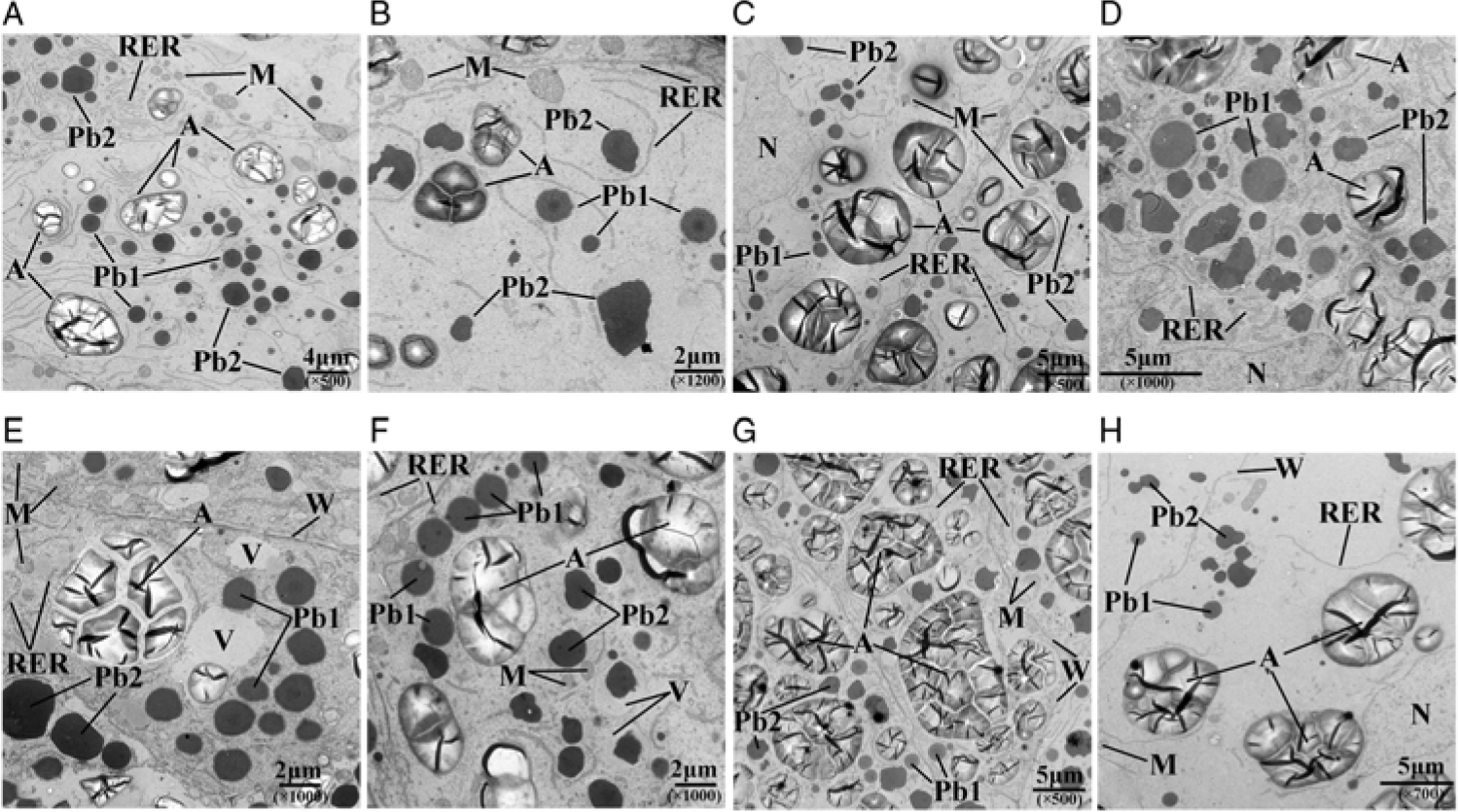
An examination of grain ultrastructure showed that weedy rice had larger amyloplasts and that the starch grains were polyhedral during the milk stage (9 DPA). At that time, the amyloplasts of cultivated rice were small, and most of the starch grains were spheroidal in shape and were still developing (Figure 4). At 9 DPA, starch grains, protein body I, and protein body II were observed in the starch endosperm cells of weedy and cultivated rice. Similar to cultivated rice, weedy rice has compound starch granules, meaning that one amyloplast contains several starch granules. The morphology and arrangement patterns of the amyloplasts varied in weedy rice and cultivated rice at 9 DPA. The amyloplasts in weedy rice were well developed, their size was much greater, and the starch grains were more sharply polygonal and compactly arranged. Conversely, the amyloplasts in the starch endosperm of cultivated rice were smaller and more spherical, indicating a more rapid starch development process in weedy rice (Figure 4). Compared with other varieties with slower grain filling, the starch granule and protein body were better developed in ‘Yangmai 16,’ which had fast grain filling (Liu et al. Reference Liu, Yu, Zhu, Liu, Zhang and Gao2017). It is worth mentioning that programmed cell death (PCD) determines the length of the cell cycle, and the speed of the PCD process determines the length of the grain-filling period and 1,000-grain weight (Wu et al. Reference Wu, Liu, Li and Liu2016).The differences in the PCD process between weedy and cultivated rice will be the focus of future research.
Ultrastructure of endosperm cells of weedy rice (Oryza sativa f. spontanea) and associated cultivated rice (ACR, Oryza sativa) at 9 d post-anthesis (DPA). (A) TZWR, weedy rice from Taizhou; (B) TZCR, cultivated rice from Taizhou; (C) YZWR, weedy rice from Yangzhou; (D) YZCR, cultivated rice from Yangzhou; (E) MMWR, weedy rice from Maoming; (F) MMCR, cultivated rice from Maoming; (G) DDWR, weedy rice from Dandong; (H) DDCR, cultivated rice from Dandong. The transverse sections of endosperm cells at 9 DPA were used for the observation of ultrastructure. A, amyloplast; Pb1, protein body I; Pb2, protein body II; RER, rough endoplasmic reticulum; V, vacuole; M, mitochondrion; N, nucleus; W, cell wall.
Endosperm Cell Division Rate
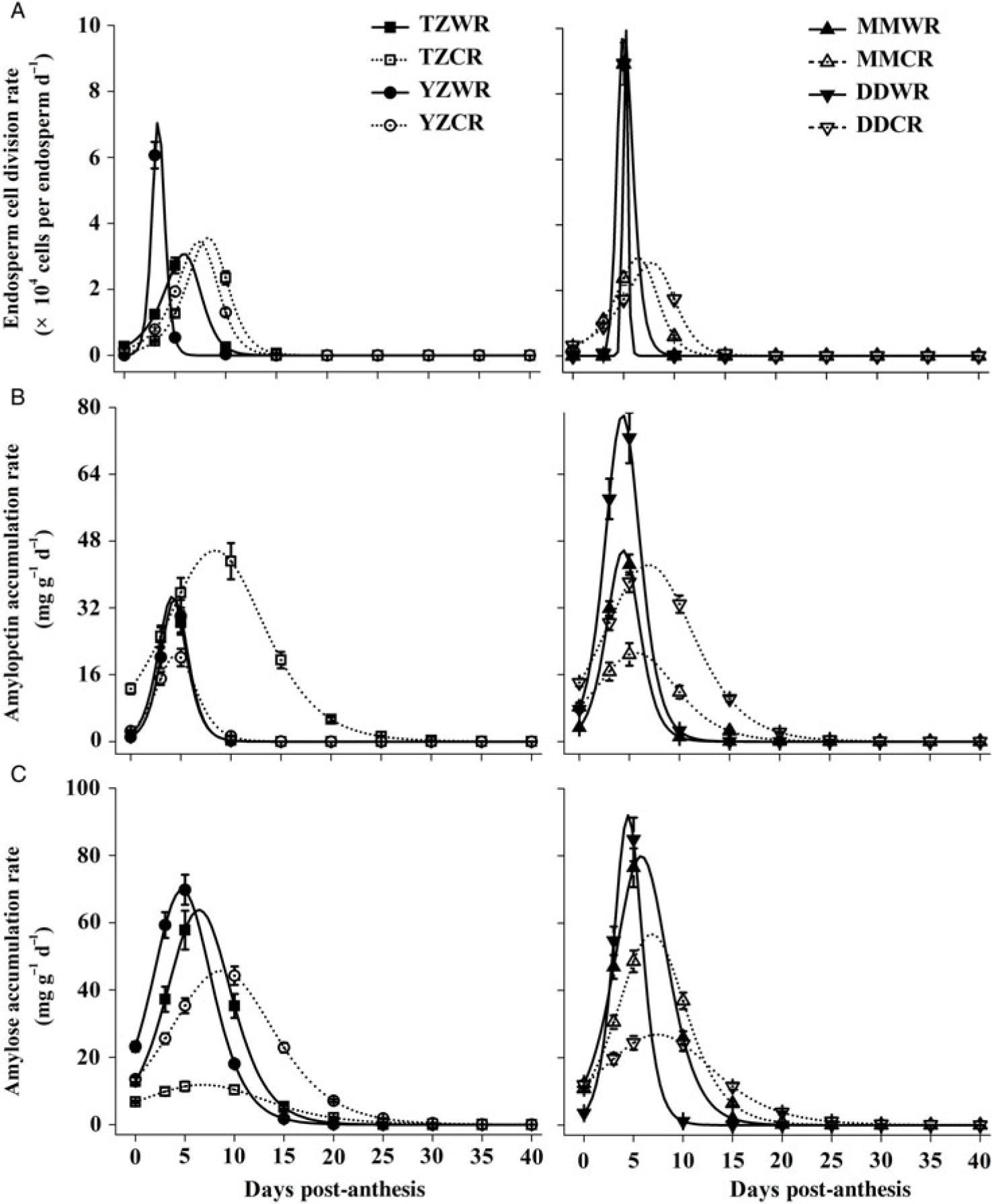
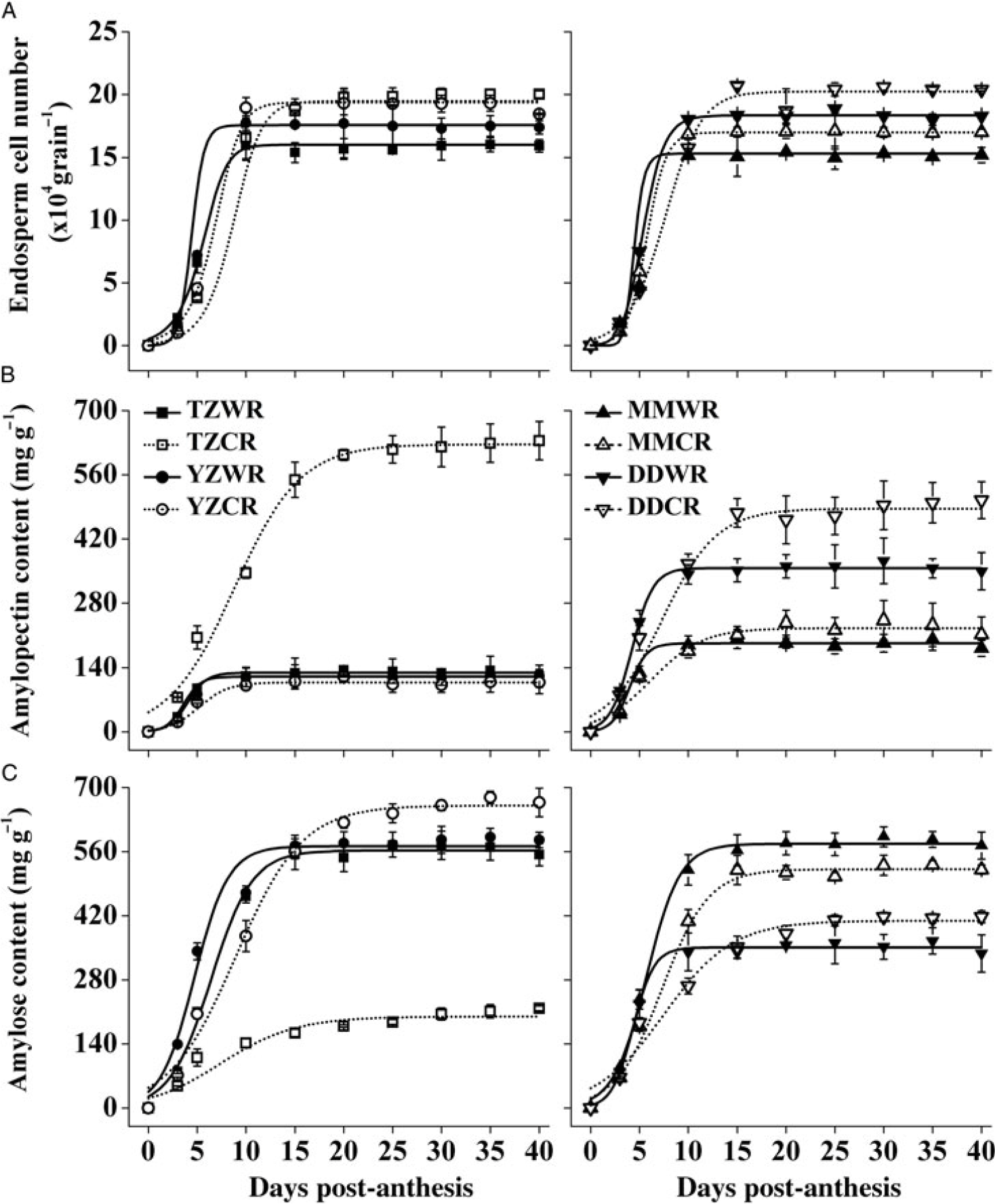
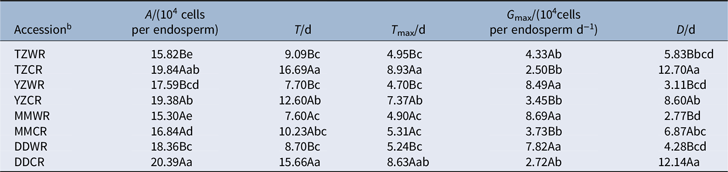
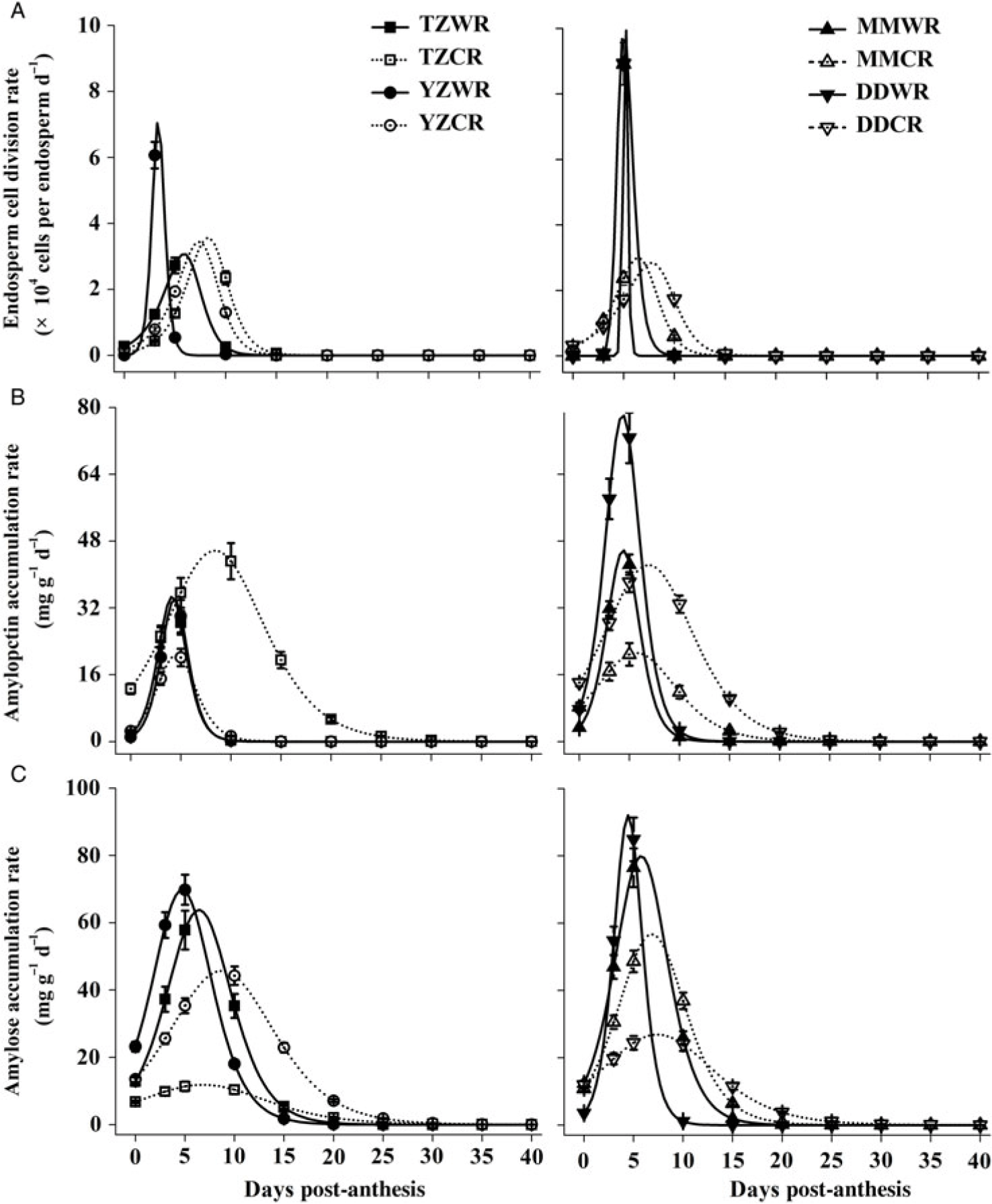
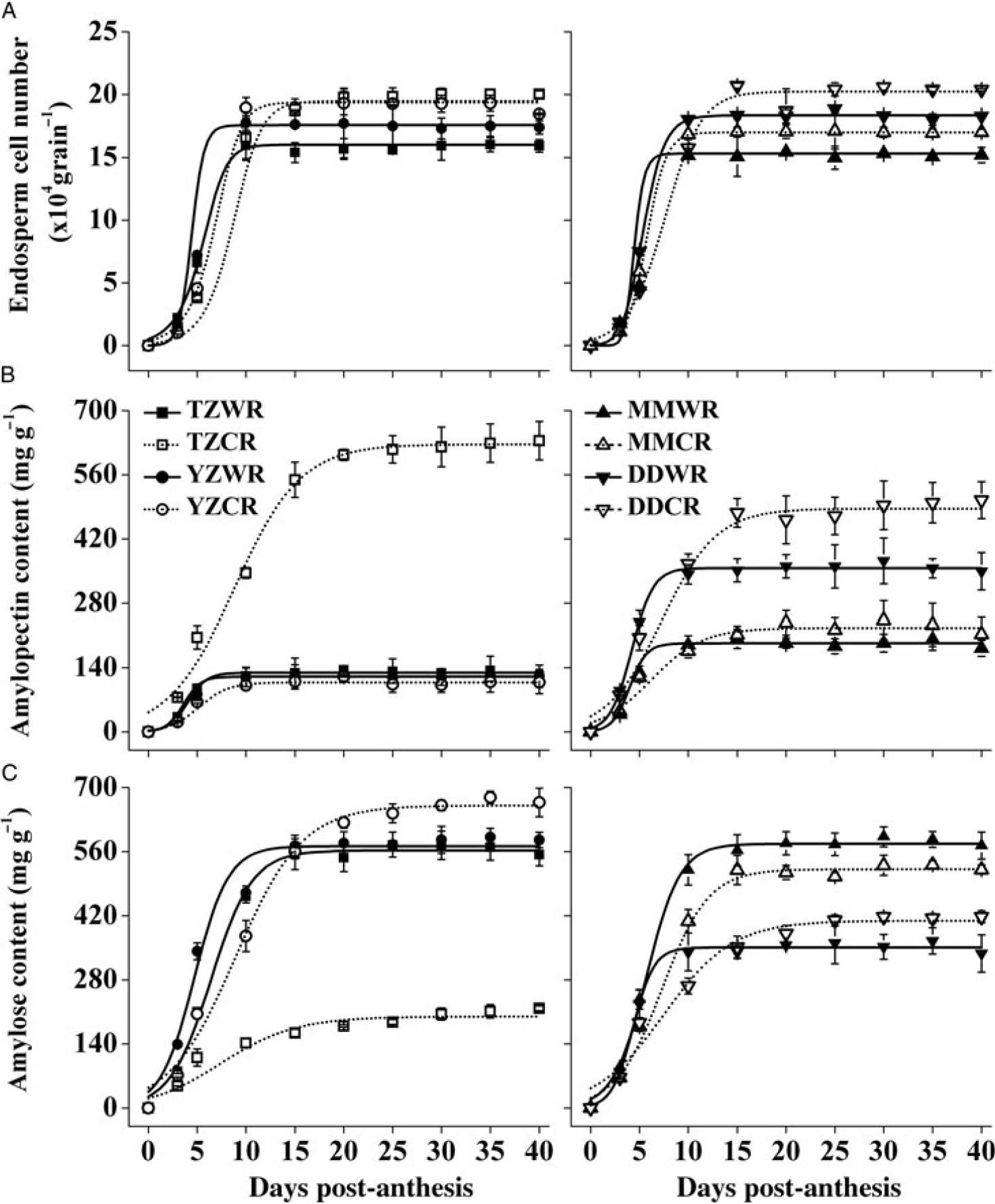
It is thought that the endosperm cell number and division activity are key factors in sink capacity, which refers to metabolic activity or the ability to absorb or assimilate (Wang et al. Reference Wang, Gu, Hirasawa, Ookawa and Yanahara2004). The capacity for endosperm cell division is the key factor in determining the size of the rice caryopsis (Chen et al. Reference Chen, Gu and Wang2009; Wang et al. Reference Wang, Gu, Hirasawa, Ookawa and Yanahara2004; Zhang et al. Reference Zhang, Wang, Xu, Lang, Cao and Zhu1998a). It has been reported that the endosperm cell division rate of superior grains is higher than that of inferior grains (Zhang et al. Reference Zhang, Wang and Zhu1998b). The proliferation of endosperm affects the accumulation of starch in the grain. In our study, we determined that the parameters of endosperm cell division characteristics varied greatly among different groups. The maximum endosperm cell number (A) in DDCR was the highest, while the A in MMWR was the lowest. The maximum endosperm cell number (A) in weedy rice was 1.5 × 10⁴ to 4.0 × 10⁴ cells fewer than that in ACR (Figures 5A and 6A; Table 2). The endosperm cell division termination time (T) in TZCR was the longest (17 d), while the T in MMWR was the shortest (8 d). TZWR, YZWR, MMWR, and DDWR terminated endosperm cell proliferation 8, 5, 3, and 7 d earlier than ACR did, respectively. The endosperm cell division termination time (T) in weedy rice was 3 to 8 d shorter than that in ACR (Figures 5A and 6A; Table 2). TZCR and DDCR took the longest time (9 d) to reach the maximum endosperm cell division rate, while TZWR and MMWR took the shortest time (5 d) to reach the maximum endosperm cell division rate, and except that MMWR and MMCR showed almost the same time to reach the maximum endosperm cell division rate, the time to reach the maximum endosperm cell division rate (T max) in weedy rice was 3 to 4 d earlier than that of ACR (Figures 5A and 6A; Table 2). The maximum rate of endosperm cell proliferation (G max) in MMWR was the highest, while the G max in TZCR was the lowest. The maximum rate of endosperm cell proliferation (G max) in weedy rice was 1.8 to 2.9 times higher than that in ACR (Figures 5A and 6A; Table 2). The active endosperm cell division period (D) of TZCR was 13 d, which was the longest compared with other populations, and the D in MMWR was 3 d, which was the shortest. The active endosperm cell division period (D) in weedy rice was 4 to 7 d shorter than that in ACR (Figures 5A and 6A; Table 2). Compared with cultivated rice, the endosperm cells of weedy rice entered the cellularization stage earlier and more rapidly. Endosperm cell proliferation mainly occurs at the cellularization stage (Wei et al. Reference Wei, Lan and Xu2002; Yu et al. Reference Yu, Zhou, Xiong and Wang2014). We determined that weedy rice had finished cellularization at 3 DPA and already stored some small starch grains in endosperm cells (Figures 3 and 4). However, the cultivated rice was still at the cellularization stage, had formed fewer cell layers, and had no starch grain stored in the endosperm at 3 DPA. This phenomenon was consistent with previous studies in which cellularization occurred at 3 to 5 DPA in cultivated rice (Wang et al. Reference Wang, Gu, Hirasawa, Ookawa and Yanahara2004, Reference Wang, Gu and Zheng2012; Wei et al. Reference Wei, Lan and Xu2002).
Endosperm cell proliferation rate (A), amylopectin accumulation rate (B), amylose accumulation rate (C) in weedy rice (Oryza sativa f. spontanea) and cultivated rice (Oryza sativa). TZWR, weedy rice from Taizhou; TZCR, cultivated rice from Taizhou; YZWR, weedy rice from Yangzhou; YZCR, cultivated rice from Yangzhou; MMWR, weedy rice from Maoming; MMCR, cultivated rice from Maoming; DDWR, weedy rice from Dandong; DDCR, cultivated rice from Dandong.
Dynamic changes in endosperm cell number (A), amylopectin content (B), and amylose content (C) in weedy rice (Oryza sativa f. spontanea) and cultivated rice (Oryza sativa). TZWR, weedy rice from Taizhou; TZCR, cultivated rice from Taizhou; YZWR, weedy rice from Yangzhou; YZCR, cultivated rice from Yangzhou; MMWR, weedy rice from Maoming; MMCR, cultivated rice from Maoming; DDWR, weedy rice from Dandong; DDCR, cultivated rice from Dandong. The upper spikelets of weedy and cultivated rice were used to measure endosperm cell number, amylopectin content, and amylose content during grain filling (3 to 40 d post-anthesis). Solid line represents weedy rice, and dashed line represents cultivated rice. The data are presented as mean ± SE (n = 3).
Endosperm cell division characteristics in weedy rice (Oryza sativa f. spontanea) and cultivated rice (Oryza sativa).a
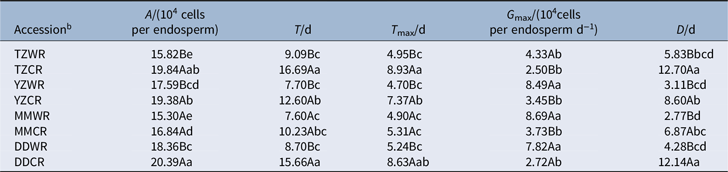
a A, maximum endosperm cell number; T, endosperm cell division termination time; T max, time to reach a maximum endosperm cell division rate; G max, maximum endosperm cell division rate; D, active endosperm cell division period. Different lowercase letters indicate statistically significant differences among the eight populations according to a Duncan’s multiple range test (P < 0.05). Different capital letters indicate statistical significance for the comparison between weedy rice and its associated cultivated rice (independent-sample t-test, P < 0.05).
b TZWR, weedy rice from Taizhou; TZCR, cultivated rice from Taizhou; YZWR, weedy rice from Yangzhou; YZCR, cultivated rice from Yangzhou; MMWR, weedy rice from Maoming; MMCR, cultivated rice from Maoming; DDWR, weedy rice from Dandong; DDCR, cultivated rice from Dandong.
It is obvious that weedy rice finishes cellularization faster than its ACR. This may be the main reason for the stronger cell proliferation vigor of weedy rice. In conclusion, the endosperm cell division rate of weedy rice was faster than that of cultivated rice. Endosperm proliferation is the basis of grain filling and starch accumulation. The strong endosperm cell proliferation ability of weedy rice shortens the grain-filling period; the grain-filling process of weedy rice is faster than that of cultivated rice, and this may be one of the physiological mechanisms of early maturity in weedy rice. Further studies are needed to reveal the mechanism of rapid cell multiplication in weedy rice.
Amylopectin and Amylose Accumulation Rates in Weedy and Cultivated Rice
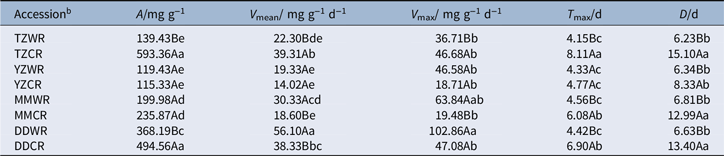
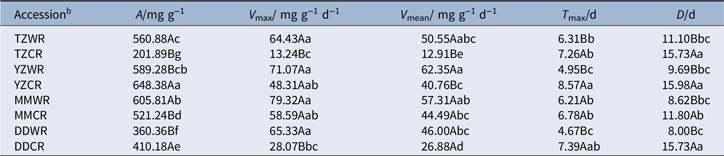
More than 90% of the storage material in the endosperm is composed of starch grains, and the endosperm development process can also be seen as a starch accumulation process (Becraft Reference Becraft2001; Guo et al. Reference Guo, Hu, Yang, Yan and Yi2014). Starch stored in the endosperm consists of amylose and amylopectin. Amylose is the main starch type in indica rice, and amylopectin is the main starch type in japonica rice (Ding Reference Ding1961), consistent with our results. DDWR, DDCR, and TZCR belong to the japonica type, and their amylopectin content is higher, while the other weedy or cultivated rice is indica, which had a higher amylose content (Tables 3 and 4). According to a previous study, endosperm cells start storing starch at 4 to 7 DPA, and the size and amount of starch increases with endosperm development (Wang et al. Reference Wang, Gu, Hirasawa, Ookawa and Yanahara2004; Zheng and Wang Reference Zheng and Wang2015). The shape of an amyloplast is spherical or elliptical during the early development stage but becomes polyhedral during later development (Liu et al. Reference Liu, Wang and Zhu2016; Xiong et al. Reference Xiong, Wang, Cheng and Wang2015; Yu et al. Reference Yu, Zhou, Xiong and Wang2014). In our study, we proved that the mean amylopectin accumulation rate (V mean) and the maximum amylopectin accumulation rate (V max) of TZWR were 17.01 mg g−1 d−1 and 9.97 mg g−1 d−1 lower than those of TZCR, respectively. The V mean and V max in weedy rice from other areas were higher than those in cultivated rice (Figure 5B; Table 3). The time to reach the maximum amylopectin accumulation rate (T max) of weedy rice was 1 to 4 d earlier than that of ACR (Figures 5B and 6B; Table 3). The active amylopectin accumulation period (D) of weedy rice was 2 to 8 d shorter than that of ACR (Figures 5B and 6B; Table 3). Among the eight populations, the final amylopectin content in MMWR was the highest, while TZCR had the lowest amylopectin content. The maximum amylose accumulation rate (V max) in weedy rice was 1.5 to 4.9 times higher than that in ACR (Figures 5C and 6C; Table 4). The mean amylose accumulation rate (V mean) in weedy rice was 1.3 to 3.9 times higher than that in ACR (Figures 5C and 6C; Table 4). The time to reach the maximum amylose accumulation rate (T max) of weedy rice was 1 to 4 d earlier than that of ACR (Figures 5C and 6C; Table 4). The active amylose accumulation period (D) of weedy rice was 3 to 8 d shorter than that of ACR (Figures 5C and 6C; Table 4). It was determined that weedy rice already had starch stored in the endosperm at 3 DPA, while cultivated rice had no starch storage. Weedy rice stored more starch grains, which were arranged more closely in the starchy endosperm than those of ACR. The amyloplasts of weedy rice developed faster than those of cultivated rice, in which the starch grains were polyhedrally shaped, while the starch grains in the amyloplasts of cultivated rice were spherical at 9 DPA, and the amyloplasts of weedy rice were larger. A faster endosperm development process promotes a shorter grain-filling period in weedy rice.
Amylopectin accumulation characteristics in weedy rice (Oryza sativa f. spontanea) and cultivated rice (Oryza sativa).a
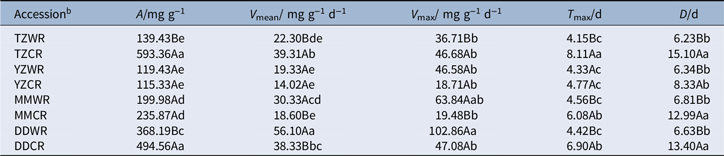
a A, final amylopectin content; V mean, mean amylopectin accumulation rate; V max, maximum amylopectin accumulation rate; T max, time to reach the maximum amylopectin accumulation rate; D, active amylopectin accumulation period. Different lowercase letters indicate statistically significant differences among the eight populations according to a Duncan’s multiple range test (P < 0.05). Different capital letters indicate statistical significance for the comparison between weedy rice and its associated cultivated rice (independent-sample t-test, P < 0.05).
b TZWR, weedy rice from Taizhou; TZCR, cultivated rice from Taizhou; YZWR, weedy rice from Yangzhou; YZCR, cultivated rice from Yangzhou; MMWR, weedy rice from Maoming; MMCR, cultivated rice from Maoming; DDWR, weedy rice from Dandong; DDCR, cultivated rice from Dandong.
Amylose accumulation characteristics in weedy rice (Oryza sativa f. spontanea) and cultivated rice (Oryza sativa).a
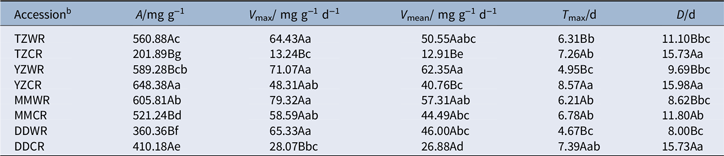
a A, final amylopectin content; V mean, mean amylose accumulation rate; V max, maximum amylose accumulation rate; T max, time to reach the maximum amylose accumulation rate; D, active amylose accumulation period. Different lowercase letters indicate statistically significant differences among the eight populations according to a Duncan’s multiple range test (P < 0.05). Different capital letters indicate statistical significance for the comparison between weedy rice and its associated cultivated rice (independent sample t-test, P < 0.05).
b TZWR, weedy rice from Taizhou; TZCR, cultivated rice from Taizhou; YZWR, weedy rice from Yangzhou; YZCR, cultivated rice from Yangzhou; MMWR, weedy rice from Maoming; MMCR, cultivated rice from Maoming; DDWR, weedy rice from Dandong; DDCR, cultivated rice from Dandong.
Temperature can affect rice grain filling. Low temperatures can reduce both the rate and duration of grain filling, inhibiting the accumulation of storage proteins, minerals, and amino acids (Nayyar et al. Reference Nayyar, Kaur, Kumar and Upadhyaya2007). Many studies showed that high temperature accelerated the filling rate of rice grain at the early filling stage (Ahmed et al. Reference Ahmed, Tetlow, Nawaz, Iqbal, Mubin, Rehman, Butt, Lightfoot and Maekawa2015; Kim et al. Reference Kim, Shon, Lee, Yang, Yoon, Yang, Kim and Lee2011; Morita et al. Reference Morita, Yonemaru and Takanashi2005). In our study, weedy rice and cultivated rice were planted in the same environment at the same time, and the plant traits of weedy rice were typical weedy characteristics (Supplementary Tables S1 and S2). From sowing to flowering, they were at the same temperature, and the flowering time of weedy rice was earlier than that of cultivated rice (Supplementary Table S3), consistent with our previous study (Zhao et al. Reference Zhao, Xu, Song, Dai, Dai, Zhang and Qiang2018). Furthermore, we surveyed the maximum and minimum temperature of weedy rice and cultivated rice during their growth periods (Figure 1) and found that the temperature difference between weedy rice and cultivated rice was greatly reduced during the grain-filling stage (Supplementary Figure S1). Therefore, temperature did not cause the difference in grain filling between weedy rice and cultivated rice. It has been reported that higher enzyme activity of starch synthase is an important basis for high endosperm cell division and starch accumulation rates (Dong et al. Reference Dong, Xie, Qiao, Liu, Wu, Zhao and Yang2011; Hannah and James Reference Hannah and James2008; James et al. Reference James, Denyer and Myers2003; Wang et al. Reference Wang, Xu, Chen, Zhang, Yang and Zhang2015). The activities of sucrose synthase, ADP-glucose pyrophosphorylase, and starch branching enzyme and the expression levels of SuS2, SuS3, AGPS1, AGPS2b, AGPL2, SSSIIa, SSSIIb, SSSIIc, and SBEI play an important role in the process of endosperm development and were significantly and positively correlated with the grain-filling rate (Wang et al. Reference Wang, Xu, Chen, Zhang, Yang and Zhang2015). In addition, plant hormones play vital roles in regulating endosperm cell division and starch accumulation. Reports have shown that the levels of auxins, cytokinins, gibberellins, and abscisic acid promote grain filling and are positively and significantly correlated with the endosperm cell proliferation rate and starch accumulation rate during grain filling, whereas ethylene inhibits grain filling (Chen et al. Reference Chen, Xu, Wang, Wang, Yang and Zhang2013; Jing et al. Reference Jing, Xu, Lu, Yuan, Wang and Yang2013; Yang et al. Reference Yang, Zhang, Wang, Zhu and Wang2001; Zhu et al. Reference Zhu, Ye, Yang, Peng and Zhang2011). In view of this, it is necessary to compare the changes in key enzyme activity and hormone content between weedy rice and cultivated rice at the grain-filling stage, which is of great value for further understanding the physiological mechanism of rapid grain filling in weedy rice.
The early maturity of weedy rice is a well-known trait (Zhao et al. Reference Zhao, Xu, Song, Dai, Dai, Zhang and Qiang2018; Ziska et al. Reference Ziska, Gealy, Burgos, Caicedo, Gressel, Lawton-Rauh, Avila, Theisen, Norsworthy, Ferrero, Vidotto, Johnson, Ferreira, Marchesan, Menezes, Cohn, Linscombe, Carmona, Tang and Merotto2015). In this study, we determined that the endosperm development process of weedy rice is faster than that of cultivated rice. It is important to control weedy rice. Spraying grain-filling inhibitors to control weedy rice, which results in poor weedy rice grain development without affecting the flowering and grain filling of cultivated rice, should be a good weed management choice. Chen et al. (Reference Chen, Xu, Wang, Wang, Yang and Zhang2013) showed that spraying ethephon or 1-aminocyclopropane-1-carboxylic acid and methylglyoxal (bisguanythdrazone) inhibited grain filling. It is important to develop and screen endosperm development inhibitors. Targeted and integrated management of weedy rice can be carried out by strengthening quality control for cultivated rice seeds, changing direct sowing to transplanting, and reducing the soil seedbank of weedy rice. These management links should not be neglected, and integrated management control of weedy rice should be achieved step by step. The physiological mechanism by which hormones regulate endosperm development and starch accumulation remains to be further studied, and our results provide a theoretical basis for future integrated management strategies for weedy rice.
In summary, the endosperm development process of weedy rice is faster than that of cultivated rice. The caryopses, endosperm cells, and starch grains of weedy rice grow and develop more quickly than those of cultivated rice. The rapid development of endosperm cells and faster starch accumulation lead to the shorter grain-filling period in weedy rice. A better understanding of the mechanisms involved in endosperm development will improve the design of management strategies for weedy rice.
Acknowledgments
This research was financially supported by grants from the National Special Transgenic Project of China (2016ZX08012005), the National Key Research and Development Program (2016YFD0200805), the Recruitment Program of Foreign Experts of Jiangsu Province, and the 111 project. The authors thank Yunfan Kong and Binqiang Wang for their assistance with the experiments. No conflicts of interest have been declared.
Supplementary material
To view supplementary material for this article, please visit https://doi.org/10.1017/wsc.2020.5