



















1 Introduction
One of the major areas of research in descriptive set theory is to investigate Polish groups and their group actions, while using the notion of Borel reducibility to characterize the relative complexity of equivalence relations.
Given a continuous action of a Polish group G on some Polish space X, we call X a Polish G-space. This can induce an orbit equivalence relation
$E_G^X$
 , which is an analytic equivalence relation. The orbit equivalence relations are the most important class of equivalence relations, which emerge in many branches of mathematics. A very prevalent phenomenon is that the structural properties of Polish groups G can affect the Borel complexity of the orbit equivalence relations
$E_G^X$
 . For instance, Dougherty, Jackson, and Kechris showed that a countable Borel equivalence relation is hyperfinite if and only if it is an equivalence relation induced by some
$\mathbb Z$
 -action (see [Reference Dougherty, Jackson and Kechris11]); Solecki [Reference Solecki27] proved that a Polish group G is compact if and only if
$E_G^X$
 is smooth for any Polish G-space X; Kechris [Reference Kechris21] proved that if G is a locally compact Polish group, then
$E_G^X$
 is essentially countable for any Polish G-space X; Gao and Jackson [Reference Gao and Jackson14] proved that if G is a countable discrete abelian group, then
$E_G^X$
 is hyperfinite for any Polish G-space X; Hjorth’s turbulence theory [Reference Hjorth16] asserts that orbit equivalence relations induced by turbulent actions are not Borel reducible to
$E_{S_\infty }^X$
 for any Polish
$S_\infty $
 -space X; the orbit equivalence relation generated by a continuous action of a CLI Polish group on a Polish space X is pinned, which implies that any non-pinned Borel equivalence relation is not Borel reducible to
$E_G^X$
 for any CLI Polish group G (see [Reference Kanovei20, Section 17]).
An important part of the study of equivalence relations is concerned with the structure of countable Borel equivalence relations, that is, those Borel equivalence relations all of whose classes are countable. These equivalence relations are actually precisely the equivalence relations induced by countable discrete groups (see Feldman–Moore Theorem [Reference Gao13, Theorem 7.1.4]), and they have important connections with group theory, dynamical systems, and operator algebras. Under certain circumstances, when a countable group acts preserving a probability measure, the equivalence relation associated with the action together with the measure encode significant information about the group (and the action). To be precise, given a countable discrete group
$\Gamma $
 , we let
$E_\Gamma $
 be the orbit equivalence relation induced by shift action of
$\Gamma $
 on the free part of
$\{0,1\}^\Gamma $
 , then the Borel complexity of the relation
$E_\Gamma $
 can reflect the properties of the group
$\Gamma $
 . For instance, if
$E_\Gamma $
 is hyperfinite, then
$\Gamma $
 is amenable, that is, there is a left-invariant finitely additive probability measure
$\mu $
 on
$\Gamma $
 (see [Reference Gao13, Section 7.4]). Let S be a countable group with no nontrivial finite normal subgroups and let
$\Gamma =\mathrm {SL_3}\mathbb {(Z)}\times S$
 . Suppose
$\Lambda $
 is a countable group. Thomas proved that
$E_\Gamma $
 is Borel reducible to
$E_\Lambda $
 if and only if
$\Gamma $
 embeds into
$\Lambda $
 (see [Reference Thomas28, Corollary 3.8]). So we can think that the equivalence relation
$E_\Gamma $
 captures the algebraic structure of
$\Gamma $
 very well.
Generally, one might ask the following question.
Problem 1. Can we characterize structures and properties of Polish groups through the study of equivalence relations?
We provided a possible answer to Problem 1 for general Polish groups. Beginning in [Reference Ding and Zheng8], we introduced a kind of orbit equivalence relations. Given a Polish group G, we define an equivalence relation
$E(G)$
 on
$G^\omega $
 as, for
$x,y\in G^\omega $
 ,

We say that
$E(G)$
 is the equivalence relation induced by G.
We achieved a series of research results on the Borel reducibility among equivalence relations
$E(G)$
 . These results establish close connections between the Borel complexity of
$E(G)$
 and the structural properties of G. This makes us believe that the research around
$E(G)$
 can help us gain a deeper understanding of Borel reducibility and it is worth exploring further. We list some main results.
The study of equivalence relations induced by Polish groups can distinguish Polish groups very well. For instance, we can compare them with some benchmark equivalence relations:
$E_0,E_0^\omega $
 ,
$=^+$
 and
${\mathbb {R}}^\omega /c_0$
 (the definitions of these benchmark equivalence relations are left for the next section).
Theorem 1.1. Let G be a Polish group, then we have
-
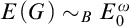
(1) G is a discrete countable group containing at least two elements iff $E(G)\sim _BE_0$
 ;
-
(2) G is non-archimedean iff $E(G)\le _B=^+$
.


Using these notions such as right embedability, turbulence, and additive reduction, we proved the following theorem.
Theorem 1.2. Let G and H be two Polish groups. Then we have:
-
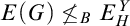
(1) If H is CLI but G is not, then $E(G)\not \le _BE_H^Y$
for any Polish H-space Y. -
(2) If H is non-archimedean but G is not, then $E(G)\not \le _BE_H^Y$
for any Polish H-space Y. -
(3) If H is TSI but G is not, then $E(G)\not \le _B E(H)$
.


The Borel complexity of
$E(G)$
 can characterize non-archimedean TSI Polish groups. The equivalence relation
$E_0^\omega $
 is precisely the Borel complexity of equivalence relations induced by TSI uncountable non-archimedean Polish groups.
Theorem 1.3. Let G be a Polish group. Then the following are equivalent:
-
(1) G is TSI non-archimedean;
-
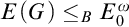
(2) $E(G)\leq _B E_0^\omega $
; -
(3) $E(G)\leq _B {\mathbb {R}}^\omega /c_0$
.


In particular,
$E(G)\sim _B E_0^\omega $
 iff G is TSI uncountable non-archimedean.
We introduced the notion of
$\alpha $
 -l.m.-unbalanced Polish groups for
$\alpha <\omega _1$
 (“l.m.” stands for left multiplication.) and obtained the following.
Theorem 1.4. Let
$G,H$
 be Polish groups,
$0<\alpha <\omega _1$
 . If G is
$\alpha $
 -l.m.-unbalanced but H is not, then
$E(G)\not \le _B E(H)$
 .
For TSI Polish groups, we proved a Pre-rigid Theorem. (The statement of this theorem is too lengthy to include in Section 1.) The reader can see Theorem 5.2. The Pre-rigid Theorem and all its applications involve a notion named strongly NSS Polish groups.
For a topological group G,
$(g_n)\in G^\omega $
 and
$h\in G$
 , we shall use the symbol
$g_n\nrightarrow h$
 to express that
$\neg (\lim _n g_n=h)$
 . A Polish group G is called strongly NSS if there exists an open neighborhood V of
$1_G$
 in G such that

Several applications of the Pre-rigid Theorem are listed below.
Theorem 1.5 (Rigid Theorem for locally compact TSI groups).
Let G be a locally compact connected TSI Polish group, H a TSI pro-Lie Polish group. Then
$E(G)\leq _B E(H)$
 iff there exists a continuous homomorphism
$S:G\rightarrow H$
 such that
$\ker (S)$
 is non-archimedean.
In particular, we obtained a complete answer for abelian connected Lie groups. Recall that
${\mathbb {T}}$
 is the multiplicative group of all complex numbers with modulus
$1$
 .
Theorem 1.6. Let
$b_0,e_0,b_1,e_1\in {\mathbb {N}}$
 , then
$E({\mathbb {R}}^{b_0}\times {\mathbb {T}}^{e_0})\le _BE({\mathbb {R}}^{b_1}\times {\mathbb {T}}^{e_1})$
 iff
$e_0\le e_1$
 and
$b_0+e_0\le b_1+e_1$
 .
All separable Fréchet spaces, that is, separable completely metrizable topological vector spaces, can be viewed as abelian Polish groups under the addition operation.
Theorem 1.7 (Rigid Theorem for Fréchet spaces).
Let
$X,Y$
 be two separable Fréchet spaces such that Y is a closed subgroup of the product of a sequence of TSI strongly NSS Polish groups. Then
$E(X)\leq _B E(Y)$
 iff X is topologically isomorphic to a closed linear subspace of Y.
All separable Banach spaces are Fréchet spaces. A separable Banach space X is not strongly NSS iff it has a closed linear subspace topologically isomorphic to
$c_0$
 . This implies the following theorem.
Theorem 1.8 (Rigid Theorem for Banach spaces).
Let
$X,Y$
 be two separable Banach spaces such that Y contains no closed linear subspaces topologically isomorphic to
$c_0$
 . Then
$E(X)\leq _B E(Y)$
 iff X is topologically isomorphic to a closed linear subspace of Y.
Let
$\mathrm {Fin}$
 denote the set of all finite subsets of
$\omega $
 . For
$A,B\subseteq \omega $
 , we use
$A\subseteq ^* B$
 to denote
$A\setminus B\in \mathrm {Fin}$
 . The partially ordered set
$(P(\omega ),\subseteq ^*)$
 is written
$P(\omega )/\text {Fin}$
 .
Theorem 1.9. Let
$n\in \mathbb {N}^+$
 . Then there are compact connected abelian Polish groups
$(G_A)_{ A\subseteq \omega }$
 such that
$E({\mathbb {R}}^n)<_B E(G_A)<_B E({\mathbb {T}}^n)$
 and for
$A,B\subseteq \omega $
 , we have

In this article, we give a survey of the study of
$E(G)$
 . These results can be found in [Reference Ding and Zheng8–Reference Ding and Zheng10, Reference Zheng30]. We discuss some important theorems about
$E(G)$
 and the techniques for proving them. It is our aim to convey to the reader a series of interesting results and challenging problems. In Section 2, we recall some basic notions and results concerning Borel equivalence relations and Polish groups. In Section 3, we discuss the basic properties of
$E(G)$
 and present some theorems characterizing the properties of Polish groups. These properties include CLI, non-archimedean, and TSI. We mainly discuss Theorems 1.1–1.3. In Section 4, we introduce the notion of
$\alpha $
 -l.m.-unbalanced Polish groups, which can be used to prove some Borel irreducibility results. We mainly discuss Theorem 1.4. In Section 5, we present a Pre-rigid Theorem. That is, the existence of Borel reduction between
$E(G)$
 and
$E(H)$
 is transformed into the existence of a well-behaved continuous mapping between G and H. In addition, we provide some applications of the Pre-rigid Theorem. We shall discuss Theorems 1.5–1.9. In Section 6, we give some further open questions and additional remarks.
2 Preliminaries
A topological space is Polish if it is separable and completely metrizable. Let
$X,Y$
 be two Polish spaces, E and F equivalence relations on X and Y, respectively. We say a map
$f:X\rightarrow Y$
 is an
$(E,F)$
 -homomorphism iff for every
$x,y\in X,$
 if
$xEy$
 , then
$f(x)Ff(y)$
 . Moreover, f is called a reduction of E to F if it satisfies
$xEy$
 iff
$ f(x)F f(y)$
 for any
$x,y\in X$
 . We say that E is Borel reducible to F, denoted by
$E\leq _B F$
 , if there exists a Borel reduction of E to F. We write
$E\sim _B F$
 if both
$E\leq _B F$
 and
$F\leq _B E$
 hold; and write
$E<_B F$
 if
$E\leq _B F$
 and
$F\nleq _B E$
 . For more details on Borel reducibility and descriptive set theory, we refer to [Reference Gao13, Reference Kanovei20, Reference Kechris22].
A topological group is Polish if its topology is Polish. Let
$a:G\times X\to X$
 be a continuous action of a Polish group G on a Polish space X. For brevity, we write
$gx$
 in place of
$a(g,x)$
 . For each
$x\in X$
 , the G-orbit of x, denoted by
$[x]$
 or
$Gx$
 , is the set
$\{gx:g\in G\}$
 . A subset A of X is G-invariant if
$Gx\subseteq A$
 for each
$x\in A$
 . The orbit equivalence relation, denoted by
$E_G^X$
 , is given by

A Polish group is non-archimedean if it has a neighborhood basis of the identity element consisting of open subgroups. A metric d on a group G is left-invariant if
$d(gh,gk)=d(h,k)$
 for all
$g,h,k\in G$
 ; we also define right-invariant metric similarly. We say that d is two-sided invariant if it is both left-invariant and right-invariant. A Polish group G is CLI if it admits a compatible complete left-invariant metric; and say G is TSI if it admits a compatible complete two-sided invariant metric. Clearly, every TSI Polish group is also CLI. All compact or abelian Polish groups are TSI, and all locally compact Polish groups are CLI.
Now we recall some benchmark equivalence relations in the research of Borel reducibility. The equivalence relation
$E_0$
 on
$2^\omega $
 is defined as

If E is an equivalence relation on a Polish space X, then we define equivalence relations
$E^\omega $
 and
$E^+$
 on
$X^\omega $
 as


We pay special attention to
$E_0^\omega $
 and
$\mathrm {id}(\omega ^\omega )^+$
 (denoted by
$=^+$
 for brevity). The equivalence relation
${\mathbb {R}}^\omega /c_0$
 on
${\mathbb {R}}^\omega $
 is defined as

3 Equivalence relations induced by Polish groups
In this article, all groups are assumed to contain at least two elements. The addition operation of an abelian group is denoted by
$+$
 , and its identity element is denoted by
$0$
 . Unless otherwise specified, for any abstract topological group G, we use multiplicative notation to express the group operation, and
$1_G$
 to express the identity element of G.
Given a topological group G, the connected component of
$1_G$
 is denoted by
$G_0$
 , which is clearly a closed normal subgroup of G (see [Reference Bourbaki4, Proposition III.2.8]). Any open subgroup H of a topological group G is also closed, since
$H=G\setminus \{gH:g\notin H\}$
 .
3.1 Basic properties
Definition 3.1 [Reference Ding and Zheng8].
Let G be a Polish group. We define an equivalence relation
$E(G)$
 on
$G^\omega $
 as

for
$x,y\in G^\omega $
 .
We say that
$E(G)$
 is the equivalence relation induced by G. They are
${\Pi }_3^0$
 equivalence relations. Moreover,
$E(G)$
 is an orbit equivalence relation. To see this, let d be a compatible metric on G and let
$c(G)$
 be the group consisting of all convergent sequences in G. We define the supremum metric as
$d_u(x,y)=\sup \{d(x(n),y(n)):n\in \omega \}$
 for
$x,y\in G^\omega $
 . Then
$(c(G),d_u)$
 is also a Polish group. Therefore,
$E(G)$
 is the orbit equivalence relation induced by
$c(G)\curvearrowright G^\omega $
 , the action of left multiplication of
$c(G)$
 on
$G^\omega $
 . If G is CLI (TSI, or non-archimedean), so is
$c(G)$
 .
Based on the definition of
$E(G)$
 , we got the following proposition.
Proposition 3.2 [Reference Ding and Zheng8].
Let G and H be two Polish groups. If G is topologically isomorphic to a closed subgroup of H, then
$E(G)\le _BE(H)$
 .
Focusing on several groups with relatively simple structures such as countable discrete group, we established the following theorem.
Theorem 3.3 [Reference Ding and Zheng8].
-
(1) Let G be a countable discrete group containing at least two elements, then $E(G)\sim _BE_0$
. -
(2) Let G be an uncountable Polish group, then $E_0^\omega \le _BE(G)$
. -
(3) Let G be a TSI non-archimedean uncountable Polish group, then $E(G)\sim _BE_0^\omega $
. -
(4) Let G be a non-archimedean Polish group, then $E(G)\le _B=^+$
. -
(5) $E(S_\infty )\sim _B =^+$
.


As an application of Theorem 3.3, the Borel complexity of
$E(G)$
 can be used to characterize countable discrete groups: G is a countable discrete group containing at least two elements iff
$E(G)\sim _BE_0$
 . To see this, if G is a countable discrete group containing at least two elements, then by Theorem 3.3(1), we have
$E(G)\sim _BE_0$
 . On the other hand, suppose
$E(G)\sim _BE_0$
 , from that
$E_0^\omega \nleq _B E_0$
 (cf. [Reference Gao13, Theorem 8.5.2]), by Theorem 3.3(2), we know that G is countable. Therefore, G is a countable discrete group containing at least two elements.
This also indicates that the Borel complexity of
$E(G)$
 can well describe the structure of the G.
In addition, we considered equivalence relations induced by some quotient groups. We need the following definition.
Definition 3.4. Let G be a Polish group. We define equivalence relation
$E_*(G)$
 on
$G^\omega $
 as, for
$x,y\in G^\omega $
 ,

It is easy to check that
$E(G)\sim _B E_*(G)$
 (see [Reference Ding and Zheng9]). It turns out that, for TSI Polish groups,
$E_*(G)$
 is a more convenient research object than
$E(G)$
 . Let G be a TSI Polish group and d a compatible complete two-sided invariant metric on G, then

for
$x,y\in G^\omega $
 . The relation
$(*)$
 is crucial in the proof of many theorems.
Ding [Reference Ding6] defined the equivalence relations
$E(M;0)$
 . For any metric space
$(M,d)$
 , the
$E(M;0)$
 is an equivalence relation on
$M^\omega $
 with

for
$x,y\in M^\omega $
 . If G is a Polish group, then the definition of
$E(G;0)$
 is independent of the choice of left-invariant compatible metric d on G, since
$d(x(n),y(n))\to 0$
 iff
$x(n)^{-1}y(n)\to 1_G$
 . If G is a TSI Polish group, then

the corresponding Borel reduction is
$\theta :G^\omega \times G^\omega \to G^\omega $
 with
$\theta (x,x')(n)=x(k)$
 for
$ n=2k$
 ; and
$\theta (x,x')(n)=x(k)x'(k)$
 for
$n=2k+1$
 .
Definition 3.5. Given two sets
$X,Y$
 and a map
$S:X\to Y$
 , we define two maps
$S^\omega :X^\omega \to Y^\omega $
 and
$S^\#:X^\omega \to Y^\omega \times X^\omega $
 as, for
$x\in X^\omega $
 and
$n\in \omega $
 ,


Proposition 3.6 [Reference Ding and Zheng10].
Let G and H be two TSI Polish groups, and let
$S:G\to H$
 . Then the following are equivalent:
-
(1) For all $x,y\in G^\omega $
, if
$\lim _nx(n)^{-1}y(n)=1_G$
, then $$ \begin{align*}xE_*(G)y\iff S^\omega(x)E_*(H)S^\omega(y).\end{align*} $$
-
(2) $S^\#$
is a reduction of
$E_*(G)$
to
$E_*(H)\times E(G;0)$
.


We can directly verify the equivalence of (1) and (2) of the proposition. Using the above results, we got the following theorem.
Theorem 3.7 [Reference Ding and Zheng8].
Let
$G,H,K$
 be three TSI Polish groups. Suppose
$\psi :G\to H$
 and
$\varphi :H\to K$
 are continuous homomorphisms with
$\varphi (\psi (G))=K$
 such that
$\ker (\varphi \circ \psi )$
 is non-archimedean. If the interval
$[0,1]$
 embeds into H, then
$E(G)\le _BE(H)$
 .
The key idea of the proof is as follows. First, we verify that
$\psi ^\#$
 witnesses that
$E_*(G)\le _BE_*(H)\times E(G;0)$
 . This can be done by the condition that
$\ker (\varphi \circ \psi )$
 is non-archimedean. Secondly, we check that
$E(G;0)\leq _BE(H;0)$
 . It follows from [Reference Ding6, Theorem 3.4(ii)] that
$E(G;0)\le _BE([0,1];0)$
 . Let
$f:[0,1]\to H$
 be an embedding. Then
$E([0,1];0)\sim _BE(f([0,1]);0)\le _BE(H;0)$
 . So
$E(G;0)\leq _BE(H;0)$
 and thus
$E(G)\leq _BE(H)\times E(H;0)\leq _BE(H)$
 .
A similar argument can deduce that the next statement is true.
Lemma 3.8 [Reference Ding and Zheng10].
Let
$G,H$
 be two TSI Polish groups such that
$E_*(G)\le _B E_*(H)\times E(G;0)$
 . If the interval
$[0,1]$
 can be embedded into H, or
$E(G;0)\le _B E(H;0)$
 holds, then we have
$E_*(G)\le _B E_*(H)$
 .
Let
${\mathbb {T}}$
 be the multiplicative group of all complex numbers with modulus
$1$
 . Then
${\mathbb {T}}={\mathbb {R}}/{\mathbb {Z}}$
 and Theorem 3.7 tells us that
$E({\mathbb {R}})\leq _B E({\mathbb {T}})$
 .
3.2 CLI, non-archimedean, and TSI Polish groups
In this section, we focus on three class of Polish groups: CLI, non-archimedean, and TSI.
3.2.1 CLI Polish groups
Lupini and Panagiotopoulos [Reference Lupini and Panagiotopoulos24] introduced a notion of right embedability for proving that an orbit equivalence relation is not Borel reducible to any
$E_H^Y$
 , where H is a CLI Polish group.
Definition 3.9 (Lupini–Panagiotopoulos [Reference Lupini and Panagiotopoulos24]).
Let G be a Polish group,
$(g_n)$
 a sequence in G. We say that
$(g_n)$
 is right Cauchy if
$\lim _{m,n}g_mg_n^{-1}=1_G$
 .
Let X be a Polish G-space and
$x,y\in X$
 . We say that x is right embeddable into y, denoted by
$x\stackrel {r}{\to }y$
 , if there exists a right Cauchy sequence
$(h_n)$
 in G such that
$h_ny\to x$
 .
The relation of right embeddability is invariant, that is, if
$x\stackrel {r}{\to }y$
 , then
$gx\stackrel {r}{\to }hy$
 for any
$g,h\in G$
 . Lupini and Panagiotopoulos showed the following theorem.
Theorem 3.10 (Lupini–Panagiotopoulos [Reference Lupini and Panagiotopoulos24]).
Suppose that X is a Polish G-space. If for any G-invariant dense
$G_\delta $
 subset C of X there exist
$x,y\in C$
 with different G-orbits such that
$x\stackrel {r}{\to }y$
 , then for any G-invariant dense
$G_\delta $
 subset D of X the relation
$E_G^D$
 is not Borel reducible to any
$E_H^Y$
 , where H is a CLI Polish group.
By Theorem 3.10, we obtained the following result.
Theorem 3.11 [Reference Ding and Zheng8].
Let G be a non-CLI Polish group and H a CLI Polish group. Then for any Polish H-space Y, we have
$E(G)\not \le _BE_H^Y$
 . In particular,
$E(S_\infty )\not \le _BE(H)$
 .
The key idea of the proof is as follows. Since G is not CLI, we can find a right Cauchy sequence
$(g_n)$
 in G such that
$(g_n)$
 do not converges. We define
$z\in G^\omega \setminus c(G)$
 as
$z(n)=g_n$
 for each
$n\in \omega $
 . For any G-invariant dense
$G_\delta $
 subset C of
$G^\omega $
 , we let
$x\in C\cap zC$
 and
$y=z^{-1}x\in C$
 . Then
$x\stackrel {r}{\to }y$
 . Theorem 3.10 tells us that
$E(G)\not \le _BE_H^Y$
 . Again since
$c(H)$
 is CLI but
$c(S_\infty )$
 is not,
$E(S_\infty )\not \le _BE(H)$
 .
3.2.2 Non-Archimedean Polish groups
Hjorth founded the theory of turbulence for proving that an orbit equivalence relation is not Borel reducible to
$E_{S_\infty }^Y$
 for any Polish
$S_\infty $
 -space Y. We omit the definition of turbulent actions since it is very complex and is not used in the article, one can find it in [Reference Gao13, Section 10].
Farah introduced the
$c_0$
 -equalities relations in [Reference Farah12].
Definition 3.12 (Farah [Reference Farah12]).
If
$(X_n,d_n),\,n\in \omega $
 is a sequence of finite metric spaces, let
$D=D(\langle X_n,d_n\rangle )$
 be the equivalence relation on
$\prod _nX_n$
 defined as

The equivalence relations of this form are called
$c_0$
 -equalities.
For a finite metric space
$(X,d)$
 and
$\varepsilon \in {\mathbb {R}}_+$
 , we define

Using the notions of turbulence and
$c_0$
 -equality, we proved the following result.
Theorem 3.13 [Reference Ding and Zheng8].
Let G and H be two Polish groups. If H is non-archimedean but G is not, then
$E(G)\not \le _BE_H^Y$
 for any Polish H-space Y. In particular, we have
$E(G)\not \le _BE(S_\infty )$
 .
The key idea of the proof is as follows. Recall the Hjorth turbulence theorem: Let G be a Polish group and X a Polish G-space. If the action of G on X is turbulent, then
$E_G^X\not \le _BE_{S_\infty }^Y$
 for any Polish
$S_\infty $
 -space Y (see [Reference Gao13, Corollary 10.4.3]). Suppose G is not non-archimedean. In order to finish the proof, we only need to show that there is a turbulent orbit equivalence relation D with
$D\leq _B E(G)$
 . Fix an open set
$1_G\in V$
 such that no open subgroup of G is contained in V. Let d be a left-invariant compatible metric on G. For each
$n\in \omega $
 , we can find a finite set
$X_n=\{g_{n,i}:0\le i\le m_n\}\subseteq G$
 so that
$1_G=g_{n,0}$
 and
$d(g_{n,i},g_{n,i+1})<2^{-n}$
 for each
$i<m_n$
 and
$g_{n,m_n}\notin V$
 . It is easy to see that
$D(X_n,d)\le _BE(G)$
 and there is some
$\varepsilon $
 with
$\delta (\varepsilon ,X_n)\le 2^{-n}\to 0$
 as
$n\to \infty $
 . By [Reference Farah12, Theorem 3.7(a)], there exists a turbulent
$c_0$
 -equality D such that
$D\le _BD(X_n,d)$
 and thus
$D\le _BE(G)$
 . This finishes the proof.
Here is an important corollary. The Borel complexity of
$E(G)$
 can characterize non-archimedean Polish groups.
Corollary 3.14. Let G be a Polish group, then
$E(G)\le _B=^+$
 iff G is non-archimedean.
3.2.3 TSI Polish groups
Farah [Reference Farah12] introduced the notion of additive reduction, which is a powerful tool to prove Borel irreducibility.
Definition 3.15 (Farah [Reference Farah12]).
-
(1) A map $\psi :\prod _nX_n\to \prod _nX_n'$
is additive if there exist
$0=l_0<l_1<\cdots <l_j<\cdots $
and maps
$T_j:X_j\to \prod _{n\in [l_j,l_{j+1})}X_n'$
such that, for
$x\in \prod _nX_n$
, $$ \begin{align*}\psi(x)=T_0(x(0))^\smallfrown T_1(x(1))^\smallfrown T_2(x(2))^\smallfrown\dots\end{align*} $$
-
(2) Let E and F be two equivalence relations on $\prod _nX_n$
and
$\prod _nX_n'$
, respectively, we say that E is additive reducible to F, denote by
$E\le _AF$
, if there exists an additive reduction of E to F.


Let E be an equivalence relation on
$\prod _nX_n$
 , and let
$I\subseteq \omega $
 be infinite. Fix an element
$w\in \prod _{n\notin I}X_n$
 . For
$x\in \prod _{n\in I}X_n$
 , define
$x\oplus w\in \prod _nX_n$
 as
$(x\oplus w)(n)=x(n)$
 for
$n\in I$
 and
$(x\oplus w)(n)=w(n)$
 for
$n\notin I$
 . We define
$E|_I^w$
 on
$\prod _{n\in I}X_n$
 as, for
$x,y\in \prod _{n\in I}X_n$
 ,

Let
$(F_n)$
 be a sequence of finite sets. The equivalence relation
$E_0(\prod _nF_n)$
 is defined as, for
$x,y\in \prod _nF_n$
 ,

Focusing on equivalence relations induced by TSI Polish groups, we got the following important lemma, which converts a Borel reduction to an additive reduction.
Lemma 3.16 [Reference Ding and Zheng8].
Suppose G is a TSI Polish group. Let
$(F_n)$
 be a sequence of finite sets, E a Borel equivalence relation on
$\prod _nF_n$
 with
$E_0(\prod _nF_n)\subseteq E$
 . If
$E\le _BE_*(G)$
 , then there exist an infinite
$I\subseteq \omega $
 and a
$w\in \prod _{n\notin I}F_n$
 such that
$E|_I^w\le _AE_*(G)$
 .
Now we explain how to use Lemma 3.16. Let G be a CLI Polish group, H a TSI Polish group. Suppose that
$d_G$
 is a compatible complete right-invariant metric on G, and
$d_H$
 is a compatible complete two-sided invariant metric on H. Assume that
$E_*(G)\le _BE_*(H)$
 . Let
$(F_n)$
 be a sequence of finite subsets of G such that
-
(i) $1_G\in F_n=F_n^{-1}$
; -
(ii) $F_{n-1}^{n}\subseteq F_n$
; -
(iii) $\bigcup _nF_n$
is dense in G.


Denote by E the restriction of
$E_*(G)$
 on
$\prod _nF_n$
 . By Lemma 3.16, there exist natural numbers
$0=n_0<n_1<n_2<\cdots $
 with
$I=\{n_j:j\in \omega \}$
 and a
$w\in \prod _{n\notin I}F_n$
 ,
$0=l_0<l_1<l_2<\cdots $
 , maps
$T_{n_j}:F_{n_j}\to H^{l_{j+1}-l_j}$
 , and
$\psi :\prod _{n\in I}F_n\to H^\omega $
 with

such that
$\psi $
 is an additive reduction of
$E|_I^w$
 to
$E_*(H)$
 . Put
$u_{n_0}=1_G$
 , and for
$j>0$
 , let

By (i) and (ii),
$u_{n_j}^{-1}\in F_{n_j}$
 for each
$j\in \omega $
 .
Define
$x_0\in \prod _{n\in I}F_n$
 as

We may assume that
$\psi (x_ 0)=1_{H^\omega }$
 , otherwise we can replace
$\psi $
 with the following
$\psi '$
 : for
$x\in \prod _{n\in I}F_n$
 and
$k\in \omega $
 ,

For
$s=(h_0,\ldots ,h_{l-1})$
 and
$t=(h_0',\ldots ,h_{l-1}')$
 in
$H^l$
 , we define

For any integer
$j>0$
 and
$g\in F_{n_j-1}$
 , it is worth noting that

We obtained the following lemmas.
Lemma 3.17 [Reference Ding and Zheng10].
For any
$q\in \omega $
 , there exists a
$\delta _q>0$
 such that

We only sketch the proof of Lemma 3.17 here. Assume that the lemma is not true. Then there exist an
$\varepsilon _0>0$
 , a strictly increasing sequence
$(j_k)$
 , and
$g_k,g_k'\in F_{n_{j_k}-1}$
 for each k, such that

Since
$d_G$
 is right-invariant, we can find two subsequences
$(g_{k_p}),(g_{k_p}')$
 with

For each
$n\in I$
 , put

Then
$(x\oplus w)E_*(G)(y\oplus w)$
 but
$\psi (x)E_*(H)\psi (y)$
 fails, contradicting that
$\psi $
 is a reduction.
Definition 3.18. For any
$g\in \bigcup _nF_n$
 , if
$g\in F_n$
 for some
$n<n_j$
 , then
$u_{n_j}^{-1}g\in F_{n_j}$
 , so
$T_{n_j}(u_{n_j}^{-1}g)\in H^{l_{j+1}-l_j}$
 . This allows us to define

Recall that
$\psi (x_ 0)=1_{H^\omega }$
 , this implies that

for all
$j\in \omega $
 .
The following proposition is well known.
Proposition 3.19 (Folklore).
Let G be a Polish group. Then G is TSI iff for all sequences
$(g_p)$
 and
$(g_p')$
 in G, we have

Combining Proposition 3.19, we got the following result.
Theorem 3.20 [Reference Ding and Zheng10].
Let G and H be two Polish groups. If H is TSI but G is not, then
$E(G)\not \le _BE(H)$
 .
We only sketch the proof of Theorem 3.20. By Theorem 3.11, we can assume that G is CLI. Let d be a compatible complete left-invariant metric on G. Assume that
$E_*(G)\le _BE_*(H)$
 . Since G is not TSI, there are two sequences
$(g_p),(g_p')$
 of elements of G such that
$\lim _pg^{\prime }_pg_p=1_G$
 , but
$g_pg_p'\nrightarrow 1_G$
 . We use notation before Lemma 3.17 and may assume that
$\{g_p,g_p':p\in \omega \}\subseteq \bigcup _n F_n$
 .
We can find two sequences
$(p(i))$
 and
$(q(i))$
 of natural numbers so that
-
(i) $g_{p(i)},g_{p(i)}'\in F_{n_{q(i)}-1}$
; -
(ii) $d_H(S_{n_{q(i)+1}}(g^{\prime }_{p(i)}),S_{n_{q(i)+1}}(g_{p(i)}^{-1}))<2^{-i}$
; -
(iii) for each $i\in \omega $
,
$0<p(i)<q(i)<q(i)+1<p(i+1)$
.


For each
$n\in I$
 , define

Then
$\psi (x) E_*(H)\psi (y)$
 but
$(x\oplus w) E_*(G)(y\oplus w)$
 fails, which is a contradiction.
3.3 A characterization of TSI non-archimedean Polish groups
We showed that the Borel complexity of
$E(G)$
 can characterize non-archimedean TSI Polish groups and there is NO Polish group G satisfying that

To do so, we need the following notions. The author [Reference Ding7] defined equivalence relations
$E(X,(x_n))$
 and
${\mathbb {R}}^\omega /\mathrm {cs}$
 . Let
$(x_n)$
 be a sequence in a Banach space X. We define an equivalence relation
$E(X,(x_n ))$
 on
${\mathbb {R}}^\omega $
 as, for any
$a,b\in {\mathbb {R}}^\omega $
 ,

The equivalence relation
${\mathbb {R}}^\omega /\mathrm {cs}$
 is defined as, for any
$a,b\in {\mathbb {R}}^\omega $
 ,

The following lemma is an easy corollary of [Reference Ding7, Lemma 4.2].
Lemma 3.21. Assume that E is a Borel equivalence relation on
$\prod _nF_n$
 with
$E_0(\prod _nF_n)\subseteq E$
 , where all
$(F_n)$
 are finite sets. If
$E\le _B {\mathbb {R}}^\omega /c_0$
 , then there exist an infinite set
$I\subseteq \omega $
 and a
$w\in \prod _{n\notin I}F_n$
 such that
$E|_I^w\le _A{\mathbb {R}}^\omega /c_0$
 .
Proof Let
$e_n=(0,\ldots ,0,\overset {n}1,0,\ldots )$
 for each integer
$n>0$
 . Then
$(e_n)$
 is the canonical Schauder basis of
$c_0$
 . Note that
$E(c_0,(e_n))={\mathbb {R}}^\omega /c_0$
 . By applying [Reference Ding7, Lemma 4.2] to
$E(c_0,(e_n))$
 , we conclude the proof.
Theorem 3.22 [Reference Ding and Zheng10].
Let G be a Polish group. If
$E(G)\leq _B {\mathbb {R}}^\omega /c_0$
 , then G is TSI non-archimedean.
We only sketch the proof of Theorem 3.22. By Theorem 3.20, G is TSI. If G is not non-archimedean, there is a sequence
$(h_j)$
 in G with
$\lim _j h_j=1_G$
 and
$\lim _jh_0\ldots h_j\text { do not converges}.$
 Let
$(F_n)$
 be a sequence of finite subsets of G such that
-
(i) $1_G,h_0\in F_n=F_n^{-1}$
; -
(ii) $F_{n-1}^{n}\subseteq F_n$
; -
(iii) for $n>0,h_n\in F_{n-1}$
.


By Lemma 3.21, there are natural numbers
$0=n_0<n_1<n_2<\cdots $
 with
$I=\{n_j:j\in \omega \}$
 ,
$0=l_0<l_1<l_2<\cdots $
 , maps
$T_{n_j}:F_{n_j}\to {\mathbb {R}}^{l_{j+1}-l_j}$
 , and
$\psi :\prod _{n\in I}F_n\to {\mathbb {R}}^\omega $
 with

such that
$\psi $
 is an additive reduction of
$E|_I^w$
 to
${\mathbb {R}}^\omega /c_0$
 . Put
$u_{n_0}=1_G$
 , and for
$j>0$
 , let
$u_{n_j}=w(n_{j-1}+1)\dots w(n_j-1).$

For each
$n\in I$
 , put
$y_0(n)=u^{-1}_nh_j$
 and
$x_0(n)=u^{-1}_{n}$
 , where
$n=n_j$
 . Then it is not hard to show that
$\psi (y_0){\mathbb {R}}^\omega /c_0\psi (x_0),$
 but
$(y_0\oplus w) E_*(G)(x_0\oplus w)$
 fails, which is a contradiction.
Theorem 3.22 together with Theorem 3.3 proves the following theorem. The Borel complexity of
$E(G)$
 can characterize non-archimedean TSI Polish groups. The equivalence relation
$E_0^\omega $
 is precisely the Borel complexity of equivalence relations induced by TSI uncountable non-archimedean Polish groups.
Theorem 3.23 [Reference Ding and Zheng10].
Let G be a Polish group. Then the following are equivalent:
-
(1) G is TSI non-archimedean;
-
(2) $E(G)\leq _B E_0^\omega $
; -
(3) $E(G)\leq _B {\mathbb {R}}^\omega /c_0$
.


In particular,
$E(G)\sim _B E_0^\omega $
 iff G is TSI uncountable non-archimedean.
4
$\alpha $
-unbalanced relations

Allison and Panagiotopoulos [Reference Allison and Panagiotopoulos1] introduced the notion of unbalancedness, which is a dynamical obstruction to classifying orbit equivalence relations by actions of TSI Polish groups.
Definition 4.1 (Allison–Panagiotopoulos [Reference Allison and Panagiotopoulos1]).
Let X be a Polish G-space and let
$x,y\in X$
 . We write
$x\leftrightsquigarrow y$
 provided that, for any open
$V\ni 1_G$
 and open set U of X with
$U\cap ([x]\cup [y])\ne \emptyset $
 , there exist
$g^x,g^y\in G$
 with
$g^xx,g^yy\in U$
 , so that

It is clear that
$\leftrightsquigarrow $
 is symmetric, and for any
$g,h\in G$
 , we have that
$x\leftrightsquigarrow y\iff gx\leftrightsquigarrow hy$
 . So we can write
$[x]\leftrightsquigarrow [y]$
 whenever
$x\leftrightsquigarrow y$
 .
They proved that relation
$\leftrightsquigarrow $
 is maintained under Baire-measurable homomorphisms, as follows.
Theorem 4.2 (Allison–Panagiotopoulos [Reference Allison and Panagiotopoulos1]).
Suppose X is a Polish G-space and Y is a Polish H-space. Assume that
$f: E_{G}^{X} \to E_{H}^{Y}$
 is a Baire-measurable homomorphism, that is,
$xE_G^Xy$
 implies
$f(x)E_H^Yf(y)$
 for any
$x,y\in X$
 . Then there is a comeager set
$C\subseteq X$
 such that for any
$x_0,y_0\in C$
 , if
$x_0\leftrightsquigarrow y _0$
 , then
$f(x_0)\leftrightsquigarrow f(y_0)$
 .
The following definition appeared in an old version of [Reference Allison and Panagiotopoulos1].
Definition 4.3 (Allison–Panagiotopoulos [Reference Allison and Panagiotopoulos1]).
Let X be a Polish G-space, V an open neighborhood of
$1_G$
 , and let
$\alpha <\omega _1$
 . We define
$\leftrightsquigarrow _V^\alpha $
 by induction. We say
-
(1) $x\leftrightsquigarrow _V^0y$
, if
$y\in \overline {Vx}$
and
$x\in \overline {Vy}$
; -
(2) $x\leftrightsquigarrow _V^\alpha y$
for
$\alpha>0$
, if for any open neighborhood
$W\ni 1_G$
and any open neighborhood
$U\subseteq X$
of x or y, there exist
$g^x,g^y\in V$
with
$g^xx,g^yy\in U$
, so that
$g^xx\leftrightsquigarrow _W^\beta g^yy$
for all
$\beta <\alpha $
.


It is trivial that, if
$x\leftrightsquigarrow _V^\alpha y$
 , then
$x\leftrightsquigarrow _V^{\alpha '} y$
 for
$0<\alpha '\le \alpha $
 . And
$x\leftrightsquigarrow _V^\alpha y$
 implies
$x\leftrightsquigarrow _V^0 y$
 too. Similar to the proof of Theorem 4.2, we got the following theorem.
Theorem 4.4 [Reference Ding and Zheng8].
Let G and H be two Polish groups, X a Polish G-space, and Y a Polish H-space, and let
$f:X\to Y$
 be a Baire measurable homomorphism. Then there exists a comeager set
$C\subseteq X$
 such that
$x\leftrightsquigarrow _G^\alpha y$
 implies
$f(x)\leftrightsquigarrow _H^\alpha f(y)$
 for any
$x,y\in C$
 and
$0<\alpha <\omega _1$
 .
Now we return to
$E(G)$
 and the left multiplication action
$c(G)\curvearrowright G^\omega $
 . It is not hard to see that, for any
$x,y,z\in G^\omega $
 , if
$x\leftrightsquigarrow _{c(G)}^\alpha y$
 , then
$xz\leftrightsquigarrow _{c(G)}^\alpha yz$
 .
Definition 4.5. Let G be a Polish group,
$0<\alpha <\omega _1$
 . We say that G is
$\alpha $
 -l.m.-unbalanced if there exist
$x,y\in G^\omega $
 such that
$x\leftrightsquigarrow _{c(G)}^\alpha y$
 and
$[x]\ne [y]$
 , or equivalently, there exists
$z\in G^\omega \setminus c(G)$
 such that
$z\leftrightsquigarrow _{c(G)}^\alpha 1_{G^\omega }$
 . Here ‘l.m.’ stands for left multiplication.
Theorem 4.6 [Reference Ding and Zheng8].
Let G and H be Polish groups,
$0<\alpha <\omega _1$
 . If G is
$\alpha $
 -l.m.-unbalanced but H is not, then
$E(G)\not \le _B E(H)$
 .
The proof of Theorem 4.6 is similar to that of Theorem 3.11. Let
$\theta $
 be a Borel reduction of
$E(G)$
 to
$E(H)$
 . Since G is
$\alpha $
 -l.m.-unbalanced, there exists
$z\in G^\omega \setminus c(G)$
 such that
$z\leftrightsquigarrow _{c(G)}^\alpha 1_{G^\omega }$
 . For any comeager set C of X, we can find
$x,y\in C$
 such that
$x\leftrightsquigarrow _{c(H)}^\alpha y$
 and
$[\theta (x)]\ne [\theta (y)]$
 , where
$x\in C\cap zC$
 and
$x=zy$
 . Note that H is not
$\alpha $
 -l.m.-unbalanced, so
$\theta (x)\leftrightsquigarrow _{c(H)}^\alpha \theta (y)$
 fails. This contradicts Theorem 4.4.
Here we provide some examples of n-l.m.-unbalanced groups. Let G be a Polish group and
$c(G)\curvearrowright G^\omega $
 the action of left multiplication. It is easy to see that
$x\leftrightsquigarrow y$
 iff
$x\leftrightsquigarrow _{c(G)}^1y$
 (see [Reference Ding and Zheng8, Lemma 5.10]). For any sequence
$(x_k)$
 in
$G^\omega $
 and any
$x\in G^\omega $
 , we use
$x_k\rightrightarrows x$
 to denote
$d_u(x_k,x)\to 0$
 , that is,
$(x_k)$
 converges to x uniformly (respect to some compatible metric d on G).
The next statement follows from the definition of
$\leftrightsquigarrow _{c(G)}^1$
 .
Lemma 4.7 [Reference Ding and Zheng8].
For
$x,y\in G^\omega $
 we have

Let G be a topological group, recall that G is said to be distal provided that
$1_G\notin \overline {\{ghg^{-1}:g\in G\}}$
 for all
$h\ne 1_G\in G$
 (see [Reference Rosenblatt26]). It is known that all TSI Polish groups and all nilpotent Polish groups are distal (see [Reference Rosenblatt26]).
Theorem 4.8 [Reference Ding and Zheng8].
Let G be a Polish group. If G is not distal, then G is 1-l.m.-unbalanced.
The key idea of the proof is as follows. If G is not distal, then there exist
$h\ne 1_G$
 in G and a sequence
$(g_m)$
 in G with
$g_mhg_m^{-1}\to 1_G$
 . We let
$\gamma _m$
 be the constant sequence
$(g_m,g_m,\ldots )$
 and
$\eta _m=\gamma _m^{-1}$
 . Denote
$z\in G^\omega \setminus c(G)$
 with
$z(2i)=h$
 and
$z(2i+1)=1_G$
 . Then
$\gamma _mz\eta _m\rightrightarrows 1_{G^\omega }$
 , and thus
$z\leftrightsquigarrow ^1_{c(G)} 1_{G^\omega }.$
 This implies that G is 1-l.m.-unbalanced.
Example 4.9. Let G be the group of all
$2\times 2$
 real upper triangular matrices whose determinant
$=1$
 , equipped with the usual topology. Then
$h=\left (\begin {array}{cc}1 & 1\\ 0 & 1\end {array}\right )$
 and
$g_m=\left (\begin {array}{cc}1/m & 0\\ 0 & m\end {array}\right )$
 witness that G is not distal.
Let G and
$\Lambda $
 be two groups, and
$\phi $
 a homomorphism from
$\Lambda $
 to
$\mathrm {Aut}(G)$
 , the group of automorphisms on G. Recall that the semi product
$\Lambda \ltimes _\phi G$
 is the set
$\Lambda \times G$
 equipped with group operation as, for
$(\lambda _1,g_1),(\lambda _2,g_2)\in \Lambda \times G$
 ,

Note that, if G is a Polish group,
$\Lambda $
 is a countable discrete group, and
$\phi (\lambda )$
 is a continuous automorphism on G for each
$\lambda $
 , then
$\Lambda \ltimes _\phi G$
 equipped with the product topology on
$\Lambda \times G$
 is also a Polish group and G is topologically isomorphic to the open normal subgroup
$\{1_\Lambda \}\times G$
 . We also recall that the wreath product
$\Lambda \wr G$
 is the set
$\Lambda \times G^\Lambda $
 equipped with group operation as, for
$(\lambda _1,\chi _1),(\lambda _2,\chi _2)\in \Lambda \times G^\Lambda $
 ,

with
$\chi (\lambda )=\chi _1(\lambda )\chi _2(\lambda _1^{-1}\lambda )$
 for
$\lambda \in \Lambda $
 . If
$\Lambda $
 is countable and G is Polish,
$\Lambda \wr G$
 equipped with the product topology of
$\Lambda \times G^\Lambda $
 is also a Polish group.
Example 4.10. Let
$\Lambda $
 be an infinite countable discrete group, G a Polish group containing at least two elements, then the wreath product
$\Lambda \wr G$
 is not distal. To see this, fix an
$a\in G$
 with
$a\ne 1_G$
 . We define
$\chi :\Lambda \to G$
 as
$\chi (\lambda )=\left \{\begin {array}{ll}a, & \lambda =1_\Lambda ,\cr 1_G, & \lambda \ne 1_\Lambda .\end {array}\right .$
 and let
$\Lambda =\{\lambda _m:m\in \omega \}$
 . Then
$h=(1_\Lambda ,\chi )$
 and
$g_m=(\lambda _m,1_{G^\Lambda })$
 witness that
$\Lambda \wr G$
 is not distal.
By iterating over wreath product, we obtained the examples of n-l.m.-unbalanced groups. This mainly depends on the following facts.
Theorem 4.11 [Reference Ding and Zheng8].
Let G be a Polish group,
$\Lambda $
 an infinite countable discrete group, and
$\alpha <\omega _1$
 . Then G is
$\alpha $
 -l.m.-unbalanced iff
$\Lambda \wr G$
 is
$(\alpha +1)$
 -l.m.-unbalanced.
We only sketch the proof of Theorem 4.11. Assume that G is
$\alpha $
 -l.m.-unbalanced. Then there exists an
$a\in G^\omega \setminus c(G)$
 such that
$a\leftrightsquigarrow _{c(G)}^\alpha 1_{G^\omega }$
 . For any
$n\in \omega $
 , let
$\chi _n(\lambda )=a(n)$
 if
$\lambda =1_\Lambda $
 ; and otherwise let
$\chi _n(\lambda )= 1_G$
 . We define
$z\in (\Lambda \wr G)^\omega \setminus c(\Lambda \wr G)$
 as
$z(n)=(1_\Lambda ,\chi _n)$
 for
$n\in \omega $
 . We check that
$z\leftrightsquigarrow _{c(\Lambda \wr G)}^{\alpha +1}1_{(\Lambda \wr G)^\omega }$
 . This shall show that
$\Lambda \wr G$
 is
$(\alpha +1)$
 -l.m.-unbalanced.
Conversely, suppose there exists
$z\in (\Lambda \wr G)^\omega \setminus c(\Lambda \wr G)$
 such that
$z\leftrightsquigarrow _{c(\Lambda \wr G)}^{\alpha +1}1_{(\Lambda \wr G)^\omega }$
 . Let
$1_{(\Lambda \wr G)^\omega }\in V$
 be an open set of
$c(\Lambda \wr G)$
 with
$\overline {V}\subseteq (\{1_\Lambda \}\times G^\Lambda )^\omega $
 . It follows from the definition of
$\leftrightsquigarrow _{c(\Lambda \wr G)}^{\alpha +1}$
 that there are
$\gamma ,\mu \in c(\Lambda \wr G)$
 such that
$\gamma z\leftrightsquigarrow _{V}^\alpha \mu $
 and
$\gamma (n)z(n)\mu (n)^{-1}=(1_\Lambda ,\xi _n)$
 for
$\xi _n\in G^\Lambda $
 . Fix a
$\lambda _0\in \Lambda $
 such that
$\lim _n\xi _n(\lambda _0)$
 diverges. Then we define the projection
$\pi :(\{1_\Lambda \}\times G^\Lambda )\to G$
 as
$\pi (1_\Lambda ,\chi )=\chi (\lambda _0)$
 for
$\chi \in G^\Lambda $
 . We shall see that
$\pi ^\omega ( \gamma z{\mu }^{-1})\leftrightsquigarrow _{c(G)}^\alpha 1_{G^\omega }$
 . Therefore, G is
$\alpha $
 -l.m.-unbalanced.
Let
$G_0$
 be a TSI Polish group containing at least two elements, and let
$\Lambda $
 be an infinite countable discrete group. We define
$G_{n+1}=\Lambda \wr G_n$
 for
$n<\omega $
 . Then
$G_n$
 is n-l.m.-unbalanced but not
$(n+1)$
 -l.m.-unbalanced. Theorem 4.6 together with Theorem 4.11 shows

All these
$G_n$
 are CLI. So far, we have not found any example of
$\omega $
 -l.m.-unbalanced CLI Polish group.
5 The Pre-rigid Theorem and its applications
The most refined result appears in the study of equivalence relations induced by TSI Polish groups.
5.1 Pre-rigid Theorem
Using the tool of additive reduction, we proved a highly technical theorem, namely the Pre-rigid Theorem. The existence of Borel reduction between
$E(G)$
 and
$E(H)$
 is transformed into the existence of a well-behaved continuous mapping between G and H.
We say that a topological group G has no small subgroups, or is NSS, if there exists an open subset
$V\ni 1_G$
 in G such that no nontrivial subgroup of G is contained in V.
Definition 5.1. A Polish group G is called strongly NSS if there exists an open set
$V\ni 1_G$
 in G such that

where the set V is called an unenclosed set of G.
If G is a locally compact Polish group, then G is strongly NSS iff G is NSS (see [Reference Ding and Zheng10, Proposition 5.2]). Recall that a Lie group is a group which is also a smooth manifold such that the group operations are smooth functions. It is well known that a topological group is a Lie group iff it is locally compact NSS. So all Lie groups are strongly NSS. There are also some non-strongly NSS Polish groups, such as
${\mathbb {R}}^\omega $
 .
We proved the Pre-rigid Theorem in [Reference Ding and Zheng10].
Theorem 5.2 (Pre-rigid Theorem).
Let G be a TSI Polish group, and let H be a closed subgroup of the product of a sequence of TSI strongly NSS Polish groups
$(H_m)$
 . If
$E(G)\le _BE(H)$
 , then for each
$m\in \omega $
 , there exist an open subgroup
$W_m$
 of G and a continuous map
$\pi ^S_m:W_m\to H_m$
 with
$\pi ^S_m(1_{G})=1_{H_m}$
 satisfying the following:
-
(i) The map $(\pi ^S_m)^\omega :W_m^\omega \to H_m^\omega $
is
$(E_*(W_m),E_*(H_m))$
-homomorphism. -
(ii) Define $S:W=\bigcap _mW_m\to H$
as, for
$g\in W$
, $$ \begin{align*}S(g)=(\pi^S_0(g),\pi^S_1(g),\ldots,\pi^S_m(g),\ldots),\end{align*} $$then the map $S^\#:W^\omega \to H^\omega \times W^\omega $
is a reduction of
$E_*(W)$
to
$E_*(H)\times E(W;0)$
.


Moreover, the converse holds if
$G=W$
 and the interval
$[0,1]$
 can be embedded into H.
We only sketch the proof of Theorem 5.2. Suppose
$E(G)\leq _B E(H)$
 . We use notation before Lemma 3.17. Recall Definition 3.18 in which we let

where
$g\in F_n$
 for some
$n<n_j$
 . And
$S_{n_j}(1_G)=1_H$
 .
For
$m\in \omega $
 , let
$\pi _m:\prod _n H_n\to H_m$
 be the canonical projection map, so
$\pi _m(h)=h(m)$
 for each h. All
$\pi _m$
 are continuous homomorphisms. For
$m\in \omega $
 , let
$X_m$
 be the set of all
$g\in \bigcup _n F_n$
 such that

First step, we show, for any
$m\in \omega $
 , there is an
$r_m>0$
 such that

This conclusion is Claim 1 in the proof of Theorem 5.3 in [Reference Ding and Zheng10]. This can be done by the property of strongly NSS. This property is crucial in the proof. At present, we don’t know how to remove it.
Second step, we let
$V_m=\{g\in G:d_G(1_G,g)<r_m\}$
 and
$W_m=\bigcup _iV_m^i$
 . Then
$W_m$
 is open and the above discussions tell us that
$W_m\cap \bigcup _n F_n\subseteq X_m$
 . So
$\lim _{j}\pi _m(S_{n_{j}}(g))$
 exists in
$H_{m}$
 for
$g\in W_m\cap \bigcup _n F_n\subseteq X_m$
 , which is denoted
$\pi ^S_m(g)$
 . By Lemma 3.17,
$\pi ^S_m$
 is uniformly continuous on
$W_m\cap \bigcup _n F_n$
 , which can be uniquely extended to a uniformly continuous map from
$W_m$
 to
$H_m$
 , still denoted by
$\pi ^S_m$
 . Put
$W=\bigcap _m W_m$
 , for any
$g\in W$
 , we let

Finally, we can see that
$W_m,\pi ^S_m,W$
 , and S are as desired. By Lemma 3.8, we can conclude that the converse is also true if
$G=W$
 and if the interval
$[0,1]$
 can be embedded into H.
5.2 Rigid theorem
Using the Pre-rigid Theorem, we proved several rigid theorems for various classes of TSI Polish groups. The following lemmas characterize local continuous homomorphism and their kernel.
Lemma 5.3 [Reference Ding and Zheng10].
Let G and H be two Polish groups and
$S:G\rightarrow H$
 a continuous map with
$S(1_G)=1_H$
 . Suppose H is NSS. Then the following are equivalent:
-
(1) There exists an open subgroup W of G such that the map $S\upharpoonright W:W\rightarrow H$
is a continuous homomorphism. -
(2) There exists an open subgroup $W'$
of G such that the map
$S^\omega $
is an
$(E_*(W'),E_*(H))$
-homomorphism.


Consider a Polish group G and a sequence
$(g_n)$
 in G. Recall that
$(g_n)$
 is
$\iota $
 -Cauchy if it is d-cauchy for some compatible left-invariant metric d on G. This definition is independent of the choice of d.
Let G and H be two Polish groups and
$\varphi :G\rightarrow H$
 a continuous homomorphism. We define
$\mathrm {IPC(\varphi )}$
 as the set of all
$x\in G^\omega $
 that satisfies

Lemma 5.4 [Reference Ding and Zheng10].
Let G and H be two Polish groups and
$\varphi :G\rightarrow H$
 a continuous homomorphism. If
$x\in \mathrm {IPC(\varphi )}$
 for any
$x\in G^\omega $
 with
$\lim _px(p)=1_G$
 , then
$\ker (\varphi )$
 is non-archimedean.
Moreover, if
$\varphi (G)$
 is closed in H, then the converse is also true.
Under the following assumptions, the condition of Theorem 3.7 can be weakened, and we do not require that the group homomorphism
$\varphi \circ \psi $
 is also surjective.
Lemma 5.5 [Reference Ding and Zheng10].
Let G and H be two TSI Polish groups. Suppose
$S:G\to H$
 is a continuous homomorphism, and
$U\ni 1_G$
 is an open subset of G such that
$S\upharpoonright U:U\rightarrow S(U)$
 is a homeomorphism. Then the map
$S^\#$
 is a reduction of
$E_*(G)$
 to
$E_*(H)\times E(G;0)$
 .
A completely metrizable topological group G is called a pro-Lie group if every open neighborhood of
$1_G$
 contains a normal subgroup N such that
$G/N$
 is a Lie group. Every locally compact TSI Polish group is a pro-Lie group (see [Reference Hofmann, Morris and Stroppel18, Theorem 3.6]). For any non-singleton connected pro-Lie Polish group G, there exists a nontrivial continuous homomorphism
$\gamma :{\mathbb {R}}\rightarrow G$
 (see Proposition 19 and Definition 2.6 of [Reference Hofmann and Morris17]). The interval
$[0,1]$
 embeds into G. For more details on pro-Lie groups, we refer to [Reference Hofmann and Morris17].
Proposition 5.6 (Folklore).
Every TSI pro-Lie Polish group H is a closed subgroup of a countable product of separable TSI Lie groups.
Proof Since H is a pro-Lie group, there exist a countable open neighborhood basis
$(U_m)$
 of
$1_H$
 and a sequence of normal subgroups
$(N_m)$
 of H such that
$N_m\subseteq U_m$
 and
$H/N_m$
 is a Lie group for each
$m\in \omega $
 . Note that
$N_m$
 is closed in H, since
$H/N_m$
 is Hausdorff. Without loss of generality, assume that
$N_m\supseteq N_{m+1}$
 . We define a map
$f:H\rightarrow \prod _mH/N_m$
 as
$f(h)(m)=hN_m$
 for
$h\in H,m\in \omega $
 . By [Reference Hofmann, Morris and Stroppel19, Proposition 2.3], f is a topologically isomorphic embedding and
$f(H)$
 is closed in
$\prod _mH/N_m$
 .
By [Reference Gao13, Exercise 2.2.8], all
$H/N_m$
 are separable TSI Lie groups.
Theorem 5.7 (Rigid Theorem for locally compact TSI groups, [Reference Ding and Zheng10]).
Let G be a locally compact connected TSI Polish group, H a TSI pro-Lie Polish group. Then
$E(G)\leq _B E(H)$
 iff there exists a continuous homomorphism
$S:G\rightarrow H$
 such that
$\ker (S)$
 is non-archimedean.
We only sketch the proof of Theorem 5.7. Clearly, every connected Polish group does not contain a nontrivial open subgroup. By Proposition 5.6, H is a closed subgroup of a countable product of separable TSI Lie groups. All Lie groups are strongly NSS. If
$E(G)\leq _B E(H)$
 , then it follows from Theorem 5.2, Lemmas 5.3, and 5.4 that there exists a continuous homomorphism
$S:G\rightarrow H$
 as required. On the other hand, let
$S:G\rightarrow H$
 be a continuous homomorphism such that
$\ker (S)$
 is non-archimedean. The interval
$[0,1]$
 can embed into
$G/\ker (S)$
 and H. Theorem 3.7 shows that
$E(G)\leq _BE(G/\ker (S))$
 . Let
$S^*:G/\ker (S)\rightarrow H$
 be the continuous injective homomorphism defined as
$S^*(\ker (S)g)=S(g)$
 for
$g\in G$
 . Note that G is locally compact, so
$S^*$
 is a local homeomorphism. Lemmas 3.8 and 5.5 tell us that
$E(G/\ker (S))\leq _BE(H)$
 . Then
$E(G)\leq _BE(H)$
 .
The following is a direct consequence of Theorem 5.7. Let G and H be two separable TSI Lie groups such that G is connected. Then
$E(G)\leq _B E(H)$
 iff there exists a continuous locally injective homomorphism
$S:G\rightarrow H$
 . In particular, we obtained a complete answer for abelian connected Lie groups. Recall that
${\mathbb {T}}$
 is the multiplicative group of all complex numbers with modulus
$1$
 .
Theorem 5.8 [Reference Ding and Zheng8].
Let
$b_0,e_0,b_1,e_1\in {\mathbb {N}}$
 , then
$E({\mathbb {R}}^{b_0}\times {\mathbb {T}}^{e_0})\le _BE({\mathbb {R}}^{b_1}\times {\mathbb {T}}^{e_1})$
 iff
$e_0\le e_1$
 and
$b_0+e_0\le b_1+e_1$
 .
All separable Fréchet spaces, that is, separable, completely metrizable topological vector spaces (see [Reference Wilansky29, Chapter 5]), can be viewed as abelian Polish groups under the addition operation. All vector spaces are assumed to be real, that is, over the field
${\mathbb {R}}$
 .
Theorem 5.9 (Rigid Theorem for Fréchet spaces, [Reference Ding and Zheng10]).
Let
$X,Y$
 be two separable Fréchet spaces such that Y is a closed subgroup of the product of a sequence of TSI strongly NSS Polish groups. Then
$E(X)\leq _B E(Y)$
 iff X is topologically isomorphic to a closed linear subspace of Y.
We sketch the proof of Theorem 5.9. We only need to consider the nontrivial direction. Suppose
$E(X)\leq _B E(Y)$
 . Then there exists a continuous homomorphism
$S:X\to Y$
 such that
$\ker (S)$
 is non-archimedean, and for
$x\in X^\omega $
 , if
$\lim _px(p)=0$
 , then

Then
$\ker (S)=\{0\}$
 , since X is a linear space. And for any sequence
$(x_n)$
 , we can show,
$\lim _nS(x_n)=0$
 implies
$\lim _nx_n=0$
 by the relation
$(E)$
 and the property that for any open set
$0\in W$
 in Y, there is an open set
$0\in V$
 in Y such that

Let
$(x_n)$
 be a sequence in X with
$\lim _nS(x_n)=0$
 . Then there are natural numbers
$(j_n)$
 so that
$\lim _n\frac {x_n}{j_n}=0$
 . We suppose
$j_n=2$
 for all n (other situations are similar.) By the above property, we can find a subsequence
$(x_{n_i})$
 of
$(x_n)$
 so that
$\frac { S(x_{n_0})}{2}+\frac { S(x_{n_0})}{2}+\frac { S(x_{n_1})}{2}+\frac { S(x_{n_1})}{2}+\cdots \text { converges}$
 . The relation
$(E)$
 implies that
$\lim _ix_{n_i}=0$
 , and thus
$\lim _nx_{n}=0$
 . So S is an isomorphism.
It is not hard to see that a separable Banach space X is not strongly NSS iff it has a closed linear subspace topologically isomorphic to
$c_0$
 (see [Reference Ding and Zheng10, Theorem 6.12]). The following is a direct consequence of Theorem 5.9.
Theorem 5.10 (Rigid Theorem for Banach spaces, [Reference Ding and Zheng10]).
Let
$X,Y$
 be two separable Banach spaces such that Y contains no closed linear subspaces topologically isomorphic to
$c_0$
 . Then
$E(X)\leq _B E(Y)$
 iff X is topologically isomorphic to a closed linear subspace of Y.
Let G be a Polish group and let
$G_c$
 be a closed normal subgroup of G. For
$u\in G$
 , we define a topological group automorphism
$\iota _u:G_c\to G_c$
 by
$\iota _u(g)=ugu^{-1}$
 , and denote

Recently, we also proved a Rigid theorem on disconnected TSI Polish groups. Its proof can be found in [Reference Zheng30].
Theorem 5.11 (Rigid theorem on locally compact TSI Polish groups admitting open identity component).
Let G be a locally compact TSI Polish group such that
$G_0$
 is open in G, and let H be a nontrivial pro-Lie TSI Polish group. Then
$E(G)\leq _BE(H)$
 iff there exists a continuous homomorphism
$\phi :G_0\to H_0$
 satisfying the following conditions:
-
(i) $\ker (\phi )$
is non-archimedean; -
(ii) $\phi \mathrm {Inn}_G(G_0)\subseteq \overline {\mathrm {Inn}_H(H_0)\phi }$
under pointwise convergence topology, that is, for any
$u\in G$
, there is some
$(h_n)\in H^\omega $
satisfying
$\phi (ugu^{-1})=\lim _nh_n\phi (g)h_n^{-1}$
for all
$g\in G_0$
.


It is well known that continuous local injections between Lie groups are also open mappings. Any non-archimedean closed subgroup of a Lie group is countable, since all Lie groups are NSS. Theorem 5.11 can be well applied to the case of Lie groups.
Corollary 5.12. Let G and H be two separable TSI Lie groups. Then
$E(G)\leq _BE(H)$
 iff there exists a continuous locally injective homomorphism
$\phi :G_0\rightarrow H_0$
 such that
$\phi \mathrm {Inn}_G(G_0)\subseteq \overline {\mathrm {Inn}_H(H_0)\phi }$
 under pointwise convergence topology. If
$\dim (G)=\dim (H)$
 , then the map
$\phi $
 is surjective. Moreover,
$\phi $
 is also a topological group isomorphism when
$G_0\cong H_0\cong {\mathbb {R}}^n$
 .
Example 5.13. Let
${\mathbb {Z}}_2=\{0,1\}$
 and denote by
${\mathbb {Z}}_2\ltimes {\mathbb {R}}$
 the semi product
${\mathbb {Z}}_2\ltimes _\phi {\mathbb {R}}$
 with
$\phi (0)=\mathrm { id_{\mathbb {R}}}$
 and
$\phi (1)(t)=-t$
 for
$t\in {\mathbb {R}}$
 . Then we have
$(1,0)(0,t)(1,0)=(0,-t)$
 for
$t\in {\mathbb {R}}$
 . In the following, we write
$v=(1,0)$
 for brevity. Note that
$v^{-1}=v$
 and
$v(0,t)v^{-1}=(0,-t)$
 .
Define
$\iota _{\mathbb {R}}:{\mathbb {R}}\to {\mathbb {R}}$
 as
$\iota _{\mathbb {R}}(t)=-t$
 and
$id_{\mathbb {R}}:{\mathbb {R}}\to {\mathbb {R}}$
 as
$id_{\mathbb {R}}(t)=t$
 . Suppose G is a separable TSI Lie group with
$G_0={\mathbb {R}}$
 . We show that
$\mathrm {Inn}_G(G_0)\subseteq \{\mathrm { id}_{\mathbb {R}},\iota _{\mathbb {R}}\}$
 . Otherwise, there are
$u\in G$
 and
$b\in {\mathbb {R}}$
 with
$b\ne \pm 1$
 such that
$utu^{-1}=bt$
 for all
$t\in {\mathbb {R}}=G_0$
 . Without loss of generality, we can assume that
$|b|<1$
 . Then
$u^ntu^{-n}=b^nt\to 0$
 , contradicting that G is TSI.
Let
$\phi =\mathrm {id}_{\mathbb {R}}$
 . By Corollary 5.12, if
$\mathrm {Inn}_G(G_0)=\{\mathrm {id}_{\mathbb {R}}\}$
 , then
$E(G)\sim _B E({\mathbb {R}})$
 . If
$\mathrm {Inn}_G(G_0)=\{\mathrm {id}_{\mathbb {R}},\iota _{\mathbb {R}}\}$
 , then
$E(G)\sim _BE({\mathbb {Z}}_2\ltimes {\mathbb {R}})$
 .
5.3 Embedding
$P(\omega )/\text {Fin}$
into
$E(G)$


Let
$\mathrm {Fin}$
 denote the set of all finite subsets of
$\omega $
 . For
$A,B\subseteq \omega $
 , we use
$A\subseteq ^* B$
 to denote
$A\setminus B\in \mathrm {Fin}$
 . The partially ordered set
$(P(\omega ),\subseteq ^*)$
 is written
$P(\omega )/\text {Fin}$
 . The
$P(\omega )/\text {Fin}$
 is so complicated that every Boolean algebra of size
$\le \omega _1$
 embeds into it (see [Reference Bella, Dow, Hart, Hrusak, van Mill and Ursino3, Theorem 1.1]). We usually express that some classes of Borel equivalence relations are extremely complicated under the order of Borel reducibility by showing that
$P(\omega )/\text {Fin}$
 embeds into them. For example, Louveau and Velickovic [Reference Louveau and Velickovic23] showed that
$P(\omega )/\text {Fin}$
 embeds into both LV-equalities. We proved that the partially ordered set
$P(\omega )/\text {Fin}$
 embeds into the partially ordered set of all
$E(G)$
 ’s under the ordering of Borel reducibility.
The following is a direct consequence of Theorem 5.7. We can also see [Reference Ding and Zheng9, Theorem 1.2].
Theorem 5.14. Let G be a compact connected abelian Polish group and H a locally compact abelian Polish group. Then
$E(G)\leq _B E(H)$
 iff there is a continuous homomorphism
$S:G\rightarrow H$
 such that
$\ker (S)$
 is non-archimedean.
Let
$P=(P(0),P(1),\dots )$
 be a sequence of integers greater than
$1$
 . Recall that the P-adic solenoid
$S_P$
 is defined by

In particular, if all
$P(i)$
 are both prime numbers, then the P-adic solenoid is denoted by
$\Sigma _P$
 (see [Reference Gumerov15]). The group
$\Sigma _P$
 is a compact connected abelian Polish group. Let
$\mathcal {P}$
 denote the set of all primes. The group
$S_P$
 is topologically isomorphic to
$\Sigma _{P'}$
 for some
$P'\in \mathcal {P}^\omega $
 satisfying that
$P(l)=P'(i_l)\dots P'(i_{l+1}-1)$
 , where
$0=i_0<i_1<\cdots <i_l<\cdots $
 . For example, we have
$S_{(4,6,8,9,\dots ,9,\dots )}\cong \Sigma _{(2,2,2,3,2,2,2,3,3,\dots ,3,3,\dots )}$
 .
Let P and Q be in
$\mathcal {P}^\omega $
 . We write
$Q\preceq P$
 provided there is a co-finite subset A of
$\omega $
 and an injection
$f:A\to \omega $
 such that
$Q(n)=P(f(n))$
 for each
$n\in A$
 (for more details, see [Reference Gumerov15, Reference Prajs25]). A proof of the following lemma can be found in [Reference Ding and Zheng9].
Lemma 5.15 (Folklore).
Let P and Q be in
$\mathcal {P}^\omega $
 . Then the following are equivalent:
-
(1) There is a nonzero continuous homomorphism $f:\Sigma _P\rightarrow \Sigma _Q$
. -
(2) There is a surjective continuous homomorphism $g:\Sigma _P\rightarrow \Sigma _Q$
. -
(3) There is a surjective continuous map $h:\Sigma _P\rightarrow \Sigma _Q$
. -
(4) $Q\preceq P$
.


Theorem 5.14 and Lemma 5.15 tell us that,
$E(\Sigma _P)\leq _B E(\Sigma _Q)$
 iff
$Q\preceq P$
 iff there is a nonzero continuous homomorphism
$f:\Sigma _P\rightarrow \Sigma _Q$
 . This together with Theorem 3.7 shows
$E({\mathbb {R}})<_B E(\Sigma _P)<_B E({\mathbb {T}})$
 (see [Reference Ding and Zheng9, Lemma 3.4]).
Theorem 5.16. Let
$n\in \mathbb {N}^+$
 . Then there are compact connected abelian Polish groups
$(G_A)_{ A\subseteq \omega }$
 such that
$E({\mathbb {R}}^n)<_B E(G_A)<_B E({\mathbb {T}}^n)$
 and for
$A,B\subseteq \omega $
 , we have

The key idea of the proof is as follows. We construct a map
$A\mapsto P_A\in \mathcal {P}^\omega $
 such that
$A\subseteq ^* B$
 iff
$P_B\preceq P_A$
 . Then let
$G_A=(\Sigma _{P_A})^n$
 .
6 Further remarks
Although we have already presented many results concerning equivalence relations
$E(G)$
 ’s, more interesting questions remain unanswered.
Lemma 3.16 plays a crucial role in proving Theorem 3.20 and Pre-rigid Theorem. The proof of this lemma relies on the property of TSI. At present, we do not know whether an additive lemma can be established for general Polish groups. There are some non-TSI Polish groups, such as
$T^u(3)$
 (see [Reference Becker2, Proposition 3.C.2(h)]), where
$T^u(3)$
 is the group of all real matrices as
$\left (\begin {array}{lcr}1 & a & b\\ 0 & 1 & c\\ 0 & 0 & 1\end {array}\right )$
 . The group
$T^u(3)$
 is nilpotent locally compact, but not TSI. Theorem 3.20 tells us that
$E(T^u(3))\nleq _B E(H)$
 for any TSI Polish group H. In particular, we have
$E(T^u(3))\nleq _B E(\mathbb R^3)$
 . However, we do not know the following question.
Question 6.1 [Reference Ding and Zheng8].
Does
$E(\mathbb R^3)\leq _B E(T^u(3))$
 ?
Theorem 3.23 tells us that the Borel complexity of
$E(G)$
 can characterize non-archimedean TSI Polish groups. That is, a Polish group G is TSI non-archimedean if and only if
$E(G)\leq _B E_0^\omega $
 if and only if
$E(G)\leq _B {\mathbb {R}}^\omega /c_0$
 . The equivalence relation
$E_0^\omega $
 is precisely the Borel complexity of equivalence relations induced by TSI uncountable non-archimedean Polish groups. It is easy to see that
${\mathbb {R}}^\omega /c_0\leq _BE({\mathbb {R}})$
 . The above results make the following question very interesting.
Question 6.2 [Reference Ding and Zheng10].
For any Polish group G, does it hold that

As mentioned at the end of Section 4, we do not know any example of
$\omega $
 -l.m.-unbalanced CLI Polish group.
Question 6.3 [Reference Ding and Zheng8].
Does
$\alpha $
 -l.m.-unbalanced CLI Polish groups exist for each
$\alpha <\omega _1$
 ? If not, can we find more sophisticated tools to form a hierarchy of length
$\omega _1$
 for all CLI Polish groups under Borel reducibility among equivalence relations induced by them?
Without the assuming of strongly NSS for TSI Polish groups G and H, we do not know how to compare
$E(G)$
 and
$E(H)$
 with respect to Borel reducibility so far. For instance, it is not known whether
$E(C[0,1])\leq _B E(c_0)$
 , or whether
$E(l_p)\leq _BE(c_0)$
 for
$p\in (0,+\infty )$
 .
A worthwhile question is as follows.
Question 6.4 [Reference Ding and Zheng10].
Let
$X,Y$
 be two separable Fréchet spaces. Does it hold that
$E(X)\leq _B E(Y)$
 iff X is topologically isomorphic to a closed linear subspace of Y?
We present a Rigid theorem on locally compact TSI Polish groups admitting open identity component in Section 5.2. Can the condition that
$G_0$
 is open in this theorem be removed?
Question 6.5 [Reference Ding and Zheng9].
Let G and H be two nontrivial locally compact abelian Polish groups. Suppose there is a continuous homomorphism
$S:G_0\rightarrow H_0$
 such that
$\ker (S)$
 is non-archimedean. Does
$E(G)\leq _B E(H)$
 ? If G is not non-archimedean, does
$E(G)\sim _B E(G_0)$
 ?
If
$G_0$
 is open, then the answer to Question 6.5 is “yes.” Suppose there is a continuous homomorphism
$S:G_0\rightarrow H_0$
 such that
$\ker (S)$
 is non-archimedean. Since G and H are abelian, we have that
$S(ugu^{-1})= S(g)$
 holds for
$u\in G,g\in G_0$
 . The conditions (i) and (ii) in Theorem 5.11 are automatically satisfied. So
$E(G)\leq _B E(H)$
 . Let
$id_{G_0}: G_0\to G_0$
 denote the identity map. Then the above discussion gives that
$E(G)\sim _B E(G_0)$
 .
We say a closed subgroup G of
$S_\infty $
 is oligomorphic (see [Reference Cameron5]) if for each
$n\in \omega $
 , the canonical action of G on
$\omega ^n$
 has only finitely many orbits. The group
$\mathrm {Aut}({\mathbb {Q}})$
 is the group of all order preserving bijections on the liner ordered set
$({\mathbb {Q}},<)$
 .
Question 6.6. For which kind of non-archimedean Polish groups does
$E(G)\sim _B =^+$
 hold? For instance, does
$E(\mathrm {Aut}({\mathbb {Q}}))\sim _B =^+$
 ?
André Nies asked us whether
$E(G)\sim _B =^+$
 hold for all oligomorphic groups G.
The study of
$E(G)$
 is a new topic. There are many challenging problems about
$E(G)$
 . We believe that this topic can provide a new perspective for the study of equivalence relations and it is worth exploring further.
Acknowledgments
We thank André Nies for encouraging us to write this article. We would like to thank the anonymous referee for helpful comments and suggestions.
Funding
L.D. was partially supported by the National Natural Science Foundation of China (Grant No. 12271264). Y.Z. was partially supported by the National Natural Science Foundation of China (Grant No. 12371002).



