Introduction
Worldwide, the prevalence of consanguineous marriages is estimated at 10% (Small et al., Reference Small, Bittles, Petherick and Wright2016). These unions increase the risk of having children with genetic diseases due to the greater likelihood of deleterious alleles in the homozygous state. The highest rates of consanguinity are observed in rural communities and isolated populations, where larger and more traditional families of low socioeconomic status and low levels of maternal schooling are found (Bittles & Black, Reference Bittles and Black2010; Bhopal et al., Reference Bhopal, Petherick, Wright and Small2013). In the Middle East, for instance, where consanguineous marriages account for 40–50% of all unions, several new mutations associated with autosomal recessive disorders have been described. These mutations cause different forms of physical, intellectual, visual and hearing disabilities (Bittles & Black, Reference Bittles and Black2010; Bhopal et al., Reference Bhopal, Petherick, Wright and Small2013).
The tradition of consanguineous marriage is also strong in populations in the north-east region of Brazil, where the frequency of these unions is fifteen times higher than in the south-east of the country (Freire-Maia, Reference Freire-Maia1957). In a recent study involving 39 communities in the Brazilian state of Paraíba, it was found that the percentage of consanguineous marriages varied from 6% to 41% (inbreeding coefficient of 0.00602±0.00253) (Weller et al., Reference Weller, Tanieri, Pereira, Almeida, Kok and Santos2012). The consanguineous couples in this region have a higher fertility rate and a larger proportion of children with disabilities (Neri et al., Reference Neri, Pinto, Soares and Costilla2003; Weller et al., Reference Weller, Tanieri, Pereira, Almeida, Kok and Santos2012; Weller & Santos, Reference Weller and Santos2013). The differences in reproductive behaviour between these two geographic regions of Brazil could not be explained by socioeconomic factors, and are probably a consequence of cultural influences (Weller et al., Reference Weller, Tanieri, Pereira, Almeida, Kok and Santos2012).
In north-eastern Brazil, several clusters of genetic diseases have been described (Castilla & Schuler-Faccini, Reference Castilla and Schuler-Faccini2014; Passos-Bueno et al., Reference Passos-Bueno, Bertola, Horovitz, Ferraz and Brito2014). In rural communities of this region, approximately 50% of the cases of hearing impairment (Melo et al., Reference Melo, Santos, Cavalcanti, Andrade, Dantas, Rosa and Mingroni-Netto2014) and neuromuscular diseases are caused by genetic factors (Santos et al., Reference Santos, Pequeno, Pessoa, Galvão, Medeiros, Mathias and Kok2013a, Reference Santos, Pequeno, Galvão, Pessoa, Almeida and Pereira2014). Some autosomal recessive pathologies associated with high frequencies of consanguinity were first described in this region, such as Spoan syndrome (MIM#611729), which is caused by a deletion in the regulatory region of the KCL2 gene (Macedo-Souza et al., Reference Macedo-Souza, Kok, Santos, Amorim, Starling and Nishimura2005; Melo et al., Reference Melo, Macedo-Souza, Figueiredo, Muotri, Gleeson and Coux2015); two forms of intellectual disability associated with the MED25 and IMPA1 genes (Figueiredo et al., Reference Figueiredo, Melo, Pessoa, Nobrega, Kitajima and Correa2015, Reference Figueiredo, Melo, Pessoa, Nobrega, Kitajima and Rusch2016); and Santos syndrome, which causes limb defects and is associated with a mutation in the WNT7A gene (Santos et al., Reference Santos, Pardono, Costa, Melo, Graciani and Souza2008; Alves et al., Reference Alves, Santos, Musso, Ezquina, Opitz and Kok2017).
Reproductive behaviour in relation to consanguinity is determined by beliefs, values and attitudes. These factors have been extensively studied in Middle Eastern communities (Sandridge et al., Reference Sandridge, Takeddin, Al-Kaabi and Frances2009; Harkness & Khaled, Reference Harkness and Khaled2014; Alnaqeb et al., Reference Alnaqeb, Hamamy, Youssef and Al-Rubeaan2016; Islam, Reference Islam2017). In Saudi Arabia, for instance, a study of 386 adults showed that 41% had a poor understanding of the consequences of consanguinity, and their level of knowledge about the risks increased with level of education and the influence of peer information (Ahmed et al., Reference Ahmed, Alharbi, Al-Hamam, Al-Shaia, Al-Marzoug and Bagha2016).
In Brazil, a study of the relatives of Spoan syndrome patients showed that they shared a narrative in which an ancestor – more specifically, the old Maximiliano – could have had a hereditary syphilis that would have been transmitted by blood to his descendants, leading to the birth of individuals with severe disabilities (Santos & Bizzo, Reference Santos and Bizzo2005). In this community, with over 70 cases of Spoan syndrome, the population tends to deny the relation between consanguinity and the birth of children with genetic diseases (Santos & Bizzo, Reference Santos and Bizzo2005). Another study showed that, among genetic counselling patients, explanations about consanguinity and its risks varied greatly depending on schooling, the number of affected individuals in the family and the severity of the disease (Santos, Reference Santos2006).
Why do people in the north-east region of Brazil marry their relatives? The present study in the community of Brejo dos Santos, in the backlands of north-eastern Brazil, examined how high school students and elderly individuals aged 60 years and over understand the relation between consanguinity and the risk of having of children with disabilities. Do these individuals believe that consanguineous couples are at a higher risk of having children with genetic diseases? Is the risk or the likelihood of having children with some form of disability a factor that influences reproductive decision-making in this community?
In his book Thinking, Fast and Slow (Kahneman, Reference Kahneman2011), Daniel Kahneman explained that there are cognitive mechanisms associated with the idea of risk and the ways in which people use the evidence of everyday life for decision-making. Faced with a situation where there is a chance of achieving a greater gain by risking to lose something, or of achieving a lower gain without putting anything at stake, for instance, people tend to choose the second option to reduce uncertainty. In everyday life, information about probability and the risk of occurrence of events is not often taken into consideration in the decision-making process. This study’s working hypothesis was that, provided that there is a cognitive mechanism related to the idea of risk, the frequency of those who associate the risk with the disability will not be determined randomly.
The chosen population for this research presents a high prevalence of consanguineous marriages and has experienced the hereditary phenomenon for several generations. Therefore, they have evidence that could favour the understanding of the relation between consanguinity and the risk of having children with disabilities. Could it be that the individuals who chose to marry relatives think differently from those who did not make this reproductive choice? Do the elderly individuals who live and interact with consanguineous and non-consanguineous couples believe that the former are at a higher risk of having children with disabilities?
The study sought to answer the following questions:
1. Do beliefs, attitudes and positive behaviours in relation to consanguineous marriages change from generation to generation?
2. Are beliefs, attitudes and positive behaviours in relation to consanguinity different among consanguineous and non-consanguineous couples?
3. Which factors – among those analysed, i.e. sex, age, religion, parents’ opinion, stability of consanguineous marriages, experience of a hereditary phenomenon, risk of having children with disability, having children or siblings with disabilities – influence attitudes and positive reproductive behaviours in relation to consanguinity?
Methods
Study area
The study was conducted in the municipality of Brejo dos Santos in the state of Paraíba, Brazil. In 2010, the Brazilian Institute of Geography and Statistics (IBGE) estimated its population at 6198 inhabitants, of whom 525 were in the 15–19 age group (279 male and 246 female) and 876 were aged 60 or over (415 males and 461 females). In Brazil, basic education is mandatory and in 2015, according to the IBGE, the number of students enrolled in basic education institutions was estimated at 1054 individuals, 885 of whom were elementary and middle school students and 169 high school students. The Human Development Index (HDI) is 0.619 and the Gross Domestic Product (GDP) per capita is 7,223.37 reais (about US$1800). The municipality was selected for convenience reasons, since previous studies on consanguinity and the reliability of information collected by community health workers had already been conducted in Brejo dos Santos (Weller et al., Reference Weller, Tanieri, Pereira, Almeida, Kok and Santos2012; Lopes et al., Reference Lopes, Monteiro, Figueiredo, Wanderley, Pequeno, Lima and Santos2017).
Study sample
The data were collected in 2017 and the population was subdivided into two groups by age. The first group consisted of 147 young individuals aged 13–20 representing the totality of high school students in the morning and afternoon shifts of the only state school in the municipality, excluding those who had dropped out of school and could not be found during the data collection period. The second group consisted of 731 elderly individuals, aged 60 or over, who were indicated by community health workers and from whom socio-demographic data were collected. Of these, 532 individuals agreed to participate in semi-structured face-to-face interview about consanguinity. The others did not agree to participate in the interview or could not be found in their homes after at least three failed attempts during the data collection period. In most cases, these individuals could not be contacted because they were working on their subsistence crops.
Data collection
Data collection consisted of face-to-face interviews based on a structured script divided into two sections. The first section involved questions that aimed to obtain a socio-demographic profile of the respondents, including their name, sex, age, religion (Catholic or Protestant), family history of consanguineous marriages, number of children or siblings of a couple and/or student, number of children and/or siblings with disabilities.
The second section consisted of ten questions about beliefs, attitudes and behaviours in relation to consanguinity and the risk of having children with genetic diseases, which are given in Tables 2 and 3. The interviewees were given two choices of answer, and they either agreed or completely disagreed with the statements presented to them. By agreeing, the participants always displayed a positive attitude or behaviour towards consanguineous marriages. When participants answered ‘I do not know’, the researchers asked them to express an opinion at least three times. If the respondent continued to say ‘I do not know’, then the data were considered lost or missing.
The first question (Q1) investigated the positive attitude towards consanguineous unions; Q2 asked whether the interviewee and their spouse would approve of the union of their children with relatives or, in the case of the students, whether they would date a relative. Q3 and Q4 examined whether the parents or grandparents, respectively, of the elderly individuals and/or students approved of this kind of union. Q5 asked interviewees if there was any restriction on consanguineous marriage in their religion. The two following questions (Q6 and Q7) dealt with the relationship of consanguineous couples, asking whether they experienced fewer conflicts and fights and whether this type union contributes to greater marriage durability. Q8 and Q9 concerned an interviewee’s experience with the hereditary phenomenon, analysing whether the participant knew of any couples with children with disabilities, and whether the couples were consanguineous or non-consanguineous. Q10 asked the participants whether they thought the risk of having children with disabilities was the same for consanguineous and non-consanguineous couples. In Brazil, the Portuguese expression pessoa com deficiência (people with deficiency) is used to describe indiscriminate impairment and disability (Lopes et al., Reference Lopes, Monteiro, Figueiredo, Wanderley, Pequeno, Lima and Santos2017).
Statistical analysis
In order to conduct statistical analyses, a score was created considering each of the interviewees’ responses. The positive responses in relation to consanguinity received two points and the negative ones, one point. Those who did not want to answer or who did not know were given zero points, in such a way that the total score was not impacted by non-response. These ‘I do not know’ answers were considered as missing data. In this way, the sum of all of these points constituted a score that could range from 0 to 20 points and was used for statistical analysis (dependent variable). For instance, if a participant did not consider consanguineous marriages to be a problem, approved of the marriage of his or her children with relatives, had no parental or religious constraints in relation to this kind of relationship, knew consanguineous and non-consanguineous couples with children with disabilities, and believed that the risk of having children with disabilities was the same in these two types of couples, that is, if the interviewee had a very positive attitude towards consanguinity, then he or she would reach the maximum obtainable score: 20 points.
The data were collected by five interviewers (LSOA, AV, MYK, LUA, SS). Prior to the interview, the research objectives were explained to the participants so that they were able to sign an informed consent form. The collection instrument was applied respecting the ethical principles and the project activities began after its approval by the Human Research Ethics Committee of the State University of Paraíba.
The analyses were performed with the statistical package ‘epitools’ using software R, which is available as free software under the terms of the Free Software Foundation’s GNU General Public License in source code form (Aragon, Reference Aragon2008; The R Development Core Team, 2013). The ten questions in the questionnaire, as well as the score resulting from the sum of all the points, were considered as dependent variables. The predictor variables covered the socio-demographic information.
To perform the descriptive and analytical statistics, the relative frequency was calculated using the total of valid answers excluding the missing values (excluding ‘I do not know’ answers). The analysis was conducted using the χ 2 test (or Fisher’s exact test for small sample sizes) to compare the frequency of responses in the elderly and student groups, as well consanguineous and non-consanguineous groups. The odds ratios (ORs) were adjusted with their respective confidence intervals (CIs) and the Kruskal–Wallis test (ANOVA) was used to verify the significance of each of the model coefficients. A Poisson regression was also performed, correlating the score and the variable ‘age’, as well as a log-linear analysis aimed at describing the association models of the categorical variables. The adopted significance level was p<0.05.
Results
Population profile
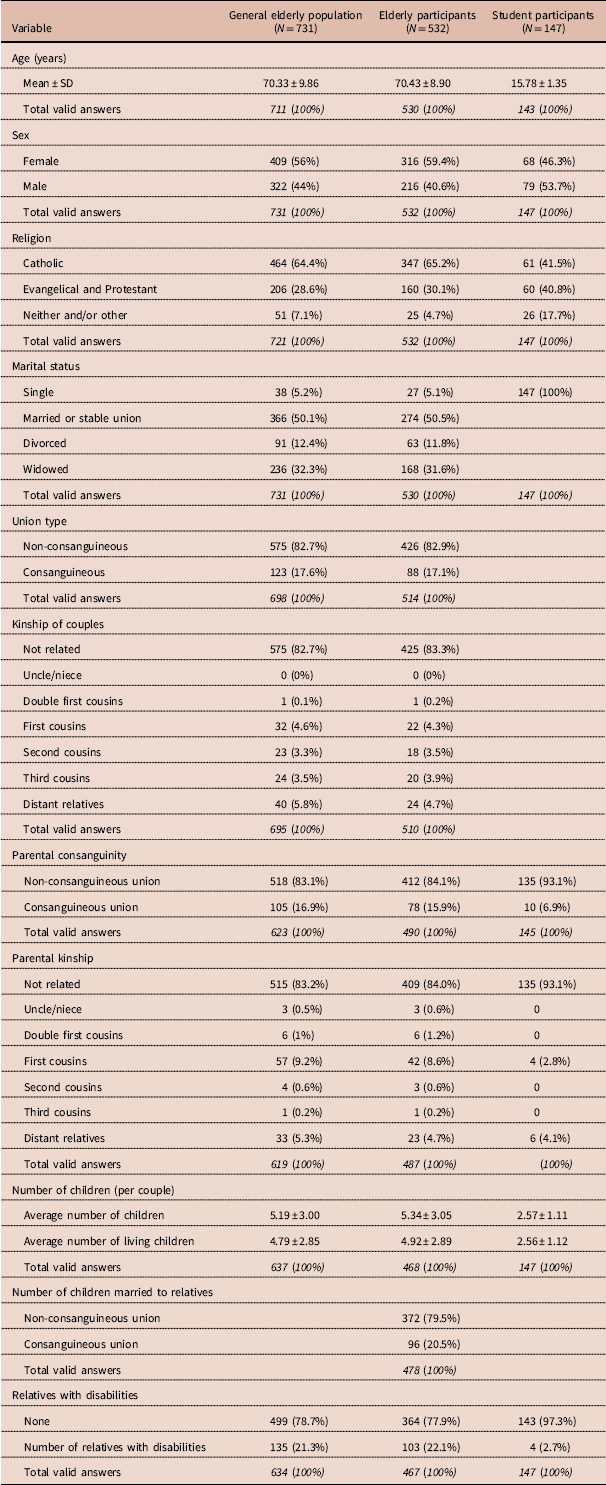
Table 1 shows the socio-demographic characteristics of the 731 elderly individuals, and the selected group of 532 individuals who agreed to be interviewed on consanguinity. The average age of the general elderly population was 70.33±9.86, and that of the sample group of 532 was 70.43±8.90, indicating no significant difference. As for sex, a greater representation of women (59.4%) was observed in the interviewed sample group than in the general elderly population (56%). For the other parameters, such as religion (65% of Catholics) and marital status (50% of married couples), no significant difference was observed between the two groups, indicating that the interviewed sample group represented the general elderly population of the municipality.
Characteristics of the study population, Brejo dos Santos, Brazil, 2017
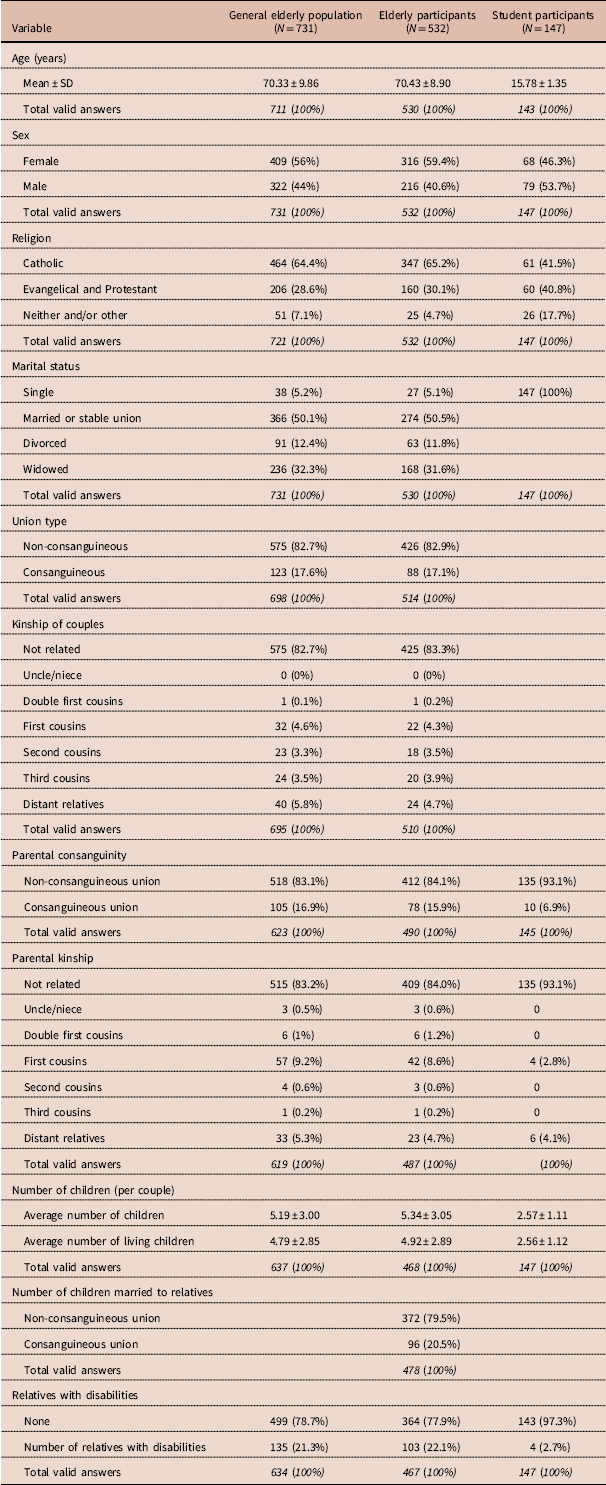
As for the young population, all of the high school students at the only educational establishment that provides this level of education in the municipality were interviewed, constituting a sample group of 147 individuals. Students working night-shift and those who were not attending school (drop-outs) during the data collection period were not included in the study. The socio-demographic characteristics of the young group are shown in Table 1. The average age of the group was 15.78±1.35, with more males (53.7%) than females. As for religion, 41.5% were Catholics and 40.8% were Evangelicals, revealing a change in pattern in comparison to the elderly population, for whom 65% were Catholic.
In the sub-sample of 532 elderly individuals, 17.1% were married to relatives and 15.9% of their parents were in consanguineous unions. This shows that, from one generation to another, there was little difference in the frequency of consanguinity. Also, this group had an average of 5.34±3.05 children, 4.92±2.89 of whom were still alive. Of the 468 elderly participants who reported on the marriages of their children (their descendants), 96 (20.5%) had children who were married to relatives – indicating that the frequency of consanguineous marriages had tended to increase over the generations: 15.9% in the generation of the parents of the elderly participants, 17.1% in their own generation and 20.5% in the generation of their descendants. Moreover, there was a higher relative frequency of first cousin marriages (n=42 or 8.6%) among the parents of the elderly interviewees than among themselves (n=22 or 4.3%).
However, considering the parents of the students, the same frequency of consanguinity was not observed, since only 10 (6.9%) of the young interviewees reported that their parents were in consanguineous unions. In this case, it must be taken into account that many of the students would not know whether their parents were related or not (Table 1). Furthermore, in the sub-group of 532 elderly participants, 103 (22.1%) reported having a relative with a disability, while only four students (2.7%) answered this question positively.
Comparison of beliefs, attitudes and behaviours between generations
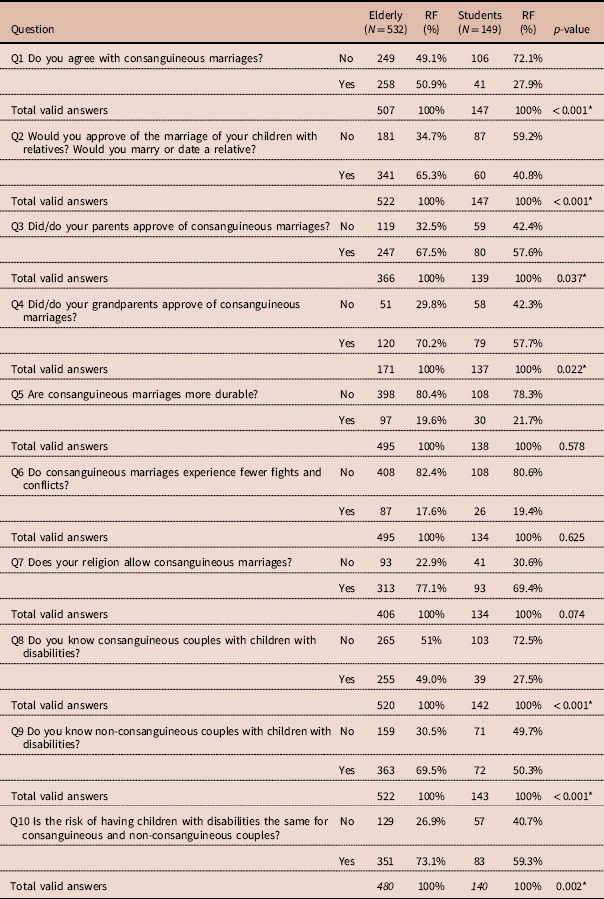
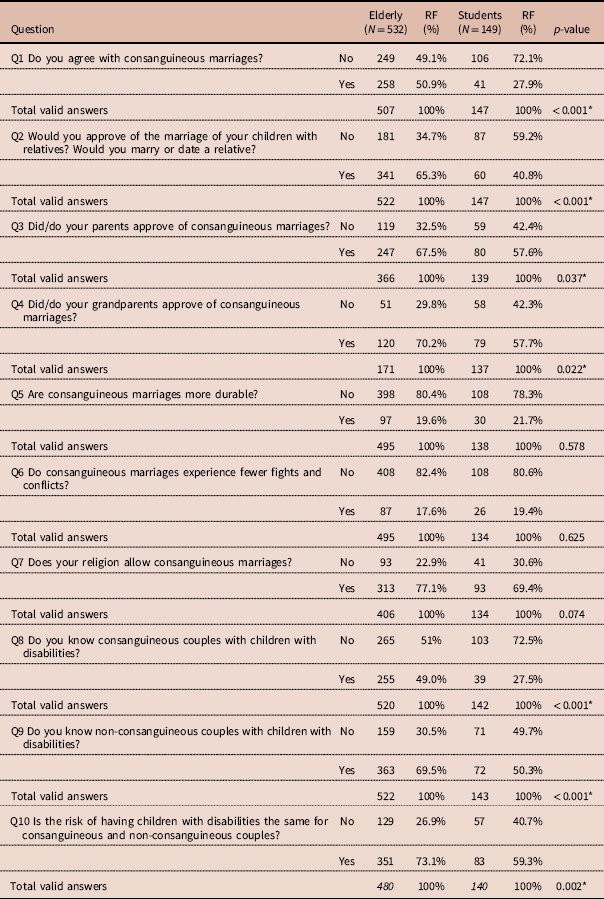
Table 2 shows the distribution of the elderly and student study groups by their responses to the ten questions on consanguinity. The two groups showed significant differences in beliefs, attitudes and behaviours in relation to consanguinity. The students demonstrated a significantly stronger rejection of consanguinity (72.1%) than the elderly (49.1%) (p<0.001). Although 258 (50.9%) elderly interviewees rejected this type of union, 341 (65.3%) of them would approve of the marriage of their children with relatives. On the other hand, 60 (40.8%) students stated that they would date or marry cousins. Therefore, an important difference in attitude towards consanguineous marriages was observed between the two groups (p<0.001).
Beliefs, attitudes and behaviours towards consanguinity and disability of elderly individuals and high school students
ANOVA test (Kruskal–Wallis) results for independent samples.
RF: relative frequency.
* p<0.05.
When the interviewees were asked whether their parents and grandparents approved of consanguineous marriage, both groups tended to give positive responses. In the case of the elderly participants, 247 (67.5%) of their parents and 120 (70.2%) of their grandparents were reported to have a favourable attitude towards consanguinity, whereas among the younger individuals, 80 (57.6%) of their parents and 79 (57.7%) of their grandparents were reported to have a positive attitude. Significant differences were observed between the two groups (p=0.037 for the parents’ attitude; p=0.022 for the grandparents’ attitude).
Both the young (108 or 78.3%) and elderly (398 or 80.4%) interviewees believed that consanguineous marriages were not more durable than non-consanguineous marriages (p=0.578). Additionally, 408 (82.4%) of the elderly individuals and 108 (80.6%) of the students recognized that spouses in consanguineous couples experience conflicts, just like other couples do (p=0.625). The same pattern was also observed in relation to religious influence, since 313 (77.1%) elderly participants and 93 (69.4%) young ones stated that their religion did not restrict marriage between relatives, even when there were differences in relation to doctrine.
When the participants were asked if they knew consanguineous and non-consanguineous couples who had children with disabilities, there were significant differences between the two groups in relation to these two questions (p<0.001). Among the elderly interviewees, 255 (49%) knew a consanguineous couple with a disabled child, contrasting with 39 (27.5%) of the young participants; whereas 363 (69.5%) of the elderly participants and 72 (50.3%) of the students knew a non-consanguineous couple with children with disabilities. In both groups, the majority of the participants did not believe that the risk of having children with disabilities was associated with consanguinity. Despite having more evidence, 351 (73.1%) of the elderly individuals did not establish such association, in contrast with 83 (59.3%) of the students, which resulted in a significant difference between the two groups (p=0.002) (Table 2).
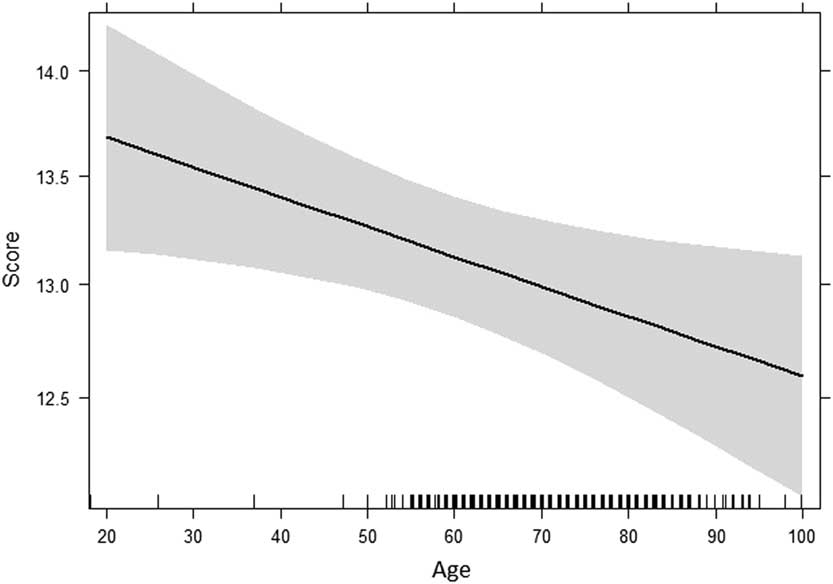
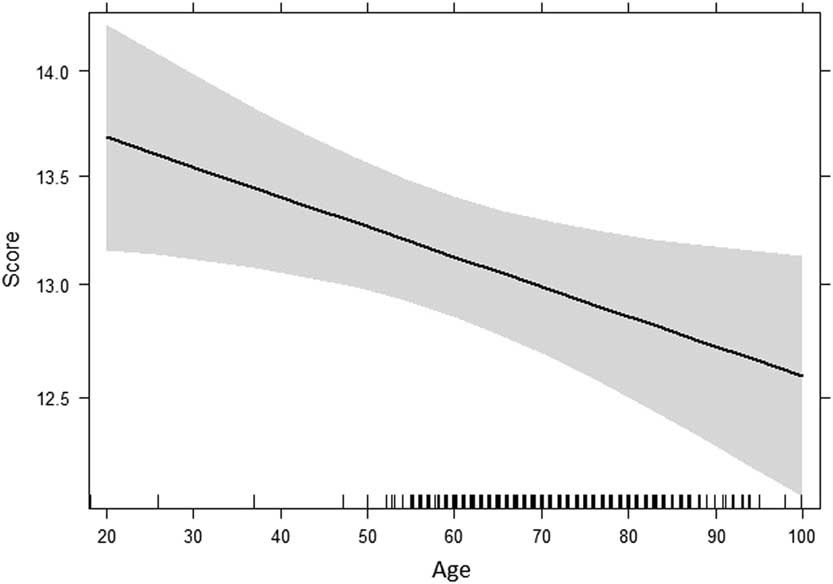
As explained in the Methods section, the sum of the positive responses to the ten questions in the questionnaire resulted in a score that could range from 0 to 20. The analysis of the Poisson regression with two continuous variables (age and score) showed a significant correlation between them, creating the relationship shown in Figure 1. The obtained line shows a pattern that suggests that younger individuals are more susceptible to the influence of cultural factors contributing to consanguinity, such as the opinions of their parents and grandparents. The score represents the sum of the points of the ten questions, showing a general trend. The comparison of the average scores between female and male participants did not show a significant difference (p=0.793), revealing that men do not have a more positive attitude towards consanguinity than women (not shown).
Linear regression showing the correlation between the study participants’ ‘age’ and the ‘score’ resulting from the sum of the points from the ten questions about consanguinity. The higher the ‘score’, the more positive the attitude of the participants is towards consanguinity.
The association analysis of the ten categorical variables that constituted the questionnaire aiming to evaluate the relation between them was conducted through log-linear analysis. The Q3 and Q4 variables were excluded due to the high number of non-responses that led to a large number of cases with a frequency lower than 1%, denying the premises of this type of statistical analysis. In addition, the Q5, Q6 and Q7 variables were also excluded for not having a positive association with the elderly or student groups.
Thus, the model was developed with five variables (Q1, Q2, Q8, Q9 and Q10). The association analysis of these five variables created six models with combinations of three or two different variables. The models for which the z-score value was significant, providing substantial individual estimates, are described as follows: Q1, Q2 and Q10 presented a z-score of 3.5 (p<0.001); the z-score for Q1 and Q2 was −4.6 (p<0.001) and for Q1 and Q8, 4.3 (p<0.001); Q8 and Q9 presented a z-score of 4.5 (p<0.001) and Q1 and Q10 a z-score of 2.2 (p=0.02).
Comparison of consanguineous and non-consanguineous couples
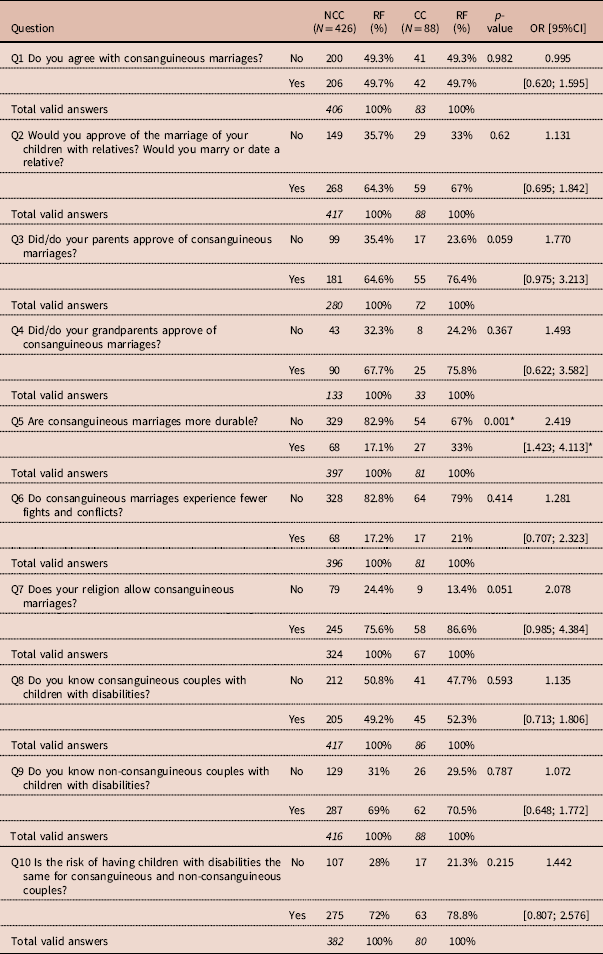
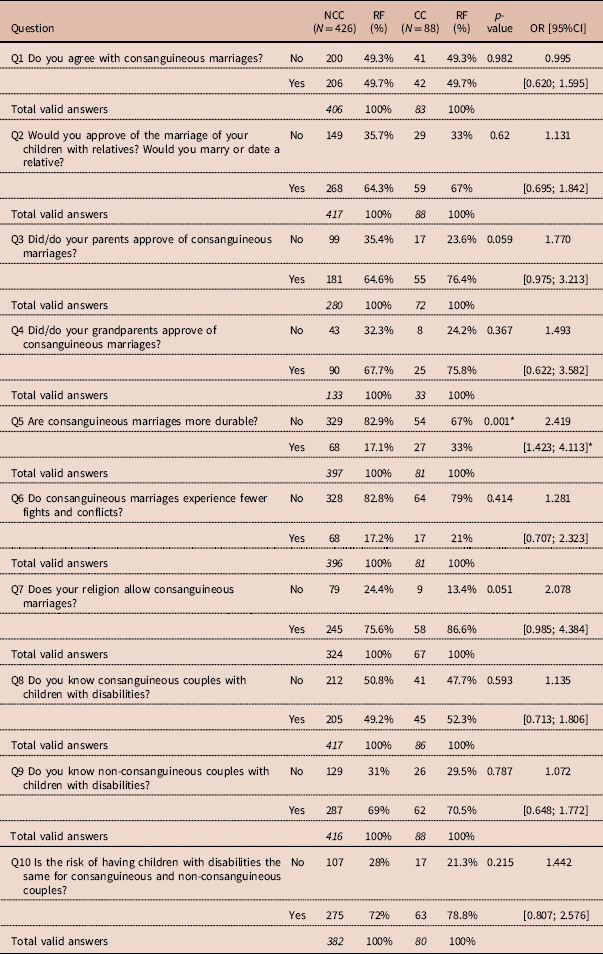
Table 3 shows the distribution of the elderly group by their consanguineous status and responses to the ten questions on consanguinity. The analysis of the responses given by individuals in consanguineous and non-consanguineous unions led to similar results in relation to beliefs, attitudes and behaviours. In fact, as shown in Table 3, only one variable – the belief that consanguineous unions are more durable – showed a significant difference between the two groups (p=0.001), with individuals in consanguineous unions being 2.42 more likely to believe that marriages between relatives contributes to marriage durability.
Beliefs, attitudes and behaviours of elderly consanguineous couples (CC) and non-consanguineous couples (NCC)
RF: relative frequency.
* p<0.05.
Discussion
In this study among an elderly population of Brejo dos Santos, Brazil, the frequency of consanguineous marriage was estimated at 17.1%, and no significant difference was observed compared with the general population of the municipality (19.48%) (Weller et al., Reference Weller, Tanieri, Pereira, Almeida, Kok and Santos2012). As for the differences in prevalence of consanguineous unions from generation to generation, it was estimated that it increased from 15.9% in the generation of the parents of the elderly participants to 17.1% in their own generation and to 20.5% in the generation of their descendants; that is, the younger generation in Brejo dos Santos are more consanguineous.
In a study conducted in five municipalities of the state of Rio Grande do Norte, Brazil, the highest ratio of consanguineous to non-consanguineous couples was observed in the 20–49 age group, revealing a significant appreciation of the tradition of consanguineous marriages among young adults (Santos et al., Reference Santos, Melo, Lopes, Weller and Kok2013b; Lopes et al., Reference Lopes, Monteiro, Figueiredo, Wanderley, Pequeno, Lima and Santos2017). The tendency to maintain consanguineous practices observed in this region of Brazil contrasts with a worldwide phenomenon of significant decrease in this tradition (Bittles, Reference Bittles2012; Small et al., Reference Small, Bittles, Petherick and Wright2016). In the 20th century, there was a sharp decline in consanguinity in the more industrialized countries of Western Europe, North America and Japan. However, in some Middle Eastern countries, opposite patterns are observed, and in some communities current rates of consanguinity seem to exceed those of the previous generation (Bittles, Reference Bittles2008; Warsy et al., Reference Warsy, Al-Jaser, Albdass, Al-Daihan and Alanazi2014), including Pakistani communities living in other countries (Grjibovski et al., Reference Grjibovski, Magnus and Stoltenberg2009).
The community of Brejo dos Santos, in the semi-arid north-eastern region of Brazil, is composed of elderly individuals mostly with little or no schooling and living in predominantly rural areas. They are mainly subsistence farmers and livestock breeders (Lopes et al., Reference Lopes, Monteiro, Figueiredo, Wanderley, Pequeno, Lima and Santos2017). There is a consensus in the literature that a higher prevalence of consanguineous marriages is found in rural communities with a more traditional lifestyle, low levels of human and socioeconomic development, poor levels of maternal education and where marriages occur earlier (Bittles & Black, Reference Bittles and Black2010; Bhopal et al., Reference Bhopal, Petherick, Wright and Small2013). In addition, a higher fertility rate has been observed among consanguineous couples all over the world – as well as north-eastern Brazil. In addition, a strong correlation has been identified between the consanguineous practices of female individuals and that of their parents (Bittles, Reference Bittles2008; Warsy et al., Reference Warsy, Al-Jaser, Albdass, Al-Daihan and Alanazi2014).
In this study in Brejo dos Santos, differences in the beliefs and attitudes in relation to consanguineous marriages between elderly and younger participants were found. Of the ten studied attitude and belief variables, only three did not show significant differences between these two groups in the ANOVA analysis. About 70% of the students rejected consanguineous marriages, although 60% of their parents and grandparents approved of it, and 40% of them admitted being willing to date or even marry their cousins. No kind of religious constraint was observed.
As with elderly participants, about 80% of young interviewees did not believe that marriages between relatives were more durable or experienced less conflict. This view contrasts with the existing literature, which indicates that divorce is rarer, and that there is more trust in the marital relationship, in consanguineous couples. Furthermore, the spouses have similar conceptions and economic conditions to deal with everyday problems. These highlighted benefits of consanguineous marriage are suggested to make couples more resilient to the pressures of married life (Bittles & Black, Reference Bittles and Black2010; Bhopal et al., Reference Bhopal, Petherick, Wright and Small2013).
In the present study, no significant difference in attitudes towards consanguineous marriages was observed between the sexes. These data contrast with a study of 386 Saudi adults, in which women had significantly more knowledge about the consequences of consanguineous marriages compared with men, showing a less positive attitude towards such unions (Alharbi et al., Reference Alharbi, Al-Shaia, Al-Hamam, Al-Marzoug, Ahmed and Bagha2015). Another study showed that women who were married to cousins had more positive attitudes or behaviours towards consanguinity compared with women who were not married to relatives. As for the reasons for marrying a relative, women gave ‘love’ as the main reason (63.3%), followed by family pressure (14.7%). When it came to reproductive decision-making, the family was the main motivating factor in almost half of the cases. The fact that the families knew one another for a long period of time was perceived as the greatest advantage of a consanguineous union, and the possibility of having children with disabilities was its main disadvantage (Çiçeklioğlu et al., Reference Çiçeklioğlu, Ergin, Demirelöz, Ceber and Nazlı2012).
The elderly sample group was subdivided between those who were in a consanguineous union and those who were not married to relatives in order to compare their beliefs, attitudes and reproductive behaviour. Surprisingly, considering the ten analysed attitude and belief variables, no significant differences were observed between the groups in nine of them – showing a great homogeneity and a very positive attitude towards consanguinity. Although the consanguineous group had more relatives affected by genetic diseases, this fact did not translate into a difference in relation to the question about evidence and experience with hereditary phenomena. The only difference observed between these two groups was the idea that consanguineous marriages contribute to marriage durability. Consanguineous couples were 2.4 times more likely than non-consanguineous ones to give a positive response to this question.
The differences found among consanguineous and non-consanguineous couples corroborate the literature. For instance, a study conducted in Pakistan, consisting of a questionnaire applied to 1500 individuals of both sexes, showed that the individuals who were married to relatives had a more positive attitude towards consanguinity than those in non-consanguineous unions (Pervaiz et al., Reference Pervaiz, Faisal and Serakinci2018). If the spouses had consanguineous parents, their attitude tended to be more positive (Alharbi et al., Reference Alharbi, Al-Shaia, Al-Hamam, Al-Marzoug, Ahmed and Bagha2015; Pervaiz et al., Reference Pervaiz, Faisal and Serakinci2018).
This positive attitude was considerably less significant among participants who received health advice about the risks of consanguineous marriages for their children than those who did not receive any health advice regarding this type of union (Pervaiz et al., Reference Pervaiz, Faisal and Serakinci2018). In addition, participants who received health information from a social media source had a significantly less positive attitude towards consanguinity than those who did not. However, family income, level of education, occupational status, age, marital status and positive family history for diseases were not significantly linked to positive attitude towards consanguinity (Pervaiz et al., Reference Pervaiz, Faisal and Serakinci2018). In a study of 178 individuals conducted in two communities in India, it was found that a family history of consanguinity was significantly linked to positive attitudes towards this type of union (Joseph et al., Reference Joseph, Pavan, Ganapathi, Apoorva, Sharma and Jhamb2014). In the Saudi population, the prevalence of consanguinity among women with a high level of education has been studied and the results were compared with those obtained from their parents (Warsy et al., Reference Warsy, Al-Jaser, Albdass, Al-Daihan and Alanazi2014). The total consanguinity rate of the parents of the 600 participants was 29.7%. As for their daughters (n=293), 37.9% were married to relatives. The prevalence of consanguinity among the married female participants was significantly higher than among the parents of the total sample, revealing a preference for this type of marriage among the daughters of consanguineous couples (Bittles, Reference Bittles2008; Warsy et al., Reference Warsy, Al-Jaser, Albdass, Al-Daihan and Alanazi2014).
In Brejo dos Santos, the vast majority (79%) of consanguineous couples did not associate consanguinity with the risk of having children with genetic diseases. They believed the risks were the same for consanguineous and non-consanguineous couples, stating that children were born with disabilities in both cases. In India, a study involving 178 participants found that about 80% also did not associate consanguinity with genetic diseases. Most participants did not demonstrate a basic understanding of the problems associated with consanguinity (Joseph et al., Reference Joseph, Pavan, Ganapathi, Apoorva, Sharma and Jhamb2014).
Finally, one of the limitations of the study was the use of a questionnaire with binary answers, which gave rise to the score (dependent variable). In fact, in the fieldwork, some of the respondents did not know how to answer some questions, such as the consanguinity status of their grandparents or their religion. Although the researchers asked for ‘yes or no’ answers, the participants kept saying ‘I do not know’ after the question was repeated twice. However, the outcomes showed great similarity among answers on the opinion of parents, grandparents and religion about consanguineous marriages. Because of these limitations, the average scores may be underestimated.
In conclusion, in this population-based study conducted in north-eastern Brazil, the outcomes corroborate the argument that the reproductive decision-making associated with whether to marry relatives was not based on the likelihood or the risk of having children with genetic diseases. The positive attitude towards consanguinity is linked to the belief that marriage between individuals from the same family contributes to greater marriage stability and durability.
Acknowledgments
The authors are very grateful to the health community workers of Brejo dos Santos for their help with the study.
Ethical Approval
This research was approved by the Research Ethics Committee of Paraíba State University (UEPB) under protocol CAAE: 67426017.6.0000.5187 and was in accordance with the principles of Resolution 466/12 of the Brazilian National Health Council. All participants or their guardians received verbal and written explanations regarding the study procedures, and when they agreed, they signed the informed consent form and institutional declaration of approval. The results were presented to the participants after the conclusion of the study.
Conflicts of Interest
The authors declare that they have no competing interests.
Funding
This study was funded by Universidade Estadual da Paraíba íba (PROPESQ) and Fundação de Apoio à Pesquisa do Estado da Paraíba (FAPESQ/CNPq – PPSUS 015/2014); CAPES (INCT 14/50931-3), Fundação de Amparo à Pesquisa do Estado de São Paulo (FAPESP-CEPID 2013/08028-1).