INTRODUCTION
Crop residues are important sources of livestock feed in the (sub)tropics and often also have other productive uses such as fuel, construction material and mulch (Erenstein, Reference Erenstein2002; McDowell, Reference McDowell, Reed, Capper and Neate1988; Rao and Birthal, Reference Rao and Birthal2008; Suttie, Reference Suttie2000). The relative importance of each use varies geographically and by crop, with the use of fodder tending to increase proceeding to the drier environments (Erenstein, Reference Erenstein2003; Rao et al., Reference Rao, Birthal and Ndjeunga2005). Maize – or corn, Zea mays – is no exception, with maize stover being widely used across maize-producing environments in sub-Saharan Africa, Latin America and Asia (Erenstein, Reference Erenstein1999). Despite this prevalence, our understanding of maize stover utilization in these settings is only partial. Furthermore, despite its potential as a dual purpose food-feed crop, maize improvement efforts across the (sub)tropics have generally solely focused on enhancing grain production.
The need to consider the feeding value of crop residues in crop breeding is not new and has been argued before (Byerlee et al., Reference Byerlee, Iqbal and Fischer1989; Kelley et al., Reference Kelley, Rao, Walker and Dvorak1993; Lenne et al., Reference Lenne, Fernandez-Rivera and Blummel2003; McIntire et al., Reference McIntire, Bourzat and Pingali1992; Reed et al., Reference Reed, Capper and Neate1988; Renard, Reference Renard1997), including the possible use of genetic modification (Gressel and Zilberstein, Reference Gressel and Zilberstein2003). Research has shown the potential of incorporating the feeding value of residue into crop improvement programmes without compromising grain yield (Hall et al., Reference Hall, Blummel, Thorpe, Bidinger and Hash2004; Zerbini and Thomas, Reference Zerbini and Thomas2003). However, most dual purpose food-feed crop research refers to scenarios where feed is relatively scarce and has a correspondingly high economic value, mainly in (semi)arid environments. In such instances the contribution of crop residues to gross production value has been reported to range from 29 to 48% with residue to grain price ratios of 40–50% (Erenstein, Reference Erenstein1999). Consequently, the prevailing cereals in these environments, such as sorghum and millet, have received comparatively more dual-purpose R&D attention.
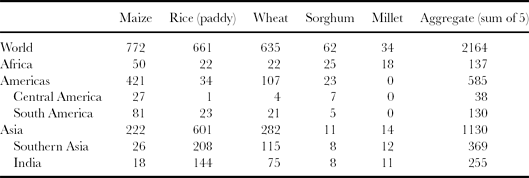
Maize originates from Mexico and the discovery of the New World facilitated its spread across continents (Staller, Reference Staller2010). In terms of production, maize now is the leading global cereal followed by rice (paddy) and wheat, and maize is particularly dominant in Latin America and sub-Saharan Africa (Table 1). Assuming a relatively optimistic harvest index of 50% for these major cereals (Hay and Gilbert, Reference Hay and Gilbert2001; Kalra et al., Reference Kalra, Chakraborty, Ramesh Kumar, Jolly and Sharma2007; Kumar et al., Reference Kumar, Verulkar, Dixit, Chauhan, Bernier, Venuprasad, Zhao and Shrivastava2009; Lafitte et al., Reference Lafitte, Edmeades and Taba1997), their grain production can be used as a conservative proxy for crop residue production (Gressel and Zilberstein, Reference Gressel and Zilberstein2003). The regional variations in the predominant cereal would thus imply a similarly marked variation in the composition of crop residue supply. Maize would thereby contribute an estimated 36% to the bulk of cereal residue production (i.e. the major five cereals combined, Table 1) at the global level and for Africa as a whole, but more than 60% in Latin America and only 7% in Southern Asia (and India).
Global and regional cereal production, triennium ending 2008 (million metric tons).

Source: FAO statistics (http://faostat.fao.org, accessed January 2010).
Maize has been grown in India for centuries and has long been a popular crop in the Himalayan foothills as well as along a West–East belt from Rajasthan to West Bengal of rain-fed areas dominated by tribal communities (Joshi et al., Reference Joshi, Singh, Singh, Gerpacio and Pingali2005). In these traditional maize-growing areas, maize is often grown under relatively marginal conditions during the rainy season and with a dual purpose orientation of using grains for household food consumption and marketing surplus production. Over the past three decades the production of maize in India has grown considerably and has moved beyond the traditional areas. Maize grain production has increased from about 7 million metric tons (MT) in 1980/81 to about 20 Mt in 2010/11 (DAC, 2011). Annual growth rates for production have been recorded as 1.9%, 3.3% and 5.3% for the decades 1980–90, 1990–00, 2000–10 respectively. While growth in the first two decades of this period was driven mainly by yield increases, area expansion has constituted more than half the growth over the past decade (DAC, 2010). This growth has largely been driven by the increasing demand for maize grain as feed for the rapidly expanding poultry industry (Hellin and Erenstein, Reference Hellin and Erenstein2009; Joshi et al., Reference Joshi, Singh, Singh, Gerpacio and Pingali2005) and has been facilitated by the availability and use of hybrids and the expanded role of the private sector in the maize seed industry (Singh, Reference Singh and Gerpacio2001). Much of this growth has taken place in non-traditional maize areas, including southern India. In contrast to traditional practices, this is primarily commercially oriented high-input production, partly under irrigation during the dry season (Joshi et al., Reference Joshi, Singh, Singh, Gerpacio and Pingali2005). India now has some 8.3 million ha of maize, making it a major maize producer in Asia (after China) and globally (DAC, 2010; Erenstein, Reference Erenstein2010a). While the changing use of maize grain has been documented (Hellin and Erenstein, Reference Hellin and Erenstein2009; Joshi et al., Reference Joshi, Singh, Singh, Gerpacio and Pingali2005), less is known about the effects of the expanding maize sector on actual and potential maize stover utilization.
There is a tradition of feeding cereal residues to cattle throughout India (Chakravarti, Reference Chakravarti1987) and one would expect that maize stover would play a particularly important role in India's traditional maize-growing areas. Yet maize stover use and its potential is rarely reflected in the literature on fodder and feed research from the sub-continent. Despite their broad approach to maize production in India, Joshi et al. (Reference Joshi, Singh, Singh, Gerpacio and Pingali2005) largely neglect maize stover management. This and another study thus suggest maize stover is not widely used as feed in India (Thorpe et al., Reference Thorpe, Erenstein, Singh and Varma2007), with farmers in Karnataka (South India) ranking it as the least preferred crop residue as feed due to its perceived high wastage and low palatability (Biradar, Reference Biradar2004). On the other hand, maize has long been valued as a green fodder. It is grown as a rainy season fodder crop in irrigated areas, especially in the northwest Indo-Gangetic Plains and along flood-prone river-beds (Joshi et al., Reference Joshi, Singh, Singh, Gerpacio and Pingali2005). Recently, feeding of green maize plants immediately after harvesting immature maize has also gained in popularity (e.g. baby corn, green cobs) (Devendra and Sevilla, Reference Devendra and Sevilla2002; Singh et al., Reference Singh, Erenstein, Thorpe and Varma2007). This contrasts with the critical importance of maize stover as an off-season livestock feed in large swathes of Latin America and sub-Saharan Africa (Erenstein, Reference Erenstein1999; Leeuw, Reference Leeuw and Renard1997; Thorne et al., Reference Thorne, Thornton, Kruska, Reynolds, Waddington, Rutherford and Odero2003.
Earlier studies have flagged the problems of using fibrous crop residues as feed, especially in regard to their low nutritive value and potential enhancement options (e.g. Little and Said, Reference Little and Said1987; Preston, Reference Preston1995; Reed et al., Reference Reed, Capper and Neate1988; Renard, Reference Renard1997). However, these efforts have typically had limited impact at the farm level (FAO, 2010). Recently, the focus has shifted towards more participatory and holistic system approaches (Schiere, Reference Schiere2010). The same review also postulates that residue feed use and preferences are particularly context specific – i.e. feeding choices not only depend on nutritive values but also depend strongly on other aspects of the farming system (Schiere, Reference Schiere2010). This paper contributes to the development of these more participatory and holistic approaches by investigating the use of maize stover in India. The issue here indeed is not that crop residues in general are underutilized – in India they are estimated to contribute half the total ruminant feed supply (NIANP, 2003; Rao and Birthal, Reference Rao and Birthal2008) – but, rather, the apparent paradox of diverging crop residue use of one particular cereal crop (maize) vis-à-vis other crops in India's major cereal-based cropping systems in view of the marked preference for feeding maize stover in other global regions.
The present paper is a scoping study exploring this paradox of the comparatively limited use of maize stover as feed in India and aims to fill some of the knowledge gaps. The first aspect is a comparative assessment of maize stover quality based on recent in-vivo and in-vitro studies of its nutritive quality. The second aspect is a stakeholder consultation of current maize stover management practices and the poor image of maize stover as a feed in small-scale crop-livestock systems through case studies in three contrasting maize-growing areas in India. These findings are then used to argue the case for investing in maize stover R&D and thus reigniting earlier feed research in general. The following section introduces the underlying conceptual framework and data sources. Next, the results of the comparative assessment and a number of system and crop residue management indicators are presented and contrasted, followed by a discussion and the conclusion.
MATERIAL AND METHODS
Conceptual framework
Crop residues are the fibrous by-product of the cultivation of field crops that are grown for purposes other than fodder. In cereal production, grain is the main product and the crop residues comprise the stems and leaves, which typically comprise over half the above-ground crop biomass produced. They are also known as straw in the case of fine cereals (e.g. wheat, rice) and stover in the case of coarse cereals (e.g. maize, sorghum, millet). Cereal plants export polysaccharides and proteins from the leaves and stems during grain filling, with the resultant crop residues consisting primarily of hemicelluloses, cellulose and lignin. Cereal residues thereby have inherently lower nutritive feed value than grains (Gressel and Zilberstein, Reference Gressel and Zilberstein2003; Suttie, Reference Suttie2000; Zerbini and Thomas, Reference Zerbini and Thomas2003). Typically, cereal residues have about half the digestibility and metabolizable energy content compared to grains, while crude protein content is about a quarter to a third (NSW DoPI, 2010). On the other hand, ruminants (i.e. cattle, buffalo, sheep and goats) are well adjusted to consuming larger amounts of feeds with comparatively low nutrient densities. Also, there is no competition with human nutrition when feeding cereal residues.
It is thus unsurprising that cereal residues are a major feed resource for ruminants in the (sub)tropics, especially in areas with relatively high population densities, including India, in spite of their generally low nutritional value. Their utilization as feed source can be viewed as a function of:
- Supply side factors: Factors influencing the supply of cereal residues; includes bio-physical factors determining the potential biomass production, management factors determining actual biomass production and economic factors determining land-use decisions and demand for cereal grains.
- Demand side factors: Factors influencing the demand for cereal residues, as feed and also competing non-feed uses (e.g. use of biomass for construction, fuel, mulch/conservation agriculture); includes the availability of alternative feeds as well as substitutes for the non-feed uses of cereal residues, also second-level factors such as pressure on resources (e.g. population density; livestock density) and institutional arrangements (e.g. fodder markets).
- Preferences: In addition to the readily quantifiable factors listed above, farmers’ decisions on the utilization of cereal residues and on the selection of feeds may also be influenced by more idiosyncratic factors, referred to here as preferences. These preferences may contribute to shaping both supply and demand side factors, but merit specific consideration due to their complexity and because of their importance in systems where non-monetary factors are prominent. For instance the supply of cereal residues on the household level may be determined by the relative importance of household objectives (e.g. income, food security, liquidity, stability) and system characteristics (e.g. asset base, livelihood portfolio). On the other hand, perceived characteristics of available feeds and the accepted feeding requirements of livestock as well as social considerations (e.g. traditions, status) also influence demand-side factors.
One may thus envisage various cereal residue utilization scenarios falling between two extremes. One extreme would be the complete utilization as feed, caused for instance by the lack of alternative fodder sources, high livestock densities and/or a strong preference for cereal residues as feed. The other extreme scenario would be a total non-feed scenario, for example in systems that lack livestock. Most cases in the (sub)tropics are likely to fall in between these extremes due to the dominance of mixed crop-livestock systems (Lenne et al., Reference Lenne, Fernandez-Rivera and Blummel2003; Thomas, Reference Thomas2002). One example would be a substitution scenario where farmers prefer green fodder, but use cereal residues to overcome seasonal feed shortages. In a supplementation scenario cereal residues provide the basal feed, supplemented by concentrate feeds to meet the requirements of increased production. Such scenarios are not static but are shaped by shocks (e.g. drought) and trends (e.g. increasing population and/or livestock densities, market opportunities). Indeed, variations in the feeding levels of cereal residues are closely associated with system intensification. Generally, cereal residues gain importance as extensive crop-livestock systems intensify and become more integrated and less dependent on common feed resources (Romney et al., Reference Romney, Thorne, Lukuyu and Thornton2003). Subsequently, the level of feeding residues decreases as integrated crop-livestock systems intensify further, become more specialized and require feed rations with a higher nutrient density (Erenstein and Thorpe, Reference Erenstein and Thorpe2010).
The framework described for assessing the importance of using cereal residues in general as feed can also be applied to the second level of analysis investigated here – i.e. the differences between various crop residues in their utilization and preferences as feed, especially with regard to maize stover. Indeed, within the above continuum of crop residue utilization scenarios one can envisage a second level gradient between different crop residues types. One such second-level scenario would imply a heavy reliance on all available crop residues as feed except maize stover – i.e. maize stover is not fed at all. In another contrasting second-level scenario all maize stover would be intensively used as feed but other available crop residues are not. Again one would assume that most actual utilization patterns would fall somewhere between these two second-level scenarios, being determined by the interaction of the aforementioned supply- and demand-side factors as well as by preferences. Obviously, all three of these influencing forces are very location specific. Therefore, any analysis of crop residue utilization will have to be based on site-specific characteristics. Thus, the case study approach adopted in this study places a strong emphasis on context to avoid simplistic generalizations. Nevertheless, a common approach to identify determining factors of crop residue utilization helps with unravelling complex decision processes, especially where poorly developed markets and a high proportion of on-farm utilization limit the efficacy of monetary evaluation.
Comparative assessment of maize stover fodder value
The comparative assessment of maize stover quality revolves around a rapid literature review and a feed trial. In Northern India, rice and wheat straw are major components (50% and higher) of so-called complete feed blocks which are commercially produced and marketed mostly for dairy animals (e.g. Poshak Feeds India Pvt Ltd, Karnal). In southern India sorghum stover is the preferred basal fodder ingredient for such feed blocks (e.g. Miracle Fodder and Feeds Pvt Ltd, Hyderabad). To compare the value of maize stover with that of rice and wheat straw experimental maize stover based feed blocks were produced in collaboration with Miracle Fodder and Feeds Pvt Ltd and tested with sheep at the livestock nutritional facilities of ILRI based at ICRISAT in Patancheru, India. Commercial rice and wheat straw based feed blocks were purchased from Poshak Feeds India Pvt Ltd in Karnal. The experimental maize stover feed blocks were based on stover from two different hybrids (HQPM 1 and GTCH 3064). In the sheep trials organic matter digestibility, organic matter intake, digestible organic matter intake and nitrogen balance (N-Balance) were measured. The experimental protocol followed Ravi et al., Reference Ravi, Anandan, Khan, Bidinger, Nepolean, Hash and Blümmel2010.
Case studies
The stakeholder consultation was designed as a scoping study to elicit maize stover utilization in three contrasting but representative case study sites in India. The study used village surveys which have been defined as ‘rapid quasi-quantitative community studies – i.e. a hybrid between quantitative and qualitative social science approaches to study a defined group of people or aspect thereof. They combine quantitative elements of sample surveys – such as a rigorous sampling design to ensure representativeness and the inclusion of substantial village numbers and comparable quantifiable indicators to facilitate quantitative analysis and contrasts – with a community level focus (i.e. for the entire village or target group) using key informants and group discussions.’ (Erenstein, Reference Erenstein2010b).
In August/September 2007 village surveys were conducted in 18 randomly selected villages using a stratified cluster approach (i.e. 3 states × 1 district per state × 3 sub-districts per district × 2 villages per sub-district). At the first selection level, we purposively selected three contrasting maize-growing states. Maize in India is predominantly rainfed but grown in a wide range of environments from semi-arid to humid and plains to hillsides (Joshi et al., Reference Joshi, Singh, Singh, Gerpacio and Pingali2005). Traditional maize production is typically oriented towards both home consumption and the market with rudimentary technology use and open-pollinated varieties (Joshi et al., Reference Joshi, Singh, Singh, Gerpacio and Pingali2005). On the other hand, non-traditional maize systems are oriented towards the market – often for poultry feed – and rely on relatively high levels of market inputs and hybrid seeds. We expected that the implications and extent of maize residue use as feed would show marked variations between traditional and non-traditional maize-growing systems. Similarly, we expected these to vary significantly between the plains and the hills (e.g. Byerlee and Husain, Reference Byerlee and Husain1992). To capture this diversity we purposively chose one major maize-growing study site in the Himalayan foothills (Himalachal Pradesh, HP), and two sites in the plains – one in a traditional maize-growing area where non-traditional maize production is advancing during the dry winter season (Bihar, eastern India) and one in a non-traditional area in southern India (Andra Pradesh, AP), where maize is replacing sorghum as a rain-fed cereal.
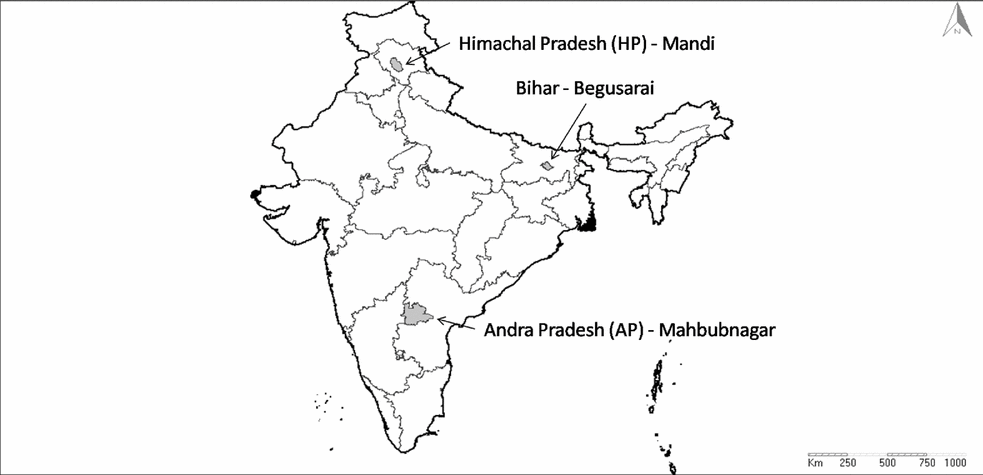
At the second selection level, we identified one major maize-growing district in each of the three states. The selected districts are: (1) Mandi, HP; (2) Begusarai, Bihar and (3) Mahbubnagar, AP (Figure 1). At the third level we categorized the sub-districts in each selected district into one of three locally relevant agro-ecologies and purposively retained one sub-district per agro-ecology, typically the main sub-district of each category in terms of maize production. The locally relevant agro-ecologies were derived from discussions with local stakeholders and were based on altitude in Mandi (low, medium, high), on flood risk in Begusarai (low, medium, high) and on soil type in Mahbubnagar (red, black, mixed). At the fourth and final level we categorized all villages in each selected sub-district into far from and near to the closest town (the district's median village-town distance being the classifying criterion) using the village directory from the national 2001 population census. Finally, we randomly selected one village per resulting class.
Location of study sites.

The stratified sampling procedure was designed from a scoping study perspective so as to ensure that study sites were representative and yet covered the inherent diversity in maize production systems. In view of the limited sample size (six villages per district) the analysis and results of the village surveys are aggregated to the district level.
Within each village, key informants and self-selected groups of villagers were interviewed using semi-structured survey instruments. The survey team comprised at least one expert familiar with the district – typically from the national agricultural research/extension system – and one core team member familiar with the approach. The survey process typically included a session with the village leaders and key informants to brief them and compile village characteristics and two separate group meetings with farmers – one with relatively large farmers and one with relatively small farmers (using the average farm size for the state as cut-off point) with an average of 4.7 and 4.6 participants. The responses from the two group meetings were weighted by their share in the village population to derive village level indicators.
The survey instruments compiled a number of village and group level indicators to characterize and assess land and technology use with a focus on maize stover management. Indicators included aggregate numbers of village assets, prevailing prices, occurrence of practices (reported hereafter as share of villages reporting) and the intensity of their use (reported as share of households using). Many village indicators provide an indicative order of magnitude, which compare reasonably with available secondary data.
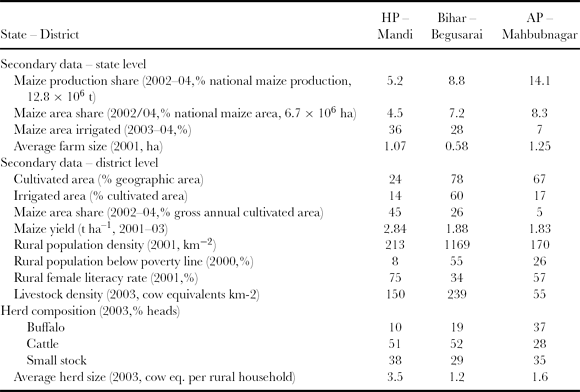
The sampling approach implies that the selected states and districts share a higher than average level of maize production. However, their relatively low maize yields are in line with the national average (Table 2). Secondary data highlight some marked variations in other indicators that are likely to influence maize residue use (Table 2). Mandi district (HP) has a relatively limited cultivated area due to topography constraints (steep slopes) which limit the supply of crop residues but imply alternative fodder sources. Begusarai district (Bihar) in contrast combines high demand factors (human and livestock population densities) with high residue supply and poverty. Mahbubnagar district (AP) combines the lowest demand side factors with intermediate development indicators (e.g. poverty, female literacy).
Characteristics of study areas

Source: State/district level data derived from various published and unpublished secondary data sources, including censuses of population, villages, livestock and agriculture.
RESULTS
Comparative assessment of maize stover
Despite their importance as feed, rigorous comparative assessments of cereal residues are relatively scarce particularly in the South Asia setting. This is compounded by feed quality being variously affected by genotype, crop management and residue management/treatment (Schiere, Reference Schiere2010). For instance, cereals grown under high input conditions tend to produce more biomass but of lower feed quality compared to low input conditions (Schiere, Reference Schiere2010). Various physical (e.g. chopping, shredding), chemical (e.g. ammoniation/urea) or biological treatments (e.g. fungal or enzyme additives) of residue can enhance feed quality (Kundu et al., Reference Kundu, Mahanta, Singh and Pathak2005; Preston, Reference Preston1995). Many published study results may therefore not be directly comparable, whereas other results are not easily accessible or do not include maize stover. For instance, Ranjhan (Reference Ranjhan1991) does not show any nutritive values for maize stover; and none of the six papers presented by Singh and Schiere, Reference Singh and Schiere1993 comparing specific crop residues in a feeding context, mention maize stover (their ‘coarse straws’ only include sorghum, millet and finger-millet). Indeed, while the importance of wheat and rice straw as feed is generally acknowledged by India's national agricultural research system, research into maize stover utilization, despite its potential as feed, is not yet actively considered in its research agenda.
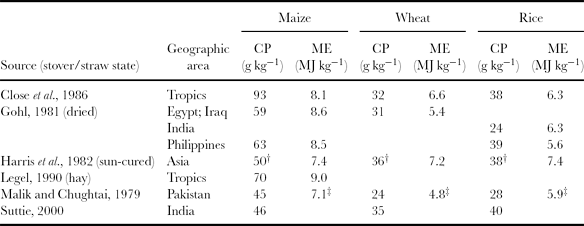
Farmers and scientists alike may perceive maize stover to simply be an inferior feed compared to other cereal stovers and/or cereal straws. The limited available literature that provides a direct comparison, however, suggests otherwise – i.e. that maize stover is actually similar or superior while showing a wide range of digestibility based on varietal differences. Maize stover thus compares favourably to sorghum and millet as livestock feed (Suttie, Reference Suttie2000), including digestible organic matter, dry matter digestibility and crude protein content (Harika et al., Reference Harika, Tripathi, Saxena, Singh and Schiere1995; Oliver et al., Reference Oliver, Pedersen, Grant, Klopfenstein and Jose2005; Osafo et al., Reference Osafo, Owen, Said, Gill and Sherington1997). Compared to wheat and rice straw, maize stover also has reportedly higher crude protein and digestibility (Harika et al., Reference Harika, Tripathi, Saxena, Singh and Schiere1995; Taparia and Sharma, Reference Taparia and Sharma1980). Table 3 compiles some reported values for crude protein and metabolizable energy of maize stover and wheat and rice straw in (sub)tropical countries and reiterates that maize compares favourably.
Selected nutritive values of maize stover and wheat and rice straw.

CP: crude protein; ME: metabolizable energy.
†Total protein; ‡Calculated according to Gohl, Reference Gohl1981.
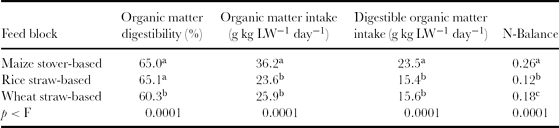
The feed trial comparing the complete feed blocks also showed the superiority of maize stover: maize stover based blocks significantly (p < 0.0001) outperformed those based on rice and wheat straw (Table 4).
Comparisons of maize stover and rice and wheat straw based complete feed blocks in sheep.

LW: live weight. Source: feed trial.
Data followed by different letters differ significantly, within column comparison.
Cereal stovers generally compare favourably to cereal straws in terms of their nutritional value as feed – albeit in part associated to agronomy (generally rainfed and lower input (Schiere, Reference Schiere2010)). This has contributed to, for instance, a marked preference for sorghum stover over paddy straw in AP in southern India, with a concomitant development of stover trading and markets (Blummel and Rao, Reference Blummel and Rao2006). This in turn affects its economic value and stover prices often compare favourably to straw prices and residue:grain price ratios are correspondingly higher (e.g. Blummel and Rao, Reference Blummel and Rao2006; Schiere et al., Reference Schiere, Joshi, Seetharam, Oosting, Goodchild, Deinum and van Keulen2004; Teufel et al., Reference Teufel, Samaddar, Blummel and Erenstein2010). Stover in general, and maize stover in particular, thus has a favorable nutritional value. However, in the case of maize stover in India this has not translated into a corresponding monetary value. Yet, the value of maize stover is not only determined by its physical properties, rather the three context specific influencing forces, outlined in the conceptual framework, determine its utilization and value, an issue we explore in the subsequent sections in relation to our three contrasting case studies.
System characteristics of case studies
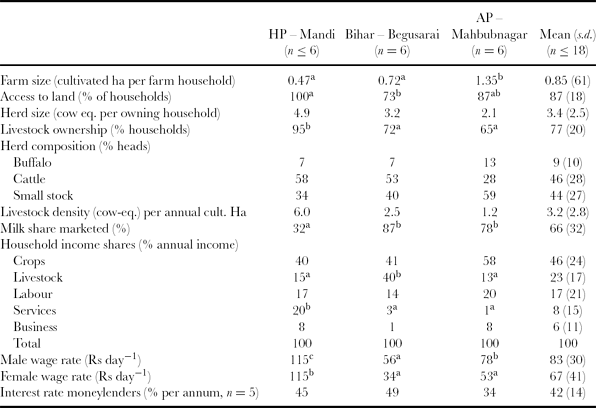
Livelihoods in all the surveyed communities in the three contrasting case studies revolve around mixed crop-livestock systems. Land is the central livelihood asset (over all sites, landless households constituted 13% of all households), but cultivated areas average less than 1 ha per farm household (Table 5), which compares reasonably with the secondary district level data. Farm sizes are largest in the AP site, albeit with the lowest share of irrigated land, which in turn are comparable to the all India average. Livestock ownership is widespread – particularly dairy cattle and small stock such as goats – with an average herd of 3.4 cow equivalents per household. Crops provide the main income source across study sites, supplemented by livestock (particularly important in the Bihar site) and labour, and in the case of the HP site, services. Informal credit sources appear to meet the bulk of credit demand with interest rates averaging 42% per annum. Male daily wage rates are highest in the HP site and lowest (half) in the poverty stricken Bihar site. Gender inequity is considerable, reflected inter alia by gendered wage rates in the Bihar and AP sites (Table 5).
Selected characteristics of surveyed villages.

Note: s.d.: standard deviation. Data followed by different letters differ significantly (significance level: 0.10), within row comparison. Source: Village surveys. Average exchange rate for 2007: US$1 = Rs41.3.
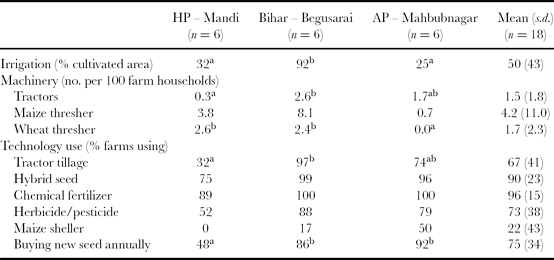
Despite the prevailing poverty levels, the Bihar site stands out in terms of agricultural technology use, including widespread irrigation, agricultural mechanization and seed (Table 6). Irrigation constraints imply a relatively low land utilization intensity in the AP site, whereas cultivated land tends to be double-cropped in the HP and the Bihar sites. In the HP site cultivated area per household is relatively limited (0.5 ha per farm). However, more than a third of the village area is being used as communal grazing area, including hill slopes.
Selected technology indicators in surveyed villages.

Note: s.d.: standard deviation. Data followed by different letters differ significantly (significance level: 0.10), within row comparison. Source: Village surveys.
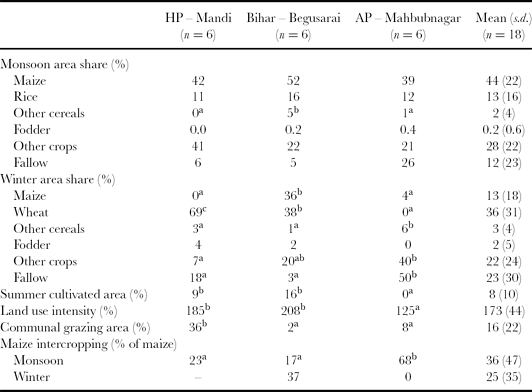
In the purposively selected study sites, maize dominates the cropping pattern during the monsoon season, with about a third of the maize area being intercropped –particularly common in the AP site with red gram/pigeon pea (Cajanus cajan). The Bihar site also has substantial winter maize, amounting to an area share similar to that devoted to wheat. Wheat is the dominant winter crop in the HP site, where low temperatures prevent cultivation of winter maize. In the AP site winter fallow is the dominant land use, with only a limited irrigated winter maize area. Fodder crops occupy only small proportions within the recorded cropping patterns in all sites (Table 7).
Land use characteristics in surveyed villages.

Note: s.d.: standard deviation. Data followed by different letters differ significantly (significance level: 0.10), within row comparison. Source: Village surveys.
Cereal production and crop residue management in case studies
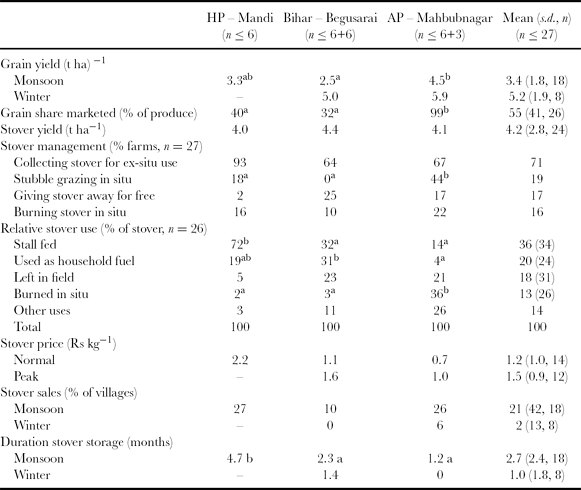
Farmer-reported monsoon maize yields average 3.4 t of grain per ha over all surveyed communities, being lowest in Bihar and highest in AP (Table 8). Reported yields compare favourably to the district averages, particularly for the AP site. However, particularly striking are the substantially higher winter maize yields, being double the monsoon maize yields in the Bihar site.
Maize productivity and stover management in surveyed villages.

Note: s.d.: standard deviation. Data followed by different letters differ significantly (significance level: 0.10), within row comparison. Source: Village surveys.
The seasonality of maize productivity and management in the Bihar site is an interesting case. The traditional monsoon maize in this region is regularly destroyed by flooding and farmers are thus reluctant to intensify during this season. Lower production risk and higher potential yields make the non-traditional winter maize season more attractive, and many farmers correspondingly invest in higher levels of inputs such as hybrid seed, fertilizer and irrigation to meet the growing market demand. For instance, while 96% of the reported winter maize varieties in Bihar are hybrids, this value is only 49% for the monsoon season. Correspondingly, 43% of the winter maize grain is sold while only 22% of the monsoon maize reaches the market. While maize in general is a less preferred food – not least due its perception as a poor person's food – there appears to be a relative preference for monsoon maize grain over winter maize for food. This is likely to be associated with the monsoon being the traditional maize growing season and its lesser reliance on hybrid maize – but the seasonal maize food preference in turn seems to extend into a seasonal feed preference for maize stover. The association of hybrid use and market orientation also holds for the other sites: while in AP hybrid use is near universal and the share of grains sold is close to 100%, hybrids account for only 41% in HP with 40% of grains being sold.
Estimated maize stover yields average around 4 t per ha (Table 8). More than two-thirds of farmers collect maize stover. Across sites, in situ stubble grazing is uncommon, but varies from being absent in the Bihar site to about half the farms in the AP site and is directly linked to the land utilization intensity. Only if the land is left fallow for a reasonably long period after the harvest is stubble grazing an option. A limited number of farms give away their maize stover or burn the stover in situ. These stover management practices result in a marked variation in relative stover use. Only in the HP site is most of the maize stover, nearly three-quarters, being used for stall feeding, with most of the rest (one-fifth) being used as household fuel. In the Bihar site, stall feeding and fuel each comprise about a third of the maize stover, with about a quarter left in the field. In the AP site the use of maize stover as feed is lowest – with only 14% of stover being stall fed and 13% stubble grazed – with more than half the stover either being burnt or left in situ (Table 8). Only a fifth of the villages reported some sales of (harvested) maize stover, but quantities sold are marginal. No sales of maize stubble grazing rights were reported.
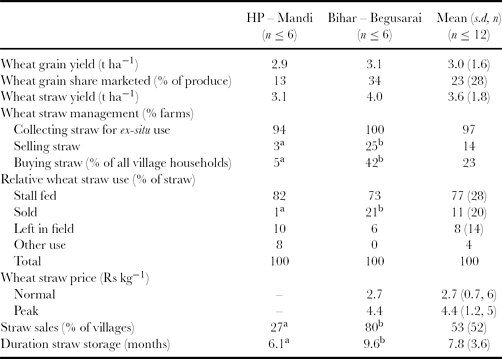
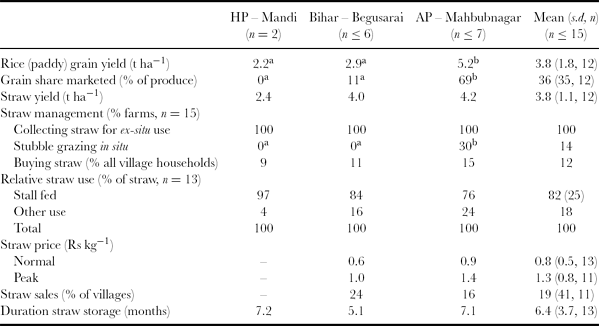
The maize productivity and crop residue management indicators can be contrasted with those from the other main cereal crops in each site – wheat in HP and Bihar (Table 9) and rice in Bihar and AP (Table 10). Most striking is that both wheat and rice straw are intensively collected for stall feeding, and particularly in the Bihar site, straw market transactions are common. Stubble grazing in general is not common in Bihar and HP and similar to maize, stubble grazing is mainly limited to the AP site due to low intensity of land use.
Wheat productivity and straw management in surveyed villages.

Note: s.d.: standard deviation; n = 12 unless otherwise indicated. Data followed by different letters differ significantly (significance level: 0.10), within row comparison. Source: Village surveys.
Rice productivity and straw management in surveyed villages.

Note: s.d: standard deviation. Data followed by different letters differ significantly (significance level: 0.10), within row comparison. Source: Village surveys.
Collection and stall feeding of crop residues implies the need for storage. In both the HP and AP sites, no substantial storage problems were reported for the main cereal straws (respectively wheat and rice), whereas some issues were reported in the case of maize stover (e.g. pests in the HP site and a change in stover quality in the AP site). Storage was particularly problematic in the relatively humid Bihar site. The site has a general lack of adequate infrastructure to store crop residues and keep them dry, and especially maize stover was liable to deteriorate through inter alia fungal growth. In turn, maize stover from the winter season is more problematic to store than stover from the monsoon season due to the subsequent onset of the monsoon and frequent flooding, whereas the winter season is relatively dry.
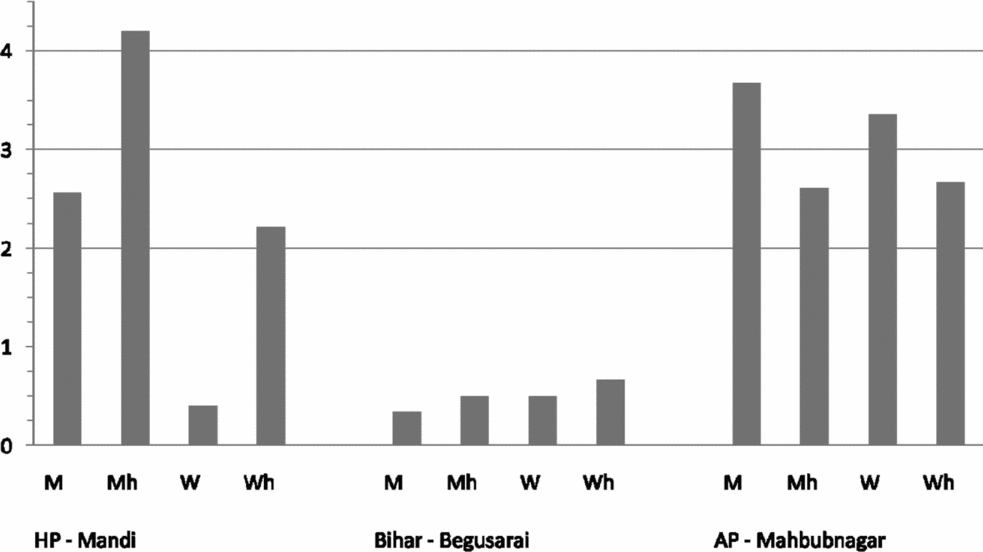
Livestock feeding in case studies
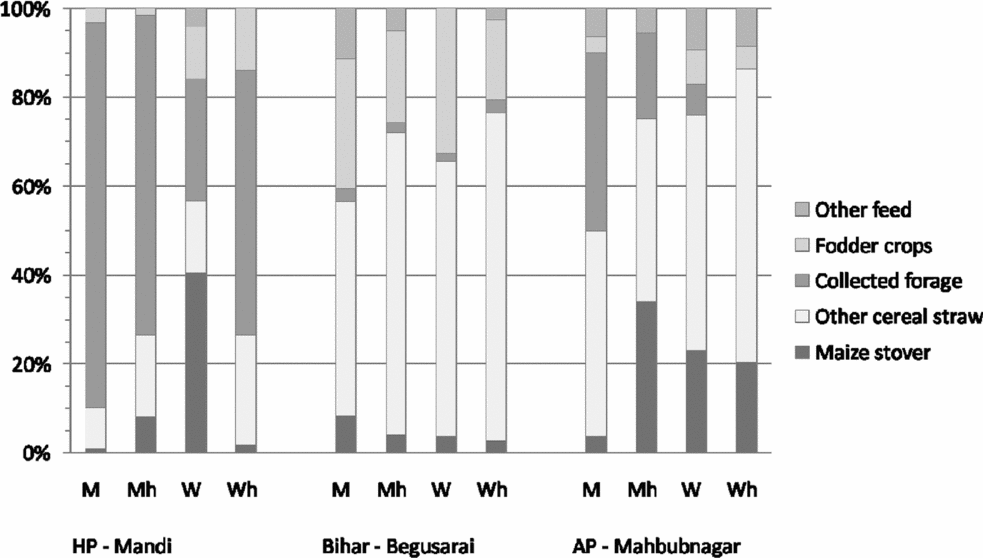
Livestock are fed through a combination of stall feeding and grazing – with a marked variation by site and season (Figure 2 and Figure 3). Seasonality is most marked in the HP site due to its low winter temperatures linked to its altitude and northern latitude. The HP site has the most extensive grassland areas, which, except for the winter season, are typically grazed for a couple of hours a day and farmers also collect green grasses to prepare hay for winter feeding. Maize residues are also primarily fed during the winter months whereas other cereal straw – mainly wheat – is fed year round as a supplement. The abundance of alternative fodder implies that, except for the winter season, crop residues typically constitute only a quarter or less of the reported daily feed ration. This contrasts with the two other sites where crop residues regularly contribute half or more of the feed ration.
Seasonality of composition of feed ration for large ruminants in study sites (M: monsoon season; Mh: Harvest monsoon crop; W: winter season; Wh: Harvest winter season). Source: Village surveys.

Seasonality of grazing (hours per day) of large ruminants in study sites (M: monsoon season; Mh: Harvest monsoon crop; W: winter season; Wh: Harvest winter season). Source: Village surveys.

In the AP site daily grazing prevails throughout the year, aided by its relatively extensive land use (seasonal fallow) and its tropical location, albeit that the monsoon season implies seasonality in the quantity and quality of grazing and forage. This is also reflected by the marked decline in the contribution of collected fodder sources from a high in the monsoon season to their virtual disappearance to the end of the dry winter season, at which time crop residues make up over 85% of the feed ration. The contribution of maize stover shows a seasonal high at the time of the maize monsoon harvest and declines to marginal levels during the monsoon season. Other crop residues are used year-round as feed and primarily revolve around the use of rice straw, with limited quantities of legume residues and other cereals.
The high density of human and livestock population in the Bihar site implies a scarcity of collectable forage sources and limited – if any – grazing land. Livestock are thereby primarily stall fed year round on a basal diet of crop residues supplemented by some cultivated fodder crops. Despite the combined maize cultivation area being greater than the combined wheat and rice areas, maize residues contribute only a small fraction of the feed ration. Wheat straw provides the bulk of the basal feed, with the contribution of rice straw similar to maize stover.
The relative use of crop residues in the feed ration is closely associated with farmer preferences. Only in the HP site is maize a preferred feed – albeit only for use during the winter season as it is perceived to generate heat after consumption. In the AP and Bihar sites, maize stover is a less preferred feed and its use is often perceived as unfavourably affecting livestock productivity and health. In the Bihar site, farmers perceive the need to mix maize stover with other feeds to reduce side-effects and they prefer monsoon to winter maize stover. Here and in HP wheat straw is the most preferred residue feed. Rice straw is preferred over maize in the AP and Bihar sites. Despite the importance of crop residues for feed, the farmers primarily selected their cereal varieties based on grain yield considerations alone.
DISCUSSION
Understanding diversity
The stakeholder consultation for the present study was designed as a scoping study to assess maize residue utilization in contrasting settings in India. As such it was not intended to provide a nationally or regionally comprehensive assessment – but instead focused on maize-based systems and sought to understand some of the inherent diversity using village surveys as a rapid characterization tool. The reviewed indicators show contrasting cases in terms of the main factors affecting crop residue utilization as feed postulated earlier in the conceptual framework. Based on supply and demand side factors alone we would a priori have expected:
- a relatively limited role of crop residues as feed in the HP site (limited cultivated area, abundant alternative fodder sources, medium livestock density, limited poverty);
- intermediate contributions of crop residues to feeding in the AP site (low land utilization intensity with some alternative fodder sources, limited livestock densities);
- relatively high proportion of crop residues in livestock feed rations in the Bihar site (high land utilization intensity for cropping and limited alternative fodder sources, high livestock densities, high population density, high poverty).
The aggregate crop residue utilization for feed in the study sites indeed largely conforms to these expectations. This confirms the observation that crop residues become increasingly important where land use intensities increase and cheap alternative fodder sources (grazing, collected forage) grow scarcer and demand for fodder increases through increasing livestock densities. The choice of which crop residues are fed appears to be less predictable. Across the three study sites maize stover was not the preferred crop residue for year round feed use, despite maize being prominent in the cropping pattern and maize stover having no obvious feed quality disadvantage. Only in the HP site was it appreciated as an important winter feed. Instead, there was a preference to use other cereal straws – particularly wheat in the HP and Bihar sites and rice straw in the AP and Bihar sites. The study thereby confirms the earlier indications of limited maize stover use as feed in India's smallholder crop-livestock systems.
Farmer – and livestock – feed preferences are associated with traditions. This is exemplified by India's apparent food-feed paradigm – whereby farmers’ staple food preferences tend to coincide with crop residue feed preferences. A clear sign is the marked preference for feeding the straw of the traditional food crop in the Indo-Gangetic plains – wheat in the northwest v. rice in the east (Erenstein and Thorpe, Reference Erenstein and Thorpe2010) despite relatively similar straw quality in nutritional studies (Schiere, Reference Schiere2010), albeit wheat having a somewhat higher digestibility (Teufel et al., Reference Teufel, Samaddar, Blummel and Erenstein2010). One contributing factor to this phenomenon could be the process of intensification. Crop residues from low external input systems generally have higher nutritive values and are preferred as a feed compared to those from more intensive input systems (Schiere, Reference Schiere2010). Traditional cereal staples generally evolved from low external input systems where initial straw quality was acceptable and straw feeding was institutionalized. However, cereals introduced as a second crop since the mid-1950s (rice in the northwest and wheat in the eastern Indo-Gangetic Plains) were established at higher intensification levels. Thereby their residues were probably less palatable and thus faced a double hurdle of established preferences and poorer perceived quality. Environmental factors may reinforce quality perceptions – e.g. the wheat crop in eastern India is more temperature stressed and has a shorter growing season and this may adversely affect straw feed quality. Interestingly, straw from the more recently introduced and relatively intensive winter (boro) rice in the lower Gangetic plains is generally less preferred as feed compared to the traditional monsoon rice. In much the same way, in Bihar low input monsoon maize grain and stover are preferred over the more high input winter maize. Follow-up research may want to establish these anecdotal inferences more rigorously.
Ceteris paribus, we expected crop residues of traditional cereal food crops to be used more intensively than those of emerging cereals. Maize has expanded rapidly in southern India, so one might expect maize to be less institutionalized as a dual purpose food-feed crop vis-à-vis the more traditional maize-growing areas in the north. Maize indeed failed to make inroads as a food crop in the southern study site where it is primarily grown as a cash crop. Yet even in our sites with a tradition of growing and eating maize (HP and Bihar), maize is not the main or preferred staple food; wheat and/or rice remain the preferred staples. Similarly, feeding maize stover may only be the farmers’ choice where the supposedly superior and preferred wheat or rice straw are lacking. This could explain why maize stover feeding was seasonal in the HP and AP study sites and relatively limited in the Bihar site. The paradigm linking preferences for food grains and feeding residues is also apparent in India's tribal areas where maize often is the dominant food-feed crop produced primarily by resource-poor farmers to meet subsistence needs. A case in point appears to be Panchmahals district, a tribal area in eastern Gujarat, where maize is the most important crop and maize stover the most important and the most preferred livestock feed (Witcombe et al., Reference Witcombe, Joshi and Goyal2003). Similarly, the predominance of maize as the leading staple and cereal in large swathes of Africa and Latin America (Table 1) has helped to establish maize stover as the traditional and preferred feed. Such preferences persisted where irrigation allowed for system intensification and the introduction of winter cereals (e.g. wheat and barley in Guanajuato in central Mexico (Erenstein, Reference Erenstein1999)). All these instances thus seem to support the food-feed paradigm, albeit that the diverse instances where farmers cultivate different cereals both for food and the market and thus face a choice in selecting crop residues as feed are particularly insightful.
As a scoping study, our sampling was purposively biased towards maize-growing areas as we expected maize stover use – if any – to be more likely in areas where maize is a major crop and therefore maize stover abundant. At the same time, such maize-dominated areas would imply a greater resemblance – at least in terms of relative maize stover availability vis-à-vis other crops – to those areas in Africa and Latin America where maize production and stover use prevail. Granted, inclusion of India's tribal areas would likely have shown greater maize stover use than that observed in our study sites – but the sampling frame was geared by the extent of maize production and thus focused on mainstream agricultural areas. Follow-up research may want to purposively contrast the stover use in tribal areas to that in mainstream areas to further enlighten the R&D community on the potential of maize stover use.
Agricultural technology can further affect crop residue utilization preferences. Maize harvesting in India is still primarily manual – whereby mature cobs are collected from the field leaving the stover in situ in first instance. Potential ex situ use of maize stover typically implies additional labour intensive operations: collection, storage and chopping (typically using a stationary forage cutter where available). This contrasts with the manual harvesting practice of rice and wheat – which implies cutting and bundling the above-ground haulms with grain still attached for subsequent centralized threshing. This implies that the bulk of the straw is already being centrally collected from the field – facilitating subsequent storage and use. Wheat straw use as feed is further associated with the advance of mechanization in the Indo-Gangetic Plains – first of stationary mechanical threshers and more recently in the northwest by the combination of combine harvesters and wheat straw reapers (Erenstein and Thorpe, Reference Erenstein and Thorpe2010). Both options cut the hardy wheat stems into more palatable pieces (bhusa) that are stored and fed as such to the ruminant livestock. Compared to the relatively bulky unchopped maize stover, threshed straw – be it chopped wheat straw or rice straw bundles – is relatively compact and easier to store. This goes some way into explaining why storage problems particularly hamper maize stover feeding vis-à-vis the other cereals.
The limited maize stover use found in our contrasting maize-growing areas appears to be primarily demand driven, with tradition and technology helping explain the preferential use for cereal straws other than maize stover. Indeed, the nutritional value of maize stover vis-à-vis other cereal residues does not appear to be a major issue according to the literature, our trial results and the widespread use of maize stover elsewhere in the (sub)tropics. This suggests there is scope for reigniting feed research in India, an issue explored in the next section before continuing with the potential implications for R&D in the last section.
Case for maize stover R&D
One may query whether it would be potentially worthwhile to invest scarce resources in maize stover R&D at all or reigniting earlier feed research in general. Being a scoping study we do not intend to provide a full fledged benefit-cost analysis here. Instead we will argue the case for new investments in feed R&D in general and maize stover R&D in particular based on the available evidence – some anecdotal – which may need to be further substantiated by future research.
A first argument for reigniting feed R&D is that crop residues are here to stay as the main feed source in the developing world for the foreseeable future. Historic trends indeed show an increased dependence on crop residue feeding in many countries (Schiere et al., Reference Schiere, Joshi, Seetharam, Oosting, Goodchild, Deinum and van Keulen2004). India is no exception: common feed resources have become increasingly scarce wherever market access is reasonable, purposive fodder crop production remains limited and crop residues are the predominant feed for its prevailingly mixed farming systems (Chakravarti, Reference Chakravarti1987; Erenstein and Thorpe, Reference Erenstein and Thorpe2010; NIANP, 2003). Indeed, across the Indian subcontinent, farmers recall that cereal residues which were once burned are now increasingly used as feed and bedding (Schiere et al., Reference Schiere, Joshi, Seetharam, Oosting, Goodchild, Deinum and van Keulen2004). Although intensifying and specializing livestock farming systems require feed rations with a higher nutrient density (Erenstein and Thorpe, Reference Erenstein and Thorpe2010), crop residues are likely to continue to play a substantial role (Schiere, Reference Schiere2010). Indeed, even in India's more intensive mixed smallholder farming systems, ruminant livestock continue to be fed a basal diet largely based on cereal crop residues throughout the year (Erenstein and Thorpe, Reference Erenstein and Thorpe2010). In such systems, cereal residues also provide an important fibrous supplement to the green fodder fed to the prevailingly stall-fed dairy animals. A clear sign of the continued importance of crop residues as feed source are the crop residue markets that have developed in and around urban centres across India (Blummel and Rao, Reference Blummel and Rao2006; Teufel et al., Reference Teufel, Samaddar, Blummel and Erenstein2010). The continued importance of crop residues as feed is also apparent when comparing different studies over time, with their relative value appearing to have increased. For instance, the sorghum stover price in AP was about a quarter of the grain price around 1980 and about half in the 2000s in (peri-)urban fodder markets (Blummel and Rao, Reference Blummel and Rao2006; Schiere et al., Reference Schiere, Joshi, Seetharam, Oosting, Goodchild, Deinum and van Keulen2004). Similarly in northern India wheat straw:grain price ratios appear to have increased from 10–15% around 1980 (Schiere et al., Reference Schiere, Joshi, Seetharam, Oosting, Goodchild, Deinum and van Keulen2004) to an average of 22% on farm in the 2000s (Erenstein and Thorpe, Reference Erenstein and Thorpe2010) and up to 40% in urban markets like New Delhi (Teufel et al., Reference Teufel, Samaddar, Blummel and Erenstein2010). Feed resources projections in the Indian context indeed see a greater dependence on crop residue in the near future (Ramachandra et al., Reference Ramachandra, Taneja, Sampath, Angadi and Anandan2007). Therefore despite India's economic growth, crop residues are likely to remain the primary feed choice for the bulk of its livestock keepers for decades to come.
A second argument for reigniting feed R&D is based on the on-going structural shifts in residue supply and demand in developing countries. In regard to the supply side, maize has become the world's leading cereal and growth of maize production and area are likely to continue, also in India, implying an ever increasing role in terms of its contribution to cereal residue production. Southern India is a case in point, whereby the rapid spread of maize is displacing crops like sorghum and thereby the supply of preferred feed sources. Thus, research priorities should be revisited to take the changing availability of cereal residues into account. On the demand side the likely continued dependence on crop residues as feed, continuing population growth (human and livestock) and the increasing demand for livestock products associated with economic growth will all contribute to a continuously growing demand for crop residues as livestock feed.
A third argument for reigniting feed R&D is the potential role of crop breeding in increasing the nutritional (and economic) value of crop residues. This has been argued before, but there is an increasing body of evidence to substantiate it. Indeed, for several cereals the potential to invest in stover quality improvement without compromising yield has now been established – including maize (Tolera et al., Reference Tolera, Berg and Sundstøl1999), sorghum and pearl millet (Blummel et al., Reference Blummel, Zerbini, Reddy, Hash, Bidinger and Khan2003; Reference Blummel, Bidinger and Hash2007; Hall et al., Reference Hall, Blummel, Thorpe, Bidinger and Hash2004; Zerbini and Thomas, Reference Zerbini and Thomas2003) and rice (Prasad et al., Reference Prasad, Ravi, Virk, Blümmel, Pattaniak, Narayan and Verma2006). The common aspect is that specific residue feed quality traits such as residue digestibility typically show a broad range over genotypes without being linked to grain yield, enhancing the prospects of purposive selection to generate yield competitive dual purpose varieties. The nutritional quality (and the quantity) of cereal residues are increasingly accepted as important considerations in the selection or rejection of candidate cereal cultivars (Schiere et al., Reference Schiere, Joshi, Seetharam, Oosting, Goodchild, Deinum and van Keulen2004). With this, plant breeders are following the markets where, for instance in southern India, a clear association between digestibility and price of sorghum stover has been recorded: a 5%-point increase in digestibility was associated with an approximate 25% price increase in urban fodder markets (Blummel and Rao, Reference Blummel and Rao2006).
A fourth argument for reigniting feed R&D are the markedly pro-poor implications of feed R&D. The potential complementarities of crop and livestock in mixed smallholder systems are well established, including livelihood diversification, risk mitigation and financial functions (Erenstein and Thorpe, Reference Erenstein and Thorpe2010). Yet despite their complementarities, livestock productivity is generally poor in such systems, not least because of the prevailing feeding practices associated inter alia with resource constraints, seasonality and the relative lack of intensification incentives. Indeed, the already limited purposive fodder crop production in India is inversely associated with poverty – being largely concentrated in the better-off areas (Chakravarti, Reference Chakravarti1987; Erenstein and Thorpe, Reference Erenstein and Thorpe2010). Crop residues thereby are the feed resource of choice throughout large swathes of the developing world – not least because such use does not compete with human nutrition. Yet the poor nutritive status implies that comparatively small feed improvements can often make the difference between simple animal survival (i.e. all nutrients utilized for maintenance) and a productive livestock herd generating income and fulfilling other livelihood functions (i.e. a considerable proportion of nutrients utilized for growth and/or milk production). Although various residue treatments have been developed, their successful uptake by smallholders has been limited, often simply because of not being cost effective. Dual-purpose cereal varieties thereby appear as particularly promising and cost effective pro-poor innovations, with the feed enhancement effectively embodied in the seed. Thus, no new technology distribution channels are required and farmers would not face any additional costs. The development of successful dual-purpose cereal varieties would require some limited additional upfront investments in breeding (see previous point), but with potentially huge pay-offs in terms of scalability, reach and inclusiveness. The evolving feed processing value chains also provide additional income and jobs.
A final argument for reigniting feed R&D are the current substantial knowledge gaps. The underlying example of maize stover in India is a case in point, partly linked to maize being a new crop and existing preferences and preconceptions. Similarly, opinions vary on the potential feed value of stover vis-à-vis other straw, which are not always substantiated by measured nutritional values. Such perceptions and knowledge gaps can lead to considerable waste and even substantial environmental externalities (e.g. in the case of in situ crop residue burning or the use of crop biomass as households fuel). Although there have been calls for a greater emphasis on participatory and holistic system approaches in relation to feed R&D (Schiere, Reference Schiere2010), progress has been piecemeal. The disciplinary divides (between livestock and crop scientists; between social and bio-physical scientists) and a prevailingly reductionist perspective in the Indian national agriculture research and extension systems have proven to be considerable hurdles (Erenstein and Thorpe, Reference Erenstein and Thorpe2010; Schiere et al., Reference Schiere, Singh and De Boer2000). In view of such compartmentalization and the general lack of participatory and holistic system perspectives, there are bound to be potential synergies and gains that are overlooked or simply discarded; with likely substantial payoffs when adequately addressed.
Implications for R&D
Our scoping study suggests an enhanced emphasis on applied R&D in India to establish and demonstrate the potential contribution of maize stover as feed source to farmers and development agents alike. Although a relatively neglected area so far, the previous section outlines the considerable potential of investing in feed R&D in general and maize stover R&D in particular in India. Particularly promising for the medium to longer term is the potential of enhancing the nutritive value of maize stover through breeding without compromising yield. Some however remain more sceptical about the prospects of genetic enhancement of stover digestibility because feed rations remain largely deficient (e.g. in N, Romney et al. (Reference Romney, Thorne, Lukuyu and Thornton2003)) or on technical grounds (Thorne et al., Reference Thorne, Thornton, Kruska, Reynolds, Waddington, Rutherford and Odero2003). Others acknowledge the potential contribution of breeding, although this can be dwarfed by the effects of climate and cultural practices (Schiere, Reference Schiere2010).
There are complementary options and opportunities for improving the use of maize stover as livestock feed in the short to medium term. For instance, Prasad et al. (Reference Prasad, Gupta, Shah, Blummel, Bakshi and Wadhwa2007) have shown that maize stover can substitute sorghum stover in complete feed blocks in South India. Miracle Fodder and Feed Pvt Ltd, Hyderabad, collaborated in this study as they previously set up a production and marketing chain for sorghum stover based feed-blocks in AP. The same company has meanwhile been requested by the government of Maharashtra to establish a maize stover based feed block unit in that state (Shah, personal communication). Similarly, the comparisons of maize stover based feed blocks with those based on rice and wheat straw in the present study showed that maize stover is at least as valuable a diet ingredient (Table 4). Rice and wheat straw are both widely used in Indian livestock feeding and feed processing value chains have developed accordingly. Similar opportunities exist for maize stover.
Maize stover handling and storage appears to be one particular area that merits further attention from the R&D community. Maize stover is bulky by nature and cumbersome to handle, process and store. Maize stover storage technology is rudimentary and generally inappropriate for humid conditions (e.g. beyond the dry season). Earlier studies have reported on the deterioration of maize stover as feed source during storage (Methu et al., Reference Methu, Owen, Abate and Tanner2001), particularly when storage conditions favour fungal growth and result in mycotoxin contamination (Panigrahi et al., Reference Panigrahi, Wareing, Ncube, Smith and Huq1995; Phillips et al., Reference Phillips, Wareing, Dutta, Panigrahi and Medlock1996). There is a need to develop cost-effective technologies that improve maize stover handling, chopping and storage.
Demonstrating the potential of maize stover and associated technologies will enable maize farmers to more effectively use maize stover as feed source in India. But it is sobering to note the long R&D history of trying to enhance the nutritive value and digestibility of crop residues through chemical, physical and biological means. Despite considerable efforts, technology uptake typically has been lacklustre for not being appropriate, cost effective and/or failing to reach the end-user (Gressel and Zilberstein, Reference Gressel and Zilberstein2003; Owen and Jayasuriya, Reference Owen and Jayasuriya1989; Schiere et al., Reference Schiere, Singh and De Boer2000; Zerbini and Thomas, Reference Zerbini and Thomas2003).
This suggests that the R&D process itself also merits attention. The present scoping study highlights some of the diversity and challenges in terms of maize stover use. This needs to be complemented by participatory applied R&D to develop appropriate technological options. Participatory varietal selection seems to offer particular promise – e.g. tribal farmers have expressed a preference for tall maize cultivars as fodder quantity was deemed important (Witcombe et al., Reference Witcombe, Joshi and Goyal2003). Farmer participatory evaluation of fodder traits offers promise to capture the often-subjective range of quality attributes that farmers – and their animals – value. Such quality traits may differ in terms of ease of screening, but their inclusion would likely enhance dual-purpose variety development (Rao and Hall, Reference Rao and Hall2003).
Enhanced maize stover use as feed may ease fodder deficits, but may also imply trade-offs – for instance in terms of reduced stover availability for such alternative uses as biofuel (Lal, Reference Lal2005) and mulch for conservation agriculture (Hobbs et al., Reference Hobbs, Sayre and Gupta2008). However, enhanced feed use and conservation agriculture are not necessarily antagonistic (Erenstein and Thorpe, Reference Erenstein and Thorpe2010). The advent of conservation agriculture can indeed be hampered both by too much as well as too little crop residues. Marked preferences for one crop residue over the other can contribute to profound seasonal imbalances in terms of residue surplus and/or scarcity. Surplus residue, particularly in high biomass situations, typically makes land preparation and establishment more cumbersome – leading many farmers to opt for in situ burning as a relatively easy disposal mechanism. A case in point are the combine harvested rice-wheat areas in the northwest Indo-Gangetic Plains, where farmers have a strong preference for wheat straw which is intensively collected and traded whereas surplus rice straw is burned (Erenstein and Thorpe, Reference Erenstein and Thorpe2010). Surplus residue also poses particular challenges to the trash handling ability of mechanical seeders – already an issue in India in view of the prevailing tined-seed drills and particularly problematic for long and sturdy stovers. Smoothing residue utilization and retention over crop cycles and crops by only partially using residues for feed and leaving part in the field may thus be an attractive win-win proposition. Partial residue utilization also opens the prospect of only collecting the more nutritive residue components and leaving the less nutritive and more weathering resistant stubble as mulch. Increased maize stover use could thus help rationalize crop residue management practices over space and seasons, thereby actually facilitating the in situ retention of minimum levels of crop residue as advocated under conservation agriculture.
Finally, the present research shows considerable scope for improving the current limited use of maize stover as livestock feed in India, but further research would be useful so as to more rigorously substantiate the potential options, tradeoffs and returns to feed R&D in general and maize stover R&D in particular.
CONCLUSION
The study confirms earlier indications of limited maize stover use in India's smallholder crop-livestock systems – particularly in the mainstream maize-producing areas. The relatively limited extent of maize stover use contrasts with the intensive use of other cereal residues in India and the intensive use of maize stover elsewhere in the (sub)tropics. Where farmers decide to feed maize stover they appear to be primarily driven by need, with tradition and technology helping to explain the preferential use of other cereal residues. The paper thereby provides further impetus to India's apparent food-feed paradigm and the need to reignite feed research. Maize stover use merits more attention from the agricultural R&D community in India and beyond, so as to optimize their contribution to rural livelihoods, poverty alleviation and environmental sustainability.
Acknowledgements
The study benefited from financial assistance provided by CGIAR Systemwide Livestock Programme (SLP) for the field work. The underlying field work benefited from the contributions from various national agriculture research and extension systems partners and colleagues, and we kindly acknowledge the inputs of S. K. Chauhan, Jagdish, Chandra Sekhar, Prabhakar, S. K. Guleria, Balbir Singh for HP; Ravi Gopal Singh, Gaurav Yadav, Rajesh Ranjan, P. B. Jha, R. K. P. Singh for Bihar; and Sudhakar, Ramulu, Shravan Kumar, Swarnalatha, Ashok Vardhan Reddy, C. I. Edward, S. M. Khadri, Damodar Gowd, B. Vishnubhotla Prasad, Laxmi Kantha Reddy, J. C. Sehkar, Nagappa,Venkatesh, Kaja Jairuddin and G. Maheswari for AP. The paper benefitted from reviewer comments. The views expressed here are those of the authors and do not necessarily reflect the views of the donor or the authors’ institution.