







1. Introduction
The high-order conformally invariant operators are a fundamental topic in conformal geometry. For a closed manifold (M, g), an operator Ag is said to be conformally invariant if, under a conformal change of metric 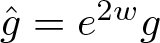 $\hat{g}=e^{2w}g$, it satisfies
 \begin{align*}
A_{\hat{g}}(\phi)=e^{-bw}A_{g}(e^{aw}\phi),
\end{align*}
where  $\phi\in C^{\infty}(M)$ and a, b are constants. If n = 2, the Laplace–Beltrami operator
 $\Delta_g$ is a basic example of a conformally invariant operator, satisfying
 \begin{align*}
\Delta_{\hat{g}}(\phi)=e^{-2w}\Delta_{g}\phi.
\end{align*}
For a new conformal metric  $ \hat{g}$ on M, its Gauss curvature satisfies the following critical exponent elliptic equation:
 \begin{align*}
-\Delta_{g}w+K_{g}=K_{\hat{g}}e^{2w}.
\end{align*}
For  $n \geq 3$, there exists a higher-order conformally invariant operator
 $P_g^n$, known as the GJMS operator, which transforms under a conformal change of metric as
 \begin{align*}
P_{g}^n(w)+2Q_{g}^n=2Q_{\hat{g}}^ne^{nw}.
\end{align*}
While the explicit formula for the GJMS operator on a general closed manifold is highly intricate, on the standard sphere  $\mathbb{S}^n$, it admits a more explicit representation
 \begin{align}
P_{\mathbb{S}^n}=\begin{cases}
\displaystyle \prod_{k=0}^{\frac{n-2}{2}}\left(-\Delta_{g_{\mathbb{S}^n}}+k(n-k-1)\right)\qquad\qquad\qquad\qquad\qquad\qquad\,\,\quad\mathrm{for}\,\,\,n\,\,\,\mathrm{even},\\
\displaystyle \left(-\Delta_{g_{\mathbb{S}^n}}+\left(\frac{n-1}{2}\right)^2\right)^{1/2}\prod_{k=0}^{\frac{n-3}{2}}\left(-\Delta_{g_{\mathbb{S}^n}}+k(n-k-1)\right)\qquad\mathrm{for}\,\,\,n\,\,\,\mathrm{odd}.
\end{cases}
\end{align}
A well-known problem related to  $ P_{\mathbb{S}^n} $ is the prescribed Q-curvature problem: given a function Q, can we find a solution to the PDE
 \begin{align}
P_{\mathbb{S}^n}w+2Q_{g_{\mathbb{S}^n}}=2Qe^{nw}~?
\end{align}
In fact, a necessary condition for the solvability of this equation, known as the Kazdan–Warner condition, is given by
 \begin{align}
\int_{\mathbb{S}^n}\langle\nabla x^{l}, \nabla Q\rangle e^{nw}\mathrm{d} V_{\mathbb{S}^n}=0, \qquad\mathrm{for}\qquad l=1,2,\cdots,n+1.
\end{align}
In the context of the prescribed Q-curvature problem, an intriguing example was presented in [Reference Zhang41], where the traditional non-degeneracy condition is not satisfied. Nevertheless, Eq. (1.2) still admits at least one solution, highlighting a scenario where the usual assumptions can be partially relaxed.
To introduce the main topic of this paper, we begin by considering the following geometric functional,
 \begin{align*}
J_{\alpha}(v)=\frac{n\alpha}{2(n-1)!}\unicode{x2A0F}_{\mathbb{S}^n} vP_{\mathbb{S}^n}v\mathrm{d} V_{\mathbb{S}^n}+n\unicode{x2A0F}_{\mathbb{S}^n} v\mathrm{d} V_{\mathbb{S}^n}-\log\unicode{x2A0F}_{\mathbb{S}^n} e^{nv}\mathrm{d} V_{\mathbb{S}^n},
\end{align*}
when  $\alpha\geq1$, Onofri inequality [Reference Onofri33]
 $(n=2)$ and Beckner inequality [Reference Beckner4]
 $(n\geq 3)$ states that
 $J_{\alpha}(v)\geq0$ for any
 $v\in H^{\frac{n}{2}}(\mathbb{S}^n)$, and
 $J_{1}(v)=0$ if and only if
 $e^{2v}g_{\mathbb{S}^n}=\varphi^{*}g_{\mathbb{S}^n}$ for some conformal transformation φ on
 $\mathbb{S}^n$. To proceed with the discussion, we define
 \begin{align*}
\mathcal{M}=\left\{v\Big|\int_{\mathbb{S}^n}e^{nv}x^{l}\mathrm{d} V_{\mathbb{S}^n}=0\quad\mathrm{for}\quad l=1,2,\cdots,n+1\right\}.
\end{align*}
An intriguing problem is to consider the minimum and the critical points of  $J_{\alpha}(\cdot)$ within
 $\mathcal{M}$. Specifically,
 \begin{align}
J_{\alpha}: =\inf_{v\in\mathcal{M}}J_{\alpha}(v).
\end{align}
Using the Kazdan–Warner condition (1.3), one can prove that all the possible critical points of Jα satisfy
 \begin{align}
\alpha P_{\mathbb{S}^n}v_{\alpha}+2Q_{g_{\mathbb{S}^n}}=2Q_{g_{\mathbb{S}^n}}e^{nv_{\alpha}},
\end{align}
where 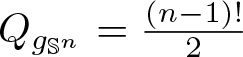 $Q_{g_{\mathbb{S}^n}}=\frac{(n-1)!}{2}$. Regarding (1.4), we conjecture that the following result holds:
 \begin{align*}
J_{\alpha}= 0\qquad\mathrm{for}\qquad \alpha\in[1/2, 1)\,\,?
\end{align*}
Motivated by results established by Aubin [Reference Aubin2] and Chang–Yang [Reference Chang and Yang8], we propose a stronger conjecture:
For  $n\geq2$ and for any
 $\alpha\in [1/2, 1)$ the following equation
 \begin{align*}
\alpha P_{\mathbb{S}^n}v_{\alpha}+2Q_{g_{\mathbb{S}^n}}=2Q_{g_{\mathbb{S}^n}}e^{nv_{\alpha}}
\end{align*}
has only trivial solution.
Regarding the above (1.4), (1.5), and conjecture A, several results are listed below.
(1) n = 2. Provided that α > 1, then
 $J_{\alpha}= 0$ and the solutions of (1.5) are only trivial, refer to [Reference Chanillo and Kiessling10, Reference Chen and Li12]. If
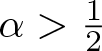
$\alpha \gt \frac{1}{2}$, Aubin [Reference Aubin2] who proved that the variational problem (1.4) is bounded below and is attained by minimizer vα in
$\mathcal{M}$. For
$\alpha\in (1-\epsilon_0,1)$, where ϵ 0 is sufficiently small, Chang and Yang [Reference Chang and Yang7] showed that
$J_{\alpha}=0$ and the minimizer
$v_{\alpha}\equiv 0$. With the axially symmetric assumption, Feldman et al. [Reference Feldman and Froese14] have proven that under
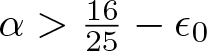
$\alpha \gt \frac{16}{25}-\epsilon_0$, all solutions of (1.5) are zero; for
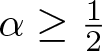
$\alpha\geq\frac{1}{2}$, Gui and Wei [Reference Gui and Wei17], and Lin [Reference Lin24] independently proved that (1.5) has only trivial solution. For the general case, Ghoussoub and Lin [Reference Lin30] showed that if
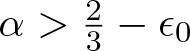
$\alpha \gt \frac{2}{3}-\epsilon_0$, then conjecture A is true. Finally, Gui and Moradifam [Reference Gui and Moradifam16] completed the proof of conjecture A by the sphere covering inequality.
(2)
$n=2m\geq 4$. Suppose
$\alpha \gt \frac{1}{2}$, Chang and Yang [Reference Chang and Yang8] showed that variational problem (1.4) is bounded below and is achieved by minimizer vα. Afterwards, Wei and Xu [Reference Wei and Xu36] clarified that
$J_{\alpha}=0$ and the minimizer
$v_{\alpha}\equiv 0$ for
$\alpha\in (1-\epsilon_0,1)$. Recently, for axially symmetric cases, Gui et al. [Reference Gui, Hu and Xie15] proved that all solutions of (1.5) are trivial if
$\alpha=\frac{1}{n+1}$ or
$\alpha\in (\alpha_n, 1)$ with
$n=6, 8$.



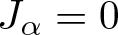


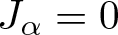


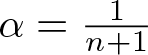
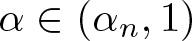

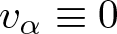
Similar to n = 2, if α > 1, applying the moving plane method as [Reference Zhang39], we prove that 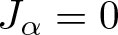 $J_{\alpha}=0$ and the solution of (1.5) are trivial for dimensions greater than two.
Theorem 1.1
Suppose α > 1 and  $n\geq3$, if vα is a solution of
 \begin{align*}
\alpha P_{\mathbb{S}^n}v_{\alpha}+2Q_{g_{\mathbb{S}^n}}=2Q_{g_{\mathbb{S}^n}}e^{nv_{\alpha}},
\end{align*}
then 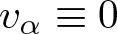 $v_{\alpha}\equiv0$.
For α < 1, the situation becomes more challenging due to the loss of a uniform maximum principle (i.e., lemma 3.3) for all 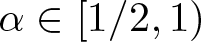 $\alpha \in [1/2, 1)$. To overcome this difficulty, we adopt the “compactness implies uniqueness” technique from [Reference Chang and Yang7], which relies on the eigenvalue analysis of the GJMS operator. Inspired by [Reference Malchiodi26], we establish the following compactness theorem for
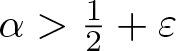 $\alpha \gt \frac{1}{2} + \varepsilon$, where ɛ > 0 is sufficiently small.
Theorem 1.2
Suppose  $n=2m\geq 4$, then for any ϵ > 0, the following set
 \begin{align*}
\mathcal{S}_{\epsilon}=\left\{v_{\alpha}\Big|\alpha P_{\mathbb{S}^n}v_{\alpha}+2Q_{g_{\mathbb{S}^n}}=2Q_{g_{\mathbb{S}^n}}e^{nv_{\alpha}}\quad\mathrm{and}\quad \alpha\in \left(\frac{1}{2}+\epsilon,1\right)\right\}
\end{align*}
is compact in 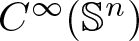 $C^{\infty}(\mathbb{S}^n)$ topology.
As a direct consequence, we can prove conjecture A for  $\alpha\in (1-\epsilon_0, 1)$, thereby extending the results of Wei and Xu [Reference Wei and Xu36]. It is also worth noting that while conjecture A has been fully resolved in two dimensions by Gui and Moradifam [Reference Gui and Moradifam16], their approach heavily relies on counting the number of nodal sets and Bol’s inequality.
Theorem 1.3
Suppose  $n=2m\geq 4$, there exist
 $\epsilon_0 \gt 0$ such that for all
 $\alpha\in (1-\epsilon_0,1)$, the equation
 \begin{align*}
\alpha P_{\mathbb{S}^n}v_{\alpha}+2Q_{g_{\mathbb{S}^n}}=2Q_{g_{\mathbb{S}^n}}e^{nv_{\alpha}}
\end{align*}
has only trivial solution.
Lastly, we point out a very interesting corollary, i.e., the value of α which has only trivial solution is open in  $(1/2,1)$.
Theorem 1.4
Suppose  $n=2m\geq4$, denote
 \begin{align*}
\Gamma=\left\{\alpha\in \left(\frac{1}{2},1\right)\bigg|\left\{v_{\alpha}|\alpha P_{\mathbb{S}^n}v_{\alpha}+2Q_{g_{\mathbb{S}^n}}=2Q_{g_{\mathbb{S}^n}}e^{nv_{\alpha}}\right\}=\{0\}\right\}.
\end{align*}
then Γ is open in  $\left(\frac{1}{2},1\right)$ and
 $(1-\epsilon_0, 1) \subset \Gamma$
The organization of this paper is as follows. In §2, we establish essential estimates for 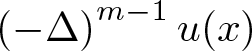 $\left(-\Delta\right)^{m-1} u(x)$. In §3.1, we prove the radial symmetry of solutions with respect to their critical points in three steps: initiating the moving plane method, showing that
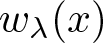 $w_{\lambda}(x)$ vanishes in the limiting state, and the plane must stop the origin. §3.2 focuses on determining the possible number of critical points of the solution. We then establish the uniqueness of solutions on the sphere for α > 1. In §3.3, we present a new proof of Beckner’s inequality using theorem 1.1. In §4.1, we develop a concentration-compactness lemma along with key a priori estimates. §4.2 classifies higher-order conformally invariant equations under certain integral decay conditions. In §4.3, we analyze the possible number of concentration points and prove theorems 1.2, 1.3, and 1.4. Additionally, we examine the critical case when
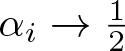 $\alpha_i \to \frac{1}{2}$, proving theorem 4.3 and illustrating the blow-up behaviour of the sequence
 $\{v_i\}_{i=1}^{+\infty}$.
2. Preliminaries
In §2 and §3, we establish the theorems for a fixed α and any given solution vα, meaning the constants in these sections may depend on α. Since we only require the assumption α > 1, we omit the subscript α for simplicity.
Firstly, for any fixed point  $p \in \mathbb{S}^n$, we introduce the stereographic projection
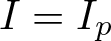 $I = I_p$ with p as the north pole. More specifically, the mapping
 $I = I_p: (\mathbb{R}^n, x) \to \mathbb{S}^n \setminus \{p\}$ is given by
 \begin{align*}
I_p(x)=\left(\frac{2x_1}{1+|x|^2},\cdots, \frac{2x_n}{1+|x|^2}, \frac{|x|^2-1}{|x|^2+1}\right).
\end{align*}
For simplicity, we often omit the subscript p, through the conformal change of GJMS operator  $P_{\mathbb{S}^n}$ we know
 \begin{align*}
\alpha\left(\frac{2}{1+|x|^2}\right)^{-n}\left(-\Delta\right)^{\frac{n}{2}}v\circ I(x)+2Q_{g_{\mathbb{S}^n}}=2Q_{g_{\mathbb{S}^n}}e^{nv\circ I(x)}.
\end{align*}
Denote  $u(x)=v\circ I(x)+\frac{1}{\alpha}\log\frac{2}{1+|x|^2}$, it satisfies
 \begin{align*}
\alpha\left(\frac{2}{1+|x|^2}\right)^{-n}\left(-\Delta\right)^{\frac{n}{2}}&\left(u(x)-\frac{1}{\alpha}\log\frac{2}{1+|x|^2}\right)+2Q_{g_{\mathbb{S}^n}}\\
=&2Q_{g_{\mathbb{S}^n}}e^{nu(x)}\left(\frac{2}{1+|x|^2}\right)^{-\frac{n}{\alpha}}.
\end{align*}
Then,
 \begin{align}
\left(-\Delta\right)^{\frac{n}{2}}u(x)=2Q_g(x)e^{nu(x)}\qquad\qquad\mathrm{in}\qquad\mathbb{R}^n,
\end{align}
where
 \begin{align*}
Q_g(x)=\frac{Q_{g_{\mathbb{S}^n}}}{\alpha}\left(\frac{2}{1+|x|^2}\right)^{n\left(1-1/\alpha\right
)}.
\end{align*}
In this paper, denote 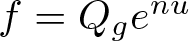 $f=Q_ge^{nu}$. Recall that
 $u(x)=v\circ I(x)+\frac{1}{\alpha}\log\frac{2}{1+|x|^2}$, we know
 \begin{align}
\lim_{|x|\to+\infty}\frac{u(x)}{-\frac{2}{\alpha}\log|x|}=1.
\end{align}
Suppose  $ I' = I_{-p}: (\mathbb{R}^n, y) \to \mathbb{S}^n \setminus \{-p\}$ is another stereographic projection with −p as the north pole. Then, the smoothness of v around p is equivalent to the smoothness of
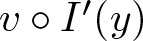 $v \circ I'(y)$ around 0. Clearly, we have
 $y=(I^{'})^{-1}\circ I(x)=\frac{x}{|x|^2}$ and
 \begin{align*}
v\circ I(x)=\left(v\circ I^{'}\right)\circ\left(I^{'}\right)^{-1}\circ I(x)=\left(v\circ I^{'}\right)\left(\frac{x}{|x|^2}\right).
\end{align*}
Denote  $m=\left[\frac{n+1}{2}\right]\geq 2$ and we let
 $h(x)=\left(-\Delta\right)^{m-1} u(x)$, we always assume that p is a critical point of v.
Lemma 2.1.
For 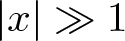 $|x|\gg1$, if p is a critical point of v, we have
 \begin{align*}
u(x)=-\frac{2}{\alpha}\log|x|+c+O(|x|^{-2}).
\end{align*}
Proof. Let  $\bar{u}(x)=u(x)+\frac{2}{\alpha}\log|x|=v\circ I(x)+\frac{1}{\alpha}\log\frac{2|x|^2}{1+|x|^2}$, then
 \begin{align*}
\lim_{|x|\to+\infty}\bar{u}(x)=v(p)+\frac{1}{\alpha}\log 2:=c.
\end{align*}
We consider
 \begin{align*}
|x|\left(\bar{u}(x)-c\right)=|x|\left(\left(v\circ I^{'}\right)\left(\frac{x}{|x|^2}\right)-v(p)\right)+|x|\log\frac{|x|^2}{1+|x|^2}.
\end{align*}
Note that 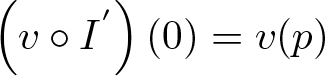 $\left(v\circ I^{'}\right)(0)=v(p)$,
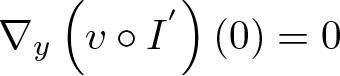 $\nabla_y\left(v\circ I^{'}\right)(0)=0$ and
 $\lim_{|x|\to+\infty}|x|\log\frac{|x|^2}{1+|x|^2}=0$, we have
 \begin{align*}
\left||x|\left(\bar{u}(x)-c\right)\right|=\left|\left(\nabla_y\left(v\circ I^{'}\right)(0)\cdot\frac{x}{|x|}\right)\right|+O\left(\frac{1}{|x|}\right)=O\left(\frac{1}{|x|}\right).
\end{align*}
The following lemma 2.2 is a classical result in the moving plane method, and our proof is partially inspired by Lemma 3.2 in [Reference Chang and Yang9].
Lemma 2.2.
Suppose p is a critical point of v, then h(x) has the following expansion at infinity:
 \begin{align}
\begin{cases}
\displaystyle h(x)=\frac{a_0}{|x|^{2(m-1)}}+\sum_{i, j=1}^{n}\frac{a_{ij}x_ix_i}{|x|^{2m+2}}+O\left(\frac{1}{|x|^{2m+1}}\right),\\
\displaystyle \partial_ih(x)=-2(m-1)\sum_{i=1}^{n}\frac{a_0x_i}{|x|^{2m}}+O\left(\frac{1}{|x|^{2m+1}}\right),\\
\displaystyle \partial_i\partial_jh(x)=O\left(\frac{1}{|x|^{2m}}\right),
\end{cases}
\end{align}
where 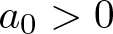 $a_0 \gt 0$ and
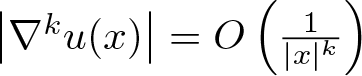 $\left|\nabla^k u(x)\right|=O\left(\frac{1}{|x|^{k}}\right)$.
Proof. Since
 \begin{align*}
\partial _i\log\frac{2}{1+|x|^2}&=\frac{-2x_i}{1+|x|^2}\\
\partial_j\partial _i\log\frac{2}{1+|x|^2}&=-2\left(\frac{\delta_{ij}}{1+|x|^2}-\frac{2x_ix_j}{(1+|x|^2)^2}\right),
\end{align*}
hence
 \begin{align*}
\left(-\Delta\right)\log\frac{2}{1+|x|^2}=\frac{n+(n-2)|x|^2}{(1+|x|^2)^2}=\frac{(n-2)}{|x|^2}+O\left(\frac{1}{|x|^4}\right).
\end{align*}
Note that the  $\log\frac{2}{1+r^2}$ is analytic with respect to the variable
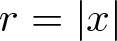 $r=|x|$, when
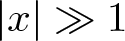 $|x|\gg1$ and
 \begin{equation*}\left(-\Delta\right)^{m-2}\left(\frac{1}{|x|^2}\right)=\frac{c_0}{|x|^{2(m-1)}}\end{equation*}
where  $c_0=\prod_{i=1}^{m-2}(n-2i-2)\prod_{i=1}^{m-2}(2i) \gt 0$, then
 \begin{align*}
\left(-\Delta\right)^{m-1}\log\frac{2}{1+|x|^2}=\frac{(n-2)c_0}{|x|^{2(m-1)}}+O\left(\frac{1}{|x|^{2m}}\right).
\end{align*}
Now we continue to calculate  $(-\Delta)\left(v\circ I(x)\right)$,
 \begin{align*}
\partial_i\left(v\circ I(x)\right)&=\partial_{y_{\alpha}}\left(v\circ I^{'}\right)(y)\frac{\partial y_{\alpha}}{\partial x_i}\\
&=\partial_{y_{\alpha}}\left(v\circ I^{'}\right)(y)\left(\frac{\delta_{\alpha i}}{|x|^2}-\frac{2x_\alpha x_i}{|x|^4}\right)
\end{align*}
and
 \begin{align*}
\partial_j\partial_i\left(v\circ I(x)\right)&=\partial_{y_{\beta}}\partial_{y_{\alpha}}\left(v\circ I^{'}\right)(y)\left(\frac{\delta_{\alpha i}}{|x|^2}-\frac{2x_\alpha x_i}{|x|^4}\right)\left(\frac{\delta_{\beta j}}{|x|^2}-\frac{2x_\beta x_j}{|x|^4}\right)\\
&+\partial_{y_{\alpha}}\left(v\circ I^{'}\right)(y)\left(-\frac{2\delta_{\alpha i}x_j}{|x|^4}-\frac{2\delta_{\alpha j} x_i+2x_{\alpha}\delta_{ij}}{|x|^4}+\frac{8x_\alpha x_ix_j}{|x|^6}\right).
\end{align*}
Recall that 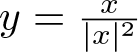 $y=\frac{x}{|x|^2}$,
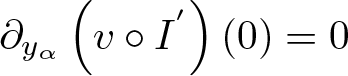 $\partial_{y_{\alpha}}\left(v\circ I^{'}\right)(0)=0$ and
 $\partial_{y_{\beta}}\partial_{y_{\alpha}}\left(v\circ I^{'}\right)(y)$ are smooth near y = 0. Thus,
 $\left|\nabla^2\left(v\circ I(x)\right)\right|=O\left(\frac{1}{|x|^4}\right)$. Similarly, you can get
 $\left|\nabla^k\left(v\circ I(x)\right)\right|=O\left(\frac{1}{|x|^{k+2}}\right)$. Finally, we prove the formula
 \begin{align*}
h(x)=\frac{a_0}{|x|^{2(m-1)}}+\sum_{i, j=1}^{n}\frac{a_{ij}x_ix_i}{|x|^{2m+2}}+O\left(\frac{1}{|x|^{2m+1}}\right).
\end{align*}
Lemma 2.3.
Suppose  $h(x)=\left(-\Delta\right)^{m-1} u(x)$, then
 \begin{align}
h(x)=C(n)\int_{\mathbb{R}^n}\frac{Q_g(y)e^{nu(y)}}{|x-y|^{2(m-1)}}dy,
\end{align}
for some constant C(n).
Proof. Let  $w(x)=C(n)\int_{\mathbb{R}^n}\frac{Q_g(y)e^{nu(y)}}{|x-y|^{2(m-1)}}dy$, we claim that
 \begin{align}
\lim_{|x|\to+\infty}|x|^{2(m-1)}w(x)=C(n)\int_{\mathbb{R}^n}Q_g(y)e^{nu(y)}dy.
\end{align}
Denote 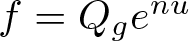 $f=Q_ge^{nu}$,
 $I=\int_{\mathbb{R}^n}\frac{f(y)}{|x-y|^{2(m-1)}}dy$, for
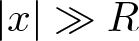 $|x|\gg R$, then
 \begin{align}
I\geq \int_{|y| \lt R}\frac{f(y)}{|x-y|^{2(m-1)}}dy\geq \frac{\int_{|y| \lt R}f(y)dy}{(|x|+R)^{2(m-1)}}.
\end{align}
Multiplying 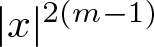 $|x|^{2(m-1)}$ and taking
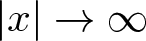 $|x|\to\infty$ for (2.6), we obtain
 \begin{align*}
\liminf_{|x|\to+\infty}|x|^{2(m-1)}w(x)\geq C(n)\int_{|y| \lt R}f(y)dy,
\end{align*}
then let 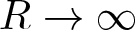 $R\to\infty$ we get
 \begin{align*}
\liminf_{|x|\to+\infty}|x|^{2(m-1)}w(x)\geq C(n)\int_{\mathbb{R}^n}f(y)dy.
\end{align*}
Again, we know
 \begin{align}
I\leq& \int_{|y| \lt R}+\int_{|y-x| \lt |x|/2}+\int_{|y-x| \gt |x|/2, \,|y| \gt R}\frac{f(y)}{|x-y|^{2(m-1)}}dy\nonumber\\
:=&I_1+I_2++I_3.
\end{align}
Similarly, there holds
 \begin{align}
I_1\leq \frac{\int_{|y| \lt R}f(y)dy}{(|x|-R)^{2(m-1)}}.
\end{align}
Noticing that
 \begin{align}
Q_g(x)e^{nu(x)}&=\frac{Q_{g_{\mathbb{S}^n}}}{\alpha}\left(\frac{2}{1+|x|^2}\right)^{n\left(1-1/\alpha\right
)}e^{nv\circ I(x)}\left(\frac{2}{1+|x|^2}\right)^{n/\alpha}\nonumber\\
&=\frac{Q_{g_{\mathbb{S}^n}}}{\alpha}\left(\frac{2}{1+|x|^2}\right)^{n}e^{nv\circ I(x)}\sim O\left(\frac{1}{|x|^{2n}}\right).
\end{align}
For I 2, by (2.9), we obtain that
 \begin{align}
I_2\leq \frac{C}{|x|^{2n}}\int_{|y-x| \lt |x|/2}\frac{1}{|x-y|^{2(m-1)}}dy\leq\frac{C}{|x|^{n+2(m-1)}}.
\end{align}
Clearly,
 \begin{align}
I_3\leq \frac{C}{|x|^{2(m-1)}}\int_{|y| \gt R}f(y)dy=\frac{o_{R}(1)}{|x|^{2(m-1)}}.
\end{align}
From (2.7), (2.8), (2.10), and (2.11), we conclude that
 \begin{align*}
\limsup_{|x|\to+\infty}|x|^{2(m-1)}w(x)\leq C(n)\int_{|y| \lt R}f(y)dy+o_{R}(1).
\end{align*}
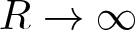
Let 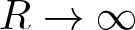 $ R \to \infty $, completing the proof of the claim (2.5). Define
 $ z(x) = h(x) - w(x) $. Since h(x) admits a well-behaved expansion (see lemma 2.2) and the limit
 $\lim_{|x|\to+\infty} |x|^{2(m-1)} w(x)$ exists, it follows that
 \begin{align*}
z(x)=h(x)-w(x)\in L_{1}=\left\{u\in L^1_{\mathrm{loc}}\bigg|\int_{\mathbb{R}^n}\frac{|u(x)|}{1+|x|^{n+1}}\mathrm{d} x \lt +\infty\right\}.
\end{align*}
If  $n=2m-1$,hence we can choose C(n) such that
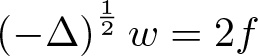 $\left(-\Delta\right)^{\frac{1}{2}}w=2f$, , which leads to
 \begin{align*}
(-\Delta)^{\frac{1}{2}}z=(-\Delta)^{\frac{1}{2}}h-\left(-\Delta\right)^{\frac{1}{2}}w= (-\Delta)^{\frac{1}{2}}\circ (-\Delta)^{m-1}u-2f=0.
\end{align*}
Here, two cases are discussed separately.
(1) If
$n=2m$, , hence then
\begin{align*}
-\Delta z(x)=0\qquad\mathrm{in}\qquad\mathbb{R}^n\qquad\mathrm{and}\qquad\lim_{|x|\to+\infty} h(x)=\lim_{|x|\to+\infty} w(x)=0.
\end{align*}By the Liouville theorem of harmonic functions, we know
$z(x)\equiv C$, but
$\lim_{|x|\to+\infty} z(x)=0$, then
$z(x)\equiv 0$.(2) If
$n=2m-1$, then
\begin{align*}
\left(-\Delta\right)^{\frac{1}{2}} z(x)=0\qquad\mathrm{in}\qquad\mathbb{R}^n\qquad\mathrm{and}\qquad\lim_{|x|\to+\infty} h(x)=\lim_{|x|\to+\infty} w(x)=0.
\end{align*}Since z(x) is a bounded function, set
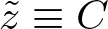
$\tilde{z}(x)=z(x)+\sup_{x\in\mathbb{R}^n}|z(x)|\geq0$ and
\begin{align*}
\left(-\Delta\right)^{\frac{1}{2}} \tilde{z}(x)=0\qquad\mathrm{in}\qquad\mathbb{R}^n.
\end{align*}Through the elliptic estimate of fractional Laplacian, we know
(2.12)\begin{align}
||\tilde{z}||_{C^{1,\beta}(B_1(0))}\leq C(n)\inf_{B_{2}(0)}\tilde{z},
\end{align}for some
$\beta\in (0,1)$. For the above estimate (2.12), refer to Theorem 2.11 in [Reference Jin, Li and Xiong22]. The standard rescaling technique will imply
\begin{align*}
R||\nabla \tilde{z}||_{L^{\infty}(B_R(0))}\leq C(n)\inf_{B_{2R}(0)}\tilde{z},
\end{align*}let
$R\to\infty$, we obtain
$\tilde{z}\equiv C$. Thus,
$z\equiv C$, combining with
$\lim_{|x|\to+\infty} z(x)=0$, so
$z\equiv 0$.




3. Moving plane method
3.1. Radially symmetric about its critical point
For  $\lambda\in\mathbb{R}$, we define
 \begin{align*}
T_{\lambda}&=\{x\in\mathbb{R}^n|x_1=\lambda\},\\
\Sigma_{\lambda}&=\{x\in\mathbb{R}^n|x_1 \lt \lambda\}.
\end{align*}
Let  $x^{\lambda}=(2\lambda-x_1, x_2, \cdots, x_n)$ be the reflection point of x with respect to Tλ and
 \begin{align*}
w_{\lambda}(x)=u(x^{\lambda})-u(x).
\end{align*}
By the above analysis, for  $|x|\gg1$, we know
 \begin{align}
u(x)=-\frac{2}{\alpha}\log|x|+c+O(|x|^{-2})
\end{align}
and
 \begin{align}
\begin{cases}
\displaystyle h(x)=\frac{a_0}{|x|^{2(m-1)}}+\sum_{i, j=1}^{n}\frac{a_{ij}x_ix_i}{|x|^{2m+2}}+O\left(\frac{1}{|x|^{2m+1}}\right),\\
\displaystyle \partial_ih(x)=-2(m-1)\sum_{i=1}^{n}\frac{a_0x_i}{|x|^{2m}}+O\left(\frac{1}{|x|^{2m+1}}\right),\\
\displaystyle \partial_i\partial_jh(x)=O\left(\frac{1}{|x|^{2m}}\right).
\end{cases}
\end{align}
Then we get
 \begin{align}
\liminf_{x\in\Sigma_{\lambda}, \vert x\vert\to +\infty}w_{\lambda}(x)=\liminf_{x\in\Sigma_{\lambda}, \vert x\vert\to +\infty}-\frac{2}{\alpha}\log\frac{|x^{\lambda}|}{|x|}+O(|x|^{-2})+O(|x^{\lambda}|^{-2})=0
\end{align}
and
 \begin{align}
\lim_{x\in\Sigma_{\lambda}, \vert x\vert\to +\infty}\left|\nabla^kw_{\lambda}(x)\right|=\lim_{x\in\Sigma_{\lambda}, \vert x\vert\to +\infty}\left|\nabla^ku_{\lambda}(x)-\nabla^ku(x)\right|=0.
\end{align}
We move the plane by three steps. Step 1, we start the moving plane at sufficiently negative. Step 2, we prove that  $w_{\lambda}\equiv 0$ at the limit state. Step 3, we obtain the radial symmetry of the solution above its critical point. Our method is somewhat inspired by [Reference Chang and Yang9] and [Reference Zhang39].
Start to move the plane
Lemma 3.1.
There exist  $R_0 \gt 0$ and
 $\lambda^1_{0} \lt 0$ such that
 \begin{align}
h(x) \lt h(x^{\lambda})\qquad \mathrm{for}\qquad\lambda \lt \lambda^1_{0}\quad\mathrm{and}\quad|x^\lambda| \gt R_0.
\end{align}
Proof. Since
 \begin{align*}
h(x^{\lambda})-h(x)=&a_0\left(\frac{1}{|x^{\lambda}|^{2(m-1)}}-\frac{1}{|x|^{2(m-1)}}\right)+O\left(\frac{1}{|x|^{2m}}\right)+O\left(\frac{1}{|x^{\lambda}|^{2m}}\right)\\
=:&I+O\left(\frac{1}{|x|^{2m}}\right)+O\left(\frac{1}{|x^{\lambda}|^{2m}}\right),
\end{align*}
then we estimate the above term in two cases.
(1) If
$|x| \gt 2|x^{\lambda}|$, then
$\frac{1}{|x|} \lt \frac{1}{2|x^{\lambda}|}$. We have
\begin{align*}
I&\geq\left(1-\frac{1}{2^{2(m-1)}}\right)a_0\frac{1}{|x^{\lambda}|^{2(m-1)}}.
\end{align*}So, if
$|x^\lambda| \gt R_0$,
$h(x^{\lambda}) \gt h(x)$.(2) If
$|x^{\lambda}| \lt |x| \lt 2|x^{\lambda}|$, then
$\frac{1}{|x^{\lambda}|} \gt \frac{1}{|x|} \gt \frac{1}{2|x^{\lambda}|}$. Then we know
(3.6)\begin{align}
I&\geq \frac{a_0}{|x|^{2m-3}}\left(\frac{1}{|x^{\lambda}|}-\frac{1}{|x|}\right)\geq\frac{c_0(|x|-|x^\lambda|)}{|x|^{2m-1}},
\end{align}clearly,
(3.7)\begin{align}
|x|-|x^\lambda|=\frac{|x|^2-|x^{\lambda}|^2}{|x|+|x^\lambda|}\geq \frac{-c\lambda(\lambda-x_1)}{|x|}.
\end{align}From the above estimate (3.6) and (3.7), there holds
(3.8)\begin{align}
h(x^{\lambda})-h(x)&\geq \frac{c_0(|x|-|x^\lambda|)}{|x|^{2m-1}}-\frac{C}{|x|^{2m}}\nonumber\\
&\geq\frac{-C\lambda(\lambda-x_1)}{|x|^{2m}}-\frac{C}{|x|^{2m}}.
\end{align}If
$\lambda-x_1\geq\frac{C}{-\lambda}$, then
$h(x^{\lambda}) \gt h(x)$. If
$\lambda+\frac{C}{\lambda} \lt x_1 \lt \lambda$, we know
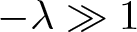
$-\lambda\gg1$, the second equality in (3.2) will also imply
$h(x^{\lambda}) \gt h(x)$.



Lemma 3.2.
There  $\lambda_{0}:=\lambda_{0}(R_0) \lt \lambda^1_{0} \lt 0$ such that
 \begin{align}
h(x) \lt h(x^{\lambda})\qquad \mathrm{for}\qquad\lambda \lt \lambda_{0}\quad\mathrm{and}\quad x\in\Sigma_{\lambda}.
\end{align}
Proof. By lemma 3.1, we know
 \begin{align*}
h(x) \lt h(x^{\lambda})
\end{align*}
for  $\lambda \lt \lambda_{0}^{1}$ and
 $|x^{\lambda}| \gt R_0$. From (2.4) and (2.5) in lemma 2.3, we know that if
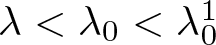 $\lambda \lt \lambda_{0} \lt \lambda_{0}^{1}$, and since
 $|x| \gt |\lambda|$, then we have
 \begin{align*}
h(x)=O\left(\frac{1}{|x|^{2(m-1)}}\right) \lt C(R_0):=\min_{x\in B_{R_0}} h(x)\qquad\mathrm{for}\quad |x^{\lambda}|\leq R_0.
\end{align*}
Denote
 \begin{align*}
\bar{\lambda}=\sup\{\lambda\leq 0|\left(-\Delta \right)^{m-1}w_{\mu} \gt 0, \forall~x\in \Sigma_{\mu} , \mu\leq\lambda\},
\end{align*}
from lemma 3.2, we know  $\bar{\lambda}\geq \lambda_{0}$.
If  $\bar{\lambda} \lt 0$, then
 $w_{\bar{\lambda}}(x)\equiv 0$ for
 $x\in\Sigma_{\bar{\lambda}}$.
Throughout step 2, we assume that  $\bar{\lambda} \lt 0$. The following maximum principle lemma is the key ingredient for the moving plane approach.
Lemma 3.3. Maximum Principle
For α > 1 , if  $w_{\bar{\lambda}}\not\equiv 0$ in
 $\Sigma_{\bar{\lambda}}$, then
 \begin{align*}
\left(-\Delta\right)^kw_{\bar{\lambda}} \gt 0\qquad\mathrm{for}\qquad k=0,1,\cdots,m-1
\end{align*}
and  $\left(-\Delta \right)^{\frac{n}{2}}w_{\bar{\lambda}} \gt 0$ for any
 $x\in \Sigma_{\bar{\lambda}}$.
Proof. By the definition of  $\bar{\lambda}$, we know
 $\left(-\Delta\right)^{m-1}w_{\bar{\lambda}}\geq0$. From (3.4), we get
 \begin{align}
\lim_{|x|\to+\infty}\left(-\Delta\right)^{m-2}w_{\bar{\lambda}}=0\qquad\mathrm{and}\qquad \left(-\Delta\right)^{m-2}w_{\bar{\lambda}}=0\qquad\mathrm{on} \qquad T_{\bar{\lambda}}.
\end{align}
Then, the maximum principle implies that  $\left(-\Delta\right)^{m-2}w_{\bar{\lambda}}\geq0$ in
 $\Sigma_{\bar{\lambda}}$. Similarly, you can obtain
 \begin{align}
\left(-\Delta\right)^kw_{\bar{\lambda}}\geq 0\qquad\mathrm{in}\qquad\Sigma_{\bar{\lambda}}, \qquad\mathrm{for}\qquad k=1,\cdots,m-3.
\end{align}
Now we have 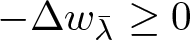 $-\Delta w_{\bar{\lambda}}\geq0$ and (3.3) tells us that
 \begin{align}
\lim_{|x|\to+\infty}w_{\bar{\lambda}}=0\qquad\mathrm{and}\qquad w_{\bar{\lambda}}=0\qquad\mathrm{on} \qquad T_{\bar{\lambda}}.
\end{align}
By strong maximum principle and 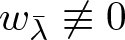 $w_{\bar{\lambda}}\not\equiv 0$, we get
 $w_{\bar{\lambda}} \gt 0$ for
 $x\in \Sigma_{\bar{\lambda}}$. Due to
 $w_{\bar{\lambda}}(x)=u(x^{\bar{\lambda}})-u(x) \gt 0$, we see that
 \begin{align}
&\left(-\Delta \right)^{\frac{n}{2}}w_{\bar{\lambda}}(x)\nonumber\\
&=\frac{2Q_{g_{\mathbb{S}^n}}}{\alpha}\left(\left(\frac{2}{1+|x^{\bar{\lambda}}|^2}\right)^{n\left(1-1/\alpha\right
)}e^{nu(x^{\bar{\lambda}})}-\left(\frac{2}{1+|x|^2}\right)^{n\left(1-1/\alpha\right
)}e^{nu(x)}\right)\nonumber\\
& \gt 0,
\end{align}
the above inequality follows by  $|x^{\bar{\lambda}}| \lt |x|$. Lemma 2.3 yields that
 \begin{align*}
\left(-\Delta\right)^{m-1}h(x)&=C(n)\int_{\mathbb{R}^n}\frac{f(y)}{|x-y|^{2(m-1)}}dy=C(n)\int_{\Sigma_{\bar{\lambda}}}+\int_{\mathbb{R}^n\backslash \Sigma_{\bar{\lambda}}}\frac{f(y)}{|x-y|^{2(m-1)}}dy\\
&=C(n)\int_{\Sigma_{\bar{\lambda}}}\frac{f(y)}{|x-y|^{2(m-1)}}dy+C(n)\int_{\Sigma_{\bar{\lambda}}}\frac{f(y^{\bar{\lambda}})}{|x-y^{\bar{\lambda}}|^{2(m-1)}}dy\\
&=C(n)\int_{\Sigma_{\bar{\lambda}}}\frac{f(y)}{|x-y|^{2(m-1)}}+\frac{f(y^{\bar{\lambda}})}{|x^{\bar{\lambda}}-y|^{2(m-1)}}dy,
\end{align*}
this last equality follows by  $|x^{\bar{\lambda}}-y|=|x-y^{\bar{\lambda}}|$. Since
 \begin{align*}
\left(-\Delta\right)^{m-1}w_{\bar{\lambda}}(x)=f(x^{\bar{\lambda}})-f(x):=g_{\bar{\lambda}}(x),
\end{align*}
then
 \begin{align}
\left(-\Delta\right)^{m-1}w_{\bar{\lambda}}(x)&=C(n)\int_{\Sigma_{\bar{\lambda}}}\left(\frac{1}{|x^{\bar{\lambda}}-y|^{2(m-1)}}-\frac{1}{|x-y|^{2(m-1)}}\right)f(y)dy\nonumber\\
&+C(n)\int_{\Sigma_{\bar{\lambda}}}\left(\frac{1}{|x-y|^{2(m-1)}}-\frac{1}{|x^{\bar{\lambda}}-y|^{2(m-1)}}\right)f(y^{\bar{\lambda}})dy\nonumber\\
&=C(n)\int_{\Sigma_{\bar{\lambda}}}\left(\frac{1}{|x-y|^{2(m-1)}}-\frac{1}{|x^{\bar{\lambda}}-y|^{2(m-1)}}\right)g_{\bar{\lambda}}(y)dy,
\end{align}
combining with  $|x-y| \lt |x^{\bar{\lambda}}-y|$ for
 $x, y\in\Sigma_{\bar{\lambda}}$ and
 $g_{\bar{\lambda}}(x) \gt 0$ in
 $\Sigma_{\bar{\lambda}}$ (this is a direct result by (3.13)), we conclude that
 $\left(-\Delta\right)^{m-1}w_{\bar{\lambda}}(x) \gt 0$. Applying strong maximum principle, you can get
 \begin{align*}
\left(-\Delta\right)^kw_{\bar{\lambda}} \gt 0\qquad\mathrm{in}\qquad\Sigma_{\bar{\lambda}}, \qquad\mathrm{for}\qquad k=1,\cdots,m-2.
\end{align*}
Lemma 3.4.
If  $w_{\bar{\lambda}}(x)\not\equiv 0$, then there exists
 $\delta_0^1\ll 1$ and
 $R_1\gg \lambda_{0}$ such that
 \begin{align*}
\frac{\partial}{\partial x_1}\left(-\Delta\right)^{m-1} u(x) \gt 0\quad\forall~\vert x\vert \gt R_{1},~ \bar{\lambda}- \delta_{0}^{1} \lt x_1 \lt \bar{\lambda}+ \delta_{0}^{1} \lt 0.
\end{align*}
Proof. Let  $b=(\bar{\lambda},0,\cdots,0), \bar{x}= x-b$, then
 $\vert x\vert\sim \vert x^{\bar{\lambda}}\vert\sim\vert \bar{x}\vert$, if
 $\,\, \vert x\vert \gt R_1\gg \max\{\vert \lambda_{0}\vert,R_{0}\}$. Then we have the following claim.
Claim: There exists  $\epsilon_0 \gt 0$ such that
 \begin{align}
\left(-\Delta\right)^{m-1}w_{\bar{\lambda}} \gt \frac{\epsilon_0(\bar{\lambda}-x_1)}{|\bar{x}|^{2m}}\qquad \forall~x\in\varSigma_{\bar{\lambda}}\backslash B_{R_{1}}.
\end{align}
We observe that
 \begin{align}
&\frac{1}{|x-y|^{2(m-1)}}-\frac{1}{|x^{\bar{\lambda}}-y|^{2(m-1)}}\nonumber\\
&\geq \frac{1}{|x^{\bar{\lambda}}-y|^{2m-3}}\left(\frac{1}{|x-y|}-\frac{1}{|x^{\bar{\lambda}}-y|}\right)
=\frac{|x^{\bar{\lambda}}-y|-|x-y|}{|x^{\bar{\lambda}}-y|^{2m-2}|x-y|}\nonumber\\
&\geq \frac{C(\bar{\lambda}-x_1)(\bar{\lambda}-y_1)}{|x^{\bar{\lambda}}-y|^{2m}}.
\end{align}
From (3.14) and (3.17), we get
 \begin{align*}
\left(-\Delta\right)^{m-1}w_{\bar{\lambda}}(x)&=C(n)\int_{\Sigma_{\bar{\lambda}}}\left(\frac{1}{|x-y|^{2(m-1)}}-\frac{1}{|x^{\bar{\lambda}}-y|^{2(m-1)}}\right)g_{\bar{\lambda}}(y)dy\\
&\geq C (\bar{\lambda}-x_1)\int_{\Sigma_{\bar{\lambda}}}\frac{(\bar{\lambda}-y_1)}{|x^{\bar{\lambda}}-y|^{2m}}g_{\bar{\lambda}}(y)dy\\
&\geq C(\bar{\lambda}-x_1)\int_{\bar{\lambda}-y_1\geq 1, |x^{\bar{\lambda}}-y|\leq 2|x| }\frac{(\bar{\lambda}-y_1)}{|x^{\bar{\lambda}}-y|^{2m}}g_{\bar{\lambda}}(y)dy\\
&\geq \frac{C(\bar{\lambda}-x_1)}{|x|^{2m}}\int_{\bar{\lambda}-y_1\geq 1, |x^{\bar{\lambda}}-y|\leq 2|x| }g_{\bar{\lambda}}(y)dy\\
&\geq \frac{\epsilon_0(\bar{\lambda}-x_1)}{|\bar{x}|^{2m}}.
\end{align*}
The last inequality follows by
 \begin{align*}
\int_{\bar{\lambda}-y_1\geq 1, |x^{\bar{\lambda}}-y|\leq 2|x| }g_{\bar{\lambda}}(y)dy\to\int_{\bar{\lambda}-y_1\geq 1 }g_{\bar{\lambda}}(y)dy \gt 0\qquad\mathrm{as}\qquad|x|\to\infty.
\end{align*}
Now, we complete the proof the claim. The estimate (3.16) directly implies that
 \begin{equation*}
\frac{\left(-\Delta\right)^{m-1} w_{\bar{\lambda}}(x_1,x')-(\left(-\Delta\right)^{m-1} w_{\bar{\lambda}})(\bar{\lambda},x')}{x_1-\bar{\lambda}}\leq\frac{-\epsilon_0}{\vert \bar{x}\vert^{2m}} \qquad \mathrm{for~~} x=(x_1,x') \in \Sigma_{\bar{\lambda}}\setminus B_{R_{1}}.
\end{equation*}
Letting  $x_1\rightarrow \bar{\lambda}$, we obtain that for
 $\vert x\vert \gt R_{1}$
 \begin{equation*}\frac{\partial\left(-\Delta\right)^{m-1} w_{\bar{\lambda}} }{\partial x_1}(\bar{\lambda},x')=-2\frac{\partial\left(-\Delta\right)^{m-1} u}{\partial x_1}(\bar{\lambda},x')\quad\Longrightarrow\quad \frac{\partial\left(-\Delta\right)^{m-1} u}{\partial x_1}(\bar{\lambda},x')\geq\frac{\epsilon_0}{2\vert \bar{x}\vert^{2m}}.
\end{equation*}
By Taylor expansion (3.2), we further choose  $0 \lt \delta \lt \delta_{0}^1\ll 1$ such that
 \begin{equation*}\frac{\partial\left(-\Delta\right)^{m-1} u}{\partial x_1}(x_1,x')\geq\frac{\epsilon_0}{4\vert \bar{x}\vert^{2m}},\end{equation*}
for all  $\vert x\vert \gt R_{1}, \bar{\lambda}- \delta_{0}^{1} \lt x_1 \lt \bar{\lambda}+ \delta_{0}^{1} \lt 0$.
Lemma 3.5.
If  $\lambda_0 \lt \bar{\lambda} \lt 0, w_{\bar{\lambda}}(x)\not\equiv 0$, then there exist
 $0 \lt \delta_{0}^{2}\ll \delta_{0}^{1}\ll 1,\,R_{2} \gt R_{1}$ such that
 \begin{equation*}
\left(-\Delta\right)^{m-1} w_{\lambda} \gt 0,\quad\forall~ \vert x\vert \gt R_{2}, \quad x_1 \lt \lambda,\quad\lambda \in (\bar{\lambda},\bar{\lambda}+\frac{\delta_{0}^{2}}{4}).
\end{equation*}
Proof. It follows from lemma 3.4 that for  $\lambda \in (\bar{\lambda},\bar{\lambda}+\frac{\delta_{0}^{2}}{4})$ and
 $\forall~ \vert x\vert \gt R_{1}$,
 $\lambda- \frac{\delta_{0}^{1}}{2} \lt x_1 \lt \lambda,\quad$
 \begin{equation*}
h (x^{\lambda}) \gt h (x)\quad \Longrightarrow\quad \left(-\Delta\right)^{m-1} w_{\lambda} \gt 0.
\end{equation*}
Here  $\delta_{0}^2$ is chosen such that
 $\lambda- \frac{\delta_{0}^{1}}{2} \lt \bar{\lambda}-\frac{\delta_{0}^{1}}{4}$, it suffices to consider
 $\vert x\vert \gt R_{1}, x_1 \lt \bar{\lambda}-\frac{\delta_{0}^{1}}{4}$. Notice that
 $\vert x\vert\sim \vert x^{\bar{\lambda}}\vert\sim\vert \bar{x}\vert\sim\vert x^{\lambda}\vert$ for all
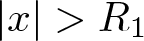 $\vert x\vert \gt R_{1}$, then
 \begin{equation}
\left| \frac{1}{\vert x^{\bar{\lambda}} \vert^k}-\frac{1}{\vert x^{\lambda} \vert^k}\right| \lt \frac{C(\lambda-\bar{\lambda})(\vert\bar{\lambda}-x_1\vert+\vert \lambda\vert)}{\vert \bar{x}\vert^{k+2}}.
\end{equation}
By (3.18), we can estimate
 \begin{equation*}\left|\left(-\Delta\right)^{m-1} w_{\lambda}-\left(-\Delta\right)^{m-1} w_{\bar{\lambda}}\right|\leq
I+II+III+O\left(\frac{1}{\vert \bar{x}\vert^{2m+1}}\right),\end{equation*}
where
 \begin{equation*}
\begin{aligned}
I&\leq a_0\left|\frac{1}{\vert x^{\bar{\lambda}} \vert^{2m-2}}-\frac{1}{\vert x^{\lambda} \vert^{2m-2}}\right|,\\
II&\leq\left|\frac{a_{11}(2\lambda-x_1)^2}{\vert x^{\lambda}\vert^{2m+2}} -\frac{a_{11}(2\bar{\lambda}-x_1)^2}{\vert x^{\bar{\lambda}}\vert^{2m+2}}\right|,\\
III&\leq2\sum_{i=2}^{n}\left| \frac{a_{1i}(2\lambda-x_1) x_i}{\vert x^{\lambda}\vert^{2m+2}}-\frac{a_{1i}(2\bar{\lambda}-x_1) x_i}{\vert x^{\bar{\lambda}}\vert^{2m+2}}\right|,\\
IV&\leq \sum_{i,j=2}^{3}\left|a_{ij}x_ix_j\right|\left|\frac{1}{\vert x^{\bar{\lambda}}\vert^{2m+2}}-\frac{1}{\vert x^{\lambda} \vert^{2m+2}}\right|.
\end{aligned}
\end{equation*}
For I, by (3.18), we know
 \begin{align}
|I|\leq \frac{C(\lambda-\bar{\lambda})(\vert\bar{\lambda}-x_1\vert+\vert \lambda\vert)}{\vert \bar{x}\vert^{2m}}.
\end{align}
The second term follows by
 \begin{align}
|II|\leq& \left|\frac{a_{11}(2\lambda-x_1)^2}{\vert x^{\lambda}\vert^{2m+2}} -\frac{a_{11}(2\bar{\lambda}-x_1)^2}{\vert x^{\lambda}\vert^{2m+2}}\right|+\left|\frac{a_{11}(2\bar{\lambda}-x_1)^2}{\vert x^{\lambda}\vert^{2m+2}} -\frac{a_{11}(2\bar{\lambda}-x_1)^2}{\vert x^{\bar{\lambda}}\vert^{2m+2}}\right|\nonumber\\
\leq&\frac{C|\lambda-\bar{\lambda}|\left(\vert x^{\lambda}\vert+\vert x^{\bar{\lambda}}\vert\right)}{|\bar{x}|^{2m+2}}+\frac{C|x^{\bar{\lambda}}|^2(\lambda-\bar{\lambda})(\vert\bar{\lambda}-x_1\vert+\vert \lambda\vert)}{|\bar{x}|^{2m+4}}\nonumber\\
\leq& \frac{C|\lambda-\bar{\lambda}|}{|\bar{x}|^{2m+1}}.
\end{align}
Similarly, we obtain
 \begin{align}
|III|\leq& 2\sum_{i=2}^{n}\left| \frac{a_{1i}(2\lambda-x_1) x_i}{\vert x^{\lambda}\vert^{2m+2}}-\frac{a_{1i}(2\bar{\lambda}-x_1) x_i}{\vert x^{\lambda}\vert^{2m+2}}\right|+\left| \frac{a_{1i}(2\bar{\lambda}-x_1) x_i}{\vert x^{\lambda}\vert^{2m+2}}-\frac{a_{1i}(2\bar{\lambda}-x_1) x_i}{\vert x^{\bar{\lambda}}\vert^{2m+2}}\right|\nonumber\\
\leq& \frac{C|\lambda-\bar{\lambda}||\bar{x}|}{|\bar{x}|^{2m+2}}+\frac{C|x^{\bar{\lambda}}||x|(\lambda-\bar{\lambda})(\vert\bar{\lambda}-x_1\vert+\vert \lambda\vert)}{|\bar{x}|^{2m+4}}\nonumber\\
\leq& \frac{C|\lambda-\bar{\lambda}|}{|\bar{x}|^{2m+1}}.
\end{align}
Finally, from (3.18), we have
 \begin{align}
|IV|\leq\frac{C|x|^2(\lambda-\bar{\lambda})(\vert\bar{\lambda}-x_1\vert+\vert \lambda\vert)}{|\bar{x}|^{2m+4}}\leq \frac{C|\lambda-\bar{\lambda}|}{|\bar{x}|^{2m+1}}.
\end{align}
The (3.19), (3.20), (3.21), and (3.22) yield that
 \begin{equation*}
\left|\left(-\Delta\right)^{m-1} w_{\lambda}-\left(-\Delta\right)^{m-1} w_{\bar{\lambda}}\right| \lt \frac{C(\lambda-\bar{\lambda})(\vert\bar{\lambda}-x_1\vert+\vert \lambda\vert+C)}{\vert \bar{x}\vert^{2m}}+O\left(\frac{1}{\vert \bar{x}\vert^{2m+1}}\right).
\end{equation*}
Thus, we have
 \begin{equation*}
\begin{aligned}
\left(-\Delta\right)^{m-1} w_{\lambda}&\geq \left(-\Delta\right)^{m-1} w_{\bar{\lambda}}-\left|\left(-\Delta\right)^{m-1}w_{\lambda}-\left(-\Delta\right)^{m-1} w_{\bar{\lambda}}\right|\\
&\geq \frac{\epsilon_0 (\bar{\lambda}-x_1)}{\vert \bar{x}\vert^{2m}}-\frac{C(\lambda-\bar{\lambda})(|\bar{\lambda}-x_1|+\vert \lambda\vert+C)}{\vert \bar{x}\vert^{2m}}+O\left(\frac{1}{\vert \bar{x}\vert^{2m+1}}\right).
\end{aligned}
\end{equation*}
Since  $\bar{\lambda}-x_1 \gt \frac{\delta_{0}^{1}}{4}$, we can choose
 $\delta_{0}^{2}\ll \delta_{0}^{1},\,\,\vert \bar{x}\vert \gt R_{2}\gg R_{1}$, such that
 $\left(-\Delta\right)^{m-1} w_{\lambda} \gt 0$.
Lemma 3.6.
With the same assumption as in lemma 3.5, there exists 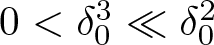 $0 \lt \delta_{0}^{3}\ll\delta_{0}^{2}$ such that
 $\left(-\Delta\right)^{m-1}w_{\lambda} \gt 0,\,\,\forall~ x\in\varSigma_{\lambda},\,\, \lambda\in(\bar{\lambda},\bar{\lambda}+\delta_{0}^{3}).$
Proof. Suppose not, by lemma 3.5, we can choose
 \begin{equation*}\lambda_{i}\in (\bar{\lambda},\bar{\lambda}+\frac{\delta_{0}^{2}}{4})\rightarrow \bar{\lambda},\quad x_{i}\in B_{R_{2}}(0)\cap\varSigma_{\lambda_{i}}\end{equation*}
such that
 \begin{equation*}\left(-\Delta\right)^{m-1} w_{\lambda_{i}}(x_{i})=
\min\limits_{\varSigma_{\lambda_{i}}}\left(-\Delta\right)^{m-1} w_{\lambda_{i}}\leq0.\end{equation*}
Up to a subsequence, we can assume
 \begin{equation*}\lim\limits_{i\to \infty}x_{i}=x_{0},\quad\nabla \left(-\Delta\right)^{m-1} w_{\bar{\lambda}}(x_{0})=0,\quad\left(-\Delta\right)^{m-1} w_{\bar{\lambda}}(x_{0})\leq0.\end{equation*}
On the other hand, we can apply lemma 3.4 to show
 \begin{align}
\left(-\Delta\right)^{m-1} w_{\bar{\lambda}} \gt 0,\quad x\in \varSigma_{\bar{\lambda}};\quad\left(-\Delta\right)^{\frac{n}{2}} w_{\bar{\lambda}} \gt 0,\quad x\in \varSigma_{\bar{\lambda}}.
\end{align}
The (3.23) forces  $x_{0}\in T_{\bar{\lambda}}$, there are two cases that will happen.
(1) If
$n=2m$, the classical Hopf lemma gives
\begin{equation*}
\frac{\partial\left(-\Delta\right)^{m-1}w_{\bar{\lambda}} }{\partial x_1}(x_{0}) \lt 0.
\end{equation*}This is a contradiction with
$\nabla \left(-\Delta\right)^{m-1} w_{\bar{\lambda}}(x_{0})=0$.(2) If
$n=2m-1$, then (3.14) will imply
\begin{align*}
\frac{\partial\left(-\Delta\right)^{m-1}w_{\bar{\lambda}} }{\partial x_1}(x_{0})=-4C(n)(m-1)\int_{\Sigma_{\bar{\lambda}}}\frac{(\bar{\lambda}-y_1)g_{\bar{\lambda}}(y)}{|x_0-y|^{2m}}dy \lt 0.
\end{align*}





Thus, we complete the argument for all dimensions.
Therefore, from lemma 3.6, we finish the proof of step 2.
 $\bar{\lambda} = 0$, and u is radially symmetric about the origin.
Otherwise, if  $\bar{\lambda} \lt 0$, then step 2 implies
 \begin{equation*}u_{\bar{\lambda}}(x)=u(x).\end{equation*}
This together with
 \begin{equation*}
\begin{aligned}
\left(-\Delta\right)^{\frac{n}{2}}u(x)&=\frac{2Q_{g_{\mathbb{S}^n}}}{\alpha}\left(\frac{2}{1+|x|^2}\right)^{n\left(1-1/\alpha\right
)}e^{nu(x)}\\
\left(-\Delta\right)^{\frac{n}{2}}u_{\bar{\lambda}}(x)&=\frac{2Q_{g_{\mathbb{S}^n}}}{\alpha}
\left(\frac{2}{1+|x^{\bar{\lambda}}|^2}\right)^{n\left(1-1/\alpha\right
)}e^{nu_{\bar{\lambda}}(x)}
\end{aligned}
\end{equation*}
implies
 \begin{equation*}(1+|x|^2)^{n\left(1/\alpha-1\right
)}=
(1+|x^{\bar{\lambda}}|^2)^{n\left(1/\alpha-1\right
)}\Longrightarrow \quad \bar{\lambda}=0.\end{equation*}
This is a contradiction. By the definition of  $\bar{\lambda}$, we know
 $\left(-\Delta\right)^{m-1}w_{\bar{\lambda}}\geq0$, by the similar analysis as (3.10) and (3.12), we know
 $w_{\bar{\lambda}}\geq0$. Combining with
 $\bar{\lambda}=0$, we know
 \begin{align*}
u(-x_1,x_2,\cdots,x_n)\geq u(x_1,x_2,\cdots,x_n)\quad\mathrm{for} \quad x\in\Sigma_{0}=\{x\in\mathbb{R}^n|x_1 \lt 0\}.
\end{align*}
Similarly, you can also get
 \begin{align*}
u(-x_1,x_2,\cdots,x_n)\leq u(x_1,x_2,\cdots,x_n)\quad\mathrm{for} \quad x\in\Sigma_{0}=\{x\in\mathbb{R}^n|x_1 \lt 0\}.
\end{align*}
Recall the notation  $u(x) = v \circ I(x) + \frac{1}{\alpha} \log \frac{2}{1 + |x|^2}$ and
 $I = I_p : (\mathbb{R}^n, x) \to \mathbb{S}^n \setminus \{p\}$, where p is a critical point of v. We know that u being radially symmetric about the origin is equivalent to v being radially (or axially) symmetric about p.
Theorem 3.1
Suppose α > 1 and  $n\geq3$, if v is the solution of
 \begin{align*}
\alpha P_{\mathbb{S}^n}v+2Q_{g_{\mathbb{S}^n}}=2Q_{g_{\mathbb{S}^n}}e^{nv},
\end{align*}
then v is radially symmetric about its critical point.
Proof. The theorem follows by step 1, step 2, and step 3.
3.2. Uniqueness result for α > 1
Lemma 3.7.
If  $v\not\equiv 0$, then there exist only two antipodal critical points of v.
Proof. Firstly, we note that  $v\not\equiv 0$ is equivalent to
 $v\not\equiv C$. We assert that there exist at least one minimal point p and one maximum point q of v such that
 $d_{\mathbb{S}^n}(p,q)=\pi$. Without loss of generality, we assume p = S.
If  $r=d_{\mathbb{S}^n}(p,q)\leq\frac{\pi}{2}$, then
 $z\in \partial B_{r}(p)\cap \partial B_{r}(q)\not =\emptyset$. By theorem 3.1, v is radially symmetric with respect to
 $d_{\mathbb{S}^n}(\cdot,p)$ and
 $d_{\mathbb{S}^n}(\cdot,q)$, then
 \begin{equation*}
v(z)=v(p)=v(q).
\end{equation*}
This contradicts the assumption that 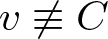 $v\not\equiv C$.
If  $r=d_{\mathbb{S}^n}(p,q) \gt \frac{\pi}{2}$ and
 $q\not =N$, then
 $r'=\pi-r=d_{\mathbb{S}^n}(N,q) \lt \frac{\pi}{2}$. In
 $B_{r^{'}}(N)$, by theorem 3.1, we know v takes constant (its maximum) on
 $\partial B_{r^{'}}(N)$, thus two cases may occur.
(1) If there exists  $x_{0}\in B_{r'}(N)$ such that
 \begin{equation*}
v(x_0)=\min\limits_{B_{r'}(N)}v \lt v(q),
\end{equation*}
then x 0 is also a critical point and  $d_{\mathbb{S}^n}(x_{0},q) \lt \frac{\pi}{2}$. A similar argument yields
 $v(q)=v(x_{0})$. A contradiction!
(2) $v\equiv v(q)$ in
 $B_{r'}(N)$. We define
 \begin{equation*}
r_0 = \sup \{r \mid v \equiv v(N) = v(q) \text{in } B_r(N) \}.
\end{equation*}
Clearly, from the previous discussion, we have  $ r' \leq r_0 \leq \pi/2 $.
Now, consider any point  $ \tilde{q} \in \partial B_{r_0}(N) $. Since
 $ \tilde{q} $ is also a maximum point of v, and v is radially symmetric with respect to
 $ d_{\mathbb{S}^n}(\cdot, \tilde{q}) $, it follows that for any
 $ r \leq r_0 $, the intersection
 $ \partial B_r(\tilde{q}) \cap B_{r_0}(N) \neq \emptyset $. This implies that
 $ v \equiv v(N) $ in
 $ B_{r_0}(\tilde{q}) $.
However, since  $ \tilde{q}$ was chosen arbitrarily on
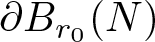 $\partial B_{r_0}(N)$, this leads to a contradiction: we can find a larger radius (for example)
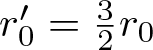 $ r_0' = \frac{3}{2} r_0$ such that
 $ v \equiv v(N) = v(q)$ in
 $ B_{r_0'}(N)$, contradicting the definition of r 0.
Next, we claim that there is no other critical point except for the above two critical points of v. Otherwise, there exists a third critical point x 0 of v, then either  $d_{\mathbb{S}^n}(x_{0},q)\leq \frac{\pi}{2}$ or
 $d_{\mathbb{S}^n}(x_{0},p)\leq \frac{\pi}{2}$ holds. A similar argument also shows that
 $v\equiv 0$. This contradicts the assumption.
Theorem
Suppose α > 1 and  $n\geq3$, if v is a solution of
 \begin{align*}
\alpha P_{\mathbb{S}^n}v+2Q_{g_{\mathbb{S}^n}}=2Q_{g_{\mathbb{S}^n}}e^{nv},
\end{align*}
then  $v\equiv 0$.
Proof. By contradiction if  $v\not\equiv 0$, then it follows from lemma 3.7 and theorem 3.1 that v is increasing along the great circle from the minimum point (say, S) to the maximum point (say, N). This yields that
 \begin{equation*}\nabla v\cdot\nabla x^{n+1}\geq 0,
\end{equation*}
here  $\nabla:=\nabla_{g_{\mathbb{S}^n}}$. From the Kazdan–Warner condition (see lemma 4.1), we have
 \begin{equation*}
\int_{\mathbb{S}^n}\langle\nabla v, \nabla x^{n+1}\rangle_{g_{\mathbb{S}^n}} \mathrm{d} V_{\mathbb{S}^n}=n\int_{\mathbb{S}^n} x^{n+1}v\mathrm{d} V_{\mathbb{S}^n}=0.
\end{equation*}
These facts together imply that  $\nabla_{g_{\mathbb{S}^n}}v=0$, and thus
 $v\equiv 0$.
3.3. A new proof of Beckner inequality
As an interesting application, we present a new proof of the Beckner inequality, following the strategy originally developed by Osgood et al. [Reference Osgood, Phillips and Sarnak34]. Additionally, we note that the classical Beckner inequality can also be derived from the fractional case, as shown by Xiong [Reference Xiong38].
Firstly, we introduce an almost sharp Beckner-type inequality, which is a direct consequence of the concentration compactness phenomenon and the Moser–Trudinger-type inequality. For further details, refer to [Reference Branson, Chang and Yang5, Reference Hang18, Reference Hang19].
Lemma 3.8.
For any ϵ > 0, there exists Cϵ such that if  $v\in H^{\frac{n}{2}}(\mathbb{S}^n)$, we have
 \begin{align*}
\log \unicode{x2A0F}_{\mathbb{S}^n}e^{nv} \mathrm{d} V_{{\mathbb{S}^n}}\leq \frac{n(1+\epsilon)}{2(n-1)!}\unicode{x2A0F}_{\mathbb{S}^n} vP_{\mathbb{S}^n}v\mathrm{d} V_{\mathbb{S}^n}+n\unicode{x2A0F}_{\mathbb{S}^n} v\mathrm{d} V_{\mathbb{S}^n}+C_{\epsilon}.
\end{align*}
Now we can prove the Beckner inequality by theorem 1.1 and lemma 3.8.
Theorem
For any  $v\in H^{\frac{n}{2}}(\mathbb{S}^n)$, we have
 \begin{align*}
\log \unicode{x2A0F}_{\mathbb{S}^n}e^{nv} \mathrm{d} V_{{\mathbb{S}^n}}\leq \frac{n}{2(n-1)!}\unicode{x2A0F}_{\mathbb{S}^n} vP_{\mathbb{S}^n}v\mathrm{d} V_{\mathbb{S}^n}+n\unicode{x2A0F}_{\mathbb{S}^n} v\mathrm{d} V_{\mathbb{S}^n}
\end{align*}
and the equality holds if and only if  $e^{2v}g_{\mathbb{S}^n}=\varphi^{*}g_{\mathbb{S}^n}$ (up to a constant) for some conformal transformation φ on
 $\mathbb{S}^n$.
Proof. For fixed ϵ > 0, by lemma 3.8, we have  $J_{1+\epsilon}\geq -C_{\epsilon}$, thus we can choose a minimizing sequence
 $\{v_i\}_{i=1}^{+\infty}$ such that
 $\unicode{x2A0F}_{\mathbb{S}^n} v_i\mathrm{d} V_{{\mathbb{S}^n}}=0$ and
 \begin{align*}
J_{1+\epsilon}(v_i)\to J_{1+\epsilon}:=\inf_{v\in H^{\frac{n}{2}}(\mathbb{S}^n)}J_{1+\epsilon}(v).
\end{align*}
On the one hand, we can see that if  $\unicode{x2A0F}_{\mathbb{S}^n} v \mathrm{d} V_{{\mathbb{S}^n}}=0$, then
 \begin{align}
C_1(n)||v||_{H^{\frac{n}{2}}(\mathbb{S}^n)}\leq \unicode{x2A0F}_{\mathbb{S}^n} vP_{\mathbb{S}^n}v\mathrm{d} V_{{\mathbb{S}^n}}\leq C_2(n)||v||_{H^{\frac{n}{2}}(\mathbb{S}^n)},
\end{align}
the above inequality follows by the spherical harmonic expansion or you can also see Page 18 in [Reference Hang19]. On the other hand, we also know  $J_{1+\epsilon/2}(v_i)\geq -C_{\epsilon/2}$, then
 \begin{align}
\unicode{x2A0F}_{\mathbb{S}^n} v_iP_{\mathbb{S}^n}v_i\mathrm{d} V_{{\mathbb{S}^n}}\leq C(\epsilon).
\end{align}
Now, we get  $||v_i||_{H^{\frac{n}{2}}(\mathbb{S}^n)}\leq C(\epsilon)$ from (3.24) and (3.25), without loss of generality, we can assume
 $v_i\rightharpoonup v_{\epsilon}\in H^{\frac{n}{2}}(\mathbb{S}^n)$ and
 $\unicode{x2A0F}_{\mathbb{S}^n} v_{\epsilon}\mathrm{d} V_{{\mathbb{S}^n}}=0$, then
 \begin{align*}
J_{1+\epsilon}\leq J_{1+\epsilon}(v_{\epsilon})\leq \liminf_{i\to+\infty} J_{1+\epsilon}(v_i):=J_{1+\epsilon}.
\end{align*}
In conclusion, vϵ is a minimizer of functional  $J_{1+\epsilon}(\cdot)$, it satisfies
 \begin{align*}
(1+\epsilon)P_{\mathbb{S}^n}v_{\epsilon}+2Q_{g_{\mathbb{S}^n}}=2Q_{g_{\mathbb{S}^n}}\frac{e^{nv_{\epsilon}}}{\unicode{x2A0F}_{\mathbb{S}^n}e^{nv_{\epsilon}} \mathrm{d} V_{{\mathbb{S}^n}}}.
\end{align*}
By theorem 1.1, we get  $v_{\epsilon}\equiv\unicode{x2A0F}_{\mathbb{S}^n} v_{\epsilon} \mathrm{d} V_{{\mathbb{S}^n}}=0$. So far, we have proved that for any ϵ > 0,
 \begin{align*}
\log \unicode{x2A0F}_{\mathbb{S}^n}e^{nv} \mathrm{d} V_{{\mathbb{S}^n}}\leq \frac{n(1+\epsilon)}{2(n-1)!}\unicode{x2A0F}_{\mathbb{S}^n} vP_{\mathbb{S}^n}v\mathrm{d} V_{\mathbb{S}^n}+n\unicode{x2A0F}_{\mathbb{S}^n} v\mathrm{d} V_{\mathbb{S}^n},
\end{align*}
letting ϵ → 0, we get the Beckner inequality. Lastly, if v is a minimizer of  $J_{1}(\cdot)$, then
 \begin{align*}
P_{\mathbb{S}^n}v+2Q_{g_{\mathbb{S}^n}}=2Q_{g_{\mathbb{S}^n}}\frac{e^{nv}}{\unicode{x2A0F}_{\mathbb{S}^n}e^{nv} \mathrm{d} V_{{\mathbb{S}^n}}},
\end{align*}
by the classification theorem in [Reference Wei35], we complete the proof.
4. The compactness of solutions for α ∈ (
$\frac{1}{2}$) + ɛ, 1)

In the following sections, we consider α < 1 and  $n=2m$, all notations will add α are subscripted with α to emphasize α and the relationship between them. Recall the main equation,
 \begin{align*}
P_{\mathbb{S}^n}v_{\alpha}+\frac{2}{\alpha}Q_{g_{\mathbb{S}^n}}=\frac{2}{\alpha}Q_{g_{\mathbb{S}^n}}e^{nv_{\alpha}}.
\end{align*}
Roughly speaking, if the compactness theorem is not true, then there exists 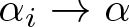 $\alpha_i\to \alpha$ such that
 $||v_{\alpha_i}||_{C^0(\mathbb{S}^n)}\to+\infty$. Since
 $\unicode{x2A0F}_{\mathbb{S}^n}e^{nv_{\alpha_i}}\mathrm{d} V_{\mathbb{S}^n}=1$ and
 $\alpha\in (\frac{1}{2}, 1]$, there is at most one blow-up point x 1 and
 \begin{align}
\liminf_{i\to+\infty}\frac{e^{nv_{\alpha}}}{|\mathbb{S}^n|}\mathrm{d} V_{\mathbb{S}^n}\geq\alpha\delta_{p_0}\qquad\mathrm{and}\qquad \lim_{i\to+\infty}\int_{\mathbb{S}^n\backslash B_{r}(x_1)}e^{nv_{\alpha_i}}\mathrm{d} V_{\mathbb{S}^n}=0
\end{align}
However, Kazdan–Warner condition yields that
 \begin{align}
\unicode{x2A0F}_{\mathbb{S}^n}e^{nv_{\alpha}}x^l\mathrm{d} V_{\mathbb{S}^n}=0\qquad\mathrm{for}\qquad l=1,2,\cdots,n+1.
\end{align}
If we choose x 1 as the north pole, then (4.1) will imply
 \begin{align*}
\liminf_{i\to+\infty}\unicode{x2A0F}_{\mathbb{S}^n}e^{nv_{\alpha}}x^{n+1}\mathrm{d} V_{\mathbb{S}^n}\geq\alpha \gt 0,
\end{align*}
this is a contradiction with (4.2).
Convention In the following, let x l be the coordinate function on  $\mathbb{S}^n$, i.e.,
 \begin{align*}
\mathbb{S}^n=\{x\in\mathbb{R}^{n+1}|\left(x^1\right)^2+\left(x^2\right)^2\cdots\left(x^{n+1}\right)^2=1\}.
\end{align*}
And, x, xk are the points on  $\mathbb{S}^n$ or
 $\mathbb{R}^n$. We also let
 $c_n=2^{n-1}\left(\frac{n-2}{2}\right)!\pi^{n/2}=Q_{g_{\mathbb{S}^n}}|\mathbb{S}^n|$ throughout §4.
4.1. Some preliminaries
In this subsection, x and y are the points on  $\mathbb{S}^n$ and
 $|x-y|:=|x-y|_{g_{\mathbb{S}^n}}$ be the distance on
 $\mathbb{S}^n$. And,
 $B_r(x)$ be the geodesic ball on
 $\mathbb{S}^n$ or general manifold. For closed manifold (M, g), the Green’s function of
 $P_g^{n}$ satisfies
 \begin{align}
\left|G_g(x,y)-\frac{1}{c_n}\log\frac{1}{|x-y|}\right|\leq C\qquad\mathrm{for}\qquad x\not=y
\end{align}
and
 \begin{align}
\left|\nabla_{x}^kG_{g}(x,y)\right|\leq\frac{C}{|x-y|^k}\qquad\mathrm{for}\qquad k=1,\cdots,n-1,
\end{align}
Where (4.3) follows from [Reference Chang and Yang8] and [Reference Malchiodi26], for (4.4), refer to [Reference Aubin3].
Lemma 4.1.
If  $\alpha\not=1$ and vα solves
 \begin{align}
P_{\mathbb{S}^n}v_{\alpha}+\frac{2}{\alpha}Q_{g_{\mathbb{S}^n}}=\frac{2}{\alpha}Q_{g_{\mathbb{S}^n}}e^{nv_{\alpha}},
\end{align}
then
 \begin{align}
\int_{\mathbb{S}^n}x^lv_{\alpha}\mathrm{d} V_{\mathbb{S}^n}=0\quad\mathrm{and}\quad\int_{\mathbb{S}^n}x^le^{nv_{\alpha}}\mathrm{d} V_{\mathbb{S}^n}=0.\quad\mathrm{for}\quad l=1,2,\cdots,n+1,
\end{align}
where xl is the l-th coordinate function on  $\mathbb{S}^n$.
Proof. We rewrite (4.5) as
 \begin{align*}
P_{\mathbb{S}^n}v_{\alpha}+2Q_{g_{\mathbb{S}^n}}=&2Q_{g_{\mathbb{S}^n}}e^{nv_{\alpha}}+\left(2-\frac{2}{\alpha}\right)Q_{g_{\mathbb{S}^n}}\\
=&2Q_{g_{\mathbb{S}^n}}\left(\left(1-\frac{1}{\alpha}\right)e^{-nv_{\alpha}}+1\right)e^{nv_{\alpha}}.
\end{align*}
From Kazdan–Warner condition (1.3) and  $\alpha\not=1$, we have
 \begin{align*}
0=&\int_{\mathbb{S}^n}\nabla x^l\cdot\nabla e^{-nv_{\alpha}}e^{nv_{\alpha}}\mathrm{d} V_{\mathbb{S}^n}=-n\int_{\mathbb{S}^n}\nabla x^l\cdot\nabla v_{\alpha}\mathrm{d} V_{g_{\mathbb{S}^4}}\\
=&n^2\int_{\mathbb{S}^n} x^lv_{\alpha}\mathrm{d} V_{\mathbb{S}^n}
\end{align*}
Multiply xl and integrate both sides for (1.5), then
 \begin{align*}
\int_{\mathbb{S}^n}x^le^{nv_{\alpha}}\mathrm{d} V_{\mathbb{S}^n}=0,
\end{align*}
the final result follows by  $P_{\mathbb{S}^n}x^l=n!x^l$.
Lemma 4.2.
For any small r > 0 and  $x_0\in \mathbb{S}^n$, if
 $n-kp \gt 0$ then
 \begin{align}
\int_{B_r(x_0)}|\nabla^kv_{\alpha}|^p\mathrm{d} V_{\mathbb{S}^n}\leq Cr^{n-kp}\qquad\mathrm{for}\qquad k=1,\ldots,n-1.
\end{align}
Especially, if  $k=1,2,\ldots,n-1$, we have
 \begin{align*}
||\nabla^k v_{\alpha}||_{L^p(\mathbb{S}^n)}\leq C\qquad\mathrm{for}\qquad 1\leq p \lt \frac{n}{k}.
\end{align*}
Proof. Let  $f_{\alpha}=\frac{2}{\alpha}Q_{g_{\mathbb{S}^n}}(e^{nv_{\alpha}}-1)$, then
 $\int_{\mathbb{S}^n}|f_{\alpha}|\leq C$. Denote
 $\bar{v}_{\alpha}=\unicode{x2A0F}_{\mathbb{S}^n} v_{\alpha}\mathrm{d} V_{\mathbb{S}^n}$, then we can see
 \begin{align*}
v_{\alpha}(x)=\bar{v}_{\alpha}+\int_{\mathbb{S}^n}G_{\mathbb{S}^n}(x,y)f_{\alpha}(y)\mathrm{d} V_{\mathbb{S}^n}(y)
\end{align*}
and
 \begin{align*}
|\nabla_{x}^kG_{\mathbb{S}^n}(x,y)|\leq\frac{C}{|x-y|^{k}}\qquad\mathrm{for}\qquad k=1,\ldots,n-1.
\end{align*}
We know
 \begin{align*}
\int_{B_r(x_0)}|\nabla^kv_{\alpha}|^p(x)\mathrm{d} V_{\mathbb{S}^n}(x)\leq& C\int_{B_r(x_0)}\left(\int_{\mathbb{S}^n}\frac{||f_{\alpha}||_{L^1(\mathbb{S}^n)}}{|x-y|^{k}}\frac{|f_{\alpha}(y)|}{||f_{\alpha}||_{L^1(\mathbb{S}^n)}}\mathrm{d} V_{\mathbb{S}^n}(y)\right)^p\mathrm{d} V_{\mathbb{S}^n}(x)\\
\leq& C\int_{B_r(x_0)}\int_{\mathbb{S}^n}\frac{||f_{\alpha}||^p_{L^1(\mathbb{S}^n)}}{|x-y|^{kp}}\frac{|f_{\alpha}(y)|}{||f_{\alpha}||_{L^1(\mathbb{S}^n)}}\mathrm{d} V_{\mathbb{S}^n}(y)\mathrm{d} V_{\mathbb{S}^n}(x)\\
\leq&C\sup_{y\in\mathbb{S}^n}\int_{B_r(x_0)}\frac{1}{|x-y|^{kp}}\mathrm{d} V_{\mathbb{S}^n}(x)\int_{\mathbb{S}^n}|f_{\alpha}(y)|\mathrm{d} V_{\mathbb{S}^n}(y)\\
\leq& C\int_{B_{2r}(y)}\frac{1}{|x-y|^{kp}}\mathrm{d} V_{\mathbb{S}^n}(x)\leq Cr^{n-kp},
\end{align*}
the second inequality follows by the Jensen inequality.
The following concentration compactness theorem has appeared in Remark 3.2 of [Reference Malchiodi26], and we give the details for the convenience of the reader.
Lemma 4.3.
Suppose  $||f_i||_{L^1(M, g_i)}\leq C$ and a sequence of closed manifolds
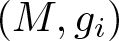 $(M, g_i)$ converges to closed manifold (M, g), if vi satisfies
 \begin{align*}
P_{g_i}v_{i}=f_i\qquad\mathrm{in}\qquad
M.
\end{align*}
Then up to a subsequence, either there exists p > n such that
 \begin{align}
\int_{M}e^{p(v_i-\bar{v}_i)}\mathrm{d} V_{g_i}\leq C,
\end{align}
where  $\bar{v}_i=\unicode{x2A0F}_{M}v_i\mathrm{d} V_{g_i}$or there exist concentration points
 $x_1,x_2,\ldots,x_{j_0}$ such that for any r > 0, we have
 \begin{align}
\liminf_{i\to+\infty}\int_{B_r(x_k)}|f_i|\mathrm{d} V_{g_{i}}\geq c_n,
\end{align}
where  $c_n=2^{n-1}\left(\frac{n-2}{2}\right)!\pi^{n/2}$ and
 $B_r(x_k)$ is the geodesic ball with respect to (M, g).
Remark.
If  $x_1,x_2,\ldots,x_{j_0}$ are the concentration points of
 $\{v_i\}_{i=1}^{+\infty}$, then
 $x_1,x_2,\ldots,x_{j_0}$ are also concentration points for any subsequence. By replacing
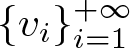 $\{v_i\}_{i=1}^{+\infty}$ with its subsequence, which we still call it by
 $\{v_{i}\}_{i=1}^{+\infty}$, we can always assume that the number of concentration points j 0 are the maximal (since
 $||f_i||_{L^1(M, g_i)}\leq C$, the number of concentration points of its any subsequence has uniformly upper bound), i.e., for any subsequence
 $\{v_i^{'}\}_{i=1}^{+\infty}\subset\{v_i\}_{i=1}^{+\infty}$, the number of concentration point of
 $\{v_i^{'}\}_{i=1}^{+\infty}$ does not exceed j 0.
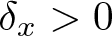
Proof. Suppose the second case does not happen, namely, for any  $x\in
M$ there exist rx and
 $\delta_{x} \gt 0$ such that
 \begin{align*}
\int_{B_{r_x}(x)}|f_i|\mathrm{d} V_{g_{i}}\leq c_n-\delta_{x}\qquad\mathrm{for}\qquad i\gg 1,
\end{align*}
where  $B_{r_x}(x)$ is the geodesic ball with respect to (M, g). Then, there exists
 $(M, g)\subset\cup_{k=1}^{N}B_{r_{x_k}/2}(x_k)$, for simplicity, denote
 $B_k:=B_{r_{x_k}}(x_k)$ and
 $B_{k/2}:=B_{r_{x_k}/2}(x_k)$. Hence, for any
 $x\in B_{k/2}$, we know
 \begin{align*}
v_i(x)-\bar{v}_i=\int_{M}G_{i}(x,y)f_{i}(y)\mathrm{d} V_{g_{i}}(y),
\end{align*}
where  $G_{i}(x,y)$ is the Green’s function of
 $P_{g_i}$ and
 $G_i\to G$. Since
 $G(x,y)=\frac{1}{c_n}\log\frac{1}{|x-y|}+O(1)$ for
 $|x-y| \lt 1$, we get
 \begin{align*}
&\int_{B_{k/2}}e^{p(v_i(x)-\bar{v}_i)}\mathrm{d} V_{g_{i}}(x)\\
\leq& \int_{B_{k/2}}\exp\left(p\int_{B_{k}}G_{i}(x,y)\left|f_i(y)\right|\mathrm{d} V_{g_{i}}(y)\right.
\\
&\left.+p\int_{M\backslash B_k}G_{i}(x,y)\left|f_i(y)\right|\mathrm{d} V_{g_{i}}(y)\right)\mathrm{d} V_{g_{i}}(x)\\
\leq&C(r_{x_k})\int_{B_{k/2}}\int_{B_{k}}\exp\left(p G_{i}(x,y)||f_i||_{L^1(B_k, g_i)}\right)\frac{\left|f_i(y)\right|}{||f_i||_{L^1(B_k, g_i)}}\mathrm{d} V_{g_{i}}(y)\mathrm{d} V_{g_{i}}(x)\\
\leq&C(r_{x_k})\int_{B_{k/2}}\int_{B_{k}}\left(\frac{1}{|x-y|}\right)^{\frac{p(c_n-\delta_{x_k})}{c_n}}\frac{\left|f_i(y)\right|}{||f_i||_{L^1(B_k, g_i)}}\mathrm{d} V_{g_{i}}(y)\mathrm{d} V_{g_{i}}(x).
\end{align*}
If we choose  $n \lt p \lt \frac{nc_n}{c_n-\delta_{x_k}}$ for any
 $k=1,2,\ldots, N$, then
 \begin{align*}
\int_{B_{k/2}}e^{p(u_i(x)-\bar{u}_i)}\mathrm{d} V_{\mathbb{S}^n}(x)\leq& C(r_{x_k})\int_{B_{2r_{x_k}}(x_k)}\left(\frac{1}{|x-x_k|}\right)^{\frac{p(c_n-\delta_{x_k})}{c_n}}\mathrm{d} V_{g_{i}}(x)\\
\leq& C(r_{x_k}).
\end{align*}
Although 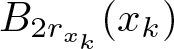 $B_{2r_{x_k}}(x_k)$ is the geodesic ball w.r.t (M, g), the above integral is also uniformly bounded when
 $i\gg1$. Finally, we obtain
 \begin{align*}
\int_{M}e^{p(u_i(x)-\bar{u}_i)}\mathrm{d} V_{g_{i}}(x)\leq\sum_{k=1}^{N}\int_{B_{k/2}}e^{p(u_i(x)-\bar{u}_i)}\mathrm{d} V_{g_{i}}(x)\leq C.
\end{align*}
Corollary 4.1.
Suppose  $v_{i}:=v_{\alpha_i}$ satisfies
 \begin{align*}
P_{\mathbb{S}^n}v_{i}+\frac{2}{\alpha}Q_{g_{\mathbb{S}^n}}=\frac{2}{\alpha}Q_{g_{\mathbb{S}^n}}e^{nv_{i}},
\end{align*}
and the second case in lemma 4.3 occurs, then for  $1\leq k\leq n$,
 \begin{align*}
\lim_{r\to 0} \liminf_{i\to+\infty}\int_{B_r(x_k)}e^{nv_i}\mathrm{d} V_{\mathbb{S}^n}\geq\frac{\alpha|\mathbb{S}^n|}{2}.
\end{align*}
Proof. Since  $f_i=\frac{2}{\alpha_i}Q_{g_{\mathbb{S}^n}}e^{nv_{i}}-\frac{2}{\alpha_i}Q_{g_{\mathbb{S}^n}}$, then for any small r > 0 we have
 \begin{align*}
\int_{B_{r}(x_k)}|f_i|\mathrm{d} V_{\mathbb{S}^n}=\frac{2}{\alpha_i}Q_{g_{\mathbb{S}^n}}\int_{B_{r}(x_k)}e^{nv_{i}}\mathrm{d} V_{\mathbb{S}^n}+o_{r}(1),
\end{align*}
Lemma 4.3 will yield that
 \begin{align*}
\frac{2}{\alpha}Q_{g_{\mathbb{S}^n}}\liminf_{i\to+\infty}\int_{B_{r}(x_k)}e^{nv_{i}}\mathrm{d} V_{\mathbb{S}^n}+o_{r}(1)\geq c_n=Q_{g_{\mathbb{S}^n}}|\mathbb{S}^n|,
\end{align*}
letting r → 0, we complete the argument.
Lemma 4.4.
Suppose  $v_{i}:=v_{\alpha_i}$ satisfies
 \begin{align*}
P_{\mathbb{S}^n}v_{i}+\frac{2}{\alpha}Q_{g_{\mathbb{S}^n}}=\frac{2}{\alpha}Q_{g_{\mathbb{S}^n}}e^{nv_{i}}
\end{align*}
and there exists p > n such that
 \begin{align}
\int_{\mathbb{S}^n}e^{p(v_i-\bar{v}_i)}\mathrm{d} V_{\mathbb{S}^n}\leq C.
\end{align}
Then there exists C such that
 \begin{align}
||v_{i}||_{L^{\infty}(\mathbb{S}^n)}\leq C \qquad\mathrm{and}\qquad||\nabla^kv_{i}||_{L^{\infty}(\mathbb{S}^n)}\leq C\qquad\mathrm{for}\qquad k\geq 1.
\end{align}
Proof. Firstly, Holder’s inequality will imply
 \begin{align}
1=e^{n\bar{v}_i}\unicode{x2A0F}_{\mathbb{S}^n}e^{n(v_i-\bar{v}_i)}\mathrm{d} V_{\mathbb{S}^n}\leq e^{n\bar{v}_i}\left(\unicode{x2A0F}_{\mathbb{S}^n}e^{p(v_i-\bar{v}_i)}\mathrm{d} V_{\mathbb{S}^n}\right)^{\frac{n}{p}}\leq Ce^{n\bar{v}_i}.
\end{align}
We also notice that
 \begin{align}
e^{n\bar{v}_i}\leq\unicode{x2A0F}_{\mathbb{S}^n}e^{nv_i}\mathrm{d} V_{\mathbb{S}^n}=1,
\end{align}
then (4.13) and (4.14) will imply
 \begin{align}
|\bar{v}_i|=\left|\unicode{x2A0F}_{\mathbb{S}^n}v_i\mathrm{d} V_{\mathbb{S}^n}\right|\leq C.
\end{align}
Hence, (4.11) and (4.15) will imply that
 \begin{align}
\int_{\mathbb{S}^n}e^{pv_i}\mathrm{d} V_{\mathbb{S}^n}\leq C\qquad\mathrm{for}\quad\mathrm{some}\qquad p \gt n.
\end{align}
Recall  $f_i=\frac{2}{\alpha_i}Q_{g_{\mathbb{S}^n}}e^{nv_{i}}-\frac{2}{\alpha_i}Q_{g_{\mathbb{S}^n}}$, then
 $||f_i||_{L^q(\mathbb{S}^n)}\leq C$ for some q > 1, this follows by (4.16). But we also know
 \begin{align}
\left|v_i(x)-\bar{v}_i\right|=&\left|\int_{\mathbb{S}^n}G_{\mathbb{S}^n}(x,y)f_{i}(y)\mathrm{d} V_{\mathbb{S}^n}(y)\right|\nonumber\\
\leq&\left(\int_{\mathbb{S}^n}\left|G_{\mathbb{S}^n}(x,y)\right|^{q^{'}}\mathrm{d} V_{\mathbb{S}^n}(y)\right)^{\frac{1}{q^{'}}}\left(\int_{\mathbb{S}^n}|f_{i}(y)|^q\mathrm{d} V_{\mathbb{S}^n}(y)\right)^{\frac{1}{q}}\\
\leq& C,\nonumber
\end{align}
where  $1/q+1/q^{'}=1$. The (4.15) and (4.17) will imply
 $||v_i||_{L^{\infty}(\mathbb{S}^n)}\leq C$. Then
 $||f_i||_{L^{\infty}(\mathbb{S}^n)}\leq C$, we obtain
 \begin{align*}
\nabla^kv_i(x)=\int_{\mathbb{S}^n}\nabla_{x}^kG_{\mathbb{S}^n}(x,y)f_{i}(y)\mathrm{d} V_{\mathbb{S}^n}(y)
\end{align*}
and
 \begin{align*}
\left|\nabla_{x}^kG_{\mathbb{S}^n}(x,y)\right|\leq\frac{C}{|x-y|^k},
\end{align*}
we conclude that for  $1\leq k\leq n-1$,
 \begin{align*}
||\nabla^kv_{i}||_{L^{\infty}(\mathbb{S}^n)}\leq C.
\end{align*}
The high-order elliptic estimate (see the appendix of [Reference Chen, Lu and Zhu11]) will imply
 \begin{align*}
||\nabla^kv_{i}||_{L^{\infty}(\mathbb{S}^n)}\leq C\qquad\mathrm{for}\qquad k\geq 1.
\end{align*}
4.2. A classification result for high-order conformally invariant equation
In this subsection, we will classify the following equation
 \begin{align}
\begin{cases}
\displaystyle \left(-\Delta\right)^{\frac{n}{2}}v=(n-1)!e^{nv}\qquad\mathrm{in}\qquad\mathbb{R}^n,\\
\displaystyle
\int_{\mathbb{R}^n}e^{nv(x)}\mathrm{d} x \lt +\infty,
\end{cases}
\end{align}
under decay condition: for any  $1\leq k\leq n-2$, there exists
 $\epsilon_k \gt 0$ such that
 \begin{align}
\int_{B_R(0)}|\nabla^k v|\leq CR^{n-\epsilon_k}\qquad\mathrm{for\,\,\,\,\,any}\quad R \gt 0.
\end{align}
For  $n=2m\geq4$, we also note that the solution of Eq. (4.18) may not be a standard bubble without condition (4.19), which is a big difference between high dimensions and two dimensions. There are many classic results on this issue, see [Reference Chen and Li12, Reference Lin25, Reference Martinazzi27, Reference Wei35]. Although there are many works dedicated to proving the integral equation, our primary focus here is on establishing it under the integral constraint (4.19). For an alternative proof of the integral equation, we refer the reader to [Reference Wei and Ye37].
Lemma 4.5.
Suppose R > 0, there holds
 \begin{align*}
\int_{B_R(0)}\frac{1}{|x-y|^k}\mathrm{d} x\leq C(n,k)\left(R^{n-k}\chi_{B_{2R}(0)}(y)+\frac{R^n}{|y|^k}\chi_{B^{c}_{2R}(0)}(y)\right).
\end{align*}
Proof. If  $y\in B_{2R}(0)$, then
 \begin{align}
\int_{B_R(0)}\frac{1}{|x-y|^k}\mathrm{d} x\leq\int_{B_{3R}(y)}\frac{1}{|x-y|^k}\mathrm{d} x\leq C(n)R^{n-k}.
\end{align}
For  $y\in B^{c}_{2R}(0)$, then
 $|x-y|\geq |y|-|x|\geq 2R-R=R$. Clearly,
 \begin{align*}
|x-y|\leq|x|+|y|\leq R+|y|\leq \frac{3|y|}{2}
\end{align*}
and
 \begin{align*}
|y|\leq |x|+|x-y|\leq R+|x-y|\leq 2|x-y|.
\end{align*}
Consequently, we deduce that
 \begin{align}
\int_{B_R(0)}\frac{1}{|x-y|^k}\mathrm{d} x\leq \frac{C(n,k)R^n}{|y|^k}.
\end{align}
In the following, we list two useful results above high-order elliptic equations, see [Reference Martinazzi27].
Lemma 4.6. Pizzetti formula
Suppose  $\Delta^mh=0$ in
 $B_{2R}(x_0)$, then
 \begin{align*}
\unicode{x2A0F}_{B_{R}(x_0)}h(y)\mathrm{d} y=\sum_{i=0}^{m-1}c_iR^{2i}\Delta^ih(x_0),
\end{align*}
where  $c_0=1, c_i=\frac{n}{n+2i}\frac{(n-2)!!}{(2i)!!(2i+n-2)!!}$ for
 $i\geq1$.
Lemma 4.7.
If  $\Delta^m h=0$ in
 $B_4(0)$, then for any
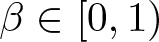 $\beta\in[0,1)$,
 $p\geq1$ and
 $k\geq1$, we have
 \begin{align*}
||h||_{W^{k,p}(B_1(0))}\leq& C(k,p)||h||_{L^1(B_4(0))},\\
||h||_{C^{k,\beta}(B_1(0))}\leq& C(k,p)||h||_{L^1(B_4(0))}.
\end{align*}
Inspired by [Reference Lin25, Reference Wei35, Reference Zhang40], we now begin to compare the solution of (4.18) with the integral
 \begin{align*}
\frac{(n-1)!}{c_n}\int_{\mathbb{R}^n}\log\frac{|y|}{|x-y|}e^{nv(y)}\mathrm{d} y,
\end{align*}
where  $c_n=2^{n-1}\left(\frac{n-2}{2}\right)!\pi^{n/2}$. Finally, we will prove that the solution of (4.18) is equal to the above integral plus a constant.
Lemma 4.8.
Setting
 \begin{align*}
w(x)=\frac{(n-1)!}{c_n}\int_{\mathbb{R}^n}\log\frac{|x-y|}{|y|}e^{nv(y)}\mathrm{d} y,
\end{align*}
then for 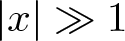 $|x|\gg1$,
 \begin{align*}
w(x)\leq a\log|x|+C,
\end{align*}
where  $a=\frac{(n-1)!}{c_n}\int_{\mathbb{R}^n}e^{nv(y)}\mathrm{d} y$.
Proof. We decompose  $\mathbb{R}^n$ to
 $\mathbb{R}^n=A_1\cup A_2\cup A_3$, where
 \begin{align*}
A_1=&\left\{y||y| \lt |x|/2\right\},\quad A_2=\left\{y||y-x| \lt |x|/2\right\},\\
A_3=&\left\{y||y| \gt |x|/2,|y-x| \gt |x|/2\right\}.
\end{align*}
In A 2, we have  $|x-y| \lt \frac{|x|}{2} \lt |y|$, then
 $\log\frac{|x-y|}{|y|}\leq0$. In A 1, we know
 $\frac{|x|}{2}\leq|x-y|\leq \frac{3|x|}{2}$
 \begin{align}
\int_{A_1}\log\frac{|x-y|}{|y|}e^{nv(y)}\mathrm{d} y\leq& \log|x|\int_{A_1}e^{nv(y)}\mathrm{d} y+C\int_{A_2}f(y)\mathrm{d} y-\int_{A_1}\log|y|e^{nv(y)}\mathrm{d} y\nonumber\\
\leq&\log|x|\int_{A_1}e^{nv(y)}\mathrm{d} y+C-\max_{B_1}e^{nv}\int_{|y| \lt 1}\log|y|\mathrm{d} y\nonumber\\
\leq&\log|x|\int_{A_1}e^{nv(y)}\mathrm{d} y+C.
\end{align}
In A 3, we get  $|x-y|\leq |y|+|x|\leq3|y|$ and
 $|y|\leq|x-y|+|x|\leq 3|x-y|$. Then,
 \begin{align}
\int_{A_3}\log\frac{|x-y|}{|y|}e^{nv(y)}\mathrm{d} y\leq& C\int_{A_3}e^{nv(y)}\mathrm{d} y.
\end{align}
So, from (4.22) and (4.23), we conclude that
 \begin{align*}
w(x)\leq a\log|x|+C.
\end{align*}
Lemma 4.9.
If v is a solution of
 \begin{align*}
\begin{cases}
\displaystyle \left(-\Delta\right)^{\frac{n}{2}}v=(n-1)!e^{nv}\qquad\mathrm{in}\qquad\mathbb{R}^n,\\
\displaystyle
\int_{\mathbb{R}^n}e^{nv(x)}\mathrm{d} x \lt +\infty,
\end{cases}
\end{align*}
then
 \begin{align*}
v(x)=\frac{(n-1)!}{c_n}\int_{\mathbb{R}^n}\log\frac{|y|}{|x-y|}e^{nv(y)}\mathrm{d} y+p(x),
\end{align*}
where p(x) is polynomial and  $\deg p\leq n-2$.
Proof. Let  $h(x)=v(x)+w(x)$, for any fixed
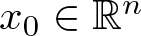 $x_0\in\mathbb{R}^n$ by the elliptic estimate of lemma 4.7, we have
 \begin{align}
|\nabla^{n-1}h(x_0)|\leq& \frac{C}{R^{n-1}}\unicode{x2A0F}_{B_{R}(x_0)}|h|\nonumber\\
=&-\frac{C}{R^{n-1}}\unicode{x2A0F}_{B_{R}(x_0)}h+\frac{2C}{R^{n-1}}\unicode{x2A0F}_{B_{R}(x_0)}h^{+}.
\end{align}
Thanks to lemma 4.6, we know
 \begin{align}
\frac{C}{R^{n-1}}\unicode{x2A0F}_{B_{R}(x_0)}h=O(R^{-1}).
\end{align}
Now we focus on the second part, applying lemma 4.8 and Jensen inequality, we obtain
 \begin{align}
\frac{1}{R^{n-1}}\unicode{x2A0F}_{B_{R}(x_0)}h^{+}\leq& \frac{1}{R^{n-1}}\unicode{x2A0F}_{B_{R}(x_0)}v^{+}+C\frac{\log R}{R^{n-1}}\nonumber\\
\leq& \frac{C}{R^{n-1}}\log\unicode{x2A0F}_{B_{R}(x_0)}e^{nv^{+}}+C\frac{\log R}{R^{n-1}}.
\end{align}
Since
 \begin{align}
\int_{B_{R}(x_0)}e^{nv^{+}}\leq \int_{B_{R}(x_0)}e^{nv}+1
\leq C+ CR^{n}
\end{align}
for  $R\gg1$, from (4.26) and (4.27), we obtain
 \begin{align}
\frac{1}{R^{n-1}}\unicode{x2A0F}_{B_{R}(x_0)}h^{+}\leq \frac{C}{R^{n-1}}+\frac{C\log R}{R^{n-1}}\to 0,
\end{align}
as  $R\to\infty$. Hence, (4.24), (4.25) and (4.28) yield that
 $\nabla^{n-1}h\equiv 0$, then we complete the argument.
Theorem 4.1
If v is a solution of
 \begin{align*}
\begin{cases}
\displaystyle \left(-\Delta\right)^{\frac{n}{2}}v=(n-1)!e^{nv}\qquad\mathrm{in}\qquad\mathbb{R}^n,\\
\displaystyle
\int_{\mathbb{R}^n}e^{nv(x)}\mathrm{d} x \lt +\infty,
\end{cases}
\end{align*}
and for any  $k=1,2,\ldots,n-2$ there exists
 $\epsilon_k \gt 0$ such that
 \begin{align}
\int_{B_R(0)}|\nabla^k v|\leq CR^{n-\epsilon_k}\qquad\mathrm{for\,\,\,\,\,any}\quad R \gt 0.
\end{align}
Then,
 \begin{align*}
v(x)=\log\frac{2\lambda}{\lambda^2+|x-x_0|^2}\qquad\mathrm{and}\qquad \int_{\mathbb{R}^n}e^{nv}=|\mathbb{S}^n|.
\end{align*}
Remark.
If n = 2, the constraint in (4.29) automatically disappears, making the above theorem a notable generalization of Chen and Li’s result in [Reference Chen and Li12].
Proof. We will claim:
 \begin{align}
v(x)=\frac{(n-1)!}{c_n}\int_{\mathbb{R}^n}\log\frac{|y|}{|x-y|}e^{nv(y)}\mathrm{d} y+C.
\end{align}
If the claim is true, in fact,  $v(x)=-a(1+o(1))\log|x|$ for
 $|x|\gg1$, refer to Theorem 2 in [Reference Zhang40]. Then, the classification of solutions was completed by [Reference Wei35], see also [Reference Martinazzi27]. Suppose not,
 $n-2\geq \deg p=k_0\geq1$. Thus,
 \begin{align*}
\int_{B_R(0)}|\nabla^{k_0} v(x)|\geq\int_{B_R(0)}|\nabla^{k_0}p(x)|-\int_{B_R(0)}|\nabla^{k_0}w(x)|,
\end{align*}
here  $|\nabla^k_0 v|=\sum_{l_1+\cdots+l_m=k_0}|\partial_{l_1}\cdots\partial_{l_m}v|$. Since we know
 \begin{align}
\int_{B_{R}(0)}|\nabla^{k_0}w(x)|\mathrm{d} x\leq& C(n)\int_{B_{R}(0)}\int_{\mathbb{R}^n}\frac{e^{nv(y)}}{|x-y|^{k_0}}\mathrm{d} y\mathrm{d} x\nonumber\\
\leq& C(n)\int_{\mathbb{R}^n}\left(\chi_{B_{2R}(0)}(y)R^{n-{k_0}}+\frac{R^n}{|y|^{k_0}}\chi_{B^{c}_{2R}(0)}(y)\right)e^{nv(y)}\mathrm{d} y\nonumber\\
\leq& CR^{n-{k_0}},
\end{align}
the second inequality follows by lemma 4.5. And,  $\int_{B_{R}(0)}|\nabla^{k_0}p(x)|\mathrm{d} x\sim R^n$, then (4.30) and (4.31) will give
 \begin{align*}
\int_{B_R(0)}|\nabla^{k_0} v(x)|\geq C(n)R^n-C(n,k_0)R^{n-k_0}\geq C(n)R^n\qquad\mathrm{for}\qquad R\gg 1.
\end{align*}
But this is a contradiction with the assumption (4.29).
4.3. Blow-up analysis
In this subsection, we will prove that the second case in lemma 4.3 will not occur. If not, we assume that  $\{x_k\}_{k=1}^{j_0}$ is the concentration points of
 $\{v_{i}\}_{i=1}^{+\infty}$ and j 0 is maximal. We also note that many of the results in this subsection hold in the sense of difference by one subsequence. We will prove:
(1) From corollary 4.1, we know that for a fixed
$k\in\{1,2,\ldots,j_0\}$,
(4.32)\begin{align}
\liminf_{i\to+\infty}\int_{B_r(x_k)}e^{nv_i}\mathrm{d} V_{\mathbb{S}^n}+o_{r}(1)\geq\frac{\alpha|\mathbb{S}^n|}{2}\qquad\mathrm{for\,\,\,\,\,any}\qquad r \gt 0,
\end{align}then up to a subsequence,
(4.33)\begin{align}
\lim_{i\to+\infty}\int_{B_r(x_k)}e^{nv_i}\mathrm{d} V_{\mathbb{S}^n}\geq\alpha|\mathbb{S}^n|\qquad\mathrm{for\,\,\,\,\,any}\qquad r \gt 0.
\end{align}Now we choose
$r \lt r_0:=\frac{1}{2}\min_{m\not=l}\mathrm{dist}(x_m,x_l)$, note that
$\alpha\in (1/2, 1]$ and combining with
$\int_{\mathbb{S}^n}e^{nv_i}\mathrm{d} V_{\mathbb{S}^n}=|\mathbb{S}^n|$, then
$j_0=1$.(2) Assuming that x 1 be the concentration point, our second argument is that up to a subsequence, for any r > 0
(4.34)\begin{align}
\lim_{i\to+\infty}\int_{\mathbb{S}^n\backslash B_{r}(x_1)}e^{nv_i}\mathrm{d} V_{\mathbb{S}^n}=0.
\end{align}



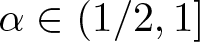


However, (4.33) and (4.34) can lead to a contradiction with the Kazdan–Warner condition:
 \begin{align*}
\int_{\mathbb{S}^n}x^{n+1}e^{nv_{i}}\mathrm{d} V_{\mathbb{S}^n}=0.
\end{align*}
We also note that this type of blow-up analysis can be significantly simplified using known results. In the context of blow-up analysis on closed manifolds, open domains, and integral equations, there exist numerous seminal works by Hyder, Martinazzi, Druet, Ndiaye, and others. Here, we mention only a few representative references: [Reference Adimurthi and Struwe1, Reference Druet and Robert13, Reference Hyder20, Reference Hyder, Mancini and Martinazzi21, Reference Malchiodi26, Reference Martinazzi28, Reference Martinazzi29, Reference Ndiaye31, Reference Ndiaye32].
Lemma 4.10.
Suppose  $k\in\{1,2,\ldots,j_0\}$,
 \begin{align*}
\liminf_{i\to+\infty}\int_{B_r(x_k)}e^{nv_i}\mathrm{d} V_{\mathbb{S}^n}+o_r(1)\geq\frac{\alpha|\mathbb{S}^n|}{2}\qquad\mathrm{for\,\,\,\,\,any}\qquad r \gt 0.
\end{align*}
For any  $\rho\in \left(0,\frac{\alpha|\mathbb{S}^n|}{4}\right)$, then there exist
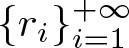 $\{r_i\}_{i=1}^{+\infty}$ and
 $\{x_{k,i}\}_{i=1}^{+\infty}$such that
 \begin{align*}
\lim_{i\to+\infty}r_i=0\qquad\mathrm{and}\qquad\lim_{i\to+\infty}x_{k,i}=x_k^{'}\in \bar{B}_{r_0}(x_k)
\end{align*}
and
 \begin{align*}
\int_{B_{r_i}(x_{k,i})}e^{nv_i}\mathrm{d} V_{\mathbb{S}^n}=\max_{x\in B_{r_0}(x_k)}\int_{B_{r_i}(x)}e^{nv_i}\mathrm{d} V_{\mathbb{S}^n}=\rho.
\end{align*}
Proof. If (4.32) holds, for fixed i, we know that
 \begin{align*}
\max_{x\in B_{r_0}(x_k)}\int_{B_{r}(x)}e^{nv_i}\mathrm{d} V_{\mathbb{S}^n}
\end{align*}
is continuous above r. Hence, for  $\rho\in\left(0,\frac{\alpha|\mathbb{S}^n|}{4}\right)$, then there exist
 $\{r_i\}_{i=1}^{+\infty}$ such that
 \begin{align*}
\int_{B_{r_i}(x_{k,i})}e^{nv_i}\mathrm{d} V_{\mathbb{S}^n}=\max_{x\in B_{r_0}(x_k)}\int_{B_{r_i}(x)}e^{nv_i}\mathrm{d} V_{\mathbb{S}^n}=\rho.
\end{align*}
Then we claim that  $\lim_{i\to+\infty} r_i=0$. Otherwise, there exists a subsequence
 $\{r_i\}_{i=1}^{+\infty}$ such that
 $r_i \gt \delta_{0} \gt 0$ for all
 $i\in \mathbb{N}$, and by the definition of ρ, we know
 \begin{align*}
\rho\geq\int_{B_{r_i}(x_k)}e^{nv_i}\mathrm{d} V_{\mathbb{S}^n}\geq\int_{B_{\delta_{0}}(x_k)}e^{nv_i}\mathrm{d} V_{\mathbb{S}^n}.
\end{align*}
Taking the limit of the above inequality, we know
 \begin{align*}
\rho\geq \liminf_{i\to+\infty}\int_{B_{\delta_{0}}(x_k)}e^{nv_i}\mathrm{d} V_{\mathbb{S}^n}\geq \frac{\alpha|\mathbb{S}^n|}{2}+o_{\delta_{0}}(1),
\end{align*}
if δ 0 sufficiently small, this is impossible!
We consider the exponential maps
 \begin{align*}
\exp_{x_{k,i}}: B_1(0)\subset T_{x_{k,i}}\mathbb{S}^n\longrightarrow \mathbb{S}^n,
\end{align*}
denote  $\tilde{g}_i=\exp_{x_{k,i}}^{*}g_{\mathbb{S}^n}$ and
 $\tilde{v}_i(x)=v_i\circ \exp_{x_{k,i}}(x)$, then
 \begin{align*}
P_{\tilde{g}_i}\tilde{v}_i+\frac{2}{\alpha_i}Q_{g_{\mathbb{S}^n}}=\frac{2}{\alpha_i}Q_{g_{\mathbb{S}^n}}e^{n\tilde{v}_i},\qquad\qquad\mathrm{for}\qquad x\in B_1(0).
\end{align*}
The rescaling of  $\tilde{v}_i$ is defined by
 \begin{align}
\hat{v}_i(x):=\tilde{v}_i(\delta_{r_i}(x))+\log r_i=\tilde{v}_i(r_ix)+\log r_i,\qquad\mathrm{for}\qquad x\in B_{1/r_i}(0),
\end{align}
where  $\delta_{r_i}(x)=r_ix$. Clearly, for any
 $y\in B_{1/2r_i}(0)$,
 \begin{align}
\int_{B_{1/2}(y)}e^{n\hat{v}_i(x)}dx=&\int_{\delta_i(B_{1/2}(y))}e^{n\tilde{v}_i(x)}dx=(1+o_i(1))\int_{\exp_{x_{k,i}}(\delta_i(B_{1/2}(y)))}e^{nv_i}\mathrm{d} V_{\mathbb{S}^n}\nonumber\\
\leq&(1+o_i(1))\int_{B_{r_i}(x_{i,k})}e^{nv_i}\mathrm{d} V_{\mathbb{S}^n} \lt \frac{3\alpha|\mathbb{S}^n|}{8}.
\end{align}
Setting  $\hat{g}_i(x)=r_i^{-2}\delta_{r_i}^{*}\tilde{g}_i=\left(\frac{2}{1+|r_ix|^2}\right)^2|dx|^2\to |dx|^2$ in
 $C^k_{\mathrm{loc}}(\mathbb{R}^n)$ sense, by the conformally invariant property of GJMS operator, then we have
 \begin{align}
P_{\hat{g}_i}\hat{v}_i+\frac{2r_i^n}{\alpha_i}Q_{g_{\mathbb{S}^n}}=\frac{2}{\alpha_i}Q_{g_{\mathbb{S}^n}}e^{n\hat{v}_i},\qquad\qquad\mathrm{for}\qquad x\in B_{1/r_i}(0).
\end{align}
In the following lemma, through lemma 4.2 and (4.36), we arrive that if R > 1,
 \begin{align*}
\int_{B_{R}(0)} e^{p\hat{v}_i}\leq C(R)\qquad\mathrm{and}\qquad \int_{B_{R}(0)} |\hat{v}_i|^p\leq C(R)\qquad \mathrm{for}\qquad p=p(R) \gt 1.
\end{align*}
Hence, Eq. (4.37) will convergent in  $C^{\infty}_{\mathrm{loc}}(\mathbb{R}^n)$ sense.
Lemma 4.11.
Suppose  $\hat{v}_i$ is defined by (4.35), then
 \begin{align*}
\hat{v}_i\longrightarrow \hat{v}_{\infty}\qquad\mathrm{in}\qquad C_{\mathrm{loc}}^{\infty}(\mathbb{R}^n),
\end{align*}
where
 \begin{align*}
\left(-\Delta\right)^{\frac{n}{2}}\hat{v}_{\infty}=\frac{2Q_{g_{\mathbb{S}^n}}}{\alpha}e^{n\hat{v}_{\infty}}
\end{align*}
and
 \begin{align*}
\hat{v}_{\infty}(x)=\log\frac{2\lambda}{\lambda^2+|x-x_0|^2}+\frac{1}{n}\log \alpha\qquad\mathrm{and}\qquad \int_{\mathbb{R}^n}e^{n\hat{v}_{\infty}}=\alpha|\mathbb{S}^n|.
\end{align*}
Proof. For any R > 0,we choose the cut-off function  $\phi_{R}(x)$ such that
 $\phi_{R}(x)\equiv 1$ in
 $B_{R/2}(0)$ and
 $\phi_{R}(x)\equiv 0$ in
 $\mathbb{R}^n\backslash B_{R}(0)$,
 \begin{align*}
u_i=\phi_{R}\hat{v}_i+(1-\phi_{R})a_i=a_i+\phi_{R}(\hat{v}_i-a_i) \qquad\mathrm{and}\qquad \hat{u}_i=u_i-a_i,
\end{align*}
where
 \begin{align*}
a_i=\frac{1}{B_R(0)}\int_{B_R(0)}\hat{v}_i.
\end{align*}
We know  $\hat{u}_i=\hat{v}_i-a_i$ in
 $B_{R/2}$ and
 $\hat{u}_i=0$ in
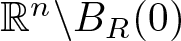 $\mathbb{R}^n\backslash B_R(0)$. According to lemma 4.2, for
 $n-kp \gt 0$ and
 $k=1,2,\cdots,n-1$ we have
 \begin{align}
\int_{B_{2R}(0)}|\nabla^k\hat{v}_i|^p=r_i^{kp-n}\int_{B_{2Rr_i}}|\nabla^k\tilde{v}_i|^p\leq Cr_i^{kp-n}(2Rr_i)^{n-kp}\leq CR^{n-kp}.
\end{align}
By the (4.39) and Poincare inequality, we have
 \begin{align}
\int_{B_{R}(0)}\left|\hat{v}_i-a_i\right|^p\leq C(R)\int_{B_{2R}(0)}\left|\nabla \hat{v}_i\right|^p\leq C(R).
\end{align}
On the other hand,  $\hat{u}_i$ satisfies
 \begin{align*}
P_{\hat{g}_i}\hat{u}_i=& P_{\hat{g}_i}\left[\phi_{R}(\hat{v}_i-a_i)\right]=\phi_{R}P_{\hat{g}_i}\hat{v}_i+L_i(\hat{v}_i-a_i)\\
=&\frac{2Q_{g_{\mathbb{S}^n}}\phi_{R}}{\alpha_i}e^{n\hat{v}_i}-\frac{2r_i^nQ_{g_{\mathbb{S}^n}}\phi_{R}}{\alpha_i}+L_i(\hat{v}_i-a_i):=\hat{f}_i,
\end{align*}
where Li is the differential operator which contains order  $0\leq k\leq n-1$ with smooth coefficients and
 $\mathrm{supp}L_i\subset B_R(0)$. Combining (4.36), (4.39), and (4.40), for any
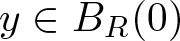 $y\in B_R(0)$, we deduce that
 \begin{align}
\int_{B_r(y)}|\hat{f}_i|\leq& \frac{2Q_{g_{\mathbb{S}^n}}}{\alpha_i}\int_{B_r(y)}e^{n\hat{v}_i(x)}dx+ Cr_i^n|B_r|+ C\int_{B_r(y)}\left|L_i(\hat{v}_i-a_i)\right|\nonumber\\
\leq&\frac{3\alpha c_n}{4\alpha_i}+Cr_i^n|B_r|+C\left(\int_{B_r(y)}\left|L_i(\hat{v}_i-a_i)\right|^p\right)^{1/p}|B_r|^{1-1/p}\nonumber\\
\leq& \frac{3\alpha c_n}{4\alpha_i}+Cr_i^nr^n+C(R)r^{n(1-1/p)} \lt c_n,
\end{align}
for r is sufficiently small. Since  $\mathrm{suup} \,\,\hat{u}_i\subset B_R(0)$, we can embed the
 $(B_{2R}, \hat{g}_i)$ into torus
 $(\mathbb{T}^n,h_i)$ such that
 $h_i=\hat{g}_i$ in
 $B_{2R}(0)$ in
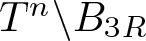 $T^n\backslash B_{3R}$ and
 $h_i\to |dx|^2$ as
 $i\to+\infty$. Through lemma 4.3 and (4.41), we know there exist
 $p:=p(R) \gt n$ such that
 \begin{align}
\int_{B_{R}(0)} e^{p\hat{u}_i}\leq C(R).
\end{align}
We claim that:
 \begin{align}
|a_i|\leq C(R).
\end{align}
On the one hand, Jensen’s inequality implies
 \begin{align}
e^{na_i}\leq& \int_{B_{R}(0)}e^{n\hat{v}_i}=\int_{B_{Rr_i}(0)}e^{n\tilde{v}_i}\nonumber\\
=&(1+o_i(1))\int_{\exp_{x_{k,i}}(B_{Rr_i}(0))}e^{nv_i}\mathrm{d} V_{\mathbb{S}^n}\leq C.
\end{align}
On the other hand,
 \begin{align}
\int_{B_{R/2}(0)}e^{n\hat{v}_i}=&(1+o_i(1))\int_{\exp_{x_{k,i}}(B_{Rr_i/2}(0))}e^{nv_i}\mathrm{d} V_{\mathbb{S}^n}\nonumber\\
\geq&(1+o_i(1))\int_{B_{r_i}(x_{k,i})}e^{nv_i}\mathrm{d} V_{\mathbb{S}^n}\geq\frac{\rho}{2}
\end{align}
and
 \begin{align}
\int_{B_{R/2}(0)}e^{n\hat{v}_i}=&e^{na_i}\int_{B_{R/2}(0)}e^{n\hat{u}_i}\leq e^{na_i} \left(\int_{B_{R/2}(0)} e^{p\hat{u}_i}\right)^{1/p}|B_{R/2}|^{1-1/p}\nonumber\\
\leq& C(R)e^{na_i},
\end{align}
where (4.46) follows by (4.42). Then, (4.45) and (4.46) will imply
 \begin{align}
a_i\geq -C(R).
\end{align}
We complete the proof of the claim by (4.44) and (4.47). Hence, (4.42) and (4.43) will yield
 \begin{align}
\int_{B_{R/2}(0)} e^{p\hat{v}_i}=e^{pa_i}\int_{B_{R/2}(0)} e^{p\hat{u}_i}\leq C(R)
\end{align}
and combining with (4.40) we obtain
 \begin{align}
\int_{B_{R/2}(0)} |\hat{v}_i|^p\leq C(R).
\end{align}
Recall the equation
 \begin{align*}
P_{\hat{g}_i}\hat{v}_i+\frac{2r_i^n}{\alpha_i}Q_{g_{\mathbb{S}^n}}=\frac{2}{\alpha_i}Q_{g_{\mathbb{S}^n}}e^{n\hat{v}_i},\qquad\qquad\mathrm{for}\qquad x\in B_{1/r_i}(0),
\end{align*}
we notice that (4.48) , (4.49), and high-order elliptic estimate (see Lemma 7.6 in [Reference Chen, Lu and Zhu11]) give that
 \begin{align*}
||\hat{v}_i||_{C^{\beta}(B_{R/4}(0))}\leq C||\hat{v}_i||_{W^{n,p}(B_{R/4}(0))}\leq C(R),
\end{align*}
for some  $\beta:=\beta(R)\in (0,1)$. Again, the elliptic estimate also gives
 \begin{align*}
||\hat{v}_i||_{C^{n,\beta}(B_{R/4}(0))}\leq C(R).
\end{align*}
Finally, we establish
 \begin{align*}
||\hat{v}_i||_{C^{m}(B_{R/4}(0))}\leq C(m,R)\qquad\mathrm{for\,\,\,any}\quad m\in\mathbb{N},\quad R \gt 0.
\end{align*}
So, we have
 \begin{align*}
\hat{v}_i\longrightarrow \hat{v}_{\infty}\qquad\mathrm{in}\qquad C_{\mathrm{loc}}^{\infty}(\mathbb{R}^n)
\end{align*}
and where
 \begin{align*}
\left(-\Delta\right)^{\frac{n}{2}}\hat{v}_{\infty}=\frac{2Q_{g_{\mathbb{S}^n}}}{\alpha}e^{n\hat{v}_{\infty}}.
\end{align*}
Noticing that (4.39), we have
 \begin{align}
\int_{B_{R}(0)}|\nabla^k\hat{v}_{\infty}|\leq CR^{n-k}\qquad\mathrm{for}\qquad k=1,2,\ldots,n-1.
\end{align}
Theorem 4.1 tells us that
 \begin{align*}
\hat{v}_{\infty}(x)=\log\frac{2\lambda}{\lambda^2+|x-x_0|^2}+\frac{1}{n}\log \alpha\qquad\mathrm{and}\qquad \int_{\mathbb{R}^n}e^{n\hat{v}_{\infty}}=\alpha|\mathbb{S}^n|.
\end{align*}
Corollary 4.2.
With the same notation as lemma 4.11, up to a subsequence, for any r > 0 there holds
 \begin{align*}
\liminf_{i\to+\infty}\int_{B_{r}(x_k^{'})}e^{nv_i}\geq \alpha|\mathbb{S}^n|.
\end{align*}
Proof. This corollary follows by lemma 4.11 and for any R > 1
 \begin{align*}
\int_{B_{R}(0)}e^{n\hat{v}_i}=&(1+o_i(1))\int_{\exp_{x_{k,i}}(B_{Rr_i}(0))}e^{nv_i}\mathrm{d} V_{\mathbb{S}^n}\leq(1+o_i(1))\int_{B_{r}(x_k^{'})}e^{nv_i}\mathrm{d} V_{\mathbb{S}^n}.
\end{align*}
Lemma 4.12.
Suppose  $\{x_k\}_{k=1}^{j_0}$ are the all concentration points of
 $\{v_i\}_{i=1}^{\infty}$, then
 \begin{align*}
x_k=x_k^{'}\qquad\mathrm{for}\qquad k=1,2,\ldots, j_0
\end{align*}
and  $j_0=1$.
Proof. Suppose there exists k such that  $x_k\not=x_k^{'}$, then for small r > 0, up to a subsequence,
 \begin{align*}
\liminf_{i\to+\infty}\int_{B_{r}(x_k^{'})}|f_i|=&\liminf_{i\to+\infty}\frac{2Q_{g_{\mathbb{S}^n}}}{\alpha_i}\int_{B_{r}(x_k^{'})}e^{nv_i}+o_{r}(1)\\
\geq&\liminf_{i\to+\infty}\frac{2Q_{g_{\mathbb{S}^n}}}{\alpha_i}\int_{B_{r_i}(x_{k,i})}e^{nv_i}\mathrm{d} V_{\mathbb{S}^n}+o_{r}(1)\\
\geq&2Q_{g_{\mathbb{S}^n}}|\mathbb{S}^n|+o_r(1) \gt c_n.
\end{align*}
Then,  $x_k^{'}$ is also a concentration point,
 $\{v_i\}_{i=1}^{\infty}$ has
 $j_0+1$ concentration points, this is a contradiction. For any
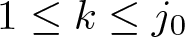 $1\leq k\leq j_0$, then
 \begin{align*}
\liminf_{i\to+\infty}\int_{B_{r}(x_k)}e^{nv_i}\mathrm{d} V_{\mathbb{S}^n}\geq \alpha|\mathbb{S}^n|.
\end{align*}
Hence,
 \begin{align*}
|\mathbb{S}^n|=\liminf_{i\to+\infty}\sum_{k=1}^{j_0}\int_{B_{r}(x_k)}e^{nv_i}\mathrm{d} V_{\mathbb{S}^n}\geq j_0\alpha|\mathbb{S}^n|,
\end{align*}
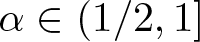 $\alpha\in (1/2, 1]$ will imply
 $j_0=1$.
Lemma 4.13.
Suppose 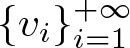 $\{v_i\}_{i=1}^{+\infty}$ has only one concentration point x 1, up to a subsequence, then for any r > 0
 \begin{align}
\liminf_{i\to+\infty}\int_{B_{r}(x_1)}e^{nv_i}\mathrm{d} V_{\mathbb{S}^n}\geq \alpha|\mathbb{S}^n|
\end{align}
and
 \begin{align}
\lim_{i\to+\infty}\int_{\mathbb{S}^n\backslash B_{r}(x_1)}e^{nv_i}\mathrm{d} V_{\mathbb{S}^n}=0.
\end{align}
Proof. For (4.52), it is easy to see by corollary 4.2 and lemma 4.12. We assume that (4.53) is not true, there exists r 0 such that
 \begin{align}
\int_{\mathbb{S}^n\backslash B_{r_0}(x_1)}e^{nv_i}\mathrm{d} V_{\mathbb{S}^n}\geq c_0 \gt 0.
\end{align}
Since  $\{v_i\}_{i=1}^{+\infty}$ has only one concentration point x 1, then for any
 $y\in \mathbb{S}^n\backslash B_{r_0}(x_1)$, there exist
 $\delta_{y} \gt 0$ and
 $r_{y} \gt 0$ which satisfy
 \begin{align*}
\int_{B_{r_{y}}(y)}|f_i|\mathrm{d} V_{\mathbb{S}^n} \lt c_n-\delta_{y}, \qquad\mathrm{for}\qquad i\gg 1.
\end{align*}
By the same proof as for lemma 4.3, we can obtain that there exist p > n and a subsequence  $\{v_i\}_{i=1}^{+\infty}$ such that
 \begin{align}
\int_{\mathbb{S}^n\backslash B_{r_0}(x_1)}e^{p\left(v_i-\bar{v}_i\right)}\mathrm{d} V_{\mathbb{S}^n}\leq C.
\end{align}
Then (4.54) and (4.55) will yield
 \begin{align}
c_0\leq \int_{\mathbb{S}^n\backslash B_{r_0}(x_1)}e^{nv_i}\mathrm{d} V_{\mathbb{S}^n}=e^{n\bar{v}_i}\int_{\mathbb{S}^n\backslash B_{r_0}(x_1)}e^{n\left(v_i-\bar{v}_i\right)}\mathrm{d} V_{\mathbb{S}^n}\leq Ce^{n\bar{v}_i}.
\end{align}
In the next step, we claim that
 \begin{align}
\bar{v}_i\longrightarrow-\infty\qquad\mathrm{as}\qquad i\longrightarrow+\infty.
\end{align}
For any r > 0
 \begin{align*}
\liminf_{i\to+\infty}\int_{B_{r}(x_1)}e^{nv_i}\mathrm{d} V_{\mathbb{S}^n}\geq \alpha|\mathbb{S}^n|,
\end{align*}
and
 \begin{align*}
\left|G_{\mathbb{S}^n}(x,y)-\frac{1}{c_n}\log\frac{1}{|x-y|}\right|\leq C\qquad\mathrm{for}\qquad x\not=y\in\mathbb{S}^n.
\end{align*}
Therefore,
 \begin{align}
v_i(x)-\bar{v}_i=&\frac{2Q_{g_{\mathbb{S}^n}}}{\alpha_i}\int_{\mathbb{S}^n}G_{\mathbb{S}^n}(x,y)\left(e^{nv_i(y)}-1\right)\mathrm{d} V_{\mathbb{S}^n}(y)\nonumber\\
\geq& \frac{2Q_{g_{\mathbb{S}^n}}}{\alpha_i}\left(\int_{B_r(x_1)}+\int_{\mathbb{S}^n\backslash B_{r}(x_1)}G_{\mathbb{S}^n}(x,y)e^{nv_i(y)}\mathrm{d} V_{\mathbb{S}^n}(y)\right)-C(n)\nonumber\\
\geq&\frac{2Q_{g_{\mathbb{S}^n}}}{\alpha_i}\int_{B_{r}(x_1)}G_{\mathbb{S}^n}(x,y)e^{nv_i(y)}\mathrm{d} V_{\mathbb{S}^n}(y)-C(n),
\end{align}
the last inequality follows by
 \begin{align*}
G_{\mathbb{S}^n}(x,y)\geq \frac{1}{c_n}\log\frac{1}{|x-y|}-C\geq \frac{1}{c_n}\log\frac{1}{\pi}-C.
\end{align*}
Suppose  $x\in \mathbb{S}^n\backslash B_{2r}(x_1)$, then
 \begin{align}
\left|\log\frac{1}{|x-y|}-\log\frac{1}{|x-x_1|}\right|\leq C(n).
\end{align}
Hence, from (4.58) and (4.59) we know
 \begin{align*}
e^{nv_i(x)}\geq& Ce^{n\bar{v}_i}\exp\left(\frac{2nQ_{g_{\mathbb{S}^n}}}{c_n\alpha_i}\log\frac{1}{|x-x_1|}\int_{B_{r}(x_1)}e^{nv_i}\mathrm{d} V_{\mathbb{S}^n}\right)\\
\geq& Ce^{n\bar{v}_i}\frac{1}{|x-x_1|^{2n-\epsilon}}\qquad\mathrm{for}\qquad i \gt N(r)\gg 1\qquad \mathrm{and}\qquad x\in \mathbb{S}^n\backslash B_{2r}(x_1).
\end{align*}
However, this will cause
 \begin{align*}
|\mathbb{S}^n|=&\int_{\mathbb{S}^n}e^{nv_i}\mathrm{d} V_{\mathbb{S}^n}\geq \int_{B_{1}(x_1)\backslash B_{2r}(x_1) }e^{nv_i}\mathrm{d} V_{\mathbb{S}^n}\\
\geq& Ce^{n\bar{v}_i}\int_{B_{1}(x_1)\backslash B_{2r}(x_1) }\frac{1}{|x-x_1|^{2n-\epsilon}}\mathrm{d} V_{\mathbb{S}^n}(x)\\
=& Ce^{n\bar{v}_i}\frac{1}{r^{n-\epsilon}}\qquad\mathrm{for}\qquad i\gg 1.
\end{align*}
Due to the arbitrariness of r, we know  $\bar{v}_i\to -\infty$ as
 $i\to+\infty$. The final result is given by (4.56) and (4.57).
Lemma 4.14.
Suppose 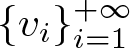 $\{v_i\}_{i=1}^{+\infty}$ has only one concentration point x 1 and satisfies
 \begin{align*}
P_{\mathbb{S}^n}v_{i}+\frac{2}{\alpha}Q_{g_{\mathbb{S}^n}}=\frac{2}{\alpha}Q_{g_{\mathbb{S}^n}}e^{nv_{i}},
\end{align*}
then  $\{v_i\}_{i=1}^{+\infty}$ are uniformly bounded in
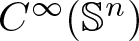 $C^{\infty}(\mathbb{S}^n)$ sense.
Proof. If not, then the second case in lemma 4.3 will occur. Firstly, we claim that: up to a subsequence, for any  $\phi\in C^{\infty}(\mathbb{S}^n)$ and
 $\phi(x_1) \gt 0$,
 \begin{align}
\liminf_{i\to+\infty}\unicode{x2A0F}_{\mathbb{S}^n}e^{nv_i}\phi \mathrm{d} V_{\mathbb{S}^n}\geq\alpha\phi(x_1).
\end{align}
We note that for sufficiently small r > 0,
 \begin{align}
&\int_{\mathbb{S}^n}e^{nv_i}\phi \mathrm{d} V_{\mathbb{S}^n}\nonumber\\
=&\int_{B_{r}(x_1)}e^{nv_i}\phi \mathrm{d} V_{\mathbb{S}^n}+\int_{\mathbb{S}^n\backslash B_{r}(x_1)}e^{nv_i}\phi \mathrm{d} V_{\mathbb{S}^n}\nonumber\\
=&\phi(x_1)\int_{B_{r}(x_1)}e^{nv_i}\mathrm{d} V_{\mathbb{S}^n}+\int_{B_{r}(x_1)}e^{nv_i}\left(\phi(x)-\phi(x_1)\right) \mathrm{d} V_{\mathbb{S}^n}+\int_{\mathbb{S}^n\backslash B_{r}(x_1)}e^{nv_i}\phi \mathrm{d} V_{\mathbb{S}^n}\nonumber\\
=&\phi(x_1)\int_{B_{r}(x_1)}e^{nv_i}\mathrm{d} V_{\mathbb{S}^n}+I+II,
\end{align}
then
 \begin{align}
|I|=&\left|\unicode{x2A0F}_{\mathbb{S}^n}e^{nv_i(x)}\left(\phi(x)-\phi(x_1)\right) \mathrm{d} V_{\mathbb{S}^n}(x)\right|\nonumber\\
\leq&C||\nabla\phi||_{L^{\infty}(\mathbb{S}^n)}r\unicode{x2A0F}_{B_r(x_1)}e^{nv_i(x)}\mathrm{d} V_{\mathbb{S}^n}(x)\leq Cr.
\end{align}
Lemma 4.13 implies that
 \begin{align}
|II|\leq C(n)||\phi||_{L^{\infty}(\mathbb{S}^n)}\int_{\mathbb{S}^n\backslash B_{r}(x_1)}e^{nv_i} \mathrm{d} V_{\mathbb{S}^n}\to 0\qquad\mathrm{as}\qquad i\to+\infty,
\end{align}
from (4.61), (4.62) and (4.63) we obtain
 \begin{align*}
\liminf_{i\to+\infty}\unicode{x2A0F}_{\mathbb{S}^n}e^{nv_i}\phi \mathrm{d} V_{\mathbb{S}^n}\geq& \liminf_{i\to+\infty}\phi(x_1)\int_{B_{r}(x_1)}e^{nv_i}\mathrm{d} V_{\mathbb{S}^n}-Cr\\
\geq& \alpha|\mathbb{S}^n|\phi(x_1)-Cr.
\end{align*}
Letting r → 0, we get the (4.60). We can suppose x 1 as the north pole for  $\mathbb{S}^n$, letting
 $\phi=x^{n+1}$, (4.60) will give
 \begin{align*}
\liminf_{i\to+\infty}\unicode{x2A0F}_{\mathbb{S}^n}e^{nv_i}x^{n+1} \mathrm{d} V_{\mathbb{S}^n}\geq \alpha.
\end{align*}
This is a contradiction with Kazdan–Warner condition (4.6) in lemma 4.1.
Theorem
Suppose  $n=2m\geq 4$, then for any ϵ > 0 the following set
 \begin{align*}
\mathcal{S}_{\epsilon}=\left\{v_{\alpha}\Big|\alpha P_{\mathbb{S}^n}v_{\alpha}+2Q_{g_{\mathbb{S}^n}}=2Q_{g_{\mathbb{S}^n}}e^{nv_{\alpha}}\quad\mathrm{and}\quad \alpha\in \left(\frac{1}{2}+\epsilon,1\right)\right\}
\end{align*}
is compact in 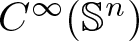 $C^{\infty}(\mathbb{S}^n)$ topology.
Proof. If not, there exist  $\alpha_i\to\alpha$ such that
 $||v_{\alpha_i}||_{C^0(\mathbb{S}^n)}\to+\infty$, then any subsequence of
 $\{v_{\alpha_i}\}$ will also blow up. According to lemma 4.3 and lemma 4.4, we know the second case in lemma 4.3 occurs, i.e, there exist finite concentration points (Here we can choose a subsequence of
 $\{v_{\alpha_i}\}$, which we still call it by
 $\{v_{\alpha_i}\}$, such that the number of concentration points is maximal) for
 $\{v_{\alpha_i}\}$. But uo to a subsequence, lemma 4.12 tells us that there exists at most one concentration point, and finally lemma 4.14 will imply
 $||v_{\alpha_i}||_{C^0(\mathbb{S}^n)}\leq C$ for
 $i\gg1$. This is contradictory to our assumption.
Proof of theorem 1.3:
If not, there exist  $\alpha_i\to 1$ such that
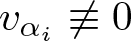 $v_{\alpha_i}\not\equiv 0$. We also note that
 \begin{align*}
v_{\alpha_i}\not\equiv \mathrm{const}\Longleftrightarrow v_{\alpha_i}\not\equiv 0.
\end{align*}
By theorem 1.2, we know  $v_{\alpha_i}\to v$ in
 $C^{\infty}(\mathbb{S}^n)$ and v satisfies
 \begin{align}
P_{\mathbb{S}^n}v+2Q_{g_{\mathbb{S}^n}}=2Q_{g_{\mathbb{S}^n}}e^{nv}
\end{align}
and
 \begin{align}
\int_{\mathbb{S}^n}x^lv\mathrm{d} V_{\mathbb{S}^n}=0\quad\mathrm{and}\quad\int_{\mathbb{S}^n}x^le^{nv}\mathrm{d} V_{\mathbb{S}^n}=0,\quad\mathrm{for}\quad l=1,2,\ldots,n+1.
\end{align}
We claim that
 \begin{align*}
v\equiv 0.
\end{align*}
For this purpose, we choose a critical point p of v, let  $u(x)=v\circ I^{'}(x)+\log\frac{2}{1+|x|^2}$, where
 $I^{'}:\mathbb{R}^n \to \mathbb{S}^n\backslash\{-p\}$, then we know 0 is a critical point of u(x). We obtain that u satisfies
 \begin{align*}
\left(-\Delta\right)^{\frac{n}{2}}u=(n-1)!e^{nu}\qquad\mathrm{in}\qquad\mathbb{R}^n,
\end{align*}
by the classification of high-order conformally invariant equation (see [Reference Chang and Yang9] or [Reference Wei35]), we get
 \begin{align*}
u(x)=\log\frac{2\lambda}{1+\lambda^2|x|^2}.
\end{align*}
Clearly, there holds
 \begin{align*}
\int_{\mathbb{S}^n}x^{n+1}e^{nv}\mathrm{d} V_{\mathbb{S}^n}=&\int_{\mathbb{R}^n}e^{nu(x)}\frac{|x|^2-1}{|x|^2+1}dx=\int_{\mathbb{R}^n}\left(\frac{2\lambda}{1+\lambda^2|x|^2}\right)^n\frac{|x|^2-1}{|x|^2+1}dx\\
=&|\mathbb{S}^{n-1}|\int_{0}^{+\infty}\left(\frac{2\lambda }{1+\lambda^2r^2}\right)^n\frac{r^2-1}{r^2+1}r^{n-1}dr\xrightarrow{s=\lambda r}\\
=&|\mathbb{S}^{n-1}|\int_{0}^{+\infty}\left(\frac{2}{1+s^2}\right)^ns^{n-1}\frac{s^2-\lambda^2}{s^2+\lambda^2}ds:=C(\lambda).
\end{align*}
You can check that  $C(\lambda)$ is strictly decreasing above λ. Hence, (4.65) imply that
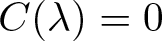 $C(\lambda)=0$, but we know
 $C(1)=0$, then λ = 1 and
 $v\equiv 0$. Letting
 $\bar{v}_{\alpha_i}=\unicode{x2A0F}_{\mathbb{S}^n}v_{\alpha_i}\mathrm{d} V_{\mathbb{S}^n}$ and
 $\mathring{v}_i=v_{\alpha_i}-\bar{v}_{\alpha_i}\not\equiv 0$. Here, we adopt the strategy that first appeared on page 228 of Chang and Yang’s seminal work [Reference Chang and Yang7]. Since
 \begin{align*}
\int_{\mathbb{S}^n}x^l\mathring{v}_i\mathrm{d} V_{\mathbb{S}^n}=0\qquad\mathrm{and}\qquad\int_{\mathbb{S}^n}\mathring{v}_i\mathrm{d} V_{\mathbb{S}^n}=0,
\end{align*}
it means that  $\mathring{v}_i\bot\mathcal{H}_1$, where
 $\mathcal{H}_1=\mathrm{span}\{1, x^{1},\ldots,x^{n+1}\}$. Since
 $\lambda_2(P_{\mathbb{S}^n})=(n+1)!$, applying the min–max principle yields
 \begin{align}
(n+1)!\unicode{x2A0F}_{\mathbb{S}^n}\mathring{v}_i^2\mathrm{d} V_{\mathbb{S}^n}\leq& \unicode{x2A0F}_{\mathbb{S}^n}\mathring{v}_i P_{\mathbb{S}^n}\mathring{v}_i\mathrm{d} V_{\mathbb{S}^n}.
\end{align}
On the other hand, we have
 \begin{align*}
P_{\mathbb{S}^n}\mathring{v}_i=P_{\mathbb{S}^n}v_{\alpha_i}-\bar{v}_{\alpha_i}P_{\mathbb{S}^n}(1)=\frac{2Q_{\mathbb{S}^n}}{\alpha_i}\left(e^{nv_{\alpha_i}}-1\right)-\bar{v}_{\alpha_i}P_{\mathbb{S}^n}(1).
\end{align*}
Thus, it follows that
 \begin{align}
\unicode{x2A0F}_{\mathbb{S}^n}\mathring{v}_i P_{\mathbb{S}^n}\mathring{v}_i\mathrm{d} V_{\mathbb{S}^n}=&\frac{2Q_{\mathbb{S}^n}}{\alpha_i}\int_{\mathbb{S}^n}\mathring{v}_ie^{nv_{\alpha_i}}\mathrm{d} V_{\mathbb{S}^n}\nonumber\\
=&\frac{2Q_{g_{\mathbb{S}^n}}}{\alpha_i}e^{n\bar{v}_{\alpha_i}}\int_{\mathbb{S}^n}\mathring{v}_ie^{n\mathring{v}_i}\mathrm{d} V_{\mathbb{S}^n}\nonumber\\
=&\frac{2Q_{g_{\mathbb{S}^n}}}{\alpha_i}e^{n\bar{v}_{\alpha_i}}\unicode{x2A0F}_{\mathbb{S}^n}\left(e^{n\mathring{v}_i}-1\right)\mathring{v}_i\mathrm{d} V_{\mathbb{S}^n}\nonumber\\
=&n!(1+o_i(1))\unicode{x2A0F}_{\mathbb{S}^n}\mathring{v}_i^2\mathrm{d} V_{\mathbb{S}^n}
\end{align}
the last equality follows by  $\bar{v}_{\alpha_i}\to 0$,
 $\mathring{v}_i\to 0$ uniformly and
 \begin{align*}
e^{n\mathring{v}_i}-1=(1+o_i(1))n\mathring{v}_i.
\end{align*}
From (4.66) and (4.67), we obtain  $\mathring{v}_i\equiv 0$ for
 $i\gg1$, this is a contradiction!
Proof of theorem 1.4: By repeating the above proof and replacing  $\alpha_i \to 1$ with
 $\alpha_i \to \alpha_0 \in \Gamma$, the result can be obtained.
4.4. Critical case
At last, we consider the critical case, namely,
 \begin{align*}
P_{\mathbb{S}^n}v_{\alpha_i}+\frac{2}{\alpha_i}Q_{g_{\mathbb{S}^n}}=\frac{2}{\alpha_i}Q_{g_{\mathbb{S}^n}}e^{nv_{\alpha_i}}\qquad\mathrm{as}\qquad \alpha_i\to\frac{1}{2}.
\end{align*}
Through lemma 4.14, we know if  $\{v_i\}_{i=1}^{+\infty}$ blow up, then
 $\{v_i\}_{i=1}^{+\infty}$ has at least two concentration points
 $\{x_1, x_2,\ldots,x_{j_0}\}\subset\mathbb{S}^n$. But according to corollary 4.2, we know
 \begin{align}
\liminf_{i\to+\infty}\int_{B_r(x_k)}e^{nv_i}\mathrm{d} V_{\mathbb{S}^n}\geq\frac{1}{2}|\mathbb{S}^n|\qquad\mathrm{for\,\,\,\,\,any}\qquad r \gt 0.
\end{align}
Since  $\int_{\mathbb{S}^n}e^{nv_i}\mathrm{d} V_{\mathbb{S}^n}=|\mathbb{S}^n|$, then
 $j_0\leq2$. In this case,
 $\{v\}_{i=1}^{+\infty}$ blow up iff
 $\{v\}_{i=1}^{+\infty}$ has two concentration points
 $\{x_1, x_2\}\subset\mathbb{S}^n$. We will prove for any
 $\phi\in C^{\infty}(\mathbb{S}^n)$,
 \begin{align*}
\lim_{i\to+\infty}\unicode{x2A0F}_{\mathbb{S}^n}e^{nv_i}\phi\mathrm{d} V_{\mathbb{S}^n}=\frac{\phi(x_1)+\phi(x_2)}{2}.
\end{align*}
Combining with Kazdan–Warner condition, we know
 \begin{align*}
\int_{\mathbb{S}^n}x^{n+1}e^{nv_{i}}\mathrm{d} V_{\mathbb{S}^n}=0,
\end{align*}
we obtain  $\{x_1, x_2\}=\{x_1, -x_1\}\subset\mathbb{S}^n$.
Theorem 4.3
Suppose 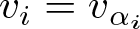 $v_i=v_{\alpha_i}$ is the solution of
 \begin{align*}
P_{\mathbb{S}^n}v_{\alpha_i}+\frac{2}{\alpha_i}Q_{g_{\mathbb{S}^n}}=\frac{2}{\alpha_i}Q_{g_{\mathbb{S}^n}}e^{nv_{\alpha_i}}\qquad\mathrm{as}\qquad \alpha_i\to\frac{1}{2}.
\end{align*}
Then 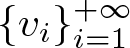 $\{v_i\}_{i=1}^{+\infty}$ either is uniformly bounded or up to a subsequence, it has two concentration points
 $\{x_1, -x_1\}\subset\mathbb{S}^n$ and
 \begin{align*}
e^{nv_i}\mathrm{d} V_{\mathbb{S}^n}\rightharpoonup \frac{\delta_{x_1}+\delta_{-x_1}}{2}|\mathbb{S}^n|.
\end{align*}
Proof. By lemma 4.4 and lemma 4.14, if  $\{v\}_{i=1}^{+\infty}$ blow up, then
 $\{v\}_{i=1}^{+\infty}$ has at least two concentration points
 $\{x_1, x_2\cdots,x_{j_0}\}\subset\mathbb{S}^n$. For any
 $1\leq k\leq j_0$, lemma 4.11 implies that, up to a subsequence,
 \begin{align}
\liminf_{i\to+\infty}\int_{B_r(x_k)}e^{nv_i}\mathrm{d} V_{\mathbb{S}^n}\geq\frac{1}{2}|\mathbb{S}^n|\qquad\mathrm{for\,\,\,\,\,any}\qquad r \gt 0.
\end{align}
And,
 \begin{align}
\limsup_{i\to+\infty}\sum_{k=1}^{j_0}\int_{B_r(x_k)}e^{nv_i}\mathrm{d} V_{\mathbb{S}^n}\leq \limsup_{i\to+\infty}\int_{\mathbb{S}^n}e^{nv_i}\mathrm{d} V_{\mathbb{S}^n}=|\mathbb{S}^n|.
\end{align}
By (4.71) and (4.72), we know 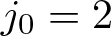 $j_0=2$,
 \begin{align}
\lim_{i\to+\infty}\int_{B_r(x_1)}e^{nv_i}\mathrm{d} V_{\mathbb{S}^n}= \lim_{i\to+\infty}\int_{B_r(x_2)}e^{nv_i}\mathrm{d} V_{\mathbb{S}^n}=\frac{1}{2}|\mathbb{S}^n|\qquad\mathrm{for\,\,\,\,\,any}\qquad r \gt 0
\end{align}
and
 \begin{align}
\lim_{i\to+\infty}\int_{\mathbb{S}^n\backslash \left(B_r(x_1)\cup B_r(x_2)\right)}e^{nv_i}\mathrm{d} V_{\mathbb{S}^n}=0
\qquad\mathrm{for\,\,\,\,\,any}\qquad r \gt 0.
\end{align}
We claim that: for any  $\phi\in C^{\infty}(\mathbb{S}^n)$,
 \begin{align}
\lim_{i\to+\infty}\unicode{x2A0F}_{\mathbb{S}^n}e^{nv_i}\phi\mathrm{d} V_{\mathbb{S}^n}=\frac{\phi(x_1)+\phi(x_2)}{2}.
\end{align}
Since
 \begin{align*}
&\left|\unicode{x2A0F}_{\mathbb{S}^n}e^{nv_i}\phi\mathrm{d} V_{\mathbb{S}^n}-\frac{\phi(x_1)+\phi(x_2)}{2}\right|\\
\leq&\left|\unicode{x2A0F}_{B_r(x_1)}e^{nv_i}\left(\phi(x)-\phi(x_1)\right)\mathrm{d} V_{\mathbb{S}^n}\right|+\left|\unicode{x2A0F}_{B_r(x_2)}e^{nv_i}\left(\phi(x)-\phi(x_2)\right)\mathrm{d} V_{\mathbb{S}^n}\right|\\
+&||\phi||_{L^{\infty}(\mathbb{S}^n)}\left|\unicode{x2A0F}_{B_r(x_1)}e^{nv_i}\mathrm{d} V_{\mathbb{S}^n}-\frac{1}{2}\right|+||\phi||_{L^{\infty}(\mathbb{S}^n)}\left|\unicode{x2A0F}_{B_r(x_2)}e^{nv_i}\mathrm{d} V_{\mathbb{S}^n}-\frac{1}{2}\right|\\
+&||\phi||_{L^{\infty}(\mathbb{S}^n)}\int_{\mathbb{S}^n\backslash B_r(x_1)\cup B_r(x_2)}e^{nv_i}\mathrm{d} V_{\mathbb{S}^n}\\
\leq& C||\nabla\phi||_{L^{\infty}(\mathbb{S}^n)}r+o_i(1)\qquad\mathrm{for\,\,\,\,\,any}\qquad r \gt 0.
\end{align*}
the last inequality follows by (4.73) and (4.74). Taking the limit for i and letting r → 0, we get the (4.75). We can suppose x 1 as the north pole for  $\mathbb{S}^n$, letting
 $\phi=x^{n+1}$, 4.75 and Kazdan–Warner condition will give
 \begin{align*}
\lim_{i\to+\infty}\unicode{x2A0F}_{\mathbb{S}^n}e^{nv_i}x^{n+1} \mathrm{d} V_{\mathbb{S}^n}=\frac{1+x^{n+1}(x_2)}{2}=0,
\end{align*}
hence  $\{x_1, x_2\}=\{x_1, -x_1\}\subset\mathbb{S}^n$.
Finally, we point out that  $v_i\to -\infty$ in
 $\mathbb{S}^n\backslash \{x_1, -x_1\}$, this phenomenon is very common, which also occurs in two dimensions, see [Reference Brezis and Merle6, Reference Li23].
Lemma 4.15.
With the same assumption as theorem 4.3,  $\{v_i\}$ blow up at
 $\{x_1, -x_1\}\subset\mathbb{S}^n$, then
 \begin{align}
v_i(x)-\bar{v}_i\longrightarrow 4Q_{g_{\mathbb{S}^n}}|\mathbb{S}^n|\left(\frac{G_{\mathbb{S}^n}(x, x_1)+G_{\mathbb{S}^n}(x, -x_1)}{2}-\unicode{x2A0F}_{\mathbb{S}^n}G_{\mathbb{S}^n}(x,y \mathrm{d} V_{{\mathbb{S}^n}}(y)\right)
\end{align}
in  $ C^{\infty}\left(\mathbb{S}^n\backslash \{x_1, -x_1\}\right)$.Especially,
 $v_i\to-\infty$ in
 $\mathbb{S}^n\backslash \{x_1, -x_1\}$.
Proof. By theorem 4.3 and
 \begin{align*}
v_i(x)-\bar{v}_i=\frac{2Q_{g_{\mathbb{S}^n}}}{\alpha_i}\int_{\mathbb{S}^n}G_{\mathbb{S}^n}(x,y)\left(e^{nv_i(y)}-1\right)\mathrm{d} V_{\mathbb{S}^n}(y),
\end{align*}
letting  $i\to+\infty$, we have
 \begin{align*}
v_i(x)-\bar{v}_i\longrightarrow 2Q_{g_{\mathbb{S}^n}}|\mathbb{S}^n|\left(G_{\mathbb{S}^n}(x, x_1)+G_{\mathbb{S}^n}(x, -x_1)\right)-d_n\qquad\mathrm{in}\qquad C^{\infty}\left(\mathbb{S}^n\backslash \{x_1, -x_1\}\right).
\end{align*}
We also point out that dn is independent of x. For any  $x^{'}$, there exist
 $A\in SO(n)$ such that
 $x^{'}=Ax$, then
 \begin{align*}
d_n(x^{'})=&4Q_{g_{\mathbb{S}^n}}\int_{\mathbb{S}^n}G_{\mathbb{S}^n}(Ax,y)\mathrm{d} V_{\mathbb{S}^n}(y)=4Q_{g_{\mathbb{S}^n}}\int_{\mathbb{S}^n}G_{\mathbb{S}^n}(x,Ay)\mathrm{d} V_{\mathbb{S}^n}(y)\\
=&4Q_{g_{\mathbb{S}^n}}\int_{\mathbb{S}^n}G_{\mathbb{S}^n}(x,z)\mathrm{d} V_{\mathbb{S}^n}(z)=d_n(x),
\end{align*}
the third equality follows by  $\left(A^{-1}\right)^{*}\mathrm{d} V_{\mathbb{S}^n}=\mathrm{d} V_{\mathbb{S}^n}$. By (4.57), we know
 $\bar{v}_i\to-\infty$, so we obtain
 $v_i(x)\to-\infty$ in
 $\mathbb{S}^n\backslash \{x_1, -x_1\}$.
Acknowledgements
We deeply appreciate the referee’s invaluable feedback and insightful suggestions, which have greatly enhanced the quality of this paper.
Data availability
Data sharing is not applicable to this article as no datasets were generated or analysed during the current study.
Conflict of interest
On behalf of all authors, the corresponding author states that there is no conflict of interest.



