Introduction
CHD include various cardiac malformations, e.g. single ventricle anomalies. Common functional single ventricle anatomy includes the hypoplastic left heart syndrome and the hypoplastic right heart syndrome, with a prevalence of 107.6 /10,000 live births. Reference Tchervenkov, Jacobs and Weinberg1,Reference Lindinger, Schwedler and Hense2 Without a life-saving surgery for adaption of the cardiac structure, the one-month survival rate is about 22 %. Reference Samanek3
Mostly, a biventricular repair is not feasible due to a hypoplastic left or right ventricle and a functional univentricular heart can be achieved with the “Fontan- Circulation”. Reference Baumgartner, Bonhoeffer and De Groot4 The Fontan-palliation enables enormous symptom improvement and is the gold standard in the treatment of single ventricle disorders since the 1970s. Reference Fontan and Baudet5 The survival rate has increased up to 92.3% with palliative surgery, including total cavopulmonary connection, even 15 years after surgery. Reference Ono, Kasnar-Samprec and Hager6 Other studies describe 10-year survival rates of 60% Reference Driscoll, Offord, Feldt, Schaff, Puga and Danielson7 up to 71.4%. Reference Gentles, Mayer and Gauvreau8 The life-saving surgical procedure includes the Norwood-1 procedure during infancy and/or a Glenn-anastomosis later in time. The decision for a multi-staged surgical procedure depends on the individual anatomy. Despite a major improved survival, patients with univentricular heart are restricted in capacity, Reference Hock, Reiner and Neidenbach9,Reference Müller, Christov, Schreiber, Hess and Hager10 and suboptimal blood flow might affect optimal organ and body growth.
Along with the higher survival, the reduction of morbidities came into the current focus: With the survival of patients into adulthood, the highest quality of life should be ensured, even years after total cavopulmonary connection. According to the World Health Organization, quality of life consists of a physical and a psychological domain and a high quality of life requires an adequate level of independence, social relationships, an appropriate environment, spirituality, religion and personal beliefs. 11 Everyday life with a heart disease—including drug treatment, control checkups, impaired capacity, etc.—could influence quality of life negatively.
The growing group of patients with a functional univentricular heart becoming young adults form a new patient population with other requirements than healthy individuals. To achieve optimal treatment, it is necessary to know the different impact factors on the quality of life of Fontan patients and prevent detrimental long-term effects already during the planning of the surgical procedure. Reference Fayers and Machin12 Minimal requirements to a satisfactory quality of life have physical, psychological, and social character. 11
This study aimed to investigate the individual sensitiveness of particular quality of life areas like physical, psychological, or cardiac health.
Material and methods
Study population
The database of the Heart Center Leipzig, department for pediatric cardiology, was screened for patients who underwent a total cavopulmonary connection palliation between September 2004 and April 2013. Procedural data on cardiac surgery, mortality, and early and late morbidity as well as patients' history were collected. The standardised questionnaire was handed to the parents and patients. The completed questionnaire, and written informed consent were obtained. Data acquisition, collection, and processing were approved by the Ethical Committee of the Medical Faculty at the University of Leipzig, Germany. We compared the scores for total health, physical, and psychological health of our patients to the mean score of “PedsQL 4.0” parents proxy report of 717 healthy children aged 2–18 years from literature. Reference Varni, Seid and Kurtin13 As healthy control for the item cardiac health, we used data from literature including 108 children having a family history of hypertrophic cardiomyopathy with normal investigations, which completed PedsQL questionnaire. Reference Spanaki, O’Curry and Winter-Beatty14
Quality of life inventory “PedsQL 4.0”
The validated questionnaire “Pediatric quality of life inventory, version 4.0” (PedsQL 4.0) Reference Varni, Seid and Kurtin13 was used to analyse the quality of life of our patients. The parents reported their childrens' quality of life by answering questions within the four items: physical health, and emotional, social, and school functions (summarising the psychosocial health). Additionally, the cardiac quality of life was investigated by completing the “Cardiac module” with six items (heart problems and treatment, treatment II, perceived physical appearance, treatment anxiety, cognitive and communicative function). The “Treatment II” item is focused on medication intake, whereas we must admit that not all patients are treated medically lifelong. Each of the collectively ten items consists of three to seven referring statements, whereby parents evaluated the child’s problems with a scale from 0 (no problems) to 4 (highly problematic). The scale from 0 to 4 (higher score indicating more problems) was transformed to a reversed linear scale (the higher the score, the better the quality of life) with 0 = 100, 1 = 75, 2 = 50, 3 = 25, 4 = 0. Subsequently, the mean was computed for each patient within each item. Superior scores regarding psychosocial, physical, and cardiac health were estimated by calculating the items with similar content.
Statistical analysis
IBM Statistics SPSS 25.0 (IBM, Armonk, NY, USA) was used for statistical analysis. Overall survival after total cavopulmonary connection and time-to-event-analysis (redo either cardiac catheter examination (= reINT) or cardiac surgery (= reSURG) related to total cavopulmonary connection) was calculated for our patients and described by Kaplan–Meier analysis.
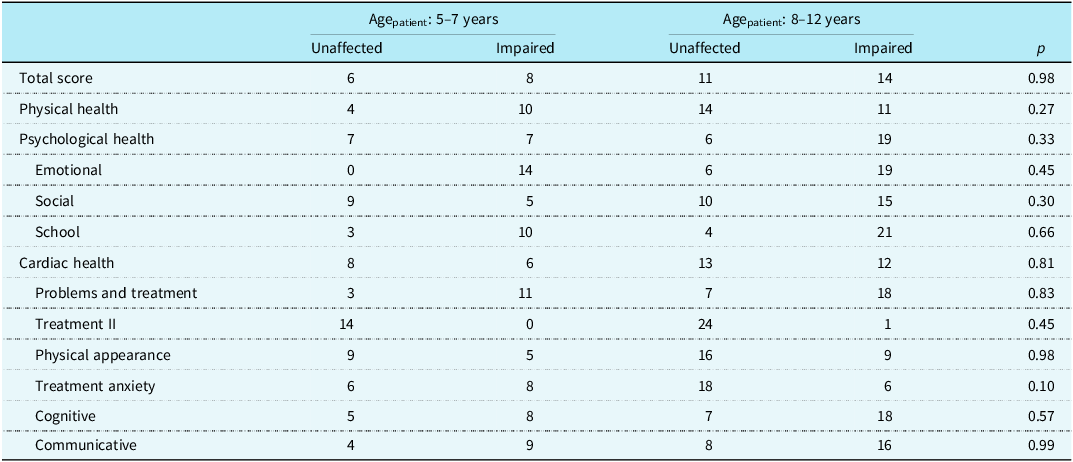
Univariatequality of life analysis was done with the description of each item by mean and standard deviation. A comparison of today’s quality of life in different age groups (patients aged 5–7 years versus patients aged 8–12 years) or gender (boys vs. girls) was done independently with Mann–Whitney U test. A comparison of the number of patients with impaired quality of life in both age groups was analysed with Chi Reference Lindinger, Schwedler and Hense2 - test. Influences of age, gender, and the (type of) 1st stage palliation before total cavopulmonary connection were investigated further with a binary regression analysis.
We divided our study population into patients with an impaired (n = 22) and a consistent quality of life (n = 17) by lower or higher quality of life score than 75.3. We chose this cut-off value because a score of 75.3 represents the mean score (
 $\overline{{\rm x}}$
= 87.6–12.3 standard deviation = 75.3) of healthy volunteers.
Reference Varni, Seid and Kurtin13,Reference Spanaki, O’Curry and Winter-Beatty14
Children whose parents scored the total quality of life higher than 75.3 were determined as patients with unaffectedly consistent quality of life. Patients with a total quality of life score lower than 75.3 were identified as patients with impaired quality of life.
To find out, if late complications after total cavopulmonary connection as severe decreased cardiac function, plastic bronchitis (PE) /protein-losing enteropathy or a severe atrioventricular valve regurgitation had an influence on quality of life, we screened for these complications in the last follow-up and did an univariate analysis.
The statistical threshold for the significant difference was defined with α = 0.050.
Results
Patient population
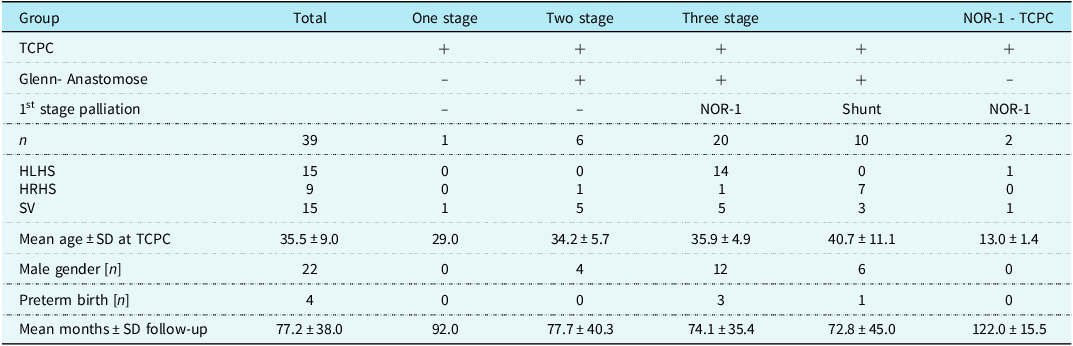
n = 62 patients underwent surgical palliation with total cavopulmonary connection in Leipzig Heart Center between September 2004 and April 2013. We palliated patients with hypoplastic left heart syndrome (n = 32), hypoplastic right heart syndrome (n = 22) or functional single ventricle (n = 8). The overall survival rate after total cavopulmonary connection was 93.5% after a maximal follow-up time of 133 months (11.1 years; confidence interval: 116.9–132.6). One-year survival was 96.6%, and 5-year survival was 93.5%. One early death (1.6% (1 patient) occurred, ten days after total cavopulmonary connection, because of ventricular fibrillation induced probably after a seizure with myocardial infarction or pulmonary embolism and pericardial effusion. Additionally, three patients (4.8% (3 patients)) died later within follow-up, on average 17 months after total cavopulmonary connection due to 1) embolism with palsy and Disseminated intravascular coagulation (DIC) with a capillary leak, 2) cerebral oedema with brainstem herniation, prolonged seizure, respiratory failure, and hypoglycaemia, and 3) multi-organ failure, acute respiratory distress, and embolism. Thus, of 58 survived total cavopulmonary connection patients, 40 parents (63%) sent their filled quality of life questionnaires. 39 children were included in the quality of life analysis (1 patient was excluded because of a Williams-Beuren syndrome). Characteristics of the study population are shown in Figure 1. Overall, the study population consists of n = 15 hypoplastic left heart, all of them got Norwood-1 as first-stage operation, n = 9 HRHS (one Norwood-1, n = 7 Shunt, each followed by Glenn and total cavopulmonary connection and one only two-staged operation) and n = 15 functional single ventricle with complex anatomy, where the surgical procedure was carried out very individually. In this group we subsume for example four tricuspid atresia (with malposition of great arteries or ventricular inversion), three unbalanced Atrioventricular septal defect (AVSD), two Double inlet left ventricle (DILV), two Double outlet right ventricle (DORV), and other. Thus, of our 39 children n = 1 patient (2.6%) underwent a one-staged palliation, n = 6 (15.4%) patients received a two-staged palliation, n = 30 (76.9%) patients got a three-staged palliation, and n = 2 (5.1%) patients got Norwood-1, followed by total cavopulmonary connection. The 1st stage of three-staged palliation was done with Norwood-1 (n = 20; 66.7%) or shunt (n = 10; 33.3%). Their parents have been describing their childrens' health after a mean follow-up time of
 $\overline{{\rm x}}$
= 76.5 ± 22.3 months (≙ 6.4 years) after total cavopulmonary connection. Detailed patients´ characteristics are listed in Table 1.
Characteristics of our study population for QoL analysis.
N = 62 patients got TCPC to achieve Fontan- circulation and were enrolled for QoL- Analysis. N = 23 patients were excluded due to death during follow up, genetic disorder or no participation to the study. Finally, n = 39 patients participated to the study with filled questionnaire after a mean- follow up time of 76.5 ± 22.3 months (6.4 ± 1.9 years). Shown are mean age of respondents and mean time survey after TCPC for each group.

Patient characteristics

Patient characteristics in summary (total study population) and differentiated in type of surgical repair. Means and standard SD are shown for every parameter.
Mortality and morbidities after total cavopulmonary connection in our population
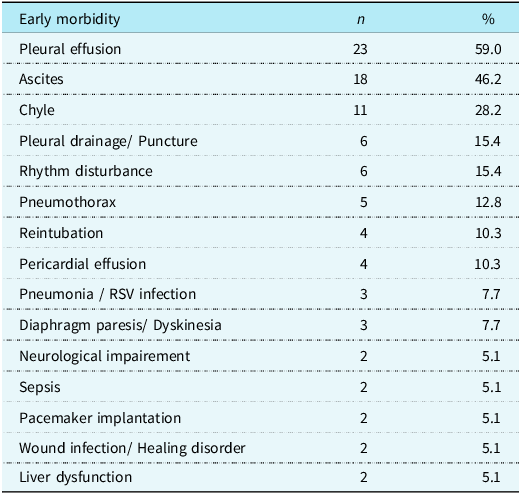
We looked for the early and late morbidity rates in our population of 39 patients, who were treated with total cavopulmonary connection. The mean follow-up time was 6.4 ± 3.2 years, and the overall survival was 100% after maximal follow-up time of 11.1 years. The early morbidities are shown in Table 2. All patients received a pleural drainage intraoperatively. 23 patients (59.0%) developed a pleural effusion, which was the most frequent complication after total cavopulmonary connection in our study. In 6 (15.4%) patients, we had to apply a new pleural drainage or perform a pleural puncture because of pleural effusion or pneumothorax after removal of the first drainages. Chyle was diagnosed in 11 (28.2%) patients, and 18 (46.2%) suffered from ascites. In 6 (15.4%) patients, we observed rhythm disturbances; 2 (5.1%) patients needed a pacemaker implantation after total cavopulmonary connection.
Early morbidities after total cavopulmonary connection

Number and percentage of complication occurrence of the early morbidities in our study population (n = 39) after total cavopulmonary connection.
We also looked for the probability of re-procedures during the follow-up time of 133 months after the total cavopulmonary connection palliation including reIntervention (reINT) and reSurgery (reSURG).
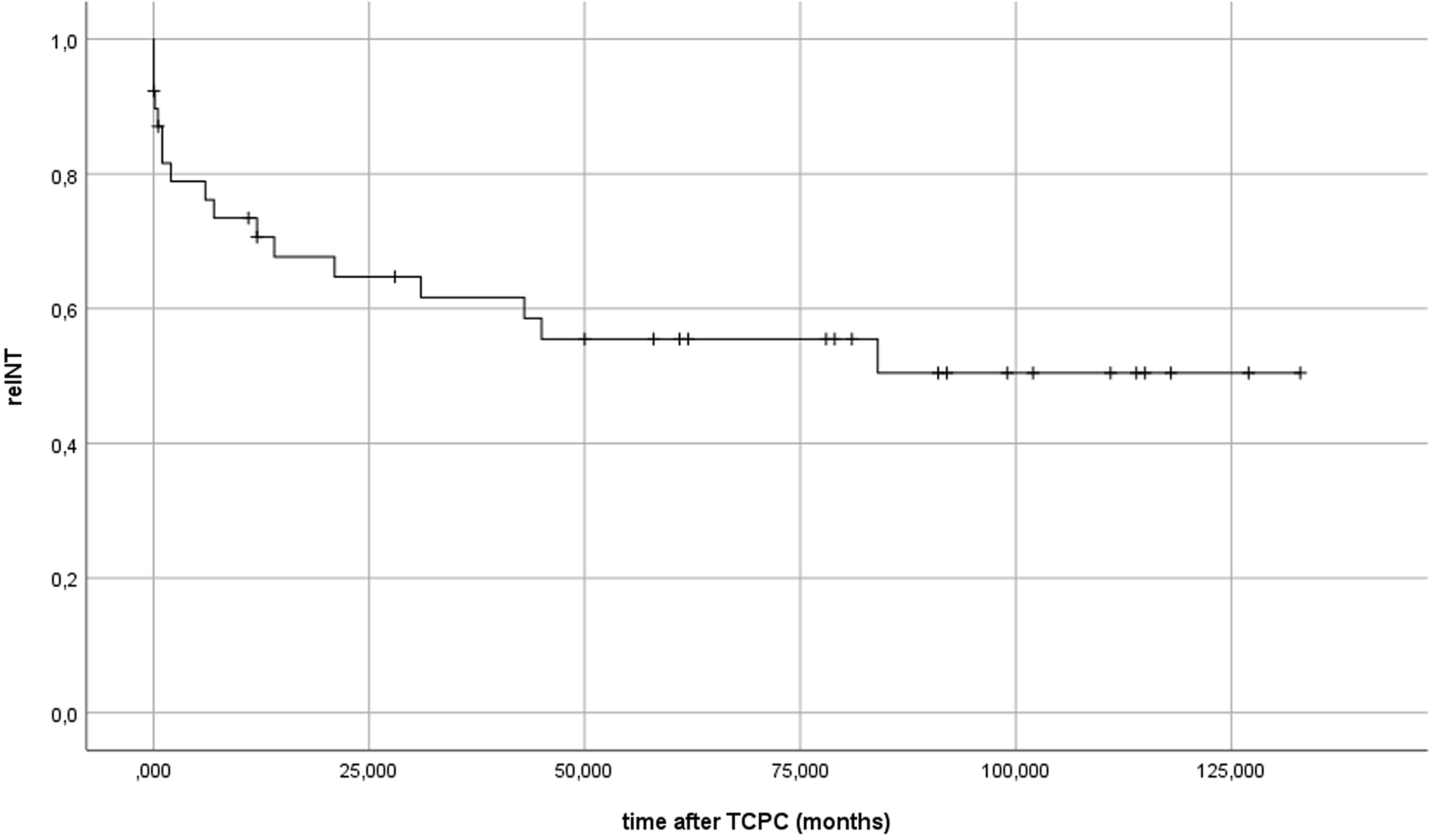
ReINT was required more often, which is shown in the time-to-event analysis using a Kaplan–Meier curve in Figure 2. Of 39 patients in our total study population, 17 patients (43.6%) needed a reINT.
Occurrence of reintervention after TCPC (x-axis in months).

The mean duration until reINT was about 76.8 months after total cavopulmonary connection (confidence interval: 57.1–96.6; Figure 2). About 6 months after total cavopulmonary connection, freedom for reINT was about 76.2% and for 1 year about 70.6%. Examples for reINT were coil-embolisation, balloon dilatation, or stent implantation.
The probability for reINT after total cavopulmonary connection was dependent on the type of 1st surgery before total cavopulmonary connection. With 1st stage palliation (n = 32) 53.1% needed reINT, without 1st stage palliation (n = 7) none.
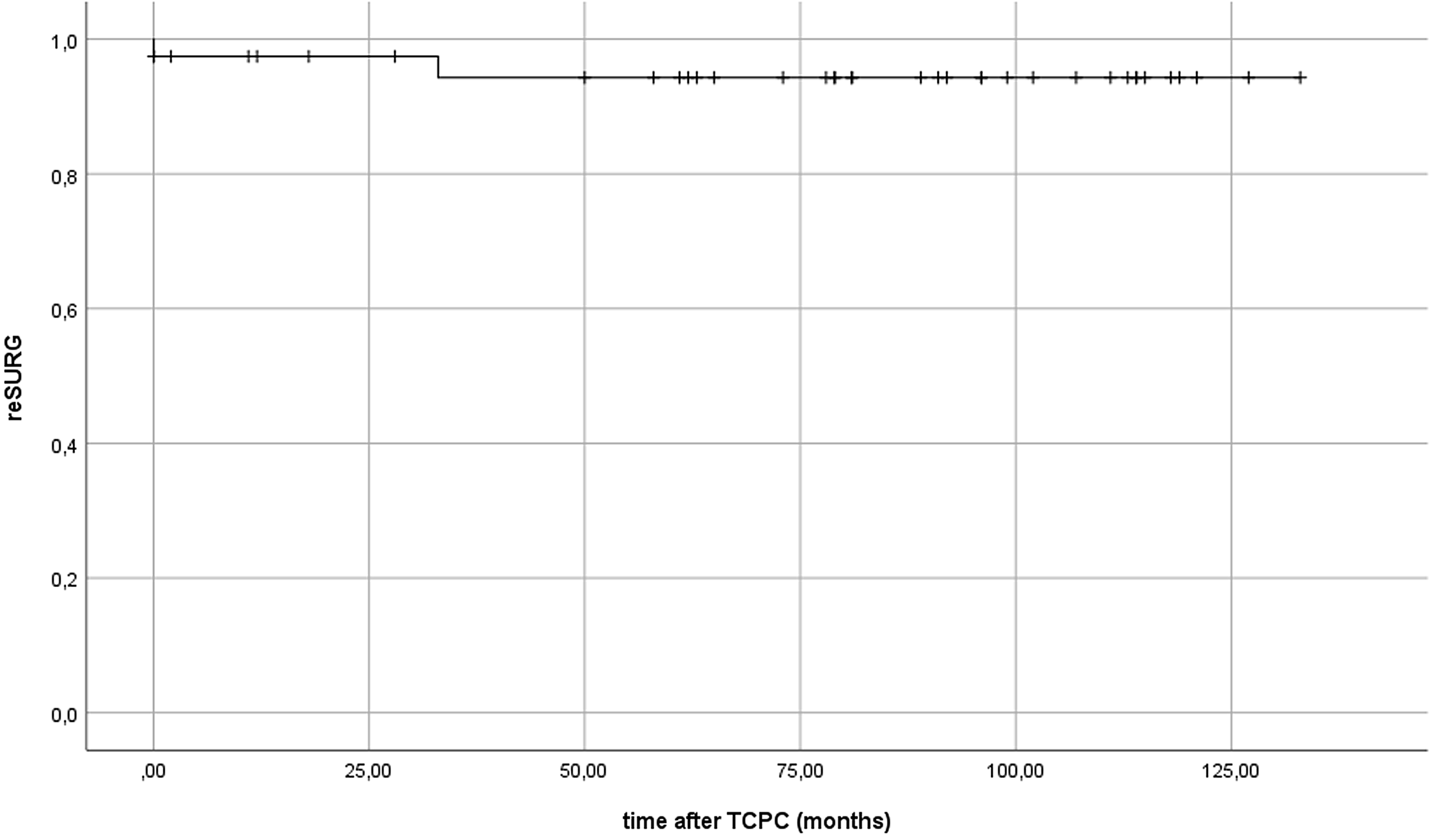
As shown in Figure 3, reSURG during total cavopulmonary connection follow-up was performed in two of 39 (5.1%) and occurred later in time, compared to reINT. Examples for reSURG were Take Down, replacement/transformation of Sano shunt and elongation of the extracardiac conduit. The Mean probability for reSURG was about 126.4 months after total cavopulmonary connection (confidence interval: 117.6 –135.3). 133 months after total cavopulmonary connection, there is a probability for reSURG about 5.7%.
Occurrence of reSURG in our study population after TCPC (x-axis in months).
n = 2 patiens (5.1%) needed reSURG with regard to TCPC. Maximal Follow up time after TCPC is 133 months.

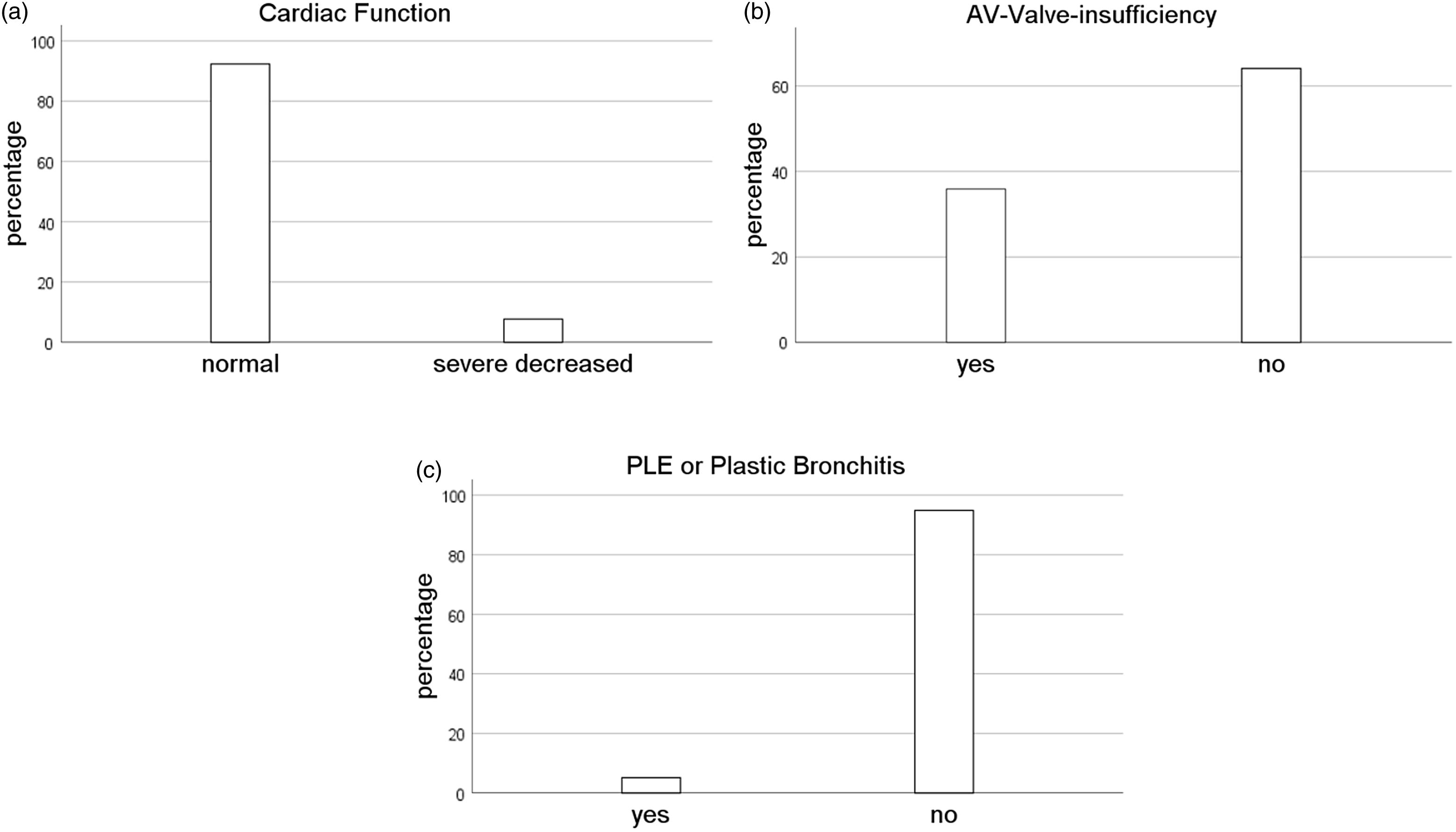
Furthermore, we looked for long-term complications after total cavopulmonary connection as AV-Valve- insufficiency, severe decreased cardiac function, and protein losing enteropathy/plastic bronchitis (Figure 4). We found a severely decreased cardiac function in 3 patients (7.7%), AV-Valve insufficiency in 14 patients (36%) and protein losing enteropathy/plastic bronchitis in 2 patients (5.1%).
Late morbidities after TCPC.
We present decreased cardiac function in 7,7% (a), AV-Valve-insufficiency in 36,0% (b) and PLE/plastic bronchitis 5,1% (c) in the long term follow-up of our TCPC patients.

Quality of life after total cavopulmonary connection in our study population
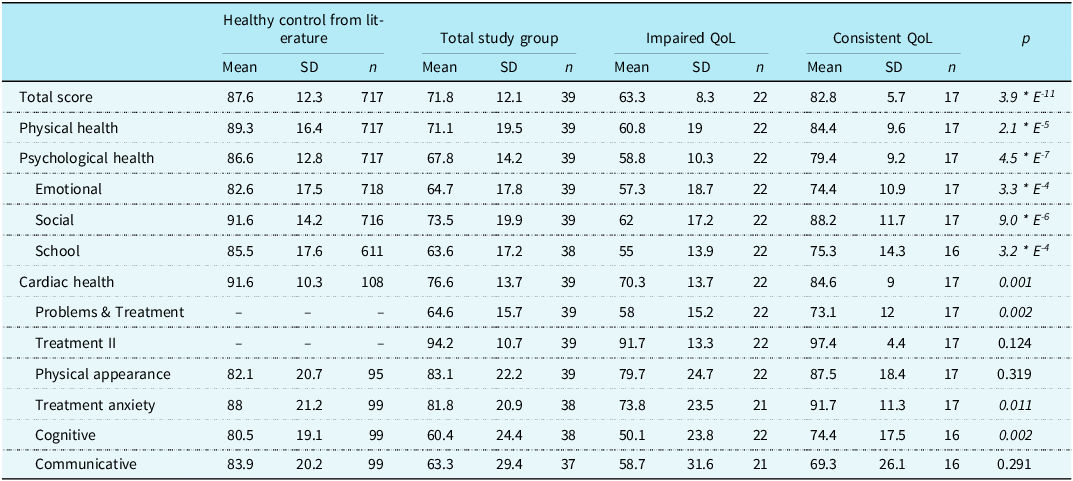
The quality of life scores (mean ± standard deviation) of our study population, divided into total, “impaired” and “consistent”, and of healthy children from literature as comparison Reference Varni, Seid and Kurtin13,Reference Spanaki, O’Curry and Winter-Beatty14 are listed in Table 3.
Quality of life for healthy probands, study group in total and probands divided in impaired and consistent

Shown are means and standard deviation of each quality of life item for healthy probands from literature, study group in total, and probands divided in impaired and consistent QoL. Psychological health is presented by emotional, social, and school function and cardiac health is defined by problems and treatment, treatment II, physical appearance, treatment anxiety, cognitive, and communicative function. Means and standard deviation of proxy reports of healthy children from literature are listed in column one, Reference Varni, Seid and Kurtin13,Reference Spanaki, O’Curry and Winter-Beatty14 followed by study population in total. Mean scores and standard deviation of patients with impaired (quality of life score lower than 75.3) and consistent/ unaffected quality of life (quality of life score higher than 75.3) were listed further (defined by comparison with healthy children). Difference between study groups with impaired and unaffected quality of life are shown with p < 0.050. n–number, p–p-value, QoL = quality of life, SD = standard deviation.
Cardiac health scored highest of all three main quality of life items with a mean score of
 $\overline{{\rm x}}$
= 76.6 ± 13.7. In cardiac health, the item treatment II had the highest mean score (
 $\overline{{\rm x}}$
= 94.2 ± 10.7) and the items treatment, anxiety, and physical appearance scored higher than cognitive and communicative function. The cognitive function showed the poorest mean score with
 $\overline{{\rm x}}$
= 60.4 ± 24.4, compared to all other items. Psychological health was the most affected area of life of the patients with a mean score of
 $\overline{{\rm x}}$
= 67.8 ± 14.2, 75 months after total cavopulmonary connection. Within this item, emotional and school/daycare function were evaluated lower by parents than the social function of their children, which they scored 10 points higher than emotional and school/daycare function.
Compared to the mean score of healthy children, the mean scores of our study cohort were lower in general. Naturally, for the items treatment and treatment II, no scores of healthy probands were available. Interestingly, physical appearance scored nearly the same in our study population of total cavopulmonary connection treated children and in healthy probands. All other sub-items scored lower in total cavopulmonary connection treated children than in healthy children.
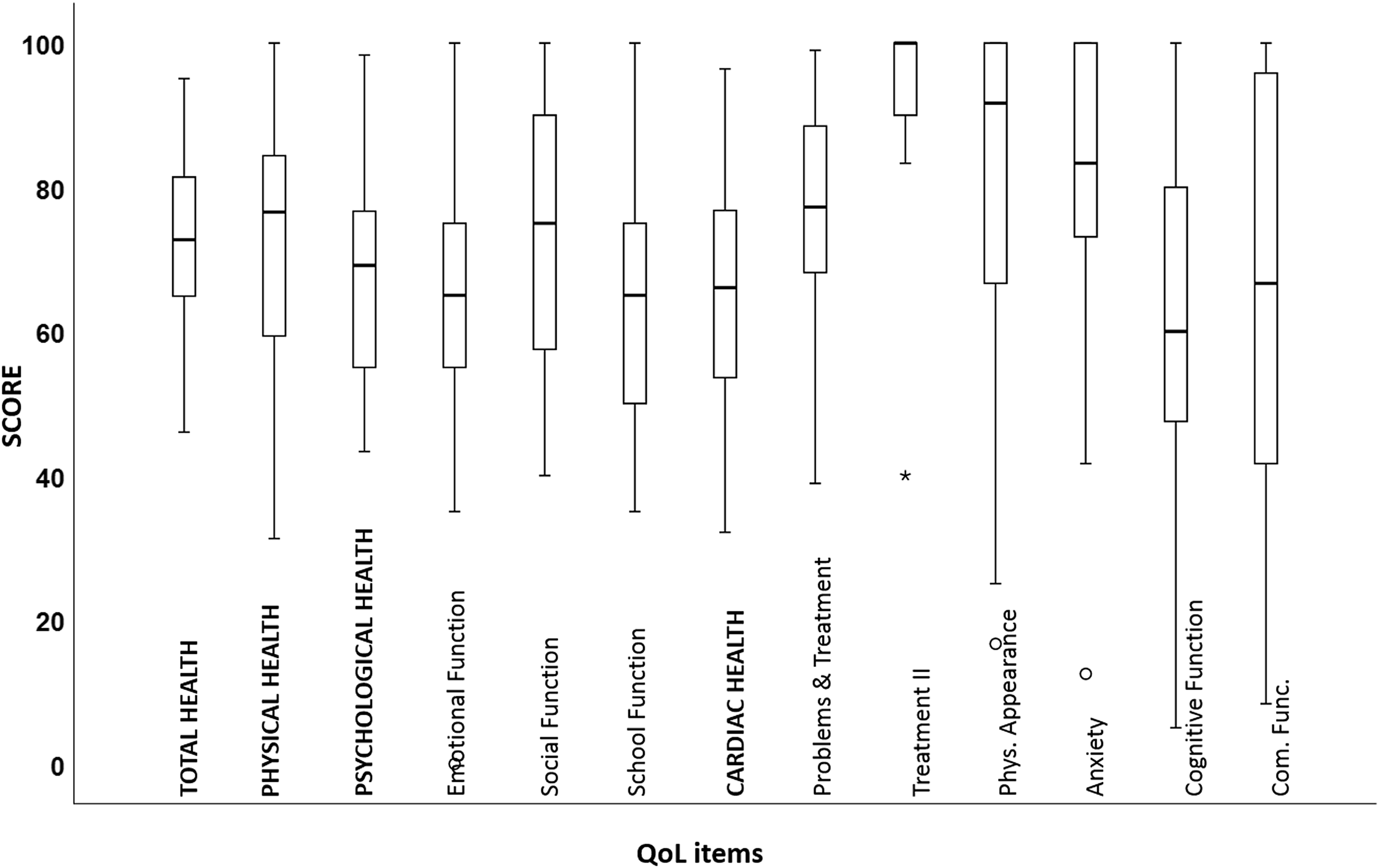
Figure 5 shows the mean scores of quality of life items of the whole study population and Figure 6 presents the mean scores of quality of life items of patients divided in those with impaired—(quality of life score lower than 75.3) and consistent quality of life (quality of life score higher than 75.3) as boxplot.
Quality of life Analysis of the whole study population after TCPC (n = 39) presented as mean scores.
Mean score of cardiac health was highest, whereas psychological health was worse. Scores of items within cardiac health were higher than scores of items of psychological function, but even spread more widely. Boxes show 25th – 75th quartiles of patient values and median (50th quartile); o – outlier with 1.5 fold value of the box; * – outlier with 3.0 fold value of the box

Quality of life - Analysis of the study population divided in patients with impaired and consistent Quality of life presented as mean scores.
QoL of patients with impaired QoL in total exhibited significantly lower mean scores in every QoL item except treatment II, anxiety and cognitive function. Cut off score to distinguish study groups with different QoL in total was 75.3, whereas patients with lower score than cutoff score were defined as patients with impaired QoL. Children with reduced total QoL exhibited reduced physical, psychological as well as cardiac health, compared to unaffected patients (* p < 0.050). Boxes show 25th – 75th quartiles of patient values and median (50th quartile); o - outlier with 1.5 fold value of the box; ★ - outlier with 3.0 fold value of the box.

Children with a reduced total quality of life exhibited reduced physical, psychological, and cardiac health, compared to unaffected patients (p < 0.050, Fig 6). The greatest difference between the study groups was found in physical health and in psychological health, all three analysed functions were reduced compared to patients with an unaffected quality of life. Cardiac health was not scored significantly different with
 $\overline{{\rm x}}$
= 84.6 ± 9.0 (unaffected quality of life) vs.
 $\overline{{\rm x}}$
= 70.3 ± 13.7 (impaired quality of life). Except for the items treatment II and physical appearance, all items of cardiac health were concerned of impaired quality of life.
QoL concerning staged Norwood-1 or shunt OP
To evaluate the effect of a preliminary Norwood-1 surgery or shunt OP (first-stage surgery) on the later quality of life, the whole study population was divided into patients with a preliminary first-stage surgery (n = 32) and patients without first stage surgery (n = 7). As shown in Figure 7, quality of life was better in patients without first-stage surgery (
 $\overline{{\rm x}}$
= 81.5 ± 9.9; p = 0.014), compared to first-stage surgery patients (
 $\overline{{\rm x}}$
= 69.7 ± 11.6). Both the physiological and psychological health showed a reduced quality of life with mean scores of
 $\overline{{\rm x}}$
= 67.9 ± 19.8 and
 $\overline{{\rm x}}$
= 65.3 ± 13.0, compared to patients without first-stage surgery (
 $\overline{{\rm x}}$
= 85.7 ± 8.6; p = 0.014 and
 $\overline{{\rm x}}$
= 79.0 ± 14.8; p = 0.022). A reduced quality of life within psychological health resulted from impaired social and school/daycare function, as shown in Figure 7. Interestingly, neither cardiac health in total nor its relevant items were statistically significant between patient groups with or without first-stage surgery (p > 0.050).
Quality of life of patients without first stage surgery (left, n = 7) and with first stage surgery (right, n = 32).
QoL was reduced in study group with first stage surgery. Physiological and psychological health was impaired in patients in this group. Within psychological health, emotional function was similar between both patient groups, but social and school/daycare function was impaired in patients with first stage surgery before TCPC. Cardiac Health was similar within both study groups. Boxes show 25th – 75th quartiles of patient values and median (50th quartile); o – outlier with 1.5 fold value of the box; ★ – outlier with 3.0 fold value of the box. * – p < 0.050.

Age-and gender-related quality of life
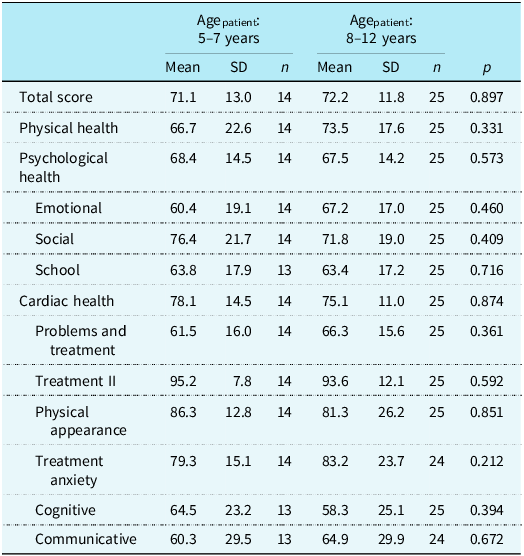
In Table 4, we present the quality of life after total cavopulmonary connection in two different age groups, showing no differences (5–7 years, n = 14,
 $\overline{{\rm x}}$
total = 71.1 ± 13.0 vs. 8–12 years, n = 25;
 $\overline{{\rm x}}$
total = 72.2 ± 11.8, p = 0,897). Neither superior nor subordinated items showed relevant differences between the age groups.
Age-dependent quality of life

We investigated whether the age had an influence on quality of life in our pobands. Younger (5–7 years) and older patients (8–12 years) show same quality of life after total cavopulmonary connection. Values of each quality of life item of the questionnaire did not differ (p > 0.050) between patients of different ages. n–number, p–p-value, SD = standard deviation.
Although statistically not significant the physical health of younger patients seemed to be lower than the physical health of older patients (
 $\overline{{\rm x}}$
= 66.7 ± 22.6 vs.
 $\overline{{\rm x}}$
= 73.5 ± 17.6), and the cognitive impairment of older patients seemed to be lower than that of younger patients (
 $\overline{{\rm x}}$
= 58.3 ± 25.1 vs.
 $\overline{{\rm x}}$
= 64.5 ± 23.2). The number of patients with an impaired total score for the quality of life was similar in both age groups (5–7 years: 57% vs. 8–12 years: 56%, shown in Table 5).
Age-dependent number of patients with affected quality of life

Presented is the number of patients with affected quality of life in younger and older patient groups. Portion of patients with impaired total score for quality of life is same in our two age groups. n–number, p–p-value, SD = standard deviation.
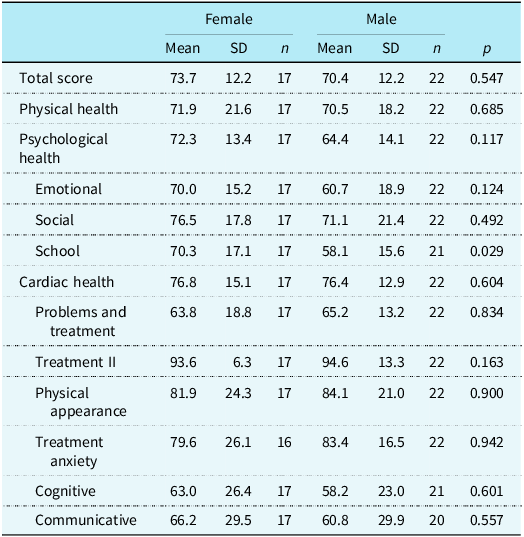
The patients’ gender had no influence on the quality of life items; parents of girls (n = 22) assumed a quality of life almost similar to parents of boys (n = 17;
 $\overline{{\rm x}}$
= 70.3 ± 17.1vs.
 $\overline{{\rm x}}$
= 58.1 ± 15.6; p = 0.029), as shown in Table 6.
Gender-dependent quality of life

Both patient groups exhibit similar scores in nearly all items, except school/daycare function: girls had higher quality of life (
 $\overline{{\rm x}}$
= 70.3 ± 17.1) than boys (
 $\overline{{\rm x}}$
= 58.1 ± 15.6; p = 0.029). n–number, p–p-value, SD = standard deviation.
Although statistically not significant, girls seemed to show a higher quality of life than boys for the items social and emotional functions (p = 0.117, 0.492, 0.124), and the items communicative and cognitive functions, but parents of boys investigated a higher QoL in the items of cardiac health (treatment, treatment II, physical appearance, and anxiety).
Quality of life depending on late complications in our patients
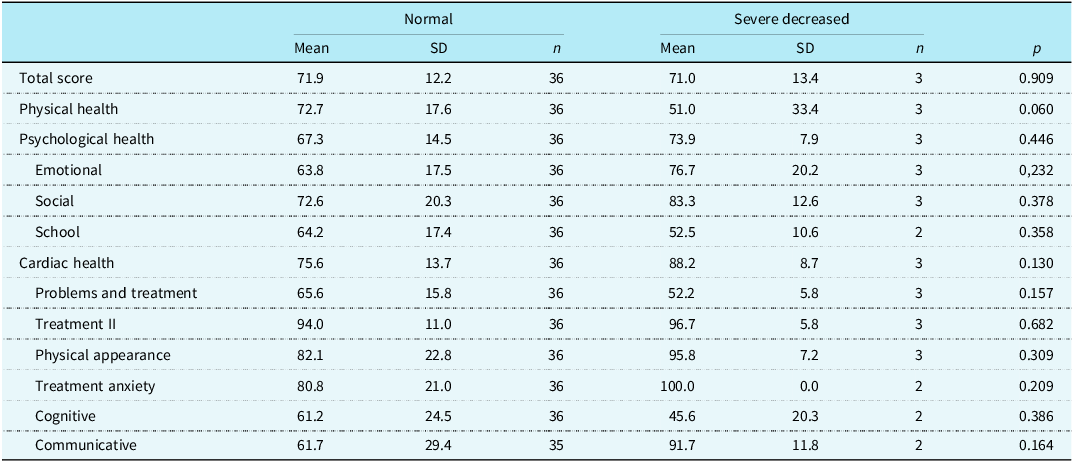
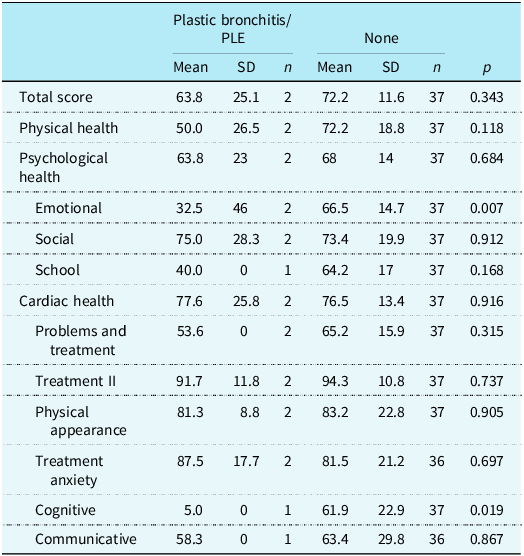
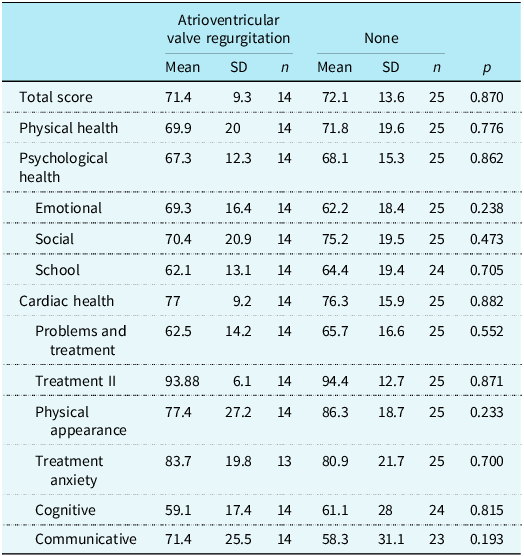
We investigated, if quality of life in our patients is related to late complications after total cavopulmonary connection as severe decreased cardiac function, plastic bronchitis/protein-losing enteropathy or to a severe atrioventricular valve regurgitation (Tables 7–9).
Quality of life related to cardiac function

Due to a small number of patient with decreased cardiac function, we could not find any significant difference in quality of life between the two groups. There might be a tendency of decreased quality of life in the item “physical health”. n–number, p–p-value, SD = standard deviation.
Quality of life related to plastic bronchitis/PLE

In nearly all items, patients with plastic bronchitis/protein-losing enteropathy exhibit a decreased quality of life score. Furthermore, emotional and cognitive functions are significant decreased, but the number of only two patients with plastic bronchitis/protein-losing enteropathy is too small to find an objective evidence due to the small number, we must admit, if this findings are n–number, p–p-value, standard deviation = standard deviation.
Quality of life related to atrioventricular valve regurgitation

We could not find any differences in quality of life items between the group with or without atrioventricular valve regurgitation. n–number, p–p-value, SD = standard deviation.
We could not find any significant difference in quality of life items in patients with severe decreased cardiac function compared to the group with normal function. But we must admit that the number of patients in this group is very small (n = 3). There might be a tendency of decreased quality of life in patients with severe decreased cardiac function in the item “physical health”. Furthermore, the group of patients with plastic bronchitis/protein-losing enteropathy also consists of only two patients, which is very small. Although there might be a tendency for decreased scores in the items “physical health”, “school function”, and in the item “total score”, due to small patients count, this is not significant. Nevertheless, in this group, we found a significant decreased score in the items emotional and cognitive health compared to patients without plastic bronchitis/protein-losing enteropathy. In patients with severe atrioventricular valve regurgitation (n = 14), we could not find any significant difference in quality of life items compared to patient with normal valve function.
Discussion
Outcome
The overall outcome of Leipzig Heart Center patients after total cavopulmonary connection palliation was similar to the outcomes reported in other studies, with comparable mortality and morbidity. The overall survival of 93.5 % was in line with results of Bezuska et al. (79.0%), Reference Bezuska, Lebetkevicius, Sudikiene, Liekiene and Tarutis15 Ono et al. (92.3), Reference Ono, Kasnar-Samprec and Hager6 Zou et al. (95.1%), Reference Zou, Wang and Cui16 Sfyridis et al. (96.6%), Reference Sfyridis, Lytrivi and Avramidis17 Yoshimura et al.(84.3%), Reference Yoshimura, Yamaguchi and Oshima18 Müller et al. (85.3%), Reference Müller, Christov, Schreiber, Hess and Hager10 and Pundi et al. (ca. 74%). Reference Pundi, Johnson, Dearani and Cetta19
The overall survival rate of patients with filled-in quality of life questionnaire was 100 % after maximal follow-up time of 11.1 years, which is different to the above results. But this is due to the fact that died patients were excluded.
Quality of life
Our study demonstrated that children after total cavopulmonary connection exhibited overall lower mean scores of almost all quality of life items than healthy children and therefore contributed to present existing knowledge. Reference Varni, Seid and Kurtin13,Reference Spanaki, O’Curry and Winter-Beatty14,Reference Uzark, Jones, Slusher, Limbers, Burwinkle and Varni20–Reference Idorn, Jensen and Juul22
As physical and psychological well-being influence each other, the physical and psychological quality of life are reduced similarly. Reference Plante and Rodin23,Reference Iannotti, Janssen, Haug, Kololo, Annaheim and Borraccino24
Similar priorities of peers have mainly a psychological character, but are strongly associated with physical activity. Reference Iannotti, Janssen, Haug, Kololo, Annaheim and Borraccino24 A reduced physical quality of life is associated with an impaired psychological quality of life basically because physical limitations hamper UVH-patients to keep up with peers and this disadvantage seems to result in a lower mood. Reference Nousi and Christou25 Evenly, self-concept and self-esteem are connected to sportive exercises Reference Plante and Rodin23,Reference Scully, Kremer, Meade, Graham and Dudgeon26 and a negative self-image of UVH-patients could be explained by a reduced physical capacity. Next to a reduced psychological quality of life itself, a false assessment of this quality of life area due to overprotection of evaluating parents Reference Nousi and Christou25 and a lack of confidence in the childrens' capabilities Reference Sutherland, Jones and d’Udekem27 could lead to a bias of the results. Therefore, the results should be interpreted carefully and side effects should be taken into consideration.
Surprisingly, cardiac health was not impaired as much as physical or psychological health after total cavopulmonary connection, as reflected by an only slightly reduced score compared to healthy children. These results are following the general results of studies analysing the quality of life of children with heart disease. Reference Uzark, Jones, Slusher, Limbers, Burwinkle and Varni20,Reference Kwon, Mussatto, Simpson, Brosig, Nugent and Samyn28–Reference Eagleson, Justo, Ware, Johnson and Boyle30
The current study distinguished two different groups of univentricular heart patients: we compared the total score for the quality of life of each patient with the total score of healthy children, aged 2–18 years (n = 71). Reference Varni, Seid and Kurtin13
Of the patients that scored lower than healthy children (patients with impaired quality of life), the quality of life was affected in all three areas: the physical, psychological, as well as cardiac quality of life, which showed significantly lower scores than patients with unaffected quality of life.
In addition, we investigated whether first-stage surgery, age, and gender had an influence on later quality of life.
Patients with a three-staged surgery exhibited a worse quality of life in our study than patients with a two-staged approach. Despite an unbalanced group size (n = 7 two-staged surgery vs. n = 30 three-staged surgery), we could find significantly lower scores in total, physical, and psychological quality of life in patients with a three-staged surgery. With necessity for three-staged surgery, the first operation occurs earlier in life than without and might be associated with longer hospital stay. This could lead to the reduced quality of life in later life. Because it is already known, that impaired quality of life in later life is negatively associated with the age of surgery. Reference Garcia Guerra, Robertson and Alton31 That means, even the timing of the surgery itself could influence later quality of life next to the CHD. Furthermore, in patients with three-stage surgery, the early first operation indeed enable body development during the first days of life, but cardiovascular haemodynamics and oxygen supply might worse than in patients with only two-stage surgery. Perhaps, the preoperative state of health in patients with only two-stage surgery might be better than in patients who needs three-stage surgery. Thus, we conclude, if three-stage surgery is not necessary explicitly, two-stage surgery should be favoured.
In our study, younger (5–7 years) and older patients (8–12 years) showed a similar quality of life after total cavopulmonary connection as has been reported in an Australian patient cohort. Reference Eagleson, Justo, Ware, Johnson and Boyle30 In contrast, Saliba et al. and Ternestedt et al. observed a better quality of life in younger CHD patients, compared to older CHD patients, but all patients were adults at the time of the survey. In Ternestedts survey, patients were studied 20 and 30 years after the operation, while Saliba found a better quality of life in patients age 18–23 years than in patients older than 23. Reference Saliba, Butera and Bonnet32,Reference Ternestedt, Wall, Oddsson, Riesenfeld, Groth and Schollin33 A comparison of the quality of life in childhood with the quality of life as an adolescent or adult may have resulted in different findings. 34 Bisegger et al. reported a decrease of quality of life after the age of twelve, implicating a higher quality of life for younger children compared to adolescents. Reference Bisegger, Cloetta, von Bisegger, Abel and Ravens-Sieberer35 With age, life circumstances, as well as self-awareness, and the importance of peer groups are changing. These effects influence the quality of life as well as the chronic disease itself. A missing difference in the age-dependent quality of life in our study could be explained by the young age of our patient population under 12 years. A further study with our cohort later after total cavopulmonary connection palliation, for example, 20 and 30 years after the operation as in Ternestedts study, might be sensible to detect differences in quality of life.
In our study, there was no gender-dependent difference in the quality of life. The only exception was school/daycare function, where girls showed higher scores than boys (p = 0.029). One possible explanation is that due to higher expectations of themselves or more diligence girls are often more focused on school success, than boys. Reference Houtte36 Although this result stands in contrast to the findings of Otto et al., where girls scored lower quality of life than boys, Reference Otto, Haller, Klasen, Hölling, Bullinger and Ravens-Sieberer37 the different results compared to our study could be explained by gender-dependent effects itself and may not be linked to the CHD anyways. Although we found some differences in patients with severe deceased cardiac function (tendency in the item “physical health”) and in them with plastic bronchitis/protein-losing enteropathy (significant in the items “emotional” and “cognitive health”, tendency in three items) compared to patients without these complications, the number of patients in this both groups is so small, that the seen effects could be also statistical outliers. In patients with severe atrioventricular valve regurgitation, we could not find any differences in quality of life items compared to patients with normal valve function. Thus, the group size here is comparable (n = 14 vs, n = 25). Further studies are necessary to identify risk factors for these patients to prevent impairment of quality of life.
The current study used parent proxy questionnaires for the quality of life evaluation which might affect the results. Reference Baca, Vickrey, Hays, Vassar and Berg38–Reference Haneef, Grant and Ignacio40 Parents might misjudge their children’s quality of life due to anxiety and overprotection; Reference Baca, Vickrey, Hays, Vassar and Berg38,Reference Zahmacioglu, Yildiz and Koca41 children might overrate themselves because their awareness of the life-threatening disease might differ from their parents. Reference Zahmacioglu, Yildiz and Koca41 But as the reproducibility of parents' proxy reports is better than in self-reported questionnaires, Reference le Coq, Boeke, Bezemer, Colland and van Eijk42 and especially in the younger age-group, some children might not yet be able to answer some of the quality of life questions we conclude that the investigation of parent proxy reports is sufficient for a reliable quality of life analysis. Reference Patel, Minhas and Chung43,Reference Moller, Cluitmans and Rasmussen44
Potential long-term effects on adolescents or older univentricular heart patients are difficult to estimate. According to our results, the quality of life after total cavopulmonary connection is fragile and should be monitored closely. Regular physical exercise has the potential to improve the physical and psychological quality of life. Further promotion of self-efficacy and social support could improve the quality of life persistently over time. Reference Otto, Haller, Klasen, Hölling, Bullinger and Ravens-Sieberer37 Especially in the case of an impaired cognitive function directly after surgery, extensive training is essential because the short-term reduction of cognition is known as a risk factor of later impairment. Reference Newman, Kirchner and Phillips-Bute45
All things considered, we could show that the quality of life after total cavopulmonary connection palliation was reduced in general compared to healthy children.
We believe, that not the surgical procedures in childhood but the heart disease itself is responsible for the reduced quality of life. Different major surgeries (e.g. bowel surgery in Hirschsprung disease or the surgical correction of other cardiac heart diseases except the univentricular heart) did not influence the quality of life of patients significantly even 18–37 years after intervention. Reference Gunnarsdóttir, Sandblom, Arnbjörnsson and Larsson46,Reference Loup, von Weissenfluh, Gahl, Schwerzmann, Carrel and Kadner47
It seems that the diagnosis of a univentricular heart affects the quality of life negatively because (1) the reduction of the quality of life depends on the severity of the CHD, Reference Uzark, Jones, Slusher, Limbers, Burwinkle and Varni20,Reference Saliba, Butera and Bonnet32,Reference Tahirović, Begić, Nurkić, Tahirović and Varni29,Reference Eagleson, Justo, Ware, Johnson and Boyle30 and a univentricular heart is a very complex CHD with insufficient oxygen supply, Reference Khairy, Poirier and Mercier48 (2) later decreased exercise capacity due to univentricular blood flow or hampered somatic growth Reference Ono, Kasnar-Samprec and Hager6 is common in patients after total cavopulmonary connection, and (3) reduced physical and psychological quality of life due to pain, caused by surgery, Reference Rabbitts, Palermo, Zhou and Mangione-Smith49 are implausible after so many years.
Conclusion
All children after univentricular palliation showed a reduced total quality of life that included physical, psychological, as well as cardiac health, compared to healthy children. Quality of life was neither age- nor gender dependent except for school/daycare function. Furthermore, patients with three-staged palliation exhibited a worse quality of life than those with two-staged palliation.
Limitation of the study
We only used parent-proxy questionnaires in our study. Next to parents or patients themselves, other related persons should assume the patients' conditions, e.g. teachers. Reference Latal, Helfricht, Fischer, Bauersfeld and Landolt50 Then, interfering aspects like overprotection by parents could be excluded for detailed quality of life analysis.
Financial support
The research did not receive specific funding, but was performed as part of the employment of the authors at the Dept. of Pediatric Cardiology, Heart Center Leipzig, University Leipzig.
Competing interests
The authors have no competing interests to declare that are relevant to the content of this article.
The manuscript has been read and approved by all the authors, the requirements for authorship have been met for each author, and each author believes that the manuscript represents honest work.
Ethical standards
The questionnaire and methodology for this study was approved by the Human Research Ethics committee of the University of Leipzig (Ethics approval number: 290/17-ek, March 06, 2019). Written informed consent was obtained from the parents.