Introduction
Insomnia is common, leads to daytime impairment, and has been shown to be associated with an increased risk of developing physical health problems and other psychiatric conditions, such as anxiety and depression (Dong & Yang, Reference Dong and Yang2019). Insomnia places a heavy burden on society (Hillman et al., Reference Hillman, Mitchell, Streatfeild, Burns, Bruck and Pezzullo2018). Considering the cost to the quality of life of sufferers and the burden on society, it is imperative that there are adequate options to treat insomnia.
Cognitive behaviour therapy for insomnia (CBT-I) is the most widely used and recommended first-line psychological treatment for chronic insomnia and includes interventions such as cognitive therapy, stimulus control, sleep restriction, and sleep hygiene. While CBT-I is effective, with moderate effect sizes, these are lower than the effect sizes reported for CBT for a range of other psychological disorders (Trauer, Qian, Doyle, Rajaratnam, & Cunnington, Reference Trauer, Qian, Doyle, Rajaratnam and Cunnington2015). In addition, only about 40% of patients who receive CBT-I are in remission at the end-of-treatment (Morin et al., Reference Morin, Vallieres, Guay, Ivers, Savard, Merette and Baillargeon2009; Wu, Appleman, Salazar, & Ong, Reference Wu, Appleman, Salazar and Ong2015). CBT-I may not adequately address hyperarousal (i.e. the over-activation of the sympathetic nervous system [SNS] often observed in chronic insomnia), which is known to be a perpetuating factor for insomnia (Kalmbach et al., Reference Kalmbach, Cuamatzi-Castelan, Tonnu, Tran, Anderson, Roth and Drake2018). It is, therefore, important to identify other treatment modalities that may be effective in reducing hyperarousal and treating chronic insomnia in non-responders.
Mindfulness-based therapies may provide a treatment alternative to CBT-I by addressing hyperarousal. Mindfulness can be defined as non-judgmental, present-focused awareness (Kabat-Zinn et al., Reference Kabat-Zinn, Wheeler, Light, Skillings, Scharf, Cropley and Bernhard1998). Through the development of conscious awareness or ‘metacognitive process’, it has been demonstrated that mindfulness meditation practice can reduce cognitive and physiological hyperarousal, which are important treatment targets for chronic insomnia. Mindfulness may also be able to improve maladaptive thinking by influencing an individual's relationship with cognitions about insomnia and daytime functioning, rather than challenging thought content directly, as in CBT-I. Therefore, it may be ideal to improve sleep in those people who do not respond to CBT-I.
Mindfulness-based interventions have been used for the treatment of insomnia and sleep disturbances (Black, O'Reilly, Olmstead, Breen, & Irwin, Reference Black, O'Reilly, Olmstead, Breen and Irwin2014; Black, O'Reilly, Olmstead, Breen, & Irwin, Reference Black, O'Reilly, Olmstead, Breen and Irwin2015; Britton, Shapiro, Penn, & Bootzin, Reference Britton, Shapiro, Penn and Bootzin2003; Garcia, Kozasa, Tufik, Mello, & Hachul, Reference Garcia, Kozasa, Tufik, Mello and Hachul2018; Garland et al., Reference Garland, Carlson, Stephens, Antle, Samuels and Campbell2014; Garland, Rouleau, Campbell, Samuels, & Carlson, Reference Garland, Rouleau, Campbell, Samuels and Carlson2015; Gross et al., Reference Gross, Kreitzer, Reilly-Spong, Wall, Winbush, Patterson and Cramer-Bornemann2011; Heidenreich, Ströhle, & Michalak, Reference Heidenreich, Ströhle and Michalak2006; Nakamura, Lipschitz, Kuhn, Kinney, & Donaldson, Reference Nakamura, Lipschitz, Kuhn, Kinney and Donaldson2013; Ong & Manber, Reference Ong and Manber2011; Ong & Sholtes, Reference Ong and Sholtes2010; Ong et al., Reference Ong, Manber, Segal, Xia, Shapiro and Wyatt2014; Ong, Shapiro, & Manber, Reference Ong, Shapiro and Manber2008; Ong, Shapiro, & Manber, Reference Ong, Shapiro and Manber2009; Rash, Kavanagh, & Garland, Reference Rash, Kavanagh and Garland2019; Shapiro, Bootzin, Figueredo, Lopez, & Schwartz, Reference Shapiro, Bootzin, Figueredo, Lopez and Schwartz2003). Mindfulness-based therapy for insomnia (MBTI) is a programme that combines mindfulness principles and practices with behavioural strategies for insomnia. In a randomised control trial (RCT) comparing mindfulness-based stress reduction (MBSR) with MBTI, we found that MBTI was superior to a self-monitoring control for improving pre-sleep arousal, self-reported total wake time, and global insomnia symptoms (Ong et al., Reference Ong, Manber, Segal, Xia, Shapiro and Wyatt2014). Additionally, MBTI was equivalent to behaviour therapy on several cognitive-emotional measures, indicating that MBTI can be effective in improving other features of insomnia beyond nocturnal symptoms (Ong, Xia, Smith-Mason, & Manber, Reference Ong, Xia, Smith-Mason and Manber2018).
Research is required to assess the usefulness of MBTI for insomnia in people seeking treatment at a sleep disorders clinic. Other studies investigating mindfulness for insomnia have been conducted in primary insomnia populations without comorbidities and concurrent medications or in targeted highly specific populations, such as breast cancer patients (Shapiro et al., Reference Shapiro, Bootzin, Figueredo, Lopez and Schwartz2003). This makes results difficult to generalise to day-to-day practice, where the majority of patients with insomnia have both physical and mental health comorbidities. Further research is required to provide support for its clinical effectiveness in a range of settings.
The current study aimed to investigate if MBTI (Ong et al., Reference Ong, Shapiro and Manber2008) can be successful in reducing symptoms of insomnia in an Australian sleep disorders clinic population. Implementing a group-based MBTI programme in an Australian population, without the application of strict inclusion and exclusion criteria, would provide support for its generalizability to individuals who self-refer for treatment at a sleep disorders clinic. To date, no studies have reported on samples that have presented to a sleep physician with complaints of insomnia. Furthermore, the validation of group-based interventions is valuable because of (1) the increased scope of potential recipients of treatment, (2) reduced costs, and (3) additional treatment benefits provided by the group process. Specifically, the aim of this study was to examine insomnia severity, subjective and objective sleep quality, problematic sleep-related cognitions, hyperarousal, and daytime symptoms at baseline, end-of-treatment, and follow-up stages of MBTI. It was hypothesised that participants would score lower on insomnia severity, and higher on objective and subjective sleep quality at end-of-treatment and follow-up when compared with baseline.
Methods
Participants
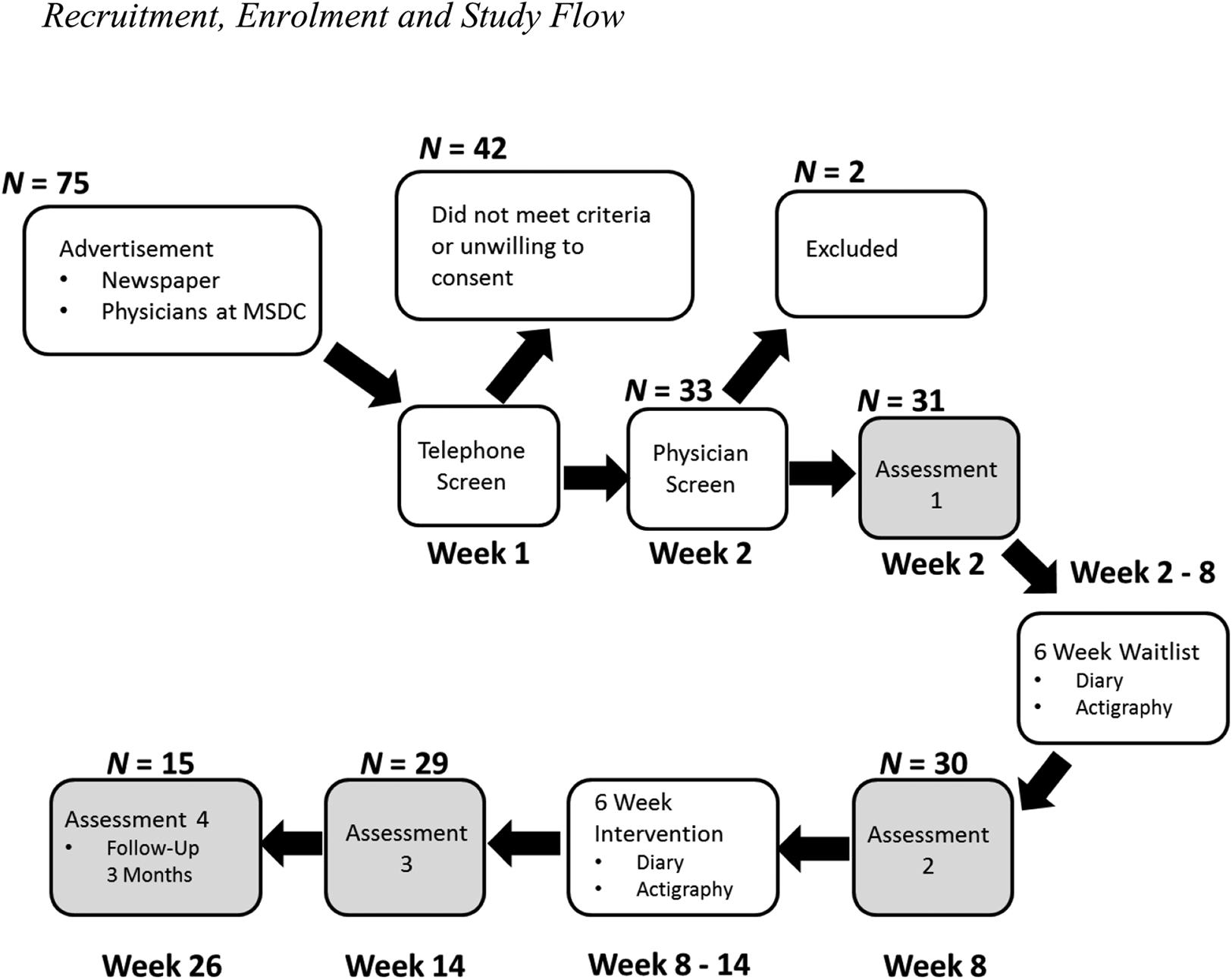
This was a single-site trial conducted at a private sleep disorders clinic in Melbourne, Australia. Participants were recruited primarily through a referral from sleep physicians at the centre, as well as an advertisement in a newspaper. Figure 1 shows the study flow, along with the numbers recruited and excluded at different stages. All participants were screened by a sleep physician prior to entry into the study to ensure they met the inclusion criteria. The inclusion criteria were that participants were aged over 18 and met the criteria for insomnia in DSM-IV-TR (2000). Individuals with treated, stable sleep disorders were not excluded. Participants were excluded if there were any other cause of insomnia (e.g. shift work, medication, or drug use), unstable mood, untreated or unstable major mental illness, or dementia as indicated by the DSM-IV-TR (for a comparison of Insomnia Disorder criteria from DSM-IV-TR to DSM 5, see Table 3.36 in Substance Abuse and Mental Health Services Administration (2016)). Participants were also excluded if they met the criteria for substance abuse or dependence, were experiencing planned life stresses (e.g. moving house and divorce), were shift workers, were not able to comply with study requirements such as attendance at sessions, or were unwilling or unable to give consent. The main reason for participants failing the telephone screen was being unable to regularly attend the 6-week MBTI intervention. All participants provided written informed consent, and the study was approved by the RMIT Human Research Ethics Committee (HREC No. 41/10).
Recruitment, enrolment, and study flow.

Participant Characteristics
The sample comprised 30 people (70% female) with a mean age of 48.7 years (range 18–77 years). Most participants had private health insurance (80%), owned their own home (70%), and the majority had obtained a university degree. Most participants (92.6%) had experienced insomnia for longer than 5 years. Almost all participants experienced a combination of sleep problems; 96.4% of participants reported sleep maintenance insomnia, and the majority of participants experienced early morning awakenings (85%), and sleep initiation insomnia (78%).
Outcome Measures
Subjective sleep quality
Participants completed a range of measures to assess subjective sleep quality, including the Insomnia Severity Index (ISI), Pittsburgh Sleep Quality Index (PSQI), Epworth Sleepiness Scale (ESS), Fatigue Severity Scale (FSS), and Daily Sleep Log.
The ISI is a 7-item questionnaire in which participants rate their perceived severity of sleep disruption on a 5-point Likert scale (0–4) (Bastien, Reference Bastien2001). The ISI has a Cronbach's α > 0.90 indicating good reliability (Morin, Belleville, Belanger, & Ivers, Reference Morin, Belleville, Belanger and Ivers2011).
The PSQI is a 19-item self-rated questionnaire that assesses sleep quality over a 1-month time interval and generates scores on seven components ranging from 0 to 3. A total score reflecting sleep quality (0–21) is produced, with higher scores reflecting poorer sleep quality. The PSQI has a Cronbach's α = 0.83 and is reported to be a valid measure of sleep quality (Buysse, Reynolds, Monk, Berman, & Kupfer, Reference Buysse, Reynolds, Monk, Berman and Kupfer1989).
The ESS is an 8-item questionnaire (rated on a 4-point scale ranging from 0 to 3) that measures subjective daytime sleepiness in adults in a range of situations (Johns, Reference Johns1991). The ESS has high internal consistency (Cronbach's α = 0.88) and is a very popular sleepiness measurement tool in many countries (Johns, Reference Johns1992).
The FSS is a 9-item questionnaire in which participants rate their level of agreement with statements regarding their level of fatigue over the past week, on a 7-point Likert scale (Krupp, LaRocca, Muir-Nash, & Steinberg, Reference Krupp, LaRocca, Muir-Nash and Steinberg1989). The FSS has adequate reliability and validity (Krupp et al., Reference Krupp, LaRocca, Muir-Nash and Steinberg1989).
The Daily Sleep Log was completed by participants upon awakening and is a common tool used in sleep research. Participants record their sleep-wake pattern in the log. Sleep parameters derived from the logs included total sleep time (TST), sleep onset latency (SOL), wake after sleep onset (WASO), number of awakenings (NWAK), and sleep efficiency (SE).
Objective sleep: Actigraphy
The Actiwatch 2 (Respironics, Pittsburgh, PA) was used as an objective measure of sleep. Participants were instructed to wear the Actiwatch-2 for the 12-week duration of their participation (6 weeks extended baseline, plus 6-week intervention). They were asked to press the button on the watch when they turned out the lights to go to sleep and again when they woke in the morning. This created an event marker to assist validation. Output data derived from the actigraph included TST, SOL, SE, and WASO, using the Actiware 5.5 software (Respironics, Pittsburgh, PA). Each data set was scored by the Actiware software, and then the raw data set was manually checked by examining patient determined markers of bedtime and rise time, sleep diary information, and average latencies. Data that were not able to be interpreted as sleep or wake by automatic and manual scoring were excluded from the analysis. This occurred once.
Daily data were averaged weekly into measures of TST, SOL, WASO, NWAK (diaries only), and SE. Comparisons were made between three time points: baseline, end-of-treatment, and follow-up. Sleep diary and actigraphy data were averaged during the baseline period, which became the baseline time point. End-of-treatment scores consisted of sleep diaries and actigraphy during Week 5 of treatment. Follow-up scores reflect the average of 2 weeks of sleep diaries collected at follow-up.
Secondary outcome measures
Specific anxiety relating to sleep was measured using the Anxiety and Preoccupation about Sleep Questionnaire (APSQ; Tang & Harvey, Reference Tang and Harvey2004). Arousal prior to sleep was measured using the Pre-Sleep Arousal Scale (PSAS; Nicassio, Mendlowitz, Fussell, & Petras, Reference Nicassio, Mendlowitz, Fussell and Petras1985). Mindfulness was measured using the Five Facet Mindfulness Questionnaire (FFMQ; Baer et al., Reference Baer, Smith, Hopkins, Krietemeyer and Toney2006). The FFMQ assesses five aspects of mindfulness: observing, describing, acting with awareness, non-judging of inner experience, and non-reactivity to inner experience.
Screening
Potential participants were screened via a two-step process. A telephone screen was first conducted to assess general suitability for the study. Participants were then booked for a clinical interview with a sleep physician at the Melbourne Sleep Disorders Centre. This included assessment for a diagnosis of insomnia and assessment against the inclusion and exclusion criteria.
Study Design and Procedures
Phase 1: Pre-treatment data collection
After participants were identified as suitable candidates, they attended an enrolment session. During this session, they were given two packs comprising baseline questionnaires, an actigraph, and sleep diaries. Participants were instructed to complete the questionnaires on the day of their enrolment. Participants were asked to commence wearing the actigraph immediately and asked to fill out their sleep diary each morning. The enrolment interviews spanned 4 weeks. Participants were asked to attend one appointment during their baseline period to collect a charged actigraph. All other actigraph changeovers were conducted at the end-of-treatment sessions. All participants had a period of at least 4 weeks between enrolment and the beginning of the group intervention.
Stage two: Treatment
Participants were mailed the questionnaire battery to complete the night before their first group session. Group sessions were held at the Melbourne Sleep Disorders Centre at weekly intervals. The first author (AP) was the primary facilitator for the treatment groups.
At the beginning of the first session, participants introduced themselves and explained what brought them to the programme. Rules of the programme were discussed, which included confidentiality and the avoidance of advice-giving among group members. The protocol described in Ong et al. (Reference Ong, Shapiro and Manber2008) was strictly adhered to, including the timeframe and topic areas. The treatment protocol included: education about the theory of mindfulness; meditation practice including active, passive, formal, and informal meditation; group discussion; and behavioural strategies, such as sleep restriction and stimulus control. Participants were given the opportunity to ask questions throughout each session. One key feature of the programme was that sleep restriction instructions were not delivered until the third week when participants had established an understanding of mindfulness and established meditation practice. At the end of the fifth session, participants were given the questionnaires to fill out the night before the sixth session. During the final session, actigraphs and diaries were collected.
To ensure compliance with sleep restriction instructions, the facilitator checked sleep diaries periodically over the course of treatment. In situations where a participant was spending longer than the prescribed amount of time in bed according to sleep restriction therapy guidelines, they were given encouragement to continue with the instructions.
In the final session, a discussion covered recommendations to continue to practice mindfulness meditation, sleep restriction, and stimulus control. Participants were informed that they would be sent some questionnaires in 3 months’ time.
Stage three
Follow-up questionnaires were sent out 3 months after the final session. Participants were given one courtesy telephone call to indicate this information had been sent. However, they were not given any further telephone calls if they did not choose to return the questionnaire. The follow-up questionnaire was returned by 15 participants.
Data Analysis
Initial data screening indicated adequate normality and homogeneity of variance for all variables and no outliers requiring deletion. There was a considerable amount of missing data from the actigraphy measures, particularly in the follow-up phase. The patterns and amount of missing data precluded the use of imputation of missing values, so intention to treat was implemented via the use of linear mixed models. Analysis of participants who were lost to follow-up did not indicate any systematic significant differences with those who completed all three trial phases.
To investigate the pattern of change for the outcome variables that were measured over three time points (averaged baseline, post-treatment, and follow-up scores), a series of orthogonal polynomials (i.e. trend analyses) using linear mixed modelling was used to model trends across the three intervention time points.
Goodness-of-fit indices indicated that a covariance structure based on compound symmetry provided the best fit for the linear mixed models. To clarify the specific nature of any significant linear or quadratic trends, pairwise comparisons using paired sample t-tests with Bonferroni adjusted α values were conducted. These compared baseline and post-treatment, post-treatment and follow-up, and baseline and follow-up. Interpretation of effect sizes are based on Hopkins’ guidelines (Hopkins, Reference Hopkins2002). Confidence intervals around these effect sizes are reported.
All inferential results were assessed against an adjusted a level of .01 in order to provide some protection against over-inflation of the family-wise error rate caused by multiple testing.
Results
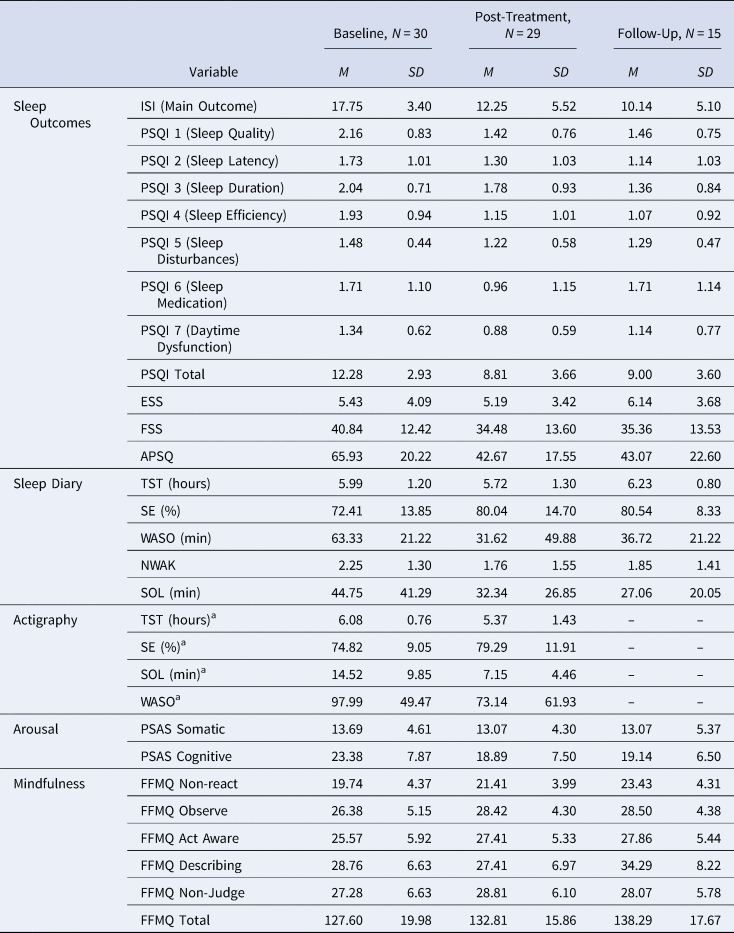
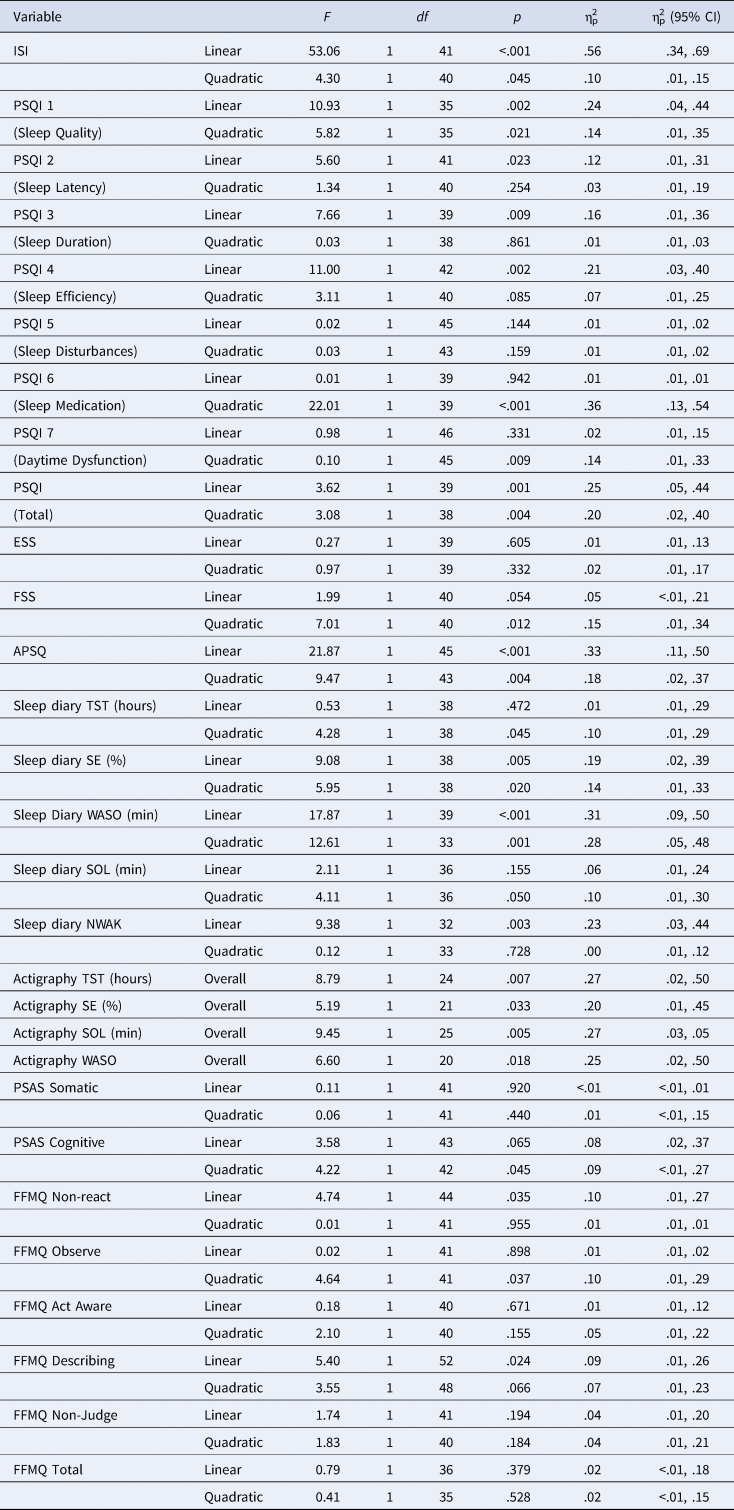
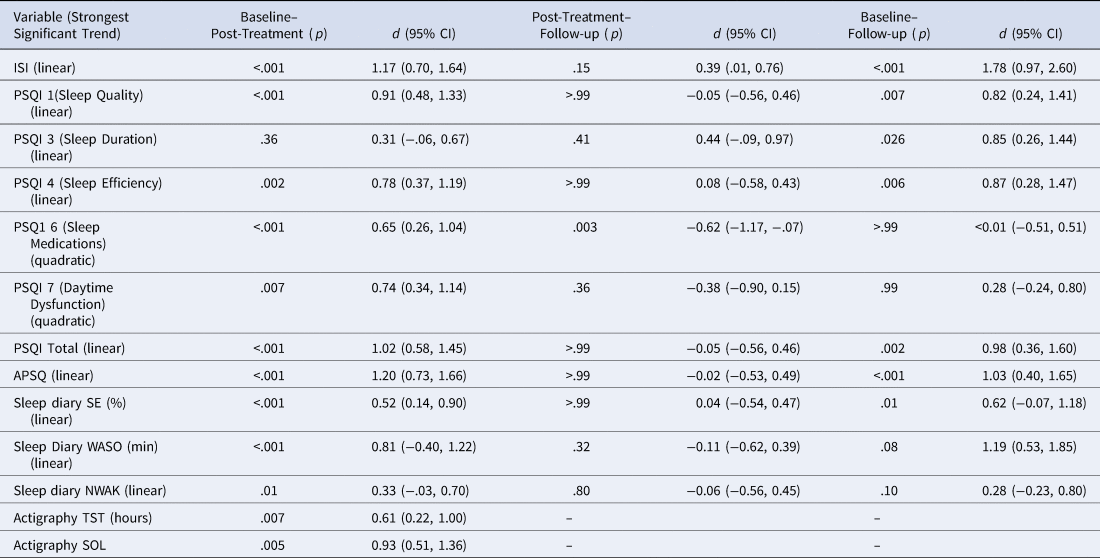
Descriptive results for all variables are shown in Table 1. Table 2 shows the results of the trend analyses. The results of pairwise comparisons for those trend analyses that resulted in significant outcomes at p < .01 are shown in Table 3. At the descriptive level, there were significant improvements across all sleep variables, except for TST as assessed by both sleep diary and actigraphy. Of the 29 outcome measures, 13 recorded at least one significant trend: eight sleep outcomes, three sleep diary measures, and two actigraphy measures. No significant results were found for either arousal or mindfulness.
Descriptive Statistics for Outcome Measures Across Phases

Note: ISI = Insomnia Severity Index; PSQI = Pittsburgh Sleep Quality Index; ESS = Epworth Sleepiness Scale; APSQ = Anxiety and Preoccupation with Sleep Questionnaire; TST = Total Sleep Time; SE = Sleep Efficiency; WASO = Wake After Sleep Onset; NWAK = Number of Awakenings; PSAS = Pre-Sleep Arousal Scale; FSS = Fatigue Severity Scale; FFMQ = Five Facet Mindfulness Questionnaire.
a 17.9% of the actigraphy data was missing due to recording failure.
Analysis of Orthogonal Polynomials and ANOVAs for Outcome Measures

Note: ISI = Insomnia Severity Index; PSQI = Pittsburgh Sleep Quality Index; ESS = Epworth Sleepiness Scale; FSS = Fatigue Severity Scale; TST = Total Sleep Time; SE = Sleep Efficiency; WASO = Wake After Sleep Onset; SOL = Sleep Onset Latency; NWAK = Number of Awakenings; APSQ = Anxiety and Preoccupation with Sleep; PSAS = Pre-Sleep Arousal Scale; FFMQ = Five Facet Mindfulness Questionnaire.
Summary of Post hoc Pairwise Comparisons for Outcome Variables with at Least One Significant Trend at p < .01

Note: ISI = Insomnia Severity Index; PSQI = Pittsburgh Sleep Quality Index; ESS = Epworth Sleepiness Scale; FSS = Fatigue Severity Scale; TST = Total Sleep Time; SE = Sleep Efficiency; WASO = Wake After Sleep Onset, data measured by Actigraphy TST = Total Sleep Time; SE = Sleep efficiency; WASO = wake after sleep onset; SOL = sleep onset latency; APSQ = Anxiety and Preoccupation with Sleep Questionnaire; PSAS = Pre-Sleep Arousal Scale.
The primary outcome variable, ISI, exhibited the strongest effect. Post hoc analysis revealed large reductions from baseline to both post-treatment and follow-up on this primary measure, but no significant difference between post-treatment and follow-up.
For all subjective measurements, there was no difference between end-of-treatment and follow-up, despite the significant linear trends for SE, WASO, and NWAK and the descriptive indication of an ongoing improvement of symptoms at follow-up. Objective measures were not included in this analysis, as there were no objective sleep measurements at follow-up. Objective TST decreased significantly between baseline and post-treatment, which was in the opposite direction than expected. There were some issues with missing data due to problems with the actigraphy recording. Over 50% of the 13 actigraphs failed and were replaced with new actigraphs during the period of data collection. This resulted in 50% of participants missing a period of 4 weeks of objective recording.
Of the trends tested (see Table 3), five variables revealed a significant linear trend only: the ISI and Components 1 (Sleep Quality), 3 (Sleep Latency), and 4 (Sleep Efficiency) of the PSQI. Two variables revealed a significant quadratic trend only: Components 6 (Sleep Disturbance) and 7 (Daytime Dysfunction) of the PSQI. Three variables reported both significant linear and quadratic trends: the PSQI Total, the APSQ, and Sleep Diary WASO. For those variables reporting both significant linear and quadratic trends, the focus of subsequent interpretation was on the higher-order quadratic trend. Apart from the ISI, the strongest effects were evident with the quadratic component of Component 6 (sleep disturbance) of the PSQI and the linear component of the APSQ.
For those outcome measures with a significant linear trend, visual examination of the trends revealed a pattern of continuing change in the desired direction for all variables, although the magnitude of change was generally less from post-intervention to follow-up. For those outcome variables with significant quadratic trends, the most common pattern was an improvement from baseline to post-treatment, followed by a levelling off or slight return towards baseline at follow-up.
These interpretations were largely confirmed by the pairwise post hoc comparisons. Table 3 reveals that in 11 out of 13 instances, there was a significant change in the desired direction from baseline to post-treatment, with only Component 3 (Sleep Latency) of the PSQI and NWAK not showing this outcome. For five outcome measures, the significant baseline to post-treatment outcome was maintained in the desired direction at follow-up: the ISI; Components 1(sleep quality), 4 (sleep duration), and the Total of the PSQI; and the APSQ.
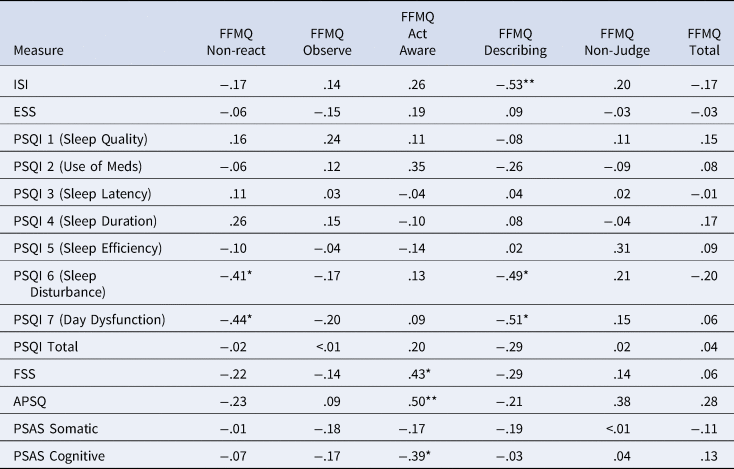
Correlations between baseline to post-treatment change scores for the FFMQ and its subscales and baseline to post-treatment change scores for the main sleep outcome variables are displayed in Table 4. While the change in the sleep variables was not significantly associated with the change in the total score on the FFMQ, there were a number of moderate to strong significant correlations found between change in the sleep variables and change in FFMQ subscales. These results provide some evidence relating to the mechanism of change.
Correlations Between Change Scores for the FFMQ with Change Scores for the Main Sleep Outcome Variables

Note: *p < .01, **p < .001. ISI = Insomnia Severity Index; PSQI = Pittsburgh Sleep Quality Index; FSS = Fatigue Severity Scale; APSQ = Anxiety and Preoccupation with Sleep Questionnaire; TST = Total Sleep Time; SE = Sleep Efficiency; WASO = Wake After Sleep Onset; PSAS = Pre-Sleep Arousal Scale.
Intercorrelations between baseline to end-of-treatment change scores for sleep, pre-sleep arousal, fatigue, and mindfulness are also displayed in Table 5. A strong and significant association was observed between PSAS Somatic and WASO (as measured by actigraphy), and FFMQ Total score and NWAK (as measured by the sleep diary).
Correlations among Change Scores for Sleep, Pre-Sleep Arousal, Fatigue, and Mindfulness

Note. *p < .01, **p < .001. ISI = Insomnia Severity Index; PSQI = Pittsburgh Sleep Quality Index; ESS = Epworth Sleepiness Scale; APSQ = Anxiety and Preoccupation with Sleep Questionnaire; TST = Total Sleep Time; SE = Sleep Efficiency; WASO = Wake After Sleep Onset; NWAK = Number of awakenings; PSAS = Pre-Sleep Arousal Scale; FSS = Fatigue Severity Scale; FFMQ = Five facet Mindfulness Questionnaire.
Discussion
The aim of this research was to evaluate the treatment effect of group-based MBTI in a sleep disorder clinic sample with insomnia. It was hypothesised that participants would score lower on insomnia severity, and higher on objective and subjective sleep quality at end-of-treatment and follow-up when compared with baseline. These hypotheses were supported, with many significant improvements observed across a variety of subjective and objective sleep variables. For example, there were significant reductions in insomnia severity, sleep disturbance, SOL, WASO, and improvements in sleep efficiency found in both objective and subjective data. There were, however, no further significant improvements in sleep variables from the end-of-treatment to follow-up, although trend analysis was suggestive of the ongoing improvement of symptoms (including sleep efficiency, sleep efficiency, and NWAK) at follow-up.
This study provides support for the feasibility of delivering MBTI in a real-world sleep disorders clinic population with insomnia. Results of the current study suggest that MBTI led to improvements in all sleep measures apart from TST, and the magnitude of these changes was comparable with those reported in a meta-analytic study investigating the treatment outcomes of CBT-I (Trauer, Qian, Doyle, Rajaratnam, & Cunnington, Reference Trauer, Qian, Doyle, Rajaratnam and Cunnington2015).
The findings also supported the hypothesis that there would be reductions in cognitive processes known to impair sleep. This was demonstrated by significant reductions in sleep-related monitoring, and anxiety and preoccupation about sleep. Consistent with previous studies using MBTI, there was some evidence to support the hypothesis that MBTI has strong effects on reducing cognitive hyperarousal (Ong et al., Reference Ong, Manber, Segal, Xia, Shapiro and Wyatt2014). Of course, such changes could be a consequence of sleep improving, rather than a causal factor, which supports a recommendation for further research into mechanism of change.
While changes in mindfulness in the expected direction were observed, these were modest and not statistically significant. Of 84 correlations among change in sleep variables and change in FFMQ variables, only 8 were significant. However, the correlations observed were of moderate to strong magnitude. Since this is only a 6-week programme, it may be that a longer period of practice is required or that the group format is not optimal to elicit the desired level of change. Questions remain about whether the improvements in sleep outcomes observed were a consequence of improved mindfulness or the more traditional behavioural components of the intervention.
The mechanisms by which MBTI may improve insomnia are still not clear, and the intervention may not reduce physiological or somatic hyperarousal as has been suggested (Ong, Ulmer, & Manber, Reference Ong, Ulmer and Manber2012). Pre-sleep arousal was measured using the PSAS, which produces two component scores: cognitive arousal and somatic arousal. Results from the study indicated that there was a significant change in cognitive hyperarousal by the end-of-treatment, while somatic arousal remained unchanged across the three time points. A reduction in cognitive arousal was also associated with an increase in acting with awareness (a subscale of the FFMQ). This suggests that cognitive arousal may reduce when insight about thoughts, feelings, or behaviours is increased. MBTI may not improve sleep by reducing physiological or somatic arousal, with effects mediated via reductions in cognitive arousal. Recent research suggests that cognitive arousal is more important than somatic arousal in the stress-sleep relationship (Tousignant, Taylor, Suvak, & Fireman, Reference Tousignant, Taylor, Suvak and Fireman2019). Further research is warranted to investigate the impact of mindfulness meditation on arousal in insomnia.
An alternative mechanism for how MBTI may improve insomnia is that it may have benefits in targeting the cognitive components of sleep disturbance. This may be due to the emphasis on components of mindfulness theory, such as non-striving, acceptance, and non-judgment (Kabat-Zinn et al., Reference Kabat-Zinn, Wheeler, Light, Skillings, Scharf, Cropley and Bernhard1998). These principles, along with meditation training, may allow participants to improved insight into their thoughts and feelings, reduced emotional reactivity to sleeplessness, and consciously let go of preoccupation and monitoring. Alternatively, meditation practice may help to build skills to refocus attention on the present, when thoughts drift to worries about sleep or monitoring of internal and external environmental cues for sleep-related threats. Our results find some preliminary support for the argument that a reduction in sleep disturbances (measured by the PSQI 6) was associated with improvements in the mindfulness dimensions of non-reactivity and describing. However, there was a lack of change in overall mindfulness scores from pre- to post-MBTI. This may be related to the inherent difficulties in measuring mindfulness, as once someone is trained in mindfulness, they become more aware of mindlessness than before mindfulness training. Overall, these results warrant further investigation into the benefit of mindfulness on the cognitive model of insomnia and to understand the mechanisms by which it works.
It is important to acknowledge that this study does have some limitations. First, the generalizability of results to the wider population may be limited, as recruitment was largely through a single sleep disorders clinic. Participants in this study reported a higher level of education and socioeconomic status than the average Australian. This must be considered when interpreting these findings, as it may lead to enhanced outcomes due to increased comprehension of the material presented and greater health literacy and self-advocacy. Another consideration with regards to the lack of a control group. There was a significant amount of missing data in this study, largely due to recoding failure of Actigraphy devices, which needed to be replaced halfway through the study. There was a large number of comparisons which could allow for Type I errors. Finally, a barrier to participation in the study was the requirement to attend weekly group sessions for the intervention.
Further research will hopefully allow for greater understanding of the mechanism by which MBTI improves insomnia, be it through reduced problematic thinking in insomnia, stress, hyperarousal, or other mechanisms. Future research may also trial different modes of delivery for MBTI, such as Telehealth group sessions or online interventions to reduce attendance barriers. Hopefully, more research will increase our understanding of the type of patient that may benefit most from MBTI (e.g. the role of variables such as personality factors or participant feedback), and assist referrers to make decisions about the type of treatment best for their patient in order to improve clinical outcomes.
Conclusion
This study provides further support for the use of MBTI as a viable treatment option for insomnia. These findings demonstrate the feasibility of delivering MBTI to a clinical sample of people with insomnia with minimal screening for depression or anxiety, or strict criteria for insomnia that represents procedures typically used in real-world sleep disorder clinics. Increasing treatment options for insomnia has potential benefits to both individuals with insomnia and the wider population.
Acknowledgements
Thanks to all at the Melbourne Sleep Disorders Centre including Dr John Swieca, Danielle Kelly, and Juan Mulder. Thanks to Sophie Ferrier and Jacinta Archer for their consistency with and dedication to data entry. And a big thank you to Jon Kabat-Zinn, the founder of the Mindfulness-Based Stress Reduction programme, which was followed closely in the current protocol.
Funding
No funding was received for this study. It was completed as part of a Doctor of Philosophy degree.
Declaration of interest
Dr Allie Peters, Professor John Reece, Ms. Hailey Meaklim, Dr Moira Junge, Dr David Cunnington, Dr Mervyn Jackson, and Professor Ken Greenwood declare no conflicts of interest. Associate Professor Jason Ong receives royalties from APA books.
Ethical standards
The authors assert that all procedures contributing to this work comply with the ethical standards of the relevant national and institutional committees on human experimentation and with the Helsinki Declaration of 1975, as revised in 2008.