


Introduction
Poultry are stunned in small- to medium-sized plants and for Halal slaughter using high frequency electrical water-bath stunning. However, there are widespread welfare concerns associated with this method (Berg & Raj Reference Berg and Raj2015). This is predominantly due to unreliability in inducing epileptiform activity in the brain that is consistent with unconsciousness, as it is dependent on the waveform and frequency used for the method (Hindle et al. Reference Hindle, Lambooij, Reimert, Workel and Gerritzen2010; Berg & Raj Reference Berg and Raj2015; Girasole et al. Reference Girasole, Marrone, Anastasio, Chianese, Mercogliano and Cortesi2016; Siqueira et al. Reference Siqueira, Borges, Rocha, Figueira, Luciano and Macedo2017). There is also a risk even with mid- to high-frequency systems that some animals might die from the procedure, prior to exsanguination (Mouchoniere et al. Reference Mouchoniere, Le Pottier and Fernandez1999), making it potentially unsuitable for Halal meat production, which specifies that consciousness must be reversible, and animals must be alive at the point of exsanguination (Fuseini et al. Reference Fuseini, Wotton, Hadley and Knowles2017).
Head-only electrical stunning, which involves passing a current through the brain, has been explored as an alternative, reversible method, particularly to suit Halal meat production (Gibson et al. Reference Gibson, Taylor and Gregory2016; Sabow et al. Reference Sabow, Nakyinsige, Adeyemi, Sazili, Johnson, Webster and Farouk2017). However, head-only electrical stunning can induce convulsions, which impact meat quality (Sabow et al. Reference Sabow, Nakyinsige, Adeyemi, Sazili, Johnson, Webster and Farouk2017), making effective restraint prior to, and during, the stun vital. Furthermore, birds can quickly regain consciousness after head-only electrical stunning, particularly for hens, so prompt exsanguination is critical (Lambooij et al. Reference Lambooij, Reimert and Hindle2010, Reference Lambooij, Reimert, Verhoeven and Hindle2014; Gibson et al. Reference Gibson, Taylor and Gregory2016). Time to recovery is also variable depending upon the positioning of electrodes, with electroencephalography (EEG) assessment finding that back-of-the-head stunning causes a shorter lasting stun than standard head-only electrodes (Gibson et al. Reference Gibson, Taylor and Gregory2016). Voltage must also be sufficient to overcome the impedance of head tissue (Wotton et al. Reference Wotton, Grist, O’Callaghan and van Klink2020). Low voltage high frequency stunned birds are at risk of recovering consciousness quicker, prior to exsanguination, whilst high voltage low frequency stunning risks birds dying through cardiac arrest (Bourassa et al. Reference Bourassa, Bowker, Zhuang, Wilson, Harris and Buhr2017).
Typically, for head-only electrical stunning, birds are restrained in a cone with two electrodes placed on either side of the head (Berg & Raj Reference Berg and Raj2015). This is less stressful than shackling for water-bath stunning but still causes distress through inversion. Part one of the present study, published simultaneously (Gibson et al. Reference Gibson, Limon, Campbell, Chancellor, Fletcher, Berry and Lines2026), focused on the successful development of a restraint system which enabled birds to be secured in an upright posture prior to stunning, without inversion or shackling, with consistent positioning of the birds’ heads and securing of the wings to prevent flapping.
The aim of this study was to determine if slaughter-weight broilers could be consistently and recoverably stunned while in the upright restraint with constant current head-only electrical stunning. Two studies were performed to investigate this aim: Experiment A assessed stun effectiveness and duration with behavioural and brainstem reflexes after head-only electrical stunning in the upright restraint system with three different electrical current thresholds (400, 600 and 800 mA). Experiment B assessed changes in the EEG to evaluate recoverability with head-only electrical stunning (600 mA) in the upright restraint system.
Materials and methods
Animals and studies
All procedures were performed under Home Office Project Licence X7897A582. Fifty-two mixed sex broiler chickens from a commercial indoor unit were relocated to a research unit where they were given five days to acclimatise to their surroundings prior to experimentation. Birds were group-housed in pens (pen 1: 3.5 × 6.1 m, and pen 2: 3.4 × 4.1 m; length × width), which were bedded with wood-shavings, with provision of perches and platforms and given ad libitum access to standard finisher feed (floor-based hopper feeders) and water (automatic bell drinkers). The birds were randomly allocated to separate experiments (A and B), on the day of experiments the birds were of slaughter weight and age (30 to 40 days of age). Experiment A (n = 37) assessed behavioural indices and carcase quality during restraint and time to recovery following head-only electrical stunning at 400, 600 or 800 mA at 50 Hz (2.5 s exposure). Bird order and weight were randomised by treatment. Experiment B (n = 15) assessed electroencephalographic (EEG) and behavioural indices of brain function after constant current 600 mA head-only electrical stunning (50 Hz, 2.5-s exposure period) to determine the time to recovery of brain function. In both experiments bird order and weight were randomised by treatment using leg tag number and a random number generator.
Data collection
Experiment A: Behavioural assessment of restraint and head-only electrical stunning
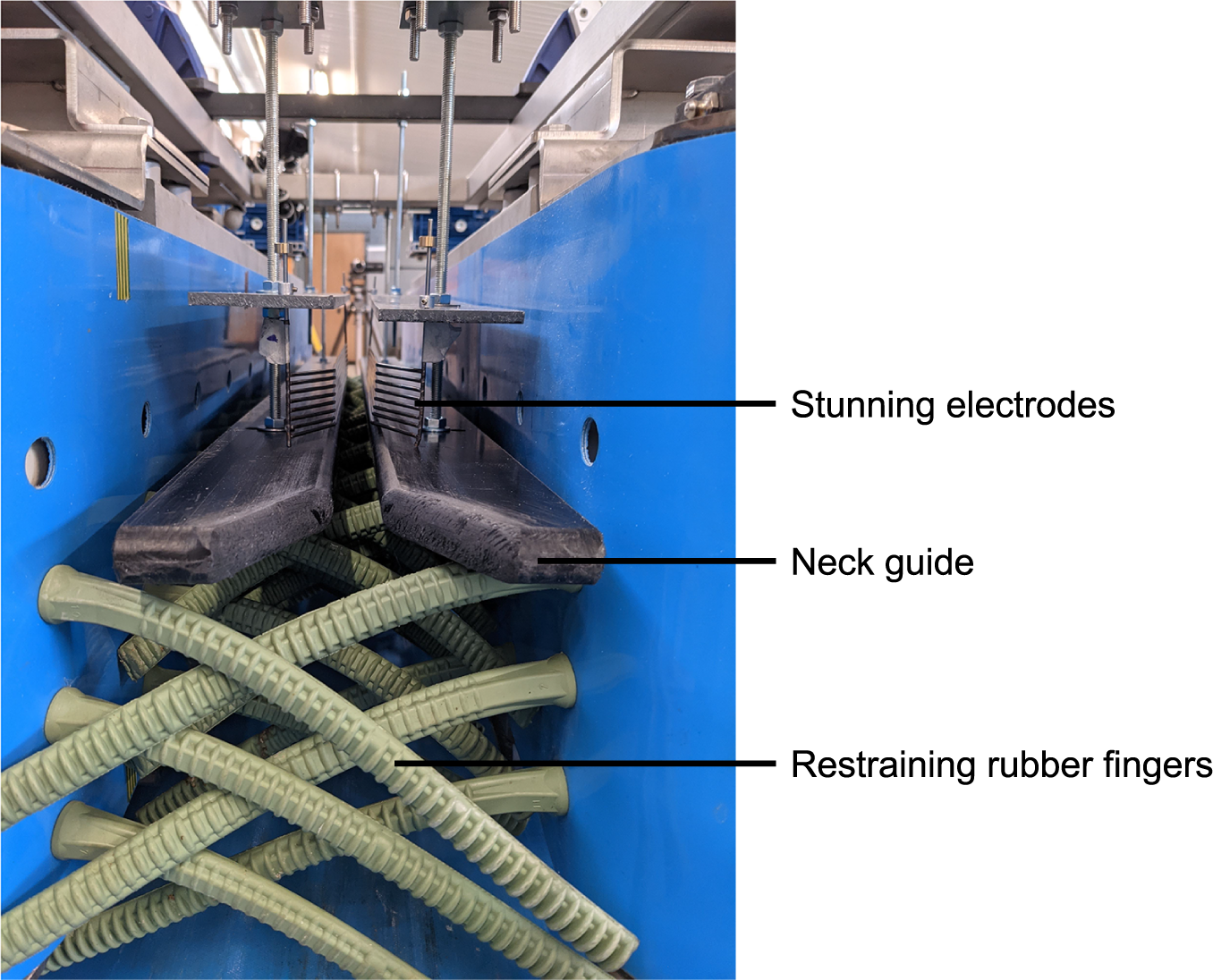
Median bodyweight was 2.6 kg (range: 1.6–3.1 kg) and did not differ between groups (400 mA: 2.6 kg [1.6–3.1 kg]; 600 mA: 2.6 kg [1.6–3.1 kg]; 800 mA: 2.6 kg [2.3–3.1 kg]); (P = 0.689). Stunning electrode design was initially examined to determine what would work in the restraint and with constant current electrical stunning. Designs from previous projects and the literature were considered before finalising on fixed wire electrodes. These consisted of two sets of parallel electrodes with eight flexible bars (length: 500 mm) that were designed to part the feathers and make multiple contacts with the skin over the skull (Figure 1). This experiment used the restraint system/set-up, as previously outlined in Gibson et al. (Reference Gibson, Limon, Campbell, Chancellor, Fletcher, Berry and Lines2026), and stun effectiveness, duration and recoverability were assessed with behavioural and brainstem indices.
Entry to the upright broiler restraint system from the bird’s perspective, showing the restraining rubber fingers, neck guide and fixed wire head-only stunning electrodes used to position and pass electrical current across the cranium. Individual birds were manually placed in the restraint.

Figure 1 Long description
The bird is positioned between two blue conveyor belts. Multiple flexible green restraining rubber fingers project from both sides of the belts and overlap across the lower passage to support and restrain the body. A black central neck guide aligns the head and neck. Above it, two opposing fixed wire stunning electrodes, are positioned to contact both sides of the cranium as the bird moves forward.
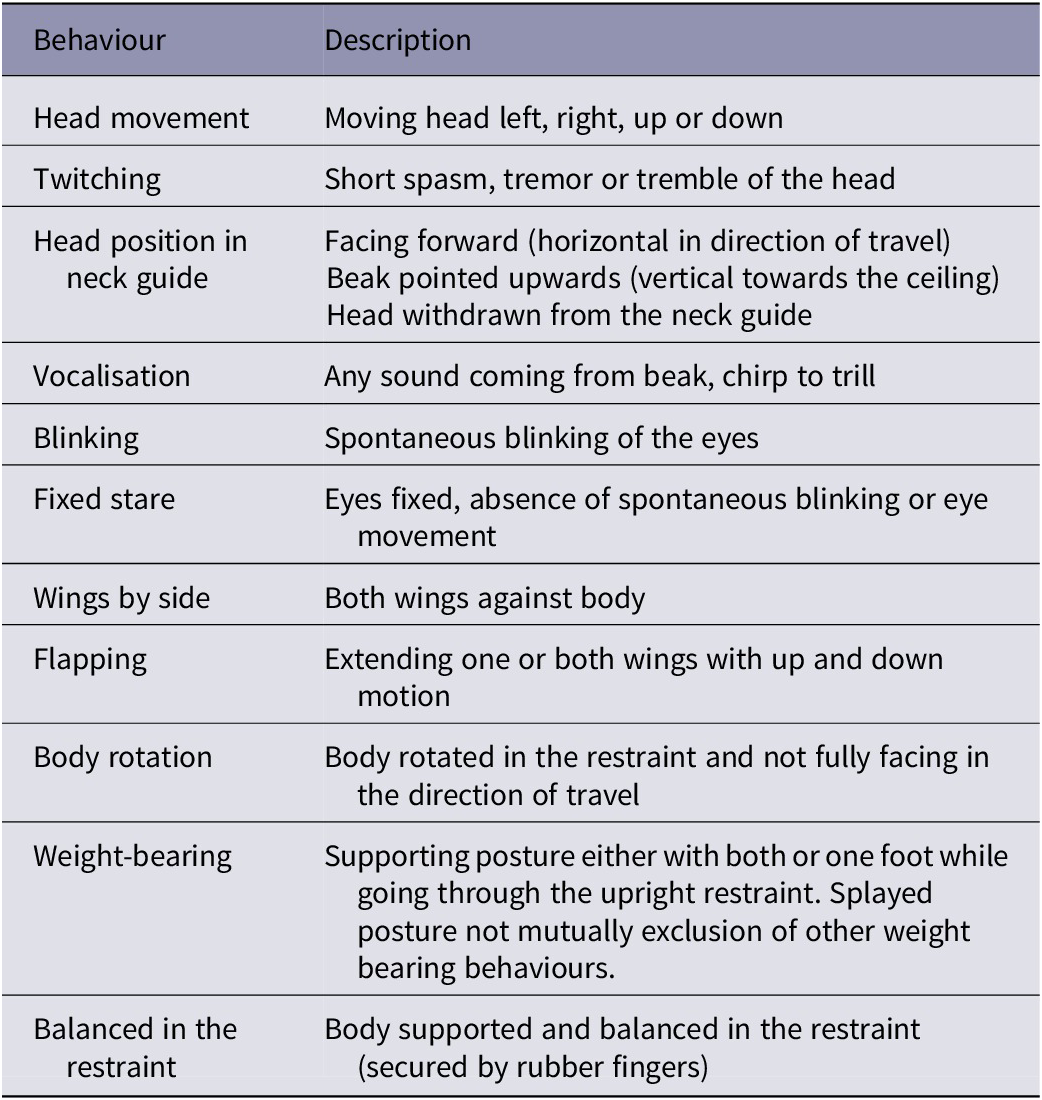
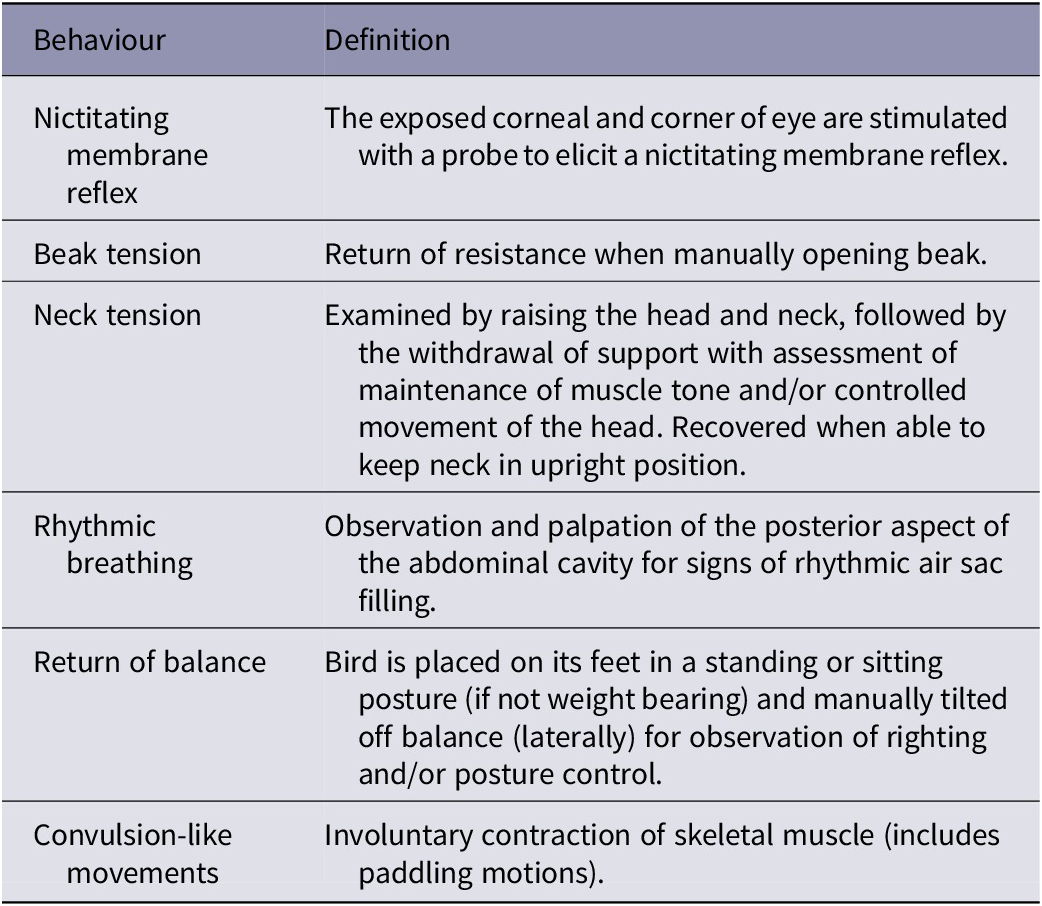
Birds were positioned and stunned in the restraint and monitored (live and video capture) for behaviour during restraint (Table 1), performance of the stun, time to recovery of behavioural and brainstem indices (Table 2) (Gregory & Wotton Reference Gregory and Wotton1990) and restraint/stunning induced carcase damage. All behaviours were initially assessed live with direct visual assessment (three observers), with further refinement of recorded behaviours with post hoc assessment of video recordings (four video cameras, [1] positioned over the top of the restraint, [2] at the entrance of the restraint over the shoulder of the operator placing the bird in the restraint, [3] at the exit looking towards the oncoming birds, and [4] at the table for assessment of behavioural/brainstem indicators of recovery).
Behavioural indicators assessed in upright restrained broiler chickens during head-only electrical stunning with 400, 600 and 800 mA

Table 1. Long description
Eleven postures and behaviours were assessed. Head movement: head moved left, right, up or down. Twitching: short head spasm, tremor or tremble. Head position: forward, beak upward or withdrawn from the neck guide. Vocalisation: beak sound from chirp to trill. Blinking: spontaneous eye blink. Fixed stare: fixed eyes without spontaneous blinking or eye movement. Wings by side: both wings against the body. Flapping: one or both wings extended and moving up and down. Body rotation: body not facing the direction of travel. Weight bearing: support on one or both feet; splayed posture could co-occur. Balanced: body supported by rubber fingers.
Behaviour and brainstem indicators recorded from upright restrained broiler chickens after head-only electrical stunning with 400, 600 and 800 mA. Assessments were repeated in the same sequence until all reflexes returned

Table 2. Long description
Six recovery indicators were recorded. Nictitating membrane reflex: stimulating the exposed cornea and eye corner with a probe elicited membrane movement. Beak tension: resistance returned when the beak was opened manually. Neck tension: after the head and neck were raised and support withdrawn, muscle tone or controlled movement was assessed; recovery meant holding the neck upright. Rhythmic breathing: the posterior abdomen was observed and palpated for rhythmic air-sac filling. Return of balance: after placement on the feet and lateral tilting, righting or postural control was observed. Convulsion-like movements: involuntary skeletal muscle contractions, including paddling.
Birds were randomly allocated to three treatment groups based on electrical stunning current. Birds were either stunned in the restraint with a constant current electrical stunner (E512, Freund Maschinenfabrik GmbH & Co KG, Paderborn, Germany) at 400 (n = 15), 600 (n = 12) or 800 (n = 10) mA at 50-Hz sinusoidal alternating current, with a 2.5-s exposure period. For the first three broilers, current profiles were recorded with an i30s Fluke AC/DC current clamp around a live output lead and connected to a 199C Fluke Scope meter (Fluke Corporation, Everett, WA, USA). However, due to set-up and recording issues, no interpretable profiles were obtained. For all subsequent broilers, the delivered peak current was visually verified during the stunning exposure period using a 179 Fluke multimeter (Fluke Corporation, Everett, WA, USA). Stun treatments were not randomised and were performed in batches. These treatment groups were selected based on prior experience of the research team, where the minimum of 240 mA as required in EC 1099/2009 was previously found to be inadequate to produce a reliable, sufficiently long-lasting period of unconsciousness in end-of-lay hens (Gibson et al. Reference Gibson, Taylor and Gregory2016).
After exiting the restraint, the birds were placed on a table and monitored until recovery of all indices, with each bird monitored for up to 5 min (Table 2). This period allows for assessment of full recovery and the effects of the stun on the immediate health status of the bird, which is an important requirement of Halal slaughter, where the bird must not be harmed or killed by the stunning method. Immediately after recovery all the birds were re-stunned with captive bolt (Turkey Euthanasia Device [TED] Bock Industries Inc, Philipsburg, PA, USA) and euthanased by bilateral severance of the carotid arteries and jugular veins.
Experiment B: Electrophysiological assessment of electrical stunning
Experiment B used the restraint system/set-up outlined in Experiment A and Gibson et al. (Reference Gibson, Limon, Campbell, Chancellor, Fletcher, Berry and Lines2026), with effectiveness, stun duration and recoverability assessed with electrophysiological (EEG) indices. Birds were monitored prior to and after electrical stunning for up to a maximum of 60 s post stun. Immediately after recovery all the birds were re-stunned with captive bolt and euthanased by bilateral severance of the carotid arteries and jugular veins.
One channel of EEG was recorded from a three-electrode montage using three 24-gauge stainless steel subdermal needle electrodes (Neuroline Subdermal, Ambu Inc, Glen Burnie, MD, USA). Electrode position was as previously described by Gibson et al. (Reference Gibson, Rebelo, Gowers and Chancellor2018), where the active (non-inverting) electrode was placed to the right of the midline, in-line with the back of the eyes and the reference (inverting) electrode was implanted over the right caudal aspect of the frontal bone (top of the bird’s head) in line with the front of the ears. The ground electrode was positioned in the midpoint on the dorsal surface of the neck of the bird. Mean (± SEM) interelectrode impedance was 1.6 (± 0.1) kΩ and ranged between 1.4 and 2.0 kΩ (MkIII Checktrode, UFI, Morro Bay, CA, USA). Electroencephalogram signals were amplified and filtered with an analogue filter (Dual Bio Amp, ADInstruments Ltd, Sydney, NSW, Australia) with low and high pass filters of 100 and 0.1 Hz, respectively. The signals were digitised (1 kHz) with an 8/20 PowerLab (ADInstruments Ltd) analogue to digital converter and recorded on a Dell personal laptop for off-line analysis.
Pre-treatment EEG was recorded for 60 s, before the subdermal needle electrodes were removed, and the bird placed in the restraint and stunned at 600 mA at 50 Hz sinusoidal alternating current (2.5-s exposure period). Immediately after exiting the restraint the birds were placed on a table and the EEG recording electrodes reinserted and post-treatment EEG recorded. The unplugging of the bird and the loss of data between end of baseline and exiting the restraint was unavoidable, as electrodes would have been displaced by the rubber fingers of the restraint or would have contacted the stunning electrodes. The mean (± SEM) time from the onset of stunning to the beginning of post-stunning EEG recording was 21 (± 1.1) s; (range: 16–34 s). This delay was factored into all subsequent analyses with 0 being the time of the commencement of electrical stunning current.
Analysis was conducted offline using LabChart 8.20 (ADInstruments Ltd), such as rejecting EEG epochs contaminated with over- and under-scale artefacts and large polyspike movement. The waveforms were further digitally filtered with a passband of 1–30 Hz and then subjectively analysed into EEG classification categories as described by Gibson et al. (Reference Gibson, Rebelo, Gowers and Chancellor2018): Movement artefact; Normal-like EEG; Transitional EEG and Isoelectric EEG. Normal-like EEG represents activity which is similar in amplitude and frequency to baseline period. Transitional EEG was classified as suppressed activity with either an amplitude of less than half of that of the pre-treatment EEG, or high amplitude and low frequency activity. Isoelectric EEG was classified as a trace with an amplitude of less than 1/8 (12.5%) of that of normal pre-stunning EEG with little or no low frequency components.
The EEG power spectra of uncontaminated epochs were analysed. Fast Fourier Transformation with a Welch window was applied to 1-s epochs, generating sequential power spectra with 1-Hz frequency bins. Subsequent analysis was performed using Microsoft Excel® Mac 16 (Microsoft Corporation®, Redmond, USA). Electroencephalogram data for each bird were calculated and displayed as percentage changes in total power (Ptot), delta (1–4 Hz), theta (4–8 Hz), alpha (8–12 Hz) and beta (12–30 Hz) power from pre-treatment values. Spectral data contaminated by movement artefact were excluded based on the subjective analysis and video data.
Statistical analysis
Experiment A
Descriptive statistics were conducted on all variables evaluating: (i) animal characteristics; (ii) behaviours presented in the restraint; (iii) damage on head and wings following stunning; and (iv) behavioural and brainstem responses following stunning stratified by current treatment received. For those with enough variation across groups, strength of association was assessed using univariate logistic regression. Time to return of behavioural and brainstem responses were non-normally distributed and analysed with a Kruskal-Wallis test with Dunn’s multiple comparison test of differences between treatment groups (400, 600 and 800 mA).
Experiment B
EEG results were presented descriptively. Time to recovery of EEG states were normally distributed. The correlation of time to return of behavioural/brainstem indices with EEG states was assessed with Pearson’s correlation coefficient.
Analysis was performed in either R 3.5.1 (R Development Core Team 2008) or Prism 7.0a (GraphPad Software Incorporated, San Diego CA, USA). The level of significance for all tests was P < 0.05.
Results
Experiment A: Behavioural assessment of restraint and head-only electrical stunning
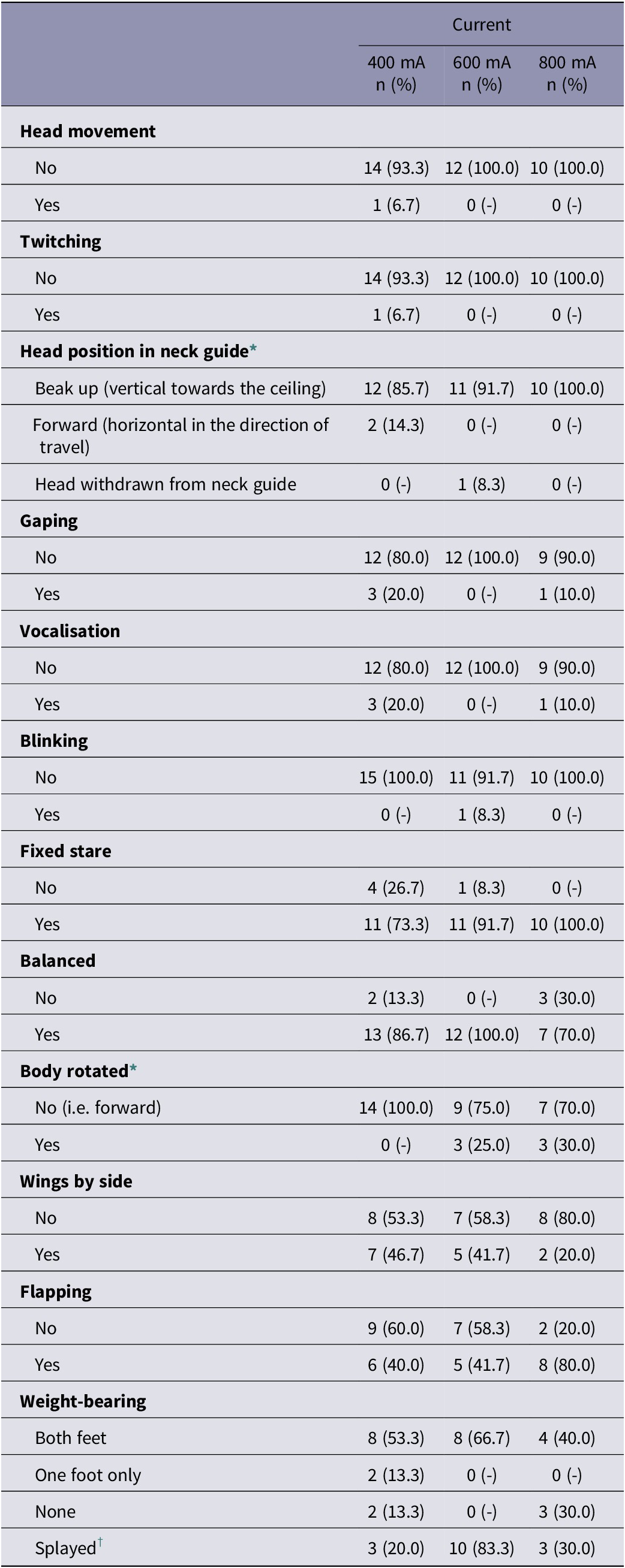
Birds’ behaviour while in the restraint is shown in Table 3. Wing flapping was more frequent at 800 mA, showing a trend towards significance (P = 0.059), and was anecdotally more severe than at 400 mA or 600 mA. For the other behaviours there were no significant differences across the treatments. For all treatment groups, when the heads first contacted the stunning electrodes the orientation of the head changed due to the friction induced by the two sets of electrodes. The head tended to rotate upwards with the beak pointing up and with only one or two of the electrode bars on each side contacting the lower lateral aspect of the cranial vault. One bird in the 600-mA group was incorrectly positioned on the restraint and withdrew their head from the neck guide and was not stunned (displaying spontaneous blinking and did not have a fixed stare); this animal was not included in subsequent analysis of return of behavioural/brainstem indices and was immediately euthanased via captive bolt.
Number and percentage of broiler chickens showing different behaviours while going through the upright restraint system stratified by head-only electrical current received

Table 3. Long description
Groups comprised 15 birds at 400 mA, 12 at 600 mA and 10 at 800 mA; one observation was missing for head position and body rotation. Head movement and twitching occurred only at 400 mA, each in 6.7%. Beaks pointed upward in 85.7%, 91.7% and 100% respectively. Gaping and vocalisation each occurred in 20%, 0% and 10%; blinking in 0%, 8.3% and 0%; fixed stare in 73.3%, 91.7% and 100%; balance in 86.7%, 100% and 70%; body rotation in 0%, 25% and 30%; wings by side in 46.7%, 41.7% and 20%; and flapping in 40%, 41.7% and 80%. Both-foot weight bearing occurred in 53.3%, 66.7% and 40%; one-foot bearing in 13.3%, 0% and 0%; no bearing in 13.3%, 0% and 30%; and splayed posture in 20%, 83.3% and 30%. Splayed posture was not mutually exclusive.
* Broiler ID23 missing observations for head position and body rotated.
† Not mutually exclusive from other weight-bearing behaviours.
Two birds in the 400-mA treatment group died during the recovery assessment stage. These birds were removed from subsequent assessment of time to return of behavioural/brainstem reflexes. During post mortem assessment it became apparent that this was due to regurgitation and subsequent aspiration of crop contents during assessment of recovery (after recovery of rhythmic respiration). For all subsequent trials the birds were fasted 12 h prior to experimentation, after which all birds recovered in all treatment groups.
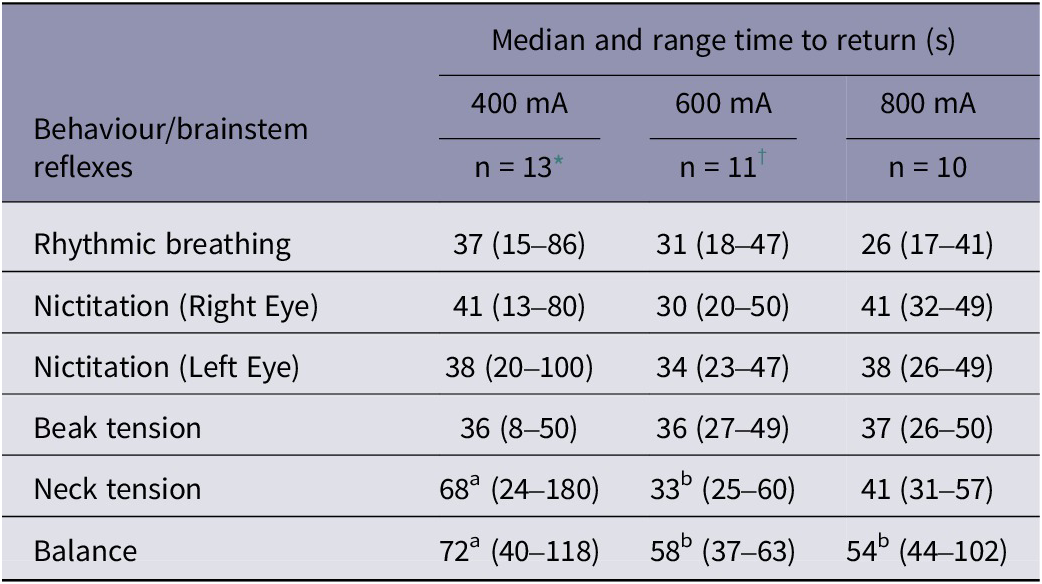
The median time to return of neck tension and balance was significantly longer in the 400-mA group compared to 600 mA (neck tension: P < 0.007), and 600- and 800-mA (balance P < 0.009 and P < 0.038) treatments, respectively (Table 4). Time to return of these and other reflexes was more variable in 400 mA compared to other groups with the fastest recovering birds in this treatment group. There were no significant differences in time to recovery of reflexes in the 600- compared to 800-mA treatment. All birds in each treatment group had tonic convulsion activity during initiation of electrical current, followed by clonic activity.
Median and range time (s) to return of behavioural and brainstem reflexes in upright restrained broiler chickens head-only electrically stunned with 400, 600 and 800 mA at 50 Hz. All values were measured from initiation of electrical stunning current

Table 4. Long description
Entries list median and range in seconds for 400, 600 and 800 mA respectively. Rhythmic breathing: 37, 23, 15-86; 31, 13, 18-47; 26, 16, 17-41. Right-eye nictitation: 41, 16, 13-80; 30, 11, 20-50; 41, 8, 32-49. Left-eye nictitation: 38, 17, 20-100; 34, 11, 23-47; 38, 12, 26-49. Beak tension: 36, 19, 8-50; 36, 15, 27-49; 37, 11, 26-50. Neck tension: 68, 29, 24-180; 33, 15, 25-60; 41, 13, 31-57. Balance: 72, 15, 40-118; 58, 20, 37-63; 54, 11, 44-102. Neck tension was longer at 400 than 600 mA; balance was longer at 400 than 600 or 800 mA, P < 0.05. Sample sizes were 13, 11 and 10; the 400 mA group excluded two deaths and the 600 mA group excluded one bird that withdrew its head from the neck guide.
Different superscripts indicate significant differences P < 0.05.
* Excludes the two birds that died during recovery assessment.
† Excludes the bird that withdrew their head from the neck guide.
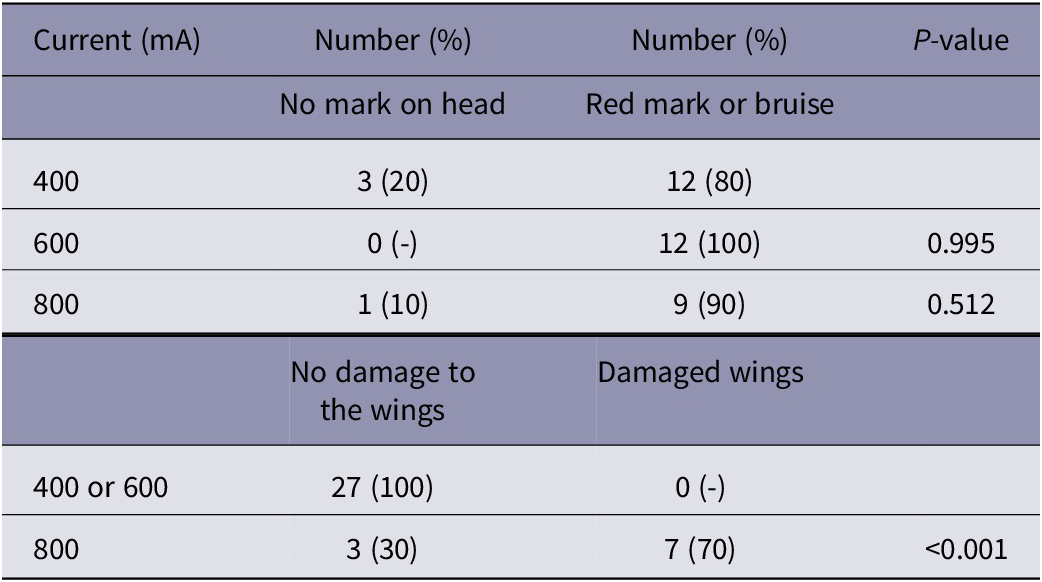
Birds were assessed for lesions, lacerations and defects prior to restraint/stunning and after recovery (prior to captive-bolt dispatch). Following restraint, stunning and recovery, four birds (11%) did not have a mark on the head at the point of stunning electrode contact, while five (13%) had a noticeable bruise and 28 (76%) had a red mark. There was no significant difference regarding current received and damage/mark on the head (Table 5). Meanwhile, seven birds (19%) had some damage to the wings (dislocated, bruise, haemorrhage or red mark), all had received 800-mA current (P < 0.001) (Table 5). With one bird dislocating the wing during current flow with 800 mA. Anecdotally, the convulsions during induction of electrical stunning were most severe with 800 mA compared to the other treatments. The rubber fingers of the restraint were insufficient to control the convulsive activity induced with 800 mA.
Number and proportion of broiler chickens presenting red marks on the head and damage in wings following upright head-only electrical stunning

Table 5. Long description
At 400 mA, 3 of 15 birds (20%) had no head mark and 12 (80%) had a red mark or bruise. At 600 mA, all 12 had a red mark or bruise; at 800 mA, 1 of 10 (10%) had no mark and 9 (90%) had a red mark or bruise. The displayed head-mark comparisons were not significant, with P = 0.995 and P = 0.512. No wing damage occurred among the 27 birds receiving 400 or 600 mA. At 800 mA, 7 of 10 birds (70%) had wing damage and 3 (30%) did not; P < 0.001.
Experiment B: Electrophysiological assessment of electrical stunning
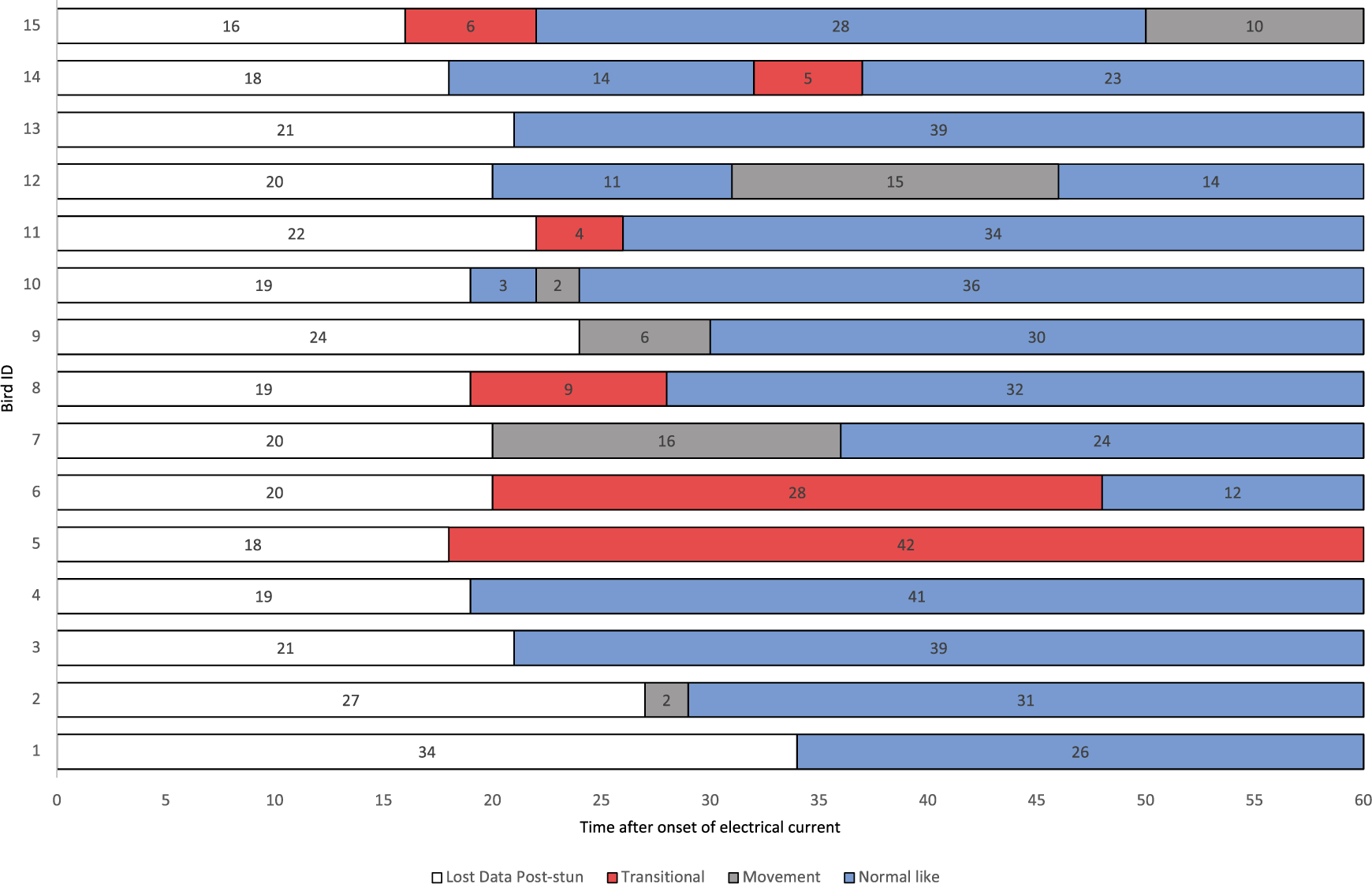
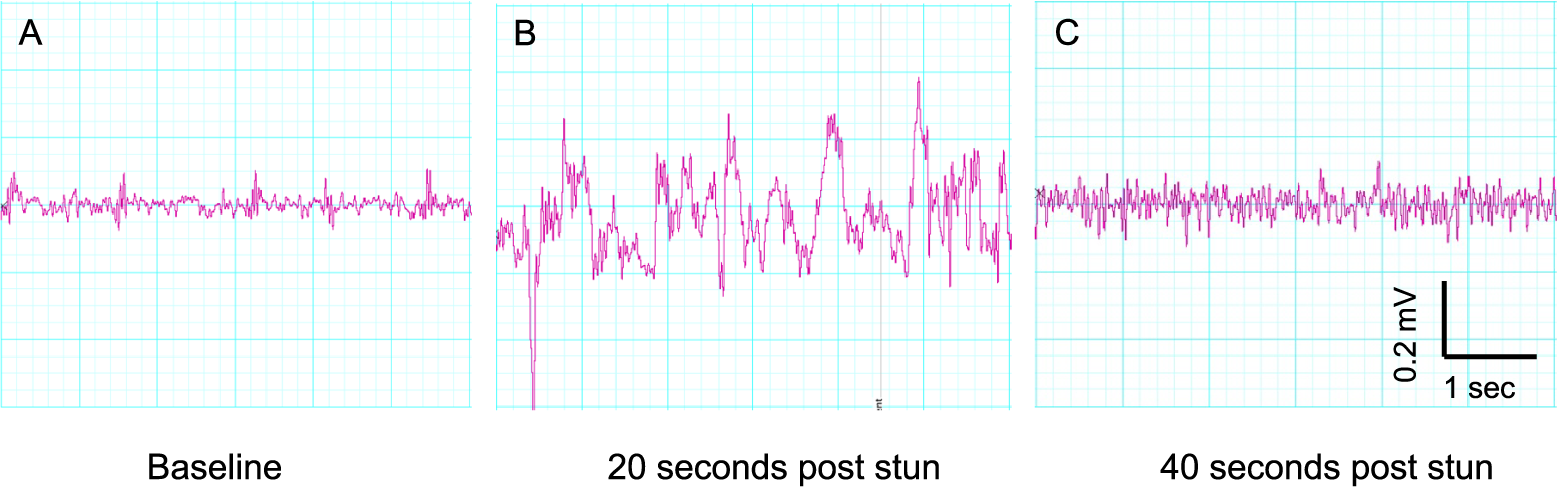
In the experiment, it was not possible to determine the point of return of normal-like EEG function in 67% (10/15) of the birds, because recovery had already occurred during the non-recorded interval and/or was obscured by artefact. All birds recovered normal-like EEG activity during or just after the post-stun data collection period. Bird 5 had a prolonged period of transitional EEG activity, which returned to normal-like activity after the 60-s period (Figure 2). Figure 3 gives an example trace of a bird prior to (baseline) and after electrical stunning. This waveform was typical of the birds with recorded periods of transitional EEG, where, after reconnection of recording electrodes, there was a shift towards low frequency activity (Figures 2 and 3). This was followed by normal-like EEG activity, which had an altered waveform pattern with a greater proportion of high frequency activity compared to pre-treatment. The mean (± SEM) time to return of rhythmic breathing was 37 (± 2) s; (range: 24–50 s). There was a trend towards a moderate correlation between return of rhythmic breathing and normal-like EEG activity (R = 0.51 [CI –0.05–0.83]; P = 0.072).
Characteristics of the EEG in individual upright restrained broiler chickens in the 60 s after induction of head-only electrical stunning current (600 mA, 50 Hz) at 0 s. White bars indicate the period when no data were collected because birds were not instrumented; grey movement artefact; red transitional EEG; and blue normal-like EEG. Numbers within bars indicate duration of the EEG states (s). Note bird 5 recovered normal-like EEG after the data-logging period.

Figure 2 Long description
Each bar spans 0-60 s. Sequence and duration in seconds: bird 1, missing 34 then normal-like 26; 2, missing 27, movement 2, normal-like 31; 3, missing 21, normal-like 39; 4, missing 19, normal-like 41; 5, missing 18, transitional 42; 6, missing 20, transitional 28, normal-like 12; 7, missing 20, movement 16, normal-like 24; 8, missing 19, transitional 9, normal-like 32; 9, missing 24, movement 6, normal-like 30; 10, missing 19, normal-like 3, movement 2, normal-like 36; 11, missing 22, transitional 4, normal-like 34; 12, missing 20, normal-like 11, movement 15, normal-like 14; 13, missing 21, normal-like 39; 14, missing 18, normal-like 14, transitional 5, normal-like 23; 15, missing 16, transitional 6, normal-like 28, movement 10. Bird 5 recovered normal-like EEG after 60 s.
Raw EEG waveforms from one upright restrained broiler chicken prior to (baseline) and after head-only electrical stunning (post 20 and 40 s). Baseline waveform (A) prior to head-only electrical stunning with normal pre-treatment EEG activity; (B) period of transitional EEG 20 s after head-only electrical stunning with increased amplitude and shift towards low frequency activity; and (C) 40 s after head-only electrical stunning with return to normal-like EEG activity with greater proportion of mid to high frequency activity.

Figure 3 Long description
Three equal-width traces share a 0.2 mV vertical and 1 second horizontal scale. Panel A, baseline, has low-amplitude irregular activity clustered around the centre line. Panel B, 20 seconds after stunning, has markedly larger, slower oscillations with several sharp positive and negative excursions. Panel C, 40 seconds after stunning, returns to lower amplitude, but the trace is denser and contains more mid- to high-frequency fluctuations than baseline.
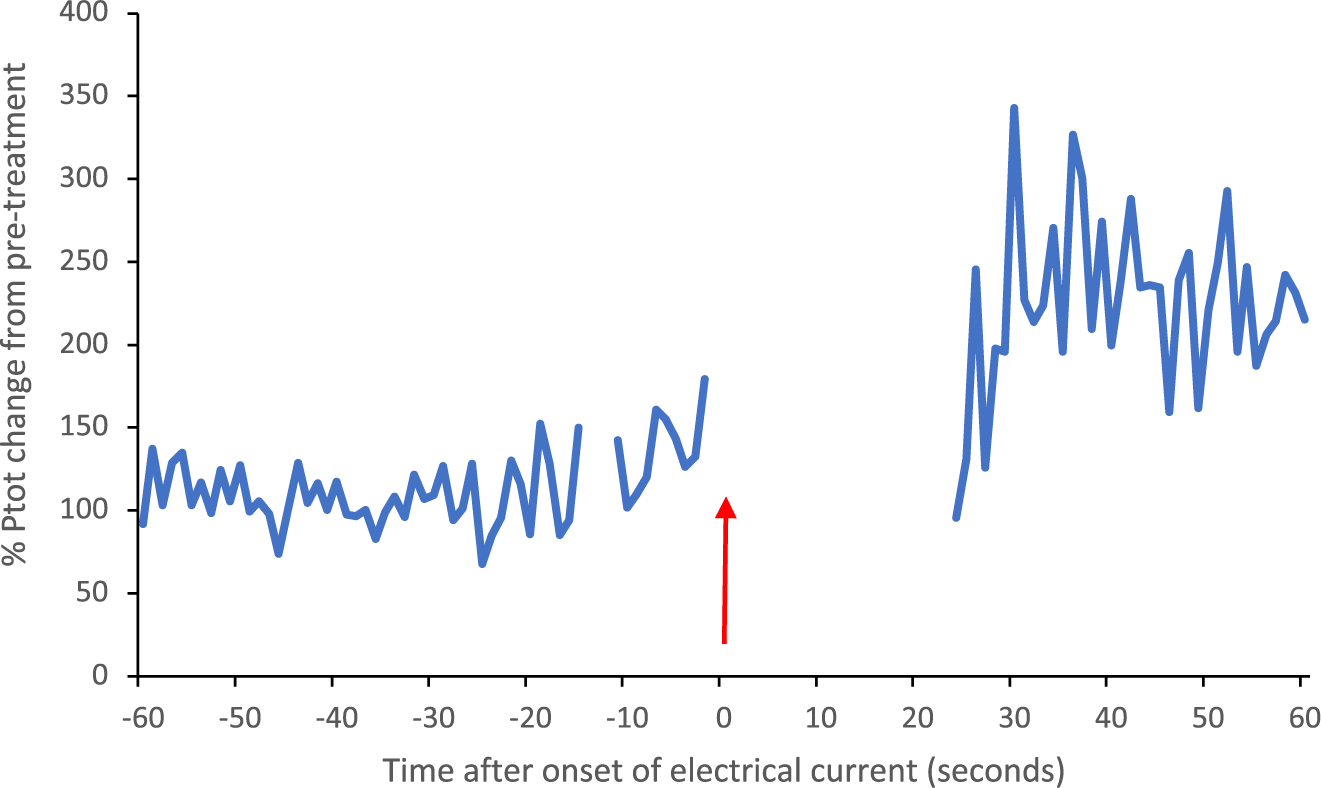
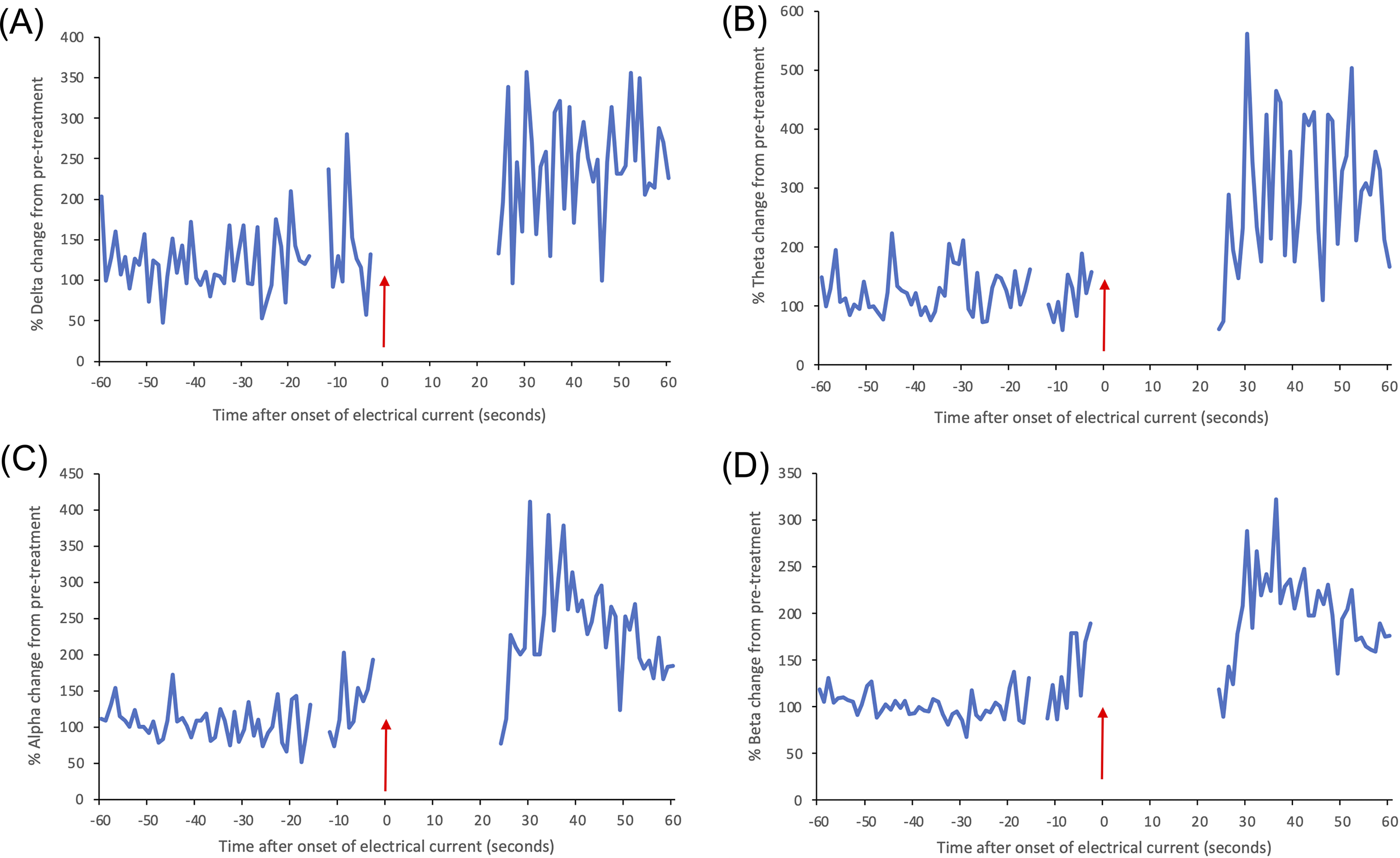
Figures 4 and 5 show the mean spectral analysis results for total power of the EEG (Ptot) and the frequency bands, respectively. Following electrical stunning and reconnection of EEG electrodes, power increased across all bands compared to pre-treatment values. This was more pronounced in the theta, alpha and beta frequency bands, with a trend towards a return to the top of the pre-treatment range at the end of the recording period.
Mean percentage change in total power of the EEG power spectrum (Ptot) of broiler chickens before and after upright restraint and head-only electrical stunning. The red arrow denotes the point of initiation of electrical stunning current (600 mA, 50 Hz), the clear period indicates the time in which EEG activity was not collected during and immediately after restraint and stunning.

Figure 4 Long description
The x-axis runs from -60 s before to 60 s after current onset; the y-axis reports mean total EEG power relative to pre-treatment. Before stunning, values are stable. No EEG is plotted from 0 to about 24 s when the birds are uninsturmented during and immediately after restraint and stunning. After recording resumes, total power increases and remains elevated up to the 60 s recording period. At no point is total power decreased below pre-treatment activity.
Mean percentage changes in delta (A), theta (B), alpha (C) and beta (D) frequency bands of the EEG power spectrum of broiler chickens before and after upright restraint and head-only electrical stunning. The red arrow denotes the point of initiation of electrical stunning current (600 mA, 50 Hz), the clear period indicates the time in which EEG activity was not collected during and immediately after restraint and stunning.

Figure 5 Long description
All panels span -60 prior to and 60 s after electrical stunning. No EEG is plotted from 0 to about 24 s when the birds are uninsturmented during and immediately after restraint and stunning. Before stunning, each band is relatively stable. After recording resumes, delta, theta, alpha and beta increase. At no point does power in the frequency bands decreased below pre-treatment activity.
Discussion
This study demonstrated the proof of concept of an upright restraint system with recoverable head-only electrical stunning. Unconsciousness, as assessed with behavioural and EEG indices, showed that the period of induced unconsciousness was recoverable. However, 400 mA produced variable periods of unconsciousness, and 800 mA caused carcase damage. Upright restraint avoids shackling and inversion prior to stunning. Both practices are known to provoke struggling, wing flapping and stress and pain, causing welfare compromise and adverse product-quality consequences (Kannan & Mench Reference Kannan and Mench1996; Gentle & Tilston Reference Gentle and Tilston2000; Bedanova et al. Reference Bedanova, Voslarova, Chloupek, Pistekova, Suchy, Blahova, Dobsikova and Vecerek2007; Gentle Reference Gentle2011). By delivering a recoverable head-only stun in an upright posture using constant current electrical stunning at 50 Hz, the present system addresses key welfare concerns associated with water-bath stunning (Hindle et al. Reference Hindle, Lambooij, Reimert, Workel and Gerritzen2010; Shields & Raj Reference Shields and Raj2010) while maintaining the reversibility required for Halal compliance (Sazili et al. Reference Sazili, Kumar and Hayat2023).
Experiment A: Behavioural assessment of restraint and head-only electrical stunning
Time to return of neck tension, rhythmic breathing and balance was more variable in the 400-mA group, with the fastest recovering birds in this treatment group compared to 600 mA and 800 mA. While higher electrical current can enhance stun reliability, it may also amplify post-stun motor activity that risks carcase damage (Gregory & Wilkins Reference Gregory and Wilkins1989; Girasole et al. Reference Girasole, Chirollo, Ceruso, Vollano, Chianese and Cortesi2015), as reported with 800 mA. This resulted in more severe convulsions and flapping compared to other current levels, with the rubber fingers of the restraint proving insufficient to control the convulsive activity induced, with one bird dislocating a wing. Uncontrolled convulsive activity has been previously associated with carcase and meat quality defects, including blood spots, haemorrhage, red wing tips, broken bones, dislocations and carcase downgrading (Gregory & Wilkins Reference Gregory and Wilkins1989; McNeal et al. Reference McNeal, Fletcher and Buhr2003).
Prior work on head-only water-bath approaches likewise demonstrated that increasing electric field strength extended the period of unconsciousness, but a concurrent body current was required to suppress wing flapping to protect carcase quality (Lines et al. Reference Lines, Raj, Wotton, O’Callaghan and Knowles2011). The application of 600 mA did not result in visible trauma compared to 800 mA. However, meat quality was not assessed in this study beyond gross trauma. Further research could examine the effect of head-only upright restraint stunning on meat quality.
In the study across all treatment groups, when the heads first contacted the stunning electrodes, the orientation of the head changed, with the head rotating upwards with reduced contact on the stunning electrodes across the cranium. This was hypothesised to be likely due to friction induced by the two sets of electrodes when contact is first made. This is a suboptimal stunning position as it reduces the surface area of contact and likely increased head impedance and reduced current flow across the brain (Wotton et al. Reference Wotton, Grist, O’Callaghan and van Klink2020). Refinement to address these issues could involve the use of electrodes that move at the same speed as the conveyors reducing the potential for friction-induced changes in position. However, despite the issues with head position and surface area, the use of constant current electrical stunning mitigates some of these issues as the stunner, with its pre-set current level, modulates the output voltage to break down the electrical impedance of the head to allow sufficient current flow to induce recoverable unconsciousness (Raj & O’Callaghan Reference Raj and O’Callaghan2004).
Two birds in the 400-mA treatment group died during the recovery assessment stage. During post mortem assessment it became apparent that this was due to regurgitation and subsequent aspiration (after recovery of rhythmic respiration) of crop contents during assessment of recovery. This was hypothesised to be due to the leakage of crop contents into the throat when unconscious during assessment of balance and breathing that involved inversion. Upon the resumption of rhythmic respiration this material was then aspirated into the respiratory tract resulting in asphyxiation in the two birds. For all subsequent trials the birds were fasted 12 h prior to experimentation, after which all birds recovered in all treatment groups. This fasting period was more representative of the feed withdrawal period prior to harvesting and transport that would be experienced during commercial broiler production (Bilgili Reference Bilgili2002).
Experiment B: Electrophysiological assessment of electrical stunning
As EEG recording electrodes had to be removed prior to, during, and immediately after stunning, early post-stun EEG could not be recorded. The EEG morphology and spectral changes observed when recording resumed typically reflected transitional post-stun activity changing to normal-like activity during recovery, with increased EEG activity, particularly in the theta, alpha and beta frequency bands. This is in contrast to the low frequency polyspike or quiescent EEG activity reported as being incompatible with maintenance of consciousness following electrical stunning in poultry (Berg & Raj Reference Berg and Raj2015). The EEG results combined with the behavioural analysis show that all birds recovered EEG activity that could have supported consciousness. These findings are consistent with previous work demonstrating that the duration of unconsciousness induced by head-only stunning can be short and variable (Lambooij et al. Reference Lambooij, Reimert and Hindle2010; Gibson et al. Reference Gibson, Taylor and Gregory2016), particularly when electrode placement or contact quality varies. This further supports the need for further refinement of the electrode design. However, despite this, the recovery of EEG activity in all birds, further demonstrates the recoverability of this system and its potential as an alternative system to water-bath stunning for stunned Halal slaughter.
In the birds in which the point of recovery of normal-like EEG could not be determined (10/15), it is possible that these birds had either recovered during the period when data were not being collected due to being disconnected or during periods of convulsive movement artefact which was recorded in some birds immediately after re-instrumentation. In these birds there is the potential that normal-like EEG waveforms that could have supported consciousness could have returned earlier, with one bird having recovered normal-like EEG at least within 18 s of initiation of electrical stunning current. As this is a reversible stunning method, if the duration of induced unconsciousness is short and/or there are delays in the stun/cut interval, then some birds could start to recover consciousness prior to, during, or after exsanguination. This would result in birds being conscious prior to the onset of cerebral hypoxaemia from exsanguination. Electrical contact with the stunning electrodes was generally variable and needs improvement to extend the period of induced unconsciousness. However, electrical contact with the stunning electrodes was not ideal and varied between birds. Correcting electrode positioning would have highly likely improved the period of induced unconsciousness and is an area for future development.
Only the time to return of rhythmic breathing of the behavioural/brainstem mediated reflexes was assessed during recovery, as the other reflexes used would have involved significant manipulation of the bird, potentially causing movement artefact on the EEG. The overall mean time to recovery of rhythmic breathing (37 s) was similar to that found by Gibson et al. (Reference Gibson, Taylor and Gregory2016) when broilers recovered rhythmic breathing 33 s after head-only stunning with similar mean peak current. Rhythmic breathing is considered a reliable indicator of return of brainstem activity, which could support the return of consciousness (Erasmus et al. Reference Erasmus, Turner and Widowski2010).
A limitation of the study was that EEG activity could not be recorded during or immediately after electrical stunning due to the requirement to remove EEG electrodes prior to stunning. This meant that crucial data were not recorded in the interval between stunning and EEG recording commencement. This was unavoidable as leaving the birds instrumented would have resulted in the displacement of electrodes and would have complicated stunning electrode contact. Despite this, all birds recovered normal-like EEG activity during or just after the study period, demonstrating that the combination of the restraint and head-only constant current electrical stunning is recoverable. A further limitation was that treatment order in Experiment A was not randomised. However, this was unavoidable due to the complexities in the set-up of the constant current stunning arrangement, but bird order and weight were randomised by treatment. In addition, the relatively small sample size in Experiment B may have limited the power to detect more subtle differences in recovery patterns. However, this was not the aim of this study and due to its pilot nature and the need to limit the number of birds subjected to recovery experiments, in line with the principles of the 3Rs, this sample size and approach was deemed appropriate. Finally, in both studies, current and voltage profiles could not be recorded. This limited the ability to fully verify the pre-set parameters of the stunner, and importantly to calculate individual broiler impedance. Determining individual bird impedance throughout the stun exposure period would have allowed assessment of the contribution of electrode contact on impedance, and its relationship with bird-related factors. Peak current was checked using a multimeter to verify the set output amperage; however, this was used for visual confirmation only and the values were not recorded.
Animal welfare implications
This study demonstrated that birds recovered normal-like EEG and brainstem-mediated reflexes after stunning, confirming that the combination of upright restraint with head-only constant current electrical stunning, is consistent with the reversibility requirements of Halal slaughter (Nakyinsige et al. Reference Nakyinsige, Che Man, Aghwan, Zulkifli, Goh, Abu Bakar, Al-Kahtani and Sazili2013). Given the welfare concerns with shackling and inversion during water-bath stunning (Berg & Raj Reference Berg and Raj2015), this system offers a promising alternative that aligns with both welfare and Halal slaughter considerations. While the present study focused on approaches to restraining the bird, positioning the head, applying electrodes and delivering a head-only electrical stun, the next phase should focus on integrating this restraint system with optimised electrode design into a continuous processing line. Field validation under commercial conditions will be essential to evaluate performance at line speeds, including welfare outcomes, stun-to-cut intervals, operator safety, and meat quality parameters, and to enable comparison with conventional water-bath systems.
Conclusion
This study successfully demonstrated the proof of concept for an upright restraint, reversible stunning system designed for head-only electrical stunning in broilers. With all birds rendered unconscious but then recovering normal-like EEG, this approach shows promise in improving poultry welfare, whilst aligning with Halal principles. Refinements and further validation are necessary, with continued development of this system and testing in a commercial stunning environment potentially leading to a humane and practical alternative to conventional slaughter methods.
Data availability statement
The data that support the findings of this study are available from the corresponding author upon reasonable request.
Acknowledgements
This study was funded by The Open Philanthropy Project and the Department for Environment, Food and Rural Affairs. The authors wish to thank Compassion in World Farming for all their help and support, John and Pete Richards for engineering the restraint, Ashley Fox and Freund UK Ltd for support with the electrical stunning equipment, Moy Park Ltd for supplying the birds, and Christopher Davies for assistance in animal management and advice.
Competing interests
None.

 Open access

