Introduction
An extensive selection of paediatric tracheostomy tubes is currently available, produced in response to a variety of specific clinical requirements. This article updates papers from this department published in 1991Reference Irving, Jones, Bailey and Melville1 and 1999.Reference Wyatt, Bailey and Whiteside2 Practice has changed significantly since then, including new tube preferences and a major re-sizing programme by the manufacturer of Shiley tubes. The large majority of tracheostomised children at Great Ormond Street use a small range of tubes, although some require other products. The tubes are divided into plastic and metal (silver) types. We describe their details and uses. We also include a list of manufacturers' details (Appendix 1) and an updated sizing chart (Appendix 2) for easy reference.
The tracheostomy multi-disciplinary team
Choosing an appropriate tube is just one of the preliminary steps in the management of a child with a tracheostomy. The child's subsequent progress and safety will depend on careful and meticulous follow up, so it is vital to develop a close working relationship with the child and their parents as quickly as possible. In addition to the airway, the child might have other complex physical, medical and developmental problems which may require attention. These are most effectively managed by a multi-disciplinary team, which in our department comprises ward nurses, medical staff, play specialists, social workers, speech and language therapists, and a dedicated tracheostomy nurse specialist.
Plastic tracheostomy tubes
The Sims Portex® Bivona® tracheostomy tube is most commonly used in our department, largely replacing other varieties on grounds of comfort and versatility. Other Portex tubes, as well as Shiley and Tracoe products, are occasionally required as alternatives to the Bivona. Tubes are classified as uncuffed or cuffed.
Sims Portex Bivona tracheostomy tubes
Having been used increasingly in recent years, the Bivona is now our product of first choice. The range includes a large selection of tube dimensions (in both uncuffed and cuffed versions) and innovative, optional, integrated attachments to address particular clinical requirements. Additionally, Sims Portex offers a tube customisation service to allow further modifications to these products.
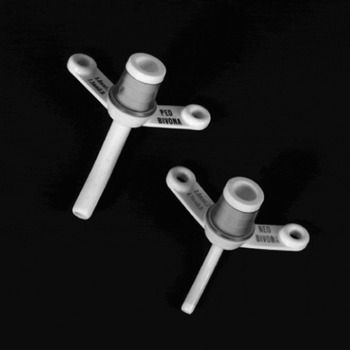
The Bivona range is based around a standard shaft, manufactured from opaque, white, siliconised polyvinyl chloride (PVC) (Figure 1). This is latex-free and hydrophobic, hindering protein adhesion and thereby limiting secretion build-up and bacterial colonisation. The silicone is reinforced with wire, producing a tube that is flexible and conforms to the shape of the trachea but resists kinking. Unfortunately, the wire is not compatible with use during magnetic resonance imaging (MRI). The tube has contoured flanges to improve comfort and a tapered tip to reduce tracheal erosion. An integrated, 15 mm, swivelling adaptor reduces torque on the shaft and is universally compatible with other paediatric ventilation appliances. The tube is supplied with half-inch, twill tape ties, although quarter-inch tapes are in fact preferred for the majority of children. A tracheostomy disconnection wedge is also supplied. This facilitates separation of any connected appliances from the tube, sliding between the two and prising them apart without damaging the tube itself, with minimal discomfort for the child. The standard uncuffed tube is available in neonatal and paediatric lengths with a range of inner diameters (2.5 to 4.0 mm and 2.5 to 5.5 mm, respectively). Bivona tubes can be left in situ for up to 28 days. Unlike most other plastic products, they are steam-autoclavable and can be reused several times, subject to the continued integrity of the tube. This substantially reduces the costs of supply for individual patients.
Standard Bivona® tubes; paediatric and neonatal lengths.

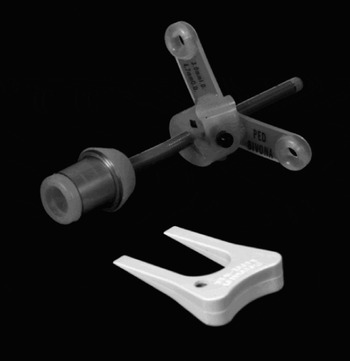
A Hyperflex™ version of the tube (Figure 2) is available in paediatric sizes (2.5 to 5.5 mm internal diameter). The long shaft has an embedded, stainless steel coil as an added safeguard against compression, and an adjustable flange. This permits alteration of the intra-tracheal tube length without the hazards of extubation – particularly useful for those children with unusual airway anatomy or pathology who might eventually require a customised tube. Importantly, Hyperflex tubes are not recommended for home use and ought to be replaced with fixed-flange alternatives as soon as possible. Additionally, the ferromagnetic coil precludes use during MRI.
Bivona® Hyperflex™ tube, also showing tracheostomy disconnection wedge.

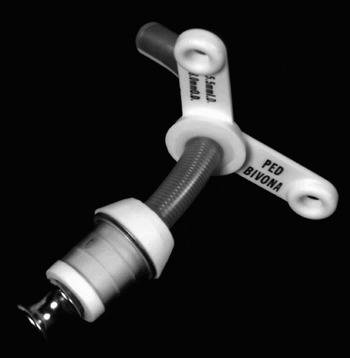
The FlexTend™ Plus tube (Figure 3) has a similar embedded coil, but has a fixed flange and a long, flexible proximal (external) end which increases the distance between the tube connections and the child's neck. This is an important consideration in babies and young children with poor head control and/or short necks, who are otherwise prone to tube obstruction by their chins, particularly when speaking valves are used. The extension also facilitates attachment and disconnection of ventilator tubing when long-term respiratory support is required. Importantly, the external and internal components of the tube are constructed as separate segments, reducing the risk of tube obstruction if the extension is pulled or twisted by the child or ventilator tubing. The FlexTend is available with standard neonatal and paediatric shaft lengths and diameters, as above.
Bivona® FlexTend™ Plus tube, with introducer in situ.

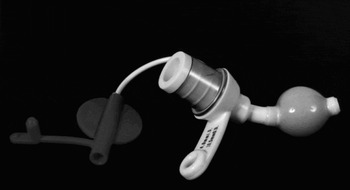
The Aire-Cuf® comprises a standard tube with an added air-filled cuff. This is useful for reducing aspiration and minimising air leakage during ventilation. The product is available in appropriate neonatal and paediatric dimensions. It is not commonly used at Great Ormond Street, for two main reasons. When inflated for long periods, the cuff may cause pressure necrosis of the tracheal mucosa. When fully deflated, the collapsed cuff droops around the shaft of the tube, limiting air leakage and affecting phonation when a speaking valve is attached.
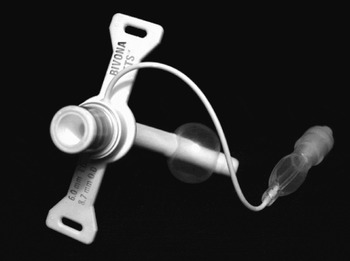
The Tight-To-Shaft (TTS™) tube is a useful alternative (Figure 4); it is our cuffed tube of choice. The cuff may be inflated (with water rather than air) during meals and at night to protect the airway when aspiration is most likely, or during periods of ventilatory support. At other times, the cuff can be deflated completely to assume the profile of an uncuffed tube. This allows air to leak around the shaft during periods of phonation, when a speaking valve may be attached safely.
Bivona® Tight-To-Shaft (TTS™) tube, with cuff inflated.

A Fome-Cuf® version is also available (Figure 5). This includes a rubber foam-filled cuff which can be inflated permanently – useful in those children with chronic aspiration, in whom long term protection of the airway is required. The foam is self-expanding, conforming to the exact dimensions of the trachea and adjusting to changes in pressure during the ventilation cycle while maintaining a low cuff-to-wall sealing pressure. The tube is used with a Cuff Maintenance Device (CMD™), a 60 ml syringe with a three-way stopcock attached to allow measurement of the cuff volume and to facilitate routine maintenance. Two such syringes should be available in the event of an emergency tube change: one to allow removal of the tube, and the second to facilitate insertion of another tube. The Talk Attachment is a finger-controlled valve which allows airflow above the cuff to aid speech. In children, it is primarily used to facilitate removal of secretions which accumulate above the cuff, thereby avoiding the risks of conventional cuff deflation to allow suction from below.
Bivona® Fome-Cuf® tube, with Cuff Maintenance Device (CMD™) attached.

Sims Portex Bivona customised tracheostomy tube service
This option is available to address specific difficulties. The individual requirements of the patient (i.e. shaft style, curvature, length, diameter and flange position) are submitted. The company aims to provide a sterile tube within two weeks, or a non-sterile tube within one week, which can be autoclaved before use.
Shiley® tracheostomy tubes
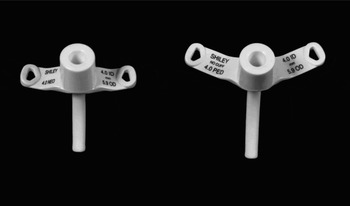
This product range is manufactured from opaque, thermosensitive PVC (latex-free), with a thin-walled shaft, tapered tip and universal 15 mm connector (Figure 6). Tubes are available in neonatal, standard paediatric and paediatric long varieties, with cuffs as an option for the paediatric series. The sizing system used for the Shiley range was updated several years ago; the internal diameter (in mm) is now quoted for reference, in line with other manufacturers' products. The tubes are not reuseable, but may remain in situ for up to 28 days. However, weekly changes are recommended, as the tubes may become coated and blocked by secretions. Although the Bivona range is now more commonly used at Great Ormond Street, a long paediatric tube (size 5.0 to 6.5) is manufactured only by Shiley, offering a unique option for a limited number of children who require a tube which is midway between typical paediatric and adult lengths.
Shiley® tubes; neonatal and paediatric lengths.

Great Ormond Street tracheostomy tube
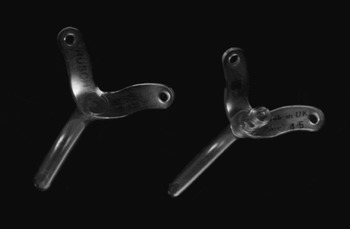
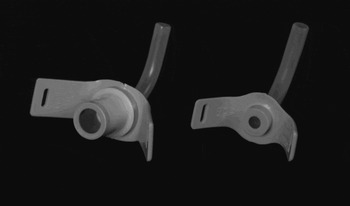
This series is still produced but is no longer commonly used at Great Ormond Street. There are two versions: flat and extended (external fenestrated extension) (Figure 7). The extended version is particularly suitable either for the child whose chin might obstruct the standard flat tube, or when a speaking valve is required. Both types of tube are made of PVC and are clear or brown in colour, with a bevelled tip to facilitate introduction into the stoma and soft, atraumatic flanges. They are available in sizes from 3.0 to 7.0 mm internal diameter, designed for single use only. Importantly, these tubes are not compatible with standard ventilator tubing or resuscitation equipment. A Portex male/female adaptor of appropriate size will be required in emergency situations, but this is not suitable for long term ventilation (Figure 8).
Great Ormond Street tubes; flat and extended versions.

Great Ormond Street tube, with Portex® adaptor attached.

Sims Portex ‘555’ series paediatric tracheostomy tubes
This range is designed specifically for children, representing an alternative to the Bivona, but is not commonly used in our practice. The ‘555’ tube is made from blue, opaque PVC which is thermosensitive. It is therefore quite stiff and easy to handle with an obturator at the time of insertion, but soon softens at body temperature, allowing it to conform to the shape of the child's trachea. This improves comfort and reduces the risk of mucosal damage. Like the Bivona, the ‘555’ has a contoured flange to secure the tube comfortably and with minimal movement. A 15 mm (universally compatible) clear plastic connector allows easy visualisation of any secretions and, like the FlexTend, makes occlusion by the chin less likely. Also supplied are a disconnection wedge and a double-swivel connector, which can reduce torque from a ventilator circuit. An additional anti-disconnect strap may be attached to the connector, giving added security during ventilation. These accessories may be supplied separately, as required. It should be noted that the ‘555’ tube is recommended for single use only and cannot be autoclaved.
Portex Blue Line® paediatric tracheostomy tubes
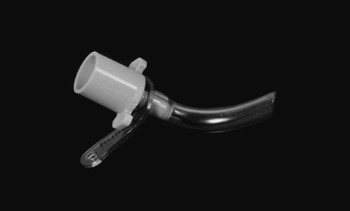
This range (Figure 9) is manufactured from clear, thermosensitive PVC. As for the ‘555’ series, this allows easy insertion and conformation to the trachea. The ‘Blue Line’ refers to the blue, radiopaque strip running along the tube, facilitating radiological assessment of its position. The product is available in a full range of paediatric and adult sizes, with or without connectors and/or fenestrations. It is designed for single use only.
Portex® Blue Line® tubes.

Tracoe® mini tracheostomy tubes
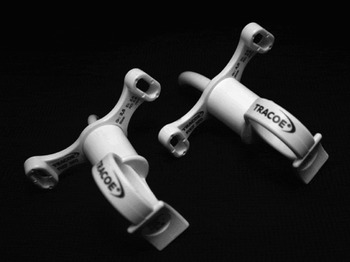
These tubes are developed specially for children (Figure 10). They are manufactured from white, radiopaque PVC and include a built-in, 15 mm universal connector. The wall of the shaft is particularly thin, but flexible and kink-resistant. An obturator is included, featuring a ‘ring-pull’ type handle. The tubes are intended for single use only; as for the Shiley, we recommend a weekly tube change.
Tracoe® mini tubes.

Neonatal length tubes (the ‘350’ series) are available in a variety of sizes, from 2.5 to 4.0 mm internal diameter. Standard paediatric length tubes (the ‘355’ series) range from 2.5 to 6.0 mm. Importantly, the Tracoe mini range includes the only 6.0 mm, paediatric-length tube commonly available, useful for a small group of patients who cannot tolerate an adult-length product.
Silver tracheostomy tubes
A number of silver tubes have been developed. Their designs and general principles remain unchanged since previous articles. While seldom used for children in our department, silver tubes have some important qualities that confer advantages over plastic varieties in certain circumstances. Most significantly, the tubes can be manufactured with very thin walls, permitting the use of an inner tube without compromising airflow. This can be removed and cleaned without taking out the whole tube. Silver tubes may remain in situ for up to one month, a particular advantage for those children requiring long-term tracheostomy.
However, silver tubes have certain disadvantages. For example, they are rigid and do not conform to the trachea, which some children find uncomfortable. Additionally, each tube is unique; the unit cost is high (although far fewer tubes are required in the long term) and the components are not interchangeable, creating compatibility problems. Sizes are measured in the French gauge and are not comparable to the metric measurements of the plastic tubes. Silver tubes are not compatible with MRI scanning, and they may distort computed tomography images of the head and neck.
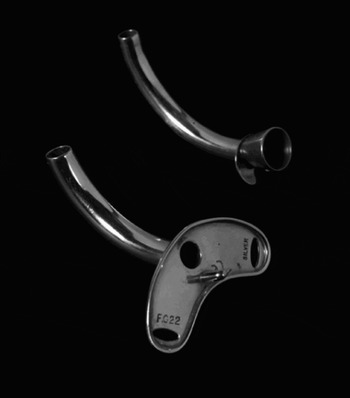
The Sheffield tube (Figure 11) is the only silver tube commonly used at Great Ormond Street; however, other tubes are described below (in historical order) for reference purposes.
Sheffield silver tube, with inner cannula.

Negus tracheostomy tube
This tube is supplied in four parts: the plain outer tube, a choice of two inner tubes (plain or with a speaking valve) and an introducer. In addition to the general disadvantages of silver tubes, the outer tube of the Negus has no safety catch, allowing the inner tube to be coughed out inadvertently. Another consideration is the limited selection of supplied inner tubes; if the plain inner cannula is removed for cleaning, its valved counterpart is the only replacement supplied with the tube. This can create problems for those children who cannot tolerate the valve; during cleaning periods, the outer tube alone may have to be used.
Chevalier Jackson tracheostomy tube
This tube is similar to the Negus but is supplied in three parts: the plain outer tube, a plain inner tube and an introducer. Additionally, it is longer than the Negus and has a safety catch to secure the inner cannula. The added length makes it particularly useful for bypassing zones of tracheal stenosis or tracheomalacia. Unfortunately, a valved version of the tube is not available, thereby limiting its applications.
Alder Hey tracheostomy tube
This tube comprises five parts: a fenestrated outer tube, valved and unvalved fenestrated inner tubes, an introducer and an obturator. The neck plate of the outer tube is adjustable, enabling the position of the fenestrations to be altered, although the plate itself is rather large, precluding its use in most infants. A major drawback of the fenestrated outer tube is the risk of trapping any soft tissues which are protruding through the fenestrations when the inner cannula is inserted. Another problem may be encountered at decannulation, when the mouth of the tube is occluded by the obturator; crusts may form near the tip of the tube, causing obstruction. For this reason, it is usually safer to use plastic tubes temporarily during the decannulation period.
Sheffield tracheostomy tube
This is the newest variety of silver tube. The range of included accessories addresses the major disadvantages of previous types; it is therefore our silver tube of choice. It is supplied in six parts: a fenestrated outer tube with slim flanges and a retaining safety clip, three inner cannulae (two plain and unvalved, one fenestrated and valved); an introducer; and a full length obturator. One plain inner tube may be kept in situ while the other is cleaned, with the further option of a valved tube for certain children. Additionally, the full-length obturator is invaluable during decannulation to prevent crust aggregation near the tip. The tube lies in situ flush to the skin, and the flanges are rather less bulky than those of other tubes, suiting most paediatric neck dimensions.
Montgomery T-tube
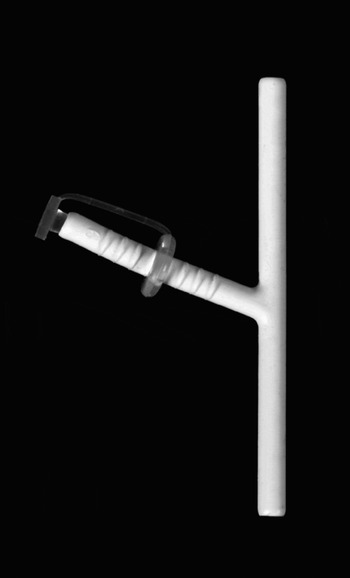
The Montgomery T-tube (Figure 12) is unlike conventional tracheostomy tubes, but it warrants special mention. It is a T-shaped silicone stent comprising a long principal lumen and a shorter lumen projecting from its side at 75º or 90º. Such stents have been used successfully to support adult airways, for tracheal stenosis and tracheomalacia, and following reconstructive surgery. The limbs of the principal lumen can be trimmed; the lower limb of the stent can extend as far as necessary down the trachea towards the carina, while the upper limb usually reaches above the glottis. The short limb is brought out through a tracheostomy and trimmed to a convenient length.
Montgomery T-Tube.

Use of the T-tube in paediatric airway management is gaining popularity, following successful outcomes in our unitReference Phillips, Kubba, Hartley and Albert3 and at other centres.Reference Stern, Willging and Cotton4 The T-tube is particularly useful as an alternative to a typical tracheostomy tube in those complex cases in which stenting around the level of the larynx is required. The T-tube is generally well tolerated and can be left in situ for months at a time. Although not associated with excessive peri-stomal granulation tissue formation, tenacious crusts may accumulate within the tube, putting the airway at risk. It is important that parents and medical staff are aware of the atypical nature of the T-tube, which may have to be removed and replaced by a conventional tube in the unusual event of complete obstruction.
Speaking valves
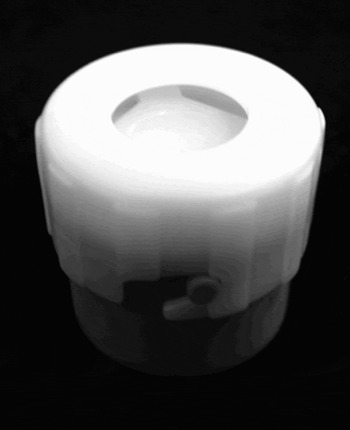
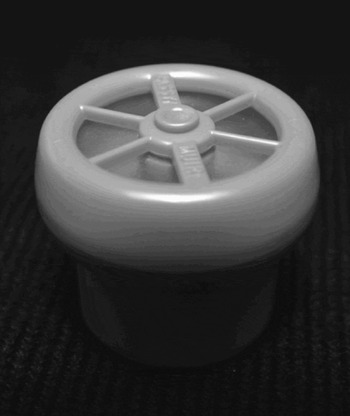
A number of speaking valves are used at Great Ormond Street, particularly the Rüsch® and Passy–Muir varieties. All have similar components (i.e. a body and flap) but vary in design. The Rüsch and most other valves are bias-open, closing only on expiration and open at all other times. However, the Passy–Muir valve is bias-closed and opens only for inspiration. As well as improving voice, valves offer a useful means of assessing a child's physiological and psychological ability to adapt to oral breathing when decannulation is considered.
Rüsch speaking valve
The Rüsch valve (Figure 13) is preferred for initial assessment, being easily available and relatively inexpensive. In addition, it is bias-open and allows some air leakage during exhalation, which is of particular value in those patients with limited peak expiratory flow and/or supra-stomal obstruction. If the child tolerates the valve, a two-week home trial typically follows, at which point the parents are contacted by the speech and language therapy department. If no problems have been encountered, the Rusch valve can usually be replaced by a Passy–Muir valve (purchased by the local community nursing team). However, some children struggle with the Passy–Muir valve during expiration but may still tolerate the Rüsch or other bias-open valve types.
Rüsch® valve.

Passy–Muir speaking valve
The original design of the Passy–Muir valve (Figure 14) is attributed to Victor Passy, an otolaryngologist, and David Muir, a man with muscular dystrophy and quadriplegia who required a tracheostomy and long-term ventilation. It is available in various forms, comprising a plastic body and a clear, one-way valve flap, and is universally compatible with 15 mm tubes and connectors. It requires daily cleaning with soapy water and is guaranteed for two months.
Passy–Muir valve.

The Passy–Muir valve is bias-closed, with no leak around the valve, creating a closed system which maintains a column of air in the trachea, thereby mimicking normal laryngopharyngeal physiology and allowing the development of positive supraglottic pressure. This optimises voice production, aids coughing and improves swallowing. Full closure of the system during expiration has the added advantage of limiting the accumulation of airway secretions within the tube and valve.
The Passy–Muir valve is the valve of choice for long-term use, but its bias-closed, no-leak design creates a number of potential limitations. Although a fenestrated tube need not be used, significant space will be needed around any plain tube to allow airflow during expiration when the valve is in use. The tube may even have to be downsized to achieve this. Similarly, the valve cannot be used in conjunction with an inflated cuffed tube, a particular consideration in children at risk of aspiration.
Shiley speaking valve
The Shiley valve is no longer in routine use at Great Ormond Street, although it is occasionally used by children transferred from other centres. It comprises a white, 15 mm diameter, plastic body (universally compatible) with a flip cap to allow access to the tube for cleaning. The flap is clear and delicate, with low resistance during respiration. The valve is therefore quiet, lightweight and well tolerated. It should be cleaned daily and is usually replaced after six weeks.
Heat and moisture exchangers
Maintenance of the humidity and warmth of inspired air is an essential part of tracheostomy management, as the normal functions of the upper respiratory tract have been bypassed. The nose and nasopharynx normally ensure that inspired air reaches a temperature of 37°C and 100 per cent relative humidity; bypassing these sites with a tracheostomy transfers such functions to the lower airways, which are poorly suited to the task. Inspiration of cool and dry air may create many problems for the tracheostomised child. Impairment and destruction of cilia reduces the proximal transportation of mucus. Secretions become increasingly thick and tenacious, making their expulsion difficult. This may lead to blockage of the tube. Additionally, cold, inspired air increases heat loss from the respiratory tract, a particular danger for the small infant. Such problems may be overcome in the hospital environment by nebulisers and humidifiers for ventilation circuits. Heat and moisture exchangers are more suitable for definitive use, attached to the tracheostomy tube for long periods. They consist of multiple layers of water repellent paper or foam membranes, which trap heat and moisture during exhalation. Cold, inhaled air is then warmed and moisturised, thus maintaining the optimum respiratory tract environment.
• Previous papers have compared the type and style of paediatric tracheostomy tubes preferred by different institutions. In this study from Great Ormond Street, the authors present their current preferences
• They conclude that plastic tubes, and particularly the Sims Portex Bivona tube, are to be preferred in the majority of situations, although the Montgomery T-tube is also of use in children with complex airway problems
• They also make recommendations for their preferred choice of speaking valve
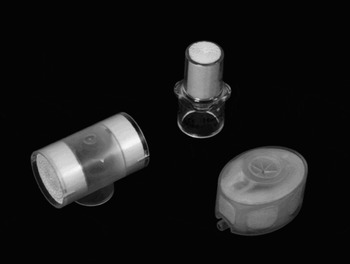
Several varieties of heat and moisture exchangers may be used (Figure 15), but a number of important aspects should be considered. Firstly, the selected heat and moisture exchanger must be appropriate to the particular child's tidal volume (6–8 ml/kg), in order to limit resistance to airflow and prevent carbon dioxide retention. The heat and moisture exchanger must also be lightweight, to avoid traction to the tracheostomy tube, which might cause skin irritation or even accidental decannulation. For similar reasons, ventilation attachments should be used with care. Additionally, the internal volume of the heat and moisture exchanger will add to the respiratory dead space (already 2–2.5 ml/kg), increasing the work of breathing. This may be further exacerbated by accumulation of secretions within the device; manufacturers therefore recommend changing the heat and moisture exchanger daily or whenever contaminated.
Heat and moisture exchangers.

Conclusions
Plastic tracheostomy tubes are now almost universally used in preference to metal varieties, although the latter are occasionally useful for those children requiring long-term tracheostomy. The Sims Portex Bivona series has replaced Shiley tubes as the products of choice at Great Ormond Street, on account of comfort and versatility. Other tubes are less commonly used, but have important advantages over the Bivona in certain situations. Additionally, the Montgomery T-tube is proving invaluable for children with complex airway management problems.
Of the speaking valves available, the Rüsch valve is ideal for initial trials but is usually replaced with a Passy–Muir valve for definitive use.
Choosing between varieties of tracheostomy tubes and speaking valves is often difficult, although the decision will be guided by individual requirements. The child's progress and safety will depend on careful follow up and interaction between the child, the parents and the multi-disciplinary team, including speech and language therapists and a tracheostomy nurse specialist.
Appendix 1. Manufacturers' contact details
Bivona® and other Portex® tubes are available from: Smiths Medical International Limited, Hythe, Kent CT21 6JL, UK. Tel: +44 (0)1303 260551; Fax: +44 (0)1303 266761; E-mail: info@smiths-medical.com
Shiley® tubes and speaking valves are available from: Tyco Healthcare Limited, 154 Fareham Road, Gosport, Hampshire PO13 0AS, UK. Tel: +44 (0)1329 224114; E-mail: uksales@emea.tycohealthcare.com
Tracoe® tubes, Montgomery T-tubes and Passy–Muir valves are available from: Kapitex Healthcare Limited, Kapitex House, 1 Sandbeck Way, Wetherby, West Yorkshire LS22 7GH, UK. Tel: +44 (0)1937 580211; Fax: +44 (0)1937 580796; URL: www.kapitex.com
Great Ormond Street tubes and Rüsch® valves are available from: Teleflex Medical, Stirling Road, Cressex Business Park, High Wycombe, Buckinghamshire HP12 3ST, UK. Tel: +44 (0)1494 532761; Fax: +44 (0)1494 524650; E-mail: info.uk@teleflexmedical.com
Negus, Chevalier Jackson and Alder Hey silver tubes are available from: Downs Surgical, Thorncliffe Park, Brookdale Road, Sheffield S35 2PW, UK. Tel: +44 (0)144 2259000; Fax: +44 (0)144 2259065; E-mail: info@downs-surgical.com
Sheffield silver tubes are available from: RB Medical Engineering Limited, Unit 2, Alton Road Industrial Estate, Ross-on-Wye, Herefordshire HR9 5ND, UK. Tel: +44 (0)1989 563958; Fax: +44 (0)1989 768267; E-mail: Sales@RBmedical.co.uk
Storz bronchoscopes are available from: Karl Storz Endoscopy (UK) Limited, 392 Edinburgh Avenue, Slough, Berkshire SL1 4UF, UK. Tel: +44 (0)1753 503500; Fax: +44 (0)1753 578124; E-mail: customerservice@karlstorz-uk.com
Appendix 2. Updated Great Ormond Street Hospital sizing chart for paediatric airways