Implications
Supplementing newly weaned cattle with feed-grade antibiotics (chlortetracycline and ionophores) during the initial 60 days in the feedlot tended to improve average daily gain and feed efficiency compared with non-supplemented cattle. Replacing these feed-grade antibiotics with plant extracts (eugenol, cinnamaldehyde and capsicum) and sodium saccharin-based sweetener prevented the decrease in feed efficiency when feed-grade antibiotics were not added to the diet. Cattle supplemented with these alternative ingredients also had improved humoral response to vaccination against the bovine respiratory syncytial virus. Hence, plant extracts and sodium saccharin-based sweetener may replace feed-grade antibiotics without substantially impairing feed efficiency of newly weaned feedlot cattle.
Introduction
Feedlot receiving is one of the most critical phases within the beef production cycle, comprising the initial 8 weeks in the feedlot when cattle are exposed to several stress and health challenges that impact their welfare and productivity (Duff and Galyean, Reference Duff and Galyean2007). These include weaning, road transport, commingling with different animals and exposure to novel diets and environments (Cooke, Reference Cooke2017). Feed intake is often inadequate during the receiving period because of these stressors, which further impairs cattle growth and immunocompetence (Lippolis et al., Reference Lippolis, Cooke, Schumaher, Brandão, Silva, Schubach, Marques and Bohnert2017). Accordingly, the incidence of bovine respiratory disease (BRD) is elevated during feedlot receiving, despite vaccination against BRD pathogens and efforts to minimize stress (Snowder et al., Reference Snowder, Van Vleck, Cundiff and Bennett2006).
Prophylactic medication with feed-grade antimicrobials, including ionophores and chlortetracycline, is often effective in mitigating the incidence of BRD and other health syndromes during feedlot receiving (Duff and Galyean, Reference Duff and Galyean2007; Wilson et al., Reference Wilson, Richards, Step and Krehbiel2017). With increased regulations regarding the use of feed-grade antimicrobials in livestock systems (US Food and Drug Administration, 2015), alternative dietary strategies that enhance immunity of receiving cattle are warranted. These include the use of sodium saccharin-based sweetener in feedlot receiving diets to increase cattle dry matter intake (DMI) (Ponce et al., Reference Ponce, Brown, Silva, Schlegel, Rounds and Hallford2014). Another strategy is supplementing plant extracts containing organic compounds known to enhance rumen function and immunity in cattle, such as cinnamaldehyde, eugenol and capsicum oleoresin (Yang et al., Reference Yang, Ametaj, Benchaar, He and Beauchemin2010a and Reference Yang, Ametaj, Benchaar and Beauchemin2010b; Ayrle et al., Reference Ayrle, Mevissen, Kaske, Nathues, Gruetzner, Melzig and Walkenhorst2016). Based on this information, we hypothesized that plant extracts and sodium saccharin-based sweetener are alternatives to feed-grade antimicrobials in enhancing cattle immunocompetence and productivity during feedlot receiving. Hence, this experiment compared performance, health and physiological responses of newly weaned cattle supplemented with feed-grade antibiotics, the aforementioned alternative ingredients, or without such supplements during a 60-day feedlot receiving period.
Material and methods
This experiment was conducted at the Oregon State University – Eastern Oregon Agricultural Research Center (Burns, OR, USA) from April to June 2017. During the experiment, the environmental temperature ranged from 35°C to −5°C, with an average of 12°C and 54% humidity, and 16 mm of total precipitation as rain. For all management procedures that required cattle to be restrained, a Silencer Chute (Moly Manufacturing, Lorraine, KS, USA) mounted on Avery Weigh-Tronix load cells (Fairmount, MN, USA; readability 0.45 kg) was utilized.
Animals and treatments
One hundred and five Angus×Hereford calves (63 steers and 42 heifers) were purchased from a commercial auction yard (Producers Livestock Marketing Association, Vale, OR, USA) and utilized in this experiment (days −2 to 61). Calves originated from two cow–calf operations (eastern Oregon and western Idaho, USA) and weaned on day −3, loaded into a double-deck commercial livestock trailer (Legend 50’ cattle liner; Barrett LLC., Purcell, OK, USA) at the auction yard (day −2; 1800 h), and transported for 800 km. During transport, the driver stopped once after 6 h of driving to rest for 60 min, whereas total transport time was 12 h. Calves remained in the truck throughout the 12-h transportation period. Minimum, maximum and average environmental temperatures during transport were −3°C, 8°C and 3°C, respectively, whereas average humidity was 70% and no precipitation was observed. Transportation length and distance were selected to simulate the stress of a long-haul that beef cattle originated from western or southeastern US cow–calf operations experience when transferred to feedlots in the midwestern US (Cooke et al., Reference Cooke, Guarnieri Filho, Cappellozza and Bohnert2013).
On day −1, calves were unloaded (0600 h) at the Eastern Oregon Agricultural Research Center, immediately weighed (initial shrunk BW=197±3 kg), and maintained in a single paddock (160×100 m) with ad libitum access to alfalfa-grass hay, water and a commercial mineral mix (described in Table 1) for 24 h. On day 0, calves were ranked according to sex, source and shrunk BW, and allocated to 1 of 21 drylot pens (7×15 m; three steers and two heifers per pen) in a manner that pens had equivalent initial shrunk BW and calves from both sources to stimulate the stress of comingling (Step et al., Reference Step, Krehbiel, DePra, Cranston, Fulton, Kirkpatrick, Gill, Payton, Montelongo and Confer2008). Pens were assigned to receive one of three treatments: (1) lasalocid (360 mg/calf daily of Bovatec; Zoetis, Florham Park, NJ, USA)+chlortetracycline (350 mg/calf of Aureomycin at cycles of 5-day inclusion and 2-day removal from diet; Zoetis) from days 0 to 32, and monensin only (360 mg/calf daily of Rumensin; Elanco Animal Health, Greenfield, IN, USA) from days 33 to 60 (PC; n=7), (2) sodium saccharin-based sweetener (Sucram at 0.04 g/kg of diet dry matter (DM); Pancosma SA; Geneva, Switzerland)+plant extracts containing eugenol, cinnamaldehyde and capsicum (800 mg/calf daily of XTRACT Ruminants 7065; Pancosma SA) from days 0 to 32 and XTRACT only (800 mg/calf daily) from days 33 to 60 (EG; n=7) or (3) no supplemental ingredients (CON; n=7). The inclusion and administration rate of the PC and EG ingredients were according to manufacturer’s recommendations for growing cattle. Ionophores and chlortetracycline were chosen based on traditional US feedlot practices (Samuelson et al., Reference Samuelson, Hubbert, Galyean and Löest2016). Chlortetracycline was supplemented from days 0 to 32 when elevated BRD incidence was expected (Snowder et al., Reference Snowder, Van Vleck, Cundiff and Bennett2006; Lippolis et al., Reference Lippolis, Cooke, Schumaher, Brandão, Silva, Schubach, Marques and Bohnert2017), whereas lasalocid was used during this period because it is approved for use in combination with chlortetracycline (US Food and Drug Administration, 2017). In turn, monensin was supplemented from days 33 to 60 when chlortetracycline supplementation ended, given that monensin is the primary ionophore used by US commercial feedlots (Samuelson et al., Reference Samuelson, Hubbert, Galyean and Löest2016). Sucram was supplemented from days 0 to 32 to stimulate DMI upon feedlot arrival (McMeniman et al., Reference McMeniman, Rivera, Schlegel, Rounds and Galyean2006), whereas XTRACT was supplemented throughout the receiving period as an immunostimulant and dietary alternative to ionophores (Yang et al., Reference Yang, Ametaj, Benchaar, He and Beauchemin2010a and Reference Yang, Ametaj, Benchaar and Beauchemin2010b).
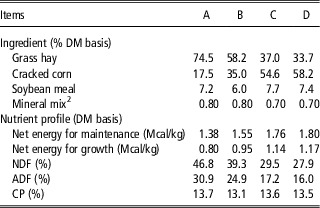
Ingredient composition and nutrient profile of total mixed ration offered during the experiment (days 0 to 60)Footnote 1

DM=dry matter.
1 A=days 0 to 7; B=days 8 to 18; C=days 19 to 32; and D=days 33 to 60. Calves had free-choice access to the total mixed ration and water throughout the experimental period.
2 Cattleman’s Choice (Performix Nutrition Systems, Nampa, ID, USA) containing 14% Ca, 10% P, 16% NaCl, 1.5% Mg, 3 200 mg/kg of Cu, 65 mg/kg of I, 900 mg/kg of Mn, 140 mg/kg of Se, 6000 mg/kg of Zn, 136 000 IU/kg of vitamin A, 13 000 IU/kg of vitamin D3 and 50 IU/kg of vitamin E.
From days 0 to 60, calves had free-choice access to water and total mixed ration (TMR; Table 1), which was offered twice daily (0800 and 1300 h). Sucram was mixed daily in 4 l of water, whereas 2 l were mixed with the morning and 2 l with the afternoon TMR allocation of each EG pen (days 0 to 32). The PC and CON pens received the same amount of water without the addition of Sucram (days 0 to 32). Lasalocid, chlortetracycline, monensin and XTRACT were mixed with soybean meal and top-dressed daily into the morning TMR feeding of respective PC or EG pens during the supplementation period (0.25 kg of mixture/calf daily). Moreover, chlortetracycline was supplemented to PC calves on days 0 to 4, days 7 to 11, days 14 to 18, days 21 to 25 and days 28 to 32. Soybean meal was also top-dressed into the morning TMR feeding of CON pens (0.25 kg/calf daily) from days 0 to 61, without the addition of the experimental ingredients. Based on daily visual observations, all pens consumed the top-dress within 5 min after feeding.
On day 0, calves were vaccinated against Clostridium and Mannheimia haemolytica (One Shot Ultra 7; Zoetis), bovine respiratory syncytial virus (BRSV), bovine herpesvirus-1 (BHV-1), bovine viral diarrhea virus (BVD) 1 and 2 and parainfluenza-3 virus (PI3; Bovi-Shield Gold 5; Zoetis), and were administered an anthelmintic (Dectomax; Zoetis). On day 22, calves were re-vaccinated against Clostridium (Ultrabac 8; Zoetis), BRSV, BHV-1, BVD-1 and 2 and PI3 (Bovi-Shield Gold 5), following the manufacturer’s recommendation for revaccination against these pathogens (Zoetis).
Sampling
Samples of TMR ingredients were collected weekly, pooled across all weeks and analyzed for nutrient content by a commercial laboratory (Dairy One Forage Laboratory, Ithaca, NY, USA). All samples were analyzed by wet chemistry procedures for concentrations of CP, ADF and NDF as described by Lippolis et al. (Reference Lippolis, Cooke, Schumaher, Brandão, Silva, Schubach, Marques and Bohnert2017). Calculations for net energy for maintenance and gain were calculated with the equations proposed by the National Research Council (2000). Nutrient profile of TMR is described in Table 1.
Full BW was recorded on days 0, 5, 11, 22, 33, 43 and 60 of the experiment at 0700 h, before the first TMR feeding of the day. Shrunk BW was recorded on day 61, after 16 h of water and feed withdrawal. Shrunk BW values from days −1 and 61 were used to calculate calf ADG during the experiment. Intake of TMR (DM basis) was evaluated daily from days 0 to 60 from each pen by collecting and weighing offered and non-consumed TMR. All samples were dried for 96 h at 50°C in forced-air ovens for DM calculation. Total TMR intake of each pen was divided by the number of calves within each pen and expressed as kg per calf/day. Total BW gain and TMR intake of each pen were used for feed efficiency calculation. Calves were observed daily for BRD signs according to the DART system (Zoetis) and received antimicrobial treatment as in Lippolis et al. (Reference Lippolis, Cooke, Schumaher, Brandão, Silva, Schubach, Marques and Bohnert2017).
Blood samples were collected from all calves, concurrently with full BW evaluation into commercial blood collection tubes (Vacutainer, 10 ml; Becton Dickinson, Franklin Lakes, NJ, USA) containing no additive or containing freeze-dried sodium heparin for serum and plasma collection, respectively. During each sampling day, ~16 ml of blood was collected from each calf, being 8 ml in each collection tube. After collection, all blood samples were placed immediately on ice, centrifuged (2500×g for 30 min; 4°C) for plasma or serum harvest, and stored at −80°C on the same day of collection.
Laboratorial analyses
Plasma samples collected from days 0 to 33 were analyzed for cortisol (Immulite 1000; Siemens Medical Solutions Diagnostics, Los Angeles, CA, USA) and haptoglobin concentrations (Cooke and Arthington, Reference Cooke and Arthington2013), given that adrenocortical and acute-phase protein responses return to baseline levels in receiving cattle within 4 weeks after feedlot entry (Cooke, Reference Cooke2017). Plasma samples collected on days 0, 33 and 60 were analyzed for IGF-I concentrations (Immulite 1000) to metabolically assess calf nutritional status throughout the experimental period (Lippolis et al., Reference Lippolis, Cooke, Schumaher, Brandão, Silva, Schubach, Marques and Bohnert2017). The intra- and inter-assay CV for haptoglobin were, respectively, 2.4% and 10.8%. Plasma IGF-I and cortisol were analyzed within single assays, and the intra-assay CV were, respectively, 7.4% and 1.9%.
Serum samples collected from 2 calves/pen not observed with BRD signs during the experiment were selected for analysis of antibody titers against BRD pathogens, to ensure that this response was associated with vaccine efficacy rather than pathogenic infection (Callan, Reference Callan2001). More specifically, samples collected on days 0, 5, 11, 22, 33 and 43 were analyzed for antibody titers against BRSV, BHV-1, BVD-1 and PI3 using virus neutralization tests, and for antibodies against M. haemolytica via a quantitative agglutination test (Texas A&M Veterinary Medical Diagnostic Laboratory, Amarillo, TX, USA). It is not certain if selected calves were indeed healthy or just asymptomatic to BRD, although none of them exhibited BRD signs and clinical symptoms throughout the experimental period as mentioned previously.
Statistical analysis
Pen was considered the experimental unit for all analyses. Quantitative data were analyzed using the MIXED procedure of SAS (SAS Institute Inc., Cary, NC, USA), whereas binary data were analyzed using the GLIMMIX procedure of SAS (SAS Institute Inc.) with a binomial distribution and logit link function. All data were analyzed using Satterthwaite approximation to determine the denominator df for tests of fixed effects, with pen(treatment) and calf(pen) as random variables, but for DMI and feed efficiency that used pen(treatment) as a random variable. Model statements for initial and final BW, ADG, feed efficiency and morbidity-related results contained the effects of treatment and calf sex as an independent covariate. Model statements for DMI, cumulative BRD incidence, full BW change and blood variables contained the effects of treatment, day, the resultant interaction and calf sex as an independent covariate. Blood variables were analyzed using results from day 0 as an independent covariate, whereas calf source was also included as an independent covariate for antibody titers against BRD pathogens. The specified term for all repeated statements was day, with pen(treatment) as a subject for DMI and calf(pen) as a subject for all other analyses. The covariance structure used was first-order autoregressive, which provided the smallest Akaike information criterion and hence the best fit for all variables analyzed. All results are reported as covariately adjusted least square means. Significance was set at P⩽0.05 and tendencies were determined if P>0.05 and ⩽0.10. Repeated measures are reported according to main treatment effect if the treatment×day interaction was P>0.10.
Results
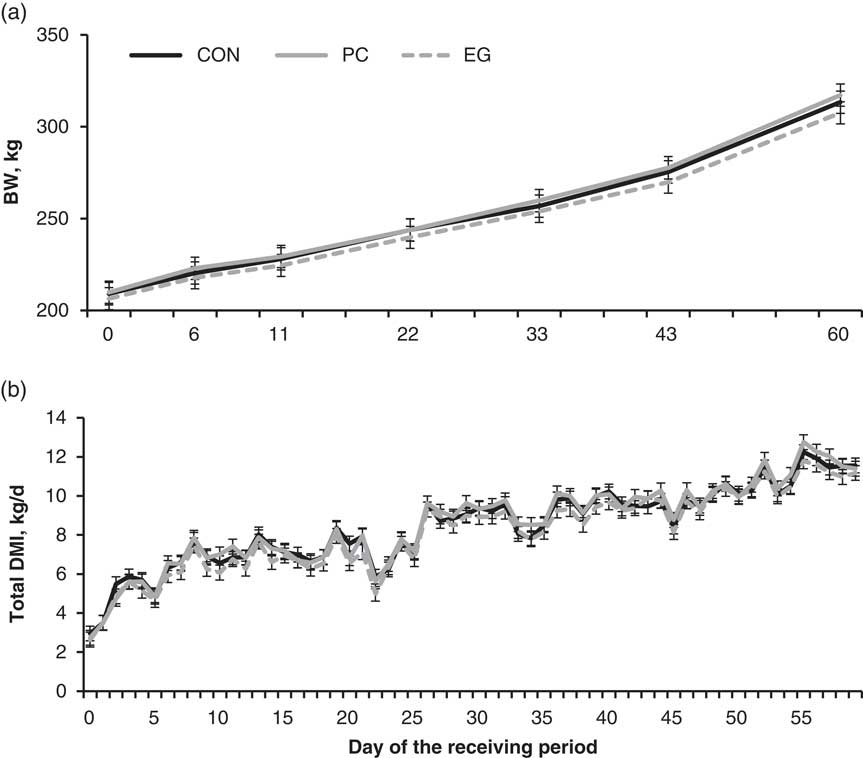
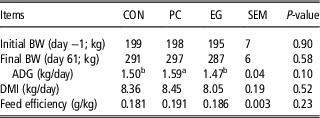
A tendency for a treatment effect was detected (P=0.10) for ADG, which was greater (P=0.04) in PC v. EG calves, and tended (P=0.09) to be greater in PC v. CON calves (Table 2). However, no main treatment effects were detected (P⩾0.55) for final shrunk BW (day 61; Table 2) or full BW during the 60-day receiving period (Figure 1). No treatment effects were detected for DMI (P=0.52; Table 2 and Figure 2) and feed efficiency (P=0.23; Table 2). Despite the lack of main treatment effect for feed efficiency, it should be noted that this response tended to be greater (P=0.09) in PC v. CON calves, and did not differ (P⩾0.38) in EG v. PC and CON calves.
BW (a) and dry matter intake (DMI) (total mixed ration; b) during a 60-day feedlot receiving from beef cattle assigned to lasalocid+chlortetracycline from days 0 to 32, and monensin from days 33 to 60 (PC); sodium saccharin-based sweetener+plant extracts from days 0 to 32, and plant extracts only from days 33 to 60 (EG); and no supplemental ingredients (CON). Values reported are least square means±SEM. No treatment effect was detected (P⩾0.52).

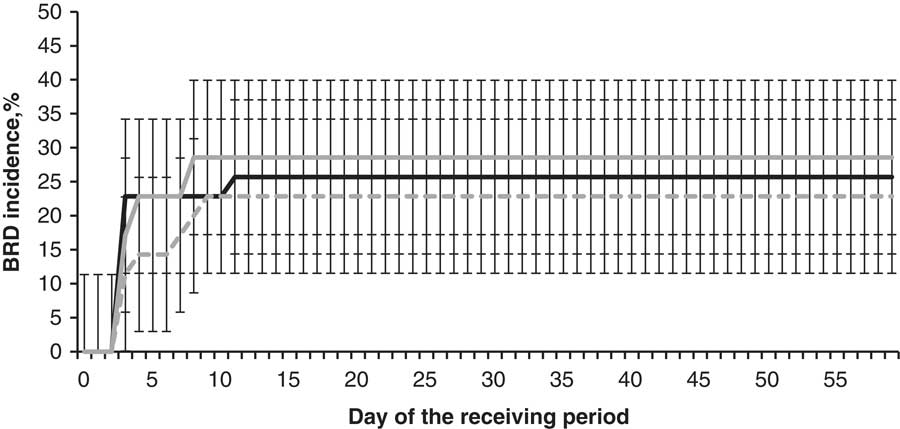
Cumulative incidence of bovine respiratory disease (BRD) signs during a 60-day feedlot receiving in beef cattle assigned to lasalocid+chlortetracycline from days 0 to 32, and monensin from days 33 to 60; sodium saccharin-based sweetener+plant extracts from days 0 to 32, and plant extracts only from days 33 to 60; and no supplemental ingredients. Values reported are least square means±SEM. No treatment effect or treatment×day interaction were detected (P⩾0.94).

Performance parameters from beef calves supplemented or not (no supplemental ingredients (CON); n=7) with feed-grade antibiotics (lasalocid+chlortetracycline from days 0 to 32, and monensin from days 33 to 60 (PC); n=7) or alternative feed ingredients (sodium saccharin-based sweetener+plant extracts from days 0 to 32, and plant extracts only from days 33 to 60 (EG); n=7) during a 60-day feedlot receiving

a,bWithin rows, values with different superscripts differ (P⩽0.05).
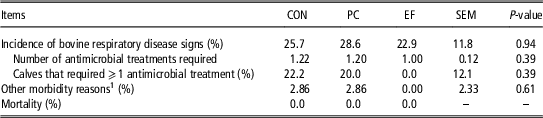
No treatment differences were detected (P=0.94) for BRD incidence (Table 3), which were only observed during the initial 15 days of feedlot receiving (Figure 2; day effect, P<0.01). No treatment differences were detected (P⩾0.39; Table 3) for other morbidity reasons (physical injury), number of antimicrobial treatments required upon BRD diagnosis, and percentage of cattle that required⩾1 antimicrobial treatment upon BRD diagnosis. No incidence of mortality was observed during the experiment.
Morbidity and mortality parameters in beef calves supplemented or not (no supplemental ingredients (CON); n=7) with feed-grade antibiotics (lasalocid+chlortetracycline from days 0 to 32, and monensin from days 33 to 60 (PC); n=7) or alternative feed ingredients (sodium saccharin-based sweetener+plant extracts from days 0 to 32, and plant extracts only from days 33 to 60 (EG); n=7) during a 60-day feedlot receiving

1 All non-BRD-related morbidity was due to physical injury.
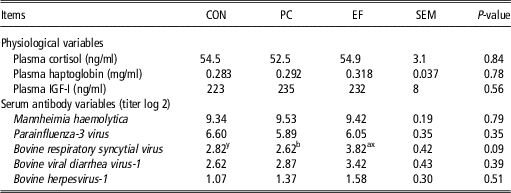
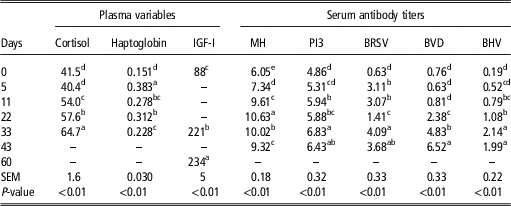
No treatment effects were detected (P⩾0.56) for plasma concentrations of cortisol, haptoglobin and IGF-I (Table 4), whereas day effects were detected (P⩽0.01) for these variables (Table 5). No treatment effects were detected (P⩾0.35) for serum titers against M. haemolytica, PI3, BVD-1 and BHV-1 (Table 4). A tendency for a treatment effect was detected (P=0.09) for serum titers against BRSV, which was greater (P=0.04) in EG v. PC and tended to be greater (P=0.08) in EG v. CON calves, and were similar (P=0.80) between CON and PC calves. Moreover, day effects were also detected (P⩽0.01) for all serum titers against BRD pathogens (Table 5).
Physiological and humoral responses from beef calves supplemented or not (no supplemental ingredients (CON); n=7) with feed-grade antibiotics (lasalocid+chlortetracycline from days 0 to 32, and monensin from days 33 to 60 (PC); n=7) or alternative feed ingredients (sodium saccharin-based sweetener+plant extracts from days 0 to 32, and plant extracts only from days 33 to 60 (EG); n=7) during a 60-day feedlot receiving

a,b;x,yWithin rows, values with different superscripts differ at P=0.04 or P=0.08, respectively.
Concentrations of plasma cortisol (ng/ml), haptoglobin (mg/ml), IGF-I (ng/ml) and serum titers against Mannheimia haemolytica (MH), parainfluenza-3 virus (PI3), bovine respiratory syncytial virus (BRSV), bovine viral diarrhea virus-1 (BVD-1) and bovine herpesvirus-1 (BHV) in beef cattle during an 60-day feedlot receiving

a,b,c,dWithin columns, values with different superscripts differ (P⩽0.05).
Discussion
Calves utilized in this experiment were considered high-risk, given that their prior management and health history were not fully known (Wilson et al., Reference Wilson, Richards, Step and Krehbiel2017). Moreover, cattle experienced the stress of weaning, auction, transportation, commingling, vaccination and feedlot entry within a 72-h period, whereas the combination of these stressors impacts cattle immunocompetence and performance (Cooke, Reference Cooke2017). Hence, the experimental model adopted herein represented the stress and health challenges that commercial feeder cattle typically experience during feedlot receiving in the USA (Duff and Galyean, Reference Duff and Galyean2007).
The inclusion of chlortetracycline and ionophores in the receiving diet tended to improve cattle ADG as previously reported by others (Perry et al., Reference Perry, Riley, Mohler and Pope1986; Duffield et al., Reference Duffield, Merril and Bagg2012), although such difference was not sufficient to impact final BW on day 61 (Table 2; Figure 1). This outcome should be primarily attributed to the tendency for improved feed efficiency in PC v. CON cattle (Perry et al., Reference Perry, Riley, Mohler and Pope1986; Birkelo, Reference Birkelo2003), given that DMI, BRD incidence, as well as physiological responses were similar among all treatment groups (Tables 2–4). Accordingly, ionophores and chlortetracycline have been shown to increase feed efficiency in cattle by, respectively, improving rumen fermentation efficiency (Russell and Strobel, Reference Russell and Strobel1989; Callaway et al., Reference Callaway, Edrington, Rychlik, Genovese, Poole, Jung, Bischoff, Anderson and Nisbet2003), and increasing nutrient supply due to reduced intestinal mass and energy loss as methane (Visek, Reference Visek1978; Zinn, Reference Zinn1993; Baldwin et al., Reference Baldwin, McLeod, Elsasser, Kahl, Rumsey and Streeter2000). It also should be noted that DMI in the present experiment was not depressed by ionophore inclusion (Table 2; Figure 1), either lasalocid or monensin according to the experimental schedule, despite previous research reporting such outcome in feedlot cattle (Zinn, Reference Zinn1987; Duff et al., Reference Duff, Galyean, Malcolm-Callis and Garcia1995; Duff and Galyean, Reference Duff and Galyean2007).
Cattle DMI and ADG were not improved by the inclusion of sodium saccharin-based sweetener and plant extracts (Table 2; Figure 1). Contrary to our findings, Ponce et al. (Reference Ponce, Brown, Silva, Schlegel, Rounds and Hallford2014) reported that supplementing the same sweetener utilized herein increased DMI by 17% during feedlot receiving, although this effect was observed when sweetener was included at 200 g/ton of diet DM. McMeniman et al. (Reference McMeniman, Rivera, Schlegel, Rounds and Galyean2006) also included sodium saccharin-based sweetener into a feedlot receiving diet at 200 g/ton of diet DM and reported a trend in increased DMI from days 29 to 56 after feedlot arrival. Yet, both authors also reported that ADG and feed efficiency were not impacted by inclusion of sodium saccharin-based sweetener. Perhaps DMI was not improved in EG cattle herein because the sweetener was included at a different dose than Ponce et al. (Reference Ponce, Brown, Silva, Schlegel, Rounds and Hallford2014) and McMeniman et al. (Reference McMeniman, Rivera, Schlegel, Rounds and Galyean2006), and was only fed from days 0 to 32 when receiving DMI is inconsistent and often inadequate (Duff and Galyean, Reference Duff and Galyean2007). Others have also reported that supplementing plant extracts also failed to improve ADG in ruminants consuming concentrate-based diets (Yang et al., Reference Yang, Ametaj, Benchaar, He and Beauchemin2010a; Geraci et al., Reference Geraci, Garciarena, Gagliostro, Beauchemin and Colombatto2012). It should be noted that the EG treatment prevented the decrease in feed efficiency when chlortetracycline and ionophores were not included into the diet, based on similar feed efficiency between EG v. PC and tendency for greater feed efficiency in PC v. CON calves (Table 2). Plant-derived organic compounds such as eugenol, cinnamaldehyde and capsicum appear to enhance rumen fermentation in cattle consuming high-concentrate diets (Cardozo et al., 2005 and 2006) and may be used as alternatives to ionophores such as monensin (Fandiño et al., 2008). Accordingly, Geraci et al. (Reference Geraci, Garciarena, Gagliostro, Beauchemin and Colombatto2012) reported similar feed efficiency in feedlot cattle supplemented with monensin or a mixture of eugenol, cinnamaldehyde and capsicum during an 84-day feeding period. In contrast, no research has compared the effects of plant extracts and/or sodium saccharin-based sweetener with chlortetracycline in feedlot receiving diets to debate further the performance results reported herein.
Morbidity and BRD-related responses were similar among treatments (Table 3; Figure 2), which does not support our experimental hypothesis and the use of chlortetracycline supplementation to reduce morbidity during feedlot receiving (Duff et al., Reference Duff, Walker, Malcolm-Callis, Wiseman and Hallford2000; Edwards, Reference Edwards2010; Samuelson et al., Reference Samuelson, Hubbert, Galyean and Löest2016). Others have also reported that dietary inclusion of sodium saccharin-based sweetener failed to mitigate BRD incidence in receiving cattle (McMeniman et al., Reference McMeniman, Rivera, Schlegel, Rounds and Galyean2006; Ponce et al., Reference Ponce, Brown, Silva, Schlegel, Rounds and Hallford2014), whereas research investigating the effects of plant extracts on BRD is lacking. It should be noted, however, that BRD incidence observed herein were not as elevated compared with previous research from our group (Lippolis et al., Reference Lippolis, Cooke, Schumaher, Brandão, Silva, Schubach, Marques and Bohnert2017), as well as research conducted at commercial receiving yards reporting up to 43% of BRD incidence (Snowder et al., Reference Snowder, Van Vleck, Cundiff and Bennett2006). In fact, Lippolis et al. (Reference Lippolis, Cooke, Schumaher, Brandão, Silva, Schubach, Marques and Bohnert2017) commingled cattle obtained from seven cow–calf operations, which is typical of US commercial feedyards, and reported BRD incidence at 66% during an 80-day receiving period. In this experiment, cattle were obtained from two different sources due to market availability, which likely reduced commingling-elicited stress (Step et al., Reference Step, Krehbiel, DePra, Cranston, Fulton, Kirkpatrick, Gill, Payton, Montelongo and Confer2008) and resulted less BRD incidence compared with previous research (Snowder et al., Reference Snowder, Van Vleck, Cundiff and Bennett2006; Lippolis et al., Reference Lippolis, Cooke, Schumaher, Brandão, Silva, Schubach, Marques and Bohnert2017). Hence, the reduced prevalence of BRD in the present experiment may have hindered proper assessment of feedlot receiving morbidity, and contributed to the lack of treatment effects on BRD-related responses.
Supplementing sodium saccharin-based sweetener and plant extracts improved acquired humoral immunity against BRSV during the 60-day receiving period (Table 4). Serum antibody titers against all other BRD pathogens were not impacted by treatments but increased during the experiment (Table 5), denoting that cattle effectively acquired humoral immunity against these pathogens upon vaccination (Richeson et al., Reference Richeson, Beck, Gadberry, Gunter, Hess, Hubbell and Jones2008). It should be noted that calves were not re-vaccinated against M. haemolytica based on recommendations by the manufacturer (Zoetis), explaining why concentrations of serum titers against this pathogen did not increase beyond day 22. The exact mechanisms by which the EG treatment improved efficacy to BRSV vaccination (Callan, Reference Callan2001) warrants investigation, and could be attributed to potential immunomodulatory effects of plant extracts (Ayrle et al., Reference Ayrle, Mevissen, Kaske, Nathues, Gruetzner, Melzig and Walkenhorst2016). Yet, such outcome was also not sufficient to alter BRD incidence in the present experiment, which corroborates with the lack of treatment differences on acquired humoral immunity against M. haemolytica, PI3, BHV-1, BVD-1 and PI3.
Similar concentrations of plasma cortisol, haptoglobin and IGF-I among PC, CON and EG cattle (Table 4) indicate that none of the experimental treatments modulated the physiological and acute-phase responses typically associated with feedlot receiving (Cooke, Reference Cooke2017). In turn, the specific impact of ingredients evaluated herein on these plasma variables is either variable or mostly undetermined. As examples, monensin has either increased or failed to change circulating IGF-I concentrations in growing beef cattle (Vendramini et al., Reference Vendramini, Sanchez, Cooke, Aguiar, Moriel, da Silva, Cunha, Ferreira and Pereira2015 and Reference Vendramini, Oliveira, Sanchez, Yarborough, Perez, Ralston and Cooke2016). Supplementing cinnamaldehyde to feedlot steers did not impact serum haptoglobin concentrations, but reduced concentrations of the acute-phase protein serum amyloid A (Yang et al., Reference Yang, Ametaj, Benchaar, He and Beauchemin2010a). Nonetheless, day effects reported for plasma variables (Table 5) corroborate that cattle were exposed to the stress and nutritional changes associated with feedlot entry. Plasma haptoglobin concentrations transiently increased across all treatments upon feedlot arrival, corroborating that calves experienced an acute-phase protein response elicited by weaning, transport, vaccination and feedlot entry (Cooke, Reference Cooke2017). Plasma IGF-I concentrations increased across all treatments during feedlot receiving, mainly due to increased nutrient intake (Table 1) and growth (Table 2) during the experimental period (Lippolis et al., Reference Lippolis, Cooke, Schumaher, Brandão, Silva, Schubach, Marques and Bohnert2017). Plasma cortisol concentration also increased across all treatments as the experiment progressed; the exact reason for this outcome is unknown but may be associated with increasing concentrate inclusion in the TMR (Enemark, Reference Enemark2008). Hence, the tendencies for improved ADG and feed efficiency in PC calves were not associated with altered cortisol, IGF-I and acute-phase responses elicited by transport and feedlot entry, although these responses influence nutrient utilization and growth in beef cattle (Cooke, Reference Cooke2017). Collectively, plasma variables evaluated herein failed to elucidate biological mechanisms by which chlortetracycline and ionophore supplementation benefited performance of receiving cattle; perhaps these occurred without substantial impacts on systemic inflammatory and metabolic responses.
Conclusions
Beef cattle supplemented with feed-grade antibiotics (lasalocid, chlortetracycline and monensin) during feedlot receiving tended to have improved ADG and feed efficiency compared with non-supplemented cohorts. Replacing feed-grade antibiotics with plant extracts and sodium saccharin-based sweetener prevented the decrease in feed efficiency when feed-grade antibiotics were not included in the receiving diet. Moreover, cattle supplemented with these alternative feed ingredients had greater serum antibody response to BRSV, suggesting an improved humoral response to immunization against this pathogen compared with all other treatments. Yet, supplementing feed-grade antibiotics or plant extracts and sodium saccharin-based sweetener did not reduce BRD incidence, which was not as prevalent as typically observed in commercial feedlot systems. Nonetheless, results from this experiment suggest that plant extracts and sodium saccharin-based sweetener may replace feed-grade antibiotics in feedlot receiving diets without substantially impairing feed efficiency.
Acknowledgments
Financial support for this research was provided by Pancosma SA (Geneva, Switzerland). Dr Reinaldo Cooke is also affiliated as a permanent professor to the Programa de Pós-Graduação em Zootecnia/São Paulo State University (UNESP), School of Veterinary Medicine and Animal Science, Botucatu 18168-000, Brazil.
Declaration of interest
No conflict of interest to report.
Ethics statement
All animals were cared for in accordance with acceptable practices and experimental protocols reviewed and approved by the Oregon State University, Institutional Animal Care and Use Committee (no. 4937).
Software and data repository resources
No software, data or models were deposited in official repositories.