Introduction
The occurrence of trichinellosis in aboriginal populations from the Arctic has been reported since the middle of the 20th century. Recognized outbreaks of trichinellosis in the northern regions usually follow the consumption of polar bear, brown bear and walrus meat (Raush et al., Reference Rausch, Babero, Rausch and Schiller1956). Trichinellosis outbreaks have been described in Alaska, the Northern Territories of Canada, Greenland and in the Arctic territories of the Russian Federation (Margolis et al., Reference Margolis, Middaugh and Burges1979; MacLean et al., Reference MacLean, Viallet, Law and Staudt1989; Serhir et al., Reference Serhir, MacLean, Healey, Segal and Forbes2001; Møller et al., Reference Møller, Petersen, Kapel, Melbye and Koch2005, Reference Møller, Koch, Petersen, Hjuler, Kapel, Andersen and Melbye2010; Ozeretskovskaia et al., Reference Ozeretskovskaia, Mikhailova, Sabgaida and Dovgalev2005; Odoevskaya et al., Reference Odoevskaya, Uspensky, Voronin, Movsesyan, Bukina, Panayotova-Pencheva, Malczewski, Cabaj and Shuikina2013a; Bukina, Reference Bukina2014; Dupouy-Camet et al., Reference Dupouy-Camet, Bouree and Yera2017).
The diets of native Arctic peoples in territories of the Russian Federation, Arctic Canada, Alaska and Greenland are based on the social and economic structure of native settlements. Such diets include meat from hunted terrestrial and marine mammals, with a tendency to utilize traditional methods of meat preparation, including salting, fermentation, drying and freezing (Margolis et al., Reference Margolis, Middaugh and Burges1979; Serhir et al., Reference Serhir, MacLean, Healey, Segal and Forbes2001; Møller et al., Reference Møller, Petersen, Kapel, Melbye and Koch2005, Reference Møller, Koch, Petersen, Hjuler, Kapel, Andersen and Melbye2010; Larrat et al., Reference Larrat, Simard, Lair, Bélanger and Proulx2012; Odoevskaya et al., Reference Odoevskaya, Uspensky, Voronin, Movsesyan, Bukina, Panayotova-Pencheva, Malczewski, Cabaj and Shuikina2013a). As a part of the traditional lifestyle, Asian Eskimo and coastal Chukchi people consume meat of marine mammals such as the walrus Odobenus rosmarus divergens, all local seal species (bearded seal Erignathus barbatus; ringed seal Phoca hispida; spotted seal Phoca largha) and whales (grey whale Eschrichtius gibbosus; bowhead whale Balaena mysticetus). Some of these have frequently (walruses) and infrequently (bearded seal and ringed seal) been found to be infected with Trichinella nativa (Forbes, Reference Forbes2000). Other authors have reported a high prevalence of T. nativa in both marine and terrestrial animals in Canada, with infection rates of 1–22% for walruses, 24.2–60.9% for polar bears (Ursus maritimus), up to 33% for both red foxes (Vulpes vulpes) and wolves (Canis lupus), and up to 89% for Arctic foxes (Alopex lagopus) (Asbakk et al., Reference Аsbakk, Aars and Derocher2010).
The recent review of trichinellid interactions with polar bears by Dupouy-Camet et al. (Reference Dupouy-Camet, Bouree and Yera2017) noted a high prevalence of trichinellosis in this bear species and the capacity of these bears to ‘transport parasites very long distances’, citing an example of T. nativa-infected bears appearing on the Iceland coast (where no Trichinella infection had been detected in the native wildlife). However, their role in propagating human infection is assessed as low, due to a combination of limited numbers of these bears, lower parasite burden relative to other bear species (8 larvae/g for polar bears, 11 larvae/g for grizzly bears and 117 larvae/g for black bears) and the fact that native peoples of the region prefer to consume well-cooked polar bear meat, in comparison with the flesh of the walrus, etc.
Anti-Trichinella IgG was found in native human populations on the eastern shore of Baffin Island, who regularly eat walrus meat (36% of respondents sero-epidemiologically tested with enzyme-linked immunosorbent assay (ELISA)) (Margolis et al., Reference Margolis, Middaugh and Burges1979; Asbakk et al., Reference Аsbakk, Aars and Derocher2010). Large-scale sero-epidemiological studies in human populations of Alaska, Canada and Greenland have revealed a Trichinella infection rate of 19.6% in individuals who did not show any clinical signs of trichinellosis, suggesting continuous exposure to T. nativa (Margolis et al., Reference Margolis, Middaugh and Burges1979; Leclair et al., Reference Leclair, Forbes, Suppa, Proulx and Gajadhar2004; Asbakk et al., Reference Аsbakk, Aars and Derocher2010).
Eleven outbreaks of trichinellosis were documented among people from Inuit settlements on the eastern shore of Hudson Bay, Canada, between 1982 and 1999. In nine of these 11 outbreaks, the sources of infection were demonstrated to be meat products made from marine mammals prepared in a traditional way without thermal processing (Serhir et al., Reference Serhir, MacLean, Healey, Segal and Forbes2001). According to Larrat et al. (Reference Larrat, Simard, Lair, Bélanger and Proulx2012), there were 15 total outbreaks of trichinellosis in seven communities in Nunavik between 1982 and 2009, and in nine of these outbreaks walrus meat was the source. The biggest outbreak occurred in 1987, when 88 inhabitants of the settlement at Salluit, Quebec, became ill. According to the results of a subsequent study, of 68 seropositive people, 42 (62%) had clinical signs of trichinellosis.
According to Serhir et al. (Reference Serhir, MacLean, Healey, Segal and Forbes2001), studies of an outbreak of trichinellosis on Baffin Island during August–September, 1999, showed 62 people to be seropositive and 34 people with the clinical disease. However, only 88% (30 of 34) of the clinical cases were also seropositive. These authors emphasized that, among the 30 cases who were both seropositive and clinical, 26 had high antibody levels (OD >1.20).
There is also much interest in the taxonomic position of trichinellids from the Arctic regions. An analysis of the literature and our own data (Odoevskaya, Reference Odoevskaya, Bukina, Chiljuta and Spiridonov2013c) has shown the presence of two Trichinella genotypes on the Arctic shores of Alaska, Canada, Greenland and Russia: one being the known species T. nativa and the other as yet undescribed Trichinella sp. T6. Although an analysis of satellite DNA had shown some degree of exchange of genetic material between these forms, it is more likely that there are two different Trichinella species in the Arctic, i.e. T. nativa and Trichinella sp. T6, which form a specific Arctic complex. More recent polymerase chain reaction (PCR) studies (Goździk et al., Reference Goździk, Odoevskaya, Movsesyan and Cabaj2017) also confirm the presence of T. nativa, T. spiralis, T. britovi and T. pseudospiralis in wildlife of the Chukotka region, including the northern sea lion Eumetopias jubatus in which they had previously not been detected.
These data show, once again, the importance of differentiating between the numbers of humans seropositive for Trichinella antigens and the numbers of clinical cases, as well as the need for further sero-epidemiological studies on the trichinellosis situation.
The aims of this study were: (1) to investigate the epidemiology of human Trichinella infection on the Arctic coast of the Bering Sea; and (2) to evaluate the survival of T. nativa larvae in kopalkhen, a fermented product of walrus meat, during preparation and prolonged storage after freezing.
Materials and methods
Serosurvey
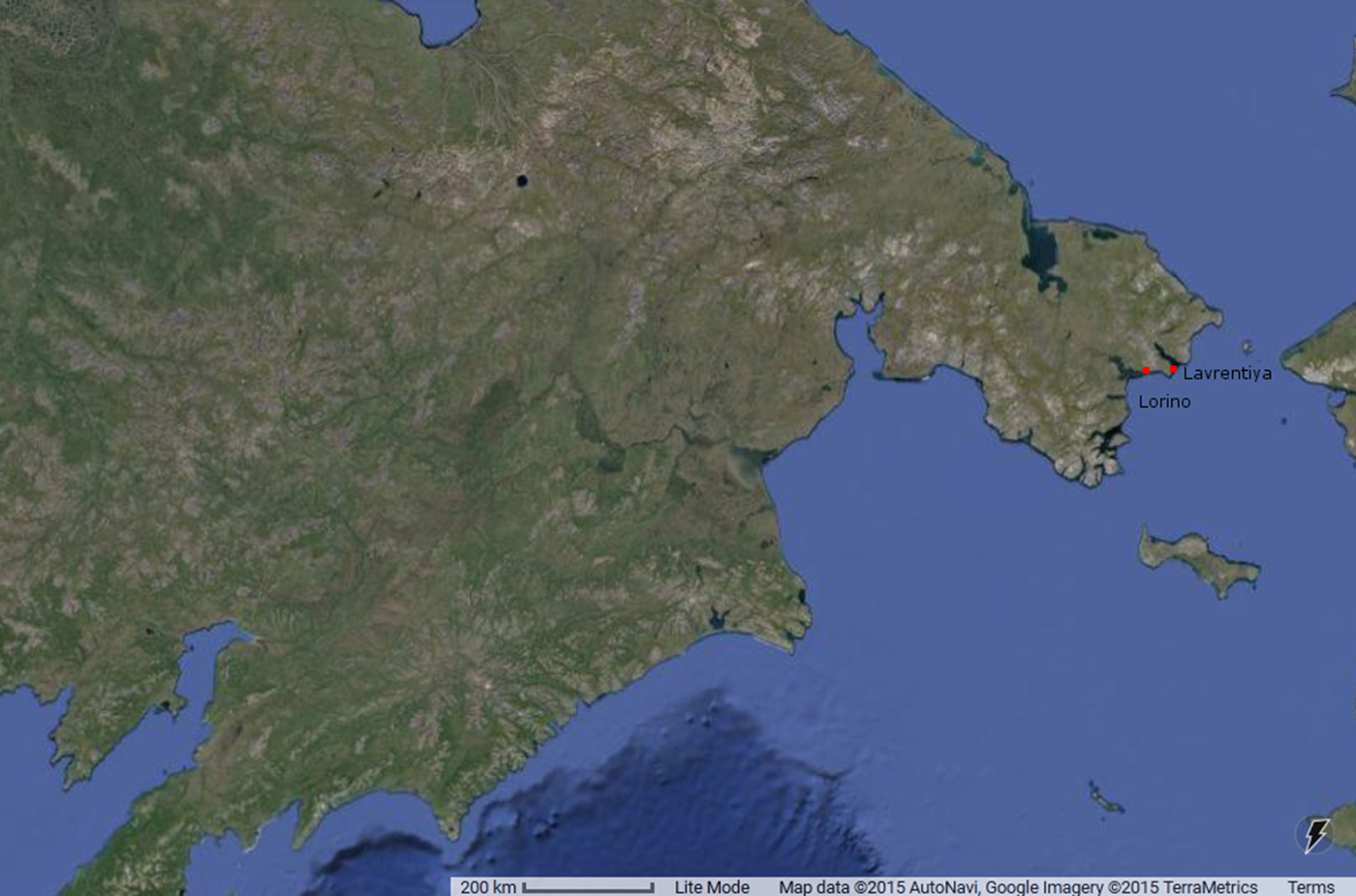
Serum samples were collected on a voluntary basis from 259 aboriginal people of both genders living in two settlements (Lorino (65°30′9″N, 171°42′2″W) and Lavrentia (65°35′6″N, 171°0′40″W)) in the Chukotka Autonomous Okrug (fig. 1) during the summer and autumn of 2010 and 2011. The first settlement is more traditional, with marine mammal hunting being the main occupation of its citizens, whereas the second is more like a modern town. The age of the volunteers ranged from 10 to 67 years. Each respondent filled in a questionnaire consisting of queries on their social and demographic status.
Investigated settlements on the coast of the Chukotka Autonomous Okrug, Far Eastern District of the Russian Federation.

Blood samples were collected by the medical staff of the district hospital for Lorino and Lavrentiya. Sera were prepared, frozen, placed in thermal containers and sent to Moscow for further investigation at the Skrjabin Institute of Fundamental and Applied Parasitology of Animals and Plants. The sera were tested using ELISA. Two antigens were used for all samples, i.e. a Trichinella antigen Teatris-strip (ZAO Vektor-Best, Novosibirsk) and an excretory–secretory antigen from an Arctic Trichinella. The latter was produced by culturing infective larvae obtained during our previous studies (Odoevskaya, Reference Odoyevskaya2007) from naturally infected seals, feral cats and cage-bred polar foxes. It was identified as T. nativa using multiplex PCR (Odoevskaya et al., Reference Odoevskaya, Movsesyan and Panayotova-Pencheva2013b) in Dulbecco's modified Eagle's medium (DMEM) supplemented with glutamine and antibiotics (standard in other respects). As described previously (Odoevskaya et al., Reference Odoevskaya, Movsesyan and Panayotova-Pencheva2013b), the results were found to be much more precise using the T. nativa antigen, so we present only those results in this report. ELISA was performed according to the European Union Reference Laboratory for Parasite Standards (European Union Reference Laboratory for Parasites, 2006) with the slight modifications described by Odoevskaya et al. (Reference Odoevskaya, Kurnosova and Uspensky2008). Negative controls used 46 blood sera of clinically healthy donors from the Moscow region. The optical density (OD) of tests in ELISA was detected using a Multiscan MCC/340 spectrophotometer (LabSystems, Helsinki, Finland) at 450 nm.
Evaluation of the survival of T. nativa larvae in a traditional food product
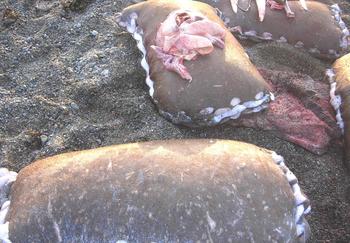
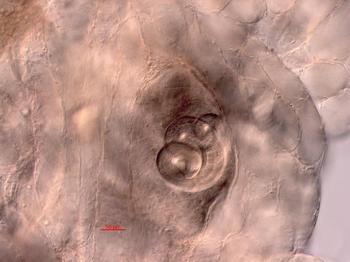
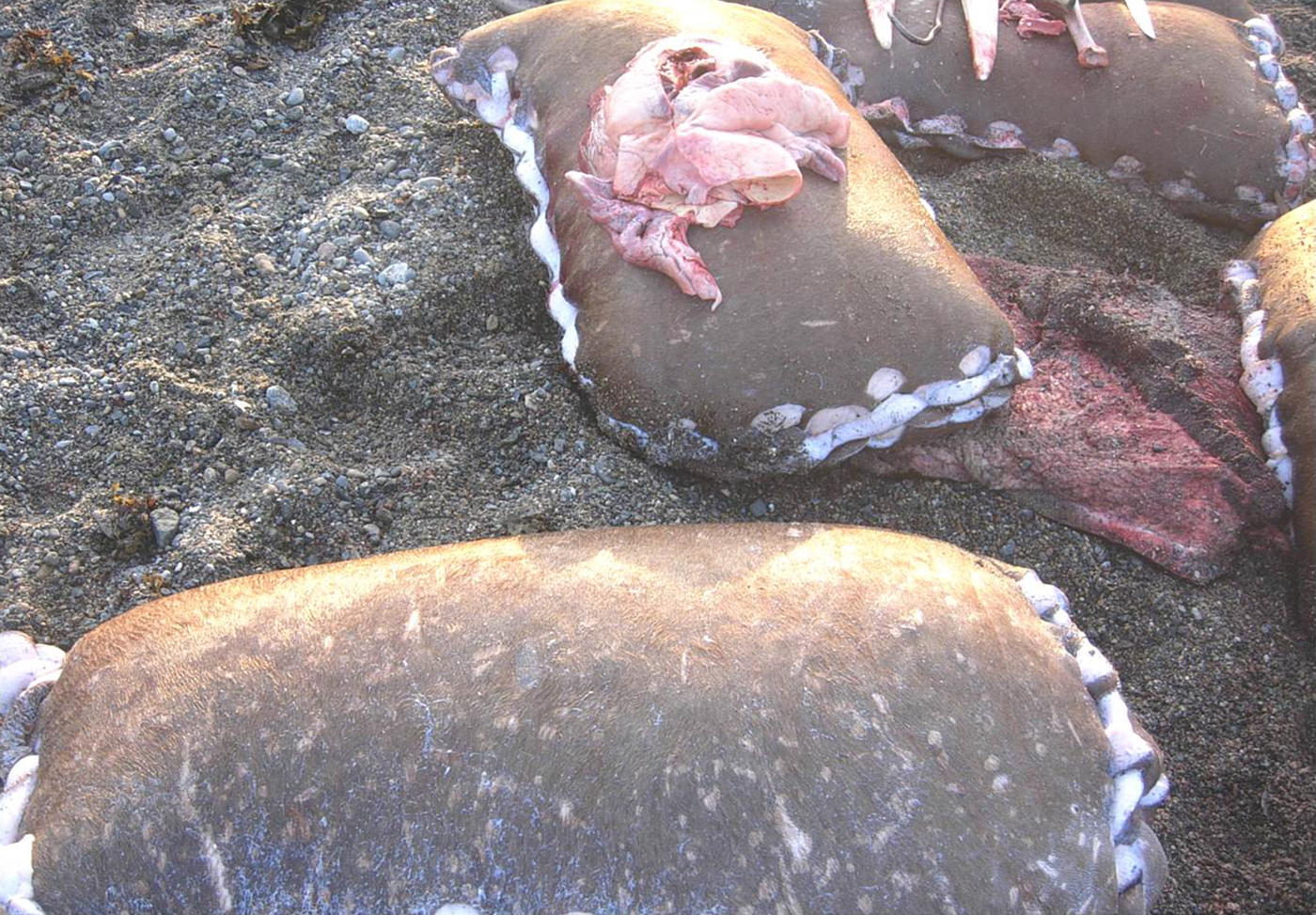
Kopalkhen, a fermented meat, was prepared from meat of polar foxes, which had been fed on marine mammal meat for several years and were naturally infected with T. nativa (due to unavailability of infected walrus meat at that time, with all other elements of Chukchi traditional technology being followed). The infectivity of Trichinella larvae was confirmed by bioassays on white outbred mice and Syrian hamsters. The meat had been tightly wrapped in seal skin using traditional native methods (fig. 2). Kopalkhen was kept for 3 weeks at a temperature of 0–2°C and a relative humidity of 70–75%. The pH and inoculation of micro-flora were tested 1 day after slaughter (i.e. at the beginning of the experiment) and then on the 14th and 21st days (in accordance with the technique of kopalkhen preparation) to control the process of fermentation. Such a timing was chosen because 3 weeks are needed to bring the fermented meat to maturity at a temperature of −1.5 to 0°C. These k opalkhen samples were frozen at between −12 and −16°C for 12 months. In order to test the viability of the T. nativa larvae in the food product, a portion of each sample was collected monthly, processed using an artificial digestion method (Bukina & Odoevskaya, Reference Bukina and Odoevskaya2013), and the larvae were recovered (fig. 3) and fed to white outbred mice (40 in total, used to produce the next generation of larvae) and Syrian hamsters (67 in total, used as the main experiment and control) per os at 5 larvae/g body mass. The mice were necropsied 35 days after inoculation, their carcasses were digested and the recovered larvae were counted and used for subsequent experimental infections. The hamsters were necropsied 45 days post infection (pi), their skin was removed and the carcasses of each experimental subgroup were minced together to produce a single measurement. These were then digested in an artificial gastric liquid, and any Trichinella larvae recovered were rinsed in a sterile physiological solution containing antibiotics and counted. Then we calculated the arithmetical average for the measurements taken from three subgroups (method based on the national state standard GOST 21237-75 ‘Meat. Methods of bacteriological analysis’). In the case of the hamster group used to test the kopalkhen after a year of being frozen, we did not perform the entire procedure, as most of the hamsters were noted to be uninfected, but, for infected hamsters from this group, individual measurements of the parasite load were taken.
Traditional food ‘kopalkhen’ (meat roll) made from fermented walrus meat using methods of the aboriginal people of the Chukotka Autonomous Okrug, Far Eastern District of the Russian Federation.
Newborn larvae of T. nativa at day 14 post infection.

Results
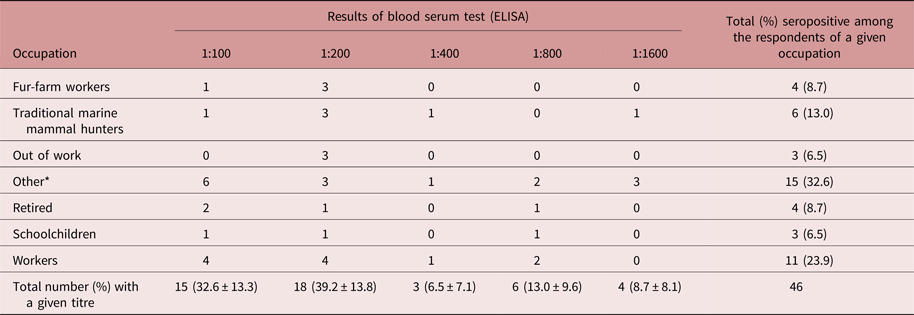
Anti-Trichinella IgG was detected in 63 (24.3%) of the respondents, indicating their previous exposure to Trichinella spp. The majority of seropositive individuals belonged to the Chukchi ethnic group (97.8% from Lorino and 94.1% from Lavrentia). Among other ethnic groups, anti-Trichinella IgG was detected in Eskimos from Lorino (2.2%) and in Yakuts from Lavrentia (5.9%). Due to low numbers of ethnic groups, other than the Chukchi, in these settlements, only single members of these groups were found to carry the Trichinella infection in this study, so differences in infection level cannot be considered as statistically significant. The role of marine mammals in the traditional cuisine is historically very high for all these different peoples but varied within each group (e.g. ‘deer’ and ‘sea’ Chukchi). The highest OD values were detected in serum samples from both men and women (no gender differences) from the age groups 31–50 and 51+. When correlating occupation with immune response for Lorino residents, we found that the greatest titre (1:1600) of T. nativa antigen was present in the Marine mammal hunters and Other groups (table 1). There was also a single case where a person from a marine mammal hunter family had an especially high titre of 1:12,800 due to having recently eaten meat from a seal which we found to have very high parasite load (the person had no clinical signs at the time). We consider higher titres important, since infection via traditional food does occur repeatedly (as the case above also demonstrates); therefore, high titres indicate multiple instances of infection.
Distribution of Trichinella antibody titres in individuals from Lorino by occupation.

*This group was formed from people of a socially disadvantaged background, who often eat low-quality food and consume large amounts of alcohol, so they may have weaker immunity.
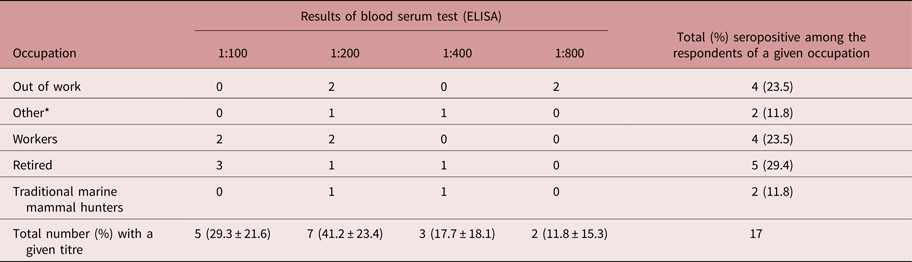
Trichinella antibody titres of 1:800 were found in four groups: Workers, Retired, Schoolchildren and Other. Specific antibodies to the Arctic Trichinella strain were also revealed in these four groups, with titres of 1:400. Trichinella antibody titres of 1:200 and 1:100 were found in the majority of people in the Workers and Other groups. There were 15 individuals tested in the Schoolchildren group, and 20% of them were found to be seropositive, including one child having a high titre. The questionnaire showed that the schoolboy with the high titre had recently consumed various types of preparations of meat from marine mammals, although he had not consumed bear meat or caged polar fox meat. Analysis of the diagnostic titres of the individuals in Lavrentiya showed that the highest titres of 1:800 and 1:400 were found in two groups: Out of work and Retired (table 2).
Distribution of Trichinella antibody titres in individuals from Lavrentiya by occupation.

* This group was formed from people of a socially disadvantaged background, who often eat low-quality food and consume large amounts of alcohol, so they may have weaker immunity.
Native people of the Chukchi ethnic group generally consume dried and raw meat from marine mammals. Kopalkhen is traditionally prepared only from walrus meat and eaten frozen during the winter. Our study on the survival of T. nativa larvae in kopalkhen shows that larvae do not die during preparation or during prolonged storage on ice (see above), and that they partially retain their infectivity for up to 24 months (table 3). Note that, while we did not perform numerical studies at 24 months after kopalkhen preparation, we did notice live larvae as a result of digestion. These results confirm those of a previous study (Bukina & Odoevskaya, Reference Bukina and Odoevskaya2013). Some previous studies (Leclair et al., Reference Leclair, Forbes, Suppa, Proulx and Gajadhar2004) indicated the degradation of larvae in a similar product after only 4–5 months. However, our results show otherwise (as do data from various periods in the recent review by Dupouy-Camet et al., Reference Dupouy-Camet, Bouree and Yera2017) and, until further studies resolve this contradiction, we need to consider such products as at least potentially dangerous for human health for a period of a year or more after the start of preparation.
Infectivity of Trichinella larvae in model kopalkhen prepared using traditional methods.

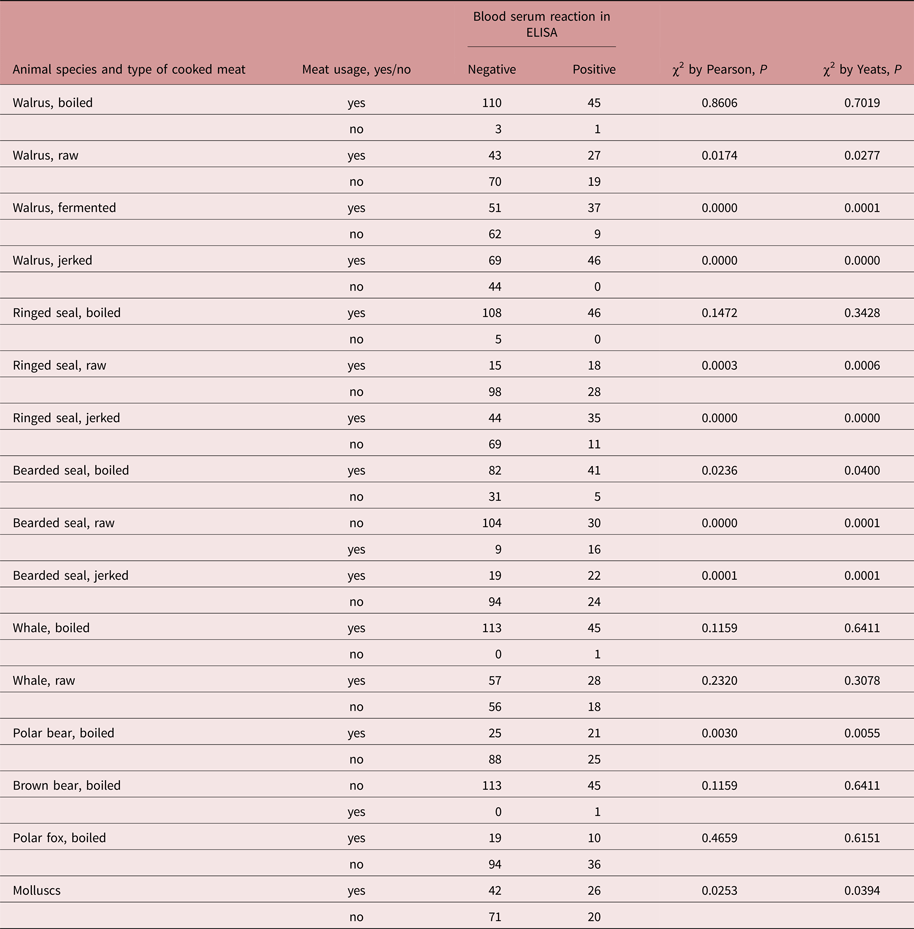
During our studies, we also performed a statistical analysis in relation to the various types of meat consumed as correlated with their seropositivity to Trichinella antigens. The results given in table 4 show the meat of the walrus and various seals to be the most important sources of infection, although other meat sources may also be implicated.
Comparison of meat types eaten and seropositive reaction in ELISA.

Discussion
Existing data in the literature on the role of various animal species in transmitting trichinellosis in the Arctic include interesting epidemiological studies (Messier et al., Reference Messier, Lévesque, Proulx, Ward, Libman, Couillard, Martin and Hubert2007, Reference Messier, Lévesque and Proulx2012) on the percentage of people seropositive for zoonotic diseases in the Nunavik region of Quebec, Canada. According to these authors, the percentage of seropositive people varied from 2 to 26% in the 1980s. They noted that among 50-year-olds and older the percentage of seropositive cases was significantly higher than among younger groups, believing that this was due to the persistence of antibody levels in the blood and longer contact with the causative agent. We share this opinion, based on our own evidence from the titres in the various age groups presented above. Differences may be due partly to variability in the sensitivity to the antigens.
Studies relating to the consumption of Trichinella-infected walrus meat in native populations have been performed by Canadian scientists on the eastern shores of Baffin Island. Using ELISA, it was established that among people from Inuit communities who regularly consumed meat from marine mammals without adequate thermal preparation, 36% of respondents had positive antibody titres to Trichinella (Serhir et al., Reference Serhir, MacLean, Healey, Segal and Forbes2001). A very high prevalence of T. nativa has also been documented in wild animals of Canada, with infection rates from 1 to 22% for walruses, 24.2 to 60.9% for polar bears (U. maritimus), up to 33% for both red foxes (V. vulpes) and wolves (C. lupus), and up to 89% for Arctic foxes (A. lagopus) (Asbakk et al., Reference Аsbakk, Aars and Derocher2010).
It should be noted that, while the polar bear is a protected species, the Chukotka–Alaska bear population is still subject to unofficial aboriginal hunting. During 2010–2011, as part of a federal programme (Russian Federation) on polar bear biology, bears were tested for the presence of anti-Trichinella IgG. During this study, antibodies to Trichinella sp. were found in ten adult bears (90.9%, n = 11) and two juveniles (22.2%, n = 9), with both juveniles being from the same litter (their mother was also seropositive) (Naidenko et al., Reference Naidenko, Ivanov, Mordvintsev, Platonov, Ershov and Rozhnov2013). In Franz Josef Land, Svalbard and the Barents Sea region, anti-Trichinella IgG was detected in 78–90.9% of adult bears (Asbakk et al., Reference Аsbakk, Aars and Derocher2010). A recent review by Dupouy-Camet et al. (Reference Dupouy-Camet, Bouree and Yera2017) gives more in-depth information on the role of polar bears in the transmission of trichinellosis.
There have been no registered outbreaks of trichinellosis resulting from the consumption of cage-bred polar fox or dog meat since statistics have been available (Guzeeva, Reference Guzeeva2011), but this does not mean that these animals are not a source of Trichinella infection. According to our questionnaire, 23% of respondents commonly eat fox meat from cage-bred foxes raised for their fur. These respondents are mainly from the Fur-farm workers group, but also from the Retired, Workers and Other (out-of-work people) groups. They mainly used the haunch of the fox, which is cooked with local herbs as flavouring. We must stress that 72.3% of 47 foxes tested by ourselves during 2011 were infected with T. nativa (unpubl.). Also, according to the questionnaires, the investigated populations do not consume dog meat; however, according to our respondents, in some other settlements, where marine mammal hunting is less developed, dog meat is a traditional food source. According to our data from the same period (unpubl.), the rates of T. nativa infection in dogs from the Far Eastern District of the Russian Federation were 68.4% in sled dogs (19 dogs tested) and 92.8% in stray dogs (28 tested).
In the Chukotka territory, the trichinellosis (clinical cases) rate per 100,000 inhabitants is among the highest in the Russian Federation (19.85 in 2008 and 24.15 in 2009) (Guzeeva, Reference Guzeeva2011). Similar rates have been reported by the Federal Service for Surveillance on Consumer Rights Protection and Human Wellbeing (2012) in the Far East Federal District. These rates were much higher than the 0.06 cases per 100,000 reported from the European part of the Russian Federation. It should, however, be noted that marine mammal hunting remains an important activity for the native people; consequently, a large part of this population is at risk of exposure to Trichinella. However, since no clinical signs and symptoms of trichinellosis were documented in the investigated population, we believe that the repeated contact of the aboriginal population with T. nativa and the immunogenicity of this Trichinella species, which could be quite high, may account for the discrepancy that exists between the high prevalence of specific IgG and the comparative rarity of clinical trichinellosis.
This study shows that marine mammal hunting presents a high risk of exposure to Trichinella for native human populations in the Arctic regions. The rate of infection with T. nativa in the Arctic populations of the Russian Federation can reach 24.3%. Recent reviews (Dubinsky et al., Reference Dubinsky, Antolova and Reiterova2016; Dupouy-Camet et al., Reference Dupouy-Camet, Bouree and Yera2017) also show that social and climatic changes, as well as an increase in tourism to remote areas, can often lead to outbreaks of Trichinella infection in visiting and local people. To assess and control these infections, the routine testing immediately after slaughter of hunted marine mammals is needed, as is currently practised in the Canadian Arctic (Larrat et al., Reference Larrat, Simard, Lair, Bélanger and Proulx2012).
Acknowledgements
We express our sincere gratitude to Professor Michael Moser (University of California – Berkeley) and Professor David Gibson (The Natural History Museum, London) for their help with the English and answering some other questions.
Financial support
This study was undertaken with financial support from the Russian Scientific Foundation, Project 14-16-00026.
Conflict of interest
None.
Ethical standards
The authors assert that all procedures contributing to this work comply with the ethical standards of the relevant national guidelines on human experimentation and with the Helsinki Declaration of 1975, as revised in 2008, and also with the ethical standards of the relevant national guides on veterinary control in the Russian Federation on the care and use of laboratory animals. The following institutional committees have approved these studies: the Scientific Council on Parasitology of Russian Academy of Science and the Scientific Council of K.I. Skrjabin’s Institute of Fundamental and Applied Parasitology of Animals and Plants.