Change, in the context of intensive care units, is inevitable. Modifications in the care of patients with congenital cardiac disease result from advancements in surgical and perioperative medical care. Simultaneously, technologies, medications and techniques of monitoring are in a near continuous state of evolution. All of this change, or innovation, is occurring in the face of evolving regulatory requirements, patterns of staffing, and models of reimbursement.
Paediatric specialists in cardiac surgery and critical care consciously introduce many of these aforementioned changes into the setting of the intensive care unit. Before exploring factors that lead to successful innovation, one might ask why introduce change. Ultimately, the answer should be to improve the care of patients. That said, any potential change can also be considered from the perspective of adding value to the care of patients where:
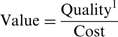
Based on this equation, innovations can add value by improving quality, reducing cost, or doing both. Conversely, considered changes that do not improve quality or reduce cost may merit careful consideration before investing time, effort, and resources.
Factors Associated with Successful Innovation
Once one has decided to attempt to innovate an aspect of their delivery of care, the next question to be asked is “what is known to be associated with successful innovations?” This question is vitally important in light of the potential cost of failure in terms of money and, more importantly, harm to patients. To avoid potentially preventable waste and harm, we considered factors of success in innovation as identified from the perspectives of leadership in business, implementation of technology, and traditional healthcare. These factors of success were then used to evaluate a previously published innovation in the intraoperative and perioperative care of children with congenital cardiac disease: the use of near infrared spectroscopy (NIRS).
Near infrared spectroscopy is non-invasive technology that provides venous-weighted approximation of the saturations of oxygen within beds of tissue, allowing for a real-time window into assessing regional perfusion and delivery of oxygen. Reference Watzman, Kurth and Montenegro2This technology, approved by the Food and Drug Administration of the United Stated of America for monitoring oxygen in the brain and tissues, utilizes modifications of Beer’s Law and the differential absorption of different wavelengths of light by haemoglobin as it associates with oxygen. Photons are injected into a bed of tissue, scattered through tissues, and return to exit the skin after following a banana-shaped path of reflectance, allowing for derivations of regional saturation of oxyhaemoglobin in the tissues. Near infrared spectroscopy has been validated with measurements of saturation in the jugular vein and was first utilized in cardiac surgery as an intraoperative cerebral monitor associated with a reduction in postoperative neurological morbidity. Reference Daubeney, Pilkington and Jalke3–Reference Austin, Edmonds and Seremet7More recently near infrared spectroscopy was introduced as a perioperative monitor in the intensive care unit with findings consistent with its intraoperative use –specifically that low postoperative cerebral saturation of oxyhaemoglobin is associated with neurological morbidity. Reference Hoffman8–Reference Dent, Speth and Jones10
Successful Innovation: A Business Leadership Perspective
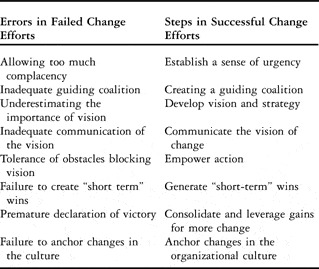
John Kotter is well known in circles of business and leadership for his eight-step process for creating innovation and major change.Reference Kotter11 Based on analysis of numerous successful and failed initiatives, Kotter identified eight mistakes that are commonly present in unsuccessful efforts to create change. For each of these mistakes, there is a corresponding action that leaders can undertake to assure success (Table 1).
Factors influencing the success of innovations.

When considering the relevance of the work of Kotter to creating innovation in the setting of an intensive care unit, it is important to appreciate that it was written from the perspective of a leader. Thus, the eight errors and corresponding steps that he has identified serve as a roadmap or checklist for leaders in the intensive care unit as they prepare to introduce innovation. That is, has the leader established sufficient reason for making a change? If so, what is the envisioned state in the future and is this state well understood by all that have a direct or indirect role in creating the change? Have the leaders anticipated obstacles and empowered staff to overcome these obstacles to create early successes, which can build momentum? And, perhaps most importantly, has the issue of sustainability been addressed by rooting the change in the culture of the organization.
Implementing near infrared spectroscopy as a routine cerebral monitor in intensive care units highlights several of the challenges in innovation identified by Kotter. Acute neurological abnormalities are reported in 2 to 20 percent of infants and children who undergo cardiac surgery. Impairments in cognitive function, attention, motor skills, executive functioning, and behaviour have been reported in up to 60% of children who have undergone complex cardiac surgery during infancy. Reference Newburger, Jonas and Wernovsky12–Reference Ballweg, Wernovsky and Gaynor19Neurological injury in the perioperative period is multi-factorial; however, mechanisms of hypoxia and ischemia remain on the forefront of preventable injuries, hence, creating a sense of urgencyfor those caring for children with congenital cardiac disease. Although the vision of improving neurological outcomes is shared, the strategy of using near infrared spectroscopy to reduce neurological injury is not universally accepted. “Short term” winsare reported through observational and randomized control trials with near infrared spectroscopy in adult patients undergoing cardiac surgery Reference Murkin, Adams and Novick6and through observational studies in paediatric cardiac surgical patients. Reference Austin, Edmonds and Seremet7–Reference Dent, Speth and Jones10The absence of randomized control trials using near infrared spectroscopy as a perioperative cerebral monitor has led to some criticism that there is perhaps “premature declaration”of its effectiveness in reducing neurological injury, and hence, cautions against widespread implementation without further investigation. Reference Hirsch, Charpie, Ohye and Gurney20
Successful Innovation: An Engineering Perspective of Technology Implementation
Innovation has been studied in settings beyond that of the community and field of business. In 2004, Karsh published a review of literature describing factors associated with successful implementation of technology.Reference Karsh21 The context of this review was the introduction of new technologies to improve safety for patients, and it draws largely from the literature about “human factors engineering”. The applicability of this review to the intensive care unit may seem limited to changes in technology. However, there is no basis for concluding that the factors identified in this work are not relevant to changes not related to technology.
Karsh began by asking what factors influence the success of an implementation. These factors included
• uncertainty about change,
• changes to one’s work,
• resistance to change,
• readiness for change,
• feelings of lack of control and self-efficacy,
• subjective norms,
• integration into work, and
• justice.
In addition, technological design, ease of use, and usefulness, are specific predictors of the acceptance of a technology, which will determine the ultimate success of implementation.
While these factors cover a broad range of individual, job-related and organizational issues, there are several steps that can be planned and acted on to optimize the success of an implementation. One major step is the establishment of commitment of top management. This step alone can positively influence all 12 of the aforementioned factors. Other influential steps included:
• Establishing responsibility and accountability for both leaders and those involved in the change
• Creating a structured program that specifically included training, pilot testing and simulation
• Participationby end users at all stages of the implementation along with communication and feedback throughout the process.
Implementation of near infrared spectroscopy serves as a good illustration of how the work of Karsh can be used to guide a successful technological innovation. Introduction of near infrared spectroscopy technology into an intensive care unit has financial implications including cost of equipment and personnel to ensure sufficient training and implementation. Commitment of top managementis necessary and yet near infrared spectroscopy may be viewed as a financial burden as it relates to value. Therefore, leaders must convince top management that the reported improved outcomes for the patients, or quality of care, offset the cost of the device and probes of this particular innovation. The challenge in implementing the technology of near infrared spectroscopy across intensive care units has been limited by a steep learning curve in interpretation of data and goal-directed clinical intervention. In several institutions, successful implementation of near infrared spectroscopy resulted from identifying local “champions” that can promote its importance and provide end-users, such as nurses, physicians, respiratory therapists and many others, with a point of contact for ongoing education. Effective training will enhance understanding, reduce uncertainty, and promote a sense of control of modifiable patient-specific factors detected through cerebral monitoring. Pilot testing of near infrared spectroscopy in the intensive care unit can be a vital component in its development of as a perioperative monitoring device, with subsequent spread of innovation. Furthermore, communication of successes and pitfalls should address both issues of equipment and interpretation of data. In the case of published implementations, this communication and feedback led to the identification of perioperative physiological vulnerability outside the operating theatre through implementation of near infrared spectroscopy, resulting in enhanced awareness and investigation of perioperative neurological injury with early evidence of more favourable neurological outcomes.
Successful Innovation: Traditional Healthcare Perspectives
Historically, the dominant model of creating change in healthcare is through presenting information and data. These presentations may take the form of lectures, articles in journals, and clinical guidelines, along with local, regional and national conferences. Despite this approach, there is little evidence to show this model translates into sustained behavioural change.
In order to understand what factors influencing a successful innovation have been identified in the healthcare context, Flueren and colleagues performed a combined review of 2239 studies and then applied a Delphi study.Reference Fleuren, Wiefferink and Paulussen22 Fifty potential determinants of successful innovation were identified. Consistent with the work of Kotter and Karsh, the 50 potential determinants could be categorized into:
• Organizational determinants
• Determinants relating to the adopting user, in this case the professionals of healthcare
• Determinants specific to the innovation itself
• Determinants related to the facilities
• Determinants related to social and political context for those innovations that directly involved participation and acceptance of patients.
A smaller review focused on one evidence-based practice, hygiene of the hands in healthcare, and found three main issues influencing the success of an implementationReference Grol and Grimshaw23:
• attributes of supporting evidence for a change,
• barriers and facilitators to changing clinical practice, and
• the effectiveness of dissemination and implementation strategies.
When considering the implementation of near infrared spectroscopy in light of the literature about healthcare, barriers to widespread use in the intensive care unit can also be categorized in the context of organizational obstacles, knowledge, and prevailing opinions. Specifically, organizational barriers include costs of equipment and personnel, perceived “standard of care” regarding monitoring, and expectations of the patient and family, which is increasingly influenced by their individual review of medical literature. Innovation in monitoring in intensive care, with near infrared spectroscopy, currently is under scrutiny by experts with variable opinions and interpretations of the current literature. There is increasing efforts to build upon knowledge as it pertains to near infrared spectroscopy as a neuromonitor that may alleviate the uncertainty regarding its clinical effectiveness in reducing neurological injury. Perhaps with increasing evidence, the prevailing opinions of leaders in the field of congenital cardiac surgery and cardiac critical care will no longer be a barrier in some institutions to widespread adoption of near infrared spectroscopy, or other modalities of real-time monitoring, in the intensive care unit.
Innovation in Congenital and Paediatric Critical Care
Whether taking the perspective of business, engineering and technology, or traditional healthcare, there are clearly factors that can influence the success an innovation in the delivery of healthcare. In fact, the literature from these different domains does not identify fundamentally different factors that influence success. Instead, the different perspectives result in complementary and even enhanced understanding of what is necessary for successful innovation.
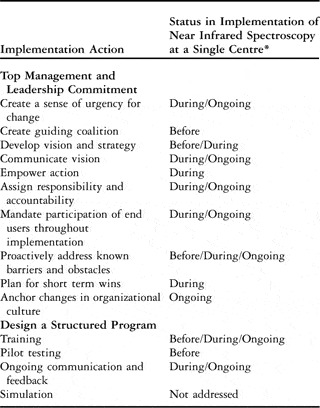
The clinical example provided in this manuscript readily illustrates many of the identified factors. Yet it is equally possible to take an unsuccessful innovation and evaluate the implementation in light of these factors to identify where the implementation failed. The use of these factors as a checklist provides a useful tool for planning and leading innovations in the environment of critical care (Table 2). Of note, the rapid introduction of this technology resulted in a need to address many factors during the implementation of the technology of near infrared spectroscopy. In hindsight, several factors might have been addressed before initiation of the implementation, decreasing reactive action. Additionally, the ever-changing nature of staffing has required ongoing communication, training and addressing of barriers to anchor the innovation in the culture of the intensive care unit.
Illustration of checklist for planning and implementing innovation.

*Before, during and ongoing refer to relative sequence of addressing action.
Patients receiving care in congenital and paediatric critical care units are at risk for harm because of the complexity of their conditions, the nature of therapies, and the large number of providers involved in their care. While innovation in these settings is critical to improving the outcome of this population, physicians specializing in critical care are faced with the challenge of innovating while maintaining safe, high quality care. The combined evidence from the domains of business, engineering, and healthcare provides a clear checklist to optimize the success of innovations while minimizing risk to patients.