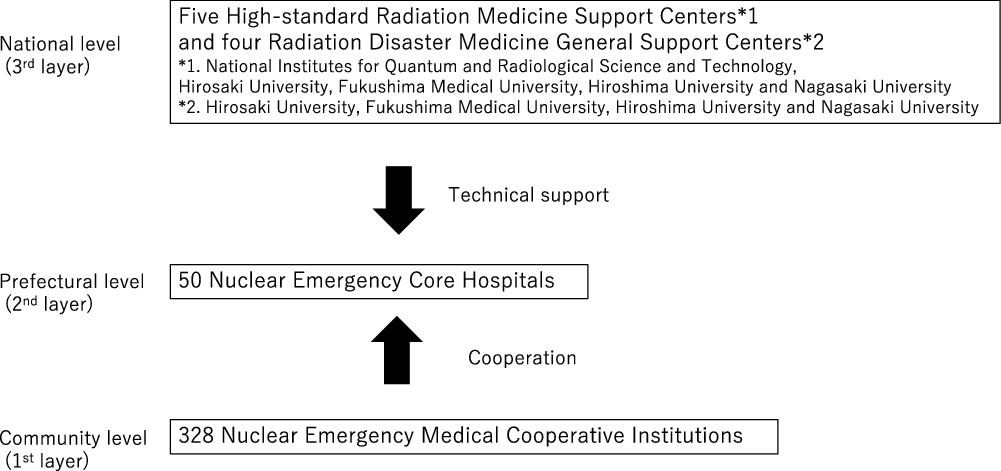
Many people fear radiation disasters, including health care providers, Reference Hasegawa, Takahashi and Nemoto1 and establishing a radiation disaster medical system is a difficult task. Based on experiences following the Great East Japan Earthquake and nuclear power plant accident in 2011, the medical response system for radiation disasters in Japan was revised. Reference Ojino and Ishii2 Following guidelines related to the Act on Special Measures Concerning Nuclear Emergency Preparedness, Nuclear Emergency Core Hospitals (NECHs) were designated as centers for radiation disaster management in Japan. Reference Tsujiguchi, Suzuki and Kashiwakura3 Designated NECHs must meet the following 3 requirements. First, NECHs need to accept and treat patients suffering from radiation exposure regardless of their contamination status. Second, in the event of a nuclear accident, NECHs need to form radiation disaster medical teams, including physicians, nurses, and radiologists with professional knowledge of radiation medicine. Third, NECHs need hospital staff (physicians, nurses, radiation technician, pharmacists, administrative staff) with specific knowledge of radiation medicine. As of August 1, 2020, there are 50 NECHs certified in prefectures in Japan in which nuclear power plants are located or are nearby. Other NECHs are also designated in prefectures in which nuclear power plants are located or are in neighboring prefectures. This is significant, because once a nuclear power plant accident occurs, a wide area will be affected. Therefore, response by a network of NECHs is suitable. The radiation disaster medical system in Japan consists of 3 layers (Figure 1), and the NECHs are in the second layer. The first layer consists of Nuclear Emergency Medical Cooperative Institutions, which are hospitals and health organizations responding to a radiation disaster locally. The third layer is a group of 5 High-standard Radiation Medicine Support Centers and 4 Radiation Disaster Medicine General Support Centers. The role of High-standard Radiation Medicine Support Centers is to serve as referral hospitals for radiation disaster patients and to provide training and education in radiation disaster medicine. The role of Radiation Disaster Medicine General Support Centers is to coordinate the radiation disaster medical team’s deployment and establish the network for radiation disaster medicine. The 5 High-standard Radiation Medicine Support Centers and 4 Radiation Disaster Medicine General Support Centers provide expert support for radiation disaster medicine, accepting patients who cannot be treated at NECHs, and coordinate the dispatch of medical teams. In 2018, the Ministry of Health, Welfare and Labor requested that all disaster center hospitals, the core of the disaster response in the local areas, create business continuity plans. Reference Sasaki, Maruya and Abe4 Earthquakes are considered an assumption of risk assessment for disaster center hospitals in Japan, and radiation disasters such as nuclear power plant accidents have not been considered. Therefore, it is important for NECHs to create business continuity plans as part of the radiation disaster program.
Three layers of the radiation disaster medical system in Japan.

Historically, the medical response system for radiation disasters in Japan was established after the Tokaimura nuclear accident in 1999. Reference Miyamoto, Watanabe and Yukawa5 Three workers were exposed to high levels of radiation in a small plant preparing fuel for an experimental reactor, and 2 died despite extended treatment in the intensive care unit. Hospitals in Fukushima Prefecture were faced with difficulties at the time of the Great East Japan Earthquake and nuclear power plant accident on March 11, 2011. Eleven people injured by the hydrogen explosion of Unit 3, Fukushima Daiichi Nuclear Power Plant station were accepted by designated hospitals on March 14, 2011. During the first 2 weeks after the accident, more than 60 people died during transportation from the evacuation zone in Fukushima. Reference Ohtsuru, Tanigawa and Kumagai6 Since the evacuation zone expanded every day due to the deteriorating situation at the Fukushima Daiichi Nuclear Power Plant, patients in hospitals and nursing facilities within the evacuation zone were forced to stay without sufficient supplies or logistic support. Most hospitals outside the stricken area had no capacity to accept the patients at that time. These patients were especially vulnerable, including the elderly, mentally ill, or bedridden. When they were rescued, most were in critical condition and died during transportation to receiving facilities. Additionally, many hospitals had difficulty maintaining operations because social functions were widely affected by fear of radiation effects among staff. Reference Hachiya, Tominaga, Tatsuzaki and Akashi7
Preparedness for radiation disasters is important, and, therefore, efforts such as ensuring the availability of decontamination facilities, stockpiling of countermeasures or measuring devices, human resources, and training, are mandatory. Risk communications for first responders in case of a radiation disaster have already been established. Reference Mori, Tateishi and Hiraoka8 Hachiya et al. reported that a basic knowledge of radiation for first responders was important to deal with the difficulties of the radiation disaster in Fukushima. Reference Hachiya, Tominaga, Tatsuzaki and Akashi7 Although the importance of radiation disaster medicine and risk communications among health care workers is widely acknowledged, these have not yet been adequately established. Reference Ingram9,Reference Svendsen, Yamaguchi and Tsuda10
Several studies have been conducted to investigate hospital preparedness for chemical, biological, or radio/nuclear incidents. Mortelans et al. conducted a survey of 93 hospitals in the Netherlands and reported that even after the Fukushima disaster in 2011, most hospitals in the Netherlands were not well-prepared. Reference Mortelmans, Gaakeer and Dieltiens11,Reference Mortelmans, Van Boxstael, De Cauwer and Sabbe12 Other studies also showed that most hospitals did not have adequate facilities, stockpiles of supplies, or training. Reference Belsky, Klausner, Karson and Dunne13,Reference Murakami, Ono and Tsubokura14 The present study aimed to investigate the current status of NECHs in Japan and identify areas for improvement.
Materials and Methods
Study Design and Participants
This cross-sectional study was conducted in October 2018. A questionnaire was electronically sent to contact personnel at the NECHs. At the time of the survey, there were 43 designated NECHs in Japan. Senior physicians at the NECHs in charge of radiation disaster response and their administrative staff responded to the questionnaire after discussion with other designated staff involved in dealing with nuclear/radiation disasters. Ethical approval for this study was obtained from the Kyushu University Graduate School and Faculty of Medicine Ethics Committee.
Questionnaire Items
Tujiguhi et al. conducted a survey of NECHs and Nuclear Emergency Medical Cooperative Institutions in 2017. Reference Tsujiguchi, Suzuki and Kashiwakura3 They identified the need for education and an overall lack of human resources and specific instruments. Based on that questionnaire and study results, we created a new questionnaire to focus on NECH structure and function, such as level of preparation, significant issues, and difficulties. There are several existing studies focusing on hospital preparedness for radiation/nuclear disasters. Marzaleh et al. conducted a systematic review of hospital preparedness for radiation/nuclear disasters, and extracted 32 key components. Based on expert opinions, they summarized the results as 3 “S” subjects—Staff, Stuff, and Structure. Reference Marzaleh, Rezaee and Rezaianzadeh15,Reference Ahmadi Marzaleh, Rezaee and Rezaianzadeh16 Based on these findings, the questionnaire for this study was created. Kotota et al. conducted an online survey of health care workers at hospitals in the United States and asked about the degree of preparedness for chemical, biological, or radio/nuclear disasters and determined that there are critical gaps in hospital capacity. Reference Kotora17 In summary, based on these findings, questionnaire items in the present study included (1) basic characteristics of the hospital, (2) capacity for disaster response, (3) capacity for radiation/nuclear disaster response, and (4) hospital staff attitudes toward a nuclear emergency core hospital. Specifically, in the questionnaire, the expression “mass casualty” was used. In Japan, a mass casualty incident is defined as an event with more than 5 injured persons who are transferred to medical facilities in a single event. NECHs have discrete facilities designated for decontamination and treatment of patients involved in radiation/nuclear disasters. These facilities are independent buildings or units located at a hospital site.
Data Collection and Analysis
Demographic data were collected in the questionnaire and the results evaluated. Demographic parameters are reported as means with standard deviations, and quantitative parameters were calculated as percentages. Free-text descriptions concerning attitudes toward NECHs and considerations for risk communications during a radiation disaster were analyzed using KH Coder for qualitative text mining analysis. KH Coder was developed in R by Dr Higuchi at Ritsumeikan University in Japan Reference Higuchi18 and uses the “ChaSen” language-morphology-analysis system as the backend program. KH Coder produces a list of words ordered according to their frequencies and interrelationships. High-frequency occurring words in the same text unit were extracted, and a hierarchical cluster constructed, using the Jaccard distance. Reference Hu, Liu, Aggarwal and Zhai19 For co-occurrence network analysis, 2 words were connected by a line, based on the Fruchterman and Reingold layout algorithm. Reference Fruchterman and Reingold20
Results
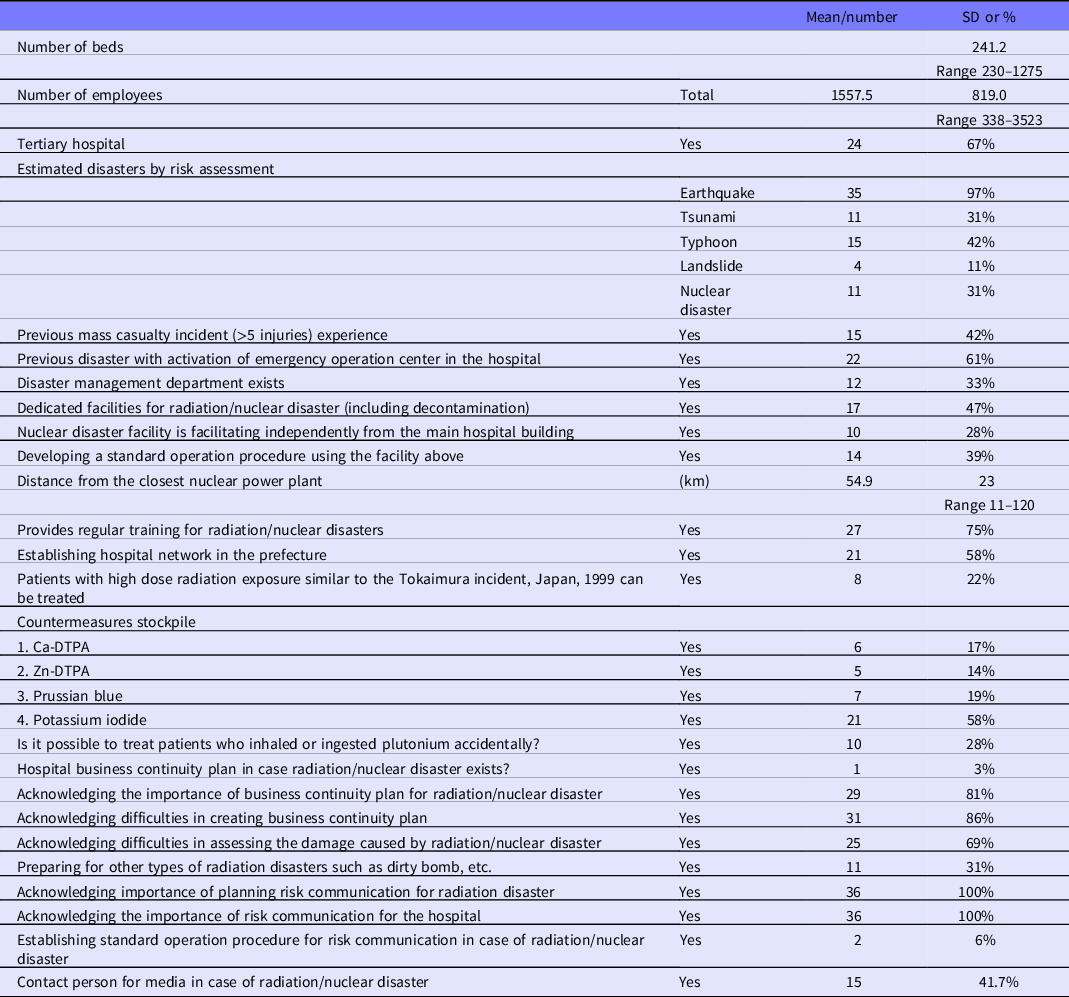
Of 43 NECHs designated by 2018, 36 (83%) participated in this study. The characteristics of the NECHs are shown in Table 1. Of these, 67% are categorized as tertiary emergency hospitals, and 47% own separate facilities for radiation medicine that serve as the initial treatment area for triage, decontamination, and radiation measurement. However, only 31% of the hospitals have conducted a concrete risk assessment for a radiation disaster, and less than 40% have prepared standard operating procedures or manuals for the management of patients during a radiation disaster. Although the importance of business continuity plans and risk communications is recognized, specific plans or appropriate human resources have not been prepared. NECHs were categorized by the distance to the closest nuclear power plant and differences were evaluated based on this distance (see Supplementary Table S1). There were no differences found, implying that the sense of urgency does not vary with distance from the nuclear power plant.
Characteristics of nuclear emergency core hospitals

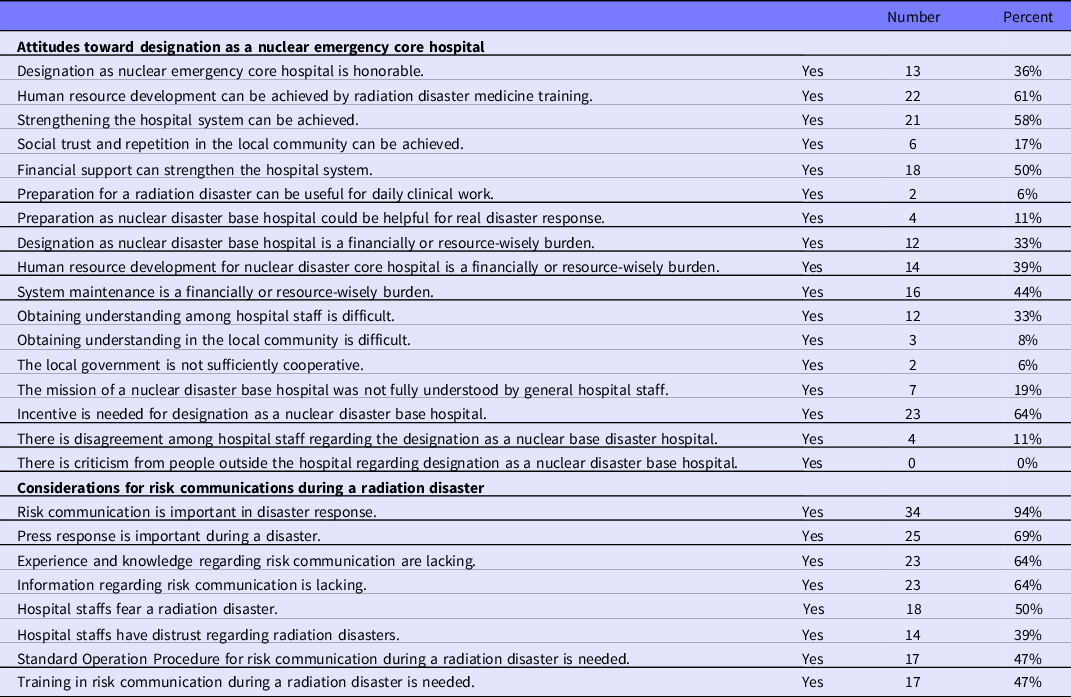
Table 2 shows respondents’ attitudes toward NECHs and considerations for risk communications during a radiation disaster. Hospital staff and the local community understand the importance of designation as an NECH. However, similar to the results shown in Table 1, specific plans for risk communications have not been prepared.
Attitudes regarding designation as a nuclear emergency core hospital and considerations for risk communications during a radiation disaster

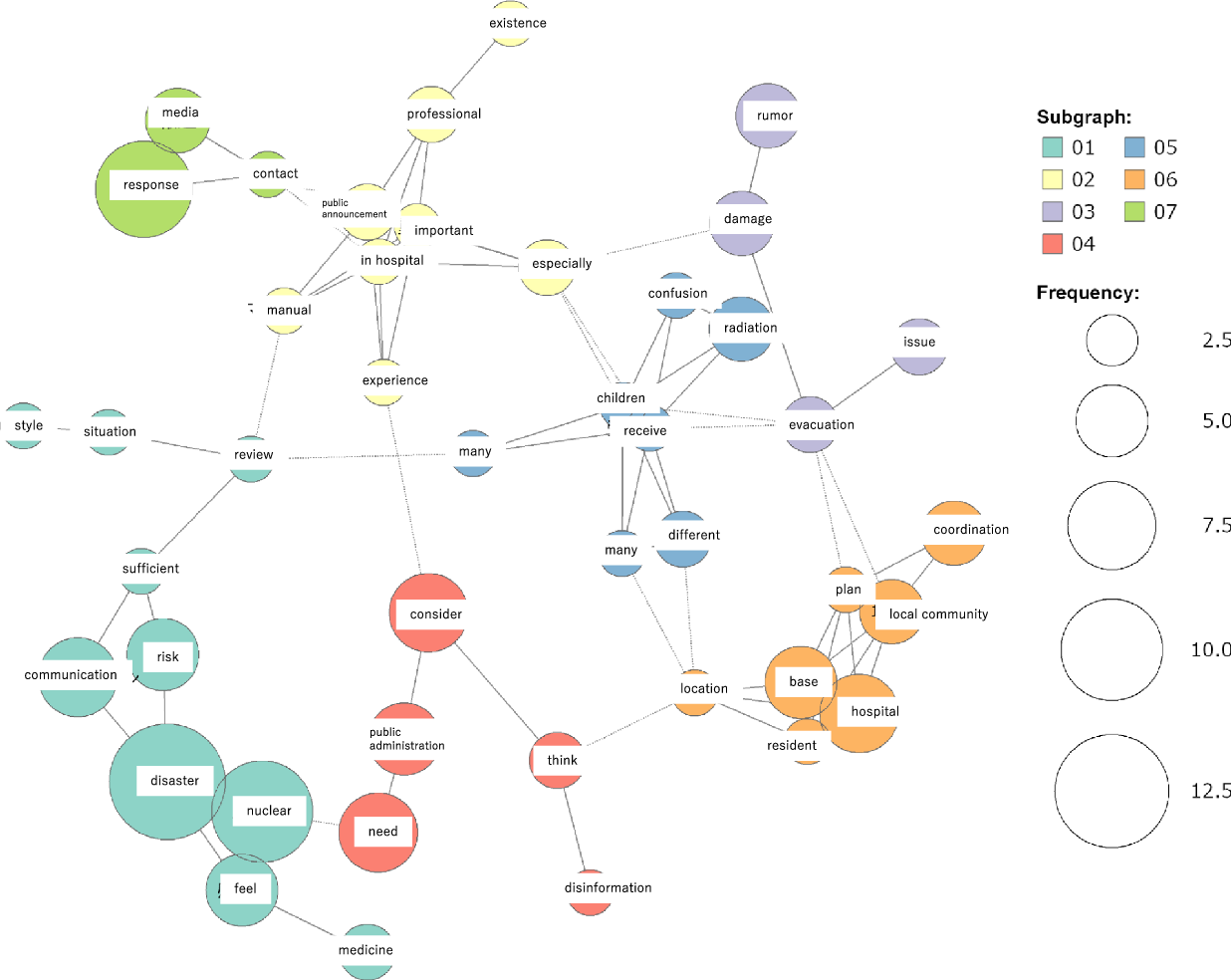
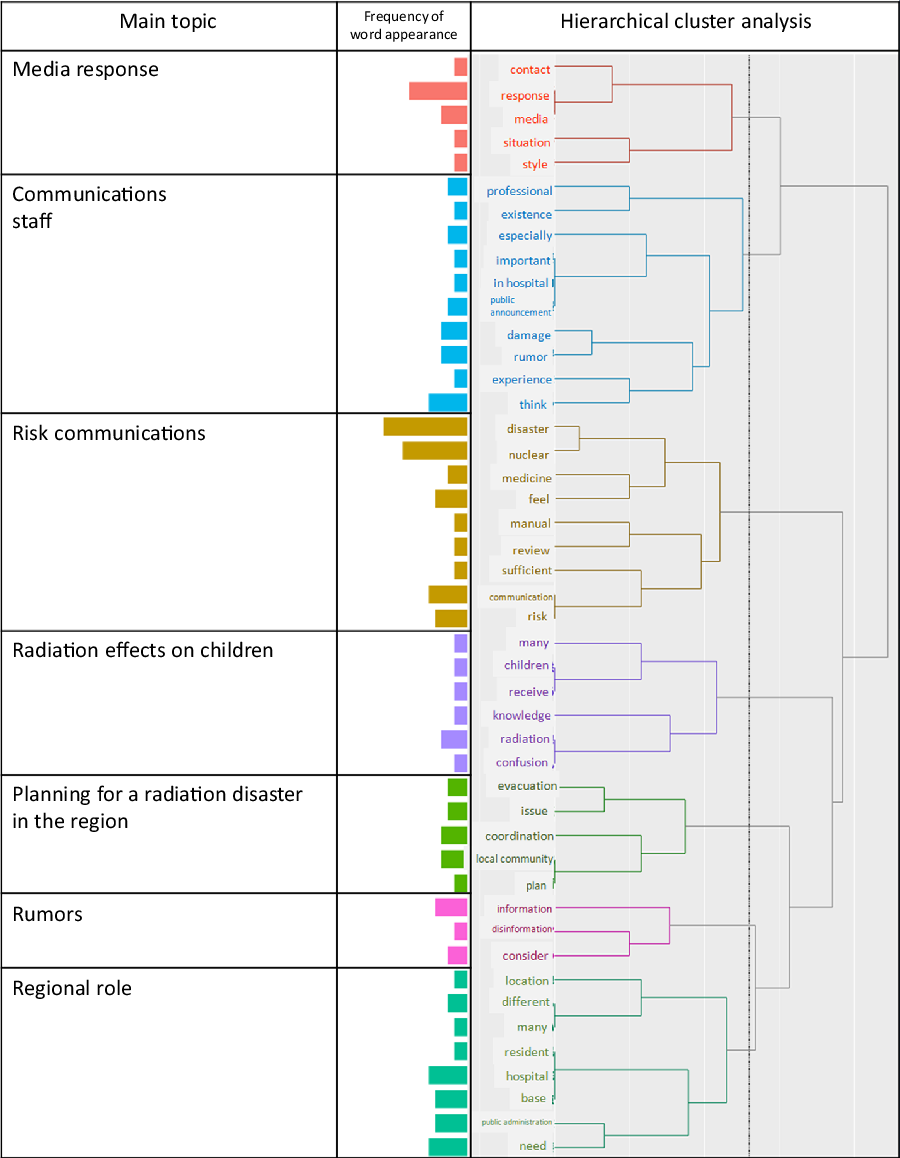
Figure 2 shows the result of KH coder text mining analysis of free text comments. Frequent terms included “nuclear,” “disaster,” “response,” and “communication.” Figure 3 summarizes the free text descriptions of attitudes toward the NECH and considerations for risk communications during a radiation disaster categorized into 7 groups based on hierarchical cluster analysis. The 7 categories include media response, communications to hospital staff, risk communications, radiation effects on children, planning for radiation disasters in the region, rumors, and the role of the NECH in the region.
Results of KH Coder analysis of free text responses by co-occurrence network of words.

Results of the hierarchical cluster analysis.

Discussion
In this study, the current status of the radiation disaster medical system and NECHs in Japan was evaluated. The number of NECH designated hospitals is increasing, and organizational manuals, standard operating procedures, human resources, and risk communications were identified as issues needing resolution. Although the NECH network is designated to function in radiation disasters, only 31% of the NECHs have formally anticipated the risk of a radiation disaster, suggesting that improvement overall and technical support are needed to complete the risk assessment process and strengthen the overall NECH network capacity on a national level. KH Coder, a Japanese language specific quantitative content analysis system, was used to analyze free text fields in the responses. Reference Higuchi18 Quantitative context analysis provides objective analysis of nuances regarding issues raised by respondents regarding the NECHs, which might not be evident based on analysis of discrete items in a questionnaire. The importance of risk communications, planning for a radiation disaster in each region, and the role of the NECH in the region was raised as issues in this study, which should be addressed by providing additional training and technical support.
Japan is the only country to have experienced a simultaneous triple disaster (earthquake, tsunami, and nuclear power plant incident). The damage was devastating, and to respond effectively to such a combination of events, a single hospital is not sufficient. A functioning coordinated hospital network was needed in the aftermath of the Great East Japan Earthquake. Reference Ojino and Ishii2 This is one of the lessons learned, and we suggest that a hospital network will provide hospital preparedness for a future radiation/nuclear disaster. Nuclear power plants are operating in 31 countries in the world, and organizing an appropriate radiation disaster medical response is not straightforward. Several studies have been done in the United States, Reference Belsky, Klausner, Karson and Dunne13,Reference Kotora17 Canada, European countries, Reference Mortelmans, Van Boxstael, De Cauwer and Sabbe12 and Iran Reference Marzaleh, Rezaee and Rezaianzadeh15,Reference Ahmadi Marzaleh, Rezaee and Rezaianzadeh16 regarding hospital preparedness for radiation disasters. Only Japan has established a hospital network to respond to radiation disasters. Reference Ojino and Ishii2 Although there is a difference in health care systems, geography, and population density, the NECH network may serve as a model for other countries.
In Table 1, only 28% of NECHs have the capacity to effectively respond to a plutonium incident. In 2016, accidental leakage of plutonium occurred in a laboratory in Tokaimura, Japan. One worker inhaled a small amount of plutonium and was transferred to the National Institutes for Quantum and Radiological Science and Technology for care. This may be the reason why a response capability to plutonium was partially confirmed in the questionnaire. Additional preparedness for this type of incident needs to be further considered by NECHs.
Considering the amount of radiation disseminated after the Great East Japan Earthquake and nuclear power plant accident in 2011, many studies have shown that the direct effect of radiation on health after that disaster was limited. However, radiation disasters cause serious psychological effects on people and society, and people have great fear of nuclear power plant accidents. Reference Kunii, Suzuki and Shiga21 Effective risk communications among health care workers may help ameliorate this fear. However, systems for risk communications during crises or disasters are not well established in Japan. Reference Ingram9 In this study, the importance of including training and optimal utilization of human resources as part of a hazard-preparedness program is recognized.
There are several limitations to this study. First, the survey was conducted in October 2018, and at that time, the number of NECHs was 43. There are 50 NECHs designated as of August 2020. Therefore, the results cannot fully evaluate the current status of the radiation disaster medical system in Japan. Second, in this survey, the details of equipment such as decontamination facilities, stockpiles of personal protective equipment, radiation measuring devices, such as Geiger counters or NaI scintillation counters, or whole-body radiation counters, were not investigated. Third, this survey is focused on NECHs, the second layer of the radiation disaster medical system in Japan. Further comprehensive surveys including the Nuclear Emergency Medical Cooperative Institutions, High-standard Radiation Medicine Support Centers, and Radiation Disaster Medicine General Support Centers should be conducted in the future. Fourth, respondents to the questionnaire were senior physicians and their administrative staff. Although senior physicians and administrative staff are in charge of the NECH mission, responses from these leadership groups may not be representative of all employees at NECHs. Thus, the answers may be personal opinions rather than general perceptions of the NECHs. Fifth, since the sample size was small, multivariate analysis could not be conducted.
Conclusion
In this study, the current status of NECHs in Japan was studied, and areas needing improvement identified. The importance of risk communications, planning for a radiation disaster in each region, and the role of the NECH in the region were identified as specific issues that need to be addressed.
Supplementary material
To view supplementary material for this article, please visit https://doi.org/10.1017/dmp.2021.348
Funding statement
This research is supported by Radiation Safety Research Promotion Fund (JPJ007057) and Kaken (21K10352).