Introduction
Despite many benefits that pets offer to individuals, and to a lesser extent communities, they present significant human health hazards (Robertson et al., Reference Robertson, Irwin, Lymbery and Thompson2000). Populations of companion animals, including cats and dogs, contribute significantly to contamination of the environment with their faecal droppings that are deposited in public and private places. Unlike dogs, cats bury their faeces in soil, which leads to the accumulation of numerous enteric parasites in cats (Engbaek et al., Reference Engbaek, Madsen and Larsen1984; Poglayen et al., Reference Poglayen, Traldi, Capelli and Genchi1985). Such a habit is favourable for many parasitic infective stages as it protects them from desiccation (Uga & Kataoka, Reference Uga and Kataoka1995). The role of cats as reservoir hosts for endoparasitic infections that are potentially transmitted to humans, livestock and other carnivores (Yamaguchi et al., Reference Yamaguchi, Macdonald, Passanisi, Harbour and Hopper1996) has been recognized as a significant public health problem worldwide (Schantz, Reference Schantz1994).
Feline endoparasitic infections have received much attention in the medical literature of developed countries, as research resources are more readily available. Extensive ecological studies of the intestinal parasitic fauna of cats have been systematically carried out in the USA (Schantz, Reference Schantz and Bredahuer1999; Hill et al., Reference Hill, Cheney, Taton-Allen, Reif, Bruns and Lappin2000; Anderson et al., Reference Anderson, Foster and Forrester2003; Cheryl & Dennis, Reference Cheryl and Dennis2003), Australia (Coman, Reference Coman1972; Wilson-Hanson & Prescott, Reference Wilson-Hanson and Prescott1982; Shaw et al., Reference Shaw, Dunsmore and Jakob1983; Thompson et al., Reference Thompson, Meloni, Hopkins, Deplazes and Reynoldson1993; McGlade et al., Reference McGlade, Robertson, Elliot, Read and Thompson2003) and more comprehensively in Europe (Lewis, Reference Lewis1927; Christensen et al., Reference Christensen, Olsen and Roth1946; Niak, Reference Niak1972; Cowper, Reference Cowper1978; McColm & Hutchison, Reference McColm and Hutchison1980; Nichol et al., Reference Nichol, Ball and Snow1981; Thienpoint et al., Reference Thienpoint, Vanparijs and Herrnans1981; Stoichev et al., Reference Stoichev, Hanchev and Suilenov1982; Engbaek et al., Reference Engbaek, Madsen and Larsen1984; Van Beeck et al., Reference Van Beeck, Henry, Dorny and Van Meirvenne1985; Calvete et al., Reference Calvete, Lucientes, Castillo, Estrada, Garcia, Peribàňez and Ferrer1998; Barutzki & Schaper, Reference Barutzki and Schaper2003; Coati et al., Reference Coati, Hellmann, Mencke and Epe2003). These surveys reported on intestinal parasitic infections in different cat populations, including feral cats (Coman et al., Reference Coman, Jones and Driesen1981; Nichol et al., Reference Nichol, Ball and Snow1981; Mtambo et al., Reference Mtambo, Nash, Blewett, Smith and Wright1991; Milstein & Goldsmid, Reference Milstein and Goldsmid1997), stray cats (Khalil et al., Reference Khalil, Khaled, Arafa and Sadek1976; El-Shabrawy & Imam, Reference El-Shabrawy and Imam1978; McColm & Hutchison, Reference McColm and Hutchison1980; Morsy et al., Reference Morsy, Michael and El-Disi1980; Engbaek et al., Reference Engbaek, Madsen and Larsen1984; Hasslinger et al., Reference Hasslinger, Omar and Selim1988; Vanparijs et al., Reference Vanparijs, Hermans and Van der Flaes1991; O′Lorcain, Reference O′Lorcain1994; Calvete et al., Reference Calvete, Lucientes, Castillo, Estrada, Garcia, Peribàňez and Ferrer1998) and domestic cats (Coman et al., Reference Coman, Jones and Driesen1981; Baker et al., Reference Baker, Lange, Verster and Van Der Plaat1989; Mtambo et al., Reference Mtambo, Nash, Blewett, Smith and Wright1991; McGlade et al., Reference McGlade, Robertson, Elliot, Read and Thompson2003). In contrast, reports emerging from regions in the Middle East were remarkably limited compared to other parts of the world (Morsy et al., Reference Morsy, Michael and El-Disi1980 in Jordan; El-Shabrawy & Imam, Reference El-Shabrawy and Imam1978; Arafa et al., Reference Arafa, Nasr, Khalifa, Mahdi, Wafiya and Khalil1978; Morsy et al., Reference Morsy, Sadek and Abdel Hamid1981; Hasslinger et al., Reference Hasslinger, Omar and Selim1988 in Egypt; Abu-Madi et al., Reference Abu-Madi, Al-Ahbabi, Al Mashhadani, Lewis and Paul2007 in Qatar), where the focus was on other public health problems associated with morbidity and mortality (Holland & Cox, Reference Holland and Cox2001) and this underestimated the potential role of cats and dogs in parasitic zoonoses (Luty, Reference Luty2001; Traub et al., Reference Traub, Robertson, Irwin, Mencke and Thompson2005).
Faecal and/or necropsy surveys have shown that the ascarid nematode, Toxocara cati, and the hookworm Ancylostoma tubaeforme represent the more common intestinal helminth parasites of cats worldwide (Power, Reference Power1970; Parsons, Reference Parsons1987). The prevalences of T. cati and Toxascaris leonina in adult cats range from 8% to 85% (Overgaauw, Reference Overgaauw1997) with higher prevalences reported in kittens (Visco et al., Reference Visco, Corwin and Selby1978). Hookworms are less common than ascarids, although the prevalence of hookworm infections in cats in North America was reported to range from 10% to 75% (Power, Reference Power1970). This can be explained by the variety of routes by which T. cati can be acquired, and the capacity of embryonated eggs to survive under adverse environmental conditions. The hookworm, A. tubaeforme, occurs more frequently in mild and humid conditions, as the free living larval stages are unlikely to survive under extremes of temperature and desiccation.
In many developing countries, stray cat populations are higher than dog populations (Bowman et al., Reference Bowman, Hendrix, Lindsay and Barr2002). Cats in tropical countries need little shelter and may be able to support themselves by hunting and scavenging for food waste and they will reproduce until the cat population exceeds the carrying capacity of the area. The population density of feral cats in urban areas depends largely on the amount of accessible food waste discarded by the human population. In rural areas, feral cats are dependent on hunting rodent and bird prey and occur in much lower densities.
The relative importance of cats in the transmission of toxocariasis to humans is not yet well established (Ruiz de Ybanez et al., Reference Ruiz de Ybanez, Garijo and Alonso2001). However, the risk of human transmission can be evaluated by assessing the prevalence and intensity of infection of T. cati in cats (Luty, Reference Luty2001), for example from faecal examination as eggs of adult worms are deposited in the faeces. Post-mortem examination, on the other hand, provides a more accurate analysis of the intensity of infection in cats, yet for religious and ethical reasons, post-mortem examinations are infrequently performed. In developed countries such as France (Coati et al., Reference Coati, Hellmann, Mencke and Epe2003), Germany (Barutzki & Schaper, Reference Barutzki and Schaper2003), Japan (Uga, Reference Uga1993) and Australia (Dunsmore et al., Reference Dunsmore, Thompson and Bates1984), the ecological and epidemiological aspects of T. cati in stray, domesticated and semi-domesticated cats were studied by Paul et al. (Reference Paul, Todd and Diprieto1988). However, with the exception of a few studies conducted in the State of Qatar (Abu-Madi et al., Reference Abu-Madi, Lewis, Mickail, El-Nagger and Behnke2001, Reference Abu-Madi, Behnke, Mickail, Lewis and Al-Kaabi2005), Egypt (Morsy et al., Reference Morsy, Sadek and Abdel Hamid1981), and Jordan (Morsy et al., Reference Morsy, Michael and El-Disi1980), studies on the transmission of parasitic zoonoses in the Arabic world are extremely limited.
Recently, an examination of faecal samples from stray cats in urban and suburban sites in Doha, Qatar (Abu-Madi et al., Reference Abu-Madi, Al-Ahbabi, Al Mashhadani, Lewis and Paul2007) revealed a parasite community dominated by nematodes and up to 10% of unidentified cestode species. Therefore, by undertaking an invasive post-mortem examination of stray cats from the same sites in Doha, the aims of the present study are to evaluate the role of intrinsic (host age, gender) and extrinsic (season, site) factors in structuring the parasite community of the cat populations and in influencing both the prevalence and abundance of each helminth species. The extent to which co-occurring species interact with each other will also be investigated.
Materials and methods
Trapping was conducted in three sites, namely Corniche, Al-Matar and Al-Sadd located in the capital city, Doha (51°31′60″E, 25°17′12″N), and two sites on the outskirts of Doha, Al-Rayyan and Abu-Hamour, as described previously by Abu-Madi et al. (Reference Abu-Madi, Al-Ahbabi, Al Mashhadani, Lewis and Paul2007). Trapping was carried out in the vicinity of public and private areas in the study sites during the winter (January–April) and the summer (May–October) seasons of 2006 as previously described by Abu-Madi et al. (Reference Abu-Madi, Al-Ahbabi, Al Mashhadani, Lewis and Paul2007). Cats were caught live in locally constructed traps, with a small metal platform internally which, when triggered, released a metal door. Traps, which were pre-baited with fish heads, were set out on each evening for each site per month and inspected in the early morning, with fresh traps being replaced as necessary. Cats were retrieved from traps and humanely killed using sodium thiopental (12.5 mg kg− 1) and potassium chloride (1–2 mmol kg− 1), intravenously (AVMA, 2001). This procedure was performed in the shelters, respecting currently accepted animal welfare rules.
For each cat examined, the date of trapping, body weight, and gender were noted. Cats were separated into two age–weight groups, juveniles ( < 1.4 kg) and adults (>1.5 kg), as previously described by Sharif et al. (Reference Sharif, Nasrolahei, Ziapour, Gholami, Ziaei, Daryani and Khalilian2007) and immediately transferred to the College of Arts and Sciences, University of Qatar, where they were necropsied. The stomach and alimentary tract were removed, opened longitudinally and examined microscopically for parasites in Petri dishes containing physiological saline. Parasites were carefully removed, identified, sexed where appropriate and counted. The prevalence and abundance of infection ± standard error of the mean (SEM) and the frequency distribution of parasites was tested for goodness of fit to the negative binomial using a reformulated method of measuring the k parameter as previously described by Pal & Lewis (Reference Pal and Lewis2004).
Prevalence was analysed by maximum likelihood techniques based on log linear values as described previously (Abu-Madi et al., Reference Abu-Madi, Behnke, Lewis and Gilbert1998, Reference Abu-Madi, Behnke, Lewis and Gilbert2000). Parasite burdens were expressed as geometric means (GM) ± 95% confidence limits (CL) of worm numbers because the data were overdispersed (Elliot, Reference Elliot1977; Dash et al., Reference Dash, Hall and Barger1988). These means reflect the abundance of infection as defined by Margolis et al. (Reference Margolis, Esch, Holmes, Kuris and Schad1982). Mean abundance data were analysed using the General Linear Model with normal errors after normalization of data by log 10(x+1) transformation, as previously described by Abu-Madi et al. (Reference Abu-Madi, Lewis, Mickail, El-Nagger and Behnke2001, Reference Abu-Madi, Behnke, Mickail, Lewis and Al-Kaabi2005). Data for juvenile cats were not analysed due to the small sample size but for adults host gender (two levels, male or female), season (two levels, winter or summer) and site (five levels, Corniche, Al-Matar and Al-Sadd, Al-Rayyan and Abu-Hamour) were entered as factors. For models with normal errors the change in deviance is divided by the scale parameter and the result divided by the change in degrees of freedom (df) following each deletion, to give a variance ratio, F. Interactions between parasite species were evaluated using the bivariate Pearson's product–moment correlation technique on the abundance of parasites, relative to host gender, season and site.
Results
Cat population
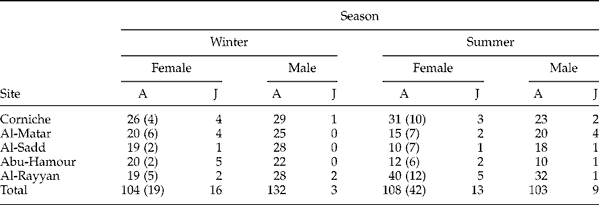
A total of 488 stray cats, 241 females and 247 males, were trapped, of which 8.4% (n = 41, 29 females and 12 males) were classed as juveniles. Two hundred and fifty five cats were captured in winter and 233 in the summer seasons from the five study sites, as reported previously (Abu-Madi et al., Reference Abu-Madi, Al-Ahbabi, Al Mashhadani, Lewis and Paul2007). Al-Rayyan yielded 129, Corniche 119, Al-Matar 90, Al-Sadd 78 and Abu-Hamour 72 stray cats in total. The structure of the sampled host population by site, host gender and age is summarized in table 1, with more pregnant females occurring during the summer.
Number of stray cats examined by site, host gender, age and season from Doha, Qatar during 2006.
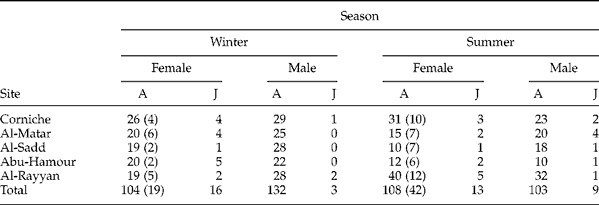
A, adult; J, juvenile; the number in brackets indicates the number of pregnancies.
Helminth species richness and dispersion
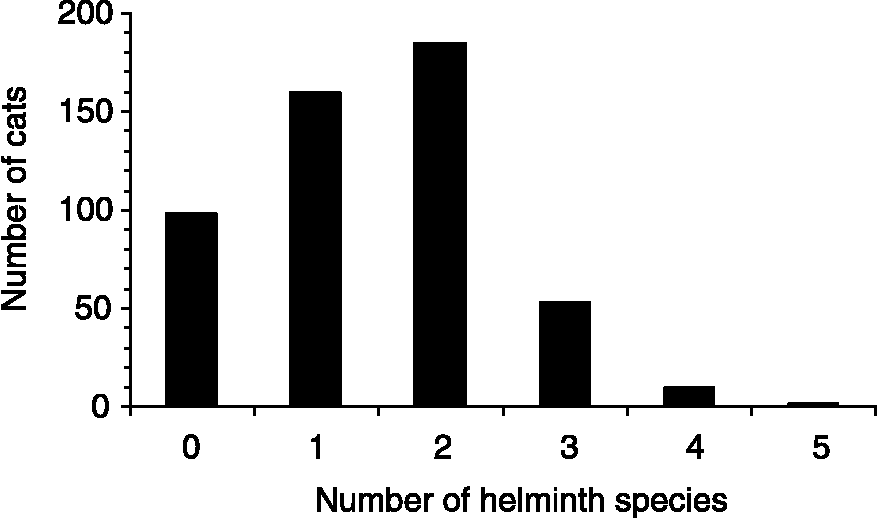
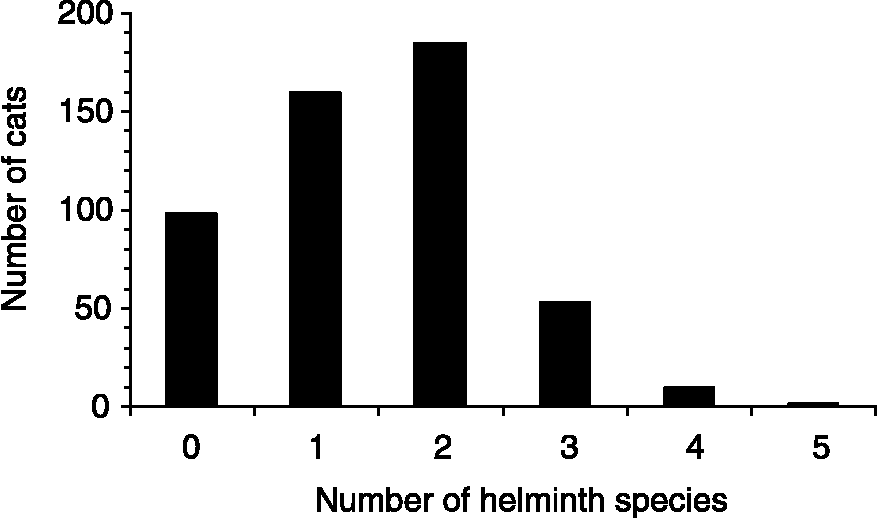
Five species of helminths were recovered and 392 cats (80.3%) were found to be infected with at least one of these species. Of the helminth species found, Taenia taeniaeformis (75.8%) was the most prevalent, followed by Diplopylidium species (42.8%), Ancylostoma tubaeforme (17.0%), Physalopetra species (6.6%) and Toxocara cati (0.8%). The majority of cats carried two helminth species (fig. 1), and the overall mean number of helminth species harboured per host (all cats combined, n = 488) was 1.43 ± 0.04 (SEM). In the three more frequently occurring helminth species, Diplopylidium sp., T. taeniaeformis and A. tubaeforme, the dispersion patterns exhibited negative binomial characteristics with respective k values of 0.25, 0.45 and 0.8.
Frequency distribution of infracommunity richness of helminths in stray cats from Doha, Qatar in 2006.
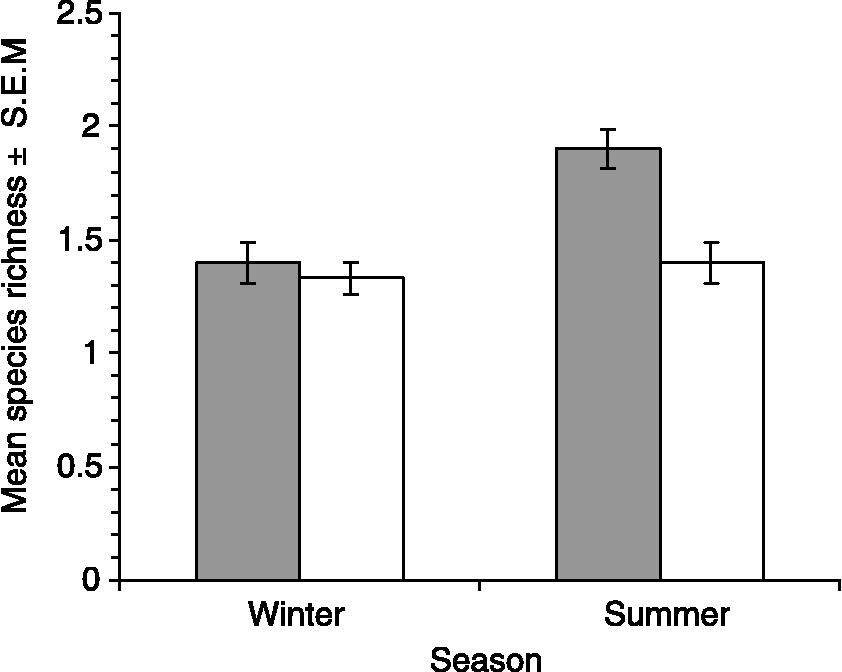
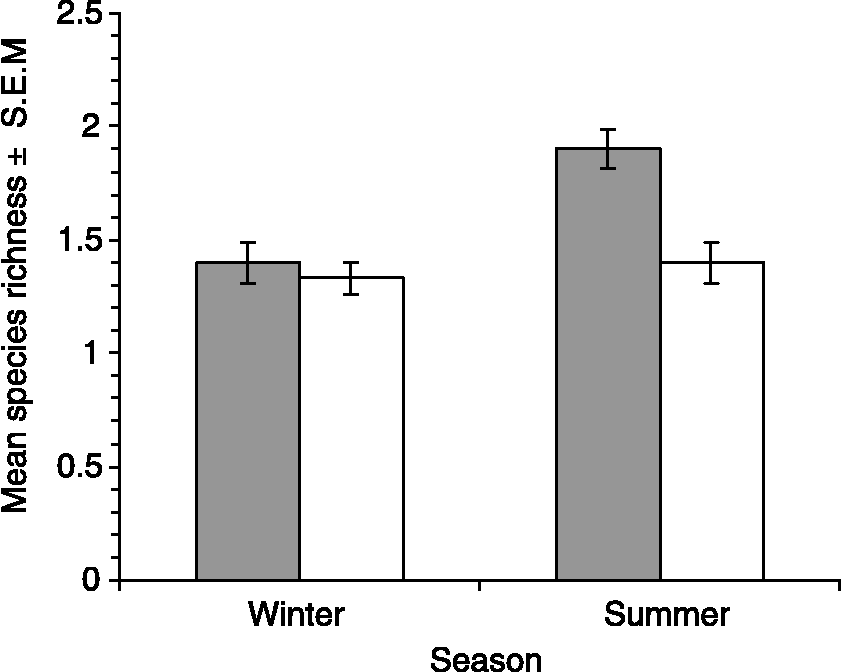
Analysis of data for adult cats (three-way ANOVA in GLIM with normal errors and site, season and host gender as factors) revealed that only season and host gender played a significant role in determining infracommunity species richness (fig. 2) and the main effect of sites was not significant (F 4,446 = 1.04, P = 0.38). The main effects of season and host gender were significant (F 1,446 = 12.19, P = 0.001 and F 1,446 = 6.74, P = 0.01, respectively) but there was also a significant two-way interaction between these factors (F 1,446 = 4.61, P = 0.032), with the highest mean species richness value among females examined during summer (1.9 ± 0.1) and lowest in winter males (1.3 ± 0.1).
Seasonal changes in the mean infracommunity richness of helminth species in adult female ( ) and male (□) stray cats from Qatar in 2006.
Prevalence of helminth infections
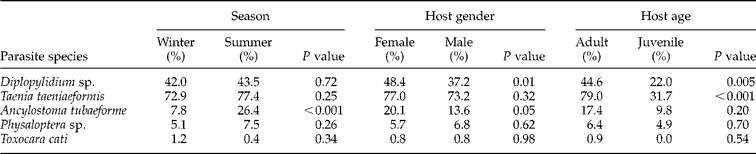
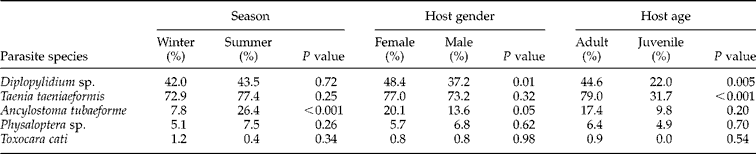
Using univariate analysis, the prevalence values for Diplopylidium sp. and T. taeniaeformis were significantly higher in adult compared with juvenile cats with a higher prevalence of A. tubaeforme occurring in the summer compared to winter (table 2). The influence of host gender was only observed in the case of Diplopylidium sp. with no significant differences found relative to site.
The prevalence (%) of helminth infections in stray cats from Doha, Qatar relative to season, host gender and age.
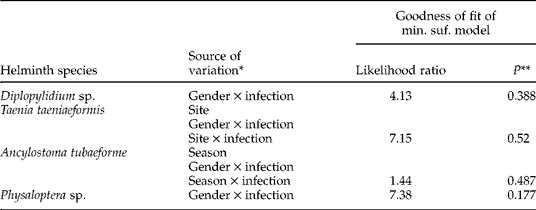
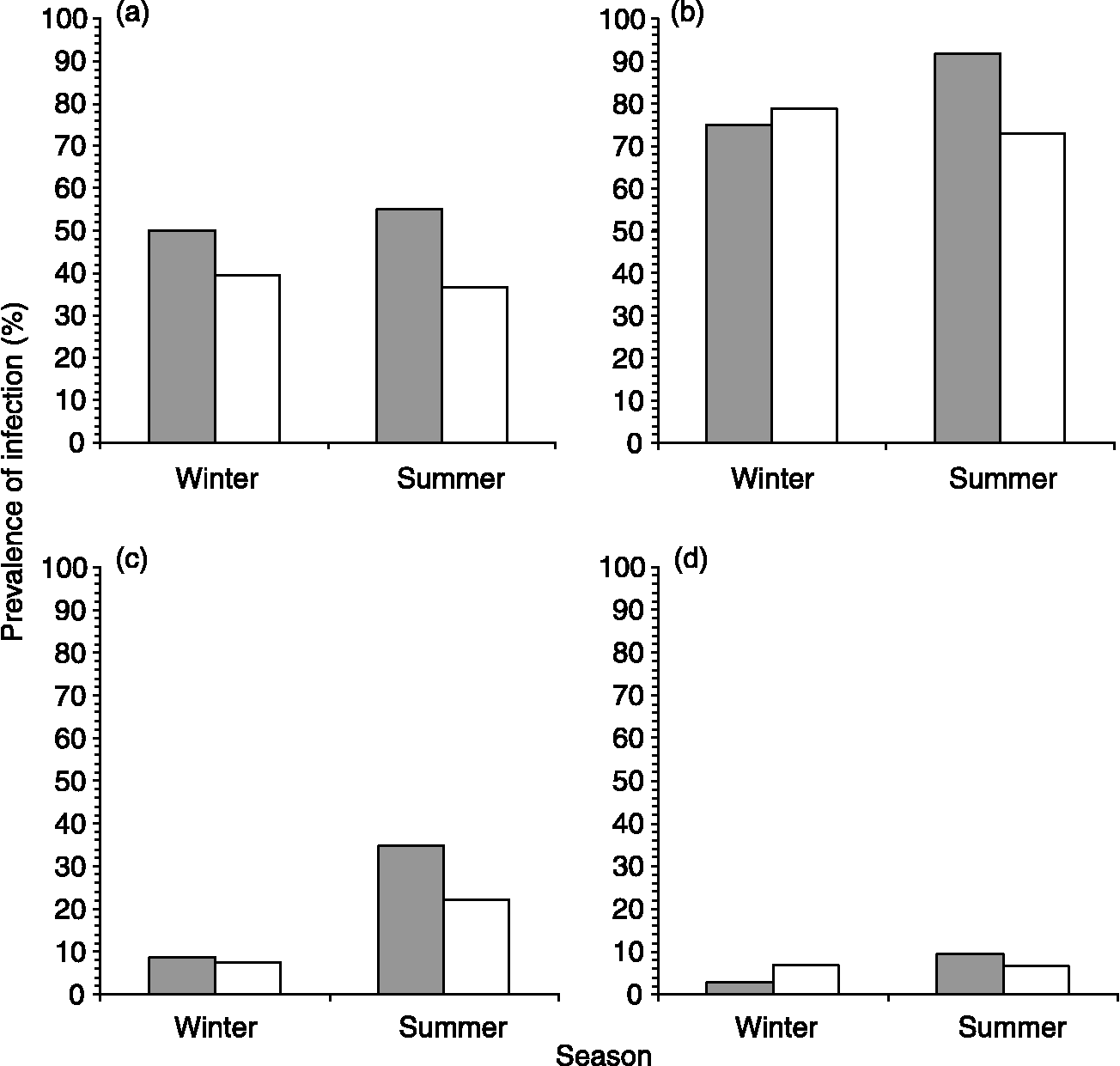
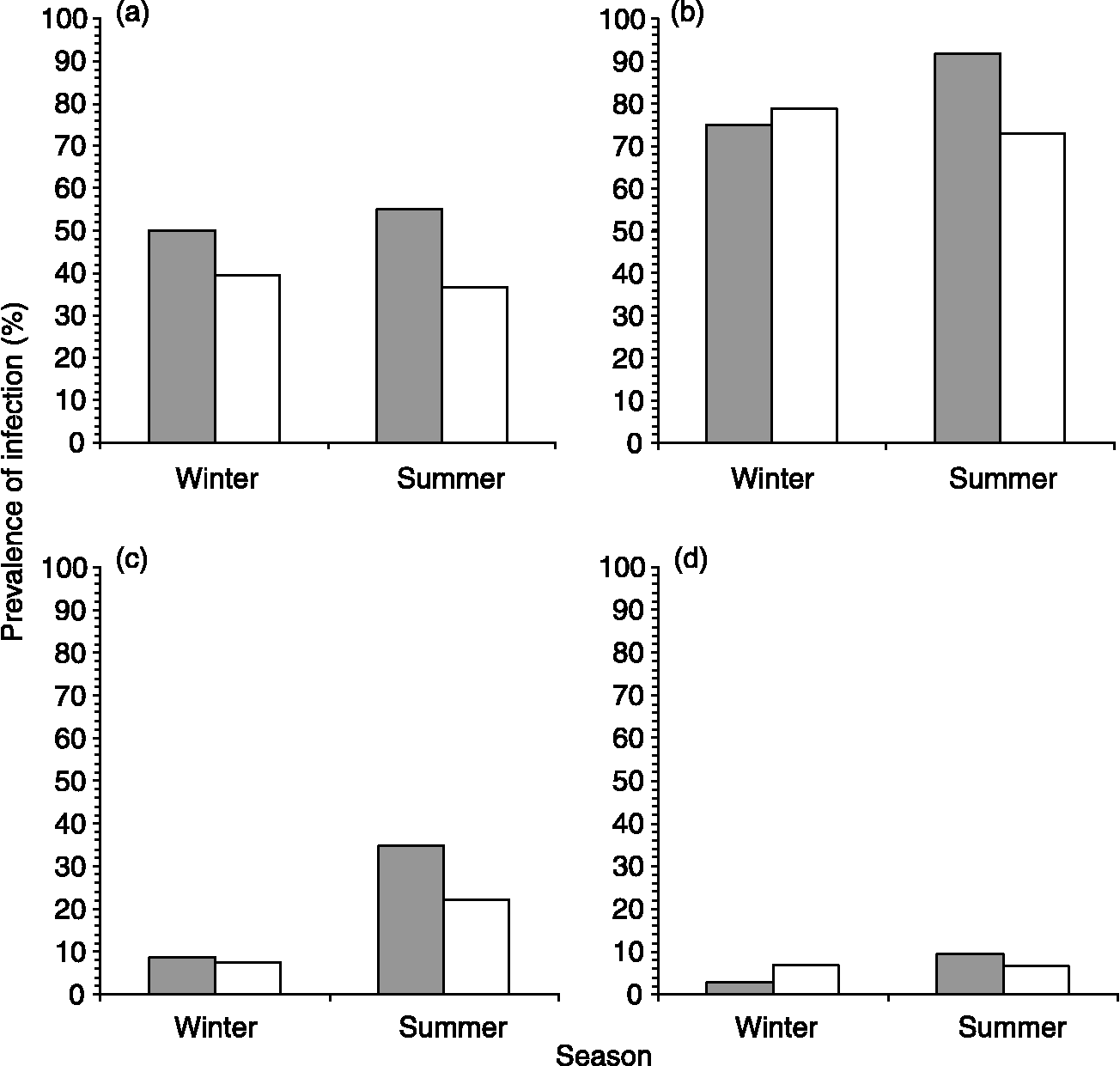
The influence of season, site and host gender on the prevalence of infection was analysed for each of the four more dominant species by maximum likelihood methods, but omitting host age because of missing data from some sites. The minimum sufficient models are summarized in table 3, indicating that amongst adult cats there was a significant effect of host gender on the prevalence of infection with Diplopylidium sp., T. taeniaeformis, A. tubaeforme and Physaloptera sp. Females were more heavily infected than males, although the prevalence of infection with T. taeniaeformis and Physaloptera sp. during the winter months showed an opposite pattern, with higher values in males than females (fig. 3). Season has a significant effect only on the prevalence of A. tubaeforme, increasing in both male and female cats from winter to summer. The prevalence of Diplopylidium sp., T. taeniaeformis and Physaloptera sp. increases in female cats from winter to summer but males show an opposite trend (fig. 3).
Minimum sufficient maximum likelihood models of factors affecting the prevalence of infection in adult cats from Doha, Qatar during 2006.
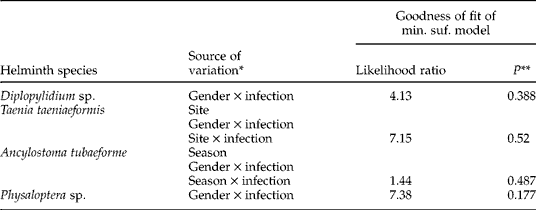
* Four components were entered: season (winter or summer), gender (female or male), site (Corniche, Al-Matar and Al-Sadd, Al-Rayyan or Abu-Hamour) and infection (present or absent).
** Probability that data do not differ significantly from the minimum sufficient model described by the principal interactions and components listed under the sources of variation.
Seasonal changes in the prevalence (%) of infection of Diplopylidium sp. (a), T. taeniaeformis (b), A. tubaeforme (c), Physaloptera sp. (d) in adult female () and male (□) cats from Doha, Qatar in 2006.
Abundance of helminth infections
No significant differences were found in the abundance of infections relative to site but abundance levels of Diplopylidium sp. and T. taeniaeformis were significantly higher in adult compared with juvenile cats with higher worm burdens of Diplopylidium sp. and A. tubaeforme in females compared with males (table 4). The only seasonal effect related to higher levels of infection of A. tubaeforme in the summer months.
The abundance of helminth infections±SEM in stray cats from Doha, Qatar during 2006, relative to season, host gender and age.

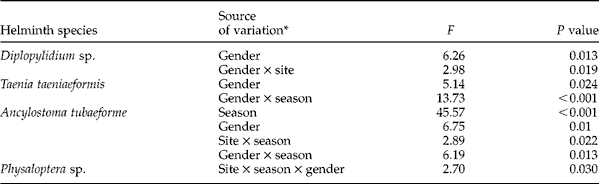
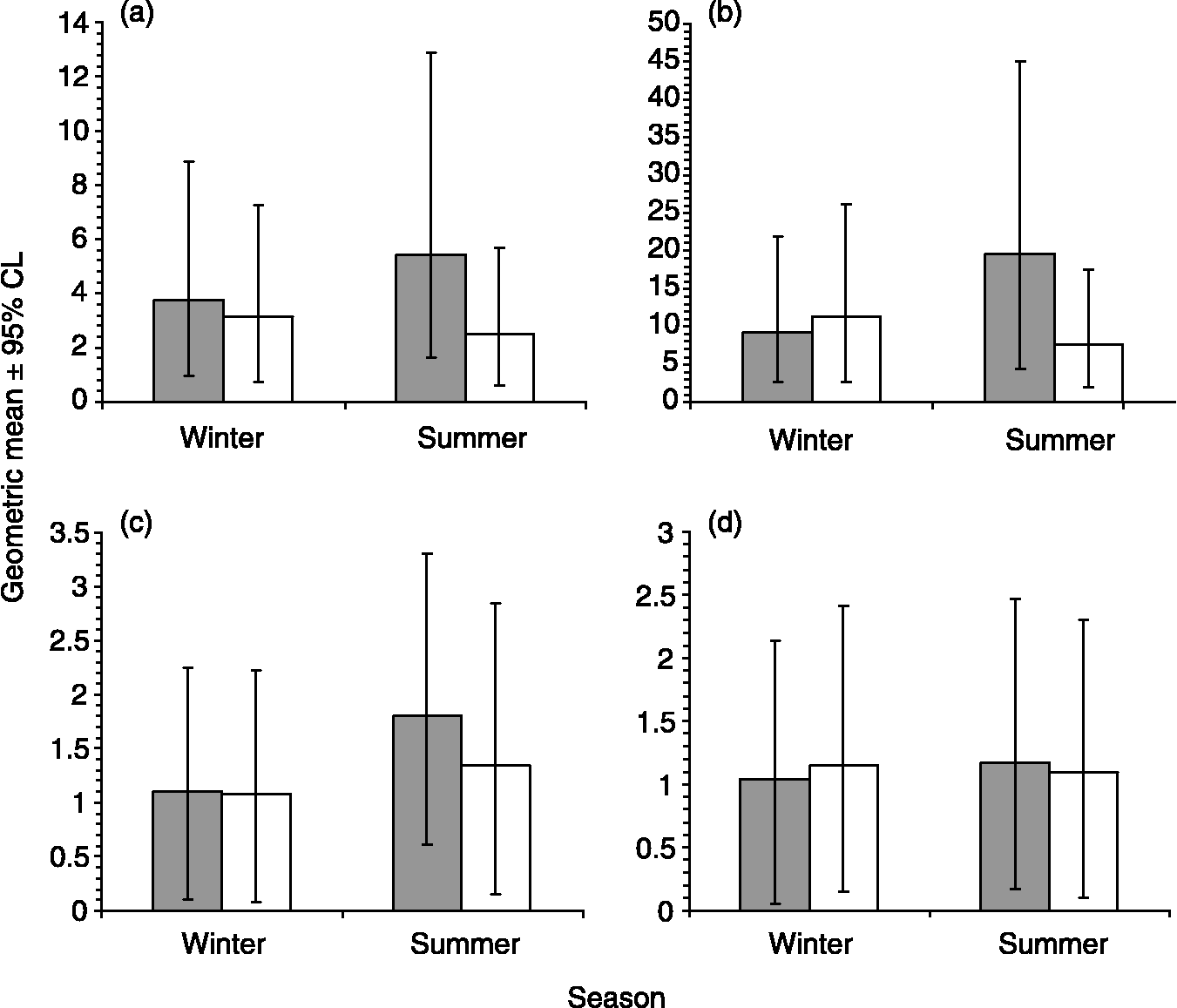
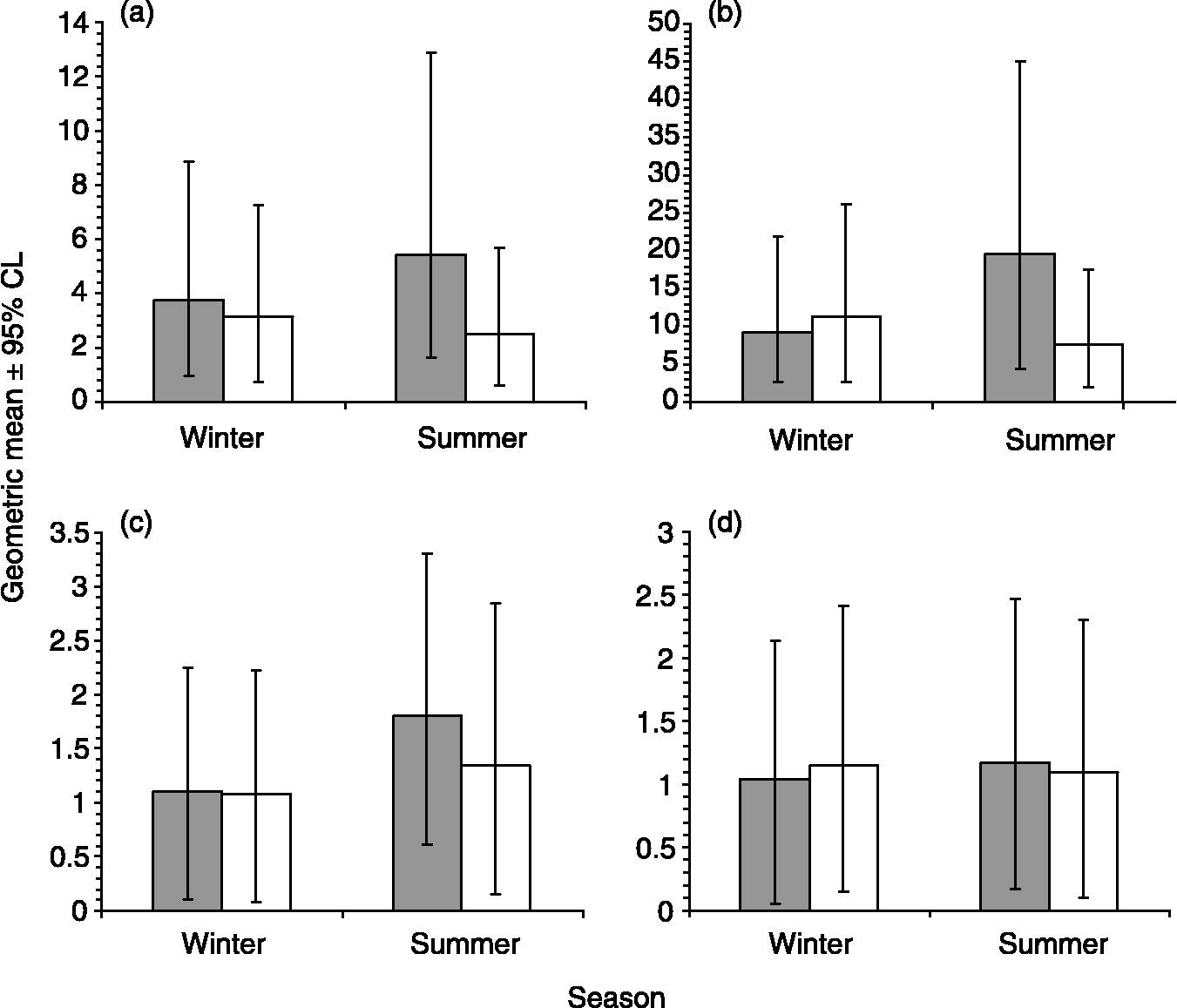
Factors influencing the abundance of infections, analysed through a three-way ANOVA in GLIM on log 10(x+1) transformed data, revealed a significant effect of host gender in adult cats infected with Diplopylidium sp., T. taeniaeformis and A. tubaeforme, which confirms the trend in prevalence levels (table 5). Abundances were overall higher in females compared with males, and this trend was clearly demonstrated during the summer but not the winter months (fig. 4). The effect of all three factors, i.e. site, season and host gender was significant only in the case of the stomach nematode Physaloptera sp. (table 5) with abundance levels increasing in females during the summer months (fig. 4), especially in two sites, Corniche and Al-Rayyan, where faecal egg counts of Physaloptera sp. had previously been shown to be higher (Abu-Madi et al., Reference Abu-Madi, Al-Ahbabi, Al Mashhadani, Lewis and Paul2007).
Statistical analysis of the factors affecting the abundance of helminth infection [log 10(x+1) transformed data] in adult cats in Doha, Qatar in 2006 by site, season and gender through a three-way ANOVA with normal errors.
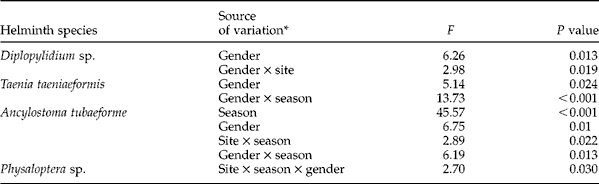
* Three components were entered: season (winter or summer), gender (female or male) and site (Corniche, Al-Matar and Al-Sadd, Al-Rayyan or Abu-Hamour).
Seasonal changes in the abundance of infection of Diplopylidium sp. (a), T. taeniaeformis (b), A. tubaeforme (c), Physaloptera sp. (d) in adult female () and male (□) cats from Doha, Qatar in 2006.
Co-occurrences between helminth species
Bivariate Pearson's product moment correlations were applied to the abundance of infection of the four more prevalent helminths. Two significant co-occurrences were identified between Diplopylidium sp. and T. taeniaeformis (table 6) and A. tubaeforme and T. taeniaeformis, relative to host gender, season and site.
Pearson's product–moment correlation coefficients between the abundance of infection of Diplopylidium sp. and Taenia taeniaeformis, in cats from Doha, Qatar in 2006, relative to host gender, season and site.

ns, not significant at the 0.01 level.
With Diplopylidium sp. and T. taeniaeformis, significant co-occurrences occurred in both male and female cats throughout the year in four of the six sites examined. The co-occurrence of these two species was more prominent in the summer, except for Al-Sadd, and in both males and females, except for Corniche where co-occurrences were significant in male hosts. There was also a significant correlation between A. tubaeforme and T. taeniaeformis in the Corniche site especially in male cats (0.503) and mainly in the summer (0.545) than in the winter (0.330) months. The relatively moderate, but nonetheless significant, values of these correlation coefficients for co-occurring helminths are linked with their overdispersion in infected hosts, where a small proportion of the host population is more heavily infected.
Discussion
Previous studies on the intestinal parasites of cats from the Middle East and North Africa (Arafa et al., Reference Arafa, Nasr, Khalifa, Mahdi, Wafiya and Khalil1978; El-Shabrawy & Imam, Reference El-Shabrawy and Imam1978; Morsy et al., Reference Morsy, Michael and El-Disi1980, Reference Morsy, Sadek and Abdel Hamid1981; Hasslinger et al., Reference Hasslinger, Omar and Selim1988) have primarily provided taxonomic lists and morphological descriptions, with the parasite fauna mainly dominated by nematodes, cestodes and, to a lesser extent, trematodes. A recent study by Abu-Madi et al. (Reference Abu-Madi, Al-Ahbabi, Al Mashhadani, Lewis and Paul2007) was the first in the Arabian Gulf area to provide an understanding of the parasite ecology of stray cats inhabiting a harsh and arid environment in Qatar, where the composition of the parasite fauna, based on faecal analysis, largely comprised five nematode species and unidentified hexacanth embryos of cestodes.
The present study, involving post-mortem examinations of a large population of stray cats from similar sites in Qatar, is a logical extension of the work of Abu-Madi et al. (Reference Abu-Madi, Al-Ahbabi, Al Mashhadani, Lewis and Paul2007) and confirms that the helminth species are made up of nematodes and cestodes, except that the latter can now be identified as being T. taeniaeformis and Diplopylidium sp. These species were found to be the most prevalent with up to 75.8% of cats infected with T. taeniaeformis and 42.8% with Diplopylidium sp., followed by three nematode species, A. tubaeforme (17.0%), Physaloptera sp. (6.6%) and T. cati (0.8%). The low value for T. cati contrasts with that reported elsewhere, as this zoonotic ascarid nematode generally dominates the helminth communities of cats with prevalences of up to 94% (Delahay et al., Reference Delahay, Daniels, McDonald, McGuire and Balharry1998), 53.3% (Nichol et al., Reference Nichol, Ball and Snow1981) and 35.4% (Dubey, Reference Dubey1966) in the UK, 84% in Tasmania (Milstein & Goldsmid, Reference Milstein and Goldsmid1997), 79% in Denmark (Engbaek et al., Reference Engbaek, Madsen and Larsen1984), 78% in Australia (Coman, Reference Coman1972), 55.2% in Spain (Calvete et al., Reference Calvete, Lucientes, Castillo, Estrada, Garcia, Peribàňez and Ferrer1998), 44% (Sharif et al., Reference Sharif, Nasrolahei, Ziapour, Gholami, Ziaei, Daryani and Khalilian2007) and 31% (Mirzayans, Reference Mirzayans1971) in Iran, 42.5% in Mexico City (Martinez-Barbabosa et al., Reference Martinez-Barbabosa, Tsuji, Cabello, Cardenas and Chasin2003), 25.2% in Brazil (Labarthe et al., Reference Labarthe, Serrão, Ferreira, Almeida and Guerrero2004), 22.5% in Egypt (Arafa et al., Reference Arafa, Nasr, Khalifa, Mahdi, Wafiya and Khalil1978), and 20.5% in Jordan (Morsy et al., Reference Morsy, Michael and El-Disi1980). On the other hand, a high prevalence of 75.8% with T. taeniaeformis is a striking feature of the helminth community of cats in Qatar compared with other geographical regions where lower values have been reported, for example 3% in Tasmania (Milstein & Goldsmid, Reference Milstein and Goldsmid1997), 3.8% in Jordan (Morsy et al., Reference Morsy, Michael and El-Disi1980), 8.6% in Spain (Calvete et al., Reference Calvete, Lucientes, Castillo, Estrada, Garcia, Peribàňez and Ferrer1998), 8.8% in Australia (Shaw et al., Reference Shaw, Dunsmore and Jakob1983), 9.2% in Egypt (Arafa et al., Reference Arafa, Nasr, Khalifa, Mahdi, Wafiya and Khalil1978), 11% in Denmark (Engbaek et al., Reference Engbaek, Madsen and Larsen1984), 12% in Korea (Kang & Han, Reference Kang and Han2003), 12% (Nichol et al., Reference Nichol, Ball and Snow1981) and 15.3% (McColm & Hutchison, Reference McColm and Hutchison1980) in the UK. Some exceptions to these low values for T. taeniaeformis include 78% in Australia (Coman, Reference Coman1972), 69% (Delahay et al., Reference Delahay, Daniels, McDonald, McGuire and Balharry1998) and 44% (Dubey, Reference Dubey1966) in the UK suggesting, as in Qatar, the presence of a higher proportion of infected rodent intermediate hosts in association with the cat communities. A relatively high prevalence of 42.8% for Diplopylidium sp. in Qatar is comparable to 2.7% (Arafa et al., Reference Arafa, Nasr, Khalifa, Mahdi, Wafiya and Khalil1978) and 30% (Hasslinger et al., Reference Hasslinger, Omar and Selim1988) in Egypt, and 20.7% in Spain (Calvete et al., Reference Calvete, Lucientes, Castillo, Estrada, Garcia, Peribàňez and Ferrer1998) suggesting in this case a high density of flea intermediate hosts in infected habitats. However, the frequency distribution of all five helminths identified in the present study was shown to be typically overdispersed and consistent with previous studies (Engbaek et al., Reference Engbaek, Madsen and Larsen1984; Delahay et al., Reference Delahay, Daniels, McDonald, McGuire and Balharry1998; Abu-Madi et al., Reference Abu-Madi, Al-Ahbabi, Al Mashhadani, Lewis and Paul2007).
Variation in extrinsic (season) and intrinsic (host gender) factors have been shown to play a significant role in determining the helminth infracommunity in the stray cat populations in Qatar, with species richness being highest in females during the summer. This is linked with a higher proportion of females, including pregnant females, caught at the height of this breeding period and, in the cases of T. taeniaeformis and Diplopylidium sp., a respective increase in the consumption of infected rodent prey and an association with infected fleas harbouring larval cestodes.
The prevalence and abundance of infection of cats with T. taeniaeformis and Diplopylidium sp. were significantly higher in adult compared with juvenile cats, whereas females were more heavily infected than males. Such a trend was demonstrated during the summer but not the winter months. Higher levels of T. taeniaeformis infections in females may be attributed to an increased risk of infection during the summer breeding season when mothers are known to train their young to hunt for prey (Engbaek et al., Reference Engbaek, Madsen and Larsen1984). Season also has a significant effect on infection levels in nematodes as higher infections of the hookworm A. tubaeforme occurred in females in the summer. This coincided with a higher proportion of female cats being caught during these months, together with the enhanced development of hookworm eggs and larval stages in the soil under the milder temperatures and adequate rainfall reported for these sites in Qatar in the months preceding summer (Abu-Madi et al., Reference Abu-Madi, Al-Ahbabi, Al Mashhadani, Lewis and Paul2007). The significant effect of host gender, season and site in the case of the stomach nematodes Physaloptera, especially in two of the sites examined, is likely to be related to these environmental conditions, which favoured the survival of the insect intermediate hosts and rodent paratenic hosts, prior to the height of summer.
The detection of quantitative interactions between helminth species in host populations using observational data may generate false significant associations between parasites (Haukisalmi & Henttonen, Reference Haukisalmi and Henttonen1998). Nevertheless, in the present study, significant co-occurrences were identified between the two dominant cestode species Diplopylidium sp. and T. taeniaeformis in both female and male cats, primarily in the summer and in the majority of sites examined. A positive co-occurrence was also shown between T. taeniaeformis and the hookworm A. tubaeforme mainly in the summer months and particularly in the Corniche site, where the cat density was higher than in most of the other sites and where higher levels of hookworm infection had been previously recorded from faecal examination (Abu-Madi et al., Reference Abu-Madi, Al-Ahbabi, Al Mashhadani, Lewis and Paul2007). The relationship between increasing host density and levels of infection has been well documented (Arneberg et al., Reference Arneberg, Skorping, Grenfell and Read1998), but whether this leads to interactions between parasite communities in host populations requires further investigation. Undoubtedly interactive events occur within parasite infracommunities in mammalian hosts, as reflected by changes in intestinal sites of particular species in the presence of others (Holmes, Reference Holmes1961; Patrick, Reference Patrick1991; Lello et al., Reference Lello, Boag, Fenton, Stevenson and Hudson2004). Such changes were not observed in the present study as the cestode and nematode species involved in positive co-occurrences of pairs of helminths in the cat population occupied similar niches along the alimentary tract. It is possible that higher abundance levels, especially in the case of the hookworm A. tubaeforme, may result in an alteration of intestinal sites within the host. Further experimental studies would be required to confirm whether or not quantitative interactions between intestinal helminths of cats take place, although Behnke et al. (Reference Behnke, Gilbert, Abu-Madi and Lewis2005) showed that interactions between parasites were unlikely to play a dominant role in structuring the component community of helminths in wood mice from study sites in the south of England.
In conclusion, the composition and the levels of infection of the intestinal helminths of stray cats are undoubtedly influenced by climatic conditions in such a hot and arid country as Qatar. In the present study, an invasive post-mortem examination of the cat population in and around the city of Doha has resulted in a more accurate identification of parasite infracommunities previously described from faecal egg count (Abu-Madi et al., Reference Abu-Madi, Al-Ahbabi, Al Mashhadani, Lewis and Paul2007). In addition, the roles of gender, together with feeding and behavioural characteristics of the host, have been assessed in structuring these communities. Positive co-occurrences have been shown to occur between dominant helminth species occupying similar niches within the alimentary tract of cats, but whether or not interactions occur between these parasite species requires further investigation.
Acknowledgements
The authors wish to express sincere and grateful thanks to the Research Committee of the College of Arts and Sciences, Qatar University for generous financial support under grant no. 3/2006 and to the Department of Pest Control, Municipality of Doha for assistance in sampling. The authors also thank R. Al-Ibrahim and D. Al-Ahbabi for technical support.